MOROCCO Marks International Day of Argania, Its ‘Liquid Gold’ Source

The UN-recognized day proves Morocco’s argan tree as a source of heritage, climate resilience, rural livelihoods, and women-led economic activity.

Morocco celebrated the International Day of Argania yesterday, celebrating five years since the United Nations recognized the argan tree as a global symbol of heritage, sustainability, and rural resilience.

The UN General Assembly, in a resolution led by Morocco, proclaimed May 10 the International Day of Argania in 2021. The resolution was co-sponsored by 113 UN member states and adopted by consensus, placing Morocco’s endemic argan tree on the international calendar.

Omar Hilale, Morocco’s Permanent Representative to the United Nations, marked the anniversary with a public address linking the tree to climate action and human heritage.

“Today, we celebrate 5 years since the historic recognition by the United Nations of the International Day of the Argan Tree,” Hilale said. “The Argan Tree, a treasure of Morocco and heritage of humanity, embodies a concrete solution to climate and water challenges. Morocco will continue to champion this ambition in the service of a more sustainable and united future.

A Moroccan tree with global recognition

The argan tree grows mainly in southwestern Morocco, especially between the Atlantic coast and the Atlas Mountains. It has long supported rural communities through food, oil, animal feed, shade, soil protection, and income generation.

The tree also carries several layers of international recognition. UNESCO designated the Arganeraie Biosphere Reserve in 1998, and in 2014 added “practices and know-how concerning the argan tree” to its intangible cultural heritage list. FAO also recognized the argan-based agro-sylvo-pastoral system in the Ait Souab-Ait Mansour area as a Globally Important Agricultural Heritage System in 2018.

This recognition reflects more than the global popularity of argan oil. It points to a fully integrated ecosystem in which people, trees, animals, traditional knowledge, and markets are closely connected.

FAO has described the argan tree as important for food security, nutrition, income generation, and rural livelihoods, especially for women. The organization has also highlighted its role in drought-prone areas, where communities have built production systems around trees that can survive heat and arid conditions.

A key sector for Morocco

Morocco remains the center of global argan production. The sector is rooted in the country’s Indigenous knowledge and women-led cooperative work, with more than 830,000 hectares of argan forests recognized as part of the UNESCO biosphere reserve.

Argan oil production has become one of Morocco’s most visible rural industries. It supplies both food and cosmetics markets, with demand coming from Europe, North America, and the global beauty industry.

In 2020, Morocco’s annual argan oil production was estimated at about 5,000 tons, while exports exceeded 1,200 tons by the end of that year. The sector was also reported to generate nearly MAD 1.2 billion (approximately $131 million) in annual turnover and support more than 25,500 jobs.

More recent market estimates place Morocco’s annual argan oil production between 2,500 and 4,000 metric tons, with a large share exported to European and North American markets.

source/content: moroccoworldnews.com (headline edited)

__________

______________

MOROCCO
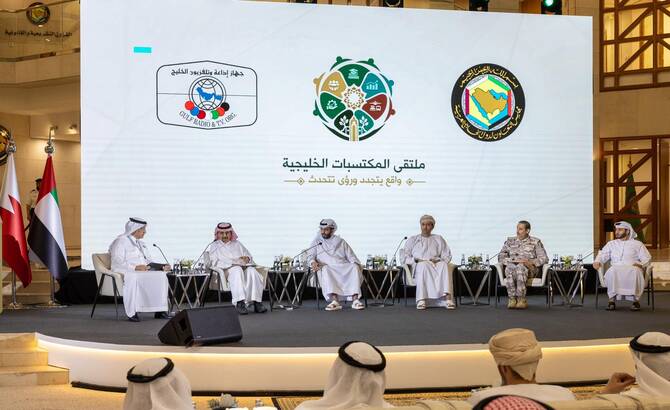
GCC holds ‘Gulf Achievements Forum’ to spotlight regional achievements 

The Gulf Radio and Television Organization hosted the “Gulf Achievements Forum,” at GCC headquarters in Riyadh on Monday to showcase the milestones of joint Gulf action, enhance public awareness of regional achievements and explore the strategic future of Gulf integration.

The event aimed to “enhance awareness of the achievements that have directly reflected on the quality of life of the Gulf citizen, and to strengthen the position of the Cooperation Council regionally and internationally,” said secretary-general of the Gulf Cooperation Council, Jasem Al-Budaiwi.

During his opening remarks, the secretary-general affirmed that the Gulf Cooperation Council had transformed challenges into opportunities through integration across all areas of joint Gulf action, “directly impacting the quality of life for Gulf citizens, enhancing their well-being, and strengthening the GCC’s regional and international standing.”

He also stressed that the GCC was no longer just a regional bloc joined by geography and history, but has become a global strategic power where opportunities were created, and models of development, prosperity, security and stability were built.

Al-Badawi said that rapid regional and international changes had proven that the strength of the GCC lay in its “unity and cohesion.”

He stressed that joint Gulf action was no longer merely a developmental choice but a strategic necessity dictated by the nature of the current regional security requirements, global economic shifts and accelerating global challenges.

He added that the GCC states had adopted a specific strategy to combat money laundering, noting the high level of coordination among the interior ministers of the GCC countries to unify their anti-drug strategy.

“The GCC achievements reviewed today are a reflection of an ambitious strategic vision, continuous coordination and a firm political will among the GCC countries,” he said.

Al-Badawi underlined that 95 percent of the traffic connectivity between the Gulf Cooperation Council countries had been completed.

The secretary-general highlighted several qualitative achievements he took pride in, including political integration, military and security cooperation, economic infrastructure, digital transformation, education, health, media, electrical interconnection and food security.

The forum opened with remarks from senior GCC officials, including the secretary-general and the director general of the Gulf Radio and Television Organization, Dr. Abdulrahman bin Abdulaziz Al-Hazzaa.

In his address, Al-Hazzaa emphasized that the event shed light on unifying the media message to amplify the achievements of joint Gulf action.

Al-Hazzaa said that the citizens of the GCC countries were living in “prosperity and stability,” stressing that joint Gulf action was prospering under a clear vision that enhanced development and integration among the GCC countries.

The forum also featured panel sessions and keynotes from key stakeholders on topics such as media, AI, countering money laundering, and connectivity. 

“The future of the GCC is not measured only by the scale of the achievements made, but by our ability to build upon them and transform them into sustainable gains that meet the aspirations of our peoples and future generations,” Al-Budaiwi said.

The forum was held as the region prepares to celebrate the 45th anniversary of the founding of the GCC on May 25.

“The next phase requires intensified joint Gulf efforts, strengthened integration across all fields, and the building of a Gulf economy capable of competing globally, thereby consolidating the position of the GCC countries as an influential global partner in shaping the economy of the future and sustainable development,” Al-Budaiwi said.

source/content: arabnews.com (headlines edited)

_____________

Al-Badawi said that rapid regional and international changes had proven that the strength of the GCC lay in its “unity and cohesion.” (Supplied)

_______________________

GCC ACHIEVEMENTS