OMAN : Made-in-Oman board game wins international award

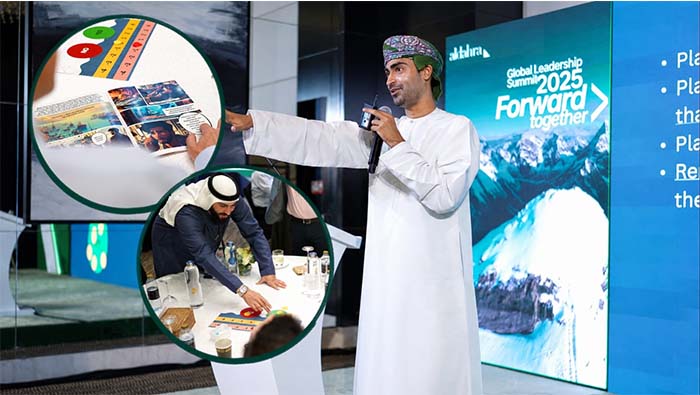
 A board game designed and developed in Oman has earned international recognition after Abu Dhabi-based agribusiness group Al Dahra Holding won the Training Initiative of the Year award at the ICA Compliance Awards APAC & MENA 2026 for its ethics and compliance training programme built around the board game Fish Tycoon. 

Developed by Muscat-based Arab Board Games, Fish Tycoon is a story-driven tabletop game that places participants in realistic workplace ethics and compliance dilemmas. Players vote, debate and make difficult decisions, with every choice shaping the outcome of their characters’ stories and encouraging meaningful discussions around ethical conduct.

Hasan Al Lawati, Founder of Arab Board Games, said the international recognition reflects the growing potential of Omani innovation in corporate learning.

“This award is a testament to the quality of Omani game design and our belief that training should be engaging, immersive and memorable. We have transformed learning from passive presentations into interactive experiences where participants become part of the story, making every decision count.”

Over the past three years, Arab Board Games has developed a range of customised training games covering ethics and compliance, organisational values, codes of conduct, health and safety, leadership, communication, alliance building and soft skills. The company has delivered its game-based learning experiences to organisations across Oman and the wider region, demonstrating how a product designed in Oman can compete successfully on the international stage.

source/content: timesofoman.com (headline edited)

___________
__________

OMAN
PALESTINE: Renowned Palestinian artist Sliman Mansour dies aged 79

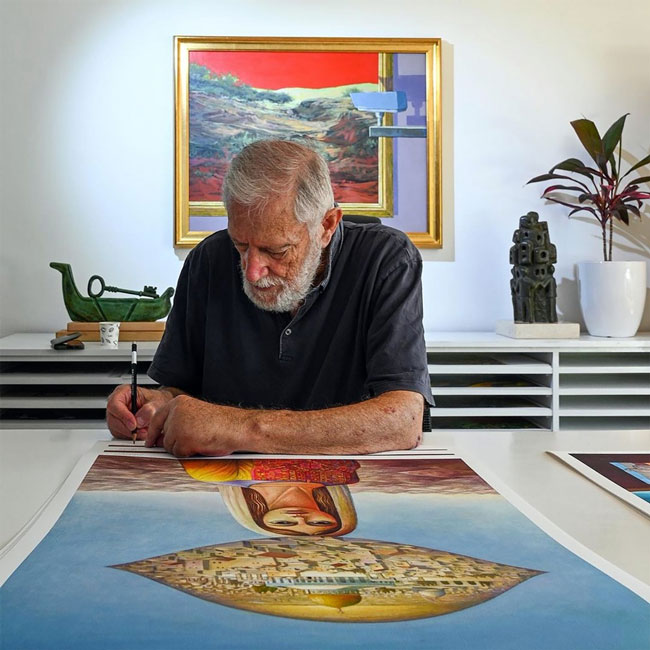
Renowned Palestinian artist Sliman Mansour died on Monday, 24 August, at Al-Makassed Hospital in East Jerusalem, where he had been receiving treatment. He was 79.

His death was announced by his family in an Instagram Story posted on his official account, two hours after they said he was in “critical condition.”

Mansour was a leading figure in Palestinian art, with a body of work closely associated with Palestinian identity, memory and resistance. 

Born in Birzeit in 1947, Mansour was accepted to study at the Art Institute of Chicago, but abandoned the plan after the 1967 war, fearing he would not be able to return to Jerusalem. He instead studied fine arts at the Bezalel Academy of Arts and Design in Jerusalem, graduating in 1970.

Three years later, he co-founded the League of Palestinian Artists, which he led from 1986 to 1990. Its exhibitions were the first collective showcases of Palestinian art on Palestinian soil.

Mansour is best known for his paintings, which often explored Palestinian identity, displacement and resistance. In 1973, he produced one of his most prominent paintings, Jabal El-Mahamel (Camel of Hardships), depicting a tired, elderly Palestinian man in traditional clothing carrying the city of Jerusalem on his back.

Alongside political imagery, his paintings repeatedly drew on cultural symbols of Palestine, helping to develop a visual vocabulary of his homeland. 

An Orthodox Christian, his work also drew on religious iconography, often recasting the Holy Family as a Palestinian family, with traditional dress and symbols such as the keffiyeh linking biblical imagery to Palestinian identity and resilience.

Mansour also faced censorship from Israeli authorities, who often confiscated his works and restricted Palestinian exhibitions. 

Mansour’s mud sculptures were designed to crack and change with time, reflecting themes of endurance, fragility and loss. This notion of endurance became central to his work, which came to embody sumud, the Palestinian concept of steadfastness.

Beyond painting, Mansour supported the development of artistic infrastructure in Palestine, co-founding the Al-Wasiti Art Centre in East Jerusalem in 1994 to preserve and document Palestinian art and connect artists living in Palestine with those in exile. 

He taught at Al-Quds University from 2000 to 2014 and contributed cartoons and illustrations to the English-language Palestinian newspaper Al-Fajr and Al-Awda magazine between 1981 and 1993.

Mansour received numerous honors during his career, including the UNESCO-Sharjah Prize for Arab Culture and the Nile Award for Arab Creators. 

source/content: english.ahram.org.eg (headline edited)

_____________

______________

PALESTINE