Arabs & Arabian Records Aggregator. Chronicler. Milestones of the 25 Countries of the Arabic Speaking World (official / co-official). AGCC. MENA. Global. Ist's to Top 10's. Records. Read & Enjoy./ www.arabianrecords.org
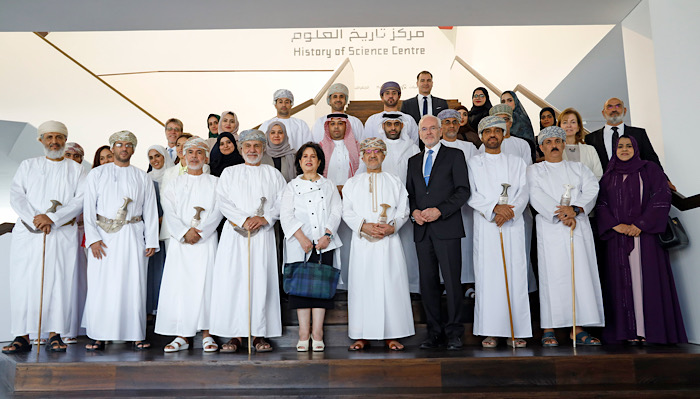
The UNESCO Chair for World Heritage Management and Sustainable Tourism at the German University of Technology in Oman was inaugurated Under the patronage of H.E. Salim bin Mohammed Al Mahrouqi; Minister of Heritage and tourism and with the participation of H.E. Shaikha Mai Bint Mohamed Al Khalifa; Chairperson of the Board of directors of the Arab the Regional Center for World Heritage.
Prof. Dr. Michael Braun, Rector of the University, introduced the university and its commitment to research and innovation; and commented that the chair comes as a great accomplishment on the university’s 15th anniversary.
Chairholder Professor Dr. Heba Aziz of the UNESCO chair at GUtech stated: “The establishment of the UNESCO chair at GUtech offers new research, teaching and learning opportunities at GUtech and is a further recognition of GUtech’s academic focus on the field of cultural heritage and sustainable tourism management”
The Chairholder Professor Aziz added “Oman’s vision 2040 remains at the core of the chair’s activity. National priorities focusing on Citizenship, Identity, National Heritage and Culture, sustainable cities and governorates and employment and labour markets are the compass that directs the chairs activity. The chair will work closely with the Ministry of Heritage and Tourism to make sure that it provides the necessary scientific research and labour force to achieve its vision.”
World Heritage Sites draws international attention to heritage sites of outstanding universal value and is expected to increase the number of visitors to these sites. The chair aims to support the role of world heritage in contributing to the Sustainable Development Goals by employing tourism in its comprehensive and sustainable manifestation to drive socio-economic development and to maximize benefits to the communities surrounding these sites.
The Chair is established in partnership with the Arab Regional Centre for World Heritage, a UNESCO Category II Centre based in the Kingdom of Bahrain. The center serves 19 Arab States in the promotion and management of cultural and natural sites by providing technical support and reinforcing the implementation of the 1972 World Heritage Convention in the region.
The chair complements the role that of the center and will introduce several academic programs in the field of tourism management in World Heritage sites, digitization of heritage, heritage narrative and interpretation and heritage economics. GUtech will also introduce Master’s degree in World Heritage and Sustainable Tourism management in collaboration with the Arab Regional Center for World Heritage.
The chair team consists of Jokha Al Saqri, researcher in Heritage studies, Prof. Dr. Osman Barghouth co-chair holder and Prof. Dr. Heba Aziz, UNESCO chair holder
This is the first chair specialized in this field and the first UNESCO chair concerned with the field of World Heritage for the Arab region as a whole.
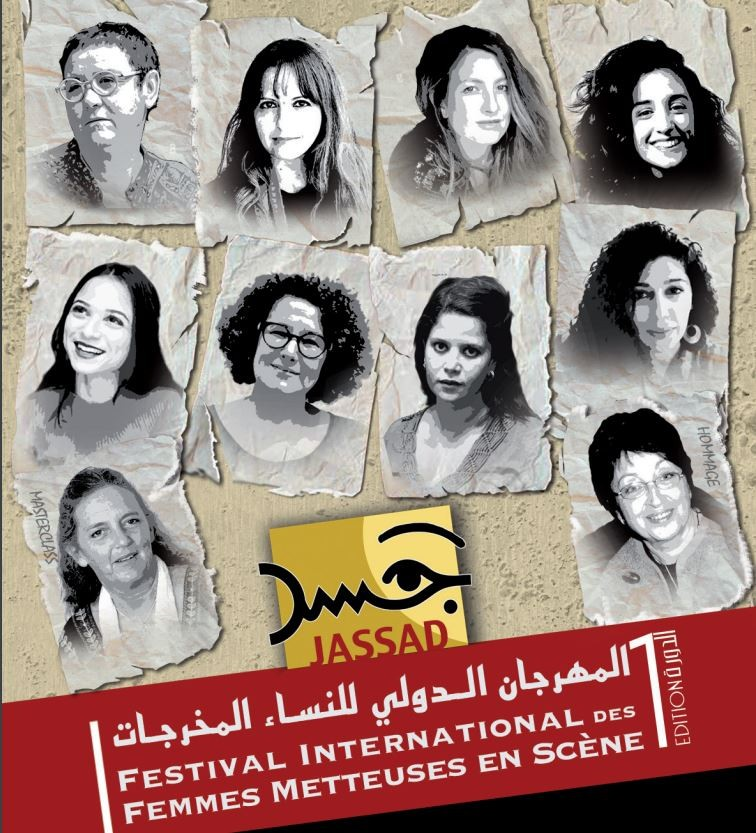
Morocco’s cultural capital Rabat is hosting the first edition of Jassad, the International Festival of Women Directors, between October 25 and 30. The event aims to highlight and pay tribute to the achievements of women theater directors from across the world.
Organized by Morocco’s Aquarium Theater and Anfass Theater, the festival will feature renowned women directors from Morocco, Tunisia, Lebanon, Spain, France, Denmark, and Romania.
“Through this festival, we wish to establish a ritual of recognition towards all the creative women who serve the theater,” said Amsaa Houri, director of Anfass Theater.
The six-day event also aims to “strengthen the resilience and hope of women actors in the cultural and creative industry, at a time when the sector has been seriously affected by the Covid-19 pandemic,” Houri added.
The festival serves as a platform for cultural and artistic exchanges, as its program offers a wide range of activities, including plays, a master class, workshops, as well as meetings and debates, indicated the organizers in a press release.
Director of Aquarium Theater Naima Zitan described the festival as “a meeting, an exchange, a discovery, all this and a little more,” explaining that the event is dedicated to theatrical creation, as well as exchanging ideas, experiences, and different visions of the world.
“The Jassad (meaning body in Arabic) is what unites us, wearing a festive hat to welcome and greet a vast and colorful audience,” Zitan said.
The festival will feature various theatrical pieces, including Naima Zitan’s “Le Masque” (The Mask), Asmaa Houri’s “Automne” (Autumn), as well as “Joyeux Anniversaire” (Happy Birthday) by Morocco’s Fatima Zohra Lahouitar and “Boujloud” by French-Moroccan Kenza Berrada.
The six-day event will also feature “Nawal” by Lebanon’s Lina Abyad, “Heimat Wort” by Tunisia’s Meriam Bousselmi, “Enlorquecidas” by Spain’s Marta Ocana, and “Une Maison de Poupee” by France’s Lorraine de Sagazan.
In addition, the event will include a seminar titled “Profession: Woman of Theater,” featuring Morocco’s Zohra Makac and Omar Ferhat, Lebanese director and theater professor Lina Abyad, and Denmark’s theater actress Julia Varley.
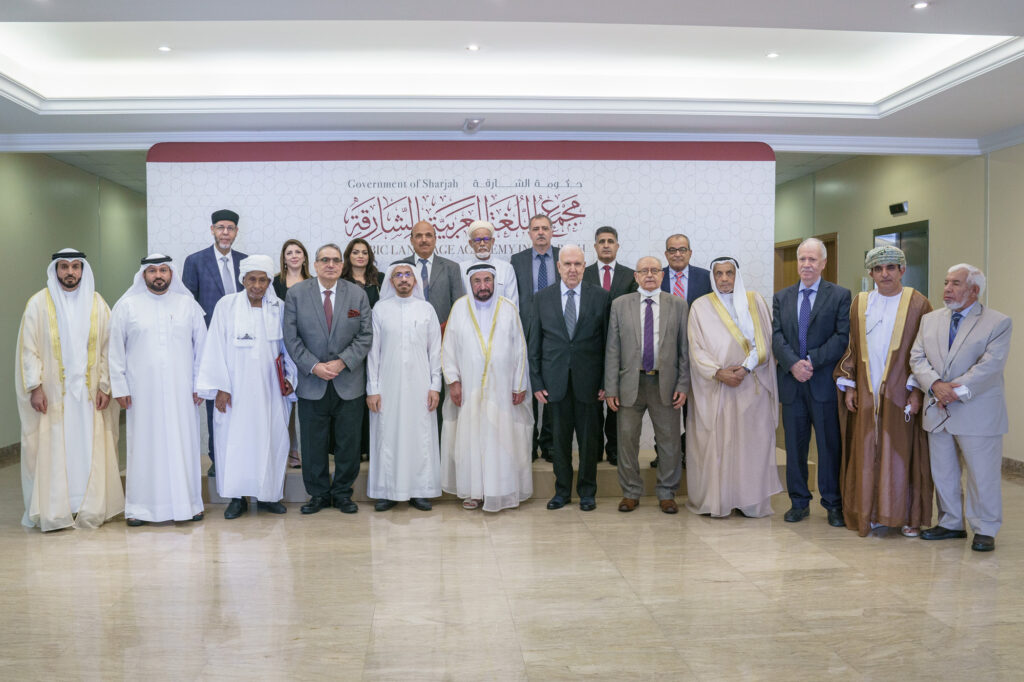
H.H. Dr. Sheikh Sultan bin Muhammad Al Qasimi, Supreme Council Member and Ruler of Sharjah, launched on Tuesday, 19 new volumes of the Historical Dictionary of the Arabic Language at the headquarters of the Arabic Language Academy in Sharjah.
The 19 new volumes of the Historical Dictionary of the Arabic Language cover four letters, bringing the total number of letters edited so far to 9, thus increasing the number of completed volumes of the project to 36.
The volumes of the Historical Dictionary of the Arabic Language were issued, directed and printed in Al Qasimi Publications in Sharjah.
Sharjah Ruler welcomed the attendance of members of the Academy from different countries, praising their great efforts in working on the historical dictionary, which is one of the valuable achievements that must be worked and built in order to spread, learn and teach the Arabic language.
His Highness announced an endowment to support these Academies in fulfilling their mission to the fullest, pointing to the importance of establishing private centres owned by the Academy.
Sheikh Sultan addressed the great efforts in supporting the learning of the Arabic language in Sharjah, pointing out to the vision and idea of establishing Al Qasimia University, which came as a culmination of His Highness’ efforts to support the Arabic language and Islam. “Here in Sharjah, we established Al Qasimia University, and this university is mine, and it graduates many students from Japan to the Americas,” he said.
The Ruler of Sharjah stressed the importance of preserving Arab traditions in any place and time of all members of society, because this is a part that integrates with speaking the Arabic language and shows belonging.
His Highness said, “We have worked to establish special institutions for the Arabic language, and we have established them with decrees and laws in order to preserve them, so as not to make them blown by the wind, and make the lovers of this language responsible for them.”
The Ruler of Sharjah concluded his speech by talking about the ancient history of Sharjah, as it was mentioned in the report of the leader sent by Alexander the Great when he came to Persia in the year 331 BC. M, pointing out that Sharjah and its people preserve the language, literature and poetry, highlighting their roles in supporting and spreading science and knowledge.
For their part, a number of attendees from the Academy expressed their appreciation to His Highness the Ruler of Sharjah for providing great support for the Arabic language.
The Sharjah Ruler launched the first 17 parts of the “Historical Dictionary of the Arabic Language” at the opening of the 40th edition of the Sharjah International Book Fair 2021. With the official launch of the dictionary’s website, people can search and read all the completed volumes.
Saudi Arabian Airlines has agreed to buy 100 innovative electric vertical take-off and landing planes as it seeks to connect Jeddah with the Kingdom’s leading tourist destinations, according to one of the firm’s leading officers.
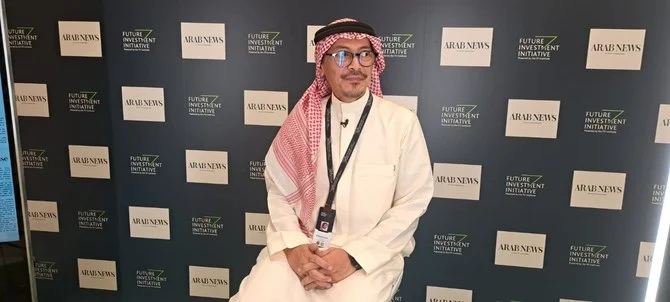
Speaking to Arab News on the sidelines of the Future Investment Initiative in Riyadh, Group Chief Marketing Officer Khaled Tash said Saudia — the airline operated by his firm — will be the first in the region to make use of the technology.
The deal has been struck with German company Lilium, which is in the final testing phase for the aircraft, with operations expected to start in two years.
Tash said Saudia will be using the aircraft to improve access to destinations alongside the Red Sea and Makkah.
“That will actually be our first priority in the next few years to connect to the airport with Makkah whereby some of our premium passengers can land in Jeddah airport, take one of these small planes and go to Makkah and back in a few minutes. That will be a breakthrough,” he said.
The executive insisted the announcement shows air mobility in Saudi Arabia is set to move into a different era.
“When we think about what’s happening in the country, Vision 2030 is about a lot of transformation that is happening in the Kingdom and maybe today’s announcement, that we made with Lilium, is probably a testimony to how Saudi national champions like Saudi airlines are walking the talk,” Tash said.
“We want to be at the forefront of innovation, EVTOLs — or electric, vertical, takeoff and landing aircrafts — are the future of air mobility, I think in especially short distances. For us to be the first Middle Eastern and North African within that region, the first airline to make this step towards EVTOLs, I think that means a lot for us,” he added.
Tash used the example of seaplanes connecting the islands of the Maldives as delivering economic benefits to tourism — something he hopes will be replicated in Saudi Arabia.
The commitment to 100 vehicles will also offer value for money for his firm, he added, saying: “By moving by big players like Saudia moving into early adoption of such a technology or such an innovation, that will have, hopefully a very good impact on the cost.”
“So if we start with Jeddah to Makkah and then with with Jeddah to the Red Sea or Jeddah to AlUla URL, or Jeddah to King Abdullah Economic City, the more use cases we can find for this, the more commercial opportunities we will have and the less cost it will be,” he said.
“So if I have an aircraft that goes 20 times between Jeddah and Makkah each day, it will definitely be cheaper than going six times a day,” he added.
As well as the economic case for buying the aircraft, there is also a clear environmental benefit.
Tash was clear that while sustainability is a very important topic under the Vision 2030 umbrella, it is also for Saudia.
“We think that electric, in terms of these kinds of EVTOLs, is the future for aviation, and we believe that our sustainability initiatives will be further strengthened,” he said.
“It’s not the only sustainability initiative that we’re doing. We’re working on so many different fronts. We have one of the youngest fleets in general in our entire fleet that also has less emissions. We are committed to work on sustainability, more and more,” Tash added.
source/content: arabnews.com (headline edited)
_______
Saudi Arabian Airlines Group Chief Marketing Officer Khaled Tash speaking to Arab News on the sidelines of the Future Investment Initiative in Riyadh
Read on for a list of regional female filmmakers who have been taking the industry by storm.
Farida Khelfa
Farida Khelfa is an Algerian-French documentary filmmaker. She is currently set to release a new film titled “From The Other Side of the Veil” that aims to dismantle misconceptions and stereotypes that often surround Arab women.
Kaouther Ben Hania
The Tunisian filmmaker made headlines in the film industry after her critically acclaimed movie “The Man Who Sold His Skin” was shortlisted for the Oscar’s Best International Feature Film award this year.
Ayten Amin
The Egyptian director has long chronicled the lives of women in modern Egypt. Her feature film “Souad” was selected for the cancelled 2020 Cannes Film Festival.
Danielle Arbid
Danielle Arbid is a Lebanese filmmaker. Her work has screened at numerous film festivals in France and the rest of the world, including New York, San Francisco, Tokyo and more.
Annemarie Jacir
The Palestinian filmmaker has written, produced and directed award-winning films such as “A Post Oslo History.” Her movie “Wajib” (2017) won her 18 international awards.
Nujoom Al-Ghanem
The Emirati filmmaker, writer and poet had to overcome societal stigma and family disapproval to make it. She defied the odds and produced films such as “Amal” (2011) and “Sounds of the Sea” (2015).
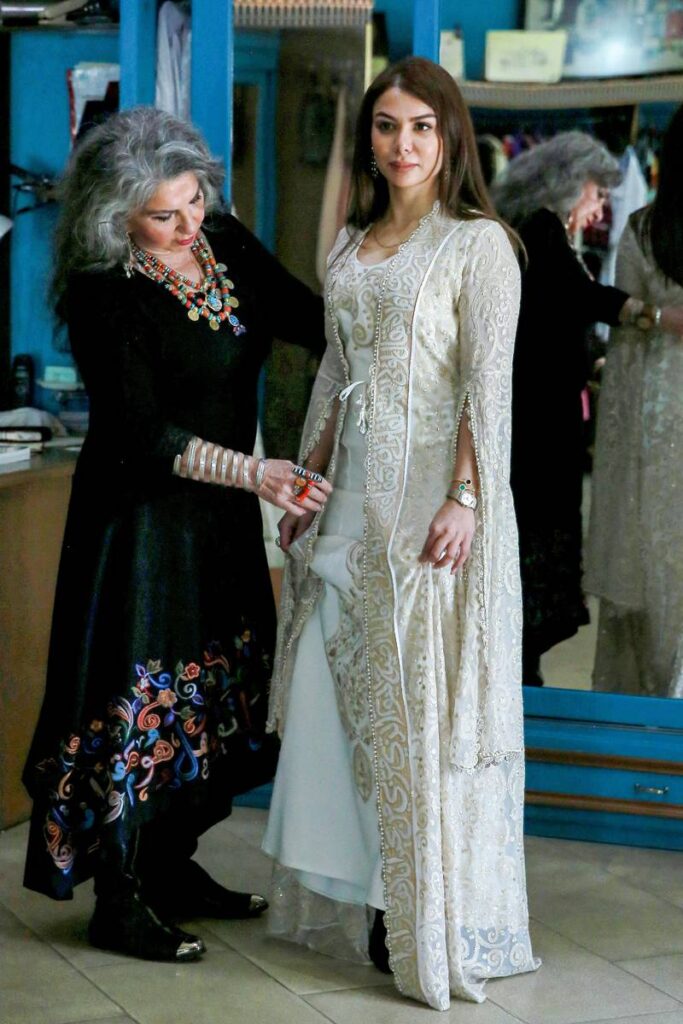
In a career spanning decades, Iraqi-born Sadiq has shown her creations worldwide and dressed the stars, but she remains rooted in the traditions of her homeland.
With verses from love poems and flowing calligraphy, Jordan-based fashion designer Hana Sadiq stitches a testament to the beauty of Arab women.
The artistic handwriting of Arabic script dominates her embroidered modern designs, with poetry or letters scattered in bright colours.
She uses various calligraphic styles, from the elaborate Diwani to the curving Thuluth and features on some of her outfits the lines of renowned Arab poets including Mahmoud Darwish and Nizar Qabbani.
“Arabic calligraphy is the most beautiful,” says Sadiq, 72, showing off her love of jewellery with strings of beads around her neck, dangling earrings, and unusual stone rings.
At her home workshop in downtown Amman, Sadiq notes that the earliest writing was born several millennia before Christ in what is now Iraq, arguing that it was a place “without which all the other civilisations would not have existed”.
Sadiq has split her time between Amman and Paris since 1982, having both French and Jordanian nationality as well as Iraqi citizenship.
‘How beautiful she is’
She has exhibited from Europe to the United States as well as the Middle East, returning home with an extensive collection of antique silver ornaments, along with thousands of pieces of Arab textiles and costumes.
Her kaftans, traditional robes, feature bright and stunning colours. They reflect the influence of her grandmother who wore a traditional Iraqi “Hashemite dress” and walked “elegantly like a peacock”.
The folk outfit is made of very thin fabric with wide sleeves and transparent sides, decorated with beautiful floral ornaments, golden or silver, on a black base. It was the favourite of Iraqi women in the 1950s and 60s.
Sadiq traces her interest in fashion to her childhood, when she would visit her grandfather’s textile shop in Baghdad.
She went on to design for celebrities and royals, including Jordan’s Queen Rania and Queen Noor. But whoever the client, her work has been guided by pride in the Arab woman’s femininity.
Unlike more revealing Western fashion, her designs envelope the woman’s body, “but it shows high femininity,” says Sadiq, who is also the author of a book, “Arab Costumes and Jewelry, a Legacy without Borders”.
She argues that Western clothes are not the best fit for the bodies of Arab women but have spread to the region anyway. “Unfortunately this is the result of globalisation,” she says.
“What matters to me, in all my work, is that the woman remains female and that a man is attracted to her as a female,” she adds. “Which means when a woman passes in front of him, he must notice and see how beautiful she is.”
Her kaftans, traditional robes, feature bright and stunning colours, reflecting the influence of her grandmother who wore a traditional Iraqi Hashemite dress and walked “elegantly like a peacock”.
Students from different UAE schools are being mentored in the space camp by celebrated names in space exploration and science, including Nasa astronauts and scientists.
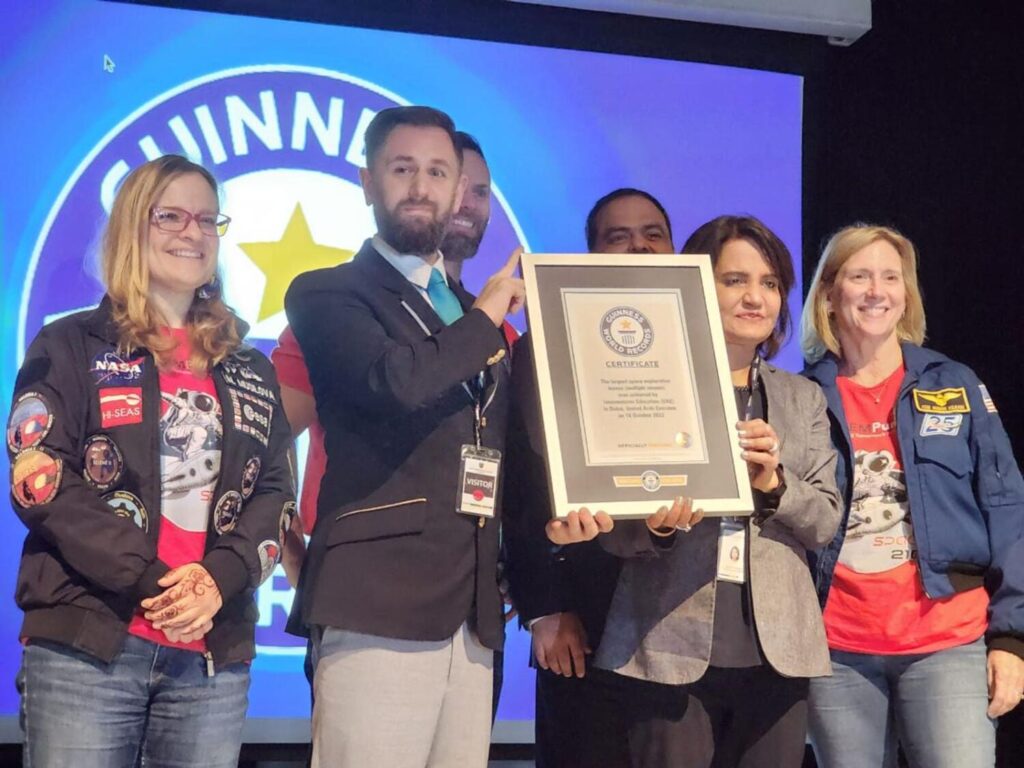
Loud cheers echoed across the auditorium of a Dubai school campus on Tuesday as it made to the Guinness World Records .
The Innoventures Education group of schools set a record for conducting the world’s largest space exploration lesson (multiple venues) with 2,000 students from its five schools during the ‘Space 2101’ space camp where pupils from UAE schools have convened.
Poonam Bhojani, CEO, Innoventures Education, said: “We are delighted with the record for the maximum number of attendees in a Stem lesson across multiple venues. There were 108 nationalities of students who attended this course.”
The space camp, being held from October 17-21 at Dubai International Academy (DIA), Al Barsha, is seeing students from different UAE schools being mentored by celebrated names in space exploration and science, including Nasa astronauts and scientists.
At the camp, students can design experiments which stand a chance of being conducted in space. They can also have the schematic of their design printed and signed by the visiting astronauts and scientists as a keepsake.
Innoventures Education has partnered with Starlight Education, to offer students between 12 to 18 years at the camp a unique opportunity to design a sustainable habitat together with real astronauts and high-achieving scientists from around the world. The five-day programme will help students build critical thinking, leadership and teamwork, presentation techniques, and help build Stem skills as well as in-depth knowledge of designing space habitats that are fit for human wellbeing.
Hitesh Bhagat, principal, DIA, EH said: “The Space 2101 initiative, which has been going on around the world, has a strong good connection with the UAE’s space programme. The initiative is all about giving a different learning environment to our students where they can interact with experts.”
Students delighted to enter the records book
Students at the camp are getting to learn about real-world Stem skills like 3D design, coding, robotics and other industry-linked content. Ayesha Aldaboos, Grade 9 Emirati student at the Collegiate International School (CIS) said: “The programme taught me about other options in the science field. When I was younger (in junior classes), I always wanted to do something in the field of space. I don’t think I have the guts to become an astronaut, but maybe working at Nasa would be really nice.”
Raffles International School Year 8 student Mohammed said: “We are delighted that we’ve managed to enter the Guinness World Records. This camp has been fun, I made new friends and interacted with a lot of people from other schools. I also learnt about a new app that is being used for coding.
Ellen from DIA, said: “I used to hear about the Guinness World Records all the time, so it was exciting to be a part of this record-breaking achievement. While interacting with astronauts I got a chance to ask questions that have always intrigued me. I also learnt about computer aided design (CAD) and 3D modelling. I want to learn coding, and when I grow up I want to work for myself not for others.”
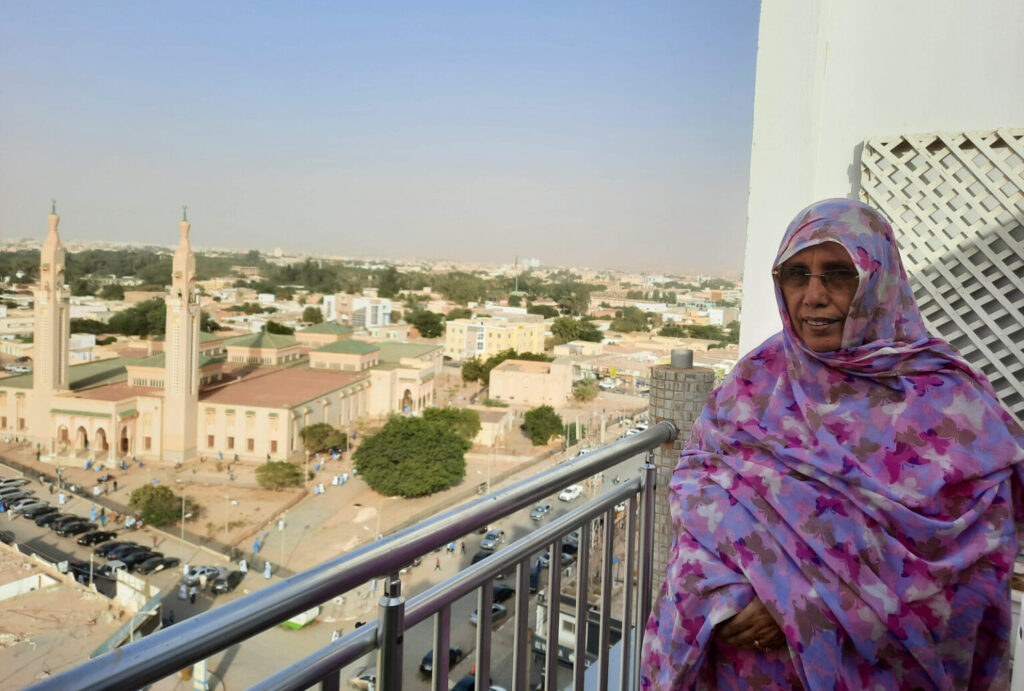
A longtime supporter of women’s rights in Mauritania, Aminetou Mint El-Moctar is currently focusing her efforts on confronting the barriers that deprive young women and members of vulnerable communities of university education.
The 65-year-old human-rights activist works through the Association of Women Heads of Households, which she founded in 1999, to support women’s issues in Mauritania and to renounce the various forms of discrimination against them.
In an interview with Al-Fanar Media, she recounted how her personal experience of being deprived of university education and forced into early marriage motivated her activism.
The right to education is inseparable from women’s aspirations to play a greater role in socio-economic and political life, she said.
The basic right to education opens the door to all other rights, she added. “Our homeland will not be able to achieve economic growth or political development without promoting the right of both sexes to education and raising education quality in all levels.”
Early Marriage and Activism
Aminetou Mint El-Moctar grew up in a middle-class family in the capital, Nouakchott. Her father was a merchant and her mother passed away early after her birth, so she lived with her grandmother. She started her education at a young age. At secondary school, she was forced to drop out to get married at the age of 13.
At that time, El-Moctar was becoming active in political demonstrations, but her father prevented her from taking part in them by “tying her with chains,” she said.
She told Al-Fanar Media: “I rebelled against early marriage and the traditions that exclude women and make them a mere tool for the traditional and patriarchal iron fist that sets them a binding path, without regard to their personal choices.”
She added: “Human-rights activism helped me rediscover myself, refined my skills, and made me more aware of the conditions of marginalised women who are forced to drop out under the pressure of outdated social traditions.”
In her struggle, El-Moctar has won several awards and medals. In 2006, she was awarded the Human Rights Prize of the French Republic. Academics at Georgetown University, in the United States, nominated her as one of the 500 most influential people in the Islamic world. In 2015, she was shortlisted for the Nobel Peace Prize.
Education of Girls in Mauritania
According to statistics, girls’ education in Mauritania faces many problems, including a high dropout rate. Some 47 percent of girls do not make the transition from primary to secondary school. Moreover, only 17 to 20 percent of university students are female.
Mauritania has made efforts to increase girls’ participation in education, but El-Moctar thinks these efforts are deficient in light of traditions that hinder many young women from joining the university. Economic deprivation is also a factor for many Mauritanians. In addition, El-Moctar says, some government policies “place restrictions on women’s access to leadership positions in all sectors.”
The women who do enrol in higher education run into additional problems, El-Moctar said. These include discriminatory educational curricula and practices, gender-based violence, government interventions in curricula and teaching methods, and a decrease in the number of teaching staff.
Other challenges that make it difficult for many girls to continue their education include high rates of child marriage and teenage pregnancy. Additional factors affect boys and girls alike, including poverty and living at a distance from schools. El-Moctar explained that children of rural families who depend on agriculture for their livelihood are unable to travel to urban areas where schools are located.
Empowering People with Disabilities
With about 18,000 volunteers, the Coalition of Mauritanian Organisations for Education is working in partnership with international organisations on several programmes to increase access to education. Its projects include efforts aimed at improving the integration of graduates into the labour market, supporting vulnerable girls’ enrolment in universities, and enabling people with disabilities to continue their education, along with designing educational programs commensurate with their capabilities and needs.
El-Moctar also criticised what she sees as discrimination against young women in government scholarships to study abroad. She said scholarships were awarded primarily to children from officials’ families.
She called on international donors to increase the number of scholarships they offer to those who wish to complete their studies abroad. Mauritania has only one public university and it is unable to accommodate all students, she said.
A Long Activism Journey
Since 1999, El-Moctar has been supervising the activities of the Association of Women Heads of Households, to support Mauritanian women in the face of discrimination and physical violence, and to encourage them to play a greater role in society and the economy.
Women in her country are “victims of traditions reflected in government policies or university admission policies,” El-Moctar said.
However, she asserted: “I will continue my path until women get the highest levels of education as a natural right, not as an exception, and enjoy full legal equality without reservations.”
Forced into early marriage and deprived of a university education herself, Aminetou Mint El-Moctar embarked on a lifelong struggle to improve women’s lives in her country.
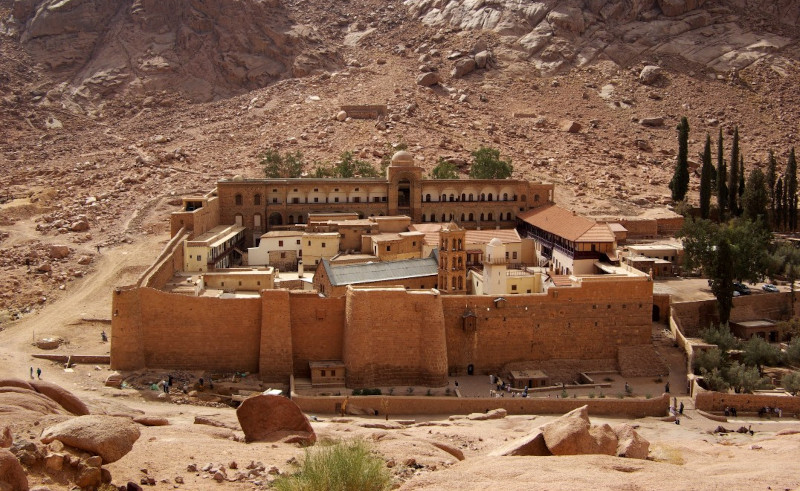
A fragment of the legendary star map by ancient Greek astronomer Hipparchus has been uncovered in St. Catherine’s Monastery.
Within the library of St. Catherine’s Monastery in South Sinai – the oldest continuously-running Christian monastery in the world – researchers have uncovered a fragment of history’s oldest complete star map, penned by ancient Greek astronomer and mathematician Hipparchus.
Hipparchus is considered to be the greatest astronomer in ancient Greece, and so researchers had been searching for his catalogue of stars for centuries. The manuscript in St. Catherine’s Monastery appeared to be something completely different; the pages contained a collection of 10th or 11th century Syriac text called the Codex Climaci Rescriptus. But as it turned out, it wasn’t just that – the pages were a palimpsest, or a parchment in which previous text was wiped clean so that it can be reused.
But much like scribbling your pencil over recently erased writing, it was possible to discover what was erased from a palimpsest. Researchers from the University of Cambridge, the University of Rochester in New York, the Early Manuscripts Electronic Library in Rolling Hills Estates, California and the French national scientific research centre CNRS in Paris worked together to find layers of writing that had been wiped away. Amongst them were the coordinates for the constellation Corona Borealis, and by comparing these precise coordinates with how the night sky would have been arranged in antiquity, the researchers found that the coordinates would have been made in 129 BC – right when Hipparchus was making his revolutionary cosmic calculations.
An excerpt of the discovered document was recently published in the Journal for the History of Astronomy, and is available online.
Interior design has a much deeper meaning for Nawaf Al-Nassar than for many others out there. For the Saudi designer, looking to the outdoors is what allows him to create the indoors.
Growing up in Jeddah, Al-Nassar travelled to London for his studies, where he was mentored by design icons including Zaha Hadid, Philippe Starck and Gianfranco Ferré. “It was amazing,” he tells Arab News.
After graduating in 1990, Al-Nassar returned to his hometown to work as an interior designer, starting his studio, 3N Jeddah (the three Ns being his name, his father’s name — Nahar — and their family name). It quickly gained popularity, acquiring residential and commercial projects in Jeddah, Riyadh, Cairo, Beirut, London, Paris and the south of France.
In 2017, Al-Nassar established Tasmeem Fair — a Saudi-based art platform for young designers to showcase their creativity. The fair became an instant hit, attracting 9,000 guests in its first week alone. He describes it as “my favorite — and the best — project of my life so far.”
His family’s origins — from a small village north of Riyadh in the center of the Kingdom — played a major role in Al-Nassar’s inspiration. He remembers his grandfather taking him out into the deserted Saudi countryside as a child.
“These were our family gatherings,” he says. “When I used to look at old houses in the beautiful desert, it attracted and relaxed me. When I’d go inside old palaces or any interior space, I always felt more relaxed.
“Since I was young, I’ve always felt more like I’m talking to myself when I’m inside an interior,” he continues. “Then, when I went to high school, I always felt comfortable sitting inside a space that was complete. All of us live in an interior space, but sometimes when we look around, we don’t feel comfortable. When I’d feel that in my youth, I’d find out it was because it was not made by a designer, but by a person who has expertise with walls and ceilings. not with proportion.”
Soon after, he attended a couple of summer schools in the United Kingdom to dive deeper into the world of interior design. And his calling towards the industry only grew. “When I sit with people, I love to know their interior, the outside doesn’t mean anything to me,” he explains. “The interior is the core to know the person more. So I started wanting to know more about the interior of things, which helped me a lot with product design. I really do believe that if the interior of where a person works or lives is not reflecting their character, they can never be themselves.”
For Al-Nassar, an artist should reflect his surroundings and his feelings towards them. As such, he began infusing local Saudi motifs into his designs to pass on to generations to come. “I love the space of my studio,” he says. “It really talks to me. As an interior designer, I use soft materials for the interior, such as fabric furniture, and I deal a lot with European companies.”
Although he owns many fabrics with European motifs, he had been longing to find a Saudi designer with his own design on a fabric. He collaborated with manufacturers to print the first Saudi design on a French fabric company’s products.
“It’s very important when you go inside a space and you see details around you that reflect the surrounding of the city where you are,” Al-Nassar says. “Paris, Cairo and others have that, but in Saudi Arabia, I didn’t see any Saudi motifs, so I started to create this line of fabric design and we started manufacturing pieces.” In May, he designed some furniture for the Kingdom’s Misk Institute. His brief was to use inspiration from a historical building in the country, so he turned to the historic Salwa Palace — the original home of the Al-Saud royal family, located northwest of Riyadh.
“I started to enjoy its smooth elements and I looked at it as an architectural designer,” he says. “It’s as if I was in an orchestra, it was like silent music and it was so beautiful to see.”
From that visit, he created “Takkei” (meaning ‘Let’s sit’), inspired by the stones that form the base of the palace. He used new material to achieve a more industrial look that he believed would be more attractive to younger generations. “It’s about speaking their language,” he explains.
Al-Nassar’s creative process happens in the outdoors. Whenever he is struggling for inspiration, he jumps in his car and drives to the mountains, two-and-a-half hours away from Jeddah. He is revitalized by the surrounding landscape and old houses, some of which date back 200 years.
“I can almost read the culture and the type of life they used to live there,” he says. “I’m definitely inspired by Saudi Arabia — but also by everywhere. You have to go to the location and smell old places to be inspired.”
He mentions the picturesque village of Qaryat Al-Dehin, which is made up of 49 houses built from white mountain marble and quartz. After much research, he visited with a friend who came from Qaryat Al-Dehin. Four hours of driving later, he was immersed in its beauty. He compares it to a moment when he was 16 and he and his father watched the great opera singer Luciano Pavarotti sing in Milan. “Honestly, the same feeling came to me when I looked at these 49 beautiful houses on top of this beautiful mountain,” Al-Nassar says. “It was the same energy — the same music; it was amazing.”
His passion for the outdoors has also extended to his teaching as a guest lecturer in universities. He will often take the students on field trips — something he deems vital for today’s youth. “They have to go there themselves and see the reality on the ground,” he explains. “I have done field trips everywhere in Saudi Arabia for students, and lately it has become for others as well.”
Al-Nassar sees great potential and talent in young Saudi architects and interior designers. He admires their creativity, but suggest they need the right curator.
Ultimately, he hopes such people can build a bridge between the Kingdom and the rest of the world. “Design and art are a message of peace,” he concludes. “I’m already building that bridge, and hopefully it will be finished soon.”
source/content: arabnews.com (headline edited)
_____________
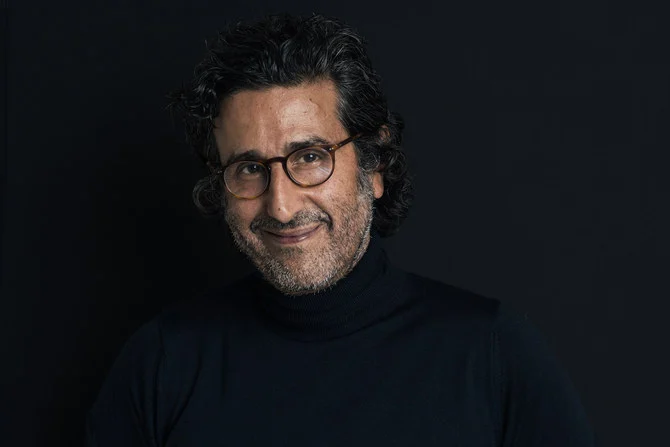
Growing up in Jeddah, Al-Nassar travelled to London for his studies, where he was mentored by design icons including Zaha Hadid, Philippe Stark and Gianfranco Ferré. (Supplied)