Arabs & Arabian Records Aggregator. Chronicler. Milestones of the 25 Countries of the Arabic Speaking World (official / co-official). AGCC. MENA. Global. Ist's to Top 10's. Records. Read & Enjoy./ www.arabianrecords.org
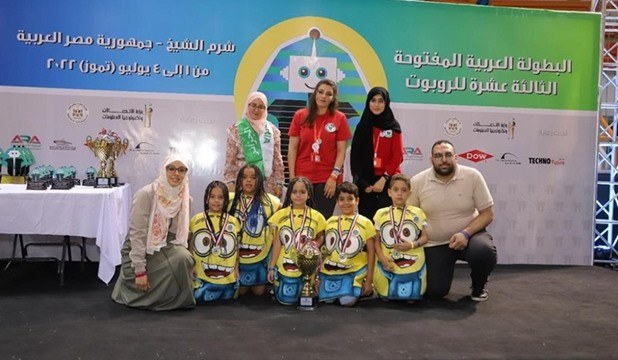
Egypt has finished in first place at the 2022 Arab Open Robotics Championship held in Sharm El Sheikh on Monday.
Since 2008, the Arab Open Robotics Championship has been the largest regional robotics tournament held in the Arab world.
The tournament was organized by the Ministries of Youth and Sports, Communications and Information Technology, Bibliotheca Alexandrina, and the Egyptian Federation of Electronic Games.
The tournament included over 650 students ranging in age from four years to the end of the university stage.
The participants represented 136 teams from 12 Arab countries: Egypt, Kuwait, the UAE, Oman, Yemen, Qatar, Jordan, Tunisia, Morocco, Algeria, Iraq, and Libya.
The Arab Robotics Association accredited 100 juries to judge the tournament’s nine robot competitions.
Egypt came first, winning seven trophies. Jordan finished second with two trophies, followed by Iraq, Libya and Qatar in third place.
In addition, the tournament hosted a lively forum for Arab youth on the sidelines.
source/content: arabnews.com
_________
Egypt placed first in 2022 Arab Open Robotics Championship, winning seven trophies. (Source: Egypt State Information Service)
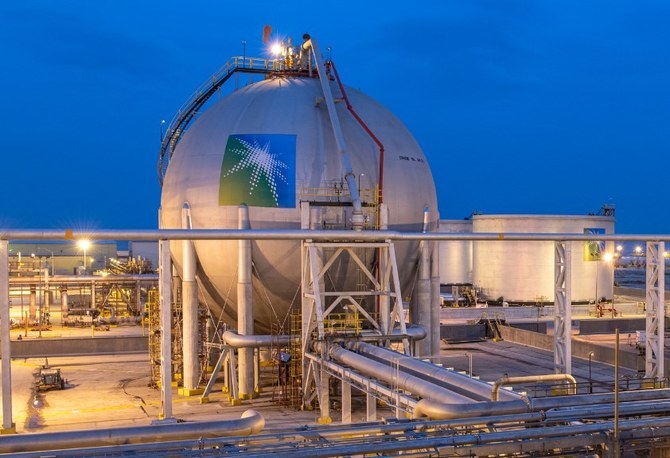
Saudi Aramco has been named one of the top 100 global innovators by American analytics company Clarivate.
In its report titled “Top 100 Global Innovators 2022,” Clarivate revealed that Saudi Aramco is the first-ever company from the Middle East and North Africa region to be placed in the list.
“The regional diversity continues to increase, with the first-ever Middle Eastern list entry via energy firm Saudi Aramco,” wrote Clarivate in the report.
Apart from Saudi Aramco, other new entrants to the list are China’s Alibaba, Germany’s Continental, US’ General Motors, South Korea’s Hyundai Motors and Kia Motors, US’s Philip Morris International, and UK’s Rolls-Royce.
Clarivate added that companies have been included in the list based on factors like influence, success, globalization, and technical distinctiveness.
source/content: arabnews.com (headline edited0
____________
Apart from Saudi Aramco, other new entrants to the list are China’s Alibaba, Germany’s Continental, US’ General Motors, South Korea’s Hyundai Motors and Kia Motors, US’s Philip Morris International, and UK’s Rolls-Royce.
Adi Al Bitar – Judge, Legal Advisor, Lawyer. Author of the UAE Constitution.
Adi Bitar was a brilliant Jordanian lawyer chosen to create the first laws.
Their names are rightly celebrated for the part they played in helping the Founding Fathers build the country we know today as the United Arab Emirates.
Figures such as Adnan Pachachi, the adviser to UAE Founding Father, the late Sheikh Zayed bin Sultan Al Nahyan, who became the first UN ambassador, Dr Abdul Makhlouf, architect of the modern city of Abu Dhabi, and Zaki Nusseibeh, who has had a long and distinguished career as cultural adviser to two Presidents and Minister of State.
But what of Adi Bitar, whose work after more than 50 years, still shapes the daily lives of everyone who lives here?
The author of the Constitution of the UAE, the enormity of his achievement is perhaps concealed by the modesty of his personality, but also the result of a life cut tragically short.
Even for group photographs, “my father would just walk away”, his son Omar Al Bitar says.
“He was a modest man and not the type of person to boast about what he had done. Even when other people took credit for his work, he didn’t mind.”
Yet thanks to Bitar, the seven desert emirates, once ruled largely by tribal convention and cultural traditions, became a modern nation of laws.
In the words that he penned, “Equality, social justice, safety, security and equal opportunities for all citizens shall be the pillars of the society.”
Yet he barely saw the UAE beyond its birth in 1971, dying of cancer just two years later at the age of 48. He is buried beside his 10-year-old son, Issa, struck down by leukaemia only three months earlier.
Early life and escape from Zionist bombing
Bitar was born in Jerusalem, on December 7, 1924. His father, Nasib Al Bitar, was a distinguished judge who had studied at Cairo’s Al Azar University and later served in the First World War as an officer in the Ottoman Empire, of which Palestine was then a region.
By the time of Bitar’s birth, Jerusalem was under the control of the British Mandate, and he was educated first at the multi-denominational Terra Sancta School and then at the Palestinian Institute of Law where he graduated with honours in 1942.
By then tensions were growing between the British authorities, Palestinian Arabs and Jewish settlers, whose number was increasing rapidly as they fled the aftermath of Hitler’s Germany at the end of the Second World War.
By now Bitar was gaining experience as a legal clerk and on the morning of July 22, 1946 found himself at the British administrative headquarters at the King David Hotel, overlooking Jerusalem’s Old City.
At 12.37pm, the Zionist terrorist group, Irgun, detonated a massive bomb in the hotel’s basement. Bitar escaped the blast largely unscathed, but as he went back into the building to rescue the injured, a large part of the south wing collapsed, burying him alive.
Most were convinced he had been killed, but Bitar’s brother insisted otherwise. Eventually Bitar was dug out alive but with serious injuries, including broken bones. He lived only because a table had sheltered him from the worst of the falling rubble.
Two years later the British Mandate was over, and the State of Israel declared. In the war that followed, Jerusalem’s Old City and the entire West Bank came under Jordanian control, and it was as a citizen of Jordan that Bitar gained his reputation as a lawyer.
His quick mind and keen intelligence lead to a senior appointment at the Attorney General’s office, where he worked until 1956. An appointment to Sudan followed, as a district judge, returning to Jerusalem three years later to set up a law practice.
Bitar’s life changed forever in 1964. Working for Sheikh Rashid bin Saeed Al Maktoum, the Ruler of Dubai, the British political agent for the Arabian Gulf approached the Jordanians.
They were looking for a legal adviser to the government of Dubai who could develop a framework of laws that would help the emirate’s development to a modern economy, including a civil legal system and courts.
Bitar’s name was put forward and accepted. He moved to Dubai and immediately set to work on laws and regulations that would govern everything from the banking system to the new Dubai International Airport, Port Rashid, the establishment of Jebel Ali, and even the decree that switched driving to the right-hand side of the road.
In 1965 Bitar was appointed Secretary General and legal adviser to the Trucial States Council, a forum at which the Rulers of the seven emirates would meet to discuss areas of mutual interest.
The post allowed other Rulers to know Bitar better, especially Sheikh Zayed, then Ruler of Abu Dhabi, and with Sheikh Rashid the major player in plans to create the Union of Arab Emirates.
The deciding moment came in February 1968, with a meeting between Sheikh Zayed and Sheikh Rashid in the desert at Seih Al Sedira, on the border of Abu Dhabi and Dubai.
A decision was made to create a new country from the seven emirates, and with it a number of practical decisions, including the pressing need to draft a constitution.
Bitar, a familiar and well-liked figure, was the obvious choice.
He worked long hours to complete the task, from his offices at the Government of Dubai and Trucial States Council, then later in the day from the quiet of his home in Dubai, using the dining room table.
His son, Omar, would act as his father’s driver and assistant during this time, and remembers taking pages to be typed and then copied on a mimeograph machine, the precursor of photocopiers.
The finished document, with 152 articles, and in the words of the Government “establishing the basis of the UAE and the rights of citizens in ten areas” was completed in time for December 2, 1971.
Some elements were intended to be temporary, including Abu Dhabi as the capital, with provision for a new city at Karama on the Dubai border, but this was abandoned and the constitution finally made permanent in May, 1996.
For Bitar, the future seemed to be continuing his distinguish career in the service of the UAE as a senior adviser both to the UAE cabinet and the Prime Minister, at that time Sheikh Maktoum bin Rashid. It was not to be.
His youngest son, Issa, was diagnosed with leukaemia, with treatment in Lebanon, the UK and Dubai. It was during this period that Bitar told his family he needed to visit Britain, on a working trip to discuss the printing of UAE passports.
In fact Bitar was also unwell. In London, he arranged to see a consultant and was diagnosed with stage 4 liver cancer. At one point the treatment, at the American Hospital in Beirut and in Dubai, seemed to be achieving some results, but in January 1973, Issa died, his father at his side. He was 10.
Issa’s death seemed to break Bitar. His own health declined rapidly, and in March 1973 he also died, to be buried by his son’s side.
His wife and surviving children remained in the UAE, becoming citizens of the country Bitar had helped to create.
Of his surviving sons, Nasib, who died in 2011, was a documentary writer and senior figure at Dubai Television, where he was director of programming, and creator of Alarabiya Productions, where he created the series The Last Cavalier.
Omar Al Bitar rose to become a major general in the UAE Armed Forces, vice president of the Sorbonne University Abu Dhabi, then ambassador to China and vice president of the Emirates Diplomatic Academy.
Of his father, he says: “He was a man of vision, a man of ethics. He would discuss with you any matter. He had a depth of knowledge. He was a man of calibre and integrity.”
source/content: thenationalnews.com (edited)
__________
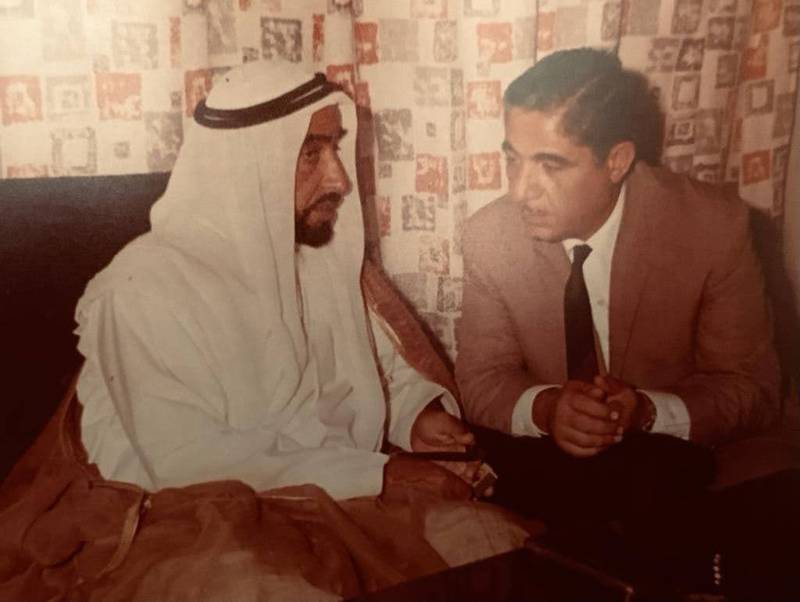
Adi Bitar with UAE Founding Father, the late Sheikh Zayed bin Sultan Al Nahyan. All photos courtesy of Omar Al Bitar
The structure could remain airborne for years at a time.
Yemeni engineer Hashem Al-Ghaili has unveiled his vision for the future of travel, and it wouldn’t look out of place in a film about the apocalypse.
Al-Ghaili posted a video on YouTube proposing a giant nuclear-powered sky hotel named Sky Cruise, which could accommodate 5,000 passengers. Like an enormous, winged, futuristic-looking cruise liner, it would be fuelled by 20 electric engines, with a small nuclear reactor using “highly controlled fusion reaction to provide the sky hotel with unlimited energy”.
As such, the hotel would never run out of power and could remain suspended in the air for several years, “without ever touching the ground”. Both supplies and passengers would be delivered to the hotel via traditional commercial jets. All maintenance and repairs would also be conducted mid-air.
Suspended high above the clouds, the sky hotel would feature a large “panoramic hall”, offering 360-degree views of the skies. A lift would connect this space to the main entertainment deck, which would be home to shopping malls, sports centres, swimming pools, restaurants, bars, children’s playgrounds, theatres and cinemas. A separate section of the airborne hotel would be dedicated to events and business meetings, as well as wedding halls.
Incorporated into the design are balconies and viewing domes attached to each side of the structure, where guests could indulge in some high-level stargazing. “Its sleek design combines the features of a commercial plane, while offering the epitome of luxury,” Al-Ghaili’s video explains.
Sky Cruise would also eliminate disturbance from turbulence, with its navigation systems featuring a state-of-the-art command deck that uses artificial intelligence to predict turbulence minutes before it happens. The system would respond by creating anti-vibrations.
The hotel would also be home to an advanced medical facility to keep guests “safe, healthy and fit”.
The concept was originally created by Tony Holmsten and then reimagined and animated by Al-Ghaili. But it has been greeted with scepticism by commentators: “If physics and aerodynamics didn’t exist, then this vessel might actually be able to take off,” wrote one YouTube user.“
Hashem Al-Ghaili is a Yemeni molecular biotechnologist, science communicator, director and producer. He is best known for his infographics and videos about scientific breakthroughs.
Nearly 10 years ago, Egyptian filmmaker Ali El-Arabi, the award-winning documentarian behind “Captains of Zaatari,” which hits Netflix this month, made a promise. He was in the Zaatari refugee camp in Jordan, the largest temporary settlement of displaced Syrians in the world, and a teenaged boy he had just met named Fawzi Qatleesh asked if he could speak his truth to the camera.
“On the first day I arrived, he asked me, ‘Ali, can you film me? I want to say something to the people outside of this camp.’ The second he started to talk, I said to myself, ‘This boy is my hero,’” El-Arabi tells Arab News.
As the film hits Netflix this month in the Middle East, El-Arabi is overjoyed. Finally, after seven years of filming and a years-long global festival tour, his promise is fulfilled.
El-Arabi knew what it felt like to have a message that people needed to hear. He was himself once an athlete, a dedicated and successful martial artist, even winning Egypt’s national kickboxing championship. During the Egyptian revolution, however, El-Arabi abandoned any future he might have in sport, instead turning towards filmmaking.
“I started to feel I had something to say, but I couldn’t say it with my voice,” he says. “I realized filmmaking was the way I could say it. I started making small documentaries about what was happening and screening them in the street. One day, the police came and I took my film and I ran. That made me realize the power of what I could say with a camera.”
El-Arabi left Egypt, partnering with the ZDF TV channel to film documentaries in war zones including Iraq, Syria, Kurdistan and Afghanistan. War reporting, however, was unfulfilling, as it so often stripped away the humanity of those caught in its horrors.
After meeting Qatleesh and his friend Mahmoud Dagher — the two boys he would ultimately follow from the refugee camp in Jordan all the way to an elite soccer program in the Gulf — El-Arabi filmed them for seven years before whittling their story down to a scant 75 minutes, resulting in a story that showed their incredible journey while also refusing to gloss over the realities of refugee life.
Since its limited release in 2021, the film has already transformed the lives of both young men whose story it follows.
While he may be done telling their story, El-Arabi has been hard at work over the last few years on another — “Ashish’s Journey” — about the upcoming FIFA World Cup. It is inspired by a man who approached him in Qatar as he filmed “Captains of Zaatari.”
The more time El-Arabi spent with the man, the more his innocent aspirations intrigued him, leading him to not only film Ashish in Qatar, but to follow him and his family back to India, even adding fictional elements (with Ashish playing himself) inspired by the classic French satirical novella “Candide” to the docu-film.
“He’s actually a very good actor,” El-Arabi says.
While El-Arabi knows that he will finish filming later this year at the World Cup, chronicling Ashish’s adventures during the games, he does not plan to rush the film out in the immediate aftermath of the event.
El-Arabi has other projects in the works as well. He’s currently producing a film about Algeria and discussing producing an upcoming project with his best friend Mohamed Diab, the director of Marvel’s “Moon Knight.” Closest to his heart, though, is the fiction film he has in the works between Los Angeles and Egypt, inspired by both his own history in boxing and his relationship with his father.
While telling Arab stories will remain a key part of El-Arabi’s career moving forward, ultimately what drives him is not capturing his identity — it’s capturing his soul.
source/content: arabnews.com (edited)
_____________
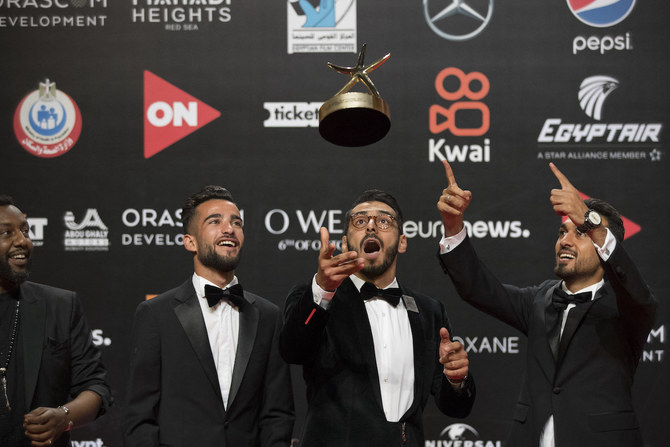
(From left) Mahmoud Dagher, Ali El-Arabi and Fawzi Qatleesh with the award for Best Arab Documentary Film at El Gouna Film Festival in 2021. (AFP)
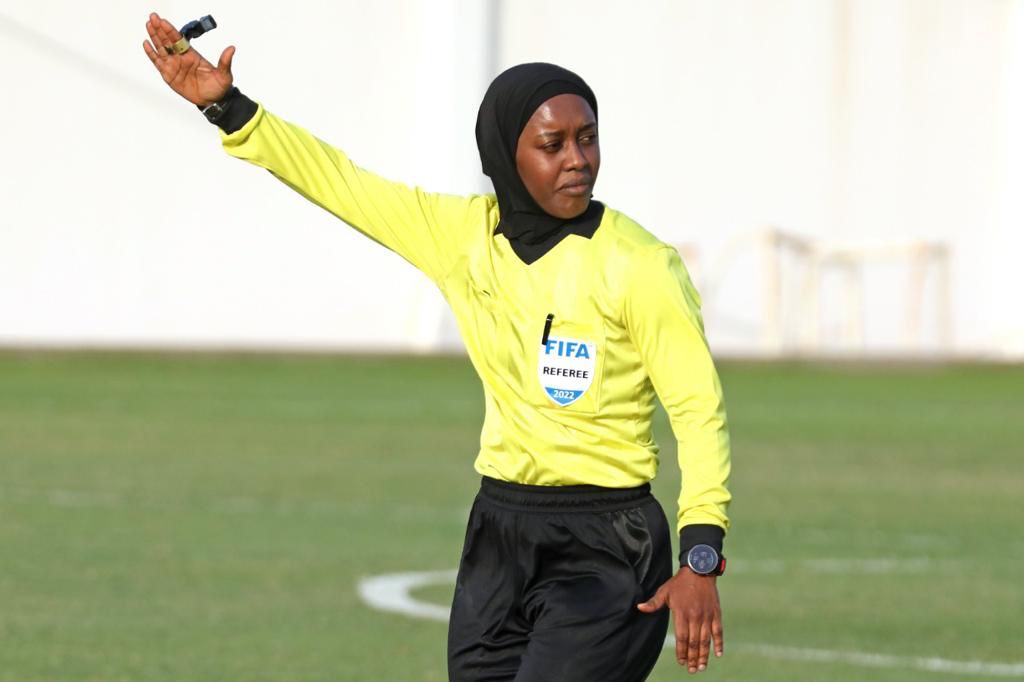
Khulood Al Zaabi, the first Emirati female football referee to join the Asian Football Confederation (AFC), said she is delighted to join the AFC’s elite referee list, noting that her new status comes with great responsibilities that include showcasing the leadership of Emirati women globally.
Al Zaabi’s appointment came after she passed several referee training courses.
In an interview with the Emirates News Agency (WAM), Al Zaabi said that being the first woman in the list of eight referees, which include Mohammed Abdullah Hassan, Ammar Al Junaibi, Omar Al Ali, Adel Al Naqbi, Yahya Al Mulla, Sultan Muhammad Salih and Ahmed Issa Darwish, is a great honour.
She also highlighted her gratitude for the support of Sheikh Rashid bin Humaid Al Nuaimi, Chairman of the UAE Football Association.
Speaking about her ambitions, Al Zaabi explained that she aims to referee games at the World Cup and the UAE Pro League, noting that she can effectively referee men’s games and has self-confidence.
Regarding her participation as a video assistant referee (VAR) in some UAE Pro League games, Al Zaabi said, “During the previous season, I participated as a VAR in two matches in the ADNOC Pro League last year, which aligns with my focus on enhancing my work and training to gain experience.”
Al Zaabi encouraged young girls to play sports and achieve excellence in a sport.
Regarding her vision of women’s football in the UAE, she explained that the sector is continuing its growth, especially with the great support provided by the UAE Football Association, which serves to ensure creating a major transformation in the sector.
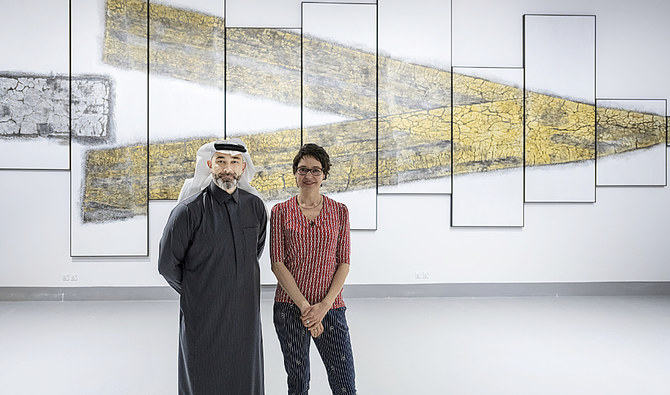
As visitors arrive at the end of the impressive first Diriyah Contemporary Art Biennale their attention is drawn by a gigantic yellow arrow nearly 20 meters long on the wall.
If they look closer at the artwork, titled “E Pluribus Unum – A Modern Fossil,” they can see the numerous cracks in the body of the arrow.
The artwork was created by Tunis-born, Berlin-based artist Nadia Kaabi-Linke, who this year won the fourth Ithra Art Prize. Each year the prize, which was set up in 2017, gives up to $100,000 for the creation of a new artwork that becomes part of Ithra’s permanent collection.
Kaabi-Linke’s massive work presents a contemplative way to look at the pandemic, notably, the decline in commercial air traffic during 2020, which, according to the artist, raises questions as to how humanity measures its progress and environmental awareness versus economic profit.
“The work is meant as a metaphor for modern times,” she told Arab News. “It is particularly relevant to 2020 because all of the airplanes in the world stopped flying.”
The artist relates it also to Tempelhof Airport in Berlin, which has been shut for around 13 years and is used as a camp accommodating up to 7,000 refugees. “I saw a parallel in this because we were all grounded, all of humanity and I think it is an exceptional moment in human history,” she added. “I also wanted to draw the parallel between the aviation industry and the economy. The symbol of economic growth is the rising arrow.”
The cracks, explains Kaabi-Linke, are there because it represents an abandoned airport. The work is a print made from an existing arrow that shows where the planes land and where they take off. “It brings you back to the earth as the cracks in the arrow also refer also to the idea of a cracked earth. The question that the work asks is: Do we want to stay in a world as we know it that has no future or do, we want to take the risk to go to something that is unknown but that probably has a future?”
“At Ithra, our commitment to contemporary art is embodied in this art prize,” Ashraf Fagih, head of programming at Ithra told Arab News. “This year is different for two reasons: First, we have opened up the prize to 22 Arab countries and not just artists in Saudi. Secondly, we are collaborating with the Diriyah Contemporary Art Biennale. To us this has special significance because it means the Ithra Art Prize came back home.”
The prize was previously unveiled during Art Dubai.
“As a distinctive landmark in the Saudi art scene, and in integration with its most prominent event ever, the prize’s artwork was unveiled during the Diriyah Contemporary Art Biennale,” said Fagih. After the biennale the artwork will travel back to Ithra in Dhahran in the Eastern Province to become part of the institution’s permanent collection.
source/content: arabnews.com (headline edited)
___________
Ashraf Fagih, head of programming at Ithra with Ithra Prize winner artist Nadia Kaabi-Linke. (Supplied)
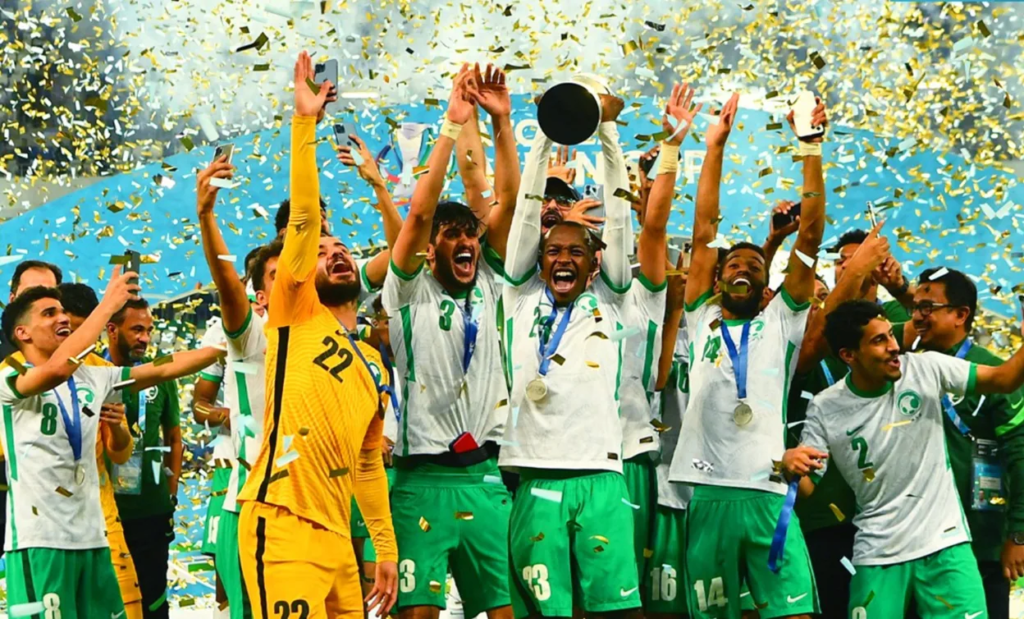
The young Green Falcons lifted the title for the first time after finishing as runner-ups in 2013 and 2020.
On Sunday, Saudi Arabia made history by becoming Asian U-23 champions for the first time after defeating hosts Uzbekistan 2-0.
Strikes from players Ahmed Al-Ghamdi and Firas Al-Buraikan in the second half made the team Saudi, Green Falcons the winner of the finals.
The win also marks the first major continental trophy for Green Falcons’ coach Saad Al-Sheri who has previously lost two continental finals in his career.
Team Saudi Arabia won the finals without conceding a single goal in all the six matches of this edition of the competition.
The first half of the match saw the Saudis almost take the lead but couldn’t as Uzbekistan’s goalkeeper Vladimir Nazarov stopped Ayman Yahya’s header from going in.
In the second half of the game, player Al-Ghamdi gave Saudi Arabia the lead by making a strike. Player Al-Buraikan made another strike with sixteen minutes remaining in the game.
The Young Falcons were crowned the winners of the AFC U-23 Asian Cup in the presence of the Saudi Arabian Football Federation president, Yasser Al-Misehal.
However, this is the first time a team from the United Arab Emirates has won the trophy. The young Green Falcons were runner-ups for the AFC U-32 Asian Cup in 2013 and 2020.
Previously, team, Saudi Arabia has defeated Australia by 2-0 in the 2022 AFC U-23 semi-finals held on Wednesday at Pakhtakor Central Stadium in Tashkent. The goals were scored by Hussain Al-Eisa and Ayman Yahya.
Whereas, Uzbekistan defeated Japan by 2-0 in the second match of the semi-final held on Wednesday.
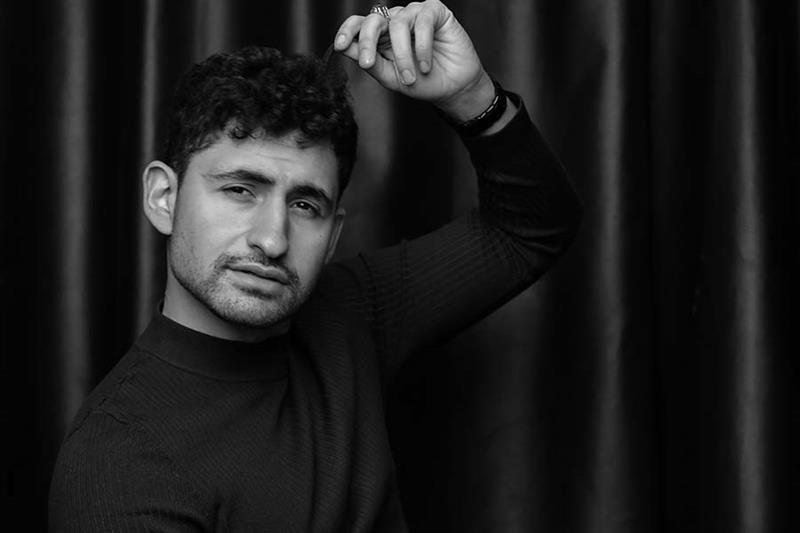
Egyptian actor Amir El-Masry was cast in the upcoming fifth season of Netflix’s historical drama The Crown, according to a PR representative on Wednesday.
El-Masry will portray the young Egyptian billionaire Mohamed Al-Fayed, Egyptian-born UK-based businessman, owner of Hôtel Ritz Paris and formerly Harrods department store and Fulham FC.
The cast of the fifth season also includes Egyptian-British actor Khalid Abdalla who has ben cast as Dodi Fayed , Mohamed Al-Fayed’s son and late Princess Diana’s boyfriend. Abdalla will play opposite Elizabeth Debicki as Diana.
Born in Cairo in 1990 and raised in London, El-Masry’s career kicked off with roles in Egyptian films, earning him Best Young Actor at the Egyptian Oscars in 2009.
Graduating from The London Academy of Music and Dramatic Art in 2013, Amir appeared in Jon Stewart’s debut feature Rosewater and various acclaimed TV series before his breakthrough role in The Night Manager (2016), followed by Lost in London (2017), The State (2017) and Age Before Beauty (2018).
Other notable credits include the critically acclaimed BAFTA nominated mini-series The State, a series regular role of Dante in the new BBC series Age Before Beauty and the lead in the first American-Saudi feature The Arabian Warrior.
Following the reign of Queen Elizabeth II, including political and romantic events that have shaped the twenty-first century, The Crown is considered one of the greatest series in the history of drama.
The series has won over 130 awards, including 21 Primetime Awards, of which seven were during the 73rd Primetime Emmy Awards in 2021, scooping awards of all categories.
The first season of The Crown was released in November 2016. Its fifth season is scheduled for release in November 2022.
Bahrain has won the chairmanship seat of the Committee on Safeguards, a subcommittee of the Council of Trade in Goods at the World Trade Organization (WTO).
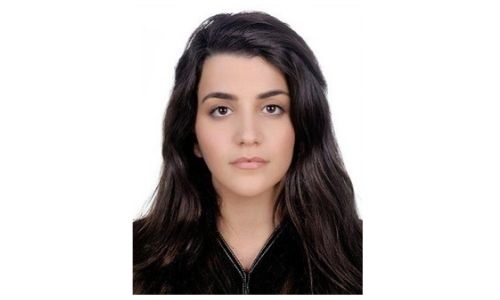
Maryam Abdulaziz Al Doseri, Commercial Attaché of the Ministry of Industry, Commerce and Tourism at Bahrain’s Permanent Mission to the United Nations and other organizations in Geneva, is now the Chairperson of the Committee on Safeguards.
On May 23, WTO members reached consensus on the names of the chairpersons for the 14 subsidiary bodies that report to the Council for Trade in Goods.
The Committee on Safeguards (the Safeguards Committee) was established to administer the Safeguards Agreement. It oversees the operation of the Agreement and is responsible for the surveillance of Members’ commitments.
Minister of Industry, Commerce and Tourism Zayed bin Rashid Al Zayani extended his heartfelt congratulations to His Majesty King Hamad bin Isa Al Khalifa and to His Royal Highness Prince Salman bin Hamad Al Khalifa, the Crown Prince and Prime Minister, on Bahrain’s achievement.
“The success of Bahrain in becoming the chair of the Committee on Safeguards is a source of immense pride as it affirms the unlimited support to the Kingdom of Bahrain,” the minister said.
“It reflects the ambitious and unprecedented visions to chart a strong trade based on justice, transparency, diversity and innovation under the generous support of HM King Hamad bin Isa Al Khalifa and the follow-up of HRH Prince Salman bin Hamad Al Khalifa, Crown Prince and Prime Minister. This success is a strong motivation for further achievements and accomplishments by the Kingdom of Bahrain.”