Arabs & Arabian Records Aggregator. Chronicler. Milestones of the 25 Countries of the Arabic Speaking World (official / co-official). AGCC. MENA. Global. Ist's to Top 10's. Records. Read & Enjoy./ www.arabianrecords.org
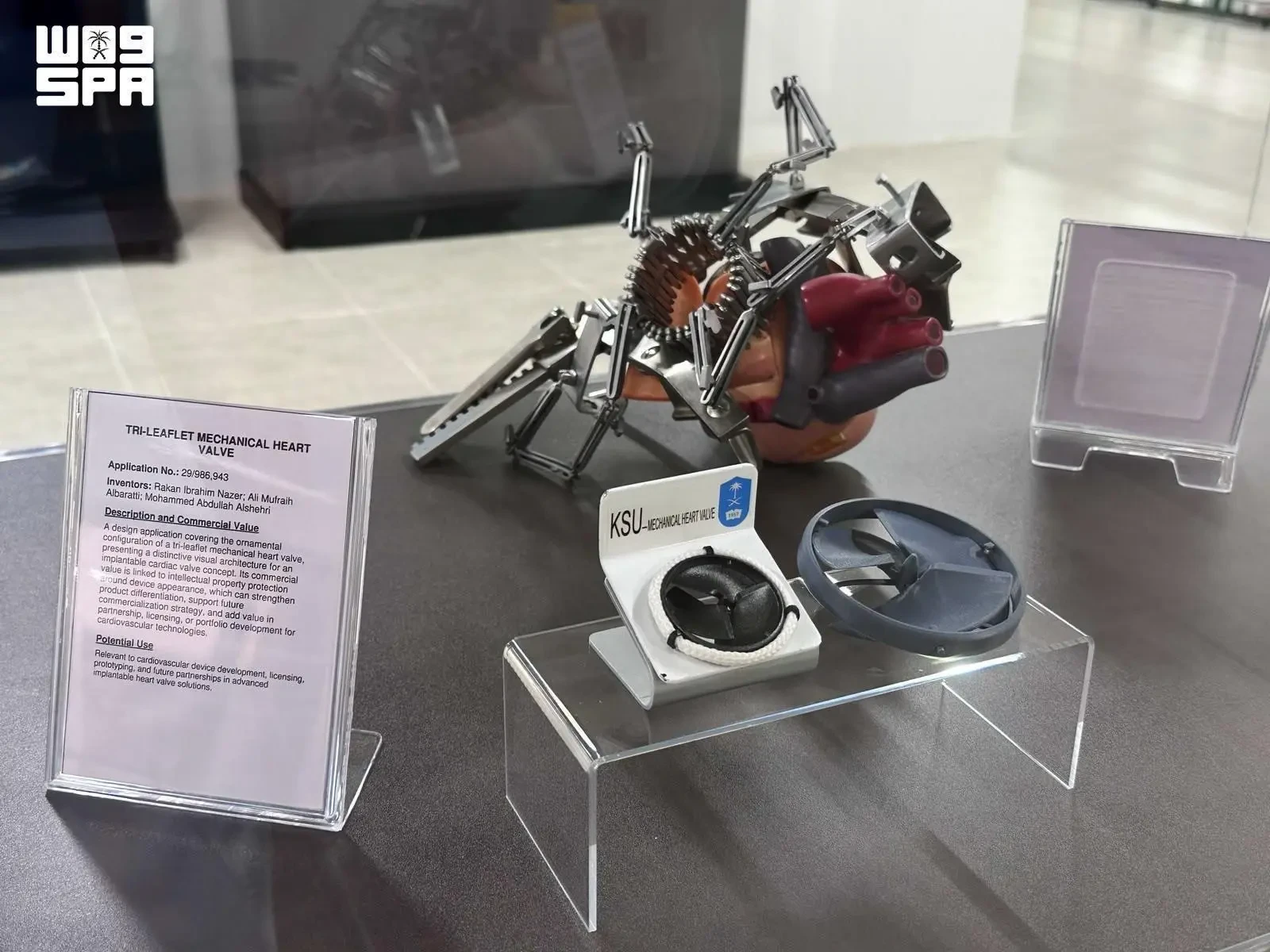
The valve was developed by Dr. Rakan bin Ibrahim Nazer, a Professor of Cardiac Sciences
It features three movable leaflets connected to a central mechanism and a peripheral ring
King Saud University has been granted a US patent for a tri-leaflet mechanical heart valve developed by Professor of Cardiac Sciences at the College of Medicine Dr. Rakan bin Ibrahim Nazer.
The invention features a mechanical design comprising three movable leaflets connected to a central mechanism and a peripheral ring.
This configuration enables the leaflets to open and close in a coordinated manner, regulating blood flow and reducing regurgitation.
The invention introduces a novel approach to mechanical heart valve design, focusing on optimizing leaflet kinematics and blood-flow dynamics compared with conventional valve designs.
The patent adds to King Saud University’s track record of medical innovation and represents a further step in advancing mechanical heart valve technology.
source/content: arabnews.com (headline edited)
___________
The invention introduces a novel approach to mechanical heart valve design. (SPA)
TechWorks attracted about 100 inventors and start-up companies, enabling them to produce prototypes quickly and at a low cost.
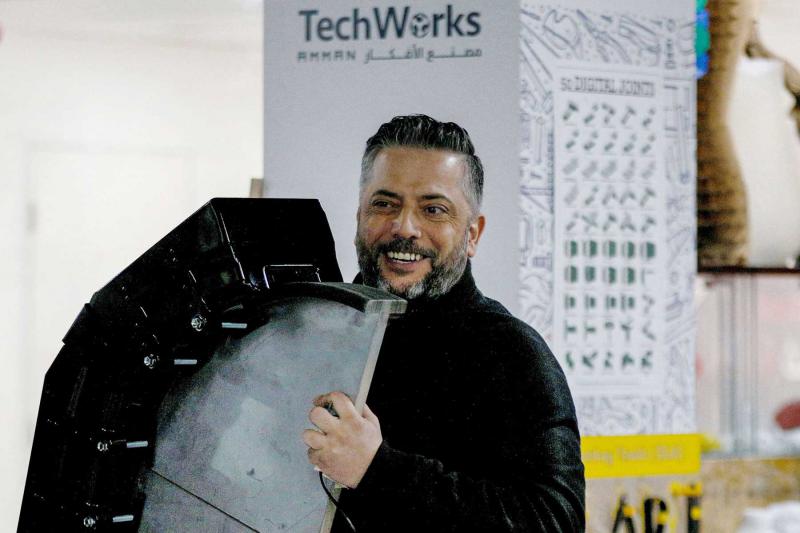
In the age of COVID, Jordanian mechanical engineer Saliba Taimeh pondered how to deal with one contaminated everyday surface: the handrails of escalators in shopping malls and transport hubs.
He came up with a device to sterilise them with a UV ray and this is where TechWorks stepped in.
A wealth of ideas would not have seen the light of day without TechWorks, a Jordanian platform aimed at bringing together youth, ideas and resources to jump-start innovations.
Set up in 2018, TechWorks says its mission is “to plug into entrepreneurial and innovation ecosystems” and turn ideas into reality.
It is equipped with state-of-the-art technology such as 3D printers and is affiliated to a foundation set up by Crown Prince Hussein.
Last year, it attracted some 100 inventors and start-up companies, enabling them to produce prototypes quickly and at a low cost.
Taimeh, 39, said TechWorks “provided me with every support, back-up, advice and guidance” to help perfect the sterilising device, after 23 attempts over almost two years.
His invention sterilises the handrails of escalators “from all kinds of viruses, such as coronavirus and bacteria,” he said.
After contacting several international companies, a German firm specialising in health and safety in public places signed up to manufacture the “Brigid Box”.
Weighing in at 7.2 kilogrammes, it can be installed in less than 15 minutes.
Tour de force
Taimeh’s success story is only one of many.
High school student Zain Abu Rumman, 18, has developed a tracking device for elderly patients and people with special needs, worn like a watch or around the neck.
The “SPS Watch” has a battery that lasts eight days and is resistant to water, heat and breakage.
“The device can send alerts to the mobile phone of a family member through a special application in case the person wearing it falls or is hurt, or if he strays from a certain place,” Abu Rumman said.
It took him two-and-a-half years to perfect and he has struck a production accord with a Chinese company.
Omar Khader, 26, works for “Jazri Studio”, an industrial design company which has devised a “smart” plug to protect children from electric shocks.
“TechWorks has advanced equipment, engineers and technicians that help us convert our ideas into successful products,” he said.
From a mere idea into a real product
Other designers, such as 32-year-old civil engineer Malik Nour, still have a long and expensive way to go to refine their products.
Nour’s brainchild is the “Pikler Triangle”, designed as a safe and environmentally friendly children’s toy.
He hopes to attract Swedish furniture giant IKEA to take on his products, which he is already selling over social media to customers in Jordan, Saudi Arabia and the UAE, under the label of “Fares World”, named after his child.
Ismail Hakki, executive director of TechWorks, said its aim is to provide “a creative environment and all the necessary resources to support and enable young people to transform their projects from a mere idea into a real product”.
The doors of the project’s “Fabrication Lab”, or FabLab, are “open to all; we support students, entrepreneurs and startups”, he said.
FabLab also provides services to doctors and hospitals in the fields of facial restoration, digital dentistry, face masks and sterilisation.
At the request of a doctor, it transformed the chest x-ray of a patient with a malignant tumour close to the heart into a three-dimensional model of the patient’s chest making it easier to operate.
FabLab touts many successes, including a “smart home” which allows a mobile phone user to control electrical appliances inside the house from afar by turning on heating or cooling systems and a piano keyboard to help a blind musician play.
It plans to open two more branches in Jordan to provide technology training and help for school and university students.
Saliba Taimeh, a 39-year-old Jordanian mechanical engineer and inventor, holds a demo of his ultraviolet radiation sterilisation device at the TechWorks digital fabrication lab Amman, February 20, 2022. (AFP)
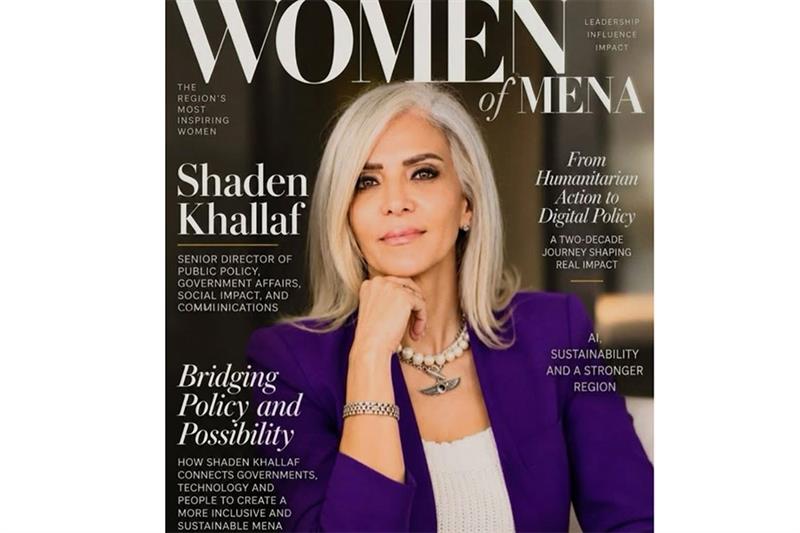
Shaden Khallaf has received the 2026 Women of MENA Award in recognition of her work in technology, public policy and humanitarian leadership.
Announced in October, the award recognises her career spanning the private sector, international organisations and academia, with a focus on cooperation between governments, businesses and multilateral institutions.
The Women of MENA initiative recognises women whose work contributes to governance, innovation and institutional development across the Middle East and North Africa.
According to the award announcement, Khallaf was selected for her contributions to public policy, digital transformation and humanitarian affairs, alongside her leadership in addressing challenges across these fields.
Khallaf previously served as senior director of public policy, government affairs, social impact and communications at Careem, an Uber company.
Her responsibilities covered digital regulation, artificial intelligence, sustainability, economic development and public-private cooperation.
Before joining Careem, she served as Meta’s head of public policy and global lead for tourism policy and sustainability, working on emerging technologies, digital transformation and regulatory policy across the MENA region.
The announcement highlighted her involvement in youth online safety initiatives that reached tens of millions of people and tourism technology projects viewed by hundreds of millions. It also cited her work in advancing discussions on data protection and responsible artificial intelligence.
Khallaf spent more than 20 years with the United Nations High Commissioner for Refugees (UNHCR), concluding her tenure as senior policy adviser and head of the regional policy unit.
Her work across 17 countries during major humanitarian crises focused on displacement, socioeconomic inclusion, resilience to climate change, and mobilising private-sector resources for humanitarian programmes.
The award also recognised Khallaf’s academic contributions. She has held teaching and fellowship roles at the University of Pennsylvania, the Geneva Graduate Institute, the University of Jordan and the American University in Cairo.
She has also undertaken executive education in climate change policy and economics at Harvard University.
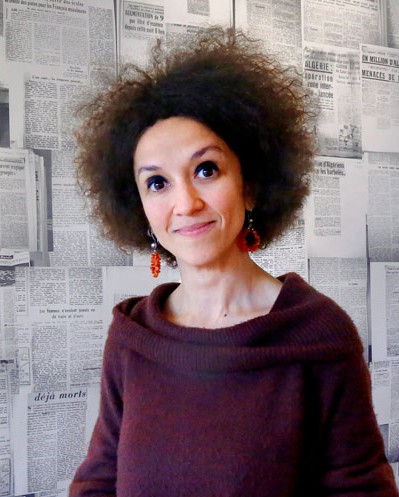
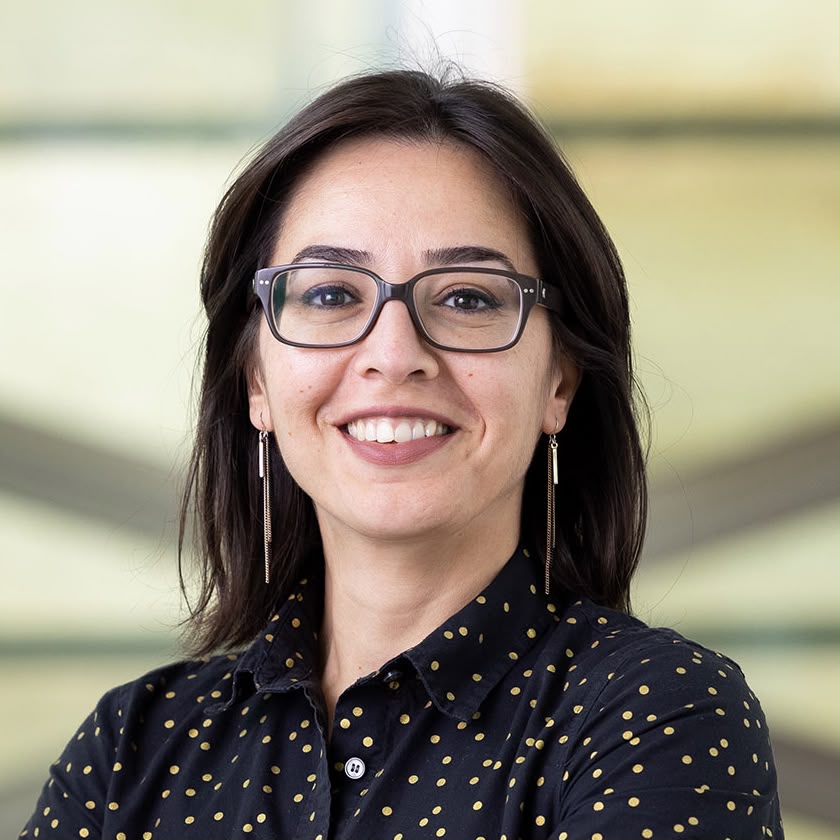
Samia Henni, assistant professor in the College of Architecture, Art and Planning, has received the 2020 Spiro Kostof Book Award from the Society of Architectural Historians.
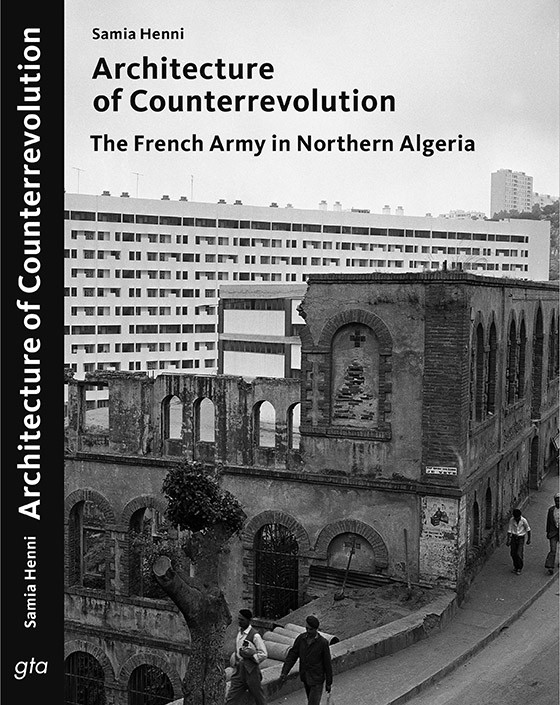
Henni, who teaches in the History of Architecture and Urban Development (HAUD) Ph.D. program, was honored for her first book, “Architecture of Counterrevolution: The French Army in Northern Algeria” (2017).
The award, established in 1993 in recognition of the career and writings of architectural historian Spiro Kostof (1936–91), is given to outstanding interdisciplinary studies of urban history that make the greatest contribution to the understanding of the growth and development of cities.
“I am thrilled that my first book is one of the recipients of this eminent award given in memory of Professor Kostof’s influential scholarship and his exceptional approach to architectural history,” Henni said. “This is truly the highest distinction and the most honorable recognition that I can aspire to. I am extremely grateful to the SAH for supporting and endorsing scholarship on the destroyed and built environment resulting from violent colonial practices and military measures, which, to this day, continue to be part of the daily lives of millions of people around the world.”
Henni’s book examines the intersection of French colonial policies and military counterinsurgency operations in architecture in Algeria during the Algerian Revolution (1954–62). During this bloody and protracted armed conflict, the French civil and military authorities reorganized Algeria’s vast urban and rural territory with profound effects. Built environments were drastically transformed by the colonial regime, infrastructure rapidly “implanted” and new settlements were strategically built to keep Algeria under French rule, according to Henni.
Focusing on three interrelated spatial counterrevolutionary measures, Henni’s research provides an extensive analysis of the massive forced resettlement of Algerian farmers, the mass-housing programs designed for the Algerian population as part of Gen. Charles de Gaulle’s Plan de Constantine, and the new fortified administrative town planned for the protection of the French authorities during the last months of the Algerian Revolution. One of the aims of the book is to depict the modus operandi of these settlements, their roots, developments, scopes, actors, protocols, impacts and design mechanisms.
Henni received her Ph.D. in the history and theory of architecture from ETH Zurich. She teaches architectural history and theory with a focus on colonialism, deserts, displacement, intersectionality, gender and war, from the European colonization of the Americas to the present.
Patti Witten is a writer for the College of Architecture, Art and Planning.
Researchers say larger clinical studies are needed before the technology could be used as a diagnostic test.
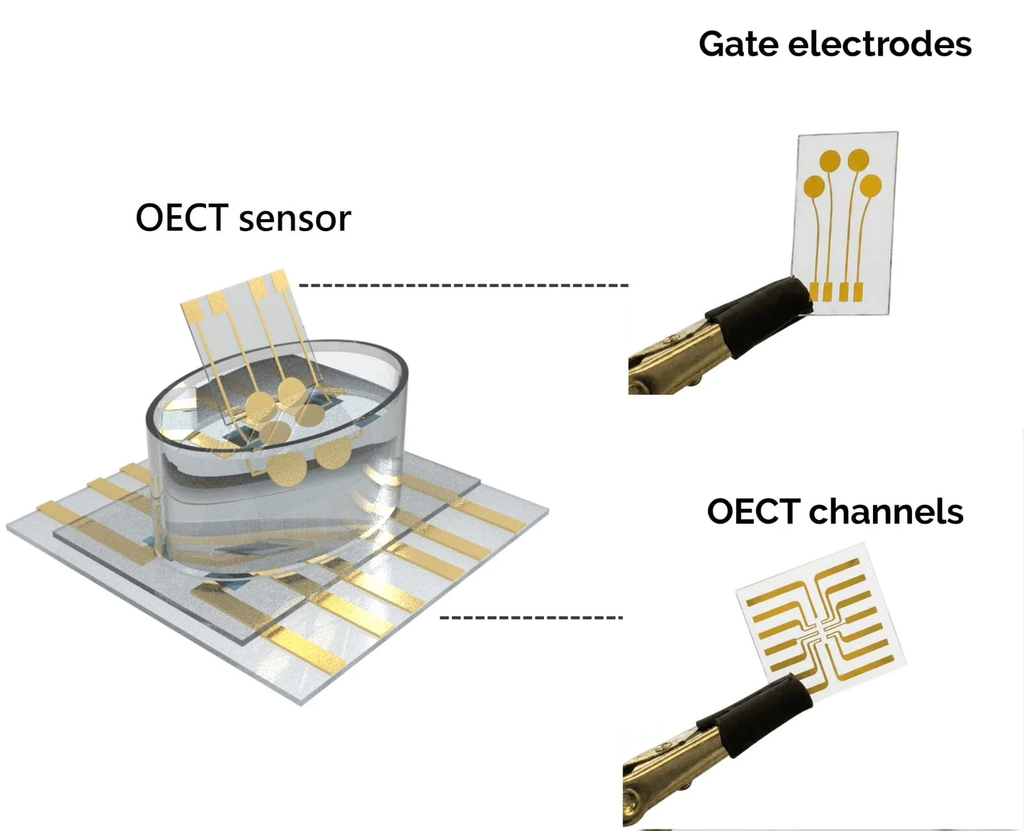
Researchers at King Abdullah University of Science and Technology have developed an electronic sensor that can detect molecular signatures associated with Parkinson’s disease in blood, an advance that could eventually help identify the disease before characteristic symptoms emerge.
The technology, developed by KAUST researchers in collaboration with the University of Oxford, simultaneously detects three forms of alpha-synuclein, a protein closely associated with Parkinson’s disease, according to a study published in Science Advances.
In an initial blinded evaluation involving 59 participants from the Oxford Discovery cohort, the platform achieved 90.9 percent accuracy in distinguishing disease-associated profiles from healthy controls. The study included people with Parkinson’s disease, healthy controls and individuals with isolated REM sleep behavior disorder, or iRBD, a condition associated with an increased risk of developing Parkinson’s disease or related neurological disorders.
Speaking to Arab News, Sahika Inal, associate professor of bioengineering at KAUST, said the next phase of research will focus on testing the sensor in larger patient cohorts. “That requires us also to make more of the same sensors of the same quality with industrial precision,” she said.
Once the larger studies produce the necessary results, the researchers could seek regulatory approval from the Saudi Food and Drug Authority and the US Food and Drug Administration, she said.
“It takes 3-4 years for such early-stage technologies to reach clinical use,” Inal said.
The sensor addresses one of the key challenges in using blood to investigate Parkinson’s disease. More than 95 percent of alpha-synuclein circulating in blood originates from red blood cells, creating substantial background noise that makes it difficult to identify signals from the nervous system.
The researchers’ approach first isolates tiny packages released by nerve cells into the bloodstream before analyzing their protein contents with the electronic sensor. A transistor at the center of the system amplifies very small biological signals into larger electronic signals, allowing the three forms of alpha-synuclein to be measured in about 40 minutes.
Parkinson’s disease damages dopamine-producing neurons and can cause problems with movement, balance and other bodily functions. Diagnosis is currently based largely on clinical assessment and often follows the emergence of characteristic movement symptoms.
Detecting disease-related molecular changes through a blood sample could therefore provide an opportunity to investigate the disease at an earlier stage. However, the researchers stress that the current findings do not establish the sensor as a standalone diagnostic test.
Inal said the team also does not yet know whether the markers could be used to track how the disease changes over time.
“We have no evidence right now whether these markers change over time with respect to the severity of the disease,” she said. “We have only now discovered a marker that we suggest as a potential indicator of the onset of the disease.”
To determine whether the sensor could eventually be used to monitor disease progression or response to treatment, researchers would need to follow the same group of patients over an extended period.
“We would need to test more samples to see how the amount of these markers changes as the disease progresses. This would require tests from the same cohort over the years,” Inal said.
The study also found distinct patterns in the different forms of alpha-synuclein among people with Parkinson’s disease, healthy controls and those with iRBD, suggesting that measuring them together could provide more diagnostic information than relying on a single marker.
The research comes as Saudi Arabia places greater emphasis on preventive healthcare and early detection as life expectancy increases and the population ages.
For KAUST, the next stage could also include research involving patients in the Kingdom. “We would be delighted to work with Saudi clinicians,” Inal said.
The researchers emphasize that the current results are an initial step. Larger, prospective and multicenter clinical studies will be needed to establish the technology’s reliability and long-term predictive value before it can be considered for routine clinical use.
source/content: arabnews.com (headlines edited)
________________
KAUST researchers have developed an electronic sensor that detects three forms of alpha-synuclein, a protein closely associated with Parkinson’s disease, in blood samples. (Supplied)
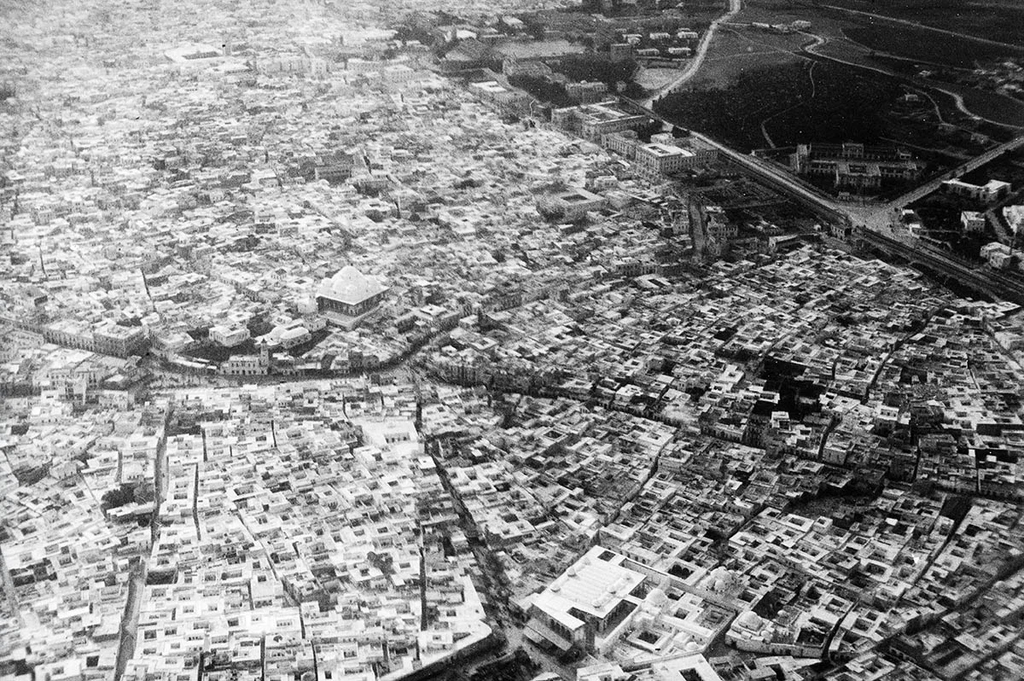
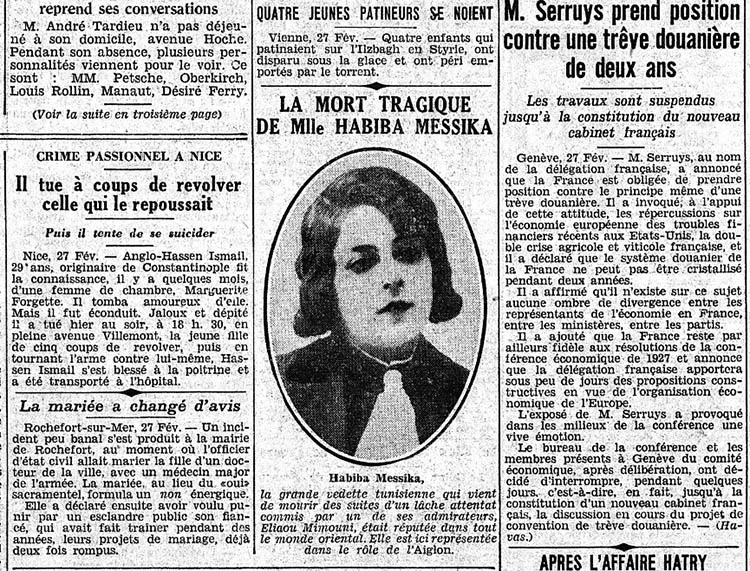
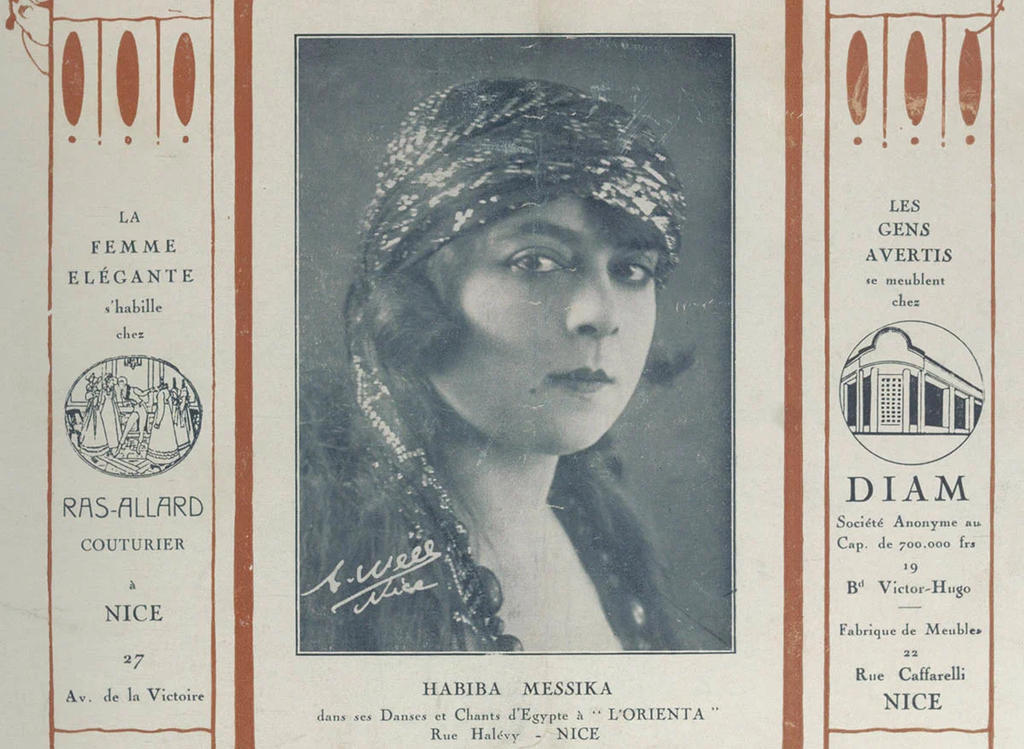
The career of Tunisian singer Habiba Messika was cut tragically short in 1930. Her murder devastated her fans, but in its aftermath her records spread across the French-occupied Maghreb, fanning the flames of insurgent nationalism.
Never before in Tunisia’, noted the worried French Protectorate’s Director of Public Security, ‘has such a funeral taken place’. The cause of his concern was the funeral of North Africa’s first superstar, held in Tunis on 23 February 1930. By half past twelve, thousands of people had gathered on the Avenue de Londres, the main artery leading to Tunis’ Jewish quarters. They had come to mourn the singer Habiba Messika, who, aged 27, had been brutally murdered two days earlier.
In French-occupied Tunisia, this was an unusually large ‘native’ gathering and it gave the authorities cause to worry. Messika’s death had not only brought Muslims and Jews together, but it had also attracted Destourians, Tunisian nationalists. Members of the Destour – a political party founded ten years earlier with the aim of reclaiming Tunisian sovereignty – had long regarded Messika as a fellow traveller. Her records, especially her interpretations of pan-Arabist songs made for the Baidaphon record label, had recently been found in the possession of Destour supporters.
From the Avenue de Londres, some 5,000 people began a two-and-a-half kilometre procession to the city’s Jewish cemetery. At the funeral, the celebrated theatre director Bechir Methenni delivered an impassioned eulogy. Habiba Messika’s murder, he told the mourners, ‘was stupid and sadistic’. But neither her memory nor her music would be forgotten. He then addressed the deceased:
Alas dear comrade, your voice may no longer be with us but rest assured that its memory remains etched in our minds. When our children listen to your records, it will be with tears in our eyes that we will tell them about your life, about your generous spirit, and that we will instill in them the idea that no one was ever the equal of your genius.
His words were not empty. In the aftermath of Messika’s death, her records circulated rapidly across North Africa. A French intelligence report described Messika’s shellac discs as having the potential to ‘provoke unrest in the Muslim milieu’. Speaking to her fans from beyond the grave, the French authorities thus moved to silence her.
Tunis, 1928.
The brief but extraordinary career of Tunisian Jewish superstar Habiba Messika is little known, even among those familiar with her music. Between 1924 and 1930 Messika released a staggering number of phonograph records – close to 100 – for the Pathé, Gramophone and Baidaphon record labels. She was an accomplished actress, heralded as the ‘Second Sarah Bernhardt’ by her 21st birthday. Her style and looks also earned her a coterie of (male) fans known as the ‘soldiers of the night’, an ‘army’ which included Habib Bourguiba, who would become the first president of independent Tunisia in 1957. That Messika achieved so much, so quickly and did so at such a young age meant that her interwar funeral constituted one of the largest and most significant Tunisian gatherings of the early 20th century.
In the aftermath of her murder, Habiba Messika’s memory was kept alive by the recording industry that she had helped shape. Her records flowed across Tunisia, Algeria and Morocco in huge numbers, outselling anything else released in the Maghreb since the birth of the recording industry at the turn of the 20th century. Messika’s death also inspired recorded outpourings of grief by half a dozen Tunisian and Algerian artists. Those laments, made in Tunis and Algiers and distributed transnationally across the Maghreb and beyond, included songs like ‘Moute Habiba Messika’ (‘The Death of Habiba Messika’), recorded by Tunisian-Jewish vocalist and dancer Flifla Chamia for Gramophone in December 1930. Chamia sang from the perspective of the slain Messika, asking – in rhyme – what strange (ghriba) and unprecedented (ʿajiba) events had befallen her (Habiba). The song is made available here for the first time in nearly a century.
Despite the fragility of the shellac on which Habiba Messika’s history was inscribed – and the years of war, movement and displacement to which its owners were subjected –many of her records survive. Messika’s oeuvre allows us to examine the largely overlooked North African and Middle Eastern soundscape, in which a burgeoning trade in Arabic-language records animated fans, fanned French fears of subversion and were passed from hand to hand for decades. More than a mere echo of the period’s politics, narrating a history of the greater Middle East through its records challenges many of the most basic assumptions about the region’s history – of the ephemeral quality of music, of an unravelling Jewish-Muslim relationship and even of the exclusivity of emerging nationalist movements.
Habiba Messika’s story is that of an Arabic-singing Jewish star, as comfortable in her blended identity as her mixed audiences of Jews and Muslims. Her legacy is that of an interwar Tunisian nationalist who was equally at ease playing the role of Romeo on stage as she was dressing as a flapper off it.
Marguerite Habiba Messika was born in Tunis in 1903. Like many North African musicians of her era, she descended from a musical lineage. And, like many associated with music-making in the countries of the Maghreb in the early 20th century, Messika was Jewish. At the outset of the last century, just as the phonograph began to be widely used in Morocco, Algeria and Tunisia, a striking number of indigenous Jewish vocalists and instrumentalists, record label concessionaires, record-store owners, proprietors of cabarets and musical impresarios began to play a prominent role in the production of Arab music. Among these music-makers was Messika’s father, an amateur musician, who may have recorded a small number of discs. But it was Leïla Sfez, Messika’s aunt, a staple of the café-concert scene of Tunis and among the country’s first artists to record for French Pathé in 1910, who provided her entry into the music industry.
Pathé’s Tunisian record catalogues in the early 20th century were filled with Jewish artists like Sfez and the label’s local artistic director was an Arabophone Jew. When Messika began recording for Pathé a few years after being discovered in 1918, she would do so under the direction of Tunisian-Jewish virtuoso pianist Messaoud Habib.
Acoustic recording to flat, shellac disc began in Algeria and Tunisia during the earliest years of the 20th century, as it did in many parts of Europe. Pathé, for example, started recording in Algeria as early as 1904. The English Gramophone Company began its operations there and in Tunis in the same year. The French subsidiary of the German Odéon label soon followed. In French Algeria, indigenous Jewish impresario Edmond Nathan Yafil not only served as interlocutor for the labels but directed their efforts on the ground. By hand-picking which musicians were brought to the recording studio in the coming years, Yafil himself would be largely responsible for the construction of a burgeoning North African music scene based around an overwhelmingly Jewish group of music-makers. By the outbreak of the First World War – when recording around the world ground to a halt – a half dozen labels operating in the Maghreb boasted deep catalogues of mostly Jewish artists performing Arab music.
The postwar period was an auspicious time to embark on a career in music in North Africa. After the First World War, public concerts recommenced. The 15-year-old Messika, ‘discovered’ at the war’s end, soon headlined thousand-plus seat venues across Tunis, Algiers and further afield. ‘More than 1,500 people applauded the return of our talented and incomparable Tunisian star, Mademoiselle Habiba Messika,’ the Tunisian newspaper Le Petit Matin
As with the concert circuit, the record industry picked up where it had left off just before the war. Pathé resumed its activities in the Maghreb, as did Gramophone, which began recording again in Tunis in 1921. By 1925, Messika had begun recording with Pathé and appeared, heralded as a ‘superstar’, on the cover of its Tunisian catalogue for that year.
Messika made dozens of records for Pathé, including some of the era’s most popular and ribald Egyptian songs, such as Sayyid Darwish’s ‘Harrag Alaya Baba Ma Rouhchi Cinéma’ (‘My father didn’t let me go to the cinema’) and ‘Cham el Cocaine’ (‘Snorting Cocaine’), Tunisian folklore and the lighter pieces of the Andalusian repertoire, a classical genre inspired by Islamic Spain. Her voice – crisp, clear, smooth and sensual – captivated her audiences. She became known as the ‘queen of musical ecstasy’. Habib Bourguiba and other ‘soldiers of the night’ were infatuated with the young Jewish superstar, though they were taken by more than just her voice. The few surviving headshots of Messika show a young Tunisian woman who dazzled in black and white. She was a flapper, the likes of which few in the region had seen before.
Messika was also among the most sought-after theatre actors of her generation in North Africa. Throughout the 1920s, she committed herself to demanding roles. These included Romeo in an Arabic-language staging of Shakespeare’s Romeo and Juliette in Tunis in 1924. In assuming the male lead, Le Petit Matin proclaimed that Messika was conjuring ‘Sarah Bernhardt in the role of l’Aiglon’ – Edmond Rostand’s six-act play about the child emperor Napoleon II. When Messika later played Napoleon II in Tunis, the comparison to the ‘divine’ and ‘fantastic’ Sarah Bernhardt – the pencil thin, Jewish actress who conquered the fin-de-siècle French stage in traditionally male roles –was cemented. Both the press and her peers began referring to Messika as ‘the second Sarah Bernhardt’.
Between 1925 and 1928, Habiba Messika continued to record for Pathé while also recording for Gramophone. In a world of exclusive contracts, which bound musicians to a single label, Messika was among the first North African artists to record for multiple labels simultaneously. Similarly, when most of her peers were paid only for their initial recording session, Messika demanded – and won – the right to her royalties. In 1928 Baidaphon, established by the Baida family in Beirut and since headquartered in Berlin (a centre of the global recording industry), began operating in full swing in the Maghreb. Theodore Khayat, recently installed in Casablanca as head of North African operations, made contact with Messika. By April 1928, the Tunisian superstar was heading to Berlin to record with the label.
In a letter written to the executives at Baidaphon, Messika regarded her recordings for the label as ‘better than anything I have recorded previously’. She was especially taken by Baidaphon’s foray into electric recording, which, unlike acoustic techniques, allowed for the unparalleled reproduction of her voice and multi-tonal sounds of her instrumentalists. But recording in Berlin had another advantage: she could do so away from the watchful eye of the French authorities. While she continued to make records with suggestive titles, like ‘Ala sirir el nom’ (‘On my bed, spoil me’), she also recorded a number of marches dedicated to King Fuad in Egypt, King Faysal in Iraq and the Bey of Tunis, Muhammad VI, as well as anthems extolling Egypt and Syria.
Soldier of the night: Tunisia
With Baidaphon, Messika seemed to strike a nationalist rallying cry. At the end of one such recording, ‘King Fuad’s March’, Messika and her orchestra could even be heard shouting ‘Long live the King’ and ‘Long live Egypt’ alongside thunderous applause. Hearing of Egyptian sovereigns and sovereignty, Tunisians could imagine their own. This record and others in a similar style would be her most popular in terms of sales. That popularity quickly drew the attention of French officials.
With the success of her Baidaphon releases, Messika helped to expand record sales in the Maghreb. The music industry’s embrace of electronic recording contributed as well. By 1929 record sales for Gramophone alone had multiplied by a factor of four. The company was now selling 200,000 records across North Africa annually. As with Messika’s discs, this included both the seditious and the salacious.
In early February 1930 Baidaphon once again arranged for North African musicians to travel to Berlin to record on their world-class equipment. Messika was not among them. She had been in a car accident that month and her travel plans were therefore delayed*. But her injuries did not keep her from performing for long. On the evening of 19 February and continuing into the early hours of 20 February, Messika was the featured entertainment at an engagement party hosted by the wealthy Livornese-Jewish Lumbroso family.
While Messika was performing at the Lumbroso engagement, a trespasser entered her apartment building, later recognised as Eliaou Mimouni, a 77-year-old Jew from Testour. According to neighbours, Mimouni had been seen with an oil canister in his hand.
Around eight o’clock on the morning of 20 February, Mimouni re-entered Messika’s building. Moments later, her apartment went up in flames. Messika’s anguished screams could be heard by the residents of 22 Rue Durand-Claye (now Rue Borj Bourguiba). When policemen and firefighters arrived on the scene, they found Habiba Messika nearly burned alive. From her hospital bed, the superstar identified Mimouni, one of her fans, as the assailant. He had set fire to her bed, she told police, and held her down so she could not escape. Mimouni had caught fire as well. Police would later recover a charred oil canister from the scene. They also found Mimouni’s fez. As for his motive, no one in Tunis could say.
On 21 February Habiba Messika succumbed to her injuries. At 27 – perhaps the 20th century’s first member of that tragic ‘club’ – the North African superstar was dead. In less than a month, her assassin was too.
Approximately three months later, French officials in Morocco began receiving urgent messages from civil controllers across the country. Messika’s records – purchased widely and listened to in communal settings like cafés – were stirring up nationalist feelings. Intelligence agents found Moroccans singing along to Messika’s music, ‘in-sync with the phonograph’, while accompanying themselves on oud. In response, French authorities imposed draconian policies to slow the import of, and soon ban, Messika’s discs across the Maghreb. But her music would outlast French presence in the region. Today, some of her surviving records – transferred to tape – can still be found in the cassette stalls of Tunisian markets.
However Habiba Messika is remembered – as North Africa’s first superstar, as ‘the second Sarah Bernhardt’, as an Arabic-singing Jew, as a Tunisian nationalist, as an early member of the ‘27 Club’, as a victim of male violence or as an artist whose music pleased, charmed and brought her multi-confessional faithful to the point of ecstasy – her story need be sung once again.
_____
Chris Silver is Segal Family Assistant Professor in Jewish History and Culture at McGill University. He is currently working on a book on Jews, music and the Maghreb in the 20th century and runs Gharamophone, a website dedicated to preserving North Africa’s Jewish musical past. @chrisilver1
*See Margarida Maria da Mota Ferreira Machado, ‘Habiba Messika: uma biografia (im)possível’, (Faculdade de Letras da Universidade do Porto, 2006).
Emirati designers took centre stage at the Watch and Jewellery Middle East Show, showcasing their latest innovative collections of gold and diamonds and bespoke designs inspired by the UAE’s rich heritage.
Organised by Expo Centre Sharjah with the support of the Sharjah Chamber of Commerce and Industry (SCCI), the exhibition runs from 30th September to 4th October.
The designers’ creations are featured under the Emirati Goldsmiths platform, which SCCI dedicates to the exhibition as part of its ongoing efforts to empower national talent and support young entrepreneurs by strengthening their presence in the jewellery and watchmaking events.
The Emirati Goldsmiths platform brings together 20 Emirati women designers from across the UAE, all making their debut on the platform. Their participation marks an important step in the initiative’s efforts to expand its talent base, attract emerging national designers, and create greater market exposure for a new generation of creative entrepreneurs in the gold and jewellery sector.
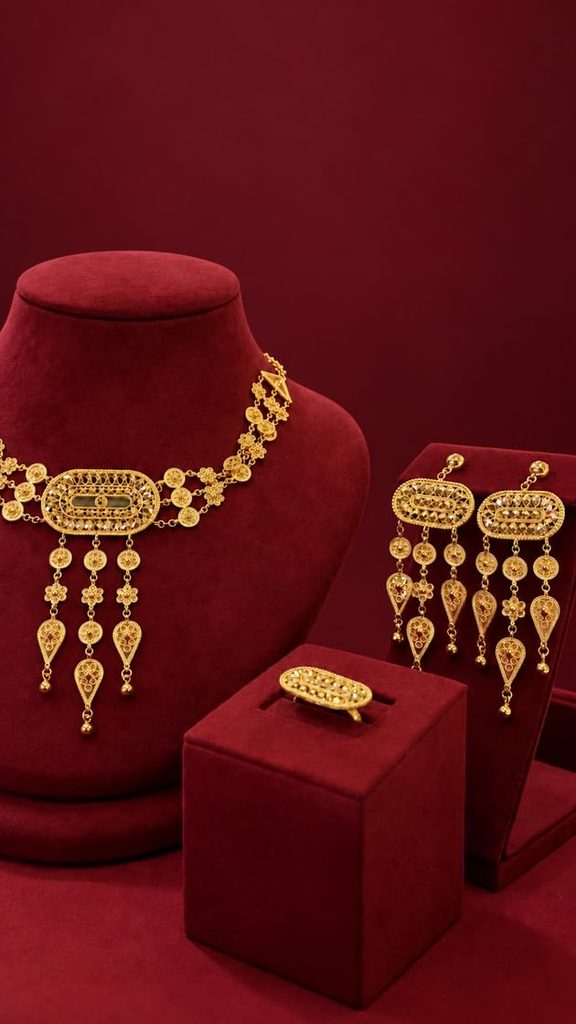
Their jewellery creations on display ranged across gold, diamonds, pearls, and gemstones, in addition to Emirati heritage-inspired pieces. The diverse offerings highlight the versatility and creativity of national talents and their ability to blend heritage-inspired craftsmanship with contemporary design, delivering distinctive jewellery concepts tailored to the preferences of today’s consumers.
Abdallah Sultan Al Owais, Chairman of SCCI, said the Sharjah Chamber’s continued support for the Emirati Goldsmiths platform reflects a strategic vision that views creative industries as a key driver of the knowledge economy and an important avenue for diversifying sources of national income.
He noted that the initiative provides a platform for nurturing national talent and supports an integrated economic ecosystem that helps take local innovation in the gold, jewellery, and gemstone industries to international markets.
Mona Al Suwaidi, Director of the Executive Office of the SCCI Chairman and head of the Emirati Goldsmiths platform, said the platform’s participation in the current edition of the Watch and Jewellery Middle East Show marks a significant step forward in empowering emerging national talent, with 20 Emirati women designers participating for the first time.
She highlighted the Sharjah Chamber’s firm commitment to nurturing a new generation of women entrepreneurs in gold and jewellery design and craftsmanship, and providing them with a professional platform to facilitate direct engagement with leading manufacturers and regional and international industry experts.
The ‘Sharjah Pearls’ pavilion also drew strong interest at the exhibition, returning for the second consecutive year as part of a strategic partnership between SCCI and Suwaidi Pearls. The pavilion provides a specialised platform showcasing the intersection of traditional maritime heritage and contemporary innovation.
Abdulla Rashed Al Suwaidi, founder of Suwaidi Pearls, said the initiative provides an important platform for reviving the legacy and commercial traditions of pearl diving, preserving the oral history and craftsmanship of previous generations, and faithfully passing this heritage on to younger generations. He highlighted a range of traditional diving tools, including the “Al Dayeen” and “Al Fetam”, traditionally crafted from sea turtle shell (Al Ghaylam).
Among the exhibition’s standout offerings, Emirati designer Eman Al Shawab, founder of “Leap of Faith Fine Jewellery”, presented a unique collection of 18-karat gold designs centred on highlighting the inherent beauty of raw gemstones with minimal traditional processing. Her approach combines geological education with innovative, unconventional concepts, offering a distinctive proposition in the contemporary jewellery market.
Emirati designer Eman Al Marzouqi, founder of “Emma Couture”, showcased an innovative jewellery collection embodying her brand’s three-year-old design philosophy centred on creating integrated fashion lines rooted in Emirati identity. The brand uses the Damask rose (Ward Al Jouri) as a distinctive visual and design icon, translating this heritage-inspired element into contemporary jewellery concepts.
Making her first appearance under the Emirati Goldsmiths platform, Emirati designer Afra Saeed Al Suwaidi introduced her new brand, “Setami Jewellery”, inspired by the rich heritage of traditional Emirati goldsmithing, with a particular focus on the distinctive patterns and motifs of “Al Diqqa Al Qadeema”.
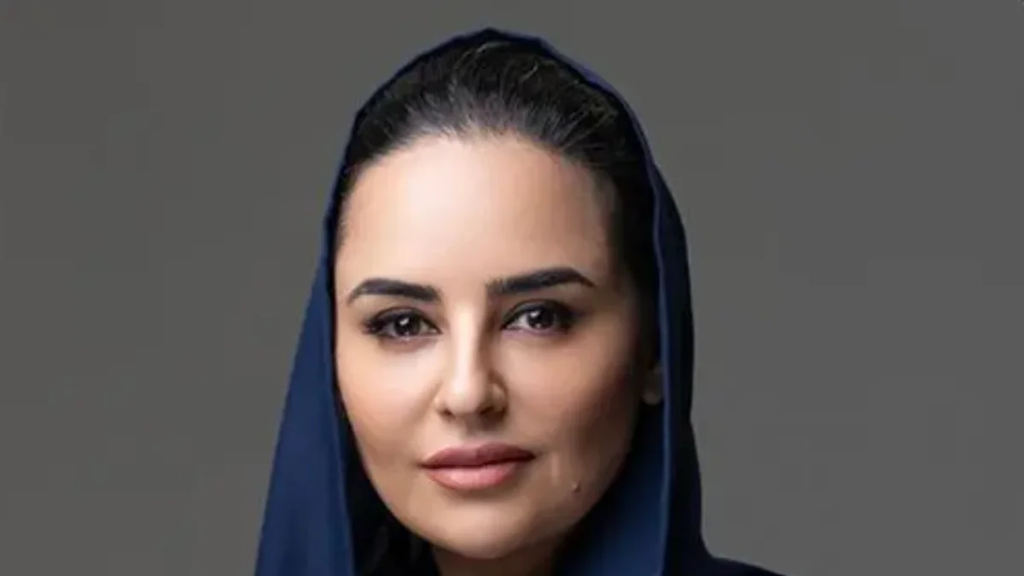
UN Secretary-General Antonio Guterres has appointed Deemah Al-Yahya as a member of the UN High-Level Panel on Freedom of Transit for Landlocked Developing Countries.
Al-Yahya represents the Arab region on the panel, a role that reflects her expertise and contributions in the fields of the digital economy, innovation, and international digital cooperation, the Saudi Press Agency reported on Thursday.
The panel, announced by the United Nations, comprises senior representatives and experts from governments, international organizations, the private sector, and academia.
Al-Yahya is currently serving her second term as Secretary-General of the Digital Cooperation Organization and possesses extensive experience in international cooperation, multilateral diplomacy, policymaking, and the promotion of cross-border investment and development.
Her appointment follows a consultative process and nominations by UN member states, part of an initiative designed to bring together diverse expertise from governments, international organizations, the private sector, academia, and other fields to support the panel’s work.
Al-Yahya described her appointment as a “true honor” and said: “As our world changes, so too must the way we approach development.”
“We need to innovate, challenge traditional approaches, and find new models and methods fit for a new era, especially for countries facing unique geographic and development challenges.
“With 32 landlocked developing countries facing barriers to transit and global markets, I look forward to working alongside fellow panel members to explore practical solutions that can create greater connectivity, opportunity, and prosperity.”
source/content: arabnews.com (headline edited)
____________
UN Secretary-General Antonio Guterres has appointed Deemah Al-Yahya as a member of the UN High-Level Panel on Freedom of Transit for Landlocked Developing Countries. (File/SPA)
Fears arise over potential growth of pro-Iran factions
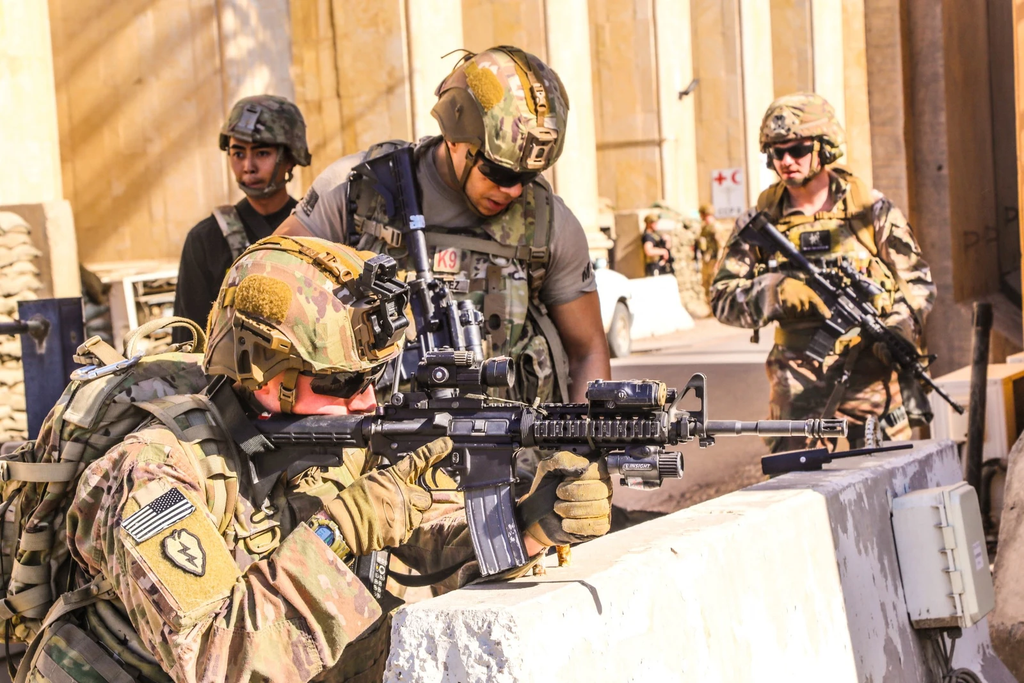
The US military announced Wednesday that it completed the withdrawal of all American troops from Iraq, ending a 12-year mission to fight the Daesh group and prompting US President Donald Trump to hail the conclusion of “a very expensive excursion into Hell.”
The last US troops left an air base in northern Iraq under a deal between Baghdad and Washington.
Trump described the withdrawal by a Sept. 30 deadline as “orderly” and said in a social media post: “It has been a long time, with very bad decision-making that got us involved in this quagmire in the first place, but soon, that will be part of History.” He said the shift was a victory for the US, Iraq and a sign of victory over the Daesh group.
The withdrawal, agreed on two years ago, comes against the backdrop of the ongoing war between the United States and Iran that has also sometimes spilled over into Iraq, with Iran-backed militias firing on US troops and the US striking the groups’ strongholds.
Trump’s comments came as own decision earlier this year to launch the war with Iran has been compared to the Iraq war for its undefined mission as it nears its seventh month.
In recent years, Washington has appeared to seek to shift its focus from the Middle East toward Asia, but that shift has been inconsistent, with the Pentagon alternating between reducing its Mideast presence and then finding itself engaging in new conflicts — including the ongoing war in Iran.
Baghdad touted the end of the US mission as a sign of the country’s increasing strength and sovereignty.
The withdrawal was also celebrated by Iran-backed groups but raised concerns among some other Iraqis, particularly in the Kurdish region, where many fear a resurgence of the Daesh group as well as more attacks by Iran-linked groups, possibly emboldened by the departure of US forces.
Meanwhile, questions loom around the future of the Iraqi militias, which the Baghdad government has sought to disarm, with little success so far.
A new phase in Iraq after decades of US involvement
Pentagon spokesperson Sean Parnell said in a statement that US troops and equipment had completed an “orderly departure” from the air base in Irbil, in northern Iraq’s semi-autonomous Kurdish region.
“This milestone reflects the success of a 12-year campaign that defeated Daesh as an organized military threat in Iraq and across the region,” he said. “It also marks a transition from a wartime coalition mission to an Iraqi-led security effort supported by a more normal bilateral security relationship.”
He added that the US military “will continue to provide targeted training and intelligence support to our Iraqi partners.”
Iraqi Prime Minister Ali Al-Zaidi presided over the handover ceremony and described the US withdrawal as the beginning of a “new phase, one defined by Iraq’s sovereignty, the strength of its institutions, the readiness of its forces, the unity of its decision-making, and balanced partnerships with its friends.”
He said Iraqi security forces will continue the fight against IS and the government will ensure that non-state groups no longer hold weapons.
US troops invaded Iraq in 2003 to topple Saddam Hussein. They departed in 2011, but three years later, Iraqi authorities invited a smaller US-led mission to fight the Daesh group, which had rampaged across Iraq, seizing large swaths of territory.
With the extremist group reduced to scattered sleeper cells, Washington and Baghdad agreed in 2024 to wind the mission down.
US troops pulled out of bases in most areas of Iraq last year but maintained a small presence of hundreds of troops in the semiautonomous northern Kurdish region. Bases there have regularly come under attack since the US and Israel launched their war against Iran on Feb. 28. Iran-backed Iraqi militias also have coordinated with Yemen’s Houthi rebels to attack Saudi Arabia.
The future of militias remains unclear
The Iraqi government initially linked the Sept. 30 deadline for US withdrawal to the disarmament of non-state armed groups by that date.
While a handful of less-influential militias have agreed to turn over their weapons, powerful groups close to Iran rejected the prospect or set conditions for disarming that the government would be unlikely to meet.
Al-Zaidi has since walked back the deadline. He told The New York Times earlier this month that the deadline for militia disarmament has been pushed to June 2027.
The effects of the US withdrawal may not be immediately visible, particularly since the US military presence had already been scaled down. But officials in Iraq’s Kurdish region have expressed anxiety about the departure and particularly about the removal of US air defense systems.
The Kurdish regional government’s Peshmerga Ministry said the Kurdish region had faced more than 1,000 drone and ballistic-missile attacks during the recent US-Iran conflict.
“The departure of the United States from the Kurdistan Region under these complex regional circumstances, without the provision of a defense system, is a matter of concern,” the statement said.
Iran-allied groups in Iraq, meanwhile, have celebrated the US withdrawal.
“The expulsion of the occupation forces, defeated, from the land of Iraq is the beginning of full sovereignty,” Abu Mujahid Al-Assaf, a security official with the powerful Kataib Hezbollah militia, said in a statement.
He added a warning to Al-Zaidi and his government not to carry out American plans, threatening that “any government that does not work for the benefit of the people will be overthrown by all means.”
The Islamic Resistance in Iraq, an umbrella group of Iran-backed militias, said in a statement that negotiations with the government over the regulation of weapons have not resulted in an agreement and that it was “not bound by any timeline or agreement” announced by the government or political entity. The group said it is open to “any dialogue that guarantees Iraq’s sovereignty and dignity.”
sourcec/content: arabnews.com (headline edited)
____________
American soldiers taking position around the embassy in the capital Baghdad. (AFP)