Arabs & Arabian Records Aggregator. Chronicler. Milestones of the 25 Countries of the Arabic Speaking World (official / co-official). AGCC. MENA. Global. Ist's to Top 10's. Records. Read & Enjoy./ www.arabianrecords.org
The Arab Media Union has been officially launched under the umbrella of the Arab Economic Unity Council (AEUC), marking a new step toward strengthening joint Arab media action, supporting development goals, and enhancing regional media integration.
Operating as a specialised body affiliated with the League of Arab States, the newly established Arab Media Union aims to advance professional standards across the Arab media sector and reinforce its role in economic, social, and cultural development.
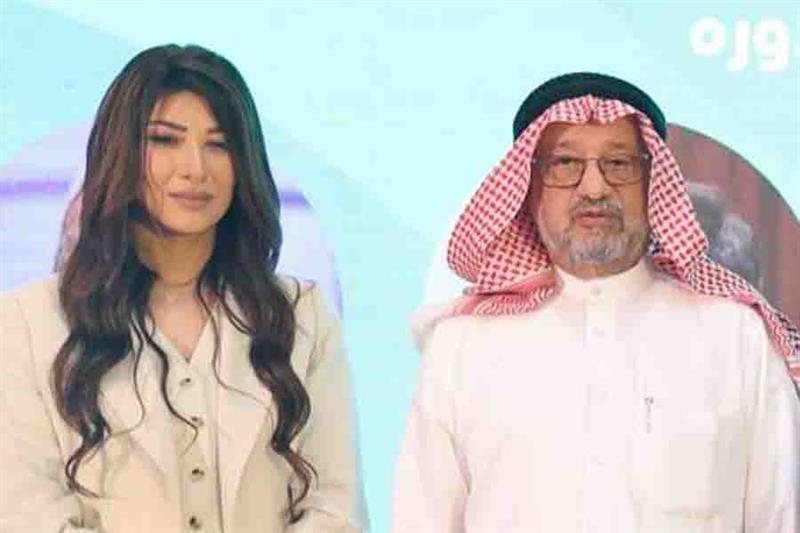
The Arab Media Union is chaired by Youssef Abdel-Wahab Al-Omairi, with Sally Gad, Vice Dean of Education, Faculty of Language and Media, at the Arab Academy for Science, Technology and Maritime Transport, appointed as Secretary-General.
It brings together a select group of Arab media professionals and academics committed to promoting institutional development and professional excellence in Arab media.
The launch comes as part of the AEUC’s broader strategy to activate specialised sectoral unions, contributing to the growth of the knowledge economy, supporting digital transformation, and fostering closer integration among Arab media institutions.
According to its founding objectives, the Arab Media Union seeks to unify Arab media efforts, enhance professional performance, encourage innovation in media content, and invest in the training and qualification of media practitioners. It also aims to keep pace with rapid technological advances in digital and new media.
Al-Omairi described the union’s establishment as an important step toward building an effective Arab media entity capable of articulating Arab issues and strengthening Arab media presence at regional and international levels.
Professor Gad said the coming phase will focus on launching professional and training initiatives, alongside establishing Arab and international partnerships, to develop the Arab media landscape in line with the highest professional standards.
The Arab Media Union is expected to begin implementing its strategic plan in the coming period, in line with its founding mission under the League of Arab States.
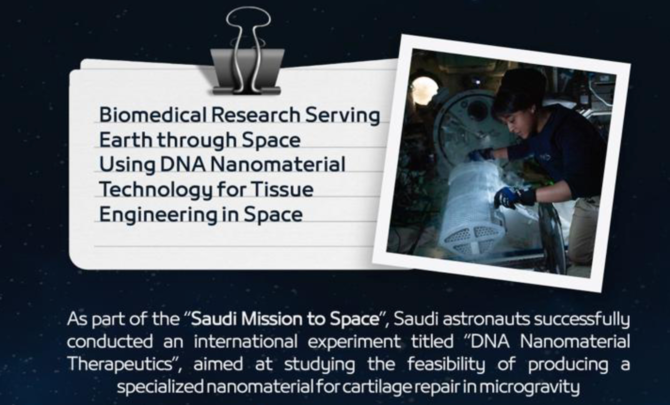
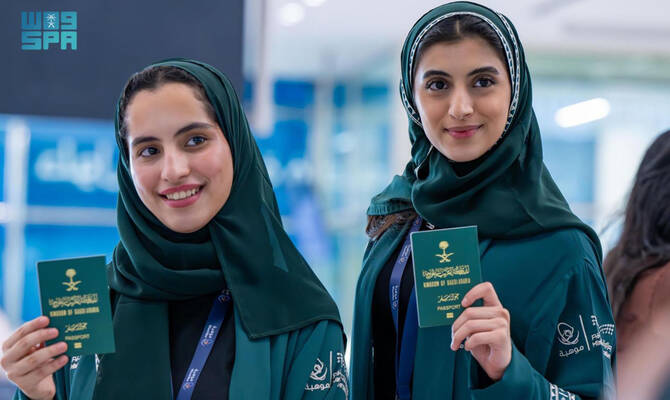
Saudi Arabia has recorded a major scientific milestone with its astronauts helping to produce a cartilage-repair nanomaterial in space for the first time, building on the work done during the Kingdom’s landmark SSA-HSF1 mission in 2023.
The Saudi Space Agency announced that its astronauts’ involvement in 19 experiments aboard the International Space Station would enhance quality of life on Earth.
The SSA explained that the research, led by scientists Yupeng Chen and Mari Anne Snow, in an international collaboration, focused on developing advanced biomaterials for tissue engineering, the Saudi Press Agency reported on Monday.
Saudi astronaut Rayana Barnawi helped to conduct the experiments and collect data in the microgravity environment. The material produced could assist in tissue treatment and organ transplantation.
The research findings were published in Nature in July 2025, one of the world’s leading scientific journals.
Barnawi said: “Conducting the experiment in space enabled the fabrication of an advanced nanomaterial and the production of reliable data that supports the development of scientific research contributing to improving human life and serving humanity.”
The SSA said the Kingdom wants to maximize the scientific return from human exploration missions for the benefit of the planet.
source/content: arabnews.com (headline edited)
______________
Saudi Arabia has recorded a major scientific milestone with its astronauts helping to produce a cartilage-repair nanomaterial in space for the first time. (SSA)
The UIL presidency represents one of over fifty leadership positions Rabat secured in international and regional organizations throughout 2025.
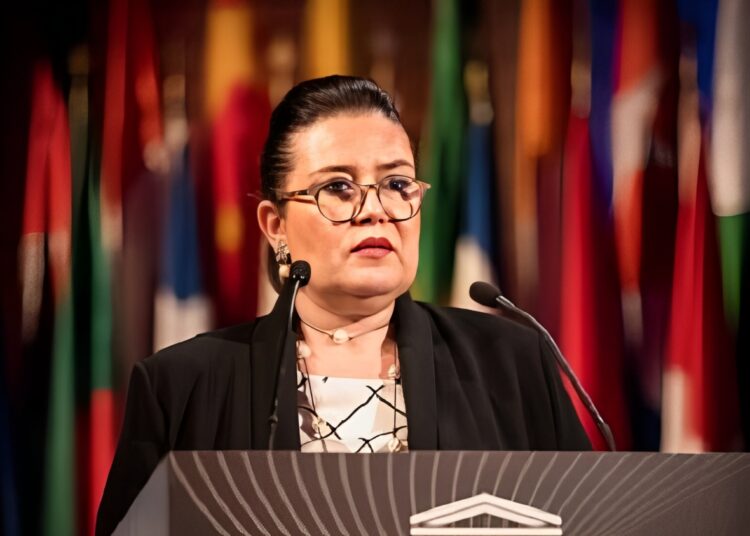
Morocco’s Ambassador to Germany Zohour Alaoui has been unanimously elected to chair the Board of Directors of UNESCO’s Institute for Lifelong Learning (UIL) for the 2026-2028 period.
The appointment seals the North African kingdom’s emergence as a central diplomatic actor within the architecture of international governance.
The election took place during the 21st meeting of UIL’s Board of Directors in Hamburg. Costa Rica’s former Vice President and Foreign Minister Epsy Campbell Barr was simultaneously elected as Vice President of the UN institute’s governing body.
Officials position Alaoui’s selection as an international recognition of Morocco’s commitment to education as a cornerstone of peace and sustainable development.
They say the appointment reinforces King Mohammed VI’s pioneering leadership in advancing educational initiatives across Africa and beyond.
The decision builds on Morocco’s active involvement with UNESCO and UIL, particularly following the seventh International Conference on Adult Education (CONFINTEA VII) held in Marrakech in June 2022. That conference produced the Marrakech Plan and established the African Foundation for Lifelong Learning.
During the same Hamburg meeting, UNESCO added the Moroccan cities of Oujda and Casablanca to its Global Network of Learning Cities.
The designation recognizes their strong commitment to making education accessible to all ages at the local level. Fez, Agadir, and Essaouira joined the global network in 2023.
A remarkable ascendancy within the global institutional framework
The UIL presidency represents one of over fifty leadership positions Rabat secured in international and regional organizations throughout 2025.
This unprecedented diplomatic momentum spans diverse sectors, including peace, security, human rights, sustainable development, and digital governance.
Morocco achieved several historic firsts this year. The kingdom assumed its inaugural presidency of the UN Committee on Peaceful Uses of Outer Space (COPUOS) and became the first Arab nation to chair the International Council of Nuclear Societies (INSC).
The country was also designated President of the UN Conference on establishing a nuclear weapons-free zone in the Middle East and gained its first presidency of the International Network of Corruption Prevention Authorities.
In maritime governance, Morocco secured the First Vice-Presidency of the International Maritime Organization Assembly for 2026-2027 while maintaining its council seat.
Parliamentary achievements included Morocco’s first election to the Inter-Parliamentary Union’s Standing Committee on Democracy and Human Rights bureau.
A Moroccan magistrate was elected Vice President of the International Association of Judges for the first time since the organization’s 1953 founding.
The country continues presiding over the Central African Republic Configuration of the UN Peacebuilding Commission, a position it has held through regular re-elections. Morocco was also re-elected to UNESCO’s Executive Council for 2025-2029 with high scores within its regional group.
In food security, Morocco secured re-election to the UN Food and Agriculture Organization Council for 2026-2029 and won election to the World Food Programme Board of Directors.
Environmental and climate responsibilities include Morocco’s Vice-Presidency of the African Ministers’ Council on Water (AMCOW) for North Africa and participation in UNESCO’s Intergovernmental Oceanographic Commission.
Morocco positioned itself at the forefront of emerging international issues, particularly digital transformation and artificial intelligence. The country joined the Digital Cooperation Organization Executive Committee and secured the Vice-Presidency of INTERPOL’s Global Expert Group on Cybercrime.
A new wave of Arab singers is gaining momentum across the regional music scene, marking names to watch in 2026.
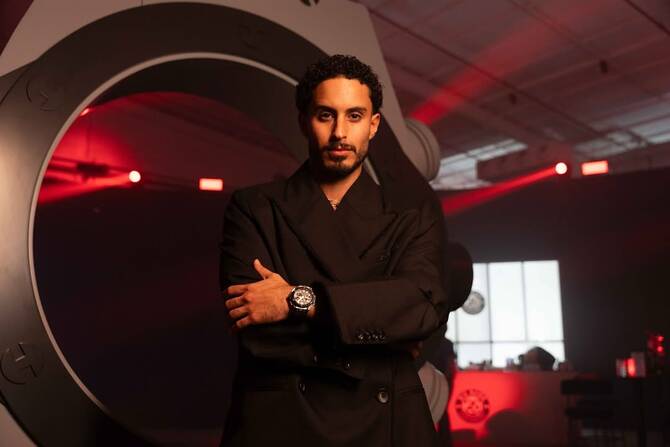
Tul8te
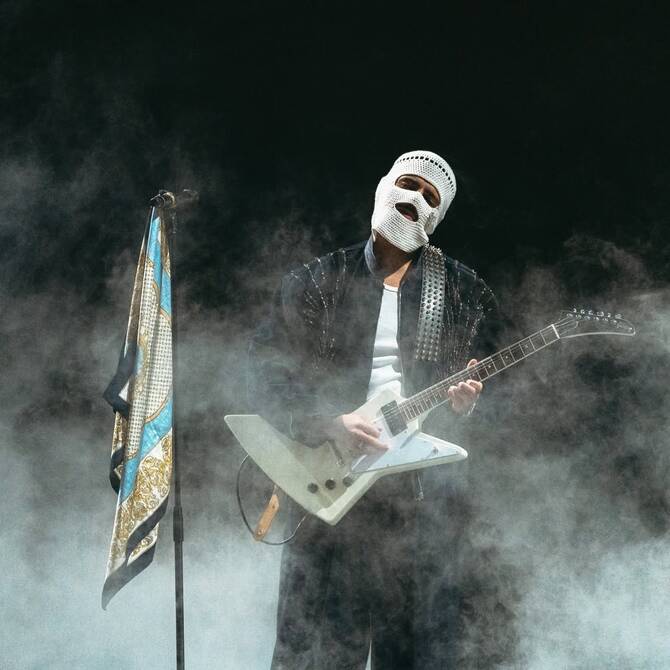
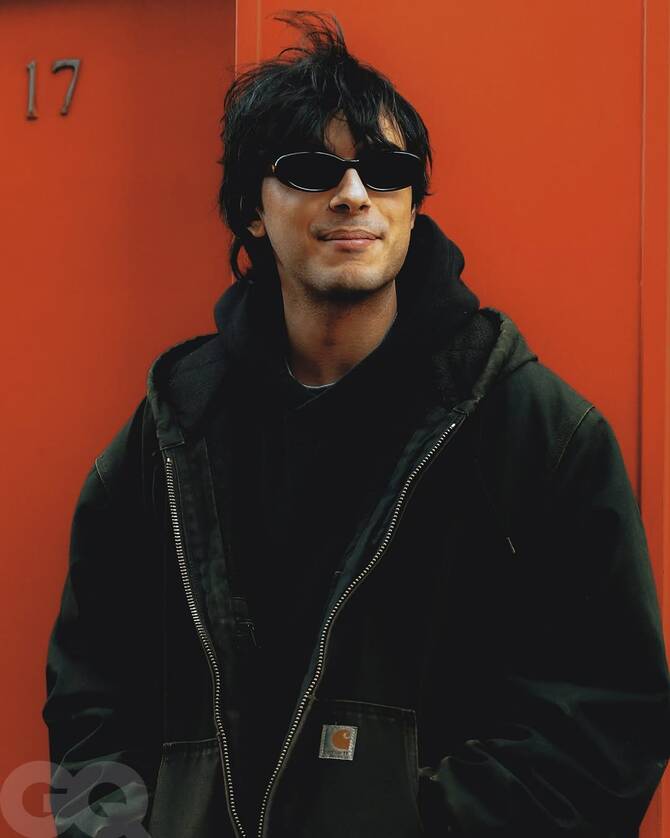
The masked Egyptian artist has become one of the region’s most intriguing breakout acts, blending pop hooks with emotional storytelling while keeping his identity anonymous.
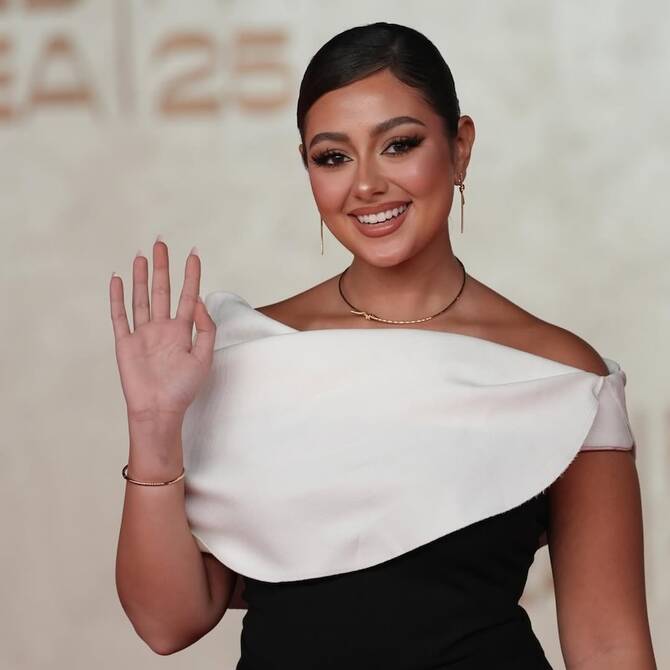
Mishaal Tamer
The Saudi singer continues to gain traction with a sound rooted in Arabic pop and contemporary influences, positioning him as one to watch in the Gulf music scene.
Zeyne
Zeyne’s vocals and lyrics have resonated widely, with her recent releases signaling a strong upward trajectory heading into 2026.
Molham
Known for blending pop, rap and R&B, the Saudi singer has carved out a distinct sound that continues to attract a growing audience.
Lana Lubany
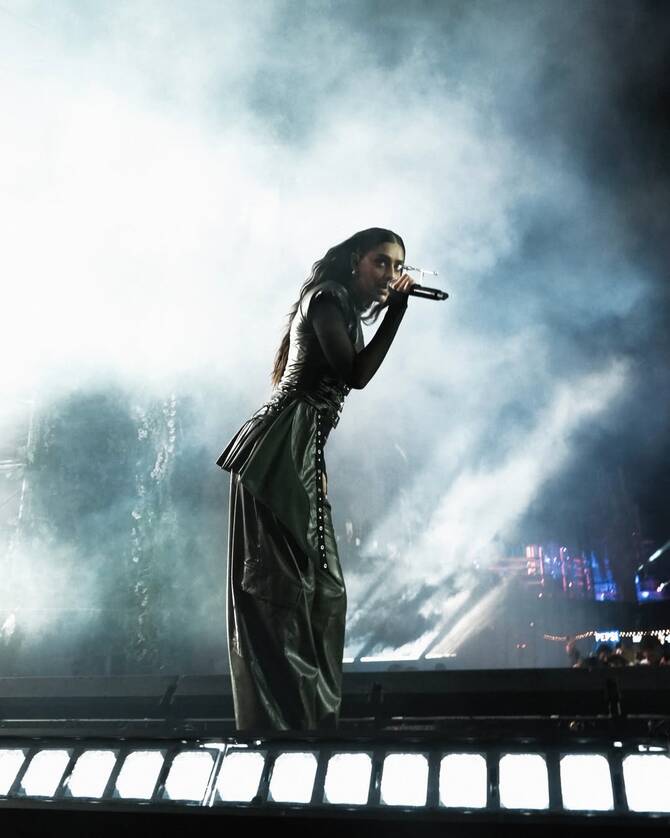
With her bilingual lyrics and indie-pop sensibility, the Palestinian singer based in London has been steadily expanding her international reach while maintaining a strong regional following.
Bayou
The Egyptian singer has gained attention with tracks such as “Neshar Belel” and “Mesh Haseebek,” which blend contemporary sounds with Egyptian influences and resonate with younger listeners.
As Arab film and television expand across festivals and streaming platforms, a new generation of actors is emerging through early roles that signal momentum in 2026.
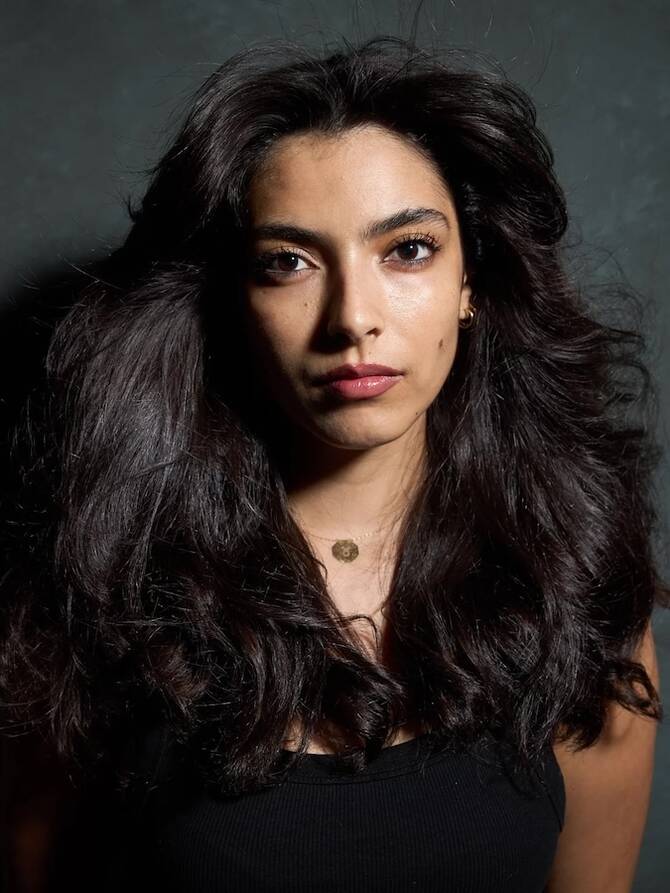
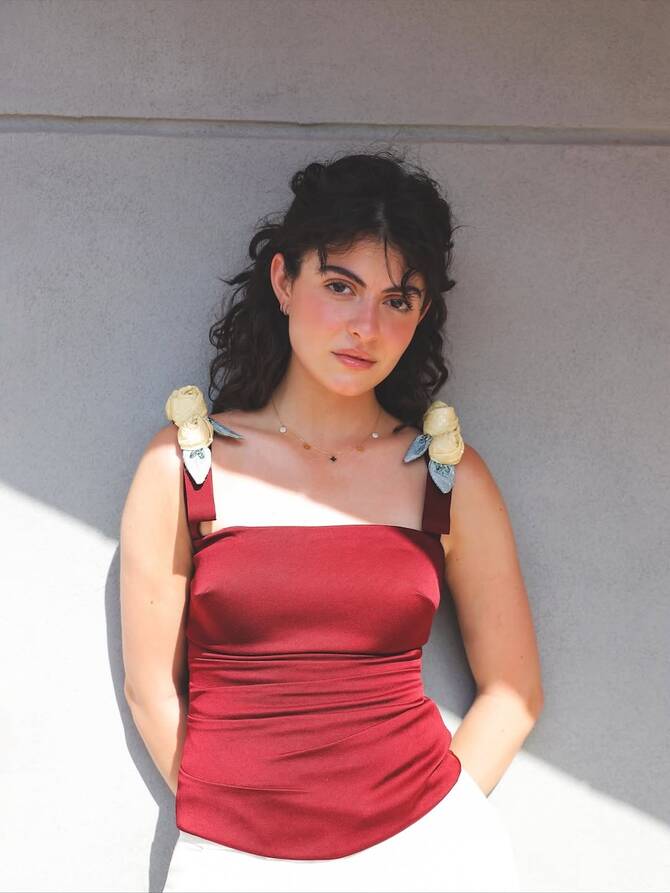
Yasmina El-Abd
El-Abd has appeared in Egyptian television and streaming productions, including Netflix’s “Finding Ola,” placing her among a group of young actors gaining exposure through high-profile series.
Maria Bahrawi
Bahrawi has appeared in Saudi television series such as “Rashash” and “Al-Shak,” gaining early screen experience through crime and drama-led productions produced for regional broadcasters.
Oumaima Barid
Barid has featured in contemporary Moroccan film projects, taking on roles that explore youth, family relationships, and everyday social realities within local settings.
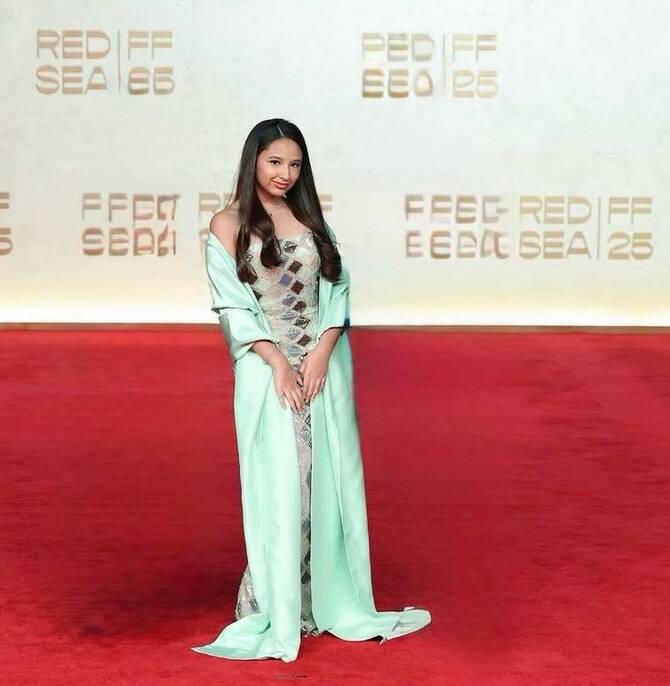
Lamar Feddan
Feddan starred in the Saudi film “Hijra,” which premiered at major festivals in 2025 and represents Saudi Arabia’s Oscar submission for Best International Feature Film.
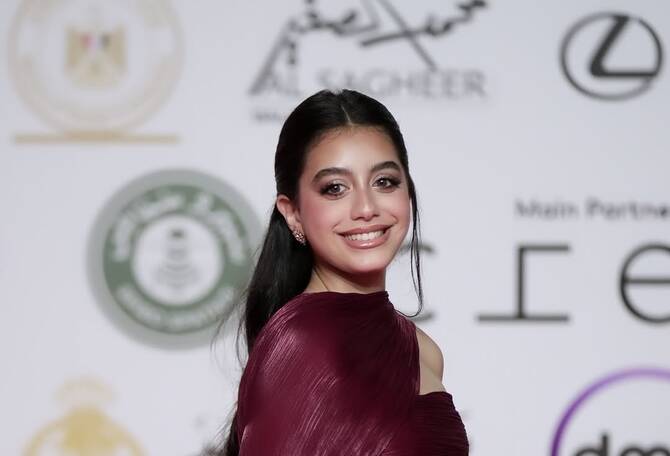
Tara Abboud
Abboud is known for her role in the Jordanian coming-of-age film “Farha,” which received international attention following its global release.
Zain Al-Rafeea
Al-Rafeea rose to international attention with “Capernaum” (2018) and reappeared on screen in “The Sand Castle” (2024), signaling a new stage in his career.
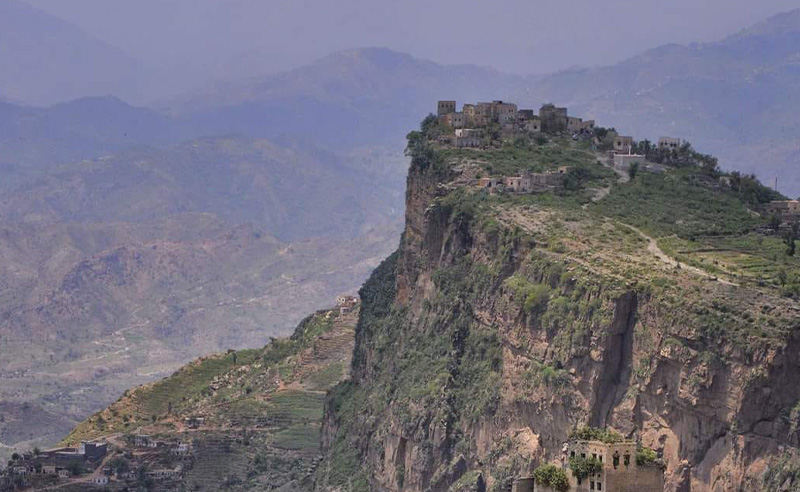
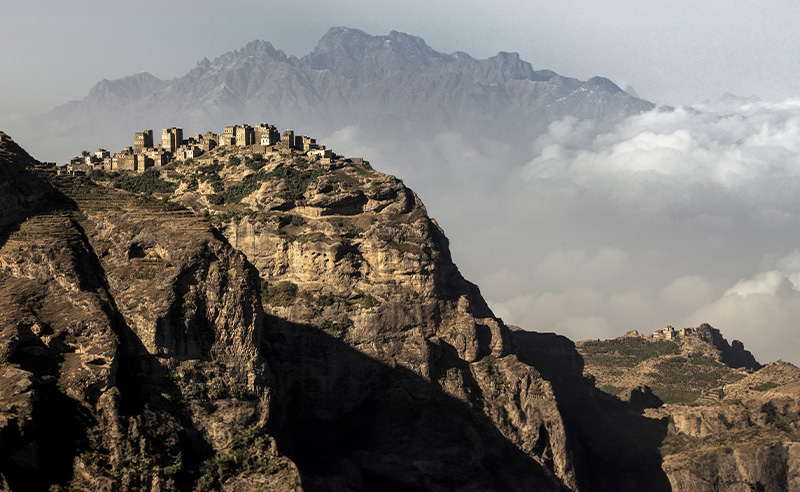
Jabal An-Nabī Shuʿayb is the peninsula’s highest peak, a geological archive, a cultural landmark, and a reminder of how landscapes shape, absorb, and outlast history.
Yemen is often described as the birthplace of Arabia—not as a poetic claim, but as a fact grounded in geography and history. This is the land where ancient kingdoms like Sheba, Himyar, and Qataban rose and fell; where Arabic, in some of its earliest and most foundational forms, took shape. It’s also where coffee was first cultivated and traded—long before it became a global commodity or a café menu item, it was simply a Yemeni crop, shipped from the port of Mocha.
Yet beyond the ruins of ancient states and the legacy of coffee, Yemen is, at its core, a landscape. One defined by steep altitudes, deep valleys, and a quiet kind of permanence. Nowhere is that more clearly felt than in Jabal An-Nabī Shuʿayb—the highest peak in Yemen, the Arabian Peninsula, and the Arabian tectonic plate. Rising 3,666 meters above sea level, just west of Sana’a in the Harazi subregion of the Sarawat range, this mountain doesn’t shout for attention. It doesn’t need to.
Unlike iconic peaks elsewhere, it hasn’t been claimed by tourism. No guided treks. No glossy brochures. But for the communities who live nearby, it holds quiet weight—an enduring presence that doesn’t require explanation or decoration.
Part of that significance is rooted in its name. The mountain is named after Shuʿayb ibn Mahdam ibn Dhī-Mahdam al-Hadūrī, a prophet distinct from the better-known Shuʿayb of Midian. According to classical Islamic historians such as Al-Hamdani, he was sent to the people of Mikhlaf Hadhur, an ancient region in western Yemen. His message, however, was rejected, and he was ultimately killed by the very people he was sent to guide. In response, divine punishment followed: God is said to have sent Bakht Nasr—often identified with Nebuchadnezzar—who destroyed their town.
Because of this legacy, many locals believe that Shuʿayb’s tomb lies somewhere on the mountain itself. The site has since carried both religious reverence and historical meaning. In fact, the mountain is also referred to as Jabal Hadhur, echoing its place within the region once known as Mikhlaf Hadhur.
Even so, the significance of Jabal An-Nabī Shuʿayb isn’t only spiritual or cultural—it’s geological as well. The mountain is a prominent part of the Tertiary volcanic series that forms much of Yemen’s rugged highlands. Its rock formations have attracted scientific attention, most notably from Dieter R. Fuchs, a German mineralogist who conducted extensive research on their geochemical composition and petrogenesis. His studies, which culminated in a full academic thesis, explored the origins and formation processes of this volcanic terrain, placing Jabal An-Nabī Shuʿayb firmly within the broader narrative of Earth’s geological evolution.
Although the summit isn’t snow-capped like peaks in Lebanon or Syria, it’s not untouched by winter. Snowfall has been reported at the top, and frost is common during colder months. Wind conditions are severe—gusts at the summit can be intense, often making the area difficult to access or stay on for long. In April 2019, Ahmad Zein Al-Yafei, a security officer from Dubai, claimed to have reached the summit in 69 hours, where he raised a Dubai Police flag—a rare account of a successful ascent to the restricted peak.
Taken together, the mountain exists at the intersection of myth, memory, and matter. It doesn’t seek to represent Yemen—but in many ways, it reflects it: layered, complex, and not easily reduced.
Unfortunately, amid decades of conflict, Yemen has come to be seen almost exclusively through the lens of war. International attention rarely moves beyond political breakdowns or emergency headlines. But behind those headlines is a country with a landscape that defies reduction—mountains like Jabal An-Nabī Shuʿayb, volcanic highlands, untouched coasts, and fertile valleys that continue to shape daily life. Yemen’s natural beauty hasn’t vanished—it’s just been overshadowed. And remembering that matters. Because a place isn’t defined only by what breaks it, but also by what quietly holds.
Mawhiba is a nonprofit foundation dedicated to nurturing gifted students at local, regional and international levels, playing a pivotal role in fostering young talent.
The King Abdulaziz and His Companions Foundation for Giftedness and Creativity (Mawhiba) has announced that Saudi gifted students secured 129 international awards in 2025 across 26 Olympiads and the International Science and Engineering Fair.
The achievement, the result of collaboration with the Ministry of Education, maintained the Kingdom’s second-place ranking at the ISEF global competition, with Saudi national teams winning 996 awards in scientific competitions by year-end.
Mawhiba’s report highlighted that more than 31,000 students benefited from Mawhiba programs, with more than 14,000 enrolled in academic and research initiatives offered through 105 local and international initiatives, partnered with 70 academic and scientific entities across 24 cities.
In a significant milestone, registration for the National Program for Gifted Identification exceeded 95,000 students this year.
Moreover, the Mawhiba Advanced Program for Science and Mathematics supported more than 2,770 students across 100 cities and governorates, aimed at enhancing their skills in science and mathematics.
Mawhiba is a nonprofit foundation dedicated to nurturing gifted students at local, regional and international levels, playing a pivotal role in fostering young talent with a globally recognized methodology for high performance and creativity.
source/content: arabnews.com (headline edited)
_______________
Mawhiba has announced that Saudi gifted students secured 129 international awards in 2025. (SPA)
On her 50th anniversary, We proudly present episode 1 Fathiya Ahmed, the singer of the two regions.
After featuring the Sultana of Tarab Music, the Prince of Arabic Violin, the Master of Buzuq, Hajja Zeinab El Mansouria, the rich music of Yemen, Arab songs of Satire and Resistance, and the Music of Tunis, we proudly introduce Fathiya Ahmed, the singer of two regions – Egypt and Bilad Asham.
Music is a powerful force for healing and reconnecting us with our roots and shared humanity in a world of numerous challenges.
‘From Ocean to Gulf: Heritage Music of the Arab World’ is a new series by Ahram Online, in partnership with the AMAR Foundation (Foundation for Arab Music Archiving and Research). Focusing on the early years of recording in our region, which reflected a modern cosmopolitan repertoire and coincided with the Renaissance era that flourished in Egypt between the mid-19th century and the 30s of the twentieth century, this initiative aims to introduce our audience to the iconic figures of Arab music whose contributions have enriched our intangible cultural heritage and inspired generations worldwide.
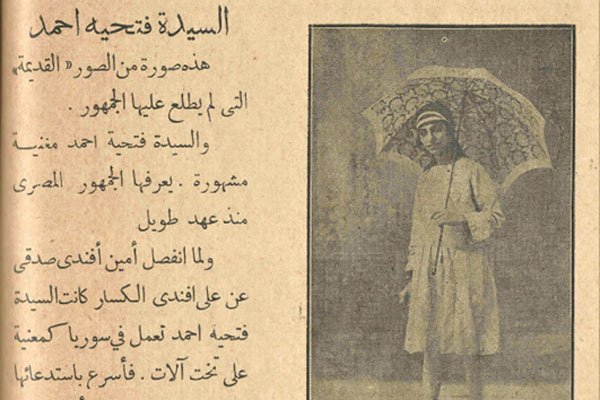
Archive: Young Fatheyia. Photo courtesy of Akram Rayess
Child prodigy female performer
Fathiya Ahmed (1898-1975) was one of three daughters of a Qur’an reciter, Sheikh Ahmed El-Hamzawi. Each of her two sisters, Ratiba and Mufida, had a singing career. She was born in the Kharanfash Alley of Historic Cairo and began her career as a young girl in musical theatres.
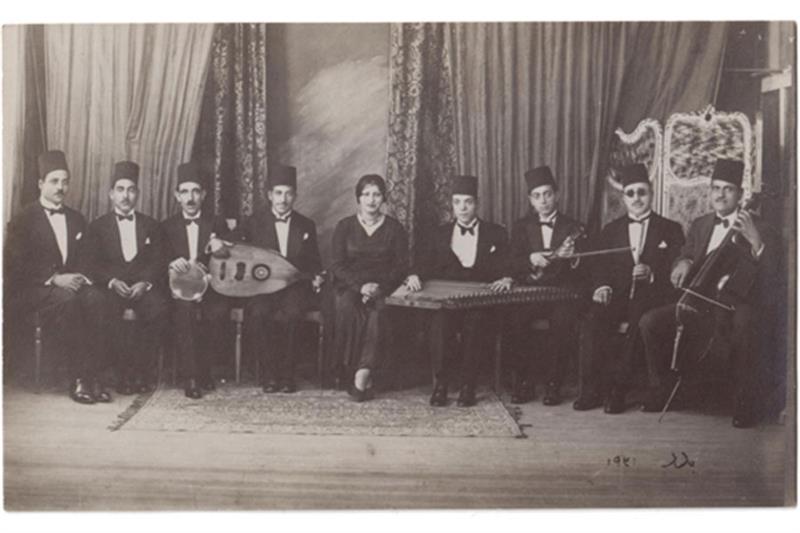
She joined the well-known theatre companies until 1927, when she decided to sing solo. She became an important mutriba (Chanter) with takht in the tradition of awâlim. She was one of the singers who carried the practice of wasla into the 20th century. Fathiya also made numerous annual commercial recordings and toured Syria, Lebanon, and Palestine, where she developed a large audience. Because of this, she was named “Mutribat al Qutrayn” (the singer of two regions – Egypt and Bilad Asham).
Dr Sayed Ali Ismail’s book “The Journey of Theatre in Egypt” (2003) states that Fathiya’s first steps took place as a young child when directors of theatrical troupes competed to hire her to sing between acts. This occurred at a time when women started to become active participants in the musical scene in Cairo at the turn of the 20th century. Her theatrical singing brilliance reached its peak in 1918 when she joined Naguib Al-Rihani’s troupe at the Egyptian Theatre (Tiyatro Al-Egbsiyaneh). In 1919, she joined the troupe of Amin Sedqi and Ali Al-Kassar, singing and acting in the play “Rahat Theyk”. In 1921, she performed leading roles in the plays of Munira El-Mahdiyya’s troupe, replacing Munira after she left due to conflicts with her husband, Mahmoud Gaber. Among these plays were “Kalam Fi Sirrak”, “Adha”, “ El-Talata Tabta”, and “Al-Caporal Simon.”
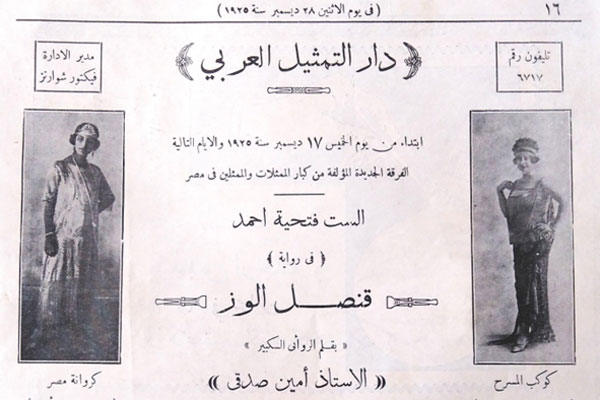
In 1925, Fathiya joined the troupe of Amin Sedqi and Naguib Al-Rihani, where she starred in the plays “Qunsul Al-Wiz”, “Merati fi Al-Gihadiyya”, and “Bint Al-Shabandar”. In 1926, she sang in the play “Laylat Cleopatra” with the Oqasha troupe.
In 1927, she played the role of Cleopatra in the play Cleopatra and Mark Antony by Munira El-Mahdiyya’s troupe, and she also sang between the acts of the play The Emperor with the musical ensemble of Fatma Roshdi’s troupe. The musical composers included Daoud Hosni, Kamel El-Khoula’i, and Ibrahim Fawzi.
When reading the issue of Rose Al-Yusuf magazine dated 2 June 1926, it can be seen that three female singers reached stardom during that period: Fathiya Ahmed, Munira El-Mahdiyya, and Um Kulthoum, with this order being the ranking preference of the public.
This was her final phase of acting and theatrical singing during that period, as she later shifted to singing in casinos and night venues in late 1927, including the Bosphorus Casino and Badia Masabni’s venue. In these performances, she demonstrated her mastery of the art of the Maqam accompanied by a “takht” of selected musicians.
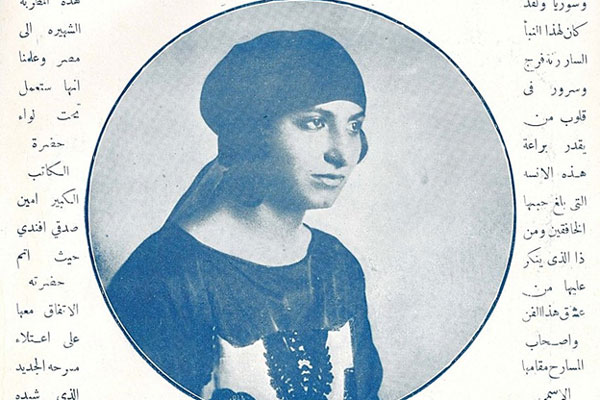
Archive: A news piece informing about Fatheyia’s return to Cairo from Lebanon. Photo courtesy of Dr Sayed Ali Ismail.
Bilad Asham
During this busy period, Fathiya found the time to visit the Levant. In 1921, she set off for the first time to the Levant, where she spent about five years. She felt at home there, and during those years she learned the secrets of musical modes, blending Turkish and Persian modes with the Arab musical tradition. Her performances were met with great enthusiasm. Amer Nadrous, a writer and a record collector from Syria, brings forth some of what she said about her experience in Aleppo: “Singing before its people is an exam that renews itself every night… their ears never miss, and they can always distinguish between what is trivial and what is precious.”
Crowds of thousands would rush to reserve seats in Aleppo’s Luna Park and Al-Shahbandar gardens to hear that unique voice. In Damascus, she performed in Hadikat Al-Umma, enchanting its people while singing adwar, qasā’id, and mawwāl without microphones or any amplifiers. This is in addition to her tours and performances in Jerusalem, Beirut, Nablus, and Tripoli, where audiences welcomed her warmly, and she rivalled the great masters of classical singing. Nadrous adds that the poet Amin ‘Izzat al-Hajin, among many others, praised her in a poem whose opening line says: “Songbird of the East, come back… return the songs of eternity to my ears.”
Travelling with her husband to the Levant to perform became an annual event during that phase of her career. Fathiya even received a special invitation from the King of the Hejaz and Sultan of Najd, Ibn Saud, to sing in his presence. Nadrous informs that her husband provided her with Bedouin poetry quartets to sing at this occasion. Moreover, she took the opportunity to go on pilgrimage while there.
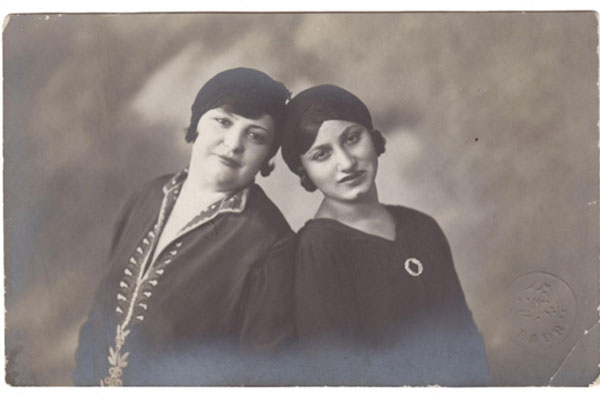
Archive: Fatheyia and her sister Ratiba. Photo courtesy of Dr Ahmad AlSalhi.
Vigorous Years
Dr Fahd El-Faras is a music researcher who was previously the head of the Music Education Department at the Faculty of Education in Kuwait. He is a keen enthusiast of Fathiya’s songs and an avid collector of her original recordings. El-Faras discusses the significance of musical theatre, which he considers to be the setting of her artistic beginnings that shaped her talent and artistic personality. It is an important phase of Touha’s artistic career, spanning three decades from the 1920s to the 1940s, which provided her with the creative space to affirm her artistic status as a leading figure and to demonstrate her unique vocal abilities.
El-Faras adds that through her collaboration with Sayyid Drawiche, Fathiya learned how to sing on stage, face an audience, and master the expressive style of theatrical singing. Moreover, Naguib El Rihani recognised Fathiya’s talent and understood her artistic abilities, which in turn greatly benefited his musical theatre, empowering her to enter the creative scene as both a singer and stage actress. She gives credit to Rihani and indicates that she had learned a great deal from him, including how to handle stage movement, performance techniques, and delivery, from vocal pitch and theatrical singing in connection with the play’s narrative, and how to perform comedy. She also participated with several other theatrical troupes, which gave her an accumulation of extensive experience and confidence in combining acting and singing, making her highly sought after by audiences for musical plays.
Archive: An Announcement of a play starring Fatheyia Ahmad and Badi’a Masabni. Photo courtesy Amer Nadrous.
Fathiya’s Garden
In 1933, after a long absence from the art scene in which she dedicated her time to raising her children, Fathiya Ahmed formed a musical theatre troupe and established an outdoor venue which she named “Fathiya’s Garden”. Dr Sayid Ali Ismael indicates that she produced and starred in several plays composed by Ibrahim Fawzi in her new space, some of which had nationalistic sentiments consistent with the prevailing political circumstances of that time. In 1934, Fathiya left her own “Garden” and returned once again to singing in other venues and theatres, such as the Ramses Theatre, where she sang in the plays Sondouq Al-Dunya, Awlad Al-Fuqara, and Al-Fajiʿa for Youssef Wahbi’s troupe. Although short-lived, Fathiya’s Garden marks her multiple roles as a female performer: leading a troupe, managing a venue, presenting original shows, and commissioning music. This illustrates Fathiya’s active agency against preset cliches and stereotypes of passive participation despite aggressive competition and changing musical aesthetics and business practices.
During the 1940s, Fathiya participated in the play “Youm elqiyama”, where she performed her famous song “Ya Halawet Eddunia” composed by Sheikh Zakariya Ahmed. This decade also witnessed Fathiya’s transition to musical films, following the dominant trend at that time. Her most important film was “Hanan” (1944), in which she starred alongside Bishara Wakim and Tahia Carioca, directed by Kamal Selim. It featured the landmark song “Ya tara” composed by Qasabji. The other two remaining film participations were limited to providing vocals that were lip-synced by other actors in “Ahlam Ashabab”, starring Farid El-Attrache and directed by Kamel Selim (1942), and “Aida” starring Um Kulthoum and directed by Ahmed Badrakhan (1944).
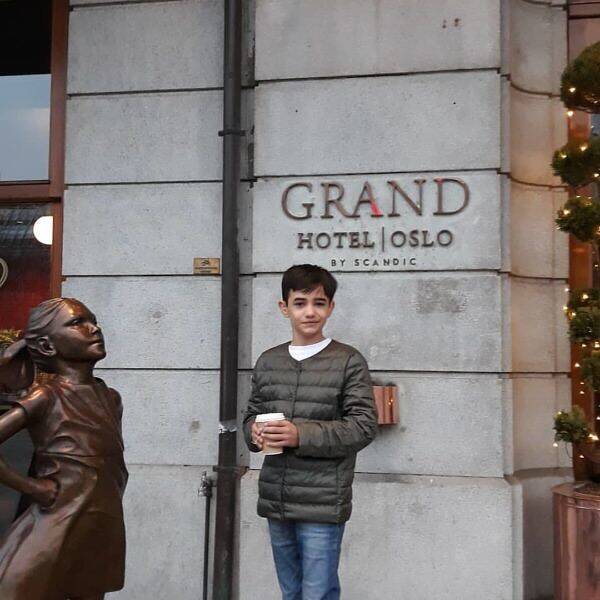
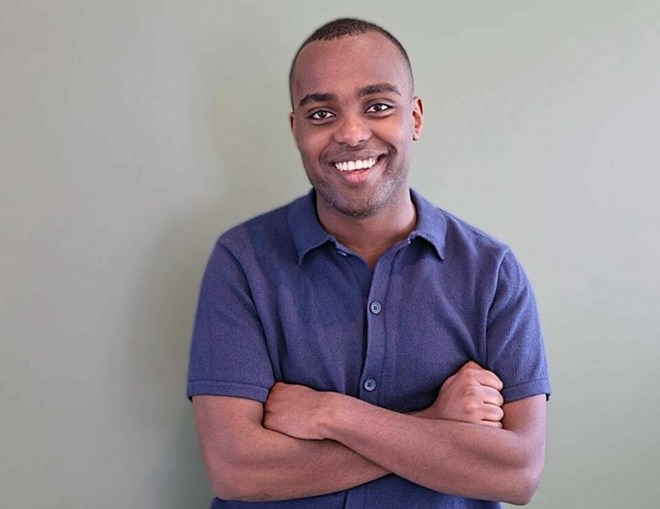
On election night in Fredrikstad, 20-year-old Hashim Abdi broke down in tears as the results flashed on television screens. He clutched his phone to call his mother, the only parent he has left, telling her she was the first person who came to mind when it became clear he had won a seat in Norway’s parliament.
My parents came to Norway with nothing but hope. Mom is the only parent I have left, and she deserves everything in the world.”
Abdi’s tears captured the weight of his journey. The son of Somali refugees, raised in a working-class neighbourhood, is now among the youngest lawmakers in the Storting, Norway’s national legislature. His campaign rested on issues that reflected his own experiences: better schools, opportunities for young people, and tackling poverty in Østfold, a county where inequality has become increasingly stark.
“It’s completely insane. It’s the story of Norway, that a boy from Trara can go from a small neighbourhood to the corridors of power.”
He joins Marian Abdi Hussein, a Socialist Left Party politician re-elected from Oslo. First entering parliament in 2021, she was the first lawmaker of African descent to take a permanent seat in the Storting. Hussein, who worked for years in Oslo’s social services, has become a national figure for her advocacy on women’s rights and health policy. In 2023, she was elected deputy leader of her party.
Together, Hussein and Abdi now symbolize both continuity and change for Somali Norwegians. Hussein broke barriers three years ago; Abdi is part of a younger generation determined to make its presence felt in politics.
Their victories reflect shifts in Norwegian society. Labour finished first in Østfold with roughly 30 percent of the vote, anchoring Abdi’s win even as the Progress Party posted strong gains locally. Nationally, Labour’s result keeps Prime Minister Jonas Gahr Støre in office, and he is expected to rely on a broader left-leaning bloc to govern. Energy policy, living costs and foreign affairs were central campaign issues and now shape the new government’s agenda.
But it is the human stories behind the statistics that resonate in Norway’s Somali community. Abdi’s father, Mohodin, once drove a taxi and sat on the Fredrikstad city council before he passed away. He instilled in his son a belief in civic duty and justice. Abdi joined the Labour youth wing at 14 and climbed steadily through local politics.