Arabs & Arabian Records Aggregator. Chronicler. Milestones of the 25 Countries of the Arabic Speaking World (official / co-official). AGCC. MENA. Global. Ist's to Top 10's. Records. Read & Enjoy./ www.arabianrecords.org
The UAE leads the global market in mobile shopping, according to the results of the Global Digital Shopping Index 2025, a joint study by PYMNTS Intelligence and commissioned by Visa Acceptance Solutions.
The study, which surveyed 1,679 consumers and 329 merchants in the country, showed that 67% of UAE consumers used their smartphones for their most recent purchase, a 23% increase compared to 2022.
The UAE also recorded the highest rate of mobile shopping at 37%, ahead of Singapore, the UK, and Brazil.
The country also recorded an advanced global rate of biometric authentication use (32%) when making online purchases, surpassing the global average of 17%. Fifty-three percent of consumers expressed a desire to shop across multiple channels, while 75% preferred rewards programs, 73% preferred free shipping, and 70% preferred price matching.
The report also indicated that 38% of shoppers in the UAE made their recent purchases using a mobile phone or computer, with the option of home delivery.
The results confirmed that consumers in the UAE are increasingly adopting a “mobile first” lifestyle, particularly among millennials, with a usage rate of 73%.
Commenting on the study results, Salima Joteva, Vice President and General Manager, Visa UAE, said, “The UAE’s approach reflects the great potential that can be achieved by uniting efforts to build the future of commerce. At Visa, we are working in partnership with the government and private sectors to offer innovative solutions such as Click to Pay to provide secure and seamless digital payment experiences.
These indicators reflect the country’s advanced regulatory environment and its continued support for the digital business ecosystem, enabling retailers to enhance customer experiences and achieve sales growth by offering flexible and secure payment options.
The Global Digital Shopping Index is based on a survey of 18,468 consumers and 3,464 merchants across eight countries, including the UAE, Saudi Arabia, the United States, the United Kingdom, Singapore, Australia, Mexico, and Brazil, during the period from October to December 2024.
For over two decades, Gabriel Sayegh has worked to keep Arab culture alive in spaces throughout the city of São Paulo.
Born in the southern region of São Paulo city, Gabriel Sayegh, 65, is proud of his Arab heritage. The ancient culture, which comes from both sides of his family and has been part of his life since the beginning, became an essential part of his routine in 1999.
“Since I was a child, I used to go to Esporte Clube Sírio and take part in its cultural activities, and when I was 39, I was invited to become the club’s cultural director. I didn’t think twice and accepted the offer,” says Sayegh.
“It’s very important to keep Arab culture alive because we’re our ancestors. We come from a place that has its own culture, language, and cuisine, and many people don’t know about it. That’s why it’s so important to preserve our culture and make sure others learn about our origins.”
Because of his professional choices, Sayegh would never have been close to Arab culture, but his desire to keep the tradition alive spoke louder. “I always liked math, so I graduated in civil engineering and worked in the field for many years. But I always had the desire to promote the culture of my parents and grandparents, which is why I still work as the cultural director of the club today,” says the engineer.
With a full schedule all month long, the club offers different types of free classes, including Arabic language, belly dancing, and music classes that use traditional Syrian instruments. And at least once a month, there is a lecture given by an important spokesperson from the community.
“We’ve already had writers, politicians, businesspeople, and even the president of the Institute for Arab Culture (ICArabe) here. We also organize sessions to screen Arab films,” says the cultural director of Esporte Clube Sírio.
Despite the effort, the Syrian descendant says he finds it difficult to spread Arab culture among the younger generations. “Culture is no longer as much a part of the younger generations as it was during my youth. Today, there are many things that distract them.”
In addition to working at Esporte Clube Sírio, Gabriel is also involved in two other organizations: the State Parliamentary Council of Communities of Foreign Roots and Cultures (CONSCRE) of the Legislative Assembly of the State of São Paulo (Alesp) and ICArabe.
At CONSCRE, he arrived in 2019, served as president for two terms, and is currently vice president. The São Paulo native has been part of ICArabe since its inception in the early 2000s. He has held several positions within the institute, including vice president, and currently works as financial director.
“In all these places, my work is done voluntarily to help my community. At Alesp, where the space was created to bring together Arab descendants living in São Paulo, we have political ties and try in some way to highlight the culture of my country. At the Institute, the effort is greater. We hold cultural events at different times of the year. The next one will be the Arab film festival to take place in August.”
Very proud of his journey as a promoter of Arab culture, Sayegh is happy to be able to share the richness of his ancestors’ country. “For many years, Arab culture was neglected and ignored by the West, so people still don’t know much about it.”
Culture from the beginning
His mother, Ivete Abdelmalack Sayegh, came to Brazil at the age of 18 with her parents and siblings. His father, Jorge Gabriel Sayegh, is the son of Syrians and lived in São Paulo, where he met Ivete. The family grew when Gabriel’s sister was born and was completed years later when he and his twin brother arrived.
“My parents spoke Arabic when they wanted to say something so we wouldn’t understand, since my maternal grandmother only spoke Arabic. She never really learned to speak Portuguese. Because of that, I ended up speaking Arabic to talk with her,” Sayegh recalls.
Besides the language, Arab food has been and still is part of Sayegh’s and his children’s lives. “I have a daughter from my first marriage and twin sons from my second marriage who love my mother’s cooking; the tradition of Arab food is part of their daily routine. But the culture is more difficult,” Sayegh explains.
“My first wife, who is my cousin, still passed on our heritage to my daughter—however, these younger generations are drifting away from their origins. That’s why I keep stressing how important it is to know your roots. It’s only this way that you can better understand yourself as a human being and learn to respect others.”
The opening ceremony concluded with a musical performance by Lebanese artist Ragheb Alama, with proceeds dedicated to supporting the people of Palestine.
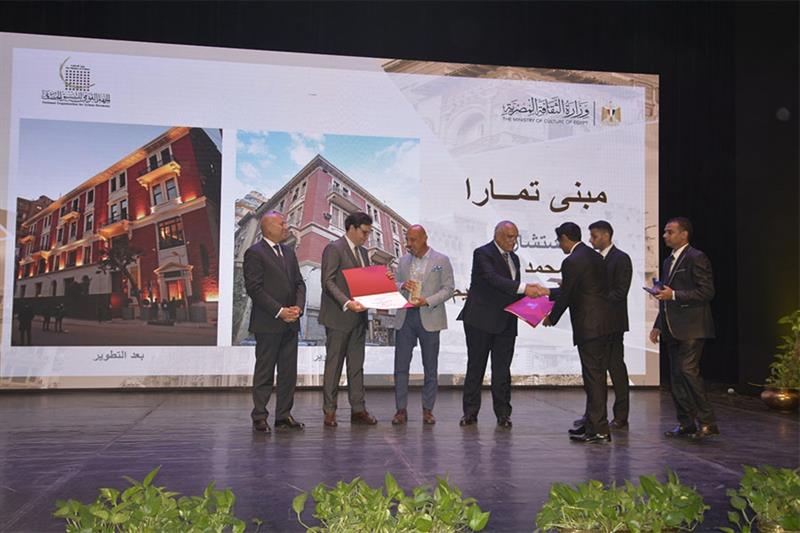
Abdelrahim Suleiman, Director General of the Arab States Broadcasting Union (ASBU) and Mohammed bin Fahd Al-Harthi, President of ASBU and CEO of Saudi Broadcasting Authority (SBA), presented the awards to the winners of the 24th Arab Radio and Television Festival that was held in Tunis from June 26 to 29.
Part of the Text is Missing, a Kuwaiti TV show won the award for Best Arab TV Programme at the festival.
Saudi Broadcasting Authority (SBA) secured four radio and TV awards, including the second prize in the health programmes category for “Mental Health: Violence in Schools.” In the TV category, Saudi Arabia won three awards, including the second prize in the news category for talk shows, honouring the Saudi street programme on its episode about Vision 2030. Heritage in the Maqam of Hijaz took first prize in the general documentary films and programmes category, while the Saudi social drama series Al-Arbaji 2 secured second place in the social series category.
Additionally, the SBA received the second prize in the 2024 news exchange competition and also, the second prize in the 2024 programme exchange competition. The festival also honoured the judging panels for its radio and television competitions and distributed the exchange awards.
Qatar Media Corporation won three awards. Qatar TV took first prize for the documentary film Museums in Qatar, showcasing the distinctive museums of the country, and secured the second prize for Programme Exchanges of 2023 within the festival’s Arab Radio and Television competition in Tunisia. Qatar Radio won second prize in the “Notable Arab Figures” category.
The Ministry of Information, represented by the Sultanate of Oman Radio and the Sultanate of Oman Television, along with the private media institution Al Wisal, bagged 10 awards. Sultanate of Oman TV won four awards, including the Arab Joint Television Production Award for the documentary Holding Breaths, produced by the Ministry of Information and directed by Issa al Subhi.
Meanwhile, the Palestine Public Broadcasting Corporation (PBC) secured six awards. The radio programme Psychological Counseling in Times of War claimed first prize, while Radio Flash on school violence also earned top honours. Additionally, PBC received first prizes for radio news exchanges and a television report dedicated to the late journalist Mohammad Abu Hattab, a correspondent for Palestine TV killed by Israeli troops in Gaza. Furthermore, PBC was awarded second prize for the cultural programme Sadanat al-Riwaya and another award for the film Noura, produced by Palestine TV.
The Cultural Village Foundation (Katara) announced the top three winners of the 4th Katara Prize for Arabic Poetry – Mothers of the Believers (may Allah be pleased with them), focused on Umm Salama Hind bint Abi Umayya Al Makhzumiyya (may Allah be pleased with her).
Ibrahim Mohammed Abdullah Al Sayyid from Egypt won first place, Radwan Sultan Hamoud Ali from Yemen claimed second place, and Bakr Mousa Haroun Othman from Nigeria took third place.
The fourth edition received approximately 304 entries from 20 Arab and international countries.
The Katara Prize for Arabic Poetry aims to honor the legacy of the house of the Prophet, especially the Mothers of the Believers (may Allah be pleased with them), and instill it in the memory of current and future generations.
It also helps create a contemporary poetic anthology highlighting their virtues and historical contributions, as well as their impact on the course of Islamic dawah and on shaping the role of women in society.
The total prize value of the Katara Prize for Arabic Poetry – Mothers of the Believers is QR120,000. First place receives QR60,000, second place receives QR40,00, and third place receives QR20,000.
Katara Publishing House has begun releasing critical studies of the winning poems from each edition of the Prize.
The previous editions focused on Khadija bint Khuwaylid, Aisha bint Abi Bakr Al Siddiq, and Hafsa bint Umar (may Allah be pleased with them).
A powerful portrait of compassion under fire, ‘The Man Who Feeds Gaza’s Children’ takes home one of journalism’s highest honors.
‘The Man Who Feeds Gaza’s Children,’ a short documentary following Gazan food blogger and humanitarian Hamada Shaqoura, has won a News & Documentary Emmy Award in New York, honoring its remarkable storytelling and emotional depth.
The film captures Shaqoura’s decision to set aside his food blog and cook for thousands of children and displaced families during the war in Gaza. He turned his kitchen into a frontline of resistance—preparing familiar comfort foods like chicken wings, tacos, croissants, and popsicles, often while bombs fell nearby.
“I cooked under bombs not for recognition, but because hunger doesn’t wait,” Shaqoura said following the win. “Gaza deserves to be seen.”
Led by Reem Makhoul, Senior Managing Producer at Business Insider, the film is part of a growing body of work that centers the human experience in conflict zones. By focusing on daily acts of care, the documentary invites viewers to see Gaza not only through the lens of tragedy, but also through the enduring power of resilience.
“This award is for every child who stood in line for a plate of food, to every family who shared it with love, and to every voice that refused to be silenced,” Shaqoura shared. “To the people of Gaza—you are the story. And now, finally, the world is listening.”
Also a James Beard Award nominee, the documentary’s recognition by the Television Academy underscores the strength of its message, a simple yet radical truth: feeding people is a form of dignity, and storytelling can be an act of survival.
Zouaki made history in 2023 as the first Moroccan to join the Royal Academy of Pharmacy in Catalonia.
Moroccan biologist Jinane Zouaki has been appointed as an academic corresponding member of the Ibero-American Academy of Pharmacy.
Her appointment marks a big milestone, as she is the first Moroccan, Arab, and African woman to receive this honor. The official ceremony took place on Tuesday at the Faculty of Pharmacy in Granada, Spain. The event gathered many scientists from Spain, Portugal, Latin America, and Morocco.
In her speech to the academy, Zouaki spoke about her history of pharmacy in Morocco. She outlined the country’s recent efforts to strengthen its health sovereignty under the leadership of King Mohammed VI.
She explained that this national strategy has helped Morocco become a leading industrial hub and a strong, competitive player in both regional and international healthcare sectors.
Speaking to Morocco’s state news agency MAP, Zouaki shared her pride and gratitude for joining such a prestigious institution. She said the recognition is not only a personal achievement, but also a proud moment for Moroccan women and for the country as a whole.
This recognition contributes to Morocco’s scientific presence on the international stage, she added.
Originally from the northern city of Tetouan, Zouaki holds a doctorate in pharmacy. In 2022, she became the first Moroccan and African to receive the Medal of Privilege from the University of Granada, a high honor that celebrates her long journey in education and biomedical research.
Zouaki also made history as the first Moroccan to join the Royal Academy of Pharmacy of Catalonia.
During the COVID-19 pandemic, she volunteered to help medical teams. At her molecular biology lab in Saniat Rmel Hospital in Tetouan, she worked on COVID-19 testing and helped train healthcare workers.
In an achievement that strengthens the UAE’s position on the global innovation map, Emirati student Ali Hamid Al Loughani, from the Emirates Science Club, won the gold medal and special award presented by the Saudi delegation at the International Young Inventors Championship, part of the 36th edition of the International ITEX 2025 exhibition in Kuala Lumpur. The competition saw the participation of nearly 900 innovations from 15 countries.
Al-Loughani’s innovation is part of an innovative security project to screen passengers at airports using motion amplification technology and biometric signal processing through cameras without any contact. This enables the analysis of physiological indicators such as heart rate and breathing, and the detection of signs of stress or suspicious behavior.
Bilal Al-Badour, Chairman of the Board of Directors of the Culture and Science Forum, emphasized that Al-Loughani’s achievement reflects the spirit of a true researcher and the passion of innovators, commending his determination to transform his idea into a realistic solution that serves society and enhances security.
Dr. Eisa Al Bastaki, Chairman of the Emirates Science Club, commended Al Loughani’s intellectual and scientific maturity, emphasizing that this level of innovation reflects the country’s drive toward a knowledge-based economy based on creativity and technology, and enhances the UAE’s global standing in the fields of science and invention.
It’s worth noting that more than 80% of the innovations on display at ITEX 2025, which spanned 15 categories including artificial intelligence, automation, and medical technologies, demonstrated promising potential for commercialization.
Pioneering Saudi filmmaker Haifaa Al-Mansour has been appointed to the Academy of Motion Picture Arts and Sciences’ Board of Governors, the Red Sea Film Foundation announced on Instagram.
“As one of three newly named governors-at-large, Al-Mansour will represent the Directors Branch and bring her singular voice, vision, and global perspective to the Academy’s leadership for the 2025–2026 term and beyond,” they captioned the post.
“An incredible milestone for one of Saudi Arabia’s most celebrated filmmakers. We’re proud to see her continue shaping the future of cinema on a global stage.” In 2012, Al-Mansour made history as she released her first feature film “Wadjda.” It was the first feature film shot entirely in the Kingdom and the first feature-length film made by a female Saudi director.
Over the years, Al-Mansour has also become one of the most in-demand television directors in Hollywood, helming episodes of hit series including “Archive 81,” “City of Fire,” “Tales of the Walking Dead,” and “Bosch: Legacy.”
In 2019, Al-Mansour’s feature film “The Perfect Candidate” was submitted as Saudi Arabia’s official entry for the International Feature Film Award at the 92nd Academy Awards, but it was not nominated.
The author, imprisoned without charge since 2001, was chosen to share the PEN Pinter prize by 2020’s winner Linton Kwesi Johnson.
The Eritrean poet Amanuel Asrat, who was arrested in 2001 and is believed still to be detained in a maximum security prison, has been named International Writer of Courage by Linton Kwesi Johnson.
Johnson won the PEN Pinter prize earlier this year, for his “political ferocity” and “tireless scrutiny of history”. Accepting the prize last night, the Jamaican dub poet named Asrat, a poet, critic and editor-in-chief of the newspaper Zemen, as the International Writer of Courage winner with whom he will share his prize. This award goes to a writer who has been persecuted for speaking out about their beliefs, with previous recipients including the Saudi blogger Raif Badawi and Gomorrah author Roberto Saviano.
“Keeping a citizen incarcerated, incommunicado, without charge or trial for nearly 20 years is the kind of egregious brutality that we associate with totalitarian states and dictatorships,” said Johnson. “As a gesture of solidarity from a poet of the African diaspora, I have chosen the Eritrean poet, songwriter, critic and journalist Amanuel Asrat.”
Asrat’s writing looks at the daily life of the underprivileged, exploring themes of war and peace, and the negative side of conflict. He was arrested on 23 September 2001, along with the editors of all privately owned newspapers, as part of the Eritrean government’s campaign to silence its critics, and has not been heard from since.
According to English PEN , Asrat and his fellow writers are believed to have been subjected to torture and other ill-treatment, including lack of access to medical care, while detained in the purpose-built maximum-security prison Eiraeiro. The free speech organisation, which awards the PEN Pinter prizes in memory of the late Harold Pinter, said that it was unknown whether charges have been brought against them or if they have ever been brought to trial.
“Amanuel [has been] suffering under the harsh conditions of the Eiraeiro dungeon for 19 years and counting. His whereabouts are not known. We don’t even know whether he is alive or dead,” said Asrat’s brother, Daniel Mebrahtu. “We wish Amanuel was aware of this prize and honour somehow. We ask the international community to intervene in his case and other prisoners of conscience in Eritrea, and demand their immediate release.”
English PEN has just launched a year-long letter-writing campaign asking people around the world to send messages of solidarity to writers of courage, with Asrat the first featured writer. “We remain hopeful that this year will finally see him released and reunited with his family after almost two decades apart,” said PEN’s Cat Lucas. “In the meantime, we hope that our PENWrites campaign will provide an opportunity to raise greater awareness of his situation, to amplify calls for his release, and to continue to show our support for him and his family.”
source/content: theguardian.com (headline edited)
_____________
Gesture of solidarity … Linton Kwesi Johnson holds a portrait of Amanuel Asrat. Photograph: George Torode