SAUDI ARABIA : Makkah hosts 10th international military Qur’an contest

179 participants from 32 Islamic countries to compete, promote moderate Islamic values.

The 10th International Military Qur’an Memorization Competition launched on Saturday in Makkah, attracting 179 participants from 32 countries.

Organized by the General Administration of Religious Affairs of the Armed Forces under the patronage of Defense Minister Prince Khalid bin Salman, the event promotes the significance of the Qur’an, encourages its memorization, and highlights Saudi Arabia’s role in serving Islam’s holy book and as the custodian of Islam’s holiest sites.

The competition features six categories: full Qur’an memorization; 20-part, 10-part, five-part, and three-part memorization; and a special category for recitation and tajweed (proper pronunciation).

Parallel activities include a Qur’anic forum for religious affairs directors and imams, showcasing Saudi Arabia’s efforts in Qur’an printing, translation, and distribution.

The forum also discusses the Qur’an’s moral values, the Kingdom’s contributions through its ministries, and the impact of tajweed on understanding the Qur’an.

Additionally, the General Administration of Religious Affairs offers training programs for religious affairs personnel across the armed forces, focusing on Qur’anic teaching methods and enhancing the skills of instructors and competition judges.

Maj. Gen. Mesfer Al-Issa, director of the General Administration of Religious Affairs and competition supervisor, described the event as a significant initiative to honor the Qur’an.

Al-Issa emphasized the Kingdom’s commitment to hosting this event, reflecting the leadership’s dedication to serving the Qur’an.

In an interview with Arab News, he highlighted the event’s profound impact on participants, especially as it takes place in the holy cities of Makkah and Madinah.

Al-Issa said that the Qur’an guides soldiers, shaping their character and values, and encouraging psychological, behavioral, and spiritual stability.

Soldiers grounded in the Qur’an and Sunnah are more balanced and resilient, contributing to the development of morally and spiritually strong armed forces, he said.

The 14-day event will include 10 days in Makkah before moving to Madinah for four days, where participants will visit the Prophet’s Mosque and other Islamic landmarks.

Judges, including imams from the Two Holy Mosques and Qur’anic scholars, use an advanced electronic evaluation system called “Insaf” (Fairness) for transparent scoring.

Contestants receive immediate feedback on memorization, pronunciation, tajweed, and error rates.

Al-Issa said that soldiers are selected through year-long national competitions to identify top military memorizers.

The competition also serves as a platform for military personnel from Islamic nations to promote moderate Islamic values and a proper understanding of the Qur’an through scientific forums.

Al-Issa said that the competition strengthens the Qur’an’s role in Islamic armed forces, supporting efforts to memorize, recite, and reflect on its teachings.

This helps build a generation of soldiers rooted in Islamic knowledge and guided by noble values, he added.

source/content: arabnews.com (headline edited)

______________

Contestants arrive to participate in the 10th International Military Qur’an Memorization Competition in Makkah.

_________________

SAUDI ARABIA

EGYPTIAN-AMERICAN : Freeze-frame: U of A researchers led by Physicist Prof. Mohammed Hassan develop World’s Fastest Microscope that can see electrons in motion

Imagine owning a camera so powerful it can take freeze-frame photographs of a moving electron – an object traveling so fast it could circle the Earth many times in a matter of a second. Researchers at the University of Arizona have developed the world’s fastest electron microscope that can do just that.

They believe their work will lead to groundbreaking advancements in physics, chemistry, bioengineering, materials sciences and more.

“When you get the latest version of a smartphone, it comes with a better camera,” said Mohammed Hassan, associate professor of physics and optical sciences. “This transmission electron microscope is like a very powerful camera in the latest version of smart phones; it allows us to take pictures of things we were not able to see before – like electrons. With this microscope, we hope the scientific community can understand the quantum physics behind how an electron behaves and how an electron moves.”

Hassan led a team of researchers in the departments of physics and optical sciences that published the research article “Attosecond electron microscopy and diffraction” in the Science Advances journal. Hassan worked alongside Nikolay Golubev, assistant professor of physics; Dandan Hui, co-lead author and former research associate in optics and physics who now works at the Xi’an Institute of Optics and Precision Mechanics, Chinese Academy of Sciences; Husain Alqattan, co-lead author, U of A alumnus and assistant professor of physics at Kuwait University; and Mohamed Sennary, a graduate student studying optics and physics.

A transmission electron microscope is a tool used by scientists and researchers to magnify objects up to millions of times their actual size in order to see details too small for a traditional light microscope to detect. Instead of using visible light, a transmission electron microscope directs beams of electrons through whatever sample is being studied. The interaction between the electrons and the sample is captured by lenses and detected by a camera sensor in order to generate detailed images of the sample.

Ultrafast electron microscopes using these principles were first developed in the 2000’s and use a laser to generate pulsed beams of electrons. This technique greatly increases a microscope’s temporal resolution – its ability to measure and observe changes in a sample over time. In these ultrafast microscopes, instead of relying on the speed of a camera’s shutter to dictate image quality, the resolution of a transmission electron microscope is determined by the duration of electron pulses.

The faster the pulse, the better the image.

Ultrafast electron microscopes previously operated by emitting a train of electron pulses at speeds of a few attoseconds. An attosecond is one quintillionth of a second. Pulses at these speeds create a series of images, like frames in a movie – but scientists were still missing the reactions and changes in an electron that takes place in between those frames as it evolves in real time. In order to see an electron frozen in place, U of A researchers, for the first time, generated a single attosecond electron pulse, which is as fast as electrons moves, thereby enhancing the microscope’s temporal resolution, like a high-speed camera capturing movements that would otherwise be invisible.

Hassan and his colleagues based their work on the Nobel Prize-winning accomplishments of Pierre Agostini, Ferenc Krausz and Anne L’Huilliere, who won the Novel Prize in Physics in 2023 after generating the first extreme ultraviolet radiation pulse so short it could be measured in attoseconds.

Using that work as a steppingstone, U of A researchers developed a microscope in which a powerful laser is split and converted into two parts – a very fast electron pulse and two ultra-short light pulses. The first light pulse, known as the pump pulse, feeds energy into a sample and causes electrons to move or undergo other rapid changes. The second light pulse, also called the “optical gating pulse” acts like a gate by creating a brief window of time in which the gated, single attosecond electron pulse is generated. The speed of the gating pulse therefore dictates the resolution of the image. By carefully synchronizing the two pulses, researchers control when the electron pulses probe the sample to observe ultrafast processes at the atomic level.

“The improvement of the temporal resolution inside of electron microscopes has been long anticipated and the focus of many research groups – because we all want to see the electron motion,” Hassan said. “These movements happen in attoseconds. But now, for the first time, we are able to attain attosecond temporal resolution with our electron transmission microscope – and we coined it ‘attomicroscopy.’ For the first time, we can see pieces of the electron in motion.”

source/content: eurekaalert.org / University of Arizona / (headline edited)

_________

Mohammed Hassan, associate professor of physics and optical sciences, let a group of researchers in developing the first transmission electron microscope powerful enough to capture images of electrons in motion.

___________________________

AMERICAN / EGYPTIAN

EGYPTIAN-BRITISH : Making history again! Egyptian heart surgeon Sir Magdi Yacoub innovates valves that grow naturally in body

Making history again! Egyptian heart surgeon Sir Magdi Yacoub innovates valves that grow naturally in body.

This pioneering innovation envisions the development of biological heart valves that can grow and be accommodated naturally within the human body. This opens the door to a new era in heart disease treatment. 

The prospect of heart valves naturally expanding within the body, a concept once confined to science fiction, is now on the brink of realization, thanks to the remarkable discovery spearheaded by renowned heart surgeon Professor Sir Magdi Yacoub.

While the initial study documenting this breakthrough was unveiled in Nature in 2023, recent media coverage has underscored its practical implications.

Esteemed publications like The Times have pinpointed this cutting-edge innovation’s profound impact on biomedical science and medical engineering. They have recognized it as a monumental leap in the realm of healthcare.

On Monday, Dr. Yacoub discussed the latest developments in this field with Egyptian talk show host Amr Adib.

He explained how his team has engineered temporary heart valve scaffolds composed of surgically implanted fibres into the body.

These scaffolds gradually disintegrate over time, leaving behind a living, fully functional valve crafted from the patient’s tissues, a testament to the marvels of modern medical ingenuity.

source/content: english.ahram.org.eg (headline edited)

______________

Sir Magdi Yacoub

_____________________________

EGYPT / UNITED KINGDOM

Arab League achievements and challenges throughout history

My book Arab Agreements and Disagreements depicts the important role of Abdel Khalek Hassouna, the late secretary general of the Arab League (AL), in reaching agreements and settling significant disagreements between the organization’s members throughout its history.

The book also explores the background of Abdel Khalek Hassouna’s role as the AL secretary general and the organization’s challenges during his mandate.

Writing this book, I relied on various sources, including the archives of the Egyptian Ministry of Foreign Affairs and the Arab League, which provided me with valuable published and unpublished documents on the events related to that period.

Since my father had not published his own biography, a series of dialogues I had conducted with him over the years provided valuable material on his role and achievements in his various positions.

The book, published in Arabic by Dar El-Shorouk, describes the interesting and diverse positions my late father held during his life.

He was one of the first Egyptian diplomats to join the Foreign Ministry, which was established in 1922. After that, he served as the governor of Alexandria during the Second World War.

Later, he occupied several positions as the minister of social affairs, minister of education, and minister of foreign affairs before being unanimously elected by all the Arab States as the secretary general of the Arab League for twenty years, from 1952 to 1972.

The book addresses his role in all those positions.

Moreover, it highlights his AL role, which contributed to the independence of the Maghreb and Gulf countries. It also supported the Palestinian right to self-determination and the creation of an independent sovereign state.

A whole chapter in the book describes in detail the crises that broke out between the AL members during that period.

Therefore, it refers to the border crisis between Egypt and Sudan over the Halayeb and Shalatine regions in 1958, the Lebanese crisis’ regional and international implications in 1958, and the crisis between Egypt and Syria over the breaking up of their union in 1961.

It also discusses the 1961 Kuwait crisis, which resulted from Iraq’s threat to its independence, the 1963 border crisis between Morocco and Algeria, the 1972 crisis between northern and southern Yemen, and the 1965 crisis between the Arab states and West Germany over the latter’s substantial assistance to Israel.

In all those instances, my father deployed all efforts toward settling the crises under the league’s umbrella rather than allowing outside means of settlements to escalate them.

I sincerely hope the book will contribute to a better understanding of Egyptian diplomacy’s role and achievements as one of the Third World’s first active diplomacies after World War I and as a co-founder of various international and regional organizations.

In addition, the book highlights the history of the Arab League as the first regional organization established in the post-World War II international order.

Like other organizations, the league has suffered from various problems, including a lack of political will among its members and the diversity of their interests. However, the book reaffirms its importance in light of the Middle East’s current challenges.

Thus, the AL should continue to actively coordinate its members’ political positions, promote their economic integration, preserve their Arab identity, protect their national security, and broadly achieve their common interests.

Certainly, I am grateful that this book on my father’s long career has been well-received and praised by the media, academia, and all those interested in the history of our region. 

source/content: english.ahram.org.eg (headline edited)

____________

________________

EGYPT / ARAB

OMAN Across Ages Museum wins prestigious architecture award in Paris

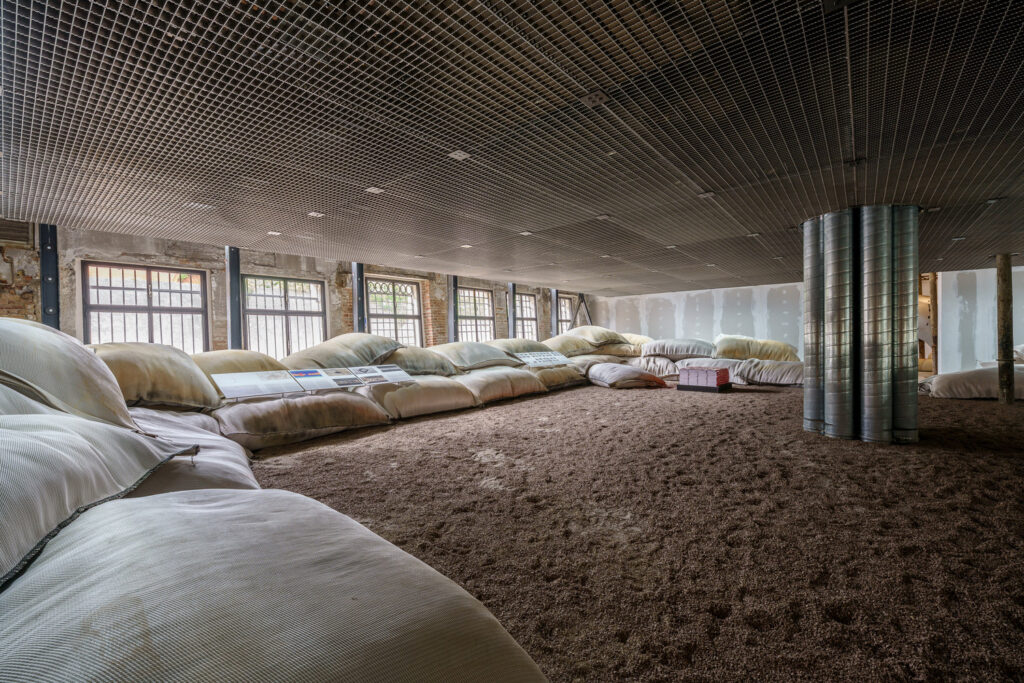
 Oman Across Ages Museum in Manah has been honoured with one of the world’s most prestigious architecture awards – the Prix Versailles World Titles.

The museum received the ‘Special Prize for an Exterior’, while the ‘Special Prize for an Interior’ was awarded to the Smritivan Earthquake Museum in Bhuj, India. The grand prize, the Prix Versailles, went to the Simose Art Museum in Otake, Japan.

Granted annually at Unesco headquarters in Paris since 2015, the Prix Versailles celebrates architectural excellence by showcasing the finest contemporary achievements worldwide.

In June, for the first time, Prix Versailles unveiled its World’s Most Beautiful Museums List for 2024, featuring seven newly opened or reopened museums that embody creativity, local heritage, and ecological efficiency.

Among the listed museums was Oman Across Ages Museum, recognised for its exceptional impact on its surroundings. Other shortlisted museums included the A4 Art Museum in Chengdu, China; Grand Egyptian Museum in Giza, Egypt; Paleis Het Loo in Apeldoorn, Netherlands; and the Polish History Museum in Warsaw, Poland.

This year’s ceremony was held on December 2, celebrating 70 of the ‘World’s Most Beautiful’ achievements across eight categories: Museums, Hotels, Restaurants, Emporiums, Airports, Campuses, Passenger Stations, and Sports.

This year’s finalists were selected through a rigorous process that reviewed new and recently opened sites across 31 nations. The 2024 World Jury, chaired by Benjamin Millepied, awarded three World Titles in each category.

Commenting on the event, Millepied said, “Architecture has the ability to display creative and stylistic diversity with great force. That diversity is the sign that the attention given to nature, togetherness, and different forms of expertise can help an environment emerge – one that is both receptive to expression and capable of harmony. Such an assembly of actors from every background reminds us of culture’s unique talent for leading humankind into dialogue.”

The recognition affirms Oman Across Ages Museum’s standing as a cultural and architectural beacon, reflecting the nation’s commitment to preserving heritage while embracing modernity.

source/content: muscatdaily.com (headline edited)

_____________

__________

OMAN

SAUDI ARABIA : Interpol to establish regional office in Saudi Arabia

The Kingdom and the international police organization sign host country agreement.

 Interpol is to establish an office in Saudi Arabia that will serve the Middle East and North Africa region.

Hisham Al-Faleh, undersecretary at the Kingdom’s Ministry of Interior, and Jurgen Stock, secretary-general of the international police organization, signed a host country agreement on Wednesday.

Prince Abdulaziz bin Saud, the Saudi Minister of Interior, and Maj. Gen. Ahmed Naser Al-Raisi, the president of Interpol, also attended the signing ceremony, the Saudi Press Agency reported.

In addition, they discussed Interpol’s activities during a meeting that also included Nasser Al-Dawood, the deputy minister of interior; Brig. Gen. Abdulmalik Al-Saqeeh, the director general of Saudi Interpol; and other senior officials.

source/content: arabnews.com (headline edited)

____________

Hisham Al-Faleh, undersecretary at the Kingdom’s Ministry of Interior, and Jurgen Stock, secretary-general of the international police organization, signed a host country agreement. (SPA)

_________________

SAUDI ARABIA

MOROCCO : Introducing ‘Nabatlé’, Morocco’s First Locally Crafted Plant-Based Milk

Crafted by COPAG-Jaouda, this plant-based milk skips the gluten, lactose, preservatives, and added sugars, keeping things simple and natural.

For Moroccans looking to swap traditional dairy for a local plant-based option, the wait is over! 

COPAG-Jaouda, a household name in the country’s dairy industry, has introduced “Nabatlé”, Morocco’s first entirely homegrown plant-based milk. 

More than just a substitute, “Nabatlé” is set to revolutionize the country’s approach to food innovation.

It also answers a growing demand for healthier, natural choices while proving that local expertise can keep pace with evolving consumer palates. 

Plant-based milk for everyone

As more Moroccans explore healthier alternatives, COPAG-Jaouda is making sure “Nabatlé” is not just an option but an accessible and affordable choice.

This plant-based milk skips the gluten, lactose, preservatives, and added sugars, keeping things simple and natural. 

The cooperative says it delivers healthy fats, essential vitamins, and minerals while staying low in calories. 

Whether vegan, vegetarian, or just curious, consumers can choose from three different varieties to suit their taste: 

Almond: Naturally sugar-free with a light, smooth taste and no cholesterol.

Oat: Rich in fiber, minerals, and plant-based proteins.

Coconut: Creamy with a mild exotic flavor, offering a source of calcium and vitamins A and D3.

To set the record straight on plant-based milk, which is new territory for some Moroccans, COPAG-Jaouda is rolling out an awareness campaign to showcase the milk’s nutritional perks and discover how versatile and beneficial they can be.  

But “Nabatlé” is not just a dairy alternative. The company sees it as a symbol of Morocco’s ambition to create top-tier, competitive products that also care for the planet, all while staying eco-conscious.

What began in 1987 with 39 agricultural producers has grown into COPAG, Morocco’s largest cooperative. 

Now, with over 12,000 employees and support for 24,000 farmers, COPAG continues to shape the agricultural landscape, spanning citrus, fresh produce, dairy, and meat industries.

source/content: moroccoworldnews.com (headline edited)

___________

______________

MOROCCO
GCC STATES : World Monument Fund to protect historic sites with Bahraini, Saudi, and Gulf partners

On a historical preservation tour around the Arabian Gulf region, the World Monument Fund recently visited the city of Muharraq in Bahrain before visiting Saudi Arabia.

A historically rich city with a story that dates to the late 19th century, Muharraq is the cultural heart of Bahrain.

Prior to gaining independence from British rule in 1971, Muharraq was Bahrain’s capital and center for public and governmental administrative, educational, and planning projects, before being replaced by Manama in 1923.

Though the city held many significant historical sites, its residents began to leave soon after and the area was left neglected.

Sheikha Mai bint Mohammed Al-Khalifa, president of the Bahrain Authority for Culture and Antiquities and chairperson of the Arab Regional Centre for World Heritage, founded the Sheikh Ebrahim bin Mohammed Al-Khalifa Center for Culture and Research in 2002, a non-profit organization, as a form of cultural renaissance.

Since its founding, the center’s purpose has been to form a space where thinkers could gather and share ideas in philosophy, literature, poetry, art, and culture.

_______________

FASTFACT

In discussion with the Royal Commission of AlUla and the Heritage Commission for future partnerships, the World Monument Fund is visiting AlUla as well as Historic Jeddah for the Islamic Arts Biennale.

The most significant aspect of its work, however, has been the house restoration projects in Muharraq and Manama, where 28 historical houses, many of which belonged to prominent Bahraini figures and families, have been brought back to life under the leadership of Al-Khalifa.

Over the weekend, a delegation from the World Monument Fund visited the Sheikh Ebrahim Center to see the restored houses firsthand.

Celebrating its 60th anniversary, the mission of the World Monuments Fund is to safeguard heritage all around the world, Benedicte de Montlaur, president of the fund, told Arab News.

Al-Khalifa was awarded the Watch Award by the World Monument Fund in 2015 and after a few visits to their offices in New York, she was asked to join them as a member of the board of trustees, making her the only Arab on the board.

In an interview with Arab News, Al-Khalifa said she felt it was her responsibility to keep them informed about the Arab world and all that it has to offer.

“The picture that travels to the world is not always true or complete, and in our Gulf countries there are many landmarks, monuments, and national identities that we would like to showcase,” she said.

The delegation first visited the Abdullah Al-Zayed House for Bahrain Press Heritage, the house of the first journalist to start a daily newspaper in the kingdom and which now hosts local and international speakers from the media sector.

Next up was the Kurar House, where Al-Kurar Ladies spend their time embroidering traditional Bahraini thobes and other garments by hand. Like the strings of an instrument, three women work on the thread separately, and one stitches them together simultaneously on the fabric, creating a harmonious rhythm.

The delegation also got to see the only room left of Sheikh Ebrahim’s original house, a room that dates back around 200 years.

Following the tour of the Sheikh Ebrahim restored houses projects, they also visited the houses of the Pearling Path and the UNESCO World Heritage Site, the Dilmun Burial Grounds.

With over 70 projects in the Arab world including the Louvre, the Smithsonian, and Babylon in Iraq, restoring the Imam Palace in the city of Taizz in Yemen, and Abydos in Egypt, the fund’s next mission is to become more active in the Gulf region.

“We see that there is a lot of interest in heritage in countries from the GCC,” de Montlaur said.

The first stop was Kuwait, where plans are underway to have Failaka Island added to the UNESCO World Heritage List.

After visiting their partners from the UNESCO Regional Center and the Sheikh Ebrahim Center in Bahrain, the delegation’s next destination is Saudi Arabia, “a country that is devoting a lot of time and energy at the moment to heritage,” de Montlaur said.

In discussion with the Royal Commission of AlUla and the Heritage Commission for future partnerships, the World Monument Fund is visiting AlUla as well as Historic Jeddah for the Islamic Arts Biennale.

“If you do not know your past, it is very difficult to build a future because you lose your identity,” de Montlaur said. “Especially in countries like here, that are developing really fast … it is extremely important also to pay attention to heritage places because it is very easy to destroy them, but when they are gone, they’re gone. They cannot be rebuilt.

“Once you have lost the spirit of a place and built modern buildings everywhere, then you have lost touch with your past.”

Preserving the land’s past also draws in crowds of tourists who get to experience each country’s distinct identity and history for the first time to learn about the place and its people, de Montlaur added.

“Heritage places represent the pinnacle of human achievements of history.”

On how the Arab world can work together to create a stronger stance for historical preservation, de Montlaur said: “I think it is already happening,” citing the various projects in Iraq, the UAE, Saudi Arabia, and Bahrain, etc.

She also added: “There is a big need for heritage preservation in other countries outside of the GCC, so they could align their forces.

“There is so much need in Egypt, in Gaza … in Syria … and I think what is very much part of the Arab countries is this solidarity, they can all unite around this heritage because this is the heritage of all the Arabs.”

Al-Khalifa added: “In Gaza, many landmarks have been destroyed, part of the upcoming plan is restoring some of those sites.

“It’s really a heritage of humanity as a whole and that is why every one of us, whether we are from the region or not, should care about it. But before anything else, it is the history and identity of the Arabs,” de Montlaur noted.

Speaking on the shared language and culture that unite Saudi Arabia and Bahrain, Al-Khalifa, who is also a part of the Royal Commission of AlUla, said that emotions and love between peoples are what bond them forever.

“This visit is not only to Bahrain but to our Gulf,” she said. “We always repeat: our Gulf is one, our goals are one, and our history is shared; so everything that distinguishes us — from identity to monuments — is an extension of civilizations thousands of years old.”

source/content: arabnews.com (headline edited)

___________

Bahrain’s cultural heart, Muharraq, has a rich history dating back to the late 19th century. (AN photo by Abdulrahman Bin Shalhoub)

Sheikha Mai bint Mohammed Al Khalifa at World Monument Fund’s visit to Bahrain / Sheikha Mai bint Mohammed Al Khalifa poses for a group picture with visiting guests in Bahrain. (AN photo by Abdulrahman Bin Shalhoub)

______________

GCC STATES

JORDANIAN Academic Omar Yaghi wins ‘2024 Arab Genius Minds Award’

 Jordanian academic Omar Yaghi, a chemistry professor at the University of California, Berkeley, has been awarded the 2024 Arab Genius Minds Award in the Natural Sciences category for his pioneering work in reticular chemistry.

Yaghi is celebrated for his transformative innovations in designing and synthesising metal-organic frameworks (MOFs) and covalent organic frameworks (COFs), the Jordan News Agency, Petra, reported. 

These frameworks address critical global challenges in energy storage, water harvesting, and environmental sustainability.

His research portfolio includes over 300 peer-reviewed papers, which have collectively garnered more than 250,000 citations, underscoring the “far-reaching” impact of his work.

Since 2012, Yaghi has held the James and Neeltje Tretter Chair in Chemistry at UC Berkeley. 

His contributions to reticular chemistry have “revolutionised” the ability to assemble molecular building blocks into highly porous structures with applications in gas storage, catalysis, and drug delivery, among others, yielding significant economic and environmental advancements.

The Arab Genius Minds Award, launched by Sheikh Mohammed Bin Rashid Al Maktoum, Vice President and Prime Minister of the UAE and Ruler of Dubai, honours achievements by Arab scientists and innovators across six key categories essential for the region’s developmental and cultural progress.

source/content: jordantimes.com (headline edited)

__________

pix: source: wikipedia

_________

JORDAN

GULF COOPERATION COUNCIL (GCC) ranks 6th globally in goods trade volume: GCC-Stat

The Gulf Cooperation Council (GCC) Foreign Trade Report for 2023, issued by the Statistical Centre for the Cooperation Council for the Arab Countries of the Gulf (GCC-Stat), highlighted the region’s significant position in global trade.

The GCC ranked sixth globally in the volume of trade in goods index, accounting for 3.4 percent of the total global trade in goods. The region’s trade volume reached $1.5 trillion in 2023, reflecting a 4.0 percent decrease compared to 2022.

The GCC also ranked third globally in the merchandise trade balance index in 2023, with a value of $163.7 billion, compared to $381.3 billion recorded in 2022, which marked a decrease of 57.1 percent.

In commodity exports, the GCC ranked fifth worldwide, contributing 3.1 percent of the global total with exports valued at $0.8 trillion in 2023, down 14.5 percent from 2022. Conversely, the region ranked ninth in total merchandise imports, accounting for 2.7 percent of global imports at a value of $0.7 trillion in 2023, reflecting a 13.4 percent increase from the previous year.

The report further detailed that GCC trade in goods (excluding intra-trade) decreased by 4.0 percent, amounting to $1,482.4 billion in 2023, compared to $1,482.4 billion in 2023.

Commodity exports fell from $962.6 billion in 2022 to $823.1 billion in 2023—a decline of $139.5 billion or 14.5 percent. However, commodity imports rose to $659.3 billion in 2023, up from $581.3 billion in 2022, an increase of $78.0 billion or 13.4 percent.

Oil exports of the GCC countries decreased by 20.5 percent in 2023 to reach $525.5 billion, compared to $661.1 billion in 2022.

As for the main trading partners, the GCC-Stat explained that China ranked first on the list of main trading partners in the commodity trade volume index in 2023. The value of the commodity trade volume amounted to $297.9 billion, surpassing its closest competitor, India, which ranked second with a value of $150.4 billion, with a difference of $147.6 billion.

China is also the GCC Countries’ most important trading partner. It ranked first in terms of the commodity exports index by importing 19.2 percent of the total Gulf commodity exports to global markets in 2023, at a value of $158.3 billion compared to $190.4 billion in 2022, with a decrease of 16.8 percent.

China also ranked first among the GCC countries’ main trading partners in the 2023 Total Merchandise Imports Index. It exported 21.2 percent of the GCC’s total merchandise imports in 2023, with a value of $139.6 billion compared to $126.0 billion in 2022, recording an increase of 10.8 percent over the previous year.

source/content: wam.ae (headline edited)

____________

________________________________________________

GULF COOPERATION COUNCIL (GCC ) STATES