SAUDI ARABIA : ‘Nusuk’ celebrates big win at 2024 World Summit Awards

Launched in 2003 and with more than 186 countries participating, the prestigious WSAs are held biennially and recognize impactful digital initiatives.

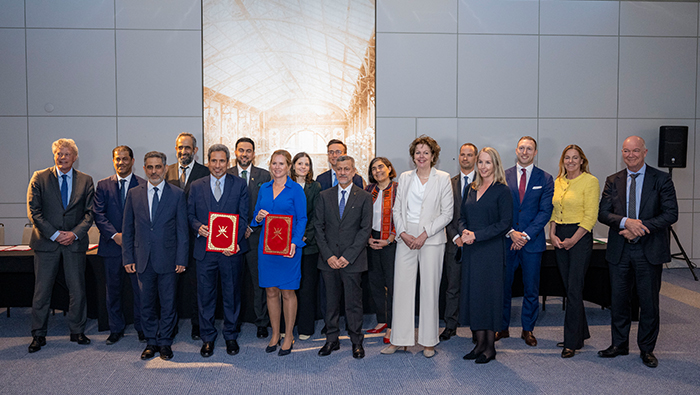
The Saudi Ministry of Hajj and Umrah is the sole Saudi participant to win a 2024 World Summit Award in the Culture and Heritage category, thanks to its “Nusuk” platform.

The project competed against over 900 technical submissions from 160 countries.

Launched in 2003 and with more than 186 countries participating, the prestigious WSAs are held biennially and recognize impactful digital initiatives. They seek to bridge the global digital divide by honoring smart applications and creative online content. The WSAs are a key UN initiative, supported by the International Telecommunication Union.

The award reflects the Kingdom’s pioneering strategy in developing innovative technological solutions aimed at enhancing pilgrims’ experiences and highlighting cultural and heritage values.

FASTFACT

‘Nusuk’ is a suite of innovative technological solutions which facilitate the performance of pilgrimage rituals, address challenges and enhance operational efficiency.

It underlines the Saudi Ministry of Hajj and Umrah’s efforts to drive comprehensive digital transformation, in alignment with the goals of Saudi Vision 2030.

“Nusuk” is a suite of innovative technological solutions which facilitate the performance of pilgrimage rituals, address challenges and enhance operational efficiency.

It has already advanced significantly with the development of pioneering systems such as the Nusuk Card, Nusuk Masar and crowd management systems.

It also focuses on highlighting the Prophet’s biography and cultural landmarks in Makkah and Madinah, featuring more than 150 museums, monuments, restaurants, cafes and tourist destinations, among other notable sites that enrich the user’s experience.

Over 400 licensed guides are affiliated with the platform, offering customized excursions throughout the Kingdom to pilgrims.

The Ministry of Hajj and Umrah has said it is very proud of its achievement and reaffirmed its ongoing commitment to developing technological solutions that ensured the sustainability of the Hajj and Umrah sectors, facilitating easy access to smart services and ensuring a smooth and tranquil performance of the rituals.

source/content: arabnews.com (headline edited)

__________

nusuk application / Over 400 licensed guides are affiliated with the platform, offering customized excursions throughout the Kingdom to pilgrims. (Supplied)

_________________

SAUDI ARABIA

EGYPT: Omar Marmoush signs with Man City on transfer from Eintracht Frankfurt

After weeks of speculation, Marmoush agrees to a deal with the Premier League champions that runs until 2029.

Manchester City have announced the signing of Eintracht Frankfurt forward Omar Marmoush for a reported initial fee of about $72.6m.

“The 25-year-old Egyptian striker has completed a move to the Etihad Stadium on a four-and-a-half-year deal, meaning he will remain at the Club until the summer of 2029,” City said in a statement on Thursday.

“This is a day I will never forget,” Marmoush said after signing up with the English Premier League champions.

“To sign for Manchester City – one of the best teams in the world – is an amazing feeling. I am delighted, my family are so proud, and we are all very happy to be here in Manchester.

“With Pep, his technical staff and the world-class facilities here, players have everything they need to improve. That was really enticing for me when I had the chance to come here.”

Marmoush is City’s third signing of the January transfer window following the arrivals of defenders Abdukodir Khusanov and Vitor Reis.

The former Bundesliga star’s contract is understood to include a potential further $5m in add-ons.

Born in Cairo in 1999, Marmoush stood out early in the academy of club Wadi Degla in the Egyptian Premier League. At just 17, he was promoted to the first team and joined Wolfsburg’s reserves a year later.

At Wolfsburg, Marmoush initially struggled for consistency and game time, resulting in loans to St Pauli and Stuttgart.

The striker moved to Frankfurt on a free transfer before the 2023-2024 season and scored 12 goals in 29 league games.

Marmoush’s development has drawn inevitable comparisons to his compatriot Mohamed Salah, but the Liverpool superstar warned against such correlations.

“Omar has great potential and is an important player for his team and the national team currently, but I hope we stay away from the idea of comparisons because it will put him under pressure,” Salah said in November.

“Do not compare him to me. Do not say the ‘new Mohamed Salah’. Let him live his career. Comparing a player at the beginning of his career with another who has achieved a lot over many years does not help him.”

City’s director of football Txiki Begiristain said Marmoush was an “accomplished and exciting forward”.

“He’s had an outstanding season, and every time we have watched him, he has influenced matches,” he said.

“He has all the attributes a top-class attacker requires. He has outstanding pace and awareness, and he is exceptional in front of goal. He can also play a number of different positions, which is a really valuable asset.”

His arrival at the Etihad Stadium comes during a frustrating season for City.

City, champions for the past four seasons, are currently fifth in the Premier League, 12 points behind leaders Liverpool having played a game more.

Defeat at Paris Saint-Germain on Wednesday has also left Pep Guardiola’s side in danger of missing out on the Champions League knockout stages.

source/content: aljazeera.com/sports (Al Jazeera and News Agencies) / (headline edited)

____________

pix: @ManCity

__________

EGYPT

SOMALI AMERICAN: ‘I wanted to be underestimated’: How Muna Abdulahi played her way through Netflix’s reality show, ‘The Mole’

Minneapolis poet Muna Abdulahi talks strategy, community and leveraging cultural stereotypes in Netflix’s season two of “The Mole,” where she competed for a $154,000 prize.

Who is the mole? 

For Somali American poet Muna Abdulahi, that question loomed large during her first day on season two of Netflix’s reality game show, “The Mole,” which was filmed in the napier grass fields of western Malaysia. Abdulahi had to figure out who to trust among the other 11 players while aware that one of them might be secretly sabotaging the game, and while navigating cultural differences and working to stay under the radar herself during the six-week filming.

The premise of “The Mole” is simple: contestants work together to build a pot of prize money that only one player will win in the end. Among them is “the mole,” a player tasked with working against the group. After each mental or physical challenge, players take a quiz to identify the mole and the contestant with the lowest score is eliminated. If the mole remains undetected until the end, they win, but if the last player uncovers their identity, that player takes the prize. 

In a game where everyone is out to deceive each other, moments of genuine connection feel like dangerous territory. Off-camera, players share meals, tell stories and laugh together — but beneath the camaraderie, the question remains: Who can you trust when everyone might be lying? 

Abdulahi, who grew up in Willmar, Minnesota, and now lives in Minneapolis, approached the game with a calculated strategy: lean into being underestimated.

“When people first meet me, they see the hijab,” Abdulahi said in a confessional in the first episode. “They see a Muslim woman, somebody who follows other people’s orders, and I’m going to use that to every single advantage.”

Did Abdulahi’s strategy pay off? Watch “The Mole” on Netflix to see how far she goes.

 In an interview with Sahan Journal, Abdulahi reflected on her life as a poet and shared her experience filming the show in July 2023. She discussed what it was like being a Muslim woman in a high-stakes competition balancing trust and suspicion.

The interview has been edited for length and clarity.

Can you share a bit about your journey as a poet in the Twin Cities? What inspired you to start writing? 

I started writing poetry when I was 14. Somalia is known as the nation of poets, so I have family members who are poets, like my grandmother. Being born and raised in the U.S., language was still a barrier because I understood Somali when it was spoken to me but speaking it was a whole other conversation. So, when I was young, there was a part of me that really wanted to find something that connected me to my culture and poetry was it. 

The issue was, I went to predominantly white schools my whole entire life, so a lot of the authors I would read would be old white men. I’m like, “Okay, I have absolutely no ties to these people,” but then I started getting into spoken word poetry and that scene is predominantly BIPOC stories and narratives that I never got to hear growing up. It inspired me to write, and I just never stopped.

How do your experiences as a Muslim woman influence the subjects you write about?

That’s a really good question. I mean, I think everything ties back to our inner child. For me, I never really got to hear BIPOC stories. I still remember the first BIPOC story I read. It was “The Kite Runner.” 

I think when you are not represented in stories, it makes you feel unimportant and as if your experiences are not worthy of being shared. It’s also the media in general. So, my mission when I started writing was to not only give space to our stories, but to give space to the stories that were devalued or silenced or not seen as worthy. 

It feels like there’s two sides of the coin — either our stories are not being shared or, when it is, it’s these perfect stories where Black and brown girls become tokenized and don’t feel worthy unless they’re exceptional. I want to give space to the in-between.

What drew you to “The Mole”? How did you get involved with the show?

I’m a big, big fan of reality TV, specifically reality competition shows like “Big Brother” and “Survivor,” so I’ve always wanted to be a part of it, but I never saw any Muslim people. I remember writing down in my notebook the shows that I want to be a part of, and I had to check off every single one because the structure of the game itself would not meet the necessities and the needs of being a Muslim woman.

In “Survivor,” you’re stranded on this random island and — let’s say you just did a swimming challenge — you’re going to be wet all day, all night. Maybe you have an extra hijab but how would you be able to preserve your values and at the same time play this game? 

It’s the same thing with “Big Brother,” where you’re being filmed 24/7, even when you shower. Even though I love the game, I can’t really do it. What I loved about “The Mole” is that the structure of the game itself is accessible to Muslim women. 

What was it like communicating with producers about what you needed?

So the first thing is prayers. We pray five times a day. The way that these games work is completely fast-paced, so I basically had to tell them, “Hey, I need 10 minutes.” We met in the middle where I was able to move to the side and do my prayers, but that also meant that I was praying in a lot of different places. 

We also didn’t have our phones, but I usually use it to pray at specific times and toward a specific direction to Mecca. I also needed water to make wudu (a cleansing ritual), so there was somebody who literally carried my prayer mat, bottled water and checked the times for me. That was really helpful. It also helped that we were in a Muslim country. There were a lot of prayer rooms already within the city. 

How did you mentally and physically prepare for the show? 

I rewatched a lot of the seasons, and not just the U.S. seasons. I’m also a big fan of the international seasons, so I was watching Netherlands, Belgium and Australia. I wanted to make sure that my game plan was set, but at the same time give myself room to adapt, because that’s the name of the game. 

We don’t really know what we’re getting into. I also prepared by memorizing things, because the objective of the game is, “Who is the mole,” right? We have to remember as much as possible about them: What are they wearing? What color are their shoes? Which car did they get in? 

Those little details would be on the quiz. 

What was your strategy going into the game? 

Originally, my strategy was to play into this stereotype that people have for Muslim women — very timid, shy, quiet, observational, not taking up too much space — so they underestimate me. It worked for that first episode but after that, I had to switch up my game. 

I can’t hide. It’s so much more difficult to hide who you are when you’re with these people all day, but it still worked to my advantage because people still underestimated me. Well, until mid-game when you see them start to question if I was the mole. 

In the first episode, you talked about how people often perceive Muslim women as obedient or timid. As you entered the game and interacted with contestants, did you feel that they had a specific perception of you?

Off the bat, yeah. It was exactly what I thought. I don’t think a lot of people on the show had close Muslim women friends, so I think a lot of the time, people perceive groups of people based on what they see on TV. 

I remember Q [Quaylyn Carter] was like, “Oh my gosh, I thought you were going to be so quiet,” so, I really could have played into that. But Andy (Mintzer) had a lot of knowledge about Muslim culture. Muslim women and men are not supposed to touch the opposite gender’s hand, so I knew that first meeting was going to be so awkward because a lot of people don’t know that, but Andy knew right away.

How did you manage building friendships with contestants while, in the back of your mind, knowing that one of them is sabotaging the game?

To be honest, I came in there like, “I’m not here for friends; I’m here to win,” but a lot of these people are just so likable and so lovely. The mole lies throughout the whole thing, but off-camera, the stress and tension is gone. We’re eating together or driving to the next location and sharing stories about who we are. 

The core of me is centered around community, and even though I wanted to shut it off, those in-between moments really got to me. Some of these friendships are so real. Hannah (Burns), for example, was somebody who I saw as competition or as an enemy, but outside of the game, we were friends, so it was this weird, funny tension where it’s like, “I adore you, but in the game, I’m lying to you up and down.”

I had such a beautiful friendship with Jenn (Jennifer Dasilva-Hassiman), too, and it sucked so bad because she left first. She has such a beautiful spirit. In the beginning, it was difficult coming into this as a minority. 

I know who I am, but I’m also shifting myself a little bit for this game, and as someone who grew up in predominantly white spaces, code switching becomes this mechanism. It was lovely to see Jenn be exactly who she is — this bold, beautiful personality and unapologetically herself. 

One of the key moments from the season was episode five, when you guys had an auction and contestant Neesh Riaz bid the entire pot of $59,500 for an exemption from the quiz.

What was it like watching all of that money you guys worked for drain from the pot?

It was so tense, and it’s funny watching it back from an outside perspective, because it’s been so long. I’m just laughing at my reaction, because it was so serious. What’s so unique about this game is that they take your phone away so you’re truly, one-hundred percent engulfed in this experience. Like, this is your life, and we’re at the halfway point. 

When he took all that money, it just hit me that somebody’s full year of work was gone just like that. 

Honestly, everybody was so mad. There’s so many moments that were not shown. We were outside and we were just like, “What are we doing here?” Even the host had to remind us that there’s still a lot of money coming in, but I think at this point, people were just so tired of losing money and you’re realizing not only are we competing against the mole, we’re competing against other players. So you’re like, “Okay, what are my actual odds here? If I was to win, am I going to be winning a dollar? Is that right?”

How did it feel to get as far as you did? 

It felt so good. A big part of that whole experience ties to the very beginning of our conversation where I didn’t want to come on the show to prove that I’m smart or exceptional. I just wanted to be myself and show all of the complexities that make up a human. 

I’m smart, but I’m also a big personality. I’m a little funny and a little quirky. I don’t have to compromise anything and I can still get to the end. Even though I didn’t win, I still proved that it had nothing to do with who I was or my capabilities and, for that, I feel like my purpose was met. Money would have been amazing but the experience was more fulfilling than I could have imagined.

What was the reaction from your friends and family after the show aired? 

It was really beautiful. My family is my biggest support system and my sisters, especially. It was like a sports game, the way they were cheering for me. 

What about the response from viewers?

Watching the show back was such a healing experience, and then to see the outpour of love in my DMs — that was something I wasn’t prepared for. And to see all these Muslim women come into my messages — it meant so much to me, and I didn’t know how much I needed it. 

It just reaffirmed exactly what I was meant to do. Coming into this next era, I want to continue paving the path so others could walk with me and hopefully, it’ll be easier for the next one, and the next one, and the next one. 

source/content: sahanjournal.com / myahgoff (headline edited)

_____________

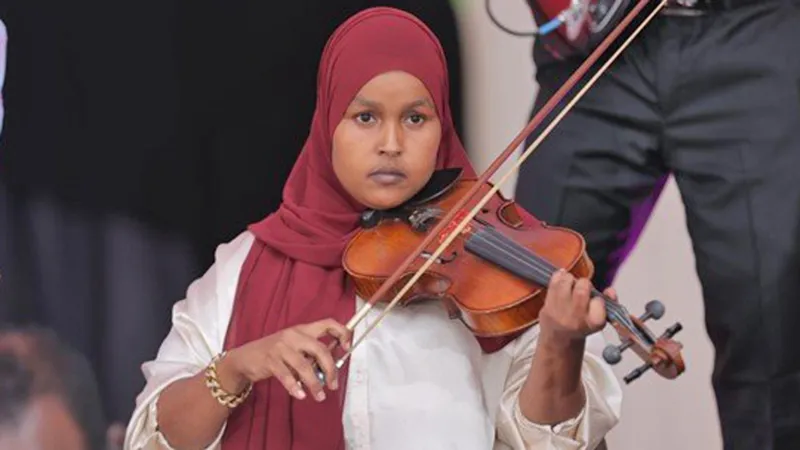
Poet Muna Abdulahi (center) gives a spoken word tribute during the January 9, 2024, inauguration of St. Paul’s historic all-female City Council. The new council sits behind her. Credit: Aaron Nesheim | Sahan Journal

________________________

AMERICAN / SOMALIA

EGYPT Becomes Europe’s Second-Largest Fresh Produce Exporter

Egypt’s fresh produce exports to Europe reach 917,000 tonnes, growing 7% in the last season, second only to the Netherlands.

Egypt has ranked as Europe’s second-largest exporter of fresh vegetables and fruits for the latest export season from September 2023 to August 2024, shipping 917,000 tonnes with a 7% year-on-year growth, according to EU data.

Citrus led the way, with 500,000 tonnes exported, an 8% increase from the previous season. Sweet potatoes followed with 117,000 tonnes, onions at 94,600 tonnes and grapes at 58,000 tonnes.

Potatoes saw a strong performance, exceeding 400,000 tonnes last season, capitalising on production issues in key European nations.

Meanwhile, Egyptian onion exports dropped to 92,000 tonnes in 2024, down from 135,000 tonnes in 2023, due to a six-month export ban from October 2023 to April 2024.

Other notable exports include carrots, lemons, garlic, beans, mangoes, peppers, strawberries and watermelons.

source/content: cairoscene.com (headline edited)

______________

________

EGYPT

ALGERIA : Yacine El-Mahdi Walid Honored as the “2024 Startup Ecosystem Star

In a momentous acknowledgment of his pivotal contributions to the global entrepreneurial landscape, Yacine El-Mahdi Walid, Algeria’s Minister of Vocational Training and Apprenticeship, was named the “2024 Startup Ecosystem Star.” This honor was conferred by the International Chamber of Commerce and the renowned innovation organization “Mind the Bridge” during the ninth edition of the celebrated award ceremony.

Celebrating Leadership in Innovation

The accolade recognizes El-Mahdi Walid’s instrumental role in driving innovation and nurturing startup ecosystems not only in Algeria but across the African continent. The minister’s efforts have been hailed as transformative, positioning Algeria as a rising hub for technology and entrepreneurship.

In a statement on his official Facebook page, Minister El-Mahdi Walid expressed his gratitude, emphasizing the significance of the award in celebrating individuals who make substantial global impacts within startup ecosystems.

“This recognition,” he remarked, “although awarded individually, is truly a testament to the extraordinary efforts of my former team at the Ministry of Knowledge Economy, Startups, and Small Enterprises.”

A Visionary Path for Algerian Startups

Acknowledging the collaborative spirit behind the honor, the minister reaffirmed his confidence in Algeria’s continued trajectory towards innovation under the stewardship of his successor, Noureddine Ouadah. “I am certain,” he added, “that this outstanding work will persist and that Algeria’s startup ecosystem will rise to meet the aspirations and hopes of its people.”

A Global Celebration of Innovation

The 2024 Startup Ecosystem Star event is an annual celebration that recognizes individuals who have made an indelible mark on the global entrepreneurial landscape. By highlighting exceptional contributions, it inspires collaboration and innovation worldwide.

source/content: dzair-tube.dz

_________


___________

ALGERIA

SUDAN : Janet Habil, First Sudanese football female coach in Saudi Arabia

Sudanese football coach Janet Habil told Altaghyeer she was proud as the first woman from her country to coach in Saudi Arabian, leading al-Najma (the Star) women football team, a genuine motivation for her to press for success and achievement.

* How do you feel as you take your first step on the road to success?

– Praise be to Allah, I’m definitely very proud and grateful for the opportunity to prove myself and be an effective member of the society, and I will deliver, Allah willing.

* Have you ever dreamed to be the first Sudanese woman to train in Saudi Arabia?

– Honestly, I have been dreaming and dead sure of taking this role because I know Saudi Arabia is a country that secure due rights for both men and women, and it supports young talents within its 2030 Vision.

* What is missing for Sudanese women to succeed as football coaches, players or even administrators?

– Every hardworking person deserve a share of success. I don’t think that a Sudanese young man or woman lack talent or self-confidence, but we lack resources. Another vital element needed for going forward in the road to success, is the backer who supports youth achieve their set goals.

* In your view .. why training of the Sudanese National Woman Football Team was not assigned to a woman?

– I think it is better to have a woman coach because she would be closer to the women community and hence able to understand their feeling, thinking and abilities, I believe that women can handle any challenge and realize their visions. However, it seems the selection of coaches for the Women National Team was based on specific criteria, namely the level of the candidate’s training license. But, we have competent female trainers such as Sara Edward who is an A Pro License holder but she is currently living in Germany. We have also very important women coaches like Salma al-Majdi and Ibtihaj Derma.

* How was your experience as a player in the Sudanese women football team al-Tahadi (the Challenge)?

– Al-Tahadi is one of the Sudan’s first women football teams, I was selected to the team on merits of my talent and capabilities and therefore I succeeded in proving myself, praise be to Allah, and thanks to the team and coach Sara Edward who believed in me as a player and after I sustained injury she supported me to adopt a coaching career.

* How do you describe your experience in the Jeddah al-Najma club of Saudi Arabia?

– I’m going through a very big experience in al-Najma team and I’m very proud to be a member of this team.  Definitely there are challenges, but difficulties are found to be overcome for us to achieve our dreams. With people around who believe in you and with confidence in our abilities we can achieve anything. I’m grateful to al-Najma Club (administration, technical and medical teams) that has placed its trust on me as a coach and provided me with this good opportunity.

* What do you say about women football in Saudi Arabia, as a nascent sport activity within that community?

– It is a very successful experience because the Kingdom’s leadership have great faith in women capabilities a matter that enhanced women self-confidence. I can say that Saudi women football clubs are up to par with their counterparts in any country that has preceded in this field.

source/content: altaghyeer.in (headline edited)

___________

_________

SUDAN

IRAQ : Archaeologists Discover Ancient Artifacts in Iraq, Unlocking Secrets of Mesopotamia

Archaeologists Discover Ancient Artifacts in Iraq, Unlocking Secrets of Mesopotamia.

Significant discoveries have been made at the ancient site of Kurd Qaburstan in Iraq, shedding light on Mesopotamian history. Artefacts including clay cuneiform tablets, a game board, and structural remains have been unearthed by a team led by Tiffany Earley-Spadoni, an associate professor of history at the University of Central Florida. The findings are believed to date back to the Middle Bronze Age, around 1800 BCE, and may provide fresh perspectives on the daily lives, literacy, and socio-political connections of the people from this ancient civilisation.

According to the research conducted at Kurd Qaburstan, the clay tablets are the first of their kind to be discovered in the region. Preliminary analysis suggests they hold valuable information about the city’s residents and the historical events they faced, as reported by phys.org. Tiffany Earley-Spadoni, an associate professor of history at UCF, shared with phys.org that studying names, word choices and writing styles may offer an enhanced understanding of cultural identity and literacy in northern Mesopotamian cities.

The Middle Bronze Age in northern Iraq remains under-researched due to historical biases and limited prior excavations. The ongoing work aims to provide a narrative from the perspective of the city’s inhabitants, rather than relying on external accounts, as noted by the lead researcher.

Exploring a Forgotten Urban Center

Excavations at the site have uncovered monumental architecture, human remains, and evidence of destruction, hinting at significant historical events. A newly identified lower town palace, revealed through geophysical surveys, is being closely studied to determine its administrative significance. Artefacts found in the palace, including pottery and animal remains, suggest a more nuanced understanding of social and economic structures, with signs of private wealth and dietary diversity among the city’s population.

Future Research Potential

The site is hypothesised to be the ancient city of Qabra, a regional hub mentioned in Old Babylonian records. While definitive identification is ongoing, findings from the tablets and architectural remains bolster this theory. As reported by phys.org, researchers expect further analysis to uncover details about possible warfare and societal dynamics, potentially rewriting aspects of Mesopotamian history. Work at Kurd Qaburstan is set to continue in 2025, with hopes of revealing more historical secrets from this fascinating period.

source/content: gadgets360.com (headline edited)

_____________

Excavations at Kurd Qaburstan revealed storage jars with key Mesopotamian artifacts / Photo Credit: Tiffany Earley-Spadoni

__________

IRAQ

ABU DHABI, U.A.E : UAE oil giant ADNOC swoops on German chemicals firm Covestro

The deal between ADNOC and Covestro is the biggest buy out of a European firm by a company from the Gulf.

German chemicals group Covestro said Tuesday it had accepted a takeover bid from UAE state energy company ADNOC, as one of the key sectors in Europe’s largest economy is gripped by crisis.

Elevated energy costs in the wake of Russia’s 2022 invasion of Ukraine have weighed heavily on chemicals producers, which account for around five percent of Germany’s GDP.

The deal valued Covestro, a maker of plastics, at some 12 billion euros ($13.3 billion), the German group said in a statement.

Under the terms of the agreement, valid until the end of 2028, the Abu Dhabi National Oil Company (ADNOC) will make an offer for all remaining Covestro stock at a price of 62 euros per share.

The state energy company of the United Arab Emirates will also inject around 1.2 billion euros into the chemicals firm through the issuance of new shares, once the deal is completed.

With ADNOC onboard, Covestro would have “an even stronger foundation for sustainable growth”, the German group’s CEO Markus Steilemann said in a statement.

ADNOC was a “financially strong and long-term oriented partner”, Steilemann said.

The takeover offer was subject to a minimum acceptance threshold of “50 percent plus one share”, as well as regulatory controls, Covestro said.

Chemicals crisis

ADNOC’s bid for Covestro comes while the challenges facing the Germany’s energy-intensive chemicals industry show no signs of abating.

The sector was “struggling in a difficult environment”, the German chemical industry association VCI said in a report last month.

Weak demand and high energy costs in the wake of the Russian invasion of Ukraine were weighing on producers and leading them to cut back on production in Germany.

BASF, the world’s largest chemicals group, said last month would cut costs and refocus on its “core businesses”, while some of its German plants lacked competitiveness.

For its part, Covestro said it was “making significant progress in its strategic transformation”.

The group, which makes chemicals used in everything from building insulation to electric vehicles, unveiled savings plan in June amid ongoing takeover talks with ADNOC.

Leverkusen-based Covestro, which was spun off from chemicals giant Bayer in 2015, said it would cut material and personal costs in the hopes of saving some 400 million euros annually.

With ADNOC’s support, Covestro could grow in “highly attractive sectors and can make an even greater contribution to the green transformation”, Steilemann said.

Covestro’s board said it would recommend shareholders accept ADNOC’s offer under the terms of the agreement.

Diversification move

The deal was a coup for ADNOC as it seeks to expand its operations beyond oil, and if completed, would mark the first takeover of a company in Germany’s blue-chip DAX index by a Gulf state-owned firm.

Covestro was a “natural fit” for ADNOC’s growth strategy, the energy giant’s CEO Sultan Al Jaber said in a statement.

Al Jaber, who served as president of last year’s COP28 climate talks in Dubai, said the acquisition represented a step towards “diversifying ADNOC’s portfolio”.

The deal aligned with ADNOC’s “future-proofing strategy and our vision to become a top five global chemicals company”, he said.

Under the terms of the deal, Covestro said ADNOC had committed to maintain the group’s “corporate governance and organisational business structure”.

ADNOC would also respect existing agreements with workers’ unions, while “there are no plans to sell, close or significantly reduce Covestro’s business activities”.

source/content: newarab.com (headline edited)

_____________

ADNOC is seeking to expand its operations beyond oil [Photo by Beata Zawrzel/NurPhoto via Getty Images]

_______________________________________________

ABU DHAB, UNITED ARAB EMIRATES (U.A.E)

SAUDI ARABIA : KAUST develops lithium-extraction technique that could boost Saudi Arabia’s battery industry

Technology makes industrial-scale lithium extraction possible, KAUST finds

Lithium essential for batteries in electric vehicles, computers, smartphones

Scientists at Saudi Arabia’s King Abdullah University of Science and Technology have developed a new technology that could turn the Kingdom into a leading producer of lithium, the state institution has said.

In a news release posted on its website recently, KAUST said the “innovative technology,” which involves the direct extraction of lithium from brine in oilfields and seawater, is described in a study published in the latest issue of the journal Science.

Lithium is an essential metal for the production of batteries now widely used for electric vehicles, computers and smartphones. Global demand for lithium is expected to increase to more than 5 million tonnes in 2030 from about 750,000 tonnes in 2020, according to KAUST.

Lithium is said to be present in oilfields and seawater but at low concentrations and difficult to extract in useful quantities.

But the KAUST research team led by Prof. Zhiping Lai said the new technology makes extraction possible on an industrial scale.

“Accessing lithium in brine can expand the availability of lithium worldwide by several hundreds of billions of (tonnes) and may transition Saudi Arabia from a major importer to producer of this highly sought-after element,” Lai explained in the study.

The method also achieves extraction without introducing any pollutants or additives, he said.

Saudi Arabia is thought to have plenty of sources rich in lithium in its surrounding seas and oil fields, considering that brine and seawater are estimated to contain over 10,000 times more lithium than conventional lithium reserves.

Lihytech, a KAUST startup founded by Lai and his colleague Prof. Kuo-Wei (Andy) Huang, who also contributed to the study, aims to bring the technology from laboratory to market, the university stated.

The startup has received an initial investment of $6 million from the Saudi mining company Ma’aden and the KAUST Innovation Fund.

Lihytech and Aramco announced last year a partnership in which the international conglomerate is providing brine from its oilfields to test the technology’s lithium-extraction capabilities.

source/content: arabnews.com (headline edited)

____________

This combination image shows an aerial view of an Eramine lithium extraction area in Salta province, Argentina, (left) and a bottle containing a sample of lithium carbonate in a laboratory of the Eramine lithium extraction. Like Argentina, Saudi Arabia has vast sources rich in lithium. (AFP photos)

_________________

SAUDI ARABIA

MOROCCO : Aseggas Ambarki 2975: Yennayer, Three Millennia of the Free People’s New Year

For centuries, Morocco’s Amazigh – the “free people” – celebrated Yennayer behind closed doors, their New Year a quiet act of defiance against systematic erasure of their identity.

Dozens of bonfires illuminate the rocky slopes above Tisselday in Morocco’s High Atlas Mountains as night falls on January 13. The flames dance against the darkness, marking the eve of Yennayer 2975, the Amazigh New Year.

In villages and cities across North Africa, indigenous communities prepare for a celebration that predates recorded history, carrying forward traditions that have survived centuries of marginalization and cultural pressure.

From mountainside “douars” (small villages) to busy city quarters, the air fills with calls of “Aseggas Ambarki,” “Aseggas Amaynou,” “Aseggas Ighoudan,” “Aseggas Anammar,” and “Aseggas Ameggaz” – ancient wishes for a blessed, new, prosperous, and happy year. The greetings, passed down through generations, carry both the weight of history and hopes for the future.

A heritage written in time

The Amazigh calendar carries the weight of three millennia, marking time since 950 BCE when Sheshonq I, a Libyan-born pharaoh ascended to Egypt’s throne. As founder of Egypt’s 22nd dynasty, he unified Egypt and later invaded Palestine, where he captured the treasures of Jerusalem’s Temple of Solomon – an event significant enough to be recorded in the Bible.

Yennayer, derived from the words “yan” (one) and “ayyur” (month), literally means “first month” in the Amazigh language – Tamazight. An alternative etymology traces the word to the Latin “ianuarius,” from which January itself originates.

Known by various names across regions, including “id seggas” or “haguza” in Morocco’s indigenous communities, the celebration transcends mere historical commemoration, pulsing with living traditions, agricultural rhythms, and seasonal cycles that have governed life in these lands since before written records began.

The celebration marks the beginning of the agricultural calendar, rooted in the Julian system that dominated North Africa during Roman times. Local communities refer to this period as the beginning of the “Black Nights,” a 20-day stretch marking one of the year’s coldest periods, reflecting the deep connection between Amazigh cultural practices and the agricultural heritage of the region.

This year’s celebration marks a watershed moment in Morocco. As the second year of official recognition unfolds following King Mohammed VI’s historic May 2023 decree, schools and businesses will close their doors, transforming what was once a day of quiet cultural resistance into a nationally acknowledged celebration.

The shift represents a dramatic change from a challenging past when Amazigh children faced punishment for speaking their mother tongue in classrooms for decades.

The holiday’s institutionalization, following Algeria’s 2018 recognition, came after tireless advocacy by indigenous rights activists.

The royal recognition extends beyond a symbolic gesture. The government increased its 2023 budget supporting the Amazigh language by 50% to MAD 300 million ($30 million), pledging to hire hundreds of official clerks for public services.

This institutional support marks a decisive break from policies that once actively suppressed Amazigh identity, ushering in a new era of cultural recognition in Morocco.

Celebration across regions: More than a meal

The celebration known as “imensi n’Yennayer” typically begins as darkness falls on Yennayer eve. In Morocco’s diverse regions, families gather for rituals that blend agricultural traditions with cultural preservation. The evening starts with “id seggas” or “thabbourth aseggas” (the door of the year) as called by Kabylies in Algeria, marking the transition between seasons.

In High Atlas villages, the aroma of “ourkemen” fills homes – a rich mixture of seven varieties of dried legumes and grains simmering with sheep’s or cow’s foot. The dish combines lentils, split peas, chickpeas, white beans, broad beans, corn, wheat, and barley, symbolizing agricultural diversity and abundance. Traditional beliefs hold that eating well on Yennayer ensures prosperity throughout the year.

The Ouirgane Valley, an hour south of Marrakech, sees families preparing fine couscous garnished with peeled hard boiled eggs and dusted with cinnamon.

In the Souss region, particularly around Tiznit, “tagoula” takes center stage on family’s tables. This ancient dish demands hours of patient preparation, cooked slowly over wood fires until the corn or barley semolina transforms into a thick, nourishing porridge. Served with olive or argan oil, honey, and traditional smen (fermented butter), each component carries symbolic weight in the celebration.

The ritual of “amnaz” – hiding a date pit in the “tagoula” – adds an element of festive anticipation. While traditionally believed to bring good fortune to its finder, some families have adapted the practice, using almonds instead of date pits to prevent dental mishaps while maintaining the tradition’s spirit.

Rituals of renewal

The celebration encompasses more than just communal meals. Families undertake thorough house cleaning, symbolically purifying their spaces for the new year. Women burn aromatic herbs and branches, filling homes with cleansing smoke.

Traditional beliefs discourage certain activities: sweeping (to avoid chasing away good fortune), removing fire from the house, or speaking words associated with hardship or misfortune.

Children receive handfuls of sweets and dried fruits – a tradition known as “trèze” in some Algerian regions, containing precisely thirteen different varieties for luck. Women maintain the ancient practice of sharing food with nature, setting aside crumbs for birds and insects, embodying beliefs in universal abundance.

From marginalization to ‘recognition’

The path to official recognition winds through decades of systematic marginalization.

Following independence, Morocco’s drive to assert itself as an Arabo-Muslim nation led to aggressive Arabization policies that actively suppressed Amazigh identity. Schools became primary tools of cultural assimilation, where children were punished for speaking their mother tongue.

Traditional systems of land management were dismantled, while Amazigh customary laws guaranteeing rights to land – never reinstated after the colonial period – left communities vulnerable to displacement.

The state’s Arabization strategy extended beyond language policy. Public institutions, media, and administrative services operated exclusively in Arabic, effectively excluding Amazigh speakers from participating fully in civic life.

This institutional marginalization pushed Amazigh cultural practices to the periphery, treating them as folkloric remnants rather than living traditions of Morocco’s indigenous population.

The impact of these policies rippled through generations. Amazigh communities faced systemic barriers to education, employment, and political representation. The abolition of traditional land rights led to widespread displacement, forcing many to abandon ancestral territories.

This erosion of land access not only threatened economic stability but struck at the heart of Amazigh cultural identity, where connection to ancestral lands forms the foundation of community life.

The devastating earthquake of September 2023, which claimed over 2,800 lives, exposed the ongoing consequences of this historical marginalization. Often lacking basic infrastructure and emergency services, Amazigh villages suffered disproportionate damage.

Remote communities found themselves isolated from aid, with crumbling infrastructure and inadequate emergency response systems revealing the stark disparities in development and public investment. The disaster laid bare how decades of exclusion from national development planning left Amazigh regions particularly vulnerable to natural disasters.

The earthquake’s aftermath magnified the persistent gap between symbolic recognition and substantive equality, demonstrating how historical marginalization continues to shape present-day vulnerabilities in Amazigh communities.

Language rights and education

These structural inequalities persist despite recent cultural recognition. While Tamazight gained official language status in 2011, the implementation of this policy remains limited in practice.

Government services, healthcare information, and emergency communications still primarily operate in Arabic and French, creating persistent barriers for Amazigh communities.

The struggle for meaningful linguistic inclusion continues, with the current 31% rate of Tamazight instruction in primary schools reflecting both progress and persistent challenges, though government initiatives aim to reach 50% by 2025-26.

The Ministry of Education’s ambitious roadmap envisions expanding this initiative from the current 1,803 primary schools to 12,000 institutions by 2030, potentially benefiting four million students.

The 2019 law formalizing Tamazight’s use in governmental administration, local authorities, and public services marked another milestone. Yet, practical implementation often falls short of legal promises, with usage largely limited to official signage rather than substantive integration into administrative functions.

Even the 2024 census sparked controversy, with the Moroccan Association for Research and Cultural Exchange criticizing the High Commission for Planning for “systematic exclusion of Tamazight” in the process.

The census claimed only 25% of Moroccans speak Amazigh, a figure strongly contested by activists who assert the real number could be as high as 85% of the population.

The journey toward recognition has seen significant milestones. King Mohammed VI’s historic 2001 Ajdir speech affirmed Amazigh identity as fundamental to Moroccan culture, leading to the establishment of the Royal Institute of Amazigh Culture. In 2003, Morocco officially adopted the Tifinagh script, culminating in the 2011 constitutional recognition.

Yet, activists note a concerning trend. Moroccan human rights activist Ahmed Assid points out that “Amazigh language lost two thirds of its speakers in five decades,” highlighting the urgent need for preservation efforts despite official progress.

Living heritage

With Morocco marking its second year of officially recognizing Yennayer, the celebration comes at a time of both progress and persistent challenges for the Amazigh people.

Traditional Amazigh land management systems, dismantled during colonial times, remain un-reinstated. Remote communities still struggle for basic infrastructure and services.

Yet in villages across the High Atlas, families gather around communal plates, sharing meals that symbolize abundance and renewal. Children search for hidden dates in their “tagoula,” while elders pass down stories of harsh winters and resilient communities.

Young couples choose this time for weddings, and families mark their sons’ first haircuts, linking personal milestones to the cycle of seasonal renewal.

The celebration of Yennayer 2975 thus stands as both a victory and a reminder – of battles won for cultural recognition, and of continued struggles for full equality and justice.

source/content: moroccoworldnews.com (headline edited)

____________

“Aseggas Ambarki, Amaynou, Ighoudan, Ameggaz” ring out across Morocco today.

_____________

MOROCCO