Author: ArabianRecords.org
LIBYAN Desert’s Yellow Glass: how we discovered the origin of these rare and mysterious shards
The Great Sand Sea Desert stretches over an area of 72,000km² linking Egypt and Libya. If you find yourself in a particular part of the desert in south-east Libya and south-western parts of Egypt, you’ll spot pieces of yellow glass scattered across the sandy landscape.
It was first described in a scientific paper in 1933 and is known as Libyan desert glass . Mineral collectors value it for its beauty, its relative rarity – and its mystery. A pendant found in Egyptian pharaoh Tutankhamun’s tomb contains a piece of the glass . Natural glasses are found elsewhere in the world; examples include moldavites from the Ries crater in Europe and tektites from the Ivory Coast. But none are as rich in silica as Libyan desert glass, nor are they found in such large lumps and quantities.
The origin of the glass has been the subject of debate among scientists for almost a century. Some suggested it might be from volcanoes on the moon. Others propose it’s the product of lightning strikes (“fulgurites” – glass that forms from fusion of sand and soil where they are hit by lightning). Other theories suggest it’s the result of sedimentary or hydrothermal processes; caused by a massive explosion of a meteor in the air; or that it came from a nearby meteorite crater .
Now, thanks to advanced microscopy technology, we believe we have the answer. Along with colleagues from universities and science centres in Germany, Egypt and Morocco, I have identified Libyan desert glass as originating from the impact of a meteorite on the Earth’s surface.
Space collisions are a primary process in the solar system, as planets and their natural satellites accreted via the asteroids and planet embryos (also called planetesimals) colliding with each other. These impacts helped our planet to assemble, too.
Under the microscope
In 1996 scientists determined that the glass was close to 29 million years old. A later study suggested the source material was composed of quartz grains, coated with mixed clay minerals and iron and titanium oxides.
This latter finding raised more questions, since the proposed age is older than the matching source material in the relevant area of the Great Sand Sea desert. To put it simply: those source materials didn’t exist in that location 29 million years ago.
For our recent study, a co-author obtained two pieces of the glass from a local who had collected them in the Al Jaouf region in south-eastern Libya.
We studied the samples with a state-of-the-art transmission electron microscopy (TEM) technique, which allows us to see tiny particles of material – 20,000 times smaller than the thickness of a paper sheet. Using this super-high magnification technique, we found small minerals in this glass: different types of zirconium oxide (ZrO₂).
Minerals are composed of chemical elements, atoms of which form regular three-dimensional packaging. Imagine putting eggs or soda bottles on the shelf of a supermarket: layers on top of layers to ensure the most efficient storage. Similarly, atoms assemble into a crystal lattice that is unique for each mineral. Minerals that have the same chemical composition but different atomic structure (different ways of atom packaging into the crystal lattice) are called polymorphs.
One polymorph of ZrO₂ that we observed in Libyan desert glass is called cubic zirconia – the kind seen in some jewellery as a synthetic replacement for diamonds. This mineral can only form at a high temperature between 2,250°C and 2,700°C.
Another polymorph of ZrO₂ that we observed was a very rare one called ortho-II or OII. It forms at very high pressure – about 130,000 atmospheres, a unit of pressure.
Such pressure and temperature conditions provided us with the proof for the meteorite impact origin of the glass. That’s because such conditions can only be obtained in the Earth’s crust by a meteorite impact or the explosion of an atomic bomb.
More mysteries to solve
If our finding is correct (and we believe it is), the parental crater – where the meteorite hit the Earth’s surface – should be somewhere nearby. The nearest known meteorite craters, named GP and Oasis, are 2km and 18km in diameter respectively, and quite far away from where the glass we tested was found. They are too far and too small to be considered the parental craters for such massive amounts of impact glass, all concentrated in one spot.
So, while we’ve solved part of the mystery, more questions remain. Where is the parental crater? How big is it – and where is it? Could it have been eroded, deformed or covered by sand? More investigations will be required, likely in the form of remote sensing studies coupled with geophysics.
Before you go …
90,000 experts have written for The Conversation. Because our only agenda is to rebuild trust and serve the public by making knowledge available to everyone rather than a select few. Now, you can receive a curated list of articles in your inbox twice a week. Give it a go?
source/content : theconversation.com (headline edited)
__________
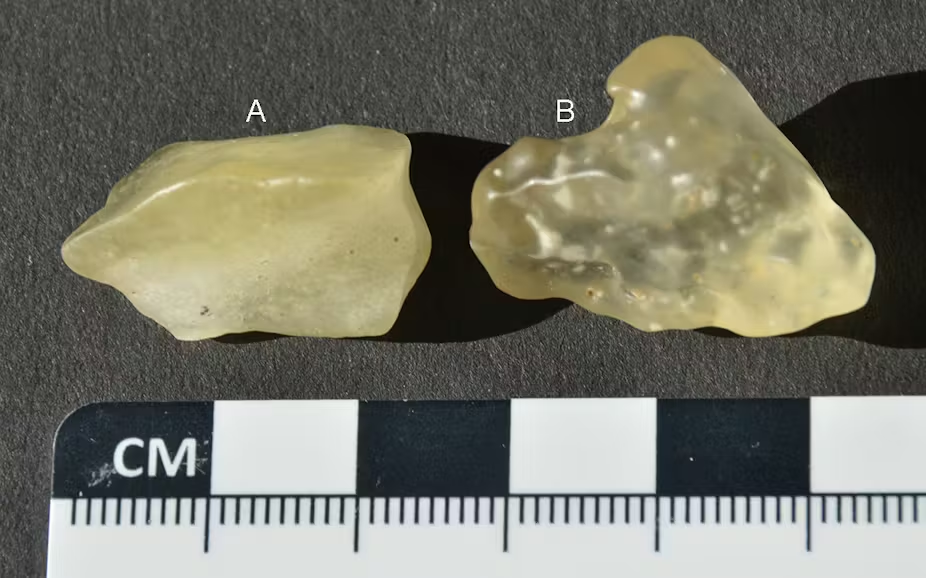
The pieces of Libyan desert glass that formed the basis of the study. Author provided
________
LIBYA
OMANI Students Create Device to produce Water from Air
A smart device designed and created by Omani students has gained attention for its ability to squeeze water out of air. The students claim purity of the water extracted from air has been scientifically proven to be safe for drinking.
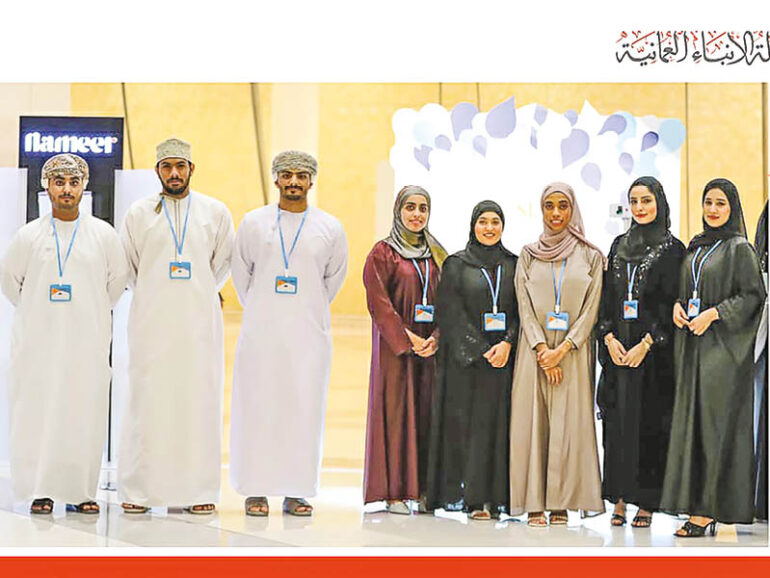
The student team from the National University of Science and Technology, called Skydrop Company consists of Mona al Kharousi, Hiba al Shuaibiya, Qusay al Jadidi, Safaa Yahya al Naabi, Maad al Harasia, Moadh Saif al Rashdi, Al Mutamin Suban al Balushi and Naglaa bint Habib al Amriya.
Describing the rational behind the project, Mona said, “We wanted to create an easy-to-use product for athletes, adventurers and travellers, who sometimes face challenges related to the availability of drinking water.”
She added that the device works on user-friendly technology, is low cost and has sustainable environmental characteristics.
“It is made of environmentally friendly reinforced plastic and can be charged using electricity or solar energy.”
According to Mona, the device is small and lightweight and works to convert air into water in an innovative way, producing water from the surrounding moist air.
“Water vapour is condensed by cooling and then turned into dew to reach the last stage of the sedimentation process and conversion into pure drinking water.”
Mona explained that the device will contribute significantly to solving the problem of environmental pollution from plastic, which has become widespread because of bottled drinking water that are difficult to decompose, in addition to finding an innovative environmental solution to achieve water security.
About the challenges the students faced while giving shape to their project, Mona said, “The lack of capital is the toughest challenge for this project in addition to difficulty in sourcing certain parts for it.”
Skydrop Company is currently working to make a bigger version of the device to deploy in the agricultural sector, especially in the desert. “The team aspires to be a leader in creating modern technologies for the production of potable water that are suitable is different environmental conditions.”
source/content: muscatdaily.com (headline edited)
___________
__________
OMAN
EGYPT: 79 Cairo University Scholars among Best Scientists in Stanford University report
A total of 79 scientists from Cairo University are among a list of 160,000 scientists whose practical opinions are cited in various specializations with a (2 percent).
President of Cairo University Dr. Mohamed Othman Elkhosht received a report on Stanford University’s announcement of a list of scientists whose practical opinions are cited in various specializations with a (2 percent), featuring about 160,000 scientists from 149 countries, based on the Scopus database, in 22 scientific specializations, and 176 sub-specialization for distinguished researchers.
Dr. Elkhosht announced that the Stanford list included a large number of Cairo University scientists, with a total of 79 scientists on the two lists, whether the total from 2011 to 2022, or the latest version 2023, as this year’s list included scientists from 11 colleges (an increase of 8% over the previous year).
Number of scholars featured from Cairo University in the report’s 2022 edition was 73 scholars, representing 9 of the university’s faculties, and compared to the number of 74 and 55 scholars during the previous years (2021 and 2020, respectively), Cairo University thus leads all Egyptian universities and research centers in all years from 2020 until now.
Dr. ElKhosht explained that the annual Stanford University report is an objective, external indicator of the progress of scientific research at Cairo University.
It is also a quantitative indicator for the university to identify the number of distinguished faculty members in research and a reflection of the university’s methodology, plan, applied practices, and the support that the university provides to its employees from the various colleges and institutes affiliated with it.
Dr. Mahmoud Al-Saeed, Vice President of the University for Postgraduate Studies and Research, pointed out that the report reflects the strengthening of the confidence of the international scientific and research community in our scientists in all fields and specializations, and that the results of the classification this year included two lists, the first of which is specific to the list of the total practical years 2011 – 2022 (with a total of 417 scientists), While the second included the list of last year, 2022, with a total of 817 scientists, adding that this year’s list (2023 edition) contained 926 Egyptian scientists, while last year’s list (2022 edition) included 680 Egyptian scientists from various universities and research centers, compared to 605 and 396 during the years 2021 and 2020, respectively.
Stanford University used the Scopus database of the international publisher Elsevier to extract various indicators in this list, including global scientific publishing, the number of citations, the H index, and co-authorship, all the way to the composite citation index.
source/content: egypttoday.com (headline edited)
__________
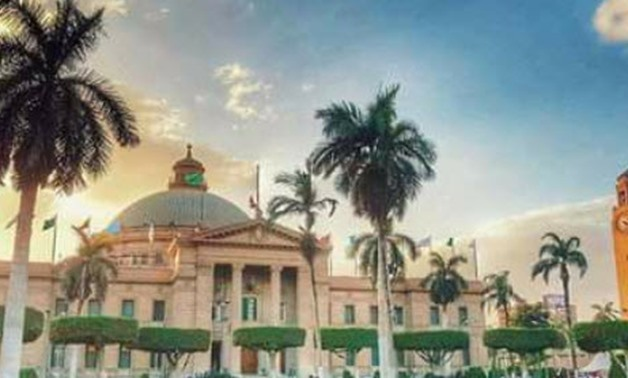
Cairo University – file
____________
EGYPT
Dubai, U.A.E : Dubai’s Wasl sets new Guinness World Records™ title for ‘Highest Running Track on a Building’
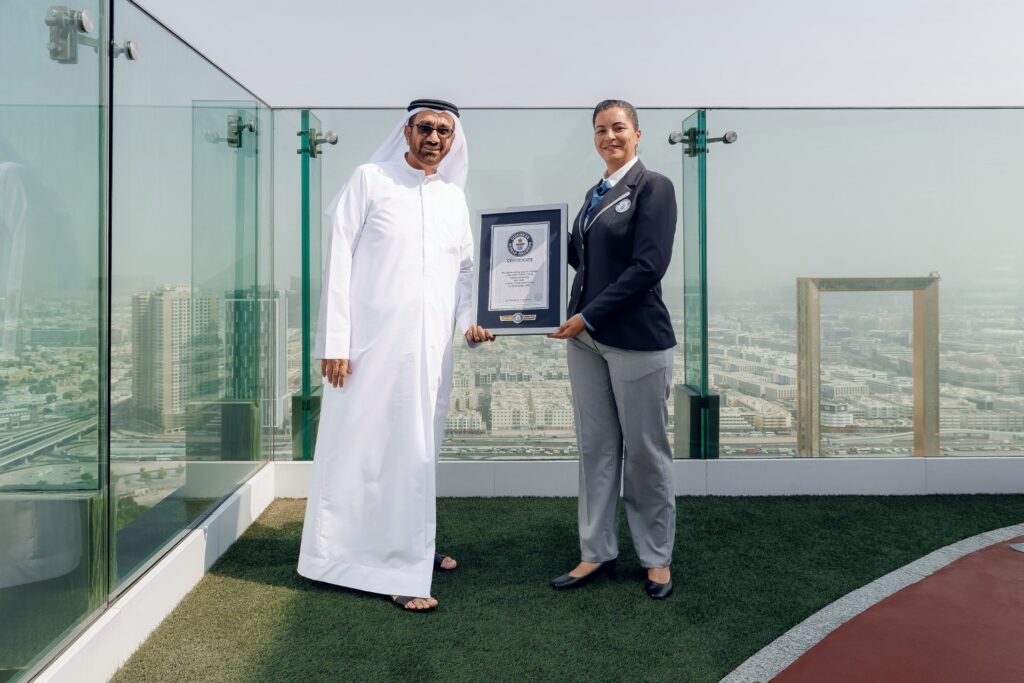
Wasl, one of the largest real estate development and management companies in the region, has set a new Guinness World Records™ title for the ‘Highest Running Track on a Building’. Wasl’s Sky Track, located on the 43rd floor of 1 Residences, the luxury residential tower within the Wasl1 master development, exemplifies Dubai’s commitment to promoting fitness and healthy living and encouraging residents to pursue an active lifestyle.
Situated 157m above the ground, Sky Track is a 335m rooftop track where fitness enthusiasts can enjoy a unique experience surpassing a traditional gym workout. Walkers and runners alike are able to enjoy unrivalled views of Dubai that include Burj Khalifa, Zabeel Park, The Dubai Frame, Sheikh Zayed Road, old Dubai, and the Arabian Gulf.
The global fitness industry has seen significant growth in recent years aligned with increased awareness of the importance of physical activity. Community events organised in Dubai such as the 30-day Dubai Fitness Challenge have succeeded in inspiring residents to adopt a healthy lifestyle. Responding to this societal shift, Wasl prioritised health and well-being in its innovative development process by building the most iconic running track in the world.
His Excellency Hesham Al Qassim, CEO of Wasl, said: “We are delighted to achieve another Guinness World Records title for Dubai. We are humbled that Sky Track has achieved a world record, and happy that it will enhance residents’ daily lives. 1 Residences is a unique development that reflects the vision of our wise leadership in striving for excellence in all spheres. We remain steadfast in our commitment to creating projects that inspire and improve the well-being of residents and communities.”
Talal Omar, VP – MENA & Türkiye, Guinness World Records™ said: “We are consistently delighted by the ingenuity and ambition of record holders around the world. The achievement of constructing the highest running track on a building is not just a testament to architectural prowess but also to human aspiration. It’s remarkable how boundaries are continually pushed to redefine what’s possible.
This track isn’t just a feat of engineering, but a symbol of Dubai’s commitment reaching for the skies—both literally and metaphorically. We congratulate everyone involved in this monumental accomplishment.”
This is the second time that Wasl has been recognised by Guinness World Records following its ‘Largest Aerial Projection Screen’ record, which took to the skies in celebration of ‘Year of Zayed’ in 2018 to commemorate the late Sheikh Zayed bin Sultan Al Nahyan, the Founding Father of the UAE.
1 Residences is a mixed-use development comprising 753 ready-to-move-in units. Residents can enjoy an array of exceptional dining, leisure, and entertainment facilities within the project, which also features two swimming pools, two state-of-the-art gymnasiums, a podium courtyard, children’s play areas, and BBQ pits, among many others.
source/content: mediaoffice.ae (headline edited)
__________
____________________________________________
DUBAI, UNITED ARAB EMIRATES (U.A.E)
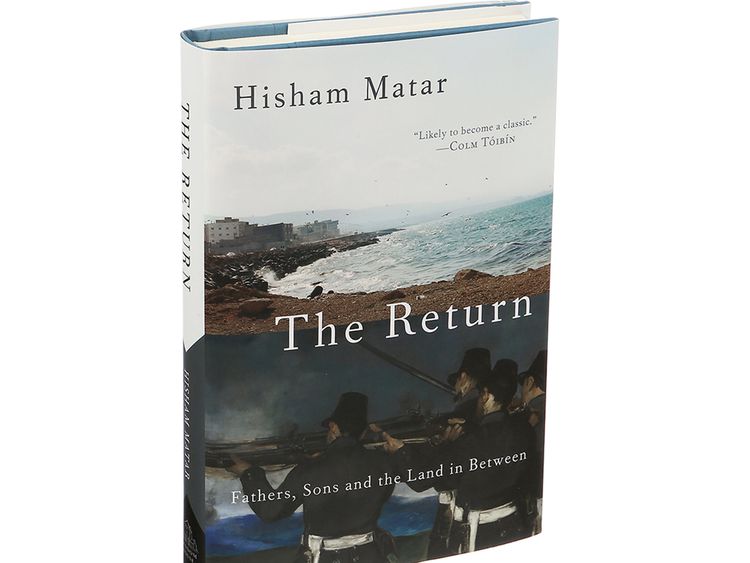
LIBYAN-AMERICAN: Hisham Matar’s powerful Memoir ‘The Return’ Chronicles a haunting journey
“The Return” is a meditation on human condition, an exploration of the bonds of family.
In his poignant and deeply affecting memoir, “The Return,” Hisham Matar invites readers on a journey into the heart of his native Libya, a journey marked by love, loss, and the relentless pursuit of truth.
As the acclaimed author of “In the Country of Men,” Matar brings his exquisite storytelling prowess to bear on the exploration of his own family’s harrowing ordeal amid the turbulent political landscape of their homeland.
The narrative begins with a pivotal moment in Matar’s life, when at the tender age of nineteen, his world was shattered by the abduction of his father, a courageous man. The elder Matar’s disappearance cast a long shadow over the family, leaving them grappling with uncertainty and anguish.
Yet, amid the darkness, Matar clung to a flicker of hope, a stubborn belief that his father may yet be found. It is this unwavering hope that propels him forward, driving him to embark on a decades-long quest for answers.
Against the backdrop of upheaval and societal transformation, Matar chronicles his return to Libya, a homeland he once fled as a child. With his mother and wife by his side, he confronts the ghosts of his past and navigates the complexities of a country in flux.
Through evocative prose and piercing insight, Matar captures the essence of a nation on the cusp of profound change, grappling with the weight of its history and the promise of its future.
“The Return” transcends the confines of a mere memoir; it is a meditation on the human condition, an exploration of the enduring bonds of family and the resilience of the human spirit.
Nature of love and loss
Matar’s storytelling takes the readers to the heart of Libya, immersing them in its sights, sounds, and emotions. With each turn of the page, we are drawn deeper into the labyrinth of Matar’s inner world, as he grapples with questions of identity, belonging, and the nature of love and loss.
At its core, “The Return” is a testament to the power of storytelling to illuminate the darkest corners of our collective experience, offering solace, catharsis, and ultimately, redemption.
Matar paints a poignant portrait of the human spirit’s capacity to endure and find solace in the face of uncertainty. Beyond mere memoir, “The Return” stands as a testament to the strength of hope, offering inspiration to all who confront life’s tribulations.
source/content: gulfnews.com /ahmad nazir (headline edited)
____________

pix: wikipedia.com
_________
AMERICAN / LIBYAN
SAUDI Teen 17-year old Theyab bin Hamdan Al-Howaiti Bags 30 awards for Camel Racing
Theyab bin Hamdan Al-Howaiti sets sights on glory at the Crown Prince Camel Festival Awards.
Theyab bin Hamdan Al-Howaiti has become a standout name in camel racing circles across the Kingdom — despite his tender years.
The 17-year-old has collected 30 local awards for racing, the most prestigious of which came at the King Abdulaziz Camel Festival.
Al-Howaiti said: “I grew up in a family and community that loved camels, used them, and were keen to race as well. We considered it part of our heritage, customs and traditions.”
Hailing from Al-Wajh city, his love for the “ship of the desert” began in childhood years and he soon began training, raising and caring for them, while also following races. Once he had reached the legal age, he began participating in national races himself.
Al-Howaiti has competed in around 80 races, including the Al-Wajh Camel Race, and has won 30 awards so far.
Camel racing is a competitive sport in which the animals undergo training in stages, beginning with being tamed and then moving on to being prepared for races.
Racing has strict rules, the most important of which involves the characteristics of the participating camels — the necessity of descending from purebred Arabian breeds.
Purebred camels are characterized by their slim bodies, agility, and great ability to withstand tough training. There are separate races for different breeds and ages of camels to ensure equal opportunities for all racers.
Al-Howaiti has set his sights for the future. He hopes one day to claim glory at the Crown Prince Camel Festival Awards, No. 1 in prestigious ranks within Saudi society.
Al-Howaiti said: “I hope to see a place and arena for camels in every city within the Kingdom, in appreciation of its (racing’s) status and the legacy it carries that embodies the history of the Kingdom’s civilization.
“In light of the care and attention given to sports in general and camel sports in particular by the Kingdom’s sovereigns, we’re proud to name 2024 as the Year of the Camel.”
He added that the recognition contributed to the cultural and civilizational values of the animal while cementing its place at the heart of Saudi society.
source/content: arabnews.com (headline edited)
__________
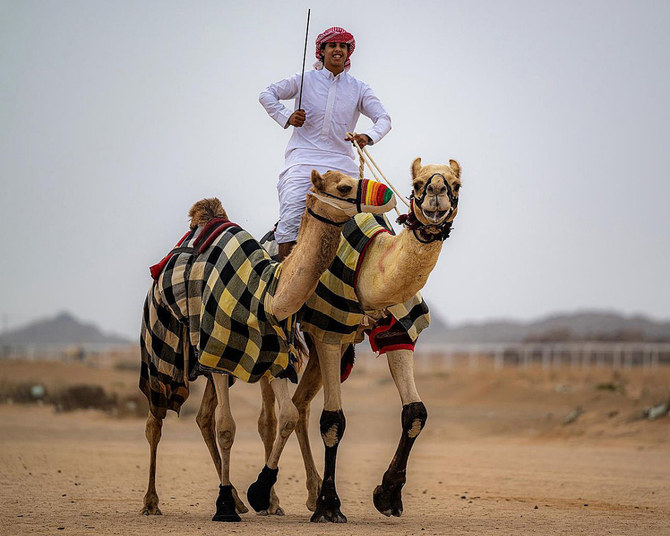
Seventeen-year-old Theyab bin Hamdan Al-Howaiti has competed in around 80 races, including the Al-Wajh Camel Race. (SPA)
_________________
SAUDI ARABIA
DUBAI, U.A.E: Dubai Civil Defence launches the World’s First Mobile Floating Fire Station
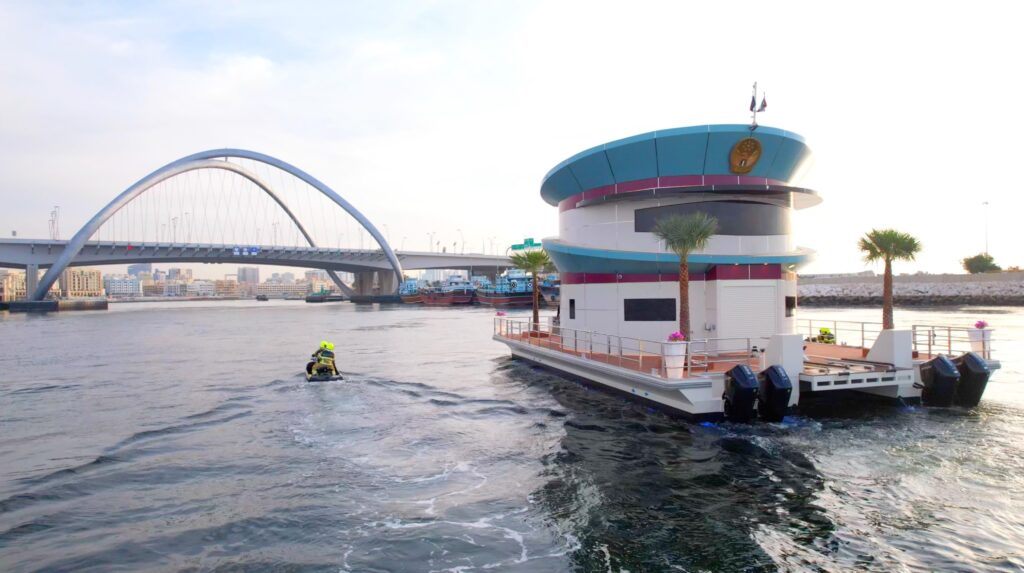
In a significant initiative that reinforces its leadership in safety infrastructure and innovation, Dubai Civil Defence has launched the world’s first sustainable mobile floating fire station.
The initiative reflects Dubai’s strategy to constantly enhance its fire and rescue services and raise environmental sustainability.
Engineered to provide high efficiency in safeguarding marine activities as well as enhanced coverage and swifter response times, the new mobile floating fire station is set to transform maritime emergency response mechanisms in Dubai. The first of its kind in the world to be sustainable and environmentally friendly, the floating structure is 70% more cost-effective than traditional marine fire stations.
Lieutenant General Expert Rashid Thani Al Matroushi, Director General of Dubai Civil Defense, said: “The deployment of the mobile floating fire station marks a significant step forward in our journey towards achieving global leadership in safety and security. The inauguration of this station not only demonstrates our dedication to generating innovative safety solutions but also aligns with our commitment to contributing to enhance Dubai’s overall infrastructure and services. A significant enhancement to our marine firefighting capabilities, this facility makes Dubai a frontrunner in reducing response times to maritime incidents, with a target response time of just four minutes.”
The launch of the floating station also increases the safety index in maritime navigation and water channels in Dubai with the use of innovative smart solutions, Al Matroushi added. The station’s strategic deployment will ensure comprehensive coverage across Dubai’s maritime and navigational zones that are crucial elements of the emirate’s geography, significantly enhancing Dubai’s responsiveness to accidents at sea, he noted.
Designed with sustainability at its core, the station embodies Dubai’s commitment to environmental conservation while maintaining the highest standards of safety and efficiency. With the capability to accommodate 16 individuals, the building stands out for its eco-friendly design. Operating as a mobile marine station, the floating structure eliminates the necessity for dedicated land space, resulting in both cost savings and a significant contribution to reducing carbon footprint and preserving green spaces. Additionally, the floating building showcases mobility with a notable speed of 11 miles per hour.
As Dubai continues to grow as a major hub for maritime trade and tourism, the floating fire station demonstrates the high priority the emirate’s leadership places on driving greater safety innovation and excellence. Through the implementation of innovative solutions and the latest technologies, Dubai Civil Defense continues to provide world-class fire and rescue services, contributing to Dubai’s vision of becoming a global leader in safety and security.
source/content: wam.ae (headline edited)
___________
____________________________________________
DUBAI, UNITED ARAB EMIRATES (U.A.E)
EGYPT’s Rod al-Farag Axis featured in Guinness World Records as Widest Suspension Bridge
Egypt received on Wednesday a Guinness World Records’ certificate on Rod al-Farag Axis Bridge (Tahya Misr Bridge) passing over the Nile, for being the widest suspension bridge in the world at a width of 67.36 meters.
Guinness World Records website has not yet published news about the new Egyptian record-holder.
Regional Director for the Guinness World Records in the Middle East and North Africa region Talal Omar handed over the certificate to Mohamed Mohsen Salah, President and CEO of Arab Contractors company.
President Abdel Fatah El Sisi attended Wednesday the opening of Rod el Farag Axis Bridge, int the presence of Prime Minister Moustafa Madbouli, Presidential Adviser for National and Strategic Projects Sherif Ismail, Transport Minister Kamel el Wazir and a number of high-ranking state officials.
The Arab Contractors, a leading construction company in the Middle East and Africa, officially requested that Rod El-Farag Axis sets a record in the Guinness Book of World Records, said Ahmed Makled, chief executive manager of B Premium, the official partner of Guinness Records in Egypt.
Rod El-Farag Axis (TahyaMisr Bridge) links areas in northern and eastern Cairo with west Cairo. The Egyptian government said that the bridge, which aims to ease traffic and reduce commuting time, is the widest over a waterway.
Makled said that the relevant minimum limit set by Guinness is 65.235 meters, hoping that the bridge will meet other requirements and conditions set by Guinnessto become the world’s widest bridge, replacing Canada’s Port Mann Bridge, which was considered the world’s widest.
Port Mann, which has a width of 65 meters, was opened to traffic in 2012. California’s Bay Bridge was then opened in 2013, to replace Port Mann as the world’s widest. The aforementioned San Francisco-Oakland Bay Bridge has a width of over 78 meters.
Makled said that the TahyaMisr Bridge will seek to enter the Guinness World Records in the coming few days after it is officially inaugurated.
The construction of the flyover bridge is 100 percentcompleted, said Salah, the CEO of the Arab Contractors, adding that the bridge has been paved.
As many as 4,000 engineers, technicians and other workers have contributed to the construction of the bridge with a cost of LE 5 billion ($292.7 million), Salah said, adding that the second phase of the project costs LE 4 billion.
source/content: egypttoday.com (headline edited)
___________

The Arab Contractors officially requested that the Rod El-Farag Axis sets a record in the Guinness Book of World Records – Press photo
________
EGYPT
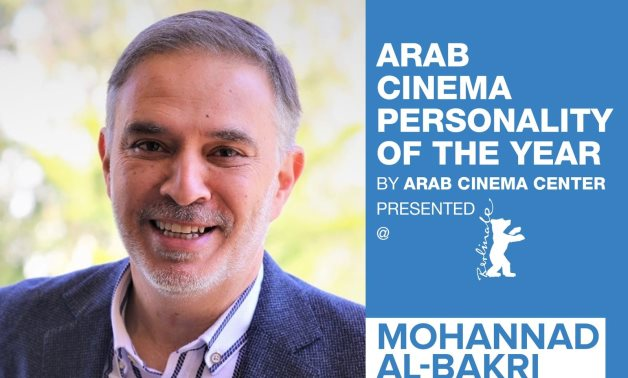
JORDAN: Arab Cinema Center names Mohannad Al-Bakri ‘Arab Cinema Personality of the Year’
In recognition of his distinguished work in revitalizing and sustaining Jordanian and Arab cinema, the Arab Cinema Center (ACC) is bestowing its 5th Arab Cinema Personality of the Year Award to Mohannad Al-Bakri,the Managing Director of the Jordanian Royal Film Commission (RFC) during the 74th Berlin International Film Festival, which will run from February 15th to 25th.
The award, which coincides with the ACC’scelebration of its own 10th anniversary, is designed to honor and highlight prominent industry figures whosepersistent contributions have helped elevate the Arabfilm industry in the eyes of the international filmmaking community as a whole.
Al Bakri has been instrumental in rousing the country’s film industry from its slumber sinceassuming his position in 2009 through his development of the commission’s funding and training programs, as well as building local production capacity with the opening of Jordan’s first dedicated film studio complex. Under his guidance,Jordan has become a competitive and enticing destination for filmmakers through a combination of extraordinary landscapes, universally praised production services and its cost-effectiveness as ashooting location.
After starting out at the RFC in 2007 as a capacity-building manager, Al-Bakri quickly rose to the title ofmanaging director by 2009. Before that, he kickstarted his professional career at the Hashemite Fund for Human Development where he developed dynamic programs promoting the active role of youths in society.
In addition to his work for the RFC, he was also appointed as Regional Managing Director of Luminus Media – Jordan (SAE Institute) from 2012 until 2015 before joining New York University in Abu Dhabi as director of External Relations and Partnerships from2015 until 2019.
“We take immense pride in honoring Mohannad Al-Bakri, the Managing Director of the Jordanian Royal Film Commission (RFC) with the Arab CinemaPersonality of the Year Award. Since assuming his position, he has made enormous and noteworthy efforts to advance the Jordanian film industry,” saidAlaa Karkouti and Maher Diab — Co-founders ofArab Cinema Center — in a joint statement.
“This is evidenced by the outstanding successJordanian films have achieved so far both locally andinternationally, including INSHALLAH A BOY,which world premiered at Cannes’ 62nd Critics Week,winning two unprecedented awards in the history of Jordanian cinema,” they added.
Last year, the Arab Cinema Center gave its ArabCinema Personality of the Year Award to Mouhamad Keblawi the Founder and Head of Malmö Arab Film Festival in Sweden. Other recipients of the Award include Chiraz Latiri, former general director of theCentre National du Cinema et de l’Image, andrenowned producer and screenwriter Mohamed Hefzy— the Founder of Film Clinic. The inaugural award went to both Abdulhamid Juma and Masoud Amralla Al Ali, chairman and artistic director, respectively, ofthe now-shuttered Dubai International Film Festival.
Established by MAD Solutions, the ACC is a nonprofit organization registered in Berlin. The ACC provides networking opportunities with representatives ofcompanies and institutions involved in co-production,international sales and distribution, film festival,commercial exhibition and industry events.
The organization’s activities include hosting filmmarket stands, networking sessions, one-on-onemeetings, welcome parties, panel discussions andmeetings with international organizations and festivals. It also publishes the Arab Cinema Magazine, which itdistributes at leading international film festivals andmarkets.
A newsletter subscription is now available on theACC’s website, allowing users to obtain digital copies of the Arab Cinema Magazine, as well as news on theACC’s activities, notifications of application dates forgrants, festivals and offers from educational andtraining institutions, updates on Arab films participating at festivals, exclusive news on the Arab Cinema LAB, and highlights from the ACC’s partnersand their future projects.
Additionally, the ACC launched the Arab Cinema Directory in English on its website, the first time that users from both within and outside the Arab-speaking world have easy access to information on Arab cinemaall in one place.
source/content: egypttoday.com (headline edited)
_____________
_________
JORDAN