Arabs & Arabian Records Aggregator. Chronicler. Milestones of the 25 Countries of the Arabic Speaking World (official / co-official). AGCC. MENA. Global. Ist's to Top 10's. Records. Read & Enjoy./ www.arabianrecords.org
UNESCO added Tunisia’s spicy and most famous national condiment Harissa to its list of intangible cultural heritage, saying it was part of the North African country’s identity.
UNESCO placed the Tunisian condiment Harissa to its list of intangible cultural heritage, citing its significance to the identity of the North African nation.
The cultural agency of the United Nations is meeting in Morocco to consider proposals for its list of Intangible Cultural Heritage, which strives to safeguard cultural traditions, practices, and knowledge.
It tweeted “Just inscribed on the #IntangibleHeritage List: Harissa, knowledge, skills, and culinary and social practices.”
Tunisia’s Spicy Harissa
Harissa is a paste made from sun-dried hot peppers, freshly prepared spices, and olive oil, which preserves and slightly tones down its intensity. It is served in nearly every restaurant in Tunisia and is also exported internationally.
The condiment is wonderfully spicy, smoky, and packed with rich, deep flavors. It’s also extremely versatile, as it pairs well with sandwiches, different dishes, and even plain olive oil.
Harissa is “an integral part of domestic provisioning and the everyday culinary and dietary traditions of Tunisian culture,” according to Tunisia’s application for the status. It is typically cooked by families and communities.
“Harissa is used as a condiment, an ingredient, and even as a dish in its own right, and is well-known throughout Tunisia, where it is consumed and manufactured, particularly in the regions where chilli peppers are farmed,” the source explained.
It is regarded as a distinguishing part of national culinary heritage and a role in social cohesiveness.
The 2003 Convention for the Safeguarding of the Intangible Cultural Legacy seeks to protect and increase awareness of the “intangible cultural heritage of the communities, groups, and individuals involved.”
UNESCO emphasizes that the list recognizes traditions, practices, and knowledge as “human treasures” that must be safeguarded.
Wednesday, the organization also recognized French baguettes, bringing the total number of goods on the list to over 530.
Award-winning Egyptian filmmaker Ayten Amin will be part of the GWFF Best First Feature Award’s three-person jury.
Award-winning Egyptian filmmaker Ayten Amin will be a part of the jury line-up during the Berlin Film Festival. Amin is the only Arab and Egyptian artist participating in the acclaimed festival’s jury, and will be one of three people on the panel for the GWFF Best First Feature Award, which was founded in 2006 to support emerging filmmakers.
Ayten Amin is best known for her feminist cinematic works, and for tackling controversial social issues through her storytelling. Her Egyptian series ‘Sabea Gar’ (2017), which she wrote and directed alongside Heba Youssry and Nadine Khan, was praised for its authentic representation of Egyptian family dynamics and its diverse, multidimensional female characters.
More recently, her feature film ‘Souad’ (2020), a coming-of-age story that explored womanhood, social media performance and suicide, won multiple awards and was part of the Cannes Film Festival’s official selection, as well as the Tribeca Film Festival’s International Competition. ‘Souad’ also won the best feature film award at IndieLisboa International Independent Film Festival, and was selected for Berlin Film Festival’s Panorama section.
H.H. Sheikh Hamdan bin Mohammed bin Rashid Al Maktoum, Crown Prince of Dubai and Chairman of Dubai Executive Council, today inaugurated the green data centre of Data Hub Integrated Solutions LLC (Moro Hub), a subsidiary of Digital DEWA, the digital arm of the Dubai Electricity and Water Authority (DEWA).
Recognised as the world’s largest solar-powered data centre by the Guinness World Records, the facility is located at the Mohammed bin Rashid Al Maktoum Solar Park, the largest single-site solar park in the world.
The opening event featured the signing of agreements between Moro Hub and its key technology partners and customers including Dell Technologies, Microsoft, Huawei, VMWare, Emirates NBD, Digital Dubai Authority, and Dubai Islamic Bank.
Sheikh Hamdan bin Mohammed was welcomed at the site of the green data centre by Saeed Mohammed Al Tayer, Managing Director and CEO of DEWA.
Following the inauguration, Sheikh Hamdan bin Mohammed toured the green data centre. He was briefed by Saeed Mohammed Al Tayer on the facility’s integrated solutions designed to provide next-generation services in the areas of digital transformation, cloud and hosting services, cybersecurity, smart cities, IoT services and professional and managed services, as well as Moro services supported by ChatGPT technology.
“The development of the world’s largest solar-powered data centre was guided by the vision of His Highness Sheikh Mohammed bin Rashid Al Maktoum, Vice President, Prime Minister and Ruler of Dubai, for advancing sustainable development, The new centre is yet another achievement that raises the UAE’s profile as a leading global player in advancing sustainability and the green economy. The centre provides an exceptional model for combining digital technologies with energy technologies. With a world-class low-carbon information technology infrastructure powered by solar energy, the data centre supports the goal of the Dubai Clean Energy Strategy 2050 and the Dubai Net Zero Emissions Strategy 2050 to generate 100 percent of its energy production capacity from clean energy sources by 2050,” Al Tayer said.
“Moro Hub’s solar-powered data centre also supports our efforts to achieve the targets of the Net Zero by 2050 strategic initiative. This initiative is particularly significant since it comes in a year in which the UAE is hosting the largest international climate conference, the Conference of the Parties to the United Nations Framework Convention on Climate Change (COP 28). The new data centre reflects our commitment to support the development of a sustainable economy and our efforts to transform Dubai into a global green economy hub. Moro Hub has always been a frontrunner in promoting digital transformation and sustainability as well as enhancing its integrated solutions to help organisations and companies reach net-zero carbon emissions,” Al Tayer added.
Moro Hub’s green data centre features ground-breaking solutions from Dell Technologies, Microsoft and Huawei including the latest advances in Internet of Things (IoT), Cybersecurity, Digital Twin Technologies, Artificial Intelligence (AI), Cyber Recovery as a Service, Consulting & Professional Services, Managed Services, Residency Services, Network as a Service, Moro Open Cloud and more.
Using 100 percent renewable energy, the Uptime TIER III-Certified data centre, , has a capacity exceeding 100 megawatts (MW). Its area will exceed 16,000 square metres.
Hamad Obaid Al Mansoori, Director-General of Digital Dubai, said, “The launch of the green data centre embodies Dubai and the UAE’s commitment to harness innovation and adopt the principles of sustainability in providing services to citizens and residents. It also reflects the significant role played by public-private partnerships in Dubai’s strategic projects. The project is a bright sign in Dubai’s journey towards a sustainable future that takes into account environmental needs. We at Digital Dubai support this approach as part of our leadership of the digital transformation process in the emirate, which has made the city a global model for adopting creative ideas and projects that contribute to a bright future for humanity.”
“We are glad to sign strategic cooperation with Moro Hub to jointly provide solutions that will elevate and accelerate the region towards digital transformation. Dell Technologies has always been at the forefront of intelligent solutions, and we are confident that our ground-breaking solutions will continue to create opportunities for customers to adapt to digital transformation easily,” Walid Yehia, General Manager, UAE at Dell Technologies, stated.
An exemplary model for combining cutting-edge digital and power electronic technologies to create an advanced green ICT infrastructure powered by renewable energy, the green data centre offers digital products and services using Fourth Industrial Revolution technologies, such as cloud services, the Internet of Things (IoT) and Artificial Intelligence (AI), among others.
“Microsoft remains committed to leading the march towards sustainable digital transformation. Our partnership with Moro Hub is another endeavour to accelerate the growth of sustainable digitisation in the country, driven by our best-in-class technologies. Our digital solutions will enable businesses to avail greater flexibility for managing their operations and strengthen their infrastructure, thereby protecting them from any potential risks that arise from cyber threats,” Naim Yazbeck, General Manager, Microsoft UAE, added.
The introduction of Moro Hub’s new solar-powered data centre will further drive the digital transformation of government and private organisations in the UAE, reinforcing their efforts to upgrade their infrastructure to keep pace with new Fourth Industrial Revolution trends. “Huawei has always been committed to supporting its partners with innovative solutions that will help them accelerate digital transformation across sectors. Our longstanding partnership with Moro Hub is an effort to enhance the experience for their customers, offer higher reliability and help contribute effectively to their vision of transforming the UAE business landscape into a sustainable digital model,” Jiawei Liu, CEO of Huawei UAE, commented.
Moro Hub’s solar-powered data centre aims to establish a global benchmark for energy efficiency and use of green technologies. By using smart and eco-friendly technologies, the facility will enable business enterprises in the region to unlock new efficiencies.
“It is a pleasure to collaborate with Moro Hub’s solar-powered data centre. At Emirates NBD, sustainable digitisation is the core of our operations, and by utilising the state-of-the-art technology available at the data centre, we will not only be able to enhance our operations, but also manage our customer expectations well. This also gets us a step closer to accelerating the UAE’s goals of net zero carbon by 2050,” Hesham Abdulla Al Qassem, Vice Chairman and Managing Director, Emirates NBD Group, said.
The new solar-powered data centre will help organisations in the country accelerate the pace of its progress and create innovative and productive work environments while ensuring high levels of productivity.
“We are glad to associate with Moro Hub’s largest solar powered data centre to host our IT workloads. As a leading provider of transformative digital solutions, this partnership will certainly fortify our drive to achieving sustainability, as well as position us a step ahead in the financial industry. We look forward to working together with them and are optimistic that this will be a new chapter that will bring positive results to both parties in the long run,” Yahya Saeed Ahmed Nasser Lootah, Vice Chairman, Board of Directors, Dubai Islamic Bank, explained.
Ahmed Auda, Vice President and General Manager, Middle East, Turkey and North Africa, VMware, said, “Through this collaboration with Moro Hub, VMware will help empower young talent with the cloud skills and training they need to support digitisation across the UAE in line with initiatives including UAE Digital Government Strategy 2025 and the Dubai Economic Agenda D33, which aims to double the size of Dubai’s economy over the next decade and strengthen its position as one of the top three global cities. As the UAE cements its position as a global technology leader, VMware and Moro Hub will give young people access to the technical skills they need to support the transformation plans of both public and private sector organisations.”
The solar-powered data centre will play a major role in developing a new sustainable ecosystem featuring the latest solar energy and storage technologies, AI systems, and sustainability practices. It will also enable global hyper-scalers to access carbon-free computing and help organisations reduce their carbon footprint.
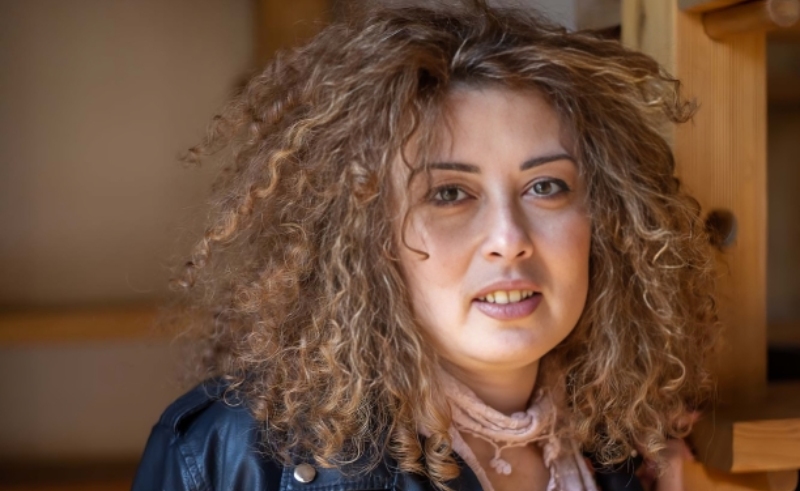
Dr Bnar Talabani, who received award for combatting Covid-19 misinformation, says British monarch showed keen interest in her background.
A doctor who arrived in the UK as a child refugee from Iraq has received a top award from King Charles III for her prominent role in combatting Covid-19 misinformation throughout the pandemic.
Dr Bnar Talabani beamed as the monarch, 74, pinned the ribbon of the Member of the Most Excellent Order of the British Empire (MBE) on her dress during a ceremony at Windsor Castle on Thursday.
She said the monarch, 74, was “really interested” to hear about her background.
The immunology scientist shared photos of their meeting on social media.
“Investiture at Windsor Castle: I met His Majesty the King who was really interested in my background as a former refugee and was utterly delightful to talk to,” she wrote.
“Really special day celebrating with my wonderful family.”
The king could be seen shaking Dr Talabani’s hand and pinning a red ribbon on her dress, in the pictures.
As congratulations poured in for the outspoken doctor, she said she felt “really overwhelmed by everyone’s kind responses”.
Dr Talabani was born in 1988 in northern Iraq to a Kurdish family.
As a toddler, she left her homeland for Iran along with her mother and younger brother to escape Saddam Hussein’s regime. Her father and grandfather remained behind to fight against the dictator.
After making their way to Syria, the Talabanis were recognised as refugees and welcomed to the UK.
Dr Talabani went on to graduate from medical school and pursue a career as a kidney and transplant hospital doctor and immunology scientist at Cardiff University.
She also works as a guide for Team Halo, a global group of scientists and healthcare professionals working to dispel misinformation about the coronavirus.
During the height of the public health crisis she made a name for herself on TikTok.
Dr Talabani used her platform on social media to reach followers, many of them young people, to challenge false and inaccurate claims about Covid.
A group of researchers led by a professor at NYU Abu Dhabi has developed a non-invasive system to aid in the diagnosis and treatment of gastrointestinal motility disorders.
Researchers have produced 3D magnetic field gradients using high-frequency electromagnetic coils to track the movement of an ingestible smart pill through the gastrointestinal tract, NYUAD said on Tuesday.
The ingestible wireless device measures and transmits the field magnitude to determine its precise location, which is then sent to a smartphone via Bluetooth technology.
It reportedly allows for a more accurate evaluation of the movement of food from the mouth through the throat, esophagus, stomach, intestines and out of the body.
The system has been modeled using the digestive systems of large animals.
Existing smart pills do not offer the large field-of-view, high spatial resolution and fully wireless operation that the 3D magnetic field gradient developed by the researchers allows for, WAM reported.
“The smart pill our team has developed represents a more accessible and efficient approach to assessing GI motility that can benefit both patients and medical providers,” Khalil Ramadi, NYUAD assistant professor of bioengineering, said.
“This is a new frontier for medical diagnosis and evidence-based treatment and has the potential, with further research and refinement, to revolutionize how we can most effectively address health challenges that impact millions of people worldwide,” Ramadi added.
It is estimated that more than one-third of the world’s population suffers from gastrointestinal disorders.
source/content: arabnews.com (headline edited)
_____________
The new non-invasive system aims to aid in the diagnosis and treatment of gastrointestinal motility disorders. (Shutterstock)
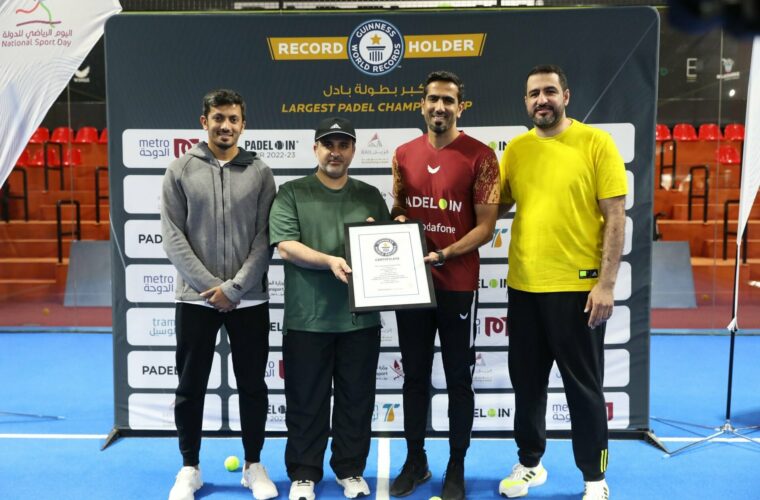
Qatar Rail has announced that MD & CEO H.E Dr. Abdulla Al-Subaie received the Guinness Records certificate for the Largest Padel Championship in the World.
The achievement was announced on the day of Qatar’s National Sport Day, 14 February 2023.
The event was organized by Qatar Rail in partnership with Padel In Qatar and witnessed the participation of 800 players.
Noor Riyadh owes much of its success to the insight and care of Crown Prince Mohammed bin Salman, which enabled the celebration to become the world’s largest in the field of light arts.
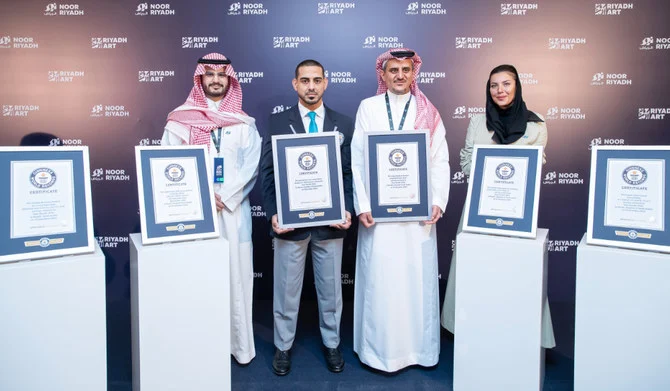
Noor Riyadh wrapped up its cultural and artistic events on Saturday, after setting six Guinness World Records, including for largest celebration of light arts.
The 17-day festival achieved five other records for the artwork titled “Pulse of Light” — longest distance covered for a light laser display, largest light laser display, highest and largest display on a building interface, and largest number of drones participating in a creative art show.
The installations were part of the annual festival of light and art featuring more than 190 works by 130 Saudi and international artists from more than 40 countries.
Noor Riyadh is the first such festival implemented under the auspices of Riyadh Art, the first public art initiative in the Kingdom. It aims to transform the capital into a “gallery without walls,” to beautify it and enhance the creative spirit among the population.
The festival, which opened on Nov. 3, has contributed to enriching the Kingdom’s cultural and artistic landscape by receiving more than 2.8 million visitors.
It presented 500 different events in 40 locations throughout the Saudi capital, including King Abdullah Park in the Malaz neighborhood, Alsafarat neighborhood, Diriyah Historical Town and King Abdullah Financial District.
Noor Riyadh owes much of its success to the insight and care of Crown Prince Mohammed bin Salman, which enabled the celebration to become the world’s largest in the field of light arts.
“This success would not have been possible without God’s grace,” said Prince Badr bin Abdullah bin Farhan, minister of culture, member of the board of directors of the Royal Commission for Riyadh City, and chairman of the steering committee of Riyadh Art.
“The achievements of the Noor Riyadh are a clear demonstration of the Kingdom’s commitment and continued efforts to support national and international talents and to embrace the greatest celebrations that contribute to placing the Kingdom at the forefront of the global art landscape,” Prince Badr added.
He emphasized the importance of continuing efforts to strengthen partnerships with all relevant parties in the future.
Noor Riyadh’s celebrations will be accompanied by an exhibition titled “From Rays to Passion,” which will be held in the Jax neighborhood and will run until Feb. 4, offering visitors an artistic journey of creative light transformation in the past and future, through the continuation of workshops and dialogues presented by elite artists and experts.
source/content: arabnews.com (headline edited)
__________
‘Noor Riyadh 2022,’ which lasted 17 days and ended on Saturday (November 19, 2022), achieved six Guinness World Records titles. More than 130 male and female artists from 40 countries took part in “Noor Al Riyadh,’ presenting more than 190 works of art. (Supplied)
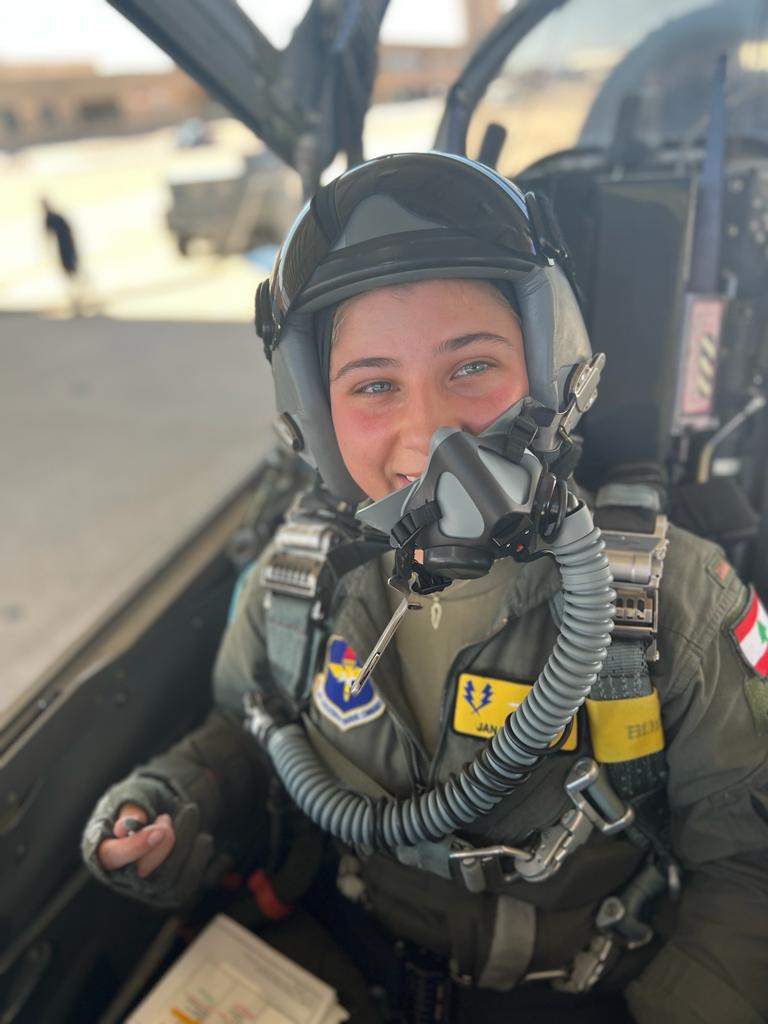
The Lebanese Army confirmed that Cadet Officer Jana Sader has achieved a momentous milestone by becoming the nation’s first-ever fighter jet pilot. Sader finished her training course at Laughlin Air Force Base in Texas, USA, following nearly two years of demanding curriculum and flight training.
As a graduate of the Lebanese Army’s training program, Sader is now ready to embark on a new mission. The A-29 Super Tucano attack aircraft, a sophisticated and formidable aircraft utilized for a variety of missions such as close air support, aerial reconnaissance, and armed surveillance, will be her maiden deployment.
The Lebanese Army said in a Tweet, which also noted and acknowledged her accomplishment that the A-29 Super Tucano has shown to be a dependable and successful aircraft for military operations, and Sader is eager to begin her career with the aircraft.
In her response, Twitter user Leila Hatoum praised Sader for her accomplishment and recalled learning in the 1990s that women aren’t permitted to join the air force: “In the 90s, we went to the Universities and Careers Exhibition. I went to the military stand where an officer and 2 assistants were. I asked him what is needed to become a pilot officer in the Air Force and, without an explanation, told her girls aren’t allowed to serve in the airforce.”
Many others, including the Lebanese army, used Twitter to congratulate the cadet on the achievement, proving that it was cause for celebration. Sader’s new position ushers in a new era for women in Lebanon, where the integration of women into the military has been a long process. According to the Lebanese Army’s website women joined the Lebanese Army Forces for the first time “when the chance emerged in the late 80s,” during Lebanon’s 1975–1990 Civil War, when the army required fresh recruits for its different formations.
In 1991, the government passed a new resolution mandating that 10% of the troops working for the Defense Ministry be female. Female recruits must undergo the same training as male recruits, and they are not just given administrative duties, but also jobs in combat units.
Sader’s accomplishment as a fighter pilot follows that of Captain Rola Hoteit, a pilot for Middle East Airlines, the national airline of Lebanon (MEA). When Hoteit took command of her maiden solo flight to the Jordanian capital of Amman in 2010, she made history as MEA’s first female pilot.
Six of the 190 pilots employed by MEA are now female, and in 2020 Hoteit flew with an all-female crew.
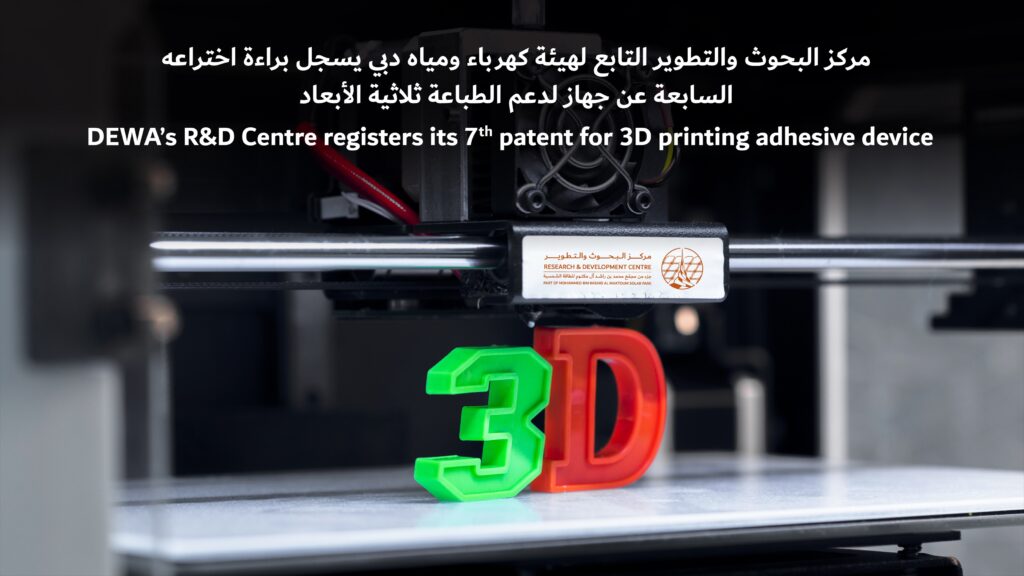
Dubai Electricity and Water Authority (DEWA)’s Research and Development Centre (R&D) has registered a new patent on an adhesive device for 3D printers, which automatically distributes the adhesive material on the 3D printing plate. This ensures that the printed material sticks adequately to the build plate. This is the seventh patent registered by the R&D Centre.
HE Saeed Mohammed Al Tayer, MD & CEO of DEWA, highlighted that this achievement supports DEWA’s efforts to develop advanced infrastructure and specialised software in 3D printing and additive manufacturing, and invest in them to overcome challenges in the energy sector. DEWA uses 3D printers to produce prototypes and spare parts for DEWA’s generation, transmission, and distribution divisions, and to support the digitisation of its inventory.
“The R&D Centre supports innovation in all production and operational areas, becoming a global platform to enhance the operations and services of all utilities’ divisions. It supports DEWA’s efforts in innovation which is a key pillar of its work. 3D printing projects launched by DEWA are widely recognised by utilities worldwide. DEWA works to enhance its production and operational capacity by investing in these technologies. This is through its 3D printing programme, which has been selected as one of the Dubai 10X initiative projects. The initiative was launched by His Highness Sheikh Mohammed bin Rashid Al Maktoum, Vice President and Prime Minister of the UAE and Ruler of Dubai, which mandates the Government of Dubai to be a global leader that is 10 years ahead of all other cities. The programme also supports the Dubai 3D Printing Strategy, which is a unique global initiative to use technology for the service of humanity and promote the status of the UAE and Dubai as a global hub for 3D printing technology, by 2030,” added Al Tayer.
“In addition to the seven patents registered by the R&D centre so far, it has published 134 research papers at international scientific conferences, journals and peer-reviewed publications. It includes 48 researchers, including 31 PhD and master’s degree holders. It enriches the scientific community with specialised research, spreading knowledge and developing the capabilities of the researchers. This enhances Dubai’s position as a global hub for research and development in solar power, smart grids, water and energy efficiency, and capacity building in these areas,” said Waleed Bin Salman, Executive Vice President of Business Development and Excellence at DEWA.
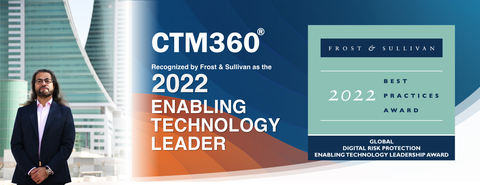
In yet another historic achievement for the Kingdom of Bahrain, Bahrain-based cybersecurity technology provider, CTM360, received Frost & Sullivan’s Best Practices Award for Enabling Technology Leadership in the global Digital Risk Protection (DRP) industry.
Frost & Sullivan Best Practices Awards recognized CTM360 for commercialization success, application diversity, commitment to creativity and customer service experience.
As a leading research and consulting firm, Frost & Sullivan has conducted extensive industry research and analysis to highlight the top companies excelling in Digital Risk Protection (DRP), as well as analysis on companies that combine comprehensive Cyber Threat Intelligence (CTI), Digital Risk Protection (DRP), and External Attack Surface Management (EASM) capabilities into a centralized External Risk Mitigation and Management (ERMM) system. Bahrain-based CTM360 is among the few that originated an integrated approach to consolidate these three technology verticals, now collectively termed ERMM.
Commenting on Frost & Sullivan’s award recognizing CTM360’s leadership in cybersecurity, Mirza Asrar Baig, Chief Executive Officer of CTM360 stated “We are proud to receive Frost & Sullivan’s award which acknowledges our commitment to a consolidated DRP strategy, making CTM360 the first company in the Arab World to be recognized at a global level.
“This Award reflects the efforts and devotion of CTM360’s team in creating and building a world class technology focusing on high data quality and relevance. Making this global mark is a testament to their remarkable design thinking, dedication and agility.” He added.
Mirza lauded Bahrain’s innovation-driven economy founded on Bahrain’s Economic Vision 2030, and the unparalleled extensive focus of the Government of Bahrain on developing and advancing the technology sector, with cyber security as one of the pillars of the Business Friendly Bahrain strategy.
He also commended the tremendous support extended by Bahrain’s various public entities and government agencies, underscoring that “CTM360 has become a technology leader through its consolidated technology platform that allows organizations to do more within one centralized environment and in an extremely cost-effective manner”
Martin Naydenov, Senior Industry Analyst at Frost & Sullivan, observed, “CTM360 empowers organizations to focus on what they do best: their business. With CTM360’s fully managed services and unlimited takedowns, organizations can save significant time and cost by automating the detection and takedowns of fraudulent sites; this is an advantage that few cybersecurity vendors can replicate.”
Frost & Sullivan Best Practices awards recognize companies in various regional and global markets for demonstrating outstanding achievement and superior performance in leadership, technological innovation, customer service, and strategic product development. Industry analysts compare market participants and measure performance through in-depth interviews, analyses, and extensive secondary research to identify best practices in the industry.
CTM360 is a unified external security platform that integrates External Attack Surface Management, Digital Risk Protection, Cyber Threat Intelligence, Brand Protection & Anti-phishing, Surface, Deep & Dark Web Monitoring, Security Ratings, Third Party Risk Management and Unlimited Takedowns. Seamless and turn-key, CTM360 requires no configurations, installations or inputs from the end-user, with all data pre-populated and specific to your organization. All aspects are managed by CTM360.