Arabs & Arabian Records Aggregator. Chronicler. Milestones of the 25 Countries of the Arabic Speaking World (official / co-official). AGCC. MENA. Global. Ist's to Top 10's. Records. Read & Enjoy./ www.arabianrecords.org
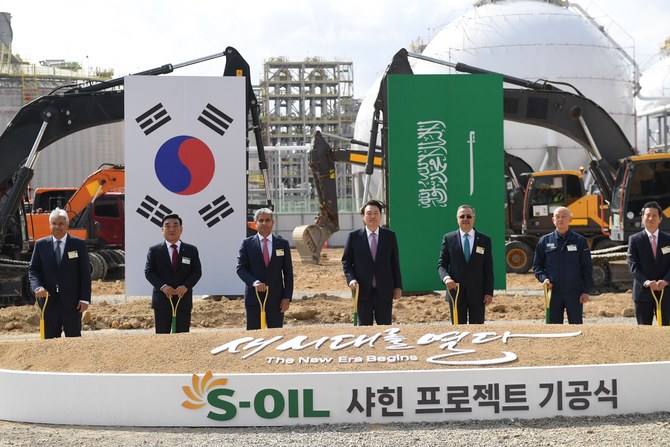
Building work on Saudi Aramco’s new $7 billion Shaheen petrochemical project in Ulsa, South Korea has officially begun after a groundbreaking ceremony involving the energy giant’s CEO.
Amin Nasser attended the inauguration event alongside South Korea’s president Yoon Suk Yeol and senior officials from both countries.
The Shaheen project, announced in November 2022, is being built by South Korean refiner S-OIL Corp., of which Aramco owns a more than 63 percent stake.
“We are deeply honored by the presence of His Excellency President Yoon at this historic groundbreaking ceremony,” said Nasser – also the Aramco President.
“Shaheen is among Aramco’s biggest international downstream investments, representing a significant and sizeable step forward in our liquids-to-chemicals expansion and another major milestone in further strengthening our presence in Korea,” he continued.
Shaheen is Saudi Aramco’s largest investment in South Korea and is expected to be among the biggest integrated steam crackers – a petrochemical process – in the world.
It is also the first large-scale commercial use of Aramco’s thermal crude-to-chemicals technology, which was developed in partnership with Lummus Technology, a leading licensor of proprietary petrochemicals.
The construction of the new plant will be completed by 2026 and will have a production capacity of up to 3.2 million tons per year, in addition to a facility for producing high-value polymers.
Aramco has established a solid relationship with South Korea, and has recently agreed to a $6 billion framework deal with the country’s export-import bank.
According to the deal, Eximbank can lend Saudi Aramco up to $6 billion, which can be used to fund South Korean enterprises involved in projects with the global energy firm, whereas the bank indicated that $1 billion is set aside for hydrogen and renewable energy projects.
Moreover, Aramco also inked a memorandum of understanding with South Korea’s Hoban Group last month to collaborate in building and manufacturing.
source/content: arabnews.com (headline edited)
___________
South Korea’s President Yoon (centre) with Aramco president Amin Nasser (Supplied)
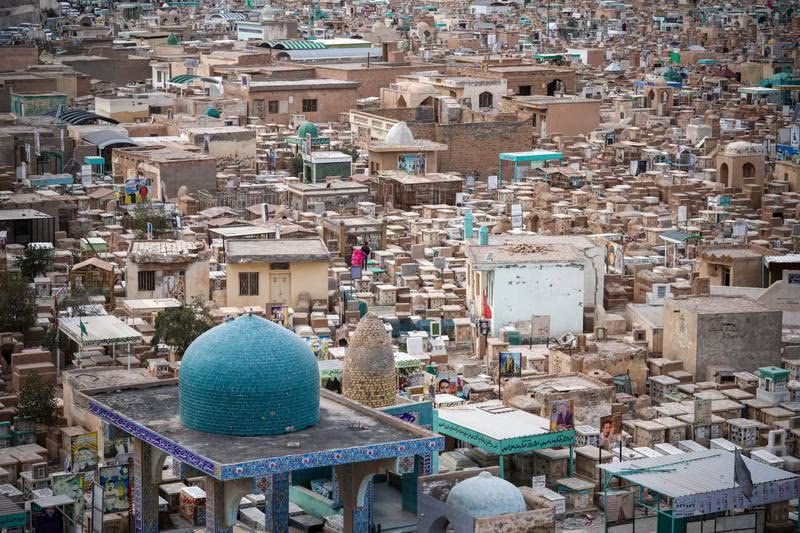
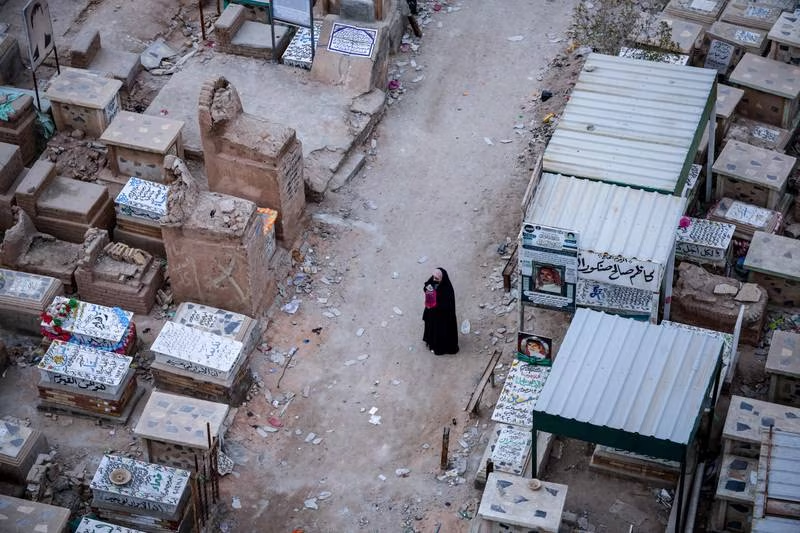
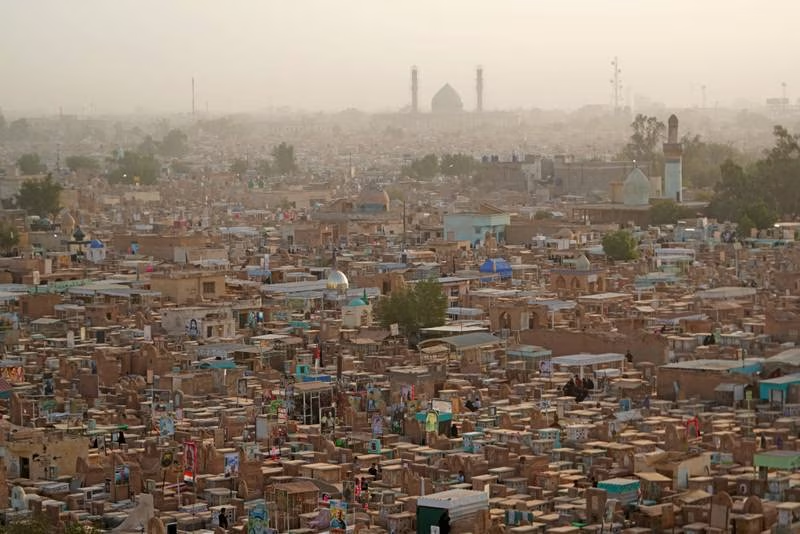
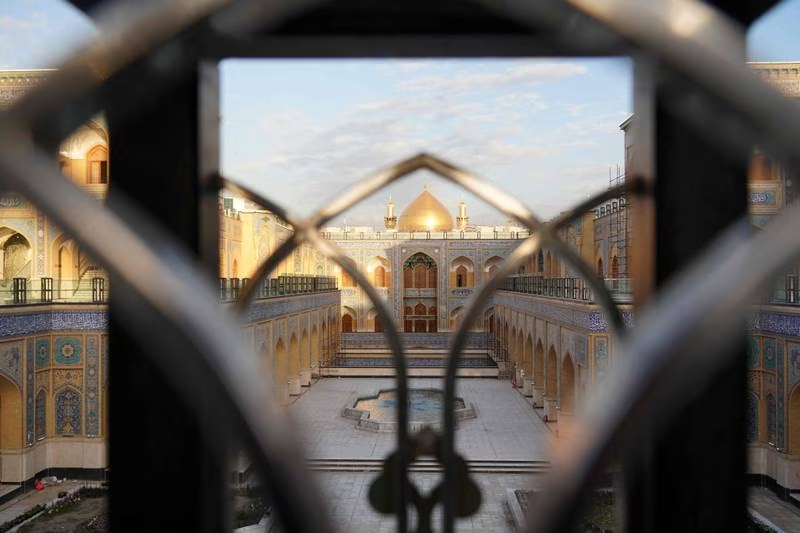
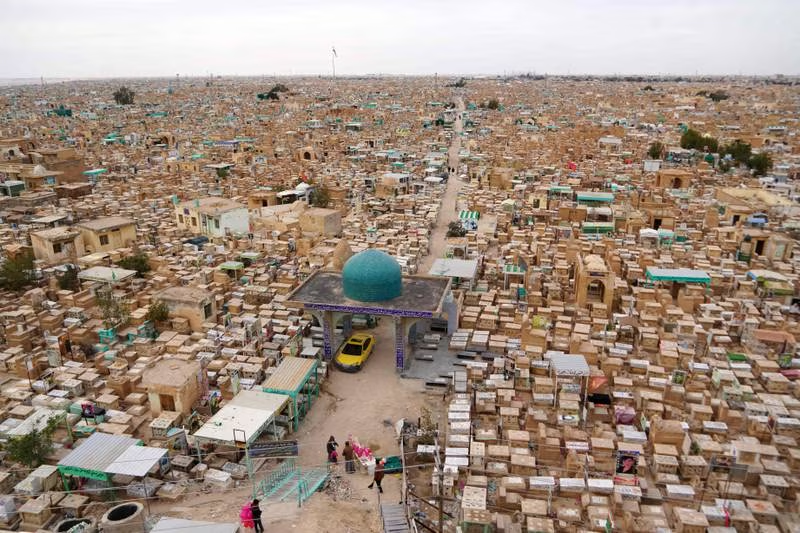
Islamic cemetery in Najaf is often described as the world’s biggest.
The graveyard covers an area of 917 hectares, the equivalent of more than 1,700 football fields
There are no maps to guide visitors through the labyrinth, which is also listed as the world’s largest burial ground in the Guinness Book of World RecordsAn expanse of gravesThe shrine of Imam Ali at the cemetery
Almoqbel is the first Arab ambassador to the WTO to preside over the TPRB.
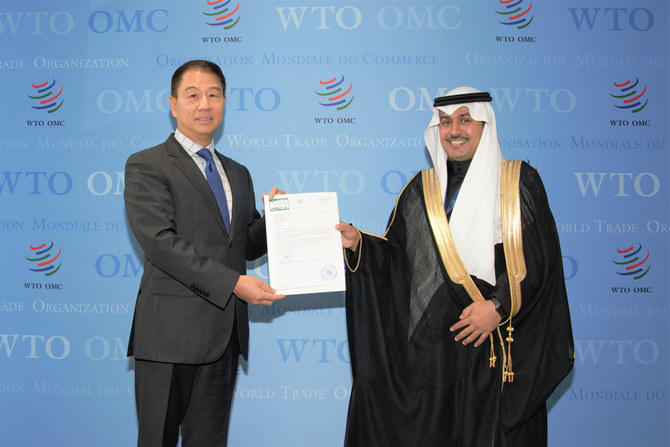
The World Trade Organization General Council has selected Saudi Arabia’s Ambassador to WTO Saqer Abdullah Almoqbel to chair its Trade Policy Review Body for 2023-2024.
Almoqbel is the first Arab ambassador to the WTO to preside over the TPRB.
The TPRB aims to facilitate the efficient operation of the multilateral trading system by increasing the transparency of WTO members’ trade policies. All members are subject to review every two to six years under the mechanism.
Periodically, the agency releases reports on the global economy, including detailed chapters examining the trade policies and practices of each member, as well as descriptions of the trade policymaking institutions and the macroeconomic environment.
Saudi Arabia’s new position at TPRB reinforces its leadership position within the WTO. In addition to being the organization coordinator for the Arab group, the Kingdom has chaired the Council for Trade in Services, the Council for Trade-Related Aspects of Intellectual Property Rights, the Working Group on Transfer of Technology, and the Committee for Balance of Payments Restrictions in previous years.
source/content: arabnews.com (headline edited)
____________
Saudi Arabia’s Ambassador to WTO Saqer Abdullah Almoqbel presents his credentials to Deputy Director-General Yi Xiaozhun in 2020. (WTO)
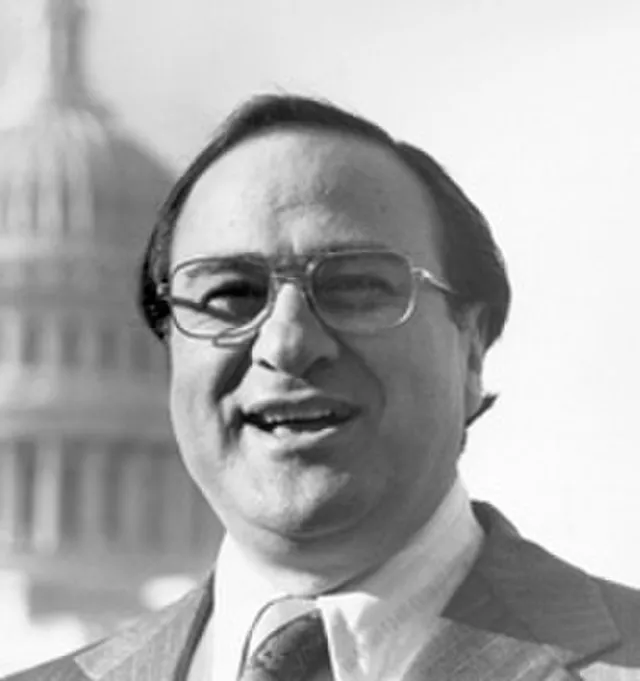
James Abourezk, 1st Arab American US senator, dies at 92.
James Abourezk, attorney and Democratic politician who served as a United States senator and United States representative from South Dakota and co-founder of the American-Arab Anti-Discrimination Committee(ADC), died today on his 92nd birthday.
He was born in Wood, South Dakota, the son of Lena (Mickel), a homemaker, and Charles Abourezk, an owner of two general stores. Both of his parents were Lebanese immigrants. He grew up near Wood on the Rosebud Reservation and has lived in South Dakota most of his life.
Abourezk represented South Dakota in the United States Senate from 1973 until 1979. He was the author of the Indian Child Welfare Act, passed by Congress in 1978 to try to preserve Indian families and tribal culture.
He was instrumental in the creation of both the American Indian Policy Review Commission and the Select Committee on Indian Affairs. He became chairman of the Indian Affairs Committee from its creation in 1977 to 1979.
Abourezk was elected in 1970 as a Democrat to the United States House of Representatives and served from 1971 to 1973. In 1972 he was elected to the U.S. Senate, where he served from 1973 to 1979.
Abourezk was an outspoken critic of Israel and U.S. foreign policy in the Middle East after touring the region and visiting his parents’ hometown in Lebanon as a senator. The position lost him many political allies, and he decided to retire from the Senate after a single term.
In 1980, Abourezk co-founded the American-Arab Anti-Discrimination Committee and traveled throughout the U.S. organizing Arab Americans in the wake of the “Abscam” debacle. Abscam was an FBI sting operation where agents dressed up as “oil-rich sheiks” in the late 1970s and early 1980s that led to the convictions of seven members of the United States Congress, among others, for bribery and corruption.
Abourezk’s marriages to Mary Ann Houlton and Margaret Bethea ended in divorce. In 1991, he married Sanaa Dieb, a restaurateur. They moved to Sioux Falls where she opened an award-winning Arab restaurant.
Survivors include his wife; children Charles Abourezk, Nikki Pipe On Head, and Paul Abourezk from his marriage to Houlton; daughter Alya Abourezk from his third marriage; a stepdaughter; and many grandchildren and great-grandchildren.
Warren David, president of Arab America and a former national president of the American-Arab Anti-Discrimination Committee said, “during a time when discourse regarding the negative portrayal of Arabs and the injustice faced by Palestinians were scarce, he (Abourezk) acted as a pioneer who instilled a sense of immediacy in the Arab American community–he was a trailblazer in that regard.”
The airline promoted Maha Al Balushi who has been with the company since 2010.
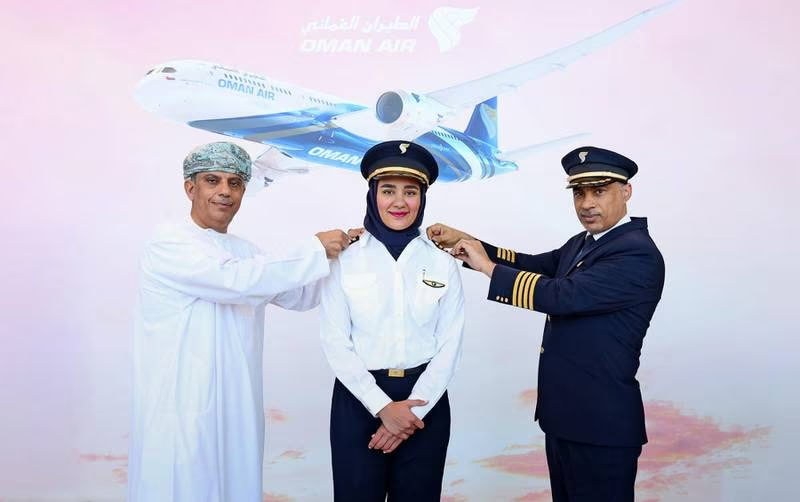
Oman Air, the national airline of the sultanate, has announced pilot Maha Al Balushi as the first female Omani captain.
Ms Al Balushi officially received her new rank during a ceremony held at Oman Air’s headquarters in Muscat.
She has been with the airline since 2010 after graduating from the cadet programme at the Royal Melbourne Institute of Technology, in Australia.
Ms Al Balushi was the only woman enrolled in the programme at the time.
She became the first female Omani to be awarded the rank of first officer in 2013.
“My dream has always been to become a captain. It hasn’t been easy but thanks to the support I have around me, from my family to my training team and the airline,” said Ms Al Balushi in a statement by Oman Air.
“I have accomplished what I set out to do. It is an honour to hold this role and I hope that I will inspire other Omani women to choose such a rewarding career in the skies.”
Oman Air said that 1,230 Omani female employees contribute to the airline’s strength, occupying a range of roles including cabin crew, flight operations, engineering, airport services, marketing, customer services, sales and communications.
The airline has so far achieved an Omanisation rate of 94 per cent — excluding female cabin crew.
Three carbon storage facilities in Saudi Arabia, the UAE and Qatar capture 10 percent of the world’s carbon dioxide annually, according to an Arab Monetary Fund official.
Abdul Rahman Al-Hamidi, director general and chairman of the organization, revealed that the facilities captured around 40 million tons in 2020.
The announcement was made during the conference on enhancing the transition to a circular carbon economy to support sustainable development currently taking place in Abu Dhabi.
Al-Hamidi noted that the circular carbon economy approach can enable the reduction of greenhouse emissions, improve resource efficiency, and promote sustainable economic development in Arab countries.
The circular carbon economy is a framework for managing and reducing carbon emissions through 4Rs — reduce, reuse, recycle, and remove.
With numerous challenges of energy security, the circular carbon economy provides an opportunity not only to reduce carbon emissions, but also to drive economic growth and create new job opportunities, Al-Hamidi added.
Carbon dioxide emissions that come from coal consumption surged to reach 15.3 gigatons in 2021. Coal alone represents 40 percent of the total growth in emissions at the global level.
Al-Hamidi said: “With the expansion of the uses of energy sources and the fluctuation of their prices, attention is directed directly to fossil fuel sources, especially oil and gas, to classify them as primarily responsible for emissions of greenhouse gases harmful to the environment, especially carbon dioxide, in light of what the globe has been witnessing in recent years.”
The Arab region has performed well in terms of energy efficiency through the provision of affordable energy, according to data revealed by the World Energy Council.
As for energy security, it fell below expectations. The region contains nearly 50 percent of the world’s oil reserves, and around 40 percent of the world’s natural gas reserves.
Al-Hamidi further noted that the Arab world has the resources and experience to transition into a circular carbon economy.
“We have abundant natural resources, such as solar and wind energy, to create low-carbon energy systems, so we can develop innovative technologies and business models that support the transition to a circular economy and create new job opportunities in areas such as renewable energy, emissions management, and recycling,” added Al-Hamidi.
Numerous Arab countries have set ambitious goals for renewable energies in the medium and long term, to be achieved in the horizons of 2030 and 2050 while also committing to reducing fossil energy sector emissions.
source/content: arabnews.com (headline edited)
___________
Coal alone represents 40 percent of the total growth in emissions at the global level (Shutterstock)
Famous for its “fog harvesting” project in southern Morocco, the nonprofit Dar Si Hmad for Development, Education and Culture also carries out other projects to build the capacities of local populations and provide educational training projects for young people.
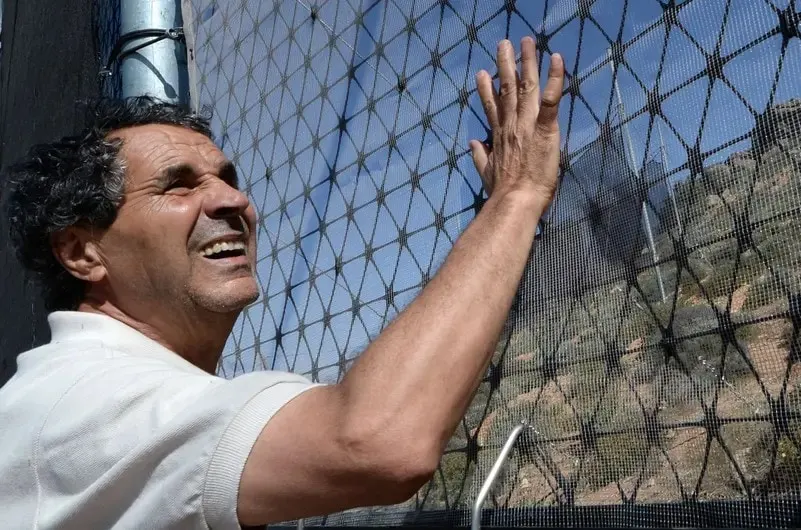
The fog-harvesting project, in the Sidi Ifni region of southern Morocco, uses specially designed nets to capture water droplets suspended in the fog covering mountain peaks. The fog-water drips off the nets and is channeled into a filtration system, thus providing clean water to residents of areas suffering from severe water shortages.
The project is a boon for women in the region because it frees them from having to carry water long distances, and also provides jobs and training for them.
Development Projects
Established in 2010, Dar Si Hmad for Development, Education and Culture is run by Jamila Bargach, a cultural anthropologist, and her husband, Aissa Derham , a mathematician who holds a Ph.D. from Laval University in Canada.
Bargach studied at Mohammed V University in Rabat and obtained a Ph.D. in anthropology from Rice University in the United States. She has worked for several nongovernmental organisations in Morocco and abroad.
In the region, Bargach is nicknamed “The Bride of the Fog” in reference to a local Amazigh legend of a princess named Teslet who did her best to make rain to save her village from drought.
Over the past years, the fog-harvesting project has received numerous international honours, notably an Innovation in Sustainabilty award from the GoAbroad Foundation in 2017 and a Momentum for Change award presented at the COP22 Climate Summit in Marrakech in 2016.
Programmes for American Students
Fond of southern Morocco, Bargach believes that the region provides unique opportunities for students to learn more about the kingdom, especially in terms of how development projects are accomplished in complex and special contexts.
Many of Dar Si Hmad’s educational programmes center on the fog-harvesting project, Bargach told Al-Fanar Media. “This enables students to learn and develop their abilities through practical and field education.”
She added that the association receives students from American universities who come to southern Morocco. Over the years, it has hosted more than 54 student missions from different American universities.
The organisation provides these students with opportunities to meet with Moroccan students from Ibn Zohr University, in Agadir, and to participate in various educational programmes. These include the RISE Programme, the Ethnographic Field School and the Water School, as well as job programmes targeting women in rural areas.
Environment-Friendly Entrepreneurship
The RISE Programme aims to build capacities and promote environment-friendly entrepreneurship among students of colleges and higher schools in Agadir. The programme is a set of integrated workshops presented by experts, and meetings with employers, with the aim of exchanging experiences and creating opportunities for networking. Each participant is also required to have a project idea that benefits the local environment, besides the need to commit to attending all scheduled events.
The Ethnographic Field School promotes cross-cultural understanding and exchange through interpersonal interaction with local communities. During their time in southern Morocco, participants learn about local issues like sustainable practices in the argan oil industry , which employs many rural Amazigh women, or languages like darija (Moroccan Arabic) and Tachelhit (the local form of Tamazight).
The Water School programme is directed to students of rural schools in the Aït Baamrane region in southern Morocco. The programme is based on lessons inspired by local reality, with openness to other horizons and cultures. The Water School brings together volunteers, environmental trainers, and other partners. Everyone is committed to building a comprehensive and ethical foundation for the benefit of environmental education, the organisation’s leaders say.
Bargach says that the success of the fog-harvesting project motivated and inspired the educational programmes’ students. She adds that they are working to transfer knowledge to young people who are passionate about more work and innovation in searching for alternative sources of water and serving the environment in southern Morocco.
Skill-Building Experiences
Nadia El-Aissaoui, who holds a master’s degree in tourism and communication from Ibn Zohr University’s Faculty of Arts and Humanities, worked in Dar Si Hmad’s Ethnographic Field School this year. She said the experience helped her develop professional skills. “I have benefited greatly from this experience,” she said. “I worked as a fixer (‘speaking partner’) for students coming from American universities to work on field research projects.”
The programme transferred her from university halls to field research, she said. “This experience enriched my professional path,” she added. “I learned a lot of things, such as focusing on tasks, time management, documentation, interpretation methods, besides exposing me to the American mentality and working ways.”
Aissa Derham checks a net used in the fog-harvest project. He and Jamila Bargach co-founded the nonprofit Dar Si Hmad for Development, Education and Culture, which runs several capacity-building and educational programmes in southern Morocco. (Photo courtesy of the organisation)
Trailblazing Jordanian-British research fellow reveals that her prescription for success requires dispensing – but only with tradition.
Most Damascene moments are dramatic by definition but few occur, as Atheer Awad’s did, on an actual road that leads to the Syrian capital.
Her own turning point came when the vehicle she was travelling in with her family to register for university in Amman blew a tyre, hit an electricity pole and flipped several times.
The accident meant that Awad ended up in hospital and missed the window to sign up to study medicine. By the time she was discharged, the only degree option still open to her was pharmacy.
Though bitterly disappointed at the time, she has come to believe that there were greater forces at work on the day of the crash on Jordan Street.
“Let’s just say we put our car to the test,” Awad tells The National. “It was a complete wreck. We are lucky to be alive.
“But it wasn’t meant to be that I should study medicine. I took the car accident as a sign that the future held better things for me.”
As a result, she was steered into an unexpected career in which the eventualresearch fellow at University College London would amass numerous accolades: the Journal of Clinical Medicine‘s 2021 PhD Thesis award; an appearance on the Forbes 30 Under 30 list for Europe; reaching the finals in the Women of the Future awards 2022 in the science category; named as an International Pharmaceutical Federation FIPWise Rising Star for 2022 as well as one of the top 15 outstanding innovators under the age of 35 by the MIT Technology Review.
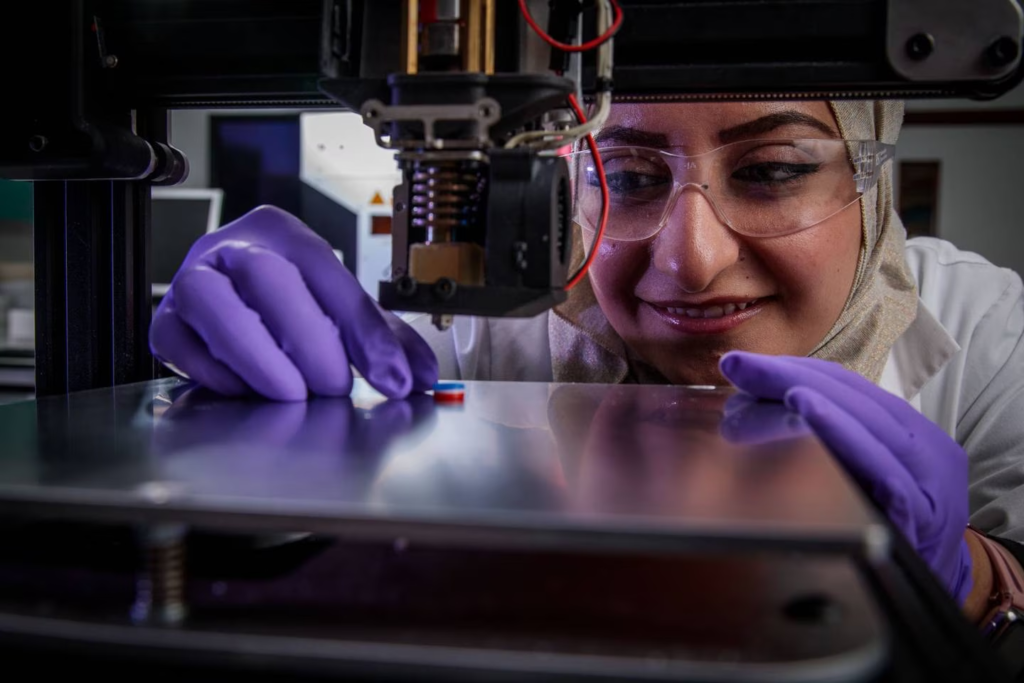
Her groundbreaking research is paving the way towards the creation of personalised medication that can be 3D-printed in patients’ homes via smartphone — a potentially transformative innovation for those who find it hard to gain access to health care or don’t suit a one-size-fits-all service.
Born in Abu Dhabi and raised in Dubai by Jordanian parents, her hand was always first in the air in class when volunteers were sought to dissect animals at Al Mawakeb School in Garhoud.
It was an early display of Awad’s enthusiasm for the sciences, particularly biology, and a prelude to her ambition of becoming a heart surgeon.
“I was so determined to make a difference and medicine is one of those industries that has a greater impact when it comes to changing people’s lives,” she says.
“There is never a boring day with science because every day is a new learning experience.
“You come across things that you haven’t discovered before or create new stuff by just playing around with things in the lab and mixing them together. It’s that sort of curiosity that motivates me.”
Back then, holidays were regularly spent visiting Jordan — trips that Awad still makes annually to catch up with extended family, go to weddings and indulge a soft spot for the local food.
“I love those traditional connections,” she says, “and still follow as many of these practices as I can, wherever I am.
“My faith helps a lot. But it isn’t easy trying to keep a balance between sticking to faith and being able to live in a foreign country.”
Moving to England wasn’t as daunting as it might have been without the unwavering support of her parents and four older siblings — a pharmacist, a consultant with whom she lived until recently, an IT specialist and a doctor.
“It is rare for all of us to be in the same country at the same time,” she says, laughing. “We travel between the three countries and there is always at least one of us living in each of the three. That makes it interesting for my parents, who get to travel everywhere.”
Awad herself, now 29, is a keen traveller and has put on her bucket list the wish to visit every country in Europe before turning her sights to other continents.
She fell in love with Turkey after a trip to Cappadocia, the semi-arid central region known for its “fairy chimney” rock formations, and particularly enjoys explorations on foot.
London, however, holds a special place in her heart, where there is, she points out, a big Jordanian community.
“I have a lot of friends I consider my second family. They’re a mixture of scientists, people outside work, and others with Jordanian or Arab heritage. That keeps me connected to my roots and it is one of the beauties of London — it’s international.”
But she calls Dubai home and makes many happy returns to Living Legends, a newly developed 14 million-square-foot community on the outskirts of the city where her parents still live.
Part of the appeal of the emirate, it should be said, is the chance to hit the luxury shops. Dior and Prada are favourites — her handbag collection alone extends to “about 40 or 50 … I’ve lost count” — and the Swarovski-encrusted mobile phone she takes everywhere is a particularly prized purchase.
Invariably, though, one of the first stops is to fill up on luqaimat, known as awama in the Levant. She has sampled the sugary doughnuts wherever she finds them but maintains that the ones whipped up for as long as Awad can remember by her mum, Hanan Swais, “are the best”.
They were an abiding taste of a childhood in which the extroverted Awad, left to explore her own interests by her father, Jamal, an electronics retailer, and Hanan, a homemaker, played the piano exuberantly if not with any notable proficiency and went on Scouting expeditions.
There was never an expectation that she would follow in the footsteps of any of her siblings but the desire to pursue medicine was strong nonetheless.
“It wasn’t until we were discharged from hospital [after the car accident] that I realised I had missed the deadline,” she says. “There was no going back in time. I just thought: ‘What’s the next best option?’
“That’s why I always say I did not choose pharmacy — it chose me.”
Despite a reluctant start, Awad’s enthusiasm grew throughout a five-year degree at the private Applied Science University in Amman as she gained insight into the extent of what pharmacists could actually do.
“I started looking at pharmacy as having a bigger impact than I had previously thought,” she says.
“People sometimes look at pharmacists as if they are beneath or less important than doctors when, in fact, they do most of the work behind the scenes.”
Little by little, with the consolidation of hours of satisfying sessions spent researching in laboratories or learning about the differences in the properties of various drugs, it dawned on Awad that she had stumbled across her calling.
Which is not to say that she appreciated being treated as little more than a saleswoman while doing work experience in a community pharmacy during the degree course.
“People assume that the pharmacist just takes the prescription and gets the medication without doing anything else,” she says. “There is a misconception.”
The experience hardened Awad’s resolve to focus on research rather than the direct, community-facing side of the profession.
After graduation in 2015, she embarked on a master’s in pharmaceutics and drug design at UCL, where she learnt about 3D printing during an end-of-year project with her professor, Abdul Basit.
She was inspired to keep working with the Basit Research Group within the School of Pharmacy to undertake a doctorate specialising in using the drug-delivery technology in the manufacture of medicines.
“I’ve always been interested in technology so it grabbed my interest immediately,” says Awad, who is still a research fellow with the group.
Weekends when she is not working are spent dining with friends, indulging her obsession for Harry Potter — “I’ve watched all the films multiple times” — and baking. Coffee cake is her speciality and made a well-received appearance at her professor’s 50th birthday.
“I do like experimenting with baking and cooking. I think there are similarities between baking and science.”
She doesn’t rule out applying to appear on The Great British Bake Off television show but, for now, Awad’s ambitions are confined to the lab.
“I want to make a change,” she says. “I don’t want 3D printing to stay a theory. I want to see it being implemented and taken up by healthcare agencies.”
Most recently, Awad has been printing tablets with Braille and moon patterns on their surfaces for visually impaired patients, or changing their shape, size and colour so that children or those with limited capacity find them easier to take. She has also been researching how to combine several medications into a single pill.
One of her team’s successes has been in creating tablets that can be swallowed without water. Manufactured in partnership with pharmaceutical 3D-printing specialist FabRx by melting powder particles with a laser beam and using heat, the porous product dissolves on the tongue.
She talks about how 3D printing allows alterations of a fraction of a milligram, making medication much more tailored and precise than the standard variety available off the shelf.
“Every person is different and our bodies do not react the same,” Awad says. “The requirements when it comes to medication differ, and sometimes they differ within the same person, depending on the disease progression.
“We can also take patients’ preferences into consideration. That’s important when it comes to children or elderly patients. Often children refuse to take medicine because they don’t like the taste, the shape isn’t appealing or the pill might be too big.”
While 3D printing for customised pharmaceuticals has yet to be introduced commercially in the UK, Awad’s UCL team has managed to convert a smartphone into an on-demand 3D drug printer with an app that could be used in remote GP surgeries and even at home.
“We’re not far from the industry adopting 3D printing, probably in the next two to five years,” she says. “Approval will have to be on a medication-by-medication basis because each medicine could behave differently to the same technology, depending on its properties, and the 3D-printing technologies themselves differ.”
Awad’s passion for her work is tangible. The British-American analytics company Clarivate clearly thought so when last month listing her on its influential Highly Cited 2022. It was a remarkable achievement for such a young scientist to appear among fewer than 0.1 per cent of the world’s researchers across 21 fields.
Such recognition is welcome but, she says, the many “titles are more of an assurance that I am on the right track and that my work is important”.
“That’s the driving force to keep me moving forward and become even more ambitious to try new things,” she says.
One of her guiding principles is that researchers should be brave and adopt different approaches because even the most “ridiculous” ideas can be turned into brilliant inventions or innovations.
As she has been known to opine, not all scientific breakthroughs happen through planned research: “Sometimes, you come across things by accident.”
Given the route into her career in pharmaceuticals, it could be said that Awad started very much as she meant to continue.
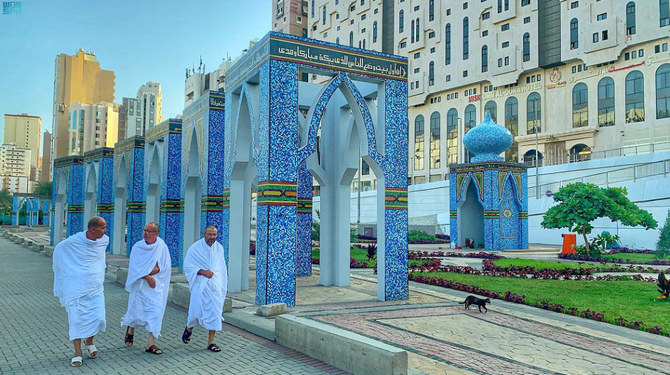
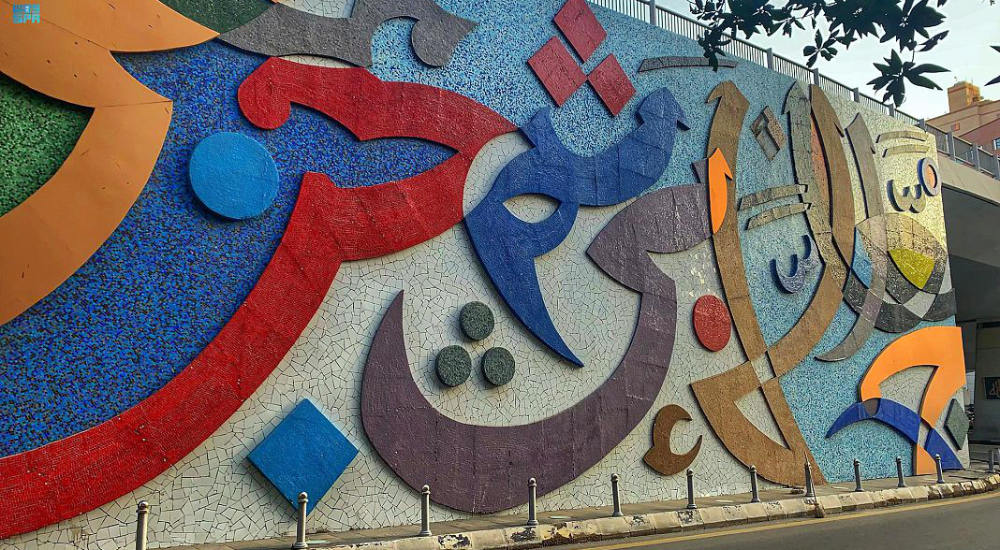
The world’s longest calligraphic mural has been installed on the road leading to Makkah’s Grand Mosque, in the latest beautification of the holy city.
The 75-meter mural, designed by artist Amal Felemban, joins a host of sculptures and installations already adorning Makkah in a project run by local authorities to boost its visual appeal and depict Saudi heritage and culture for pilgrims.
Felemban told Arab News that it was important to retain and promote the ancient art of mural painting, as it portrays Saudi culture and aesthetics and links the old world with the modern.
“In the modern era, they brighten up streets and cover some of the ugliness of the gray buildings,” she said, adding that murals and sculptures reflected the true spirit of the city.
“My mural tells the story of the urban heritage in the holy capital, as it received a wonderful echo of this authentic Hijazi art, and it is different from the rest of the murals near large mosques,” she said.
HIGHLIGHTS
• The Municipality of Makkah installed the longest calligraphic mural in the world on King Abdul Aziz Street, the road that leads to the Grand Mosque.
• Artist Amal Felemban shared that murals are one of the oldest forms of art that can beautify the streets and show local culture and heritage to pilgrims and visitors.
“Mine are not letters or poetic verses, but were rather inspired by the authentic urban culture of this country.
“Many pilgrims do not have a sufficient knowledge about Saudi Arabia, nor about our culture and civilization, so we need to show it through arts, murals and sculptures.”
Felemban said that the municipalities in all Saudi regions must pay great attention to this form of art, which reflects Saudi culture and attracts more tourists.
“Millions of visitors from all over the world will flock to our beloved Kingdom, which requires us to show our heritage and culture properly.”
My mural tells the story of urban heritage in the holy capital.
Amal Felemban, Artist
Artist Badr Al-Sulaimani said that the murals and sculptures in the holy city bring joy and pleasure to the hearts of pilgrims from all over the world.
He added that they helped highlight many creative artists from inside and outside the Kingdom in various competitions and bring a historical dimension to contemporary art.
“This proves the importance of employing arts and creating an attractive artistic environment, using all the techniques that contribute to providing a cultural and artistic dose for passers-by,” Al-Sulaimani said.
The Municipality of Makkah organizes competitions for painting murals and drawing Arabic calligraphy, which it describes as one of the most significant written and visual arts which is associated with the Holy Quran.
A team from Umm Al-Qura University’s Department of Visual Arts is also participating in improving the city’s landscape.
source/content: arabnews.com (headline edited)
_____________
The beautification of Makkah continues with new murals adorning street walls on the way to the Grand Mosque. (SPA photos)The murals feature Arabic calligraphy, a pillar of Islamic art. (SPA)