EGYPT: Book Review: 03 Different Accounts of the History of Egyptian Copts

Three recent titles on the life and history of the Copts reflect on elements of a complex story.

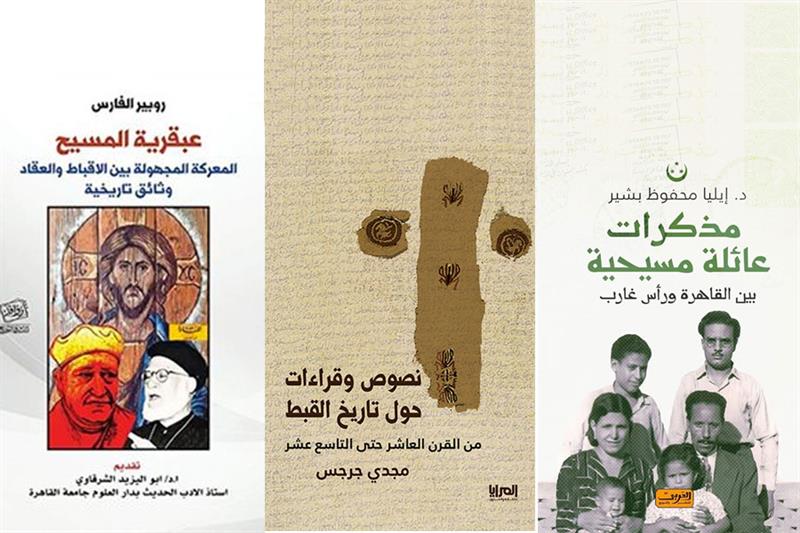
Mozakerat Aaela Masseihiya bein Ras Ghareb wal Qahera (Memoirs of a Christian family between Ras Ghareb and Cairo), by Elia Mahfouz Bashir, Cairo: Al-Arabi Publishing. pp. 196.

“At that time there was a [spontaneous] acceptance of the other; actually, the concept of this other was not really there – not as a fully defined concept any way”.

This is one of very few lines that evokes the “Christian” in the title of the pleasant-to-read 196-page text.

Elia Mahfouz Bashir, now a 65-year-old pathologist, recalls memories of his easy-going and uninhibited childhood in the Red Sea city of Ras Ghareb where his father worked for an oil company.

This is the interesting thing about the choice of the title. It offers a contrast to a sequel of articles where Bashir offers accounts from his time in this city in the late 1950s and early 1960s prior to the retirement of his father that forced the family away from its Red Sea haven to Cairo. Those are accounts of the city, the sea, playmates, school, family gatherings, comparisons between the Red Sea and the Mediterranean and so on.

So, for a while, the reader is left to wonder about the significance of the “Christian” reference. And this is exactly the point. In the childhood of Elia Mahfouz Bashir, his faith and that of his family was not an issue. It only comes up across when he refers to a trip to his maternal family in Upper Egypt where he was escorted by his mother to one of the moulids of the Coptic saints or when he talks about the prayers for healing that a priest performed for he and a playmate of his, who happened to be a Muslim.

As Bashir put it in one of the articles, both the mosque and the church of Ras Ghareb were part of a wider communal ownership. He is attributing this state of mind to the norms that prevailed during the rule of Gamal Abdel-Nasser when the focus was on Egyptian identity and not the affiliation of faith as it later became under the rule of Anwar Sadat.

Bashir had originally started sharing his reflections on his childhood in Ras Ghareb on Facebook before he decided to assemble the pieces into a book that stands as a testimony for his experience.

Abkareit Al-Massih: AlMaaraka AlMaghoula bein AlAqbat wa Al-Akkad – Watheiq Tarikheyah (The Genius of Jesus: The Unknown Battle Between Copts and Al-Akkad – archival documents), by Robert Al-FaresRawafd Publishing, 2023. pp. 172.

In line with his head-on and mince-no-words approach, Robert Al-Fares, journalist and author of several titles on Coptic social history, is putting out a book that addresses the strongly established but often averted conflict between the Christian and Muslim creeds over the nature of Jesus Christ. For Christians, Jesus is as divine as human, and as such there is no point in trying to argue his genius as Al-Akkad did in his book that came out in 1953, under the title of “The Genius of Jesus,” to the dismay of the Copts of Egypt and particularly that of the Coptic Church of Egypt. For Muslims, however, Jesus is a prophet just like any other prophet that God had sent prior to Muhammad.

In this 172-page book, El-Farres digs out the archival details of a confrontation that took place when the book was put out by Akhbar Al-Youm Publishing, at the end of a sequel that Al-Akkad dedicated to argue the genius of Prophet Muhammad and the four early rulers of the Muslim state that followed him.

Those include letters and remarks from Coptic commentators and clergy, including Father Sergius, the prominent preacher of 1919 Revolution, who was put under house arrest by the Free Officers regime “for worry over his public influence.”

He also included the remarks and views of Muslim scholars who defended or disagreed with Al-Akkad.

The book also includes the replies that Al-Akkad offered and the remarks he added to the second edition of the book that came out in 1958 under the new title of “The Life of Jesus.”

While zooming in on this particular account of Al-Akkad “The genius of Jesus”, Al-Fares is being open in his criticism of the attempt of some Coptic and Muslim figures to overlook this difference instead of simply accepting ‘the other’ – given that as much as for Muslims, Christ is just a prophet, for Christians, Muhammad is not a prophet.

“We just need to acknowledge that we have different creeds; this is the core of coexistence,” he wrote.

Nossous wa Kerat hawla tarikh Al-Qapt min Al-Qarn Al-Aasher Hattah Al-Qarn Al-Tassaeiaashr (Texts and Narratives on the History of Copts – From the 10th Century to the 19th Century), by Magdi GirgusAl-Maraya Publishing, 2023. pp. 273.

This book is part of the ambitious and really interesting work of historian Magdi Girgis who has been digging out accounts on the history of Copts from the archives to assemble a comprehensive and solid narrative on the lives of Copts in Egypt under the Muslim rule. As Girgus put it in the introduction to his most recent 273-page volume, it is “a free stroll across the history of Copts [during 10 consecutive centuries] through the text of some archival documents.”

The selection of documents, Girgus writes, is designed to address some significant points of Coptic history, and that of Egypt. He notes that his purpose is not just to share and analyse the content of these documents but to put the accounts they address within the wider context of social and political contexts.

Throughout his 10 chapters, with documents and with narratives on the context of the documents, Girgus goes through some of the most interesting accounts of the history of Copts.

These accounts include history of the Coptic Church and the Arabisation of the language of the church.

They also include a history of the sources used to chronicle the Coptic history and the archiving of documents on the Coptic history.

He also examines the relation between Church and State and the Islamic judiciary system as well as relations between Coptic clergy and Coptic notables and the state.

Moreover, he also examines the role of Coptic clergy in the rural areas.

A most controversial part of this book might relate to the argument Girgus offers on the issue of Arabisation.

Traditionally, many Coptic intellectuals have often argued that this was the outcome of the pressure of the Arab rulers of Egypt.

However, according to Girgus, the ‘choice’ of the Coptic Church to adopt the Arabic language was not necessarily about the pressure from Arab rulers but rather about the ‘choice’ of the Church of Egypt to embrace a national line away from the influences of the Church of Rome.

It was also, he argued, about the wish of the clergy to go along with the notables who had been trying to go along with culture of the new rulers in so many ways, including the most peculiar practice of polygamy by some Coptic notables despite the fact that polygamy is strictly forbidden in Christianity.

Actually, the evolution of relations between Church and State is perhaps one of the best explained issues in this book.

source/content: english.ahram.org.eg (headline edited)

__________
_________

EGYPT
PALESTINE : Arab-American Artists: Saj Issa — ‘I’m interested in the consequences of globalization’

The first in the ‘Arab News’ series focusing on contemporary Arab-American artists in honor of Arab-American Heritage Month .

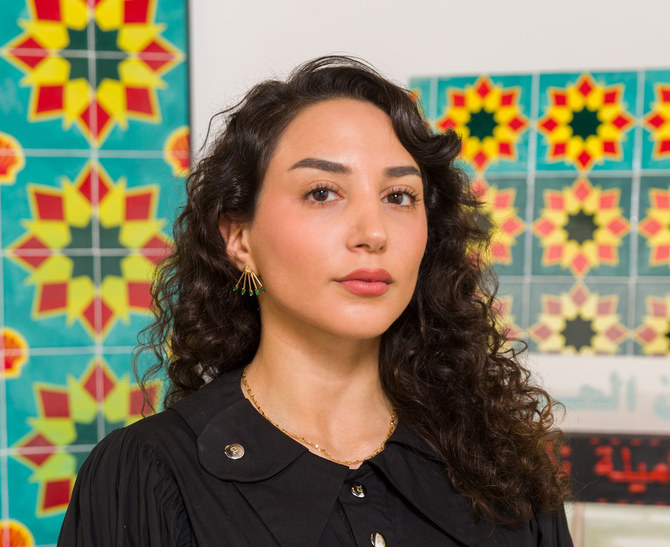
Los Angeles-based artist Saj Issa was raised between two different worlds. As the child of Palestinian parents who fled the First Intifada in the Eighties, she grew up in St. Louis, Missouri, and spent her summers in Palestine. “Each setting brought out a different part me,” she tells Arab News.  

“At first, it took a minute for me to come to terms with that. I thought I wasn’t being authentic: The person that I was portraying myself as at school around my friends was different than the person I was portraying at home. But I realize that those are all parts of me. I don’t really see it as an issue so much now as I did when I was younger.” 

Issa is an emerging visual artist, who obtained a Master’s in Fine Arts from the University of California and has had her work displayed in LA’s museums and art fairs. Her drive to create art began in childhood, marked by a tactile tendency to paint and make crafts.  

“I grew up watching (creator of the US TV show “The Joy of Painting”) Bob Ross — America’s savior — and I was mimicking that action of holding a painting palette,” Issa recalls.   

Her ceramic tile pieces juxtapose design elements that are omnipresent in both Eastern and Western cultures. She merges major Western company logos — such as Nike, Coca Cola, and Shell — with Middle Eastern geometrical and vegetal patterns.  

“I’m interested in the consequences of globalization,” says Issa. “My choice of which brands make an appearance are based on which ones made a critical impact in the East. I utilize traditional tile work combined with corporate logos as a way to draw connections between the way that colonization seeps into the indigenous ways of life. Repetition is also a means to communicate habits of consumption, mass production and advertising.” 

That geometrical ornamentation continues throughout her other series, such as “Convenience Store,” which was partly inspired by her immigrant father’s former job in a corner store. The series’ portraits of workers evoke a feeling of nostalgia and loss of identity in a quick-transaction environment; standing behind the counter, surrounded by daily items, the workers’ faces — or entire bodies — are obscured by receipts.  

“I just want to build my own visual language through these mediums,” Issa says.  

source/content: arabnews.com (headline edited)

____________

Issa is an emerging visual artist. (Supplied)

_________________________________________________

AMERICAN / PALESTINIAN / ARAB AMERICAN

ARABIC BOOKS: 5 Great New Arab Books to read in Translation

A literary critic, editor and leading authority on Arabic to English translation lists five books to keep on your radar.

For the shorter days of spring, here are some new Arab books in translation coming in the early months of 2023 that run short, fast, and muscular.

These five are full of thrills, insight, and dark humour.

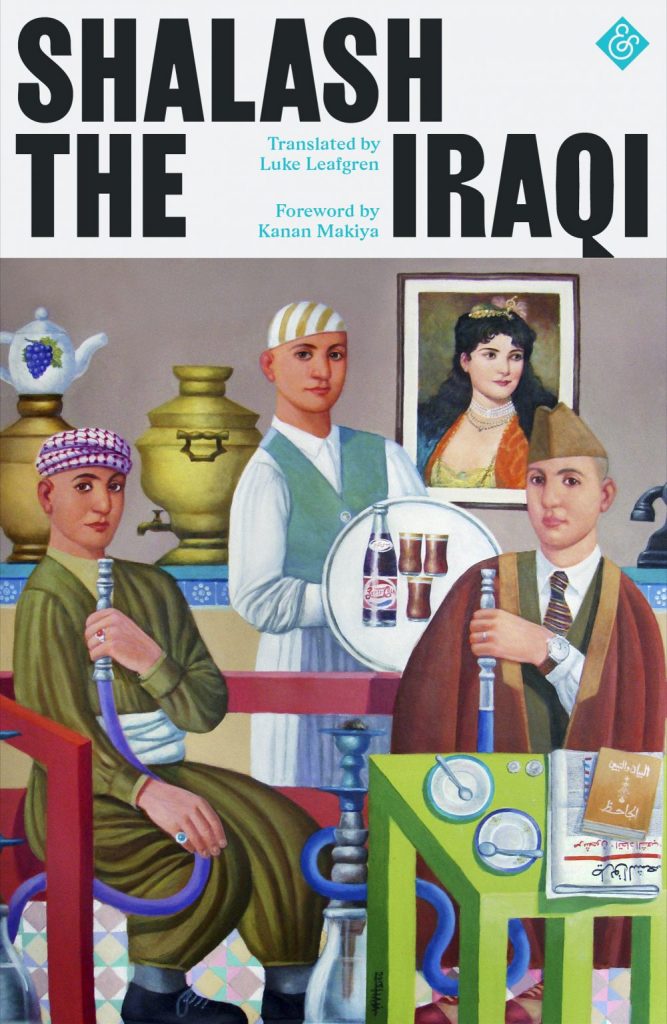
Shalash the Iraqi

By Shalash, translated by Luke Leafgren

The popular Iraqi blogger known as “Shalash” wrote his posts between 2005 and 2006, during the post-war insurgency in Iraq. Shalash took advantage of anonymity and wide reach to satirize political corruption, economic injustice, and more in an over-the-top comic tone.

Release date: May

Find more here.

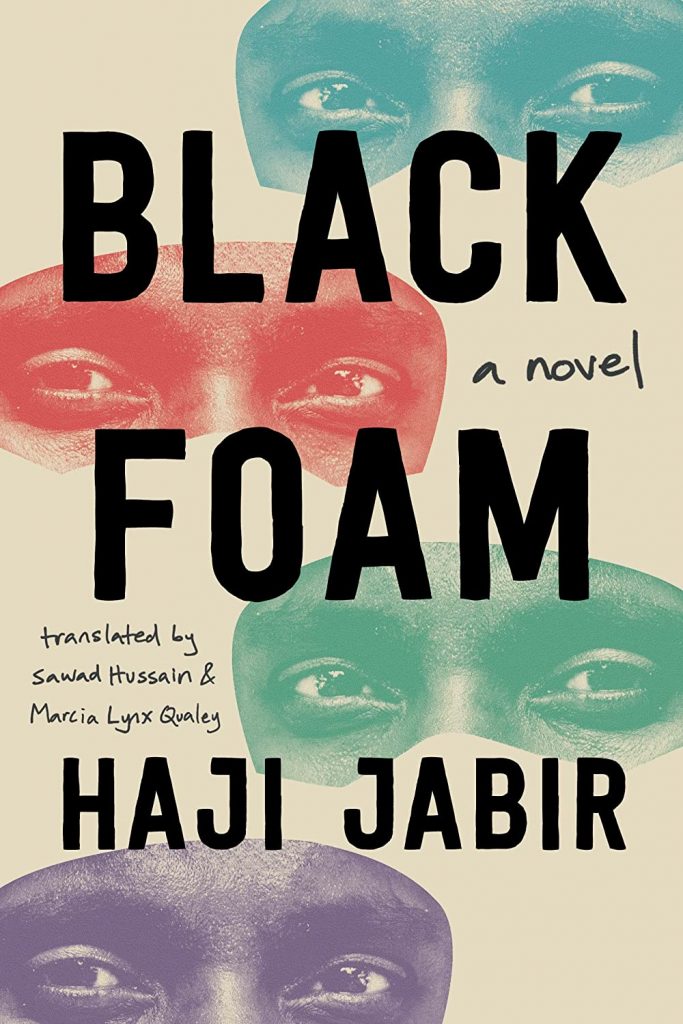
Black Foam

(AmazonCrossing)

By Haji Jaber, translated by Sawad Hussain and M Lynx Qualey

The hero of Haji Jaber’s Black Foam is a hustler and identity-shifter extraordinaire in desperate search not of cash, but of a community that will accept him. The young man—alternately Adal, Dawoud, David, and Dawit— starts in Eritrea, then in a refugee camp over the border in Ethiopia, next in a minority Jewish community in Ethiopia, and finally in Israel and Palestine. In this fast-paced novel, which alternates between comedy and tragedy, the narrator is willing to do almost anything to find a place he can belong.

Release date: February

Find more here.

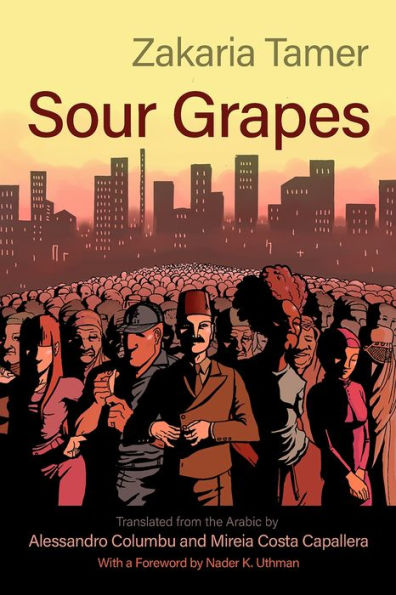
Sour Grapes

low Res

(Syracuse University Press)

By Zakaria Tamer, translated by Alessandro Columbu and Mireia Costa Capallera

These fifty-nine stories—by turns satirical and magical—are set in a fictional Syrian neighborhood called al-Qaweyq. Penned by one of the greatest living short-story writers, the stories in Sour Grapes follow a loosely connected cast of characters living at society’s margins and challenging everything that might keep them down.

Release date: May

Find more here.

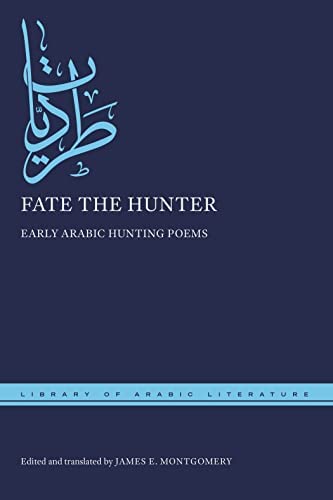
Fate the Hunter: Early Arabic Hunting
Poems

low Res

(Library of Arabic Literature)

Edited and translated by James Montgomery

James Montgomery, the award-winning translator of Antarah ibn Shaddad’s battle poems War Songs, now takes on early Arabic hunting poems. This collection brings together both the English and Arabic of twenty-six muscular, animal-centered works. In these timeless poems of man and nature, you’ll find trained cheetahs chasing down desert oryx, goshawks soaring, and archers stalking their prey.

Release date: March

Find more here.

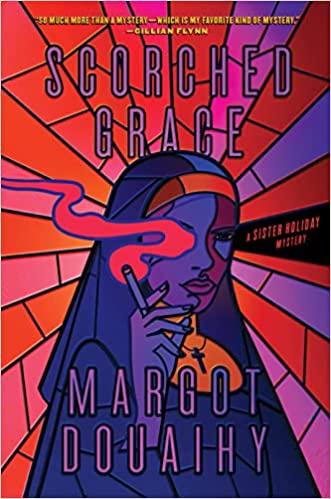
Scorched Grace

low Res

(Gillian Flynn Books)

By Margot Douaihy

Not a translation, but a noteworthy entry. The mystery-novel debut of Lebanese-American Margot Douaihy, Scorched Grace tells the story of Sister Holiday, a hard-boiled, much-tattooed nun with a troubled past who joins a convent in New Orleans. After an arsonist targets—among other things—her new convent, Sister Holiday launches an investigation. By focusing on family and secrets, Douaihy offers a new take on the figure of the hard-boiled detective.

Release date: February

Find more here.

More great books by Arab authors

source/content: esquireme.com (headline edited)

____________

__________________

ARABIC BOOKS

EGYPT: Sweden’s ‘ 13th Malmö Arab Film Festival’ (MAFF) to grant the Egyptian Star Hussein Fahmy Life Achievement Award

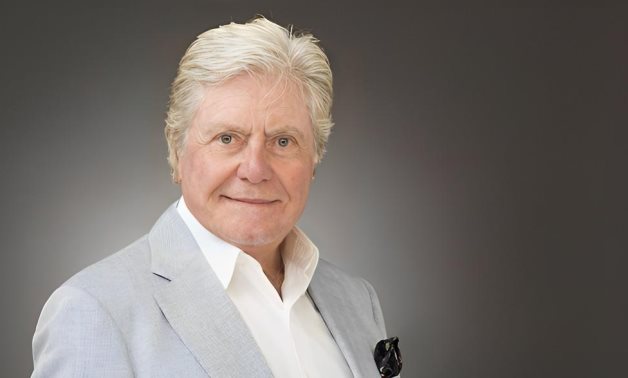
Malmö Arab Film Festival (MAFF) announced that the Egyptian star Hussein Fahmy will be tributed with a life achievement award, which he will receive during the opening ceremony of the 13th edition of the festival, which will be held from April 28 to May 4, 2023.

The ceremony will be held in the Royal Hall (Rådhus) under the auspices of the City of Malmö and in the presence of the mayor.

Fahmy will also give a masterclass during the festival, which will be held in Malmö’s city library.

Hussein Fahmy has a tremendous artistic career that extends for more than half a century, from the time he played his first role in the movie “Dalal Al-Masria” directed by Hassan El-Imam in 1970 until his most recent role in the series “Sero El Batie” directed by Khaled Youssef, shown during the current month of Ramadan.

Through his career, Fahmy acted in more than two hundred films, series, plays, and radio works, and worked with the top-notch directors of Egyptian cinema, such as Youssef Chahine, Kamal Al-Sheikh, Henry Barakat, Mohamed Khan, and others, in addition to holding various cultural positions, including the presidency of the Cairo International Film Festival for two terms, the first between 1998 and 2001, and the second started in 2022 and continues to this day.

The founder and director of the Malmö Festival, Muhammad Keblawi, commented on the tribute, saying: “Tributes are not a compulsory annual tradition at MAFF. It is not only related to the presence of a great star or director in the city, but the festival is offering tributes only when those who deserve it attend. This year we are pleased with the presence of a living cinematic legend: Hussein Fahmy, who created a place in the memory of every viewer of Arab cinema and TV”.

For his part, Hussein Fahmy expressed his happiness with the award, stressing his appreciation for the contributions of MAFF to the Arab cinema during the last few years, and his aspiration to meet the audience of the Malmö and talk to them about his career.

The masterclass will be held in the Malmö City Library at 3pm, Sunday, April 30th, and the discussion will be moderated by critic Ahmed Shawky, who in 2022 published a book entitled “Hussein Fahmy: The Biography of Egyptian Cinema in Half a Century.”

source/content: egypttoday.com (headline edited)

___________

Hussein Fahmy

_________

EGYPT

OMAN: A Unique Tribute to Lady Assayida Ahd Abdullah Hamed Al Busaidi and a New Guinness World Record for ‘A Word Written With the Largest Number of Flowers.

Paying tribute to Her Highness the Honourable Lady Assayida Ahd Abdullah Hamed Al Busaidi, Spouse of the Sultan of Oman, the Infrastructure, Technology, Industrial and Consumer Solutions cluster of Mohsin Haider Darwish LLC (MHD-ITICS), sponsored an event to set a new Guinness World Record for ‘A Word Written with the Largest Number of Flowers’.

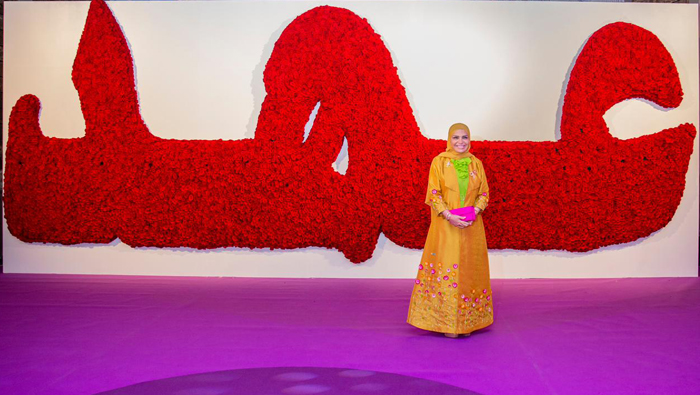
The event was hosted by Lujaina Mohsin Darwish, Chairperson, MHD-ITICS. The mammoth task of assembling 12,000 roses, which spelt out the First Lady’s name, ‘Ahad’, began with fabrication work on 25 October and was successfully completed on 26 October.

It was then displayed at a grand event organised near the Snow Zone area, located on level two of the Mall of Oman. Official adjudicators from Guinness World Records were present to supervise, analyse and follow every step of the process. Adhering to all the stringent criteria, the masterpiece, once finished, stood 8.2 metres wide and 3 metres tall and proved to be a true work of art.

Ideated and conceptualised by Ms Naseem Abdullah Al Fadhli, MD, Integrated Benefits Projects and supported by Ms Haifa Balfaqih, Investment Programme Director – Nazdaher and GM, Strategic Planning and Technology, be’ah, the historic event witnessed the presence of some of the highly-esteemed guests including her excellencies, leading businesswomen and attendees from all over the country.

Receiving an overwhelming response from the audience, the new Guinness World Record further cements Oman’s position on the map as a country filled with unique initiatives and also as a nation raising an empowered generation of women.

Lujaina Mohsin Darwish said, “With the key message behind this initiative being especially close to our hearts, we are indeed delighted to set this new world record. It not only celebrates Omani women but is a tribute to Her Highness the Honourable Lady Assayida Ahad Abdullah Hamed Al Busaidi.

Her unwavering faith in the capabilities of the Omani women of today and continuous appreciation of their achievements have served as a constant motivation for all. It has ignited a zeal in every woman to break the glass ceiling and push the frontiers of women leadership.”

“Drawing inspiration from our leaders, MHD-ITICS will continue to act as a catalyst of change, encouraging women’s contribution to the Omani economy as well as participating and leading in their respective areas of influence and expertise. The strong Omani women have displayed courage, creativity, vision and accomplishment and will continue to play an instrumental role in driving transformation,” she added.

A keynote speech was delivered by Lujaina Mohsin Darwish, which was then followed by the much-awaited showcasing of the largest flower word. Another key highlight of the event was the large LED display wall with snippets and pictures of the First Lady of Oman. All attendees were gifted a branded scarf and were entertained with live music, a food and beverage counter and photo opportunities.

MHD-ITICS, under the guidance of Honourable Lujaina Mohsin Darwish, has achieved commendable growth in recent years. Moreover, the Company has been at the forefront of setting new benchmarks in the industry and supporting its women employees to assume various critical roles in the organisation.

source/content: timesofoman.com (headline edited)

____________

________

OMAN

PALESTINE : Shifting identity: Omar Al Qattan on making Movies and Promoting Arab Culture

In our continuing series of inspiring life stories from across continents, we hear why the Palestinian filmmaker redirected his creative efforts.

The first time that Omar Al Qattan filmed in the Palestinian territories, he was a 22-year-old on set with his mentor, the director Michel Khleifi.

Happy weeks were spent scouting locations in the West Bank region in search of the perfect settings for the scenes depicted in the script in only his second visit to the birthplace of his parents. He soaked up the breathtaking scenery and filmed in a restored Ottoman fortress village surrounded by olive groves.

The result was 1987’s Wedding in Galilee, the first studio feature film shot in Palestine, depicting life under curfew following the 1948 Arab-Israeli War. It would go on to win a clutch of awards, including the prestigious International Critics Prize at Cannes, and propel Khleifi on the path to directorial eminence.

“It was wonderful,” Al Qattan recalls. “When you work in film you get to do a lot of scouting so you really know a place, especially a small place like Palestine.”

In the years since, Al Qattan has worked in and for Palestine many times, but he stresses that this has never been simply because of his own heritage. “It is a matter of a right to be able to identify with whatever you like,” he tells The National. “But the issues for me are political. I think really you need to transcend these affiliations, these loyalties.

“I’m not really sure that cultural identity is actually that powerful a bond, or as powerful a bond as the sense of injustice that inhabits us to be the sons or grandsons of refugees, regardless of how successful or comfortable they turned out to be in life.

“Through this sense of outrage, anyone can identify with you, anyone can support you on that basis, whereas if you come from a sort of clannish or sectarian perspective then it becomes like a sort of closed canal.”

Al Qattan’s reference to a comfortable life is an important one. His father Abdel Mohsin went on to become a successful businessman and his son is now chairman of the foundation set up in his name.

He is not one to be pigeonholed but, when asked, provides a label with a hint of embarrassment: “I guess ‘diaspora philanthropist’ is about right.”

The answer is rooted in the journey of his parents as refugees from Palestine – his father after the 1948 Arab-Israeli war and his mother, Leila, after her family was exiled during the British Mandate over her father’s refusal to salute the Union flag. They met and married in their country of refuge, Kuwait, while working as teachers. There, they had three children before moving to Lebanon for their education where their fourth child, Omar, was born.

Al Qattan points out that, in fact, he belongs to many diasporas – those of Palestine, Kuwait and Lebanon. “It might seem confusing to some that I have these multiple identities but it’s not an invention of mine; it’s the reality of my life,” he says. “I find that it’s incredibly enriching. I don’t think it’s an issue.

“It was a problem when I was younger, for sure. When I became an adolescent, it did seem sometimes like it would be so nice just to be an English boy without these complications. But now I think how impoverishing that would have been if I had sort of ignored the rest and how isolating as well.”

When the young Omar was sent to board at Millfield Preparatory School in Somerset at the outbreak of the civil war in Lebanon in 1975, he arrived in what felt like an alien culture. Unable to speak English, he ate “terrible food” and was awash with homesickness.

“I think it hardened me in a way,” Al Qattan, now 56, says over Zoom. “It made me maybe try to resist any temptations for sentimentality or nostalgia, especially after a couple of years when it was really clear that there was no going back.”

Then, though, he pined for the childhood he had left behind by the warm Mediterranean Sea and the school that more or less nestled inside a forest. It was a idyllic – until it wasn’t.

“It sort of started to dawn on me as an 11-year-old that this is not an adventure; it was very serious.”

The trauma of the rupture and the loneliness was compounded by the racism he encountered at school. Lacking the means to answer back with language, Al Qattan admits that he sometimes resorted to his fists until he developed some defence mechanisms.

He credits an “eccentric, extraordinary, generous kind of spirit” exhibited by teaching staff for helping him find his feet.

Despite failing all his secondary entrance exams except French, the teenage Omar went on to study at Westminster School, one of the country’s most prestigious. “When I asked my eventual housemaster why they’d taken me, he said: ‘Well, we’ve never had an Arab boy before, and we thought it would be interesting.’ Which wasn’t technically true – there had been a couple of others.

“So I was in that atmosphere of, on the one hand, a lot of stereotyping and unpleasant, racist comments and, on the other hand, we were still in an era in certain sectors of British society where there was this international outlook and curiosity.”

Al Qattan found solace in books. Reading, he says, was the only way he could catch up on English. When he discovered how much he loved books, he went on to read English literature at Oxford University.

Having dabbled in theatre at school and university, Al Qattan then decided to pursue his interest across the Channel, studying film and directing at the Institut national superieur des arts du spectacle in Brussels, where he created short documentaries and dramas under the tutelage of Khleifi.

After Wedding in Galilee, Al Qattan quickly flourished in his own right. His first film, Dreams & Silence, an early exploration of political Islam, won the 1991 Joris Ivens Award and was broadcast in Europe and Australia. In 1994, under the Sindibad Films production company he co-founded, he produced Khleifi’s Tale of the Three Jewels, the first feature film shot entirely in the occupied Gaza Strip. It premiered at Cannes and picked up a host of international awards.

Despite his illustrious film career, Al Qattan found himself slowly being drawn into the philanthropic arm of the “family business”. His father had made his fortune through a contracting business in Kuwait and wanted to channel his riches towards educational outreach programmes focused on the arts in Palestine.

Yasser Arafat once told Abdel Mohsin that he wished him to become the Palestinian Rothschild. “For that to happen, we need a Palestinian Ben-Gurion,” the retort came.

The famous quip by Al Qattan’s father was often repeated in public, much to the irritation of the now-late leader of the Palestine Liberation Organisation, and symbolises the family’s at times delicate footing within the political arena.

In 1993, the A.M. Qattan Foundation was born and the youngest of the Al Qattan siblings redirected his creative efforts towards empowering others. Almost three decades on, the foundation employs more than 100 people across the West Bank and Gaza.

A $24 million dark grey cube on a hillside in Ramallah was the patriarch’s dying wish. Opening a year after his death in 2017, the cultural beacon that is the A.M. Qattan Foundation Cultural Centre is the first of its kind in the Occupied Territories, housing a gallery, library, theatre, artists’ residencies and public plaza.

Al Qattan also opened The Mosaic Rooms as a cultural space in 2008 in London, not far from where he now lives.

He has intermittently chaired the Palestinian Museum in Birzeit since 2012 and the Shubbak Festival of Contemporary Arab Culture in 2013 and 2015. He produced Khleifi’s last film Zindeeq, which received the 2009 Muhr Award for Best Arab Feature at the Dubai Film Festival.

As well as following in his father’s footsteps in philanthropy, he also rejuvenated the waning Al-Hani Construction and Trading Company in Kuwait as a means of financing the A.M. Qattan Foundation. There, he has undertaken large-scale public projects such as the Sheikh Jaber Al-Ahmad Cultural Centre and Kuwait National Library.

Prior to the pandemic, Al Qattan returned to Palestine often, saddened by the dramatic decline he has witnessed over the decades. “The landscape has been completely brutalised,” he laments. “It’s not just the apartheid rule but the awful settlement building, which is going on everywhere.”

But the disenchantment and cynicism among the population was the most painful to observe. “It’s based on a sort of hopelessness and very dark outlook,” he says. “I find that harder to accept even than the chaos of the uprising.”

He hopes that the AM Qattan Foundation’s work can help remedy this, particularly by encouraging the involvement of youth.

Al Qattan has been actively steering the Foundation in a different direction to make it less of a family enterprise and more of an independent, public institution. But the input of the younger generation, whether his own offspring or those of others, is crucial to these plans. He says that it is far easier to shape the future with the young, who are still open to new ideas, than it is with older generations.

“If we want to build something for the long term, we have to focus on young people, especially children,” Al Qattan says.

Even at arm’s length, the guiding hand of the prodigious creator is making a difference.

source/content: thenationalnews.com (headline edited)

____________

Omar Qattan. In 1994, Abdel Mohsin Al Qattan launched the A.M. Qattan Foundation in London. David Sandison

________________

PALESTINIAN

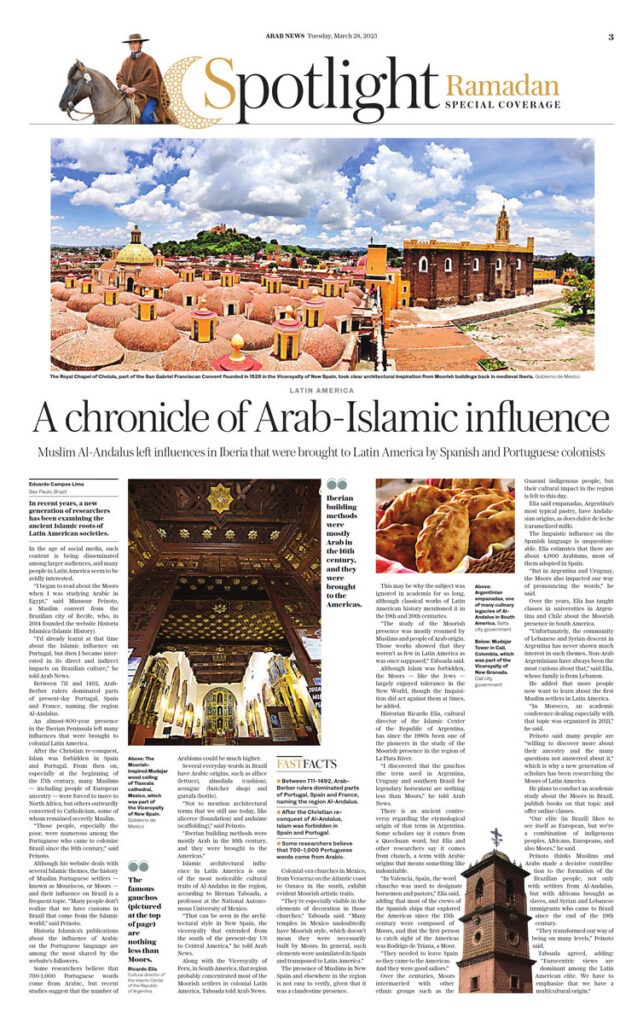
ARAB – LATIN AMERICA: How Arab-Islamic migration, language and culture shaped modern Latin America 

  • Muslim conquest of the Iberian Peninsula left many influences, later taken to the continent by colonists
  • Some researchers believe 700-1,000 Portuguese words and about 4,000 in Spanish come from Arabic 

In recent years, a new generation of researchers has been examining the ancient Islamic roots of Latin American societies.

In the age of social media, such content is being disseminated among larger audiences, and many people in Latin America seem to be avidly interested.

“I began to read about the Moors when I was studying Arabic in Egypt,” said Mansour Peixoto, a Muslim convert from the Brazilian city of Recife who in 2014 founded the website Historia Islamica (Islamic History).

“I’d already learnt at that time about the Islamic influence on Portugal, but then I became interested in its direct and indirect impacts on Brazilian culture,” he told Arab News.

Between 711 and 1492, Arab-Berber rulers dominated parts of present-day Portugal, Spain and France, naming the region Al-Andalus.

An almost-800-year presence in the Iberian Peninsula left many influences that were brought to colonial Latin America.

After the Christian re-conquest, Islam was forbidden in Spain and Portugal. From then on, especially at the beginning of the 17th century, many Muslims — including people of European ancestry — were forced to move to North Africa, but many accepted to convert to Catholicism, some of whom remained secretly Muslim.

“Those people, especially the poor, were numerous among the Portuguese who came to colonize Brazil since the 16th century,” said Peixoto.

FAST FACTS

  • Between 711-1492, Arab-Berber rulers dominated parts of Portugal, Spain and France, naming the region Al-Andalus.
  • After the Christian re-conquest of Al-Andalus, Islam was forbidden in Spain and Portugal.
  • Some researchers believe that 700-1,000 Portuguese words come from Arabic.

Although his website deals with several Islamic themes, the history of Muslim Portuguese settlers — known as Mouriscos, or Moors — and their influence on Brazil is a frequent topic. “Many people don’t realize that we have customs in Brazil that come from the Islamic world,” said Peixoto.

Historia Islamica’s publications about the influence of Arabic on the Portuguese language are among the most shared by the website’s followers.

Some researchers believe that 700-1,000 Portuguese words come from Arabic, but recent studies suggest that the number of Arabisms could be much higher.

Several everyday words in Brazil have Arabic origins, such as alface (lettuce), almofada (cushion), acougue (butcher shop) and garrafa (bottle).

“Not to mention architectural terms that we still use today, like alicerce (foundation) and andaime (scaffolding),” said Peixoto.

“Iberian building methods were mostly Arab in the 16th century, and they were brought to the Americas.”

Islamic architectural influence in Latin America is one of the most noticeable cultural traits of Al-Andalus in the region, according to Hernan Taboada, an expert on the subject and a professor at the National Autonomous University of Mexico.

“That can be seen in the architectural style in New Spain, the viceroyalty that extended from the south of the present-day US to Central America,” he told Arab News.

Along with the Viceroyalty of Peru, in South America, that region probably concentrated most of the Moorish settlers in colonial Latin America, Taboada said.

Colonial-era churches in Mexico, from Veracruz on the Atlantic coast to Oaxaca in the south, exhibit evident Moorish artistic traits.

“They’re especially visible in the elements of decoration in those churches,” Taboada said. “Many temples in Mexico undoubtedly have Moorish style, which doesn’t mean they were necessarily built by Moors. In general, such elements were assimilated in Spain and transposed to Latin America.”

The presence of Muslims in New Spain and elsewhere in the region is not easy to verify, given that it was a clandestine presence.

This may be why the subject was ignored in academia for so long, although classical works of Latin American history mentioned it in the 19th and 20th centuries.

“The study of the Moorish presence was mostly resumed by Muslims and people of Arab origin. Those works showed that they weren’t as few in Latin America as was once supposed,” Taboada said.

Although Islam was forbidden, the Moors — like the Jews — largely enjoyed tolerance in the New World, though the Inquisition did act against them at times, he added.

Historian Ricardo Elia, cultural director of the Islamic Center of the Republic of Argentina, has since the 1980s been one of the pioneers in the study of the Moorish presence in the region of La Plata River.

“I discovered that the gauchos (the term used in Argentina, Uruguay and southern Brazil for legendary horsemen) are nothing less than Moors,” he told Arab News.

There is an ancient controversy regarding the etymological origin of that term in Argentina. Some scholars say it comes from a Quechuan word, but Elia and other researchers say it comes from chauch, a term with Arabic origins that means something like indomitable.

“In Valencia, Spain, the word chaucho was used to designate horsemen and pastors,” Elia said, adding that most of the crews of the Spanish ships that explored the Americas since the 15th century were composed of Moors, and that the first person to catch sight of the Americas was Rodrigo de Triana, a Moor.

“They needed to leave Spain so they came to the Americas. And they were good sailors.”

Over the centuries, Moors intermarried with other ethnic groups such as the Guarani indigenous people, but their cultural impact in the region is felt to this day.

Elia said empanadas, Argentina’s most typical pastry, have Andalusian origins, as does dulce de leche (caramelized milk).

The linguistic influence on the Spanish language is unquestionable. Elia estimates that there are about 4,000 Arabisms, most of them adopted in Spain.

“But in Argentina and Uruguay, the Moors also impacted our way of pronouncing the words,” he said.

Over the years, Elia has taught classes in universities in Argentina and Chile about the Moorish presence in South America.

“Unfortunately, the community of Lebanese and Syrian descent in Argentina has never shown much interest in such themes. Non-Arab Argentinians have always been the most curious about that,” said Elia, who comes from a Lebanese family.

He added that more and more people now want to learn about the first Muslim settlers in Latin America.

“In Morocco, an academic conference dealing especially with that topic was organized in 2021,” he said.

Peixoto said many people are “willing to discover more about their ancestry and the many questions not answered about it,” which is why a new generation of scholars has been researching the Moors of Latin America.

He plans to conduct an academic study about the Moors in Brazil, publish books on that topic and offer online classes.

“Our elite (in Brazil) likes to see itself as European, but we’re a combination of indigenous peoples, Africans, Europeans, and also Moors,” he said.

Peixoto thinks Muslims and Arabs made a decisive contribution to the formation of the Brazilian people, not only with the settlers from Al-Andalus, but also with the Africans brought as slaves, and the huge wave of Syrian and Lebanese immigrants who came to Brazil since the end of the 19th century.

“They transformed our way of being on many levels,” he said.

Taboada agreed, saying: “Eurocentric views are dominant among the Latin American elite. We have to emphasize that we have a multicultural origin.”

source/content: arabnews.com (headline edited)

__________

__________________________

ARAB – LATIN AMERICA

SAUDI ARABIAN Ministry Introduces 3 New Fonts to Celebrate Kingdom’s Culture

The fonts, celebrating the Kingdom’s culture, will be available free of charge.

The Ministry of Culture on Monday launched an initiative creating three new Saudi fonts.

The fonts, celebrating the Kingdom’s culture, will be available free of charge to individuals and organizations wishing to use them in design, artistic, and creative works, the Saudi Press Agency reported.

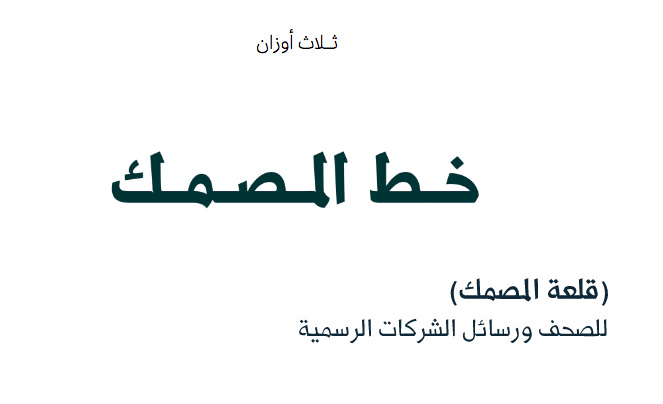
The Masmak font has been named after the historic Masmak Fortress, characterized by its durability and strong structure. The font has been described as clear and easy to read and was developed without reference to traditional calligraphy methods, the SPA said.

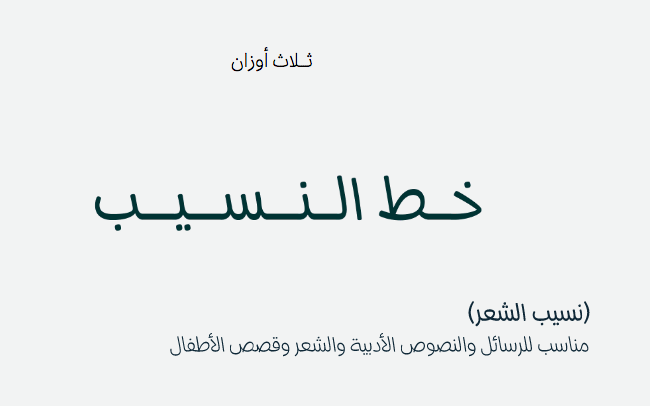
The second new font, Al-Naseeb, resembles handwritten notes, and has been recommended for use in headlines, texts, literary works, poetry, and children’s stories.

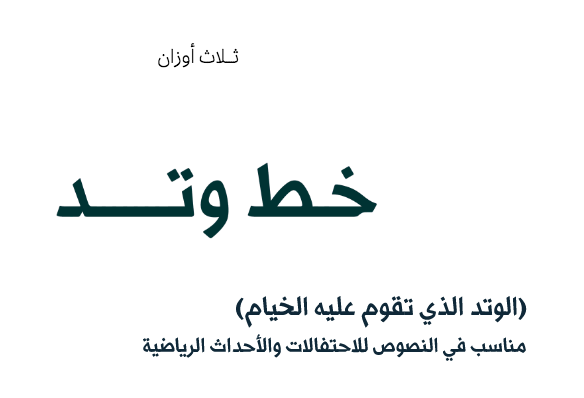
Watad, the third font, was inspired by the tent peg with its letters having curved corners. Its suggested use was for text relating to festivals and sporting events.

The Ministry of Culture launched the initiative in celebration of the Arabic language. In a statement, it said: “It is introducing a unique touch that gives a Saudi identity to Arabic fonts and celebrates Saudi heritage and cultural symbols.”

The fonts can be downloaded at https://engage.moc.gov.sa/fonts.

source/content: arabnews.com (headline edited)

____________

_________________

SAUDI ARABIA

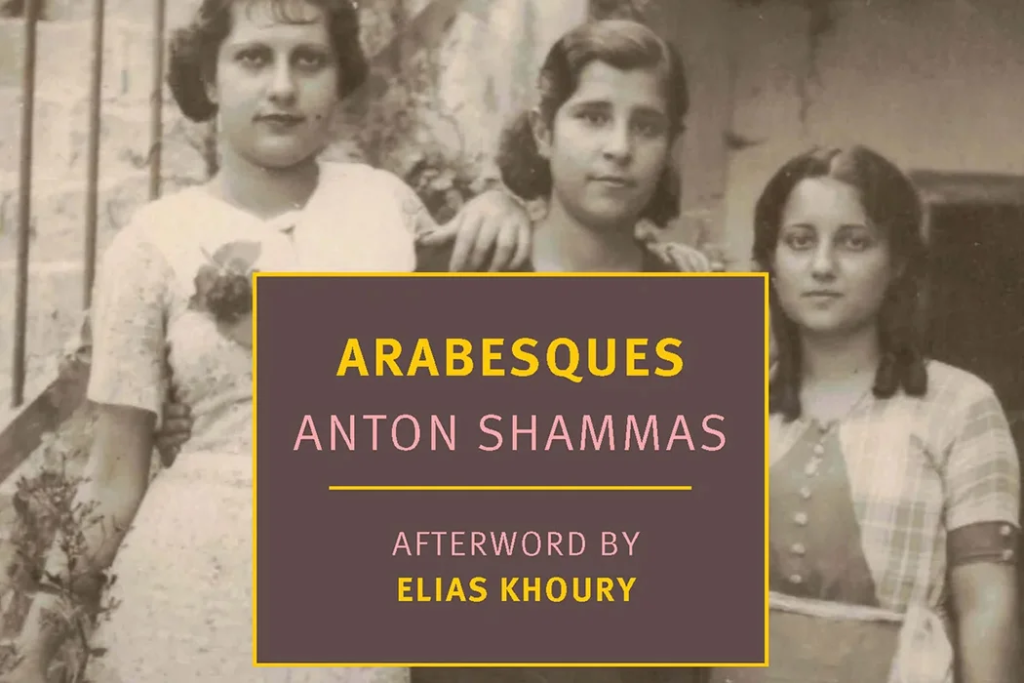
Arabic Hebrew, Hebrew Arabic: The Work of Anton Shammas. A Palestinian writer, poet and translator of Arabic, Hebrew and English

Within the alienated and antagonist cultures inside Israel’s borders, Arabic and Hebrew—related, but mutually unintelligible languages—cross-fertilize each other.

“Translation” originally meant moving a body. Dead saints and live bishops, for instance, were translated from one place to another. Today, we mostly only use “translation” to mean words transported into other languages, where, unlike bodies, they often change completely.

When Anton Shammas’s Arabesques was first published in 1986, it crossed a notable translational fault line. It wasn’t the first Hebrew-language book written by a Palestinian in Israel, but it became the most famous. The best-seller’s English translation made it to the New York Times’s seven best novels of the year in 1988, but it’s the Hebrew original that drew the attention of scholars Adel Shakour and Abdallah Tarabeih.

“Almost all Israeli Arabs have at least some Hebrew proficiency, and the language is taught in Arab schools,” they explain. “For Israel’s Arab citizens, Hebrew is the key to the dominant Jewish majority and most of its social, financial, and educational resources; it is therefore essential in the minority’s daily life.”

Modern Hebrew is the official language of Israel. The minority Palestinians have a complicated relationship to the majority’s language. Living in Israel means Hebrew is a necessity, but Palestinian identity is intimately connected to Arabic. The language of “Islamic liturgy and the Quran” has a high status among Israeli Palestinians, the majority of whom are Muslim.

In the press of linguistic intimacies in Israel, the two Semitic—related, but mutually unintelligible—languages cross-fertilize each other.

“Israeli Jewish society appears to perceive Arab culture as inferior, less modern, and less sophisticated,” write Shakour and Tarabeih, an attitude that includes Arabic. Hebrew, meanwhile, is intimately connected to the identity of Israeli Jews, who in the larger Middle East are a language, religious, and ethnocultural minority.

The fraught relationship between a Jewish state and the non-Jews within it as well as surrounding it, language-wise, meant “Hebrew attained prominence in the non-Jewish literary sphere only in the 1980s, with the works of Anton Shammas, a Christian, and Naim Araidi, a Druze.” (The first Hebrew novel by an Arab, Atallah Mansur’s 1966 In A New Light, proved to be “a fleeting phenomenon.”)

In the press of linguistic intimacies in Israel, the two Semitic—related, but mutually unintelligible—languages cross-fertilize each other, even in the “mutually alienated cultures” found within the state’s borders.

Shakour and Trabeih note that Palestinian “Arabic has borrowed many Hebrew words and even sentences.” Meanwhile, Hebrew, which was revived and modernized in the nineteeth and twentieth centruries, has adopted words from Arabic, as well as a host of other languages including Aramaic, Yiddish, Ladino, Polish, Russian, English, and so on.

Shammas, a noted translator of Arabic into Hebrew (especially of Emile Habibi), is a conscious language bridge-builder between the two languages. Part of this language-bridging means he invents neologisms, new words, in Hebrew.

As Shakour and Tarbeih detail, “Shammas creates new verbal forms in Hebrew by deriving them from nouns along the lines of such derivation in Arabic.” Their first example adds another language to the mix: “the Arabic verb šaksbaranī derived from the noun Shakespeare leads him to use the same derivation in Hebrew.”

Such neologisms can make texts “more obscure” to native readers of a language who have never encountered the word before. Shammas does it to “give the work a highly authentic flavor” to the Arabic culture he wants to introduce to the Jewish Israeli audience.

Perhaps unsurprisingly, some partisans of both Arabic and Hebrew have criticized Shammas’s translations for daring to speak across antagonistic borders. Some Israeli Jews think only Jews can create Hebrew literature. For them, Hebrew is part of the Jewish national character, part of the Zionist project. Some Palestinians think he’s using the enemy’s language, putting a spin on the Italian saying “Traduttore, traditore.”

The saying, meaning “the translator is a traitor,” is usually meant to signify the compromises necessarily made to help language slip across borders into other words. Of course, both languages here, like most languages, are already infiltrated by each other, something language’s border guards never seem to accept.

source/content: daily.jstor.org/JSTOR (headline edited)

______________

______________________________________

AMERICAN / ISRAELI / PALESTINIAN