Arabs & Arabian Records Aggregator. Chronicler. Milestones of the 25 Countries of the Arabic Speaking World (official / co-official). AGCC. MENA. Global. Ist's to Top 10's. Records. Read & Enjoy./ www.arabianrecords.org
The King Salman Global Academy for Arabic Language has launched the “Khawalid” initiative, an audio platform that aims to record 1,000 selected poems from the pre-Islamic era, in line with the Ministry of Culture’s Year of Arabic Poetry.
Abdullah Al-Washmi, secretary-general of KSGAFAL, told Arab News that the initiative, which translates to “living forever,” aimed at enriching Arabic content in various media.
He said: “Strengthening the role of the Arabic language is part of the set of goals from which the King Salman Global Academy for Arabic Language stems.”
One of its goals is to highlight the scientific, cultural and civilizational status of the Arabic language. It aims to create a platform that helps preserve Arabic content in the field of poetry.
Al-Washmi added that it will also make poetry, especially Arabic poems from the pre-Islamic era, more accessible to the public.
He said: “It highlights the value of the Arabic language, which expresses the linguistic depth in Saudi Arabia, to bring it closer to the public and endear them to it, to deepen its status, and to raise awareness of it as an integral part of the identity of the Arab person.”
The initiative will focus on the era that began approximately 150 to 200 years before Islam, and the KSGAFAL will direct work over all stages.
Its task will involve verifying work and its attribution to its author, along with determining the meaning and integrity of the content.
The selection will be limited to poems that are no less than 10 verses, taking into account the diversity of the poets and the selected works.
Al-Washmi said: “Poetry in the pre-Islamic era constitutes an important literary material that can be invested in building linguistic knowledge, enriching the artistic and aesthetic experience, and contributing to linking the contemporary generation with its authentic literary heritage.
“This initiative confirms the KSGAFAL’s interest in the culture and arts of the Arabic language, in addition to its great care in planning, teaching and computerizing it, striving in all of this to achieve its goals, which are a target of the Human Capacity Development Program, one of the Saudi Vision 2030 initiatives.”
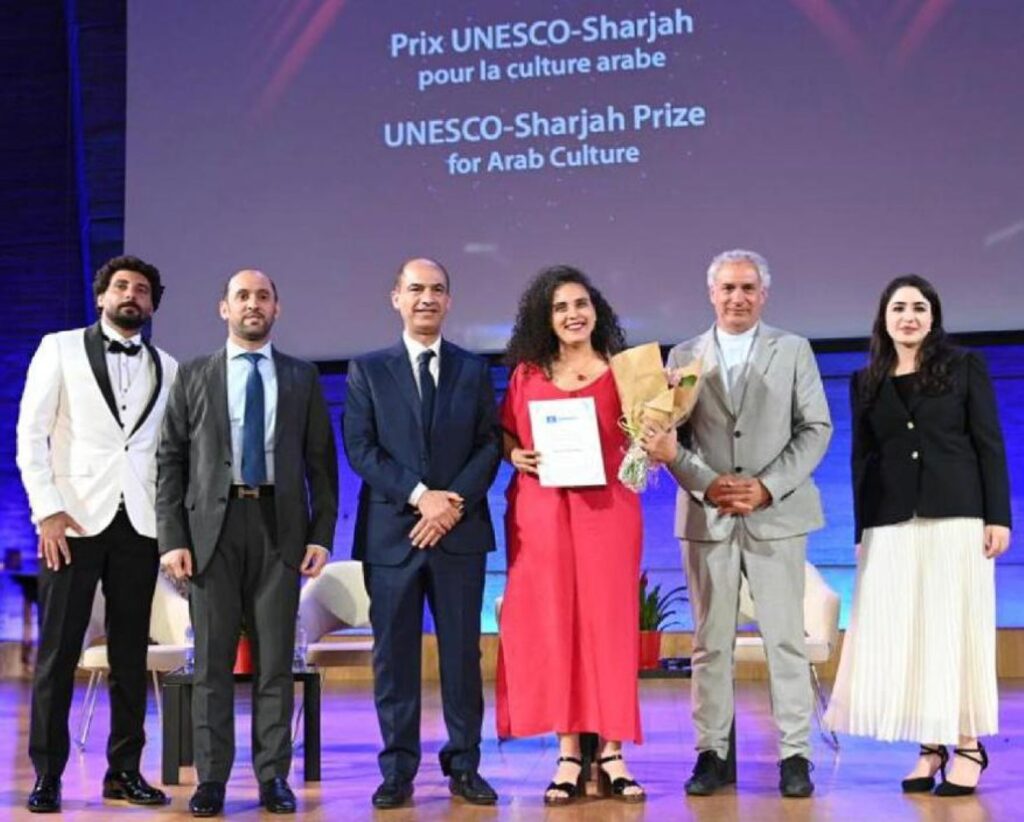
Kassem Istanbouli, Lebanese actor-director, and Hajer Ben Boubaker, French researcher and sound director, were awarded the 19th UNESCO-Sharjah Prize for Arab Culture at an award ceremony at UNESCO Headquarters in Paris on 26th June 2023.
The event, organised by the Sharjah Department of Culture in collaboration with UNESCO, celebrated the achievements of two winners.
The ceremony was attended by Abdullah bin Mohammed Al Owais, Chairman of the Sharjah Department of Culture; Ernesto Ottone Ramirez, Assistant Director-General for Culture at UNESCO; Mohammed Ibrahim Al Qasir, Director of the Department of Cultural Affairs in Sharjah; Ahmed Al Mulla, Deputy Ambassador of the UAE to France, and Aisha Al Kamali, Representative of the Cultural Attaché at the Embassy of the UAE in France, along with dignitaries, writers, intellectuals and accredited diplomats to the United Nations (UN).
Al Owais and Ramirez presented the 19th edition of the UNESCO-Sharjah Prize for Arab Culture to Istanbouli, winner of the Arab Personality Award, and Ben Boubaker, winner of the Non-Arab Personality Award.
The UNESCO-Sharjah Prize for Arab Culture recognizes recipients’ outstanding artistic achievements celebrating Arab art and culture globally. Core to UNESCO’s anti-racism and anti-discrimination agenda, the Prize promotes peace and dialogue to foster intercultural understanding and celebrate diversity.
For this 19th edition of the Prize, the international jury recognized Mr Istanbouli and Ms Ben Boubaker’s extraordinary contributions to promoting the arts and Arab culture and supporting their local communities.
Kassem Istanbouli is a Lebanese actor and director. Since 2014, he has led the rehabilitation of historical cinemas in Lebanon, including Stars Cinema in Nabatieh, and Al-Hamra and Rivoli in Tyre, abandoned or destroyed during civil war.
Mr Istanbouli is involved with several international projects focused on skills enhancement, youth empowerment and collaborative partnerships. In 2020 he co-founded the Arab Culture and Arts Network (ACAN) to design and implement online cultural activities across the Arab region. The Network includes over 700 organizational and individual members from across the world.
Mr Istanbouli is also director and founder of the Lebanese National Theater in Tyre and the Lebanese National Theater in Tripoli and has been a project manager at the Tiro Association for Arts in Lebanon since 2014.
Hajer Ben Boubaker is a French-Tunisian independent researcher and sound director. Her research focuses on a socio-historical analysis of Arab music and the cultural history of the Maghreb community in France and around the world.
In 2018, she created and self-produced the Vintage Arab podcast, which explores Arabic musical heritage. At the intersection of research and art, the podcast allows her to keep a foot in each sphere.
Ms Ben Boubaker is a producer and documentary director for France Culture, where her work questions the sound and political memory of immigration. As a researcher, she is associated with the Arab and Oriental music collection at the Bibliothèque nationale de France, and continues to write for scientific journals, including “Paris, capitale maghrébine: une histoire Populaire” in October 2023.
Created in 1998 and run by UNESCO at the initiative of the United Arab Emirates, the UNESCO-Sharjah Prize awards two laureates per year — individuals, groups or institutions — in recognition of their contribution to Arab art and culture, or for participating in the dissemination of the latter outside the Arab world.
The initiative contributes towards the Organization’s objective of fostering inclusive, resilient and peaceful societies. The Prize carries a monetary value of USD 60,000, which is equally divided between the two laureates.
Saudi jewelry designer, Maryah Abdudeeb, is revolutionizing the world of wearable art by fusing the elegance of Arabic calligraphy with the beauty of literature. Through her brand, Mashq, she has embarked on a creative journey that begins with the delicate strokes of a calligraphy brush and culminates in the creation of breathtaking masterpieces inspired by poetry and literature.
Mashq, which takes its name from an ancient form of calligraphy, meaning “stretch out,” captures the essence of Arabic letters in a unique and captivating manner. The brand’s founder, Maryah Abdudeeb, drew inspiration from her childhood experiences, where she witnessed her father’s skillful calligraphy and her mother’s ability to transform simple materials into works of art.
Guided by these formative influences, Abdudeeb embarked on a quest to explore the depths of Arabic poetry and literature. Her creative journey was further enriched as she traveled to different countries, marveling at architectural marvels adorned with historic Arabic inscriptions. It was during these encounters that she stumbled upon jewelry pieces engraved with calligraphy, each one narrating a deeply personal story.
With a profound love for Islamic art, Abdudeeb believes in showcasing and appreciating its timeless beauty. To deepen her knowledge and understanding of this art form, she immerses herself in Islamic design books, where she discovers an array of captivating designs and phrases inspired by this rich cultural heritage.
The COVID-19 lockdown proved to be a turning point for Abdudeeb, as she pondered over ways to combine her twin passions: jewelry and Arabic calligraphy. It was during this period of introspection that the concept of Mashq was born.
In March 2021, Mashq made its debut, unveiling its inaugural collection. Abdudeeb personally contributed to each stage of the jewelry-making process, acting as both the calligrapher and designer. Each piece in the collection showcases verses and lines from her favorite works of Arabic poetry and literature, capturing the essence of profound emotions and inspiring narratives.
The transformative design process begins with Abdudeeb meticulously rendering the chosen phrase in calligraphy, striving to convey its true essence. The phrase is then transformed into a three-dimensional representation using specialized jewelry design software. Depending on the size and intricacy of the piece, it is crafted either by hand or with the assistance of cutting-edge machinery.
However, the true measure of success for Abdudeeb lies in the emotions evoked by her creations. By employing a variety of meaningful phrases and materials such as silver, gold plating, and gems, she aims to establish a connection between the wearer and the words. Each piece serves as a reflection of personal sentiments or a wellspring of motivation, empowering individuals to carry their chosen phrase with grace and pride.
Beyond the Middle East, scores of towns and cities owe their names to the region’s far-reaching influence.
In 711, Arab commander Tariq ibn Ziyad led his victorious Berber army across the narrow strait between North Africa and Spain, where he took the first step towards founding what would become the Muslim state of Al Andulus.
To honour his achievement, the mountain where the army had first landed was named after him. They called it Jabal Tariq – Mount Tariq.
More than 1,000 years later, we now call it Gibraltar , the name evolving with the centuries that saw the peak regained by Spain, only to later become a British territory.
It is a reminder that Arab influence is often visible in plain sight, sometimes far from the boundaries of the Middle East.
The Mexican city of Guadalajara is known for mariachi music and two football World Cups. It has little to do with river beds or stones, yet that is the origin of its name: Wadi Al Hajarah, translated as the Valley of Stone from Arabic, or possibly the fortified valley.
Guadalajara in Mexico is also a product of conquest. In the 15th century, it was founded by a conquistador who named it in honour of his boss Nuno de Guzman, who had been born in the Spanish city Guadalajara, which once fitted the description. The city in Spain was named during the Muslim rule over the Iberian Peninsula.
The South Pacific island of Guadalcanal, more than 16,000 kilometres from Spain, was the scene of one of the bloodiest battles of the Second World War, with more than 30,000 Japanese and American soldiers killed in six months of fighting.
Guadalcanal was part of the British Solomon Islands, now independent, but had been colonised by Spain in 1568 and named after a town near Seville, one of the country’s biggest cities in the south. Seville was originally founded by Arabs as Wadi Al Qanal.
These names mark the rise and fall of empires – Arab, Spanish and British – and the conflicts that shaped our world, from the creation of the Caliphates, which once stretched from Afghanistan to Portugal, to the British Empire, on which it was said the sun never set.
London’s Trafalgar Square honours one of that empire’s great heroes, Admiral Lord Nelson, who defeated the combined might of the French and Spanish naval fleets in 1805.
The square and the column that carries Nelson’s statue take their name from the Cape of Trafalgar, where the famed battle of the same name took place offshore. It was first known as Tarif Al Ghar or Tarif Al Gharb, thought to mean either Cape of the Cave or the West, respectively, in the original Arabic.
It is estimated at least 4,000 Spanish words have their origins in Arabic. Benacazon, another city in Spain, was originally Bani Qasum, or the Sons of Qasum. El Burgo, in Malaga, is simply “the tower”, or “al burj”. In neighbouring Portugal, the popular holiday destination the Algarve was once Al Gharb, or The West.
Granada, the city at the heart of Islamic Spain, was first Garnata to the Arabs, although the meaning of the name is unclear and may be much older. Its famous palace, the Alhambra, comes from the Arabic “al hamra”, or “red one”, after the colour of its walls.
Arab reach in Europe stretched beyond Spain. The Italian island of Sicily was an emirate between 831 and 1091, with the city of Marsala, famous for its wine, probably either Marsa Ali – Ali’s harbour or anchorage – or Marsa Allah. Many smaller towns begin with the prefix “cala”, evolving from the Arabic word “qalat”, or fortification.
In France, the small town of Ramatuelle, close to Saint-Tropez, was once ruled by the Moors, who raided the Rhone Valley in the ninth and 10th centuries. At that period, it was called Rahmatallah, an Arabic phrase meaning “mercy of God”.
The Bosnian town of Gornji Vakuf-Uskoplje derives the second part of its name from the Islamic word “waqf”, meaning a charitable gift.
Thousands of kilometres away, and on another continent, the Comoro Islands in the Indian Ocean, owe their name to the Arabic “qamar”, or moon. The population converted to Islam as far back as the 7th century.
In East Africa, Mozambique was named by Portuguese colonisers after the offshore island of the same name. That Mozambique is actually derived from Mussa Bin Bique, the Arab trader who ruled the island before the Portuguese took over in 1544.
In the Middle East, though, many place names are derived from languages other than Arabic. Baghdad comes from Farsi for “God’s gift”; Byblos is Greek, as is Alexandria in Eygpt, which is named for Alexander the Great.
The city of Aleppo is called Halab, which is originally Aramaic, the language of the Hebrew Bible. Beirut is unclear but possibly a Phoenician word for a “well”.
And Amman, the capital of Jordan? This shows how complex the origin of place names can be. Three thousand years ago it was founded as Rabbath Ammon by the Ammonites, who spoke a Semitic language. Rabbath, originally used to mean “king”, but was dropped as the city eventually became Amman.
For around 50 years though, in the 3rd century, it was part of the kingdom of the Pharaoh Ptolemy II, who renamed it using a combination of the Greek words “brotherly” and “love” – “phileo” and “adelphos” – or Philadelphia.
Nearly 2,000 years later, the Quaker William Penn named a new town he was building in the American colony of Pennsylvania. Inspired by the sentiments of Ptolemy, he also called it Philadelphia in a state which, incidentally, also includes a Damascus, Hebron and Bethlehem.
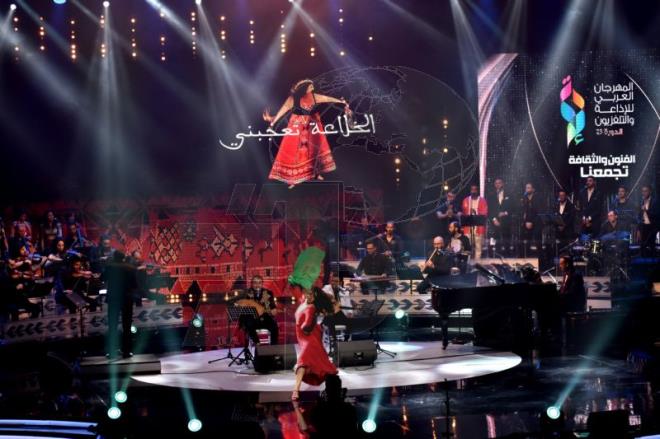
The 23rd Arab Radio and TV Festival kicked off on Monday in Tunis under the slogan of “Celebrating Arts and Culture.”
The opening ceremony was hosted on Monday at the City of Culture under the theme: “Arab Perfumes,” and the closing ceremony will be broadcast live by the various Arab TV channels and radio stations.
The official ceremony was attended by several Arab senior officials, including diplomats, professionals from the festival’s media partners and featured artists.
The official guests included President of the Arab States Broadcasting Union (ASBU) Mohammed bin Fahd Al-Harthi, ASBU Director General Abdelrahim Suleiman, Cultural Affairs Minister Hayet Ketat Guermasi and Syrian Minister of Information Butros al-Hallaq.
A tribute was paid to Egyptian actress Sherine, Lebanese filmmaker Georges Ghabbaz, Emirati actress Fatma Houssani, Libyan filmmaker Hassan Garfel, Moroccan filmmaker Sanaa Akroud, Syrian actor Milad Youssef and actress Rawaa Saadi.
The festival further paid tribute to leading figures from the Arab audiovisual landscape, including former chairman and CEO of the Tunisian radio and television broadcasting corporation (ERTT) Abdel Aziz Kacem, Tunisian actor Moncef Baldi, former Director of Egyptian Radio Iness Jawhar, former ASBU Director of the Administrative and Legal Committee Hani Farraj, Bahraini filmmaker Ines Yacoub and Taki Eddine Soubira from Comoros.
The awards of the 14th edition of the Arab Music and Song Contest were handed over during the ceremony, which was held at the ASBU headquarters in Tunis last May.
The Tunisian Radio won the 2nd award (US$ 3 thousand) in the musical works section for a composition entitled “Tamiarat” by Mohsen Matri.
The winning works were selected by a jury made up of musician Mona Chtorou (Tunisia), artisit Mona Abelghani (Egypt), artist Dhia Eddine Jebbar Faraj (Iraq), academic Achour Fanni (Algeria) and poet Hédi Daniel (Syria).
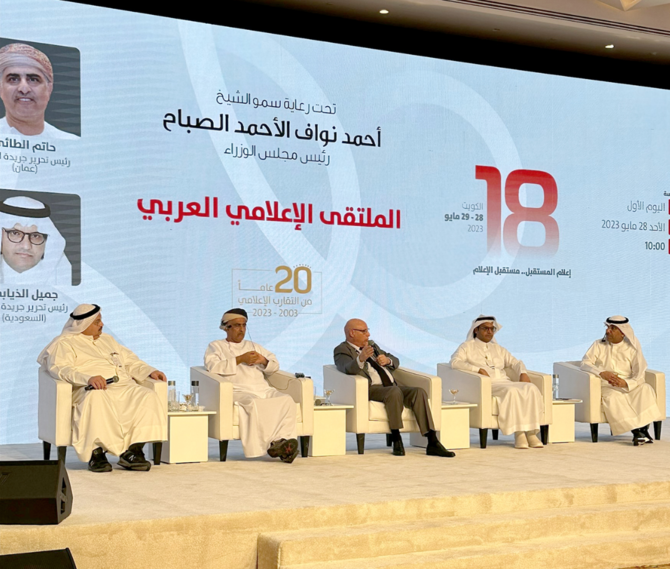
The 18th Arab Media Forum kicked off on Sunday in Kuwait under the patronage of Prime Minister Sheikh Ahmad Nawaf Al-Sabah.
The event focused on a range of issues pertaining to the future of media in the region, Kuwait News Agency reported.
During one of the sessions, Jameel Al-Thiyabi, editor-in-chief of Saudi newspaper Okaz stated that the rise of Artificial Intelligence would have an impact on media outlets all over the world, emphasizing the importance of keeping up with AI developments in media rather than falling behind.
The Arab League’s assistant secretary-general for media Ahmed Khattabi stressed the importance of addressing challenges within digital media, adding that improving media capacities should not overshadow topics of significant importance to the Arab world, particularly the Palestinian cause.
Meanwhile, Waleed Al-Jasim, editor-in-chief of Kuwaiti newspaper Al-Rai, said Arab media faced challenges surrounding media freedoms, adding that social media platforms allowed for more freedom of expression compared with mainstream media.
Hatim Al Taie, editor-in-chief of Omani newspaper Al-Roya, warned younger people working in the industry needed to prepare for the oncoming digital media transformation. He called on the Arab League to impose fees on international media companies, with the money used in funding media entities in the Arab region.
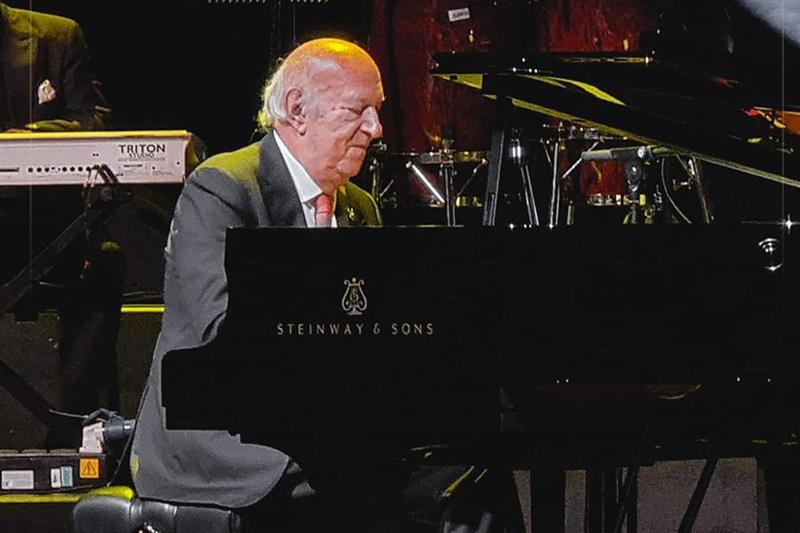
Egyptian acclaimed composer Omar Khairat has been selected as the Cultural Personality of the Year by the organizers of the UAE’s 17th edition of the Sheikh Zayed Book Award (SZBA).
Omar Khairat will be awarded “in honour of an illustrious, decades-long career of timeless musical creations that have contributed to shaping the collective cultural consciousness of the Arab region,” as stated by the SZBA’s official website.
“The SZBA’s Board of Trustees endorsed the Scientific Committee’s decision to choose Khairat as the Cultural Personality of the Year in recognition of his remarkable talent and artistic turnout, which has been tremendously popular in the Arab world and has been featured in musical introductions to films and many dramas.”
The SZBA is organized by the Abu Dhabi Arabic Language Centre (ALC); part of the Department of Culture and Tourism – Abu Dhabi (DCT Abu Dhabi).
Winners of this year’s SZBA also include Iraqi poet Ali Jaafar Alallaq; French author Mathieu Tillier; Algerian author Said Khatibi; Tunisian translator Chokri Al Saadi; Tunisian critic Jalila Al Tritarm, and Egyptian publishing house Dar ElAin.
Excellence and Innovation
Each year, the Cultural Personality of the Year award is given to “a prominent figure who has contributed to the advancement of Arabic culture and promoted peaceful coexistence.”
“This year, we are proud to select Omar Khairat, one of the most renowned and celebrated musicians in the Arab world,” stated Undersecretary of DCT Abu Dhabi Saood Abdulaziz Al Hosani.
“His constant striving for excellence and innovation has seen the artist make an incalculable impact on the music industry and the wider cultural landscape, as well as foster important cross-cultural dialogue. His passion reflects Abu Dhabi’s vision to nurture creativity and harness the power of the arts to build bridges and transcend borders,” he added.
Considerable Career
Born in 1947, the multi-awarded Omar Khairat is one of the top musicians of the Arab world with hundreds of memorized compositions in his repertoire.
Throughout his long successful career, he has written scores for numerous films and television series, including The Sixth Day (1984); The Terrorist (1993); Mafia (2002); Girl’s Love (2003); The Embassy in the Building (2005), and Deer’s Blood (2006), to name but a few.
His concerts are usually fully-booked weeks ahead of time with his wide fan base singing along and humming with compositions like Heya Di El-Hayah; Fi Hawid El Leil; Arabian Rhapsody; Fiha Haga Helwa; Eadam Mayet; El-Khawaga Abdel-Kader; Giran El-Hana; Saber; Arfa; Qadeyet Am Ahmed; Khali Balak Men Aklak, and other classic hits of time-honoured TV and films themes.
Among his upcoming performances is the 3rd of June’s large concert at the Sound and Light Theatre at the Pyramids and Sphinx site in Giza, where half of the tickets have already been sold-out.
Syrian American Mayor Khairullah says Biden should end ‘racism’ against Muslims and Arabs
‘I don’t think it is fair to make a documentary to show that Cleopatra was Black. This is changing history,’ says Egyptologist Zahi Hawass
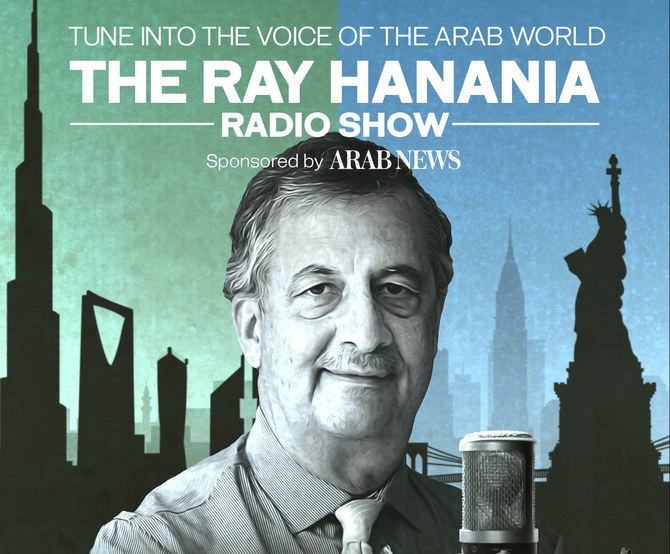
The Ray Hanania Radio Show, a weekly program sponsored by Arab News, kicked off its third season on Thursday with an explosive episode last night. It featured as its first guest Syrian American Mayor Mohamed T. Khairullah, who was controversially banned from the White House Eid celebration.
During his appearance on the show, Khairullah slammed President Joe Biden, saying it is his responsibility to end the “racism” and “discrimination” against Muslims and Arabs that is a part of the system.
The Ray Hanania Radio Show, which first aired in October 2020 ahead of the US elections at the time, hosts a wide array of guests tackling crucial topics in the Arab world.
One such topic tackled this season is the recent Netflix docuseries controversy surrounding the casting of Adele James, a Black actress, as Cleopatra, whom historians agree was of Greek origin.
The furor came from Egyptians and other Arabs accusing the producers of the film of appropriating their culture. The Ray Hanania Radio Show thus hosted world-renowned Egyptologist Zahi Hawass who set the facts straight.
“Cleopatra was a Macedonian…I really think that the reason this film is shown now (is) because some people want to say that the origins of Ancient Egypt were Black,” he said on the show, adding, “I don’t think it is fair to make a documentary to show that Cleopatra was Black. This is changing history.”
Continuing with the topic of Arab representation in Hollywood was Arab News’ very own Editor-in-Chief Faisal J. Abbas.
On the show, Abbas cited Arab American writer and academic Jack Shaheen and his book “Reel Bad Arabs,” which says that, out of 1,000 films, Arabs were only presented or portrayed positively in 12 percent of them.
“As Arabs, we should not wait for Hollywood, and we should not wait for people with Orientalist agendas to tell our story. We should be the masters of our own destiny, we should be the masters of our own storytelling,” Abbas said.
“I’ll tell you one more thing before we conclude. Actions speak louder than words.”
The Ray Hanania Radio Show is broadcast live on WNZK AM 690 Radio in Greater Detroit and on WDMV AM 700 in Washington D.C. every Wednesday at 5pm EST / 12am KSA, also available on all Arab News podcast channels.
Guinness World Records recognizes longest phrase made from coffee beans
UNESCO added Saudi Khawlani coffee and the skills and knowledge associated with its cultivation to its Intangible Cultural Heritage list
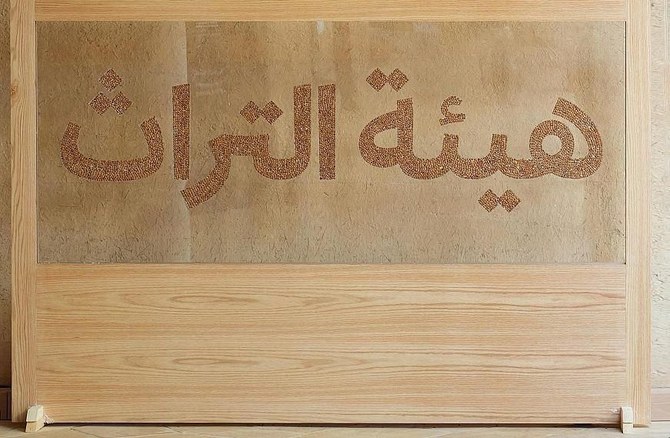
The Heritage Commission has set a world record for the longest phrase made from coffee beans.
The phrase, “Heritage Commission,” comprised 6,088 Saudi Khawlani beans and was created as part of the commission’s events to mark World Heritage Day.
The creation, whose record length was recognized by Guinness World Records, was displayed at the King Abdulaziz Historical Center in Riyadh, where the commission’s representatives received their official certificate.
Saudi Arabia is one of the world’s largest consumers of coffee and achieving self-sufficiency in its production is a goal of Saudi Vision 2030.
Khawlani is one of the world’s most sought after coffee beans. It has been cultivated in the Jazan region for more than eight centuries and is mentioned many times in old poems and songs from the region.
Last year, UNESCO added Saudi Khawlani coffee and the skills and knowledge associated with its cultivation to its Intangible Cultural Heritage list.
According to statistics from the 2022 Saudi Coffee Festival, the Jazan region is home to more than 2,000 coffee farms, over 384,000 coffee trees and an annual production of over 900 tons.
source/content: arabnews.com (headline edited)
___________
The phrase, ‘Heritage Commission,’ comprised of 6,088 Saudi Khawlani beans, was created as part of the commission’s events to mark World Heritage Day. (SPA)
The director received a master’s degree in fine arts specializing in film production at the prestigious American Film Institute in Los Angeles
Hana Kazim’s short film ‘Makr’ screened at several genre festivals including Fantastic Fest in Texas and FrightFest in London
Director Hana Kazim founded Wiswas Productions, dubbed the first Arab horror-focused production company, in a bid to celebrate the power of the thrilling genre.
The Emirati auteur recently directed a Saudi Arabia-focused episode of STARZPLAY’s “Kaboos,” which is set in different eras and across countries in the MENA region, taking viewers on a journey through frightening urban legends from Saudi Arabia, Kuwait, Egypt and the UAE.
“I found that there’s a lot of interest in horror and a lot of stories to tell, and a lot of things you can say through horror,” Kazim told Arab News.
“I think some of the most courageous stories right now are being told through the mask of horror, mainly because horror can seem like to the mass audience as a spectacle, but in reality, horror has always been a champion of telling some deep truth about society, a huge commentary on society, and it’s almost like the most acceptable form of commentary in almost every region,” she added.
After receiving a master’s degree in fine arts specializing in film production at the prestigious American Film Institute in Los Angeles, Kazim returned to the region to hone her craft.
Kazim’s decision to launch her company came after the release of her short film “Makr,” which she wrote and directed in 2018. The movie, which gained more than half a million views online, screened at several genre festivals including Fantastic Fest in Texas and FrightFest in London. It was translated to Farsi, Korean and Japanese.
The director, who has worked as a film executive in the UAE since 2015 and has been involved in the production of several Arab films, including “Rashid & Rajab” (2019) and 2021 box office hit “Al-Kameen,” said that she believes horror, “for the most part, hasn’t been done well” in the region, because finding a perfect storyline in is a challenge in the genre.
“I think our audiences are still a little too critical of everything they see. They take everything a little bit more literally. So, having to break into horror is tough because you have to be somewhat near being realistic while at the same time balancing the scales of not being too aggressive or too judgmental,” Kazim said.
The director believes that the main reason horror as a genre has lagged in the region is because filmmakers are going for scares rather than meaning.
“I think Arab audiences are always looking for meaning in stories, be it a comedy, be it a drama — they’re looking for meaning more than just entertainment. And unfortunately, we, filmmakers, come from entertainment. So, we feel like making entertainment and we forget the idea of having meaning behind stories,” she added.
“I think the Middle East has the potential to be well known for its horror because we have so many untold stories, be it from folklore to real stories — there’s a huge timeline of horror films that we can make that could span around 20, 30 and 40 years.”
source/content: arabnews.com (headline edited)
____________
The Emirati auteur recently directed a Saudi Arabia-focused episode of STARZPLAY’s “Kaboos.” (Supplied)