Arabs & Arabian Records Aggregator. Chronicler. Milestones of the 25 Countries of the Arabic Speaking World (official / co-official). AGCC. MENA. Global. Ist's to Top 10's. Records. Read & Enjoy./ www.arabianrecords.org
The first in the ‘Arab News’ series focusing on contemporary Arab-American artists in honor of Arab-American Heritage Month .
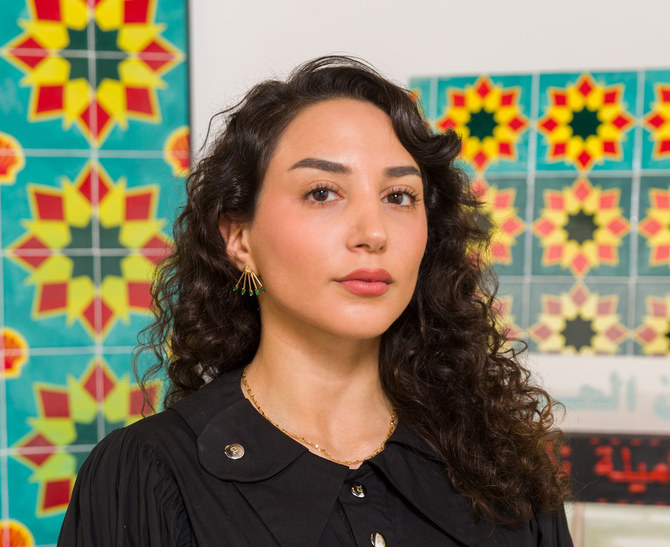
Los Angeles-based artist Saj Issa was raised between two different worlds. As the child of Palestinian parents who fled the First Intifada in the Eighties, she grew up in St. Louis, Missouri, and spent her summers in Palestine. “Each setting brought out a different part me,” she tells Arab News.
“At first, it took a minute for me to come to terms with that. I thought I wasn’t being authentic: The person that I was portraying myself as at school around my friends was different than the person I was portraying at home. But I realize that those are all parts of me. I don’t really see it as an issue so much now as I did when I was younger.”
Issa is an emerging visual artist, who obtained a Master’s in Fine Arts from the University of California and has had her work displayed in LA’s museums and art fairs. Her drive to create art began in childhood, marked by a tactile tendency to paint and make crafts.
“I grew up watching (creator of the US TV show “The Joy of Painting”) Bob Ross — America’s savior — and I was mimicking that action of holding a painting palette,” Issa recalls.
Her ceramic tile pieces juxtapose design elements that are omnipresent in both Eastern and Western cultures. She merges major Western company logos — such as Nike, Coca Cola, and Shell — with Middle Eastern geometrical and vegetal patterns.
“I’m interested in the consequences of globalization,” says Issa. “My choice of which brands make an appearance are based on which ones made a critical impact in the East. I utilize traditional tile work combined with corporate logos as a way to draw connections between the way that colonization seeps into the indigenous ways of life. Repetition is also a means to communicate habits of consumption, mass production and advertising.”
That geometrical ornamentation continues throughout her other series, such as “Convenience Store,” which was partly inspired by her immigrant father’s former job in a corner store. The series’ portraits of workers evoke a feeling of nostalgia and loss of identity in a quick-transaction environment; standing behind the counter, surrounded by daily items, the workers’ faces — or entire bodies — are obscured by receipts.
“I just want to build my own visual language through these mediums,” Issa says.
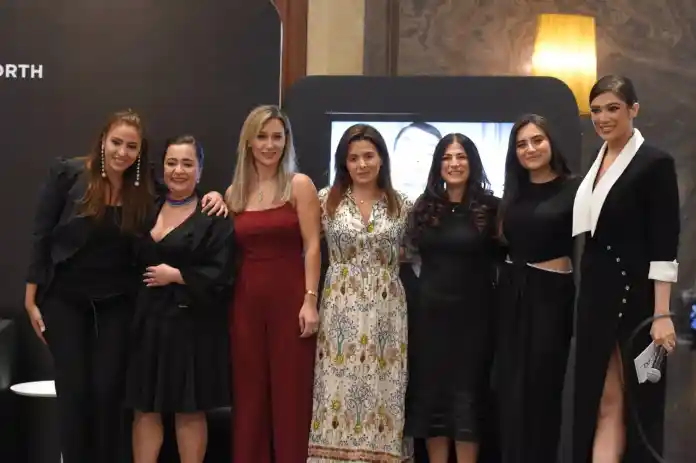
Since 1973, L’Oréal Paris supports each and every woman on her journey to success and self-worth. Through the “Women Of Worth” program, L’Oréal Paris honored 10 leading Lebanese women, who have overcome challenges and achieved greatness in their respective fields, in Lebanon and in the whole world. The awards were delivered during a gala dinner ceremony titled “Walk your Worth”, held on March 28, 2023 at the Middle East Airlines (MEA) Training Center in Beirut.
During the event, Mrs. Emilie Wahab Harb, Managing Director of L’Oréal Liban, said: “As a brand that has always taken on the cause of women’s worth, L’Oréal Paris is proud to recognize and celebrate the outstanding achievements of 10 exceptional Lebanese women who have overcome challenges and achieved greatness in their fields. Their accomplishments inspire future generations and contribute to the development of the Lebanese society, thanks to their passion, dedication, and commitment to excellence.” Moreover, she asserted that “L’Oréal Paris firmly believes that all women are worth it, whereas it’s evident to support their journeys and recognize their successes”, asking all women and those present at the ceremony, to “recognize the power of beauty as a catalyst of self-worth”. She further added: “We are entirely convinced that women’s causes should be celebrated and highlighted. That is the reason why we founded “Women Of Worth” which gathers us tonight, as we follow a journey we started 50 years ago, and which we will firmly continue because women are worth it.”
The honored Lebanese women were chosen by L’Oréal Paris not only for their accomplishments, but also for the values they embody, namely self-confidence, perseverance, resilience:
–Mrs. Nayla Tueni – CEO of An Nahar Newscorp and Editor in Chief of Annahar newspaper. Awarded under the Media category, Mrs. Tueni is a prominent Lebanese journalist.
–Dr. Hiba Al Kawas – President of the Lebanese National Higher Conservatory of Music. Awarded under the arts category. Dr. Kawas is a Lebanese composer, opera singer, scholar, and pioneer of Arab Opera.
–Mrs. Ghida Anani – Founder & Director of ABAAD – Resource Centre for Gender Equality. Awarded under the Social Responsibility category, Ms. Anani led a number of public opinion campaigns, notably the #Undress522 which resulted in the abortion of the article 522 of the Lebanese penal code.
–Captain Rola Hoteit – Airline Pilot at MEA. Awarded under the bravery category, Mrs. Hoteit is an Airbus A320 and A330 Captain, and the first Lebanese female airline captain.
–Mrs. Mireille Hayek – Founder & Owner of Em Sherif: Awarded under the Culinary Category, Mrs. Hayek is well known among the Lebanese and Arab society for her passion for cooking, her dedication and leadership in her restaurant that revives the Lebanese tradition, and which has been a success in Lebanon and abroad such as in London and Monaco.
–Mrs. Yola Zard Noujaim – Architect, Founder of Jabalna Festival & Owner of Al Fundok Hotel. Awarded under the sustainability category, she restored the old school of Maasser el chouf in an understated rural style to become Al Fundok boutique Hotel. This eco hotel is a non-profit community project, which encourages local tourism, creates a sustainable income for the community and promotes environmental, cultural, and culinary estate preservations.
–Mrs. Fadia ElMendelek – Hair Consultant. Awarded under the beauty category, Mrs. ElMendelek is a hair stylist whose talent and creativity earned her many European awards. With an online service and her own line “K by Fadia El Mendelek” of premium all-natural hair care products and extensions, she became the stylist to many celebrities and Arab Royalties.
–Mrs. Danielle Hatem – Founder & CEO of D Does Business. Awarded under the Digital Business category, Mrs. Hatem is an influential blogger who highlights strategic economical facts and figures, with the aim to create awareness about latest business headlines, while influencing and motivating the youth into entrepreneurship and business growth.
–Miss Rana Hayek, Electro-Mechanical Engineer & Car Mechanic. Awarded under the outstanding category, she’s Lebanon’s first female car mechanic. She is a diagnosis engineer at Sigma, the exclusive agent for Seat, Mitsubishi, and Ducati.
–Miss Aleen Sabbagh – Founder & Owner of The Concept. Awarded under the fashion category. What started as a personal devotion to fashion turned into a full-fledged clothing brand. Aleen Sabbagh, the young Lebanese face behind it all, goes from one factory to the other looking to constantly design drop trendy collections that always manage to sell out quickly.
The event was presented and moderated by Ms. Nadine W. Njeim, who discussed with each awardee her journey to success. It was attended by an audience of more than 150 invitees including public figures, the awardees’ families, journalists and representatives of various Lebanese media outlets, bloggers and social media influencers, as well as L’Oréal’s team and partners of L’Oréal Paris in Lebanon.
A literary critic, editor and leading authority on Arabic to English translation lists five books to keep on your radar.
For the shorter days of spring, here are some new Arab books in translation coming in the early months of 2023 that run short, fast, and muscular.
These five are full of thrills, insight, and dark humour.
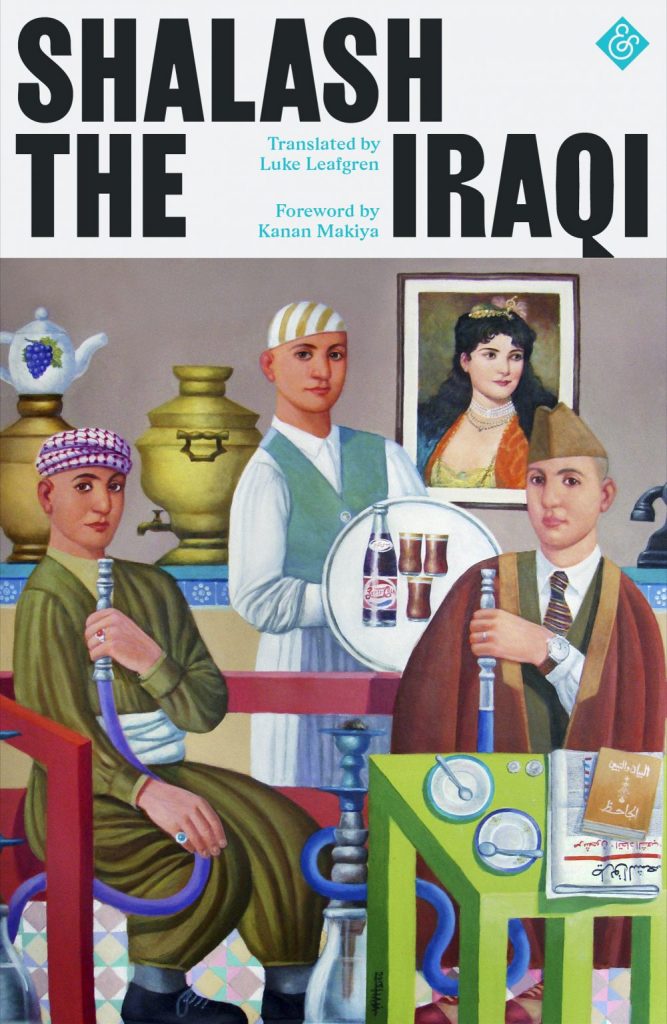
Shalash the Iraqi
By Shalash, translated by Luke Leafgren
The popular Iraqi blogger known as “Shalash” wrote his posts between 2005 and 2006, during the post-war insurgency in Iraq. Shalash took advantage of anonymity and wide reach to satirize political corruption, economic injustice, and more in an over-the-top comic tone.
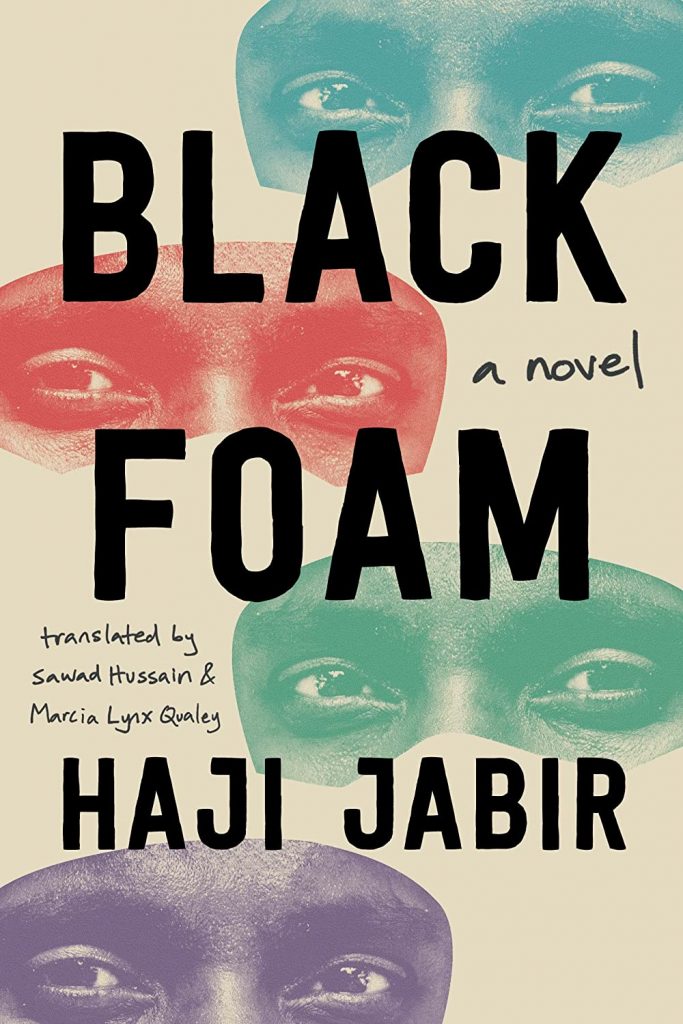
By Haji Jaber, translated by Sawad Hussain and M Lynx Qualey
The hero of Haji Jaber’s Black Foam is a hustler and identity-shifter extraordinaire in desperate search not of cash, but of a community that will accept him. The young man—alternately Adal, Dawoud, David, and Dawit— starts in Eritrea, then in a refugee camp over the border in Ethiopia, next in a minority Jewish community in Ethiopia, and finally in Israel and Palestine. In this fast-paced novel, which alternates between comedy and tragedy, the narrator is willing to do almost anything to find a place he can belong.
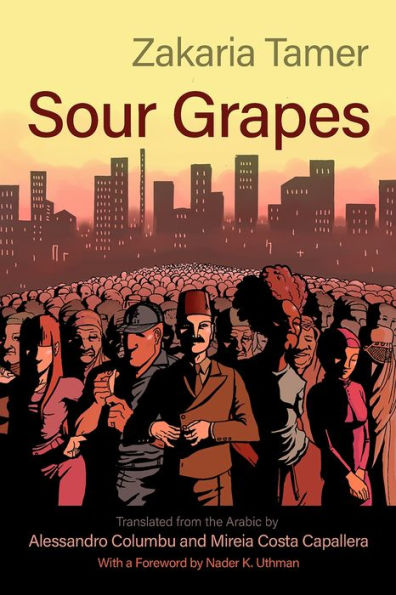
By Zakaria Tamer, translated by Alessandro Columbu and Mireia Costa Capallera
These fifty-nine stories—by turns satirical and magical—are set in a fictional Syrian neighborhood called al-Qaweyq. Penned by one of the greatest living short-story writers, the stories in Sour Grapes follow a loosely connected cast of characters living at society’s margins and challenging everything that might keep them down.
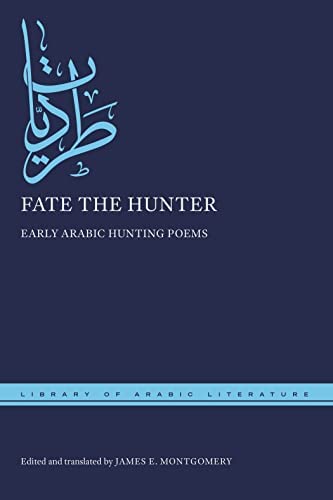
James Montgomery, the award-winning translator of Antarah ibn Shaddad’s battle poems War Songs, now takes on early Arabic hunting poems. This collection brings together both the English and Arabic of twenty-six muscular, animal-centered works. In these timeless poems of man and nature, you’ll find trained cheetahs chasing down desert oryx, goshawks soaring, and archers stalking their prey.
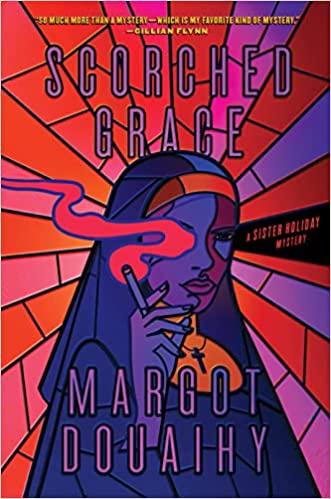
Not a translation, but a noteworthy entry. The mystery-novel debut of Lebanese-American Margot Douaihy, Scorched Grace tells the story of Sister Holiday, a hard-boiled, much-tattooed nun with a troubled past who joins a convent in New Orleans. After an arsonist targets—among other things—her new convent, Sister Holiday launches an investigation. By focusing on family and secrets, Douaihy offers a new take on the figure of the hard-boiled detective.
Malmö Arab Film Festival (MAFF) announced that the Egyptian star Hussein Fahmy will be tributed with a life achievement award, which he will receive during the opening ceremony of the 13th edition of the festival, which will be held from April 28 to May 4, 2023.
The ceremony will be held in the Royal Hall (Rådhus) under the auspices of the City of Malmö and in the presence of the mayor.
Fahmy will also give a masterclass during the festival, which will be held in Malmö’s city library.
Hussein Fahmy has a tremendous artistic career that extends for more than half a century, from the time he played his first role in the movie “Dalal Al-Masria” directed by Hassan El-Imam in 1970 until his most recent role in the series “Sero El Batie” directed by Khaled Youssef, shown during the current month of Ramadan.
Through his career, Fahmy acted in more than two hundred films, series, plays, and radio works, and worked with the top-notch directors of Egyptian cinema, such as Youssef Chahine, Kamal Al-Sheikh, Henry Barakat, Mohamed Khan, and others, in addition to holding various cultural positions, including the presidency of the Cairo International Film Festival for two terms, the first between 1998 and 2001, and the second started in 2022 and continues to this day.
The founder and director of the Malmö Festival, Muhammad Keblawi, commented on the tribute, saying: “Tributes are not a compulsory annual tradition at MAFF. It is not only related to the presence of a great star or director in the city, but the festival is offering tributes only when those who deserve it attend. This year we are pleased with the presence of a living cinematic legend: Hussein Fahmy, who created a place in the memory of every viewer of Arab cinema and TV”.
For his part, Hussein Fahmy expressed his happiness with the award, stressing his appreciation for the contributions of MAFF to the Arab cinema during the last few years, and his aspiration to meet the audience of the Malmö and talk to them about his career.
The masterclass will be held in the Malmö City Library at 3pm, Sunday, April 30th, and the discussion will be moderated by critic Ahmed Shawky, who in 2022 published a book entitled “Hussein Fahmy: The Biography of Egyptian Cinema in Half a Century.”
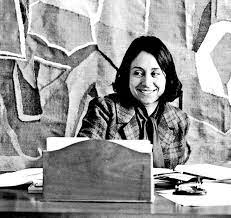
Tunisian artist Safia Farhat was not only a dynamic tapestry creator, but had an impressive resumé including ceramicist, educator, women’s rights activist, and publishing pioneer. She was a woman who accumulated a list of historic firsts in her lifetime.
She contributed to the growth of visual culture in independent Tunisia under the progressive leadership of President Habib Bourguiba. Farhat designed national stamps, had her fiber art displayed in the country’s banks, hotels, and schools, and worked with expert weavers and artisans in her studio.
Farhat was born in the harbor city of Rades in 1924 and raised in a well-to-do family. It was her maternal aunt, who was skilled in knitting and crochet, who cultivated Farhat’s love of art. She went on to study at the Tunis Institute of Fine Arts and was reportedly just the third Tunisian woman to enroll there.
She later became the institute’s first female director in 1966 — remaining in the role for more than a decade. She encouraged female students to take part in the institute’s programming. Farhat also founded Tunisia’s first magazine for women, “Faiza,” delving into feminism and decolonization, among other social issues.
Her colorful, thickly lined tapestries depict animals, plants, and men and women wearing traditional clothing. “When I saw her work, I was really fascinated by its sculptural elements, the color, the various techniques that were embedded in it — and by their stories,” Jessica Gerschultz, a professor of African studies at the University of Kansas, told Arab News.
“She seems to really play on self-referentiality,” she continued. “Her works are referring to her other works, so there are many symbols — lots of triangles and zigzags — integrated into her weavings and other works that she did in ceramics and iron.”
Farhat, who died in 2004, is a name still recognized by some older people in her homeland, but she has been generally overlooked, ironically, by young art students in Tunisia. “At the institute, maybe students know her name, but they’re not very familiar with her,” noted Gerschultz. “Maybe they don’t know her at all.”
International interest in Farhat, however, was boosted last year as a result of her works being showcased at the Venice Biennale. “It’s wonderful to see her contributions now being viewed more widely,” said Gerschultz.
Dubai – Dubai is the also the most record-breaking city not just within the country but also across the Mena region.
The UAE is far ahead in achieving the Guinness World Records regionally as the country boasts 425 GWRs with 34 of them were achieved in 2020 alone.
Dubai is the also the most record-breaking city not just within the country but also across the Middle East and North Africa (Mena) region.
“The UAE is currently home to 425 Guinness World Records titles, making it the biggest record-breaking country in the Mena region… Dubai has the lion share of titles in the country with around 60 per cent of the overall number,” said Danny Hickson, senior events production manager at Guinness World Records Ltd in Dubai.
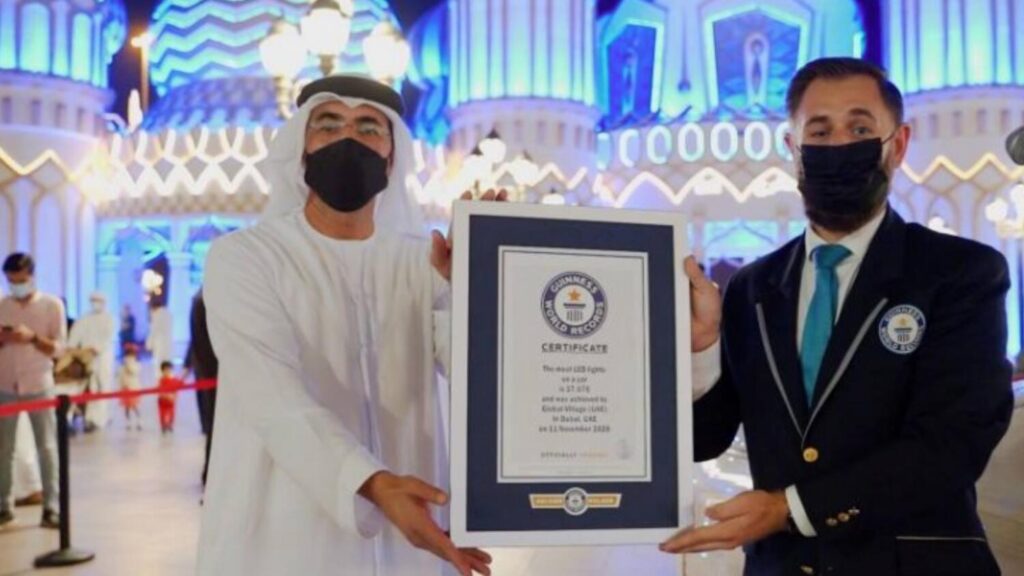
Global Village, a multicultural family entertainment destination, achieved two records in November alone. The first record was set by having the most LED lights ever on a car. The vehicle had 36,676 LED lights. The feat began two weeks ago as the park achieved the record for the most videos in a music medley video following the Rockin’1000 Season 25 opening concert.
Global Village aims to break 25 records this season as part of its Silver Jubilee anniversary celebrations.
Emirati shipbuilder Obaid Jumaa bin Majid Al Falasi also made it into the history by building the world’s largest dhow, a wooden Arabic boat, measuring 91.47-metre long and 20.41-metre wide. That is equal to the length and almost half the width of a standard American football field floating over the Indian Ocean.
Dubai’s Nakheel Mall, too, recently broke the record for the world’s largest fountain, measuring a whole 7,327 m2. The record breaking fountain named The Palm Fountain was designed a with tricks including colour and brightness controls.
The emirate is also home to the world’s tallest hotel – 75-storey Gevora Hotel, measuring 356.33 metres tall from the group level to the top.
Danny Hickson said Saudi Arabia comes second with 96 Guinness World Records titles, while Egypt is not far in the third place with 93 titles.
On September 23, Saudi Arabia achieved the Guinness World Record for the largest fireworks display in multiple cities as the display consisted of 962,168 fireworks.
“What’s brilliant about breaking world records with brands in the UAE is that there is almost a chance to do something different with the heritage. Brands and individuals think it is impossible to be break world records, but we believe everyone is amazing in his own way, and we are here to make their achievement Officially Amazing!,” said Hickson.
“We have seen the tallest house of cards build in 12 hours, sat on top of a washing machine, to demonstrate its reduced vibrations and noise levels; and an iconic car brand celebrated its 80th anniversary by breaking the record for the largest loop the loop in a car! Would we find amazing talents among Khaleej Times readers?,” concluded Hickson.
Lebanese designer represents Moroccan culture and feminine beauty at Maroc Fashion Week.
Maroc Fashion Week ran from March 8 to 11 in the city of Marrakech. The purpose of the event was to represent the Moroccan caftan and to further celebrate International Women’s Day.
Morocco World News spoke with Lebanese fashion consultant and designer Bernard Jabbour about his newly presented collection, Poisonous Beauty.
The esteemed designer has 28 years of experience in the fashion industry, some of Jabbour’s extensive experience includes his work as a consultant for Lebanese fashion designer Elie Saab and Project Runway Middle East. The designer is mostly known for his work at his Lebanon-based fashion studio, in which he specializes in haute couture – high-end, custom, and handmade fashion – including evening and wedding gowns.
Jabbour has visited Morocco twice before, but the most recent visit marks more of an official trip at one of the “biggest events,” hosted at what the designer described as a “beautiful country.” Poisonous Beauty is also the first-ever collection that he has debuted at Maroc Fashion Week.
“They say I’m classic yet with a twist. I try every time to put something new in my designs, but you can always see the touch of Bernard Jabbour. My DNA is always present in my designs,” Jabbour explained.
Enticing and dangerous inspiration
His primary inspiration for all of his collections is the presence of the woman; each collection simply approaches the woman figure a little differently to create a unique design for every season. Poisonous Beauty is one of his more ambitious and “tricky” projects.
The thought process behind the idea relays his thinking that women are a “beautiful poison that … we want to have … Her soul, her look and everything is poisoning us, but we also ask for it.” The designer sees a woman’s figure and aura as something both enticing and dangerous, a familiarity that when studied and analyzed through an artistic lens, appears unique and foreign.
Furthermore, Jabbour explains that he has experimented with “unconventional material” for this very collection as well, with new volumes and calmer color palettes.
Jabbour’s most prized dress in the Poisonous Beauty collection is one that is inspired by Moroccan architecture. It was never intended to be a part of this collection, but Jabbour says that “because I’m here in Morocco Fashion Week, I said no. I have to do one dress dedicated to Morocco.”
In regards to Maroc Fashion Week, Jabbour applauds the beauty and representation of the caftan: “I have … few Moroccan designer friends … [but] I like how they make the caftan. The handwork they put in the caftan, it’s like really magic.”
The designer felt amazed by the multiculturalism that he and other designers were exposed to at Maroc Fashion Week. Jabbour mentioned that the event unites people from across the globe he said, including countries such as “Kazakhstan, Italy, Lebanon, and Palestine.”
Jabbour is one of many international designers who helped in paying tribute to women’s presence and cultural recognition in the ever-developing world of the international fashion industry.
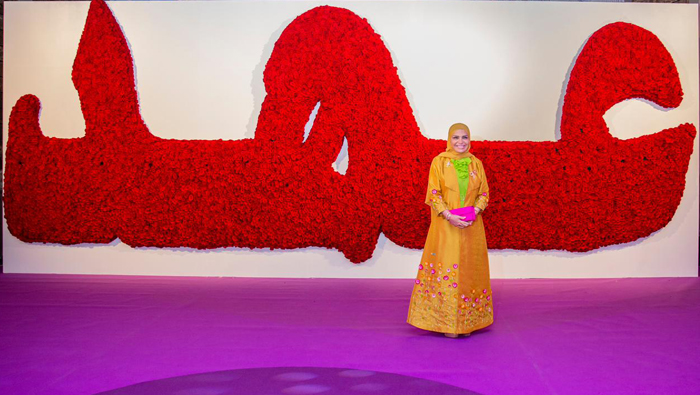
Paying tribute to Her Highness the Honourable Lady Assayida Ahd Abdullah Hamed Al Busaidi, Spouse of the Sultan of Oman, the Infrastructure, Technology, Industrial and Consumer Solutions cluster of Mohsin Haider Darwish LLC (MHD-ITICS), sponsored an event to set a new Guinness World Record for ‘A Word Written with the Largest Number of Flowers’.
The event was hosted by Lujaina Mohsin Darwish, Chairperson, MHD-ITICS. The mammoth task of assembling 12,000 roses, which spelt out the First Lady’s name, ‘Ahad’, began with fabrication work on 25 October and was successfully completed on 26 October.
It was then displayed at a grand event organised near the Snow Zone area, located on level two of the Mall of Oman. Official adjudicators from Guinness World Records were present to supervise, analyse and follow every step of the process. Adhering to all the stringent criteria, the masterpiece, once finished, stood 8.2 metres wide and 3 metres tall and proved to be a true work of art.
Ideated and conceptualised by Ms Naseem Abdullah Al Fadhli, MD, Integrated Benefits Projects and supported by Ms Haifa Balfaqih, Investment Programme Director – Nazdaher and GM, Strategic Planning and Technology, be’ah, the historic event witnessed the presence of some of the highly-esteemed guests including her excellencies, leading businesswomen and attendees from all over the country.
Receiving an overwhelming response from the audience, the new Guinness World Record further cements Oman’s position on the map as a country filled with unique initiatives and also as a nation raising an empowered generation of women.
Lujaina Mohsin Darwish said, “With the key message behind this initiative being especially close to our hearts, we are indeed delighted to set this new world record. It not only celebrates Omani women but is a tribute to Her Highness the Honourable Lady Assayida Ahad Abdullah Hamed Al Busaidi.
Her unwavering faith in the capabilities of the Omani women of today and continuous appreciation of their achievements have served as a constant motivation for all. It has ignited a zeal in every woman to break the glass ceiling and push the frontiers of women leadership.”
“Drawing inspiration from our leaders, MHD-ITICS will continue to act as a catalyst of change, encouraging women’s contribution to the Omani economy as well as participating and leading in their respective areas of influence and expertise. The strong Omani women have displayed courage, creativity, vision and accomplishment and will continue to play an instrumental role in driving transformation,” she added.
A keynote speech was delivered by Lujaina Mohsin Darwish, which was then followed by the much-awaited showcasing of the largest flower word. Another key highlight of the event was the large LED display wall with snippets and pictures of the First Lady of Oman. All attendees were gifted a branded scarf and were entertained with live music, a food and beverage counter and photo opportunities.
MHD-ITICS, under the guidance of Honourable Lujaina Mohsin Darwish, has achieved commendable growth in recent years. Moreover, the Company has been at the forefront of setting new benchmarks in the industry and supporting its women employees to assume various critical roles in the organisation.
In our continuing series of inspiring life stories from across continents, we hear why the Palestinian filmmaker redirected his creative efforts.
The first time that Omar Al Qattan filmed in the Palestinian territories, he was a 22-year-old on set with his mentor, the director Michel Khleifi.
Happy weeks were spent scouting locations in the West Bank region in search of the perfect settings for the scenes depicted in the script in only his second visit to the birthplace of his parents. He soaked up the breathtaking scenery and filmed in a restored Ottoman fortress village surrounded by olive groves.
The result was 1987’s Wedding in Galilee, the first studio feature film shot in Palestine, depicting life under curfew following the 1948 Arab-Israeli War. It would go on to win a clutch of awards, including the prestigious International Critics Prize at Cannes, and propel Khleifi on the path to directorial eminence.
“It was wonderful,” Al Qattan recalls. “When you work in film you get to do a lot of scouting so you really know a place, especially a small place like Palestine.”
In the years since, Al Qattan has worked in and for Palestine many times, but he stresses that this has never been simply because of his own heritage. “It is a matter of a right to be able to identify with whatever you like,” he tells The National. “But the issues for me are political. I think really you need to transcend these affiliations, these loyalties.
“I’m not really sure that cultural identity is actually that powerful a bond, or as powerful a bond as the sense of injustice that inhabits us to be the sons or grandsons of refugees, regardless of how successful or comfortable they turned out to be in life.
“Through this sense of outrage, anyone can identify with you, anyone can support you on that basis, whereas if you come from a sort of clannish or sectarian perspective then it becomes like a sort of closed canal.”
Al Qattan’s reference to a comfortable life is an important one. His father Abdel Mohsin went on to become a successful businessman and his son is now chairman of the foundation set up in his name.
He is not one to be pigeonholed but, when asked, provides a label with a hint of embarrassment: “I guess ‘diaspora philanthropist’ is about right.”
The answer is rooted in the journey of his parents as refugees from Palestine – his father after the 1948 Arab-Israeli war and his mother, Leila, after her family was exiled during the British Mandate over her father’s refusal to salute the Union flag. They met and married in their country of refuge, Kuwait, while working as teachers. There, they had three children before moving to Lebanon for their education where their fourth child, Omar, was born.
Al Qattan points out that, in fact, he belongs to many diasporas – those of Palestine, Kuwait and Lebanon. “It might seem confusing to some that I have these multiple identities but it’s not an invention of mine; it’s the reality of my life,” he says. “I find that it’s incredibly enriching. I don’t think it’s an issue.
“It was a problem when I was younger, for sure. When I became an adolescent, it did seem sometimes like it would be so nice just to be an English boy without these complications. But now I think how impoverishing that would have been if I had sort of ignored the rest and how isolating as well.”
When the young Omar was sent to board at Millfield Preparatory School in Somerset at the outbreak of the civil war in Lebanon in 1975, he arrived in what felt like an alien culture. Unable to speak English, he ate “terrible food” and was awash with homesickness.
“I think it hardened me in a way,” Al Qattan, now 56, says over Zoom. “It made me maybe try to resist any temptations for sentimentality or nostalgia, especially after a couple of years when it was really clear that there was no going back.”
Then, though, he pined for the childhood he had left behind by the warm Mediterranean Sea and the school that more or less nestled inside a forest. It was a idyllic – until it wasn’t.
“It sort of started to dawn on me as an 11-year-old that this is not an adventure; it was very serious.”
The trauma of the rupture and the loneliness was compounded by the racism he encountered at school. Lacking the means to answer back with language, Al Qattan admits that he sometimes resorted to his fists until he developed some defence mechanisms.
He credits an “eccentric, extraordinary, generous kind of spirit” exhibited by teaching staff for helping him find his feet.
Despite failing all his secondary entrance exams except French, the teenage Omar went on to study at Westminster School, one of the country’s most prestigious. “When I asked my eventual housemaster why they’d taken me, he said: ‘Well, we’ve never had an Arab boy before, and we thought it would be interesting.’ Which wasn’t technically true – there had been a couple of others.
“So I was in that atmosphere of, on the one hand, a lot of stereotyping and unpleasant, racist comments and, on the other hand, we were still in an era in certain sectors of British society where there was this international outlook and curiosity.”
Al Qattan found solace in books. Reading, he says, was the only way he could catch up on English. When he discovered how much he loved books, he went on to read English literature at Oxford University.
Having dabbled in theatre at school and university, Al Qattan then decided to pursue his interest across the Channel, studying film and directing at the Institut national superieur des arts du spectacle in Brussels, where he created short documentaries and dramas under the tutelage of Khleifi.
After Wedding in Galilee, Al Qattan quickly flourished in his own right. His first film, Dreams & Silence, an early exploration of political Islam, won the 1991 Joris Ivens Award and was broadcast in Europe and Australia. In 1994, under the Sindibad Films production company he co-founded, he produced Khleifi’s Tale of the Three Jewels, the first feature film shot entirely in the occupied Gaza Strip. It premiered at Cannes and picked up a host of international awards.
Despite his illustrious film career, Al Qattan found himself slowly being drawn into the philanthropic arm of the “family business”. His father had made his fortune through a contracting business in Kuwait and wanted to channel his riches towards educational outreach programmes focused on the arts in Palestine.
Yasser Arafat once told Abdel Mohsin that he wished him to become the Palestinian Rothschild. “For that to happen, we need a Palestinian Ben-Gurion,” the retort came.
The famous quip by Al Qattan’s father was often repeated in public, much to the irritation of the now-late leader of the Palestine Liberation Organisation, and symbolises the family’s at times delicate footing within the political arena.
In 1993, the A.M. Qattan Foundation was born and the youngest of the Al Qattan siblings redirected his creative efforts towards empowering others. Almost three decades on, the foundation employs more than 100 people across the West Bank and Gaza.
A $24 million dark grey cube on a hillside in Ramallah was the patriarch’s dying wish. Opening a year after his death in 2017, the cultural beacon that is the A.M. Qattan Foundation Cultural Centre is the first of its kind in the Occupied Territories, housing a gallery, library, theatre, artists’ residencies and public plaza.
Al Qattan also opened The Mosaic Rooms as a cultural space in 2008 in London, not far from where he now lives.
He has intermittently chaired the Palestinian Museum in Birzeit since 2012 and the Shubbak Festival of Contemporary Arab Culture in 2013 and 2015. He produced Khleifi’s last film Zindeeq, which received the 2009 Muhr Award for Best Arab Feature at the Dubai Film Festival.
As well as following in his father’s footsteps in philanthropy, he also rejuvenated the waning Al-Hani Construction and Trading Company in Kuwait as a means of financing the A.M. Qattan Foundation. There, he has undertaken large-scale public projects such as the Sheikh Jaber Al-Ahmad Cultural Centre and Kuwait National Library.
Prior to the pandemic, Al Qattan returned to Palestine often, saddened by the dramatic decline he has witnessed over the decades. “The landscape has been completely brutalised,” he laments. “It’s not just the apartheid rule but the awful settlement building, which is going on everywhere.”
But the disenchantment and cynicism among the population was the most painful to observe. “It’s based on a sort of hopelessness and very dark outlook,” he says. “I find that harder to accept even than the chaos of the uprising.”
He hopes that the AM Qattan Foundation’s work can help remedy this, particularly by encouraging the involvement of youth.
Al Qattan has been actively steering the Foundation in a different direction to make it less of a family enterprise and more of an independent, public institution. But the input of the younger generation, whether his own offspring or those of others, is crucial to these plans. He says that it is far easier to shape the future with the young, who are still open to new ideas, than it is with older generations.
“If we want to build something for the long term, we have to focus on young people, especially children,” Al Qattan says.
Even at arm’s length, the guiding hand of the prodigious creator is making a difference.
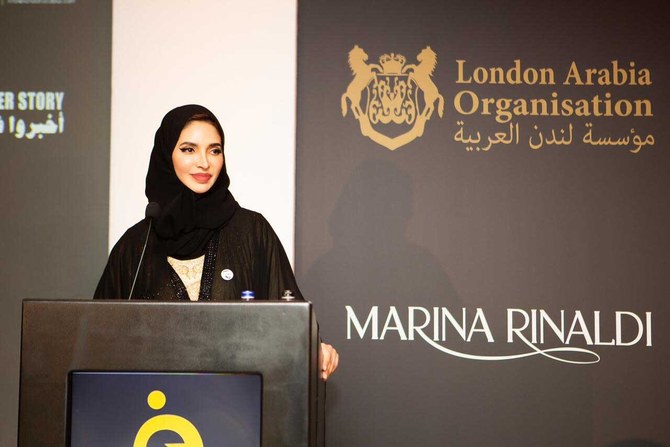
The UAE’s Sheikha Fatima bint Hazza was honored on Tuesday with the Arab Woman Award at a ceremony in London in recognition of her contributions to female empowerment in the region and her philanthropic efforts in various countries, Vogue Arabia reported.
Sheikha Fatima has been a strong supporter of cultural initiatives, particularly those involving the arts and sports.
She has endorsed several programs aimed at boosting the cultural scene in the UAE and the region through her role as chairwoman of the board of directors of the Fatima bint Mubarak Ladies Sports Academy and the Fatima bint Hazza Cultural Foundation.
Her other accomplishments include increasing access to education in Bangladesh, building schools in Kenya, and forming the Fatima bint Hazza Fund for Emirati women to pursue higher education abroad, Vogue Arabia reported.
She is “committed to enhancing the role of women in various ways, as she is a supporter of sports and arts, and we are honored to bestow her with the Achievement Award in Cultural Development,” the Arab London Foundation said.
The philanthropist has also helped broaden young people’s interest in fields such as art, literature, sustainability and community interaction, Vogue Arabia reported.
The Fatima bint Hazza Cultural Foundation recently launched a series of short stories for young people focusing on culture, local identity and sustainability
Upon accepting her award, Sheikha Fatima praised Emirati leaders and their efforts to encourage women to pursue their dreams.
“Effective participation and making progress and positive change are the core values that we have been raised on,” she said.
“I am proud to represent my country, the UAE, where women have not had to struggle to obtain their rights but have always been at the forefront since the establishment of the state.”
source/content: arabnews.com (headline edited)
______________
Sheikha Fatima bint Hazza was honored at the eighth edition of the Arab Women Awards in London. (WAM)