Arabs & Arabian Records Aggregator. Chronicler. Milestones of the 25 Countries of the Arabic Speaking World (official / co-official). AGCC. MENA. Global. Ist's to Top 10's. Records. Read & Enjoy./ www.arabianrecords.org
The festival includes 3 million items manufactured by more than 1,500 international brands.
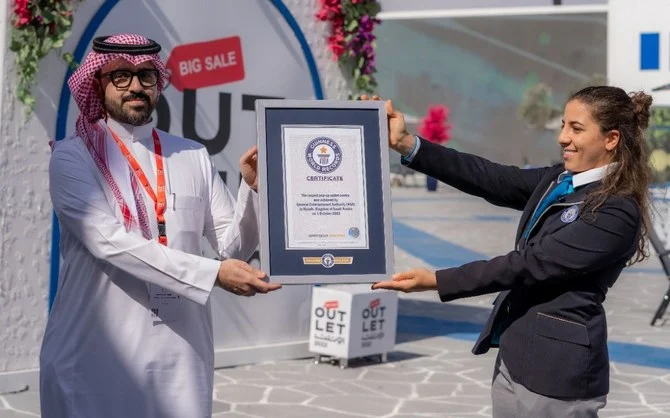
The Outlet 2022 shopping festival, being organized by the General Entertainment Authority, has won Guinness World Records recognition as the largest pop-outlet center.
Covering an area of 146,623 square meters, festival activities started on Saturday in Riyadh. It includes 3 million items, manufactured by more than 1,500 international brands, and discounts of up to 70 percent on fashion, accessories, and cosmetic products designed by international experts.
Farah Ahmed, who lives in Al-Rehab neighborhood where the outlet is located, described it as “impressive,” while Mohammed Al-Bugami, a Saudi private-sector employee, praised the “top organization” he witnessed on the first day.
“I have no words to describe how great and well-organized this festival is. I would like to thank the organizers for their efforts in making this shopping festival a reality,” he said.
Entry to the festival is free and outlet sections include home accessories, leather-made items, bridal gowns, suitcases, and electronics.
The fashion section includes products by names such as Zara, Massimo Dutti, GAP, Ralph Lauren, Diesel, Lacoste, Roberto Cavalli, Versace, and Mango. Additionally, visitors can choose between various sports shoe brands, including Adidas, Puma, and Nike.
GEA chairman, Turki Al-Asheikh, thanked Kuwaiti actresses Hayat Al-Fahad and Suad Abdullah, and Saudi actor Bashir Al-Ghunaim for taking part in the official festival promo that gained millions of views.
The GEA aims to encourage private-sector organizations to develop entertainment activities in the Kingdom. It was established in line with Saudi Vision 2030 to organize and develop the entertainment sector in the country and provide options and entertainment opportunities for all segments of society.
source/content: arabnews.com (headline edited)
__________
The “Outlet 2022” shopping festival, being organized by the General Entertainment Authority (GEA), has won Guinness World Records recognition. (Supplied)
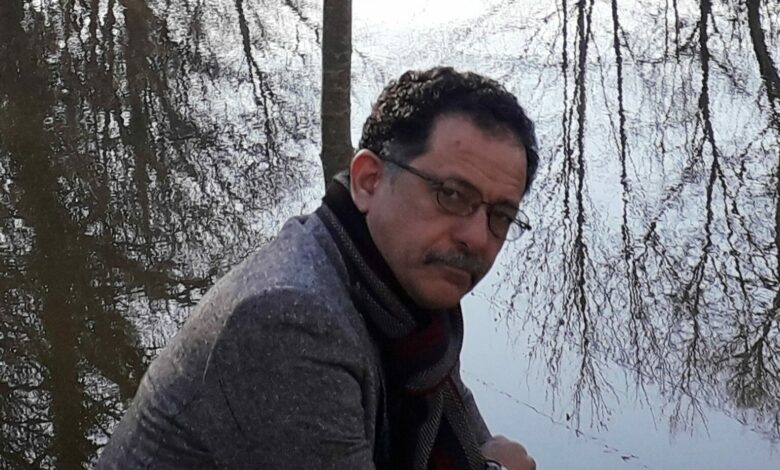
France has made the Yemeni writer Ali Al-Muqri a knight of the French Order of Arts and Letters.
Al-Muqri recently received a letter from Roselyne Bachelot-Narquin, the French minister of culture, telling him that he was among the honorees chosen as members of the order this year.
Al-Muqri has been living in France at the invitation of the Arab World Institute since 2015, after fleeing the war in his home country. He had lived in Sana’a, the capital, which is now controlled by the Houthi rebel movement. People close to Al-Muqri have warned him he risked being pursued by the Houthis if he returned to Yemen.
The Order of Arts and Letters, one of four “ministerial orders” in France, is awarded to people who have distinguished themselves through artistic or literary creation or by contributing to the influence of arts and letters in France and the world. It has three ranks: commander, officer, and knight (chevalier).
Al-Muqri said in a telephone interview with Al-Fanar Media that he had not been aware of his candidacy for this order and was surprised by the letter.
He believes that his being named for the prestigious French order is “a tribute to Arabic literature, and a reward for writing a literary work that has its own narrative and cultural characteristics.”
He said Arabic literature was marginalized because it was rarely translated and he hoped his award would shed more light on it.
Novels and Prize Nominations
Ali Al-Muqri began his literary career as a cultural editor for several Yemeni publications before beginning to write prose, poetry and novels himself. His works have been translated into French, English, Italian, Kurdish and Persian.
“Black Taste, Black Odour” and “The Handsome Jew” were longlisted for the International Prize for Arabic Fiction in 2009 and 2011, and “Hurma”, in its French translation, won an honourable mention from the Arab World Institute Prize for Fiction and the French prize for Arabic literature. “Adani Incense” was shortlisted for the 2015 Sheikh Zayed Book Award.
Between Home and Exile
Despite his years in self-imposed exile in Paris and his freedom to write, “far from the guilt feelings that affected his literary works,” Al-Muqri said he still “experiences the hardships of alienation far from his homeland.”
“I live in double exile, and I miss every detail of my life in Yemen,” he said. “Where is the writing corner in my house in Sana’a, where I used to write my literary works, my books piled around me? I miss my habits and my rituals that were the primary motivator and the inspiration for my writing.”
Al-Muqri said that particular places in Yemen and the way of eating and drinking there gave a feeling of continuity that he misses.
The issues of Yemeni life inspired more than one of his novels, which he attributes to his constant endeavor to “explore the human self and evoke the causes of its anxiety through exposure to the problems facing people, whether they are in freedom of expression or because of discrimination against a person because of his colour, his sexual identity or because he was marginalized by a dictatorial authority.”
Al-Muqri said that he could write more in Yemen than he can in France. The war took him forcefully from his country and made him feel alienated and unable to get hold of the things that inspired and motivated him to write.
But that feeling has not prevented his ability to integrate with French society, he said. Thanks to his personal experience and knowledge of European culture, he has been able to adapt and engage in his new life in the host country.
Yemeni Literature in Wartime
Al-Muqri said most Yemeni writers and authors had lost their jobs because of the war and many of them had resorted to other types of work so they could continue to live.
Most were no longer able to obtain the basic requirements of life, such as electricity, clean water, or a regular salary. Al-Muqri said the absence of these things “makes any writer or author unable to write and think.”
The war has greatly hindered literary life in his country, Al-Muqri said, but it remains active despite the restrictions and censorship imposed by the authorities.
Al-Muqri said he was working on a new novel. He hopes to continue writing “in freedom and safety” and to return to Yemen after the situation stabilizes.
Ali Al-Muqri has lived in France since 2015. He hopes the honour he has won there will draw more attention to Arabic literature in translation. (Photo courtesy of Ali Al-Maqri)
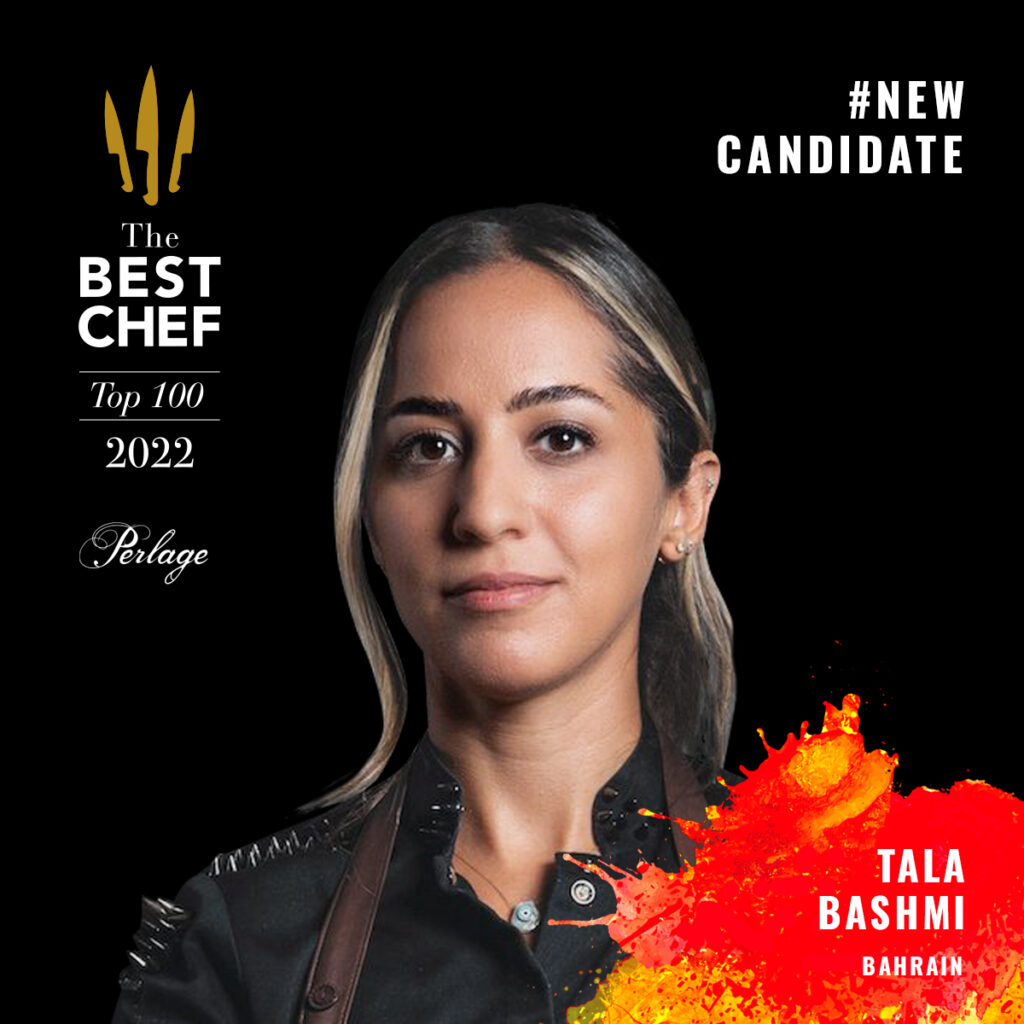
Massimo Bottura, Niko Romito, Yannick Alleno, Heston Blumenthal, Clare Smyth and Anne-Sophie Pic are the big culinary names she’s ranked alongside on the top 100 list for this year’s The Best Chef Awards.
“The people on this list are actual living legends in the culinary field, so for me to be on it at all is amazing,” she tells The National.
“What I’m currently doing is trying to put Middle Eastern cuisine on a global scale, so for me to be the only Arab on this list means I’m taking one step forward to doing that and to give our cuisine its moment in the spotlight and its culinary renaissance.”
Not only is Bashmi the only Arab, she’s also one of only 18 women who have made it on to this list of 100 culinary talents across the globe.
She ranked 93rd, but says the number didn’t “really matter” to her. “Going into this, I had no idea if I was going to make this list,” she says. “I’m from a small island that doesn’t get much exposure, so for me to get this is amazing.”
At the event, which was held at the Crystal Gallery of the Palacio de Cibeles, in Spain’s capital, she met some of her all-time heroes. This includes Andoni Luis Aduriz, a Spanish chef who ranked number five and picked up the award for The Best Science Chef Award. Bashmi describes him as “humble, down to earth and very focused on what matters in this industry rather than distractions around, which I really admire”.
Spain’s Dabiz Munoz picked up the top accolade of The Best Chef for a second consecutive year for his work at DiverXO restaurant in Madrid. Noma’s Rene Redzepi came second, while Spain’s Joan Roca i Fontane rounded out the top three.
Bashmi, who heads The Gulf Hotel Bahrain’s well-regarded restaurant Fusions by Tala, is no stranger to culinary accolades, having picked up her award for Best Female Chef in the region in Abu Dhabi this February. Her restaurant also ranked 39th on the first list of Mena’s 50 Best Restaurants.
She inherited an interest in cuisine and cultural identity from her father through his in-depth knowledge of the ingredients used. She then used this interest to launch Baked by T, before joining the Culinary Arts Academy in Lucerne, Switzerland.
Staying in the central European country, she had roles at the Grand Hotel Les Trois Rois in Basel and the Michelin-starred restaurant Prisma in Vitznau, where she learnt more about restaurant operations, as well as working in fast-paced kitchen environments.
Since returning to the Mena region, Bashmi has competed on MBC’s Top Chef Middle East television show in 2020, where she reached the finals.
In 2017, she took over the helm at Fusions by Tala, where she makes modern interpretations of Bahraini dishes, including the standout bamia, a traditional okra and meat stew, for which she uses Wagyu beef cheek, crispy okra glass and tomato broth rice.
“I try to appeal to every audience from every country, in a sense of bringing them back to a state of nostalgia,” she has previously said of her approach. Bashmi might do this through any of our senses, such as when she adds a campfire aroma to the Saudi-Bahraini dessert aseeda to evoke memories of camping, whether in the desert or the forest.
“I feel like this is still the beginning for me,” she says of her latest achievement. “People haven’t seen what came before, what led to today, so every time something is achieved, it’s a new beginning and opens new doors to opportunities I hadn’t even thought of.
Mohammad Abdullah Al Gergawi, Minister of Cabinet Affairs, Chairman of the Committee leading Great Arab Minds, and Secretary-General of the Mohammed Bin Rashid Al Maktoum Global Initiatives (MBRGI), highlighted the details of “The Great Arab Minds” initiative.
Launched by His Highness Sheikh Mohammed bin Rashid Al Maktoum, Vice President, Prime Minister and Ruler of Dubai, in January 2022, the initiative is the Arab world’s largest movement designed to search for exceptional talents among Arab scientists, thinkers, and innovators across key fields.
The Great Arab Minds initiative, under the MBRGI, aims to identify, support and acknowledge leading thinkers in the region, amplify their impact and inspire future generations. One of its main purposes is to reduce the emigration of Arab scientists, specialists, intellectuals, doctors, and engineers.
He affirmed that “The Great Arab Minds” initiative reflect His Highness’ vision in reigniting the Arab World’s Civilisation Drive, support great Arab minds and acknowledge their work and achievements, in service of humanity.
Mohammad Al Gergawi pointed out the importance of the Arab Reading Challenge initiative launched by His Highness Sheikh Mohammed bin Rashid Al Maktoum, among many other development projects, serving more than 91 million beneficiaries.
A study conducted by KPMG, showed that ignorance costs the Arab world more than US$2 trillion. The Great Arab Minds initiative aims to change this reality and contribute to shaping a brighter future for Arab generations.
During an event organised in the Museum of the Future to announce the details of the initiative, Mohammad Al Gergawi witnessed the signing of four partnerships between “The Great Arab Minds” initiative and KPMG, LinkedIn, Meta, and Majarra.
The initiative’s mission is to search for exceptional talents among Arab scientists, thinkers, and innovators across key fields, aiming to identify, support and acknowledge leading thinkers in the region, amplify their impact and inspire future generations.
Over a 5-year period, “The Great Arab Minds” will reward scientists, thought leaders, scholars, and innovators across 6 categories: Natural Sciences (Physics and Chemistry), Medicine, Literature and Arts, Economics, Technology and Engineering, and Architecture & Design.
The initiative includes the “Mohammed bin Rashid Medal for Great Arab Minds”, which will be awarded to 6 winners of six categories each year.
The Great Arab Minds initiative aims to facilitate the recognition of Arab thought leaders, scholars, scientists, geniuses, and transforming their ideas to real-life breakthroughs and solutions. It also aims at empowering cluster of Arab scientists and thinkers and building a network of Arab thinkers, scientists, and exceptional talents in various fields to work as one team to drive the Arab world’s intellectual renaissance.
Winner of the Audience Award at Venice Film Festival’s Orizzonti Extra Section, ‘Nezouh’ follows a Syrian family on the verge of becoming refugees.
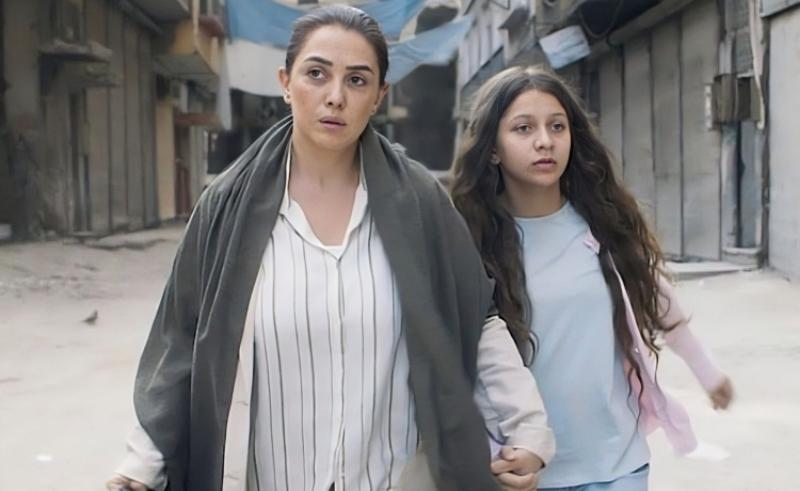
Syrian film ‘Nezouh’ starring Kinda Alloush and Samer Al Masri, and directed by Syrian filmmaker Soudade Kaadan, won the Audience Award at Venice Film Festival’s Orizzonti Extra Section, supported by Armani Beauty. This is Kaadan’s second win at the festival after ‘The Day I Lost My Shadow’ (2018), her first feature-length film and the winner of Best Debut Film.
The film stars the Cairo-based Syrian actress Alloush, known for her roles in Egyptian and Syrian dramas. She was first introduced to Egyptian audiences in 2009 with her role in ‘Welad El A’am’ and has since starred in multiple films and series including ‘El Maslaha’ (2012), and ‘El Asliyyin (2017). She’s also part of the cast of ‘The Swimmers’ (2022) which debuted at Toronto Film Festival.
‘Nezouh’ is set in war-torn Damascus and tells the story of a Syrian family at a crossroads choosing between fleeing or clinging on to their home. The father, played by Samer Al Masri, refuses to become a refugee while his fourteen-year-old daughter yearns for freedom. The film is inspired by the filmmaker’s personal journey away from Damascus and the effect of the conflict on Syrian women’s social reality.
The marking of Saudi Arabia’s 92nd National Day comes at a momentous time in the nation’s history because of its remarkable journey of transformation and development.
Citizens and residents alike will be celebrating over the course of the week to come, with events paying homage to the Kingdom’s heritage, art and culture.
Riyadh
Riyadh is set to celebrate Saudi National Day with a range of events and activities including music, theater and a specially designed Cirque du Soleil show.
In preparation, the capital city’s main roads have been bedecked with hundreds of green national flags.
The sky will light up with fireworks in front of Al-Thaghr Plaza on Sept. 23 from 9 p.m.
The Royal Saudi Air Force will have an acrobatics display with jets and civilian aircraft that can be viewed from Um Ajlan Park on Sept. 22 and 23 from 4 p.m. to 5:30 p.m.
The Royal Guard will conduct a parade at Riyadh Front to the tune of the national anthem played by a military band, ahead of a procession of classic cars on Sept. 23 from 9 p.m. to 10 p.m.
Admission is free to the fireworks display, airshow and Royal Guard parade.
In addition, Jump Saudi will host a two-day showjumping competition. Tickets are SR57.50 ($15.30) and can be obtained online through Riyadh Platinum or Enjoy Saudi via the General Entertainment Authority website. The event will take place on Sept. 22 and 23 from 4 p.m. to 1 a.m.
This year, the national circus is presenting a specially designed Cirque du Soleil show entitled “The Wealth of a Nation” at Princess Nourah bint Abdulrahman University theater from Sept. 21 to 24 from 8 p.m. to 12 midnight.
Arab musicians Ahlam and Abady Al-Johar will perform on Sept. 23 at Abo Baker Salim stage from 9 p.m. to 12 midnight.
The Ministry of Interior is organizing its own festivities under the slogan “The Pride of The Nation” at Riyadh Front from Sept. 21 to 24. The event will also feature a live orchestra and 12 interactive pavilions.
A festival will be held at the Diplomatic Quarter’s Grassy Park from Sept. 21 to 24, which will include heritage shows, handicrafts displays, a dancing fountain, action games for children and food stalls.
The AMC-2 theater auditorium is set to feature a live 90-minute stand-up comedy show on Sept. 22 from 8 p.m. to 9:30 p.m., with three international acts alongside a Saudi performer.
Jeddah
The General Entertainment Authority has organized several events for Jeddah’s citizens and residents to mark the country’s 92nd National Day celebrations, including fireworks, air and marine military shows, music concerts, and interactive festivals.
The city’s coastline will be lit up with a massive, seven-minute fireworks show on Sept. 23 at the Jeddah Season carpark area, which is expected to be seen from any location in the city. This show will coincide with 17 other similar displays around the country.
For three days, from Sept. 18 to 20, Jeddah residents can enjoy an airshow near the Hilton Hotel on the corniche, beginning from 4:30 p.m. This will also be the location for a marine show on Sept. 23.
Jeddawis can also enjoy a military parade at 5 p.m. on national day organized by the Ministry of Interior at the Jeddah Art Promenade. The venue will also see fireworks displays from 9 p.m. on Sept. 22, 23 and 24.
In addition, the Jeddah Art Promenade area will feature a light-and-sound display on Sept. 23. There will also be a Saudi folklore show from 6 p.m. to midnight on Sept. 22, 23 and 24. Moreover, there will be “Layali Watan” events and activities held over the same period.
In addition, the Jeddah Art Promenade will feature a Mosaic Wall with various pieces of art on Sept. 22, 23 and 24, showcasing the history of the Kingdom.
The promenade will also have a National Day Corner, with a Photography Kiosk and an exclusive show for children on Sept. 22, 23 and 24.
The venue will have several music concerts, with Saud Sanan performing on Thursday Sept. 23, female singer Dukhuon on the same day, and Ahmed Ashour on Sept. 24.
Egyptian singer Angham and her compatriot Ahmed Saad will perform at Benchmark Theatre on King’s Road at 9:30 p.m. on Saturday Sept. 24. According to the Ticketing Box Office website, all VVIP tickets have been sold.
There will also be festivals held from 5 p.m. to midnight at the city’s Prince Majed Park, from Sept. 21 to 24.
Eastern Province
The Eastern Province has a series of fun events for all ages to celebrate the Kingdom’s 92nd National Day including live performances, fireworks, and marine and air shows.
King Abdullah Park in Dammam is set to host a four-day celebration from Sept. 21 to 24 from 5 p.m. to midnight, featuring a variety of festivities including folkloric dances and fountain shows.
During the celebrations, performers will roam through the park dressed in traditional attire. There will be several action games and giveaways for families. The event is free and open to children of all ages.
Families are encouraged to dress up in traditional attire for the events throughout the week.
Dammam will host the annual fireworks show that will be visible from the corniche on Sept. 23 from 9 p.m. Admission is free and open to all ages.
Eighteen cities across the Kingdom will feature fireworks displays simultaneously with Dammam including Riyadh, Jeddah, Abha, Tabuk and Al-Ahsa.
Nearby Alkhobar will also be hosting a marine show led by the Royal Naval Forces. The show will take place on Sept. 23 from 4:30 p.m. to 5:30 p.m. at the corniche.
Following the marine show, the corniche seafront will hold an airshow from Sept. 25 to 26 from 4 p.m. to 5:30 p.m.
In addition, King Abdullah Cultural Center in Jubail will hold live concerts featuring some of the most popular regional performers including Moudi Alshamrani, Sultan Khalifa, Shamma Hamdan and Khadijah Moath, from Sept. 21 to 24.
Children will not be allowed to attend the concerts. Tickets are available on the Enjoy Saudi website.
Southern and Northern regions
The southern and northern regions of the Kingdom are preparing to celebrate the 92nd National Day on Sept. 23 with various shows and concerts including “A Homeland Salute” by the Royal Saudi Air Force.
On Sept. 23 from 9 p.m., a massive five-minute fireworks display will be held across several cities.
In Jouf, north of the Kingdom, Sakaka’s residents will be able to gather at King Abdullah Cultural Center to watch the show.
In the Northern Borders region, spectators in Arar can see it at the city’s Water Tower Park.
In the southwest, it can be enjoyed in Al-Nahdah district in Najran, while in Abha in Asir they can do so at Sama Abha Park.
The activities include air and marine shows.
The Royal Saudi Air Force will perform for 10 days with Typhoon, F-15, Tornado, and F-15C fighter jets across 14 cities. The show is titled “A Homeland Salute,” to celebrate the country’s achievements under its leadership.
In Abha, the airshow will be held at Abha Airport Park on Sept. 22 and 23 at 5:30 p.m.
Various festivals with folklore dances, games and handicrafts will be held at several public parks from Sept. 21 to 24 from 5 p.m. to midnight.
People in the north can celebrate at Al-Nakheel Park in Sakaka, and in Al-Refa District in Arar.
Those commemorating the day in the south can participate at Sama Abha Park in Abha, and Aba Al-Rashash Park in Najran.
Prominent artists are set to perform on the occasion. In Abha, a concert by Mohamed Abdo, led by Maestro Walid Fayed, will be held at Talal Maddah Theatre on Sept. 24.
The Prince Sultan bin Abdulaziz Al Saud Foundation steering committee has met to review the strategy of its program to strengthen the use of Arabic at UNESCO.
The virtual meeting was attended by the foundation’s Director General Saleh Al-Khulaifi as well as UNESCO Assistant Director General for the Social and Human Sciences Sector Gabriel Ramos, and UNESCO Permanent Representative Princess Haifa Al-Muqrin.
UNESCO officials praised the foundation’s efforts to develop new businesses and projects that serve the Arabic language, thereby contributing to the program’s goals of promoting dialogue between different cultures, consolidating cultural communication, and implementing projects that serve the language and heritage.
They also praised international organizations for providing more programs and activities related to the Arabic language, such as translating research, literature, session minutes, meetings and field reports.
They added that spreading Arabic around the world was the quickest way to strengthen global dialogue and cohesion.
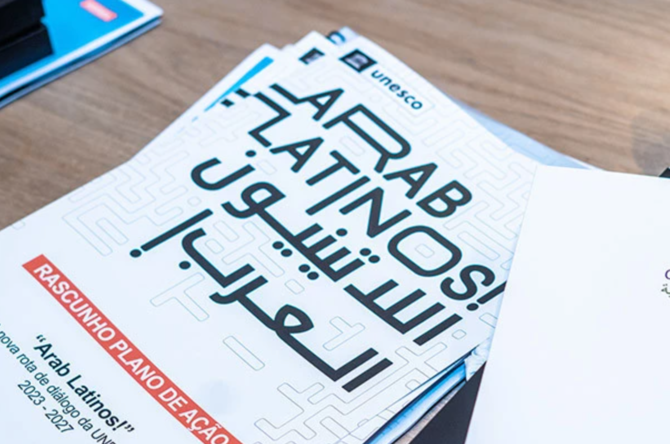
Many initiatives have been implemented in the past, most notably UNESCO’s celebration of World Arabic Language Day on Dec. 18 each year, as well as the launch of “Arab Latinos!”
That event, which was held in August in Sao Paulo, promoted intercultural dialogue for social inclusion and built on the Arabic cultural imprint in Latin America.
source/content: arabnews.com (headline edited0
___________
Prince Sultan bin Abdulaziz Al Saud Foundation aims to strengthen the use of Arabic at UNESCO. (UNESCO)
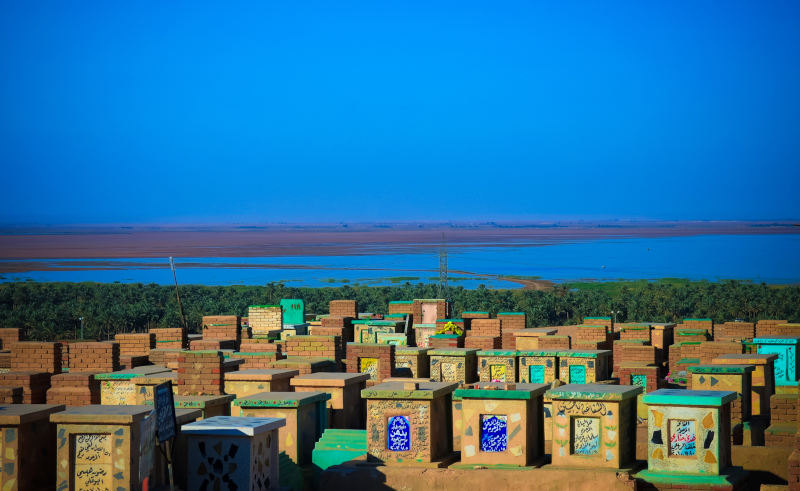
Dating back to the early middle ages, this Iraqi cemetery holds the remains of kings, dignitaries, scholars, and soldiers alike.
Wadi Al-Salam, which means ‘Valley of Peace’ in Arabic, is a necropolis in which every Shiite Muslim hopes to be buried some day, in the belief that it is these burial grounds that will hold eternal peace for them.
Located in the Iraqi city of Najaf, Wadi Al-Salam is a cemetery that dates back to the early middle ages, hosting the remains of kings, dignitaries, scholars, and soldiers alike.
Every year, an estimated 50,000 Shiite Muslims are buried in this hallowed ground. The cemetery stretches across 1500 acres, taking up almost 13% of the city, and allegedly holds over six million bodies. The necropolis, however, isn’t just a morbidly beautiful burial ground. Rather, each tombstone contains a name and an engraving that paints a vivid timeline of Iraq’s (arguably tragic) history, with a hyperfocus on internal disputes, natural disasters, and wars.
In 1981, Rahim Jabr, an Iraqi foot soldier, was martyred in the eight-year war with Iran. 25 years later, his brother, Naeem Jabr, was a casualty of the sectarian civil war that killed hundreds in Baghdad in 2006. The siblings are buried next to each other, united in the necropolis that holds many others whose stories are eternally intertwined with that of the bloody history of this country.
The 2003 invasion of Iraq by the United States and its subsequent conflicts alone led to the graveyard expanding by over 40% (7.5 square kilometres) to contain the bodies of the martyred Shiites.
Wadi Al-Salam has been the responsibility of a single Shiite family for over three centuries, and the Abu Seiba’s stand testament to the cruelty of war, having carried hundreds of thousands of bodies belonging to their brethren into the ground.
Wadi Al-Salam is considered a UNESCO World Heritage site and has been since 2011, as the cemetery stands witness to thousands of years of history, religious tradition and dedication by Shiite Muslims.
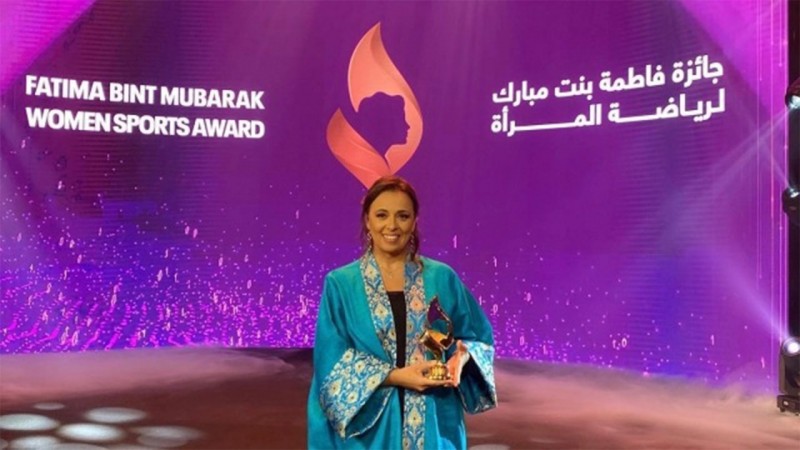
Sibaha is the director of the “Atlas Lionesses: Hear Them Roar!” documentary that honored Morocco’s Women’s Football Team.
The Moroccan journalist Aziza Nait Sibaha has won the sixth “Fatima Bint Mubarak” Women Sports Award, crowning her as the Arab world’s “best sports journalist.”
Presented on September 17 in Abu Dhabi, the award is the region’s first of its kind aimed at empowering women and celebrating their sports achievements.
The “Fatima Bint Mubarak” Prize was awarded to different winners in several categories, including sports management, training, research, sports sponsorship, and women of determination.
The value of the prizes totaled AED 1,700,000 ($462,824).
Different trophies were awarded to nine competitors, individuals and teams, including Egypt’s Giana Farouk Mahmoud, who was named the “best Arab sportswoman,” and Shamma Yousef Al Kalbani, who won the “best Emirati athlete” award.
Egyptian Ahmed Gouda won the prize for the “best young athlete,” while his compatriot Rehab Ahmed Radwan was awarded the prize for the “best Paralympic athlete.”
The “best coach” award went to Faris Al-Assaf from Jordan, while the Jordanian Women’s Football Association took the award in the “ Youth Development Programs” category.
The Egyptian Weightlifting Federation won the award for “best team,” while the “Emirates International Endurance Village” earned the prize for “best innovative sports initiative.”
The celebrated Tunisian tennis player Ons Jaber won the award for “Sports Personality of the Year in the Arab World.”
In her speech at the award ceremony, the representative of Fatima Bint Mubarak Ladies Sports Academy, Maryam Al-Mansouri, said that all categories of the award have seen strong competitiveness in recent months. This proves the talent, willingness, and ambition of Arab sportswomen, she stressed.
Al-Mansouri concluded: “We hope to see Arab women continue to take the lead in local and international sports events, and this award will contribute to the birth of new achievements in the Arab women’s sports career.”
The dance troupe’s victory, which earned them the seven-figure prize , offered a sliver of hope to the country and its population, who continue to battle a flurry of crises and bad news.
“We haven’t shed happy tears in so long in this country and Mayyas made it happen,” says Reem Nasra, 24, a recruiter in Beirut.
Mayyas first made international headlines when they received a golden buzzer from judge Sofia Vergara for their performance during the auditions, securing their spot in the semi-finals.
“There are no words to explain to you what we were feeling over here,” Vergara said at the time. “It was the most beautiful, creative dancing I have ever seen.”
Since then, the Lebanese group put on a series of breathtaking routines as they advanced to the final. And, their journey to the top connected with compatriots around the world.
“They are an example of what a synchronised group of Lebanese are able to achieve,” says Eli Lattouf, 26, a postdoctoral researcher at Harvard Medical School in the US. “Such a win delivers a global message.”
Lebanon is currently facing an economic crisis described as one of the worst in 150 years by the World Bank. According to a UN study, the financial collapse has pushed more than 80 per cent of the population into poverty while inflation and living expenses reached record highs.
The country’s plight has made global news, highlighting everything from its fuel crisis to the deadly Beirut port blast in 2020.
To see Lebanon represented in a different light, as a beacon of art and culture, was refreshing, says Lattouf.
“Most people know the Lebanon they see on the news, which might not be totally misleading, unfortunately,” he tells The National. “This time the world sees not one, but a group of Lebanese, full of art, creativity and discipline.”
Lattouf’s sentiment is echoed by many other Lebanese people, who are proud of the group’s outstanding representation on a global platform.
“This is our Lebanon, the real one,” says Rima Hijazi, 26.
Watching from her home in Choueifat, south-east of Beirut, the agricultural engineer fortunately had electricity overnight to stream the final live. Many other households across Lebanon were without power, which prompted private TV station LBCI to campaign for generator owners to keep the lights on ahead of the show.
Lebanon’s electricity crisis is merely one of the many obstacles Mayyas had to overcome while rehearsing.
Despite the many hindrances, the girls put in long hours of work, determined to grab the title.
According to the group’s founder and choreographer Nadim Cherfan, the team were in the studio on a daily basis and would “only leave when the power goes off”.
“When it’s about art, nothing stands in your way,” he previously told The National.
Their hard work and diligence made them all the more deserving of the win, according to many Lebanese. It is also testament to the country’s potential, despite the odds.
“This win means that despite everything we are going through, our will to live and be successful beats all miseries,” says Yara Youssef, 25, a marketing coordinator in Beirut.
Between pride and hope, Mayyas also evoked a solemn feeling for some.
“It’s a bit sad knowing that if you have potential here in Lebanon, you have to leave in order to reach your goals,” Hijazi tells The National. “We’re in the wrong spot to bloom.”
But despite their international achievement, Mayyas are returning to Lebanon, where they will continue to work on their art.
While Cherfan has been asked why he continues to work in Beirut, he is adamant on going back to where they started.
“I’m never leaving my country because my country has never left me,” he says.
Watch the moment Mayyas won on ‘America’s Got Talent’ here (below):