Arabs & Arabian Records Aggregator. Chronicler. Milestones of the 25 Countries of the Arabic Speaking World (official / co-official). AGCC. MENA. Global. Ist's to Top 10's. Records. Read & Enjoy./ www.arabianrecords.org
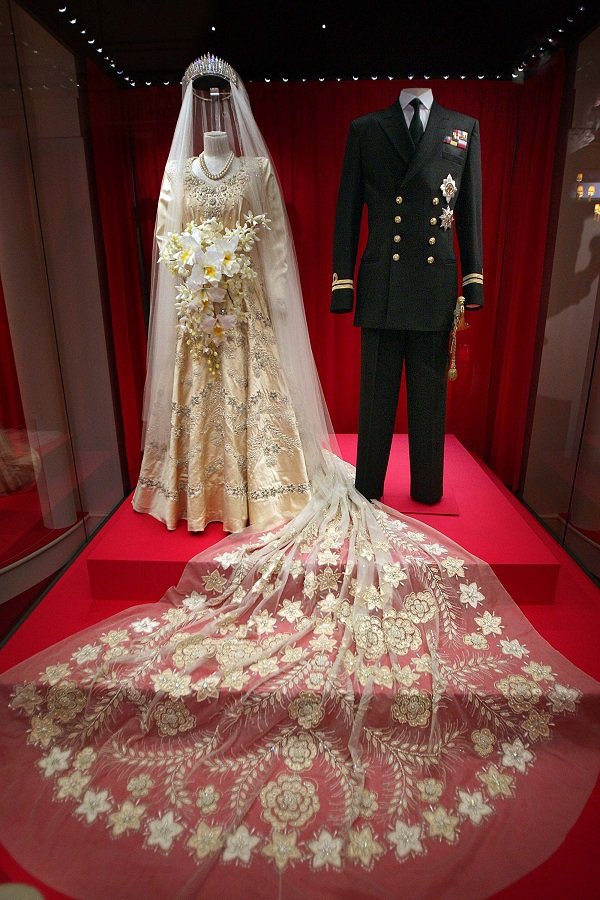
As the world looks back on the storied life of Queen Elizabeth II, fashion lovers could be pleasantly surprised to find the longest-serving British monarch championed Arab creativity on one of the most memorable days of her life.
On Nov. 20, 1947, the then-21-year-old princess married naval officer Prince Philip of Greece in a gown created by court designer Norman Hartnell.
The regal dress was made of ivory silk from China — not Japan or Italy given the recent end of World War II — and featured 10,000 seed pearls imported from the US — as well as show-stealing Damask brocade from Damascus, Syria.
The brocade fabric was brought from the Al-Muznar factory in the Bab Sharqi neighborhood of Damascus’s Old City and featured embroidery of “two love birds” exchanging kisses in a pattern known locally as “the lover and the beloved.” Woven with 12-karat gold thread, the brocade fabric was reportedly sent to the queen by Syrian President Shukri al-Quwatli.
The dress was meant to symbolize “rebirth and growth” in Britain after the war, according to the Royal Collection Trust.
It took 350 women seven weeks to make, and featured elaborate floral motifs of jasmine, smilax, lilac and white rose-like blossoms added to the train. The design was inspired by Italian artist Botticelli’s 1482 painting of Primavera.
source/content: arabnews.com (headline edited)
__________
On Nov. 20, 1947, the then-21-year-old princess married naval officer Prince Philip of Greece. (Getty Images)Princess Elizabeth’s wedding dress, designed by Norman Hartnell, and the Duke of Edinburgh’s Royal Naval uniform are displayed at an exhibition at Buckingham Palace on July 27, 2007 in London. (Getty Images)
It is in times of crisis and conflict that we reveal our character most clearly. This is true today in Yemen, where even the promise of a truce brokered largely by the UN, the US and Saudi Arabia has yet to cement peace or accelerate reconstruction. To do these things, Yemenis must also rebuild the bonds of faith and community that allow any society to thrive.
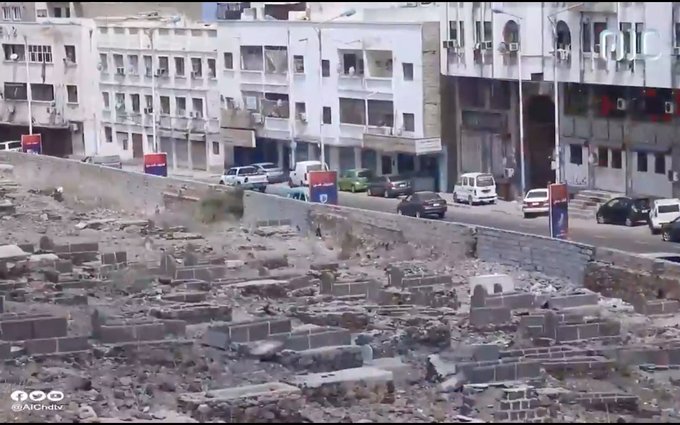
Within the context of these challenges, it is all the more remarkable that Yemenis recently started restoring a 160-year-old Jewish cemetery in Aden. What started as a volunteer effort has now garnered the support of local authorities and Yemeni institutions.
It amounts to a project of interfaith tolerance and embrace in a place where such sentiments have been in short supply. In the last couple of years, Yemen’s Jewish community — one of the world’s most ancient — has disappeared. Most of the remaining few fled to nearby countries after facing persecution and even arrest by the Houthi rebels. Just a century ago, they counted in the tens of thousands and could claim a lineage of almost 3,500 years.
Jewish tradition holds that the cemetery in Aden is where the biblical Abel was buried millennia ago. He is part of the tradition of each Abrahamic faith and the collective memory of Yemeni tolerance remains despite the societal havoc of the last decade.
Each of the Abrahamic religions instructs us to act with kindness toward our brothers and sisters of other faiths. It should be inspiring to all of us to see Yemen’s internationally recognized government and the people of Aden acting in this spirit. I hope this renewed focus on a Jewish cemetery can demonstrate how faith and incremental action can help us overcome the tribulations and pitfalls of extremist politics, sects and conflicts of the past — real or imagined.
The Jewish community of Yemen is no longer, but Yemenis are honoring their own shared past and patrimony by preserving its memory. By respecting the role of Jews in Yemen’s long and storied history, Yemeni leaders are showing inclusivity and a will to protect minorities in the nation’s future as it emerges from this tragic conflict.
The contrast with the Houthi rebels and the racist ideology they propagate is stark. The Houthis prey on religious differences of doctrine and ritual to divide once-harmonious communities in Yemen. Children are drilled to hate in schools, while state workers must chant mantras of death for peoples, such as those in the US and Israel, whom they have never met and of whom they have no conception. Their celebration of innocent Yemenis or Saudis killed is reprehensible.
Analysts today speak of the truce in Yemen in terms of money, men and ideology. These things shift and change, but the need for a functioning society to incorporate people of different beliefs holds true.
The Houthis seem to hold a firm grip over large parts of Yemen. But in this land, with its rich and resilient tribal, religious and societal mosaic, intolerance makes any sense of “control” inherently fragile. The history of Yemen shows that cultish indoctrination does not change a people. Some of its most ancient buildings have crumbled and priceless literature has been lost, but the tolerant Yemen of yore remains alive in stories, poetry and prayer, as well as the hearts of its people.
The cemetery restoration effort is a microcosm of what will need to take place to return Yemen to its true form and traditions of tolerance. While some tear down history and desecrate places of worship and commemoration to create a vacuum to fill with hate for their own benefit, reconstruction efforts like the cemetery can remind all Yemenis of the primacy of tolerance in their culture.
We all pray for an end to the war in Yemen, continued peace and rapid reconstruction. Let us add to these prayers that Yemenis remain on the path to rebuild not just brick by brick, but to rebuild and restore the diversity of the Aden of old in the image of tolerance of our Creator.
Architect Omar Degan reflects on the experience of designing a restaurant that celebrates local identity and cultural tradition in the Somali capital.
Think back to your childhood. Even if the memories are blurred, many of the flavours and aromas remain. The time we spent with parents and grandparents is often remembered in scents and spices — returning us to those moments, even after many years. Passed down through the generations, dishes and cuisines are vessels of culture and tradition and embodiments of the world’s diversity. Think of a plate of tagliatelle in Bologna, a freshly baked naan in New Delhi, the sweet taste of a chai bought in the streets of Mogadishu, or a mate tea savoured in Buenos Aires. Each is a powerful reflection of its place and people.
I think about architecture in the same way. Just as culture and tradition is conveyed through gastronomy, the built environment can be a physical representation of local knowledge, passed down through the generations. Like food, buildings can convey ways of knowing, rooted in working with local materials and resources, and adapting to climate and culture. In this way, architecture should celebrate and enhance the places it transforms. It’s a paradigm few would disagree with — yet one that’s rarely reflected in how we build.
A neo-colonial conception of modernity still shapes buildings around the world. It’s a flat, globalized approach in which a tower in Toronto is similar to one in Shanghai, and in which the glass used for a New York skyscraper can be nearly indistinguishable from the cladding of a residential building in Mombasa. This is an architecture that does not earnestly strive to understand places, people and traditions, but seeks to pursue a vision of universal modernity which finds its expression in a detachment from local knowledge.
So how can architecture celebrate cultural diversity? As a Somali practitioner — and principal of Mogadishu-based DO Architecture Group — my answer is always rooted in the local community. And appropriately enough, it’s reflected in a recent project that brought together food and architecture: In 2019, I designed a restaurant called Salsabiil in the outskirts of Mogadishu.
From outside, Salsabiil’s façade appears modest and simple — almost private and introverted. But like an old book cover with layers of dust on its surface, a surprise awaits inside. Crisp white walls, ceilings and floors greet visitors as they enter, with the room framed by plantings that hint at the once-abundant local greenery that’s been lost through decades of deforestation.
Mogadishu was once known as “The White Pearl of the Indian Ocean” for its white buildings, beautiful palm trees and stunning blue coastal waters. As a reminder of the city before the civil war, the restaurant interior is pure and clean, white and simple. Decorating this crisp white canvas, traditional Somali fabrics adorn the pillows and upholstery, including the textiles traditionally used for women’s dresses (a fabric called Halindi) and men’s macawiis sarongs.
The motif also extends to the ground floor restrooms, where fabric patterns traditionally associated with men’s and women’s clothing are used as door coverings. In lieu of formal signage — and the western gender binary that it reflects — the restrooms are rooted in the culture and tradition of Somalia. Regardless of age or social background, the designs are a signifier that every local person knows.
Throughout the restaurant, photos portraying scenes of daily life in pre-war Mogadishu guiding visitors through a visual journey of stories and nostalgia. Designing Salsabiil was also a personal journey through my own culture and identity. I explored and studied things that I’d never had the possibility to experience — from discussing old ways of building furniture with community elders to finding the appropriate pictures to frame, the creation of this space was an adventure.
As a resident of Mogadishu, my hope is that Salsabiil continues to serve as a local landmark and a meeting place for the community — and as a representation of the cultural identity of Somalia. As an architect, I hope it offers a modest case study of integrating architecture and culture, demonstrating the power of weaving cultural identity and social fabric into the built environment. I didn’t want to impose a design vision on the community; I wanted the community’s culture to become the main protagonist of the space. It’s a contemporary environment, but one strongly rooted in tradition.
Salsabiil’s case is not unique in the world. It doesn’t matter if you are in Somalia, New York City or the mountains of Peru. If we understand the knowledge embedded in culture, community and history, then we also understand how to make a humble but substantial architecture — an architecture that embraces its environment. On a global level, it translates to an embrace of the world’s cultural diversity. Like local cuisines, local designs are something to celebrate.
On Twitter, I’ve documented the tremendous variety of African architecture, chronicling how vernacular building styles offer a culturally rich and climate-sensitive response to local conditions. From humble residential interiors to major cultural landmarks, traditional structures across the continent present diverse alternatives to the ubiquitous — and carbon-intensive — concrete, glass and steel design introduced in the colonial period. And today, globally renowned African practitioners like Diébédo Francis Keré and Mariam Kamara are introducing traditional methods into contemporary practice, nourishing richer and more culturally responsive new architectural traditions.
My own practice follows the same principles. To me, designing for a better future means embracing locality and diversity. In this way, I hope the design process itself can — directly or indirectly — become a means to fight climate change, racism, inequality, poverty and much more. Of course, these are large and intractable problems, and their solutions lie far beyond the drafting table alone. But I know this much for a start: The architecture of the future is not made of glass and steel, but of community, culture and diversity.
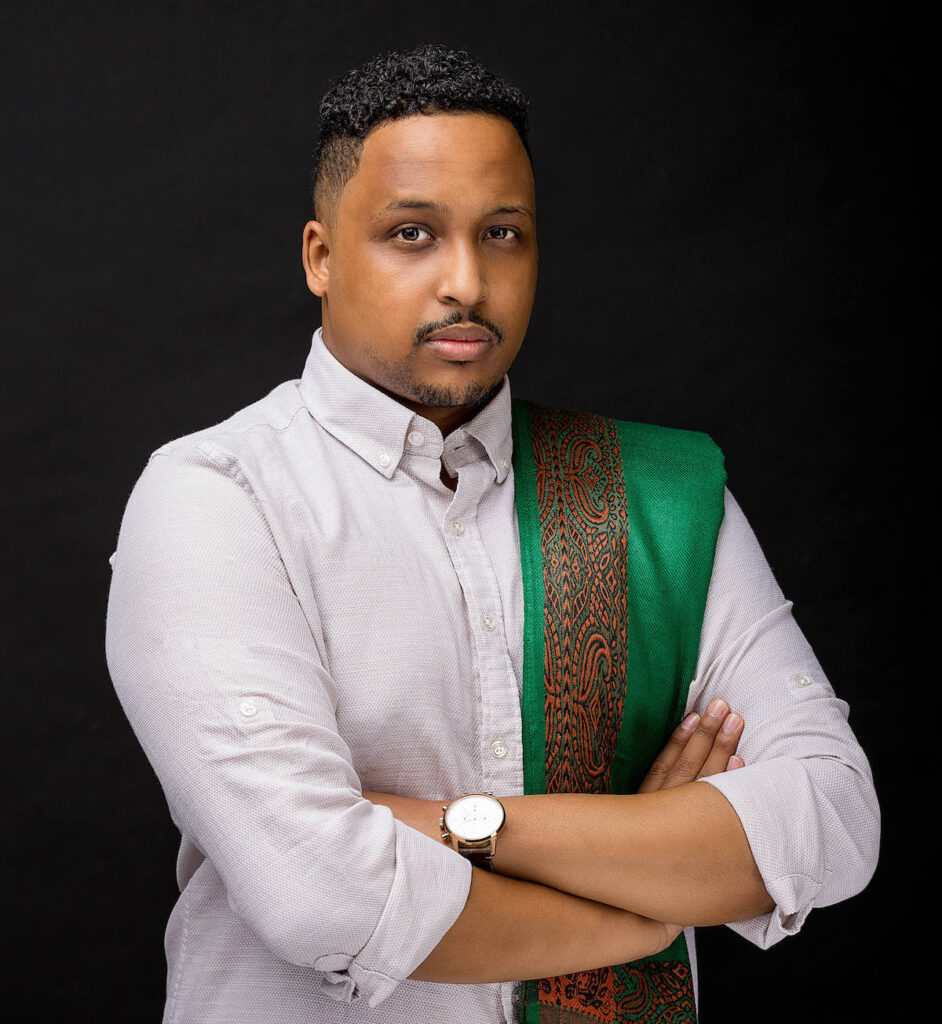
Omar Degan is a Somali Architect, Principal and founder of DO Architecture Group, an office specialized in post-conflict reconstruction and cultural diversity. Born in 1990, Omar has dedicated his career in the study of emergency contexts and developing countries, focusing on the interactions between culture and architecture. In 2021, he was selected as one of the African Leaders by the Obama Foundation, recognizing his work in the post-conflict reconstruction of Somalia.
As Egypt promotes the trail of the Holy Family as a major tourist experience, Ahram Online republishes an account of stops and cities where the Virgin Mary, Joseph and Jesus found safety and shelter in the country.
“Now when Jesus was born in Bethlehem of Judaea in the days of Herod the King, behold, there came wise men from the east to Jerusalem, saying, Where is he that is born King of the Jews? For we have seen his star in the east, and are come to worship him.”
(Matthew 2:1-2)
———-
The story of the holy family’s journey from Palestine to Egypt has long been recorded with dedication by historians and authors around the world. Many look upon the journey as a mark in the history of Egypt, not merely a religious event. Egyptians look with fondness and pride on the passage of the holy mother and her child through the land of Egypt, and the fact that they found solace here.
The flight to Egypt
The Virgin Mary gave birth to Jesus in Bethlehem of Judaea in Palestine. Upon his birth, wise men preached to the people of the city, declaring that Jesus was the chosen one, and that, “according to prophecies” they had seen in the stars, he would become the next king of the Jews. Upon hearing the news, King Herod was overcome by terror at the possibility of losing his throne. He decided that killing Jesus was the only way to protect his royal status.
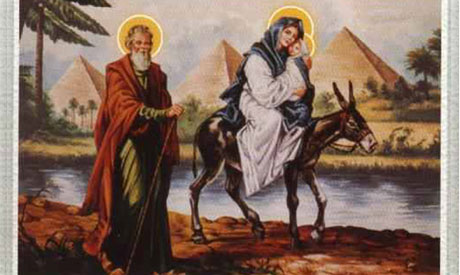
In a dream, Joseph, the carpenter, was ordered by God to escort Jesus and his mother to Egypt, where they would find refuge. Both Western and Eastern traditions agree that the method of transport most likely used by the holy family on their journey to Egypt would have been a donkey. In this situation, the Virgin Mary would have been seated on the donkey, holding the child Jesus in her arms and Joseph would have walked by their side, leading the way.
The holy family in Sinai
Keller writes in his book, The Bible as History (1955): “A day’s journey from Gaza brought the holy family to the ancient township of Jenysos, which is mentioned by Herodotus, the Greek historian.” Today, this village, which is part of the Gaza Strip, is known as Khan Younis. “The next town on the holy family’s route would have been Raphia (Rafah), the frontier town between the Gaza Strip and the province of Egypt.”
Continuing for another 44 kilometres, beyond Raphia, and after almost two days of traveling, the mother and child reach Wadi Al-Arish, a point at which they are safe enough to obtain food and shelter. The holy family passes by other towns in Sinai such as Al-Muhammadia and Al-Farma, located 35 kilometres east of El-Qantara City. Churches from the 5th and 6th century have recently been discovered in Al-Farma.
Route to the Nile Delta
The holy family continued on its trip to the Nile Delta, stopping at the city of Musturod, only 10 kilometres from Cairo. “The Virgin Lady”, a 12th century church, was found in the city.
Keller adds in his book: “The city of Musturod was again visited by the holy family on their return journey to Palestine.” After leaving Musturod and passing by Belbes, the holy family travel west to the Valley of Natroun, crossing the western branch of the Nile (the Rasheed branch).
The holy family in Cairo
The movie Journey of the Holy Family portrays the settlement of the blessed family in Al-Mataraya district near Ein Shams (Old Heliopolis). They find shade under a sycamore tree that came to be known as “Mariam’s Tree,” which has evolved into an engrossing attraction for religious tourists. The holy “Mayron oil,” or the “Chrism,” is nowadays prepared from the oil of the tree.
An ancient church was built in the area by the name of “The Virgin Mary” and is visited by people to this day. Paintings can be found inside the church, including maps of the holy family’s journey, as well as a statue of Jesus and his blessed mother guarded by Joseph the Carpenter.
In his book The Geography of Coptic Egypt (1989), French historian Amelenio narrates some of the stories passed down about the miracles of “Mariam’s Tree.”
One such story tells how “the French army sat by the tree, drank from its well and wrote their names on its stems.” It is believed that some of the wounded soldiers were healed by its oil. Amelenio adds: “Al-Matarya district became the most popular shrine in Egypt; a place where people flooded to for blessings and spiritual remedies.”
The second district visited by the holy family in Cairo was Al-Zeitun, where a church by the name “The Virgin Mary” was constructed in Toman Bey Street. It is said that appearances of the blessed lady were witnessed around the domes of the church up until recent years.
Another spot visited by the holy family was Zowela Avenue on at Been El-Soreen Street in El-Gamaleya district. An ancient church is found there with the same name, “The Virgin Mary”. It is considered one of the largest churches in Egypt and is distinguished by its basaltic style.
The holy family moved on to “Old Egypt” (Al-Fustaat) where they dwelled for a short time in a cave in Abi Serja’s Church, within the walls of the Roman Babylon fortress. “The cave is about 20 feet tall, 15 feet wide and does not have any windows,” as described by Amelenio, who believes the holy family’s stay in the cave did not exceed a week. After leaving Al-Fustaat, they moved to Maadi district and settled at the location where the Virgin Mary Monastery and church were later built by the Nile.
Amelenio explains that during Ottoman rule in Egypt, the church had a marina for boats allocated for the transport of people and soldiers traveling to and from Egypt. Some villages in Upper Egypt were visited by the holy family such as Assiut and Minya. In the book History of the Coptic Nation, author Samy Saleh records that the holy family took the same route on their journey back to Palestine. They first go to Maadi, passing through Old Egypt, then follow the road to Ein Shams, back to the city of Mustorod, and finally El-Arish, and from there to Gaza.
The trail of the blessed
At present, many Egyptian historians and archeologists are calling for a project to track each town or city visited by the holy family, so as to make it easier for tourists to visit the blessed spots, thus reviving the symbolism of the holy journey and its message of peace and goodwill to all men.
Dr. Abdulaziz bin Mohammed Alsubayel, chairman of the board of trustees of the King Abdulaziz Center for National Dialogue and secretary general of the King Faisal International Prize, has won the cultural pioneer award during the Ministry of Culture’s second session of the “National Cultural Awards.”
He received the prize in recognition of his distinguished literary and cultural career, as well as his roles in cultural administration, where he held a number of leadership and academic positions while serving Saudi culture, intellectuals and literature.
The event was held under the patronage of Saudi Crown Prince Mohammed bin Salman.
A global prize, called the “international cultural excellence award,” will be launched in the next session of the event, organizers announced. The award will recognize and celebrate global and regional cultural personalities and institutions that enrich the cultural landscape, and reaffirms the Kingdom’s determination to open new avenues for cultural creativity and expression and encourage cultural dialogue with the world.
Deputy Culture Minister Hamed bin Mohammed Fayez said in a speech delivered on behalf of Saudi Minister of Culture Prince Badr bin Abdullah bin Farhan: “I am delighted to welcome you to the Capital of Culture, the Beacon of Knowledge, and the Oasis of Art in a cultural event in which we celebrate the creative personalities, with the support of the Custodian of the Two Holy Mosques and the patronage of His Highness the Crown Prince, who is supportive of our culture and the champion supporter of it.
“The historical depth and civilization of our homeland and the creativity of our people have put the Kingdom in an advanced cultural place, which enabled the Ministry of Culture to highlight our creative treasures as per the Vision 2030,” he said.
Fayez said: “The National Cultural Awards initiative was an inspiration for creators and an essential pillar for further advancement of cultural and cognitive development.”
Cultural sector award recipients were also recognized.
Kifah Bu Ali won first place in the literature prize while Jarir Bookstore won the publishing award. Shareef Bogona, a translator and poet, won the translation award while Samira Alotaibi won the fashion award. Ahmed Alneghaither, a researcher in drawings and engravings, won the national heritage award and Abdulsamad Alhawsawi won the culinary art award.
Badr Al-Hamoud, a writer and filmmaker, received the “youth cultural” award for his efforts in the film industry, publishing initiatives, translation and technical projects. He founded the Center Menaverse for Innovation and Development, the world’s first center to interactively disseminate cultural products, and has established a platform called “Meaning” to spread knowledge, artistic and philosophical content. He managed the translation projects of 30 books in philosophy and humanities.]
Kifah Bu Ali won first place in the literature prize while Jarir Bookstore won the publishing award. Shareef Bogona, a translator and poet, won the translation award while Samira Alotaibi won the fashion award. Ahmed Alneghaither, a researcher in drawings and engravings, won the national heritage award and AbdulsamadAlhawsawi won the culinary art award.
Artist Muhannad Shonu won the visual arts award while Ali Khobrani won the theater and performing arts award. Bandar Bin-Obaid won the music award while Faisal Battoyoor won the film award and Muhammed Shafea won the architecture and design award.
The Diriyah Gate Development Authority won the cultural institutions award in the state sector while the Misk Institute of Art won the cultural institutions award in the non-profit sector. The Music Home School of Art won the cultural institutions award in the private sector.
Ahmed Qirran Al-Zahrani, deputy dean of communications and information for graduate studies and academic research at King Abdulaziz University, told Arab News that nations founded on cultural legacy were able to elevate their homelands to the forefront of the cultural landscape around the world.
Cultural symbols deserved to be honored and acknowledged for their contributions to the nation, as well as to preserve cultural memory and encourage future generations to follow in their footsteps, he said.
Al-Zahrani said that the Ministry of Culture had a significant obligation to revitalize heritage, assist the cultural movement and financially and morally encourage intellectuals.
The cultural movement was evident in domestic cultural activities such as organizing book fairs, holding cultural festivals, holding conferences, supporting cultural institutions, honoring intellectuals, participating in outdoor cultural events and supporting intellectuals individually participating in festivals, meetings and outdoor exhibitions to represent and communicate local culture beyond geographical boundaries.
Abdulaziz Al-Kheshaiban, chairman of the board of the Media and Public Relations Society in Onaizah, said that recognizing local cultural symbols was connected with recognizing cultural pioneers, creators and achievers.
He said that the cultural movement was witnessing a diversity of platforms, and that official literary clubs, private literary meeting places and cultural cafes were the most important of these.
Al-Kheshaiban said that education and knowledge were important in the evolution and progress of cultures.
source/content: arabnews.com (headline edited)
___________
The National Cultural Awards ceremony was held under the patronage of Crown Prince Mohammed bin Salman. (SPA)
I like the idea of making people dream through creation, says Ali.
Tunisian designer Ali Karoui is best known for his red carpet haute couture as the favoured creator for fashion icons such as Cristiano Ronaldo’s girlfriend Georgina Rodriguez.
He chatted to The Kurator exclusively about being at the zenith of the world of fashion.
What draws you toward the world of haute couture instead of ready-to-wear?
I like this idea of making people dream through creation… And the rarity and the mystery that surrounds the world of haute couture.
Your interest in fashion began at an early age – how did your upbringing in Tunisia inspire you to go into fashion design?
I was lucky enough to grow up in an environment where women are treated like queens. I was looking at the closets of famous couturiers when I was a child, especially that of my grandmothers and mother, and that’s what gave me the love that I have today for haute couture.
You now dress A-listers and celebrities all over the world – does this create additional pressure to impress and attract attention with your designs?
Yes, of course, it creates a bit of stress because the more we are known the more demand there is on us, and it means more work for me and my team, but it is so enjoyable to see your creations worn by celebrities on the world’s biggest red carpets. It is a consecration for each artist to see his work recognized.
How did you first start collaborating with Georgina Rodriguez and in a way creating her signature look for her?
I met the beautiful Georgina at the Cannes festival in 2019. Her stylist contacted me to try one of my dresses that she saw in a picture. As she said on Netflix, I’m not trying to change her, she fell in love with my work and since then we are inseparable.
Your style can be interpreted as somewhat risqué – has this affected your career early on and did you face resistance in the Arab world of fashion design?
In no case did it affect my career, on the contrary, my style has made me known all over the world. You must believe in your dreams and continue to move forward, that is the key to success.
What kind of influence did Azzedine Alaïa have on you?
Azzedine Alaïa was a visionary. I had the chance to meet him several times. He gave hope to young Tunisian fashion designers, and allowed us all to dream that for us too, it was possible…
Who are some other fashion designers that you respect or that you looked up to early in your career?
There are many… I was in love with the vision of Gianni Versace, Thierry Mugler, Jean Paul Gaultier, and the master, Alaïa. Legends!
Do you keep an eye out on young and up-and-coming designers from the North Africa and Middle East region?
Of course! Many of them have a very bright future
source/content: gulfnews.com
_____________
Tunisian designer Ali Karoui is drawn to the “mystery that surrounds the world of haute couture”.Image Credit: Instagram @alikaroui
Project shines a light on the cultural exchange between Algeria, France and Italy during the 1960s.
Zineb Sedira has outlined plans for her presentation at the French pavilion at this year’s Venice Biennale (23 April-27 November), revealing that the project will focus on Algerian cinema of the 1960s and 1970s and its links to the Italian and French film industries. The subject matter is timely as 2022 is the 60th anniversary of Algeria achieving independence from France. On 5 July 1962, Algeria became a sovereign state after an eight-year war which resulted in the deaths of at least 400,000 Algerians.
Sedira is the first artist of Algerian descent to be selected as the country’s representative. Sedira, who was born in Paris to Algerian parents, attended college in London, completing her undergraduate studies at Central Saint Martins school of art. She is now based in South London.
Sedira revealed her ideas for the cinematographic installation Dreams have no titles in an online press briefing held 18 February, outlining how she initially researched the history of Algerian film for an exhibition at the Jeu de Paume in Paris in 2019. Her passion for cinema was sparked by childhood trips to the local cinema in the 1960s in her home town of Gennevilliers outside Paris (these film outings were made with her father every Thursday when school was closed).
This interest developed further during her time as a student in London. “As part of postcolonial studies, I came across [the philosopher] Frantz Fanon and [the 1966 film] The Battle of Algiers. In France, I never came across those people because The Battle of Algiers was still censored in France [in the late 1970s and early 1980s],” she said. “There were no intellectual role models to me of Algerian origin; in England, I discovered there was a wealth of [Algerian] men, women and filmmakers.”
For the pavilion piece, Sedira carried out research at the Cinémathèque in Algiers, discovering that many films financed by the state of Algeria at the time were also co-produced with Italian and French filmmakers. “So when I was asked to propose an idea for the French pavilion, I thought of the Mostra [Venice Film Festival]. I thought it was interesting to do something around the three countries,” she said. Sedira wants to focus on the cooperation between France, Italy and Algeria— and the solidarity between the trio of nations—though her Venice “project goes beyond that”, the artist stresses.
Sedira visited numerous film archives in Algeria, France and Italy as part of the research process. “In Italy, [we visited] Venice, Turin and Bologna. We discovered a film that had disappeared,” says Yasmina Reggad, the co-curator of the French pavilion, referring to Les Mains Libres made by the Italian director Ennio Lorenzini in 1964.
“It was the first international film collaboration between Algeria and another country [Italy],” said Sedira, but after 1966 Les Mains Libres was lost. She eventually found the forgotten work in a small archive in Rome. “It is an important film for anyone interested in post-1962 Algerian history,” she adds.
The French pavilion project aims to be a starting point for discussions on other topics such as colonialism, collective and individual histories, national identity and the fight against racism. “The notion of a nation begs to be critiqued and challenged. What is a nation at the end of the day? It is a big fiction to believe that when you draw a certain line, everyone who happens to be behind this line is of the same mentality and culture,” said Sam Bardaouil, the co-director of the Hamburger Bahnhof in Berlin along with Till Fellrath (the duo have also co-curated the French pavilion).
“In a sense, a pavilion is an attempt to give a physical form to a fiction, so to use fiction in the language of cinema as a way to critique nation and belonging is such an intelligent and timely way to discuss these issues,” Bardaouil said.
The three pavilion curators will participate in a film to be shown in the pavilion. “We’ll be turned into actors and actresses,” said Reggad. Bringing together an artistic community was paramount, added Sedira, who relished the opportunity “to work with friends, to be surrounded by friends”. The film production will also include members of the crew and her son. “I was playing on the aesthetic and structure in cinema in the 1960s in low-budget films when one would play many roles,” she said
The pavilion project will also include a “conversation” with the UK pavilion artist, Sonia Boyce, and the Swiss representative, Latifa Echakhch. “Sonia was my neighbour for many years and she taught me at one point when I was studying art in London,” said Sedira.
At the briefing, the curators also discussed the three accompanying journals linked to the pavilion project. Each issue refers to a city—Algiers, Venice, and Paris—that has played an integral part in Sedira’s practice. “The journal is an extension of what the project entails inside the pavilion. The cities mark the phases of Zineb’s life, they become entry points to questions that are related to the themes that will be discovered in the film and installation in the pavilion,” said Bardaouil. Contributors include the French artist Laure Prouvost and the actor Nabil Djedouani.“The journal has allowed for a diversity and plurality of voices,” Bardaouil added.
The journal design is based on film magazines of the 1960s and 1970s, added Reggad, and also borrows from militant leaflets of the era. The journals are “doors to an intellectual horizon [with] texts, images and playlists”, said Eva Nguyen Binh, the president of L’Institut Français which is supporting the pavilion. Other sponsors include Arts Council England and the dealer Kamel Mennour who represents Sedira
The aspiring fashion designer, who lives in Dubai, says she cannot wait to represent her country at the global pageant, to be held in Israel.
Fashion design student Manar Nadeem Deyani, 25, will make history next week when she becomes the first beauty queen from Bahrain to represent her country at the Miss Universe 2021 pageant.
A Dubai resident, Deyani was named on Monday night as her country’s representative at the global pageant, the winner for which will be crowned on December 12 in Eilat, Israel.
“I may be the shortest candidate in the history of Miss Universe, but I stand tall representing a country of love, peace and kindness – your first ever Miss Universe Bahrain,” the 155cm tall Deyani posted on Instagram, announcing her participation.
“We are honoured to appoint an empowering woman like Manar ‘Jess’ Deyani who embodies the grace, passion and inspiration of a modern and respectful queen,” a spokesperson for Miss Universe Bahrain told The National.
“Manar, also known as Jess, wants to raise awareness on issues like mental health, equality and inclusivity by using her platform to inspire many people to be more comfortable on their own skin and to show that beauty standards are here to be changed,” Deyani’s description on the Miss Universe website reads.
“Nowadays people have a concept of what a beauty queen is, but she is here on the international stage as the first Bahraini representative to show the we are a generation that breaks stereotype.”
A student at the American University in the Emirates, Deyani tells The National she is “excited for this opportunity”.
“I cannot wait to represent Bahraini women in a platform that empowers women and promotes global understanding,” she says.
The aspiring fashion designer, who says she suffers from a disorder that causes anxiety and depression, says she will use her title and the global platform to raise awareness about the negative stigmas associated with mental health.
“A lot of people are suffering from it in their daily lives, but are ashamed of asking help just because they do not want to be identified as someone ‘insane’. This has to change, we need to normalise the discussion about mental health. It is a disease that doesn’t show any symptoms,” she says.
“I am currently using my social media platform to connect with people who suffer from the same challenges and I hope with my new title as Miss Universe Bahrain, I will be able to expand my reach and impact to create a world that truly understands the mental health issues.”
Israeli authorities on Sunday said the Miss Universe pageant would go ahead as scheduled, despite a travel ban on foreigners in an effort to stave off the Omicron coronavirus variant. Participants would be granted waivers while undergoing PCR testing every 48 hours, along with other precautionary measures, the country’s tourism minister said.
On Monday, organisers revealed a contestant had tested positive upon arrival and was taken to a government-run isolation hotel. The Miss Universe Organisation did not identify the contestant who tested positive, or her nationality, but said most of the 80 contestants have arrived ahead of the finals next week.
To those who think beauty pageants are outdated, Deyani says it’s all about perspective.
“I am a modern Bahraini woman who has a globalised mindset while celebrating my rich heritage and culture. I think pageants are a great platform to celebrate our differences and unite as a one,” she says. “I see pageants as a conference, but done is a very fashionable way where we learn from each other, share knowledge and interact with like-minded people.”
The award recognises AUC’s Rare and Special Books Library as a leading institution in the preservation and restoration of Arabic historical documents.
The American University in Cairo’s Rare and Special Books Library was awarded UNESCO Jikji Memory of The World Prize. This prestigious award places the American University in Cairo next to some of the world’s leading history conservation entities. The award ceremony is set to take place this coming September in Cheongju-si, South Korea.
Founded in 1992, the AUC Rare and Special Books Library plays a fundamental role in restoring and preserving Egyptian history. Starting with just a few collector’s items, the RBSCL then developed to contain historic maps of Egypt, archives of oral recordings, historical magazines and periodicals, and historical AUC archives.
The UNESCO Jikji Memory of the World Prize is a USD 30,000 grant, given every two years, that honours institutions that have made notable contributions to the preservation and accessibility of documented history. The prize also pays close attention to the degree of expertise in treating said documents and the presence of special circumstances in procuring them.
Funded by the Republic of Korea, the prize was created to commemorate the inscription of the ‘Buljo jikji simche yojeol’, the oldest movable metal print in the world.
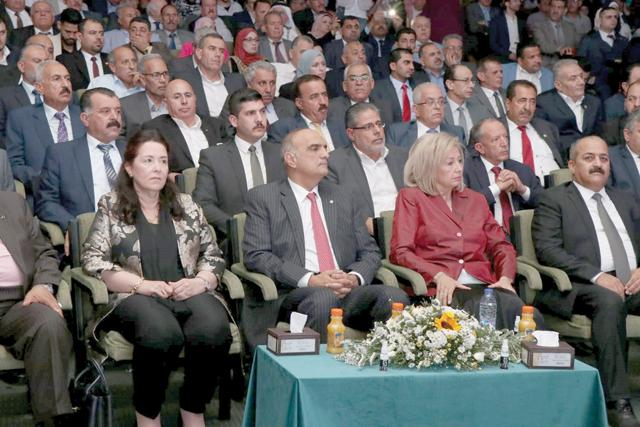
Deputising for His Majesty King Abdullah, Prime Minister Bisher Khasawneh on Sunday attended the ceremony of Irbid: the Arab Capital of Culture for 2022.
During the event, held at Al Yarmouk University, Khasawneh conveyed His Majesty’s greetings and thanks to those who put efforts towards making this national event — the launching of Irbid as the Arab Capital of Culture for 2022 — successful, the Jordan News Agency, Petra, reported.
The premier, who is also head of the higher national committee for celebrating Irbid: The Arab Capital of Culture for 2022, highlighted the Kingdom’s efforts to “embrace the culture and intellectual elite”, as well as “supporting innovators towards instilling a serious national culture”.
The selection of Irbid as the Arab Capital of Culture is a national event that is being celebrated by the whole Kingdom, he added.
He noted that nominating Irbid as the Arab Capital of Culture for 2022 and Madaba as the Arab Tourism Capital for 2022 coincides with the bicentennial to celebrate the Kingdom, as well as is accompanied by Jordan’s efforts towards a new start titled as “moving towards future” through three paths: Political modernisation, economic modernisation vision and upgrading the public sector.
The selection of Irbid is in line with the Kingdom’s modernisation and reform trends, which consider the cultural scene among its key pillars, he said, noting that the selection of Irbid is a source of pride for Jordanians and is aligned with the northern city’s nature as well as its historical and cultural status.
He also expressed hope that the event would contribute to uncovering the innovative capabilities in Irbid and across the Kingdom, as well as offer an opportunity to feature the qualitative value of the local and Arab cultural and intellectual scene.
The event was attended by a number of ministers, Arab culture ministers, guest delegations, and senators and deputies, among other officials.
Culture Minister Haifa Najjar said that proclaiming Irbid as the Arab Capital of Culture for 2022 by the Arab League Educational, Cultural and Scientific Organisation (ALECSO) illustrates confidence in Jordan and the country’s intellectuals, noting that the selection requires scaling up efforts to bring further innovation through joint action.
Mohamed Ould Amar, director general of ALECSO, said that Jordan’s comprehensive cultural renaissance under the leadership of His Majesty King Abdullah has contributed to Irbid’s well-deserved status, noting that the organisation is following up the activities of Irbid: The capital of Arab Culture for 2022, Petra added.
He also commended the participation of figures from Jerusalem, describing the holy city as the eternal capital of Arab culture at the 2022 Irbid event, highlighting that their participation is of special character, as Jordan has shown historical stances in defending Jerusalem and its cultural components.
At the end of the ceremony, Palestinian Culture Minister Atef Abu Saif handed over the banner of the Arab Capital of Culture to Najjar, marking the selection of Irbid as the Capital of Arab Culture for 2022 following Bethlehem, the Capital of Arab Culture for 2021.
source/content: jordantimes.com (headline edited)
____________
Deputising for His Majesty King Abdullah, Prime Minister Bisher Al Khasawneh attends the ceremony of Irbid: The Arab Capital of Culture for 2022 at Yarmouk University on Sunday (Petra photo)