Arabs & Arabian Records Aggregator. Chronicler. Milestones of the 25 Countries of the Arabic Speaking World (official / co-official). AGCC. MENA. Global. Ist's to Top 10's. Records. Read & Enjoy./ www.arabianrecords.org
Invention scans for threats and informs driver on display or mobile
Boost for Saudi Arabia’s Ceer Motors, fledgling electric car industry, says lead developer
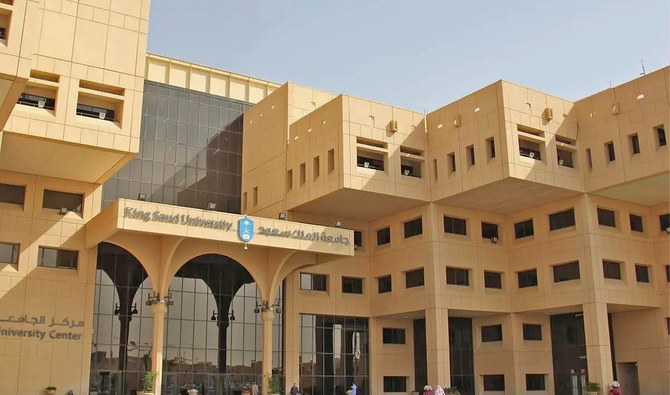
King Saud University in Riyadh has been granted a patent in the US for software that protects the computer systems of electric cars when linking to charging stations.
The invention is named the Motor Vehicle Cyber Inspection System. After conducting an inspection, the system notifies the driver of the cybersecurity status on a smart display or mobile device. The system can scan for malware, ransomware, backdoors, data leakage, and software vulnerabilities.
Announcing the receipt of the patent, the KSU media center said Thursday the team that achieved this success was led by Prof. Muhammad Khurram Khan and included Dr. Wazir Khan.
“This breakthrough patent achievement highlights KSU’s dedication to pioneering research and technological advancements, solidifying its position at the forefront of innovation in automotive cybersecurity,” it said.
The approval was granted by the US Patent and Trademark Office on Jan. 16, and the application was submitted in March 2023.
Khan, who led the team, told Arab News: “The granting of this US patent to the KSU represents a momentous achievement in the realm of cybersecurity, particularly for the burgeoning automotive sector in Saudi Arabia under Vision 2030. The invention holds substantial significance for the local automotive industry, particularly for entities like Ceer Motors and the Electric Vehicle Infrastructure Company.”
“Saudi Vision 2030 emphasizes the importance of developing a skilled and knowledgeable workforce to meet the demands of a diversified economy. Therefore, the development and implementation of advanced technologies, as reflected in the patent, contribute to job creation and skill development,” he added.
Khan further said: “Integrating patented technology into vehicles and charging stations would offer a considerable competitive advantage. It would not only enhance the cybersecurity resilience of automotive products but also position local manufacturers at the forefront of technological innovation and economic diversification efforts while the Saudi automotive industry is taking off.”
He added that the “patent aligns with the national goals of technological innovation and localization. By implementing this technology locally, companies could contribute to building indigenous capabilities, fostering economic growth, and creating high-value jobs in the technology and automotive sectors.”
Under the Vision 2030 initiative, Saudi Arabia is actively diversifying its economy, with a particular emphasis on the automotive sector. This commitment is exemplified by the establishment of Ceer Motors, the Kingdom’s inaugural EV brand, dedicated to manufacturing local electric vehicles.
Moreover, a recent development includes the launch of the Electric Vehicle Infrastructure Co., or EVIQ, a strategic initiative to bolster EV adoption. The firm aims to facilitate this transition by establishing a nationwide network of 1,000 charging stations consisting of 5,000 chargers by 2030.
Cloud computing to add $181 bn to UAE’s economy by 2033.
The UAE has been chosen to lead the Cloud Computing Working Group within the World Bank, a testament to its remarkable progress in advanced technology and digitization. Recognized as a global pioneer in digital transformation and the successful implementation of cloud computing best practices, the UAE assumes this role to support both government entities and private sector companies in their transition to cloud computing systems. By prioritizing the utilization of cutting-edge data protection and cybersecurity solutions, the UAE reaffirms its commitment to facilitating the seamless adoption of cloud technology while ensuring utmost security for all stakeholders.
Sheikh Hamdan congratulates Dr. AlBlooshi
Sheikh Hamdan bin Mohammed bin Rashid Al Maktoum, Crown Prince of Dubai and chairman of the Executive Council, extended his congratulations to Dr. Bushra AlBlooshi from the Dubai Electronic Security Center (DESC) on being appointed as the leader of the Cloud Computing division within the World Bank Group.
In addition, Sheikh Hamdan posted the message on X (formerly Twitter) and said, “Congratulations to Dr Bushra AlBlooshi of the Dubai Electronic Security Center (DESC) on being appointed by the World Bank as the head of the World Bank Group for Cloud Computing, comprising of 27 countries, organisations, and major international technology firms.”
He added, “We are immensely proud of the continuous achievements of Emirati talent. With their expertise and accomplishments, they further strengthen the UAE’s international stature and role in advancing global sustainable digital development.
According to her profile on the World Economic Forum (WEF), Dr. AlBlooshi possesses more than 17 years of expertise in digital transformation, cybersecurity, and strategy management. She is recognized as an author and a prominent speaker in the areas of cybersecurity and digital transformation, demonstrating her extensive experience in the field.
Significance of cloud adoption for GDP growth
A report commissioned by Amazon Web Services (AWS) revealed in May that the widespread adoption of cloud technology among the public is projected to contribute an estimated $181 billion in economic value to the UAE over the next decade. This figure represents approximately 2.5 percent of the UAE’s economy. The paper further highlighted that a mere 1 percent increase in cloud adoption by organizations in the UAE would result in an average gross domestic product (GDP) growth of 0.21 percent or $854.7 million. This growth rate is three times higher than the regional average for the Middle East and North Africa, making it the highest in the region.
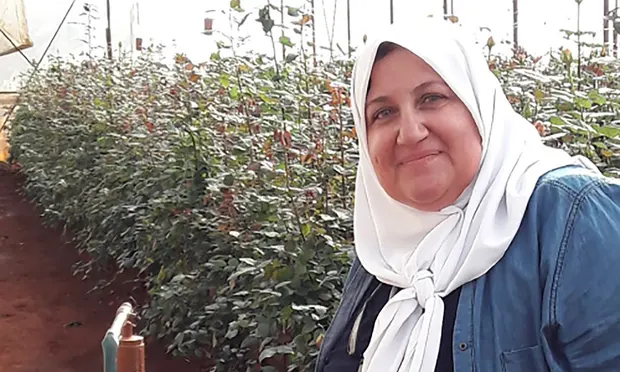
Dr. Bushra AlBlooshi of the Dubai Electronic Security Center (DESC) appointed by the World Bank as the head of the World Bank Group for Cloud Computing, comprising of 27 countries, organisations, and major international technology firms.
Rajaa Cherkaoui El Moursli was part of the research team that made the groundbreaking discovery of the Higgs Boson particle.
Moroccan prominent nuclear physicist Rajaa Cherkaoui El Moursli was featured this year on the list of Forbes 50 Over 50 for the Middle East and Africa (MENA) in recognition of her outstanding scientific contributions.
El Moursli’s research has helped prove the existence of the Higgs Boson, which is the particle responsible for the creation of mass.
“While her almost 30-year-long career in science has been filled with achievements, it’s a career that would not have existed had she not convinced her father to let her seek out a graduate degree in France in the early 1980s,” Forbes wrote. This was a time when Moroccan women were “expected to leave home to marry and not pursue a vocation.”
After earning her Ph.D in Nuclear Physics from the University of Joseph Fourier in Grenoble, France, El Moursli returned to Morocco in 1982. There, she joined the Faculty of Sciences at the University Mohammed V in Rabat.
Early in her career, she took the helm as the head of the Laboratory of Nuclear Physics in Rabat. El Moursli’s research focuses on the applications of nuclear physics, medical physics, and high-energy physics.
A pivotal moment in her career occurred in 1996 when she became an integral part of Morocco’s participation in the international ATLAS collaboration at the European Organization for Nuclear Research (CERN). The event marked her entry into one of the world’s most prestigious scientific research centers, located in Geneva.
El Moursli’s contributions have extended beyond the laboratory giving her membership with international organizations such ATLAS, KM3NET, and ANTARES.
Within these roles, she has been vital in creating and implementing master’s degree programs at her university, notably creating Morocco’s first master’s program in medical physics. Currently, over thirty graduates from her program hold crucial positions as radio physicists in Moroccan hospitals.
Throughout her career, she has supervised numerous doctoral and master’s students and has played a crucial role in building and strengthening academic programs.
In 2015, she became the first Moroccan to receive the L’Oreal-UNESCO award for Women in Science, representing Africa and the Arab States.
El Moursli served as VP of Research, Innovation, Cooperation, and Partnership at Mohammed V University. She also chaired the competition program “My Thesis in 180 Seconds.”
Her accolades include being a fellow of the World Academy of Sciences (TWAS) and serving on the “For Women in Science” international jury.
In 2017, she was honored by the Organization of Islamic Cooperation for her outstanding contributions to science and technology in the Islamic world.
Now in 2024, El Moursli continues to play a pivotal role in shaping the global scientific landscape and showcasing Moroccan achievements to the world.
The Egyptian architect turned photographer walks us through his award-winning photographs in Dubai.
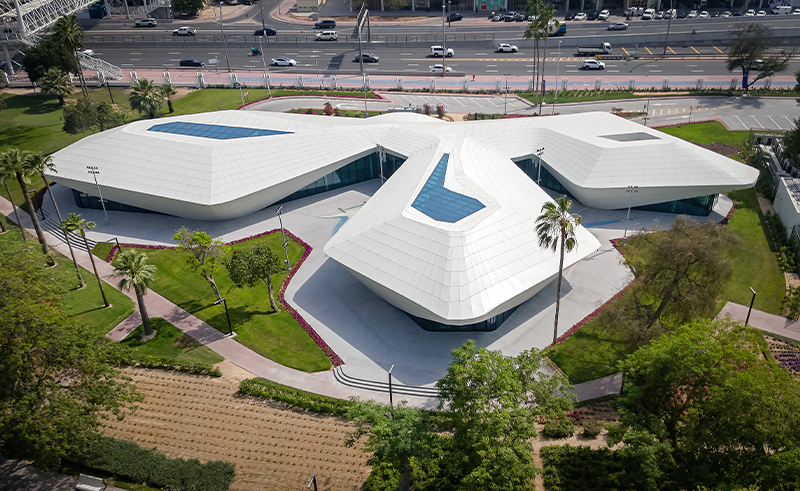
Renowned Egyptian architectural photographer Nour El Refai was announced as the winner of Architecture Masterprize 2023 Photography Award in the ‘Healthcare-Exterior’ category for his work on Thukher Club, a seniors social club in Al Wasl, Dubai which was designed by Naga Architects. This is the second year in a row that El Refai wins the prestigious award, after his shots of Museum of the Future won the ‘Cultural-Interior’ category in 2022.
Capturing the organic architecture and layout of Thukher Club, the brilliance of El Refai’s photographs rest in their nuanced approaches. From meticulous compositions and dramatic perspectives to calm lighting and consistent tones, his work helped translate Naga Architects’s design and concept.
Over the past decade, El Refai has steadily grown into a benchmark in architectural photography within the MENA region. Whether it’s stunning summer houses or cultural centres, his work is helping document the design upheaval taking over the region. In Al Wasl, he delivers a masterclass in the relationship between architecture and lighting.
Light rain set the tone to the first day of photographing Thukher Club. “Clouds felt dramatic. For Naga Architects, it made sense to opt for a clear sky to define the architecture,” El Refai tells SceneHome. “I adjusted the composition based on the natural sky and clouds to balance the architecture without overshadowing it.”
A key parameter of El Refai’s work on Thukher Club was our yellow dwarf star. “The sun’s movement helped define the masses. I visited early in the day and imagined the shape of shadows against them,” he recalls. After almost completing his work, El Refai revisited Thukher Club at noon, which required a new set of permissions since it was during a peak time, when crowds of people would pass through. “When the sun’s perpendicular there’s contrast between the masses and the foreground. Human elements add a sense of scale. It shows you how the masses overlap, that’s why I needed the sun to be high. Had it been low, both surfaces would’ve been white and lacked shade.”
The exterior masses of Thukher Club featured irregular and organic forms. Its main entrance, covered by undulating architecture, was photographed from two different angles; one emphasises its curves before sunset and the other has a wider view that establishes context. “Lines guide me in terms of where to stand and look, and lenses provide the freedom to shift in direction,” El Refai says. Both perspectives guided him and how shifts were illustrated in the former entrance image.
“I exaggerated the curve by getting closer to the building with an acute angle. I wasn’t photographing elevations but accentuating them,” he says, referring to the dramatic perspective where the building appears in motion towards its vanishing point. On the far right side of the same image, Thukher Club’s logo (which is the abstracted layout of the buildings) appears from within the club. To get this shot, El Refai kept adjusting the frame until it felt right.
Every architectural project presents unique challenges to photographers. Once they’ve become confident in their process and tools, only then will they be able to showcase it in the best light possible. That’s something El Refai learned from practice. “Practice makes you understand that you don’t have to be perfect,” he says. “You understand the parameters of perfection but more importantly you’re able to tell when it’s enough, how to have vision and imagine situations in advance.”
In Al Wasl, El Refai predicted that night shots would be challenging because lamp posts close to the building switched between too many colours. A full day was spent solving the issue and as a result, instead of having 10 colours switching during twilight, there were only three. This was an example of the importance of preparing in advance and understanding the project.
From inside, Thukher Club was composed of three main spaces with skylights providing natural light. An all-white interior provoked nuanced approaches by El Refai, which conveyed the desired level of brightness intended by the design, highlighted the importance of toning and how subtle changes in composition make all the difference. In one of the shots, El Refai pictures a space flanked by a corridor, followed up by a closer shot that places viewers within the seating area.
“I tried to show different levels without appearing too overlapped,” El Refai says. “The oddity of photographing a 3D space into a 2D plane is that people don’t experience space in 2D, so when you add it on a page the masses blend together, and you have to figure out the point from which you’re photographing and the lens you’re using in order to ease the composition.”
Once the composition is settled, the rest of the process includes lighting, editing and adjusting the layers and tones. “Consistency of tones is crucial. Depending on camera measuring, sunlight and timings, tones are always changing but they need to remain consistent,” El Refai adds. Between day and night, there are naturally changes in tones but in both sets of images the tones of each need to remain consistent.
“Most of the work is in the composition and the rest is timing,” El Refai continues. “It’s all about enjoying the process. I roam around the project to get a feel for the spaces and the relationships between them.” To be able to get these shots, El Refai schedules the entire day and determines how much time each perspective will have, the window of opportunity so to speak.
presentation. “Transitioning from day to night needs to be seamless, unless designers request to emphasise different moods of the same space,” he says. “I prefer telling the story of the project as an experience, walking from one space to another. Visual storytelling is of paramount importance, I don’t deliver an album without ordering it. It may not be the same order of photography because that depends on context, presenting the images is a different story. The order depends on the story that I want people to feel.”
When asked for advice for upcoming photographers, El Refai says, “Research the designer and the design to understand the project. If you receive plans or renders, use them to envision the space. On the ground, there will be some changes but when you imagine the project’s architecture you can interpret it properly through images.”
If El Refai’s insights are an indication of anything, it’s that preparing for a shoot is equally as important as the shoot itself. Whether it’s the scheduling or communication, proper briefing and communication, when a photographer understands the context, they find the freedom to explore nuanced angles. With time, as demonstrated by El Refai’s serial award-winning approach, there will be less photos and more keepers.
Saudi Arabia is set for a groundbreaking technological venture in the mining sector with the launch of the Geoscience Data Analytics Center.
Commissioned by the Saudi government, the facility is expected to commence operations later this year.
Speaking to Arab News at the Future Minerals Forum, Commissioner Rob Wood emphasized the interdisciplinary nature of the center and the significance of developing new programs to train professionals with hybrid skills.
Wood said: “It will be the very first of its kind globally. It will become operational probably in late 2024.”
Saudi Arabia boasts 31 critical minerals and strategic resources, ranging from gold, and silver to nickel and cobalt.
The Kingdom is poised to establish a third industrial pillar centered on mining, with potential reserves estimated at $2.5 trillion, as Wood also highlighted the significance of the Kingdom’s commitment to diversify its economy.
He emphasized that the Geoscience Data Analytics Center would play a pivotal role in utilizing AI to uncover potential mining deposits.
The $2.5 trillion estimate, Wood clarified, is extrapolated from the known data available, emphasizing that extensive land exploration and data collection support this estimation.
“The amount of land that we’ve actually explored and done data collection for. So, we know that there is a significant amount of opportunity left within the Kingdom that we haven’t explored yet,” he noted.
Wood explained that there is a need to establish new interdisciplinary programs, where geologists will be trained in computer science.
He highlighted novel aspects of the center, such as state-of-the-art robotic labs for core scanning and cumulative effects research.
“Literally, nobody on the planet is doing what we’re talking about,” he claimed, adding: “The intent is that the Kingdom will, in fact, have complete control and will be running the center for decades to come.”
Wood elaborated on the ongoing data collection efforts, stating that the gathered information will be fed into a new artificial intelligence platform capable of conducting analytics to identify high-potential mining targets.
The commissioner emphasized the use of AI in modeling mineral deposits, stating, “We’re using machine learning to uncover these high-potential deposits very early in the process.”
He acknowledged the formidable challenge in the mining sector, particularly the difficulty in identifying new targets, referred to as “greenfields,” which he termed as a highly risky endeavor.
“So frequently, they can go out and do a full drilling program and come back with nothing, and you spend literally hundreds of millions of dollars for potentially no result whatsoever.”
To address this challenge, Wood unveiled the ambitious plan to use advanced artificial intelligence to de-risk the costs associated with finding new targets.
“What we’re looking to do is, in fact, de-risk those costs on the mining companies by using advanced artificial intelligence to, in fact, actually find these new targets,” he explained.
The commissioner emphasized the significance of addressing environmental and social impacts in the mining sector, stating: “One of the things the center is going to be doing is actually complex environmental and social impact research.”
In conclusion, Wood highlighted the uniqueness of Saudi Arabia’s position in undertaking this venture, stating: “The discovery of oil is substantially easier than the discovery of minerals. Minerals require sophisticated analytics to find these new deposits.”
As the Kingdom embarks on this groundbreaking initiative, Wood expressed his optimism, stating, “It’s an exciting time to be in Saudi Arabia.”
source/content: arabnews.com (headline edited)
_________
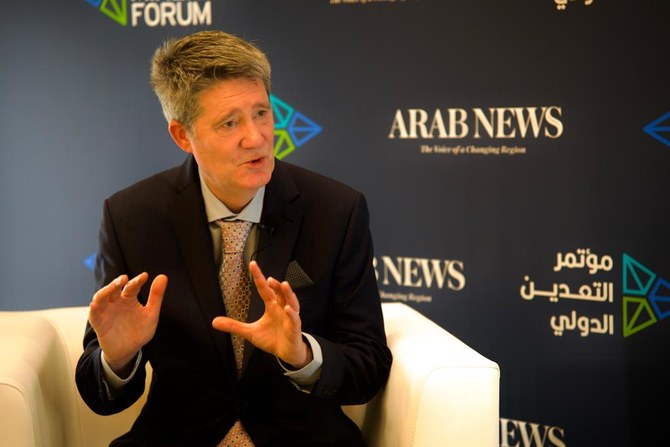
Rob Wood, commissioner of the Geoscience Data Analytics Center, speaking to Arab News.
The initiative is part of the upcoming World Defense Show which will take place in Riyadh from Feb. 4-8
Princess Reema said Kingdom places great importance on promoting and supporting women’s work in various sectors, including defense and security
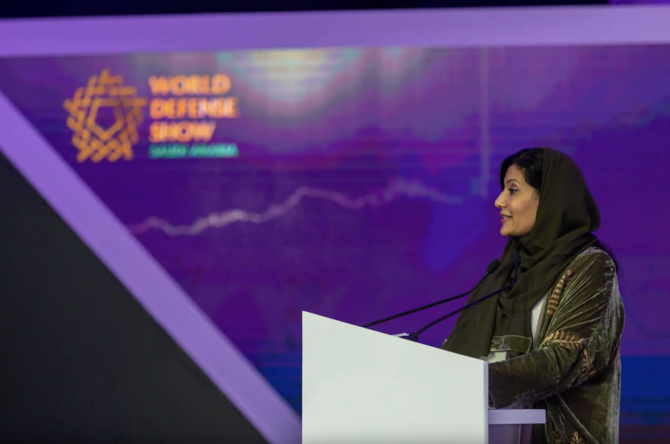
Princess Reema bint Bandar, Saudi ambassador to the US, is to chair the International Women in Defense program.
The initiative aims to promote women’s participation and celebrate their role in the defense sector.
It is part of the upcoming World Defense Show which will take place in Riyadh from Feb. 4-8 under the patronage of King Salman.
Princess Reema, who leads the program, said the Kingdom placed great importance on promoting and supporting women’s work in various sectors, including defense and security.
She said Saudi Vision 2030 had contributed to the success and excellence of women in different fields by integrating them into the Saudi labor market.
“These programs reflect the Saudi government’s commitment to empowering women and increasing their participation globally. The Women in Defense program provides a unique platform to enhance opportunities for further success,” she added.
The program will host executive directors and female leaders from different countries, showcasing women’s achievements, discussing ongoing challenges and exploring their contributions to the defense sector worldwide.
CEO of the World Defense Show, Andrew Pearcey, said the event would focus on the growth of small and medium-sized Saudi enterprises and startups to highlight their talents and ideas in the sector. The Kingdom was now one of the biggest spenders in the defense market, he added.
The first show, in 2022, brought together 600 defense and security exhibitors from 42 countries and recorded SR29.7 billion ($7.9 billion) in deals.
source/content: arabnews.com (headline edited)
___________
The Women in Defense program aims to empower and celebrate female participation in the defense sector. (@WDS_KSA)
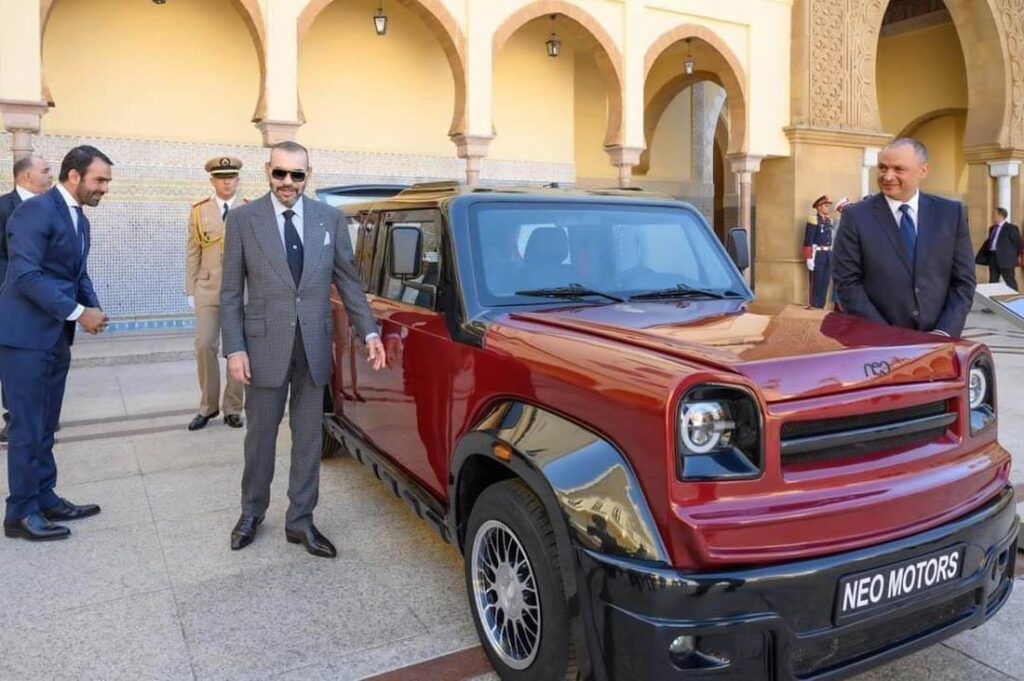
Morocco’s King Mohammed VI presides at the Royal Palace in Rabat the presentation ceremony of the model of the first Moroccan car manufacturer “Neo Motors” and the prototype of a hydrogen vehicle “NamX” developed by a Moroccan.
Morocco’s King Mohammed VI presided, on Monday at the Royal Palace in Rabat the presentation ceremony of the model of the first Moroccan car manufacturer and the prototype of a hydrogen vehicle developed by a Moroccan, two innovative projects that will strengthen the promotion of the “Made In Morocco” label and consolidate the Kingdom’s position as a competitive automotive production platform.
The presentation to the King of the car of “Neo Motors”, a company owned by Moroccan capital, and of the prototype of a hydrogen vehicle of the company NamX, named HUV (Hydrogen Utility Vehicle), underlines the Sovereign’s willingness to encourage and promote the pioneering national entrepreneurial initiatives and the creative capacities, particularly of the Moroccan youth, that these projects embody.
These two industrial initiatives are in line with the High Royal Directions aiming at directing the private sector towards productive investment, in particular in the advanced and future sectors and at stimulating the emergence of a new generation of companies in the Kingdom.
They also confirm the King’s far-sighted vision in terms of sustainable development and the promotion of renewable energies, particularly the emerging field of green hydrogen.
Neo Motors company has set up an industrial unit in Ain Aouda (Rabat-Salé-Kenitra Region), to manufacture motor vehicles for the local market and for export, with a projected annual capacity of 27,000 units and a local integration rate of 65%.
The total projected investment for this project amounts to 156 million dirhams ($15.6 million) and will eventually create 580 jobs.
The final approval of the first vehicle was issued by the National Agency for Road Safety in February 2023. The company has launched the pre-production and plans to inaugurate the industrial unit during the month of June 2023 and to launch the marketing.
This project, which gives birth to the first Moroccan consumer car brand, is carried by national skills. It relies mainly on the ecosystem of local automotive suppliers developed by the Kingdom.
As for the prototype of the hydrogen vehicle of NamX, it was designed in collaboration with the Italian design office and coachbuilder of reference Pininfarina. The interior design of the vehicle has been realized by Moroccan talents.
Indeed, the HUV model will be supplied with hydrogen by a central tank that will be completed by six removable capsules, guaranteeing a significant autonomy and facilitating the hydrogen recharge in a few minutes.
This pilot project places Morocco firmly in the ongoing worldwide momentum to develop new forms of transport that combine efficiency and respect for the environment.
The monarch awarded the Wissam Al Kafaa Al Fikria to Nassim Belkhayat, founder and CEO of Neo Motors company, and Faouzi Annajah, President and founder of NamX company.
Dr Hamada Elkady, executive director of Delta Farm, believes that the Egyptian desert has the potential to be a successful shrimp producing region.
Dr Elkady has been the executive director of Delta Farm – a tilapia and shrimp farm in Wadi El Natrun – since 2019.
Can you briefly describe your aquaculture career?
I obtained a doctorate and a master’s degree in aquaculture, but upon graduation, I worked as the production manager of the Al-Amana Feed Factory until 2013. Then I worked in tilapia farms for my family in Kafr El-Sheikh. I have been the director of Delta tilapia and shrimp farm in Wadi El Natrun since 2019.
What inspired you to become a shrimp farmer?
We were looking for an alternative to tilapia culture, and shrimp was the ideal solution. What helped us were the factors available at our Wadi El Natrun farm, such as the salinity of the water and the appropriate climate for vannamei shrimp culture.
What were the main challenges to overcome when you set the farm up?
The first aquaculture season there in 2019 was dedicated to Nile tilapia culture. We started trialling vannamei shrimp farming in 2021 in two ponds and the success of the trial was an incentive for us to convert more of the farm to shrimp production, and perhaps move purely to shrimp in the future.
A key challenge was to search for a place with a water source with a suitable salinity for aquaculture, which was also close to the markets. After that, the design of the farm itself, in order to save energy, adjust production intensity, improve feed conversion ratios and ensure the best waste disposal methods.
Can you provide as many details as possible about the scale, design and operation of the farm?
The total land area is 70 acres and includes nine 70 by 70 metre ponds lined with polyethylene, in addition to four 40 by 40 metre ponds used for rearing and nursery. The ponds are fed by groundwater from wells and we use the waste water in a hydroponic component, which produces crops that tolerate salt, such as alfalfa (Medicago sativa) and the Barhi date palm (Phoenix dactylifera ‘Barhi’) in the parts of the farm with no ponds.
How many tonnes does the farm currently produce per year?
Our production is mixed between tilapia and shrimp. There are three shrimp ponds with a production average of 2.6 tonnes of shrimp, with production sizes ranging from 30 to 40 shrimp per kilogram. There are also four nursery tanks each holding 100,000 shrimp larvae. The current year’s production consisted of one cycle of shrimp because we are still developing a plan to produce more than one cycle.
Meanwhile, we produce around 135 tonnes of tilapia from six ponds, selling them at sizes ranging from 250 to 350 grams.
What does a typical day’s work consist of on the farm?
Most of the day is split between the disposal of organic waste from the ponds, which we do three times, and feeding, which takes place four times. We also take samples to ensure that the water conditions are good.
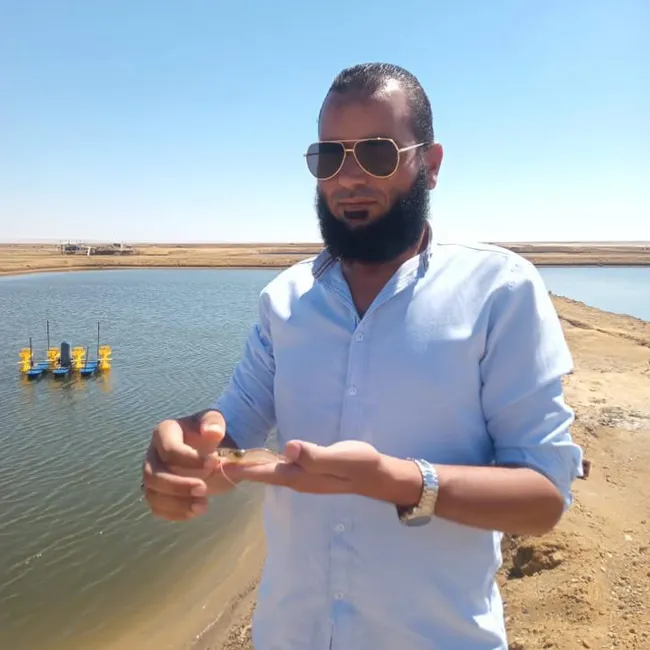
Dr Elkady next to one of the shrimp ponds at Delta Farm
The farm has three shrimp ponds with a production average of 2.6 tonnes of shrimp, while six additional ponds produce around 135 tonnes of tilapia
What was the project’s original goal and what has been achieved so far?
The original goal was to produce high-quality fish in an area far from all sources of pollution and with the highest production rates. Next season, we aim to produce 10 tonnes of shrimp per acre, and then ramp this up until we reach optimal global production rates.
What are the most important factors for ensuring efficient shrimp production in a desert environment?
The salinity level of the water source needs to be reasonable for shrimp culture, and the level of 20-30 ppt has the advantage of high feed conversion rates and low disease incidence.
A sandy loam soil which retains water can save the cost of lining the ponds with polyethylene
A reliable source of electricity to operate the aerators and pumps from the wells – solar energy can reduce costs.
Trained workers and experience are required because aquaculture in the desert differs greatly from other climates.
What impact has the rising costs of inputs such as feeds had on you?
The rise in feed prices represents a major challenge but the price of shrimp is still high enough to make profits. However, it is harder to make profits from tilapia.
What regions and production systems have the most scope for shrimp farming growth in the coming years?
Promising production systems depend mainly on the type of surrounding environment and the availability of water, but in desert lands, intensive and semi-intensive systems – including biofloc and recirculation aquaculture systems (RAS) – are among the best options.
One of the most promising areas for aquaculture in Egypt is the Al Maghrah area in Matrouh Governorate, which is characterised by good soil, a suitable climate and a water source with suitable salinity.
How would you like your farm to develop in the coming years?
The most important part of our development plan is installing alternative energy sources, such as solar panels, and developing the nursery unit so that we can do more than one cycle of shrimp per season. We are also looking to cover the ponds with polytunnels.
The Banker highlighted Jouahri’s strategies to safeguard Morocco’s economic stability in 2023, as well as his dedication to social causes.
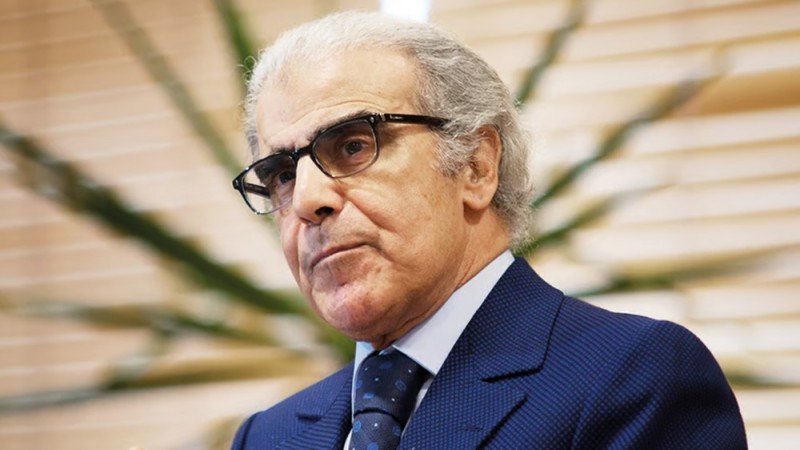
International financial affairs magazine The Banker has named the Governor of Morocco’s Bank Al-Maghrib (BAM) Abdellatif Jouahri Africa’s Central Bank of the Year 2024.
Earning the top spot for Africa in the Financial Times-owned outlet’s ranking highlightedJouahri’s leadership in the African banking sector, as well as his contributions during a period of remarkable growth and resilience.
Jouahri’s tenure spans two decades, marked by his adept steering of Morocco’s banking sector and the broader economy.
The Banker acknowledged Jouahri’s role in the relief efforts following the devastating Al Haouz earthquake that hit central Morocco in September of 2023.
The magazine noted that Bank Al-Maghrib, Morocco’s central bank, donated MAD 1 billion to the country’s relief fund for the earthquake, and “was quick to offer support for sectors of the economy most impacted by the tragedy.”
In addition, the Banker lauded Jouahri’s decisions, including BAM’s “relative success” in tackling inflation. The Moroccan central bank was one of the first African central banks to hold interest rates in 2023, after lifting them to 3% in March, allowing the economy to absorb the impact of rate rises.
“After a slight uptick in August, the bank continued to hold its nerve, a move that was vindicated by inflation falling back down to 4.3% in October from a high of 10.1% in February,” the magazine explained.
The Banker also highlighted the launch of Morocco’s instant payment system (IPS) in June, which aimed to advance the country’s financial infrastructure.
Commenting on the recognition, Jouahri expressed “considerable satisfaction” for receiving the top spot in the ranking, emphasizing the key role of central banks in overcoming global challenges.
“I am convinced of central banks’ pivotal role in overcoming the major challenges that beset the world. Foremost among these is climate change: the consequences of which are steadily worsening,” he said.
In light of escalating political tensions and the prolonged inflationary trends, Jouahri underlined the heightened challenges that central banks face.
He called on these financial institutions to “optimise their monetary policy decisions to safeguard the purchasing power of citizens, especially the most underprivileged among them, and improve investor confidence in the future of their companies.”
Ras Al Khaimah welcomed the New Year with yet another record-breaking eight-minute-long firework and drone display setting two new Guinness World Records titles in a stunning spectacle that lit up the skies along 4.5 km stretch of Ras Al Khaimah’s waterfront.
Already holding several Guinness World Records titles for its legendary fireworks New Year’s Eve shows, the Emirate has made history once again with a jaw-dropping show that broke the Guinness World Records titles for the ‘Longest chain of aquatic floating fireworks’ for a grand total of 5.8 km and the ‘Longest straight-line drones display’ for a total length of 2 km.
The mesmerising show featured groundbreaking techniques that have never been attempted before using a combination of 1,050 LED drones, a ‘carpet’ of aquatic floating fireworks and acrobatic pyro planes display inspired by Ras Al Khaimah’s natural wonders – the desert, the sea and the mountains – all choreographed to music specially composed for the celebration.
Raki Phillips, Chief Executive Officer of Ras Al Khaimah Tourism Development Authority, commented, “Breaking two more Guinness World Records titles has set the stage for an unforgettable night of celebration bringing together thousands of visitors and residents.”
“As we kick off the new year, 2023 has been an exceptional year for tourism in Ras Al Khaimah with numerous achievements and the highest ever annual number of visitors recorded, propelling the Nature Emirate further in attracting over 3 million annual visitors by 2030.”