JORDANIAN-AMERICAN: Farah Abu Adeela Crowned Miss Arab USA in Arizona Beauty Pageant

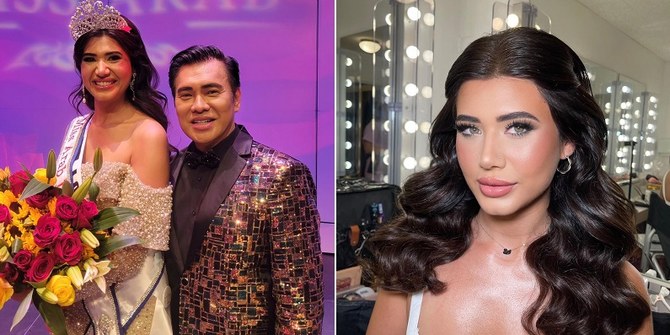
US Jordanian contestant Farah Abu Adeela from the state of Illinois was crowned Miss Arab USA at the beauty pageant’s finale in Arizona over the weekend.

The new Miss Arab USA, who is a model, takes over from 2022’s winner, Moroccan American Marwa Lahlou.

The annual pageant, which returned in 2022 after a two-year hiatus due to the COVID-19 pandemic, was held in Arizona this year. Produced by The Arab American Organization (AAO), the pageant is “founded on the basis of advancing the cause of young ladies of Arab descent,” according to its website.

The swimsuit category does not feature in the pageant, with the stated aim of organizers being to “select an honorable Arab young lady to represent our culture in the US and worldwide for one year.”

This year’s ceremony featured a performance by dance troupe Zeffa of Phoenix.

source/content: arabnews.com (headline edited)

____________

Farah Abu Adeela nabbed the coveted tiara at the 2023 Miss Arab USA pageant. (Instagram)

____________________________

AMERICAN / JORDANIAN

LEBANON: Fady Dagher the Lebanese Immigrant Who’s Risen to become Montreal’s Police Chief

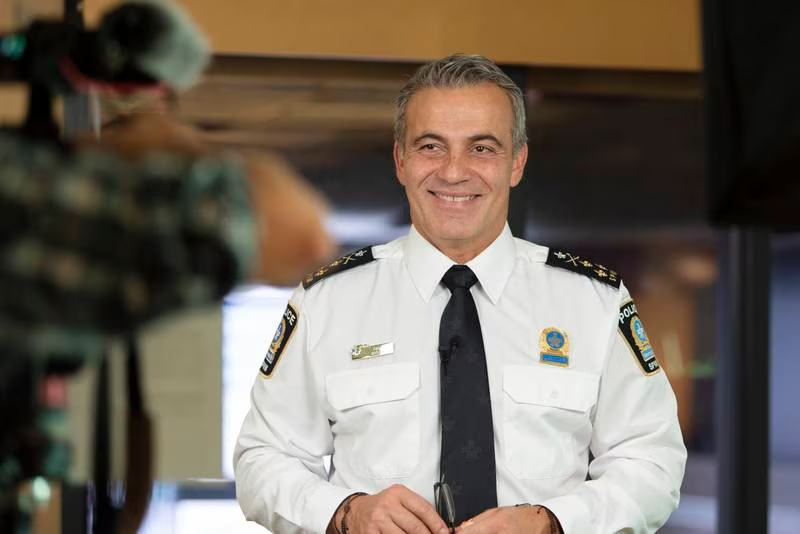
Fady Dagher is the first minority-background officer to head Canada’s second-largest force.

A map of Lebanon hangs in Chief Fady Dagher’s office in the grey stone headquarters of Montreal’s police force. It is a constant reminder of where he is from and the place he hopes to return to.

“For me, it helps me to stay connected to my roots and not to forget where I come from,” Mr Dagher said.

The 55-year-old Lebanese-Canadian officer, who moved to Canada when he was 17, is the first person from a minority background to lead Montreal police in the force’s nearly 200-year history.

His appointment in January was the culmination of a lifetime of service to his adopted homeland.

“I always felt I had a debt to the Montreal community,” Mr Dagher told The National. “They welcomed me so well and it was a duty for me to serve them.”

Softly spoken with a slightly gravelly voice, Mr Dagher said that when he came to Canada in 1985 his original plan was to go to university and then return to Abidjan in the Ivory Coast, where his father ran a manufacturing company. But a chance encounter with a police officer drew him to a different life, despite strong opposition from his father.

“Oh my God, he lost it,” Mr Dagher recalled with a chuckle.

Not even an unplanned trip from his beloved father could dissuade Mr Dagher from pursuing a career in law enforcement.

“I didn’t see my father from 1985 to 1991 and he came right away to discourage me.”

While policing may not have held the same allure and status in Lebanon and Ivory Coast as it did in Canada, Mr Dagher has brought the values of both places to his role leading Montreal’s nearly 5,000 officers.

“In Lebanon and Africa, we really have the community spirit deep in us and in the police, if you don’t have the community spirit, you cannot be close to the community and you cannot find your resolve to apply the law,” he said.

Mr Dagher has championed a community approach that involves immersing officers in the neighbourhoods they patrol.

The police chief leads by example. Earlier this year, he spent five days living and sleeping at various Montreal homeless shelters to better understand the struggles faced by the city’s homeless population.

“There is no way you can lead without walking the talk,” Mr Dagher said.

At the heart of his approach to policing is a Lebanese ethos.

“I want to be able to be inside those houses, sit with them, cook with them, clean with them, eat with them and see what their stories are,” he said.

He is hoping he can help to transform a police force that is facing a severe shortage of personnel and a city grappling with a sharp rise in gun violence.

Mr Dagher estimated that the force is 20 per cent to 30 per cent short of the officers it needs. A huge part of his first few months on the job has been to go on a charm offensive trying to attract new recruits.

“That’s my first priority,” he said. “To be able to recruit and to keep the recruit is huge.”

He’s looking at immigrant communities and hoping his own career can help new Canadians see a potential future in the ranks of the Service de Police de la Ville de Montreal.

Like many cities across North America, Montreal recorded a sharp increase in violent crime during the pandemic, a trend that continued in 2022.

Mr Dagher said the force was actively looking at ways to reverse that trend and was optimistic it would.

In terms of gun violence, “last year was the worst year that we went through”, he said, but noted that since he took over in January gun violence appears to be down, a trend he hopes will continue through to the end of the year.

Mr Dagher, who signed a seven-year contract, is determined to help recharge the department, but he dreams of having one more professional act after he retires.

“I am hoping that one day I will finish my career as ambassador of Canada in Lebanon, so I can go back to where I come from,” he said.

It would be the cherry on top of an exceptional life and allow Mr Dagher to spend time closer to his ancestral village of Bikfaya in the Mount Lebanon region.

Even while he is busy leading Canada’s second-largest police force, his mind and heart are never far from the small Mediterranean country that generations of Daghers have called home.

Throughout his busy career, he said, Lebanon has always held a restorative power.

“Every time I go back to Lebanon my heart beats better, again and again. My heart is in good health when I go to Lebanon because I feel welcomed,” he said.

source/content: thenationalnews.com (headline edited)

__________

__________________________

CANADIAN / LEBANESE

GCC – Central Asia Summit, Jeddah, July 19th 2023

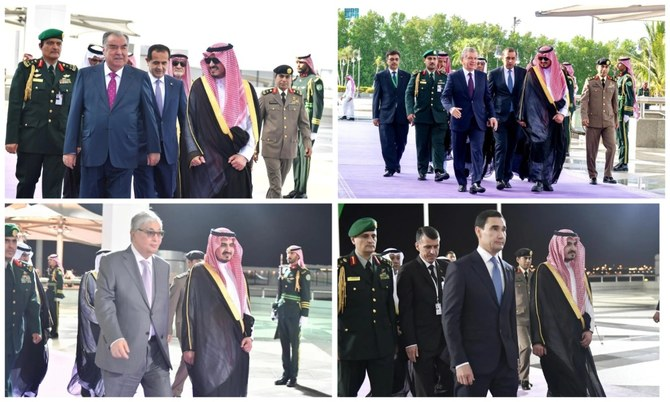
Saudi Arabia’s Crown Prince Mohammed bin Salman welcomed on Wednesday the heads of delegations participating in a summit of Gulf Cooperation Council and Central Asian countries.

Participants in the Jeddah summit include the presidents of Kazakhstan, Kyrgyz Republic, Tajikistan, Turkmenistan, and Uzbekistan.

From the GCC side, the Emir of Qatar Sheikh Tamim bin Hamad Al-Thani, the Crown Prince of Kuwait Sheikh Meshal Al-Ahmad Al-Jaber Al-Sabah, the Vice President of the UAE Sheikh Mohammed bin Rashid are attending.

Oman and Bahrain’s rulers are being represented by Sayyid Asaad bin Tariq Al-Said and Sheikh Nasser bin Hamad Al-Khalifa respectively.

Sheikh Nasser praised the active role played by the Kingdom in enhancing cooperation and coordination among GCC countries and consolidating friendship and joint cooperation with other countries.

source/content: arabnews.com (headline edited)

____________

______________________________

SAUDI ARABIA / GCC STATES

QATAR Investment Authority Invests $200mn; Buys Stake in NBA, WNBA & NHL

A report by the Financial Times  has said that the country’s sovereign wealth fund, Qatar Investment Authority (QIA), has taken a stake in the owner of Washington’s professional basketball and hockey teams in US sport.

As per the report, the fund is paying $200mn for a 5% stake in Monumental Sports and Entertainment (MSE) in a deal that values the owner of the National Basketball Association’s Washington Wizards, the Women’s National Basketball Association’s Washington Mystics and the National Hockey League’s Washington Capitals at $4.05bn.

The report also mentions that the investment from QIA, at an estimated $450bn in assets, comes less than a year after the NBA amended its bylaws to allow sovereign wealth funds to invest in clubs.

The QIA said, “As one of the largest integrated sports and entertainment companies in the country, MSE’s platform provides unique opportunities and scalability for growth and partnerships”.

As per the report, people familiar with the Monumental deal said that the QIA was taking a stake in the group as a financial transaction to gain exposure to a company with a diverse range of assets. As per reports, QIA will not gain board representation as part of the transaction.

Source: Financial Times

Cover image credit: www.sportingnews.com

source/content: iloveqatar.net (headline edited)

______________

_________

QATAR

MAURITANIA: Fatimetou Mint Abdel Malick : Role Model for Africa’s Women

Fatimetou Mint Abdel Malick has been the mayor of a district of the Mauritanian capital Nouakchott for 14 years. She is living proof that women can make it to the top even in conservative Muslim societies. Elisa Rheinheimer introduces a courageous Mauritanian.

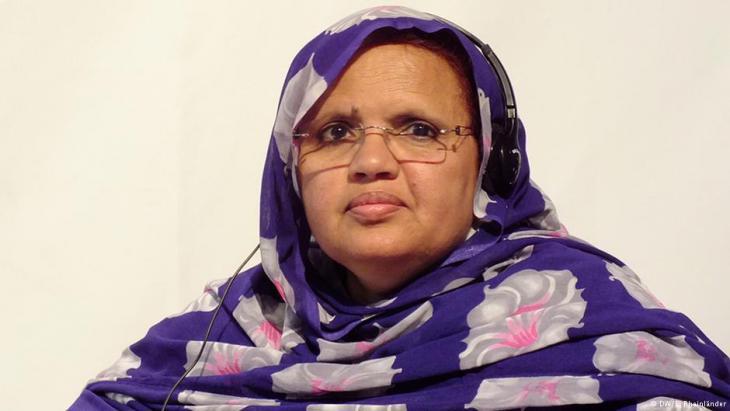
Fatimetou Mint Abdel Malick has a warm, maternal demeanour and a firm handshake. Keen eyes sparkle behind her glasses. A petite woman in a traditional flowing robe and a blue headscarf decorated with pink flowers, she doesn’t look like a politician in charge of a 60,000-strong community – at least not to Western eyes.

She is mayor of a district of the Mauritanian capital Nouakchott – and has been for 14 years. That makes her not only a pioneer in her own country, but also a role model for many African women. “I never actually wanted to go into politics,” she says with a laugh, “but I have a very social vein and it was a kind of calling. I wanted to change things in my city for the better.”

Now 57, she originally studied computer science in Belgium. It was during her time there that her eyes were opened to women’s opportunities. Years later, in 2001, she ran for mayor in a district in her home city of Nouakchott – and won at the first attempt. During her first period in office, she was still the only woman mayor in the country. “216 men – and me,” she says, her voice betraying well-earned pride.

Opening the door to politics for other women

In Tevragh-Zeina, the district of the capital of Nouakchott for which she is responsible, everyone knows her. She has achieved a great deal there, improving school education – particularly for girls – reforming the administration, reorganising refuse disposal and investing in infrastructure. Fatimetou Mint Abdel Malick wanted to build car parks, playgrounds and football pitches – and she did.

It sounds so easy when she talks about it now, but it certainly wasn’t quite that simple: “To begin with, I found the responsibility and the expectations people placed on my shoulders a burden,” she says. “After all, I had to be successful so as to open the door for other women and enable them to get into politics.”

She has had some success in this respect. There are now three other women mayors in Mauritania. She herself has never felt uncomfortable in her country’s male-dominated political arena. “Women have a very good status in our society,” she explains, “that made it easier for me.”

Development and religion hand in hand

And religion? What role does faith play in her life? Fatimetou Mint Abdel Malick looks rather perplexed, cocking her head in surprise as if she considers the question superfluous. “A very important one,” she says after a pause, “I am a Muslim.”

Development and religion, she says, are not mutually exclusive but belong together. She rejects the idea that Islam oppresses women and makes it hard for them to have a career of their own. In the Mauritanian religious tradition, she says, Islam virtually demands that women play an active role in society.

A mother of three grown children, Fatimetou Mint Abdel Malick is not only a local politician but also president of the Network for Locally Elected Women of Africa. She is invited to conferences and panel discussions all over the world, flying from one continent to the next. “Being up in the air is perfectly normal for me,” she says. Sometimes 24 hours are not enough to get everything done that she wants to do.

Raising awareness of environmental issues in Mauritania

One reason for that lack of time is that she also feels responsible for environmental protection and catastrophe management in her country. Mauritania has to deal with water shortages, sandstorms and desertification.

She organises workshops in schools, for instance, to raise awareness of environmental issues among children and young people. She has launched campaigns for the protection of dunes, planted date palms in the city with women’s groups, and called on local people to clean up the country’s beaches.

Her calm, relaxed demeanour is certainly part of her recipe for success. Fatimetou Mint Abdel Malick was recently re-elected for her third term in office, and has enough plans and projects in mind for the next 20 years. Mauritania is at No. 158 on the Human Development Index, close to the bottom of the ranking.

This hardworking mayor has a lot of work ahead of her. She currently has more than 3,000 fans on Facebook; in real life, there are no doubt many more than that.

source/content: en.qantara.de / Elisa Rheinheimer

____________

________________

MAURITANIA

U.A.E Ranks 7th Globally in Terms of Per Capita National Income

According to the World Bank, the UAE has maintained its place among the list of countries with the highest per capita income based on the Atlas method.

The UAE ranked seventh in the world in terms of per capita national income, according to the latest World Bank data.


The UAE’s per capita income increased by $10,781 from 2021 to $87,729 in July 2022, based on purchasing power parity in current international dollars.


The international dollar is a virtual currency that is used for evaluating the purchasing power of various countries.


It is based on the US dollar, but it has the same purchasing power as each country’s local currency.


According to the World Bank, the UAE has maintained its place among the list of countries with the highest per capita income based on the Atlas method while also using current US dollar prices.


Using the Atlas method, the World Bank breaks down the world’s economies into four income groups: low, lower middle, upper middle and high.


The categorizations are revised annually depending on the previous fiscal year’s per capita income.


The UAE’s per capita national income in current US dollars rose to $48,950 in 2022 from $43,460 in 2021, surpassing the pre-COVID-19 level of $46,210.


The Atlas method, which was developed in its current form in 1989, is used to express gross national income in US dollars.

source/content: arabnews.com (headline edited)

_____________

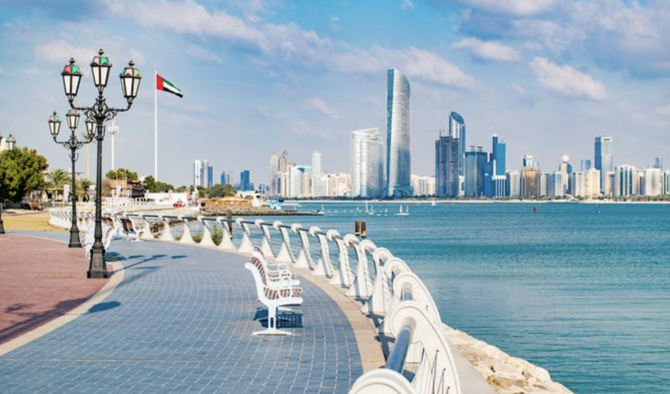
The UAE ranked seventh in the world in terms of per capita national income, according to the latest World Bank data. (Shutterstock/File Photo)

___________________________________

UNITED ARAB EMIRATES (U.A.E)
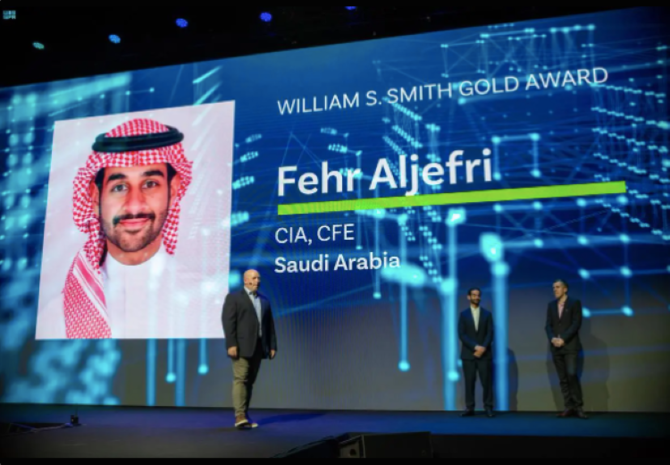
SAUDI ARABIA Auditor Fehr Al-Jefri Becomes the First Arab to Win the William S. Smith Gold Award for Auditing

Fehr Al-Jefri, a member of the Saudi Institute of Internal Auditors, achieved the highest score in the William S. Smith Award for the Certified Internal Auditor program.

He earned the gold medal in a competition against candidates from the Philippines, China, and the US.

Al-Jefri is the first Arab to receive the highest award offered for auditing by the CIA, which consists gold, silver, bronze, and student levels. These awards are determined by individual performance in the core CIA exams.

The International Institute of Internal Auditors recognized and honored Al-Jefri for successfully completing all core exams within a year.

His accomplishment is a testament to the support provided by the Saudi leadership to individuals in various fields, the Saudi Press Agency reported on Tuesday.

According to the International Institute of Internal Auditors, this recognition signifies the role of Saudi Arabia in supporting the internal auditing profession and its practitioners. It highlights the “efforts made to help them overcome challenges, succeed in their professional work, and enhance work mechanisms.”

Abdullah Saleh Al-Shebeili, the CEO of the Saudi Institution of Internal Auditors, affirmed that the country’s achievements persist due to the steadfast support of the leadership toward the overall control system and, specifically, the internal audit profession. Al-Jafri’s victory serves as undeniable evidence of this sustained support.

Al-Jefri expressed his pride in receiving the award, considering it not only a personal accomplishment but recognition for his nation.

He also praised the role played by the Saudi Institution of Internal Auditors in bolstering the profession and advancing its practices.

Al-Jefri highlighted the institution’s efforts in organizing courses and seminars aimed at enhancing efficiency, improving performance quality, and strengthening oversight.

He also expressed his gratitude and appreciation to the institution for providing him with the necessary resources and support to achieve success. He emphasized that obtaining the CIA certificate signifies a high level of excellence in the profession and creates numerous opportunities for career advancement.

The William S. Smith Award, launched in 2010, catalyzes the advancement of the CIA program. It showcases participants’ commitment to addressing evolving challenges and equipping professionals with the necessary experience, credibility, knowledge, and competence to excel in the field and make a difference in various domains.

source/content: arabnews.com (headline edited)

__________

Fehr Al-Jefri, a member of the Saudi Institution of Internal Auditors, and the first Arab to receive the Gold William Smith Award for the CIA. (SPA)

__________________

SAUDI ARABIA

ARABS IN NEW YORK, USA: Tour guide dubs Little Syria ‘the best-kept secret in New York history’

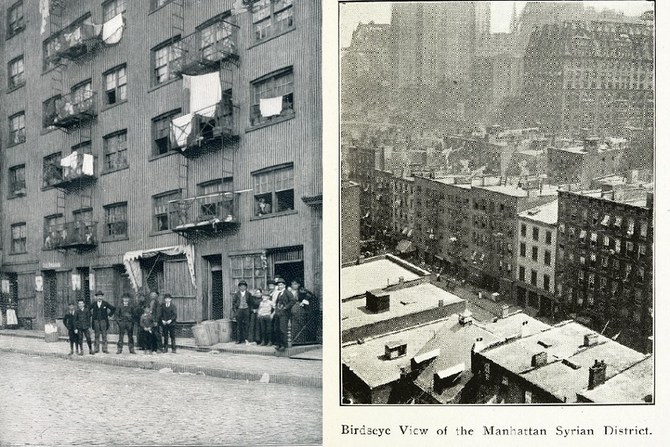
Longtime scholar Linda Jacobs calls it “the best-kept secret in New York history.” She is talking about New York City’s forgotten Syrian enclave of immigrants (often referred to as Little Syria) that once thrived in the late 19th and early 20th centuries, forming the first Arab-speaking community in the US.

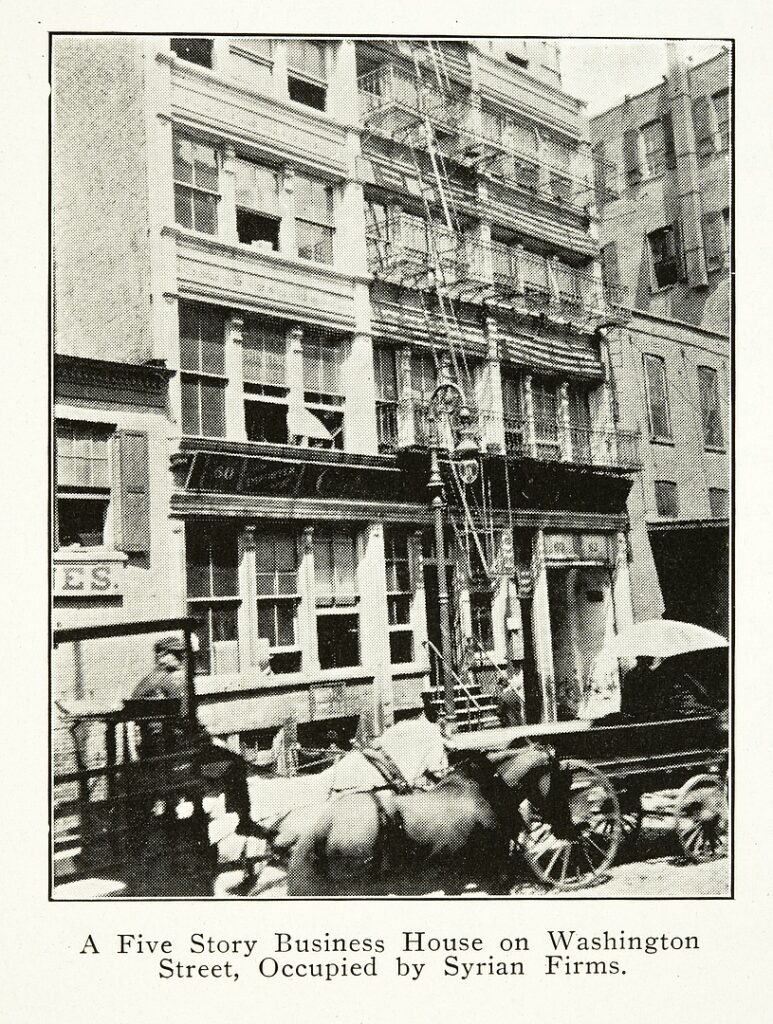
As part of an initiative supported by Lower Manhattan Cultural Council, Jacobs led in-person walking tours on Washington Street, the main hub of Little Syria, this summer. For Jacobs, it is a story that hits close to home.

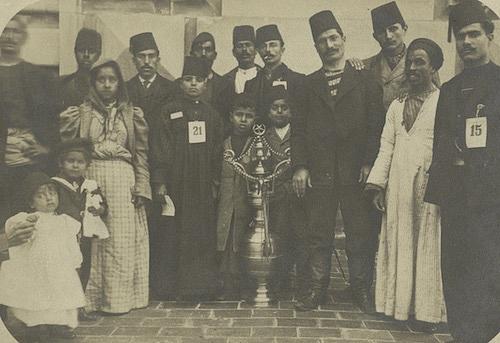
Just-landed Middle Eastern immigrants at Ellis Island, ca. 1905. (Supplied)

All four of her grandparents emmigrated from modern-day Lebanon in the late 1800s, moving to Washington Street. “I was just interested in doing my family genealogy, and more importantly, for me, understanding if the myths or stories we were told as children in our family matched the reality … Some made it, some didn’t,” she told Arab News.

Aside from the presence of Arabs, Washington Street was home to other nationalities, including German and Irish families. It was an economic and cultural center, full of stores, cafes, and factories. It was not a bed of roses, though, according to Jacobs.

Built on landfill, Washington Street suffered from poor living conditions and a lack of clean air. Because the area was located near the tidal Hudson River, water would come up through the basements of tenement buildings.

60-62 Washington Street, where dozens of Syrian-owned businesses were located, 1903. (Supplied)

To make matters worse, the rate of infant mortality, due to tuberculosis, was high. “It makes you cry, it’s really sad,” said Jacobs. “You can imagine that people did not want to remember this time of their lives, and I think that’s why my grandmother never talked about it. She never mentioned the word(s) ‘Washington Street’.”

A majority of the people referred to as Syrians who came to New York City most likely hailed from Lebanon, seeking better economic opportunities. Those who initially arrived were farmers and laborers, later followed by wealthier classes. The lucrative trade of peddling was a common profession amongst Syrians, who saved up money to open their own businesses and relocate to safer boroughs, such as Brooklyn.

By the 1940s, the Syrian community was non-existent on the street. The physical neighborhood was destroyed, making way for building the Brooklyn–Battery Tunnel. Today, Washington Street is a neglected area, where only three buildings, including the facade of St. George’s Melkite Church of the Syrian Community, have survived, but most lack landmark status granted by the city.

Conducting such walking tours around the area is important for Jacobs. “All were surprised because no one had any idea that this community existed,” she remarked. “It’s a mixed blessing, because in a way, it’s a real lesson to others to try and save their communities from total destruction. And on the other side, it’s very sad to have it all be gone.”

source/content: arabnews.com (headline edited)

____________

New York City’s forgotten Syrian enclave of immigrants (often referred to as Little Syria) thrived in the late 19th and early 20th centuries. (Supplied)

________________

ARABS IN USA

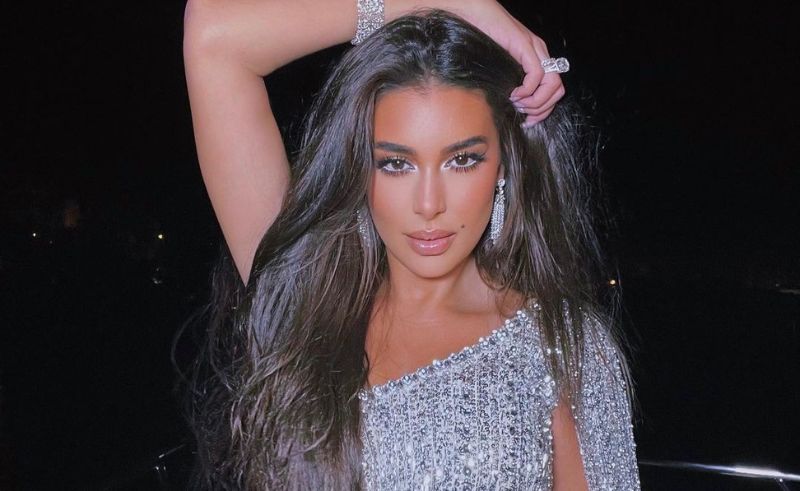
EGYPT: Yasmine Sabri Becomes Egyptian Cinema’s First Female Superhero

Dalila’ will join ‘Mousa’ as part of director Peter Mimi’s action-packed cinematic universe, ‘The Underdogs’.

Actress Yasmine Sabri is suiting up as Egyptian cinema’s first female superhero!

Peter Mimi – the director of famed Ramadan series ‘Al Ikhtiyar’ (The Choice) – is expanding on the superhero cinematic universe he created for his 2021 action film ‘Mousa’ starring Karim Mahmoud Abdelaziz and Eyad Nasser, in which a shy engineering student creates a powerful robot to avenge his father.

Joining ‘Mousa’ as part of Mimi’s ‘The Underdogs’ franchise will be ‘Dalila’, where Yasmine Sabri will star as a badass motorcyclist on a mission for justice. Filming for ‘Dalila’ has already begun, with Sabri currently undergoing intense physical training and motorcycle training to prepare for the film’s intense action sequences (which, if ‘Mousa’ was anything to go by, will be absolutely explosive). The Avengers who?

While Sabri is working on her super stunts, the actress has already wrapped up filming for ‘Bo’ Bo’ starring Ami Karar and ‘Abou Nasab’ starring Mohamed Emam, both of which will come out during the Eid al-Adha holiday.

‘Dalila’ is set to hit movie theatres in 2023, although details on the rest of the cast has yet to be announced.

source/content: cairoscene.com (headline edited)

___________

_________

EGYPT

EGYPT: Prominent Egyptian Gynaecologist and Author Abul-Ghar Wins ‘Nile Award in Science & Advanced Technological Sciences’

Prominent Egyptian gynaecologist and author Mohamed Abul-Ghar won on Sunday the State Nile Award in Science and Advanced Technological Sciences.

Minister of Higher Education and Head of the Scientific Research and Technology Academy Mohamed Ashour announced that Cairo University’s Professor at the Faculty of Medicine Dr Mohamed Abul-Ghar and Mansoura University’s professor at the Faculty of Medicine Dr Hassan Abul-Enein won the State Nile Award in Science and Advanced Technological Sciences.

“It is the state’s recognition of scientists’ efforts in advancing the nation and building the new republic and knowledge economy,” Ashour said on Sunday in a press conference at the New Administrative Capital.

Abul-Ghar started, with a group of medical doctors, Egypt’s first-ever centre for in vitro fertilisation (IVF).

Abul-Ghar, 82, received the Egyptian National Award for Scientific Excellence in 1999. He also received honourary membership of the European Society for Human Reproduction and Embryology in 2004 and honourary membership in the International Federation of Fertility Societies in 2000. 

Abul-Ghar has also been active politically as he established, with other university professors, the 9 March Movement for the Independence of Universities during the rule of the late President Mubarak. He was also among the spokespersons of the National Association of Change.

Following the ouster of Mubarak in February 2011, Abul-Ghar was among the founders of the left-liberal Egyptian Social Democratic Party.

Aside from his medical scientific career and political activism, the prominent gynaecologist established himself in recent years as a bestselling non-fiction author with a special interest in the modern history of Egypt, specifically the pre-1952 liberal era.

Among his bestselling books are Egyptian Jews in the 20th Century, The Egyptian Legion and The Pandemic that Killed 180,000 Egyptians. 

source/content: english.ahram.org.eg (headline edited)

__________

File Photo: Mohamed Abuol-Ghar. / Al-Ahram

__________

EGYPT