ARAB – LATIN AMERICA: How Arab-Islamic migration, language and culture shaped modern Latin America 

  • Muslim conquest of the Iberian Peninsula left many influences, later taken to the continent by colonists
  • Some researchers believe 700-1,000 Portuguese words and about 4,000 in Spanish come from Arabic 

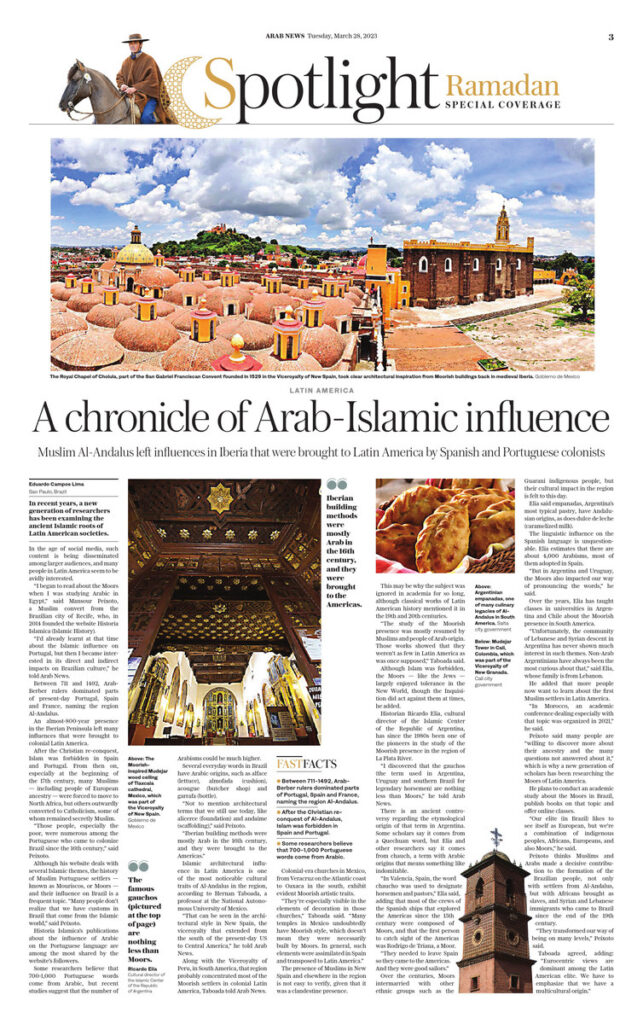
In recent years, a new generation of researchers has been examining the ancient Islamic roots of Latin American societies.

In the age of social media, such content is being disseminated among larger audiences, and many people in Latin America seem to be avidly interested.

“I began to read about the Moors when I was studying Arabic in Egypt,” said Mansour Peixoto, a Muslim convert from the Brazilian city of Recife who in 2014 founded the website Historia Islamica (Islamic History).

“I’d already learnt at that time about the Islamic influence on Portugal, but then I became interested in its direct and indirect impacts on Brazilian culture,” he told Arab News.

Between 711 and 1492, Arab-Berber rulers dominated parts of present-day Portugal, Spain and France, naming the region Al-Andalus.

An almost-800-year presence in the Iberian Peninsula left many influences that were brought to colonial Latin America.

After the Christian re-conquest, Islam was forbidden in Spain and Portugal. From then on, especially at the beginning of the 17th century, many Muslims — including people of European ancestry — were forced to move to North Africa, but many accepted to convert to Catholicism, some of whom remained secretly Muslim.

“Those people, especially the poor, were numerous among the Portuguese who came to colonize Brazil since the 16th century,” said Peixoto.

FAST FACTS

  • Between 711-1492, Arab-Berber rulers dominated parts of Portugal, Spain and France, naming the region Al-Andalus.
  • After the Christian re-conquest of Al-Andalus, Islam was forbidden in Spain and Portugal.
  • Some researchers believe that 700-1,000 Portuguese words come from Arabic.

Although his website deals with several Islamic themes, the history of Muslim Portuguese settlers — known as Mouriscos, or Moors — and their influence on Brazil is a frequent topic. “Many people don’t realize that we have customs in Brazil that come from the Islamic world,” said Peixoto.

Historia Islamica’s publications about the influence of Arabic on the Portuguese language are among the most shared by the website’s followers.

Some researchers believe that 700-1,000 Portuguese words come from Arabic, but recent studies suggest that the number of Arabisms could be much higher.

Several everyday words in Brazil have Arabic origins, such as alface (lettuce), almofada (cushion), acougue (butcher shop) and garrafa (bottle).

“Not to mention architectural terms that we still use today, like alicerce (foundation) and andaime (scaffolding),” said Peixoto.

“Iberian building methods were mostly Arab in the 16th century, and they were brought to the Americas.”

Islamic architectural influence in Latin America is one of the most noticeable cultural traits of Al-Andalus in the region, according to Hernan Taboada, an expert on the subject and a professor at the National Autonomous University of Mexico.

“That can be seen in the architectural style in New Spain, the viceroyalty that extended from the south of the present-day US to Central America,” he told Arab News.

Along with the Viceroyalty of Peru, in South America, that region probably concentrated most of the Moorish settlers in colonial Latin America, Taboada said.

Colonial-era churches in Mexico, from Veracruz on the Atlantic coast to Oaxaca in the south, exhibit evident Moorish artistic traits.

“They’re especially visible in the elements of decoration in those churches,” Taboada said. “Many temples in Mexico undoubtedly have Moorish style, which doesn’t mean they were necessarily built by Moors. In general, such elements were assimilated in Spain and transposed to Latin America.”

The presence of Muslims in New Spain and elsewhere in the region is not easy to verify, given that it was a clandestine presence.

This may be why the subject was ignored in academia for so long, although classical works of Latin American history mentioned it in the 19th and 20th centuries.

“The study of the Moorish presence was mostly resumed by Muslims and people of Arab origin. Those works showed that they weren’t as few in Latin America as was once supposed,” Taboada said.

Although Islam was forbidden, the Moors — like the Jews — largely enjoyed tolerance in the New World, though the Inquisition did act against them at times, he added.

Historian Ricardo Elia, cultural director of the Islamic Center of the Republic of Argentina, has since the 1980s been one of the pioneers in the study of the Moorish presence in the region of La Plata River.

“I discovered that the gauchos (the term used in Argentina, Uruguay and southern Brazil for legendary horsemen) are nothing less than Moors,” he told Arab News.

There is an ancient controversy regarding the etymological origin of that term in Argentina. Some scholars say it comes from a Quechuan word, but Elia and other researchers say it comes from chauch, a term with Arabic origins that means something like indomitable.

“In Valencia, Spain, the word chaucho was used to designate horsemen and pastors,” Elia said, adding that most of the crews of the Spanish ships that explored the Americas since the 15th century were composed of Moors, and that the first person to catch sight of the Americas was Rodrigo de Triana, a Moor.

“They needed to leave Spain so they came to the Americas. And they were good sailors.”

Over the centuries, Moors intermarried with other ethnic groups such as the Guarani indigenous people, but their cultural impact in the region is felt to this day.

Elia said empanadas, Argentina’s most typical pastry, have Andalusian origins, as does dulce de leche (caramelized milk).

The linguistic influence on the Spanish language is unquestionable. Elia estimates that there are about 4,000 Arabisms, most of them adopted in Spain.

“But in Argentina and Uruguay, the Moors also impacted our way of pronouncing the words,” he said.

Over the years, Elia has taught classes in universities in Argentina and Chile about the Moorish presence in South America.

“Unfortunately, the community of Lebanese and Syrian descent in Argentina has never shown much interest in such themes. Non-Arab Argentinians have always been the most curious about that,” said Elia, who comes from a Lebanese family.

He added that more and more people now want to learn about the first Muslim settlers in Latin America.

“In Morocco, an academic conference dealing especially with that topic was organized in 2021,” he said.

Peixoto said many people are “willing to discover more about their ancestry and the many questions not answered about it,” which is why a new generation of scholars has been researching the Moors of Latin America.

He plans to conduct an academic study about the Moors in Brazil, publish books on that topic and offer online classes.

“Our elite (in Brazil) likes to see itself as European, but we’re a combination of indigenous peoples, Africans, Europeans, and also Moors,” he said.

Peixoto thinks Muslims and Arabs made a decisive contribution to the formation of the Brazilian people, not only with the settlers from Al-Andalus, but also with the Africans brought as slaves, and the huge wave of Syrian and Lebanese immigrants who came to Brazil since the end of the 19th century.

“They transformed our way of being on many levels,” he said.

Taboada agreed, saying: “Eurocentric views are dominant among the Latin American elite. We have to emphasize that we have a multicultural origin.”

source/content: arabnews.com (headline edited)

__________
__________________________

ARAB – LATIN AMERICA
EGYPT: UK, Egypt Celebrate 7 years of Science Partnership under Newton-Mosharafa Fund

British and Egyptian government officials celebrated on Monday seven years of cooperation between the two countries under the Newton-Mosharafa Fund, which supports research and innovation programmes to advance economic development and social welfare, tackle global challenges and develop talent and careers.

Participating in the celebration were the British Embassy in Cairo, the British Council, together with the Egyptian Ministry of Higher Education and Scientific Research’s Science, Technology and Innovation Funding Authority (STDF) and the Central Department of Missions (CDM).

The fund is named after British mathematician and physicist Sir Isaac Newton, one of the most influential scientists in history, and the Egyptian theoretical physicist Doctor Ali Mustafa Mosharafa, who contributed to the development of quantum theory.

It is the largest science and innovation partnership between Egypt and the UK in history.

The ceremony started with speeches by the British Ambassador to Egypt Gareth Bayley, British Council Country Director Elizabeth White, and Deputy Minister of Higher Education and Scientific Research Yasser Refaat

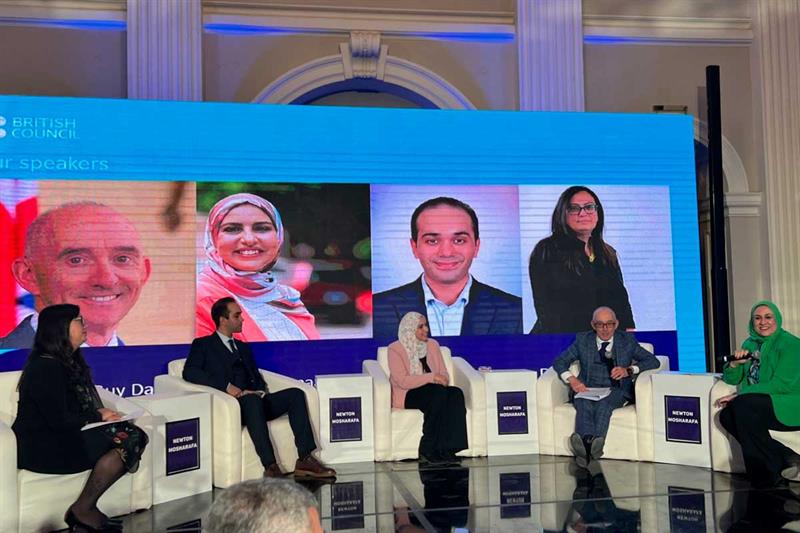
It was followed by a panel discussion on the role of international collaboration in science and research.

The discussion involved professor Guy Daly, provost and senior vice-president of the British University in Egypt; Shaimaa Lazem, international collaboration programme manager at STDF; Dr Marco Zaki, lecturer of biochemistry and cell biology and founder of the NILE CAN research laboratory at Minia University; and Irene Gabriel, director of the Smart Engineering Systems Research Centre at Nile University.

At the ceremony, the British ambassador expressed his pride in celebrating the alumni from the joint British-Egyptian programme.

“These outstanding scientists are the leaders of tomorrow, and today’s event pays tribute to them and to the legacy of the Newton Mosharafa Fund, one of the largest science and innovation partnerships between Egypt and any country,” he said.

He went on to note that the alumni are working to make the world a better place everyday through their research into curing cancer, achieving food and water security and “making the earth a safer, healthier and more sustainable place to live in.”

During her speech, British Council Egypt Director Elizabeth White observed that the fund has supported her country’s long-term approach by “building the next generation of scientists”

“For seven years, we have worked with our partners to enable the exchange of learning and ideas between scientists in the UK and Egypt,” she added.

She concluded by saying that the British Council will remain committed to opening up access to science and research to support UK-Egypt priorities.

Funding Egypt’s long-term sustainable development

The fund is valued at £55 million over seven years; the cost is shared between the UK and Egyptian governments.

It focuses on five main areas identified by the Egyptian government as priorities for their long-term sustainable development: water management, renewable energy, food production, archaeological and cultural heritage and affordable and inclusive healthcare.

These priorities are closely related to Egypt’s Vision 2030 sustainable development strategy, as well as the UN’s Sustainable Development Goals (SDGs).

Since its launch in 2014, the Newton-Mosharafa Fund has provided 282 scholarships to Egyptian researchers to obtain a doctoral degree, in addition to funding 69 research partnerships between Egyptian and UK universities. Research related to health care had a significant share of it, amounting to about 69 percent of doctoral scholarships and about 22 percent of research partnerships.

Notable alumni

Some of the outstanding Newton-Mosharafa alumni who attended the ceremony include: Dr Marco Zaki, winner of the Newton Prize for his research on treating liver cancer, and Dr Irene Gabriel, who is a Newton Mosharafa grant holder. She lead a research team at Nile University together with Nottingham University to turn dried shrimp shells into thin films of biodegradable plastic that can be used to make eco-friendly grocery bags and packaging.

Shaimaa Lazem, who is an associate research professor at the City of Scientific Research and Technology Applications (SRTA-City), was awarded Newton-Mosharafa grants three times. Her work focuses on designing prototypes for technologies that serve the rural communities in Egypt. She is currently working with artificial intelligence (AI) start-ups in Africa as part of a Google Research for Inclusion and Google AI Awards.

Also in attendance was Yasser Shabana, who developed adaptation strategies to mitigate the impacts of climate change on wheat, maize and food production in Egypt.

source/content: english.ahram.org.eg (headline edited)

___________

BUE Provost Guy Daly with Newton-Mosharafa alumni Irene Gabriel, Marco Zaki, and Shaimaa Lazem

_________

EGYPT

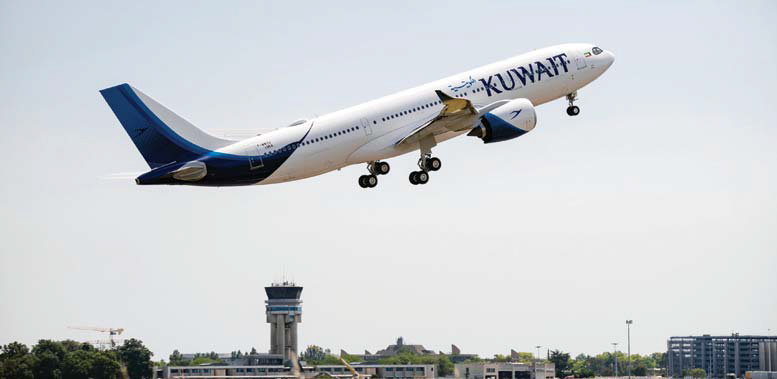
KUWAIT Airways Breaks Longest Flight Record to New York’s JFK Airport with the A330neo, March 16th, 2023

In line with the airline’s strategy to match capacity with demand, optimize performance with the best in on board experiences for its customers, Kuwait Airways launched its first inaugural flight to New York John F Kennedy Airport utilizing the Airbus A330neo and in setting the record for the longest flight flown by the A330-800 neo in 13 hours.

The award winning Airspace cabin is equipped with a two-class configuration comprising of 32 full flat business class seats and 203 economy class cabin seats on a 2-4-2 configuration. Thus offering passengers state of the art flying experience with more personal space, quietest cabin in its market and the latest generation of in-flight entertainment system and connectivity.

Sustainability
From a sustainability and efficiency standpoint, the A330neo offers benefits to both the airline and the traveling public. With double-digit fuel savings and CO2 emissions compared to other aircraft in its category, the A330- 800 allows significantly lower operational cost and therefore competitive ticket pricing. Captain Ali Al Dukhan, Chairman Kuwait Airways said.

“This flight marks a new era in our strategy to right-fit the best of customer experiences while balancing cost efficiencies and sustainability in our operational decisions. The utilization of this aircraft’s long-range capability will also bring double-digit savings, which coincidentally means less harm to the environment, matching closely to our ESG goals. We are proud to take the next step forward in reaching the corporate strategy goals in reducing costs and enhancing marginal performance”.

Mikail Houari, President, Airbus Africa Middle East said: “We are proud that Kuwait Airways has chosen to deploy the A330-800 on John F Kennedy Airport, a key route for the airline. We are confident that the aircraft will provide passengers with exceptional flying experience while providing the airline with unbeatable economics, efficiency and environmental performance.

source/content: arabtimesonline.com (headline edited)

___________

Kuwait Airway’s A330-800neo

___________

KUWAIT

MOROCCO Outperforms US to Become 4th Largest Blueberry Exporter Worldwide

Morocco’s berry production is one of the country’s key contributors to the agricultural sector.

Morocco has outperformed the US becoming the fourth largest blueberry exporter in the world.

Data from East Fruit said that Morocco exported 53,000 tonnes of blueberries in 2022. Peru was the largest exporter of fresh blueberries last year, with 277,000 tonnes, followed by Chile (105,000 tonnes) and Spain (87,000).

Despite Morocco’s leading position in blueberry exports, the Netherlands exported more blueberries than the North African country in  11 months of last year, the same source said.

“It should be noted that the exports from the Netherlands in 11 months of last year were higher than that of Morocco, having amounted to 104 000 tonnes,” East Fruit reported.

Elaborating on the data, the news outlet said: “However, if we take into account the volume of re-exports, the real result of the Netherlands will be much lower since it imported 130 000 tonnes of fresh blueberries during this period.”

East Fruit also recalled that Morocco ranked seventh place among the largest exporters of cultivated blueberries in 2017.

Berry production in Morocco has contributed to the country’s agricultural sector significantly.

Morocco’s revenues from strawberry exports to the international market are estimated between $40 and $70 million annually.

According to previous data from East Fruit strawberry products are one of the top 10 most exported goods from Morocco.

According to estimates,  Morocco exported 22,400 tonnes of fresh strawberries globally in 2022, representing an increase of 17% compared to a year earlier.

Countries like the UAE, Qatar were key buyers of Moroccan goods. In Europe, the US is one of Morocco’s strawberry importers. In 2022, the US imported almost half of Morocco’s strawberry export supply.

source/content: moroccoworldnews.com (headline edited)

___________

_____________

MOROCCO

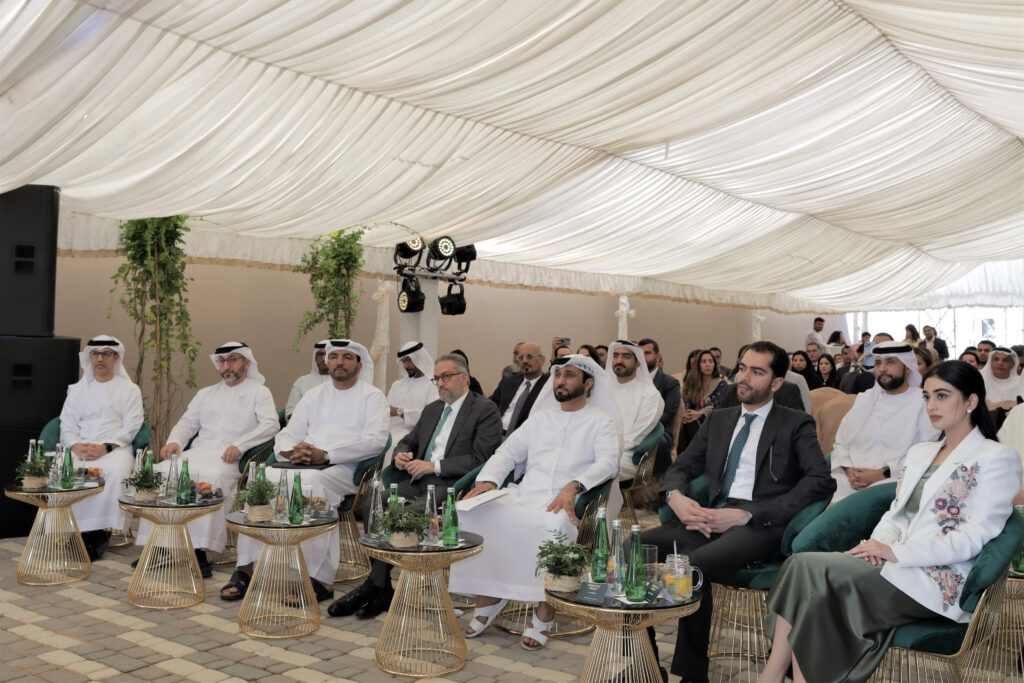
DUBAI, EMIRATES:First 100% Plant-based Meat Factory in Middle East opens in Dubai

The IFFCO Group, one of the UAE’s largest producers of food products, has opened the first 100-percent plant-based meat factory in the region, in Dubai.

Located in the Dubai Industrial City, the THRYVE factory will catalyse the move towards a more sustainable and healthy food chain in the Middle East, actively supporting the United Nations’ Sustainable Development Goals and the UAE’s Vision 2051 initiative to bolster food security through diversity and innovation. The factory will provide nourishing, sustainable and healthy local plant-based meat products inspired by the unique flavours of Middle Eastern cuisine.

Mariam bint Mohammed Almheiri, Minister of Climate Change and the Environment, said, “The new 100-percent plant-based meat factory supports the UAE’s Food Security Strategy and our mandate to mitigate the impact of climate change. The opening of this innovative new facility also supports our efforts to protect the country’s ecosystems and enhance its food and water security and diversify our food sources. By fostering such robust research and development focused on producing innovative food products, we seek to raise the UAE’s ability to move up the global food industry value chain and achieve first place on the Global Food Security Index by 2051. The new factory represents a significant contribution to sustainability in the food supply chain.”

Hadi Badri, CEO of the Dubai Economic Development Corporation at Dubai’s Department of Economy and Tourism said, “The opening of this factory, which will pave the way for a dynamic new industry that will boost trade across the region, is a reflection of the UAE’s commitment to pioneer the use of innovative technologies to provide sustainable solutions to real world problems. It contributes to Dubai’s economic diversification journey in line with the goal of the Dubai Economic Agenda D33 to consolidate the emirate’s status as one of the top three global cities. The new facility is a testament to the pivotal role being played by Dubai in promoting the growth and evolution of environmentally sound practices that can alleviate the effects of climate change. By providing opportunities for private companies to invest in sustainable technologies, Dubai is accelerating the creation of a robust and resilient green economy.

“Such initiatives also reflect Dubai’s success in creating a fertile environment for new businesses and investors to thrive, and generating new job opportunities. Dubai and the UAE will continue to work with stakeholders and partners to remain at the forefront of innovation and economic sustainability, inspired by the ambition of our visionary leadership to create a better future for all.”

Saud Abu Alshawareb, Executive Vice President, Industrial Leasing, Dubai Industrial City, said, “DIC is an ideal location for initiatives like the IFFCO Group’s plant-based meat factory that underscore the importance of food security. The Dubai Industrial City is home to a growing number of Dubai-based food manufacturers who are leading the way in introducing innovative food products. This new enterprise adds value to the industry while strengthening our reputation as facilitators of a self-reliant food programme.”

The THRYVE plant-based venture, developed using cutting-edge food technology, contributes to at least three UN’s SDG’s: good health and well-being, responsible consumption and production, and climate action.

The only 100 percent plant-based meat factory in the Middle East, IFFCO’s THRYVE will leverage advanced food technologies to produce tasty, healthy, sustainable and culturally relevant food that meets the needs of the local consumer. In addition, IFFCO is working closely with the government to create regulatory standards for plant-based food products.

The global plant-based meat market was estimated to be worth US$7.9 billion in 2022, and is forecast to reach US$15.7 billion by 2027, according to a report from ResearchAndMarkets.com. The newly opened THRYVE factory will cater to 30 percent of the GCC population, stimulating the development of the market for local plant-based products. As per proprietary research, the GCC has the potential to be a future leader in developing food products for flexitarians, people whose diet is primarily vegetarian.

source/content: wam.ae/en (headline edited)

_________

___________________________________________

DUBAI, UNITED ARAB EMIRATES (U.A.E)

SAUDI ARABIA: South Korea President joins Aramco CEO for $7bn Petrochemical Plant’s groundbreaking ceremony in Ulsa, South Korea, March 2023

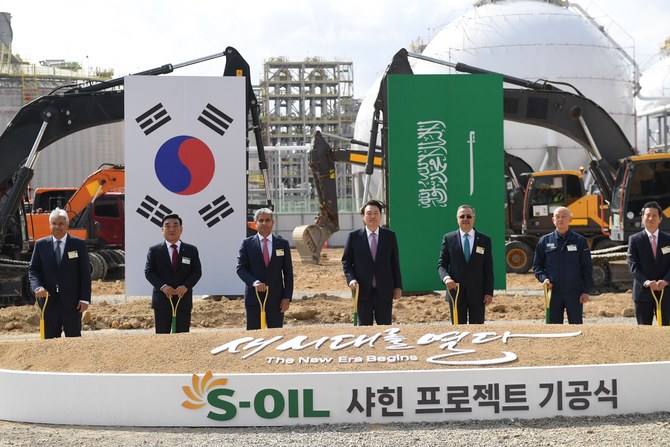
Building work on Saudi Aramco’s new $7 billion Shaheen petrochemical project in Ulsa, South Korea has officially begun after a groundbreaking ceremony involving the energy giant’s CEO.

Amin Nasser attended the inauguration event alongside South Korea’s president Yoon Suk Yeol and senior officials from both countries.

The Shaheen project, announced in November 2022, is being built by South Korean refiner S-OIL Corp., of which Aramco owns a more than 63 percent stake.

“We are deeply honored by the presence of His Excellency President Yoon at this historic groundbreaking ceremony,” said Nasser – also the Aramco President.

“Shaheen is among Aramco’s biggest international downstream investments, representing a significant and sizeable step forward in our liquids-to-chemicals expansion and another major milestone in further strengthening our presence in Korea,” he continued. 

Shaheen is Saudi Aramco’s largest investment in South Korea and is expected to be among the biggest integrated steam crackers – a petrochemical process – in the world. 

It is also the first large-scale commercial use of Aramco’s thermal crude-to-chemicals technology, which was developed in partnership with Lummus Technology, a leading licensor of proprietary petrochemicals. 

The construction of the new plant will be completed by 2026 and will have a production capacity of up to 3.2 million tons per year, in addition to a facility for producing high-value polymers. 

Aramco has established a solid relationship with South Korea, and has recently agreed to a $6 billion framework deal with the country’s export-import bank.

According to the deal, Eximbank can lend Saudi Aramco up to $6 billion, which can be used to fund South Korean enterprises involved in projects with the global energy firm, whereas the bank indicated that $1 billion is set aside for hydrogen and renewable energy projects. 

Moreover, Aramco also inked a memorandum of understanding with South Korea’s Hoban Group last month to collaborate in building and manufacturing.

source/content: arabnews.com (headline edited)

___________

South Korea’s President Yoon (centre) with Aramco president Amin Nasser (Supplied)

________________

SAUDI ARABIA

SAUDI ARABIA to Chair ‘WTO Trade Policy Review Body’ for 2023-2024

Almoqbel is the first Arab ambassador to the WTO to preside over the TPRB.

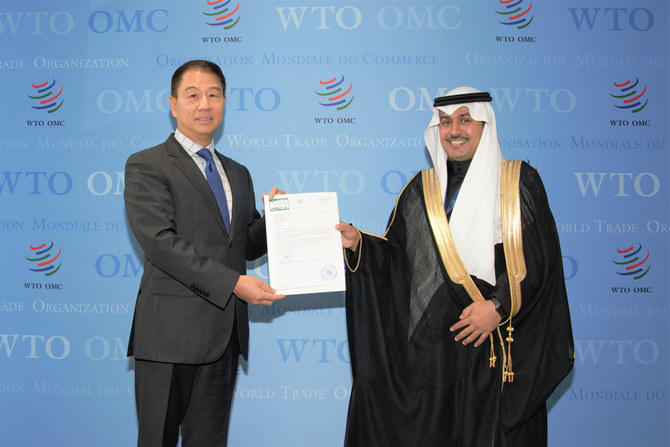
The World Trade Organization General Council has selected Saudi Arabia’s Ambassador to WTO Saqer Abdullah Almoqbel to chair its Trade Policy Review Body for 2023-2024. 

Almoqbel is the first Arab ambassador to the WTO to preside over the TPRB. 

The TPRB aims to facilitate the efficient operation of the multilateral trading system by increasing the transparency of WTO members’ trade policies. All members are subject to review every two to six years under the mechanism. 

Periodically, the agency releases reports on the global economy, including detailed chapters examining the trade policies and practices of each member, as well as descriptions of the trade policymaking institutions and the macroeconomic environment. 

Saudi Arabia’s new position at TPRB reinforces its leadership position within the WTO. In addition to being the organization coordinator for the Arab group, the Kingdom has chaired the Council for Trade in Services, the Council for Trade-Related Aspects of Intellectual Property Rights, the Working Group on Transfer of Technology, and the Committee for Balance of Payments Restrictions in previous years.

source/content: arabnews.com (headline edited)

____________

Saudi Arabia’s Ambassador to WTO Saqer Abdullah Almoqbel presents his credentials to Deputy Director-General Yi Xiaozhun in 2020. (WTO)

_________________

SAUDI ARABIA

ALGERIA: 5 Algerian Multi Millionaires That You Should Know About!

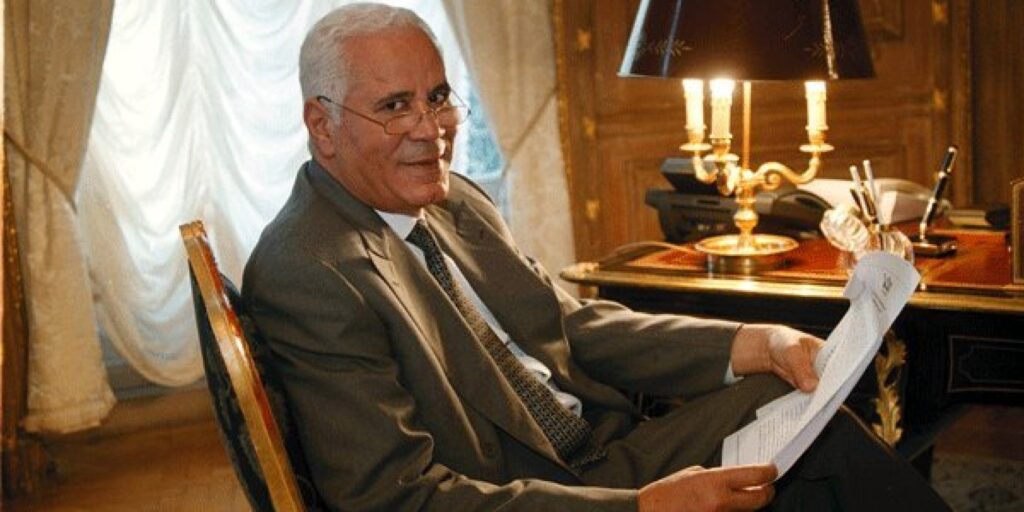
The only billionaire Algeria has is Issad Rebrab, he is the owner of Algeria’s biggest company, Cevital, which is a sugar refinery company that produces about 2 million tons a year, Although, he is alone in his wealth, there are other 5 multibillionaires worthy of recognition.

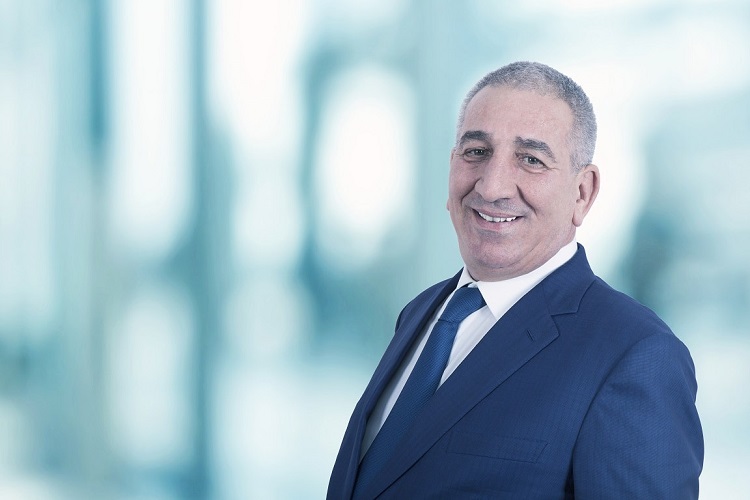
Abdelmadjid Kerrar

via ElWatan

He is the founder of BioPharm which is a large pharmaceutical company that manufactures and distributes drugs, BioPharm employs more than 1,500 people and gets more than $500 million revenues last year.

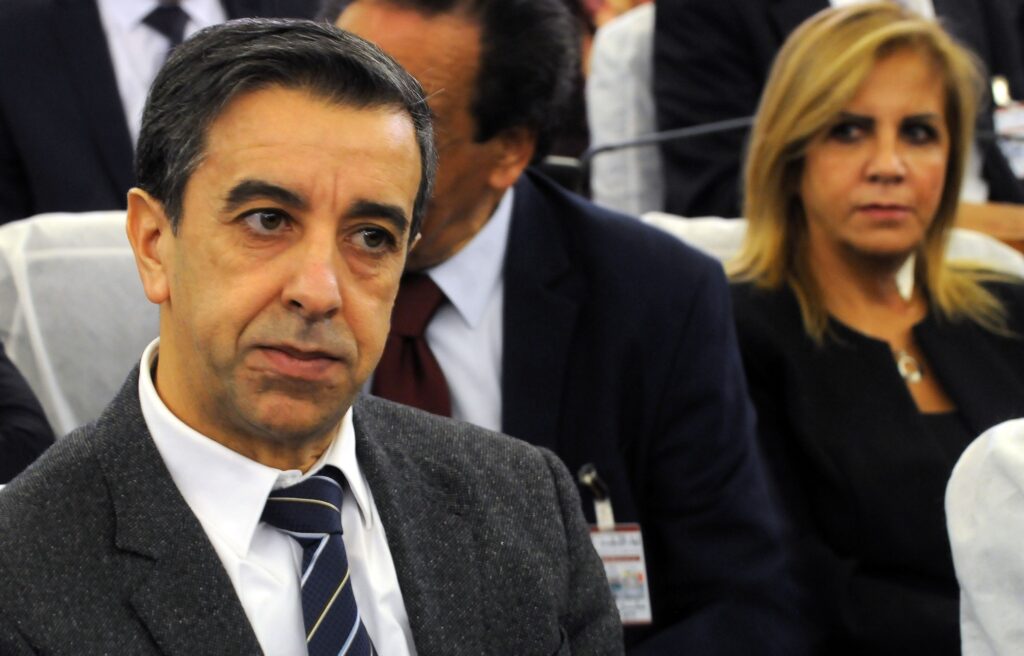
Ali Haddad

via Algerie Patriotique

He is the 52-year-old founder of ETRHB Haddad Group with an annual revenue of $500 million, it’s very impressive that he’d founded this company at the age of 32, he is also the controlling shareholder of the Algerian club USM Alger that plays in the Algerian Premier League.

Mohamed Laid Benamor

via DIA

He is the head of the Benamor Group, which is one of the most successful food companies in Algeria. This company makes more than $80 million as an annual revenue.

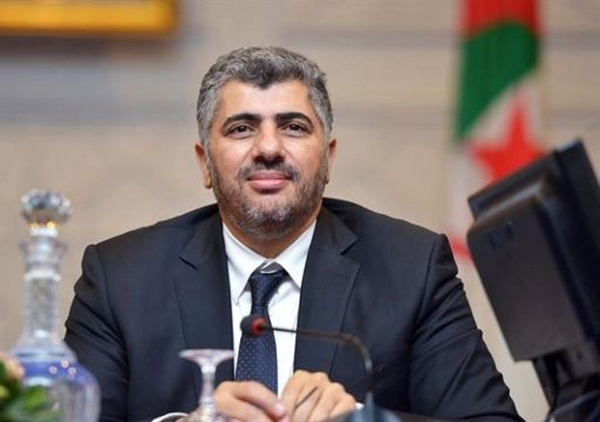
Abderrahmane Benhamadi

via Algerie Eco

This big guy owns the Condor Group which manufactures and distributes air conditioners, televisions, satellite receivers, washing machines, refrigerators, smartphones, tablets, gas cookers, microwaves, desktops and laptops, with an annual revenue of $700 million.

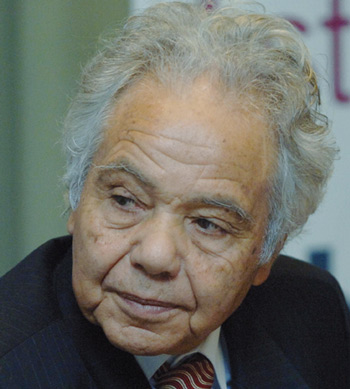
Djilali Mehri

via Algerie part

This 80-year-old guy owns the Mehri Group; the sole bottler of all Pepsi products, and the owner of many luxurious hotels.

source/content: scoopempire.com (headline edited) / Febronia Hanna

____________

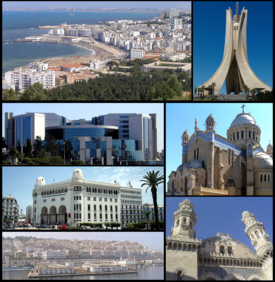
pix: en.wikipedia.org/wiki/Algiers /L to R : Coast, Martyr’s Memorial , Ahmed Francis Building , Basilica of Our Lady of Africa, Central Post Office, Ketchaoua Mosque, Harbour

___________

ALGERIA

LEBANESE AMERICAN: James Abourezk, 1st Arab American US Senator

James Abourezk, 1st Arab American US senator, dies at 92.

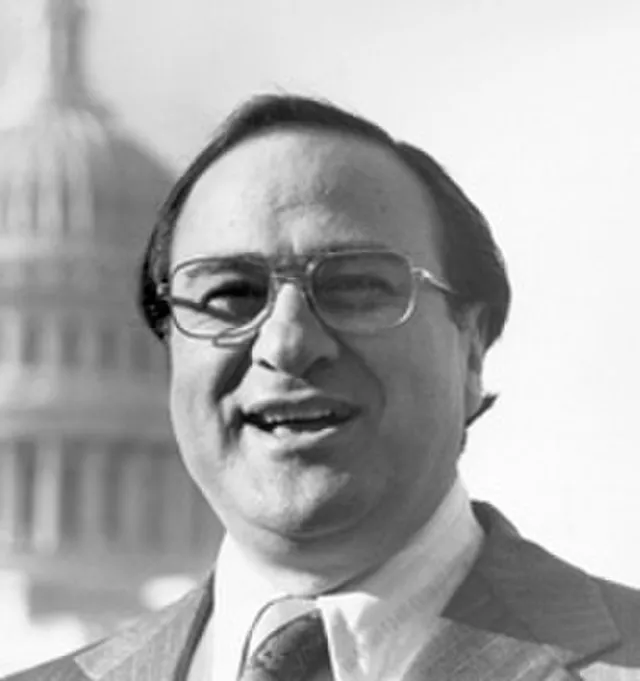
James Abourezk, attorney and Democratic politician who served as a United States senator and United States representative from South Dakota and co-founder of the American-Arab Anti-Discrimination Committee(ADC), died today on his 92nd birthday.

He was born in Wood, South Dakota, the son of Lena (Mickel), a homemaker, and Charles Abourezk, an owner of two general stores. Both of his parents were Lebanese immigrants. He grew up near Wood on the Rosebud Reservation and has lived in South Dakota most of his life.

Abourezk represented South Dakota in the United States Senate from 1973 until 1979. He was the author of the Indian Child Welfare Act, passed by Congress in 1978 to try to preserve Indian families and tribal culture.

He was instrumental in the creation of both the American Indian Policy Review Commission and the Select Committee on Indian Affairs. He became chairman of the Indian Affairs Committee from its creation in 1977 to 1979.

Abourezk was elected in 1970 as a Democrat to the United States House of Representatives and served from 1971 to 1973. In 1972 he was elected to the U.S. Senate, where he served from 1973 to 1979.

Abourezk was an outspoken critic of Israel and U.S. foreign policy in the Middle East after touring the region and visiting his parents’ hometown in Lebanon as a senator. The position lost him many political allies, and he decided to retire from the Senate after a single term.

In 1980, Abourezk co-founded the American-Arab Anti-Discrimination Committee and traveled throughout the U.S. organizing Arab Americans in the wake of the “Abscam” debacle. Abscam was an FBI sting operation where agents dressed up as “oil-rich sheiks” in the late 1970s and early 1980s that led to the convictions of seven members of the United States Congress, among others, for bribery and corruption.

Abourezk’s marriages to Mary Ann Houlton and Margaret Bethea ended in divorce. In 1991, he married Sanaa Dieb, a restaurateur. They moved to Sioux Falls where she opened an award-winning Arab restaurant.

Survivors include his wife; children Charles Abourezk, Nikki Pipe On Head, and Paul Abourezk from his marriage to Houlton; daughter Alya Abourezk from his third marriage; a stepdaughter; and many grandchildren and great-grandchildren.

Warren David, president of Arab America and a former national president of the American-Arab Anti-Discrimination Committee said, “during a time when discourse regarding the negative portrayal of Arabs and the injustice faced by Palestinians were scarce, he (Abourezk) acted as a pioneer who instilled a sense of immediacy in the Arab American community–he was a trailblazer in that regard.”

Compiled by Arab America

source/contents: arabamerica.com (headline edited)

___________

Former Senator James Abourezk

____________________________

AMERICAN / LEBANESE

OMAN: Maha Al Balushi Oman’s First Female,Omani Captain of Oman Air

The airline promoted Maha Al Balushi who has been with the company since 2010.

Oman Air, the national airline of the sultanate, has announced pilot Maha Al Balushi as the first female Omani captain.

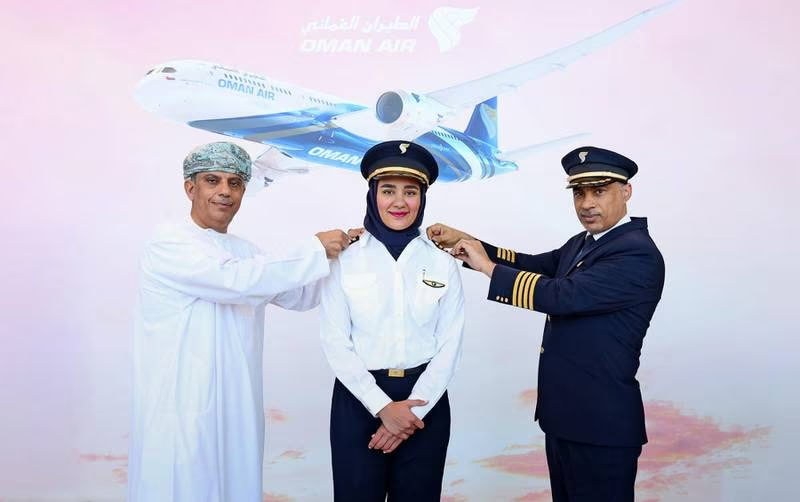
Ms Al Balushi officially received her new rank during a ceremony held at Oman Air’s headquarters in Muscat.

She has been with the airline since 2010 after graduating from the cadet programme at the Royal Melbourne Institute of Technology, in Australia.

Ms Al Balushi was the only woman enrolled in the programme at the time.

She became the first female Omani to be awarded the rank of first officer in 2013.

“My dream has always been to become a captain. It hasn’t been easy but thanks to the support I have around me, from my family to my training team and the airline,” said Ms Al Balushi in a statement by Oman Air.

“I have accomplished what I set out to do. It is an honour to hold this role and I hope that I will inspire other Omani women to choose such a rewarding career in the skies.”

Oman Air said that 1,230 Omani female employees contribute to the airline’s strength, occupying a range of roles including cabin crew, flight operations, engineering, airport services, marketing, customer services, sales and communications.

The airline has so far achieved an Omanisation rate of 94 per cent — excluding female cabin crew.

source/content: thenationalnews.com (headline edited)

___________

Maha Al Balushi received her new rank during a ceremony held at Oman Air’s headquarters in Muscat, Oman. Photo: Oman Air

_________

OMAN