SAUDI ARABIA Elected Chair of UNESCO World Heritage Committee

Unanimous vote ‘opens new chapter in Kingdom’s evolving history’.

Saudi Arabia will chair UNESCO’s World Heritage Committee following a unanimous decision at the organization’s headquarters in Paris.

The committee will be chaired by Princess Haifa bint Abdulaziz Al-Mogrin, the Kingdom’s permanent representative to UNESCO, and chairperson of the organization’s programs and external relations committee.

The Paris meeting also agreed that Saudi Arabia will host the committee’s 45th session, which will be held in Riyadh from Sept. 10-25.

The selection was approved during the 18th session of the World Heritage Committee, which was held in the presence of all member states of the committee.

Princess Haifa tweeted: “In completion of the Kingdom’s prominent role in supporting and preserving human heritage, I am proud today of accrediting Saudi Arabia as chairman of the UNESCO World Heritage Committee, and for hosting of the 45th session of the World Heritage Committee for the first time in September.”

The permanent delegation of the Kingdom to UNESCO tweeted: “Saudi Arabia is home to 6 millennial world heritage sites and 11 intangible heritage elements, Saudi Arabia will proudly host the 45th session of UNESCO’s World Heritage Committee in September— it’s a new chapter in our evolving history.”

The decision is the culmination of efforts led by the Kingdom in UNESCO, in light of unlimited support to the cultural sector by King Salman and Crown Prince Mohammed bin Salman, as well as the support and directives of Culture Minister Prince Badr bin Abdullah bin Farhan.

Princess Haifa praised the decision and said that it is simply the result of the Kingdom’s prominent role in supporting heritage, and its extended endeavors toward documenting human heritage alongside the member states of the committee, as well as achieving the goals of UNESCO in general, and the goals of the World Heritage Committee in particular.

The UNESCO World Heritage Committee, composed of representatives of 21 states elected by the General Assembly, examines the proposals of states wishing to place their sites on the World Heritage List, assists experts to report on the sites, and provides the final assessment of the decision of the proposed sites on the list.

The Kingdom has two other members of UNESCO’s main committees, as well as its membership in the World Heritage Committee: membership of the Executive Council and membership of the Intergovernmental Committee for the Safeguarding of the Intangible Cultural Heritage, which highlights the Kingdom’s role as a pivotal and international center of action in the organization’s decision-making.

source/content: arabnews.com (headline edited)

_________

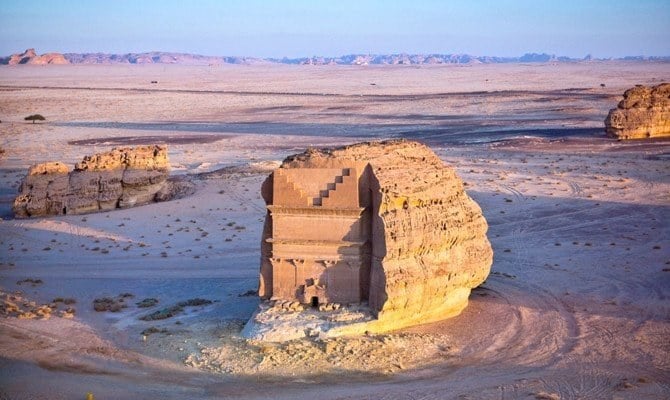
Madain Saleh became Saudi Arabia’s first UNESCO World Heritage Site in 2008. (SPA)

________________

SAUDI ARABIA

EGYPT: The 54th Cairo International Book Fair, January 25th, 2023: Greater demand for non-fiction among this year’s trends

The opening of this year’s Cairo International Book Fair, set for 25 January, comes against a backdrop of a surge in the demand for historical and other non-fiction offerings, as well as uncertainty over an expected rise in prices.

Publishers have already announced an expected considerable hike in the price of books, no less than 50 percent for some titles and much more for others, which they attribute to the tripling in paper prices in less than six months due to the currency devaluation.

“We want to maximise our reach to as many readers with limited budgets as possible,” said Yehiya Fekri of Al-Maraya. Bigger publishers, including Al-Shorouk, Al-Massraiya Al-Lebananiya and Al-Karma, have promised very big discounts on as many titles as possible and special packages for titles that were put out for the book fairs of the past two years.

However, the pricing issue is no less controversial than that of genre. The domination of fiction during over 20 years, which allowed for many new novelists to make an imprint on the contemporary Egyptian and Arab literature scene, is being challenged.

This year, publishers say there is a growing interest in non-fiction, old and new titles alike.

Abdallah Sakr, director of publishing at Al-Mahroussa argued that the limited number of new titles of some branches of non-fiction, “particularly theory,” and the parallel interest of readers prompted his publishing house to gather, revise and reprint the three volumes of prominent 20th century intellectual Louis Awad, Tarikh alfekr almasry (“History of Egyptian Intellect”).

“Those are three big volumes that we worked on for three consecutive years as they were originally published by different publishers with some considerable intervals,” Sakr said.

Sherif Bakr, of Al-Arabi, said that there is a “definite interest in philosophy.” This is why, he added, Al-Arabi decided to publish Arabic translations of titles like Philosophy and Football and Socrates on Sneakers, which he expects to do very well in this year’s book fair.

“Non-fiction, in general, is making a strong come-back; I think we saw a glimpse of this last year with the first post COVID-19 book fair; but clearly this year our list of publications was designed to allow for a considerable number of non-fiction titles,” said Nora Rashad, director of publishing at Al-Massriya Al-Lebenaniya Publishing House.

They had embraced the domination of fiction over the past two decades. However, she added, this year more than last year, non-fiction is gaining ground. “I am not sure where this is coming from because there has always been some really interesting titles coming up in the non-fiction space but it might be a post pandemic thing with people looking for titles that offers some answers to questions they thought about during the pandemic,” she said.

For this year’s book fair, Al-Massriyah Al-Lebnaniyah is offering several non-fiction titles including Ezzat Al-Kamhawi’s Al-Tahi Yaktol Walkateb Yantaher (“The Cook Kills and the Author Commits Suicide”) which is a literary reflection on life and the works of prominent authors and the legacy of some important cooks.

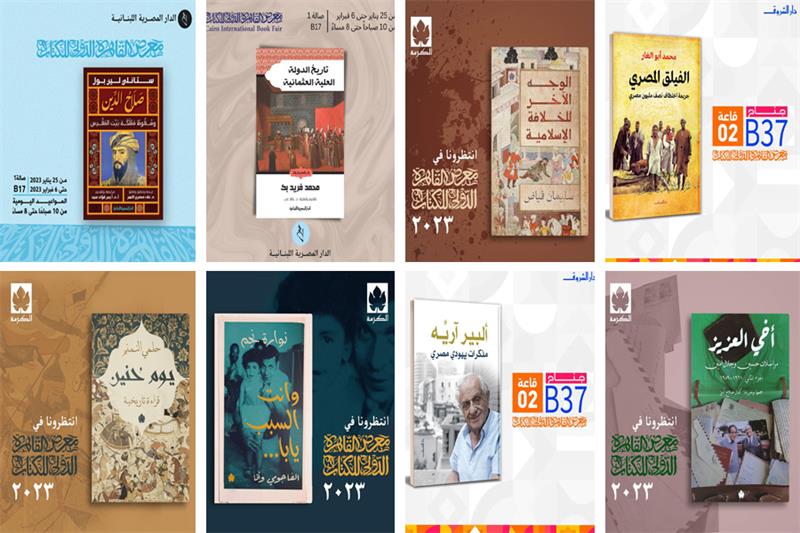
History is also getting a lot of attention this year. With an introduction from Khaled Azzab, a prominent researcher, Al-Massriyah Al-Lebenaniyah is putting out a new edition of Mohamed Farid’s late 19th century Tarikh Al-Dawla Alaliyah Alothmaniyah (“History of the Sublime Ottoman State”) and an Arabic translation of Stanley Lane Paul’s Saladin and the Fall of the Kingdom of Jerusalem.

However, this passion for history is not just a new development that goes hand-in-hand with this year’s renewed interest in non-fiction. According to several publishing houses, this desire for alternative narratives of history has been going on for well over a decade.

Al-Karma has been on with several reprints of history books. For this year, it is putting out a new edition of Souliman Fayyad’s Al-Wagh Al-Akhar Llkhelafa Al-Islamiyah (“The Other Face of Islamic Khalifat”) that challenges the dominant incomplete narratives of almost strictly prosperous Islamic rule to shed light on the images of coercion and discrimination that some faced under the rule of Muslim Khalifas. Another walk in the history lane comes from Al-Karma with Helmy Al-Namnam’s title Yaom Honein – Qiraa Tarikhiya (A History Take on the Battle of Honein). This books promises to be controversial as it addresses an often marginalised battle that Muslims, under Prophet Muhammad, had to go through in a preemptive tactic.

Al-Shorouk, which had previously dedicated an entire series to modern and contemporary history, is also coming in with the most recent title of Mohamed Aboul-Ghar’s Al-Filaq Al-Masry (“The Egyptian Legion”). Typical of the history volumes written by Aboul-Ghar, this book offers a lengthy research work that documents the forced conscription of Egyptian men from villages all across the country to work with the British army during World War I. It details the incredible socio-economic and political consequences that contributed to the start of the 1919 Revolution that called for the independence of Egypt from the British occupation. In a sense, this book could well be part of the rich set of volumes that Al-Shorouk has been putting out for four consecutive years in a bid to re-visit the 1919 Revolution.

Al-Maraya, too, is going to this year’s book fair with several history titles including Nossous Wakirat Hawl Tarikh Al-Capt from the 10th to the 19th centuries (“Texts and Narratives from the History of Copts: 10th to 19th Centuries”) by Magdi Girgus, who was just awarded a prize from the Swairas Culture Foundation for his book Al-Moalem Ibrahim Al-Gohary (“Master Ibrahim Al-Gohary”) on the life and history of one of the most controversial Coptic figures, which was put out last year by Al-Maraya.

Al-Arabi, for its part, is putting out a series of history books under the title of “Papers from History.” “This project is the labour of years of hard work and it includes some translated titles and some titles written in Arabic,” said Bakr. Of these papers there is Mozakerat Aila Massiyhiya bayn Al-Qahira waRas Ghareb (“Memoires of a Christian Family Between Cairo and Ras Ghareb”) by Iliyah Mahfouz Bashir. The book tracks the history of the family of a man who was born to a Christian family in the 1930s in Ras Gharb, next to the Red Sea, where the father was working for an oil company before he retired and dragged the entire family to Cairo.

Also in history, there is also a wide range of memoires, biographies and letter collections. Al-Karma is putting out part two of its massively successful book Akhi Al-Aziz – Morassalat Hussein and Galal 1961-1989 (“Dear Brother – Correspondence of Hussein and Galal Amin – 1961-1989”). Like the first volume that shared parts of letters exchanged by the Amin brothers, a prominent diplomat and intellectual and a prominent economist and writer, the second volume shares reflections on life, politics and culture that were included in letters that they sent to one another as they lived in Egypt and abroad.

Al-Karma is also putting two books that offers alternative narratives on the lives of two key figures of Egypt’s contemporary non-classic poetry: Salah Jahine, the celebrated figure of this year’s book fair, and Ahmed Fouad Nigm. Mona Kattan – Soura Shakhessiya Lezawgat Shaar (“Mona Katta – A portrait of the Spouse of a Poet”) introduces the second wife of Jahine in a narrative that sheds a lot of light on the prominent poet/cartoonist. Meanwhile, Wenta Al-Sabab ya Baba” (“It is All Because of You, Dad”) is the narrative of Nigm’s daughter Nawara, who shares reflections on the father-daughter relationship and the impact thereof on the life of the daughter.

Meawhile, Al-Shorouk is putting out what promises to be one of the most interesting titles of the book fair, Albert Arie -Mozkerat Yahoudi Masry (“Albert Arie – the Memoires of an Egyptian Jew”). The memoires of Arie, who passed away in the spring of last year at the age of 92, offers an incredible insight on the history of Egyptian Jewry in Egypt before and after the 1948 War, including the national affinity that some, including Arie himself, held to the country. It also offers an image of life in Egypt, specifically in Cairo, where Aries was born and lived all his life.

On Cairo, Al-Shorouk is also putting out its Wassat Albald – Maware Elhekayat (“Downtown – Beyond the Stories”), an essential collection of photos that documents the architectural splendor of Cairo. Meanwhile, Al-Ain is putting out Al-Qahera Waomranha (“The urban History of Cairo”) by Nezar Al-Sayyad, a prominent Egyptian-American architectural historian.

Novels with historical inspirations have also been quite fashionable for the past few years. Following a very successful first novel, Yaacoub (“Jacob”) with Al-Shorouk last year, Afifi is putting out his second take with the same publisher at a historical novel Salam Ala Ibrahim (“Peace Be on Abraham”). Like Jacob – which tells a history mixed with fiction in the life of a prominent but highly controversial Egyptian Coptic figure during the French Expedition – Peace Be on Abraham applies the same technique in recalling the history of Mohamed Ali’s son Ibrahim. For its part, Al-Maraya is offering Magued Wahib’s Alam Yahouzah (“The Pains of Judas”) that mixes fiction with history in the account of Judas Iscariot who betrayed Jesus.

Other fiction titles that are expected to get considerable attention at this year’s book fair include Ahmed Samir’s second novel Rassail Al-Ganna (“Letters of Heavens”), Mahmoud Abdel-Shakour’s Alwan Aghostos (“The Colours of August”) from Dawwen and Adel Essmat’s Ayyam Adiya (“Ordinary days”) from AlKotobKhan.   

Classics still have a big space in the book fair. Al-Massriyah Al-Lebenaniyah is putting out more reprints of the titles by Ihssan Abdel-Koddous, who, according to Rashad, “did really very well in last year’s book fair.” Al-Diwan is also coming up with more of its Naguib Mahfouz editions, Al-Karma is on with its reprints of Khairy Shalaby and Al-Shorouk is on with its reprints of Tawfik Al-Hakim.

However, according to Bakr, the demand now is for very different types of fiction. So, he said, while novels recalling big political events or documenting certain historical eras or reflecting on personal experiences remain in demand, there is also “a firmly growing demand for criminal novels – including detective novels.” The fact that there is a bigger taste for translated books, “and for that matter better quality translations, allowed for many titles of this genre to be published to please the appetite of a considerable audience of readers in Egypt and elsewhere in the Arab world.”

Meanwhile, according to Sakr, comic books are also “picking up really well.”

“In the past five years Al-Mahroussa has put out over 40 titles that have been essentially very well received by young people – aging from 15 to 30, but also younger and older.” For the book fair this year, Sakr said, Al-Mahroussa is putting out three new comics, including Magdi Al-Shafai’s Al-Gassous Al-Engelizi (“The English Spy”) that depicts early elements of the revolt of Egyptians against British Occupation.

There are over 1,000 publishers who are taking part in this year’s book fair, including 44 publishers from Jordan, this year’s guest of honour.

source/content: english.ahram.org.eg/ (headline edited)

____________

_________

EGYPT

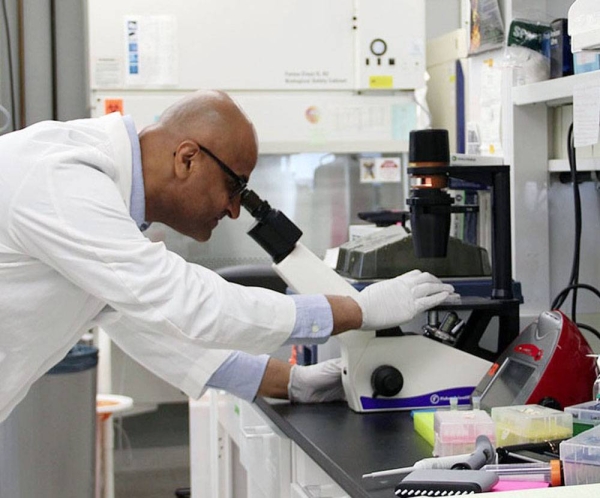
SAUDI ARABIAN Professor Dr. Yasser Aldhamen at Michigan State University (MSU) Develops Pioneering Cancer Tumors Immunotherapy Strategy

Michigan State University (MSU) faculty member Dr. Yasser Aldhamen created a pioneering cancer immunotherapy strategy that can shrink tumors and increase therapeutic resistance against some types of cancer.

This came during a research he recently published in “Molecular Therapy” Journal, which is classified as one of the best scientific journals specialized in genetic and cellular therapy in the world.

Professor Aldhamen’s research project took about two years, completing 41 scientific papers published in prestigious international journals, as well as 3 previous patents registered with the US Food and Drug Administration.

In a statement to the Saudi Press Agency (SPA), Dr. Aldhamen said, “The whole idea is to treat patients without drugs to eliminate cancer.”

“Based on my previous work, a method was devised to harness the naturally active immune system to control tumor growth by activating the action of specific immune system cells, such as NK cells, and innate immune cells, such as macrophages and dendritic cells, within tumors.”

Dr. Aldhamen occupies, in addition to his duties, the position of Deputy Director of Research in the Faculty of Medicine at Michigan State University, and has supervised 5 students in the doctoral stage, two students in the master’s stage, and more than 15 students in the bachelor’s stage.

He also receives some trainees for 8 weeks from the secondary stage, by virtue of his interest in training future researchers in the laboratory, motivating them that making the world takes a long time.

He also participated in 15 conferences around the world, and membership in a number of advisory committees at the university working on developing research and exchanging experiences with researchers in countries such as Egypt and Peru. — SPA

source/content: saudigazette.com.sa (headline edited)

___________

Facebook.com

________________

SAUDI ARABIA

BAHRAIN: ‘Librae’ is New York’s First Bahrain-owned Bakery, Serving up a Slice of Third-Culture Cuisine

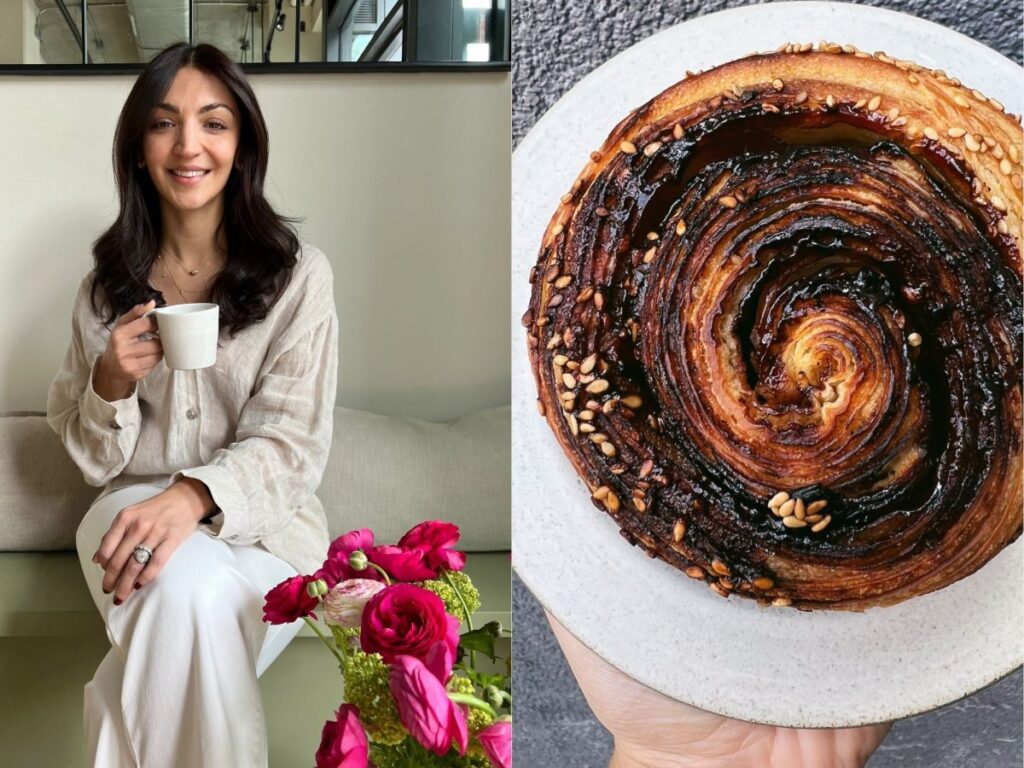
Owner Dona Murad says the motto is Bahraini hospitality, Copenhagen technique and New York energy.

If you ever find yourself in Cooper Square, in the Lower East Side of Manhattan, you might find a queue forming outside a cosy-looking bakery.

That would be Librae, New York’s — and possibly the whole of America’s — first Bahrain-owned-owned bakery. It’s the brainchild of Dona Murad, a Bahraini entrepreneur married to a New Yorker.

“We always wanted to have something in his hometown to represent the both of us,” Murad says on the phone from Dubai, where she lives when she’s not in the Big Apple.

“We wanted a space that brought together different cultures, religions and diversity.”

One quick look at the menu confirms they have achieved exactly that. Highlights include the rose pistachio croissant, a feta and dill scone and a lumee babka bun.

Lumee, or black lime, is liberally used in Bahraini cuisine.

“It’s used in tikka and stews and we wanted to create a pastry that was Bahrain and New York,” Murad says.

“So we took black lime, crushed it up, made it sweet in a lemon curd and put it into a babka, that’s classic New York.

“We gave it oomph and our own identity.”

Murad arrived in New York before the opening with black lime in her suitcase, knowing it was always going to be on the menu.

Another unique dish is the Marmite cheddar and scallion escargot, which is also on the menu at Hopscotch, Murad’s first cafe in Bahrain.

“Marmite is so hard to find in New York. We were buying it on Amazon in tiny little bottles, scraping every morsel out of the corners,” Murad says with a laugh.

“But we took that and put it in our morning bun and get the occasional English or Australian person who gets excited to see it on the menu.

“We love using flavours familiar to us, experimenting with them, putting them together in things that become delicious, like a disco in your mouth.”

Murad describes Librae as a “third culture cafe”, where they use “a little bit of this, a little bit of that”, with flavours and design influences from all over the world, from Bahrain to Bali and Morocco to India.

They also create new desserts for religious occasions, whether it’s for Eid and Ramadan, Christmas or Hanukkah.

It’s not just the flavours that stand out, either, but the technique used in the baking.

Murad and her husband, Andre, love the food scene in Copenhagen and so they were inspired by the Denmark capital’s unique fermentation process, which uses more salt and fat than usual with sourdough.

“Their approach to fermentation is quite a scientific one so giving examples might be a bit tedious, but if I had to explain it in two words it comes down to ‘no shortcuts’,” Murad says.

“Our croissant for example takes over 72 hours to get just the first step.”

Murad says their motto is “Bahraini hospitality, Copenhagen technique and New York energy”.

They were also really inspired by Denmark’s bakery culture, which, she says, is “small, warm and they have really good coffee”.

The combination of great pastries and delicious coffee was important to her when setting up.

“You don’t get two great products in one space. Usually people ignore one or the other,” Murad says.

“It might be a great bakery but they don’t care about coffee, so we wanted to do both.”

This is a similar premise she used in creating Hopscotch and Grind, a roastery she also owns in Bahrain.

Hopscotch opened six years ago and remains a go-to spot for food and coffee lovers on the island.

Nowadays, her brother and mother run the business in Bahrain, while she hops between the US and UAE.

Other dishes on Librae’s menu also hail from Hopscotch. The labneh zaatar morning bun customers find in New York, for example, is inspired by the zaatar labneh twist in Bahrain.

“It’s the evolution of the brand,” says Murad. “Librae is like the cooler, younger sister.”

As someone with no experience of running a business in New York, Murad was nervous about opening Librae.

But what made it even more risky was that they were doing it when there was still a mask mandate in the city because of the pandemic.

“It was scary, it was so polarised there,” she says. “You had people who would not walk into some places for certain reasons, so we were scared at the beginning. We didn’t have our foot in the door.

“Before opening, we were making almost 400 croissants a day. We refused to open until we had a croissant I would stand in line for … so I was standing outside the door, handing out croissants to people on the street.”

People would nudge away from Murad, looking at her as if she was “crazy”, she says, but every third person would respond.

“We would form a connection, tell our story and that got people talking to us and interested. Those people came back and stood in line to support us.”

They finally opened in May last year and the community has responded well.

“It’s so surreal,” Murad says. “I go outside and I look at the line forming and get goosebumps.

“Our communities responded here, in Bahrain, Saudi Arabia, all over the Gulf and a lot of people in New York. We have regulars now.”

Another aspect she brought from the Gulf was the idea of relaxing in a cafe.

“Coffee culture in New York is very different to Dubai or Bahrain,” she says. “We wanted to create a bakery where people would sit down and dwell and enjoy, somewhere to have a good cup of coffee and pastries.

“There are a lot of coffee shops that are beautiful and New York runs on caffeine because it’s such a fast-paced society. This is a space that brings the way we enjoy coffee to the centre of Manhattan.”

Murad hasn’t had much time to think about her next step, but she hasn’t ruled out opening something new in the UAE.

“If the right opportunity comes along, it’s my second home, so why not? Dubai has so many great options, but there is always room.”

As for Librae, which is simply named after her star sign (“You know how when you don’t know how to pronounce something it automatically becomes cooler,” she says with a laugh), she’s focused now on growing the brand.

“I want to continuously learn in the industry. I enjoy what I do. Whatever opportunity comes my way, I want to be able to take it. I want to expand Librae’s horizons and see where it takes me.”

source/content: thenationalnews.com (headline edited)

________

pix: caterermiddleeastcom

___________

BAHRAIN

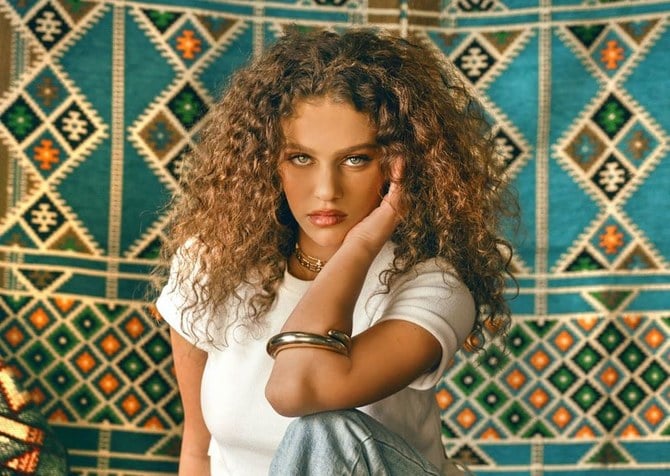
PALESTINIAN CHILEAN Singer Elyanna to Perform at Coachella Festival in US

Palestinian Chilean singer Elyanna is set to perform for the first time at Coachella, the popular music festival that is held annually at Indio, California.

The 10-day event will run from April 14 to 23.

Elyanna, who is famous for her songs “Ghareeb Alay,” “Ala Bali” and “Ana Lahale” with Canadian Lebanese singer Massari, will be the first Arab artist to perform on the Coachella stage.

“I am honored and grateful for all the love and support I have received in the past couple days,” she wrote to her 575,000 followers on Instagram. “Last year I attended Coachella, and this year I will be the first Arabic singing artist to perform there. Your wildest dreams will come true, so keep on dreaming! See you in the desert.

“I’m so proud and excited to bring my culture and music to Coachella,” she said in another post.

Elyanna’s celebrity fans, including Massari, Dutch Palestinian supermodel Bella Hadid, US Iraqi beauty mogul Huda Kattan, Egyptian rapper Felukah, Palestinian singer Noel Kharman and Syrian swimmer Yusra Mardini, all took to Instagram to congratulate the star.

source/content: arabnews.com (headline edited)

__________

__________________________
PALESTINIAN / CHILEAN

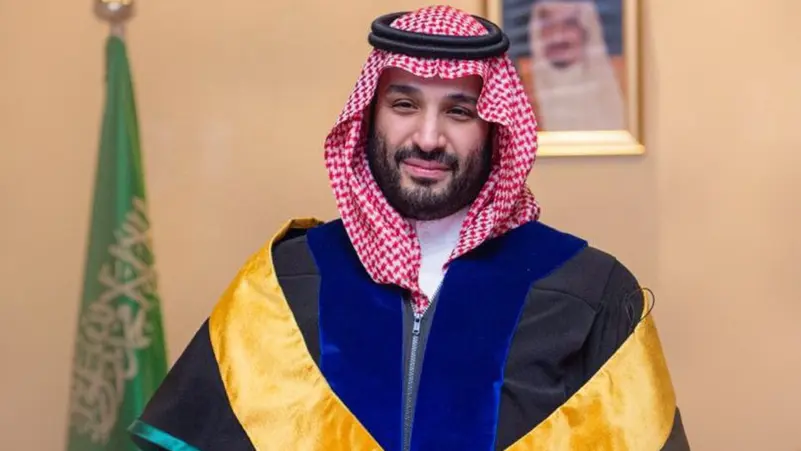
SAUDI ARABIA’s Crown Prince Named ‘Most Influential Arab Leader 2022’: Poll

Saudi Arabia’s Crown Prince Mohammed bin Salman has been named the most influential Arab Leader of 2022 according to a poll conducted by Russia Today.

The Kingdom’s Crown Prince and Prime Minister won the online vote by a landslide with 62.3 percent voting in favor of the revolutionary leader. He earned 7,399,451 of the total 11,877,546 million votes, the international TV news network’s website said on Tuesday.

The percentage of votes received by Mohammed bin Salman reportedly breaks all previous records. It also makes it the second time in a row that the Saudi Crown Prince has won the RT vote-based title.

UAE President Sheikh Mohamed bin Zayed Al Nahyan came second on the list with 2,950,543 million votes, accounting for 24.8 percent of the total votes.

Egypt’s President Abdel Fattah el-Sisi came in third place with 1,387,497 million votes.

The Saudi leader has earned international reputation for spearheading a liberalization movement in the country while taking steps to attract diverse investment to reshape the oil-dependent economy.

He has been brandished as a women’s rights champion for various empowerment efforts including lifting a decades-old ban on women driving and easing guardianship rules.

All these changes tie into the passion project of the Saudi leader called Vision 2030, a multitude of reforms established by the Crown Prince to elevate the Kingdom past the 21st century.

source/content: english.alarabiya.net / Al-Arabiya English

____________

Saudi Arabia’s Crown Prince and Prime Minister Mohammed bin Salman. (Twitter)

_________________

SAUDI ARABIA

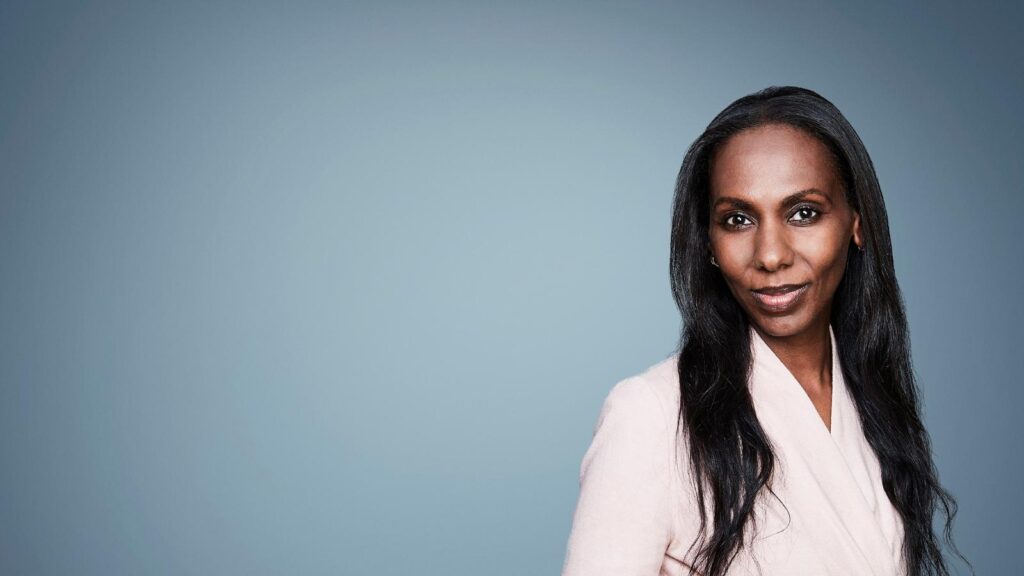
SUDAN: Nima Elbagir, Journalist and Award-Winning International Television Correspondent

CNN has promoted senior international correspondent Nima Elbagir to the role of chief international investigative correspondent.

A London-based Sudanese journalist, Elbagir has broken countless stories for CNN from war and crisis zones, reporting on human rights abuses in places like Ethiopia’s Tigray region, Libya, Democratic Republic of the Congo, Nigeria and Yemen. In 2017, her undercover reporting exposed migrants being sold at slave auctions in Libya and prompted responses from the government and the United Nations.

Elbagir has scooped up numerous awards in her career, including the Royal Television Society’s Television Journalist of the Year Award in 2020, a duPoint Award, a Polk Award in 2017, the International Center for Journalists 2018 Excellence in International Reporting Award, the 2018 IWMF Courage in Journalism Award, a 2019 Gracie Award, and the LA Press Club’s 2019 Daniel Pearl Award.

Elbagir joined CNN in Feb. 2011 as a full-time reporter based at network’s Johannesburg bureau, before later moving to Nairobi, Kenya. Prior to joining CNN as a freelancer in 2010, Elbagir worked in various capacities for the UK’s Channel 4 for a number of years from 2005: she freelanced from Kabul, Afghanistan for Channel 4 News; reported for the Unreported World documentary strand; and both reported and presented for Channel 4 News and More4 News.

source/content: adweek.com/TVNewser/CNN-Revolving Door (headline edited)

___________

pix: cnn.com

_________

SUDAN

SAUDI ARABIA: Saudi Team Win the ‘2022 International Date Palm Innovative Technology Excellence Prize’ for their Special Sensor to Protect Date Palms from Pests

A team from the King Abdullah University of Science and Technology and Al-Hasa-based Palms and Dates Center has been awarded the 2022 International Date Palm Innovative Technology Excellence Prize.

Presented by the National Center for Palm and Dates, the award was made in recognition of the team’s fiber-optic distributed acoustic sensor, which is used in the early detection of red palm weevils in date palm trees.

Tackling infestations of red palm weevils has been a long-standing problem across the Middle East, Southeast Asia, Europe and other parts of the world.

The winning team comprised Dr. Islam Ashry, Dr. Chun Hong Kang and Prof. Boon S. Ooi from the KAUST Photonics Laboratory and Dr. Yousef Alfehaid and Eng. Abdulmonem Alshawaf from the PDC, which operates under the Ministry of Environment, Water and Agriculture.

HIGHLIGHTS

• Infestations of red palm weevils a major problem across the Middle East.

• Researchers from KAUST-PDC collect $53,000 in prize money.

As well as the prestige, the team collected SR200,000 ($53,000) in prize money. The award was announced at the 3rd International Dates Conference and Exhibition, which ran from Dec. 7-10 in Riyadh. Their design beat off the challenge of 65 other submissions for the prize.

Ashry said the team was honored to have won such a prestigious award and paid tribute to his colleagues at the Photonics Laboratory and the PDC who helped in the development, testing and deployment of the technology.

“This recognition motivates us to continue improving, optimizing and advancing this technology to a new level,” he said.

According to the NCPD, the event provided “a unique combination of scientific research and commercial strategy to exchange scientific knowledge and innovative technologies to enhance the safe production and commercialization of these extraordinary super-fruits.”

The Kingdom is home to some 33 million date palm trees, producing about 1 million tons of dates a year, or 20 percent of global production. In the Middle East region alone about $8 million is spent every year fighting infestations of weevils.

“Our RPW-detecting technology uses a fiber-optic distributed acoustic sensor,” Ashry said. “It is the first of its kind and offers a more scalable approach (than) other detection methods, such as microphone probe, computer-based tomography and visual inspection.”

Kang said the team’s system used fiber-optic cables wound around individual tree trunks.

“Acoustic signals generated by the weevil larvae inside a trunk can be picked up by the cable and transmitted back to an interrogator system,” he said.

“The collected signals are then analyzed and processed through a machine learning algorithm to identify each tree’s infestation status.”

Ashry and Kang are now working with various organizations within the Kingdom, including the PDC, MEWA, NEOM, the Royal Commission for AlUla and the Tabuk Agricultural Development Co., on the deployment of their technology.

These test applications will help to improve the sensitivity of the sensor systems so they can be used on large-scale farms.

“Our research efforts align well with … Saudi Vision 2030 in terms of diversifying the economy, especially for the date palm sector,” Ashry said.

Ooi said: “Our technology offers a unique and low-cost solution to protect the large number of date palm trees in the country through early infestation detection.”

source/content: arabnews.com (headline edited)

____________

(L to R): KAUST Research Scientist Dr. Islam Ashry and Prof. Boon S. Ooi receive the 2022 International Date Palm Innovative Technology Excellence Prize from the NCPD on behalf of their team. (Supplied)

________________

SAUDI ARABIA

IRAQI-BRITISH: Inside Architect Zaha Hadid’s Final Masterpiece Built for Sustainability

Sharjah HQ of waste management operator Beeah aims to lay foundations for a greener future.

A striking Sharjah building in the shape of a sand dune is primed to be a beacon of sustainability and serve as a fitting legacy for renowned architect Zaha Hadid.

The headquarters of waste management operator Beeah was the last project designed by Zaha Hadid before her death in 2016.

Her team constructed a modern masterpiece across 9,000 square metres, using sustainable materials to create a building with 40 per cent of its power provided by the sun.

Illuminated, sweeping staircases take visitors up to an art gallery on the first floor, with screens showing a time-lapse video to explain the building’s five year construction.

Now open to full capacity of 500 workers, the building is breaking new ground in how to provide a sustainable working environment.

Green vision

“We aim to operate as sustainably as possible, and used recycled materials in the construction of the building,” said Nada Taryam, managing director of Beeah HQ, which manages waste management across the country.

“Native plants have been used in the landscaping and reduced the amount of water consumption.

“A power pack stores excess energy from the photovoltaic panels, so we have a holistic strategy to achieve sustainability.

“Every project has its own specific requirements when energy comes into play, but the basis on which we have built this design can be learnt from.

“All of these sustainability measures can be taken and applied to other projects.”

The building’s high thermal mass allows heat to be absorbed during the day and dissipated at night to encourage cooling, while its curved structure allows the flow of natural sunlight to reduce the energy required for lighting.

An artificial intelligence system enables the building near the Alsajaa industrial area to learn to become more efficient as more people use it.

Its developers say it conforms to the highest standards of energy efficiency in the world.

Windows are positioned to reduce solar glare, while special glass cuts radiant thermal energy to keep the building cooler during summer.

While the glass limits the entry of infrared and ultraviolet light, solar panels supported by Tesla-made battery packs capture the power of the sun and store it to run the building’s air conditioning system.

The building’s components and management systems are integrated to maintain and improve its efficiencies.

Conference rooms are equipped with technology to automatically transcribe meeting minutes and email them to participants.

The building is the third in the UAE to be designed by Zaha Hadid architects, following the Sheikh Zayed Bridge, opened in Abu Dhabi in 2010, and The Opus hotel and apartments complex opened in Business Bay, Dubai, in 2018.

“As it learns from its occupancy, this building could potentially become one of the most sustainable buildings in the UAE,” said Ms Taryam.

“Certain decisions were taken, such as using glass reinforced panels on the ceiling which refract the sunlight so contribute to its efficiency and temperature control.

Defying convention

“There is a misconception about what these kind of buildings should look like, and we have defied that.

“There isn’t a rule book to say green buildings should be lined with solar panels. We have proved we can integrate architecture as well as sustainability to create something iconic.

“Zaha Hadid has something that distinguishes her from any other architect of her time. Every project of hers has its own context, but her ideas are adapted for each specific project.”

source/content: thenationalnews.com (headline edited)

______________

The headquarters of Sharjah waste management operator Beeah was the last project designed by Iraqi architect Zaha Hadid before her death in 2016. All photos: Andrew Scott / The National

__________________________________

IRAQI / BRITISH/ SHARJAH, UAE

EGYPT & ARAB: Heritage of 12 Arab countries on show at the 1st Bayt Al-Arab Fair (House of the Arabs) 2023 in Cairo

The first Arab exhibition for productive families, Bayt Al-Arab (House of the Arabs) opened in Cairo in the presence of Ahmed Aboul Gheit, the Arab League secretary-general, and several Egyptian and Arab officials, including a high-ranking Saudi delegation.

The products at the exhibition reflect the identity of the 12 participating Arab countries.

It offers an important opportunity to learn about the richness of the cultures of these countries in craftwork and handicrafts in order to protect these industries from extinction.

The number of participants featuring at the exhibition is about 150, of which 70 are Egyptian and 80 from other Arab countries.

The exhibition, which continues until Jan. 11, opens areas for the exchange of expertise between craftsmen, producers and exhibitors. 

Saeed Al-Zahrani, head of the Saudi delegation, shared with the audience at the opening ceremony a number of success stories, and said the participation of the Social Development Bank aimed at supporting and empowering micro-enterprises for family businesses, which are considered a fundamental pillar of the Kingdom’s Vision 2030.

At the Saudi pavilion, visitors were drawn to the heritage products of various regions of the Kingdom, such as Al-Sadu weaving, Al-Qat Al-Asiri, and the manufacture of Al-Masleh, in addition to the products of many Saudi family businesses displayed within the Tagseed (incarnation) initiative, which is marketed for home projects in all international and local exhibitions. 

Nevin Al-Kilani, Egypt’s culture minister, said that the participation of dozens of families from Egypt and the Arab world was “the best evidence of Egypt’s keenness to support heritage both locally and regionally.”

Raef Al-Khouli, an official involved in the organization of the exhibition, told Arab News: “The Arab House exhibition in the Dome Palace is a wonderful opportunity to visit because there are many handicrafts from all Arab countries, which are sold at very reasonable prices, because all who are present are the owners of the profession or craft, and are not merchants.” 

At the entrance, Al-Khouli said, visitors can register their names and phone numbers, and will receive entry for free, taking a dedicated bus to the exhibition venue.

Al-Khouli added: “At the Saudi pavilion there is a wonderful medal that the visitors can buy. It is a commemorative medal for the door of the Kaaba and the door of the Prophet’s Mosque.

“On the sidelines, there is a large theater and artistic performances are held in it throughout the day,” Al-Khouli said, adding that visiting families could bring children as well, because there is a play area and many drawing and coloring activities.

source/content: arabnews.com (headline edited)

___________
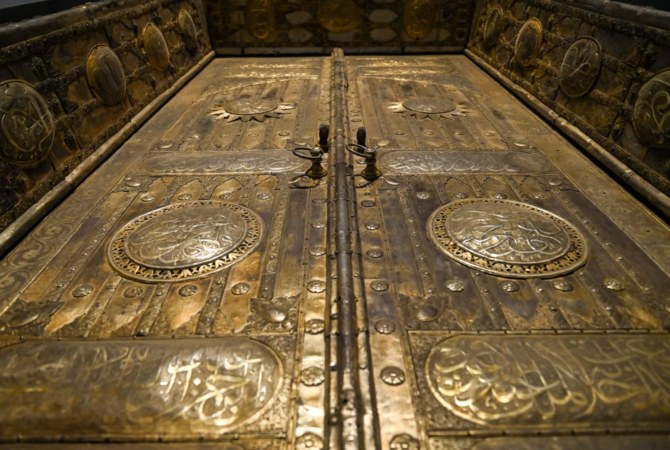
The first Arab exhibition for productive families, which continues in Egyptian capital Cairo until Jan. 11, opens areas for the exchange of expertise between craftsmen, producers and exhibitors. (Supplied)

___________________________

EGYPT & ARAB NATIONS