Arabs & Arabian Records Aggregator. Chronicler. Milestones of the 25 Countries of the Arabic Speaking World (official / co-official). AGCC. MENA. Global. Ist's to Top 10's. Records. Read & Enjoy./ www.arabianrecords.org
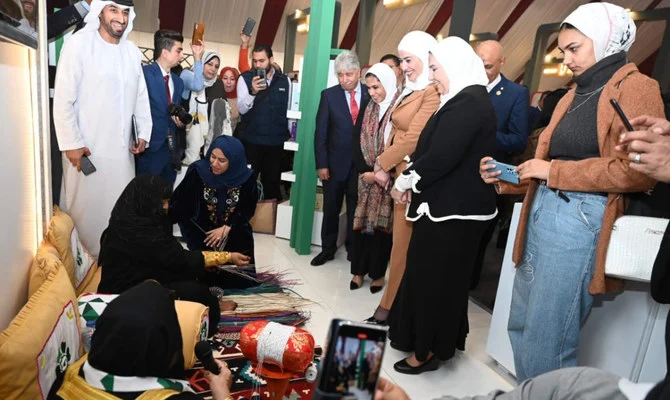
The first Arab exhibition for productive families, Bayt Al-Arab (House of the Arabs) opened in Cairo in the presence of Ahmed Aboul Gheit, the Arab League secretary-general, and several Egyptian and Arab officials, including a high-ranking Saudi delegation.
The products at the exhibition reflect the identity of the 12 participating Arab countries.
It offers an important opportunity to learn about the richness of the cultures of these countries in craftwork and handicrafts in order to protect these industries from extinction.
The number of participants featuring at the exhibition is about 150, of which 70 are Egyptian and 80 from other Arab countries.
The exhibition, which continues until Jan. 11, opens areas for the exchange of expertise between craftsmen, producers and exhibitors.
Saeed Al-Zahrani, head of the Saudi delegation, shared with the audience at the opening ceremony a number of success stories, and said the participation of the Social Development Bank aimed at supporting and empowering micro-enterprises for family businesses, which are considered a fundamental pillar of the Kingdom’s Vision 2030.
At the Saudi pavilion, visitors were drawn to the heritage products of various regions of the Kingdom, such as Al-Sadu weaving, Al-Qat Al-Asiri, and the manufacture of Al-Masleh, in addition to the products of many Saudi family businesses displayed within the Tagseed (incarnation) initiative, which is marketed for home projects in all international and local exhibitions.
Nevin Al-Kilani, Egypt’s culture minister, said that the participation of dozens of families from Egypt and the Arab world was “the best evidence of Egypt’s keenness to support heritage both locally and regionally.”
Raef Al-Khouli, an official involved in the organization of the exhibition, told Arab News: “The Arab House exhibition in the Dome Palace is a wonderful opportunity to visit because there are many handicrafts from all Arab countries, which are sold at very reasonable prices, because all who are present are the owners of the profession or craft, and are not merchants.”
At the entrance, Al-Khouli said, visitors can register their names and phone numbers, and will receive entry for free, taking a dedicated bus to the exhibition venue.
Al-Khouli added: “At the Saudi pavilion there is a wonderful medal that the visitors can buy. It is a commemorative medal for the door of the Kaaba and the door of the Prophet’s Mosque.
“On the sidelines, there is a large theater and artistic performances are held in it throughout the day,” Al-Khouli said, adding that visiting families could bring children as well, because there is a play area and many drawing and coloring activities.
source/content: arabnews.com (headline edited)
___________
The first Arab exhibition for productive families, which continues in Egyptian capital Cairo until Jan. 11, opens areas for the exchange of expertise between craftsmen, producers and exhibitors. (Supplied)
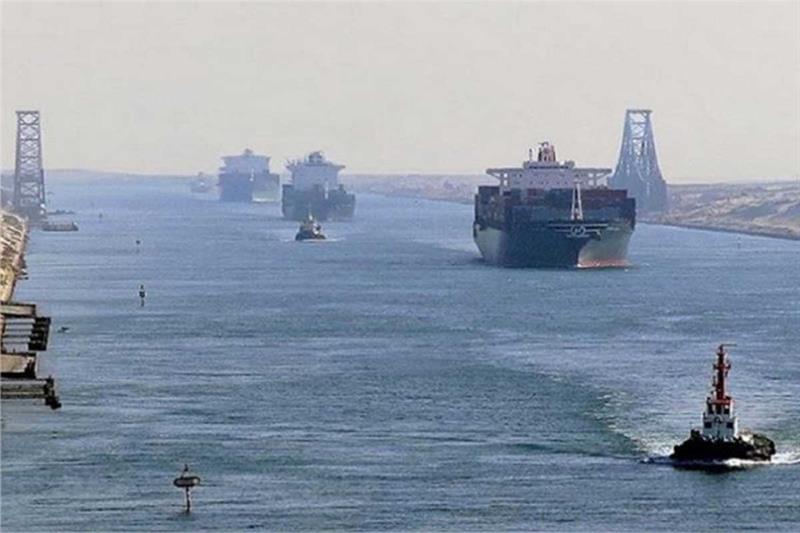
Egypt’s Suez Canal Authority (SCA) was named as the best Arab government institution in the second edition of the Arab Government Excellence Award.
SCA Chairman Osama Rabie received the award on Thursday during a ceremony held at the Arab League (AL) premises in Cairo to announce the winners of Arab Government Excellence Awards.
This Arab competition is organised under the auspices of Sheikh Mohammed bin Rashid, the ruler of Dubai and Prime Minister of the UAE.
The 72-kilometre-long Suez Canal – which connects the Mediterranean and the Red Seas – is the shortest maritime route between Asia and Europe and is the fastest crossing from the Atlantic Ocean to the Indian Ocean.
Around 12 percent of the world’s trade passes through the canal.
The world’s longest man-made canal without locks is one of Egypt’s main sources of foreign currency.
In 2022, the Suez Canal’s revenue hit a record $7.9 billion, up from $6.3 billion in the previous year.
The total number of vessels that crossed the canal this year reached 23,400, up from 21,700 in 2021.
Meanwhile, total cargoes that crossed the canal this year hit a record high of 1,420 billion tons, up from 1,220 billion tons in 2021.
The Egyptian Ministry of Communications and Information Technology was also picked as the best Arab ministry
In our continuing series on inspiring life stories across continents, we learn what made her leave a career in medical science for a ‘cuisine lab called the kitchen’.
When Lamees Ibrahim left Baghdad in the 1970s, certain parts of the city, not least the riverside strip of fish restaurants along Abu Nawas, became a fixed ideal in her memory.
After an interval of three decades, a return to the flat bank of the Tigris in 2004 was an unexpected low point in a thoroughly disturbing homecoming.
The street once the “pomegranate of Baghdad” was no longer filled with diners being entertained by poets and musicians, engulfed in the aroma of arguably Iraq’s national dish, masgouf.
Instead, Dr Ibrahim stood shaken as she took in a rubble-strewn wasteland populated by a handful of struggling fish sellers.
Yet one sense was still powerfully triggered by the fresh carp grilling over the charred wood.
“It was not in very good shape,” she tells The National. “There were only bits of its old self left, but the smell was still amazing. There are certain scents that you smell and you think, ‘Wow, this is Baghdad.’ It is very, very specific. If you enjoy samak masgouf once, you will never forget it.”
Dr Ibrahim had made a long, hazardous journey from her home in London, where she moved decades earlier: marrying, earning a PhD in Pathology, raising four children.
Her husband was with her as she set out from Jordan in a car just after Fajr prayers that day, to “feel” her land, see her extended family, and show her eldest child, Maysa, her ancestral roots.
But the Baghdad conjured up by the smell of the barbecued fish was gone; the deserted, bombed-out streets were not at all familiar to her. They did, however, bring back one particularly strong recollection from childhood.
Sometimes in the summer months, the young Lamees would gather with her three siblings around their father to be regaled by stories about Iraq.
“I remember one day when he said: ‘Look, we built this country, the Iraqis, and we have to keep doing that. If every one of us contributed their own brick then the wall would go up and up, and we should keep on building.’ I never forgot that,” Dr Ibrahim said, “and I felt that we had to add our little brick to the wall. We had to make Iraq keep going.”
She returned to London on a mission to help rebuild Iraq in some way for the younger generations that would never have a chance to experience what it had been in the golden years.
The need to describe the country’s rich history and accomplishments was urgent, but whatever she put down on paper seemed inextricably tied to cooking. So it was that she came to realise it would be through food that she could preserve connections to things past.
“I wanted to write something, I needed to write, I had to write,” she says. “So I started. Eventually, it became a cookbook with a bit of history and anecdotes about culture, about civilisation.
“My background has nothing to do with cooking. It’s not cuisines of any kind, but I have a passion for Iraq. It’s my motherland, my country.”
When the 21-year-old Lamees had come to London in the early 1970s, it was to pursue a postgraduate medical degree at King’s College and then head back to her beloved Baghdad. Soon after arriving, she married and her life, she says, became busy but limited as she immersed herself in studying and research projects.
“You go to college, you study, you attend lectures, you come home, you open the books, read, read, read, have some dinner, and go back to college,” she says.
“I didn’t know that I was homesick until one day during Ramadan I saw an elderly woman going into King’s College Hospital with her black abaya and veil. I said to her ‘marhaba hajji’ and she was shocked. She hugged me, and I went home, crying all the way.
“I cried because I had a goal. I wanted to get a degree, and the sooner I got it, the sooner I could go back home. Unfortunately, that didn’t happen.”
She was haunted by her homeland, by such memories as the heady perfume of jasmine and the days in her youth when the children would pick the flowers and turn them into long necklaces.
But the months turned into years, and years into decades. At first, returning to Baghdad was difficult as the academic successes mounted and her family grew. It became impossible when Saddam Hussein came to power, with Dr Ibrahim fearing that she would be detained were she to attempt a visit, and never see her three daughters and son again.
Her father died and then, on news of the death of her mother, Dr Ibrahim made the fateful trip when she found a country that was “not what I was expecting, of course. It was demolished, devastated.”
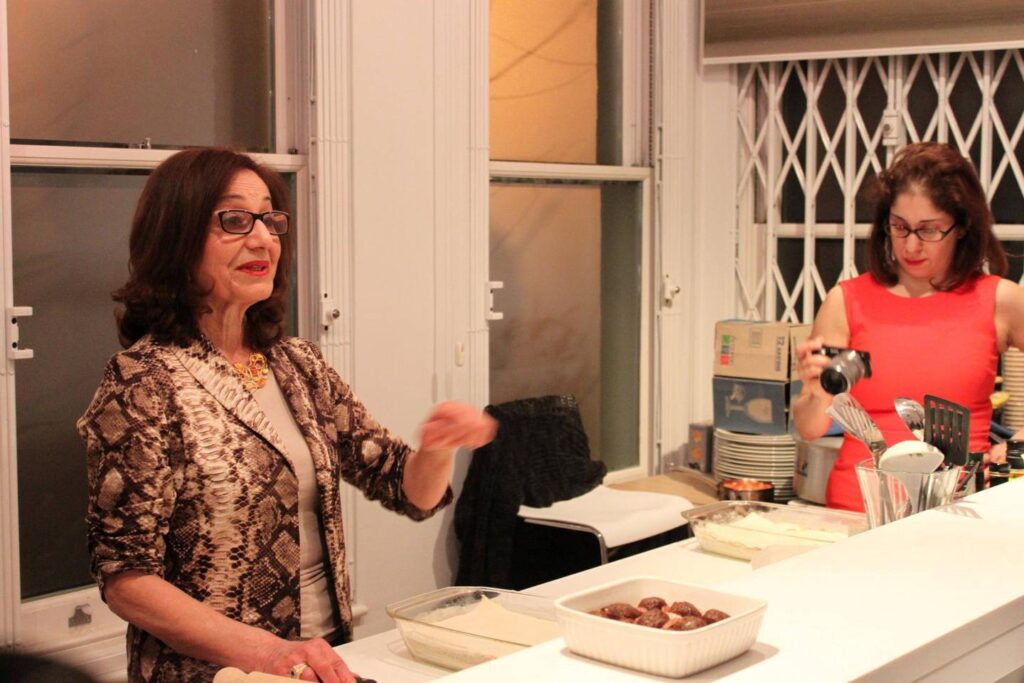
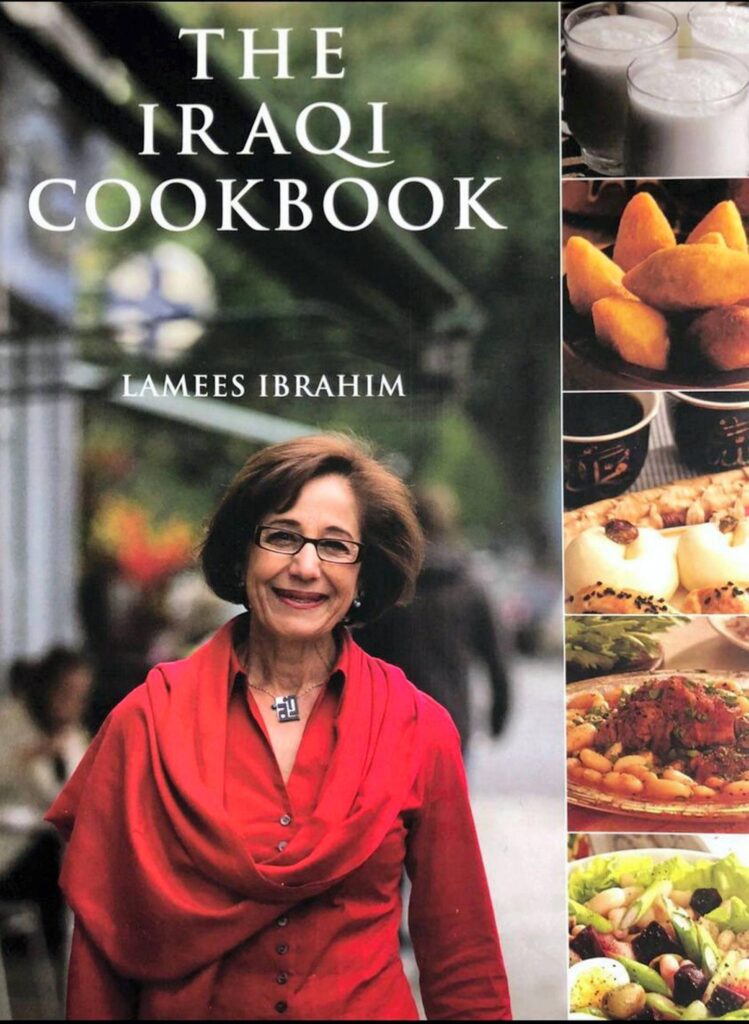
The resulting homage, The Iraqi Cookbook, was published in 2009, a labour of love with the name of each dish painstakingly recorded in Arabic. Samak masgouf, of course, features, and Dr Ibrahim advises in the foreword that all visitors to Iraq should try it in one of the cafes and restaurants on the bank of the Tigris.
“I came back to London with one idea in mind, which is something that as a girl I grew up to learn,” she says. “I must do something for my country. I need to tell my children what my country is like, our history, our culture, our ability to do what we did in the old days.”
She is speaking by Zoom from her home in Richmond-Upon-Thames, her voice at times faltering and cracking with emotion as she talks about dedicating herself to bringing Iraq to the diaspora.
“Iraq to me is very important, very important,” Dr Ibrahim says. “It is in my blood. It’s in my genes. It’s my history.”
The book sold out in the UK and the US, and was reprinted by popular demand. Bit by bit, the time-consuming process of writing and re-writing, working with publishers and photographers, the press interviews had taken Dr Ibrahim away from her career in pathology.
“And I never went back,” she says. “I’m still very interested. I read a lot about Covid. I follow the research, but I’m not going back to that lab. I have a cuisine lab called the kitchen.”
With the emergence of the pandemic, Dr Ibrahim revisited experiments that she had begun as a teenager when she would try to make her mother’s recipes without meat. Sometimes it was successful, she acknowledges, sometimes not.
As a child, though, she had never been as fond of lamb as her siblings were. The family cat adored her, loitering under the table at lunchtimes for the morsels of the daily stew that Lamees would sneak down to her.
During lockdown, her own children became “guinea pigs” for her avant-garde creations as Dr Ibrahim collected together an array of vegan offerings that would appeal to a young audience interested in preserving the planet.
“Dishes don’t need to have meat to have the taste and flavour, for it to smell like an Iraqi dish,” she says. “Iraqi cooking can be vegan, as well as meat and fish-centric.
“If you can preserve the taste of the flavour of the dish, go for it. Many Iraqi dishes are, in fact, vegan but we ate them before ever knowing the word ‘vegan’.”
When one of Dr Ibrahim’s friends called to see how she was faring with the tight coronavirus restrictions in the capital, she told him she had been busily cooking all the recipes to be photographed for The Iraqi Vegan Cookbook. Curious, he wanted to know whether she was including any kubba, knowing that Dr Ibrahim had devoted an entire chapter to its many meaty variants in her first book.
On learning that the new book would contain Kubbet Jeriesh, Kubbet Halab and another recipe that Dr Ibrahim made from lentils, he answered: “Only three?”
His grandmother, he said, had never enjoyed meat in her kubba so the family reinvented the dish to suit her preferences, stuffing the shells with pine nuts, onion, spices and parsley.
“If all these years ago we had vegan Iraqis, we have plenty today,” Dr Ibrahim says, smiling.
The Iraqi Vegan Cookbook had been due out on December 31, but the release has been delayed not least because of the queues of hauliers that built up in Calais and Dover as a result of Brexit and the French shutdown of the border when the new strain of the coronavirus emerged in the UK.
Rescheduled for release at the end of January, Dr Ibrahim hopes that sharing more of the oldest cuisine in the world will counter some of the negative perceptions that persist about Iraq today.
“Iraq is positive,” she says. “Iraq is full of history, full of culture. This is the cradle of civilisation. I don’t like to talk about what’s going on now. I would like to talk about the positivity of all of our achievements.
“I feel nowadays, if I add that little brick, then I have added something which I would be proud of as an Iraqi living in the West. Living in Iraq, we can build from within. We are living in the West – all my children are also living in the West, but we add our bricks from our side, from outside the country.”
Dr Ibrahim is modest about her contribution to the wall that her father told her about all those years ago, hesitating to use the word achievement. If her writing can be described as such, she says, she wants to make clear that it was never about her. It was always for Iraq.
Dr Lamees Ibrahim has dedicated herself to bringing the country of her birth to the diaspora: ‘Iraq is very important to me. It is in my blood. It is in my genes. It is my history,’ she says. Courtesy of The Mosaic RoomsThe homage to Dr Ibrahim’s homeland, ‘The Iraqi Cookbook’, was published in 2009, a labour of love with the name of each dish painstakingly recorded in Arabic. Courtesy Lamees Ibrahim
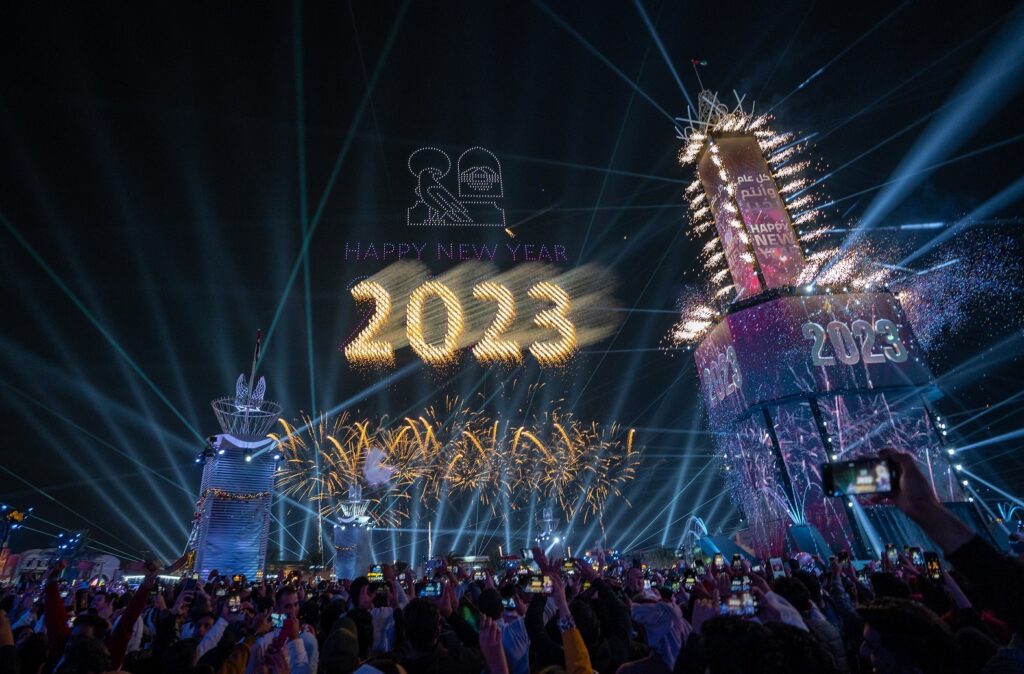
The Sheikh Zayed Festival witnessed an intense public turnout that exceeded the barrier of one million visitors, followers and viewers of the festival, who gathered in the Al Wathba area, coming from inside and outside the country, to celebrate the welcome of the New Year 2023.
The various events attracted visitors, especially the huge fireworks and drone shows, where 4 records were broken in the Guinness Book of Records.
The festival squares were crowded with crowds, and the Al Wathba area was filled with followers and viewers of the drone shows and fireworks, which lasted for about 60 minutes for the first time, for the Guinness Book of Records to record this great achievement.
Amid feelings of happiness and joy, the largest fireworks display and the largest drone show lit up the sky of Al Wathba. The largest fireworks display, which lasted for more than 40 continuous minutes and broke three records in the Guinness Book of Records in terms of quantity, time and shape, won the admiration of visitors. In addition to the largest display of “Drones”, using more than 3,000 drones, a message was drawn in the sky of Al Wathba, welcoming the New Year at the end of its interesting show.
Al-Waleed Othman, an arbitrator of the Guinness Book of Records, confirmed that the Sheikh Zayed Festival was able to break 4 records at the same time, 3 of which are related to fireworks and a new record related to “Drones”, explaining that the most number of helicopter fireworks thrown in 30 seconds or more was recorded. The number of fireworks launched in 30 seconds (wheels), the most repeated fireworks in 30 seconds, in addition to the largest formation of a quick response code by drones.
Othman said: We are pleased to be present at the Sheikh Zayed Festival in the New Year’s celebrations, and we extend our congratulations to the organizers of the festival, who used to break records annually in order to please the audience.
The festival’s audience was keen to document the wonderful moments of the various shows on their mobile phones and share them on social media. The impressive performances were also broadcasted on the festival’s social media.
The Emirates Fountain and laser performances won the admiration of the festival-goers, young and old, with their dazzling musical and laser shows.
The Pavilions of World Civilizations also allocated a lot of international artistic and folklore shows, turning the festival into a global artistic carnival in celebration of New Year’s Eve, whether by holding concerts on the stages of the Pavilions of Civilizations or by participating in the march of world civilizations that roamed all parts of the festival, presenting popular performances in traditional clothes of countries. participation.
Visitors to the Sheikh Zayed Festival expressed their happiness with the international and diverse folklore and artistic events and performances, including the activities of the Heritage Village, the city of recreational games, the children’s city, the arts area, go-karting competitions, Crazy Cars, the Garden of Lights and Flowers, in addition to the Selfie Street area, the Museum of Sweets and many others.
William Mullally picks the best movies by Arab filmmakers over the past year.
‘Perfect Strangers’
Director: Wissam Smayra
Starring: Mona Zaki, Nadine Labaki, Georges Khabbaz
The original Italian version of “Perfect Strangers” had already been remade across the world before its Arabic-language iteration was released on Netflix. But nowhere else has it caused the stir that it did in the Middle East. The conceit is simple: Seven friends at a dinner party decide to play a game, placing their phones in the center of the table to make their calls and messages known to all. As the night goes on, their secrets are revealed, upending everything they thought they knew about each other. Not only was this the best version of the film so far, with pitch-perfect casting and memorable performances, it was also the bravest: each of its stars pushed themselves in ways they had never been able to in regional film previously, shattering taboos, capturing the world’s attention and changing Arab cinema forever.
The highest grossing film in the history of Egyptian cinema, “Kira & El Gin” is Marwan Hamed at his best. This is a crowd-pleasing historical epic that not only captures the spirit of Egypt past and present, but sets a course for a new future for the country’s film industry. Following two men fighting the British occupation in Egypt during the 1919 revolution, Hamed’s film rarely sags despite its nearly three-hour run time and sprawling cast, structured more as a suspense thriller than a social studies lecture. As Hamed jumps from genre to genre across his films, proving equally adept at each, one wonders how he will top this, should he try. But it would be foolish to bet against him as he continues to notch up career high after career high.
‘Boy From Heaven’
Director: Tarik Saleh
Starring: Fares Fares, Tawfeek Barhom, Mohammad Bakri
Egyptian-Swedish filmmaker Tarik Saleh has a bone to pick. Growing up in Europe, he was always labeled as ‘other’ — an idea reinforced in the books in his school library describing Arabs as “stupid” and “uncivilized.” Now firmly entrenched as a filmmaker, Saleh refuses to make films tailored to the Western gaze, turning his camera deep into the inner workings of Egyptian society and forcing international viewers to accept that they are seeing things through eyes that are not their own. In “Boy from Heaven,” Saleh goes deep into a corruption scandal at the influential Al-Azhar Mosque, following a hero whose strong Muslim faith is unrattled as he uncovers the evils hiding from plain sight, with scenes and images you won’t soon forget.
‘The Alleys’
Director: Bassel Ghandour
Starring: Maisa Abd Elhadi, Nadia Omran, Munther Rayahna
In 2014’s “Theeb,” Jordanian writer Bassel Ghandour crafted perhaps the greatest example of the Bedouin Western in cinema history. With “The Alleys,” Ghandour steps into the director’s chair for the first time and turns the streets of Amman into the setting for a modern noir, in which the darkness hiding in the city’s back streets slowly boils to the surface. The film’s sprawling nature is both benefit and detriment, but it’s a stirring snapshot nonetheless, elevated by star-making performances from Maisa Abd Elhadi and Nadia Omran.
‘You Resemble Me’
Director: Dina Amer
Starring: Dina Amer, Mouna Soualem, Lorenza Grimaudo
Filmmaker Dina Amer is most familiar to global audiences for her fearless journalism in 2013’s “The Square” and various Vice News stories she produced as their foreign correspondent from the front lines of regional conflicts. “You Resemble Me” cements her as a filmmaker to watch, as her harrowing experimental recounting of the life of Hasna Ait Boulahcen, the woman miscredited as Europe’s first suicide bomber, is a deeply affecting dissection of the roots of terrorism and the racism that Arab women face in Europe. One of the most original films released this year.
The story of Yusra and Sara Mardini, two sisters from Syria who risked their lives to escape conflict for a better future only for one of them to become an Olympian, is so powerful that a film capturing their story could not help but be inspirational. El-Hosaini, the Welsh-Egyptian filmmaker behind 2012’s excellent “My Brother the Devil,” made it into something more — a thought-provoking reframing of the refugee experience at a time when Syrians and many others still suffer from that stigma, as well as a chronicle of women’s empowerment as the structures that held them back crumble, all told with a light touch that never alienates the huge global viewership the Netflix film has enjoyed.
‘Mediterranean Fever’
Director: Maha Haj
Starring: Amer Hlehel, Ashraf Farha, Anat Hadid
Palestinian cinema is often, understandably, a no-holds-barred dissection of the plight of its people. But that is by no means its only manifestation, as Maha Haj, a previous collaborator with renowned satirist Elia Suleiman, proves with her latest feature, “Mediterranean Fever,” the follow up to her acclaimed 2016 feature “Personal Affairs.” Haj focuses here on smaller human problems, following an aspiring writer who suffers from depression and befriends a small-time crook living next door. At times comedic, the film drifts into dark territory while always keeping its audience guessing. After winning best screenplay at Cannes in 2022, Haj has confirmed herself as one of the region’s most singular voices.
There is no more versatile actor working in Arab cinema today than Palestinian actor Saleh Bakri, who, with Touzani’s “The Blue Caftan,” has capped off a tremendous run of eight films in the last two years, including Farah Nabulsi’s Oscar-nominated “The Present” and Mohammed Diab’s “Amira.” This is perhaps his best performance yet. He plays Halim, a struggling master tailor in Morocco whose life is turned upside down when he and his wife take in a young apprentice. Stealing the strikingly-filmed show, however, is his co-star Lubna Azabal as his wife Mina, who is quietly enduring her own private battle with breast cancer as she and her husband struggle to communicate. With this and 2019’s “Adam,” Touzani is already one of Morocco’s great chroniclers.
‘Raven Song’
Director: Mohamed Al-Salman
Starring: Asem Alawad, Ibrahim Alkhairallah, Abdullah Aljafal
The singular contemporary Gulf filmmaker Mohamed Al-Salman is not making films so that the world may understand Saudi Arabia — he’s making them so that Saudi Arabia may understand itself. “Raven Song,” his debut feature after years of acclaimed shorts, is a stylish jump back to 2002 in the Kingdom, a formative time for both the filmmaker and his country, in which the fight between traditionalism and modernity was so heated that it manifested prominently even in the world of poetry. At times dream-like, “Raven Song” is a film that defies definition, with interpretations likely to roll in for years to come.
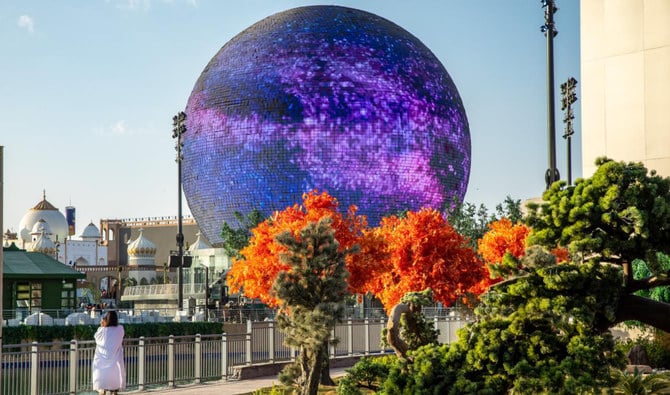
A new modern landmark in the capital of the Kingdom, the Light Ball, has been named by Guinness World Records as the largest illuminated LED ball in the world, with an estimated height of 35 meters.
Located at Boulevard World, the exterior of the ball emanates bright lighting that flickers in different patterns, while the interior boasts a 220-seat theater equipped with state-of-the-art features.
Guests can recline in their seats facing a 360-degree circular screen. The short films presented in the theater are five minutes long, with varying genres suitable for families to enjoy. The shows run every 30 minutes daily from 3:30 p.m. to 10:30 p.m.
In addition to cultural experiences, Boulevard World includes the largest artificial lake in the world. Visitors can take part in boat and submarine rides in the lake — a first for Riyadh Season.
There are also distinctive entertainment options, such as Combat Village, Super Hero, the largest sphere in the world and cable car trips between Boulevard World and its neighboring zone, Boulevard Riyadh City.
The zone offers visitors other entertainment experiences as well, such as Boulevard Pier, Discovery, Realistic Monopoly, The Mountain, Area 15, Ninja Warriors and Fun Zone for children.
source/contents: arabnews.com (headline edited)
___________
Located at Boulevard World, the exterior of the ball emanates bright lighting that flickers in different patterns, while the interior boasts a 220-seat theater equipped with state-of-the-art features. (Supplied)
The Kuwaitis continued to make many distinguished achievements and achieved results in various fields and at the various local, regional and international levels, which were recorded for their work and creativity, reports Al-Rai daily. The following are the most prominent of these achievements during the year 2022.
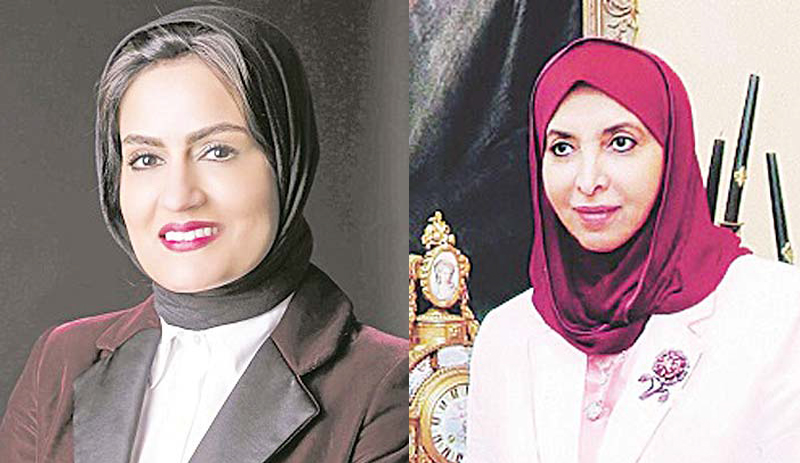
February 10: Dr. Hind Al-Qadri, a researcher at the Dasman Diabetes Institute of the Kuwait Foundation for the Advancement of Sciences, won the 2021 L’Oréal UNESCO Prize for Women in Science within the Middle East Regional Program for Emerging Female Researchers. (see picture below)
February 24: Kuwaiti parachutist Ibrahim Al-Rubaian recorded an unprecedented feat by jumping from a height of 13,000 feet with the biggest fl ag in the sky of Kuwait, with an area of 800 square meters, under the slogan “I raised glory and soared with pride,” coinciding with the national holidays.
February 26: The State of Kuwait entered the Guinness Book of Records by hoisting the country’s largest flag measuring 2,742 square meters and installing it on a mountain peak in the Sultanate of Oman (Jabal Shams), at an altitude of 3,028 meters above sea level, in conjunction with national holidays.
March 21: The Arab Organization for Education, Culture and Science (ALECSO) honored Sheikha Dr. Suad Al-Sabah, in recognition of her brilliant contributions in the literary and cultural fields, at its eighth session of the “Arab Poetry Day” in the Tunisian capital.
April 23: The International Professional Diving Instructors Organization awarded the Kuwait Scientific Club Center for Swimming and Diving a Certificate of Excellence for its contribution to the development of the diving industry inside and outside Kuwait.
June 12: Kuwaiti researchers Dr. Nasser Al-Sayegh and Dr. Ammar Bahman obtained a patent from the US Patent Office, for their invention of a device capable of characterizing the physical state of nanosuspensions dispersed in nanofluids during the dynamic fl ow process.
June 29: Kuwait University announces that Assistant Professor of the Department of Surgical Sciences at the College of Dentistry, Dr. Muhammad Kamal, and the Consultant of Nose and Throat at the Ministry of Health, Dr. Abdul Mohsen Al-Turki, obtained a patent from the United States of America for an alternative medical splint to the nose wicks.
July 2: The International Pharmaceutical Federation selected Dr. Dalal Al-Taweel, Assistant Dean for Student and Academic Affairs at the College of Pharmacy, among 20 rising stars in the field of pharmaceutical research and pharmaceutical education.
August 11: The League of Arab States honors the Kuwaiti youth, Abdullah Al- Shammari, who won the third place for the “Excellence Award for Arab Youth 2022” in the field of “voluntary work” granted by the Council of Arab Ministers of Youth and Sports. The award came about the “Al-Amal Electronic Newspaper” project, which is concerned with the affairs of people with disabilities.
October 2: Plastic artist Munira Al-Qadiri won the prize of the 15th session of the German “Trina Fellbach” exhibition for small sculptures.
October 3: Dr. Badr Al-Enezi, from the Department of Environmental Technology Management at the College of Life Sciences at Kuwait University, obtained a patent on “improving water and solving the problem of environmental pollution in a scientific way” from the United States Patent and Intellectual Property Office.
October 9: Kuwaiti photographer Muhammad Murad won first place in the prestigious international “Mont Photo” competition for photography in the natural world in Spain.
October 12: The European Union of Medical Specialties selected Dr. MuhammadKamal, a Kuwaiti academic, as the first examiner from outside the continent for the Board of Oral, Maxillofacial, and Head and Neck Surgery. The selection was made during the last session held in the Spanish capital, Madrid.
October 12: Lama Fahad Al-Ariman received the “Rising Space Leaders” award presented by the International Astronautical Federation as the representative of the State of Kuwait in this international competition.
October 30: Kuwaiti photographer Muhammad Murad won the top honorary prize in the African “Benjamin Mkapa” competition for developing African wildlife and the American “Nature Best” competition.
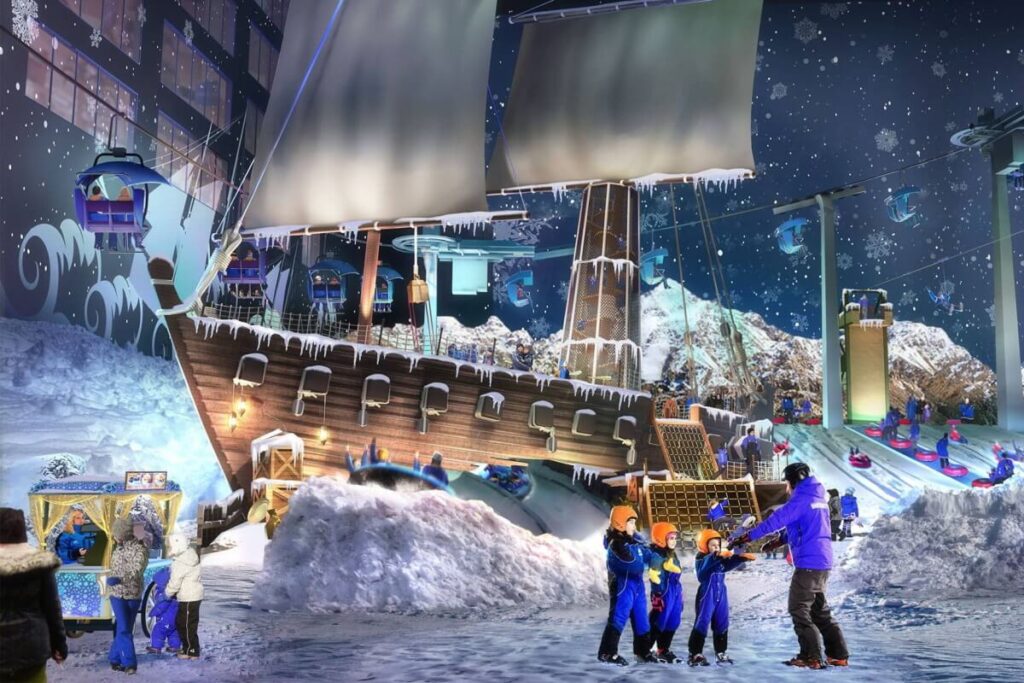
A multifunctional snow park was opened at the Mall of Oman. The project Snow Oman is the largest in the Middle East. The snow park was developed by Majid Al Futtaim, who has experience building indoor snow and ski amusements. In 2005 the company unveiled its first project in the flagship Mall Al Futtaim and later realized the mega project Ski Dubai in the Mall of the Emirates.
The total area of Snow Oman is 160 000 square feet. The complex combines a variety of winter attractions, the country’s first colony of penguins, and natural snow. The main decorations are an ice port town and a sunken ship with a lighthouse.
Rides include Mountain Thriller, Snow Bullet, Slide Winder, Cloud Climber, and Zorb Ball, unique attractions such as Cold Town Muscat, and a 5112-square feet ice rink. Admission to the park starts at 12.5 OMR, equivalent to $32.5.
Snow Oman caters to guests of all ages and offers activities for both kids and thrill-seekers. Outside the ski and skate slopes are cafes with hot winter drinks, warm seating, and a photo area.
Majid Al Futtaim is one of the largest mall, retail, and entertainment companies in the Middle East, Africa, and Asia. The company operates 29 malls, 13 hotels, and four mixed-use complexes in the UAE, as well as more than 600 cinemas and several entertainment centers.
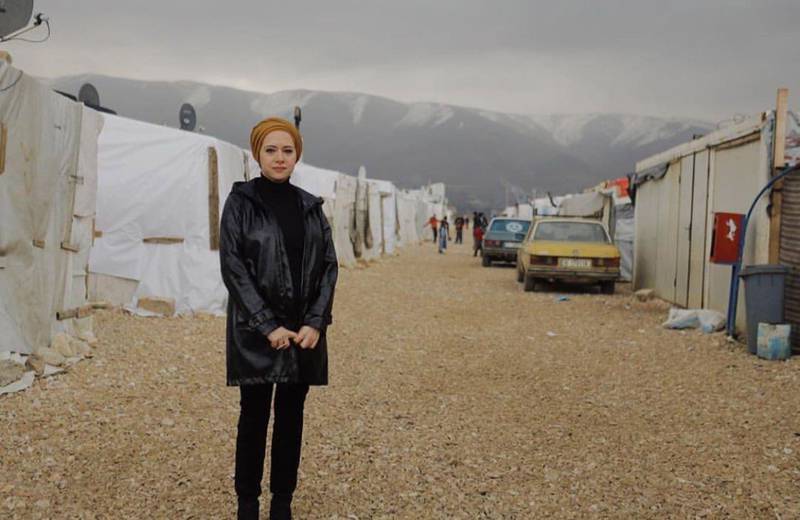
The Syrian-Lebanese economist and activist favours advocacy now over anger in her humanitarian mission to protect refugees.
Rouba Mhaissen was on a spring break in Beirut to visit her parents when she heard about the 40 families fleeing lives that had become intolerable over the border in Syria.
It was 2011, when the term “Syrian refugees” did not yet exist, and the arrivals were a harbinger of something inconceivable to Ms Mhaissen back then – the largest displacement crisis of our time.
Little knowing that the families would still be refugees more than a decade on, the 22-year-old student at the London School of Economics raced off to see what they needed.
“I took the family car and drove to meet the families to offer them help,” she tells The National.
“My parents were very worried. At the beginning of my work and until this day, they worry about me because there are risky situations.
“You get threats, and our advocacy work, in particular, can be very controversial. But they believe in the cause and support me.”
Fast forward a decade, and Ms Mhaissen is in London to appear at a charity event run by the Hands Up Foundation as the founder of Sawa for Development and Aid, a grassroots organisation that offers protection, education and relief for Syrian refugees in Lebanon.
Sawa, which means “together” in Arabic, now has about 400 employees, many of whom are from refugee communities, and operates in 130 camps.
In some ways, it is a continuation of work that the young Rouba began as a child in Beirut and Damascus, where she would often volunteer to assist orphans, and refugees from Palestine and, later, those from Iraq.
“I never knew that this would be my career,” Ms Mhaissen says. “I thought I was going to be an academic.
“When the war started in Syria in 2011, I had already applied for my PhD and had no idea I would only end up being a part-time academic.”
Born in Beirut, a “surprise” 10 years after two brothers and a sister, she had been gently steered towards academia by her Lebanese stay-at-home mother and father, a Syrian businessman.
She claims to have been raised as a very spoilt last child yet her parents convinced Ms Mhaissen against studying her heart’s desire, theatre, because it was not what they described as a rigid path.
“I definitely think that, if I was reborn, I would be a dancer because I love to dance and perform,” she says.
It was not to be. Ms Mhaissen grew up going to school in Beirut because the education was deemed better there, and then driving as a family two hours to Damascus for the weekends.
After an undergraduate degree in economics at the American University of Beirut, she embarked on a master’s in development studies at the LSE, followed by a PhD in gender and development at the School of Oriental and African Studies at the University of London.
Somehow, in the middle of all these studies, she found the time to start Sawa, through which Ms Mhaissen unsurprisingly gives priority to education.
Of prime importance to her is that refugees acquire skills to live in dignity, take ownership of their lives and rebuild their communities themselves.
The demands have been many, and, with the spread of coronavirus, she thought that perhaps she might finally learn what it is to relax a little.
“I love, love, love travelling, learning about new cultures, new food and new countries,” Ms Mhaissen says. “But with my son now it’s very hard.”
She shuttles between southern Turkey, Beirut and London with her husband, a one-year-old and another baby on the way.
The pandemic gave rise to a more acute need for aid than ever, although one silver lining is that the whole world has for the first time experienced what it is to be refugees – at least the uncertainty, the inability to plan ahead and lack of communication.
“Camps are one of the hardest environments to sit out Covid as there is nowhere to self-isolate, no internet or devices for home-schooling, and gender-based violence rose dramatically,” Ms Mhaissen says.
“People talk about refugees and their ‘resilience’, a term that is so misused. Conditions for refugees in host countries and their neighbours are constantly terrible and getting worse all the time.
“A Syrian family in Lebanon has to move their tent three times on average in winter when it floods, and then people wonder why they get on boats. It’s because they have no hope.”
Over the years, Ms Mhaissen has received many accolades and honours, including being named on the 2017 Forbes 30Under30 list of most influential people in Policy and Law.
There was also the Vital Voices Global Leadership Award and the Rafto Prize “for defending human rights from the local to the global level for people living as refugees”, both in 2019.
She has been invited to conferences, summits on Syria – at one in Brussels she met her husband, an activist from Aleppo – and this year became the 10th Arab woman to address the UN Security Council.
Late last month, days befor 27 migrants died in the English Channel, she was at the Opera Garnier in Paris being presented with the International Diane von Furstenberg Award alongside businesswoman and philanthropist Melinda Gates, CNN chief international correspondent Clarissa Ward, Burmese human rights advocate Wai Wai Nu, and climate change activist Vanessa Nakate.
She took the opportunity to tell the room full of European policymakers and philanthropists that attempting the crossing is not an illegal act.
“You have the right legally to apply for asylum in whatever country you are in,” Ms Mhaissen says. “We need to live up to our responsibility to these people.”
She also talked about the refugees stuck at the border of Belarus and Poland, and of one in particular, Ahmed, who had grown up in a camp, but was the first of the refugees to be buried officially after he drowned in a river there. His mother joined the funeral on a conference call.
“I reminded those listening that this was a woman who had been pregnant with him, who had celebrated his birthdays, who had brought him up like any mother, and who was now connecting with him on social media, just like [those in the audience] used social media to connect with their loved ones during the pandemic … except this was his funeral.
“Everyone was really moved and many were in tears. I always try to humanise it for the wider public, and I use the word ‘humans’ as often as I can when I talk about refugees.
“‘Refugee’ carries a lot of legal rights with it so while there is certainly fatigue associated with the word, it’s not a redundant word that we should stop using.
“Politicians, on the other hand, want us to call them migrants because it sounds more scary.”
The citation on the DVF award was for Ms Mhaissen’s “dedication and fierceness to support displaced Syrian individuals and families”, which world leaders gathered at the Support for Syria donor conference in London a few years earlier experienced in full force.
She was the first speaker up and was introduced by then UN secretary general Ban Ki-moon, who said: “Rouba Mhaissen, you have the floor. Two minutes.”
But a stern-looking Ma Mhaissen retorted that, as one of the few Syrians at the event speaking in the name of Syria, she wasn’t sure that she would stick to two minutes. She was at the podium for nearly nine.
It was a passionate speech in which she criticised “Fortress Europe”, her “token presence at an ad hoc event for which the priorities have already been pre-determined without our involvement”, and counter-terrorist legislation stopping funds being sent where they were most needed.
“Don’t fight the wrong people, guys,” Ms Mhaissen said.
She said she could see good leaders in the room but hoped for greatness from them along the lines of “the next Martin Luther King, the next Benazir Bhutto, the next Churchill, the next Madeline Albright, the next Mandela of our time …
“Each one of you can be that person,” she told them, “Remember that.”
Ms Mhaissen smiles at the memory.
“I realised that those in power have incredibly thick skin,” she says. “They are inured to what the situation is on the ground.
“I used to be very angry and lead a crazy life where I would come out of the field where kids had to step over their parents’ dead bodies to get to safety, and then you’re invited as the token Syrian to an event in a five-star hotel where people are drinking champagne and eating caviar.”
With a dawning realisation that advocacy, not anger, was the way to go about beating the system, the focus has since been more on changing laws that help refugees and doing the day-to-day work that affects people’s lives.
Her spirituality has been of great support throughout. “Knowing that God has been alongside me all along, and my faith, have helped me along the way,” she says.
Ms Mhaissen’s message to those gathered on Wednesday night in the 17th-century Great Hall of Lambeth Palace at the annual Singing for Syrians carol concert will be comparatively gentler in nature.
The event raises funds for Hands Up Foundation’s humanitarian work in Syria for which Sawa is a partner on educational projects.
This year it will feature the author and illustrator Nadine Kaadan, Citizens of the World Choir, actress and activist Joanna Lumley and actor Tom Hollander.
She will, she says, of course push everyone to donate to the foundation’s Big Give Christmas Challenge as a firm believer in how the deeds of the few can transform the lives of the many.
“I always say that what goes around comes around, and the more we give the more blessed our lives are,” Ms Mhaissen says. “It’s like investing in the best thing ever.”
The memory of an email received from a young Icelandic citizen will also be shared. It arrived in her inbox at the time of a terrible massacre in Syria, with the sender asking what help he could give.
Shocked, Ms Mhaissen recalls staring at the message for a long time, wondering how to answer a person on a Nordic island country in the North Atlantic Ocean.
“I told him, ‘If you want to help Syria today, call your mother. Just call your mother and see how she is doing. We are in a world of small circles and they are all interconnected …
“Sometimes,” she says, “it’s best just to start local.”
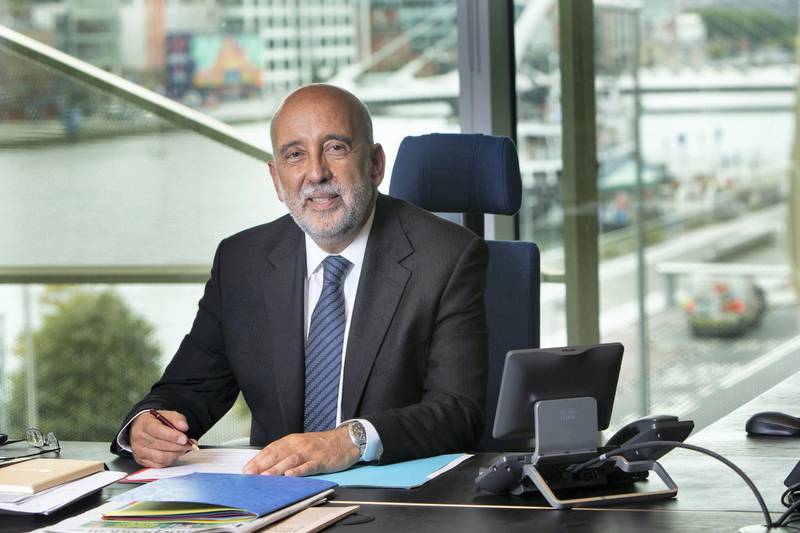
With a Lebanese name and a Cairo birthplace in the background, Gabriel Makhlouf is steering Ireland’s financial recovery.
As governor of the Central Bank of Ireland, Gabriel Makhlouf is much preoccupied by the issue of resilience in a small, open economy challenged by a year of pandemic.
Mr Makhlouf’s own peripatetic life has shown him how precious an asset the quality of adaptability is at a time of change, be it in a person or for a national economic system.
Upheaval and the Makhloufs on the move could be a theme stretching back to when his father’s side of the family travelled across the Mediterranean from their Lebanese homeland to Cyprus.
When the island was part of the Empire, the family became British subjects and Makhlouf Snr ended up working at the embassy in Cairo after the Second World War.
It was in that palatial building near the Nile that he fell for a Greek-Armenian woman whose forebears had fled the historical turmoil of Izmir in 1922. Her family moved to Athens where she has come full circle to live today.
Mr Makhlouf was talking to The National at a time when Ireland’s strict national Level 5 lockdown is both defining his job and providing a perspective on the decades of movement and upheaval that have brought him to where he is now.
At a conference last week, the governor spoke of how the outlook had deteriorated in 2021 with the renewed lockdown. The short-term need to bolster the economy coincided with structural changes from technological innovation and climate policies. Ireland suffered a 7.1 per cent slump in domestic demand last year but is expected to see a 2.9 per cent increase in 2021.
Unemployment is predicted to reach 9.3 per cent this year and for an economy with a high level of property-focused debt, ensuring that households are supported is a priority. Mr Makhlouf points out that growth is not the same as having the capacity to recover quickly.
“We cannot anticipate every type of shock but we can build resilience,” he said in his keynote address. “Resilience is what has prevented the financial system repeating its previous failure. Resilience is what has protected households, businesses and communities against the worst of the damage from the shock of the pandemic.
“Economic resilience is what helps communities to manage the disruption caused by change and to manage the economic transitions we are living in right now.”
In providing leadership during financial strife, it is perhaps a boon to have some sense of dislocation. He describes his mother’s family as refugees. His parents met in a milieu that was the product of worlds with roots as far back as the Phoenicians, ancient Greeks, Romans and Egyptians. And yet the people of Mr Makhlouf’s parents’ generation made their choices and moved to build new lives.
“My mother, who was born in Athens, had spent most of her life outside of Greece, but when my dad retired she came back,” he recalls. “My dad moved on and lived all over the world and settled in Greece at the end, before he passed away.”
Mr Makhlouf was born in Egypt but left at the age of three when his father joined the United Nations and moved to the Congo. Makhlouf pere’s time as an international diplomat exposed the young Gabriel to many cultures.
“My first language was French, because my parents’ mutual tongue was French,” he says. “So I learned English when I was about seven when we went to Bangladesh, and when we got to the Pacific we lived in Samoa.
“I went to school in Samoa. My parents then decided they ought to send me to boarding school if I was going to get a proper education and not one that changed every few years.”
Travelling during the school holidays from the school in England was a regular odyssey in itself. “The trip to get to Samoa and back to England involved stopping in Los Angeles, Honolulu and Pago Pago, an American territory pronounced ‘Pango Pango’,” he recalls.
“But then they moved to the Philippines, they moved to Fiji, they were in Ethiopia and they were in Thailand. So, you know, my brother and I got used to this life.”
It is a puzzle, then, to establish the appeal to the young Mr Makhlouf of embarking on a career as a Whitehall civil servant. He explains it as following his father’s footsteps in to the bureaucracy. Certainly, the career path was more about determination and making opportunities than wanderlust.
“I don’t think I joined the civil service for stability, to be honest, but maybe somewhere deep inside me there might have been that,” he says. “I joined the civil service really for interest. I joined as a tax inspector at the beginning. And it was an interesting career option – it involved law, it involved accountancy and it gave early opportunity to manage.”
Fate intervened to resume the family’s roving tradition when Mr Makhlouf was headhunted in 2010 to run New Zealand’s finance ministry, the Treasury. There, he was responsible for developing a measure of well-being as a replacement for the traditional gross domestic product yardstick.
In one memorable allusion in a speech he compared the role of an economist to that of an artisan, challenged with weaving together different strands of evidence into a structured framework.
Before upping sticks to the southern hemisphere, Mr Makhlouf at one point worked directly with then-UK chancellor Gordon Brown, who became prime minister at the time of the global financial crisis in 2008.
Asked about his former boss and a recent warning that the world now faces another lost decade or perhaps even worse than after that crash, Mr Makhlouf acknowledges how bad it was last time around but disagreed on the dangers now.
“I think that there is one massive difference between the crisis in 2008 and today’s crisis,” he says. “Which is that the crisis in 2008 was a crisis of the financial system, the financial system basically collapsed.
“Today, the financial system is still standing, and it’s the financial system that’s playing a very important role in supporting businesses and households through the pandemic and hopefully into a recovery and out the other end.”
World leaders are proving to be different kinds of players, having recognised that this is an economic crisis caused by a health crisis. “Governments throughout the world have chosen to close down economies for the sake of people’s health. In some respects that is been planned. In comparison to what happened in 2008 where actually events completely overwhelmed us.”
So Mr Brown’s fears are too pessimistic? “A lot of the changes and challenges that are ahead of us, I think if we manage them, then I think they can be managed well,” he says.
Mr Makhlouf takes heart from the rapid adjustment of businesses to home-working and new patterns of demand. “Economies across the world and certainly in the industrialised world have adapted to the restrictions,” he says. “More businesses are set up for that and more consumers were ready and knew how to proceed.”
The scale of “technological adaptation” since he accepted the Irish job in 2019 is something he could well have guessed was just around the corner.
The governor has not been immune to the extraordinary pressures imposed by lockdowns. Even at the outset of the pandemic, the family’s far-flung ways isolated him in Athens just as the 2,000-strong staff of the central bank in Dublin were forced to work from home.
With his mother ill in hospital, Mr Makhlouf was on hand to help her recover. “Effectively, I carried on working like everyone else via laptops and iPads. It’s quite an extraordinary thing that we all seem to have got used to.”
History means that a British citizen running the Irish central bank will always be a talking point. The moment that the UK left the EU put Mr Makhlouf in an invidious spot.
First, there is migration of businesses and banking activity from the City of London to Dublin so that firms remain within the EU umbrella. Is this an opportunity?
“Overall, I think the impact of Brexit is negative. It’s negative for Ireland and for the UK and for the EU,” he says. “We’re most exposed as a country in the agricultural sector, in particular. The fact that there was, at the end of the day, a deal albeit a very slim deal was better than there being no deal.
“On financial services, we have seen post-referendum a move of business from London to Dublin,” he agrees. “I’m not sure I would necessarily call it an opportunity at all. I think from my perspective as a regulator this increases the need for us to manage and ensure the financial system works properly.”
With his son, brother and wife’s relatives living in London, the governor observes that the pandemic has played a greater role than Brexit in cutting off families and friends. But things are different.
“I feel sorry for someone like my son — his opportunities to work in 27 other countries have now been limited. So his generation has lost out,” he says. “Ireland and Irish people have got many connections in the UK, we recognise Brexit has happened but those connections haven’t disappeared, they haven’t been lost.”
As two movie-perfect countries on the periphery of continents with roughly similar populations, one wonders what the biggest change is for Mr Makhlouf in switching from New Zealand to Ireland.
There is the remoteness of the former compared with the latter’s position within the wealthy European market. But the answer, he feels, is the perspective on China. In New Zealand, much time was spent thinking about and visiting that part of east Asia. He himself went at least nine times.
“The role that Asia has been playing and will play in the 21st century usually dominated a lot of thinking. And what’s interesting coming back to Europe, and perhaps now it’s not surprising at one level, but it was noticeable how little of our time was spent thinking about Asia.”
For the well-travelled, there is the unchanging truth that proximity is often the most powerful force in geography.
The lockdown both defines Gabriel Makhlouf’s job as Governor of the Irish central bank and provides a perspective on the decades of movement and upheaval that have brought him where he is today. Courtesy Central Bank of Ireland