Arabs & Arabian Records Aggregator. Chronicler. Milestones of the 25 Countries of the Arabic Speaking World (official / co-official). AGCC. MENA. Global. Ist's to Top 10's. Records. Read & Enjoy./ www.arabianrecords.org
Read on for a list of regional female filmmakers who have been taking the industry by storm.
Farida Khelfa
Farida Khelfa is an Algerian-French documentary filmmaker. She is currently set to release a new film titled “From The Other Side of the Veil” that aims to dismantle misconceptions and stereotypes that often surround Arab women.
Kaouther Ben Hania
The Tunisian filmmaker made headlines in the film industry after her critically acclaimed movie “The Man Who Sold His Skin” was shortlisted for the Oscar’s Best International Feature Film award this year.
Ayten Amin
The Egyptian director has long chronicled the lives of women in modern Egypt. Her feature film “Souad” was selected for the cancelled 2020 Cannes Film Festival.
Danielle Arbid
Danielle Arbid is a Lebanese filmmaker. Her work has screened at numerous film festivals in France and the rest of the world, including New York, San Francisco, Tokyo and more.
Annemarie Jacir
The Palestinian filmmaker has written, produced and directed award-winning films such as “A Post Oslo History.” Her movie “Wajib” (2017) won her 18 international awards.
Nujoom Al-Ghanem
The Emirati filmmaker, writer and poet had to overcome societal stigma and family disapproval to make it. She defied the odds and produced films such as “Amal” (2011) and “Sounds of the Sea” (2015).
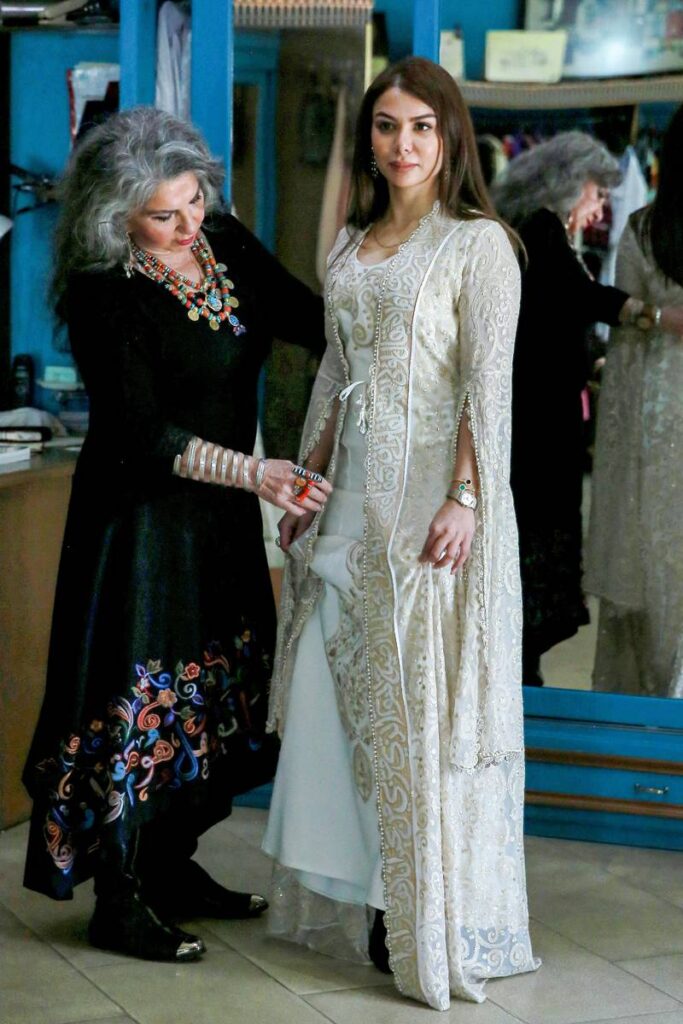
In a career spanning decades, Iraqi-born Sadiq has shown her creations worldwide and dressed the stars, but she remains rooted in the traditions of her homeland.
With verses from love poems and flowing calligraphy, Jordan-based fashion designer Hana Sadiq stitches a testament to the beauty of Arab women.
The artistic handwriting of Arabic script dominates her embroidered modern designs, with poetry or letters scattered in bright colours.
She uses various calligraphic styles, from the elaborate Diwani to the curving Thuluth and features on some of her outfits the lines of renowned Arab poets including Mahmoud Darwish and Nizar Qabbani.
“Arabic calligraphy is the most beautiful,” says Sadiq, 72, showing off her love of jewellery with strings of beads around her neck, dangling earrings, and unusual stone rings.
At her home workshop in downtown Amman, Sadiq notes that the earliest writing was born several millennia before Christ in what is now Iraq, arguing that it was a place “without which all the other civilisations would not have existed”.
Sadiq has split her time between Amman and Paris since 1982, having both French and Jordanian nationality as well as Iraqi citizenship.
‘How beautiful she is’
She has exhibited from Europe to the United States as well as the Middle East, returning home with an extensive collection of antique silver ornaments, along with thousands of pieces of Arab textiles and costumes.
Her kaftans, traditional robes, feature bright and stunning colours. They reflect the influence of her grandmother who wore a traditional Iraqi “Hashemite dress” and walked “elegantly like a peacock”.
The folk outfit is made of very thin fabric with wide sleeves and transparent sides, decorated with beautiful floral ornaments, golden or silver, on a black base. It was the favourite of Iraqi women in the 1950s and 60s.
Sadiq traces her interest in fashion to her childhood, when she would visit her grandfather’s textile shop in Baghdad.
She went on to design for celebrities and royals, including Jordan’s Queen Rania and Queen Noor. But whoever the client, her work has been guided by pride in the Arab woman’s femininity.
Unlike more revealing Western fashion, her designs envelope the woman’s body, “but it shows high femininity,” says Sadiq, who is also the author of a book, “Arab Costumes and Jewelry, a Legacy without Borders”.
She argues that Western clothes are not the best fit for the bodies of Arab women but have spread to the region anyway. “Unfortunately this is the result of globalisation,” she says.
“What matters to me, in all my work, is that the woman remains female and that a man is attracted to her as a female,” she adds. “Which means when a woman passes in front of him, he must notice and see how beautiful she is.”
Her kaftans, traditional robes, feature bright and stunning colours, reflecting the influence of her grandmother who wore a traditional Iraqi Hashemite dress and walked “elegantly like a peacock”.
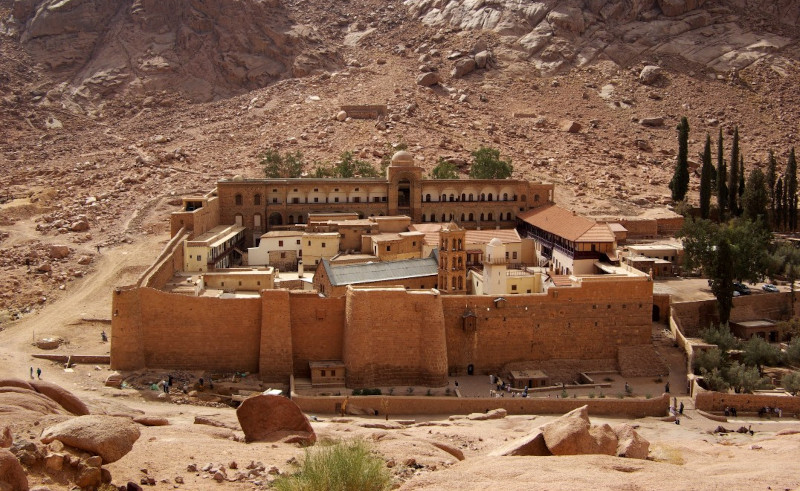
A fragment of the legendary star map by ancient Greek astronomer Hipparchus has been uncovered in St. Catherine’s Monastery.
Within the library of St. Catherine’s Monastery in South Sinai – the oldest continuously-running Christian monastery in the world – researchers have uncovered a fragment of history’s oldest complete star map, penned by ancient Greek astronomer and mathematician Hipparchus.
Hipparchus is considered to be the greatest astronomer in ancient Greece, and so researchers had been searching for his catalogue of stars for centuries. The manuscript in St. Catherine’s Monastery appeared to be something completely different; the pages contained a collection of 10th or 11th century Syriac text called the Codex Climaci Rescriptus. But as it turned out, it wasn’t just that – the pages were a palimpsest, or a parchment in which previous text was wiped clean so that it can be reused.
But much like scribbling your pencil over recently erased writing, it was possible to discover what was erased from a palimpsest. Researchers from the University of Cambridge, the University of Rochester in New York, the Early Manuscripts Electronic Library in Rolling Hills Estates, California and the French national scientific research centre CNRS in Paris worked together to find layers of writing that had been wiped away. Amongst them were the coordinates for the constellation Corona Borealis, and by comparing these precise coordinates with how the night sky would have been arranged in antiquity, the researchers found that the coordinates would have been made in 129 BC – right when Hipparchus was making his revolutionary cosmic calculations.
An excerpt of the discovered document was recently published in the Journal for the History of Astronomy, and is available online.
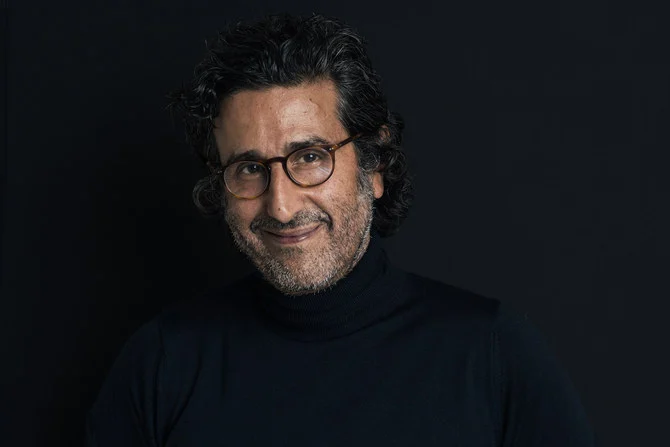
Interior design has a much deeper meaning for Nawaf Al-Nassar than for many others out there. For the Saudi designer, looking to the outdoors is what allows him to create the indoors.
Growing up in Jeddah, Al-Nassar travelled to London for his studies, where he was mentored by design icons including Zaha Hadid, Philippe Starck and Gianfranco Ferré. “It was amazing,” he tells Arab News.
After graduating in 1990, Al-Nassar returned to his hometown to work as an interior designer, starting his studio, 3N Jeddah (the three Ns being his name, his father’s name — Nahar — and their family name). It quickly gained popularity, acquiring residential and commercial projects in Jeddah, Riyadh, Cairo, Beirut, London, Paris and the south of France.
In 2017, Al-Nassar established Tasmeem Fair — a Saudi-based art platform for young designers to showcase their creativity. The fair became an instant hit, attracting 9,000 guests in its first week alone. He describes it as “my favorite — and the best — project of my life so far.”
His family’s origins — from a small village north of Riyadh in the center of the Kingdom — played a major role in Al-Nassar’s inspiration. He remembers his grandfather taking him out into the deserted Saudi countryside as a child.
“These were our family gatherings,” he says. “When I used to look at old houses in the beautiful desert, it attracted and relaxed me. When I’d go inside old palaces or any interior space, I always felt more relaxed.
“Since I was young, I’ve always felt more like I’m talking to myself when I’m inside an interior,” he continues. “Then, when I went to high school, I always felt comfortable sitting inside a space that was complete. All of us live in an interior space, but sometimes when we look around, we don’t feel comfortable. When I’d feel that in my youth, I’d find out it was because it was not made by a designer, but by a person who has expertise with walls and ceilings. not with proportion.”
Soon after, he attended a couple of summer schools in the United Kingdom to dive deeper into the world of interior design. And his calling towards the industry only grew. “When I sit with people, I love to know their interior, the outside doesn’t mean anything to me,” he explains. “The interior is the core to know the person more. So I started wanting to know more about the interior of things, which helped me a lot with product design. I really do believe that if the interior of where a person works or lives is not reflecting their character, they can never be themselves.”
For Al-Nassar, an artist should reflect his surroundings and his feelings towards them. As such, he began infusing local Saudi motifs into his designs to pass on to generations to come. “I love the space of my studio,” he says. “It really talks to me. As an interior designer, I use soft materials for the interior, such as fabric furniture, and I deal a lot with European companies.”
Although he owns many fabrics with European motifs, he had been longing to find a Saudi designer with his own design on a fabric. He collaborated with manufacturers to print the first Saudi design on a French fabric company’s products.
“It’s very important when you go inside a space and you see details around you that reflect the surrounding of the city where you are,” Al-Nassar says. “Paris, Cairo and others have that, but in Saudi Arabia, I didn’t see any Saudi motifs, so I started to create this line of fabric design and we started manufacturing pieces.” In May, he designed some furniture for the Kingdom’s Misk Institute. His brief was to use inspiration from a historical building in the country, so he turned to the historic Salwa Palace — the original home of the Al-Saud royal family, located northwest of Riyadh.
“I started to enjoy its smooth elements and I looked at it as an architectural designer,” he says. “It’s as if I was in an orchestra, it was like silent music and it was so beautiful to see.”
From that visit, he created “Takkei” (meaning ‘Let’s sit’), inspired by the stones that form the base of the palace. He used new material to achieve a more industrial look that he believed would be more attractive to younger generations. “It’s about speaking their language,” he explains.
Al-Nassar’s creative process happens in the outdoors. Whenever he is struggling for inspiration, he jumps in his car and drives to the mountains, two-and-a-half hours away from Jeddah. He is revitalized by the surrounding landscape and old houses, some of which date back 200 years.
“I can almost read the culture and the type of life they used to live there,” he says. “I’m definitely inspired by Saudi Arabia — but also by everywhere. You have to go to the location and smell old places to be inspired.”
He mentions the picturesque village of Qaryat Al-Dehin, which is made up of 49 houses built from white mountain marble and quartz. After much research, he visited with a friend who came from Qaryat Al-Dehin. Four hours of driving later, he was immersed in its beauty. He compares it to a moment when he was 16 and he and his father watched the great opera singer Luciano Pavarotti sing in Milan. “Honestly, the same feeling came to me when I looked at these 49 beautiful houses on top of this beautiful mountain,” Al-Nassar says. “It was the same energy — the same music; it was amazing.”
His passion for the outdoors has also extended to his teaching as a guest lecturer in universities. He will often take the students on field trips — something he deems vital for today’s youth. “They have to go there themselves and see the reality on the ground,” he explains. “I have done field trips everywhere in Saudi Arabia for students, and lately it has become for others as well.”
Al-Nassar sees great potential and talent in young Saudi architects and interior designers. He admires their creativity, but suggest they need the right curator.
Ultimately, he hopes such people can build a bridge between the Kingdom and the rest of the world. “Design and art are a message of peace,” he concludes. “I’m already building that bridge, and hopefully it will be finished soon.”
source/content: arabnews.com (headline edited)
_____________
Growing up in Jeddah, Al-Nassar travelled to London for his studies, where he was mentored by design icons including Zaha Hadid, Philippe Stark and Gianfranco Ferré. (Supplied)
Egyptian doctors ranked among the top five ‘joiner doctors’ who joined the UK medical workforce in 2021, according to a report released the British General Medical Council (GMC).
The GMC, a UK public body responsible for maintaining the official register of medical practitioners within the kingdom, said that Indian, Pakistani, Nigerian and Sudanese doctors were the other four nationalities in the top five who joined the kingdom’s medical system that year.
The GMC report also found that the number of Egyptian – as well as Chinese and Sudanese – doctors who joined the UK’s medical system tripled between 2017 and 2021.
It explained that the number of Egyptian doctors who joined the UK medical workforce was 435 in 2017 and increased to 765 in 2018. But, these numbers, it added, increased by almost 200 percent in the following three years on average, registering 1,301 in 2019, 1,220 in 2020, and 1,312 in 2021.
More IMGs – less UK and European
The GMC report analysed statistics related to the UK medical workforce and discussed various challenges that faced the kingdom’s medical system in 2022.
It found that the number of international medical graduates (IMGs) who joined the UK workforce in 2021 exceeded the numbers of graduates from UK and European Economic Area (EEA) who joined the kingdom’s workforce.
These increasing numbers of IMGs came primarily from doctors from South Asia, the Middle East and Africa, the report found.
Doctors from these three regions comprised 84 percent of all ‘IMG joiners’ in 2021 at 8,900 doctors, a number which actually exceeded the number of 8,200 UK graduates who joined the country’s workforce in the same year, the report added.
According to the GMC report, the ‘joiner doctor’ category includes doctors who obtained a license to practice medicine in the year before applying for a job in the UK medical system.
The single fastest route to becoming a ‘joiner doctor’ is through enrollment in the UK’s medical graduate programmes, the GMC report found.
Egyptian doctors: Challenges and solutions
In recent decades, Egyptian doctors have faced increasing financial difficulties due to low pay as well as an increasing workload amid population growth.
According to a March 2019 study released by the ministries of health and higher education, the numbers of doctors who held a license to practice medicine in Egypt were estimated at 212,000 in 2018, with 82,000 of them – or 38 percent of the total – working in hospitals, both public and private.
The study also found there was an average of 8.6 doctors for every 10,000 citizen – or one doctor for every 1,162 citizen, when the global average was 23 doctors for every 10,000 citizen – or one doctor for every 434.
The Egyptian Medical Syndicate, which represents the country’s doctors, said in a report in April of this year that the doctor-to-citizen ratio improved to 9.2 doctors for every 10,000 citizen by March 2022 but remained far short of the global average.
The syndicate also said that 11,536 doctors resigned from the Egyptian public health sector from 2019 through March 2022.
Though these numbers do not represent more than five percent of the total of practicing physicians in the country, still, they have pushed many in the public to call on the government to improve the work conditions and salaries for doctors in order to stop any “doctors exodus” – real or not – and prevent any acute shortages that could impact the health system adversely.
The government has responded to these public calls by increasing the number of medicine faculties in the last few years in order to graduate more physicians.
It has also increased spendingon the health sector to EGP 128 billion in the budget for the FY 2022/23 up from EGP 108 billion in 2021/2022 – an 18.5 percent increase.
In 2021, the government, as per President Abdel-Fattah El-Sisi’s directives, raised salaries and allowances for doctors and nurses in the public health sector by 75 percent.
Last August, President El-Sisi also instructed the government to offer financial incentive package for medical staff to improve their work conditions and raise their incomes.
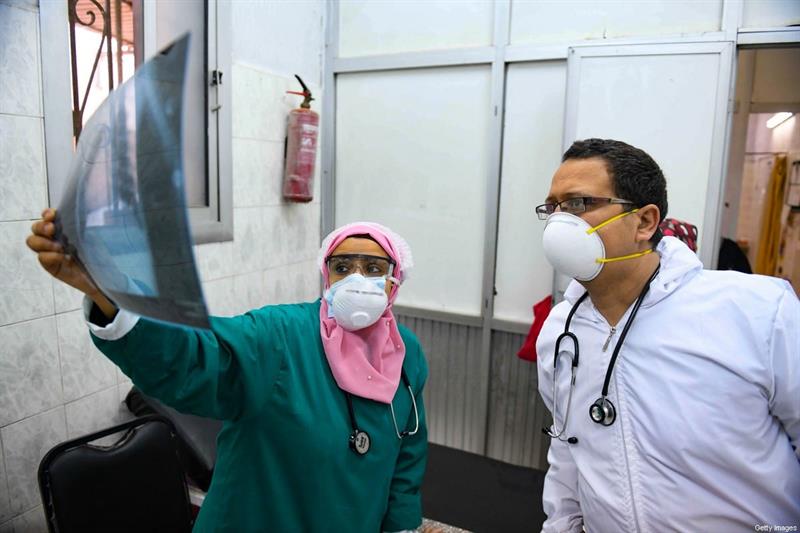
Egyptian doctors check a patient s X-ray at the infectious diseases unit of the Imbaba Hospital in Cairo, during the novel coronavirus pandemic crisis. (AFP)
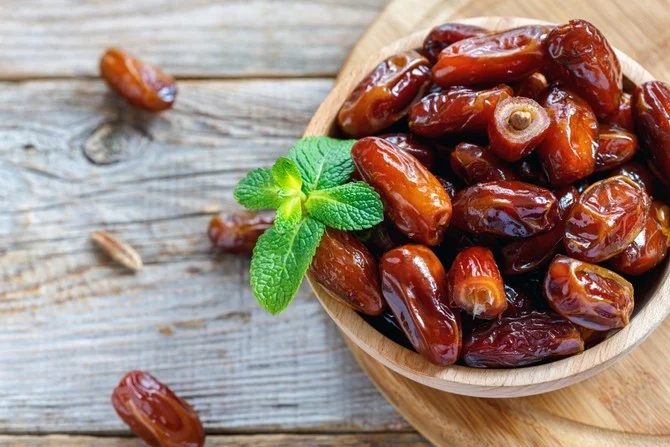
The Saudi Authority for Intellectual Property has awarded King Faisal University a patent for an alternative solution for sterilization of dates to increase their shelf life from one month to 100 days.
Dr. Fahd bin Abdulrahman Al-Asmari, assistant professor in microbiology and food safety at the university’s department of food and nutrition sciences, said: “This achievement is eco-friendly since it only relies on natural materials that do not harm humans or the environment.
“A photosensitization technique is used in this process, where dates are sprayed with photosensitizers, to be later exposed to light with a specified wavelength within the visible range.
“During the process, light waves (photons) react with photosensitizers, causing a reaction between the photons and the nanoparticles of the latter. The products of such reaction are high energy and oxidizing materials, which are used to kill microbes.”
The Kingdom ranks among the top date-producing countries in the world, and Al-Asmari described the fruit as a “strategic product” for the country.
The production and storage of dates encounter several challenges including environmental factors and microbes.
Al-Asmari pointed out that a few years ago his team noticed fungi nucleus growing on dates with higher sugar content, which were lost shortly after storage. This led the team to investigate alternative eco-friendly and efficient ways to preserve dates.
But initial experiments proved unproductive. “We noticed change in the color and texture of the preserved dates, rendering them non-consumable,” Al-Asmari added.
However, after many other attempts a breakthrough was found.
“We found a new method that relies on adopting a unique approach using natural materials. This method is eco-friendly and not harmful. In addition, it is a great alternative to the use of sterilizing chemicals in some date factories.
“This alternative method processes dates by photosensitization, where dates are sprayed with natural photosensitizers. Dates become sensitive to light rays, and they are exposed to intense light known as the visible spectrum,” he added.
As a result, the shelf life of dates can be extended by as much as three times.
He said: “This invention will prolong the dates validity period, improve their quality, and raise the competence of their marketing outside the Kingdom.”
The university has now been awarded 12 patents this year.
source/content: arabnews.com (headline edited)
____________
The production and storage of dates encounter several challenges including environmental factors and microbes. (Shutterstock)
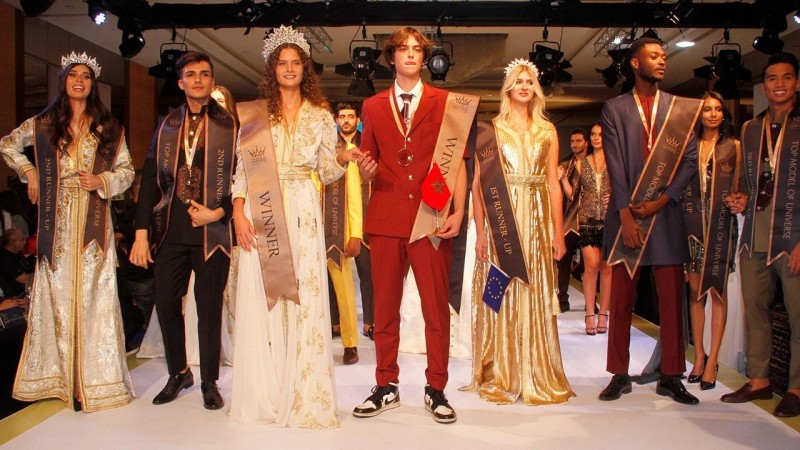
The next edition of Top Model of Universe will be held in Marrakech.
Morocco’s young model Ilias Senhaji has won the title of “Top Model of the Universe 2022’’ in a competition held in Istanbul to select the future faces of the fashion world.
A statement by the organizers added that the 17-year-old Russian-Moroccan model is the face of the Moroccan fashion house Calamain and was first discovered at the Morocco Fashion Week in Marrakech in June 2022.
The next edition of “Top Model of Universe’’ will be held in Marrakech, says the statement.
Also present at the event was the popular Moroccan designerWafaa Idrissi.
The iconic Moroccan caftan designer debuted a new collection during the event consisting of “beautiful white caftans with gold embroidery thread, accented with pearls and Swarovski crystals, handmade by Moroccan artisans.”
Idrissi recently showcased a set of inspiring caftan designs at The Oriental Fashion Show. Most of her designs were laced with golden and vibrant motifs, with one of her pieces also featuring a veil.
Moroccan women have also excelled in several international beauty pageants.
Morocco’s Marwa Lahlou was crowned Miss Arab USA in August. Lahlou graduated with a honors degree from the University of New Haven with an MBA in International Business Management and Marketing. Additionally, the model speaks Arabic, English, French, and Spanish.
On October 16, Moroccan-Spanish model Sarah Loinaz was crowned Miss Universe Spain 2021 at the Los Olivos Beach Resort in Costa Adeje, Tenerife, Canary Islands.
The 23- year-old model also competed at the Miss Universe 2021 pageant held in Israel.
The projects include restorations of the site of the Battle of the (Trench), Al-Faqir well, and Al-Qiblatayn Mosque
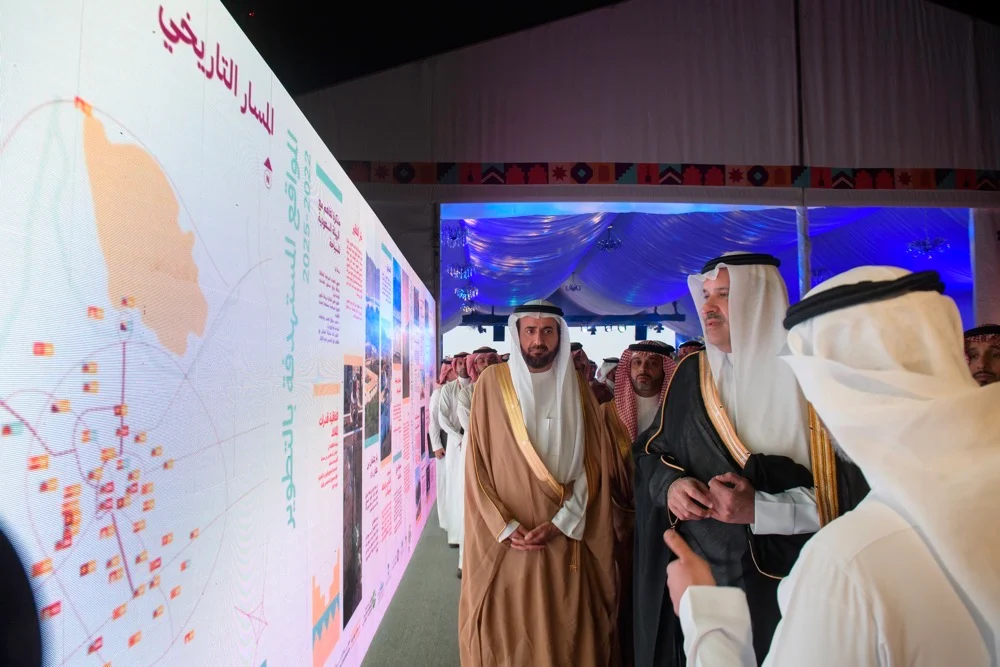
More than 100 sites in Madinah with connections to the life of the Prophet Muhammad and other important events in Islamic history will be restored and developed as part of a three-year package of projects that was announced by Saudi authorities on Wednesday and will run until 2025.
Unveiled during a ceremony inaugurated by Governor of Madinah Prince Faisal bin Salman, the projects include restorations of the site of the Battle of the (Trench), Al-Faqir well, and Al-Qiblatayn Mosque.
An agreement has also been signed for renovations at Uthman bin Affan well and Sayed Al-Shuhada Square, and work is underway on studies for restoration work at more than 100 other historical Islamic sites in Madinah.
During the ceremony, which was organized by Al-Madinah Region Development Authority, the Saudi Heritage Authority, and the Pilgrims Experience Program, heritage chiefs also announced that eight Islamic historical sites in Madinah have already been restored to their former glory: Al-Ghamama Mosque, Abu Bakr Al-Siddiq Mosque, Umar ibn Al-Khattab Mosque, Al-Saqiya Mosque, Banu Anif Mosque, Al-Rayah Mosque, Ghars Well, and the fort at Arwa bin Al-Zubair Castle.
Tawfiq Al-Rabiah, the minister of Hajj and Umrah and chairman of the Islamic Historical Sites Committee, thanked the governor of Madinah and said the committee is working to turn the desire of the Saudi leadership to preserve Islamic heritage into a reality that can be enjoyed by pilgrims and other visitors.
He added that the “Kingdom seeks, through projects, to rehabilitate and activate historical sites, to open its doors to pilgrims and visitors from all over the world, enabling them to enjoy a rich cultural experience” through which they can explore Islamic historical treasures and learn about authentic Saudi culture.
Find out more about the eight sites that have been renovated:
Al-Ghamama Mosque:
Located near the Prophet’s Mosque, it was built by Umar bin Abdul Aziz at a place where the Prophet Muhammad worshipped during Eid and prayed for rain. The site was also used by Uthman bin Affan for the same purpose.
Abu Bakr Al-Siddiq Mosque:
Built using a wonderful architectural style, this is the second of two sites where the Prophet Muhammad performed Eid prayers during his lifetime. First caliph of the Rashidun Caliphate Abu Bakr Al-Siddiq also prayed here during Eid, hence its name. It was built by Umar bin Abdul Aziz.
Umar ibn Al-Khattab Mosque:
Located in Al-Musallah, this mosque was named after Umar ibn Al-Khattab, the second caliph of the Rashidun Caliphate.
Al-Saqiya Mosque:
The name of this mosque came from its proximity to the Saqia well.
Banu Anif Mosque:
Originally built from basalt and located southwest of Quba Mosque, only about two meters of its walls remained before it was renovated.
Ghars Well:
A well from which the Prophet Muhammad drew water. He asked that when he died, his body be washed in water from the well before burial.
Al-Rayah Mosque:
Built by Caliph Umar bin Abdul Aziz on the site where the Prophet Muhammad prayed while supervising the digging of the trench ahead of the Battle of the (Trench).
The fort at Arwa bin Al-Zubair castle:
A defensive fortress built of volcanic rock, used for military protection.
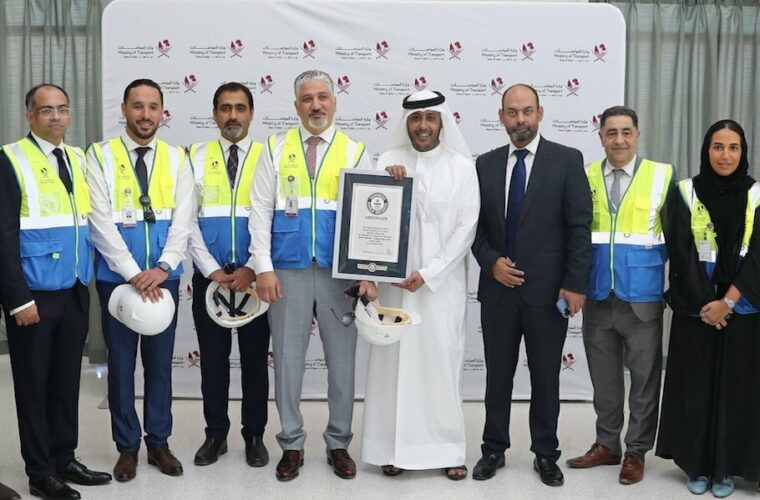
The Ministry of Transport announced via a tweet on 18 October 2022 that the Lusail Bus Depot has entered the Guinness World Records for the largest electric bus depot.
The bus depot that was inaugurated on 18 October 2022 has a capacity of 478 electric buses and is a fulfilment of The Public Works Authority – Ashghal and the Ministry of Transport of Qatar.
Powered by 11,000 units of solar panels the bus depot entered the records on 16 September 2022 as per Guinness World Records.
source/content: iloveqatar.net (headline edited)
______________
Source: Ministry of Transport/ Guinness World Records / Cover image credit: Ministry of Transport
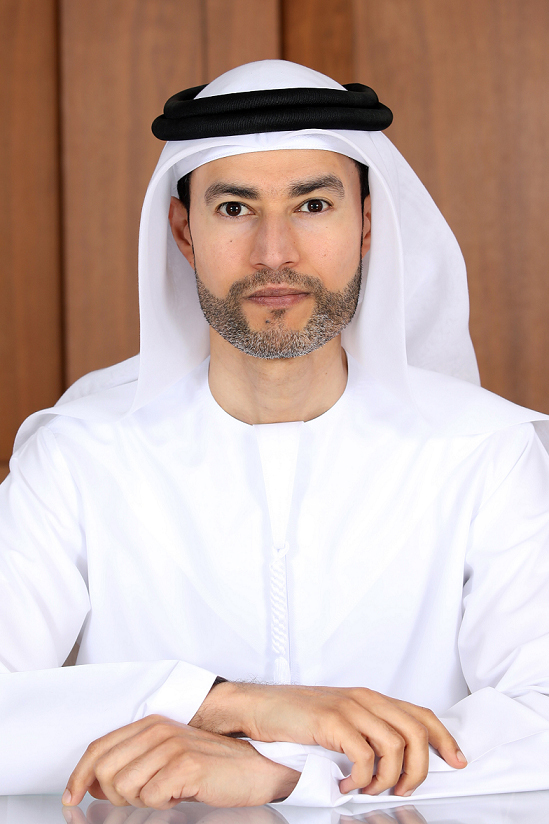
Mohamed Hadi Al Hussaini, Minister of State for Financial Affairs, has been elected as Chairman of the Development Committee (DC) of the World Bank Group (WBG) and the International Monetary Fund (IMF), which aims to achieve international cooperation and consensus on issues related to development. The DC is a joint ministerial committee of the Boards of Governors of the Bank and the Fund.
During his two-year tenure, the minister will work with the committee’s members that include ministers, and the Board of Governors of the WBG and IMF to complete and manage the committee’s programmes related to sustainable and comprehensive economic development, in order to build and develop the economies of developing countries.
Al Hussaini thanked the member states and the WBG for electing him as the Committee Chairman, stressing the United Arab Emirates’ keenness on cooperating and coordinating with its strategic partners and all international organisations to enable comprehensive and sustainable development at all levels.
A ministerial-level forum that represents the member countries of the World Bank Group and the International Monetary Fund, the Development Committee was established in 1974 and was previously known as the ‘Joint Ministerial Committee of the Boards of Governors of the Bank and Fund’. It comprises 25 members from the finance or development ministries that are members of the WBG and the IMF.
The Committee is mandated to address a wide range of issues, including, but not limited to, the role of the IMF and WBG, in confronting future crises, digitalisation, the green economy, trade, industrial policies, and poverty.