BRITISH-LEBANESE: George Kanaan – The Beirut Grocer’s Son who became a Lion of London Banking

When the young George Kanaan wasn’t helping out in the family businesses, he was often to be found in a village classroom analysing the Shakespearean concepts of destiny and fate. His own was to take the helm of the Arab Bankers’ Association.

From the age of 8, the bell at the end of each school day sent George Kanaan wending purposefully through his ancient village in Mount Lebanon to pitch in at the family grocery store and builder’s merchants.

His father, Elias, spent the mornings running a wholesale business from the port before heading 20 kilometres south-east of Beirut to Souk El Gharb, where the young George would help to buy tobacco supplies or oversee the loading of bags filled with cement.

“To think I was a grocer’s son,” Mr Kanaan, now 76 and the chief executive of the Arab Bankers’ Association in London, tells The National.

It was an idyllic childhood that has left him full of memories of playing safely with his brothers, Pierre and Adel, on quiet streets in the shadows cast by the pine trees of the Aley district.

The cooler climes of the prosperous resort were popular with wealthy outsiders seeking respite from the humid countries of the Arabian Gulf – the kind of high society that Mr Kanaan would subsequently spend decades working for and with.

These days, accompanied by his second wife, Soulaf, he spends 60 per cent of the year at ABA’s head office in Mayfair, rubbing shoulders with the banking elite, and the rest reconnecting with his roots at the office in Beirut.

But ask him if he considers himself Lebanese or British, and he retorts: “I’m more English and Lebanese. I don’t like to say which one as I am equally part of both cultures and I like both completely.”

The dual curriculums at his secondary school, set up by western missionaries, focused heavily on discipline and English literature, which is how he came to study Macbethat the age of 15.

“There is no better way of identifying with a culture than identifying with one of its greatest literary figures,” Mr Kanaan says.

“To some extent, we lived with Shakespeare. We had to concentrate on one play, remember it by heart and be able to write analyses of concepts like destiny and fate. By the time we left school, we were seriously educated.”

He credits the influences of both parents for standing him in good stead in life. His mother, Rose, a French school teacher until she married, ensured that her three sons worked hard academically while his father encouraged their entrepreneurial skills.

So much so that when a professor at Harvard Business School asked his MBA students how to prepare a business bid, Mr Kanaan drew upon Elias’s success at winning an annual contract to supply the French army with food.

“When the professor called on me to open up the discussion, I told him how to do it. He looked at me completely stunned, then said: ‘First, what should we do with the rest of the 80 minutes, and second who told you this kind of stuff?”

Mr Kanaan read civil engineering at the American University of Beirut for four years, with his studies including summer internships in the mountains learning surveying work, and driving tractors and bulldozers.

He was awarded a fellowship to take a master’s in civil and environment engineering at Carnegie Mellon University in Pittsburgh, a city that shattered the idolised perceptions of the US built up by the Hollywood movies he watched as a child.

“If you turned on the taps in Pittsburgh, the water was yellow,” he recalls. “If you opened the window of the dormitory, you died of the smoke from the steelworks, and if you swam in the rivers you spent two weeks in hospital because the water was so polluted.”

Despite the disappointment, the course led to a job working at the think tank The Eno Centre for Transportation, which later netted him an invitation to Harvard Business School in 1973.

But his time at the prestigious institution coincided with a deterioration in his father’s health. When Mr Kanaan confided in his professor a desire to return to Beirut, the academic secured him a job at Citibank.

By then he was married to Catherine Sloane, an American he met during a French speaking class in 1970, and the mother of his now three grown-up children, Zizi, Elia and Danny.

With the move to Beirut imminent, Catherine went ahead to make preparations, arriving on the fateful day of April 13, 1975, when two sectarian incidents outside the Church of Notre Dame de la Delivrance – a drive-by shooting and a retaliatory bus attack – became the sparks that set off the civil war.

As the crisis deepened, the family instead relocated to Athens, where Citibank moved its regional base. But it meant that Mr Kanaan never had a chance to say goodbye to the father he had so admired.

“I discovered weeks later that he died. My family kept it from me because things were uncomfortable in the country and they did not want me to rush back.”

It has been difficult watching Lebanon and its many struggles since. The country is barely recognisable as the one of his youth when he used to read the parliamentary debates – published verbatim in the newspapers – to his father, whose eyesight was failing.

“He took great pleasure listening to me. I remember how intently and carefully he followed the minutes,” he says. “Lebanon at the time was a very thriving democracy.”

There is a deep belief within him that the country can be brought back from the brink but that would require, he says, a political coalescence before the economy can begin to be rescued.

He wishes he could be complimentary about Lebanon’s banking system. But what was once a jewel in the economic crown has been paralysed since a collapse in 2019, when strict withdrawal limits were imposed and transfers abroad banned after decades of unsustainable state spending and corruption.

“I always thought the Lebanese were really fine bankers,” he laments, “but fine bankers don’t end up in the mess Lebanon has.

“When I ran a bank, I thought I would rather die than see any of my depositors lose a penny and to think of the calamity that has befallen people who deposited money in Lebanese banks. The financial system is a catastrophe.”

His career took him to Riyadh, where he worked in the bank’s contracting division before the financial institution became Saudi American Bank, commonly known as Samba, by royal decree in 1980.

With Arab bankers increasingly in demand, he landed a job at the London arm of First Chicago, the US commercial bank, in 1984 as executive director in charge of the Middle East and North Africa region.

“We had a ball, coming to London,” he says. “It was a senior job that paid well so they put me and the family up in a Savoy suite for six weeks. That was a nice entry into the UK.”

The family moved into a three-storey, 7,000 sq ft upper maisonette off Sloane Square, a temporary solution while a search was under way for a permanent home.

“It had a grand staircase and a living room that could accommodate 100,” says Mr Kanaan.

“We were supposed to be there for about a year but we left 14 years later. We had a fantastic time living in one of the best addresses in London, with the children studying at American School of London.”

As ever, Mr Kanaan’s career was focused on the Arab world, and within three years he was back working for Citibank to build Samba’s presence in the UK capital.

By the time he left, five years later, he had established Samba Capital Management International, a portfolio management business “with $3.5bn of funds”.

Next came a stint with Saudi Arabia’s Prince Khalid bin Sultan bin Abdulaziz Al Saud, co-commander with General Norman Schwarzkopf of the allied forces during the first Gulf War.

As the chief executive of Makshaff, Mr Kanaan divided his time between Riyadh, Geneva and London, responsible for the prince’s personal affairs, staff, luxury homes around the world, private yacht and jet.

“Working in a job like that, I’m not exaggerating when I say I had breakfast on one flight, lunch on another and dinner on the third flight,” he says. “It was non-stop.”

The long hours took their toll on his first marriage, and thoughts turned to retirement at the age of 50 but it’s hard to conceive that giving up work altogether was ever a serious option.

There were dabblings in “failed” entrepreneurial ventures, such as a restaurant chain and a financial business in Cyprus, as well as a more successful mortgage brokerage company.

He spent much time indulging his passion for amassing a personal library of books connected to the Levant, Egypt and Iraq, with a preference for writings about the region by Europeans.

“I have a phenomenal collection – 1,000 books from the 1500s onwards – and some are so rare,” Mr Kanaan says.

Perhaps unsurprisingly for a former banker, another enthusiasm is for old paper money, the acquisition of which he equates to philately except that notes are larger than postage stamps and carry more historical information.

“I started in 1985, collecting anything Arabic, but it became too unwieldy. So I sold everything not from Lebanon, Syria and North Africa at an auction about 10 years ago. I made so much money, it’s a joke.”

Mr Kanaan’s return to the banking sector came in 2009, when asked to head the ABA as the world was dusting itself down from the global financial crisis.

The association was set up in 1975 when bankers running regional offices in Beirut flocked to London to escape the civil war. These Palestinians, Egyptians, Syrians and Iraqis brought with them regional expertise as well as contact books filled with the names of central bank governors, and oil and finance ministers.

“With that knowledge, they became the most sought-after people in the world because they had access to key people in the Arab region – which was not as accessible as it is now.

“Lunches at the association became really quite important, the place to meet if you wanted to do anything with the Arab world. There was a lot of business to be done because the price of oil had gone through the roof and the money was flowing like you would not believe.”

But things had begun to change by the time that Mr Kanaan was sitting on the board during his years at Samba. The term “Arab bankers” itself had become a thing of the past. The bankers were now British, American, Indian, Pakistani, whose careers concentrated on the Arab world.

When Mr Kanaan took the helm, the evolution went further as the ABA became a professional body connecting anyone with an interest in the Arab banking sector, not only Arab bankers themselves.

Now, the Arab Banker magazine has been revived, the website revamped, and membership expanded beyond Arab banks to include global institutions such as HSBC, BNY Mellon along with service providers like law firms, auditors and consultants.

The events calendar is still full but has pivoted to professional content about property, financial crime or trade finance with speakers from the Financial Conduct Authority or the Central Bank invited, while the social side burgeons with iftars, Christmas parties and gala dinners.

For the grocer’s son whose work ethic was first instilled as an 8-year-old, there seems little sign yet of Mr Kanaan putting his feet up.

“It’s a full-time job but this kind of work is fun,” he says. “The members are my friends, and I’ve been in this industry for more than 40 years, so why retire?”

source/content: thenationalnews.com (headline edited)

_____________
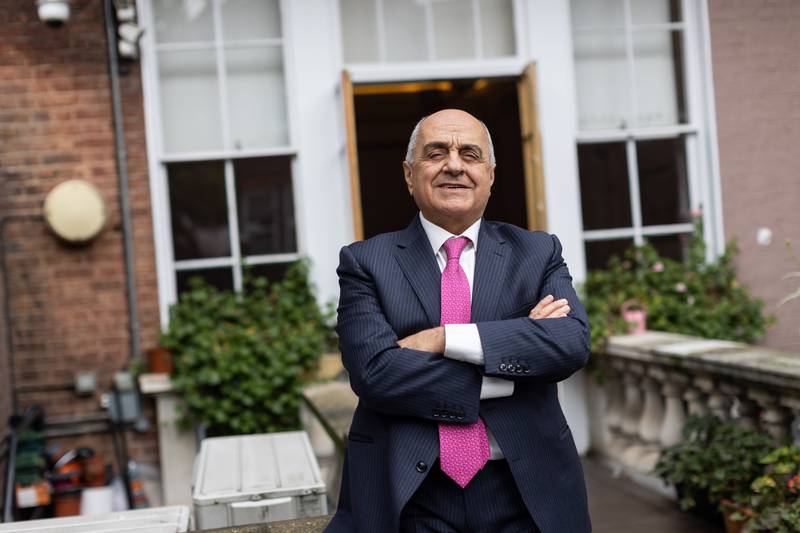
George Kanaan CEO of Arab Bankers association, photographed at his offices in central London by Mark Chilvers for The National.

______________________

BRITISH / LEBANON
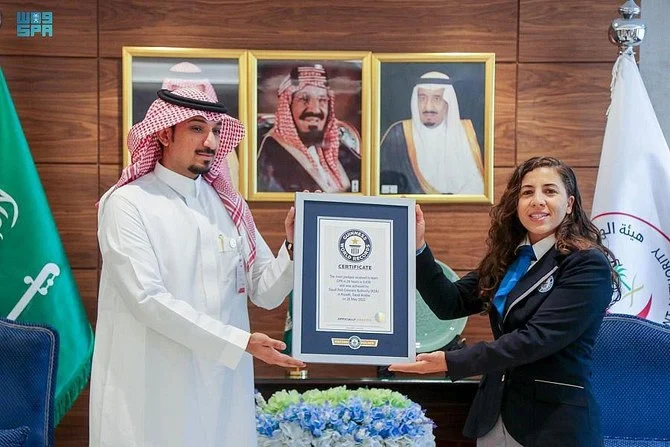
SAUDI ARABIA: Saudi Red Crescent Receives Guinness World Record for ‘Saving A Soul’ Campaign to Save lives

More than 9,000 people signed up online to learn first aid within 24 hours of the campaign launching.

 The Saudi Red Crescent Authority has received a Guinness World Record for its “Saving a Soul” awareness campaign after 9,836 people signed up to learn first aid within 24 hours.

More than 9,000 people signed up online to learn first aid and how to use automated external defibrillators within 24 hours of the campaign launching, Saudi Press Agency reported.

Spokesperson for the Saudi Red Crescent Authority, Abdulaziz Al-Suwaine, said the campaign was held at Riyadh Front and witnessed a big turnout from both citizens and residents who showed true willingness to learn first aid and ways to use AEDs.

The authority has installed defibrillators in several public places to help save lives, he added.Al-Suwaine said the campaign’s success in attracting such a large number of people in a short amount of time shows how responsible Saudi society is and the will of its individuals to be influencers at the humanitarian level.

source/content: arabnews.com (headline edited)

___________

The Saudi Red Crescent Authority receives a Guinness World Record for its “Saving a Soul” awareness campaign. (SPA)

__________________

SAUDI ARABIA

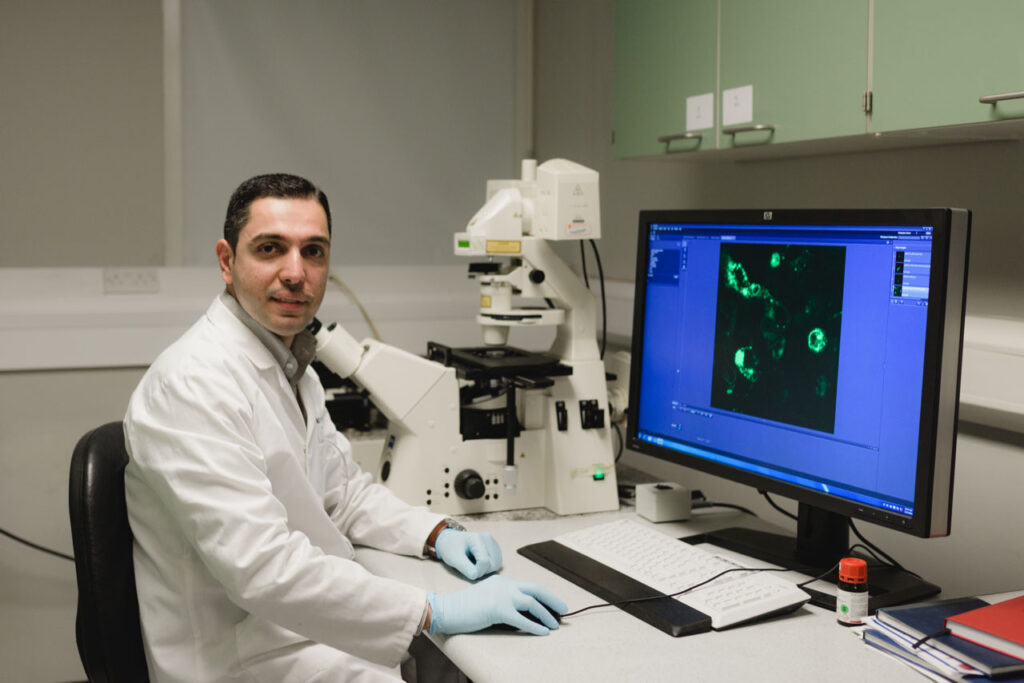
IRAQ: Brain Tissue on a Microchip Aids Iraqi Scientist Dr Mootaz Salman’s Search for Better Stroke Treatments

The Iraqi researcher Mootaz Salman has won the “Young Scientist Lectureship Award” for research that involved putting human brain tissue on a microchip and using innovative technology to treat neurodegenerative diseases.

Salman started his academic career at the University of Mosul, where he earned a Bachelor of Pharmacy with Honours, and is now is a senior researcher and lecturer in the department of physiology, anatomy and genetics at the University of Oxford.

He spoke to Al-Fanar Media about his work, which has taken nearly ten years of research, and the experiences that led him to his current post.

The first researcher in Britain to win the award, Salman said the support he received from universities where he had worked  in the United States and the United Kingdom had been a key factor.

“I deeply believe that the more a person works, the more fortunate he is,” Salman said.

“From the very beginning, I was aware of the challenges ahead, the double effort I had to make, as an academic from a conflict country, and the responsibility I had to convey a different image of my country and to help humanity provide solutions to brain diseases and stroke, which have risen dramatically.”

Human Brain Tissue on a Microchip

The International Society for Neurochemistry and the and Asian-Pacific Society for Neurochemistry will present Salman with the award in September in Honolulu, Hawaii.

Salman led a research team that used  a human brain “microvessel on a chip” to study what happens when drugs cross from the bloodstream into the brain.

The research was part of his ongoing work to understand the cellular physiology of the blood-brain barrier and exploit its mechanisms to improve the effectiveness of therapeutic treatments of neurological diseases such as Alzheimer’s disease, multiple sclerosis, and Parkinson’s disease.

The device the researchers designed for the study allowed them to track the movement of tiny molecular sizes across the blood-brain barrier. Their device is ideal for studies involving biotherapies, as well as being able to employ it in high-resolution imaging methods, such as transmission electron microscopy, Salman said.

Academic Journey

Before moving to the University of Oxford two years ago as an assistant professor and lecturer at Wolfson College, Salman was a postdoctoral fellow at Harvard Medical School and Boston Children’s Hospital in the United States.

Before that, he earned a master’s degree and a Ph.D. from Sheffield Hallam University, in the United Kingdom.

During his doctoral studies, he discovered a new pharmacological framework for developing drugs to treat patients with brain tumours resulting from accidents and strokes.

This research focused on water receptors in the brain. Salman described it as a turning point that helped him recognise the molecular mechanics of brain diseases and think of ways to provide therapeutic solutions rather than surgery, which has major risks and complications.

He said the research led him to discover how cells develop brain tumours and the mechanics that cause these tumours and strokes at the molecular level.

A World Health Organization report says that about 75 million people in the world suffer from strokes annually. About five million of them die and another five million suffer permanent disability.

Salman says the incidence of brain disease in the Arab world is rising because of the dietary and living patterns of the majority of the population, the intake of fats and sugars at “unreasonable” rates, the lack of physical activity, and the pressures of daily life.

Difficulty of Research in Arab Countries

After graduating from the University of Mosul, Salman worked as a teaching assistant in the university’s Faculty of Pharmacy for about two years and experienced firsthand the difficulties of research in the Arab world. He said there was no financial support for conducting research, research laboratories were limited, and the teaching and administrative burdens on professors usually led them to abandon research.

Salman said scientific research should be considered “an investment,”  not a “random academic luxury.” Such work only flourishes in a suitable environment where there is stability and financial support, he said.

He believes the political unrest Iraq has experienced in recent years has affected teaching in universities and Iraqi researchers’ chances for professional development. He described government support for Iraqi universities as “very limited” and said most research initiatives were “individual and random” and did not amount to regular institutional work.

A Call for Greater Investment in Research

Salman said Arab countries needed to increase investment in scientific research at the national level and benefit from the experience of wealthy Gulf countries that have attracted foreign and Arab professors from major European and American universities to establish research centres where young researchers can train.

He said he had tried to open communication channels between the University of Oxford and Iraqi universities to reach agreements for cooperation and scientific research, which could provide research fellowships for Iraqi researchers at British universities.

This year, the University of Mosul signed a cooperation agreement with Oxford on a project that uses remote sensing and photographic information systems to study antiquities. The work would preserve the cultural heritage of Nineveh Governorate and other Iraqi provinces, and attract Ph.D. students to training courses at British universities.

Salman said: “These efforts give me a high sense of pride and a greater incentive for hard work and research that benefits all humanity. I feel a sense of responsibility and love towards my country, my city and my mother university, which helped me and paved the way for me at the beginning of my academic journey.”

source/content: al-fanarmedia.org (headline edited)

___________

Mootaz Salman, an Iraqi scientist at the University of Oxford, has won the “Young Scientist Lectureship Award” for his use of innovative technology to treat neurological diseases. (Photo: Mootaz Salman).

_________

IRAQ

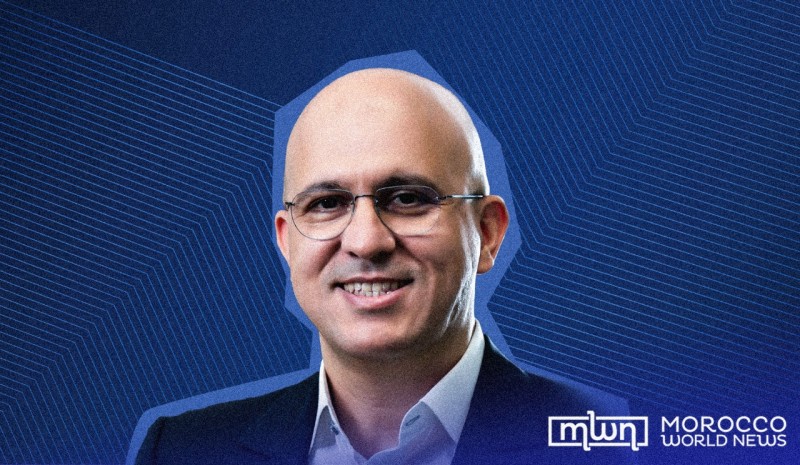
MOROCCO: CEO Omar Channawi Features on Forbes’ Global Meets Local List

CEO of the Middle East, Global Entrepreneurial Markets, and Sub Sahara Africa at Procter & Gamble (P&G) Omar Channawi has featured in the Forbes’ “Global Meets Local 2022” list for the MENA region.

The Moroccan businessman also holds the position of P&G’s Senior Vice President of Sales in Asia Pacific, the Middle East, and Africa.

Channawi started his career with P&G Morocco in 1993 and assumed his current position in 2019 after building a solid career with the American consumer goods corporation over two decades.

P&G is the parent organization of numerous well-known brands such as Downy, Pampers, Always, Braun, Gillette, Olay, Oral-B, and Head & Shoulders. 

The company’s portfolio also includes brands that are often seen as competitors in the MENA market such as Tide and Ariel. 

According to Forbes, P&G accumulated $80.2 billion in net sales in the 2021/22 financial year with the Middle East, Africa, Asia Pacific, and India contributing to 14% of total net sales.

The decades-long economic growth recorded in some MENA economies has encouraged numerous multinational companies such as P&G to set up offices in the Middle East, most often in the region’s largest economic hub Dubai.  

The presence of multinational companies in the region, according to Forbes, “create[s] thousands of jobs as well as bringing technological advancements and capital into the region.”

This year, Forbes recognized 51 executives from 50 companies for the 10th edition of its annual Global Meets Local ranking. The companies operate in the technology, banking, food and beverage, pharmaceuticals, and automotive sectors.

As for the executives, they represent 27 nationalities with most CEOs coming from Britain and France, each had five executives on the list. 

source/content: moroccoworldnews.com (headline edited)

_____________

The Middle East, Africa, Asia Pacific, and India contributed by 14% t o P&G’s total net sales in the 2021/22 financial year.

______________

MOROCCO

PALESTINIAN-AMERICAN: Dr.Eid B. Mustafa Honoured with ‘International Surgical Volunteerism Award’ for International Humanitarian Work by American College of Surgeons (ACS)

A longtime Wichita Falls physician has been honored with the International Surgical Volunteerism Award by the American College of Surgeons for his over 30 years of volunteer work with Physicians for Peace and others, according to the Wichita County Medical Society.

Dr. Eid B. Mustafa has been on at least 40 medical missions since 1988, including at least 25 with Physicians for Peace.

He has volunteered his surgical and medical expertise to help the people of the Palestinian West Bank, as well as other underserved areas of the Middle East, according to the ASC .

“Dr. Mustafa served as a leader, facilitator, and trusted advisor to Physicians for Peace for over 25 years since its founding in 1989,” according to the nonprofit organization providing education and training to health-care workers in under-resourced communities. 

“He led numerous multi-specialty surgical training missions to the West Bank, and spearheaded a successful mission to Morocco in 2010,” according to an Oct. 10 statement from Physicians for Peace.

Mustafa, a plastic surgeon, received the International ACS/Pfizer Surgical Volunteerism Award at the ASC Clinical Congress Oct. 18 in San Diego.

The award recognizes surgeons who are committed to giving back to society by making significant contributions to surgical care through organized volunteer activities abroad.

Mustafa was born in the West Bank, received his medical education in Egypt and moved to the US to perform his residency and fellowship training in plastic and reconstructive surgery, according to the ACS.

After his training, he relocated to the medically underserved city of Wichita Falls where he was the only practicing plastic and reconstructive surgeon for many years, according to the ACS.

His international volunteerism began in earnest in 1987 when he met Dr. Charles Horton, founder of Physicians for Peace. Horton worked with Mustafa to initiate medical missions to the West Bank the following year.

For many years, Mustafa traveled to the West Bank for 10 to 21 days. His initial efforts focused on congenital defects, burn care and reconstruction from injury.

As his missionary work evolved, he recruited a multidisciplinary team aimed at the needs of each individual community, including specialists in urology, orthopedics, peripheral vascular surgery, off-pump cardiothoracic surgery, cardiology and physical therapy.

With the advent of minimally invasive surgery during this period, he arranged for equipment and education to be provided in the West Bank to accommodate the growing interest.

His trips provided preoperative care, interoperative teaching and postoperative care for the patients. The teams Mustafa developed have provided over 2,000 procedures.

Mustafa has been responsible for all logistics, including planning with the host country, setting up patient visits, acquiring visas, and making travel and lodging arrangements for his team and educational venues.

He has conscientiously provided for the safety of his volunteers in areas with significant personal security concerns.

Mustafa’s efforts have expanded beyond surgical services.

Recognizing the burgeoning need for care of the increasing diabetic population in the West Bank, Mustafa founded centers in Al-Bireh, Nablus and Hebron to deliver dietary information, preventative foot care, smoking cessation, neuropathy education and medication management.

These centers also offer education about the long-term effects of diabetes, including cardiovascular disease, kidney failure and ophthalmologic complications.

In addition, burn centers were established in Nablus and in Hebron due to the wartime thermal injuries seen in these areas.

These centers were not only equipped to take care of the burn injuries but provided education and training to the surgical staff, nurses and therapists.

In addition to educating U.S. medical students on the need for and realities of international surgical volunteerism, medical education is included in each of Mustafa’s mission trips, which are open and free to all who wish to attend.

These missionary conferences are coordinated with the Ministry of Health and often one of the local medical schools.

Subjects are chosen based on the needs of the medical communities and include topics such as trauma care, patient safety in the operating room, and complication assessment.

Mustafa also has been a diligent advocate and fundraiser for his medical services, gathering funds and resources from countries including the U.S., Germany, Kuwait and beyond.

He has been an international ambassador for the ACS, taking pride in his fellowship and advancing the ideals of the college.

Mustafa began teaching the principals of the Advanced Trauma Life Support® curriculum on the West Bank years ago at a time when political divisions prevented formal recognition and certification of the course.

According to Physicians for Peace, his deep commitment to trusted partnerships opened doors and ensured efficient delivery of services and materials in regions that were extremely difficult to access.

He carefully recruited team members based on experience and skill to ensure that a full cadre of medical professionals were ready to meet the needs on the ground.

“He would often include medical students in his programs, so the next generation of physicians would see firsthand the value of such service and gain a global perspective of healthcare and needs around the world,“ according to Physicians for Peace.

Mustafa, his wife Saba, and four children moved to Wichita Falls in 1982 and immediately became active in the Wichita County Medical Society and the local medical community.

He served on the WCMS Board for several years, then secretary/treasurer, president in 2000 and then past president.

He served on the editorial board of the Wichita Falls Medicine Magazine from 1985 to 1996 and the Medical Advisory Board of the Texas Rehabilitation Commission.

He served on the North Central Texas Medical Foundation Board that oversaw the Wichita Falls Family Practice Residency, the Family Health Center and Wilson Family Planning, for many years and as president for four years.

Mustafa has won numerous awards.

He was presented the 2009 Distinguished Service Award, the highest honor WCMS presents. Also, in 2009 he won the Texas Patients’ Choice Award for outstanding physicians.  

Mustafa was honored with the Americanism Award by the Daughters of the American Revolution-Texas. It is given to naturalized citizens for outstanding contributions to the nation. 

On the national level with Physicians for Peace, Eid Mustafa was presented the 2006 Presidents Award and, in 2013, the Medical Diplomat Award.

He has been very active in the National Arab American Medical Association, serving as president in 2007. In 2014, he received the NAAMA Outstanding Physician Award.

Mustafa has served on the board or as an officer on the Medical Advisory Board-American Near East Refugee Aid; Jerusalem Fund for Education & Community Development: Washington, DC; and the American Palestine Public Affairs Forum.

He also serves as a director for the International Women and Children Burn Foundation based in Virginia.

His medical missions have included the West Bank-Ramallah, Hebron, Bethlehem; Jerusalem; Amman, Jordan; and Beirut, Lebanon. He has been team leader for all the missions, traveling with teams of physicians and nurses.

Board Certified in Plastic Surgery, Mustafa practices medicine at 1201 Brook Ave at the Wichita Falls Plastic Surgery Center .

He also has added qualifications in surgery of the hand by the American Board of Plastic Surgery. He is a member of the American Society of Plastic Surgeons, American College of Surgeons and the American Society for Aesthetic Plastic Surgery.

source/content: timesrecordnews.com (headline edited)

___________

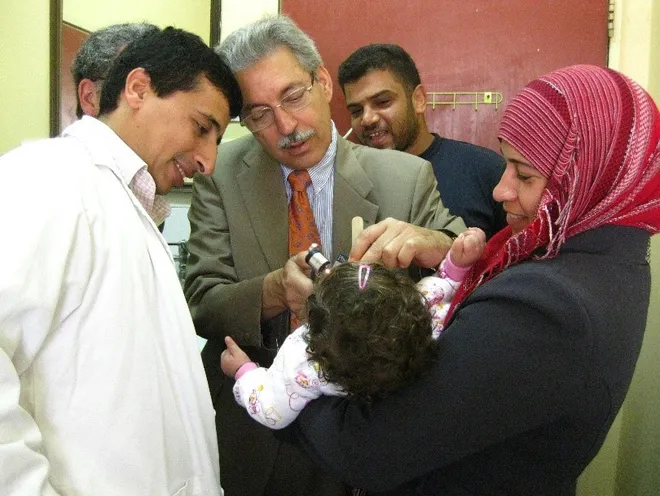
Dr Eid B. Mustfa, center in this updated photo, was honored by the American College of Surgeons with the international Surgical Volunteerism Award. courtesy / Wichita County Medical Society.

______________________________

U.S.A / EGYPT / PALESTINE

SAUDI ARABIA: Middle East’s Largest SuperComputer ‘Shaheen III’ Switched On at King Abdullah University for Science & Technology (KAUST) by the 6 Mega Power Units Provided by Rolls-Royce 

 British firm Rolls-Royce has fired up the first six Kinetic PowerPacks to provide an energy supply for the Middle East’s largest supercomputer facility located in King Abdullah University for Science and Technology. 

The firm has shipped 12 of the huge batteries, known as maximum transmission units, to KAUST from its factory in Liege, Belgium, in order to aid its Scientific Computing Data upgrade and power the supercomputer known as Shaheen III. 

A maximum transmission unit sets the amount of data that can be transmitted in bytes over a network. 

The devices have a power output of 1.6 MW each, and should a power outage occur, the systems – which are designed for humid conditions and temperatures as much as 50 degrees Celsius – will secure critical load and ensure the starting of the diesel engine via their continuously rotating sturdy kinetic energy accumulators. 

The first six are now switched on, with the remaining switch to be activated at a later date. 

“The mtu Kinetic PowerPacks are state-of-the-art, uninterruptible electrical power systems that are designed for operating in extreme environments and provide the highest reliability of back-up power for the most critical and essential systems,” the statement said, citing the Vice President of Facilities for KAUST, Matthew Early. 

The systems include healthcare facilities, airports, data centers, and Shaheen III.  

Projected to be the Middle East’s most powerful supercomputer, Shaheen III will enable KAUST to further enhance its ability for scientific discovery and artificial intelligence innovation, the vice president added. 

Shaheen III is set to be operational in 2023, and is set to be 20 times faster than KAUST’s current existing system. 

Earlier this year, KAUST partnered with the Saudi Data and Artificial Intelligence Authority to increase human capacity and innovation in the field of AI in Saudi Arabia and the region. 

“The SDAIA-KAUST Center of Excellence in Data Science and Artificial Intelligence will focus on educational development and upskilling the new generation of Saudi citizens in AI,” KAUST President Tony Chan said. 

source/content: arabnews.com (headline edited)

______________

Rolls-Royce shipped the devices from its factory in Liege, Belgium (Shutterstock)

_________________

SAUDI ARABIA

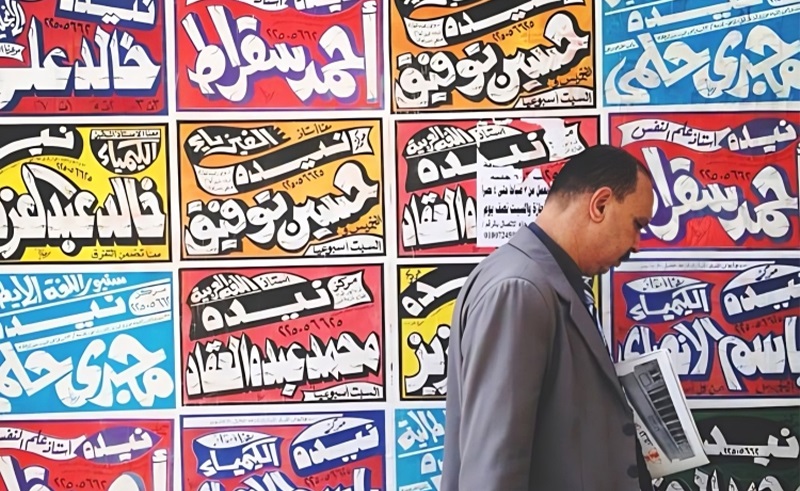
EGYPT : The Digital Archive Preserving the Fading Art of Egyptian Typography

Two graphic designers decided to share their most inspirational street finds with everyone on the internet – and launched an online platform to let everyone else share as well.

In Egypt, where there are streets and roads and passageways, there are signs and posters and billboards dating back decades and even centuries, each reflecting their own era of styles, tastes and contexts. It’s a beautiful mess of typography that often gets lost with time, and the Egyptian Type Archive was born to capture and encapsulate it for good.

The founders, Toka Assal and Abdo Mohamed, met online and bonded over their shared interest in street typography, drawing inspiration from their travels to cities across Egypt, from Aswan to Minya and Port Said. As graphic designers and type artists, they decided to share their most inspirational street finds with everyone on the internet – and launched an online platform to let everyone else share as well.

“When we started we didn’t even have a logo, we just used a picture I took of some text on a microbus that said ‘Semsem’ and ‘Semsema’,” Mohamed tells CairoScene. “We found out later that those were the names of the bus owners, a brother and sister. Although we know it’s not professionally designed, the text really looked like it was. But now everything is digital and fast-paced, so we’re losing the artistry and craftsmanship of typography and calligraphy.”

Exclusively focused on Arabic street typography in Egypt, the Egyptian Type Archive has amassed a loyal community on Instagram. They collectively document any text they stumble upon, from the quirky to the horrific to the beautiful, whether it’s an ancient sign on a vintage shop or an announcement sprayed on the walls of a local cafe.

“My favourite finds are food carts, their typography has a very distinct style embodying the essence of street art,” Asal shares. “It’s also very instinctual with the text written tackling hasad or rizq.” Here Asal refers to written prayers or phrases traditionally used to ward off the evil eye, or invite God’s blessing – a visual manifestation of deeply held beliefs and spirituality.

Mohamed and Asal’s view on what constitutes art or on the nature of street typography questions notions of ‘professionalism’, where they treat every sign and piece as a story on its own. Initially, they wanted to document the names of the calligraphers until they found that – more often than not – the text is created by commission, so the artists don’t normally sign their names under their work.

Although strangers in the street often regard them with confusion when they see them taking pictures of manhole covers or old movie posters, the founders believe their documentation serves a purpose to typographers, designers, and Egyptians at large. Through their work, and the work of their burgeoning community, they preserve a dying visual culture and ensure it survives to the next generation of Egyptian creators.

source/content: cairoscene.com (headline edited)

_________

_________

EGYPT

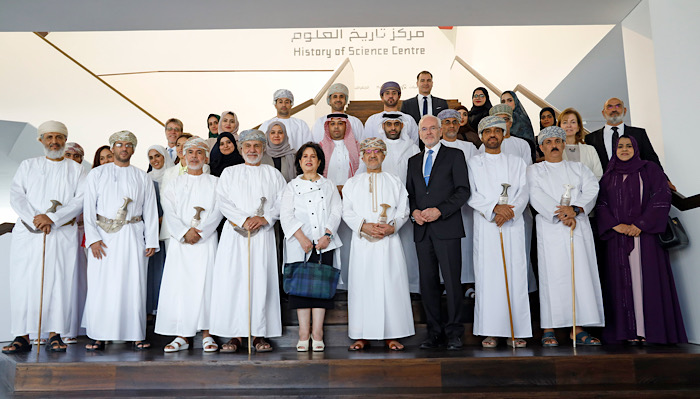
OMAN: Inauguration of ‘UNESCO Chair for World Heritage Management and Sustainable Tourism’ at the German University of Technology (GUTech). The First UNESCO Chair in the field – World Heritage for the Arab region.

The UNESCO Chair for World Heritage Management and Sustainable Tourism at the German University of Technology in Oman was inaugurated Under the patronage of H.E. Salim bin Mohammed Al Mahrouqi; Minister of Heritage and tourism and with the participation of H.E. Shaikha Mai Bint Mohamed Al Khalifa; Chairperson of the Board of directors of the Arab the Regional Center for World Heritage.

Prof. Dr. Michael Braun, Rector of the University, introduced the university and its commitment to research and innovation; and commented that the chair comes as a great accomplishment on the university’s 15th anniversary.

Chairholder Professor Dr. Heba Aziz of the UNESCO chair at GUtech stated: “The establishment of the UNESCO chair at GUtech offers new research, teaching and learning opportunities at GUtech and is a further recognition of GUtech’s academic focus on the field of cultural heritage and sustainable tourism management”

The Chairholder Professor Aziz added “Oman’s vision 2040 remains at the core of the chair’s activity. National priorities focusing on Citizenship, Identity, National Heritage and Culture, sustainable cities and governorates and employment and labour markets are the compass that directs the chairs activity. The chair will work closely with the Ministry of Heritage and Tourism to make sure that it provides the necessary scientific research and labour force to achieve its vision.”

World Heritage Sites draws international attention to heritage sites of outstanding universal value and is expected to increase the number of visitors to these sites. The chair aims to support the role of world heritage in contributing to the Sustainable Development Goals by employing tourism in its comprehensive and sustainable manifestation to drive socio-economic development and to maximize benefits to the communities surrounding these sites.

The Chair is established in partnership with the Arab Regional Centre for World Heritage, a UNESCO Category II Centre based in the Kingdom of Bahrain. The center serves 19 Arab States in the promotion and management of cultural and natural sites by providing technical support and reinforcing the implementation of the 1972 World Heritage Convention in the region.

The chair complements the role that of the center and will introduce several academic programs in the field of tourism management in World Heritage sites, digitization of heritage, heritage narrative and interpretation and heritage economics. GUtech will also introduce Master’s degree in World Heritage and Sustainable Tourism management in collaboration with the Arab Regional Center for World Heritage.

The chair team consists of Jokha Al Saqri, researcher in Heritage studies, Prof. Dr. Osman Barghouth co-chair holder and Prof. Dr. Heba Aziz, UNESCO chair holder

This is the first chair specialized in this field and the first UNESCO chair concerned with the field of World Heritage for the Arab region as a whole.

source/content: timesofoman.com (headline edited)

__________

_________

OMAN

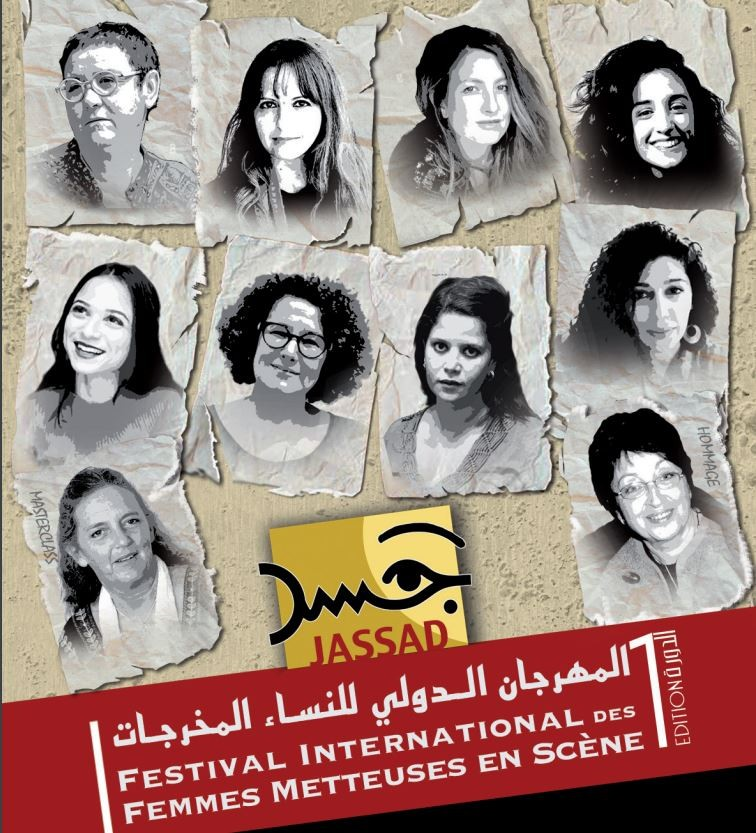
MOROCCO: 1st Edition of ‘Jassad Festival’ Honors Women Theater Directors

Morocco’s cultural capital Rabat is hosting the first edition of Jassad, the International Festival of Women Directors, between October 25 and 30. The event aims to highlight and pay tribute to the achievements of women theater directors from across the world.

Organized by Morocco’s Aquarium Theater and Anfass Theater, the festival will feature renowned women directors from Morocco, Tunisia, Lebanon, Spain, France, Denmark, and Romania.

“Through this festival, we wish to establish a ritual of recognition towards all the creative women who serve the theater,” said Amsaa Houri, director of Anfass Theater.

The six-day event also aims to “strengthen the resilience and hope of women actors in the cultural and creative industry, at a time when the sector has been seriously affected by the Covid-19 pandemic,” Houri added.

The festival serves as a platform for cultural and artistic exchanges, as its program offers a wide range of activities, including plays, a master class, workshops, as well as meetings and debates, indicated the organizers in a press release.

Director of Aquarium Theater Naima Zitan described the festival as “a meeting, an exchange, a discovery, all this and a little more,” explaining that the event is dedicated to theatrical creation, as well as exchanging ideas, experiences, and different visions of the world.

“The Jassad (meaning body in Arabic) is what unites us, wearing a festive hat to welcome and greet a vast and colorful audience,” Zitan said.

The festival will feature various theatrical pieces, including Naima Zitan’s “Le Masque” (The Mask), Asmaa Houri’s “Automne” (Autumn), as well as “Joyeux Anniversaire” (Happy Birthday) by Morocco’s Fatima Zohra Lahouitar and “Boujloud” by French-Moroccan Kenza Berrada. 

The six-day event will also feature “Nawal” by Lebanon’s Lina Abyad, “Heimat Wort” by Tunisia’s Meriam Bousselmi, “Enlorquecidas” by Spain’s Marta Ocana, and “Une Maison de Poupee” by France’s Lorraine de Sagazan.

In addition, the event will include a seminar titled “Profession: Woman of Theater,” featuring Morocco’s Zohra Makac and Omar Ferhat, Lebanese director and theater professor Lina Abyad, and Denmark’s theater actress Julia Varley.

source/content: moroccoworldnews.com (headline edited)

____________

The poster of the Jassad International Festival of Women Directors featuring renowned directors

______________

MOROCCO

SAUDI ARABIA: Breakthrough: Saudia Buys 100 Electric Vertical Take-Off & Landing Planes to Revolutionize Domestic Travel from Germany’s Lilium. First Airline in MENA Region towards EVTOL.

Saudi Arabian Airlines has agreed to buy 100 innovative electric vertical take-off and landing planes as it seeks to connect Jeddah with the Kingdom’s leading tourist destinations, according to one of the firm’s leading officers.

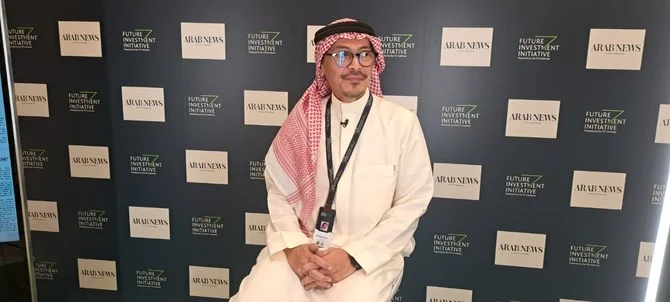
Speaking to Arab News on the sidelines of the Future Investment Initiative in Riyadh, Group Chief Marketing Officer Khaled Tash said Saudia — the airline operated by his firm — will be the first in the region to make use of the technology.

The deal has been struck with German company Lilium, which is in the final testing phase for the aircraft, with operations expected to start in two years.

Tash said Saudia will be using the aircraft to improve access to destinations alongside the Red Sea and Makkah.

“That will actually be our first priority in the next few years to connect to the airport with Makkah whereby some of our premium passengers can land in Jeddah airport, take one of these small planes and go to Makkah and back in a few minutes. That will be a breakthrough,” he said.

The executive insisted the announcement shows air mobility in Saudi Arabia is set to move into a different era.

“When we think about what’s happening in the country, Vision 2030 is about a lot of transformation that is happening in the Kingdom and maybe today’s announcement, that we made with Lilium, is probably a testimony to how Saudi national champions like Saudi airlines are walking the talk,” Tash said.

“We want to be at the forefront of innovation, EVTOLs — or electric, vertical, takeoff and landing aircrafts — are the future of air mobility, I think in especially short distances. For us to be the first Middle Eastern and North African within that region, the first airline to make this step towards EVTOLs, I think that means a lot for us,” he added.

Tash used the example of seaplanes connecting the islands of the Maldives as delivering economic benefits to tourism — something he hopes will be replicated in Saudi Arabia.

The commitment to 100 vehicles will also offer value for money for his firm, he added, saying: “By moving by big players like Saudia moving into early adoption of such a technology or such an innovation, that will have, hopefully a very good impact on the cost.”

“So if we start with Jeddah to Makkah and then with with Jeddah to the Red Sea or Jeddah to AlUla URL, or Jeddah to King Abdullah Economic City, the more use cases we can find for this, the more commercial opportunities we will have and the less cost it will be,” he said.

“So if I have an aircraft that goes 20 times between Jeddah and Makkah each day, it will definitely be cheaper than going six times a day,” he added.

As well as the economic case for buying the aircraft, there is also a clear environmental benefit.

Tash was clear that while sustainability is a very important topic under the Vision 2030 umbrella, it is also for Saudia. 

“We think that electric, in terms of these kinds of EVTOLs, is the future for aviation, and we believe that our sustainability initiatives will be further strengthened,” he said.

“It’s not the only sustainability initiative that we’re doing. We’re working on so many different fronts. We have one of the youngest fleets in general in our entire fleet that also has less emissions. We are committed to work on sustainability, more and more,” Tash added.

source/content: arabnews.com (headline edited)

_______

Saudi Arabian Airlines Group Chief Marketing Officer Khaled Tash speaking to Arab News on the sidelines of the Future Investment Initiative in Riyadh

_________________

SAUDI ARABIA