Arabs & Arabian Records Aggregator. Chronicler. Milestones of the 25 Countries of the Arabic Speaking World (official / co-official). AGCC. MENA. Global. Ist's to Top 10's. Records. Read & Enjoy./ www.arabianrecords.org
The award recognises AUC’s Rare and Special Books Library as a leading institution in the preservation and restoration of Arabic historical documents.
The American University in Cairo’s Rare and Special Books Library was awarded UNESCO Jikji Memory of The World Prize. This prestigious award places the American University in Cairo next to some of the world’s leading history conservation entities. The award ceremony is set to take place this coming September in Cheongju-si, South Korea.
Founded in 1992, the AUC Rare and Special Books Library plays a fundamental role in restoring and preserving Egyptian history. Starting with just a few collector’s items, the RBSCL then developed to contain historic maps of Egypt, archives of oral recordings, historical magazines and periodicals, and historical AUC archives.
The UNESCO Jikji Memory of the World Prize is a USD 30,000 grant, given every two years, that honours institutions that have made notable contributions to the preservation and accessibility of documented history. The prize also pays close attention to the degree of expertise in treating said documents and the presence of special circumstances in procuring them.
Funded by the Republic of Korea, the prize was created to commemorate the inscription of the ‘Buljo jikji simche yojeol’, the oldest movable metal print in the world.
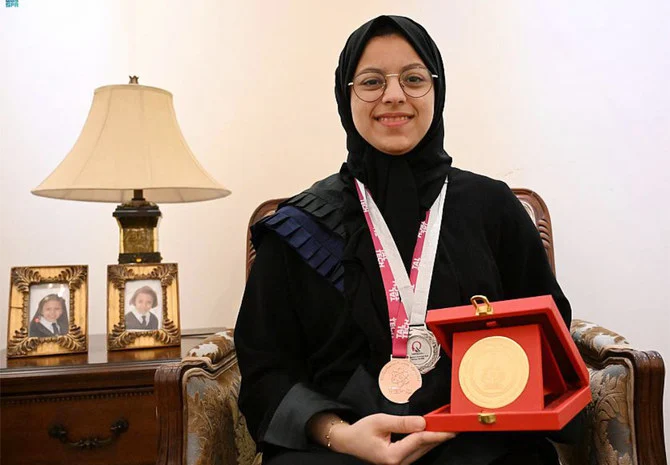
Prizewinning Saudi student Lama Al-Ahdal, who has been scooping medals at Physics Olympiads, says her competition success motivates her to continue with her passion and achieve great things for the Kingdom.
She won gold at the Gulf Physics Olympiad, a bronze at the International Physics Olympiad, and a bronze at the Nordic-Baltic Physics Olympiad.
Al-Ahdal spoke to the Saudi Press Agency about the beginning of her journey in the Physics Olympiad through the Mawhoob Competition, which she took part in several times.
It was her participation in 2018 that led to her nomination to attend training forums, a path that would eventually lead her to victory.
“I started attending basic courses in Jeddah, through which I qualified and passed the required tests. I was nominated for the Winter Forum at Princess Nourah University in Riyadh, then trained with the physics team, from which a number of students in the Kingdom would qualify to form the Saudi team for the Physics Olympiad.
“At the beginning of 2019, we underwent intense eight-hour training, both remotely and at King Abdullah University of Science and Technology, to prepare for international competitions. I learned how to calculate the strength of the Earth’s magnetic field using a string and two pieces of magnets, how electricity can be generated by heating two pieces of metal, how to measure the thickness of a candy wrapper using a laser, and other scientific experiments.
“The top five students were then nominated to represent the Kingdom, and thankfully I made it and snatched the gold medal in the Gulf Physics Olympiad, the bronze medal in the Nordic-Baltic Physics Olympiad, and the bronze medal in the International Physics Olympiad.”
Joining the Saudi physics team and undergoing training helped her to discover that physics was a beautiful subject. “I learned a lot from it and the Olympiad experience.”
Her participation increased her skills and developed her thinking by getting to know competitors from different countries.
“I also developed my time management skills since the training continued even during school days. My father and mother had a major role in helping me achieve my goals and encouraging me to try new things to gain more skills and learn more,” she said.
Setting a specific goal and working to achieve it was the most important thing that motivated her to take up the challenge and try new things.
Her father, Abdul Rahman Al-Ahdal, said his daughter’s journey was full of scientific challenges.
“She has always been a talented child and a bright student, with a promising future ahead of her. God blessed her with a group of highly experienced trainers and supervisors. It is important to focus and draw a plan and work to achieve it.
“I thank King Abdulaziz and His Companions Foundation for Giftedness and Creativity, and everyone responsible for helping the sons and daughters of the Kingdom partake in forums of creativity, innovation and scientific Olympiad, and other scientific activities.”
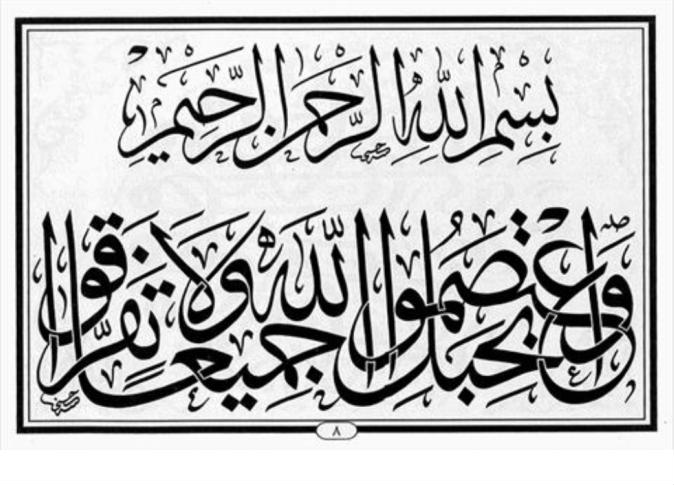
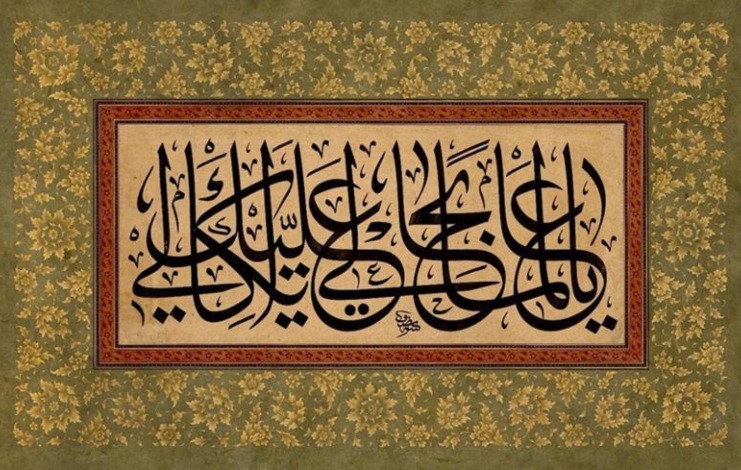
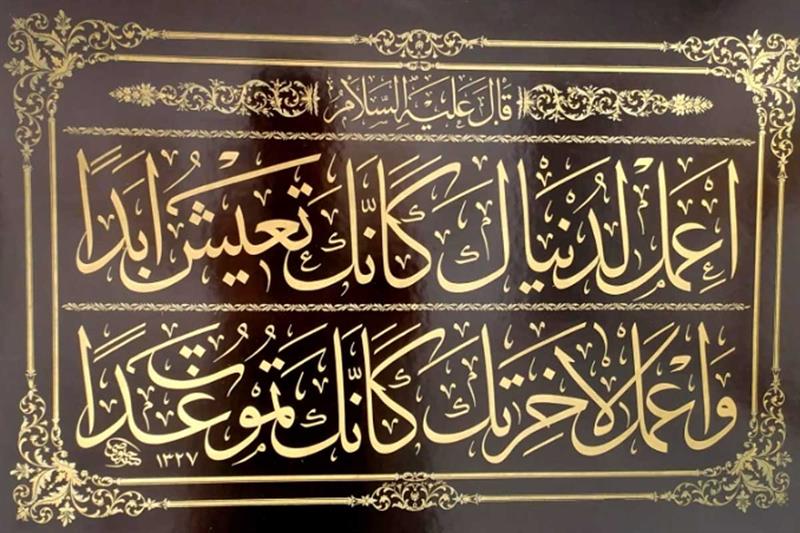
Arabic Calligraphy, the art of creating decorative handwriting or lettering, is one of the oldest art forms from the Arab region; one that has not only thrived with time but also evolved into a unique form of expression. It survived through several tumultuous periods that threatened its existence, from civil wars to an invasion by the Mongol Empire that destroyed Baghdad.
Even though the writing wasn’t as focused on in the past, with many Arabs preferring to memorize poetry and other forms of text and pass them down verbally, that changed significantly later. Calligraphy would flourish to include the preservation of the Quran, adorn mosques as well as the palaces of kings, and by royal scribes when writing decrees, among other things.
In celebration of World Calligraphy Day, we decided to dive into the past and look back at some of the most well-known and prominent calligraphers from the Arab world.
Ibn Muqla
One of the biggest names in developing and improving Arabic calligraphy, born in 885 AD in Baghdad, Iraq, during the Abbasid Caliphate, he started out as a tax collector before rising through the ranks and becoming the Caliph’s Vizier three different times.
At this time, the Kufi style dominated the calligraphy scene, but Ibn Muqla invented new art styles that superseded the previous ones. Ibn Muqla was the one who invented the Thuluth and Al-Mansoub styles, as well as the foundations and rules for others, such as Naskh. The Naskh and Thuluth got further development throughout the centuries that followed, and calligraphers still use them today.
While the Kufic style was rigid in its overall design, Naskh had a more cursive structure but wasn’t as popular and as used at the time, Ibn Muqla changed that by improving on it and using it in official decrees, and private correspondence.
Ibn Muqla’s Thuluth style was new with its letters having long vertical lines with broad spacing. Its name translates to “one-third”, in reference to the maximum height for the letters on the same line must not exceed one-third of the ‘alif.
As for the Al-Mansoubstyle, it mainly focused on three measurements: the size of the period meaning the “Noqta”, the circle with a diameter equal to the height of the alif (the first letter in the Arabic language) and, and the height of the alif.
Little is known when exactly Ibn Al-Bawwab was born. However, we know of his existence and his body of work thanks to the survival of many of his manuscripts, Qurans, and texts referring to him by name.
With his name literally translating to “son of the doorman,” he didn’t grow up in a wealthy family and had to work to make a name for himself. He did so by learning about law and theology and working in several professions, such as a home decorator. However, he would later settle on working in book illumination and calligraphy.
Over years of hard work, he became renowned as a master calligrapher; fluent in six different styles in the field, perfecting the Al-Mansoub style and developing the Reyhani, Naskh, Tawqi, and Muhaqaq styles significantly.
Housed at the Chester Beatty Library in Dublin, Ireland, is the sole surviving Qur’an penned by Ibn al-Bawwab gifted to the country by Ottoman Sultan Selim I.
Originally from Syria, Mohammad Hosni Al-Baba was born in 1894 and is considered one of the last classical calligraphers. Al-Baba received his initial formal training with the Turkish master, Istanbul-based Yousef Rasa, who had renovated the Umayyad Mosque in Damascus, Syria. Al-Baba would later study under another renowned calligrapher, Mehmed Showki Afendi, author of the work “The Thuluth & Naskh Mashqs.”
He would later travel to Cairo, Egypt, becoming one of the leaders in Islamic and Arabic calligraphy, turning his home into a hub for artists, calligraphers, and poets. Al-Baba would be famous for improvements to the lettering in the Thuluth style, the linear structure of Arabic script, and was appointed by King Farouk as the first professor to be a master at the Royal Institute of Calligraphy.
His children would continue his legacy but in different fields since many grew up surrounded by artists when they visited Al-Baba’s home. The most famous of his children are actress Soad Hosni, dubbed “Cinderella of Egyptian Cinema,” and Najat Al Saghira, who became an actress and singer.
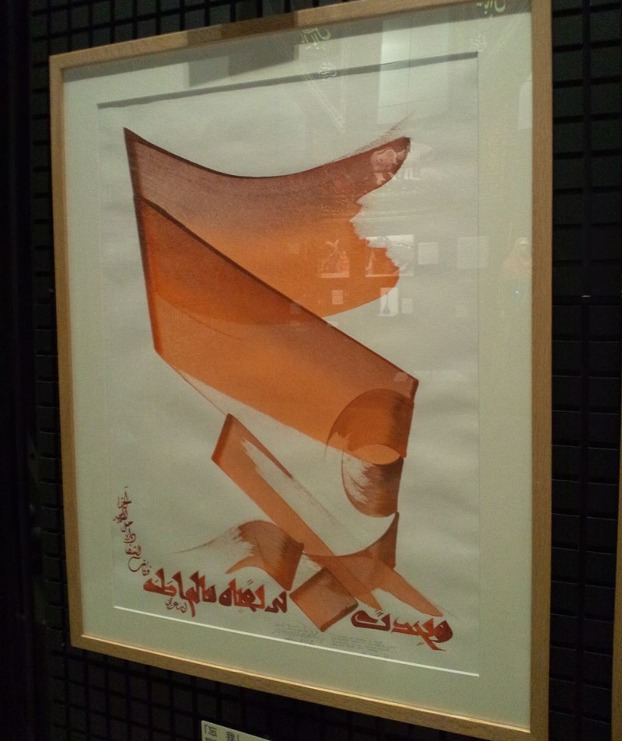
Born in 1944, Iraqi painter and calligrapher Hassan Massoudy continues to be one of the biggest inspirations for many modern artists today. French writer Michel Tournier even considered him as the “greatest living calligrapher” in 1989.
Massoudy grew up in Baghdad, Iraq, until 1969, when he fled to Paris, France, entering the École des Beaux-Arts, where he studied figurative painting. At the time, he looked for a job to pay for his studying, finally finding one as a calligrapher in Arabic magazines, writing their headlines.
While he wasn’t famous for a traditional calligraphy style, his distinct and elaborate designs made him stand out among the rest of the artists of his time. Massoudy would delve into the world of theater, collaborating with artists and choreographers, creating different productions focusing on the harmony of dance, calligraphy, and dance routines.
Studying abroad but seeking inspiration from his traditional roots, Tunisian artist and calligrapher Nja Mahdaoui invented the world of Arabic calligraphy as a graphic style, creating what was called “Calligrams.”
Born in 1937 in Tunis, Tunisia, he first started learning art history and painting at the Carthage National Museum. He later traveled to Rome, Italy, where he continued to study painting and learned more about philosophy at the Santa Andrea Academy. He also moved to Paris, France, where he went to the Cité Internationale des Arts and École du Louvre before returning to his home country in 1977.
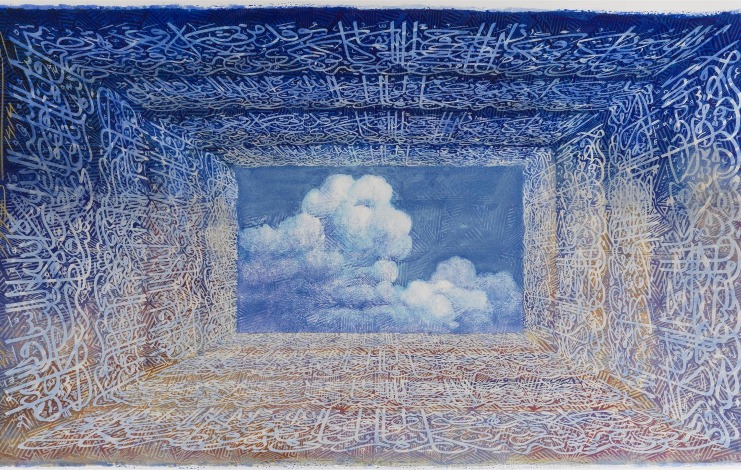
His calligraphic style focuses mainly on the designs he creates as a whole rather than the composition of words since his “calligrams” resemble Arabic letters but have no literal meaning, leading to many naming him the “inventor of abstract calligraphy.” People can see Mahadaoui’s work on several materials used as a canvas, including jewelry, drums, leather, paintings, walls, glass, and so much more.
A UNESCO Crafts Prize laureate, Mahdaoui, graced the Facebook campus in 2018 by painting one of their halls using Arabic calligraphy in his unique style as part of the “FB AIR program,” turning their hall into a vividly colorful masterpiece.
Egyptian artist and calligrapher Ahmed Mustafa was born in 1943 in Alexandria, Egypt, graduating from the Faculty of Fine Arts at Alexandria University in 1966 before traveling to the UK on a scholarship to the Central School of Art and Design in London, England, where he earned his Ph.D. in 1989.
Inspired by his Islamic roots, his calligraphic works mainly focused on quotes from the Quran, among other sources. Working on several materials as his canvas, Mustafa has designs on glass and carpets, among others.
Mustafa also set up the Fe-Noon Ahmed Moustafa Research Centre for Arab Art and Design in London in 1983. He lectures and creates workshops globally as well as does commissions, one of which was presented by Queen Elizabeth II to Pakistan for the country’s fiftieth anniversary in 1997.
The following year, the Vatican invited him to do an exhibition at the Pontifical Gregorian University in Rome, Italy. World media at the time announced it as the first achievement of its kind in the history of Muslim-Christian relations.
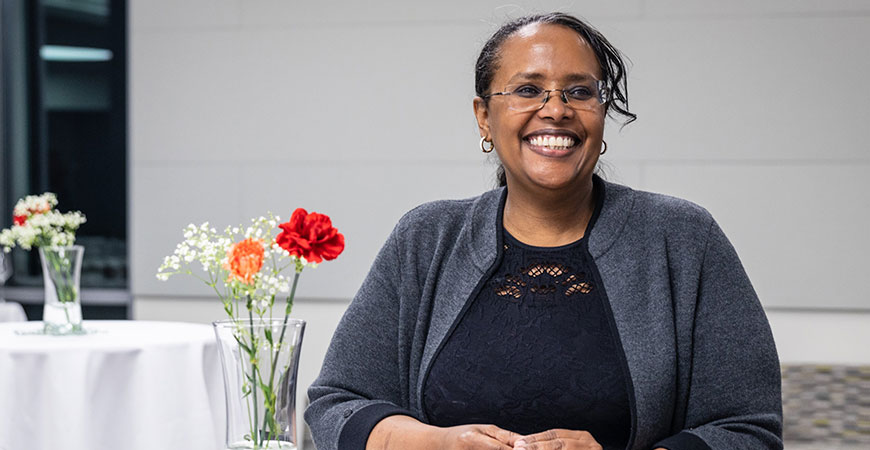
The U.S. Senate today confirmed UC Merced Professor Asmeret Asefaw Berhe to be the new director of the Office of Science in the federal Department of Energy.
The Department of Energy’s Office of Science is the lead federal agency supporting fundamental scientific research for energy, and the nation’s largest supporter of basic research in the physical sciences.
President Joe Biden nominated Berhe last April. She is a renowned professor of soil biogeochemistry in the Department of Life and Environmental Sciences in the School of Natural Sciences; the Ted and Jan Falasco Chair in Earth Sciences and Geology ; and the interim associate dean for Graduate Education .
“It is an incredible honor for me to be nominated, and now confirmed by the U.S. Senate, to serve as President Biden’s director of the Office of Science at the Department of Energy,” Berhe said. “I thank the president and Secretary of Energy Jennifer Granholm, for trusting me to help lead the next chapter in the great scientific success story of the Office of Science.”
Berhe will serve in Washington, D.C., taking a leave of absence from campus. She will hold the director position for the duration of Biden’s term.
Her research is at the intersection of soil science, global change science and political ecology with an emphasis on how the soil system regulates the Earth’s climate and the dynamic two-way relationship between the natural environment and human communities.
“I hold the Office of Science and DOE National labs with highest regard as since the time I was a graduate student and until now, DOE funding and national labs have played important role in my own scientific training and research, and the training of my mentees. Further, as a soil and global change scientist who has studied and worked in public institutions of higher learning, I have always taken my responsibility to serve the public very seriously. I believe publicly funded science and technology is critical for pushing the frontiers of science forward and inspiring the next generation of scholars,” Berhe said. “I am excited to join the Department of Energy’s Office of Science to contribute to the Office’s mission of expanding human knowledge, driving discovery, and fostering innovation, technology development and economic progress.”
“This is fabulous news and so well deserved,” Interim Vice Chancellor for Research and Economic Development Marjorie Zatz said. “Professor Berhe is highly respected as a researcher and thought leader by her colleagues nationally and internationally, as well as by those of us at UC Merced. She will be a terrific director for the Office of Science and a strong voice for inclusive excellence within the scientific community and beyond.”
“The School of Natural Sciences is immensely proud of Professor Berhe’s appointment to this important and influential office,” Dean Betsy Dumont said. “She is an immensely talented scientist who will bring a holistic, innovative and practical perspective to the challenges of energy and climate change.”
“Professor Berhe is an international leader in environmental sciences and climate change research, and a champion for underrepresented people in STEM,” Professor Peggy O’Day said. “We are excited by her appointment and the impact she will have on the national agenda in addressing energy and climate issues.”
Berhe is widely recognized for her research, including having been an invited speaker at the TED conference in 2019, and for her advocacy for inclusion, anti-harassment and anti-bullying. She previously served as the chair of the U.S. National Committee on Soil Science at the National Academies; was a leadership board member for the Earth Science Women’s Network; and is a co-principal investigator in the ADVANCEGeo Partnership — a National Science Foundation funded effort to empower (geo)scientists to respond to and prevent harassment, discrimination, bullying and other exclusionary behaviors in research environments. She is a fellow of the American Geophysical Union and the Geological Society of America, and a member of the inaugural class of the U.S. National Academies New Voices in Science, Engineering and Medicine.
Berhe was born and raised in Asmara, Eritrea, and lives in Merced with her husband, Professor Teamrat A. Ghezzehei, and their two children. She earned a B.Sc. in soil and water conservation from the University of Asmara, an M.Sc. in political ecology from Michigan State University and a Ph.D. in biogeochemistry from UC Berkeley. In 2020, she was named a Great Immigrant, Great American by the Carnegie Corporation of New York.
With the newly emerging social entrepreneurship movement, Moroccan youth are keen to develop entrepreneurial solutions to respond to local challenges.
Driven by innovation and the spirit of entrepreneurship, a student-led team from Enactus Club at Morocco’s Mohammadia School of Engineering (EMI) has developed a fabric made from milk to reduce dairy waste.
A team of 10 engineering students took the lead to make a positive impact within Moroccan society after observing the alarming amount of milk waste discharged in rivers and lakes. The dumping of milk waste has severe consequences for the balance of marine ecosystems as well as on the quality of drinking water.
The “S-ILK” project is a promising alternative to classic fabrics, by focusing on creating a tissue based on casein, a protein extracted from milk.
So far, the team has been able to develop the first prototype of its biodegradable fabric in the form of textile yarns and now seeks to begin mass production.
Speaking to Morocco World News, S-ILK Project Manager Omar Dirane stressed that synthetic fabrics, made from nonrenewable fossil fuels, are often bad for health and the environment. This became the reason why the team decided to use milk as a fabric to make clothes while reducing the pollution of dairy products.
Research quoted by The Guardian has found that 16% of dairy products, approximately 128 million tonnes, is lost or discarded globally each year; an efficient solution is therefore needed to reduce the environmental impacts of this large-scale food waste.
Ghita Dahhou, a project associate, told MWN that their long-term goal consists of making “S-ILK” a startup in which they seek to develop and sell eco-friendly clothes, while also raising awareness about food waste and making people eco-responsible through what they wear.
“The idea of creating a brand of ecological fibers is present and could be a big step for the textile industry in Morocco,” Dahhou said. As eco-responsible alternatives to fast fashion keep growing worldwide, the industry is significantly becoming more competitive.
Project associate Taoufiq Saaad spoke on the difficulties they could potentially face in implementing their startup in the future, especially as young students without years of experience in the field.
S-ILK team members, however, are keen to keep their optimism and ambitions to achieve their professional aspirations, noting that “our young age will not stop us from being invested in the engineering field and giving everything we have to improve it.”
Social entrepreneurship: challenges and opportunities
Eager to position their product in the Moroccan market, the team has conducted a market study to identify their niche while focusing on customers that support environmental advocacy and are eco-responsible.
Similar customers that follow the ecological trend are harder to find in Morocco due the “traditional mindset” some people still have, Ghita argued. Such a mindset, in addition to societal pressures, hinder young project holders from “taking risks and exploring what is beyond our comfort zone.”
As part of their market research, they also conducted interviews with people in the streets of Rabat. Taoufiq Saaad highlighted that people were “intrigued by the product especially when we told them that the piece will be cheaper than actual silk.”
“As we have been showing a potential to grow, we have been able to find clients who are interested in purchasing our product,” he added.
Supported by Moroccan hypermarket chain Marjane Holdings and Orange Maroc, one of three major licensed telecommunications operators in the country, the project manager expressed the team’s interest in securing more funds to be able to expand their project.
He explained that “Orange digital center” provides them with the tools needed to elaborate their research while “Orange Fab Lab” is where they experiment on their product and work on improving it.
When asked how they manage to finance projects within Enactus EMI, especially those starting from scratch, Dirane underlined that when a project within the EMI network wins a prize, they split it so that all projects can be able to expand.
Meanwhile, Ghita underlined that in recent years, Morocco has been offering several opportunities for young project holders to show their potential, either through financial aid or other facilities that banks provide, in addition to the support and mentoring from several incubators.
“With over 300 alumni of Enactus EMI, and 66 current members, we have much expertise, and engineers in different industries across Morocco, all coming together to contribute to the growth of innovative projects,” he added.
For Omar, Taoufiq, and Ghita, the project is helping them become the leaders of tomorrow by.being engaged in extracurricular activities to develop soft skills such as teamwork, communication, and problem-solving, among others, while also seeking expertise in the engineering field.
source/content: moroccoworldnews.com (edited)
____________
S-ILK: Moroccan Engineering Students Create Innovative Fabric From Expired Milk
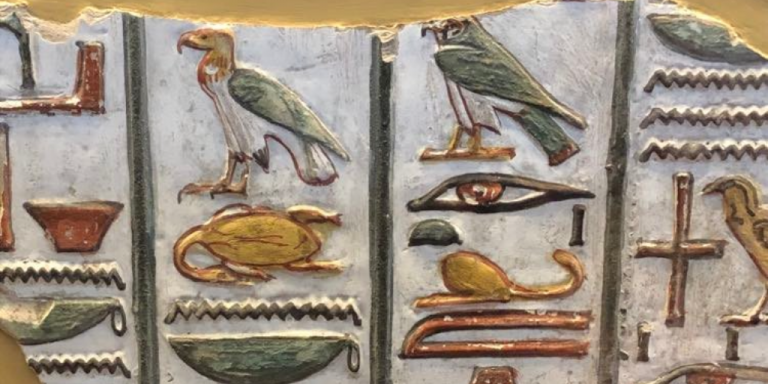
Did you know that many of the Egyptian colloquial words Egyptians use on a daily basis are not actually Arabic?
The Egyptian Arabic dialect is fundamentally Arabic, but with the influence of history and local populations, some of the peculiarities that set the Egyptian dialect apart come from the integration of ancient Egyptian, Greek and Coptic words and expressions. Surviving for thousands of years, many commonly used, modern-day Egyptian words and phrases can actually be traced back to the current dialect’s ancient predecessors.
Here are some examples of words Egyptians use, often not knowing their ancient origin, as per the books ‘From Pharaoh’s Lips’ (2003) by Ahmad Abdel-Hamid Youssef, and ‘Al Logha Al Masrreya Al Qadeema’ (Ancient Egyptian Language, 2012 ) by Abdelhaleem Nour El-din.
UMBU (DRINK)
Often, in communication with infants or toddlers, broken down or simplified words are used to allow the news speakers to express themselves without too much difficulty. For example, umbu is the word commonly used by Egyptian children to express their thirst. The ancient Egyptian term simply means “from the water”.
TA TA (STEP BY STEP)
When Egyptian parents try to help their crawling baby how to walk, they use the phrase “ta ta” derived from the ancient Egyptian word “ti ti”. Though Arabic became the primary language in Egypt, the Coptic language was initially still being used in everyday life for the majority of the population. The term “ti ti” was adopted by the Coptic language and modified to “ta ta”, which is used until today.
MAMM (FOOD)
The word Mumm is an Egyptian slang word derived from the ancient Egyptian “my wnm”, which means ‘give to eat’. Many Egyptians, until this day, teach their babies to say “mumm” whenever they are hungry — as it is easy and quick to sound out.
DAHYA TIWADDIH AL AMENDI (MAY A DISASTER SEND HIM TO HELL)
The Egyptian phrase “Dahya tiwaddih al amendi”, is originally ancient Egyptian. The word “amendi” is a Coptic word meaning “hell”, which was derived from the ancient Egyptian word “imntt”, meaning the ‘underworld’.
BIKH (BOO!)
The word “Bikh!”, meaning “Boo!”, is often used in modern day Egypt to sneak up on someone and scare them. The term is an ancient Egyptian word “pa akh” meaning “demon” or “ spirit”.
WAHAWY YA WAHAWAY IYUHA (THE MOON HAS APPEARED)
The Egyptian phrase “Wahawy ya Wahaway iyuha” is part of a song Egyptians sing during the holy month of Ramadan. Families and young children swing their fanoos (lanterns) as they sing the lyrics to Wahawy ya Wahaway iyuha. The popular lyric is believed to be inspired from the ancient Egyptian word “wah” meaning ‘to put’ or ‘appear’, and “iyah” meaning “moon”. Thus, comprising the lyric “the moon has appeared” during the month of Ramadan, which is decided upon according to the lunar calendar in Islam.
KRKR (LAUGHING)
The word “krkr” is used frequently in modern Egyptian day to describe someone who is laughing uncontrollably. The term is originally ancient Egyptian “ķrķr” and was adopted into modern day Egyptian society.
GATEK MAW (MAY A LION FETCH YOU)
The phrase “jak maw” or “gatek maw”, often switched depending on the region it is used in, essentially means “may a lion come to you”. The phrase is an Egyptian expression used as an insult. The ‘maw’ is based on a pun on the words “lion” and “mother”. The expression is often used by mothers bothered by their children.
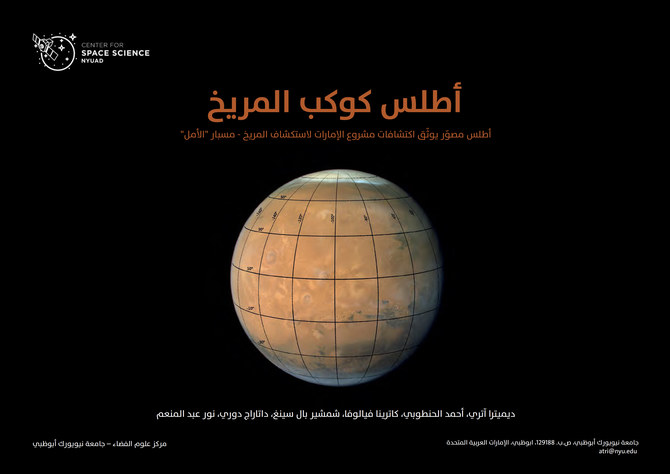
NYU Abu Dhabi research scientist Dr. Dimitra Atri has produced the world’s first ever Mars atlas in Arabic, Emirates News Agency reported.
The atlas uses data from the UAE’s Emirates Mars Mission (EMM) — also known as Hope or Al-Amal — in order to make the findings of the probe more accessible to both the UAE’s Arabic-speaking population and the rest of the world.
The Mars Atlas Project combines various images from the Hope probe to map the planet’s surface.
The end result is a comprehensive view of Mars and stunning images of a planet that once had similar atmospheric conditions to Earth.
Dimitra Atri used data from UAE’s Hope probe to map the red planet.
Atri and his team compiled the atlas by processing observational data from EMM’s Emirates eXploration Imager, one of three instruments onboard the orbiter. The device will also assist the team in showing how the planet changes over the course of one Mars year, which is roughly equivalent to two Earth years.
As more data from the Hope probe becomes available, the atlas will be gradually updated.
The data will help scientists gain a better understanding of the planet’s atmospheric thinning, which has caused it to cool and dry over the last 4 billion years.
Atri predicts that the collected data will be used to answer unsolved scientific questions about the erosion of Mars’ atmosphere.
The findings could help the international scientific community to better understand Earth’s atmospheric processes, he said.
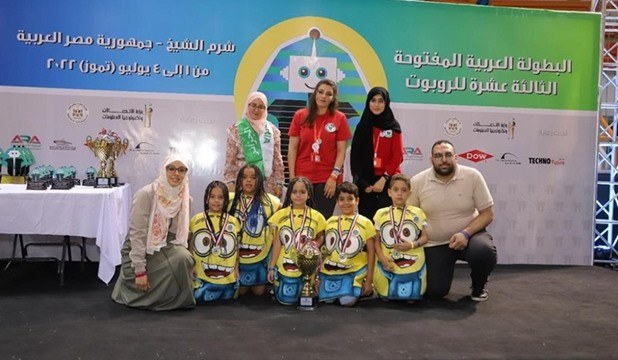
Egypt has finished in first place at the 2022 Arab Open Robotics Championship held in Sharm El Sheikh on Monday.
Since 2008, the Arab Open Robotics Championship has been the largest regional robotics tournament held in the Arab world.
The tournament was organized by the Ministries of Youth and Sports, Communications and Information Technology, Bibliotheca Alexandrina, and the Egyptian Federation of Electronic Games.
The tournament included over 650 students ranging in age from four years to the end of the university stage.
The participants represented 136 teams from 12 Arab countries: Egypt, Kuwait, the UAE, Oman, Yemen, Qatar, Jordan, Tunisia, Morocco, Algeria, Iraq, and Libya.
The Arab Robotics Association accredited 100 juries to judge the tournament’s nine robot competitions.
Egypt came first, winning seven trophies. Jordan finished second with two trophies, followed by Iraq, Libya and Qatar in third place.
In addition, the tournament hosted a lively forum for Arab youth on the sidelines.
source/content: arabnews.com
_________
Egypt placed first in 2022 Arab Open Robotics Championship, winning seven trophies. (Source: Egypt State Information Service)
With more than 20,000 students, the Islamic University of Madinah has become a meeting place for the world’s diverse cultures.
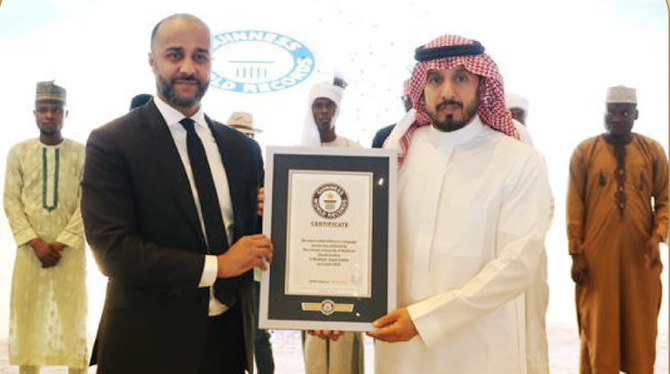
The Islamic University of Madinah has entered the Guinness World Records for the second time for having more than 170 nationalities in its student body.
Talal Omar, the MENA director of the records reference book, handed the framed certificate bearing the new world record to the president of the university, Prince Dr. Mamdouh bin Saud bin Thunayan Al-Saud, in Madinah this week.
Opened by royal decree in 1961, the university first broke the record in 2016, but has overcome its own standard with another expansion in nationalities.
With more than 20,000 students studying in nine faculties, the Islamic university has become a meeting place for the world’s diverse cultures.
The Saudi government offers students from around the world full scholarships that cover the entire cost of education, accommodation and transportation.
Notable alumni include Sheikh Abdul Latif Derian, the grand mufti of Lebanon; Sheikh Khaled Hafiz, former advisor to the Muslim minority in New Zealand; Dr. Abdullah Hakim Quick, Canadian scholar and historian; Prince Saud bin Abdul Rahman bin Nasser, deputy governor of the Northern Borders region; Sheikh Mishary Al-Afasy, famous Qur’an reciter who is a specialist in the 10 readings; and Dr. Mohamed Jallow, a Senegalese Islamic preacher and author.
source/content: arabnews.com (headline edited)
___________
Prince Dr. Mamdouh bin Saud bin Thunayan Al-Saud (right), president of the Islamic University of Madinah, receiving the award from Talal Omar, MENA director of Guinness World Records. (Supplied)
Cairo witnessed the seventh edition of the Cairo International Biennale of the Arabic Calligraphy Art under the auspices of Minister of Culture Ines Abdel-Dayem at the premises of Cairo Opera House.
Under the slogan ‘Pioneers and Renovators in 100 years (1922/2022)’, the biennale included a three-day seminar that ran from 6 to 9 June at El-Hanager Cinema that highlighted the most prominent figures of Arabic Calligraphy in Egypt and the Arab world as well as an art exhibition showcasing artistic gems of this Art from 125 countries represented by 15 artists at the Art Palace in the Cairo Opera House Complex that is running from 7 to 20 June.
Furthermore, the event established a new tradition of honouring artists and researchers for their achievements, and a side competition was held in the name of renowned Egyptian calligrapher Khedr El-Portsaidy — the founder of the Arabic Calligraphy Museum as well as the one who accredits and certifies Arabic calligraphers in Egypt.
In the opening session, Mohamed El-Baghdady — the general commissioner of the biennale — noted that this year marks the centenary jubilee of the establishment of Egypt’s first calligraphy school during the reign of king Fouad in 1922.
The session also included the presentation of a research paper written by Nahla Imam — country representative of Egypt at the 2003 Convention of Safeguarding the Intangible Heritage of UNESCO — who shared her experience in adding Arabic calligraphy knowledge, skills, and practice on UNESCO’s representative list of intangible cultural heritage in December 2021.
Mohamed Hassan Abu El-Khair — the first to innovate the ‘mashq’
The second day of sessions showcased the pioneers and renovators of such enchanting art.
The first paper was presented by researcher and calligrapher Mohamed El-Shafaai on passing down the practice of such art in Egypt, taking the family of Mohamed and Abdel-Aziz Abu El-Khair as an example, as the two are renowned Egyptian calligraphers that this year’s round was dedicated to.
He started off by revealing that the concept of passing down this form of art dates back to the pre-Islamic era, explaining that the initial idea behind Arabic calligraphy was transcription, and then the artistic element came later.
“During the pre-Islamic era, except for a small circle, very little knew how to write Arabic, and according to Abdalla Ibn Abbas, the first person to begin writing in Arabic in the tribe of Qureish was Harb Ibn Umaya — one of the masters of the tribe and the father of Sufian Ibn Harb.
The other key person in calligraphy art was El-Wazir Ibn Noqla, who was famous during the Abbasid Caliphate and inherited the art from his father El-Ali Ibn Hassan, explained El-Shafaai.
Mohamed Hassan Abu El-Khair was born in Cairo in 1921, he studied in Al-Azhar and then joined The School of Improving Calligraphy when he was only 17, where he was the top of his class and was taught by calligraphy masters such as Sheikh Fakhr El-Din, Sheikh Ali Badawi, and Mohamed Hosni El-Baba — the father of iconic Egyptian actress Soad Hosni to name but a few.
He excelled in El-Sulus and Reqaa calligraphy and soon became a professor of the art of calligraphy at Oum El-Qoura University in Mecca for 20 years.
“He was the first to innovate in the mashq (an educational manual technique) of the solos of Arabic calligraphy that are taught to fourth graders, where he started teaching students to write whole sentences from the beginning instead of focusing on letters with no context,” El-Shafaai added.
Abdel-Qader Al-Shihabi — the calligrapher of the Palestinian government
The second paper focused on Abdel-Qader Al-Shihabi — a Palestinian calligrapher — that was written by Farag Hussieny. Al-Shihabi is a renowned Palestinian calligrapher whose fame reached its peak during the first half of the 20th century and was known as the ‘calligrapher of the Palestinian government.’
“Born and raised in Jerusalem, Abdel-Qader Al-Shihabi comes from a long line of calligraphers that started off this art between the 12th and 14th year of the Hijri calendar, however, Al-Shihabi learned calligraphy in Istanbul at the hand of Mohamed Ezzat, the biggest artist. He was known for his suluth calligraphy, which decorates the walls of Al-Aqsa Mosque to date. He also spent all his life teaching calligraphy in Jerusalem and encouraging young artists to follow his passion,” explained Hussieny.
Abdalla Al Zohdi: the calligrapher of Al-Haramein Al-Sharifine
The third paper covered the ‘calligrapher of Al-Haramein Al-Sharifine(The Two Holy Mosques) Abdalla Al-Zohdi and was written by Sami Saleh Abdel-Malak.
“Born in Nablus, Abdalla Al-Zohdi was born around 1251. His family moved to Istanbul, where he studied and excelled in calligraphy at a very early age. His artistic fame made him the official calligrapher of the Prophet’s Mosque in Medina, where his calligraphy adorns the walls and ceilings of the mosque till now,” the paper explained,
“During the reign of khedive Ismail, he was commissioned to write the calligraphy of the Keswa of the Kaaba and Mahmal. His implacable calligraphy was quite visible and stood out in the design of the keswa from that day onwards. He was known by his highly complex and geometric Sulus calligraphy.”