Arabs & Arabian Records Aggregator. Chronicler. Milestones of the 25 Countries of the Arabic Speaking World (official / co-official). AGCC. MENA. Global. Ist's to Top 10's. Records. Read & Enjoy./ www.arabianrecords.org
Category: Inventions, Innovations (wef. Feb 01sy, 2022
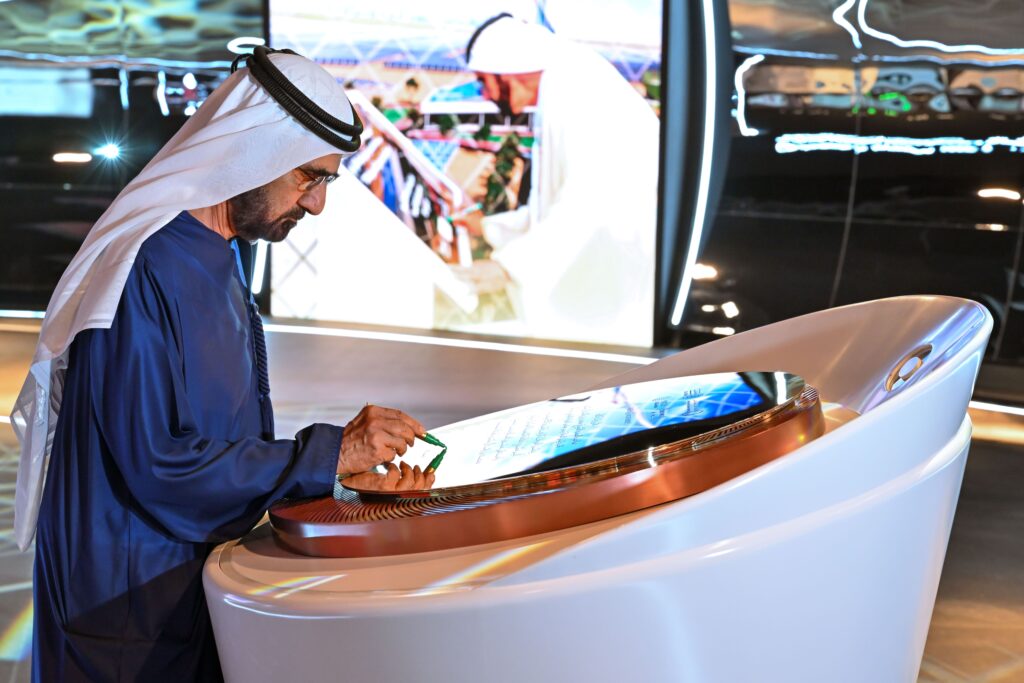
His Highness Sheikh Mohammed bin Rashid Al Maktoum, Vice President, Prime Minister and Ruler of Dubai, has announced Dr. Mohamed El-Erian, President of Queens’ College at Cambridge University, as the winner of the first Great Arab Minds (GAM) award in the economics category, in recognition of his incredible contributions to the field of economics and his perceptive analysis of changes in economic and financial systems.
Announcing this in a tweet on his official X (formerly Twitter) account, Sheikh Mohammed stated that economics has always been the foundation for stability and growth and the catalyst for innovative and developmental efforts that benefit both individuals and communities.
He noted that creativity in the field of economics is a driver of intellectual progress, prosperity and international cooperation, with ambitious economic visions serving as the main pillar in driving development, building the future of nations and boosting fruitful cultural and civilisational exchange.
An economist with an undergraduate degree from Queens’ and a DPhil from Oxford, Mohamed El-Erian previously served as chief executive officer and co-chief investment officer of Pimco, Deputy Director at the International Monetary Fund, Chair of President Obama’s Global Development Council and President of Harvard Management Company.
Throughout his career, Dr. El-Erian has been involved with universities and think tanks around the world, including his roles at the University of Pennsylvania as the Rene M. Kern Professor of Practice at the Wharton School of and Senior Global Fellow at the Lauder Institute.
After years of dedicated learning and professional experience, he emerged as an outstanding consultant providing services to prestigious financial institutions such as Allianz and Gramercy Funds Management. Additionally, he has been an active contributor to several non-profit organizations, including the National Bureau of Economic Research.
Dr. Mohamed El-Erian’s impact on the field of economics extends beyond his corporate and institutional work. His written works and research have yielded a wealth of advice, insights, and economic concepts, establishing them as key references in economics, finance, and business. Among his well-known books are ‘When Markets Collide’ (2008), ‘The Only Game in Town’ (2016), and his latest collaborative work, ‘Permacrisis: A Plan to Fix a Fractured World’ co-authored with esteemed economic experts. Furthermore, Dr. Mohamed El-Erian is recognized as a prominent contributor and editor for Financial Times and Bloomberg.
Owing to his intellectual prowess, he has been named one of the ‘Top 100 Global Thinkers’ for four consecutive years by ‘Foreign Policy’ magazine.
In addition to presenting innovative theories on global economic matters, Dr. El-Erian is widely acknowledged as a leading expert in the realm of global capital markets. He is notably credited with introducing the concept of the “new normal”, a term characterising the state of the global economy post the global financial crisis.
source/content: wam.ae (headline edited)
____________
Mohamed A. el Erian, Managing Director, Co-Chief Information, Officer, Pacific IINvestment Management Company, USA, at the Summit on the Global Agenda, 07 November – 09 November 2008. Copyright World Economic Forum (www.weforum.org)/Photo by Norbert Schiller / wikipedia.com
NEOM’s water and electricity subsidiary ENOWA has developed a blueprint for the world’s first renewable, high-voltage smart grid, Peter Terium, the company’s CEO, told Arab News.
In an interview on the sidelines of the 2023 UN Climate Change Conference, Terium said that the “grid of microgrids” will allow ENOWA to supply the NEOM region with sizable, 100 percent renewable electricity that simultaneously provides a 50 percent reduction of the corridor footprint.
According to the CEO, the principle of smart grids is simple, as they are traditionally used on a small scale in buildings. However, the sheer size of the development and the scope of coverage needed for the nine to 10 million individuals who will be residing in NEOM adds to the difficulty of the undertaking.
“That’s a huge achievement given it’s the size that makes it complex. You know, one windmill, a refrigerator, and a television are all 100 percent renewable. But a NEOM within the Kingdom that eventually is going to have nine to 10 million inhabitants. That’s very sizable,” Terium said.
In order to ensure minimum disturbance to the natural terrain and minimize visual disruption, the CEO noted that this would require limiting the number of corridors and implementing part of the grid to operate underground.
To achieve 100 percent renewable electricity in NEOM, Terium emphasized the crucial role of an efficient grid, highlighting that individuals often underestimate that all solar and wind farms require connectivity to “bring the electrons to the customer.”
Another key element, the CEO underscored, is storage. In order to ensure the stabilization, backup, and security of its renewable supply, the giga-project is implementing a portfolio of storage solutions.
The development is investing “billions and billions of Saudi riyals” to ensure that its first customers have access to green electricity, sustainable water, and reliable quality electricity through its grid and storage.
“One example is already for sure and we are expanding into the market with that, which is the world’s largest closed-loop pump, hydro storage, and it combines the traditional form of water-based hydro storage, so a small upper lake and a lower lake,” Terium said.
“That has two effects. First of all, it reduces the evaporation of the water. So that’s an economic effect. But the second effect is that it is a great attractor for birds. Birds and wildlife. So we have a major positive solution for storage that is pretty sizable, the largest in the world,” he added.
Considering the challenges ahead, the CEO highlighted that the development isn’t exclusively centered on creating new technologies. Instead, their key focus is to ensure that the electricity supplied to the NEOM region is renewable, dependable, and affordable.
While not entirely cheap, mature large-scale solar and wind technologies remain affordable, underscored Terium, and will thus be primarily implemented into the framework of connectivity used by the futuristic city.
“The NEOM region has a combination of very intensive solar irradiation and very abundant wind profiling — the solar during the day and the wind mainly in the evening. That makes it a perfect combination to take these two cheapest renewable technologies and get as much as possible out of them,” he outlined.
While the existing infrastructure for electricity amounted to half a gigawatt to 1 GW, the company has “ramped that up” to 3 GW with the aim of 5-6 GW in the near future.
According to Terium, the first tenders of solar and wind power plants have already been established, and the large green hydrogen plant being built will amount to 5-6 GW of installed capacity for power generation by the year 2026.
Due to the size of the NEOM development, the executive underscored that ENOWA is currently at about 5 percent completion of its infrastructure, with the goal of accelerating to 10 percent in the coming 12 to 18 months.
He said: “NEOM is going to be a large undertaking. And what we do is build the infrastructure in line with the growth of NEOM. So that’s why the percentage of 5 or 10 percent sounds low, but it is connected to the size, eventually, of NEOM. And then again, five or 10 eventually of a massive undertaking is already a huge project.”
The company is working with the Kingdom’s Ministry of Energy and collaborating with entities like the King Abdullah University of Science and Technology in its energy-centric ventures. Alongside KAUST, ENOWA will be installing the first carbon capture capacity into a gas-fired plant in the Kingdom. The executive said: “That is one example, but there are many other ones and all the institutions that are there in the Kingdom we work with, but also outside of the Kingdom.”
Through collaboration, it hopes to bring some of its ideas on how to scale renewable energy to the region through its renewable energy approaches and Saudi Arabia’s green hydrogen strategy, a part of which is the NEOM green hydrogen plant.
Terium said: “The Kingdom has now embarked upon a hydrogen strategy and a renewable energy strategy, but it may take advantage of some of the lessons learned that we had in the early stage. And we can bring in some of our ideas of how you can do that bigger and at a larger scale.”
What is important, according to the CEO, is that hydrogen needs to reach its customers, and there are more cost-effective solutions than shipping it in the form of ammonia.
Thus the decision to build a pipeline corridor infrastructure to Europe is something “that only a country like Saudi Arabia can do because that’s a job and a size which is even way too big for even NEOM.”
His Highness Sheikh Mohammed bin Rashid Al Maktoum, Vice President and Prime Minister of the UAE and Ruler of Dubai, has inaugurated the largest concentrated solar power (CSP) project in the world, within the fourth phase of the Mohammed bin Rashid Al Maktoum Solar Park in Dubai.
The 950-megawatt (MW) fourth phase is the largest investment project that uses three hybrid technologies: 600MW from a parabolic basin complex, 100MW from the CSP tower, and 250MW from photovoltaic solar panels. Built at an investment of AED15.78 billion, using the independent power producer (IPP) model, the project features the tallest solar tower in the world, at 263.126 metres, and the largest thermal energy storage capacity with a capacity of 5,907 megawatt hours (MWh), according to the Guinness World Records.
His Highness Sheikh Mohammed bin Rashid Al Maktoum, Vice President and Prime Minister of the UAE and Ruler of Dubai said, “The UAE has a clear vision to transform itself into one of the world’s most sustainable nations. Our journey towards sustainability is comprehensive, encompassing advanced clean energy projects across diverse renewable sources, and innovative solutions integrated into various spheres of the economy and society. The Mohammed bin Rashid Al Maktoum Solar Park is at the heart of Dubai and the UAE’s commitment to create a world-class infrastructure for sustainability and a robust foundation for building an environmentally friendly future. Coming at the culmination of the UAE’s Year of Sustainability, the launch of the fourth phase of the Solar Park is an important milestone in our sustainability journey. Our success in creating the world’s largest concentrated solar project underscores our determination to advance climate action and aligns with the goals of the UN Climate Change Conference (COP28), which the UAE is currently hosting. Driven by the objectives of the UAE’s Net Zero by 2050 Strategy, we continue to expand our sustainable energy mix and embrace renewable and alternative energies, shaping not only our nation’s future but also contributing significantly to the global effort to combat climate change. Our dedication to sustainability is a testament to our resolve to contribute to fostering a resilient and prosperous future for all of humanity.”
H.H. Sheikh Mohammed bin Rashid Al Maktoum was accompanied by H.H. Sheikh Maktoum bin Mohammed bin Rashid Al Maktoum, First Deputy Ruler of Dubai, Deputy Prime Minister and Minister of Finance; H.H. Sheikh Ahmed bin Saeed Al Maktoum, Chairman of the Dubai Supreme Council of Energy; H.H. Sheikh Mansoor bin Mohammed bin Rashid Al Maktoum, Chairman of the Dubai Ports and Borders Security Council and a number of ministers, director generals of Dubai government departments and senior officials.
Sheikh Mohammed bin Rashid Al Maktoum was welcomed by Saeed Mohammed Al Tayer, MD and CEO of Dubai Electricity and Water Authority (DEWA).
Sheikh Mohammed bin Rashid Al Maktoum was briefed about the project by Saeed Mohammed Al Tayer, MD and CEO of Dubai Electricity and Water Authority (DEWA). The fourth phase of the Mohammed bin Rashid Al Maktoum Solar Park, which covers an area of 44 square kilometres, uses three hybrid technologies: 600MW from a parabolic basin complex, 100MW from the CSP tower, and 250MW from photovoltaic solar panels. The project features 70,000 heliostats that track the sun’s movement. The Molten Salt Receiver (MSR) on top of the solar power tower is the core and the most important part of the CSP plant. It receives solar radiation and turns it into thermal energy. The MSR contains over 1,000 thin tubes that enable the absorption of sun rays and their transfer to the molten salt within these tubes. This project will provide approximately 320,000 residences with clean and sustainable energy. It will reduce carbon emissions by about 1.6 million tonnes annually, enhancing Dubai’s position as a leading global hub in clean, renewable energy and climate action.
Saeed Mohammed Al Tayer said, “President His Highness Sheikh Mohamed bin Zayed Al Nahyan has emphasised that the UAE’s commitment to protecting the environment and supporting global action to achieve sustainability is firm, continuous, and effective for the benefit of its people and the service of humanity. Furthermore, His Highness Sheikh Mohammed bin Rashid Al Maktoum, Vice President and Prime Minister of the UAE and Ruler of Dubai, has constantly reiterated the UAE’s determination to be at the forefront of global efforts to create a more sustainable future for all of humanity by taking concrete action to transition to renewable energies. At the Dubai Electricity and Water Authority, we follow the vision and directives of the leadership to increase the share of clean and renewable energy sources to achieve the goals of the UAE Net Zero by 2050 Strategic Initiative and the Dubai Net Zero Carbon Emissions Strategy 2050. We have already achieved the interim goals of this strategy in record time.”
Al Tayer explained in his speech at the inauguration that the fourth phase of the Mohammed bin Rashid Al Maktoum Solar Park was based on the directives of H.H. Sheikh Mohammed bin Rashid Al Maktoum to implement this project to be a global landmark that sets higher standards of excellence than similar projects worldwide. He emphasised that this project would not have been possible without His Highness’s support to implement the project according to world-leading benchmarks of efficiency and performance. The project features the tallest CSP tower and the largest single-site thermal energy storage in the world, as well as the lowest cost to produce renewable energy round the clock.
“The vision and directives of His Highness Sheikh Mohammed bin Rashid Al Maktoum to enhance the share of clean and renewable energy, have contributed to making Dubai a global hub for the green economy and a global role model in the sustainable transition to clean energy. This has been achieved through pioneering strategies and projects driven by advanced research and development, Fourth Industrial Revolution technologies, digital transformation, and the latest renewable and clean energy technologies. Through the IPP model, DEWA has achieved the lowest global prices, making Dubai a benchmark for solar energy project prices worldwide,” said Al Tayer.
“The Mohammed bin Rashid Al Maktoum Solar Park supports the efforts of the UAE, which has one of the world’s largest investments in clean energy projects, and is currently hosting the UN Climate Change conference, COP28, in Expo City Dubai. This underlines the UAE’s firm commitment to sustainable development and protecting the environment and natural resources for us and for generations to come. The solar park whose current capacity has reached 2,627MW, is the cornerstone to achieve the Dubai Clean Energy Strategy 2050 and the Dubai Net Zero Carbon Emissions Strategy 2050 to provide 100 percent of the energy production capacity from clean energy sources by 2050,” added Al Tayer.
Al Tayer commended the efforts of DEWA’s partners in implementing this pioneering project according to the highest international standards and using the most advanced technologies. A consortium led by DEWA and Saudi Arabi’s ACWA Power established Noor Energy 1 as a project company to design, build, and operate the fourth phase of the Mohammed bin Rashid Al Maktoum Solar Park. DEWA holds a 51 percent stake in the company, ACWA Power holds 25 percent, and the Chinese Silk Road Fund owns 24 percent
“Guided by the leadership and vision of His Highness Sheikh Mohammed bin Rashid Al Maktoum, Dubai is paving the way for a sustainable future. It is transforming into a global centre for green economy by continuing its efforts to achieve the goals of the Dubai Clean Energy Strategy 2050. Inaugurating the world’s largest single-site CSP plant during COP28 demonstrates our commitment to our strategy to increase the use of clean and renewable energy sources. The project is also a significant milestone in DEWA’s success, and we are proud to be a part of it. This is part of our long-term partnership that we began in the Mohammed bin Rashid Al Maktoum Solar Park, leading to the opening of the fourth phase we are witnessing today in Noor Energy 1 project,” said Mohammad Abunayyan, Chairman of ACWA Power.
“We are proud of our contribution to achieving the ambitious vision of the leadership in cooperation with our partners in DEWA. Our key role, through the qualitative projects that we operate and manage in UAE, confirms the extent of the efforts, expertise and financial capabilities of our partners in DEWA and the Silk Road Fund. Together, we have been able to set new standards for CSP generation using the latest technological innovations in this project, such as the solar tower technology and parabolic panels that use CSP to produce energy 24 hours a day. Additionally, the plant’s capacity is enhanced with photovoltaic solar panels to produce 950 megawatts. This is the only single-site project in the world that includes all these technologies. It also features the largest solar energy storage capacity in the world,” added Abunayyan.
“Through collaboration and innovation, we pave the way for sustainable energy solutions that push boundaries and drive progress. As we celebrate the opening of Noor Energy 1, we affirm our commitment to a brighter and cleaner future for future generations,” said Zhu Jun, Chairwoman of Silk Road Fund.
“We are honoured to be part of this huge cooperation between DEWA and ACWA Power. Together, we are setting a new standard for innovation and sustainability. This achievement is a milestone in the development of sustainable energy in the region and confirms the commitment to promoting energy solutions. The successful completion of this project is a testament to the dedication and expertise of all partners and sets a commendable precedent for future renewable energy initiatives,” added Zhu Jun.
Three combined technologies
The fourth phase of the Solar Park uses three hybrid technologies to produce clean energy: 600MW from a parabolic basin complex (three units of 200MW each), 100MW from the world’s tallest solar power tower (based on Molten Salt technology), and 250MW from photovoltaic solar panels. The Molten Salt Receiver (MSR) on top of the solar power tower is the core and most important part of the CSP plant. It receives solar radiation and turns it into thermal energy. The MSR contains over 1,000 thin tubes that enable the absorption of sun rays and their transfer to the molten salt within these tubes.
The ship is the first of its kind to be built entirely by the Alexandria Shipyard in Egypt.
Egypt’s Alexandria shipyard made history, as it launched the fourth and final MEKO A200 frigate, named ‘Sajm Al-Jabbar’ for the Egyptian Navy. This frigate holds significant importance as it is not only the largest locally produced combat vessel but also the first of its kind to be constructed in Egypt under the Thyssenkrupp Marine Systems (TKMS) license.
The ship was unveiled in a ceremony held during the EDEX 2023 defense exhibition at Egypt International Exhibition Center in Cairo, with President Abdel Fattah El Sisi in attendance as the chief guest alongside other high-ranking officials.
Egypt had placed an order for four identical frigates, with the first three units being built in Germany, while the final ship was constructed at the Alexandria shipyard in Egypt. The construction contract was signed back in September 2018.
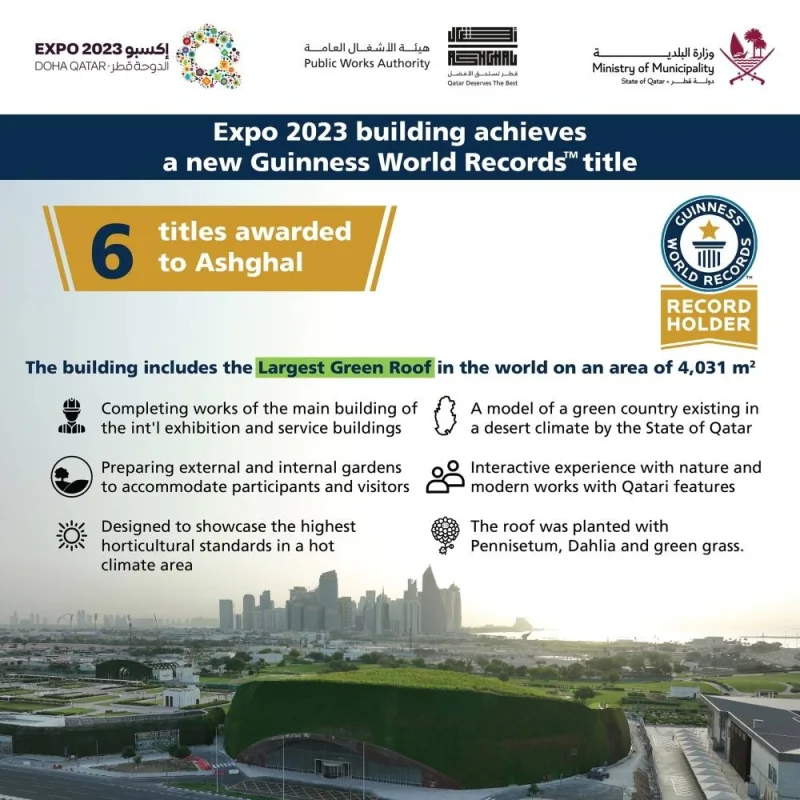
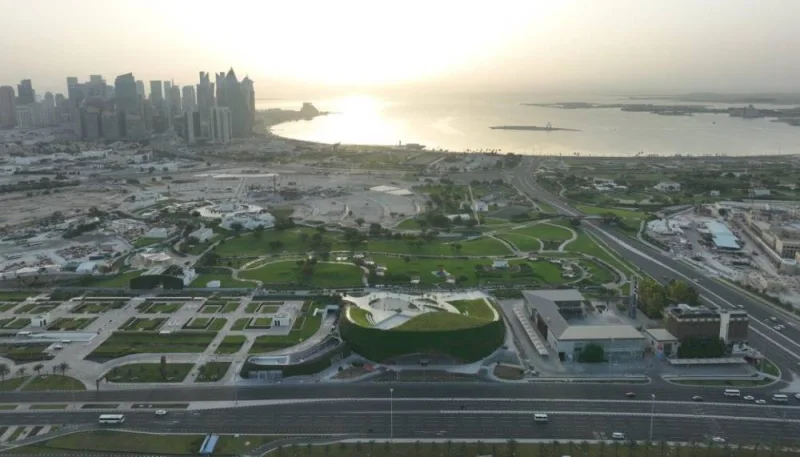
The main building of Expo 2023 Doha, built on an area of 4,031 sqm by the Public Works Authority (Ashghal), has won the Guinness World Records title for “The Largest Green Roof” in the world.
This is a new achievement for the Public Works Authority , which has also executed various projects for major international events in the country including the FIFA World Cup Qatar 2022 and the Formula 1 Qatar Grand Prix.
The new achievement is the 6th title to be added to the world records won by Ashghal which has previously got 5 Guinness World Records titles, a statement said. Among the achievements are the world’s largest electric bus depot in Lusail, the implementation of the longest air-conditioned outdoor path in Umm Al Seneem park, the longest continuous cycling path (Olympic cycling track), the longest piece of asphalt/bituminous concrete laid continuously along Al Khor road, and the most nationalities planting trees simultaneously.
Mohammed al-Khouri, Secretary General of the International Horticultural Expo 2023, expressed his delight with the main building of Expo 2023 receiving a world title. This major achievement came just before the start of the International Horticultural Expo 2023, adding momentum to this global event.
Eng. Jaralla Mohamed al-Marri, Building Projects Department Manager said Ashghal always strives to reach the global level through its outstanding projects. He noted that the remarkable Guinness World Record for the main building of Expo 2023 is a new global recognition for ‘Ashghal’ projects.
It’s worth mentioning, the Public Works Authority ‘Ashghal’ has completed the construction of the main building of the international exhibition, service buildings, and prepared the external and internal gardens of the exhibition to accommodate participants and visitors of one of the major horticultural exhibitions in the Middle East.
The building was designed to showcase the highest horticultural standards in a hot climate area, presenting a model of a green country existing in a desert climate like the State of Qatar.
This project was designed to provide the visitor with an interactive experience with nature and modern urban construction with elements of Qatari characteristics. The roof of the main building was planted with Pennisetum, Dahlia and green grass.
Dr Mohamed Ramy El Maarry hopes his example will lead next generation of Arab scientists into planetary studies.
A professor at Khalifa University of Science and Technology has had an asteroid named after him in recognition of his achievements in astronomy.
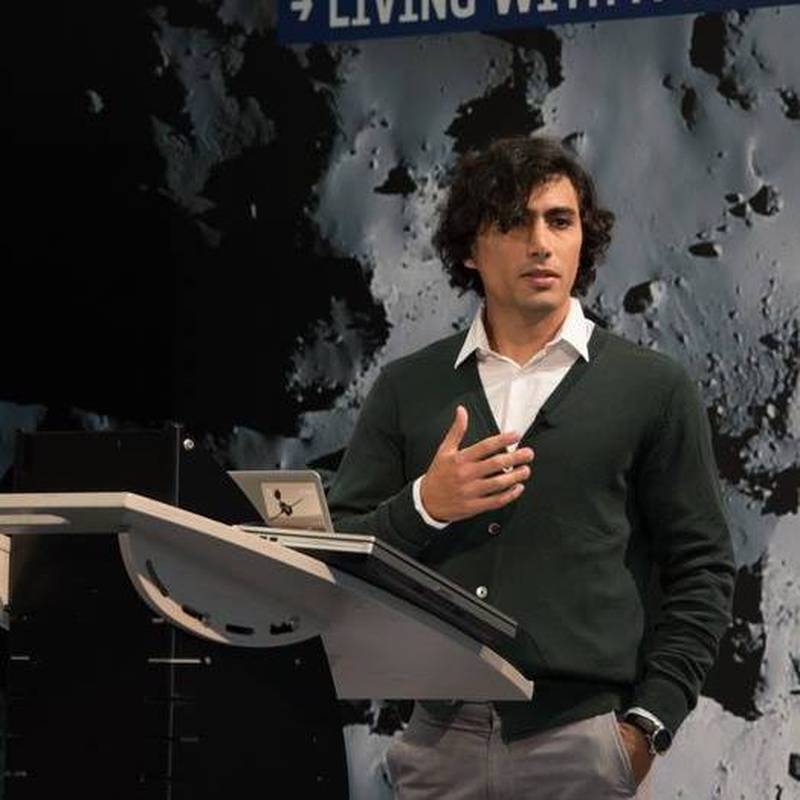
Dr Mohamed Ramy El Maarry, an Egyptian associate professor of planetary science and director of the Space and Planetary Science Centre at Khalifa University of Science and Technology, received the accolade from the International Astronomical Union.
Asteroid 2002 CZ will now be known as (357148) El Maarry, in recognition of his contribution to the study of comets and planetary science.
“I feel humbled and privileged to get such an honour. In a sense, I look at it as a lifetime achievement award, something that’s going to remain as a legacy,” he said.
“I look at it as a form of extra motivation to do more work to impart the love of science and exploration to the next generation.
“I hope this award can be an inspiration to the next generation of Arab scientists.”
Dr El Maarry’s work in the field of cometary geology is what led to his nomination.
“These sorts of nominations and awards highlight the fact that there are Arabs and people outside of the US and Europe who do significant work in planetary science and they are acknowledged by the international community overall,” said Dr El Maarry.
“I hope it will give them [his students] that extra motivation to remove the stigma that this is the sort of science that is only done by Nasa and people in the West.
“We already know that the UAE is making leaps and bounds in their long-term plans, particularly with regards to space and exploration.”
Belting up for next mission
Dr El Maarry will also be representing Khalifa University as part of the UAE’s recently announced mission to explore the asteroid belt between Mars and Jupiter.
He said the mission was aiming to uncover more details about icy asteroids, which could lead to important clues about the formation of the solar system.
The mission would look to explore seven bodies in the asteroid belt, some of them unexplored, to try to better understand more about icy asteroids which could give important clues on how the solar system formed, he added.
“Our Earth Sciences department offers the only bachelor’s degree in Earth and planetary science in the region,” said Dr El Maarry.
“Our ambition is to prepare the next generation of Emiratis to take part in the upcoming UAE space missions, especially the UAE mission to the asteroid belt, which is due to launch in 2028.”
The mission will involve a five-billion-kilometre journey to perform fly-bys of six asteroids and then send a lander that will touch down on the seventh.
“The naming of the asteroid by the International Astronomical Union after our faculty marks a significant milestone for Khalifa University and the UAE,” said Dr Arif Al Hammadi, executive vice president of the university.
“The recognition also emphasises the globally relevant research that our world-class faculty takes up at Space and Planetary Science Centre in scientific exploration.”
Dr El Maarry’s research covers planetary surfaces and the physical processes that affect them, by using data analysis of remote sensing data, modelling, lab work and comparative planetology mainly through fieldwork.
He has played key roles in numerous international space missions over the past 16 years. His body of work includes Nasa’s New Horizons mission exploring Kuiper Belt Objects at the edge of our solar system, the emirates’ lunar missions , the upcoming ESA ExoMars Rover, Comet Interceptor, the planetary defence mission Hera, and the UAE’s mission to the asteroid belt.
His asteroid can be viewed in the Nasa Small Bodies Database. It is located in the inner asteroid belt, more than 300 million kilometres from the Sun. It orbits the Sun approximately once every three-and-a-half years, and should get closest to the Sun on August 11, 2024.
What is now the (357148) El Maarry asteroid was discovered in February 2002, through the efforts of a joint venture between the Department of Astronomy and Astronomical Observatory of Padova University and the German Aerospace Centre, Berlin.
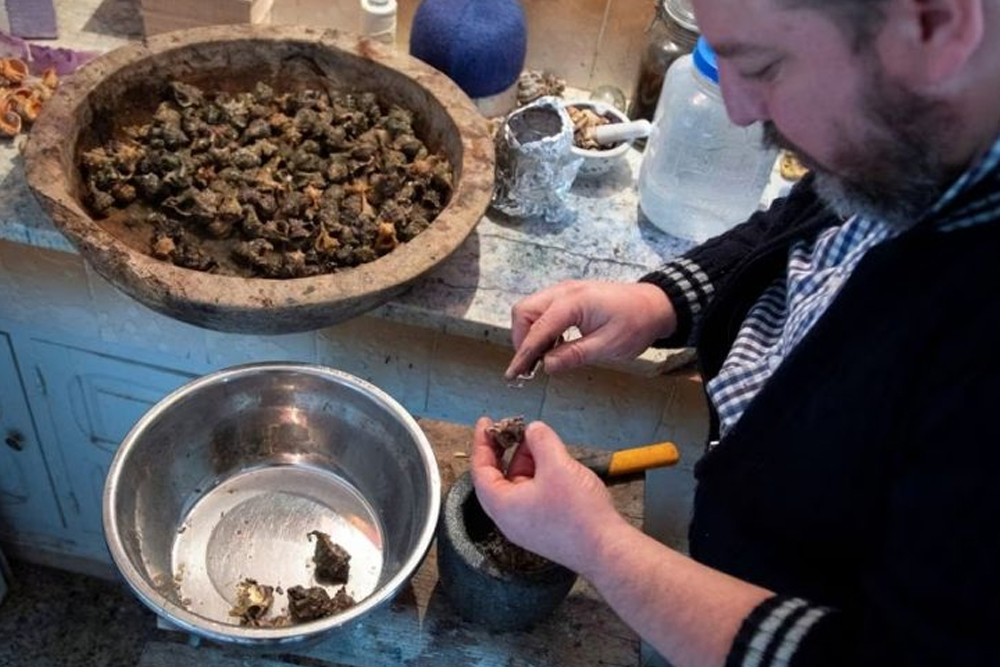
Mohamed Ghassen Nouira, a history-obsessed Tunisian, revives in his garden an antiquated craft that was once considered a sign of riches in the ancient world: making purple dye from sea snail shells.
A while back, while taking a leisurely walk along the beach in Carthage, a suburb of Tunis in northern Tunisia, Nouira stumbled upon a murex shell. This discovery evoked memories of his history classes and sparked a desire to recreate the ancient dye.
The historical importance of Tyrian purple cannot be overstated. This color, also known as Tyrian purple, was highly coveted in ancient times and reserved exclusively for the aristocracy. The Phoenicians, who originated in what is now Lebanon, had a thriving trade in Tyrian purple, which was essential to the development of their trading empire. They did this by establishing colonies all across the Mediterranean, notably Carthage, which later became an autonomous empire and ruled the western Mediterranean for centuries.
Today, Carthage exists as a suburb of Tunis, where the ancient Punic civilization’s remains may still be seen along the city’s hillsides, and the ancient Punic harbor still has its original shape after a thousand years.
Murex shells from that time, when Carthage and its trade routes changed the Mediterranean region, are scattered over its shores. The method for obtaining Tyrian purple from murex shells was lost throughout the years, but Nouira set out on a mission to revive the lost art.
Nouira dedicated 14 years of his life to unraveling the production process of Tyrian purple. At first faced with doubt and criticism for his unconventional hobby, he remained steadfast in his pursuit. His detractors eventually turned into admirers when observable results started to surface, giving him encouragement that strengthened his resolve.
He buys murex fillets from a nearby fisherman, removes the glands, grinds the shells, then ferments and cooks them. He follows meticulous procedures and succeeds in creating a little amount of purple powder. The magnitude of the operation is enormous—54 kilograms of murex shells are needed to produce only one gram of Tyrian purple. Production of dye is economically feasible given the volume needed. But the purple powder he painstakingly creates now sells for a hefty price of around $2,500 per gram. Its allure stems from both its rarity and authenticity, which connects the present with a time of wealth and grandeur.
The 87-year-old was recently appointed honorary chancellor of the British University in Egypt and his foundation will soon open heart centres in Cairo and Kigali, Rwanda.
Renowned Egyptian-British heart surgeon Sir Magdi Yacoub, 87, made his mark a long time ago.
In 1980, he established what was to become one of the world’s largest and most successful heart transplant units, at Harefield Hospital in west London; in 1983, he performed the UK’s first combined heart and lung transplant; in 1992, he was knighted; and in 2014, he was awarded the Order of Merit by Queen Elizabeth II.
But that is just the shortlist and most recently he became honorary chancellor of the British University in Egypt (BUE).
As a professor of cardiothoracic surgery at Imperial College London for 20 years, Prof Yacoub was also lecturing, researching, publishing and mentoring.
He has founded several charities, starting with Chain of Hope in 1995, which treats children in developing countries who have life-threatening heart conditions. The Magdi Yacoub Heart Foundation’s Aswan centre has earned him an affectionate nickname, Egypt’s King of Hearts.
“Now … I’m like a butterfly, who flies in between all of these things”, Prof Yacoub tells The National.
“I almost work harder, although obviously, my energy is not the same. I used to not sleep for two or three nights and read all the journals and come back in the morning. But I still sleep four hours or so and wake up in the night,” he says.
He says he still wants to address healthcare inequality, chase a cure for heart failure and pass on the baton to the next generation in every way he can.
The BUE is a private institution that was formally inaugurated in 2006 by King Charles, who was Prince of Wales at the time, and Egypt’s former first lady, Suzanne Mubarak.
“I was there at its birth,” says Prof Yacoub, who is also a member of the university’s board of trustees. “I accepted [the role] because I identify with what they’re doing for young people, for the country, for the world … but also university life and its values are very important to me.”
The enthusiasm with which Prof Yacoub mentors young people stems from an appreciation of the influence of his own mentors, starting with his surgeon father, Habib Yacoub.
Prof Yacoub was born in 1935 in Bilbeis, a town in the Nile Delta about 60km north-east of Cairo, to a Coptic Christian family. He spent his childhood moving around Egypt due to his father’s profession.
Both his father and the death of his aunt from uncorrected mitral stenosis (a narrowing of the heart valve) inspired him to study medicine and cardiology.
After graduating in medicine from Cairo University in 1957, in the early 1960s he moved to the UK for further training.
He worked under the late British chest and heart surgeon Lord Russell Brock, one of the pioneers of modern open-heart surgery.
“I knew of him before I ever came to the UK and I targeted him as a young boy,” Prof Yacoub says. “I learnt so much from him on how to think, how to be a better cardiologist than anybody, how to make decisions for yourself.”
Prof Yacoub’s early work includes repairing heart valves with the late South African-born British cardiothoracic surgeon Donald Ross. He adapted the Ross Procedure, where the diseased aortic valve is replaced with the person’s own pulmonary valve.
A job rejection from the Royal Brompton Hospital prompted him to move to the US in 1968, where he became an assistant professor at the University of Chicago for a year. He was “extremely disappointed and upset” at the time, but “in the long run, it was the best thing that happened to me”, Prof Yacoub says.
“Although I was bent on having the job at the Royal Brompton, which was a huge hospital, it was actually so much better for me to come back to a peripheral hospital because I was allowed to do what I wanted and I was more creative,” he says.
He became a consultant cardiothoracic surgeon at Harefield Hospital in Uxbridge in 1969 and immediately shook up the place.
“When I was appointed as the only heart surgeon there and they were doing one case every week, sometimes one open-heart every two weeks, I said, ‘no, no, we’re going to do nine to 13 every week’,” Prof Yacoub says. “They said, ‘you’re not serious.’ I said ‘I am serious’.”
He went on to become the founder and director at Harefield’s Heart Science Centre, and was also a consultant cardiothoracic surgeon at Royal Brompton from 1986 until his retirement from National Health Services practice in 2001 at the age of 65.
Over the course of his career, Prof Yacoub has performed more than 40,000 open heart surgeries and conducted more than 2,000 heart transplants.
From 1986 to 2006, he held the position of British Heart Foundation professor of cardiothoracic surgery at Imperial College, where he supervised more than 20 higher-degree students.
He credits other mentors along his journey as well, such as the late Sir Peter Medawar, the half-British, half-Lebanese, Brazilian-born immunologist who won the Nobel Prize in 1960.
“He is regarded as the father of transplantation and he has saved so many people around the world,” Prof Yacoub says. “I was very lucky to meet him in Chicago first when I was there and then when he came back to the UK at Oxford.”
The next two centres on the horizon are the Magdi Yacoub Global Heart Centre in Cairo, which is scheduled to be completed in 2024, and the Rwanda Heart Care and Research Foundation in Kigali.
Funded by Dubai-based charity foundation Mohammed bin Rashid Global Initiatives, the 22,000-square-metre, 300-bed Cairo centre will be the largest specialised facility for cardiovascular treatment and research in the Mena region.
Once completed, it will conduct 12,000 heart surgeries a year, of which 60 per cent will target children.
All of Prof Yacoub’s centres focus on three pillars of medical care, research and training: to serve, learn and teach.
“I’m very proud to see that [the new generation is] surging ahead and carrying the message, which I care about most, which is serving humanity, serving science, in the best way and advancing medicine,” he says.
There is one thing, however, that has so far eluded Prof Yacoub: finding a cure for heart failure.
“There are now tools, which are just becoming available to reverse heart failure at the genetic level, biochemical level and metabolic level,” he says. “So we do have tools, but are we going to achieve it within my lifetime? I don’t think so. But we have to keep trying.”
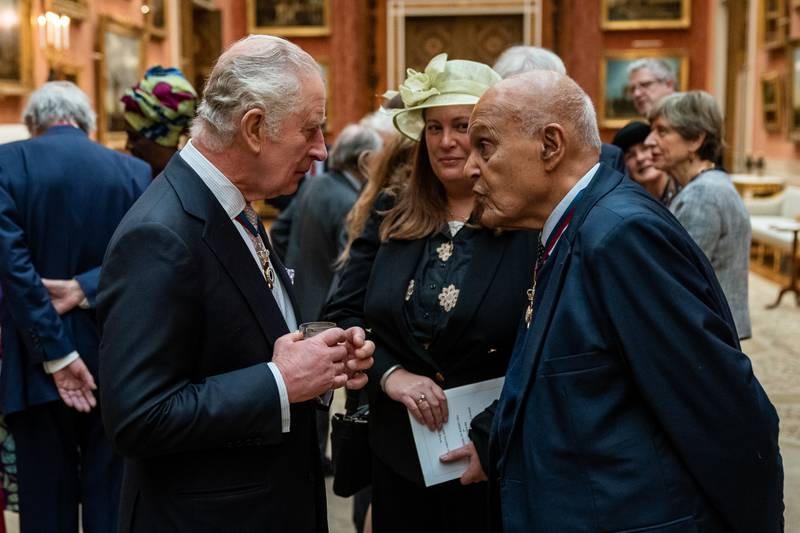
LONDON, UNITED KINGDOM – NOVEMBER 24: King Charles III talks with Professor Magdi Yacoub during a luncheon for Members of the Order of Merit at Buckingham Palace on November 24, 2022 in London, England. (Photo by Aaron Chown – WPA Pool / Getty Images)
The ITU-Arab Regional Cybersecurity Centre (ITU-ARCC), headquartered in Oman, created five Guinness World Records with events of the 11th Regional Cybersecurity Week from October 9 to 12 in Abu Dhabi.
These records are for the most expansive cybersecurity attack simulation model, featuring over 50 experts; the largest cybersecurity attack simulation contest, drawing participation from 11 global organisations; a cybersecurity competition with representation from over 30 countries, setting a record for participant diversity; the largest city-based threat simulation in cybersecurity; and the largest number of nationalities participating in a lecture to spread awareness on cybersecurity, with attendance of over 500 people.
Coinciding with Regional Cybersecurity Week, the 11th Regional Cybersecurity Conference was inaugurated on Wednesday. Themed ‘Innovation in Cybersecurity’, this flagship event is an ITU-ARCC brainchild, hosted by the UAE and backed by its Cybersecurity Council. The conference boasted an impressive line-up of international speakers and participants, representing both regional and global organisations.
The conference will spotlight pioneering strategies and innovations in cybersecurity, both in the Arab world and globally.
According to Badr bin Ali al Salhi, Chairman of ARCC and Director General of National Centre for Information Safety, the cybersecurity market could grow to a staggering US$657bn by 2030 from its valuation of US$247bn in 2023.
He projected robust growth of cybersecurity within sectoral markets, anticipating an 18% surge in health and a 29% uptick in industry by 2026. Further, with Fourth Industrial Revolution technologies gaining momentum, the field of cybersecurity is poised for exponential expansion, especially in artificial intelligence – from a valuation of US$8.6bn in 2019 to a projected US$102bn by 2030.
The United Arab Emirates, established in 1971, is one of the youngest countries in the world, and when you get there, pretty much everything you see around you is new. It is also one of the wealthiest, most neutral, and most inclusive countries in the world, trying to attract top talent and technology companies in the most promising areas of human development, such as AI, digital health, and sustainable energy. Today, it is a melting pot bringing people from all over the world.
In 2013, out of the 9.2 million inhabitants, only 1.4 million were Emirati citizens. Since the local population is so small, dates back many centuries, and is organized as the electoral monarchy, where bloodlines play a very important role, the country introduced mandatory premarital genetic testing for all Emiratis to reduce the incidence of severe genetic diseases. Leading the program is Her Excellency Dr, Maryam Matar, who I happened to meet during Arab Health week in February 2022. I attended her talk organized by the Dubai-based P4ML, led by the proud Irishman Patrick Moloney. When Dr. Matar took the stage, she started her talk with an introduction to the achievements of UAE Genetic Diseases Association and potential negative impact of rare diseases in the UAE. She explained the significant initiatives introduced by the government to reduce the prevalence of common genetic disorders such as mandatory premarital screening.
Then, serendipitously, she shifted gears and started talking about the most important cause in biomedicine – human longevity. She opened with the introduction of the biomarkers of aging dubbed the aging clocks, presented the recent works by David Sinclair and Nir Barzilai, and concluded with her own research in this area with a focus on role of sleep hygiene and the microbiome. Since I founded the largest volunteer-run educational program in longevity medicine, I thought that I knew pretty much every major practitioner in the field. But Dr. Matar made it clear that the research her group is conducting is published mostly in journals geared toward the Arab nations and building the local ecosystem in the Middle East and North Africa (MENA) region.
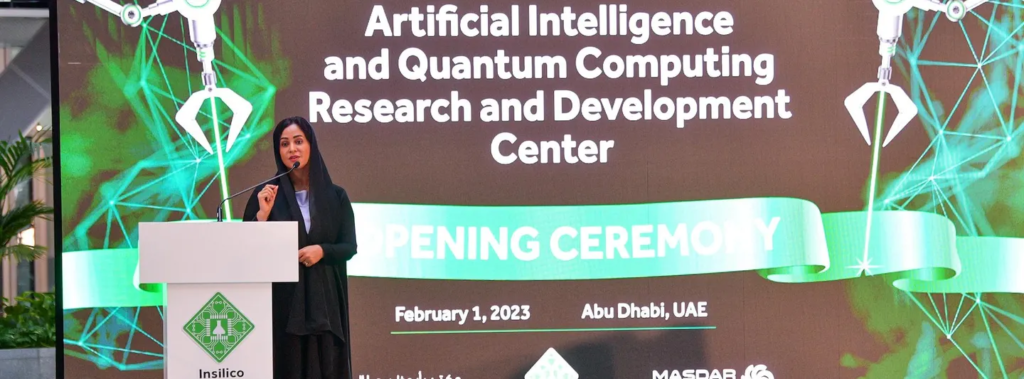
The next day, Dr. Matar agreed to give a talk at the opening ceremony of the first AI and quantum computing research center in Abu Dhabi. Again, she focused on the biomarkers of aging, sleep hygiene and the microbiomes, and the epigenetic reprogramming tools available for the community. Most importantly, she explained in simple terms what the future of longevity medicine is and why it is important. After the event, I took the liberty and asked her a few questions. And we sat down for a conversation.
Dr. Maryam Mohamed Fatma Matar, MD, PhD, is an Emirati geneticist, medical researcher, and runs a TV program “With Dr.Maryam” on the National channel of United Arab Emirates (UAE). A physician by qualification, she obtained her medical degree in Dubai, she pursued a Ph.D. degree. After the completion of her degrees in medicine and in business, she was shortlisted and recruited by the Government of the UAE to lead Dubai community development strategy 2006-2016. While working for the government, Dr. Matar became the first Emirati woman to hold the position of Senior Undersecretary of the of Public health and Primary health care at Ministry of Health in 2008 and than she was promoted to be the first Emirati woman to hold the position of Director General in the Dubai government at the Community Development Authority in 2008.
In 2004 she founded the UAE Genetic Diseases Association. She also founded the Sheikh Zayed Genetic Research Center and became a committee member of the Global Commission to End the Diagnostic Odyssey for Children with a Rare Disease. In last two decades, she has founded more than 14 nonprofit associations in the field of health advocacy and awareness and founded several initiatives on women leadership and girls in STEM for the UAE. Several of these outfits grew rapidly as they serve a critical need of the community and are functioning as independent associations today. In 2019, Dr Maryam Matar received the coveted ‘Pioneering Arab Woman in healthcare innovation in Kuwait, and was highlighted as the top 20 Arab scientists with the biggest contribution to humanity by British Scientific Community. She is named among 100 most powerful Arab women more than six times and is recognised as one of the most influential Muslim female scientists.
A Muslim Female Physician Scientist on the Quest for Increased Health Spans
During the World Government Summit in Dubai, I got to speak with Dr. Matar at length to learn about the longevity initiatives in the UAE and her role in the longevity community.
“I just wanted to make it clear from the very beginning that from the Islamic point of view, nobody can help anyone live longer. But what we can do is to improve the quality of peoples’ lives and elongate the healthy portion of their life”, said Dr. Matar.
This came to me as a surprise. Before opening an AI research center in Abu Dhabi, we got extensive cultural training to prevent any disrespectful behavior. But I never realized that direct focus on increased lifespan would be incoherent with the local religious views. I politely made a disclaimer that in light of this new information, let’s assume that the word “longevity” means increased health span and improved quality of life. We proceeded.
“As a young physician, my aim was to specialize in the field of plastic surgery and use the technology and tools available then, to help women young. Since then my passion for wellbeing and staying ageless has continued but my approach became more holistic and comprehensive with the help of Epigenetics. I was actively involved in the global community of advance genetic sciences especially cell ageing and rejuvenation therapies and I have learnt and deepen my skills, knowledge and qualifications in this field since many years. Last decade has been transformative in genetic sciences and very rapid progress is made in the field of Epigenetics and regenerative therapies globally”, continued Dr. Matar.
Healthy Longevity in the UAE
I went on and asked about what the UAE is doing to increase the healthy longevity of its citizens. Again, assuming that longevity means increased health span. Dr. Matar explained.
“UAE nationals had life expectancy of 60 years in mid 70s, and in 2022 it is 78.9 years, a leap in a very short time. The government has taken health as one of the key indicators of development and there has been a very strategic commitment with focus on multiple factors that affect health.
UAE government has created one of the best public health services system and infrastructure in the world. The Government has identified the leading causes of diseases and mortality such as infectious diseases, burden of genetic disorders and successfully managed, minimized or eliminated such causes in a short span of time. Accessibility and affordability of good healthcare and a shift towards prevention has paid dividends for the country. Improving the quality of life, healthier lifestyle and a focus on creating awareness among the younger generations are major steps towards increase the longevity of the citizens. Leading medical, research and healthcare institutions in the UAE are contributing towards the vision of a healthier nation with programs, studies and initiatives.
There are surprises – several national programs, emphasizing the reprogramming the genes, reversal of biological age and healthier and happy life for the citizens.
UAE is already among leading countries who are bringing the future possibilities to become real in present. The future of longevity in UAE is bright as here we are not only talking of the lifespan but also additionally ensuring an outstanding quality of life. UAE is undisputedly one of the best countries to have a high quality of life, enjoy a successful and happy life for oneself and for your families, and be part of a positive and peaceful society. This is my invitation to all peace loving, creative and smart people to consider UAE as their second home.
Dr Maryam Matar Reprogram Your Genes Program
We continued and I asked Dr. Matar what is she personally doing to stay youthful and vibrant. And she explained her own regimen.
I have very successfully incorporated my own signature and unique program in my life. Dr Maryam Matar Reprogram Your Genes – is my signature program, designed to utilize the science of Epigenetics, cell rejuvenation and Microbiome intelligence, for age reversal.
This program was launched in early 2021 and is completely personalized roadmap best suited for professionals, leaders and citizens who wish to retain their peak health, peak performance of their body and brains and stay youthful. A key feature of this program is using Epigenetics, understanding genes and ethnicity to plan how to derive best benefit of fitness or exercise routines, food and other dietary intakes.
I also follow a personalized plan conceptualized by me in UAE Genetic Diseases Association, and popularly known as reprogram my genes. It is an epigenetics based lifestyle plan using critical and essential factors such as mind-body balance, stress management, lifestyle management to maintain optimal telomere length, remodel cell membrane in regards to insulin intake etcetera and increasing the efficiency and number of mitochondria .
I fully live as an example case study of my program. As a multitasker woman who plays multiple roles, especially of a mother, I have a highly disciplined life built on my own programs. My everyday routine is designed with awareness, taking care of all essentials which I recommend for my clients, such as sleep hygiene, lifestyle, nutrition and stress management.
source/content: forbes.com (headline edited) / Dr Alex Zhavoronkov, PhD