UAE President, Mohammed bin Rashid inaugurate ‘World Laureates Summit’, world’s largest gathering of Nobel Prize winners, global scientific laureates

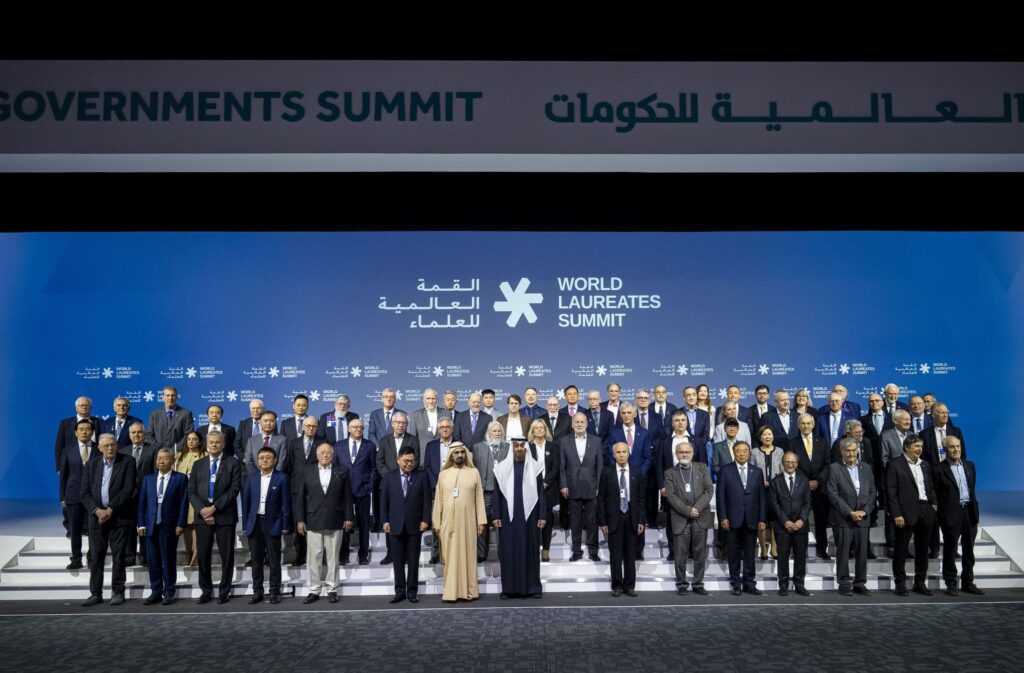
 President His Highness Sheikh Mohamed bin Zayed Al Nahyan, and His Highness Sheikh Mohammed bin Rashid Al Maktoum, Vice President, Prime Minister, and Ruler of Dubai, inaugurated the World Laureates Summit, the largest global gathering of Nobel Prize winners and recipients of other prestigious scientific awards.

Also present at the inauguration were His Highness Sheikh Mansour bin Zayed Al Nahyan, Vice President, Deputy Prime Minister and Chairman of the Presidential Court, and His Highness Sheikh Hamdan bin Mohammed bin Rashid Al Maktoum, Crown Prince of Dubai, Deputy Prime Minister and Minister of Defence.

The World Laureates Summit, which commenced today and runs for three days, brings together more than 100 scientists and participants, including Nobel laureates, recipients of major international scientific awards, and leaders of research institutions.

It coincides with the World Governments Summit 2026, taking place from 3 to 5 February, with 3 February designated as a joint day that brings laureates together with heads of state and government, ministers, and leaders of international organisations and institutions participating in the World Governments Summit.

During the summit, Their Highnesses were briefed on key discussions involving a distinguished group of Nobel laureates and researchers from various vital disciplines, affirming the summit’s role as an international scientific platform for dialogue focused on long-term strategic thinking and multidisciplinary cooperation. The summit supports the role of basic sciences in addressing global challenges at a time of mounting economic, social, and political pressures and an urgent need for innovative solutions to sustain development efforts and ensure the continuity of humanity’s civilisational progress.

His Highness Sheikh Mohamed bin Zayed Al Nahyan highlighted that scientists are essential partners in shaping the future and that investing in knowledge and scientific research is the key to navigating global challenges. His Highness stated that the UAE will remain a global platform that brings visionaries and thinkers together and supports innovation in service of all of humanity.

His Highness Sheikh Mohamed bin Zayed continued by stating that science and scientists are at the core of the UAE’s vision for the future, extending from the belief that countries that make knowledge a national priority are the ones capable of leading global transformations and shaping a better tomorrow.

His Highness added that the World Laureates Summit reflects the UAE’s efforts and unwavering commitment to building a comprehensive scientific ecosystem that enhances quality of life and lays the foundations for sustainable prosperity rooted in solid scientific principles.

His Highness remarked that the world today faces major challenges that require unconventional solutions, underscoring the importance of this major scientific gathering. His Highness stated that the responsibility of scientists today extends beyond the confines of research centres, as they must become active partners in decision-making and in shaping development-focused policies.

His Highness expressed his hope that this scientific dialogue would contribute creative solutions to global challenges, ensuring the sustainability of resources for future generations. He added that the UAE will continue to strengthen its role as a bridge connecting scientific outputs with the needs of societies while supporting scientific research and the development of emerging technologies in service of peace and development.

Science is the Wealth of Nations

His Highness Sheikh Mohammed bin Rashid Al Maktoum affirmed that the UAE has been, and will continue to be, a nexus for visionaries and bold ideas. “Convening 100 scientists and Nobel Prize laureates in the World Laureates Summit is our way of saying: Civilisation happens when we appreciate science and scientists. Our goal is to open the doors wide for innovators so they can turn the impossible into tangible reality.”

His Highness added: “Science is the true wealth of nations, and scientists are the architects of humanity’s future. The UAE embraces bright minds, empowers researchers and offers the space to turn ideas into accomplishments.

His Highness stated: “People are our greatest asset. Through science, we can forge a better future for all. The UAE continues to establish itself as a global hub for science and knowledge and a magnet for talent and creative minds from around the world, driven by our belief that investing in people is key to achieving sustainable development and shaping the future.”

Investing in Knowledge and Science

His Excellency Mohammad Al Gergawi, Minister of Cabinet Affairs and Chairman of the World Governments Summit, said in his opening remarks at the World Laureates Summit that the vision of UAE President His Highness Sheikh Mohamed bin Zayed Al Nahyan has made the UAE an incubator for intellect and a meeting point for global thought leaders, praising His Highness’ continued support for science and scientists.

His Excellency Al Gergawi said the UAE believes that building a nation cannot be achieved by relying solely on resources, but also on people, and that the greatest investment in the future is an investment in knowledge and science. His Excellency noted that a nation that prioritises science and believes strongly in knowledge as the shortest path to prosperity and in research and openness as integral to its foundations is a strong nation capable of achieving and sustaining excellence.

His Excellency added that humanity’s journey of knowledge is undergoing a fundamental transformation. The rapid evolution of artificial intelligence and the aspiration for longer, healthier lives require new scientific approaches. He pointed out that conventional boundaries separating physicists, computer scientists, and biologists are beginning to dissolve, stressing that, where such boundaries continue to exist, society must overcome and redefine them.

His Excellency Al Gergawi affirmed that the World Laureates Summit draws its value and historical significance from being held at a pivotal time marked by political shifts, rapid technological acceleration, and unprecedented economic pressures amid growing concern about humanity’s future. In such moments, he said, the role of scientists is not secondary, but critical.

His Excellency concluded: “Our gathering today sends a message of hope to humanity: Despite the negative noise filling the world, human beings are still capable of choosing the path of reason and of working to improve this world. This is where the spirit of the UAE echoes the spirit of this scientific gathering, as neither sees the past as a ceiling or finish line but the future as a responsibility. Both believe that hope is not awaited but created, and that progress does not happen by chance, but as the result of collective action, clear vision, and faith in human potential.”

His Excellency Al Gergawi thanked the attending scientists, whose presence makes them part of a future that is more humane, just, and knowledgeable. He concluded: “Your being in the UAE today, in the presence of our leadership, will help shape a better future for humans and a healthier, more advanced planet.”

New WLA base in the UAE

Professor Roger Kornberg, President of the World Laureates Association (WLA), Nobel Laureate in Chemistry (2006) and Professor of Medicine, Stanford University, revealed WLA plans to launch a new base in the UAE, bringing together scientists from around the world and positioning the UAE as a global hub for scientific collaboration, research, and innovation.

Prof Kornberg stated: “The UAE is not following the future of science—it is setting its direction.”

Delivering the opening remarks for the World Laureates Summit, Kornberg described the event as a remarkable and unprecedented gathering in its scope, diversity and breadth.

Kornberg said: “This joint summit is also unprecedented in another way: it places science alongside government, industry, and finance. Scientists rarely have the opportunity to engage directly with policymakers at this level and on this scale. Here, we create a space where discovery and decision-making meet.”

Kornberg added: “In organising this summit, our goal was not only to explain science, but to address questions of broad societal importance. This is reflected in the sessions you will see over the coming days: Can AI actually discover anything? Can science save the Earth? Are we approaching the end of disease? These questions help ensure that science is not only understood but heard far beyond these halls.”

He added: “This is where the partnership with the World Governments Summit is so important. By convening the world’s leaders, the WGS ensures that the voice of science reaches decision-makers at the highest level.”

Knowledge as a driver of progress

Wang Hou, Executive Director and Secretary-General of the World Laureates Association, stated that the UAE’s deep appreciation for science and of its people’s belief in knowledge as a driver of progress are the reasons that helped the World Laureates Summit convene with great success.

He expressed his sincere thanks to members of the World Laureates Association for joining the summit, noting that their work has shaped human understanding of the world and continues to advance humanity in profound and lasting ways.

Hou stressed that the world stands at a pivotal moment that demands joint efforts for the future of humanity and the advancement of modern science. He highlighted the UAE’s hosting of the World Laureates Summit as a major step on this path, stating: “From the UAE, the future of science is not observed—it is shaped. Here, knowledge leads policy, and discovery is translated into global progress.”

The World Laureates Summit, organised in partnership between the World Governments Summit and the World Laureates Association, is the largest scientific gathering of its kind. It brings together an elite group of laureates who are recipients of the Nobel Prize, Turing Award, the Wolf Prize, the Lasker Award, the Fields Medal, and the Breakthrough Prize, alongside other recipients of prestigious international scientific awards.

The World Laureates Association comprises 187 leading scientists, including 78 Nobel laureates, as well as recipients of the prestigious scientific honours.

The summit’s agenda features a high-level programme centred on the theme “Basic Sciences: Scientific Consensus for Addressing the Challenges of Humanity” and includes keynote addresses, plenary sessions, specialised forums, strategic roundtables, and extended dialogues spanning a wide range of fields – most notably artificial intelligence and machine learning, quantum science and nanotechnology, biotechnology and genomics, data science and cryptography, and neurotechnology.

Discussions focus on how fundamental sciences contribute to governance and economic systems, how emerging technologies can be developed responsibly, and how international scientific cooperation can be strengthened in an increasingly complex geopolitical environment.

The first day’s agenda, in addition to the opening ceremony, included the AI Sciences Forum, the forum titled “AI Science Forum: Can AI Discover Anything?” and the Disruptive Technologies Forum, the New Energy Forum, and the Scientific Discovery Forum.

The second day’s agenda includes nine forums: “Six Senses and The Brain Forum”, “Genetic Science Forum”, “Life Sciences Forum”, “Physics Forum”, “Hospital Leaders Forum”, “Blockchain Science Forum”, “Carbon Materials Forum”, “Nuclear Physics Forum”, and “University Leaders Forum”.

The third day features the Young Scientists Forum, as well as joint sessions between the World Governments Summit and the World Laureates Summit.

source/content: wam.ae (headline edited)

_____________
____________________________________

UNITED ARAB EMIRATES (U.A.E)

IRAQ : As he takes office as UNHCR chief, Iraq’s Barham Salih tells of refugee experience

A former Iraqi president, Barham Salih, 65, at the start of the year became the first former head of state to run the UNHCR.

Barham Salih has known torture and the wrenching loss of exile. Four decades after his own ordeal, he has taken the helm of the UN refugee agency as it grapples with a funding shortfall and ever-rising needs.

A former Iraqi president, Salih, 65, at the start of the year became the first former head of state to run the United Nations High Commission for Refugees (UNHCR).

“It is a profound moral and legal responsibility,” Salih said during his first trip in the new role, to Kakuma refugee camp in Kenya.

“I know the pain of losing a home, losing your friends,” he said.

The Kakuma refugee camp, which Salih visited on Sunday, is east Africa’s second largest, hosting roughly 300,000 people from South Sudan, Somalia, Uganda and Burundi. It has been in place since 1992.

The world “should not allow this to continue”, Salih said, praising a new initiative by Kenya to turn its camps into economic hubs.

“We should not only protect refugees … but also enable them to have more durable solutions,” he said, while adding, “The better way is to have peace established in their own countries … nowhere is nicer than home.”

The son of a judge and a women’s rights activist, Salih was born in 1960 in Sulaymaniyah, a stronghold of the Patriotic Union of Kurdistan (PUK), which sought self-determination for Iraq’s Kurds.

He went into exile in Iran in 1974, spending a year at a school for refugees. As a teenager in 1979, back in Iraq and already a member of the PUK, he was arrested twice by former President Saddam Hussein’s regime.

“I was released after 43 days after having suffered torture, electric shocks, beating,” he said.

Upon release, he still managed to rank among Iraq’s top three high school students, according to a former colleague, before fleeing with his family to Britain where he earned a degree in computer engineering and a doctorate.

Salih has “real experience of exile … He brings a personal perspective of displacement, which is very important,” Filippo Grandi, his predecessor at UNHCR, said last month.

Salih went on to a successful career in Iraqi Kurdistan and Iraq’s federal government after Saddam Hussein’s overthrow in 2003, holding the largely ceremonial role of president from 2018 to 2022.

Refugee numbers have doubled to 117 million in the past decade, the UNHCR said in June, but funding has dropped sharply, especially since Donald Trump returned to the White House.

UN Secretary-General Antonio Guterres recently praised Salih’s experience as a “crisis negotiator and architect of national reforms” at a time when the agency faces “very serious challenges”.

“We have had very serious budget cuts last year. A lot of staff have been reduced,” Salih said.

“But we have to understand, we have to adapt,” he said, calling for “more efficiency and accountability” while also insisting the international community meets its “legal and moral obligations to help”.

source/content: thearabweekly.com (headline edited)

_____________

A file picture shows then-Iraqi President Barham Salih at the Rome Mediterranean summit MED 2018 in Rome, Italy November 22, 2018.

__________

IRAQ

TUNISIA : Ibn Khaldoun — The Greatest Tunisian Historian & Social Scientist

Ibn Khaldoun, in full Abou Zeid Abdelrahman Ibn Mohammed Ibn Khaldoun Al-Hadrami, was born in May 27, 1332, Tunis, Tunisia — died March 17, 1406, in Cairo, Egypt. He is the greatest Arab historian and social scientist. Ibn Khaldoun has been described as the founder of the modern disciplines of historiography, sociology, economics, and demography.

He who finds a new path is a pathfinder, even if the trail has to be found again by others; and he who walks far ahead of his contemporaries is a leader, even though centuries pass before he is recognized as such.

Ibn Khaldoun.

Who is Ibn Khaldoun?

Multiple sources, such as Niccolò Machiavelli of the Renaissance and the 19th-century European scholars widely acknowledged the significance of his achievements and considered Ibn Khaldoun to be one of the greatest philosophers of the Middle Ages.

He is actually the one who developed one of the earliest nonreligious philosophies of history, contained in his masterpiece, the Muqaddimah (“Introduction”). He also wrote a definitive history of Muslim North Africa.

The past resembles the future more than one drop of water resembles another. Ibn Khaldoun

The easiest method of acquiring the habit of scholarship is through acquiring the ability to express oneself clearly in discussing and disputing scholarly problems. This is what clarifies their import and makes them understandable. Some students spend most of their lives attending scholarly sessions. Still, one finds them silent. They do not talk and do not discuss matters. More than is necessary, they are concerned with memorizing. Thus, they do not obtain much of a habit in the practice of scholarship and scholarly instruction

Ibn Khaldoun.

Ibn Khaldoun — Early Life

Ibn-Khaldoun was born in Tunis, Tunisia in 1332; the house where he believed to have been born is in the Khaldounia, a quarter in Tunis that still stands almost unchanged and well-preserved.

In his autobiography, Ibn Khaldoun mentioned that the family claimed descent from Khaldoun, who was of South Arabian origin, and had come to Spain in the early years of the Arab conquest. The family then moved to Sevilla, played an important part in the civil wars of the 9th century, and was long considered among the three leading families of that city.

During the following 4 centuries, the Ibn-Khaldouns successively held high administrative and political positions under the Umayyad, Almoravid, and Almohad dynasties; other members of the family served in the army, and several were killed at wars, mostly at the Battle of Al-Zallaqah (1086), which temporarily halted the Christian reconquest of Spain. But the respite thus won proved short, and in 1248, just before the fall of Sevilla and Córdoba, the Ibn-Khaldouns and many of their countrymen judged it prudent to cross the Straits of Gibraltar and landed at Sabtah (now Ceuta, a Spanish exclave), on the northern coast of Morocco.

Ove there, the refugees that came in from Spain were of a much higher level of socio-economic status than the local North Africans, and the Khaldoun family was soon called to occupy the leading administrative positions in Tunis. The Ibn Khaldoun’s father also became an administrator and soldier but soon abandoned his career to devote himself to the study of theology, law, and letters. In Ibn Khaldoun’s words:

He was outstanding in his knowledge of Arabic and had an understanding of poetry in its different forms and I can well remember how the men of letters sought his opinion in matters of dispute and submitted their works to him.

Ibn Khaldoun.

In 1349, however, the Black Death struck Tunis and took away both his parents.

Ibn Khaldoun — Education & Career

Ibn Khaldoun gives a detailed recap of his education, listing the main books he read and describing the life and works of his teachers. He memorized the Quran, studied its principal commentaries, had a good grounding in Muslim law, familiarized himself with the masterpieces of Arabic literature, and acquired a clear style for writing fluent verse that was to serve him well in later life when addressing eulogistic or supplicatory poems to several rulers back then.

At age 20, when he was given a post at the court of Tunis, followed 3 years later by a secretaryship to the Sultan of Morocco in Fes. By then he got married. After two years of service, however, he was suspected of participation in a rebellion and was imprisoned. Released after nearly two years and promoted by a new ruler, he again fell into disfavor, decided to leave Morocco, and crossed over to Granada, for whose Muslim ruler he had done some service in Fes and whose prime minister, the brilliant writer Ibn al-Khaṭib, was a good friend. Ibn Khaldoun was then 32 years old.

The following year Ibn Khaldoun was sent to Sevilla, Spain to conclude a peace treaty with Pedro I of Castile. There he saw “the monuments of my ancestors.” Pedro “treated me with the utmost generosity, expressed his satisfaction at my presence and showed awareness of the preeminence of our ancestors in Sevilla.” Pedro even offered him a post in his service, promising to restore his ancestral estates, but Ibn Khaldoun politely declined. He gladly accepted the village that the sultan of Granada bestowed on him, however, and, feeling once more secure, brought over his family, whom he had left in safety in Constantine.

But, to quote him once more, “enemies and intriguers” turned the all-powerful prime minister, Ibn al-Khaṭib, against him and raised suspicions regarding his loyalty; it can be conjectured that the task of these enemies must have been greatly facilitated by the apparent jealousy between the two most brilliant Arab intellectuals of the age. Once more, Ibn Khaldoun found it necessary to take his leave, and he returned to Africa. The following 10 years saw him change employers and employment with disconcerting rapidity and move from Bejaïa to Tlemcen, Biskra, Fes, and once more to Granada, where he made an unsuccessful effort to save his old rival and friend, Ibn al-Khaṭib, from being killed by order of its ruler.

During this period Ibn Khaldoun served as prime minister and in several other administrative capacities, led a punitive expedition, was robbed and stripped by nomads, and spent some time “studying and teaching.” This extreme mobility is partly explained by the instability of the times. The Almohad Empire, which had embraced the whole of North Africa and Muslim Spain, had broken down in the middle of the 13th century, and the convulsive process from which Morocco, Algeria, and Tunisia were subsequently to emerge was under way; wars, rebellions, and intrigues were endemic, and no man’s life or employment was secure. But in Ibn Khaldoun’s case two additional factors might be suspected—a certain restlessness and a capacity to make enemies, which may account for his constant complaints about the “intriguers” who turned his employers against him.

The Muqaddimah of Ibn Khaldoun

In 1375, craving solitude from the exhausting business of politics, Ibn Khaldoun sought refugee in Algeria for about four years, “free from all preoccupations,” and wrote his massive masterpiece, the Muqaddimah, an introduction to history.

His original intention, which he subsequently achieved, was to write a universal history of the Arabs and Berbers, but before doing so he judged it necessary to discuss historical method, with the aim of providing the criteria necessary for distinguishing historical truth from error. This led him to formulate what the 20th-century English historian Arnold Toynbee has described as “a philosophy of history which is undoubtedly the greatest work of its kind that has ever yet been created by any mind in any time or place,” a statement that goes even beyond the earlier eulogy by Robert Flint:

As a theorist on history he had no equal in any age or country until Vico appeared, more than three hundred years later. Plato, Aristotle and Augustine were not his peers . . . .Robert Flint.

Ibn Khaldoun went even further with the Muqaddimah. His study of the nature of society and social change led him to evolve what he clearly saw was a new sciences, such as for example what he called “the science of culture” and which he defined thus:

This science . . . has its own subject, viz., human society, and its own problems, viz., the social transformations that succeed each other in the nature of society. Ibn Khaldoun.

Obviously, for Ibn Khaldoun, history was an endless cycle of flowering and decay, with no evolution or progress except for that from primitive to civilized society. But, in brief descriptions of his own age, which have not received as much attention as they deserve, he showed that he could both visualize the existence of sharp turning points in history and recognize that he was witnessing one of them: “When there is a general change of conditions . . . as if it were a new and repeated creation, a world brought into existence anew.” The main cause he gives for this great change is the Black Death, with its profound effect on Muslim society, but he was fully aware of the impact of the Mongol invasions, and he may also have been impressed by the development of Europe, the merchants and ships of which thronged the seaports of North Africa and some of the soldiers of which served as mercenaries in the Muslim armies.

Ibn Khaldoun’s Journey to Egypt

After have completed the first draft of the Muqaddimah, nostalgia for the more active world of politics, drew him back to seek city life. A severe illness finally convinced him to leave his refuge; he secured permission to return to Tunis, where he “engaged exclusively in scholarly work,” completing much of his history. But once more he aroused both the jealousy of a prominent scholar and the suspicion of the ruler, and in 1382, at age 50, he received permission to sail to Egypt, ostensibly for the purpose of performing the pilgrimage to Mecca.

After 40 days Ibn Khaldoun landed in Alexandria and shortly afterward was in Cairo, then, as now, by far the largest and most opulent city in the Arab world. Its impact on him was profound: “I saw the metropolis of the ear, the garden of the world, the gathering place of the nations . . . the palace of Islam, the seat of dominion . . . .” His curiosity about Cairo was evidently of long duration, for he quotes the replies several eminent North Africans had made to his enquiries on their return from that city, including: “He who has not seen it does not know the power of Islam.”

Within a few days “scholars thronged on me, seeking profit in spite of the scarcity of merchandise and would not accept my excuses, so I started teaching at Al-Azhar,” the famous Islamic university. Shortly afterward, the new Mamluk ruler of Egypt, Barquq, with whom he was to remain on good terms except for one or two brief periods of misunderstanding, appointed him to a professorship of jurisprudence at the Quamḥiyyah college and, within five months, made him chief judge of the Mālikī rite, one of the four recognized rites of Sunnite Islam. Barqūq also successfully interceded with the ruler of Tunis to allow Ibn Khaldoun’s family to rejoin him, but the ship carrying them foundered in the port of Alexandria, drowning all on board.

Significance

Ibn Khaldount did make a big impact and he was, as described by many sources, such as Niccolò Machiavelli of the Renaissance and the 19th-century European scholars, to be one of the greatest philosophers of the Middle Ages. Indeed, it is perhaps not too fanciful to attribute to Ibn Khaldun’s influence the remarkable revival of historical writing in 15th-century Egypt and North Africa.

Later, several distinguished 16th- and 17th-century Ottoman scholars and statesmen took a keen interest in Ibn Khaldoun’s work, and a partial translation of the Muqaddimah into Turkish was made in the 18th century. But it was only after the 1860s, when a complete French translation of the Muqaddimah appeared, that Ibn Khaldun found the worldwide audience his incomparable genius deserved.

source/content: carthagemagazine.com (headline edited)

_______________

Bust of Tunisian historian and social scientist Ibn Khaldoun in the entrance of the Kasbah of Bejaia, Algeria. Photo by Reda Kerbouche.

____________

TUNISIA

EGYPTIAN-AMERICAN / EGYPTIAN- BRITISH : Point-blank: Egyptian brilliance

We often come across news reports about Egyptians abroad who have attained prominent leadership positions, yet we rarely give them a second thought – unless, of course, they are movie stars like Rami Malek or football legends like Mohamed Salah.

During a recent visit to Canada, I was struck by how many university presidents and faculty deans were of Egyptian origin of whom, for the most part, we have never heard.

A couple of days ago, my attention was caught by two items that were headline news everywhere, while we barely paid them any heed. The first is the appointment of the Egyptian-American Sherif Soliman as the New York City budget director. This is in the global capital of finance, home to Wall Street and the New York Stock Exchange, the largest stock exchange in the world. Soliman is a highly regarded economist with more than thirty years of financial experience. In the course of his career, he has rescued several major commercial institutions from bankruptcy and succeeded in reducing the debt of others by record proportions.

The recently elected New York mayor, Zohran Mamdani, said that Soliman far surpassed rival candidates for budget direct. Soliman, for his part, said, “I feel a deep sense of pride joining the administration of the first Muslim mayor of the city of New York.” He will be managing a budget of approximately $121 billion – one of the largest municipal budgets in the world.

Soliman was born to Egyptian parents who emigrated to New York 45 years ago. He is married to the Egyptian Hanan Thabet. They have two children, Lina and Ziad.

At around the same time, on the other side of the Atlantic, the British Muslim Laila Cunningham announced her intent to run for Mayor of London in the British capital’s 2028 mayoral race. She will be the first candidate of Egyptian origin to seek the post. Born in London to parents who emigrated from Egypt in the 1960s, she studied law and joined the Conservative Party, then switched to Reform UK. A controversial figure, she advocates empowering and increasing the police force to curb crime, which she claims has turned London into an unsafe city. She also calls for combating what she terms “Islamic terrorism.” She is married to an American and is the mother of seven children.

* A version of this article appears in print in the 15 January, 2026 edition of Al-Ahram

source/content: english.ahram.org.eg (headline edited)

_____________

_______________________________________

EGYPTIAN’S / AMERICAN / BRITISH

ALGERIA declares France’s colonial rule a crime in new law – January 2026

Algeria’s new law declares French colonial rule a crime, seeking accountability and reparations for the colonial past.

Algeria’s parliament has unanimously passed legislation declaring France’s colonisation of the country a crime.

On Wednesday, lawmakers stood in the chamber draped in scarves bearing the national colours, chanting “Long live Algeria” as they approved the bill.

Parliament also formally demanded an apology and reparations from Paris in a move that seeks to redress attempts to sweep the issue aside.

The law assigns France “legal responsibility for its colonial past in Algeria and the tragedies it caused”, placing historical accountability at the centre of the state’s legal framework.

While analysts say the law carries no enforceable international weight, its political impact is significant, signalling a rupture in how Algeria engages France over colonial memory.

Parliament Speaker Ibrahim Boughali said the legislation sent “a clear message, both internally and externally, that Algeria’s national memory is neither erasable nor negotiable”, according to the APS state news agency.

The text catalogues crimes of French colonial rule, including nuclear tests, extrajudicial killings, “physical and psychological torture” and the “systematic plundering of resources”.

It also asserts that “full and fair compensation for all material and moral damages caused by French colonisation is an inalienable right of the Algerian state and people”.

‘Crime against humanity’

France brutally ruled Algeria from 1830 to 1962 through a system marked by torture, enforced disappearances, massacres, economic exploitation, mass killings and large-scale deportations and marginalisation of the country’s indigenous Muslim population.

The war of independence between 1954 and 1962 alone left deep scars. Algeria puts the death toll at 1.5 million.

President Emmanuel Macron has previously described the colonisation of Algeria as a “crime against humanity” but has consistently refused to issue a formal apology. He reiterated that position in 2023, saying: “It’s not up to me to ask forgiveness.”

Last week, French Ministry for Europe and Foreign Affairs spokesperson Pascal Confavreux declined to comment on the parliamentary vote, saying he would not engage with “political debates taking place in foreign countries”.

Hosni Kitouni, a colonial history researcher at the University of Exeter, told the AFP news agency that the law has no binding effect on France but stressed that “its political and symbolic significance is important: it marks a rupture in the relationship with France in terms of memory”.

The vote comes amid a diplomatic crisis between the two countries. Algeria and France maintain ties through immigration in particular, but today’s vote comes amid friction in the relationship.

Tensions have been high for months since Paris recognised Morocco’s autonomy plan for resolving the Western Sahara conflict in July 2024. Western Sahara has witnessed armed rebellion since it was annexed by Morocco after the colonial power, Spain, left the territory in 1975.

Algeria supports the Sahrawi people’s right to self-determination in Western Sahara and backs the Polisario Front, which rejects Morocco’s autonomy proposal.

In April, the tensions escalated into a crisis after an Algerian diplomat was arrested along with two Algerian nationals in Paris. The diplomatic crisis came barely a week after Macron and Algeria’s President Abdelmadjid Tebboune expressed their commitment to revive dialogue.

source/content: aljazeera.com (headline edited)

_______________

https://www.aljazeera.com/news/2025/12/24/algeria-declares-frances-colonial-rule-a-crime-in-new-law

French Empire: Civilising Mission

____________

ALGERIA

MAURITANIA : Sidi Ould Tah: Africa’s new ‘super banker’

Sidi Ould Tah is the first Mauritanian to become president of the African Development Bank (AfDB) and will need all his international experience to tackle the challenges facing the institution.

The 60-year-old economist was the last to declare his candidacy for the post and ran a whirlwind campaign during which he highlighted his 10 years as head of the Arab Bank for Economic Development in Africa (BADEA).

He claimed to have transformed it from an institution “unknown to rating agencies” to one of the highest-rated development organisations in Africa.

“I have demonstrated my transformative leadership style that has elevated the bank to the level of a leading player in the African development landscape,” he said in his application statement to the AfDB.

A discreet man who speaks sparingly, his style will be a clear contrast with his flamboyant predecessor, Nigeria’s Akinwumi Adesina.

Tah’s programme is based on four main points: strengthening regional financial institutions; asserting Africa’s financial independence in global markets; leveraging demographic dynamics as a development tool; and building resilient infrastructure to climate change.

His entourage is touting his ability to replicate his successes at the BADEA at a larger institution like the AfDB, which has $318 billion in capital.

“The AfDB has to abandon traditional bureaucratic models for a more fluid approach based on results,” he said.

– African legitimacy –

Tah, who was Mauritania’s economy minister from 2008 to 2015, is calling for a “break with the approaches of the past”, in a world where the “challenges and opportunities of Africa have taken a new dimension”.

The new AfDB president speaks French, English, Arabic and Wolof, which is spoken in several west African countries.

He managed the impressive feat of rallying diplomatically diverse supporters behind his candidacy, from Sahel countries such as Mali to France.

His score of more than 72 percent among African voters gives him continental legitimacy. His entourage claimed before the vote he had support from the very first round from all African regions.

US President Donald Trump’s administration has vowed to suspend $500 million in aid to the AfDB, but Tah has argued other financial backers such as Gulf countries could step in.

On environmental questions, he intends to promote Africa’s natural resources to move towards a “viable energy transition, reconciling economic and environmental imperatives”.

“Even though Africa is a minimal contributor to global CO2 emissions, it bears the full brunt of the effects of climate change,” he said.

“It is therefore imperative to integrate sustainable practices and to harness renewable energy in development projects.”

Tah holds a master’s degree in economics from the University of Nouakchott in his native Mauritania and a doctorate from the University of Nice in France.

source/content: digitaljournal.com / Pierre Donadieu (headline edited)

_____________

Sidi Ould Tah is the first Mauritanian to serve as African Development Bank president – Copyright AFP/File SAUL LOEB

__________________

MAURITANIA

SYRIA : Maysaa Sabrine becomes first woman appointed as Syria’s Central Bank governor

Syria’s new administration announced on Monday the appointment of Maysaa Sabrine as the governor of the Central Bank of Syria, making her the first woman to hold this position in the bank’s history.

Prior to her new role, Sabrin held several prominent positions within the Central Bank, including First Deputy Governor and Supervising Director. She also served as the Head of the Office Supervision Department.

In addition to her roles within the Central Bank, Sabrin has been a member of the Board of Directors of the Damascus Securities Exchange since 2018, representing the Central Bank.

Sabrine holds a master’s degree in accounting.

Her appointment comes amid calls for the inclusion of Syrian women in the new Syrian government.

Earlier this month, Aisha al-Dibas was appointed as the head of the Office for Women’s Affairs, becoming the first woman to hold an official position in the new Syrian administration.

source/content: english.alarabiya.net / AlArabiya English (headline edited)

________________

Maysaa Sabrine. (File photo)

__________

SYRIA

IRAQ-KURDISTAN : First Gene/Seed Bank in Kurdistan Region to Preserve Iraq’s Agricultural Heritage

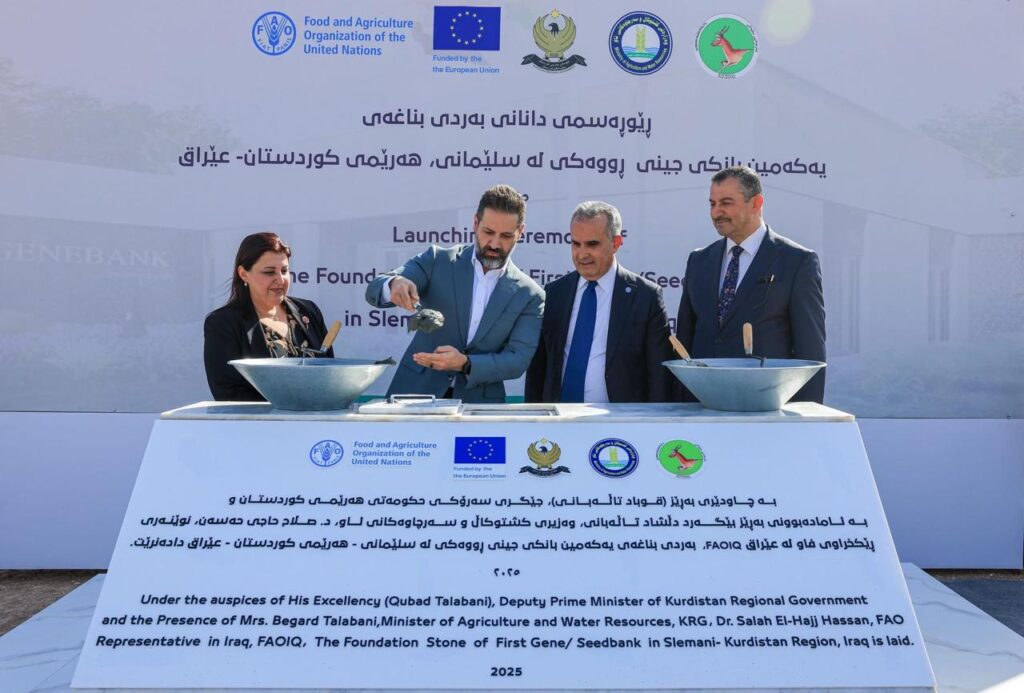
Under the auspices of H.E. Mr. Qubad Talabani, Deputy Prime Minister of the Kurdistan Regional Government, Iraq marked a major step toward safeguarding its agricultural heritage and enhancing its food security with the laying of the foundation stone for the first-ever Gene/Seed Bank in the Region.

The facility, located in Hawari Shar Park in Sulaymaniyah, is funded by the European Union (EU) and implemented by the Food and Agriculture Organization of the United Nations (FAO), in collaboration with the Federal and Regional Governments as part of the  “Restoration and Strengthening the Resilience of Agri-Food Systems in Iraq” project. The facility will enable the preservation of plant genetic diversity, enhance food security, and build resilience against climate change.

The event was inaugurated by H.E. Deputy Prime Minister of the Kurdistan Regional Government, Mr. Qubad Talabani; H.E. Minister of Agriculture and Water Resources, Ms. Begard Talabani; the Governor of Sulaymaniyah, Dr. Haval Abubakir; the Mayor of Sulaymaniyah, Ms. Leyla Omar Ali; the FAO Representative in Iraq, Mr. Salah El Hajj Hassan; along with a number of senior representatives from  academic and agricultural institutions.

H.E. Mr Qubad Talabani, Deputy Prime Minister, emphasised the importance of this initiative, saying: ‘The gene bank is an investment for the future; it protects our past and secures our future.’

The Gene/Seed bank is a strategic facility for conserving Iraq’s rich plant genetic diversity, which includes over 3,500 plant species originating from the ancient civilizations that once flourished in Iraq—the cradle of civilization. These species hold scientific, historical, and human value across the region and globally. The facility will enable the conservation of rare plant genetic resources, including wild varieties of grains, vegetables, and indigenous crops. It will also strengthen Iraq’s capacity to conserve seeds and make use of valuable genetic traits—such as drought tolerance—from wild species to support the development of more climate-resilient crops.

In her remarks, H.E. Minister Begard Talabani stated: “This initiative represents a strategic milestone in the journey of developing the agricultural sector by protecting plant diversity and supporting scientific research. It will enable farmers to benefit from our historical plant heritage and will allow us to preserve our agricultural legacy for future generations.”

FAO Representative in Iraq, Mr. Salah El Hajj Hassan, expressed his sincere appreciation to FAO’s national partners in the federal government and the Kurdistan Regional Government for their close collaboration and support. He also acknowledged and thanked the European Union for funding this initiative under the scope of the  “Restoration and Strengthening the Resilience of Agri-Food Systems in Iraq,” project,  which also reflects the follow-up to the recommendations resulting from  the FAO Director-General visit to Iraq and his meetings with senior officials. He added that this facility represents a center for scientific innovation in research and resilience-building. It enables the preservation of Iraq’s historical, environmental and agricultural heritage, ensures that future generations can benefit from it, and stands as a testament to FAO’s commitment to transforming Iraq’s agricultural legacy into a powerful tool for sustainable development.”

The gene bank will house modern storage vaults, laboratories, research and training facilities, and seed data documentation and conservation areas. Future expansion is anticipated to include a field gene bank, a tissue culture laboratory, and a cryobank.

The initiative directly contributes to the Sustainable Development Goals (SDGs), particularly SDG 2: Zero Hunger and SDG 13: Climate Action, by investing in biodiversity conservation and climate-resilient agriculture.

source/content: fao.org – FAO of the UN (headline edited)

______________

______________________

IRAQ / KURDISTAN

EGYPT : A world spectacle for history – Grand Egyptian Museum (GEM) inaugration November 01st, 2025

After more than 20 years in the making.

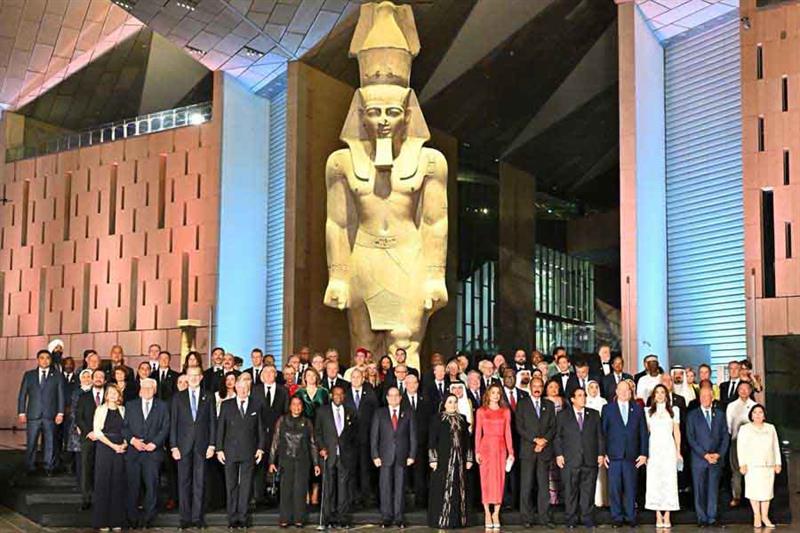
In an evening that blended history, culture and global celebration, President Abdel-Fattah Al-Sisi and First Lady Entissar Al-Sisi presided over the official inauguration of the Grand Egyptian Museum (GEM) on Saturday, marking a milestone in the modern cultural landscape of Egypt and the world. The ceremony was attended by nearly 80 high-level delegations, including kings, presidents, princes, heads of government, and representatives of regional and international organisations.

Among them was German President Frank-Walter Steinmeier, Dutch Prime Minister Dick Schoof, Spain’s King Felipe VI, Queen Rania of Jordan, Prince Albert II of Monaco, and Greek Prime Minister Kyriakos Mitsotakis. Also present were Palestinian President Mahmoud Abbas, Saudi Arabia’s Minister of Culture Badr bin Abdullah, and the crown princes of Oman and Bahrain.

Held at the GEM’s open-air court overlooking the Giza Plateau, the celebration unfolded as a multisensory homage to Egypt’s timeless civilisation. Performances combining music, light, laser projection, and drone choreography traced the evolution of Egyptian architectural genius, from the Giza Pyramids to the modern era, and highlighted the message that civilisations thrive in times of peace.

The façade of the museum became a canvas for immersive light and projection displays, with vast screens illuminating Egypt’s ancient monuments and artistic heritage. Dancers in Pharaonic-inspired costumes, adorned with gold crowns and sceptres, performed to a live international orchestra, while fireworks and synchronised drone formations traced the silhouettes of ancient deities across the night sky.

President Al-Sisi welcomed the distinguished guests and emphasised that the GEM, now the largest museum in the world dedicated to a single civilisation, stands not merely as a showcase of ancient treasures, but as a testament to the creative spirit and enduring legacy of the Egyptian people.

He also described the museum as a new chapter in Egypt’s cultural story, affirming that it stands as a testament to the creativity and legacy of the Egyptian people and as a space for dialogue, knowledge, and exchange.

The ceremony began with the performance “The World Plays One Melody”. The programme featured a laser and drone show illustrating the Orion Belt alignment and its symbolic connection between the museum and the Giza Pyramids, followed by a performance titled “A Journey of Peace in the Land of Peace”.

The sequence highlighted the evolution of Egyptian architectural ingenuity, from the Step Pyramid of Djoser to modern Egyptian design, accompanied by a Coptic hymn of Sufi spiritual singing, and a drone message reading: “Civilisations Flourish in Times of Peace.”

The evening’s performances brought together some of Egypt’s most celebrated voices. Soprano Fatma Said and tenor Ragaaeddin delivered stirring pieces composed by Hisham Nazih, whose music blends contemporary orchestration with the tonal motifs of ancient Egypt, a style previously showcased during the Golden Mummies parade.

Sisters Amira and Mariam Abu Zahra, granddaughters of renowned Egyptian actor Abdel-Rahman Abu Zahra, appeared in stylised Pharaonic attire, performing a violin duet accompanied by the Cairo Opera House Orchestra and international ensemble players under the baton of maestro Nayer Nagui.

The celebration also highlighted Egypt’s cultural diversity. Nubian singer Ahmed Ismail performed in the Nubian language, while Haneen Al-Shater sang in Arabic from a floating stage overlooking the Nile, symbolising Egypt’s enduring identity as a crossroads of civilisations.

Iconic Egyptian actress Sherihan delivered an evocative spoken tribute to ancient Egypt’s artistic legacy, set against sky projections of the Pyramids. She was followed by Sherine Ahmed, the first actress of Egyptian descent to play Eliza Doolittle on Broadway, who gave a powerful musical performance before Islamic chanter Ehab Younis offered a spiritual finale.

On giant screens above, scenes from celebrations in countries all over the world played out against the backdrop of Egypt’s ancient monuments.

Dozens of performers dressed in elaborate white costumes, as a symbol of peace, their foreheads crowned with golden wreaths and sceptres in hand, played traditional tunes as a laser show depicting the Pharaohs and fireworks lit up the night sky above the museum.

As the night drew to a close, a drone light show mapped the sky with hieroglyphs, Pharaonic figures, and the golden mask of Tutankhamun, shimmering above the Giza Plateau, an image that captured both the grandeur of the past and the cultural confidence of the present.

Among the many moments that captured global attention during the GEM’s opening ceremony was the appearance of 12-year-old Asser Ahmed Hamdi, whose poised and expressive performance resonated with viewers across Egypt and beyond. The young performer quickly became one of the most talked about faces of the event, representing a new generation engaging with the country’s cultural narrative.

Asser described his participation in the ceremony as a defining moment in his life. “I was very happy to be there, and proud that my effort represented Egypt in front of the world,” he said, explaining that his preparation for the role involved months of rehearsals and that he had been training in performance and acting for seven years. “When the opportunity came, I felt like a dream had been achieved.”

Performing before President Al-Sisi and dozens of world leaders brought initial nerves, he admitted, but the atmosphere on stage quickly shifted those feelings. “I was nervous backstage, but once I stepped onto the stage, I felt calm,” he said. After the performance, he exchanged a few words with the president, who praised his portrayal linked to the story of Tutankhamun.

Asser spoke with pride about standing before the golden mask of Tutankhamun and the monumental statue of Ramses II inside the museum. “I had seen them only in books and on TV, but standing in front of them at the GEM was something completely different,” he said. “I felt proud to be representing Egypt.”

Reflecting on the journey, he said, “All the effort in rehearsals was worth it. I’m grateful I could present something worthy of Egypt. I will always be proud that I was part of the opening of the GEM.”

Among the creative figures behind the opening night spectacle was Ahmed Essam, the artist and designer responsible for the fireworks and pyrotechnic displays that illuminated the GEM during the ceremony. Speaking about the experience, Essam described it as one of the defining moments of his career, noting that the preparations took several months of planning, rehearsal and technical coordination.

“It was an honour to be part of an event of this scale,” he said, explaining that the ceremony’s postponements provided valuable time to refine the visual narrative and ensure that the display matched the cultural weight of the occasion. Essam highlighted that working in a field he is passionate about has been central to his development. “I travel constantly to learn and experiment with new ideas. When you love what you do, you invest your whole self into it.”

Creating the fireworks show for the GEM opening, he noted, required an approach tailored to the museum’s identity as a celebration of ancient Egyptian civilisation. Colours, rhythms, and sequences were chosen to complement the architectural setting and underscore the narrative themes of heritage and renewal.

He was also quick to highlight the scale of teamwork behind the scenes. “What viewers saw was the result of a coordinated effort involving more than 150 people, from designers and technicians to support staff. Everyone worked with passion and commitment to present Egypt in the best possible light.

“The opening of the GEM is a landmark in Egypt’s cultural journey. The presence of President Abdel-Fattah Al-Sisi and world leaders underscored its importance. We are proud to have contributed to an event that showcased Egypt’s ability to inspire and captivate the world,” Essam added.

Soprano Said, who took the stage as one of the evening’s principal performers, revealed that the concert marked a deeply personal milestone for her as it was her first since becoming a mother.

“I recently gave birth to twins,” she said, “and I wasn’t sure I would be able to perform because the concert came so soon after the delivery. I was a little anxious. But my children gave me the strength and energy to take part in this extraordinary occasion.”

Her appearance added an intimate emotional layer to the celebration, reflecting both the resilience of artists and the symbolic continuity between generations that the museum itself seeks to embody.

Most of the international state leaders expressed their enthusiasm over the grand opening. In a diplomatic gesture that blended cultural appreciation with a touch of modern creativity, Danish Foreign Minister Lars Løkke Rasmussen presented Egypt’s Foreign Minister Badr Abdelatty with a LEGO replica of the Great Pyramid of Khufu, a symbolic gesture marking Denmark’s participation in the GEM’s opening and celebrating Egypt’s architectural heritage.

Zambian Minister of Tourism Rodney Sikumba noted his country’s appreciation for the commemorative gift presented to Zambia on the occasion of the GEM’s opening, a piece representing part of the GEM’s architectural model. He pointed out that the artefact will be placed on a temporary display in one of Zambia’s national museums, accompanied by an explanatory panel narrating its significance. The gesture, he said, reflects Zambia’s pride in taking part in this historic cultural moment and serves as a testament to the growing cultural ties between the two nations.

As with any major cultural event, public reaction to the GEM’s opening ceremony was not uniform. Such occasions naturally invite a spectrum of opinions, shaped by personal taste, expectations, and aesthetic preferences. While some critics viewed the event as more modest than anticipated, others praised its scale and artistic ambition, seeing in it a carefully curated blend of ancient symbolism and modern cultural expression. Supporters argue that the ceremony succeeded in presenting Egypt as both a guardian of a timeless civilisation and a dynamic cultural force in the present day — a duality at the heart of the museum’s identity.

* A version of this article appears in print in the 6 November, 2025 edition of Al-Ahram Weekly

source/content: english.ahram.org.eg (headline edited)

______________

__________

EGYPT

ARAB : The Arab World’s Greatest Modern Achievements

The Golden Age never really ended

Arabs are known for having had numerous contributions to civilizations—notably in the fields of Mathematics (Arabs invented Algebra), Astronomy (Al-Biruni discussed the earth’s rotation centuries before it was confirmed by Galileo), and Medicine (Al Razi was one of the first to diagnose diseases like smallpox and measles).  

But Arab achievements didn’t end in the Golden Age and have continuously evolved to modern fields, so we’re here to round up some of the lesser-known greatest modern achievements by Arabs..

Noor Ouarzazte

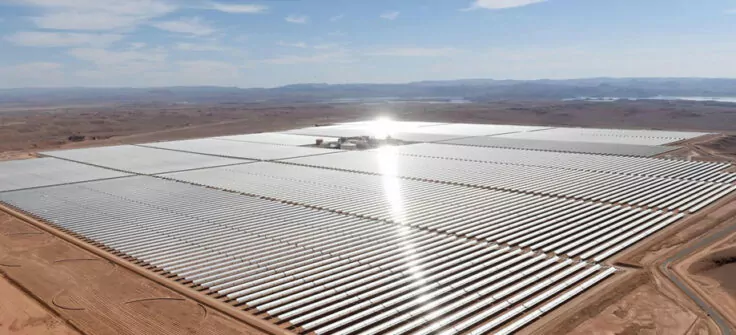
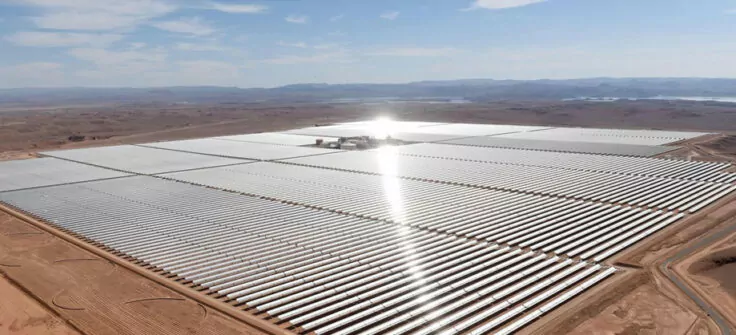
Morocco is turning the Sahara Desert into the largest concentrated power complex in the world. The project is currently in progress, due to be complete before the end of 2018.

Arabs in Space

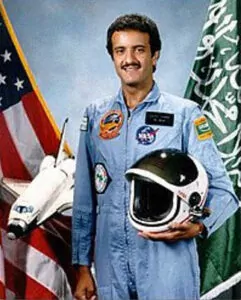
Sultan bin Salman Al Saud became the first Arab in space in 1985 – he was also the first royal astronaut ever. Syrian-born Mohammed Ahmed Faris followed in Al Saud’s footsteps in 1987.

Nobel Peace Prize Winners

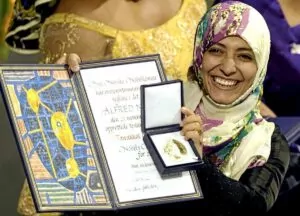
Photo credit ODD ANDERSEN/AFP/Getty Images

The Tunisian national dialogue quartet was awarded the Nobel Peace Prize in 2015 for their role in building a democratic state in Tunisia following the Arab Spring.

Yemeni journalist and activist Tawakkol Abdel-Salam Karman preceded the Tunisian National Dialogue Quartet in 2011 as Nobel laureate—she became the first ever Yemini and Arab Woman to win the Peace Prize, as well as the second youngest ever.

The ‘Father of Femtochemistry”

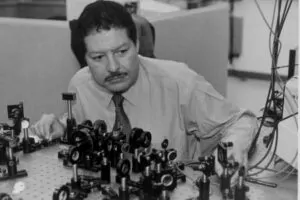
Femtochemistry is probably something too difficult for most of us to understand—but according to Wikipedia it’s “an area of chemistry that studies chemical reactions on extremely short timescales”. Ahmed Hassan Zewail, and Egyptian-American scientist, is known for pioneering a laser technique that allowed for easier analysis of chemical reactions. He even won a Nobel prize for his work in 1999.

Pritzker Architecture Prize Winners

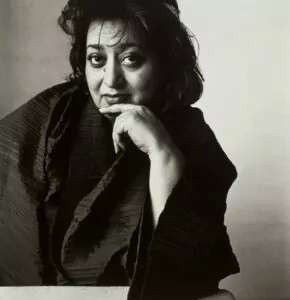
The late Iraqi-British architect Zaha Hadid was an internationally-acclaimed architect, renowned for her sci-fi creations. Having built some of the world’s most innovative spaces. In 2004, she became the first ever woman to win the prestigious Pritzker Architecture Prize—the most prestigious award in architecture.

source/content: mille.com (headline edited) / Olfa Farha

______________

__________

ARABS