Arabs & Arabian Records Aggregator. Chronicler. Milestones of the 25 Countries of the Arabic Speaking World (official / co-official). AGCC. MENA. Global. Ist's to Top 10's. Records. Read & Enjoy./ www.arabianrecords.org
Imagine owning a camera so powerful it can take freeze-frame photographs of a moving electron – an object traveling so fast it could circle the Earth many times in a matter of a second. Researchers at the University of Arizona have developed the world’s fastest electron microscope that can do just that.
They believe their work will lead to groundbreaking advancements in physics, chemistry, bioengineering, materials sciences and more.
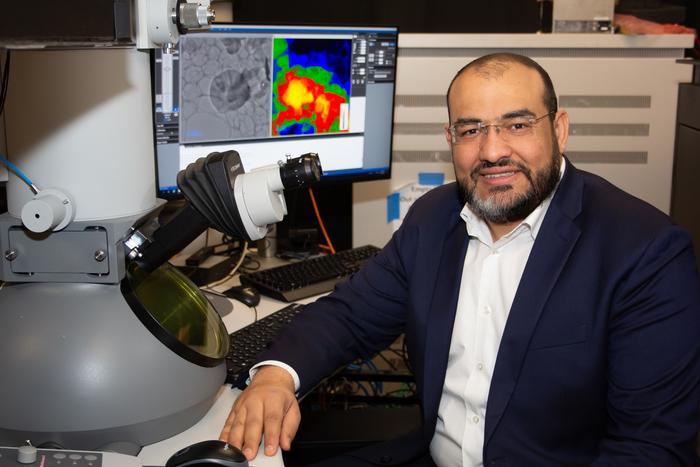
“When you get the latest version of a smartphone, it comes with a better camera,” said Mohammed Hassan, associate professor of physics and optical sciences. “This transmission electron microscope is like a very powerful camera in the latest version of smart phones; it allows us to take pictures of things we were not able to see before – like electrons. With this microscope, we hope the scientific community can understand the quantum physics behind how an electron behaves and how an electron moves.”
Hassan led a team of researchers in the departments of physics and optical sciences that published the research article “Attosecond electron microscopy and diffraction” in the Science Advances journal. Hassan worked alongside Nikolay Golubev, assistant professor of physics; Dandan Hui, co-lead author and former research associate in optics and physics who now works at the Xi’an Institute of Optics and Precision Mechanics, Chinese Academy of Sciences; Husain Alqattan, co-lead author, U of A alumnus and assistant professor of physics at Kuwait University; and Mohamed Sennary, a graduate student studying optics and physics.
A transmission electron microscope is a tool used by scientists and researchers to magnify objects up to millions of times their actual size in order to see details too small for a traditional light microscope to detect. Instead of using visible light, a transmission electron microscope directs beams of electrons through whatever sample is being studied. The interaction between the electrons and the sample is captured by lenses and detected by a camera sensor in order to generate detailed images of the sample.
Ultrafast electron microscopes using these principles were first developed in the 2000’s and use a laser to generate pulsed beams of electrons. This technique greatly increases a microscope’s temporal resolution – its ability to measure and observe changes in a sample over time. In these ultrafast microscopes, instead of relying on the speed of a camera’s shutter to dictate image quality, the resolution of a transmission electron microscope is determined by the duration of electron pulses.
The faster the pulse, the better the image.
Ultrafast electron microscopes previously operated by emitting a train of electron pulses at speeds of a few attoseconds. An attosecond is one quintillionth of a second. Pulses at these speeds create a series of images, like frames in a movie – but scientists were still missing the reactions and changes in an electron that takes place in between those frames as it evolves in real time. In order to see an electron frozen in place, U of A researchers, for the first time, generated a single attosecond electron pulse, which is as fast as electrons moves, thereby enhancing the microscope’s temporal resolution, like a high-speed camera capturing movements that would otherwise be invisible.
Hassan and his colleagues based their work on the Nobel Prize-winning accomplishments of Pierre Agostini, Ferenc Krausz and Anne L’Huilliere, who won the Novel Prize in Physics in 2023 after generating the first extreme ultraviolet radiation pulse so short it could be measured in attoseconds.
Using that work as a steppingstone, U of A researchers developed a microscope in which a powerful laser is split and converted into two parts – a very fast electron pulse and two ultra-short light pulses. The first light pulse, known as the pump pulse, feeds energy into a sample and causes electrons to move or undergo other rapid changes. The second light pulse, also called the “optical gating pulse” acts like a gate by creating a brief window of time in which the gated, single attosecond electron pulse is generated. The speed of the gating pulse therefore dictates the resolution of the image. By carefully synchronizing the two pulses, researchers control when the electron pulses probe the sample to observe ultrafast processes at the atomic level.
“The improvement of the temporal resolution inside of electron microscopes has been long anticipated and the focus of many research groups – because we all want to see the electron motion,” Hassan said. “These movements happen in attoseconds. But now, for the first time, we are able to attain attosecond temporal resolution with our electron transmission microscope – and we coined it ‘attomicroscopy.’ For the first time, we can see pieces of the electron in motion.”
source/content: eurekaalert.org / University of Arizona / (headline edited)
_________
Mohammed Hassan, associate professor of physics and optical sciences, let a group of researchers in developing the first transmission electron microscope powerful enough to capture images of electrons in motion.
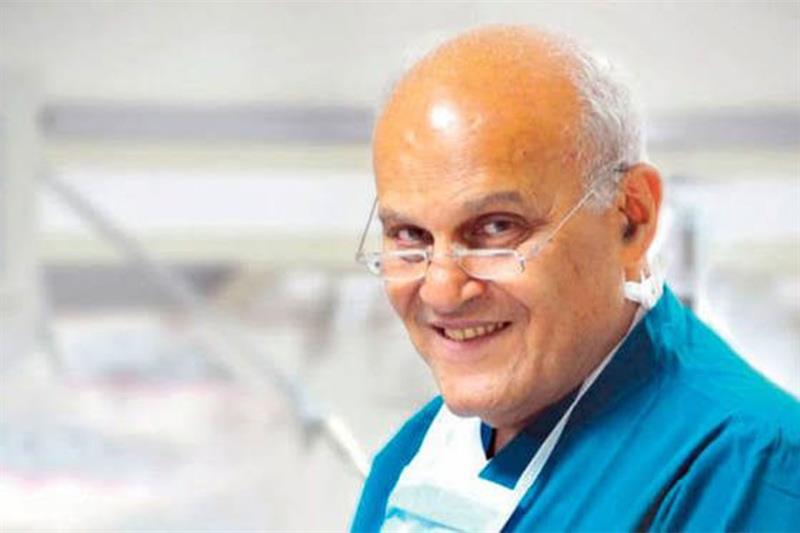
Making history again! Egyptian heart surgeon Sir Magdi Yacoub innovates valves that grow naturally in body.
This pioneering innovation envisions the development of biological heart valves that can grow and be accommodated naturally within the human body. This opens the door to a new era in heart disease treatment.
The prospect of heart valves naturally expanding within the body, a concept once confined to science fiction, is now on the brink of realization, thanks to the remarkable discovery spearheaded by renowned heart surgeon Professor Sir Magdi Yacoub.
While the initial study documenting this breakthrough was unveiled in Nature in 2023, recent media coverage has underscored its practical implications.
Esteemed publications like The Times have pinpointed this cutting-edge innovation’s profound impact on biomedical science and medical engineering. They have recognized it as a monumental leap in the realm of healthcare.
On Monday, Dr. Yacoub discussed the latest developments in this field with Egyptian talk show host Amr Adib.
He explained how his team has engineered temporary heart valve scaffolds composed of surgically implanted fibres into the body.
These scaffolds gradually disintegrate over time, leaving behind a living, fully functional valve crafted from the patient’s tissues, a testament to the marvels of modern medical ingenuity.
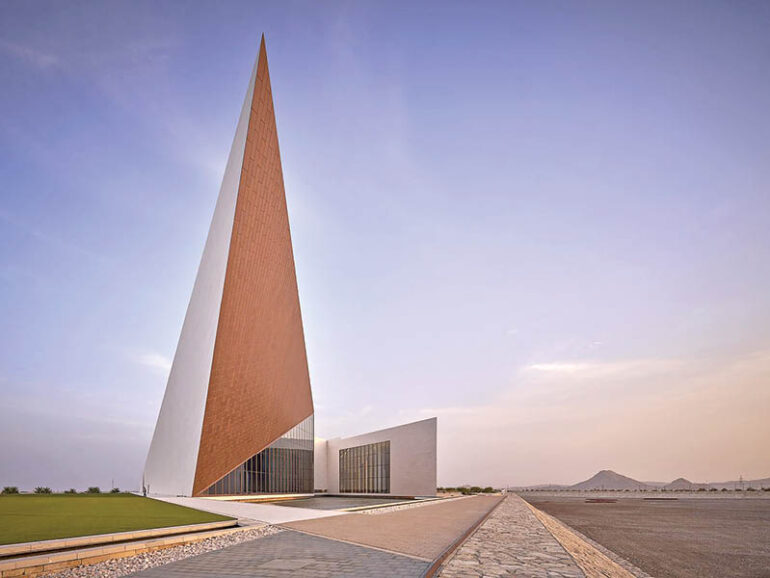
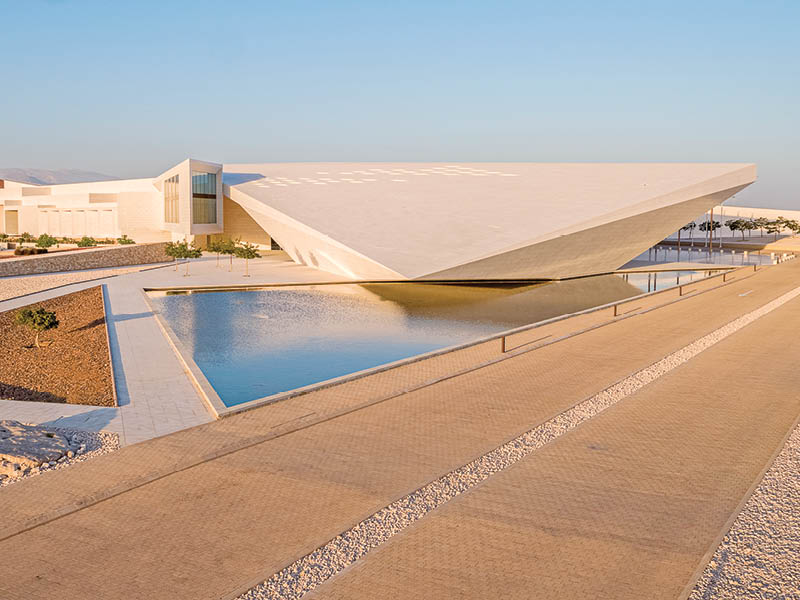
Oman Across Ages Museum in Manah has been honoured with one of the world’s most prestigious architecture awards – the Prix Versailles World Titles.
The museum received the ‘Special Prize for an Exterior’, while the ‘Special Prize for an Interior’ was awarded to the Smritivan Earthquake Museum in Bhuj, India. The grand prize, the Prix Versailles, went to the Simose Art Museum in Otake, Japan.
Granted annually at Unesco headquarters in Paris since 2015, the Prix Versailles celebrates architectural excellence by showcasing the finest contemporary achievements worldwide.
In June, for the first time, Prix Versailles unveiled its World’s Most Beautiful Museums List for 2024, featuring seven newly opened or reopened museums that embody creativity, local heritage, and ecological efficiency.
Among the listed museums was Oman Across Ages Museum, recognised for its exceptional impact on its surroundings. Other shortlisted museums included the A4 Art Museum in Chengdu, China; Grand Egyptian Museum in Giza, Egypt; Paleis Het Loo in Apeldoorn, Netherlands; and the Polish History Museum in Warsaw, Poland.
This year’s ceremony was held on December 2, celebrating 70 of the ‘World’s Most Beautiful’ achievements across eight categories: Museums, Hotels, Restaurants, Emporiums, Airports, Campuses, Passenger Stations, and Sports.
This year’s finalists were selected through a rigorous process that reviewed new and recently opened sites across 31 nations. The 2024 World Jury, chaired by Benjamin Millepied, awarded three World Titles in each category.
Commenting on the event, Millepied said, “Architecture has the ability to display creative and stylistic diversity with great force. That diversity is the sign that the attention given to nature, togetherness, and different forms of expertise can help an environment emerge – one that is both receptive to expression and capable of harmony. Such an assembly of actors from every background reminds us of culture’s unique talent for leading humankind into dialogue.”
The recognition affirms Oman Across Ages Museum’s standing as a cultural and architectural beacon, reflecting the nation’s commitment to preserving heritage while embracing modernity.
The Kingdom and the international police organization sign host country agreement.
Interpol is to establish an office in Saudi Arabia that will serve the Middle East and North Africa region.
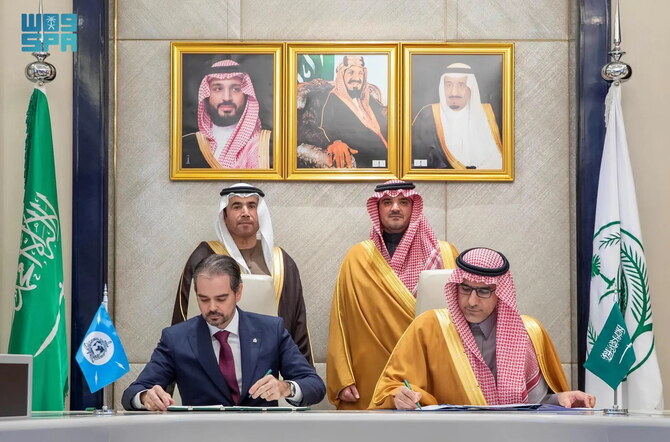
Hisham Al-Faleh, undersecretary at the Kingdom’s Ministry of Interior, and Jurgen Stock, secretary-general of the international police organization, signed a host country agreement on Wednesday.
Prince Abdulaziz bin Saud, the Saudi Minister of Interior, and Maj. Gen. Ahmed Naser Al-Raisi, the president of Interpol, also attended the signing ceremony, the Saudi Press Agency reported.
In addition, they discussed Interpol’s activities during a meeting that also included Nasser Al-Dawood, the deputy minister of interior; Brig. Gen. Abdulmalik Al-Saqeeh, the director general of Saudi Interpol; and other senior officials.
source/content: arabnews.com (headline edited)
____________
Hisham Al-Faleh, undersecretary at the Kingdom’s Ministry of Interior, and Jurgen Stock, secretary-general of the international police organization, signed a host country agreement. (SPA)
Crafted by COPAG-Jaouda, this plant-based milk skips the gluten, lactose, preservatives, and added sugars, keeping things simple and natural.
For Moroccans looking to swap traditional dairy for a local plant-based option, the wait is over!
COPAG-Jaouda, a household name in the country’s dairy industry, has introduced “Nabatlé”, Morocco’s first entirely homegrown plant-based milk.
More than just a substitute, “Nabatlé” is set to revolutionize the country’s approach to food innovation.
It also answers a growing demand for healthier, natural choices while proving that local expertise can keep pace with evolving consumer palates.
Plant-based milk for everyone
As more Moroccans explore healthier alternatives, COPAG-Jaouda is making sure “Nabatlé” is not just an option but an accessible and affordable choice.
This plant-based milk skips the gluten, lactose, preservatives, and added sugars, keeping things simple and natural.
The cooperative says it delivers healthy fats, essential vitamins, and minerals while staying low in calories.
Whether vegan, vegetarian, or just curious, consumers can choose from three different varieties to suit their taste:
– Almond: Naturally sugar-free with a light, smooth taste and no cholesterol.
– Oat: Rich in fiber, minerals, and plant-based proteins.
– Coconut: Creamy with a mild exotic flavor, offering a source of calcium and vitamins A and D3.
To set the record straight on plant-based milk, which is new territory for some Moroccans, COPAG-Jaouda is rolling out an awareness campaign to showcase the milk’s nutritional perks and discover how versatile and beneficial they can be.
But “Nabatlé” is not just a dairy alternative. The company sees it as a symbol of Morocco’s ambition to create top-tier, competitive products that also care for the planet, all while staying eco-conscious.
What began in 1987 with 39 agricultural producers has grown into COPAG, Morocco’s largest cooperative.
Now, with over 12,000 employees and support for 24,000 farmers, COPAG continues to shape the agricultural landscape, spanning citrus, fresh produce, dairy, and meat industries.
Minneapolis poet Muna Abdulahi talks strategy, community and leveraging cultural stereotypes in Netflix’s season two of “The Mole,” where she competed for a $154,000 prize.
Who is the mole?
For Somali American poet Muna Abdulahi, that question loomed large during her first day on season two of Netflix’s reality game show, “The Mole,” which was filmed in the napier grass fields of western Malaysia. Abdulahi had to figure out who to trust among the other 11 players while aware that one of them might be secretly sabotaging the game, and while navigating cultural differences and working to stay under the radar herself during the six-week filming.
The premise of “The Mole” is simple: contestants work together to build a pot of prize money that only one player will win in the end. Among them is “the mole,” a player tasked with working against the group. After each mental or physical challenge, players take a quiz to identify the mole and the contestant with the lowest score is eliminated. If the mole remains undetected until the end, they win, but if the last player uncovers their identity, that player takes the prize.
In a game where everyone is out to deceive each other, moments of genuine connection feel like dangerous territory. Off-camera, players share meals, tell stories and laugh together — but beneath the camaraderie, the question remains: Who can you trust when everyone might be lying?
Abdulahi, who grew up in Willmar, Minnesota, and now lives in Minneapolis, approached the game with a calculated strategy: lean into being underestimated.
“When people first meet me, they see the hijab,” Abdulahi said in a confessional in the first episode. “They see a Muslim woman, somebody who follows other people’s orders, and I’m going to use that to every single advantage.”
Did Abdulahi’s strategy pay off? Watch “The Mole” on Netflix to see how far she goes.
In an interview with Sahan Journal, Abdulahi reflected on her life as a poet and shared her experience filming the show in July 2023. She discussed what it was like being a Muslim woman in a high-stakes competition balancing trust and suspicion.
The interview has been edited for length and clarity.
Can you share a bit about your journey as a poet in the Twin Cities? What inspired you to start writing?
I started writing poetry when I was 14. Somalia is known as the nation of poets, so I have family members who are poets, like my grandmother. Being born and raised in the U.S., language was still a barrier because I understood Somali when it was spoken to me but speaking it was a whole other conversation. So, when I was young, there was a part of me that really wanted to find something that connected me to my culture and poetry was it.
The issue was, I went to predominantly white schools my whole entire life, so a lot of the authors I would read would be old white men. I’m like, “Okay, I have absolutely no ties to these people,” but then I started getting into spoken word poetry and that scene is predominantly BIPOC stories and narratives that I never got to hear growing up. It inspired me to write, and I just never stopped.
How do your experiences as a Muslim woman influence the subjects you write about?
That’s a really good question. I mean, I think everything ties back to our inner child. For me, I never really got to hear BIPOC stories. I still remember the first BIPOC story I read. It was “The Kite Runner.”
I think when you are not represented in stories, it makes you feel unimportant and as if your experiences are not worthy of being shared. It’s also the media in general. So, my mission when I started writing was to not only give space to our stories, but to give space to the stories that were devalued or silenced or not seen as worthy.
It feels like there’s two sides of the coin — either our stories are not being shared or, when it is, it’s these perfect stories where Black and brown girls become tokenized and don’t feel worthy unless they’re exceptional. I want to give space to the in-between.
What drew you to “The Mole”? How did you get involved with the show?
I’m a big, big fan of reality TV, specifically reality competition shows like “Big Brother” and “Survivor,” so I’ve always wanted to be a part of it, but I never saw any Muslim people. I remember writing down in my notebook the shows that I want to be a part of, and I had to check off every single one because the structure of the game itself would not meet the necessities and the needs of being a Muslim woman.
In “Survivor,” you’re stranded on this random island and — let’s say you just did a swimming challenge — you’re going to be wet all day, all night. Maybe you have an extra hijab but how would you be able to preserve your values and at the same time play this game?
It’s the same thing with “Big Brother,” where you’re being filmed 24/7, even when you shower. Even though I love the game, I can’t really do it. What I loved about “The Mole” is that the structure of the game itself is accessible to Muslim women.
What was it like communicating with producers about what you needed?
So the first thing is prayers. We pray five times a day. The way that these games work is completely fast-paced, so I basically had to tell them, “Hey, I need 10 minutes.” We met in the middle where I was able to move to the side and do my prayers, but that also meant that I was praying in a lot of different places.
We also didn’t have our phones, but I usually use it to pray at specific times and toward a specific direction to Mecca. I also needed water to make wudu (a cleansing ritual), so there was somebody who literally carried my prayer mat, bottled water and checked the times for me. That was really helpful. It also helped that we were in a Muslim country. There were a lot of prayer rooms already within the city.
How did you mentally and physically prepare for the show?
I rewatched a lot of the seasons, and not just the U.S. seasons. I’m also a big fan of the international seasons, so I was watching Netherlands, Belgium and Australia. I wanted to make sure that my game plan was set, but at the same time give myself room to adapt, because that’s the name of the game.
We don’t really know what we’re getting into. I also prepared by memorizing things, because the objective of the game is, “Who is the mole,” right? We have to remember as much as possible about them: What are they wearing? What color are their shoes? Which car did they get in?
Those little details would be on the quiz.
What was your strategy going into the game?
Originally, my strategy was to play into this stereotype that people have for Muslim women — very timid, shy, quiet, observational, not taking up too much space — so they underestimate me. It worked for that first episode but after that, I had to switch up my game.
I can’t hide. It’s so much more difficult to hide who you are when you’re with these people all day, but it still worked to my advantage because people still underestimated me. Well, until mid-game when you see them start to question if I was the mole.
In the first episode, you talked about how people often perceive Muslim women as obedient or timid. As you entered the game and interacted with contestants, did you feel that they had a specific perception of you?
Off the bat, yeah. It was exactly what I thought. I don’t think a lot of people on the show had close Muslim women friends, so I think a lot of the time, people perceive groups of people based on what they see on TV.
I remember Q [Quaylyn Carter] was like, “Oh my gosh, I thought you were going to be so quiet,” so, I really could have played into that. But Andy (Mintzer) had a lot of knowledge about Muslim culture. Muslim women and men are not supposed to touch the opposite gender’s hand, so I knew that first meeting was going to be so awkward because a lot of people don’t know that, but Andy knew right away.
How did you manage building friendships with contestants while, in the back of your mind, knowing that one of them is sabotaging the game?
To be honest, I came in there like, “I’m not here for friends; I’m here to win,” but a lot of these people are just so likable and so lovely. The mole lies throughout the whole thing, but off-camera, the stress and tension is gone. We’re eating together or driving to the next location and sharing stories about who we are.
The core of me is centered around community, and even though I wanted to shut it off, those in-between moments really got to me. Some of these friendships are so real. Hannah (Burns), for example, was somebody who I saw as competition or as an enemy, but outside of the game, we were friends, so it was this weird, funny tension where it’s like, “I adore you, but in the game, I’m lying to you up and down.”
I had such a beautiful friendship with Jenn (Jennifer Dasilva-Hassiman), too, and it sucked so bad because she left first. She has such a beautiful spirit. In the beginning, it was difficult coming into this as a minority.
I know who I am, but I’m also shifting myself a little bit for this game, and as someone who grew up in predominantly white spaces, code switching becomes this mechanism. It was lovely to see Jenn be exactly who she is — this bold, beautiful personality and unapologetically herself.
One of the key moments from the season was episode five, when you guys had an auction and contestant Neesh Riaz bid the entire pot of $59,500 for an exemption from the quiz.
What was it like watching all of that money you guys worked for drain from the pot?
It was so tense, and it’s funny watching it back from an outside perspective, because it’s been so long. I’m just laughing at my reaction, because it was so serious. What’s so unique about this game is that they take your phone away so you’re truly, one-hundred percent engulfed in this experience. Like, this is your life, and we’re at the halfway point.
When he took all that money, it just hit me that somebody’s full year of work was gone just like that.
Honestly, everybody was so mad. There’s so many moments that were not shown. We were outside and we were just like, “What are we doing here?” Even the host had to remind us that there’s still a lot of money coming in, but I think at this point, people were just so tired of losing money and you’re realizing not only are we competing against the mole, we’re competing against other players. So you’re like, “Okay, what are my actual odds here? If I was to win, am I going to be winning a dollar? Is that right?”
How did it feel to get as far as you did?
It felt so good. A big part of that whole experience ties to the very beginning of our conversation where I didn’t want to come on the show to prove that I’m smart or exceptional. I just wanted to be myself and show all of the complexities that make up a human.
I’m smart, but I’m also a big personality. I’m a little funny and a little quirky. I don’t have to compromise anything and I can still get to the end. Even though I didn’t win, I still proved that it had nothing to do with who I was or my capabilities and, for that, I feel like my purpose was met. Money would have been amazing but the experience was more fulfilling than I could have imagined.
What was the reaction from your friends and family after the show aired?
It was really beautiful. My family is my biggest support system and my sisters, especially. It was like a sports game, the way they were cheering for me.
What about the response from viewers?
Watching the show back was such a healing experience, and then to see the outpour of love in my DMs — that was something I wasn’t prepared for. And to see all these Muslim women come into my messages — it meant so much to me, and I didn’t know how much I needed it.
It just reaffirmed exactly what I was meant to do. Coming into this next era, I want to continue paving the path so others could walk with me and hopefully, it’ll be easier for the next one, and the next one, and the next one.
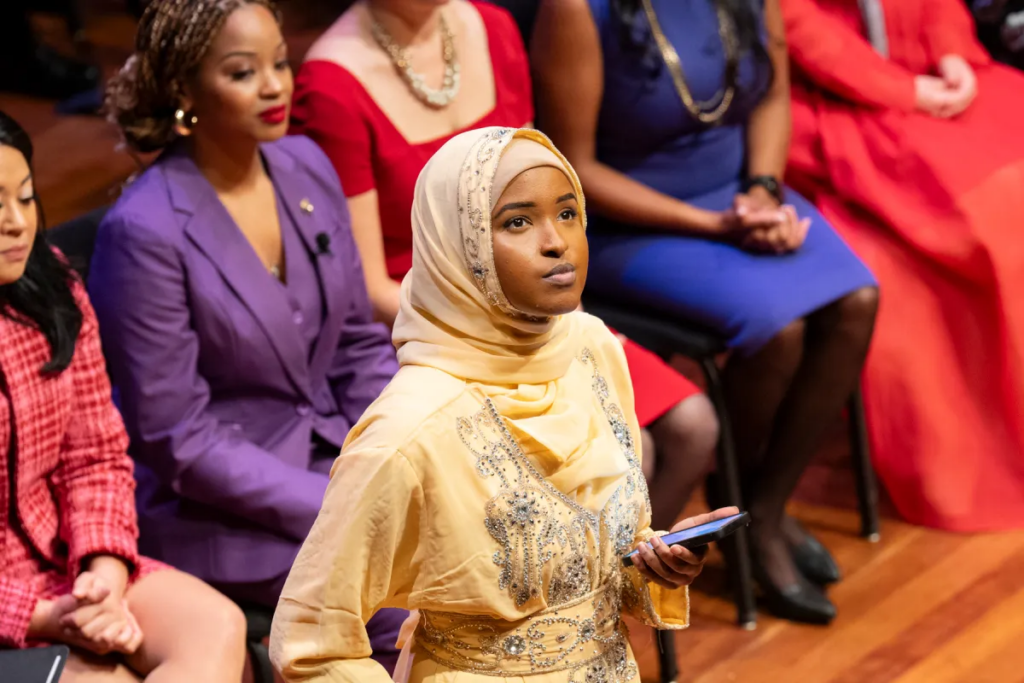
Poet Muna Abdulahi (center) gives a spoken word tribute during the January 9, 2024, inauguration of St. Paul’s historic all-female City Council. The new council sits behind her. Credit: Aaron Nesheim | Sahan Journal
Egypt’s fresh produce exports to Europe reach 917,000 tonnes, growing 7% in the last season, second only to the Netherlands.
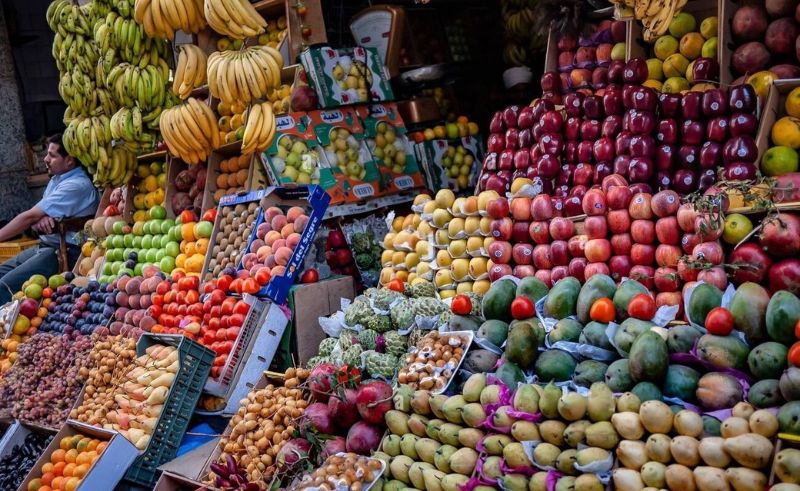
Egypt has ranked as Europe’s second-largest exporter of fresh vegetables and fruits for the latest export season from September 2023 to August 2024, shipping 917,000 tonnes with a 7% year-on-year growth, according to EU data.
Citrus led the way, with 500,000 tonnes exported, an 8% increase from the previous season. Sweet potatoes followed with 117,000 tonnes, onions at 94,600 tonnes and grapes at 58,000 tonnes.
Potatoes saw a strong performance, exceeding 400,000 tonnes last season, capitalising on production issues in key European nations.
Meanwhile, Egyptian onion exports dropped to 92,000 tonnes in 2024, down from 135,000 tonnes in 2023, due to a six-month export ban from October 2023 to April 2024.
Other notable exports include carrots, lemons, garlic, beans, mangoes, peppers, strawberries and watermelons.
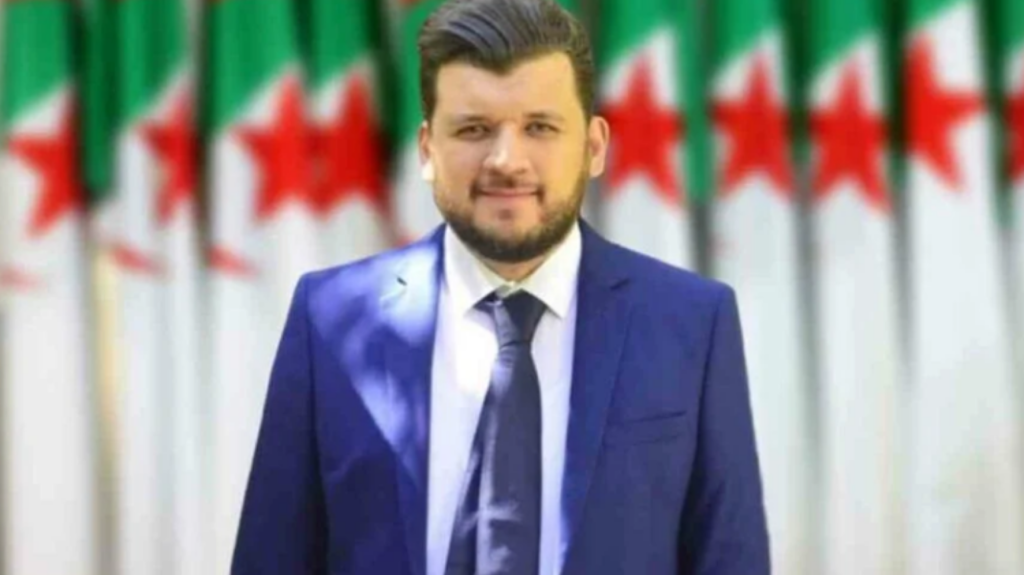
In a momentous acknowledgment of his pivotal contributions to the global entrepreneurial landscape, Yacine El-Mahdi Walid, Algeria’s Minister of Vocational Training and Apprenticeship, was named the “2024 Startup Ecosystem Star.” This honor was conferred by the International Chamber of Commerce and the renowned innovation organization “Mind the Bridge” during the ninth edition of the celebrated award ceremony.
Celebrating Leadership in Innovation
The accolade recognizes El-Mahdi Walid’s instrumental role in driving innovation and nurturing startup ecosystems not only in Algeria but across the African continent. The minister’s efforts have been hailed as transformative, positioning Algeria as a rising hub for technology and entrepreneurship.
In a statement on his official Facebook page, Minister El-Mahdi Walid expressed his gratitude, emphasizing the significance of the award in celebrating individuals who make substantial global impacts within startup ecosystems.
“This recognition,” he remarked, “although awarded individually, is truly a testament to the extraordinary efforts of my former team at the Ministry of Knowledge Economy, Startups, and Small Enterprises.”
A Visionary Path for Algerian Startups
Acknowledging the collaborative spirit behind the honor, the minister reaffirmed his confidence in Algeria’s continued trajectory towards innovation under the stewardship of his successor, Noureddine Ouadah. “I am certain,” he added, “that this outstanding work will persist and that Algeria’s startup ecosystem will rise to meet the aspirations and hopes of its people.”
A Global Celebration of Innovation
The 2024 Startup Ecosystem Star event is an annual celebration that recognizes individuals who have made an indelible mark on the global entrepreneurial landscape. By highlighting exceptional contributions, it inspires collaboration and innovation worldwide.
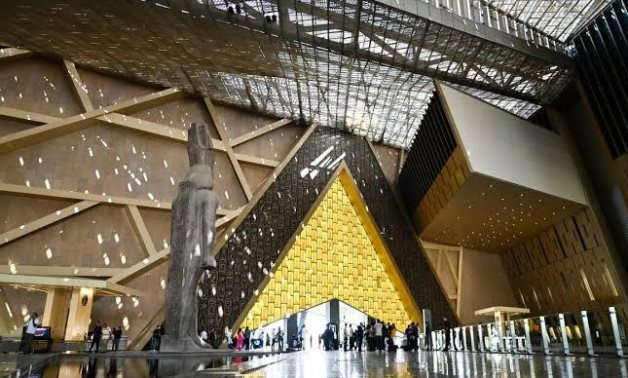
The British magazine The Telegraph published its annual list titled “Travel’s 50 Biggest Winners and Losers in 2024.” Topping the list of winners was the Grand Egyptian Museum.
The British magazine wrote that the Grand Egyptian Museum has finally opened on a trial basis for visitors. It spans an area of 490,000 square meters and, once fully operational, will house over 100,000 artifacts, with the most notable being the complete collection of items discovered in Tutankhamun’s tomb.
The list also included other places, such as the UAE and Notre Dame Cathedral following its reopening.
The Grand Egyptian Museum (GEM) project continues to achieve international milestones, winning the 2024 Project of the Year Award for users of FIDIC (International Federation of Consulting Engineers).
The award was presented during the 6th Annual FIDIC Contract Users Awards ceremony held in London.
GEM is the first Egyptian project that win this prestigious award.
Egypt’s Minister of Tourism and Antiquities, Sherif Fathy, highlighted President Abdel Fattah El-Sisi’s unwavering support for the Grand Egyptian Museum, recognizing its importance as one of the most significant cultural and heritage projects in Egypt and globally.
President Sisi has consistently followed every stage of its implementation, ensuring the removal of obstacles to deliver a museum that reflects the grandeur and legacy of ancient Egyptian civilization.
The minister emphasized that this remarkable achievement would not have been possible without the President’s ongoing support and interest.
The President’s chairmanship of the museum’s Board of Trustees further demonstrates his commitment to developing the museum as a global hub for heritage and culture.
The Minister also praised this award, which is the second international recognition for GEM this month.
Last week, the museum won the Prix Versailles, ranking among the seven most beautiful museums in the world for 2024.
He expressed his gratitude to everyone who contributed to the completion of this monumental project over the years, and to the extensive efforts of all state agencies and entities that helped elevate the museum to its prestigious global status.
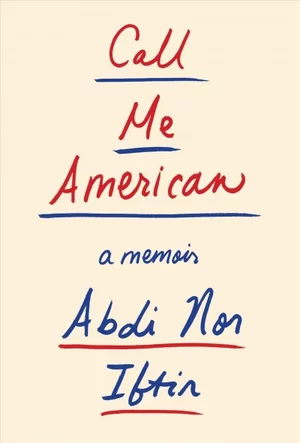
What does it take to become an American? In 2015, This American Life told the story of a Somali refugee who was finally issued a visa to come and live in the United States. “This big smile was on my face. I’ve never had such a big smile,” Abdi Nor Iftin said at the time.
Iftin’s long road to the US began when he was only a child in Mogadishu, watching American movies and teaching himself English, while brutality and war raged around him. In his new memoir, Call Me American, he tells his story from the beginning: with his nomadic parents and their now-unimaginably peaceful, pastoral life.
“She had no idea that the country she was living in was called Somalia,” Iftin says of his mother. “She had always told me, ‘You know, Abdi, there’s only two days: The day that you’re born and the day that you die. Everything else is just grazing and hanging out with the animals.'” Life was so easy, he says, before drought and famine wiped everything out.
Interview Highlights
On his first memories of Somalia’s long-running civil war
I was six years old when the civil war started, militias started pouring into the city, and death and killings and torture, and I just cried. The smell of Mogadishu, it was just the smell of gunpowder. And that had been sticking with me forever … I think this is the most touching memory that I can remember, to have our youngest sister die, and we said, “Good. That is so easy for her,” and then I was jealous. I was jealous because that was the time when our feet were swollen, our bellies were empty. It was a feeling that you could die any time … and I looked at my other sister, and she was just eating sand. And I think that’s the stories that people don’t hear about.
On his encounters with Marines in Mogadishu
I still say they stole my heart, because it was the very first time that I saw people with guns, and the guns were pointed up in the air, not in my face. Then they were coming and giving us sweets — I wanted these people to stick around, I wanted these people to be part of my life.
On being targeted by Islamists because of his nickname, “Abdi the American”
Unfortunately, I still believe that Islamists were born out of the American involvement somewhere in the Middle East, and the phrases that they had used to attract young men of my age was just “America.” They said, “They are the enemies of Islam” … surprisingly, I was out on the streets, defending President Bush, I don’t even know why I did that. But I was defending him, and blaming Osama bin Laden for all the problems. But I thought, to me it was just expressing myself, but then it got me into trouble, and I received a phone call saying, “You got to stop and drop that nickname, or we’re going to kill you.”
On whether Americans know how hard it is to get a visa to come here
I don’t think they do! You know, Americans take so many things for granted. For example, I came to the U.S. through the diversity immigrant visa lottery, which [President Trump] would like to cancel. But if it was not the diversity lottery, I would have never come to America, never. I had been an American since I saw those Marines, and my nickname is going to be my nationality, very soon … When I wake up in the morning, I say, oh, I’m so lucky — I have arrived here before America had turned its back against the rest of the world. If this had happened when I was hiding myself from Islamic terrorists, just trying to come to America and become an American and all that, it would be a disappointment, it would be a betrayal by the United States. Because the way I understand is that America is open to the rest of the world. And I am here to make America great. I did not come here to take anything. I came here to contribute, and to offer and to give.