LEBANESE Prof. Niveen Khashab Wins Great Arab Minds Award in Natural Sciences

Lebanese Professor Niveen Mohammad Ali Khashab won the Great Arab Minds Award-2023 in Natural Sciences, for her contributions in chemistry, bioengineering and biology.

Her research interests focus on applications of programmable, intelligent, engineered nanomaterials and their uses for medical, pharmaceutical, industrial and environmental purposes. Sheikh Mohammed bin Rashid Al Maktoum, vice president, prime minister and ruler of Dubai, said that scientific and cognitive curiosity has been the base of nations’ cultural development throughout history.

The winning announcement was made by Sheikh Mohammed bin Rashid Al Maktoum. Prof. Niveen Khashab is associate dean of Physical Sciences and Engineering Division and Professor of Chemistry at KAUST – Kingdom of Saudi Arabia, given her pioneering contributions in the field of natural sciences and her research in Arab universities.

“Today we announce the winner of the Arab Minds Award in natural sciences, Professor Nevin Khashab, a researcher and academic who inspires a new generation of young scientists in the Arab world and transforms research into advanced innovations in medicine, advanced industries, nanotechnology and sustainable agriculture,” said the Ruler of Dubai.

“Scientific achievement is the basis of civilizational development. We want to preserve scientists, empower them, honor them, celebrate their achievements and provide them with the space they need to transform their ideas and research into reality. Resuming the region’s contribution to human civilization is a comprehensive project and a strategic commitment that focuses on the Arab citizen capable of achievement, creativity and excellence in science and knowledge,” he added.

Khashab is exploring the new opportunities that nano capsules and devices can provide in drugs, gene therapies, medical diagnosis and industries, given their sturdiness, durability and superior thermal resistance.

Khashab is currently experimenting with carbon nanotubes characterized with their exceptional rigidity and strength, as well as electronic properties. She is also testing applications of carbon tubes in smart membranes. Khashab also collaborated on designing smart materials used in biomedical systems based on molecule assemblies at the nanoscale using non-covalent interactions.

The applications of the scientific innovations and smart materials developed by Khashab are diverse, including medical in the fields of sensing and drug, therapeutic and surgical delivery; industrial as in nanocomposites and others; and environmental in sustainable agriculture solutions and platforms.

Mohammad Al Gergawi, chairman of the Committee leading Great Arab Minds, congratulated Khashab on the phone, hailing her contributions in natural sciences and its pioneering research that opened new horizons in the uses of ultra-fine nanomaterials for medical and pharmaceutical purposes and advanced technology applications.

The initiative aims to promote the reverse migration of Arab minds and keep them in the Arab world by celebrating, honoring and highlighting their achievements.

The competition received thousands of nominations in its six categories: engineering and technology, medicine, economics, literature and natural sciences, arts, architecture, and design.

The Great Arab Minds Awards’ winners announced so far are: Dr. Hani Negm from Saudi Arabia in Medicine, Professor Fadel Adib from Lebanon in Engineering and Technology, Dr. Muhammad el-Erian in economics, and Professor Niveen Khashab in natural sciences. The winners in the two remaining categories will be announced later.

source/content: english.aawsat.com / Alsharq Al-Awsat (headline edited)

____________

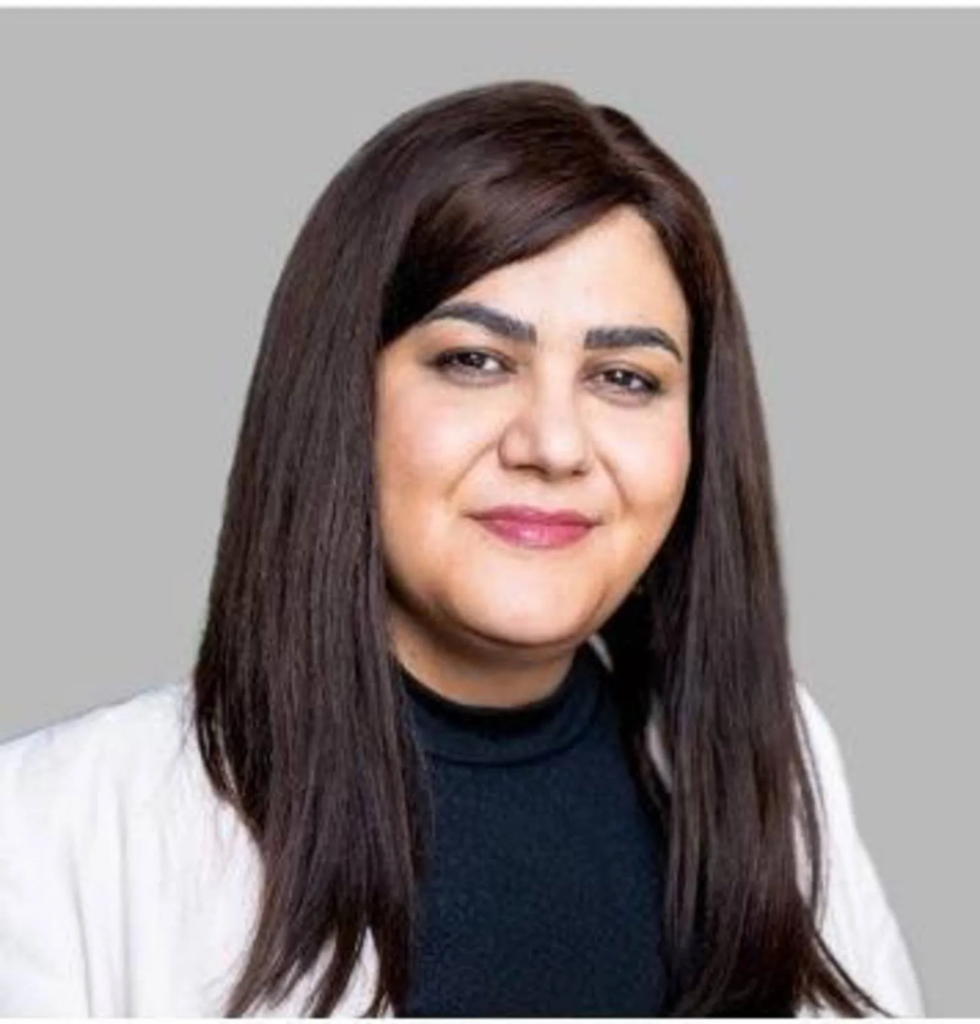
Lebanese Prof. Niveen Mohammad Ali Khashab. (Asharq Al-Awsat)

______________

LEBANON

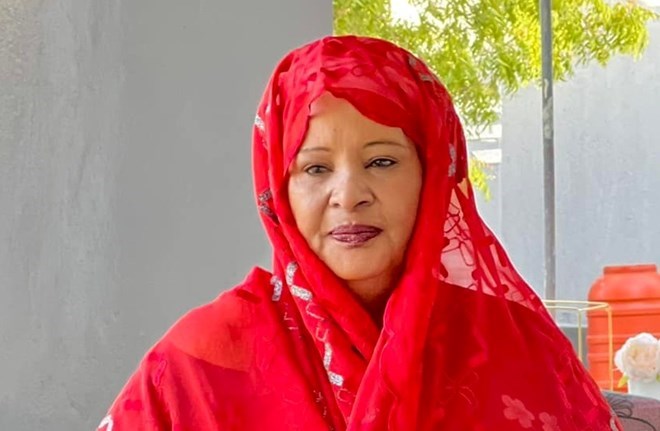
SOMALIA : Famous ‎Somali artist Khadra Dahir Ige passes away

Khadra Dahir Ige, one of the most famous and popular artists in the Somali music scene, died at age 65 in Hargeisa.‎ Khadra died of pneumonia at Hargeisa International Hospital

‎According to fellow musician and artist Omar Serbiya, Khadra was born in 1957 in Hargeisa and joined Waberi band in 1974 at the age of  17.

During her nearly five decades-long career, Khadra is estimated to have recorded over 2,500 songs of love and sorrow which touched many Somalis.‎

However, she was very reserved in her private life and rarely was interviewed.

Several artists conveyed their condolences to Khadra, including Nimo Dareen, DJ Suber and Hassan Dhuhul Laabsalah.

‎Khadra Dahir most recently lived in Hargeisa. She leaves behind five children.

source/content: hiiraan.com (headline edited)

____________

____________

SOMALIA

TUNISIAN-ITALIAN : The visual art of Monia Ben Hamouda on show in Tunis

By the Italian Embassy and the IIC.

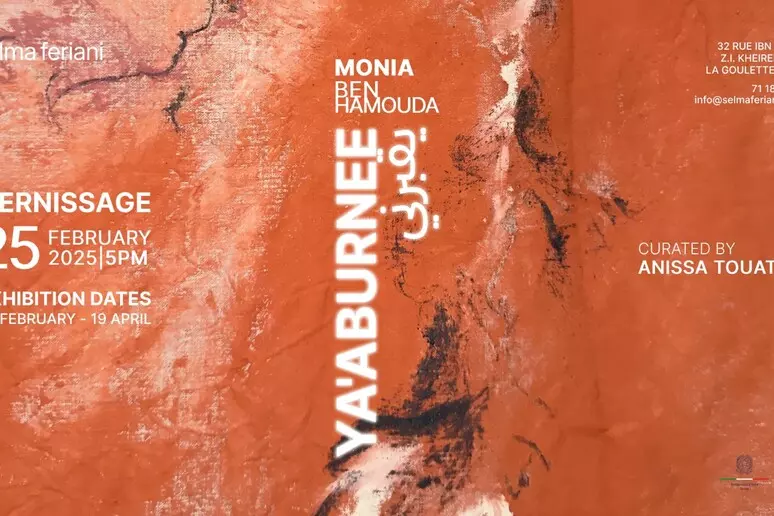
From 26 February next, Monia Ben Hamouda’s exhibition entitled ‘Ya’aburnee’, curated by Anissa Touati, will be open to the public at the Selma Feriani Gallery in Tunis in partnership with the Italian Embassy and the Italian Cultural Institute of Tunis.


 The exhibition by the Italian-Tunisian artist, who won the prestigious MAXXI BVLGARI PRIZE 2024 last December, takes its name from the Arabic concept that translates as “you bury me”, reflecting the altruistic desire for a loved one to outlive himself.

Love and sacrifice, omnipresent in the exhibition, explore the complex ideas of language, history and understanding through an installation spanning three floors of the gallery, combining painting, sculpture and sound works, blurring our relationship with space.

Ben Hamouda aims to capture the distinctive soundscape of Arab countries, emphasising how these sounds shape cultural identity and perception.

source/content: ansabrasil.com.br

____________

______________________
ITALIAN / TUNISIAN

ISLAMIC WORLD : 2nd ‘Building Bridges Between Islamic Schools of Thought’ conference concludes in Makkah

Participants from more than 90 countries discuss development of comprehensive Islamic identity

1,800-page ‘Encyclopedia of Islamic Intellectual Harmony’ prepared by 60 scholars

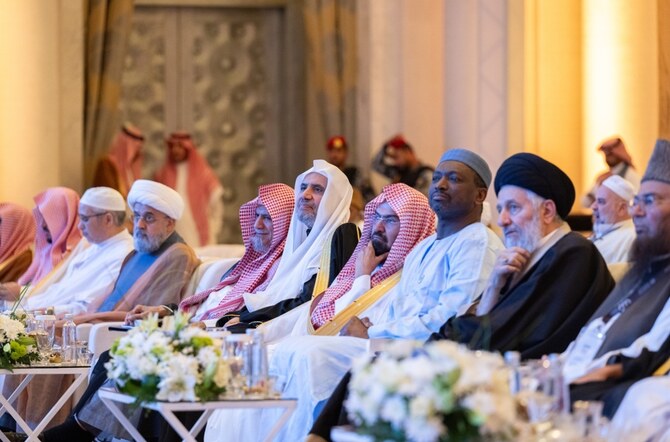
The second “Building Bridges Between Islamic Schools of Thought” international conference concluded in Makkah early on Saturday, with participants from more than 90 countries adopting the “Encyclopedia of Islamic Intellectual Harmony.”


Held under the patronage of King Salman bin Abdulaziz, the two-day conference gathered senior muftis, scholars, and thinkers who also approved the strategic and executive plan for the document “Building Bridges between Islamic Sects,” a media statement said on Saturday.

The conference was organized by the Muslim World League and held under the theme “Towards an Effective Islamic Alliance.”

The high-level session dedicated to the recitation of the conference’s final statement, which was issued at dawn on Saturday, was attended by the Secretary-General of the Muslim World League, and Chairman of the Muslim Scholars Association, Sheikh Dr. Mohamed bin Abdul Karim Al-Issa; Member of the Council of Experts for Leadership in Iran, Sheikh Ahmed Mobalghi; Adviser at the Royal Court in Saudi Arabia, Imam and Preacher of the Grand Mosque, Sheikh Dr. Saleh bin Abdullah bin Hamid; Head of Religious Affairs at the Grand Mosque and the Prophet’s Mosque, Imam and Preacher of the Grand Mosque, Sheikh Dr. Abdulrahman Al-Sudais; Secretary-General of the International Islamic Fiqh Academy of the Organization of Islamic Cooperation, Dr. Mustafa Qutb Sano; Member of the Council of Senior Scholars in Saudi Arabia, Dr. Youssef bin Mohamed bin Saeed; and the Mufti of Sidon in Lebanon, Sheikh Mohamed Osseiran.

The attendees witnessed the launch of the “Encyclopedia of Islamic Intellectual Harmony,” which was supervised by the Intellectual Protection Center at the Saudi Ministry of Defense, and was prepared by 60 scholars over about 1,800 pages.

The encyclopedia was refereed by the General Secretariat of the Council of Senior Scholars in Saudi Arabia, the Islamic Fiqh Academy, and the Supreme Council of the Muslim World League to be a roadmap for relations between Muslim sects.

Participants also decided in the final statement to consider the “Document on Building Bridges between Islamic Schools of Thought” with its 28 articles as the basis and starting point for the path of joint Islamic action “scientifically” and “intellectually,” with a view to strengthening brotherhood and solidarity among the peoples of Muslim nations.

The attendees further extended their sincere thanks to the leadership of the Kingdom for the great services they are providing to Islam and Muslims.

They also affirmed their pride in the comprehensive Islamic identity, and their supportive stance toward the steadfastness of the Palestinian people on their land, and their rejection of displacement and destruction projects.

The conference witnessed several sessions addressing developments in Palestine, Sudan, and Syria, as well as issues concerning Muslim minorities around the world.

source/content: arabnews.com (headline edited)

____________

____________________________________

SAUDI ARABIA / ISLAMIC WORLD


SAUDI ARABIA Ardah sets Guinness World Record in Riyadh

Performed on special occasions, the performance showcases the Kingdom’s heritage

It begins with the recital of a poem, followed by drummers setting the rhythm for the dancers

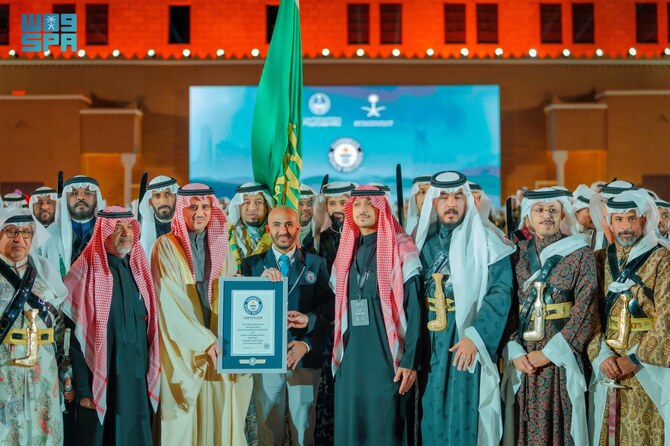
The Founding Day celebrations set a Guinness World Record for the largest Saudi Ardah performance in Riyadh, with 633 participants showcasing this traditional dance.

This achievement underscores the Ardah’s deep-rooted significance as a national tradition, reflecting pride in Saudi identity and a commitment to preserving and promoting cultural heritage globally, the Saudi Press Agency reported.

Organized by the Royal Commission for Riyadh City and the Principality of Riyadh Region from Feb. 20 to 23, the Founding Day event attracted hundreds of thousands of visitors from diverse backgrounds.

Performed on special occasions, the performance showcases the Kingdom’s heritage. It begins with the recital of a poem, followed by drummers setting the rhythm for the dancers.

The group leader then takes the stage, wielding a blade and demonstrating precise movements that mirror those of warriors in battle.

source/content: arabnews.com (headline edited)

___________

Founding Day celebrations set a Guinness World Record for the largest Saudi Ardah performance in Riyadh. (SPA)

__________________

SAUDI ARABIA

SUDAN : Renowned Sudanese folkloric singer Asia Madani passes away in Cairo

Well-known Sudanese singer and percussionist Asia Madani, who lived in Cairo, passed away on Sunday, the Sudanese Artists Union in Egypt reported.

Madani was born in Wad Madani, the capital of the Gezira State in central Sudan.

She started her career in her early years, moving to Egypt in the early 2000s, and quickly found her place in the country’s music scene.

Her initial breakthrough was on the Cairo Opera House stage.

Later, she became best known for presenting Sudanese folk music mixed with modern musical rhythms.

Madani performed with her troupe and joined many ensembles that focused on traditional and folkloric music of the south, earning herself the title of Messenger of Sudanese Folklore.

The star often spoke about her deep love for Sudanese rhythms, explaining that her journey in music began at a young age.

She highlighted how she learned diverse musical and vocal rhythms from different regions of Sudan — from the south to the north and the central areas — which greatly influenced her artistic style.

The singer was deeply influenced by the works of iconic Egyptian singers like Mohamed Abdel-Wahab and Abdel-Halim Hafez and even reinterpreted some of Sayed Darwish’s songs in her unique voice.

Moreover, Madani participated in the Nile Project, which she co-founded and which brought together African musicians from the Nile basin countries.

She was also featured in the documentary Far From the Nile presenting the project. The film was screened in the main competition of the Cairo International Film Festival (2022), winning awards.

Among her best-known songs were Jibal Al-Nuba (Mountains of Nubia), Al-Qamar Badawi (The Moon Shines), and Al-Zul (The Man).

Additionally, Madani participated in many international festivals and founded a children’s choir for Sudanese children in Egypt.

Numerous artists have expressed their sorrow after Madani’s sudden death.

“May God have mercy on you, forgive you, and grant you eternal rest. You were a true artist who loved her country and lived in her second country, Egypt. You were a strong person, never afraid to speak the truth, kind, pure-hearted, and a true artist who sang for the people everything she felt in a genuine way. Goodbye,” singer and songwriter Hani Adel wrote on Facebook. 

Sudanese director Amjad Abu Al-Alaa wrote on his Facebook account: “A great loss, Asia.”

“To be an artist with a beautiful voice and a following is a normal thing, but what is extraordinary is to have a message in what you present, to have your own artistic project based on Sudanese identity, the unity of the Sudanese people, its uniqueness, enriching and renewing its heritage, presenting it in an attractive way, and touring the world proudly and persistently,” Sudanese media personality Dalia Al-Tahir wrote on her X account. 

“This is what the true artist, the revolutionary soul from the heart of the country, Asia Madani, excelled in,” she expressed.

source/content: english.ahram.org.eg (headline edited)

_________

_________________

SUDAN / EGYPT

MOROCCAN Professor Anasse Bari Wins NYU’s Martin Luther King Faculty Award

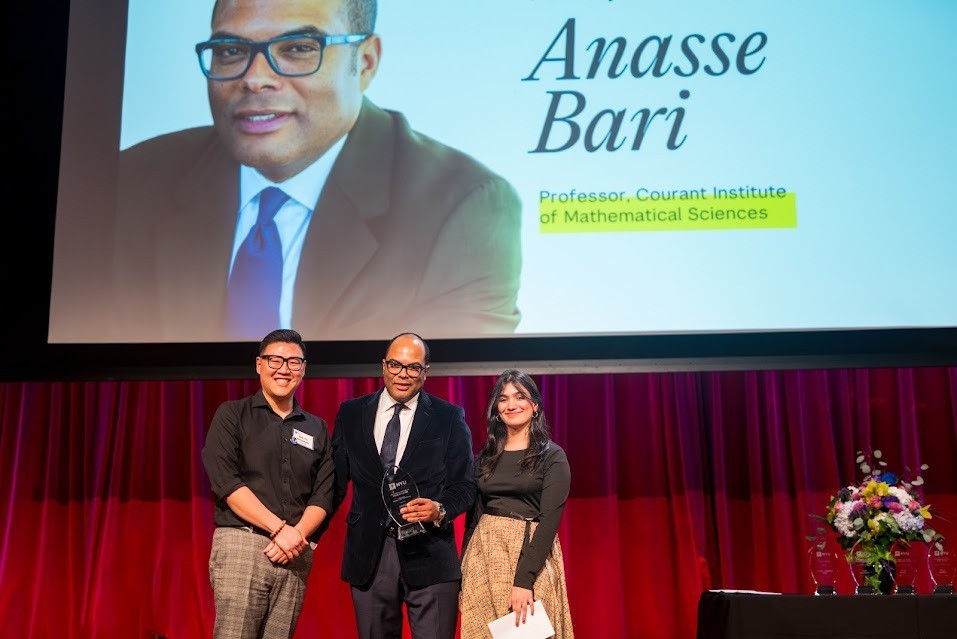
Moroccan professor Anasse Bari has received the Dr. Martin Luther King. Jr. Faculty Award for 2025 at New York University (NYU).

The award recognizes faculty members whose work demonstrates leadership and commitment to justice and fairness, all values that the American civil rights icon Martin Luther King Jr. promoted.

Speaking to Morocco World News, Bari expressed his pride in receiving the award. “I dedicate this award to my fellow Moroccans,” he said.

According to NYU’s website, the award is given to professors whose research and work contribute to positive social change.

“The Dr. Martin Luther King, Jr. Faculty Award recognizes outstanding faculty who exemplify the spirit of Dr. Martin Luther King, Jr.’s scholarship, life, and justice work and who promote the principles and ethos of Dr. King’s extensive global contributions in their research, teaching, leadership, and/or community-building efforts,” the university said.

It added that the process of selecting the faculty awardees involves significant student involvement. This includes students taking part in various stages such as award development, nomination, selection, and recognition.

This means that students play a role in identifying and honoring faculty members who have made a meaningful impact within the classroom, on student research, co-curricular activities, and broader community engagement.

Professor Bari, who leads NYU’s Predictive Analytics and AI Research Lab, has been involved in developing AI tools for healthcare, climate change, misinformation, and pandemic preparedness. 

Professor Anasse Bari and his AI researcher at NYU, Sana Sajjad (right) and Dr. Hua-Yu Sebastian Cherng, NTU’s Vice Dean of Research and Equity (left)

During an award ceremony on Wednesday, Bari said this recognition highlights the importance of working to serve communities while holding onto values of fairness and justice.  

The Moroccan professor teaches over 700 students annually, with focus on ethical AI and mentoring research projects that apply AI to solve social issues.

“Every day in my classroom, I encourage my students to use the skills they have learned at New York University to serve the world,” Bari said, noting that his students are finding “new ways” to use AI and data science to improve the world.

He explained that his students are using AI to combat misinformation, create automated tutoring tools, assist doctors in pandemic prevention, develop cleaner energy sources, and build “ethical, fair, and privacy-preserving” AI solutions.

“The remarkable work of our NYU students embodies the spirit of service and justice that Dr. King envisioned. This award gives me the opportunity to express my gratitude to my students—not only for their incredible contributions but also for the lessons they have taught me,” Professor Bari concluded.

source/content: moroccoworldnews.com (headline edited)

_________

_____________

MOROCCO

SAUDI ARABIA : Makkah hosts 10th international military Qur’an contest

179 participants from 32 Islamic countries to compete, promote moderate Islamic values.

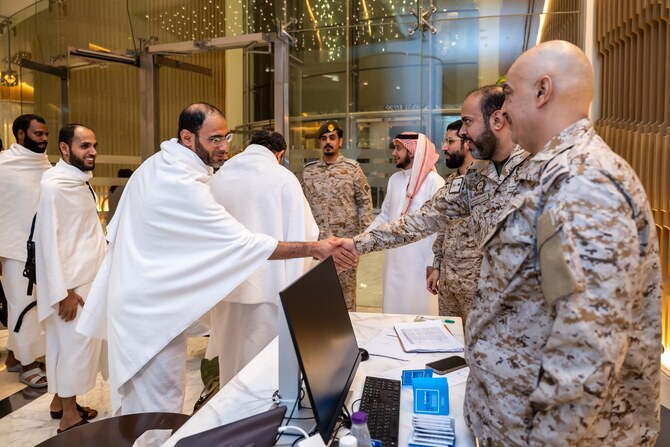
The 10th International Military Qur’an Memorization Competition launched on Saturday in Makkah, attracting 179 participants from 32 countries.

Organized by the General Administration of Religious Affairs of the Armed Forces under the patronage of Defense Minister Prince Khalid bin Salman, the event promotes the significance of the Qur’an, encourages its memorization, and highlights Saudi Arabia’s role in serving Islam’s holy book and as the custodian of Islam’s holiest sites.

The competition features six categories: full Qur’an memorization; 20-part, 10-part, five-part, and three-part memorization; and a special category for recitation and tajweed (proper pronunciation).

Parallel activities include a Qur’anic forum for religious affairs directors and imams, showcasing Saudi Arabia’s efforts in Qur’an printing, translation, and distribution.

The forum also discusses the Qur’an’s moral values, the Kingdom’s contributions through its ministries, and the impact of tajweed on understanding the Qur’an.

Additionally, the General Administration of Religious Affairs offers training programs for religious affairs personnel across the armed forces, focusing on Qur’anic teaching methods and enhancing the skills of instructors and competition judges.

Maj. Gen. Mesfer Al-Issa, director of the General Administration of Religious Affairs and competition supervisor, described the event as a significant initiative to honor the Qur’an.

Al-Issa emphasized the Kingdom’s commitment to hosting this event, reflecting the leadership’s dedication to serving the Qur’an.

In an interview with Arab News, he highlighted the event’s profound impact on participants, especially as it takes place in the holy cities of Makkah and Madinah.

Al-Issa said that the Qur’an guides soldiers, shaping their character and values, and encouraging psychological, behavioral, and spiritual stability.

Soldiers grounded in the Qur’an and Sunnah are more balanced and resilient, contributing to the development of morally and spiritually strong armed forces, he said.

The 14-day event will include 10 days in Makkah before moving to Madinah for four days, where participants will visit the Prophet’s Mosque and other Islamic landmarks.

Judges, including imams from the Two Holy Mosques and Qur’anic scholars, use an advanced electronic evaluation system called “Insaf” (Fairness) for transparent scoring.

Contestants receive immediate feedback on memorization, pronunciation, tajweed, and error rates.

Al-Issa said that soldiers are selected through year-long national competitions to identify top military memorizers.

The competition also serves as a platform for military personnel from Islamic nations to promote moderate Islamic values and a proper understanding of the Qur’an through scientific forums.

Al-Issa said that the competition strengthens the Qur’an’s role in Islamic armed forces, supporting efforts to memorize, recite, and reflect on its teachings.

This helps build a generation of soldiers rooted in Islamic knowledge and guided by noble values, he added.

source/content: arabnews.com (headline edited)

______________

Contestants arrive to participate in the 10th International Military Qur’an Memorization Competition in Makkah.

_________________

SAUDI ARABIA

EGYPTIAN-AMERICAN : Freeze-frame: U of A researchers led by Physicist Prof. Mohammed Hassan develop World’s Fastest Microscope that can see electrons in motion

Imagine owning a camera so powerful it can take freeze-frame photographs of a moving electron – an object traveling so fast it could circle the Earth many times in a matter of a second. Researchers at the University of Arizona have developed the world’s fastest electron microscope that can do just that.

They believe their work will lead to groundbreaking advancements in physics, chemistry, bioengineering, materials sciences and more.

“When you get the latest version of a smartphone, it comes with a better camera,” said Mohammed Hassan, associate professor of physics and optical sciences. “This transmission electron microscope is like a very powerful camera in the latest version of smart phones; it allows us to take pictures of things we were not able to see before – like electrons. With this microscope, we hope the scientific community can understand the quantum physics behind how an electron behaves and how an electron moves.”

Hassan led a team of researchers in the departments of physics and optical sciences that published the research article “Attosecond electron microscopy and diffraction” in the Science Advances journal. Hassan worked alongside Nikolay Golubev, assistant professor of physics; Dandan Hui, co-lead author and former research associate in optics and physics who now works at the Xi’an Institute of Optics and Precision Mechanics, Chinese Academy of Sciences; Husain Alqattan, co-lead author, U of A alumnus and assistant professor of physics at Kuwait University; and Mohamed Sennary, a graduate student studying optics and physics.

A transmission electron microscope is a tool used by scientists and researchers to magnify objects up to millions of times their actual size in order to see details too small for a traditional light microscope to detect. Instead of using visible light, a transmission electron microscope directs beams of electrons through whatever sample is being studied. The interaction between the electrons and the sample is captured by lenses and detected by a camera sensor in order to generate detailed images of the sample.

Ultrafast electron microscopes using these principles were first developed in the 2000’s and use a laser to generate pulsed beams of electrons. This technique greatly increases a microscope’s temporal resolution – its ability to measure and observe changes in a sample over time. In these ultrafast microscopes, instead of relying on the speed of a camera’s shutter to dictate image quality, the resolution of a transmission electron microscope is determined by the duration of electron pulses.

The faster the pulse, the better the image.

Ultrafast electron microscopes previously operated by emitting a train of electron pulses at speeds of a few attoseconds. An attosecond is one quintillionth of a second. Pulses at these speeds create a series of images, like frames in a movie – but scientists were still missing the reactions and changes in an electron that takes place in between those frames as it evolves in real time. In order to see an electron frozen in place, U of A researchers, for the first time, generated a single attosecond electron pulse, which is as fast as electrons moves, thereby enhancing the microscope’s temporal resolution, like a high-speed camera capturing movements that would otherwise be invisible.

Hassan and his colleagues based their work on the Nobel Prize-winning accomplishments of Pierre Agostini, Ferenc Krausz and Anne L’Huilliere, who won the Novel Prize in Physics in 2023 after generating the first extreme ultraviolet radiation pulse so short it could be measured in attoseconds.

Using that work as a steppingstone, U of A researchers developed a microscope in which a powerful laser is split and converted into two parts – a very fast electron pulse and two ultra-short light pulses. The first light pulse, known as the pump pulse, feeds energy into a sample and causes electrons to move or undergo other rapid changes. The second light pulse, also called the “optical gating pulse” acts like a gate by creating a brief window of time in which the gated, single attosecond electron pulse is generated. The speed of the gating pulse therefore dictates the resolution of the image. By carefully synchronizing the two pulses, researchers control when the electron pulses probe the sample to observe ultrafast processes at the atomic level.

“The improvement of the temporal resolution inside of electron microscopes has been long anticipated and the focus of many research groups – because we all want to see the electron motion,” Hassan said. “These movements happen in attoseconds. But now, for the first time, we are able to attain attosecond temporal resolution with our electron transmission microscope – and we coined it ‘attomicroscopy.’ For the first time, we can see pieces of the electron in motion.”

source/content: eurekaalert.org / University of Arizona / (headline edited)

_________

Mohammed Hassan, associate professor of physics and optical sciences, let a group of researchers in developing the first transmission electron microscope powerful enough to capture images of electrons in motion.

___________________________

AMERICAN / EGYPTIAN

EGYPTIAN-BRITISH : Making history again! Egyptian heart surgeon Sir Magdi Yacoub innovates valves that grow naturally in body

Making history again! Egyptian heart surgeon Sir Magdi Yacoub innovates valves that grow naturally in body.

This pioneering innovation envisions the development of biological heart valves that can grow and be accommodated naturally within the human body. This opens the door to a new era in heart disease treatment. 

The prospect of heart valves naturally expanding within the body, a concept once confined to science fiction, is now on the brink of realization, thanks to the remarkable discovery spearheaded by renowned heart surgeon Professor Sir Magdi Yacoub.

While the initial study documenting this breakthrough was unveiled in Nature in 2023, recent media coverage has underscored its practical implications.

Esteemed publications like The Times have pinpointed this cutting-edge innovation’s profound impact on biomedical science and medical engineering. They have recognized it as a monumental leap in the realm of healthcare.

On Monday, Dr. Yacoub discussed the latest developments in this field with Egyptian talk show host Amr Adib.

He explained how his team has engineered temporary heart valve scaffolds composed of surgically implanted fibres into the body.

These scaffolds gradually disintegrate over time, leaving behind a living, fully functional valve crafted from the patient’s tissues, a testament to the marvels of modern medical ingenuity.

source/content: english.ahram.org.eg (headline edited)

______________

Sir Magdi Yacoub

_____________________________

EGYPT / UNITED KINGDOM