Arabs & Arabian Records Aggregator. Chronicler. Milestones of the 25 Countries of the Arabic Speaking World (official / co-official). AGCC. MENA. Global. Ist's to Top 10's. Records. Read & Enjoy./ www.arabianrecords.org
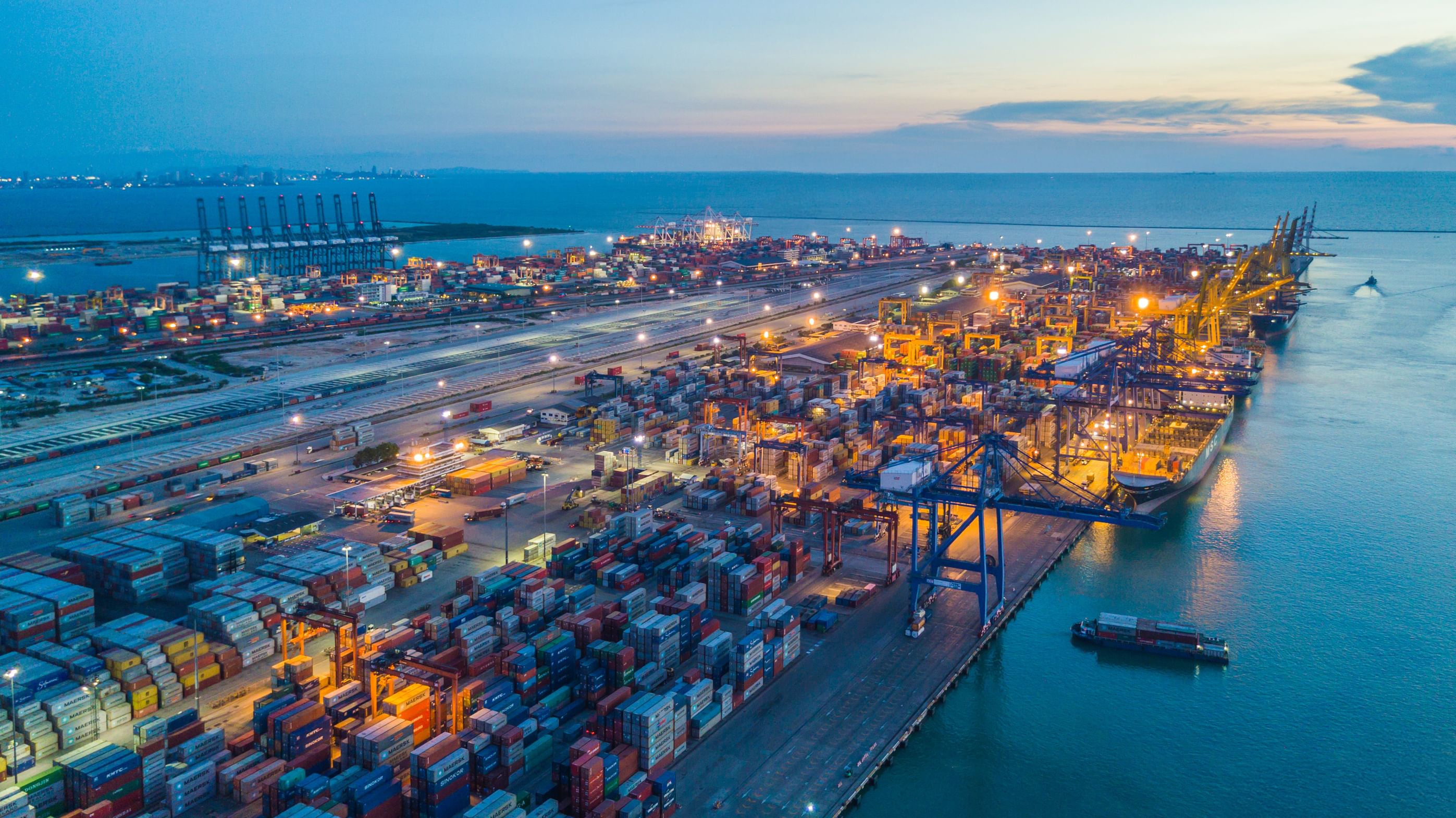
Dubai has reinforced its status as a leading global maritime hub, earning the title of “the crown jewel of the Middle East’s maritime sector,” according to the 2025 International Shipping Centre Development Index report, issued by Xinhua News Agency in collaboration with the Baltic Exchange. The report ranks Dubai among the top five global shipping centres and first in the Arab region.
Sheikh Dr. Saeed bin Ahmed bin Khalifa Al Maktoum, CEO of the Dubai Maritime Authority, part of the Ports, Customs, and Free Zone Corporation, hailed the achievement stating: “Dubai’s ranking as fifth globally and first in the Arab world in the 2025 International Shipping Centre Development Index reflects the vision of our leadership, as well as the effective coordination between strategic partners and maritime sector companies in the emirate.
We remain committed to continuous development, delivering world-class services, adopting global maritime best practices, implementing innovative solutions, updating regulations, and fostering a thriving maritime business environment to position Dubai as an innovative and sustainable global centre for shipping and logistics.”
The report highlights Dubai’s comprehensive maritime ecosystem, offering navigation services, shipbuilding and repair, and capacity to handle the increasing number of vessels. It also emphasised the Dubai Maritime Transport Plan 2030, aligned with the Dubai Economic Agenda D33, which aims to expand maritime transport usage, enhance the network of marine transportation, and develop Dubai Maritime City.
The report specifically praised Jebel Ali Port for its strategic role as a regional shipping hub, underpinned by continuous investment in infrastructure and services. In 2024, the port handled 15.5 million twenty-foot equivalent units (TEUs), the highest since 2015, accounting for 18% of the total 88.3 million TEUs managed by DP World, the port operator.
On sustainability, the report highlighted Jebel Ali Port’s initiatives to reduce emissions, including the provision of biofuel for ships, installation of 50,000 m² of solar panels for renewable energy, and the use of electric vehicles for container handling—contributing to an annual reduction of 2,000 tons of CO₂ emissions.
Captain Ibrahim Al Blooshi, Executive Director of Dubai Ports Authority, commented: “We take pride in this achievement, which underscores Dubai’s strong position as a global maritime hub. Jebel Ali Port, operated by DP World under the Ports, Customs, and Free Zone Corporation, continues to excel at both regional and international levels.
Dubai Ports Authority is committed to proactive measures to enhance the maritime sector’s contribution to the strategic objectives of the Dubai Economic Agenda D33, through its three ports—Jebel Ali, Port Rashid, and Hamriyah—despite global economic challenges and market fluctuations. We are dedicated to preserving the emirate’s marine environment and ensuring the highest operational safety standards in the maritime sector.”
Following its screening, Kaouther Ben Hania’s film The Voice of Hind Rajab (2025) received a 22-minute-long standing ovation — the longest in the Venice Film Festival’s history – culminating in theatre-wide chants to “Free Palestine.”
The film had its world premiere at the 82nd edition of the renowned Venice Film Festival, which runs until 6 September.
The film is also Tunisia’s official submission to the 98th Academy Awards.
The first screening of the film was completely sold out hours before its showing.
Several artists from the film’s cast and crew attended the screening, including lead actor Motaz Malhees, who held a photo of Hind Rajab on the red carpet and raised the Palestinian flag on the stage of the theatre after the film’s conclusion.
The film’s unprecedented success was reflected in the longest standing ovation in the festival’s history, with chants of “Free Palestine” resonating across the hall.
The Tunisian-French co-production also stars Amer Hlehel, Clara Khoury, and Saja Kilani.
“Film anchored in truth”
In a post-screening press conference, Kilani declared that “the Voice of Hind Rajab does not need our defence. This film is not an opinion or a fantasy; it is anchored in truth. Hind’s story carries the weight of an entire people.”
Film director Ben Hania also commented on Trump’s plans to turn Gaza’s coastline into a “Riviera,” saying, “When I think about Hind playing on the beach, and I think about this project, [I find myself asking] in what world do we live in?”
Hind Rajab
The film recounts the events of 29 January 2024, when Red Crescent volunteers received an emergency call. A six-year-old girl named Hind Rajab was trapped in a car under fire in Gaza, pleading for rescue.
While trying to keep her on the line, they do everything they can to get an ambulance to her.
The film uses real-life voice recordings between Hind and the Red Crescent correspondents, who attempted to rescue her from the unrelenting Israeli attack.
Explaining her vision for the film, Ben Hania said, “What I wanted was to focus on the invisible: The waiting, the fear, the unbearable sound of silence when help doesn’t come. Sometimes, what you don’t see is more devastating than what you do. At the heart of it is something very simple, and very hard to live with. I cannot accept a world where a child calls for help and no one comes. That pain, that failure, belongs to all of us.”
Kaouther Ben Hania
Kaouther Ben Hania is one of the most acclaimed filmmakers of the Arab World, known for her bold storytelling and cinematic innovation.
Her 2023 film, Four Daughters, won the L’Oeil d’Or at Cannes and was nominated for Best Documentary at the 2024 Academy Awards.
Her 2020 feature, The Man Who Sold His Skin, was nominated for Best International Feature and won Best Actor at Venice’s Horizons Section.
Earlier works like Beauty and the Dogs (2017), Zaineb Hates the Snow (2026), and Le Challat de Tunis (2012) also earned international acclaim.
The groundbreaking invention aims to aid those with immune deficiencies and provide treatment for chronic infections in intensive care units where antibiotics are ineffective.
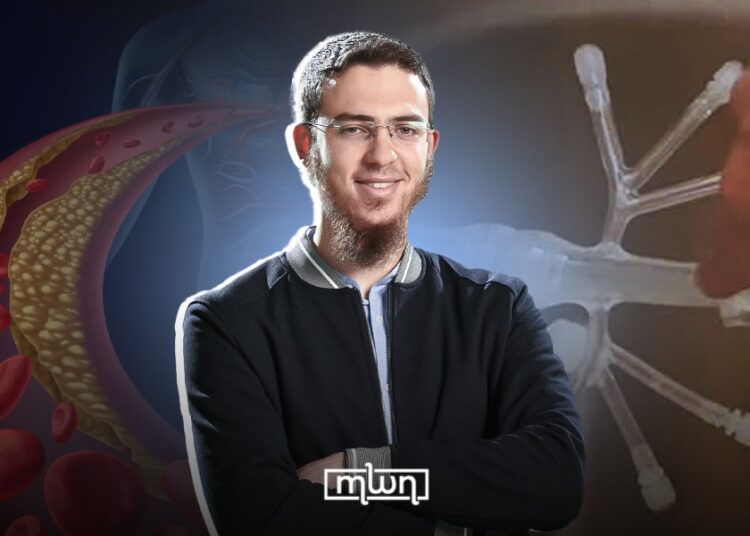
Youssef El Azouzi, a Moroccan neurologist, has announced the successful development of the world’s first device capable of filtering blood from within blood vessels.
The revolutionary invention can direct inflammatory cells and certain white blood cells, potentially helping millions of people suffering from immune deficiencies and improving organ transplant success rates.
In a Facebook post, El Azouzi explained that his device “will contribute to treating tens of millions of people suffering from immune deficiencies and chronic infections in intensive care units where antibiotics are ineffective.” He added that it would “help in organ transplantation without fear of new organ rejection.”
The invention works by redirecting inflammatory cells flowing in the blood away from vessels that nourish newly transplanted organs, preventing rejection.
This mechanism was successfully tested on a 75-kilogram pig in an American laboratory, where the device demonstrated its ability to direct immune cells from the left leg to the right leg without any negative effects on the animal.
“The experiment showed that the device was able to direct immune cells from the left leg to the right leg,” El Azouzi explained in a video documenting his journey to America to register the invention. “This is the first device that controls cell direction from within the vessel itself.”
The scientific experiment involved injecting both thighs of the pig to induce inflammation before placing the device. The device’s role was to direct inflammation-causing cells to only one side, concentrating them there compared to the other side. This would demonstrate the device’s actual control over the pathways of white blood cells flowing in the blood.
El Azouzi revealed that the project cost approximately $250,000 as of March, not including effort and time. “All these resources were provided by benefactors, with no contribution from any public institution or organization,” he noted.
The Moroccan doctor is no stranger to innovation. In 2019, he won the title of best inventor in the Arab world in the 11th season of “Stars of Science” competition in Qatar. His winning invention then was a stent that regulates blood flow for heart patients, offering a potential low-cost alternative to current solutions like heart pumps.
Born in 1991, El Azouzi studied at the American School in Rabat before attending Oxford University for three years. He later moved to Boston University and eventually studied medicine in English at Turkish universities. He is the son of Mustapha El Azouzi, a Moroccan neurosurgeon.
He currently serves as CEO of Aorto Medical Company in the US, where he has been developing this latest invention through three years of hard work, design, and manufacturing.
This Moroccan invention marks a major breakthrough in modern medicine, potentially offering an effective tool for addressing immune deficiency problems and chronic inflammations, while improving the success of organ transplantation procedures.
Youssef El Azouzi, a Moroccan neurologist, has announced the successful development of the world’s first device capable of filtering blood from within blood vessels.
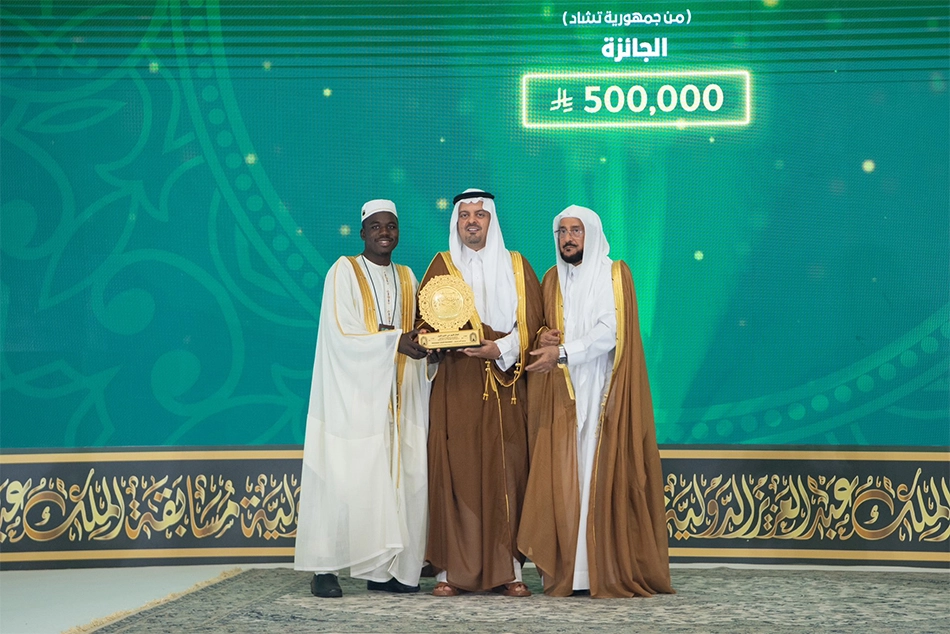
Chaad National, Mohammad Adam Mohamed has won the top prize at the 45th Edition of the King Abdulaziz International Holy Quran Competition or 2025 Makkah Quran Contest for Memorization, Recital and Explanation held at the Grand Mosque.
Makkah Quran Contest 2025: Chaad National, Mohammad Adam Mohamed has won the top prize at the 45th Edition of the King Abdulaziz International Holy Quran Competition or 2025 Makkah Quran Contest for Memorization, Recital and Explanation held at the Grand Mosque.
At a glittering ceremony held at Makkah Grand Mosque after Isha prayers Wednesday August 20, 2025, the Chaad national was awarded a cash prize of 500,000 Saudi Riyals or SAR 0.5 million prize.
The prize distribution ceremony was attended by all Imams of Masjid al Haram Makkah along with Deputy Governor of the Makkah Region Prince Saud bin Mishal bin Abdulaziz.
45th King Abdulaziz International Holy Quran Competition – List of Winners
The Makkah Quran contest 2025 was held in five categories. The winners of the first and most coveted category are as follows,
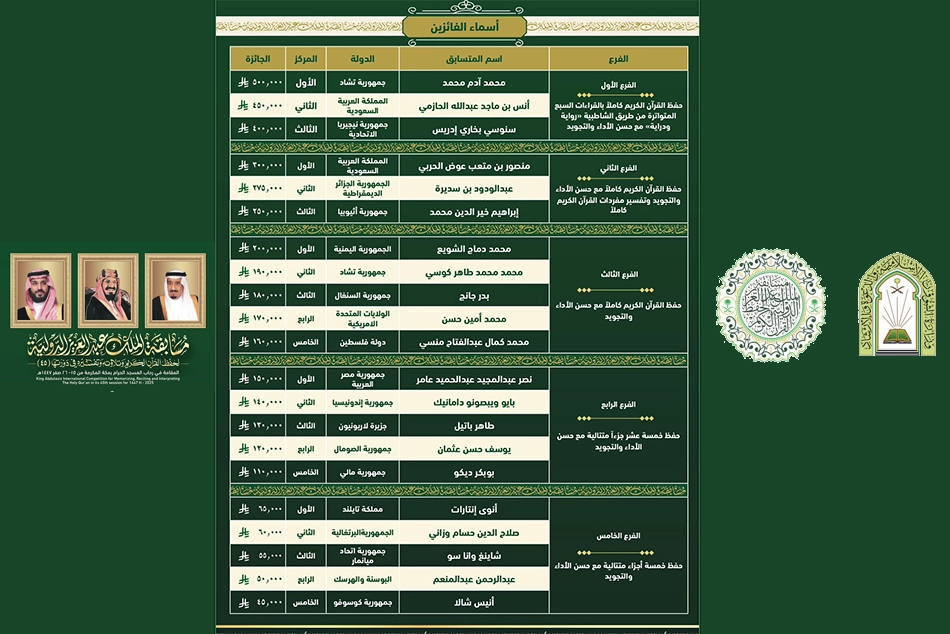
Mohammed Adam Muhamed (Chaad): Prize Money SAR 500,000
Anas bin Majid Abdulla Al Hazmi (Saudi Arabia): Prize Money SAR 450,000
Sanusi Bukhari Idrees (Nigeria): Prize Money SAR 400,000
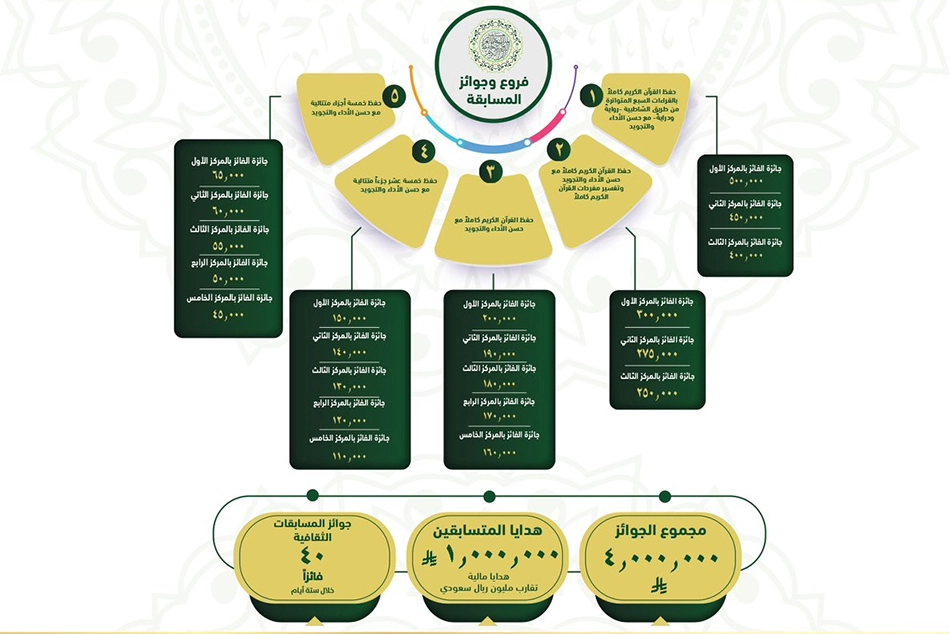
5 categories
The competition was divided into five categories:
Memorization of the entire Holy Qur’an, with accurate recitation and intonation following the seven rules of recitation
Memorization of the Qur’an along with interpretation of its terms
Memorization of 15 juz (parts) of the Qur’an with proper recitation and intonation
Memorization of five juz with correct recitation and intonation
A category for shorter lengths of memorization with corresponding recitation and intonation requirements.
Other winners
The total value of the competition’s prizes is around SR4 million ($1.07 million), in addition to SR1 million that will be apportioned out to all participants.
Mansoor bin Mutab Awad Al Harbi of Saudi Arabia won the top prize of SAR 300,000 in the second category. Mohamed Damaj Al Shuway’i of Yemen won the top prize of SAR 200,000 in the 3rd category.
Eyptian Nasr Abdel Majeed Abdul Hameed Amir won the top prize of SAR 150,000 in the 4th category. The top prize money SAR65,000 for the 5th category was conferred on Anwa Intarat of Thailand.
The 2025 Quran Competition brought together 179 contestants from 128 countries, the largest number since its inception. In 2024, a total of 174 contenders representing 123 countries participated in the 44th edition of the contest held in 5 categories.
Makkah Qurant Contest 2025 Final Round
The final rounds of the 2025 King Abdulaziz International Competition for Memorizing, Reciting, and Interpreting Holy Quran began last Saturday August 09th, 2025
The final round of the Quran contest continued till Thursday August 14, 2025 when a total of 27 contestants recited Quran as per the contest competition guidelines.
The 27 contestants were from Mauritania, the Philippines, Japan, Guinea-Bissau, France, the United States of America, New Zealand, South Africa, Barbados, Ivory Coast, Cameroon, Guinea, Germany, Zambia, Guyana, Comoros, Uzbekistan, Kyrgyzstan, Finland, Rwanda, Bangladesh, and Myanmar.
As part of the competition package, the participants visited different historical places of religeous and architectural importance. The participants on Saturday August 16 left for visit to The Prophet (PBUH) Mosque in Madinah.
Electronic Judging System
The highlight of the 2025 Quran Contest which ran through six days was electronic judging system. Since its introduction in 2019, the electronic platform has replaced traditional paper-based methods, increasing accuracy and transparency.
The Ministry of Islamic Affairs, Dawah and Guidance said it enhanced and upgraded the electronic judging system for the 45th King Abdulaziz International Competition for Memorizing, Reciting, and Interpreting the Holy Quran held this year.
The enhanced system is designed to improve the efficiency and fairness of the final rounds, bolster transparency, and support the ministry’s digital transformation efforts in line with Saudi Vision 2030.
Watch: Winners Reaction
source: youtube.com
The latest improvements to the system include faster and more accurate scoring, with results calculated more precisely and linked to a real-time electronic control panel for instant monitoring by the judging committee.
An electronic question bank is now used to draw questions from a comprehensive digital repository covering all five branches of the competition, ensuring diversity and fairness. The system also features automated processes that track verse sequences, sort and rank contestants, and issue results instantly, while documenting and analyzing competition data in real time.
The 44th edition of the King Abdulaziz International Competition for Memorization, Recitation, and Interpretation of Holy Quran was also held with the same schedule. Saudi National, Saad bin Ibrahim bin Hamd had won the top prize of the 2024 Makkah Quran Contest.
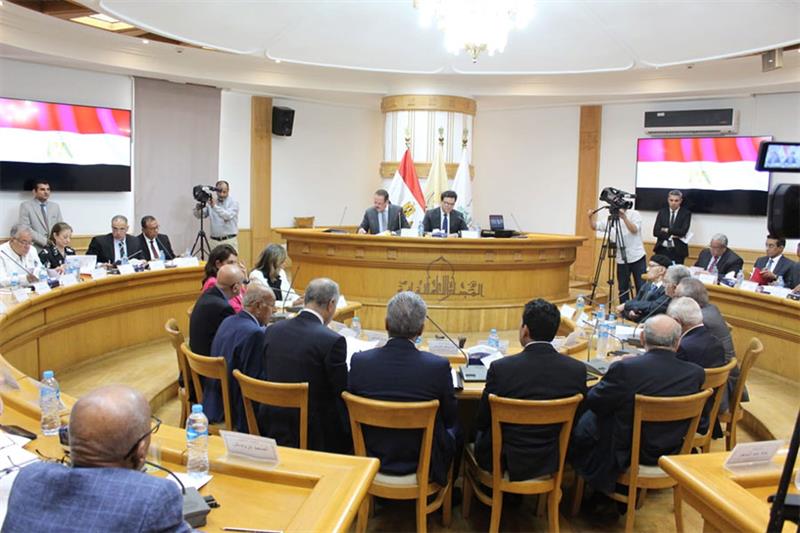
The Supreme Council of Culture (SCC), headed by Minister of Culture Ahmed Fouad Hano, has officially revealed the recipients of the 2025 State Awards.
The announcement, made via an official statement on the Ministry of Culture’s Facebook page on Tuesday, follows a comprehensive voting process that recognised individuals for their profound impact on Egypt’s cultural and intellectual spheres.
The distinguished awards include the Nile Award, the State Appreciation Award, the Excellence Award, and the Encouragement Award.
The selection process involved a meeting attended by leading intellectuals, academics, heads of cultural institutions, and representatives from professional unions.
Nile Award
The prestigious Nile Awards were granted to:
Arts category: Architect Dr. Saleh Lamai
Literature category: Dr. Ahmed Darwish
Social Sciences category: Dr. Ahmed Zayed
Nile Award for Arab Creators: Palestinian artist Suleiman Anis Mansour
Appreciation Award
The State Appreciation Awards were granted to:
Arts category: Theatre director Shaker Abdel Latif, visual artist Abdel Wahab Abdel Mohsen, and cinematographer Samir Farag.
Literature category: Poet Ahmed El-Shahawi, critic and writer Dr. Khayri Douma, and writer Fatma El-Maadoul.
Social Sciences category: University professors Dr. Anas Gaafar, Dr. Mohamed Sameh Amr, Dr. Mona Haggag, and Dr. Nevine Massad.
Literature category: Poet Masoud Shoman and Dr. Khaled Abou El-Leil.
Social Sciences category: Dr. Samah Fawzy, Dr. Atiya El-Tantawy, and Dr. Nahla Imam.
Encouragement Award
When it comes to the 2025 Encouragement Awards, 32 creatives were honoured across arts, literature, social sciences, and legal/economic studies.
Arts Category (8 prizes; 6 awarded, 2 withheld)
Piano Performance: Naghamaya Safwat for her rendition of Shostakovich’s Piano Concerto No. 2 with the Cairo Symphony Orchestra.
Film Script: Mahmoud Zein for Wala Azaa’ Lil Sayedat.
Children’s Book Illustration: Heidi Fawzy for Ta’aqqal… Ya Marah.
Theatrical Scenography: Nehad El-Sayed for Shatat.
Digital Media & Architecture: Mostafa Salem for an awareness series on heritage preservation.
Painting: Dr. Islam El-Reihany for The Music of the Body.
Withheld: Prizes for “E-marketing for handicrafts” and “Fiber Art”.
Literature (8 prizes)
Historical Novel: Doaa Gamal El-Bady for Crows That Don’t Eat the Dead.
Short Story Collection: Ahmed Yasser Fathy for A Very Lonely City.
Classical Poetry: Mohamed Refai for The Cry of a Coin.
Colloquial Poetry: Ibrahim Abou Samra for Balta Shi’r.
Computational Linguistics: Marwa Mostafa Amin for Functions of the Electronic Dictionary.
Narrative Criticism: Aly Kotb for Singing and Music in the Literature of Naguib Mahfouz.
Translation (Turkish-Arabic): Sousana Sayed Mohamed for A Strange Woman by Leyla Erbil.
Translation (Arabic to Asian/African languages): Shared by Dina Mohamed Bayoumi (Suspense and Horror Between China and Egypt) and Mohamed Abdelrahman Farag (Al-Mukhtasar Al-Shafi fi Al-Iman Al-Kafi).
Social Sciences
History, Archaeology & Heritage (shared):
Dr. Ahmed Ma’arouf for Walls with Gates: Political Borders in Islamic Historical Heritage.
Dr. Sherif Imam for Saad Zaghloul in Gramsci’s Mirror.
Geography & Environment: Dr. Shaimaa Mohamed Wehba for research on water pollution and income inequality in Egypt.
Philosophy & Anthropology: Irene Samir Hakim for The Many Faces of Female Genital Mutilation.
Educational Sciences: Dr. Mohamed Abdel Khaleq for Dimensions of Global Education in Stoic Philosophy.
Media: Student team (Ramaj Osman, Gharib Reda, Farah Abdelkarim, etc.) for the film Hayy Falasteen, directed by Martina Wagdy.
Administrative Sciences: Dr. Islam Abdel Bari for Decoding Buy Now, Pay Later in Egypt.
Documentation & Publishing: Dr. Alaa Jaafar Al-Sadiq for research on local journal indexing.
Digital Culture: Dr. Ahmed Magdy for How AI Has Changed the Film Industry.
Legal and Economic Sciences (6 prizes awarded, 2 withheld)
Inflation in the Egyptian Economy: Dr. Gehan Abdel Salam Mahmoud for Tackling Inflation amid Global Crises.
Climate Change: Dr. Ahmed Mohamed Okasha for Climate Change and Economic Sustainability.
Russian–Ukrainian War & International Relations: Shared by Dr. Raghda El-Beheiry, Dr. Adnan Moussa, and Mr. Mahmoud Kassem.
Geopolitical Shifts: Ahmed Abdel Fattah Askar for Strategic Transformations in the Horn of Africa (2020–2024).
Right to Privacy: Dr. Mohamed Mesbah El-Naghy for Constitutional Guarantees for Genetic Privacy.
Cultural Diversity Management: Dr. Mahmoud Hussein Abou Seif for The Principle of Non-Refoulement in European Human Rights Law.
Withheld: Prizes for “Personal Data Protection under Cyber Law” and “Citizenship Through Investment”.
Minister Hano emphasised that these awards represent one of the highest forms of recognition granted by the Egyptian state, describing them as the culmination of long and distinguished careers marked by creativity and dedication.
Hano reaffirmed the state’s continued commitment to supporting intellectuals and creators who contribute to strengthening Egypt’s cultural identity and promoting values of diversity, openness, and awareness, the statement pointed out.
Entrepreneur Yassine Khelifi is hoping to redirect agricultural waste into alternative energy sources to help ease the burden in Tunisia.
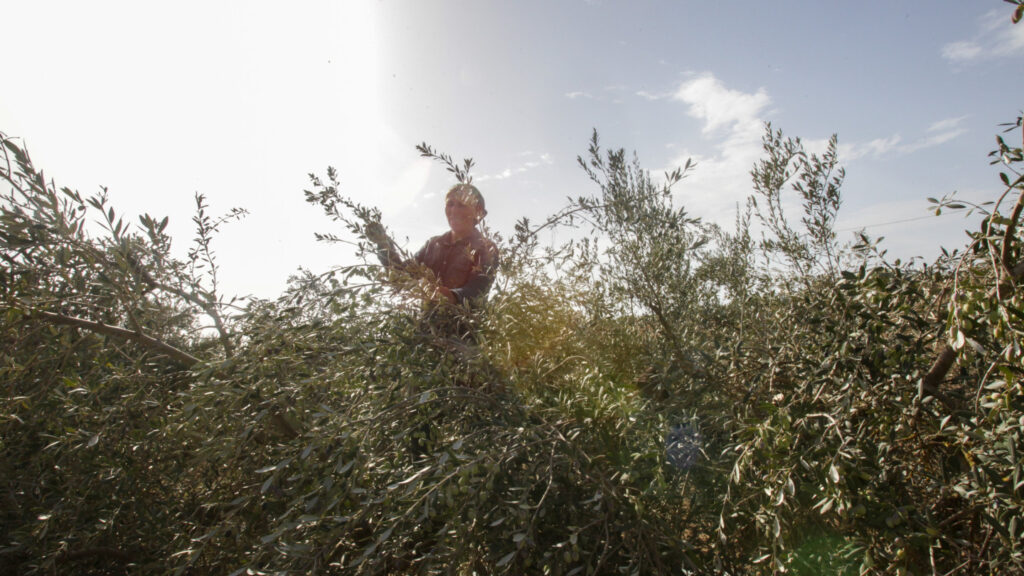
In a northern Tunisian olive grove, Yassine Khelifi’s small workshop hums as a large machine turns olive waste into a valuable energy source in a country heavily reliant on imported fuel.
Holding a handful of compacted olive residue — a thick paste left over from oil extraction — Khelifi said: “This is what we need today. How can we turn something worthless into wealth?”
For generations, rural households in Tunisia have burned olive waste for cooking and heating or used it as animal feed.
The International Olive Council estimated Tunisia will be the world’s third-largest olive oil producer in 2024-2025, with an expected yield of 340,000 tonnes. The waste generated by the oil extraction is staggering.
Khelifi, an engineer who grew up in a family of farmers, founded Bioheat in 2022 to tackle the issue. He recalled watching workers in olive mills use the olive residue as fuel.
“I always wondered how this material could burn for so long without going out,” he said. “That’s when I asked myself: ‘Why not turn it into energy?'”
Beyond profit, Khelifi hopes his startup helps “reduce the use of firewood as the country faces deforestation and climate change”.
Employees transport truckloads of olive waste at his workshop, stacking it high before feeding it into the processing machines.
The material is then compacted into cylindrical briquettes and left to dry for a month under the sun and in greenhouses before being packaged and sold.
The soul of olives
Khelifi began developing his idea in 2018 after he travelled across Europe searching for a machine to turn the olive paste into long-burning fuel.
Unable to find the right technology, he returned to Tunisia and spent four years experimenting with various motors and mechanical parts.
By 2021, he had developed a machine that produced briquettes with just eight percent moisture.
He said this amount significantly reduces carbon emissions compared to firewood, which requires months of drying and often retains more than double the amount of moisture.
Bioheat found a market among Tunisian restaurants, guesthouses, and schools in underdeveloped regions, where winter temperatures at times drop below freezing.
But the majority of its production — about 60 percent — is set for exports to France and Canada, Khelifi said.
The company now employs 10 people and is targeting production of 600 tonnes of briquettes in 2025, he added.
Selim Sahli, 40, who runs a guesthouse, said he replaced traditional firewood with Khelifi’s briquettes for heating and cooking.
“It’s an eco-friendly and cost-effective alternative,” he said. “It’s clean, easy to use, and has reduced my heating costs by a third.”
Mohamed Harrar, the owner of a pizza shop on the outskirts of Tunis, praised the briquettes for reducing smoke emissions, which he said previously irritated his neighbours.
“Besides, this waste carries the soul of Tunisian olives and gives the pizza a special flavour,” he added.
‘Protect the environment’
Given Tunisia’s significant olive oil production, waste byproducts pose both a challenge and an opportunity.
Noureddine Nasr, an agricultural and rural development expert, said around 600,000 tonnes of olive waste is produced annually.
“Harnessing this waste can protect the environment, create jobs, and generate wealth,” he said.
Nasr believes repurposing olive waste could also help alleviate Tunisia’s heavy dependence on imported fuel.
The country imports more than 60 percent of its energy needs, a reliance that widens its trade deficit and strains government subsidies, according to a 2023 World Bank report.
Fuel and gas shortages are common during winter, particularly in Tunisia’s northwestern provinces, where households struggle to keep warm.
Redirecting agricultural waste into alternative energy sources could ease this burden.
Yet for entrepreneurs like Khelifi, launching a startup in Tunisia is fraught with challenges.
“The biggest hurdle was funding,” he said, lamenting high-interest bank loans. “It felt like walking on a road full of potholes.”
But now his goal is “to leave my mark as a key player in Tunisia’s transition to clean energy”, he added. “And hopefully, the world’s, too.”
Climate-induced droughts drying up MENA’s olive oil production
A report on climate change by the World Meteorological Organization had found that “the warming has been more rapid in Africa than the global average,” adding that “increased temperature has contributed to a 34% reduction in agricultural productivity growth in Africa since 1961,” a greater drop “than any other region in the world.”
In an ominous note, the report also observed that “the warming trend for North Africa, around 0.41 °C/decade between 1991 and 2021, was higher than the warming trend for all the other African sub-regions.”
Heat waves pose a serious risk to the production of olive oil in North Africa, which accounts for much of the world’s supply. According top provisional data from the IOC, Morocco produced 160,000 metric tons of olive oil between October 1, 2020, and September 30, 2021, making that country the world’s fifth-biggest producer.
Tunisia, the world’s sixth-largest producer during that period, recorded 140,000 metric tons. Algeria and Egypt together had 100,000 metric tons.
With climate change becoming a more persistent aspect of everyday life, the consequences for olive oil look set to grow worse.
The Tunisian National Observatory for Agriculture predicts that Tunisia’s production of olive oil may drop 35 percent from its 1981-2010 average by 2050 and 70 percent from that average by the turn of the century. Production in Algeria, Egypt, Libya, and Morocco seems unlikely to fare much better in the face of global warming.
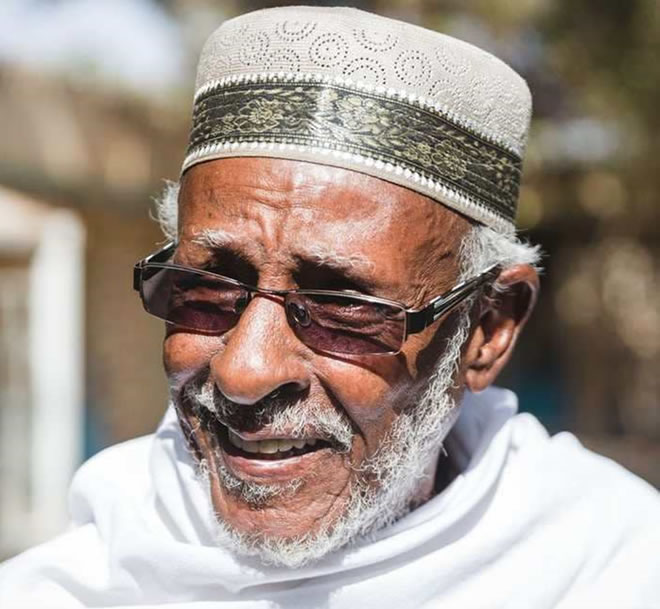
The great Somali poet, philosopher and scholar Mohamed Ibrahim Warsame (Hadrawi) passed away on the 18th of August 2022, in Hargeisa, Somaliland.
A national funeral was held in Hargeisa, and many Somalis from all parts of Somalia attended to pay their respects for the last time to the great man. The news of his death had brought tears to the eyes of every Somali, whether they met him or not. when you look around and see people of different walks of life commiserating about his death, you would think their own father had passed away.
He did not give these people materials for them to love him that much, but he acquired their hearts and minds by being sincere and trustworthy with his beliefs. Somalis and non-Somalis compared him to the great poets, philosophers, and scholars of the world, past and present. However, I think he transcends all, he was an ‘ummah’ in his own right.
Allah SWT when he was describing the personality of prophet Ibrahim said “Indeed, Ibrahim was acomprehensive [ummah] devoutly obedient to Allah, inclining toward truth, and he was not of those who associate others with Allah (Quran, 120:16)”. Allah described prophet Ibrahim as “ummah”, and the word ‘ummah’ in the Quran is used either to describe a nation (more than one person), or someone (like prophet Ibrahim) who is so great that his personality and beliefs are different from the society he lives in, and comprehensive that he can stand independently and single-handedly change the society from bad to good. In other words, someone who is not a follower of the majority of people that agrees on wrong decisions.
Instead, ‘ummah’ is a follower of truth even if the majority of people disagree with them. We can safely describe Hadrawi as being an ‘ummah’ in his own right. Because anyone who observes his life and his literary works, soon understands that Hadrawi was not your everyday person. He was an ‘ummah’ because he prided himself on liberty by refusing to be bought.
In the early 1970s, when almost every Somali was clapping in agreement with the communist regime that ruled Somalia from 1969 to 1991, Hadrawi stood up on his own and refused to bow down to oppression.
He was an ‘ummah’ when he freely opted to go to prison and suffer or worse, rather than clap for a tyranny.
In his latest book ‘Hawaale Warran’ he narrates what happened between him and the military regime, and how after he refused to bow down was arrested and put away in jail without justification whatsoever.
In 1973, Hadrawi wrote a play called ‘Aqoon iyo Afgarad’ ‘Knowledge and Consensus’ which he and his fellow poets Mohamed Gariye and Professor Muse Abdi Elmi presented in Lafoole Institution, located outskirt of Mogadishu.
The objective of the play was to advise the Somali people not to seek education outside the country, rather education was available on home soil, and there is no need to waste the nation’s wealth to send students abroad. It is worth mentioning, that at the time, the regime was sending its cadres and the children of revolution leaders to the Soviet Union, Europe and the United States for education and training, in the process, wasting the taxpayers’ hard-earned money. Hadrawi did not like that, hence his play knowledge and consensus’ addressed that.
The 1969 revolution leaders, in particular, the country’s president Mohamed Siyad Barre, did not like the play, and he thought it was anti-revolution and embarrasses his decision to spend a huge amount of the nation’s wealth on sending cadres outside the country.
He summoned Hadrawi to Afisyoni, his air force headquarters. Hadrawi said, men from the national guards took him there, and he met the president sitting under a tree. The president opened the conversation with the remarks “Hadrawi, I know you are anti-revolution, but why every poetry you compose are used against us?”. Hadrawi said, “I tried to convince him, and said, we (poets) compose poetry, and then people take it and interpret it to whatever makes sense to them”. Then the president concluded the meeting by saying “ask me whatever you want, but after today, I don’t want to hear any poetry of yours that people are using against us”. Hadrawi replied by saying “whatever Allah decrees is gonna happen”.
Hadrawi continued his work and created another play called ‘Tawaawac’. The play naked the misery and the disappointments Somalis inherited from the 1960 independence, and how a handful of military officers have hijacked the nation’s hopes after getting rid of colonisers. He likened this to a scenario where people are fighting over the meat of a slaughtered she-camel that was supposed to be spared for daily milking to feed the kids and the elderly. One of the song’s lyrics that Hadrawi created for this play says:
Weligay cad quudheed
Anna qaadan maayoo
Qalanjadan faraha dheer
Wax la qaybsan maayee
This translated into something like:
I will never accept
An offer with contempt
And I will never share anything
With this long-fingers beauty
Hadrawi said, the president, especially hated these four lines above, because he thought that I was taunting him and making fun of his earlier offer of ‘ask me what you want, but stop composing poetry’.
The next thing Hadrawi knew he was snatched from his home in the middle of the night by men from the security services under direct orders from the president. He was arrested without going before a court and thrown in jail at Qansax Dheere, in the Bay region far away from his residence. When asked why they took you all the way to Qansax Dheere, while there are many jails near your residence? He replied they wanted to brainwash me and break me into submission. They said to me you will be released immediately if you ask forgiveness from the father of the revolution (meaning the president).
Hadrawi was an ‘ummah’ when replying to this demand. He said to them “know there will be three scenarios with me, I die and go to my grave, I stay in prison, or I acquire my full freedom [without fearing anyone]”. He stayed in prison for five years, and again, as usual, he was an ummah in prison by continuing his struggle against tyranny. By this time, many Somalis woke up to the cries of Hadrawi from their deep asleep and started to see the tyrannical regime for it really was.
Hadrawi was an ‘ummah’ when the civil war happened in 1988-1991 by manifestly telling the struggle leaders ‘do not replace tyranny with another. He was an ‘ummah’ after the civil war in his ‘Peace Spring’ in 2003, when he travelled on the ground from Hargeisa to Kismayo, stopping in every town between them, literally hundreds of villages.
He was an ‘ummah’ by his devouted love of literature and writing. He comprised a whole poem about the importance of writing, he said:
Qalinkaa wax suureeya
Kugu sima halkaad doonto
Saaxiib kal furan weeye
Sunto fara ku hayntiisa
Weligaa ha si deynin.
Sisin iyo ku beer muufo
lyo laanta saytuunka
Ku gotomi sungaan waarta
Iyo nabadda seeskeeda
Samo iyo ku doon heedhe
Dunidiyo sinnaanteeda
The pen that can imagine for you
And can take you where you want
It is a friend with open heart
Regularly, keep it in your hands
And never let it go
Plant it among sesame and bread
And the branches of olive
And use it to spread in the world
peace, equality and justice
In these short lines, he was an ‘ummah’, the material of philosophy ‘abstraction’ he uses here to emphasise how important is to use writing to seek peace, prosperity, justice and equality, which is nothing short of genius. He was trying to kill one stone with the two old enemies of the human race: poverty and ignorance.
Equally important, he was an ‘ummah’ when he praised the Somali women for their beauty and bravery. He was a great admirer of the Somali women, although depicting their true nature without exaggeration or embellishments. In his poem ‘Horn of Africa Girls’, he said about the Somali women:
Hablo weerar geli kara, Hablo geela dhicin kara, Hablo geesi dili kara, Gobannimona hanan kara, Hablo talada goyn kara, Garta madal ka niqi kara, Garashana iskaga mida, Quruxdana ka wada goba; Geesteenna mooyee Geyi kale ma joogaan.
Girls that can go to war
Girls that can defend the camel
Girls that can acquire honour
Girls that can make decisions,
And publicly express their opinion,
And equally have high intellects
Girls that all blessed with beauty
Except, in our region,
Can they be found in anywhere else?
The examples of the great man are many, and it is impossible to mention them all in this short article. I would advise any admire to go to his works, and they will find an encyclopedia of knowledge, that will take them a lifetime to study.
Lastly, but not least, he was an ‘ummah’ by leaving instructions on how he wished to be treated after his death. He wrote a poem called ‘will’, in which he advised people to treat his death like any other, he said.
Qofka ii duceeyoow
Rabbigay ku darajee
Qofka iga ducaystoow
Dummaddaada weeyaan.
After many passages of the poem, he pleaded with people that they should not make a fuss about his death and funeral. His grave should not be built but should be left like other graves. People should not make a shrine of his grave, nor should they over-grieve or celebrate his life. In the last few lines, he prays for those who pray for him.
Finally, you lived as an ‘ummah’ and died as an ‘ummah’, there is nothing left to say but goodbye to our beloved teacher, philosopher, poet and role model. Your body might have departed this world, but your ideas and the knowledge you left for us and humanity, are eternal. I am sure people of the other side and angels are welcoming you with roses and open arms—they are congratulating you as you have accomplished your mission here on earth, advised your people and fought bravery in the way of Allah seeking justice, and freedom and equality for all. May Allah shower you with His Forgiveness and Mercy, light up your grave, and may He elevate your status and grant you Jannatul-Firdaus. May Allah resurrect you with the prophets, the steadfast affirmers of truth and the martyrs.
“And whoever obeys Allah and the Messenger – those will be with the ones upon whom Allah has bestowed favour of the prophets, the steadfast affirmers of truth, the martyrs and the righteous. And excellent are those as companions (Quran 69:4)”.
“Verily we belong to Allah and verily to him do we return”.
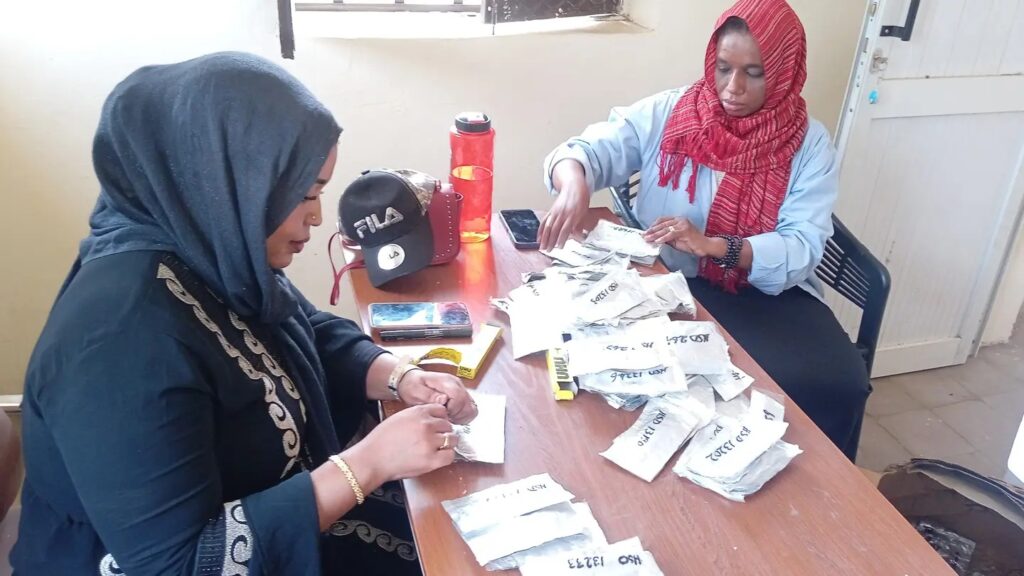
To safeguard a vital part of Sudanese agricultural heritage, scientists quietly moved copies of strategic crops to the frozen chambers of the Svalbard vault in Norway.
In December 2023, the civil war that had broken out the previous April between the Sudanese Armed Forces (SAF) and the Rapid Support Forces (RSF) took a troubling turn when the paramilitary group seized the country’s second-largest city, Wad Madani, in a swift offensive.
The sudden fall of Wad Madani, under circumstances that are not yet fully clear, dealt a heavy blow to the regular army and came as a shock to the hundreds of thousands of people, many of them displaced from Khartoum, who had come to see the city as a safe refuge.
The RSF’s advance quickly triggered a new mass displacement of people and disrupted the work of humanitarian agencies that had relocated to the city after the war broke out.
Like in other areas they have passed through, RSF fighters extensively looted Wad Madani and widespread abuses against the population were documented.
Although it drew little attention at the time, Sudanese scientists also issued a call to protect one specific facility in Wad Madani: the city’s seed bank, the most important in all of Sudan.
“We did not expect that the RSF would attack Wad Madani,” Ali Zakaria Babiker, director of the gene bank, told Middle East Eye.
“But when they did, all the staff fled the city to safer places.”
“We expected they would attack the gene bank,” he admitted, “because ever since they attacked Khartoum, [everyone] had already suffered a lot.”
Hidden cargo to evade checkpoints
Before the war, Sudan’s seed bank, managed by the Agricultural Plant Genetic Resources Conservation and Research Centre (APGRC), housed a collection of more than 17,000 accessions of crops and plant species, including sorghum, millet, wheat and sesame.
The collection, started in 1982, was a reflection of the crop diversity of Sudan, a country with rich biodiversity and a long agricultural tradition.
It also served as a repository for its agricultural genetic material, considered essential for both local and global food systems.
After fleeing Wad Madani, some APGRC staff met in el-Obeid, the capital of the North Kordofan region, where a subnational gene bank is located, holding copies of most of the material they had left behind.
One of their initial moves was to install a solar power system at the backup facility, ensuring a stable electricity supply to keep the freezers running and safeguard the seed copies.
At the same time, however, the staff began to develop a plan to extract as many copies of the seeds as possible and transfer them to a location where they could be safe.
“El-Obeid was also under threat from the RSF, so we went there straight away and took some duplicate accessions to dispatch them,” Babiker explained.
Their plan involved preparing more than 2,000 seed samples and sending them from el-Obeid to the icy chambers of Svalbard’s seed vault, located on the Norwegian island of Spitsbergen, deep in the Arctic and more than 7,000km from the capital of North Kordofan.
“[We decided to] dispatch them to Svalbard so that we would have a duplicate copy outside the country,” Babiker said.
One of their initial moves was to install a solar power system at the backup facility, ensuring a stable electricity supply to keep the freezers running and safeguard the seed copies.
At the same time, however, the staff began to develop a plan to extract as many copies of the seeds as possible and transfer them to a location where they could be safe.
“El-Obeid was also under threat from the RSF, so we went there straight away and took some duplicate accessions to dispatch them,” Babiker explained.
Their plan involved preparing more than 2,000 seed samples and sending them from el-Obeid to the icy chambers of Svalbard’s seed vault, located on the Norwegian island of Spitsbergen, deep in the Arctic and more than 7,000km from the capital of North Kordofan.
“[We decided to] dispatch them to Svalbard so that we would have a duplicate copy outside the country,” Babiker said.
“I did it to ensure that at least some of the seeds were preserved beyond Sudan’s borders.”
The scale of the mission was daunting: if they succeeded, APGRC staff would have managed to secure more than a quarter of Sudan’s seed collection in the depths of the earth.
The seeds selected included crops that have been grown in the region for thousands of years, amongst them key varieties of pearl millet and sorghum – a crop vital to Sudan’s food security, known for its drought resistance, and part of the country’s agricultural and cultural heritage.
“These [were] some of the main staple crops in Sudan, and also some of the oldest,” Babiker noted.
“They are essential for food security not only in Sudan, but also for the region – and for global food security as well.”
Before heading to one of the northernmost corners of the world, the seeds had to be taken out of el-Obeid as discreetly as possible and transported all the way to Port Sudan – the main port of the country, located in the northeast – from where they could be sent abroad.
Babiker described it as an “exciting” mission, particularly at the start, given that the RSF controlled almost all routes in and out of El Obeid.
To avoid potential trouble at checkpoints, the APGRC staff asked the truck driver transporting the seeds to load their boxes first, and only then pile on the rest of the load.
“The mission took more than 10 days because, for security reasons, it didn’t follow a normal road but routes unfamiliar to the RSF,” said Babiker, who added that no APGRC staff travelled with the shipment to avoid drawing attention.
After those 10 days on the road, the seeds finally made it to Port Sudan, although Babiker said the seed packages were scattered across the truck and had to be collected and organised.
Still, the first half of the journey – and the most challenging part – was now behind them.
Sudan Post to the rescue
Once in Port Sudan, the shipment of seeds to Svalbard was made possible because the Sudan Post courier service was still operating despite the war, said Nelissa Jamora of Crop Trust, an organisation dedicated to safeguarding the world’s crop diversity that supported the entire mission.
“Sudan Post was still functioning, at least in Port Sudan. So it was [arranged] through the regular postal service,” she told MEE, noting that there were three boxes of seeds in total.
On their way to Svalbard, the seeds made a stop at the Nordic Genetic Resource Center (NordGen), an organisation dedicated to safeguarding the Nordic region’s genetic resources.
There, the centre helped sort, catalogue, re-pack, and document the shipment from Sudan.
“It was a few days’ work for our seed technicians, but an investment well worth its price considering the importance of these seeds for the future of Sudan’s agricultural sector,” said Johan Axelsson, head of NordGen’s seed laboratory.
The seeds finally arrived at the seed vault on 25 February 2025, together with seed shipments sent by 19 other gene banks.
Established in 2008, the Svalbard Global Seed Vault has its storage area more than 100 metres inside a mountain, carved into solid rock and shielded by 40 to 60 metres of stone.
The mountain mass has a stable temperature ranging from -3 to -4 degrees Celsius, but the seed storage area is equipped with a cooling system that keeps it constantly at -18 degrees.
With more than 1,350,000 seed samples, the Svalbard Global Seed Vault is currently the largest backup facility for seeds and crop diversity in the world.
Owned by Norway, the site is operated by three partners: the country’s Ministry of Agriculture and Food, NordGen and Crop Trust.
Gene banks from all over the world can store backup copies of their seeds there free of charge and with no legal transfer of ownership, the seeds always remain property of the depositor.
Sudan made its first deposit in 2019 and today holds 1,884 accessions, a distinct, uniquely identifiable sample of seeds, from 15 different species, according to Svalbard’s website.
Jamora said that the difference from the more than 2,000 seeds initially sent by the APGRC from el-Obeid was likely due to some packages arriving in less-than-optimal condition and not making it into the final set, although they are preserved by NordGen and can be returned.
The mission to evacuate Sudan’s seeds was funded through an emergency reserve launched in 2021 by Crop Trust and the secretariat of the International Treaty on Plant Genetic Resources under the supervision of the UN Food and Agriculture Organization (FAO), to assist gene banks that are under threat.
In Sudan’s case, Crop Trust had been collaborating with the local gene bank before the war through a project called BOLD (Biodiversity for Opportunities, Livelihoods and Development).
“The mission aimed to secure as many seeds as possible,” Jamora noted.
Fears vindicated
Sudan’s army recaptured Wad Madani in January, and when the APGRC staff returned to their facilities, their worst fears were confirmed: the bank’s freezers, computers and servers had been looted, and the seed bags were torn open, their contents scattered across the floor.
However, with the support and funding from the emergency reserve jointly run by Crop Trust and the Plant Treaty, efforts to rebuild and start over are already under way.
For now, the gene bank is still assessing the losses, but it is also beginning to rebuild its seed collection despite limited state funds and power cuts that often last more than 12 hours a day.
When the situation stabilises, the centre hopes to be able to assess the state of its seeds and move into a regeneration phase, but this will require new freezers and other equipment.
During a meeting with the director of Sudan’s Agricultural Research Corporation (ARC) and FAO representatives, the governor of Gezira State – where Wad Madani is located – Tahir al-Khair, pledged to try to install a new cold storage facility for the gene bank.
In the meantime, at least, the seeds stored in the Svalbard vault remain safe, waiting for the day they can once again serve their country.
“We felt very relieved and reassured once we made sure we had these duplicate copies outside Sudan,” Babiker said.
The Finnish-Tunisian painter discusses her vivid multilayered piece, completed under quarantine in Tunis.
This is a breakfast scene from last summer, when my friend Petra was visiting my studio in Tunisia — a place that is very significant to my work.
My representative and I usually think about the titles of my works and we started researching the name ‘Petra.’ It’s a town in Jordan and it used to once be a great metropolis. And I thought that’s such a good metaphor for what I’m feeling about the world now: We thought that our whole world was something so great, but then it can easily be shaken by a pandemic. When you look back at the history of great metropolises, they, in the end, have come to ruins.
To me, there’s also the personal way of thinking about this situation: you understand that something needs to break in order for something new to come out of it. The whole world is now in a situation where everybody’s plans are cancelled and they have to rethink things.
The ‘satellite image’ part represents the table, and its shapes can indicate that it kind of looks like Earth, as if it’s taken from above. I don’t really know why I love using bold and bright thick layers of color, but for me, color is always something that has so many nuances. And now that I can paint, and manipulate the colors and the shapes, there’s just something that’s magical about it.
The colors are happy ones, but sometimes the subjects are not necessarily. I don’t want to just create beautiful images. Personally, I need to have a story.
I can’t really paint if I’m not feeling good, but that doesn’t mean that I’m only painting happy things. With this particular painting I struggled a lot, because it looked good but I felt like it wasn’t ready.
So I kept changing some of the colors and shapes but then I had to end up changing everything. When it was finally ready, I just felt that all the pieces of the puzzle are complete and there’s not even a doubt about it. It was kind of like when you fall in love with someone; you just know.
source/content: arabnews.com (headline edited)
___________
Dora Dalila Cheffi is Tunisian-Finnish multimedia artist. (Supplied)
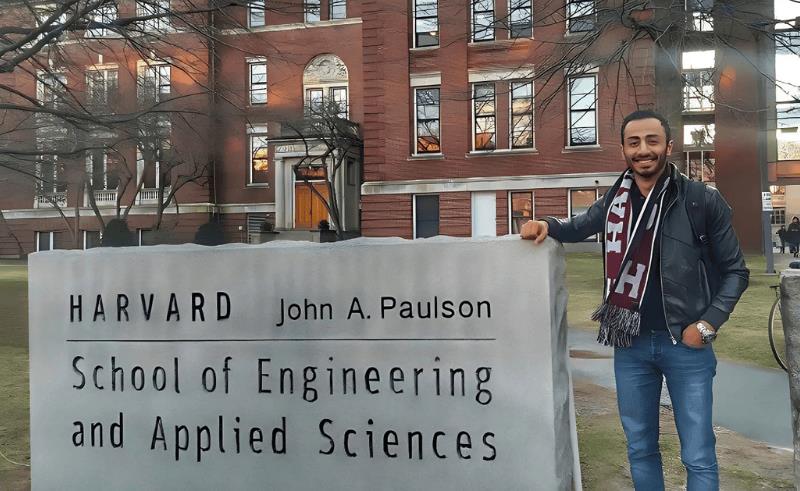
Egyptian physicist Kerolos Mousa played a role in a Harvard breakthrough using metasurfaces to control light at the photon level, which may pave the way for major advances in quantum technologies.
Kerolos Mousa, an Egyptian PhD student who hails from Minya, has contributed to a breakthrough in quantum physics at Harvard University, where a team of physicists developed a device capable of controlling the shape and path of individual photons with unprecedented precision.
The innovation is based on metasurface technology, engineered materials that can manipulate electromagnetic waves, and represents a major advancement in the way light is handled within miniature optical environments. Mousa led efforts to design the nanostructures critical to regulating photon behaviour.
The research, conducted at Harvard’s Applied Physics Lab and supported by leading US scientific institutions, was published in Nature, a top US science journal, and Science, a leading British publications. It was also featured on the university’s official channels.
The advancement is hoped to significantly impact fields such as quantum communication, quantum computing, and the development of next-generation smart optical devices.