Arabs & Arabian Records Aggregator. Chronicler. Milestones of the 25 Countries of the Arabic Speaking World (official / co-official). AGCC. MENA. Global. Ist's to Top 10's. Records. Read & Enjoy./ www.arabianrecords.org
Elevated above ground and connected to Riyadh’s metro, the skywalks help workers, visitors, and residents move easily.
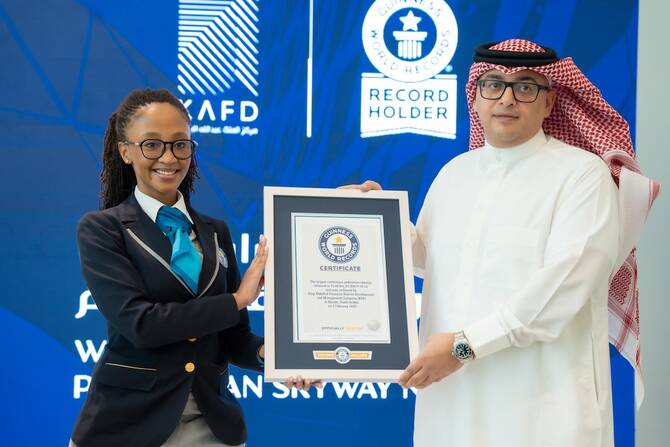
The King Abdullah Financial District in Riyadh was awarded a Guinness World Record on Sunday for the world’s largest continuous pedestrian skyway network.
The network spans 15.46 km, linking 95 buildings through 42 climate-controlled skywalks, allowing year-round pedestrian access.
Elevated above ground and connected to Riyadh’s metro, the skywalks help workers, visitors, and residents move easily through the district while avoiding traffic and weather.
Built with 30,000 sq. meters of glass and more than 3,000 tonnes of steel, the project required more than 5 million safe work hours from 1,200 personnel.
The skywalks connect offices, homes, shops, restaurants, and entertainment venues, making it easier to walk between work, home, and leisure.
“This recognition by Guinness World Records affirms KAFD as a platform for urban development,” said Faddy AlAql, chief asset delivery officer at KAFD Development and Management Co.
“The skywalk network reflects a mobility strategy that connects assets, enhances walkability, and supports our goal of delivering a smart city experience.”
Mbali Nkosi, official adjudicator for Guinness World Records, said: “First set in Minneapolis in 2016, this record has now been redefined by KAFD. In an era where sustainability drives innovation, KAFD’s skyway network sets a new benchmark for walkable urban design.”
The district hosts more than 90 international and local companies and 19 regional headquarters, including Goldman Sachs, Bain & Company, and PepsiCo.
source/content: arabnews.com (headline edited)
__________
Mbali Nkosi, official adjudicator for Guinness World Records, presents the award to Faddy AlAql, chief asset delivery officer at KAFD Development and Management Co. (SPA)
Unveiled during a ceremony in Damascus on Thursday
New emblem reimagines iconic Syrian golden eagle with symbolic elements representing country’s history, geography and post-conflict aspirations
The Syrian Arab Republic has launched a new national visual identity featuring a redesigned golden eagle emblem, in what officials described as a break from the legacy of authoritarianism and a step toward a state defined by service, unity and popular legitimacy.
Unveiled during a ceremony in Damascus on Thursday, the new emblem reimagines the iconic Syrian golden eagle with symbolic elements representing the country’s history, geography and post-conflict aspirations, the Syrian Arab News Agency reported.
The redesign forms the centerpiece of a wider national branding effort aimed at redefining Syria’s image at home and abroad.
The eagle has long held significance in Syrian history, appearing in early Islamic military symbolism, notably in the 7th-century Battle of Thaniyat Al-Uqab, and later as part of the 1945 emblem of Syria.
The new design retains this historic continuity but shifts its meaning, and the combative shield clutched by previous iterations of the eagle has been removed.
Instead, the emblem now features the eagle topped by three stars representing the people symbolically placed above the state.
The redesigned wings are outstretched, balanced rather than aggressive, with seven feathers each to represent Syria’s 14 governorates.
The tail carries five feathers symbolizing the country’s major geographical regions: north, south, east, west, and central Syria — a nod to national unity and inclusivity, SANA reported.
Officials described the design as a “visual political covenant,” aimed at linking the unity of land with the unity of national decision-making.
“The people, whose ambitions embrace the stars of the sky, are now guarded by a state that protects and enables them,” said a statement accompanying the launch. “In return, their survival and participation ensure the renaissance of the state.”
The emblem is designed to signal historical continuity with the original post-independence design of 1945, while also representing the vision of a modern Syrian state born from the will of its people, SANA said.
Officials said the elevation of the stars above the eagle was intended to reflect the empowerment and liberation of the people, and the transition from a combative state to a more civic-minded one.
The symbolism also reinforces Syria’s territorial integrity, with all regions and governorates represented equally. The design, they said, reflects a new national pact, one that defines the relationship between the state and its citizens based on mutual responsibility and shared aspirations.
The new emblem is also intended as a symbolic end to Syria’s past as a security-driven state, replacing a legacy of repression with one of reconstruction and citizen empowerment.
President Ahmad Al-Sharaa, who has positioned his administration as one of reform and renewal, described the change as emblematic of “a government emanating from the people and serving them.”
The visual identity was developed entirely by Syrian artists and designers, including visual artist Khaled Al-Asali, in a deliberate effort to ground the new identity in local heritage and creativity.
Officials said that the process was intended not only as a rebranding exercise but as a reflection of Syria’s cultural and civilizational legacy — and its future potential.
Foreign Minister Asaad Al-Shaibani, speaking at the event, framed the launch as part of a broader transformation in Syrian governance and diplomacy.
“In every encounter, we carried a new face of Syria,” he said. “Our efforts brought Syria back to the international stage — not as a delayed hope, but as a present reality.”
He said the country was now rejecting the “deteriorated reality” inherited from decades of authoritarian rule, and described the new emblem as a symbol of Syria’s emergence as a state that “guards” and empowers its people, rather than controlling them.
Al-Shaibani concluded his remarks by calling the moment “a cultural death” for the former regime’s narrative.
“What we need today is a national spirit that reclaims the scattered pieces of our Syrian identity, that is the starting point for building the future.”
source/content: arabnews.com (headline edited)
____________
The Syrian Arab Republic has launched a new national visual identity featuring a redesigned golden eagle emblem, in what officials described as a break from the legacy of authoritarianism and a step toward a state defined by service, unity and popular legitimacy. (SANA)
The UAE leads the global market in mobile shopping, according to the results of the Global Digital Shopping Index 2025, a joint study by PYMNTS Intelligence and commissioned by Visa Acceptance Solutions.
The study, which surveyed 1,679 consumers and 329 merchants in the country, showed that 67% of UAE consumers used their smartphones for their most recent purchase, a 23% increase compared to 2022.
The UAE also recorded the highest rate of mobile shopping at 37%, ahead of Singapore, the UK, and Brazil.
The country also recorded an advanced global rate of biometric authentication use (32%) when making online purchases, surpassing the global average of 17%. Fifty-three percent of consumers expressed a desire to shop across multiple channels, while 75% preferred rewards programs, 73% preferred free shipping, and 70% preferred price matching.
The report also indicated that 38% of shoppers in the UAE made their recent purchases using a mobile phone or computer, with the option of home delivery.
The results confirmed that consumers in the UAE are increasingly adopting a “mobile first” lifestyle, particularly among millennials, with a usage rate of 73%.
Commenting on the study results, Salima Joteva, Vice President and General Manager, Visa UAE, said, “The UAE’s approach reflects the great potential that can be achieved by uniting efforts to build the future of commerce. At Visa, we are working in partnership with the government and private sectors to offer innovative solutions such as Click to Pay to provide secure and seamless digital payment experiences.
These indicators reflect the country’s advanced regulatory environment and its continued support for the digital business ecosystem, enabling retailers to enhance customer experiences and achieve sales growth by offering flexible and secure payment options.
The Global Digital Shopping Index is based on a survey of 18,468 consumers and 3,464 merchants across eight countries, including the UAE, Saudi Arabia, the United States, the United Kingdom, Singapore, Australia, Mexico, and Brazil, during the period from October to December 2024.
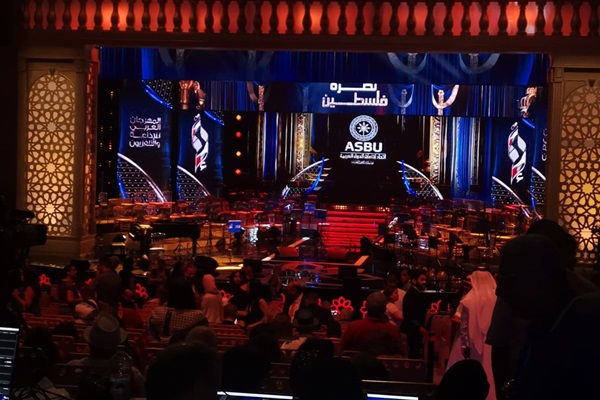
The opening ceremony concluded with a musical performance by Lebanese artist Ragheb Alama, with proceeds dedicated to supporting the people of Palestine.
Abdelrahim Suleiman, Director General of the Arab States Broadcasting Union (ASBU) and Mohammed bin Fahd Al-Harthi, President of ASBU and CEO of Saudi Broadcasting Authority (SBA), presented the awards to the winners of the 24th Arab Radio and Television Festival that was held in Tunis from June 26 to 29.
Part of the Text is Missing, a Kuwaiti TV show won the award for Best Arab TV Programme at the festival.
Saudi Broadcasting Authority (SBA) secured four radio and TV awards, including the second prize in the health programmes category for “Mental Health: Violence in Schools.” In the TV category, Saudi Arabia won three awards, including the second prize in the news category for talk shows, honouring the Saudi street programme on its episode about Vision 2030. Heritage in the Maqam of Hijaz took first prize in the general documentary films and programmes category, while the Saudi social drama series Al-Arbaji 2 secured second place in the social series category.
Additionally, the SBA received the second prize in the 2024 news exchange competition and also, the second prize in the 2024 programme exchange competition. The festival also honoured the judging panels for its radio and television competitions and distributed the exchange awards.
Qatar Media Corporation won three awards. Qatar TV took first prize for the documentary film Museums in Qatar, showcasing the distinctive museums of the country, and secured the second prize for Programme Exchanges of 2023 within the festival’s Arab Radio and Television competition in Tunisia. Qatar Radio won second prize in the “Notable Arab Figures” category.
The Ministry of Information, represented by the Sultanate of Oman Radio and the Sultanate of Oman Television, along with the private media institution Al Wisal, bagged 10 awards. Sultanate of Oman TV won four awards, including the Arab Joint Television Production Award for the documentary Holding Breaths, produced by the Ministry of Information and directed by Issa al Subhi.
Meanwhile, the Palestine Public Broadcasting Corporation (PBC) secured six awards. The radio programme Psychological Counseling in Times of War claimed first prize, while Radio Flash on school violence also earned top honours. Additionally, PBC received first prizes for radio news exchanges and a television report dedicated to the late journalist Mohammad Abu Hattab, a correspondent for Palestine TV killed by Israeli troops in Gaza. Furthermore, PBC was awarded second prize for the cultural programme Sadanat al-Riwaya and another award for the film Noura, produced by Palestine TV.
A powerful portrait of compassion under fire, ‘The Man Who Feeds Gaza’s Children’ takes home one of journalism’s highest honors.
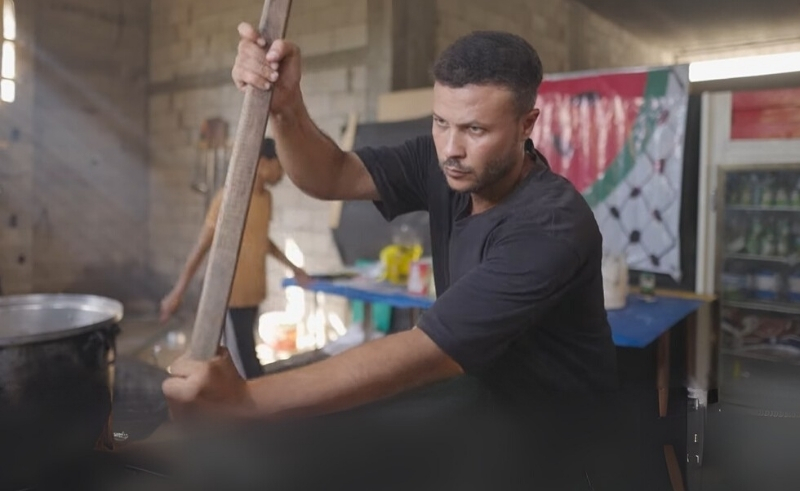
‘The Man Who Feeds Gaza’s Children,’ a short documentary following Gazan food blogger and humanitarian Hamada Shaqoura, has won a News & Documentary Emmy Award in New York, honoring its remarkable storytelling and emotional depth.
The film captures Shaqoura’s decision to set aside his food blog and cook for thousands of children and displaced families during the war in Gaza. He turned his kitchen into a frontline of resistance—preparing familiar comfort foods like chicken wings, tacos, croissants, and popsicles, often while bombs fell nearby.
“I cooked under bombs not for recognition, but because hunger doesn’t wait,” Shaqoura said following the win. “Gaza deserves to be seen.”
Led by Reem Makhoul, Senior Managing Producer at Business Insider, the film is part of a growing body of work that centers the human experience in conflict zones. By focusing on daily acts of care, the documentary invites viewers to see Gaza not only through the lens of tragedy, but also through the enduring power of resilience.
“This award is for every child who stood in line for a plate of food, to every family who shared it with love, and to every voice that refused to be silenced,” Shaqoura shared. “To the people of Gaza—you are the story. And now, finally, the world is listening.”
Also a James Beard Award nominee, the documentary’s recognition by the Television Academy underscores the strength of its message, a simple yet radical truth: feeding people is a form of dignity, and storytelling can be an act of survival.
The Rare Manuscripts exhibition in annex 204 of the southern courtyards, which is open from 8 a.m. to 9 p.m., showcases “historical manuscripts, documents, and inscriptions that trace the evolution of Islamic writing”
The corridors and courtyards of the Prophet’s Mosque feature “unique sites and exhibitions that enrich the visitor experience, offering historical and cultural insights that reflect Islamic heritage and Madinah’s hospitality,” according to an article published by the Saudi Press Agency on Saturday.
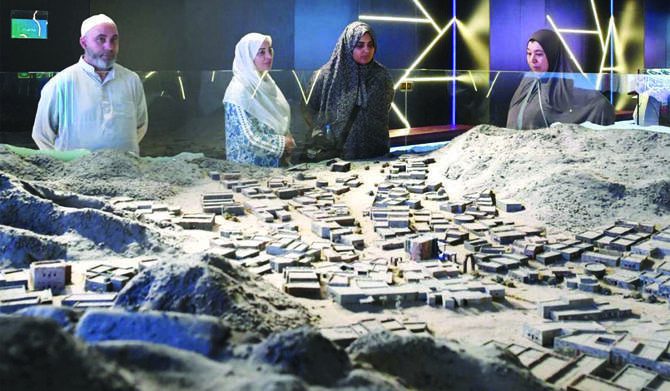
A key attraction is the Architectural Evolution of the Prophet’s Mosque exhibition, located on the southern courtyard opposite exits 308 and 309, which uses interactive displays to highlight the mosque’s architectural development. It is open daily from 4 p.m. to 10 p.m.
Opposite exits 306 and 307 is the International Exhibition of the Prophet’s Biography. Open from 4:30 p.m. to 10:30 p.m. daily, it offers “a contemporary presentation of Prophet Muhammad’s life and teachings.”
The Rare Manuscripts exhibition in annex 204 of the southern courtyards, which is open from 8 a.m. to 9 p.m., showcases “historical manuscripts, documents, and inscriptions that trace the evolution of Islamic writing.”
The mosque’s library, at gate 10 on the western side, is open 24 hours a day and includes sections on manuscripts, rare books, audio archives, and art collections.
Near Uthman Gate, the Manuscripts and Rare Books Department serves researchers and enthusiasts. It houses more than 4,000 original manuscripts, nearly 60,000 digital copies, 4,600 photocopies, and 450 different editions of the Qur’an. It operates in two shifts: 8 a.m.–noon and 4–8 p.m.
“Together, these exhibitions and centers enhance the cultural and educational value of visiting the Prophet’s Mosque, offering pilgrims a more enriching experience,” the SPA stated.
source/content: arabnews.com (headline edited)
_____________
The exhibitions enrich the visitor experience with historical and cultural insights reflecting Islamic heritage. (SPA)
Rumaih bin Mohammed Al-Rumaih was selected in a vote during the International Association of Public Transport’s summit in Hamburg
Al-Rumaih was selected for his expertise in developing modern transport systems, leading national projects and representing Saudi Arabia in international forums
The acting president of Saudi Arabia’s Public Transport Authority has been elected president of the International Association of Public Transport for the MENA region.
Rumaih bin Mohammed Al-Rumaih was selected in a vote during the association’s summit in Hamburg, Germany, this week. He will occupy the role until 2028.
Al-Rumaih was selected for his expertise in developing modern transport systems, leading national projects and representing Saudi Arabia in international forums, the Saudi Press Agency reported.
Having previously served as CEO of the Saudi Railway Company and president of the Transport General Authority, Al-Rumaih has a track record of working to improve the sustainability and quality of transport in urban settings.
“I am delighted to be with you today, and to start this new phase of work with a distinguished team that brings together a number of leaders and professionals,” he said during the conference.
“I believe that public transport is not just about infrastructure, but about experience, justice, accessibility, and sustainability.
Al-Rumaih highlighted the success of the Riyadh Metro system, which became fully operational earlier this year.
He said that the metro is witnessing high rates of usage and is changing commuter behavior in the capital.
“When we provide appropriate transportation services that are clean, safe, accessible, and reliable, people respond to and adapt to them,” he said.
Al-Rumaih also spoke about how building sustainable and people-centered transport systems requires collaboration between governments, operators, the private sector, and civil society.
“The International Association of Public Transport has always been a driver of this collaboration and will grow in importance in the years to come.”
Al-Rumaih also highlighted the findings of the MENA Transport Report 2025, which assessed trends in the industry in 40 cities across 14 countries in the region.
source/content: arabnews.com (headline edited)
___________
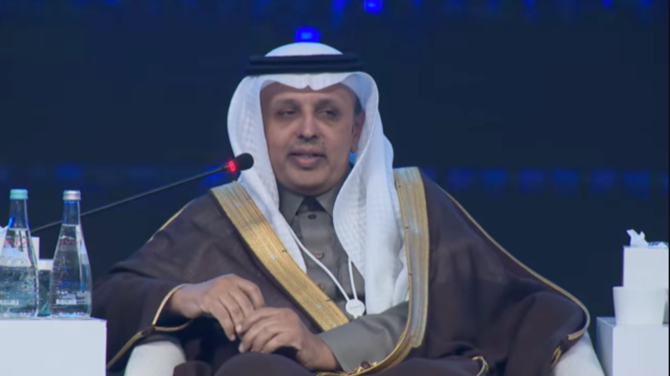
Vice Minister of Transport and Logistic Services Rumaih bin Mohammed Al-Rumaih. (Screengrab)
Rami Al-Ali has become the first Syrian designer to join France’s prestigious Federation de la Haute Couture et de la Mode as a guest member, giving him the chance to showcase his Autumn/Winter 2025 collection on the official haute couture calendar.
The invitation signifies Al-Ali’s entry into fashion’s upper echelons — to qualify, fashion houses must meet rigorous “haute couture” or “high fashion” standards and the title is legally protected under French law.
Al-Ali joins the likes of Chanel, Dior, and Schiaparelli on the official calendar next month. His latest collection will be presented on July 10, according to the provisional calendar.
It is a “historical milestone, celebrating a lifelong devotion to craftsmanship, culture, and creative expression, rooted in heritage and elevated by vision,” the fashion house posted on Instagram.
Originally from Damascus, Al-Ali honed his fashion skills in Dubai and Beirut before founding his label, Rami Al-Ali Couture, in 2001.
His creations have been worn by a variety of celebrities, including Amal Clooney, Eva Longoria, Jennifer Lopez, and Jessica Chastain.
Al-Ali’s work has been praised for seamlessly blending his Middle Eastern heritage with Western sensibilities. He is known for designing flowing silhouettes adorned with intricate, playful embellishments—creations that are both timeless and runway-worthy.
Al-Ali is one of just a handful of Arab designers on the official haute couture calendar. The lineup also includes Lebanese designers Georges Hobeika, Elie Saab, and Zuhair Murad, as well as Saudi couturier Mohammed Ashi.
Ashi, founder of Paris-based label Ashi Studio, became the first designer from the Gulf region to join the exclusive group in 2023 as a guest member. His designs have also been worn by global celebrities such as Beyonce, Anna Kendrick, and Jennifer Hudson.
“This appointment is the highlight of my career,” Ashi said in a statement posted on Instagram when the announcement was made in 2023. “I will honor it in the memory of the great couturiers who came before me and whom I now join in the pursuit of this grand tradition of excellence in creativity and savoir-faire.
source/content: arabnews.com (headline edited)
__________
Rami Al-Ali has become the first Syrian designer to join France’s prestigious Federation de la Haute Couture et de la Mode as a guest member. (Getty Images)
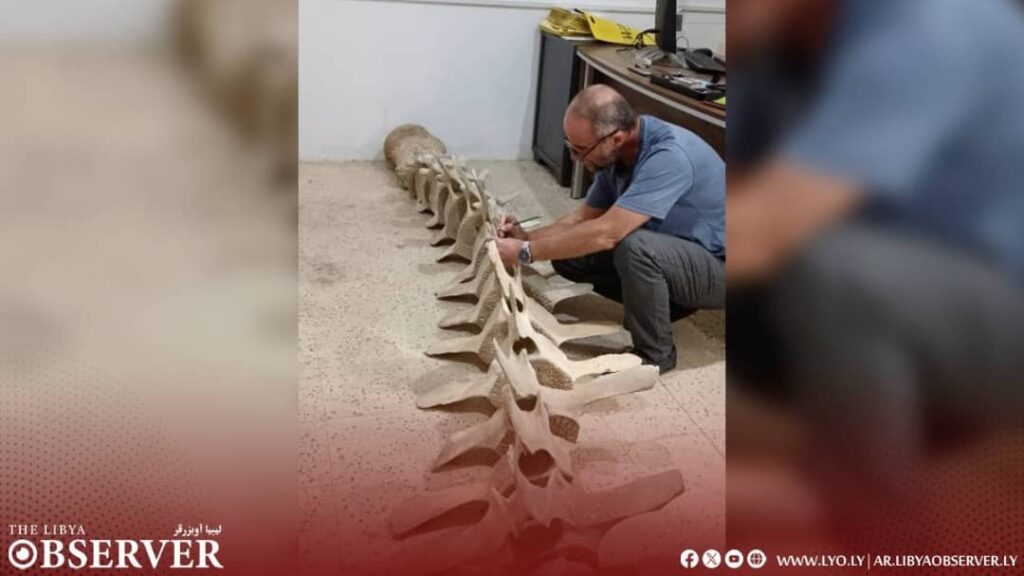
The Benghazi Department of Antiquities is preparing to begin restoration and display work on a whale skeleton belonging to the baleen whale group, previously discovered in the Qasr Al-Sahabi area, approximately 100 kilometres south of Ajdabiya.
The department stated that it has formed a scientific team tasked with cleaning and reinforcing the skeleton to preserve its structure ahead of a scientifically sound and safe relocation to its permanent exhibition site.
Officials noted that the discovery will be a significant addition to the city’s future museum and will help raise environmental and scientific awareness among visitors and enthusiasts.
The fossilized skeleton is estimated to be around five million years old, dating back to the Miocene epoch, making it one of the rarest geological discoveries in the region.
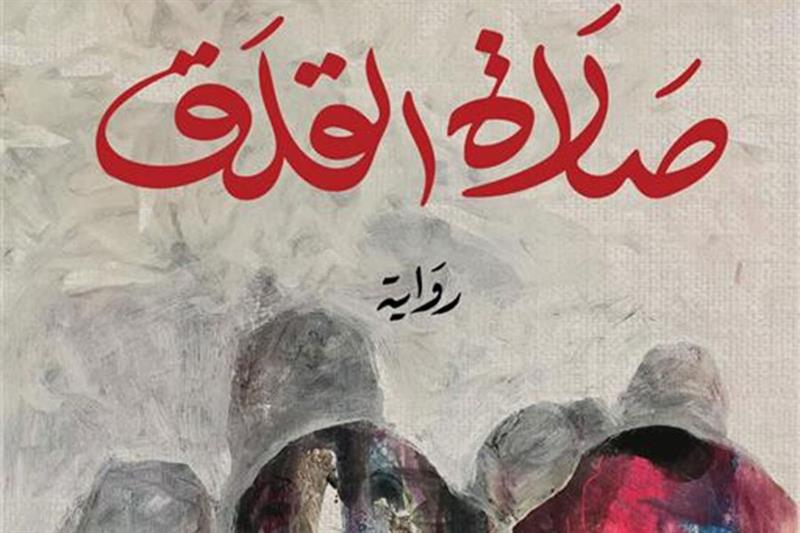
On 25 April, Egyptian author Mohamed Samir Nada was awarded the 2025 International Prize for Arabic Fiction (IPAF) for his novel The Prayer of Anxiety, a darkly allegorical tale set in a secluded village in Upper Egypt.
This marks the third time an Egyptian writer has won the prestigious literary award, following Youssef Zidan’s Azazel in 2009 and Bahaa Taher’s Sunset Oasis in 2008.
Nada’s novel, published by the Tunisian press Masciliana, was chosen from a six-title shortlist.
In a televised interview earlier this year, Nada revealed that he had turned to Masciliana after three Egyptian publishers declined to print the manuscript.
Set in the fictional hamlet of Nag’ Al-Manassi — literally “the village of forgetfulness” — the novel unfolds in a reality suspended in misinformation and fear.
Its inhabitants believe a minefield surrounds them and are still at war with Israel decades after the 1967 conflict.
Their only contact with the outside world is Khalil Al-Khoja, a local authority figure who produces the village newspaper, controls access to goods and maintains the illusion of unending war.
When a mysterious object falls from the sky, triggering an illness among villagers, the local sheikh responds by creating a new ritual prayer—The Prayer of Anxiety.
The plot evolves against the backdrop of national icons, culminating in the 1977 death of Abdel-Halim Hafez, a singer synonymous with the era of Gamal Abdel-Nasser.
Told through eight character “sessions,” each beginning with a nightmare and dreamlike awakening, the novel functions as both a dystopian fable and a meditation on collective delusion.
Nada’s characters offer confessional narratives haunted by guilt and helplessness. The result is a richly layered text that explores how fear and propaganda can distort memory and shape reality.
Mona Baker, chair of this year’s IPAF judging panel, praised the novel for “transforming anxiety into an aesthetic and intellectual experience that resonates with the reader and awakens them to pressing existential questions.”
Yasser Suleiman, Chair of the IPAF Board of Trustees, highlighted the novel’s “gripping poetic language” and its “clever use of symbolism,” calling it a powerful reflection on life under tyranny and the mechanisms that uphold it.
Yet the novel’s success has not gone without controversy.
Some critics have criticized its handling of Egypt’s modern history, especially its allusions to Abdel-Nasser’s legacy.
Literary critic Reda Attiya publicly dismissed The Prayer of Anxiety as “poorly structured” and accused the prize committee of rewarding a novel that “takes aim at Nasser,” calling it a “conspiracy against Egypt.”
Others pushed back. Novelist Mohamed Mawafai likened such attacks to the 1994 stabbing of Nobel laureate Naguib Mahfouz by a young man who admitted to never reading his work.
“Both are acts of incitement,” Mawafai said. “There is no difference between one and the other.”
Nada’s novel joins a growing wave of dystopian fiction in the Arab world.
In a recent study of the genre, Syrian novelist and critic Shahla Al-Ogaily argued that dystopian literature has gained traction in post-2011 Arab societies to confront painful political and social realities.
“This genre represents the inability to forgive,” she wrote, “and a confrontation with the hallucinations and phobic fears that emerged after the revolutions failed to deliver on their promises.”
Al-Ogaily traced the rise of Arabic dystopian writing to the translation of authors like Franz Kafka and George Orwell, whose works explored the horrors of surveillance, repression, and modernity.
The influence is evident in Nada’s novel — from Kafka’s The Metamorphosis, echoed when a village sheikh wakes up to find his head missing, to Orwell’s 1984, in the depiction of total narrative control and a fearful, manipulated public.
At its heart, The Prayer of Anxiety critiques political, religious, and media-driven systems that manufacture obedience and stifle thought.
Through poetic language and surreal events, Nada lays bare the quiet complicity that enables authoritarianism.
One of the novel’s characters voices the core dilemma:
“How many shooting stars must fall before we gain a new memory? How many men must die in war for old women to tell a different story?”
Despite occasional tonal inconsistencies—particularly between the elevated language and the characters’ rural backgrounds—the novel’s literary ambition, conceptual depth, and striking imagery have resonated widely.
The IPAF, launched in 2007 with support from the Emirates Foundation, awards $50,000 to the winner and $10,000 to each shortlisted author. This year’s judges included Said Bengrad, Maryam Al Hashimi, Bilal Orfali, Sampsa Peltonen, and chair Mona Baker.
With The Prayer of Anxiety, Nada has delivered a novel that provokes, unsettles, and — crucially — invites deeper engagement with the structures of power that shape the Arab world’s past and present.