QATAR: Msheireb Downtown Doha (MDD) in Guinness World Records for ‘Largest Underground Car Park’

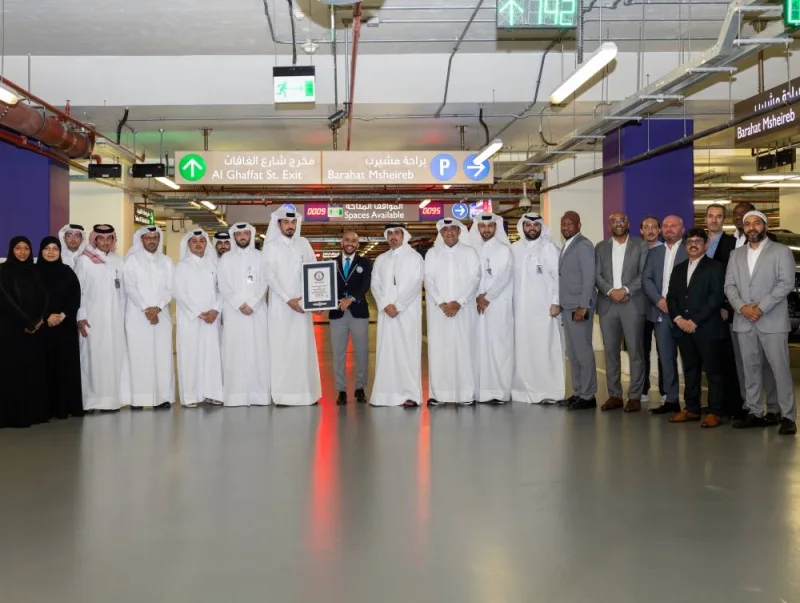
Msheireb Downtown Doha (MDD), Qatar’s pioneering sustainable and smart city district, has clinched the Guinness World Records title for the ‘Largest Underground Car Park’ with capacity of 10,017 spaces across six levels.

Locating car parking and building services underground has allowed the district to keep streets traffic-lite, enabling narrow, pedestrian-friendly walkways. This design improves connectivity across the wider city area, with underground basements extending over the entire district.

“We wanted to reclaim outdoor spaces for the community by removing vehicles from the streets around Msheireb,” said Msheireb Properties CEO engineer Ali al-Kuwari.

“The Guinness World Records for the Largest Underground Car Park is a testament to our dedication to creating a sustainable and innovative city district that prioritises the well-being of our community. By locating car parking and building services underground, we enabled architects to design attractive buildings with active façades on all sides.”

The MDD’s underground parking system ensures ample space for residents, tenants, and visitors. The facility boasts an intelligent parking system that guides drivers to available spaces, making the parking experience seamless and hassle-free.

The underground parking system also had a significant impact on building design by removing the need for back service entrances which improved street quality and aesthetic cohesion.

As the flagship project of Msheireb Properties, MDD has been designed to revive the historical downtown area with a new architectural language that is modern yet inspired by traditional Qatari heritage. The district incorporates the latest smart city technology and sustainability features, making it a model for future urban development’s worldwide.

Raafat Tawfik, Guinness World Records Official Adjudicator, said: “We are thrilled to recognise MDD for its outstanding achievement in creating the Largest Underground Car Park. This feat showcases the district’s commitment to innovation, sustainability, and enhancing the urban living experience.”

MDD’s underground parking is just one of the many features that make the district a unique and attractive destination. With its pedestrian-friendly streets, diverse mix of residential, commercial, and retail offerings, and cultural attractions such as the Msheireb Museums, the district has become one of Qatar’s go-to destinations for residents and visitors alike, a statement added.

source/content: gulf-times.com (headline edited)

__________

_________

QATAR

SAUDI ARABIA reelected to ‘Global Research Council’ leadership under the Vice Chairmanship of Munir bin Mahmoud Eldesouk

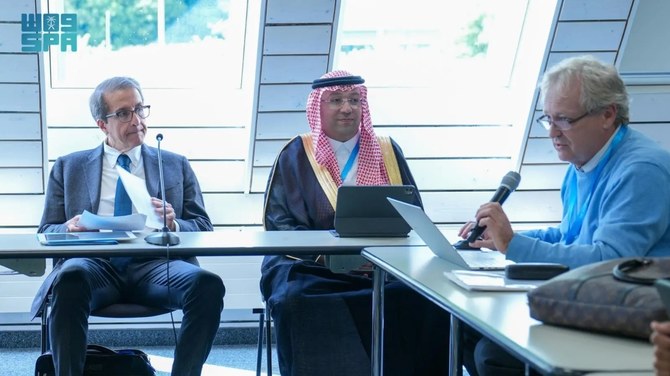
The governing board voted unanimously to reelect Vice Chairman Munir bin Mahmoud Eldesouki at the body’s 12th annual meeting.

The Kingdom has retained its leadership position in the Global Research Council, the Saudi Press Agency reported on Wednesday.

The governing board voted unanimously to reelect Vice Chairman Munir bin Mahmoud Eldesouki at the body’s 12th annual meeting in Interlaken, Switzerland this week.

The reelection to this position, for the second time since the body’s establishment in 2012, confirms the council’s confidence in Saudi Arabia, the SPA reported.

The council highlighted Saudi Arabia’s efforts in promoting research, development and innovation in the Middle East North Africa region, the report added.

The council comprises heads of research institutions that fund projects globally.

source/contents: arabnews.com (headline edited)

__________

The governing board voted unanimously to reelect Vice Chairman Munir bin Mahmoud Eldesouki at the body’s 12th annual meeting. (SPA)

__________________

SAUDI ARABIA

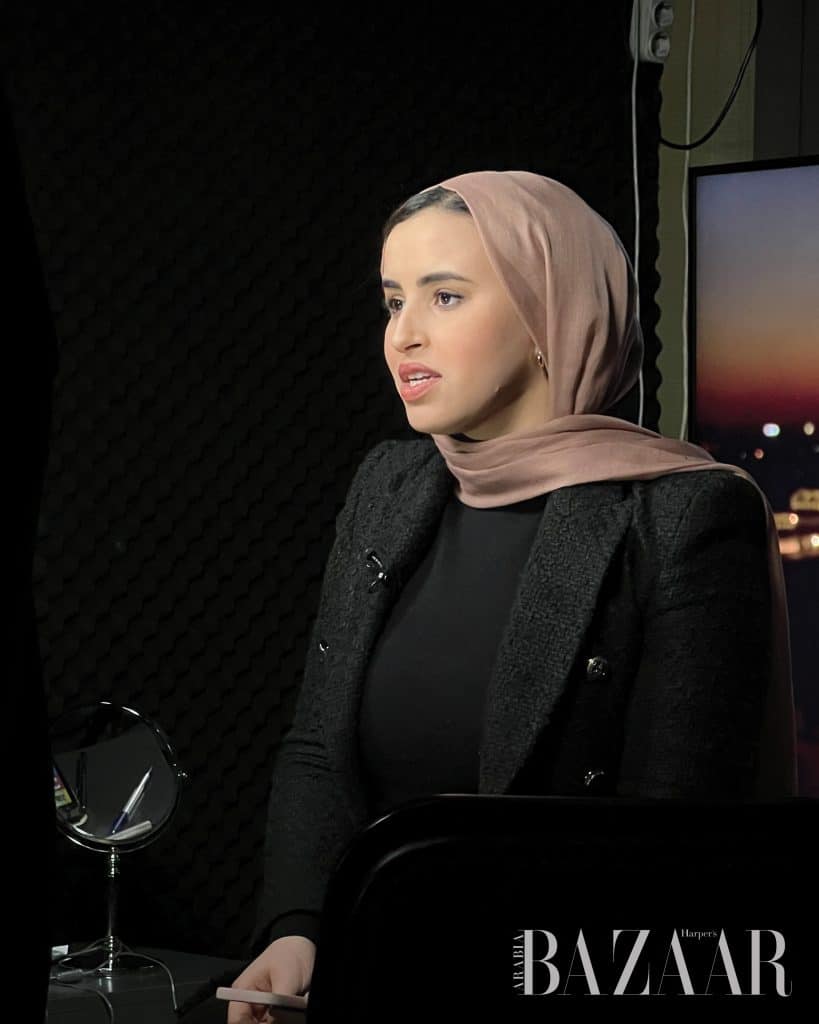
LIBYA-BRITISH: CNN’s Nada Bashir On How Her Arab Roots Are Helping Her Tell The Stories That Matter

The award-winning international correspondent talks frontline reporting, wearing the hijab on television, and how her personal connection to the Middle East makes her a better storyteller

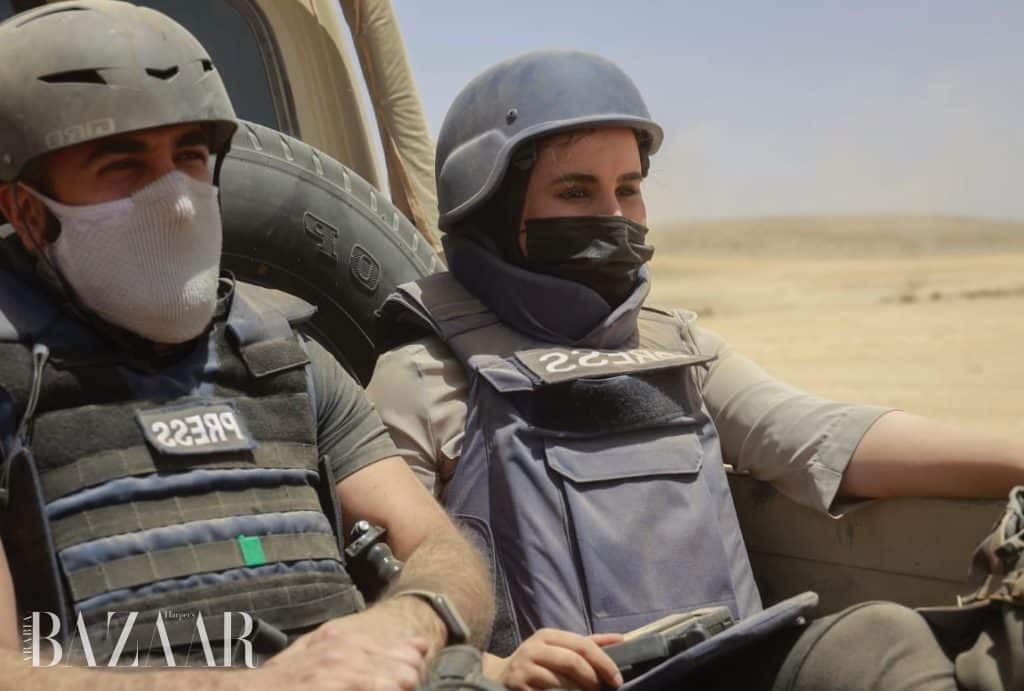
In Autumn 2019, when Turkey launched its incursion into northern Syria, 23-year-old Nada Bashir packed her camera and flew to northern Iraq to cover the story. At the time she was a freelance producer for CNN in London “pretty fed up of constantly being on the Downing Street shift and covering Brexit. I knew I wanted to be in the Middle East but wasn’t perhaps experienced enough,” she says. “So I decided to just go by myself… I felt very passionate about what was happening and I knew I wanted to be a part of it.”

It was a bold decision – both her first solo story and first solo trip to a hostile environment – but the risk paid off. Just five years later, she is an award-winning international correspondent who has reported from the frontlines of the conflict in Yemen and the devastating 2023 earthquake in Turkey.

Now 28, Nada is speaking from her home in West London. She flew in yesterday from Cyprus where she was covering aid ships heading to Gaza, and she will likely be dispatched again imminently although she doesn’t know when or where. She’ll pack a book and headphones but otherwise, “it’s all tech gear, medical kit and body armour”.

Unpredictable as this career may be, it is one that she has dreamt of since she was a teenager, watching the Arab Spring unfold: “We were all glued to the TV, seeing what was happening across the Middle East and back home. That was the moment for me when I was like, ‘actually this is what I want to do’.”

Back home is Libya from where Nada’s family originate, although her parents – her father was an aircraft engineer and her mother is a nursery teacher – left before she was born. “My dad was a pro-democracy activist,” she says. “He spent more than 30 years essentially in exile…It was something that we were all aware of, something that we talked about a lot.” It meant that growing up in Brighton, on England’s south coast, “the news was constantly on” but Nada never considered that she might one day be on screen herself. The middle of five siblings, she was “very shy” at school: “I vividly remember being forced to do a presentation, feeling like I was about to faint and going red in the face. I never ever would have pictured myself doing this.”

But after becoming involved in student TV while studying Politics and East European Studies at University College London, securing the internship at CNN and impressing her editors with her story from northern Iraq, an on camera career beckoned. “I spent so much of my childhood consuming news about what was happening at home and a lot of it coming from Western networks. There were a lot of things where you watched it and felt like the story of your people, your region, wasn’t being told fairly, properly or accurately,” she says. “Still there are times when I watch coverage and it’s frustrating because there’s a real lack of understanding around some of the cultural dynamics.

Being Arab isn’t essential to reporting on the Middle East, she says, but it does break down barriers: “Just being able to speak to people in their language, understanding their culture… Having that connection has made me a better storyteller.” The stories she tells are often difficult ones and they stay with her – the elderly Syrian refugee who lost his family in the Turkish earthquake, the 11-year-old Moroccan girl who guided her around a makeshift burial ground after the earthquake there last September, the Palestinian teenager detained without charge in the West Bank. Reporting on the war in Gaza has been particularly poignant: “Talking about the Palestinian cause is something that no Arab person hasn’t done. That is part of our cultural identity in a sense. That history is interlinked with all of the Middle East.”

Within the first week of war breaking out, Nada was in Jordan and Oman covering anti-war protests. Since then she has reported from Lebanon and Egypt but it is her time in the occupied West Bank – her first visit there – that has been most affecting. “That was a part of the story that we felt was being completely overlooked,” she says. “It’s not a new story. Palestinians in the West Bank have been marginalised, treated as second class citizens for decades”. She describes this reporting as “the most challenging” of her career to date, finding her objectivity over such a “polarising” story called into question. “There are so many assumptions about where your personal views might lie because of your cultural or religious background,” she says. “I am a visibly Muslim woman. My name is Arab. It’s very clear where I’m from…But with a story like this, it’s very difficult not to feel like your journalism is being undermined by assumptions of where you might stand.”

Many of those assumptions come from the fact that Nada wears the hijab. When she first started at CNN, she was “apprehensive at first – working for an American network and what that might mean in terms of how I fitted into that. Thankfully it’s never been an issue.” Being on air though, “has been slightly different”. Most difficult was reporting from London on the anti-regime protests in Iran. “For me, it’s a personal choice. You should have the freedom to choose whether you wear it…Covering the story was very important to me but I had a lot of backlash because a lot of people couldn’t understand how I could cover that, as somebody who chooses to wear the hijab, given that many women there were risking their lives and being persecuted for choosing not to.” On the flip side, she has also received “so many” messages from young hijab-wearing women who also aspire to be journalists: “I know that feeling because I felt like whenever I saw somebody wearing a hijab on TV.”

Today she feels like that when she sees the wider Arab diaspora experience represented, like in American comedy-drama, Ramy: “You feel the connection to it… It’s a blend of cultures and that is something that we identify with.” And when so much of her own work focuses on amplifying the voices of those suffering great hardship, she is grateful that there is increasingly space to celebrate the Arab world. “It’s sad because I think growing up, the only thing you’d really hear about the Middle East was war or conflict or political issues,” she says. “And there’s so much more to the region. There’s so much history, so much culture, so many people doing incredible things in different industries. It’s nice to see those aspects being showcased now, in magazines, in TV, in film, in music. To see that actually there’s a different side to the region, which has always been there. It just hasn’t really been given the platform.”

What Nada truly hopes is that when things improve in the Middle East, she will be there to report on it: “I can only hope that at some point there will be a positive change and I will get to cover that as well.” For now though, she has her bags packed, ready to head wherever the story takes her next: “It’s extraordinary; it’s a privilege and I wouldn’t change it for the world”.

Images Supplied / From Harper’s Bazaar Arabia’s May 2024 Issue

source/content: harpersbazaararabia.com (headline edited)

__________

______________________________

UNITED KINGDOM / LIBYA

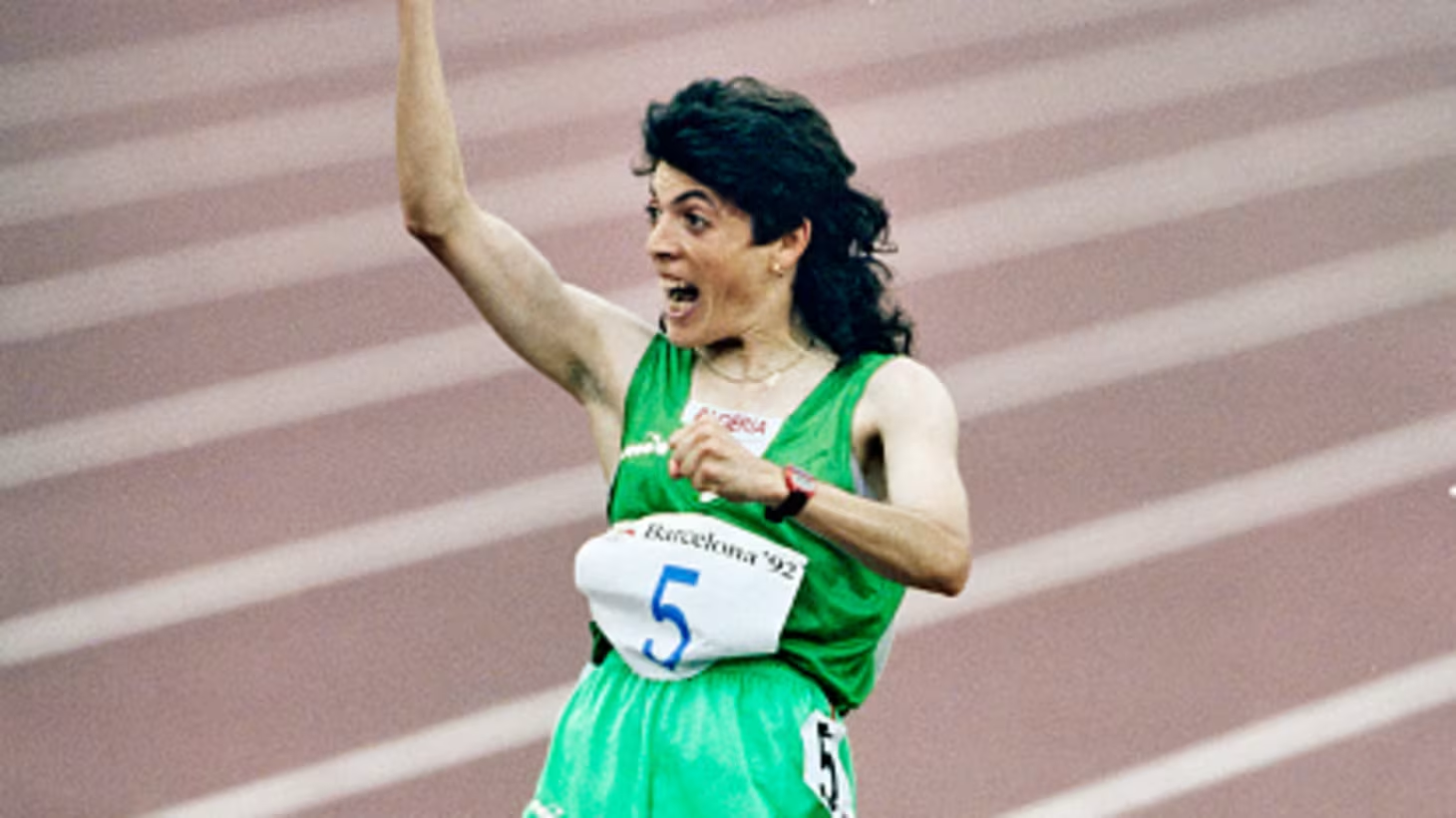
ALGERIA: Hassiba Boulmerka: The trailblazing Algerian star who defied death threats to win Olympic gold

The former Algerian middle-distance runner won her country’s first-ever Olympic gold medal. She navigated a deadly and divisive political crisis within her nation to emerge as “a symbol of victory and defiance”.

Hassiba Boulmerka and her family received death threats, and she was even denounced as anti-Islam at her local mosque.

However, in her home country of Algeria, there was no safe space for her to run.

The world 1500m world champion feared that radical Islamist militants would kill her, and the surrounding atmosphere was equally terrifying.

But despite the risks, the ‘Constantine Gazelle’ continued to train, running even faster and defying the threats to her life.

A year after clinching the first of her two world titles, she made history at the Barcelona Olympics in 1992, winning the first Olympic gold for Algeria .

Hassiba Boulmerka: Africa’s first world track champion

Running had been Boulmerka’s way of life since the age of 10.

Growing up in Constantine, in the east of Algeria, she gained recognition for her speed and stamina, which led her to claim four African gold medals in the 800m and 1500m.

Two years after her double triumph at the continental championships, she stunned the field, sprinting to the lead in the homestretch of the 1500m race to clinch the gold.

It was a glorious moment for Boulmerka, as she became the first African woman to earn a World Championships title.

“I screamed for joy and for shock, and for much more,” she said. “I was screaming for Algeria’s pride and Algeria’s history, and still more.”

Her triumph was significant, symbolising progress for Algerian sport and Arab women.

Despite the heroic reception that awaited her and her teammates upon their return from the 1991 World Championships, her running didn’t quite resonate with everyone.

Her sporting endeavours continued to be frowned upon.

Training and competing meant exposing her arms and legs, which was perceived as not adhering to Islam’s code of modesty.

Hassiba Boulmerka was labelled ‘anti-Muslim’ for choosing to run

Boulmerka pressed ahead, enduring the criticism.

She faced hostility, being spat on and having to dodge stones thrown at her while training on Algerian roads.

In a matter of months, her hopes and dreams of participating in the Olympics started to fade as her country was plunged into civil unrest, resulting in over 150,000 lives lost.

Training became not only impossible but also dangerous during the crisis, with Islamist militants seeking to impose oppressive rule.

She was forced to relocate to Berlin to train ahead of the 1992 Olympic Games.

“I remember it well,” she recalled in an interview with the BBC. “It was Friday prayers at our local mosque, and the imam said that I was not a Muslim, because I had run in shorts, shown my arms and my legs. He said I was anti-Muslim.”

When she arrived in Barcelona just before her event, Boulmerka was accompanied by armed escorts into the stadium, highlighting the unprecedented security measures.

“There were police everywhere. In the stadium, in the changing rooms – they even came with me to the bathroom!” she said.

Despite these challenges, the ‘Constantine Gazelle’, as she was affectionately dubbed for her agile and graceful running style, defied the odds and her performance at the Estádio Olímpico was remarkable.

Hassiba Boulmerka: A heroine for women in sport

The Unified Team’s Lyudmila Rogacheva set the pace for most of the 1500m race before the Algerian powered past her with half a lap to go, securing her greatest career victory. Her time of three minutes, 55.30 seconds earned her the Olympic gold medal, marking the second time second time an Arab woman had stood atop the Games podium (after Morocco’s Nawal El-Moutawakel at Los Angeles 1984).

It was a beautiful ending after months of navigating political challenges – an example of ‘courage in defying taboos and pursuing passion’.

“As I crossed the line, I thrust a fist into the air. It was a symbol of victory, of defiance. It was to say: ‘I did it! I won! And now, if you kill me, it’ll be too late. I’ve made history!'”

As Boulmerka stood on the podium, feeling the weight of the medal around her neck, she was overwhelmed by emotions.

“I tried to hold myself together, to be brave…but the tears just started to fall. They were tears of sacrifice, for all the people I loved that I had abandoned for this race.

“It was a triumph for women all over the world to stand up to their enemies. That’s what made me really proud.”

There was no fanfare when the two-time Olympian returned home to reunite with her family.

Algeria was still far away from the end of its dark period, prompting he exile in Cuba before she returned to Algeria after recapturing the gold medal at the 1995 World Championships.

Her medals stand as a testament to her courage, and Hassiba Boulmerka continues to serve as a beacon of inspiration for women in sport.

source/content: olympics.com (headline edited)

___________

(Getty Images)

____________

ALGERIA

ABU DHABI, U.A.E: Razan Al-Mubarak Chairs the 111th session of the International Union for Conservation of Nature (IUCN) meeting in Switzerland

The 111th session of the IUCN Council meeting began today in the city of Gland, Switzerland, chaired by Her Excellency Razan Al Mubarak, President of the International Union for Conservation of Nature.

The 3-day meeting discusses a group of issues, most notably “Vision.” The strategy for the Union” which extends for 20 years, and the Council is preparing it for review and comment by the members of the Union.

Al-Mubarak said in her speech during the meeting: “The strategic vision, which extends for twenty years, places at the heart of its attention the unprecedented challenges facing the climate and the survival of living species,” noting that in light of the increasing possibility of humanity exceeding the 1.5 degree Celsius target set by the Paris Agreement, Conservationists realize that their work will be more difficult and more important. She stressed the need to address these challenges by strengthening efforts and helping to support justice in the world so that we can all be more appreciative of nature and keen to preserve it.

During this session, the Council is scheduled to review and evaluate the initial draft of the Union’s program for the period 2026-2029, as a first step in the Union’s journey seeking to prepare the final version of the four-year plan, which will be voted on by the members, in preparation for its adoption during the International Union for Conservation of Nature’s World Conference in 2017. 2025, which is scheduled to be held in Abu Dhabi from October 9 to 15 next year, with the participation of representatives of public institutions, civil society, indigenous peoples, academia and the private sector.

source/content: wam.ae (headline edited)

____________________

________________________________________________

ABU DHABI, UNITED ARAB EMIRATES (U.A.E.)

SAUDI ARABIA: Saudi Dialogue Center in Lisbon hosts Global Peace Forum, May 14 – 16th

The King Abdullah bin Abdulaziz International Center for Interreligious and Intercultural Dialogue is hosting a global dialogue forum in Lisbon, Portugal, from May 14 to May 16, the Saudi Press Agency reported.

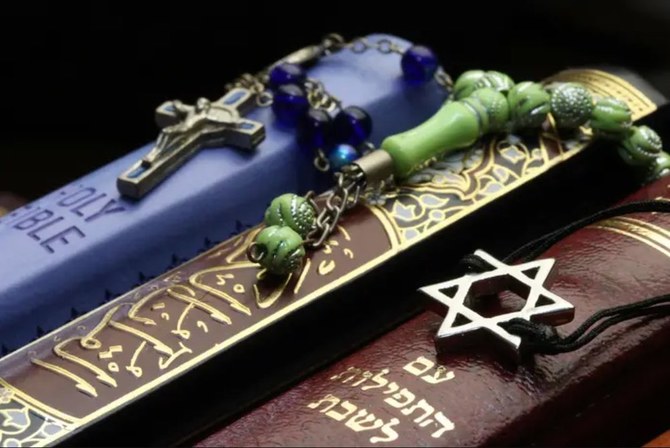
Themed “Transformative Dialogue: Building Alliances for Peace in a Changing World,” this event marks a significant milestone in the center’s decade-long commitment to fostering global change and peace.

Bringing together influential leaders from decision-making institutions, the forum offers an opportunity to forge partnerships addressing today’s complex challenges, the SPA reported.

It serves as a platform for global political figures, intellectual leaders and clerics to tackle issues of peaceful coexistence and sustainable development amid rapid transformations.

Attendees include former French president, Francois Hollande; Sheikh Dr. Saleh bin Abdullah bin Humaid, the imam of the Grand Mosque in Makkah; Ecumenical Patriarch Bartholomew I, the archbishop of Constantinople; Matteo Renzi, former Italian prime minister; and former president of Austria, Heinz Fischer.

Exploring dialogue’s transformative potential, the forum aims to advance human rights, social cohesion, reconciliation and environmental cooperation in line with the center’s mission, the SPA said.

By fostering cooperation among nations, international institutions and civil society, the forum seeks to build understanding between cultures and religions.

With participation from prominent figures across various fields, this forum holds significant potential to shape policies and priorities for peaceful coexistence and societal advancement, the SPA reported.

source/content: arabnews.com (headline edited)

___________

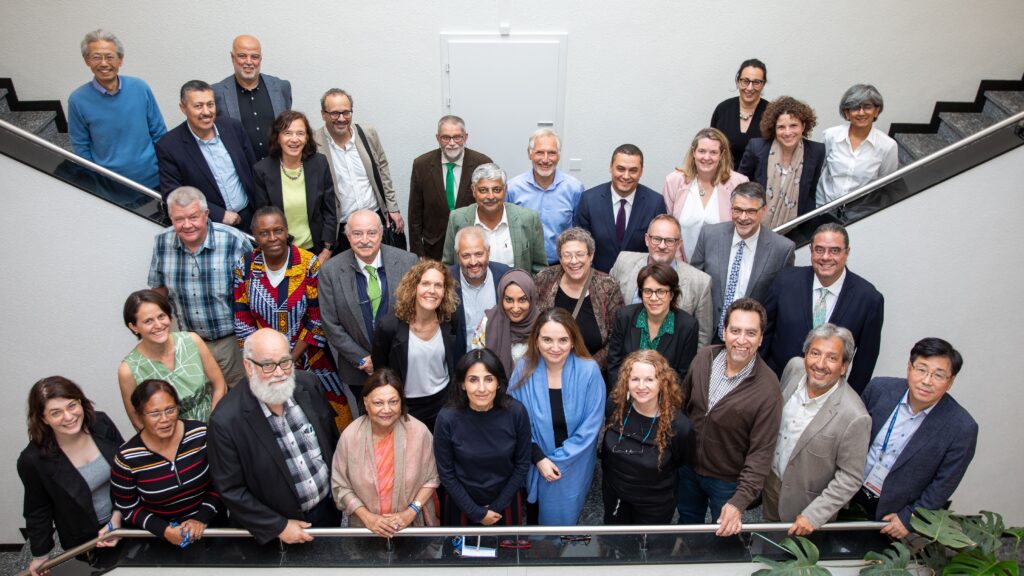
The Lisbon forum marks a significant milestone in the center’s decade-long commitment to fostering global change and peace. (X: @KAICIID)

_________________

SAUDI ARABIA
ARABIC / SHARJAH, U.A.E: The Arabic Language Academy in Sharjah sheds light on the features of “VERBAL HARMONY ” in the Holy Qur’an

Al-Qasimi Hall at the Council of the Arabic Language in Mauritania hosted a scientific symposium entitled “Feature of verbal harmony in the construction of the Qur’anic surah: an authentic pause,” in which Dr. Muhammad Safi Al-Mustaghanemi, Secretary-General of the Arabic Language Academy in Sharjah, spoke via video communication technology, in the presence of Dr. Allah Al-Washmi, President of the King Salman International Academy for the Arabic Language, and an elite group of scholars, researchers and linguists, and it was moderated by Dr. Al-Bakai Abdel Malik, Secretary-General of the Council of the Arabic Language in Mauritania.

Dr. Khalil Al-Nahwi, Chairman of the Arabic Language Council, said that the Council recently launched the “Hadith Al-Tayef” program as part of its research and scientific initiatives with the aim of hosting an elite group of scholars and researchers through audio-visual communication technology from various parts of the world, and Dr. Ahmed Safi Al-Mustaghanemi was chosen, who represents the Arabic Language Academy in Sharjah – the Knowledge Edifice. The main partner of the Arab Linguistics Council, he will be the first guest to lecture in this pioneering scientific program.

Mosteghanemi highlighted the unique characteristics that distinguish the surahs of the Holy Qur’an, pointing to the wonderful harmony and precise linguistic organization that reflects unparalleled precision and miracle. He explained that each surah in the Holy Qur’an follows its own axis while adopting studied linguistic choices that are in harmony with this axis.

Al-Mustaghanemi provided illustrative examples from the Holy Qur’an, such as Surat Al-Naba’ and Surat Al-Nazi’at, to highlight these features, noting that linguistic harmony is not limited to the vocabulary of each surah and its focus, but extends to include the relationship between the conclusion of the surah and the opening of the surah that follows it, which is what the scholars of interpretation have confirmed in their previous studies, in addition to the connection between the surahs. Different types that share similar vocabulary, structures, or stories.

source/content: wam.ae (headline edited)

________

________________________________________________________

SHARJAH, UNITED ARAB EMIRATES (U.A.E) / ARABIC

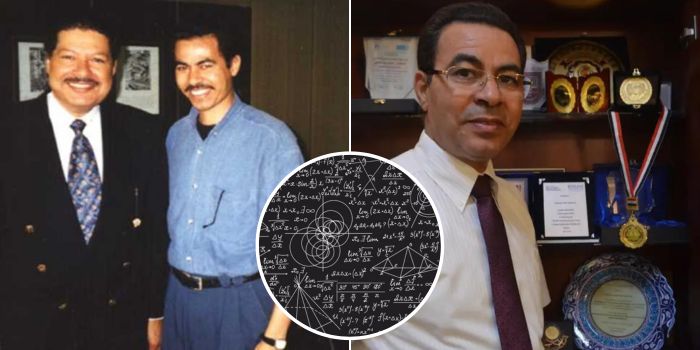
EGYPTIAN Professor Mahmoud Abdel-Aty was awarded Best Mathematician in the World by China!

Born in Sohag, Egypt, Mathematician Mahmoud Abdel-Aty was awarded the world’s best mathematician by China for his contribution to quantum algorithms and quantum optics!

The scientist told Sky News Arabia “My name was nominated by a number of scholars from more than one country, and the committee filtered all the applicants and selected the best among them,”

The Chinese award Qin-Jiu-Shao is considered to be one of the most important awards in mathematics in the world will be awarded to winners in November.

The Egyptian scientist, who occupies the position of Chairman of the National Committee for Mathematics, confirmed that through him he was able to explain a large number of problems that had no explanation in the past, especially with the great and amazing progress in the manufacture of computers, especially quantum computers.

He also mentioned how happy he gets whenever he’s awarded saying, “It’s the most beautiful in his life,”

Adding “It gives us confidence that what we are doing is of real value.

The Award represents the great appreciation of our country, and the international awards represent a global appreciation for the name of Egypt and its great scientists.”

source/content: loving.co / Lovin Cairo (headline edited)

__________

__________

EGYPT

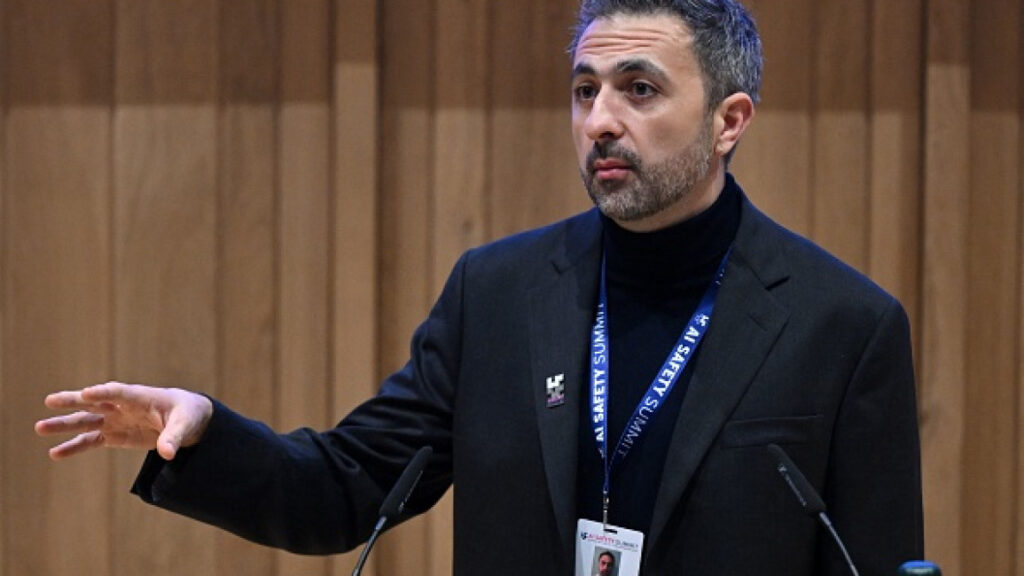
SYRIA-BRITISH : Microsoft hires British-Syrian Mustafa Suleyman to head its AI business

Microsoft has hired British-Syrian Mustafa Suleyman to head its AI business, cementing his role in the industry.

Mustafa Suleyman , a highly respected British-Syrian AI expert, has been named as Microsoft’s artificial intelligence business head, as the company cements its position in this booming field.

Suleyman co-founded DeepMind , which Google purchased in 2014, before starting up Inflection.ai in 2022 with LinkedIn co-founder Reid Hoffman, to guide AI away from racist, sexist or violent behaviour. It has also been named a rival to Microsoft in the field of AI.

He also co-wrote ‘The Coming Wave’, a highly influential book in the tech industry that examines the potential and pitfalls of AI.

Microsoft said in a post on LinkedIn on Monday named Sulyaman as CEO of Microsoft AI, leading all of its consumer products and research, including its generative AI service Copilot as well as its Bing search engine and Edge browser. 

He will report directly to Microsoft CEO Satya Nadella , who welcomed his appointment in a blog post.

“This infusion of new talent will enable us to accelerate our pace yet again,” Nadella wrote.

The hiring is likely to bolster Microsoft’s lead position in the booming AI industry, as big tech companies battle for positions to capitalise on the demand for AI services.

Microsoft has teamed up with ChatGPT maker OpenAI, investing billions of dollars into the San Francisco company, and recently partnered with France’s Mistral  , a hot AI startup.

Suleyman is the son of a Syrian taxi driver and English nurse and grew up in North London. He dropped out of Oxford University aged 19, before founding the Muslim Youth Hotline, which became one of the biggest counseling services for Muslims in the UK.

His appointment to the top Microsoft position has been welcomed by British Arabs and Syrians worldwide, who have commended him for his journey from relatively humble beginnings to one of the leading positions in the IT industry.

He was named in The New Arab‘s ‘The notable British Arabs making a difference’ list in 2021 .

source/content: newarab.com (headline edited)

____________

Sulayman is one of the most influential people in the field of AI [Getty]

____________________

BRITISH / SYRIAN

U.A.E: Emirates Global Aluminum Completes the Acquisition of German ‘Lichtmetal Aluminium Gesserei Hannover GmbH’

Emirates Global Aluminium, today, announced the completion of the acquisition of the German company, Lichtmetall Aluminum Gesserei Hannover GmbH.

Last March, Emirates Global Aluminum announced its intention to acquire “Lichtmetal” from “Lichtmetal Holding Limited”, a subsidiary of an investment fund managed by “Quantum Capital Partners Limited”. The transaction met all regulatory approvals and conditions required for completion.

Lichtmetall is a specialized European smelter that uses renewable energy to produce about 30,000 tons annually of aluminum cylinders, and secondary aluminum represents about 80% of the raw materials used in production. The company primarily produces solid cylinders with a diameter of up to 1,150 mm for use in the manufacture of heavy-duty extruded aluminum profiles and large cast parts.

The acquisition of Lichtmetal strengthens EGA’s existing business in Europe, as EGA exports more than 600,000 tons of primary aluminum to Europe annually, and is considered one of the largest aluminum suppliers in Europe to many sectors, including automobiles and construction.

Abdul Nasser Bin Kalban, CEO of Emirates Global Aluminum, said: “I am pleased to welcome our new colleagues at Lichtmetal in Hannover to the Emirates Global Aluminum team. The acquisition will provide significant growth opportunities for Lichtmittal within the Emirates Global Aluminum portfolio, the largest producer of high-quality aluminum in the world.” “It is considered an important step for Emirates Global Aluminium, in accelerating our journey towards sustainability and building aluminum recycling operations in Europe, as we are one of the largest suppliers of primary aluminum in the region and globally.”

For his part, Thomas Witt, CEO of Lichtmetall, said: “This acquisition and joining Emirates Global Aluminum, the largest producer of high-quality aluminum in the world and the main supplier of aluminum in Europe, represents a major step in Lichtmetall’s successful journey, and will help us grow our business further and provide better services.” To our customers all over the world.

According to industry experts, global demand for recycled aluminum will double by 2040. Recycled aluminum is expected to contribute to the growth of global aluminum supplies by 60% by 2030, and by 70% between 2030 and 2040.

Aluminum can be recycled continuously and infinitely thanks to its distinctive properties. The recycling process requires 95% less energy, compared to the energy consumed to produce primary aluminum, and results in a small amount of emissions compared to producing aluminum from raw bauxite.

This deal is considered the first major acquisition for Emirates Global Aluminum since its founding through the merger of Dubai Aluminum and Emirates Aluminum ten years ago.

source/content: wam.ae (headline edited)

_____________

____________________________________

UNITED ARAB EMIRATES (U.A.E)