SAUDI ARABIA: Middle East’s Largest SuperComputer ‘Shaheen III’ Switched On at King Abdullah University for Science & Technology (KAUST) by the 6 Mega Power Units Provided by Rolls-Royce 

 British firm Rolls-Royce has fired up the first six Kinetic PowerPacks to provide an energy supply for the Middle East’s largest supercomputer facility located in King Abdullah University for Science and Technology. 

The firm has shipped 12 of the huge batteries, known as maximum transmission units, to KAUST from its factory in Liege, Belgium, in order to aid its Scientific Computing Data upgrade and power the supercomputer known as Shaheen III. 

A maximum transmission unit sets the amount of data that can be transmitted in bytes over a network. 

The devices have a power output of 1.6 MW each, and should a power outage occur, the systems – which are designed for humid conditions and temperatures as much as 50 degrees Celsius – will secure critical load and ensure the starting of the diesel engine via their continuously rotating sturdy kinetic energy accumulators. 

The first six are now switched on, with the remaining switch to be activated at a later date. 

“The mtu Kinetic PowerPacks are state-of-the-art, uninterruptible electrical power systems that are designed for operating in extreme environments and provide the highest reliability of back-up power for the most critical and essential systems,” the statement said, citing the Vice President of Facilities for KAUST, Matthew Early. 

The systems include healthcare facilities, airports, data centers, and Shaheen III.  

Projected to be the Middle East’s most powerful supercomputer, Shaheen III will enable KAUST to further enhance its ability for scientific discovery and artificial intelligence innovation, the vice president added. 

Shaheen III is set to be operational in 2023, and is set to be 20 times faster than KAUST’s current existing system. 

Earlier this year, KAUST partnered with the Saudi Data and Artificial Intelligence Authority to increase human capacity and innovation in the field of AI in Saudi Arabia and the region. 

“The SDAIA-KAUST Center of Excellence in Data Science and Artificial Intelligence will focus on educational development and upskilling the new generation of Saudi citizens in AI,” KAUST President Tony Chan said. 

source/content: arabnews.com (headline edited)

______________

Rolls-Royce shipped the devices from its factory in Liege, Belgium (Shutterstock)

_________________

SAUDI ARABIA

UNITED ARAB EMIRATES (U.A.E) : Sharjah Ruler Launches 19 New Volumes of the ‘Historical Dictionary of the Arabic Language’ taking the Completed Volumes to 36 Covering 9 Letters so far.

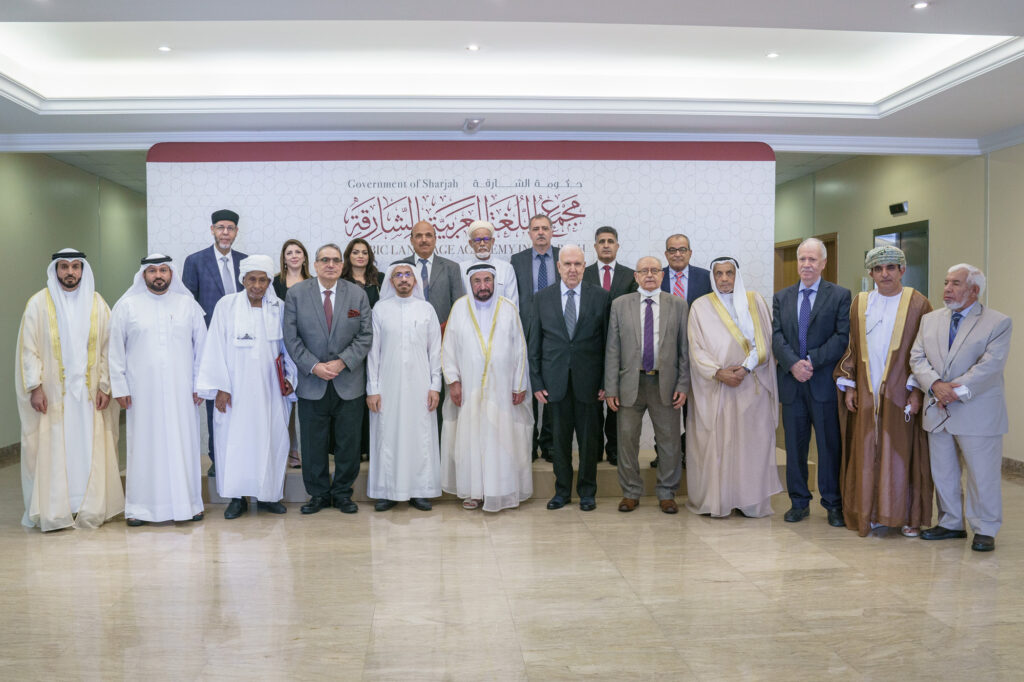
H.H. Dr. Sheikh Sultan bin Muhammad Al Qasimi, Supreme Council Member and Ruler of Sharjah, launched on Tuesday, 19 new volumes of the Historical Dictionary of the Arabic Language at the headquarters of the Arabic Language Academy in Sharjah.

The 19 new volumes of the Historical Dictionary of the Arabic Language cover four letters, bringing the total number of letters edited so far to 9, thus increasing the number of completed volumes of the project to 36.

The volumes of the Historical Dictionary of the Arabic Language were issued, directed and printed in Al Qasimi Publications in Sharjah.

Sharjah Ruler welcomed the attendance of members of the Academy from different countries, praising their great efforts in working on the historical dictionary, which is one of the valuable achievements that must be worked and built in order to spread, learn and teach the Arabic language.

His Highness announced an endowment to support these Academies in fulfilling their mission to the fullest, pointing to the importance of establishing private centres owned by the Academy.

Sheikh Sultan addressed the great efforts in supporting the learning of the Arabic language in Sharjah, pointing out to the vision and idea of establishing Al Qasimia University, which came as a culmination of His Highness’ efforts to support the Arabic language and Islam. “Here in Sharjah, we established Al Qasimia University, and this university is mine, and it graduates many students from Japan to the Americas,” he said.

The Ruler of Sharjah stressed the importance of preserving Arab traditions in any place and time of all members of society, because this is a part that integrates with speaking the Arabic language and shows belonging.

His Highness said, “We have worked to establish special institutions for the Arabic language, and we have established them with decrees and laws in order to preserve them, so as not to make them blown by the wind, and make the lovers of this language responsible for them.”

The Ruler of Sharjah concluded his speech by talking about the ancient history of Sharjah, as it was mentioned in the report of the leader sent by Alexander the Great when he came to Persia in the year 331 BC. M, pointing out that Sharjah and its people preserve the language, literature and poetry, highlighting their roles in supporting and spreading science and knowledge.

For their part, a number of attendees from the Academy expressed their appreciation to His Highness the Ruler of Sharjah for providing great support for the Arabic language.

The Sharjah Ruler launched the first 17 parts of the “Historical Dictionary of the Arabic Language” at the opening of the 40th edition of the Sharjah International Book Fair 2021. With the official launch of the dictionary’s website, people can search and read all the completed volumes.

source/content: wam.ae (headline edited)

__________________

______________________________________________

SHARJAH, UNITED ARAB EMIRATES (U.A.E.)

EGYPT/ EMIRATES/ LEBANON/ PALESTINE/ TUNISIA: 6 Arab Female Filmmakers to Keep an Eye On 

Read on for a list of regional female filmmakers who have been taking the industry by storm.

Farida Khelfa

Farida Khelfa is an Algerian-French documentary filmmaker. She is currently set to release a new film titled “From The Other Side of the Veil” that aims to dismantle misconceptions and stereotypes that often surround Arab women.

Kaouther Ben Hania

The Tunisian filmmaker made headlines in the film industry after her critically acclaimed movie “The Man Who Sold His Skin” was shortlisted for the Oscar’s Best International Feature Film award this year.

Ayten Amin

The Egyptian director has long chronicled the lives of women in modern Egypt. Her feature film “Souad” was selected for the cancelled 2020 Cannes Film Festival.

Danielle Arbid

Danielle Arbid is a Lebanese filmmaker. Her work has screened at numerous film festivals in France and the rest of the world, including New York, San Francisco, Tokyo and more.

Annemarie Jacir

The Palestinian filmmaker has written, produced and directed award-winning films such as “A Post Oslo History.” Her movie “Wajib” (2017) won her 18 international awards.

Nujoom Al-Ghanem

The Emirati filmmaker, writer and poet had to overcome societal stigma and family disapproval to make it. She defied the odds and produced films such as “Amal” (2011) and “Sounds of the Sea” (2015).

source/content: arabnews.com (headline edited)

__________

______________________________________________________________

EGYPT/ EMIRATES(U.A.E)/ LEBANON/ PALESTINE/ TUNISIA

UNITED ARAB EMIRATES (U.A.E): Dubai School sets Guinness Record for ‘World’s Largest Space Exploration Lesson’

Students from different UAE schools are being mentored in the space camp by celebrated names in space exploration and science, including Nasa astronauts and scientists.

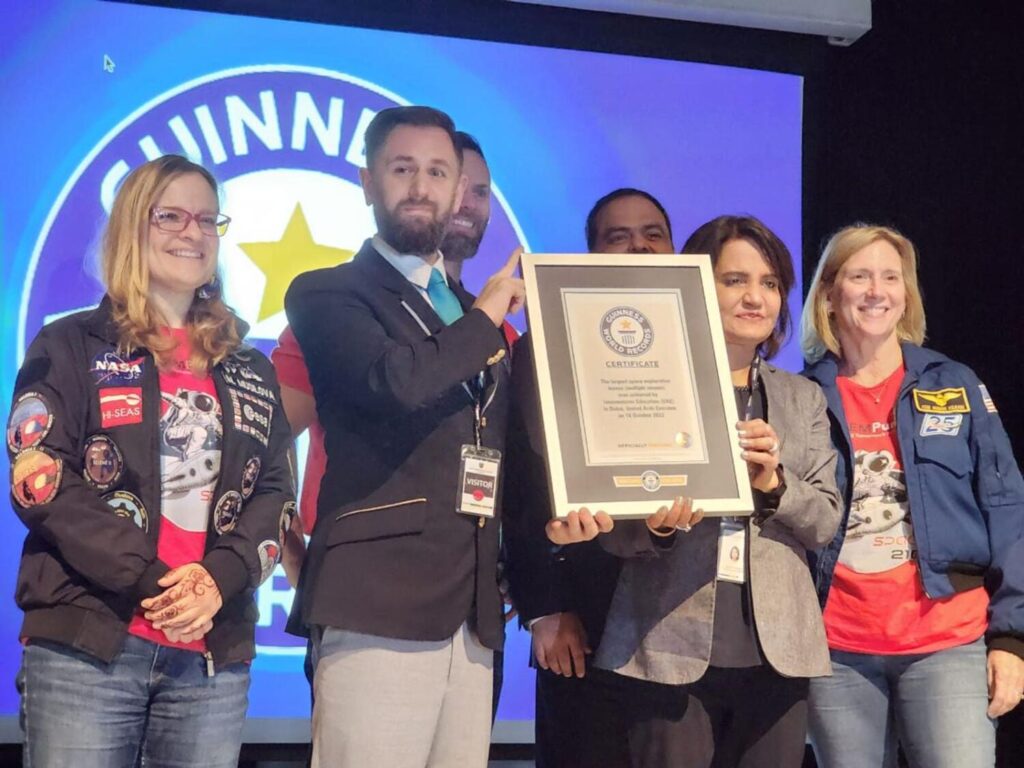
Loud cheers echoed across the auditorium of a Dubai school campus on Tuesday as it made to the Guinness World Records .

The Innoventures Education group of schools set a record for conducting the world’s largest space exploration lesson (multiple venues) with 2,000 students from its five schools during the ‘Space 2101’ space camp where pupils from UAE schools have convened.

Poonam Bhojani, CEO, Innoventures Education, said: “We are delighted with the record for the maximum number of attendees in a Stem lesson across multiple venues. There were 108 nationalities of students who attended this course.”

The space camp, being held from October 17-21 at Dubai International Academy (DIA), Al Barsha, is seeing students from different UAE schools being mentored by celebrated names in space exploration and science, including Nasa astronauts and scientists.

At the camp, students can design experiments which stand a chance of being conducted in space. They can also have the schematic of their design printed and signed by the visiting astronauts and scientists as a keepsake.

Innoventures Education has partnered with Starlight Education, to offer students between 12 to 18 years at the camp a unique opportunity to design a sustainable habitat together with real astronauts and high-achieving scientists from around the world. The five-day programme will help students build critical thinking, leadership and teamwork, presentation techniques, and help build Stem skills as well as in-depth knowledge of designing space habitats that are fit for human wellbeing.

Hitesh Bhagat, principal, DIA, EH said: “The Space 2101 initiative, which has been going on around the world, has a strong good connection with the UAE’s space programme. The initiative is all about giving a different learning environment to our students where they can interact with experts.”

Students delighted to enter the records book

Students at the camp are getting to learn about real-world Stem skills like 3D design, coding, robotics and other industry-linked content. Ayesha Aldaboos, Grade 9 Emirati student at the Collegiate International School (CIS) said: “The programme taught me about other options in the science field. When I was younger (in junior classes), I always wanted to do something in the field of space. I don’t think I have the guts to become an astronaut, but maybe working at Nasa would be really nice.”

Raffles International School Year 8 student Mohammed said: “We are delighted that we’ve managed to enter the Guinness World Records. This camp has been fun, I made new friends and interacted with a lot of people from other schools. I also learnt about a new app that is being used for coding.

Ellen from DIA, said: “I used to hear about the Guinness World Records all the time, so it was exciting to be a part of this record-breaking achievement. While interacting with astronauts I got a chance to ask questions that have always intrigued me. I also learnt about computer aided design (CAD) and 3D modelling. I want to learn coding, and when I grow up I want to work for myself not for others.”

source/content: khaleejtimes.com (headline edited)

_____________

___________________________________________

DUBAI, UNITED ARAB EMIRATES (U.A.E)

EGYPT: World’s Oldest Star Map Has Been Found in St. Catherine’s Monastery, South Sinai

A fragment of the legendary star map by ancient Greek astronomer Hipparchus has been uncovered in St. Catherine’s Monastery.

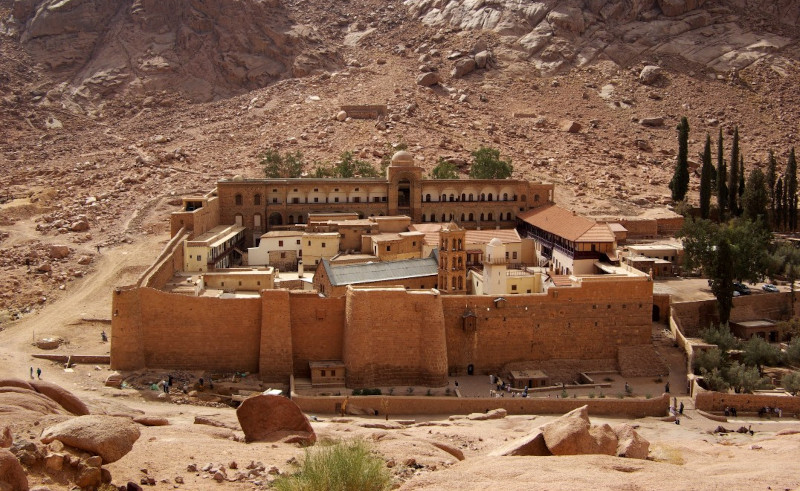
Within the library of St. Catherine’s Monastery in South Sinai – the oldest continuously-running Christian monastery in the world – researchers have uncovered a fragment of history’s oldest complete star map, penned by ancient Greek astronomer and mathematician Hipparchus.

Hipparchus is considered to be the greatest astronomer in ancient Greece, and so researchers had been searching for his catalogue of stars for centuries. The manuscript in St. Catherine’s Monastery appeared to be something completely different; the pages contained a collection of 10th or 11th century Syriac text called the Codex Climaci Rescriptus. But as it turned out, it wasn’t just that – the pages were a palimpsest, or a parchment in which previous text was wiped clean so that it can be reused.

But much like scribbling your pencil over recently erased writing, it was possible to discover what was erased from a palimpsest. Researchers from the University of Cambridge, the University of Rochester in New York, the Early Manuscripts Electronic Library in Rolling Hills Estates, California and the French national scientific research centre CNRS in Paris worked together to find layers of writing that had been wiped away. Amongst them were the coordinates for the constellation Corona Borealis, and by comparing these precise coordinates with how the night sky would have been arranged in antiquity, the researchers found that the coordinates would have been made in 129 BC – right when Hipparchus was making his revolutionary cosmic calculations.

An excerpt of the discovered document was recently published in the Journal for the History of Astronomy, and is available online.

source/content: cairoscene.com (headline edited)

_____________

_________

EGYPT

UNITED ARAB EMIRATES (U.A.E) : Abu Dhabi Arabic Language Centre (ALC) Launches Music Book Collection at Frankfurt Book Fair 2022

 The Abu Dhabi Arabic Language Centre (ALC) launched a series of music books at Frankfurt Book Fair 2022.

Consisting of a number of publications, the series is a notable addition to the ALC’s roster of publications and focusses on Emirati and Arab singing and music.

It includes biographies of artists Eid Al-Faraj and Ibrahim Jumaa written by author Ibrahim Al-Hashemi, a book on Umm Kulthum’s reasons for selecting the poems she sang, alongside a variety of other titles, including educational books.

The launch ceremony was attended by Dr. Ali bin Tamim, Chairman of the ALC, and Saeed Hamdan Al Tunaiji, Acting Executive Director of the ALC and Director of the Abu Dhabi International Book Fair (ADIBF), along with media representatives and book enthusiasts.

“The Abu Dhabi Arabic Language Centre continues to drive the advancement of the Arabic language and enrich the Arabic library with original titles in an effort to encourage creativity and support authors,” said Al Tunaiji. “The series of music books we have launched is a means to shed renewed light on music and singing in the region. For the first time, the series presents biographies of musical pioneers in the UAE, in addition to documenting traditional performing arts and exploring new perspectives on Arabic singing by experts.”

The series includes two books from the ‘Pioneers Among Us’ initiative, where poet and writer Ibrahim Al-Hashemi documents the life of Eid Al-Faraj, a singer, composer, and poet. The first biography of its kind for this artist, it chronicles Al-Faraj’s journey from birth through childhood, education, and various stages of his career until the present time, illustrated by a collection of photographs.

In the second book, Ibrahim Jumaa: The Etheric Melody of the Sea, Al-Hashemi presents the life and achievements of a pioneer of music and composition in the UAE, and documents the songs and poems he wrote, composed, and presented at festivals and special occasions. The publication features photographs from Jumaa’s life, showcasing the awards and honours he received during his career.

“This music book collection completes the book series we previously launched at the Abu Dhabi Arabic Language Centre,” added Al Tunaiji. “These works, wherein Emirati authors document the lives and professional careers of UAE musical pioneers, will greatly enrich the regional cultural scene and promote more in-depth research into the UAE’s musical heritage. The series offers a new perspective on Arab musical heritage, which is sure to spark new dialogue around it.”

The collection includes Dr. Hamad bin Sarai’s book Wahhabi Art: Kinetic and Verbal Performance from Emirati Folklore, which consists of field research documenting a form of folk performance art closely related to the agricultural environment, through interviews with people who practice the art form.

Meanwhile, the Encyclopaedia of Sung Poems, compiled by researcher Dr. Hammad Al Khatri, includes poems sung in the UAE, which are usually closer to popular taste and extend deep into the history of the community. The poems address phenomena and symbols from the surrounding environment and embody authentic Emirati vocabulary that expresses the culture of the people.

In the book Folk Songs for Children and Women in the United Arab Emirates, Dr. Fatima Al Mazrouei tries to remedy the lack of documentation of traditional folk songs, especially in the emirate of Abu Dhabi, where she collected many songs for her book which were never previously featured in published songbooks. The author also sought to collect children’s songs – often referred to as ‘Al-Ragousat’ in Abu Dhabi – in addition to songs about names, especially girls’ names.

Writing about the connection between Umm Kulthum and Arabic poetry, Dr. Ahmed Youssef Ali’s book Umm Kulthum: Poetry and Singing chronicles the legendary singer’s efforts to elevate Arabic song by performing the works of some of the greatest poets of her time and before. Umm Kulthum had a modest upbringing, only receiving religious education and being taught traditional culture, but her exceptional taste allowed her to select the poetic texts that would best serve her songs, sometimes rearranging the verses for the greatest effect.

Egyptian composer and researcher Hassan Zaki Shehata sheds light on four composers whose works have achieved tremendous success and fame in his book Rhythms of Light: A Musical Biography of Four of the Geniuses of Oriental Melody, where he analyses the works of Ahmed Sedqi, Abdel Azim Abdel Haq, Mahmoud Al Sharif, and Ali Ismail.

The collection also presents two books by composer and music researcher Muhammad Saeed Hegab. ‘The Flute: A Morsel of Cane with a Scent of Legends traces the history of the flute in an attempt to separate reality from the myths that were associated with the instrument in ancient times. The author lists the various forms of the flute and the phonetic differences between them, highlights the importance of the flute in different cultures, and explains how the instrument is manufactured and played. Meanwhile, Hegab’s The World of Bowed Instruments traces the history of string-based, bow-using instruments back to their beginnings and explores the evolution of the various families of bowed instruments. The book focusses on the instruments’ use in the musical traditions of the Arab region and similar traditions in neighbouring cultures, offering an overview of how they are made and played.

In Iraqi Musical Heritage and Civilisational Communication, Dr. Muhammad Hussein Kamer, a professor of sciences and musical theory and an expert in the al-gouza and Iraqi maqam instruments, explores the subjects of cultural communication, the connection between modern and traditional music, music education, and music learning in schools. The author discusses traditional Iraqi music, focussing on the al-gouza instrument, and offers detailed studies on the Iraqi maqam, its history, types, and characteristics.

Music researcher Bassam Abdel-Sattar’s educational book The Qanun Instrument includes an introduction to the oriental instrument and its components, highlights its role in the traditional school of music, details its musical range. The publication includes lessons and technical exercises for playing the instrument, as well as a practical guide directed at musicians who play the qanun or are looking to learn it.

The collection also features The Medium in the Rules and Theories of Arabic Music, a theoretical and applied study of the rules and theories of Arabic music, written by Egyptian author Ahmed Youssef Al-Taweel, Professor and Vice Dean of the Higher Institute of Arabic Music at the Academy of Arts.

The History of Music in Arabia and Andalusia, written by Julian Ribera and translated by Hussein Hassan, is being reprinted. The book highlights the role of the Muslims of Andalusia in preserving music and passing it down to later generations, where its legacy inspired numerous European musicians.

source/content: wam.ae (headline edited)

______________

________________________________________________

ABU DHABI, UNITED ARAB EMIRATES (U.A.E)

EGYPT: Egyptian Doctors among Top Five Foreign Physicians who joined UK Medical System in 2021: British General Medical Council (GMC) Report

Egyptian doctors ranked among the top five ‘joiner doctors’ who joined the UK medical workforce in 2021, according to a report released the British General Medical Council (GMC).

The GMC, a UK public body responsible for maintaining the official register of medical practitioners within the kingdom, said that Indian, Pakistani, Nigerian and Sudanese doctors were the other four nationalities in the top five who joined the kingdom’s medical system that year.

The GMC report also found that the number of Egyptian – as well as Chinese and Sudanese – doctors who joined the UK’s medical system tripled between 2017 and 2021.

It explained that the number of Egyptian doctors who joined the UK medical workforce was 435 in 2017 and increased to 765 in 2018. But, these numbers, it added, increased by almost 200 percent in the following three years on average, registering 1,301 in 2019, 1,220 in 2020, and 1,312 in 2021.

More IMGs – less UK and European

The GMC report analysed statistics related to the UK medical workforce and discussed various challenges that faced the kingdom’s medical system in 2022.

It found that the number of international medical graduates (IMGs) who joined the UK workforce in 2021 exceeded the numbers of graduates from UK and European Economic Area (EEA) who joined the kingdom’s workforce.

These increasing numbers of IMGs came primarily from doctors from South Asia, the Middle East and Africa, the report found.

Doctors from these three regions comprised 84 percent of all ‘IMG joiners’ in 2021 at 8,900 doctors, a number which actually exceeded the number of 8,200 UK graduates who joined the country’s workforce in the same year, the report added.

According to the GMC report, the ‘joiner doctor’ category includes doctors who obtained a license to practice medicine in the year before applying for a job in the UK medical system.

The single fastest route to becoming a ‘joiner doctor’ is through enrollment in the UK’s medical graduate programmes, the GMC report found.

Egyptian doctors: Challenges and solutions

In recent decades, Egyptian doctors have faced increasing financial difficulties due to low pay as well as an increasing workload amid population growth.

According to a March 2019 study released by the ministries of health and higher education, the numbers of doctors who held a license to practice medicine in Egypt were estimated at 212,000 in 2018, with 82,000 of them – or 38 percent of the total – working in hospitals, both public and private.

The study also found there was an average of 8.6 doctors for every 10,000 citizen – or one doctor for every 1,162 citizen, when the global average was 23 doctors for every 10,000 citizen – or one doctor for every 434.

The Egyptian Medical Syndicate, which represents the country’s doctors, said in a report in April of this year that the doctor-to-citizen ratio improved to 9.2 doctors for every 10,000 citizen by March 2022 but remained far short of the global average.

The syndicate also said that 11,536 doctors resigned from the Egyptian public health sector from 2019 through March 2022.

Though these numbers do not represent more than five percent of the total of practicing physicians in the country, still, they have pushed many in the public to call on the government to improve the work conditions and  salaries for doctors in order to stop any “doctors exodus” – real or not –  and prevent any acute shortages that could impact the health system adversely.

The government has responded to these public calls by increasing the number of medicine faculties in the last few years in order to graduate more physicians.

It has also increased spending on the health sector to EGP 128 billion in the budget for the FY 2022/23 up from EGP 108 billion in 2021/2022 – an 18.5 percent increase.

In 2021, the government, as per President Abdel-Fattah El-Sisi’s directives, raised salaries and allowances for doctors and nurses in the public health sector by 75 percent.

Last August, President El-Sisi also instructed the government to offer financial incentive package for medical staff to improve their work conditions and raise their incomes.

source/content: english.ahram.org.eg (headline edited)

____________

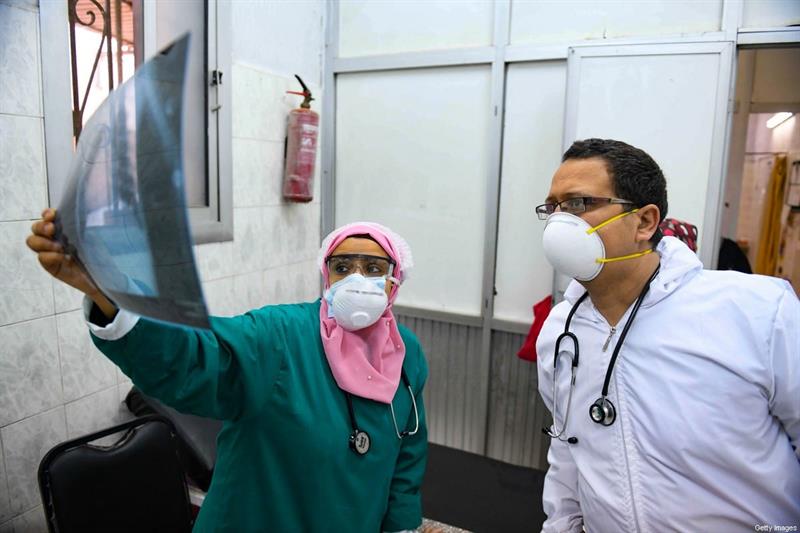
Egyptian doctors check a patient s X-ray at the infectious diseases unit of the Imbaba Hospital in Cairo, during the novel coronavirus pandemic crisis. (AFP)

_________

EGYPT

QATAR: Lusail Bus Depot – Guinness World Records for ‘Largest Electric Bus Depot’

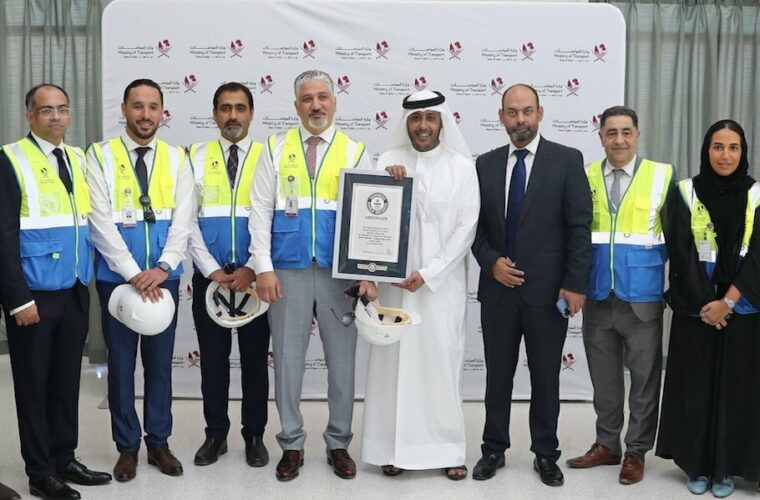
The Ministry of Transport announced via a tweet on 18 October 2022 that the Lusail Bus Depot has entered the Guinness World Records for the largest electric bus depot.

The bus depot that was inaugurated on 18 October 2022 has a capacity of 478 electric buses and is a fulfilment of The Public Works Authority – Ashghal and the Ministry of Transport of Qatar.

Powered by 11,000 units of solar panels the bus depot entered the records on 16 September 2022 as per Guinness World Records.

source/content: iloveqatar.net (headline edited)

______________

Source: Ministry of Transport/ Guinness World Records / Cover image credit: Ministry of Transport

__________

QATAR

SAUDI ARABIA: 5 Researchers from Saudi University Named in Stanford’s ‘World’s Top 2% Scientists’ list

Stanford University, one of the world’s leading research and teaching institutions, published its annual “World’s Top 2% Scientists” list — featuring the most widely cited scientists in different disciplines — this week.

It included five faculty members from Riyadh’s Imam Mohammad bin Saud Islamic University: Dr. Rafiq Muhammad Choudhry and the late Dr. Hisham El-Dessouky from the department of engineering; Dr. Kamal Abdul Jawad Buradah and Dr. Ahmed Al-Khayyat from the department of science; and Dr. Qaisar Abbas from the department of computer science.

_________________

Highlight:

The ‘World’s Top 2% Scientists’ list includes Dr. Rafiq Muhammad Choudhry and the late Dr. Hisham El-Dessouky from the department of engineering; Dr. Kamal Abdul Jawad Buradah and Dr. Ahmed Al-Khayyat from the department of science; and Dr. Qaisar Abbas from the department of computer science.

______________

The university’s president, Dr. Ahmed bin Salem Al-Amri, said that the university’s recognition is a sign of the support that education and research receives from the Kingdom’s leaders.

“The leadership gives special attention to scientific research as a key pillar of the university’s success and a developmental and community-based necessity to transform universities into (places) that serve the development of the knowledge economy, by improving scientific research and its quality and outcomes in order to positively impact the economy and society,” he said.

In recent years, the university has dedicated “specialized programs and quality initiatives as part of its strategic plan to achieve the goals of scientific research and innovation,” and to improve the Kingdom’s ranking in the Global Competitiveness Index, thus achieving the goals of Saudi Vision 2030, Al-Amri explained.

source/content: arabnews.com (headline edited)

___________

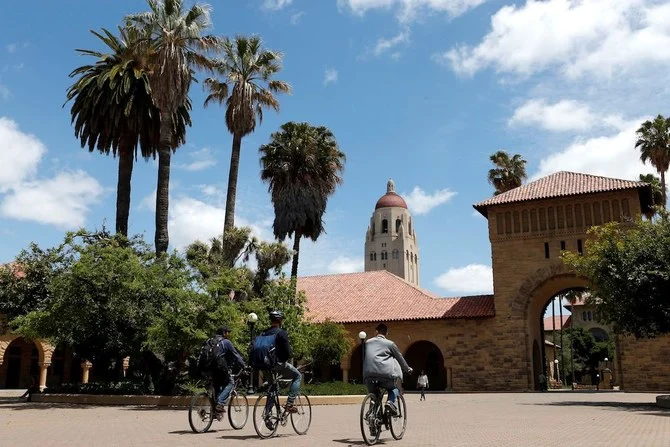
Stanford University, one of the world’s leading research and teaching institutions, published its annual “World’s Top 2% Scientists” list. (Reuters/File Photo)

_________________

SAUDI ARABIA

UNITED ARAB EMIRATES(U.A.E) : Mohamed Hadi Al Hussaini, Minister of State for Financial Affairs Elected Chairman of the Development Committee of the World Bank Group(WBG) and International Monetary Fund (WBG-IMF)

 Mohamed Hadi Al Hussaini, Minister of State for Financial Affairs, has been elected as Chairman of the Development Committee (DC) of the World Bank Group (WBG) and the International Monetary Fund (IMF), which aims to achieve international cooperation and consensus on issues related to development. The DC is a joint ministerial committee of the Boards of Governors of the Bank and the Fund.

During his two-year tenure, the minister will work with the committee’s members that include ministers, and the Board of Governors of the WBG and IMF to complete and manage the committee’s programmes related to sustainable and comprehensive economic development, in order to build and develop the economies of developing countries.

Al Hussaini thanked the member states and the WBG for electing him as the Committee Chairman, stressing the United Arab Emirates’ keenness on cooperating and coordinating with its strategic partners and all international organisations to enable comprehensive and sustainable development at all levels.

A ministerial-level forum that represents the member countries of the World Bank Group and the International Monetary Fund, the Development Committee was established in 1974 and was previously known as the ‘Joint Ministerial Committee of the Boards of Governors of the Bank and Fund’. It comprises 25 members from the finance or development ministries that are members of the WBG and the IMF.

The Committee is mandated to address a wide range of issues, including, but not limited to, the role of the IMF and WBG, in confronting future crises, digitalisation, the green economy, trade, industrial policies, and poverty.

source/content: wam.ae (headline edited)

____________

___________________________________

UNITED ARAB EMIRATES (U.A.E.)