Arabs & Arabian Records Aggregator. Chronicler. Milestones of the 25 Countries of the Arabic Speaking World (official / co-official). AGCC. MENA. Global. Ist's to Top 10's. Records. Read & Enjoy./ www.arabianrecords.org
Saudi Arabia was first vice-chair of the executive council for 2022.
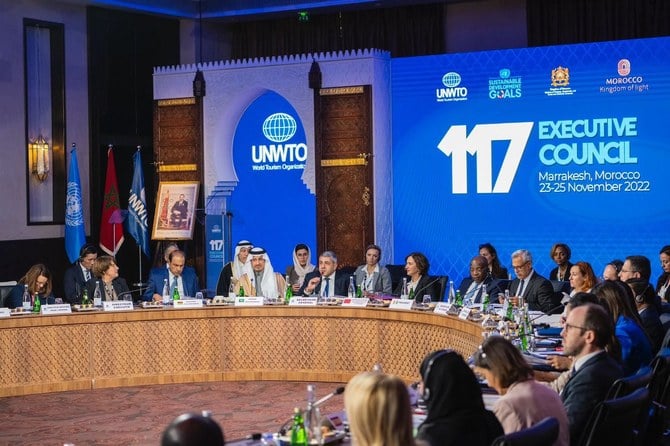
Saudi Arabia’s Ministry of Tourism has announced the election of the Kingdom as chair of the executive council of the United Nations World Tourism Organization for 2023.
The announcement was made at the 117th session of the organisation’s executive council being held in Marrakesh, making the Kingdom the first Gulf country to hold the post.
“The Kingdom is honored to be elected as chair of the World Tourism Organization’s executive council and we believe in the importance of the organization’s pioneering role. We look forward to cooperating with all countries to support and develop the global tourism sector,” the Minister of Tourism Ahmed Al-Khateeb said.
He added that the Kingdom has been an active member of the organization by launching initiatives, supporting new ideas, and opening the organization’s first regional office in Saudi Arabia to promote its agenda and work in the Middle East and beyond.
“At the heart of the UNWTO is a desire to promote tourism as a catalyst of economic development, which Saudi Arabia wholeheartedly supports. We have committed $800 billion of government investment into the Saudi tourism industry by 2030.
“Our imperative is that the development we seek, both as a nation and globally, is sustainable, inclusive and resilient. That’s how we will address the fast-changing needs of businesses, communities and the planet,” Al-Khateeb said.
As chair, Saudi Arabia will set the agenda for all meetings, ensuring that it captures the most pressing issues and concerns for the tourism industry. It will facilitate and moderate meetings effectively, chair dialogue and encourage actionable outcomes.
With a strong determination to help women’s inclusion in the mining industry, Bensetti has a strong belief in women’s ability to defy norms and pursue a career in any industry.
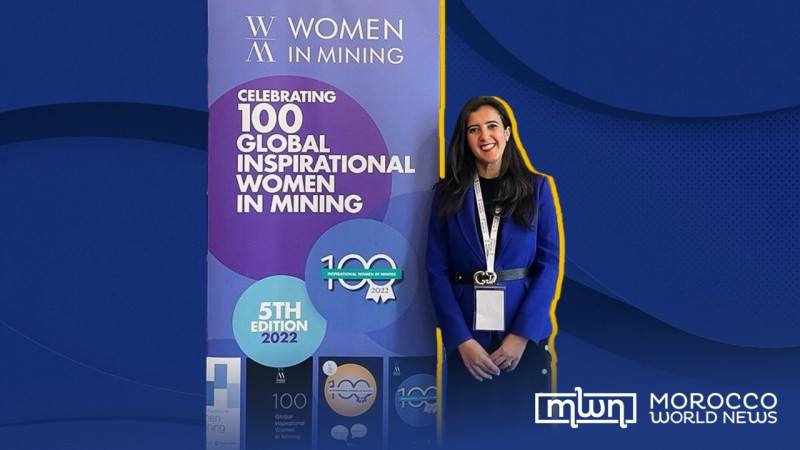
Women in Mining UK, an NGO dedicated to supporting women in the mining sector, selected CEO of OCP subsidiary DOOC Ibtissam Bensetti to feature in the 2022 “100 Global Inspirational Women in Mining” (WIM100) in recognition of her contributions to the global mining industry.
With this nomination, Bensetti became the first OCP personnel and Moroccan national to feature in the 100 Global Inspirational Women in Mining.
The NGO’s global top 100 list celebrates women’s contribution to the mining industry at all levels. The biennial publication stresses women’s skills and expertise in the global mining industry and celebrates role models for future generations.
Women inclusion in mining
The organization selects nominees based on different criteria, including creative innovation and sustainable working.
“A WIM100 woman offers proactive advocacy to those working in the mining industry and beyond. She empowers her colleagues to ensure everyone feels heard, welcomed, and respected,” the NGO said.
Bensetti has been able to take her place in the WIM100 for her leadership in OCP as a CEO at the group’s subsidiary DOOC, which specializes in industrial operations consulting, safety, and sustainability.
Having joined OCP in 2012, Bensetti has more than a decade of experience in the mining industry at different levels, particularly in sustainability roles in mining and chemical industrial operations, as well as corporate development.
Carrying the spirit of women’s empowerment during her journey, Bensetti has been working on spreading that spirit among her team members, particularly women, through supporting OCP’s female talent as well as increasing the number of women in management.
Delighted to be part of the WIM100 list, Bensetti stressed her emphasis and belief in women’s talents.
“In my mind, there is no impenetrable fortress for women, women can defy the norms and pursue a career in any industry,” she said, conveying her encouragement and endorsement for the inclusion of women in the mining industry.
The CEO acknowledged that the industry might have been a male-dominated industry but claimed that that’s in the past thanks to global efforts seeking to ensure gender equality at different levels. Women make up between 8% and 17 % of the global mining workforce, a McKinsey report has found.
The report also identified, however, several reasons and challenges that prompt women’s exit from the industry.
“The top reasons for leaving the industry are feeling that work is no longer intellectually challenging and having the perception that there are fewer advancement opportunities than there are for their male colleagues,” the report stressed.
Appointment and education
Bensetti was appointed as CEO of DOOC in June 2021 to replace Hamid El Mahfoudi, who retired.
She joined OCP a decade ago, filling positions related to strategy, corporate development, and industrial operations.
Graduating from Telecom Paris in 2004, Bensetti amassed 18 years of experience in management consulting, industry managing, coaching, and leading teams in transformation journeys.
Bensetti is also a graduate of The World Business Council for Sustainable Development’s LEAP Program, a one-year sustainability training program that seeks to empower women and help advance their positions and careers.
Having gender equality as a center of focus during her career, Bensetti is determined to continue her battle to help empower women in the mining industry.
“Being a woman engineer in industry, I have been fighting this battle all my life,” she wrote on her LinkedIn bio.
The Sheikh Zayed Book Award (SZBA) of the Abu Dhabi Arabic Language Centre (ALC), part of the Department of Culture and Tourism – Abu Dhabi (DCT Abu Dhabi), has revealed the longlists for its 17th edition (2022/2023) in the Literature, Children’s Literature, and Young Author categories.
The announcement was made as the SZBA judging committees begin the evaluation process for all the longlisted entries.
The Young Author category saw 954 submissions this year, an increase of more than 8 percent from the 881 received last year. The Young Author recorded the highest growth in number of submissions among all categories, and now accounts for 30 percent of total nominations across all categories.
The Literature category received 688 submissions this year, ranking second in terms of submissions, while the Children’s Literature category saw 386 participations, up nearly 63 percent from the 236 submissions registered last year.
The Children’s Literature category received 12 submissions from nine Arab countries: UAE, Saudi Arabia, Egypt, Lebanon, Syria, Jordan, Bahrain, Kuwait, and Iraq. These included:
“La Ahad Yal’ab Ma’ai” (No One Plays With Me) by Mohammed Alohaly from Saudi Arabia, issued by Al Hudhud Publishing and Distribution in 2022.
“Lu’bat al-Nujoom” (The Star Game) by Afra Mahmood from the UAE, issued by Al Hudhud Publishing and Distribution in 2022.
“Min al-Fajr ila al-Ghuroob maa’ Toyour Ghabat Alkharuwb” (From Dawn to Dusk with the Birds of the Carob Forest) by Flora Majdalawi from Jordan, issued by Majdalawi Masterpieces Books in 2022.
“Mala Narah” (What We Don’t See) by Shaima Alwatani from Bahrain, issued by Afkar for Culture & Publishing in 2021.
“Aba’at Abi” (My Father’s Gown) by Basemah Alwazzan from Kuwait, issued by National Council for Culture, Arts and Literature in 2022.
“Jaddi wa al WhatsApp” (My Grandfather and WhatsApp) by Parween Habib from Bahrain, issued by Dar Al Saqi in 2022.
“lastu Wahedan” (I Am Not Alone) by Rami Tawil from Syria, issued by Dar Al Saqi in 2021.
“Rabieon Samet” (Silent Spring) by Razan Al Naeemy from Iraq, issued by Qindeel printing, publishing & distribution in 2022.
“Abhathu an Shai’”(I Am Looking for Something) by Sahar Naja Mahfouz from Lebanon, issued by Dar Kiwi Stories in 2022.
” Einstein: Asrar Alkoutaa 99” (Einstein and the Secrets of the 99th Element) by Sharif Saleh from Egypt, issued by Wow for Publishing & Educational Services in 2022.
“Rehla Dafeaa Molawana” (A Colourful Warm Journey) by Doha Jawad from Syria, issued by Dar Ashjar Publishing & Distribution in 2020.
“Al Sorra Al Ajeebah” (The Wonder Bundle) by Nadia AlNajjar from the UAE, issued by Alfulk Translation & Publishing in 2022.
The longlist for the Young Author category ranged from theses to literary works and included 12 titles, submitted from eight Arab countries: Tunisia, Egypt, Algeria, UAE, Iraq, Oman, Lebanon, and Saudi Arabia. The works on the longlist are:
“Madeeh Al Ikhtilaf: Derasat fi Falsafat Al Ketabawa Siasat Alhawiya ” (Praise of Difference: Studies in the Philosophy of Writing and Identity Politics) by Mohamed Bekkaye from Algeria, issued by Al Rawafed Culture and Nadim Edition in 2022.
“Al Khetab Al Kasasi fi Ayyam Al Arab fi Al Jahileya: Kiraah Tadawouleyah Hijajeyah (Narrative Discourse in the Days of Arabs in the Pre-Islamic Era: A Pragmatic and Argumentative Examination) by Dr. Abdessattar Al Jamai from Tunisia, issued by Dar Kunouz Al-Marefa Publishing & Distribution in 2021.
“Al Badawi Al Abiad” (The White Nomad) by Mutaz Albader from Saudi Arabia, issued by Dar Al Tanweer Publishing & Printing in 2021.
“Aroos Al Kamar, Hekayat Al Holm Al Afriki” (The Comoros Bride: An African Dream Tale) by Mohammad Tarazi from Lebanon, issued by Arab Scientific Publishers Inc. in 2021.
“Al Wahl wa Al Noujoom” (Dirt and Stars) by Ahmad Lutfi from Egypt, issued by Aseer AlKotb in 2022.
“Al Tajreeb fi Al Khetab Al Sheary Al Emarati Al Mouaaser” (Experimentation in Contemporary Emirati Poetic Discourse) by Dr. Hessa Abdulla Al Ketbi from the UAE, issued by Sharjah Department of Culture in 2021.
“Haraket Alfadh Al Hadarh Al Arabieyah min Bayan Al Jahedh to Aked iben Abd Rabbeh” (The Movement of Words in the Arab Civilization: From the Statement of Al Jahiz to the Unique Contract of Ibn Abd Rabbeh) by Dr. Ali bin Hamad Al Riyami from the Sultanate of Oman, issued by Alaan Publishers & Distributors & The Omani Society for Writers & Literati in 2022.
“Nehayat Al Sahra’a” (The End of the Desert) by Said Khatibi from Algeria, issued by Hachette Antoine / Nofal in 2022.
“Fawka Jisr Al Joumhoureyah” (Over the Republic Bridge) by Shahid Alrawi from Iraq, issued by Dar Alhikma Publishing & Distribution in 2020.
“Al Belad Al Tounnouseaya fi Oyoun Al Rahhalah Al Alman” (Tunisia in the Eyes of German Travelers (1535-1881 AD) by Dr. Atef Salem from Tunisia, issued by Editions Arabesques in 2021.
“Naqd Al Naqd Wa Tajalleyatoh Fi Al Tourath Al Nakdi Wa Al Balaghi Al Arabi” (Criticism of Criticism and Its Manifestations in the Arabic Rhetoric and Critical Heritage) by Dr. Issam Benchellel from Algeria, issued by Difaf Publishing & El-lkhtilef Publishing in 2021.
“Fareedah Wa Sedi Al Mathloum” (Farida and My Oppressed Master) by Heba Ahmad Hassab from Egypt, issued by Al Mahrousa Center for Publishing, Press Service, and Information in 2021.
As for the Literature category, 12 titles made it onto the longlist by novelists, writers and poets representing eight countries: Egypt, Morocco, Syria, Tunisia, Saudi Arabia, Lebanon, Sudan and Iraq. The titles are:
“Almer: Akhtam Al Madeenah Al Fadelah: (Almer: Seals of the Utopian City) by Abdelillah Benarafa from Morocco, issued by Dar Al Adab Publishing & Distribution in 2022.
“Hijab Al Saher” (A Magician’s Veil) by Ahmed Al Shahawi from Egypt, issued by Al-Dar Al-Masriah Al-Lubnaniah in 2022.
“Aseer Nish: Rakan bin Falah bin Hethlain” (Prisoner of Nish: Rakan bin Falah bin Hethlain) by Ahmed Hamad AlSubait from Saudi Arabia, issued by United Takween Group Press, Publishing & Distribution in 2022.
“Rasasa fi Al Raas” (A Bullet in the Head) by Ibrahim Issa from Egypt, issued by AlKarma Books in 2021.
“Hourrass Al Houzn” (Guardians of Sadness) by Amir Tag Elsir from Sudan, issued by Hachette Antoine / Nofal in 2022.
“Al-Qata’i: Thoulatheyat Ibn Tulun” (Al-Qata’i: Ibn Tulun’s Trilogy) by Reem Bassiouney from Egypt, issued by Nahdet Misr Publishing in 2022.
“Abnaa Hura” (The Sons of Hura) by Abdelrahim Kamal from Egypt, issued by AlKarma Books in 2021.
“Ifrah ya Qulbi” (Rejoice, My Heart) by Alawiya Sobh from Lebanon, issued by Dar Al Adab Publishing & Distribution in 2022.
“Ila Ayn Ayyathouha Al Kaseedah” (Whereto, O Poem? An Autobiography) by Ali Jaafar Alallaq from Iraq, issued by Alaan Publishing in 2022.
“Antakia Wa Molouk Al Khafaa” (Antioch and the Kings of Secrecy) by Lina Hawyan Alhasan from Syria, issued by Dar Al Tanweer Publishing & Distribution in 2021.
“ Moujazafat Al Aref” (Knowledgeable Risk) (Poetic Work) by Mohammed Ibrahim Yaghob from Saudi Arabia, issued by Tashkeel Publishing & Distribution in 2022.
“Kullo Aoushbaten Sawtouha wa Kullo Ghaimaten Kathalek” (To Every Grass Leave Its Sound, and to Every Cloud as Well) (Poetic Work) by Mohamed Ghozi from Tunisia, issued by Contraste Editions in 2022.
The Sheikh Zayed Book Award will soon be announcing the longlisted titles for the remaining categories in the 17th edition.
At least eight Somali American women won races in Tuesday’s U.S. midterm elections, results show.
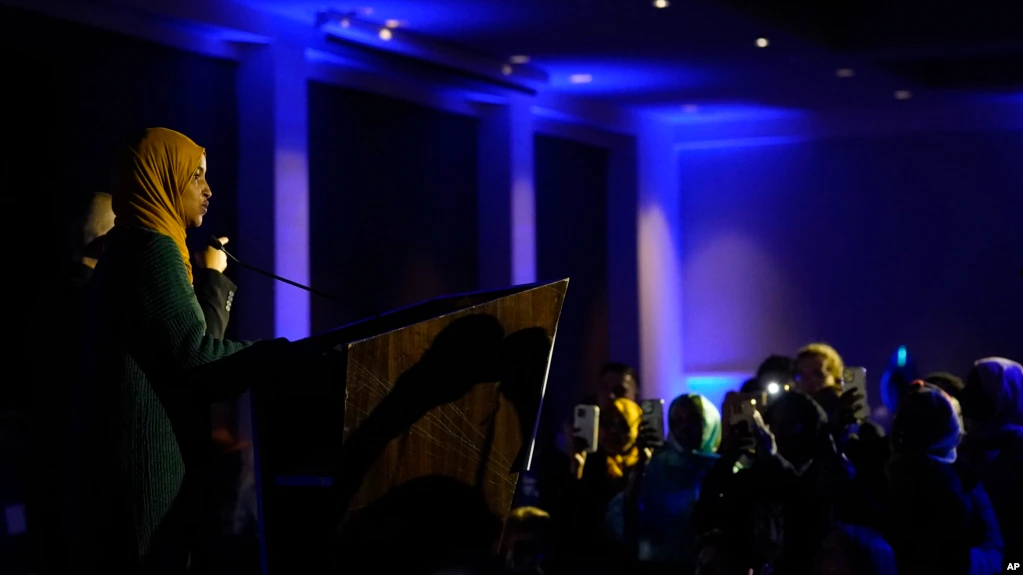
Ilhan Omar, the most prominent Somali American politician, held on to her U.S. House of Representatives seat in Minnesota’s 5th Congressional District. This will be the third term for Omar, who was first elected in 2018.
In Minnesota state races, Zaynab Mohamed was elected to the Senate, becoming the first woman of Somali descent elected to the chamber, according to MPR News. Meanwhile, Hodan Hassan defended her seat in the state House of Representatives.
Other Somali American women running for offices in Minnesota were victorious, including Fathia Feerayarre, who won a seat on the Minneapolis Public Schools board.
In neighboring North Dakota, Hamida Dakane also made history, becoming the first woman of Somali descent elected to the state House. Born in northeastern Kenya’s Somali region, Dakane, who won Fargo’s District 10, came to the U.S. in 2011.
In Maine, Deqa Dhalac, who made history last year as the first Somali American mayor for a U.S. city, South Portland, has now been elected to the state House after handily defeating Republican opponent Michael Dougherty. Mana Abdi, who was running unopposed for a seat representing Lewiston, Maine, joins her in the House.
In Ohio, Munira Abdullahi and Ismail Mohamed, a man, won seats in the state House. Minnesota and Ohio have among the largest Somali American populations in the U.S.
Speaking to her supporters Tuesday night, Omar highlighted the significance of victories achieved by Somali American women.
“There was a time when we believed that women with a hijab could not get elected,” she said. “Tonight, Minnesota is electing three new women who are wearing hijab. That shows if you trust in yourself, if your people trust you, stand with you, everything is possible.”
Mohamed, one of the hijab-wearing Minnesota winners, expressed hope that more Somali Americans will run for office.
“I’m very happy with this victory tonight, thank God,” she told VOA Somali. “This is a victory for me, for my family and for the Somali people. God willing, a lot of men and women will follow me and will come through.”
Shukri Olow, who lost a state House seat outside Seattle, Washington, told VOA Somali that she was inspired to run by the women before her, including Omar, Hassan and Dhalac.
In an interview with VOA Somali, Dhalac confirmed that when she visited Washington in 2018, Olow asked her questions about running for office.
“She said she wanted to run for the open seats in her area or seats that will be open in the future in Washington state,” Dhalac recounted. “I encouraged her to do it. Many women say we will do this, we will do this tomorrow, we will do this next year. I said to her, if you want to compete, just do it.”
The success of Somali American female candidates in the U.S. eclipses that of female aspirants for elected office in Somalia.
Female politicians in Somalia are so disenfranchised that in 2016, Somalia’s federal and regional leaders had to start allocating a specific quota of seats in parliament. But women still were never given the opportunity to get the 30% quota promised.
In 2016, Somali women occupied 24% of the 329 seats in the two houses of parliament. In 2022, female candidates secured only 20%, well short of the 30% quota.
Fawzia Yusuf Haji Adam, the only female presidential candidate in the May 15 presidential election, got just a single vote — her own.
“I did not get the support I’m sure [Somali American women] are getting when they stand [for office], because here the culture and other factors are causing a lack of encouragement [for women],” she said.
Adam welcomed the success of Somali American women.
“This is a victory for Somali women in the diaspora,” she said. “I congratulate them, I encourage them, and we are proud of them.”
She said women in the diaspora, including those in the United States, Europe, and Canada, have opportunities that women in Somalia do not have.
“What made it possible is, first, the places they live in, where men and women are viewed equally, where they get encouragement from the schools, from the university, and from the parents, and they can see achievements by other women,” she said.
“Over there, the neighborhood they live in is going to elect them when they see the person is trustworthy, honest, working and clean. White and Black would vote for that.”
Harun Maruf contributed reporting from Washington.
source/content: voanews.com (headline edited)
___________
Democratic Congresswoman Ilhan Omar speaks to supporters at an election night party after winning reelection early Wednesday morning, Nov. 9, 2022, in St. Paul, Minnesota.
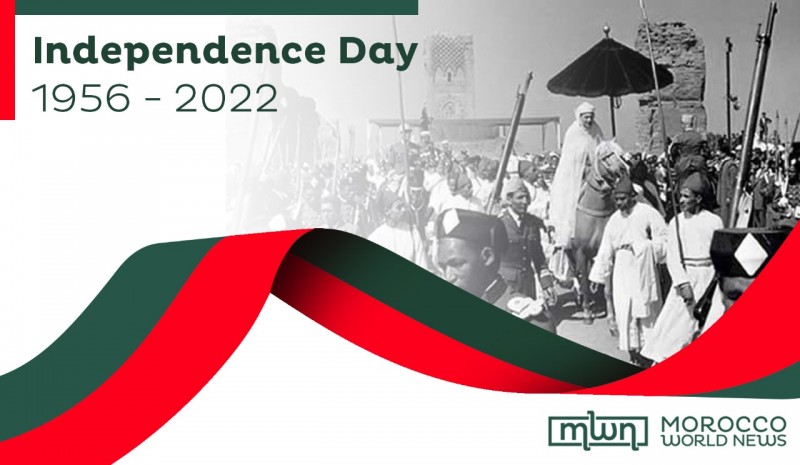
November 18: A Reminder of Morocco’s Long Fight for Independence.
The day marks a celebration of Moroccan bravery in the face of the French and Spanish colonial regimes.
On November 18, Moroccans will celebrate the 67th anniversary of Morocco’s independence. The date, which once commemorated King Mohammed V’s ascension to the throne in 1927, celebrates nowadays the country’s long fight for freedom and independence against the French and Spanish protectorate.
The colonial history dates back to March 30, 1912, with the signing of the Treaty of Fez, laying the foundation for the French protectorate and the division of Moroccan territories between Paris and Madrid with Spain controlling the northern and southern provinces with the exclusion of Tangier, which became an international zone in 1923.
However, Tangier’s special status was temporarily revoked between June 14, 1940, and August 31, 1945, as Spanish dictator and general Francisco Franco occupiedthe international zone.
As for the Ceuta and Melilla enclaves, they have remained under Spanish control since the 17th and 15th centuries, respectively.
A fierce fight
Since the establishment of the French and Spanish protectorate regimes in Morocco, local communities led numerous revolutionary missions fighting back the expansion of the colonial forces.
The establishment of the Republic of the Rif by Abdelkrim al Khattabi in 1921 and its continuity until 1926 strongly reflected the Moroccan will for independence. Despite being defeated by the Spanish Army of Africa with the support of French forces, the republic remained a prominent example of Moroccan-led resistance movements.
In November 1925, the Moroccan nationalist movement was initiated to put an end to the oppressive colonial regimes. The movement was instrumental in voicing Moroccan demands in not only urban and rural centers but also on the international stage.
In January 1944, 66 members of the Moroccan national movement signed the country’s Manifesto of Independence and presented it to the French and Spanish colonial authorities, as well as representations of the US, Great Britain, and the Soviet Union.
The manifesto was a turning point in Morocco’s struggle for independence. Aware of the threat that the declaration represented to the continuity of the French protectorate in the North African country, French colonial forces worked on pressuring Sultan Mohammed V to condemn the proclamation, while leading a purge of Moroccan nationalists and intellectuals and accusing some of the signatories of spying for Nazi Germany.
This was a time when Muslim and Jewish nationalists were discussing the prospect of establishing a modern and free Morocco that can equally celebrate both communities and reverse discriminatory measures forced by colonial authorities such as the Berber Dahir and Vichy’s anti-Jewish policies.
Despite facing fierce oppression from French colonial forces, the Moroccan nationalists continued to voice their demand for self-determination.
The movement further worked in coordination with Sultan Mohammed V to obtain freedom. The Sultan’s calls for independence eventually led to his forced exile along with his family members on the eve of Eid al-Adha in August 1953 to Corsica, and then to Madagascar in 1954.
The Sultan’s forced exile fueled public uproar with many nationalists organizing protests and calling for the return of the Sultan and his family as well as the right of the people to self-determine their fate.
Faced with rising pressure from the Moroccan public for independence, France allowed the return of Sultan Mohammed V to his homeland on November 16, 1955.
Two days later, the monarch delivered an iconic speech, stating, “We are delighted to announce the end of the trusteeship system and protectorate and the advent of freedom and independence.”
Incomplete independence
By late 1955, Mohammed V agreed to the gradual restoration of the country’s territorial integrity in line with agreements reached with France.
On March 2, 1956, Morocco officially gained independence from the French regime. That same year, Morocco re-integrated Tangier and the northern part of Morocco that was under Spanish rule.
However, the Ceuta and Melilla enclaves, as well as the country’s south remained under the Spanish regime at the time.
Morocco gradually recovered its territorial integrity in the south with the withdrawal of Spain from Tarfaya in 1958, Sidi Infni in 1969, and Saqia al Hamra and Oued Eddahab region in 1975.
A significant part of the Moroccan recovery of southern territories was led by the late King Hassan II (1961-1999) who orchestrated the Green March that contributed to the full withdrawal of Spain from southern Morocco.
After over six decades of fighting for independence, Morocco regained the majority of its territories with the exception of the Ceuta and Melilla enclaves that remain under Spanish rule.
The country’s southern provinces, known as Western Sahara, are also subject to disputes with the eastern neighbor and the Polisario Front, a self-proclaimed separatist group challenging Morocco’s territorial integrity and sovereignty of the region.
Today, Rabat continues to defend its territorial integrity in international gatherings with the support of friendly states.
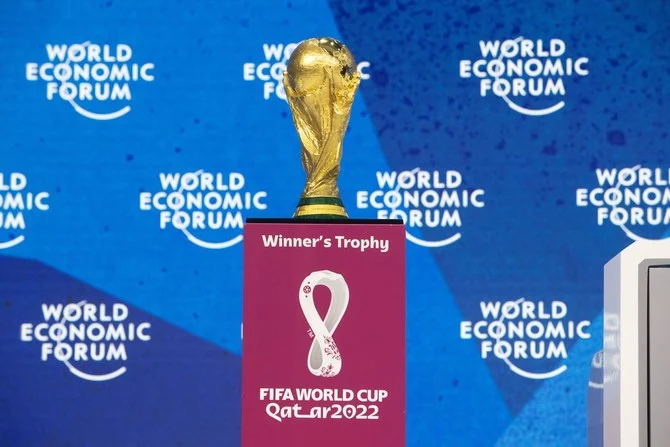
With the biggest show in football 24 hours away, Arab News takes a look at the 12-year journey to make Qatar 2022 happen.
The first FIFA World Cup to take place in the Arab world will kick off Sunday in Doha when the host nation take on Ecuador in the tournament’s opening match at Al-Bayt Stadium.
The journey from winning the nomination on Dec. 2, 2010 to the big kick off on Nov. 20, 2022 has not been without challenges and controversies, but for the teams and fans who have landed in Qatar, and for millions around the world, the moment of truth has arrived.
As in Russia four years ago, there will be four Arab nations taking part in the tournament. This time around they are Qatar, Saudi Arabia, Morocco and Tunisia.
Qatar and Saudi Arabia are among a record six Asian Football Confederation members taking part, along with Japan, South Korea, Iran and Australia.
Of the Arab nations, Qatar have an immediate chance to get three points on the board against Ecuador — arguably the easiest of their three matches in group A, which also includes the Netherlands and Senegal.
A win would leave the Asian champions requiring perhaps just a single point from their two other matches to become only the fourth Arab nation — after Morocco (1986), Saudi Arabia (1994), and Algeria (2014) — to reach the knockout stages of a World Cup.
Saudi Arabia have the toughest start of the Arab nations, taking on Argentina in their Group C opener, before facing Poland and Mexico in two matches that are only marginally less difficult.
A strong Morocco squad will have high hopes of causing an upset in Group F against Belgium Canada and Croatia, while Tunisia were dealt a tough hand when placed with champions France, Denmark and Canada in Group D.
While the Arab teams might struggle to progress beyond the group stages, it is a mission they should embrace. Players like Qatar’s Akram Afifi and Almoez Ali, Saudi’s Salem Al-Dawsari, and Tunisia’s Hannibal Mejbri could introduce themselves to a whole new audience.
Others, like Seville keeper Yasssine Bounou, and his Moroccan colleagues Achraf Hakimi of PSG and Hakim Ziyech of Chelsea are already familiar to audiences worldwide.
Standout matches for the Arab contingent will be Qatar’s showdown with the Netherlands on Nov. 29; Saudi’s second Group C fixture against Poland, which could provide their best chance of an upset; Tunisia’s clash with champions France; and Morocco’s final Group F match against Canada, potentially a match in which they could seal their progress to the round of 16 if they already have points on the board.
Elsewhere, there will be titanic clashes (Spain vs. Germany), international “derbies” (England vs. Wales), politically charged matches (Iran vs. USA) and revenge missions (Ghana vs. Uruguay)
Among the favorites for the trophy will be France and Brazil, both of whom have named fearsome squads, as well as Euro 2020 finalists England and South American champions Argentina.
The latter have become many people’s sentimental favorites, with a swell of emotion building behind Lionel Messi’s bid to end a glorious career with the trophy he craves the most.
Win it on Dec. 18, in what would be the Argentine maestro’s 1000th professional game, and the title of greatest footballer of all time will no longer be debated.
Messi’s rival for the title of greatest player of his generation, Cristiano Ronaldo, will also be playing in what is surely his last World Cup. And while things have not gone smoothly for the Portugal captain at Manchester United this season, his army of fans will no doubt be watching to see if he can pull one last rabbit out of the hat.
With Messi and Ronaldo walking into the sunset at the end of Qatar 2022, the position of world’s best player is up for grabs. The contender most likely to fill the void is Kylian Mbappe.
Already a world champion, the Frenchman has long been many people’s choice as the world’s “next” best player, and though he has continued to excel for club and country, the fact that he has remained at Paris Saint-Germain and, crucially, failed to land the coveted Champions League for them, means the jury is still out.
And then there is Neymar. This World Cup could well be the final chance for the Brazilian teammate of Messi and Mbappe at PSG to prove that he belongs among the greats after two World Cups plagued by injuries and underwhelming performances.
Other veterans including Ballon d’Or winner Karim Benzema, Uruguay’s Luis Suarez, Poland’s Robert Lewandowski and Croatia’s Luka Modric will also have the chance to bid their fans a fond farewell at the highest level.
Among a new generation of players to watch in Qatar are the likes of Brazil’s Vinicius Jr, Raphinha and Bruno Guimaraes; France’s Eduardo Camavinga and Aurelien Tchouameni; Uruguay’s Darwin Nunez; Germany’s Jamal Musiala; and the brilliant 19-year-old Spaniard Pedri.
The stage is set, the curtain rises on Sunday night.
source/content: arabnews.com (headline edited)
__________
The first FIFA World Cup to take place in the Arab world will kick off Sunday in Doha when the host nation take on Ecuador in the tournament’s opening match. (Reuters/File Photo)
Guinness World Records, the global authority on record-breaking achievements, announced on Friday that its 2023 edition, available now in stores and online in the Middle East, features 50 records from the Arab world.
Read on for some of the latest achievements from the region.
01. Saudi Arabia
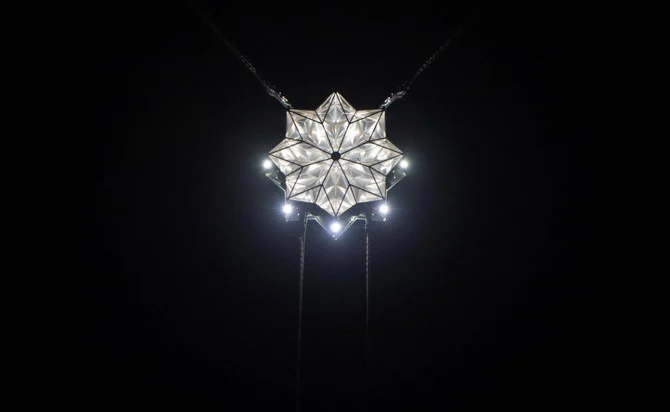
The Kingdom is flexing its muscles with a set of achievements including the largest LED structure and brightest suspended ornament by Noor Riyadh Festival and the largest Lego brick Formula One car by the Saudi Arabia Motor Federation.
02. UAE
wam.ae
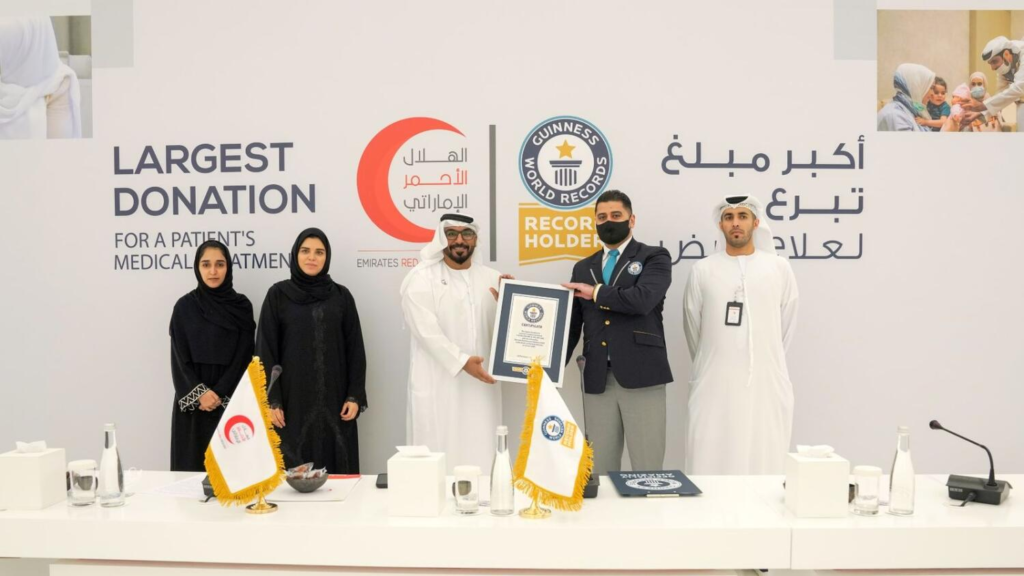
From the UAE, the new book covers a number of humanitarian record-breaking initiatives such as the largest donation for a patient’s medical treatment by the charity organization Emirates Red Crescent and the most awareness ribbons made in one hour by the Emirates Oncology Society, an organization dedicated to promoting multidimensional care for cancer patients.
03. Iraq
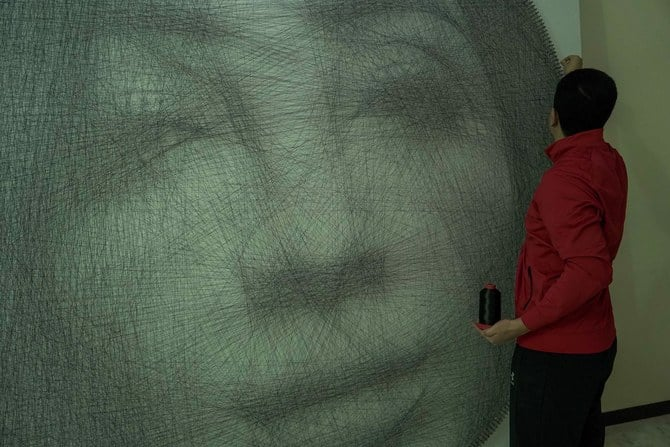
There are three achievements from Iraq: the largest pin-and-thread art by artist Saeed Howidi, the most eggs balanced on the back of a hand (18 eggs) and the tallest stack of M&M’s by Ibrahim Sadeq.
04. Egypt
Mohamed Shehata achieved the widest arm span on a living person (male) and the widest hand span on a living person (male), while Mahmoud Ayoub was featured for achieving the most finger-tip push-ups (one arm) in one minute.
05. Kuwait
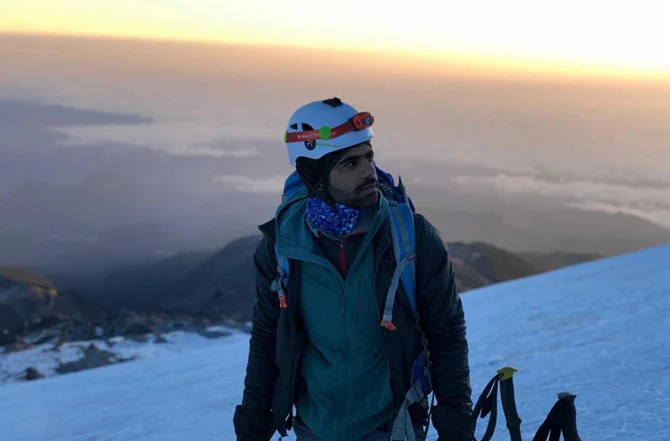
Yousef Al-Refaie became the youngest person to climb the Seven Volcanic Summits (male). Kuwait was also featured for the longest indoor slide achieved by LOOPZ.
06. Algeria
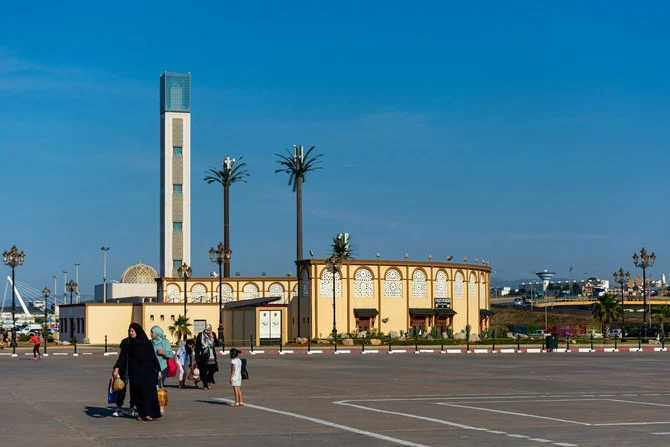
From Algeria, the trade center Algiers International Fair created the largest bowl of couscous, and Djamaa el Djazaïr, also known as the Great Mosque of Algiers, broke the record for the tallest minaret, the tower used to project the Muslim call to prayer.
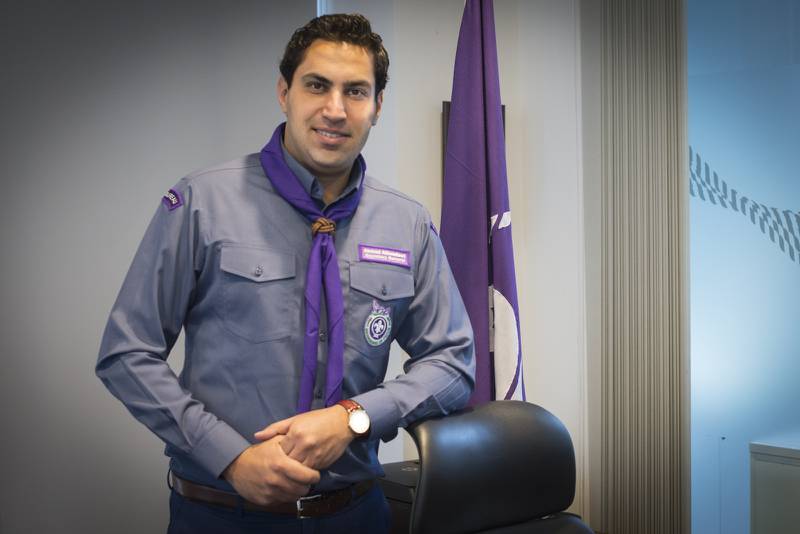
Scout’s honour: lucky break bounced Ahmad Alhendawi into the line of dut.y
Jordanian who substituted basketball for public service now proudly puts the global scout movement’s 54 million young people first as leader of the packs.
Ahmad Alhendawi found his mission in life on the basketball court. Just not in the way he expected.
As a teenager on the brink of university, the Jordanian had set his heart on a sports scholarship. It all depended on one 90-minute trial but, fortunately, young Alhendawi was good.
Even though he was up against more than 30 contenders for one of just two coveted places, he had little doubt in his ability to prevail.
The decisive moment came as he ran back into a defensive position during a one-on-one exercise with a rival when his knee twisted beneath him.
The tears that followed were for the agony and his thwarted ambition. “I can’t remember much because the pain was just unbearable,” Mr Alhendawi tells The National.
The diagnosis was a cruciate ligament injury – and that was that as far as the basketball scholarship was concerned.
“It was literally the only time I needed basketball in my life, just to get to the school that I really wanted,” he says.
“Most of my friends were there and I already had a kind of picture of how things would play out if I went. So it was game over.”
He had little choice but to revert to plan B, one which he now believes should “always have been my plan A”, to focus on his other passion – volunteering.
The switch to public service has not worked out too badly for the man who, at the age of 32, was named as the youngest head of the world’s scouting movement.
“Volunteering is quite a remarkable thing,” he says. “It’s a magical thing. You actually think you’re giving your time and energy but all the time you are getting much more than you are giving.
“Only with time do you realise how much you have accumulated experiences and insights on things that you would never have explored if it wasn’t for volunteering.”
It is tempting to call it a meteoric rise but Mr Alhendawi’s selection as secretary general of the World Organisation of the Scout Movement followed a pattern of volunteering and championing youth causes that was set early in childhood.
The young Ahmad grew up in Zarqa, Jordan’s second largest city and a magnet for migrants from across the Middle East seeking a better life.
Attending a public school with class sizes of 45 to 50, he mixed with Iraqis, Syrians and Christian Arabs whose families had all made their way to the country’s industrial centre beside the Zarqa River.
As the youngest of 10 children from a military family, he was well versed in making himself heard.
His intellectual curiosity was fed by learning from the conversations of his older siblings and visits to the local public library. He remembers, too, aged six, being captivated by his father’s habit of reading the newspaper every day.
“It was always a surprise to me why there were so many stories in there but we were not in the paper,” Mr Alhendawi says.
“My father explained the whole thing that you have to do something to be in the paper. In a very childish way – but in a profound way when I reflect on it – I felt like I would like to be part of those sorts of things.”
Thinking that the opportunities afforded him through the formal education system would not only be conventional but limited by social class and financial background, he fixed upon the idea of expanding the realm of possibilities via extra-curricular activities.
These days, Mr Alhendawi describes it as “hustling through volunteering”. “It was my ticket to try to make it, and it worked rather well and allowed me to do a lot of things,” he says.
As a teenage scout, he was asked to help as an usher for an event where the charismatic King Hussein of Jordan gave a speech. “It was the only time I saw my father cry, when the king passed away,” Mr Alhendawi says.
He learnt the value of public service from a teacher, who in his spare time ran the school’s scout troop, and his inspirational basketball coach. His own volunteering efforts ran in parallel with his sporting passions until that devastating torn ligament.
The result of the injury was that, instead of staying in his home city and attending the Hashemite University, he went to his second-choice, Al Balqa, in Salt, 50 kilometres away.
Being separated from his family taught him independence, but the course on computer information systems failed to satisfy his growing intellectual curiosity.
Before starting classes, he travelled every week to another university to attend lectures on political economy and psychology. “My friends were laughing at me because they knew that I didn’t have passion for what I was studying,” he says.
His dedication fed into his volunteering work. Mr Alhendawi spent extra hours reading lecture notes and preparing documents while working on school councils and youth commissions.
He was delivering a presentation at a conference when he was spotted and offered a job with the Arab League to work on youth projects and develop civil society.
Mr Alhendawi has consistently maintained that young people are unexploited assets in solving the world’s problems. It is a lesson that global leaders need to learn quickly, he says, with half of the population under the age of 25 but suffering some of its most acute problems.
The dissertation for his master’s degree, achieved at the European Institute in Nice, France, looked into the workings of the Arab uprisings in Egypt. He argues that the perception of apathetic Egyptian youth was not borne out by the mass mobilisation in 2011.
He has spoken of changing the rules of political engagement so that those in the younger generation are treated as more than mere beneficiaries of charity from an older establishment. Despite too often being sidelined in this process, Mr Alhendawi says that young people cannot afford to ignore politics.
His own advancement came when he was tapped by the UN’s secretary general, Ban Ki -moon, in January 2013 to become the organisation’s first youth envoy.
Four years later, he himself was named as a secretary general, representing the diverse views of more than 170 nations in the scouting movement.
No one was more delighted than Mr Ban, who dug out a photograph of his younger self as a scout when Mr Alhendawi came to his office to break the news.
Mr Ban told his departing envoy that his appointment was a good one for the UN. While he might be losing an energetic advocate for youth, he felt that the vast scout network under Mr Alhendawi would advocate for similar goals as those of the UN.
In a sign of how the co-operation would work, the UN, with the scouting movement and the five other large global youth organisations, launched an initiative called Global Youth Mobilisation to provide an initial $2 million for young people and communities affected by Covid-19. Young people will decide where the money goes and how it is spent.
Mr Alhendawi’s mission statement in leading the scouting movement is to embrace the “mega trends that are really threatening the future of this generation, like climate change and inequality ”.
In his own scouting days, he visited parts of Jordan as a child and was immersed in different cultures that he probably would not have experienced otherwise.
“Scouting tends to be inward looking sometimes … a movement that has more than 50 million members and more than 500 million alumni cannot act as a small club in a village,” he says.
His programme of modernisation extends to updating the image of the organisation, which in some countries has lost its appeal to youngsters to the competing attractions of computer games and sports.
Mr Alhendawi has praised the process of revitalisation in the UK, where perceptions were overhauled when the adventurer and explorer Bear Grylls was named as chief scout.
His social media feeds feature many campaigning messages, whether environmental, educational, achieving gender equality, ensuring a fair global distribution of vaccines or promoting peace in South Sudan.
It is a politics founded on consensus building from his history of working for membership organisations – such as the UN and the Arab League – in which progress can be made only by bringing people together in search of a common goal.
He recalls one lunch with a diplomat at which they discussed the differences between working for a country or an organisation like the United Nations. “The way we ended the conversation was that if you were a representative of a member state you could probably promote development for the sake of politics,” he says.
“But if you worked on the UN side, you have for the most time to do the politics for the sake of maintaining development gains.”
Despite his global ambitions for change, some of Mr Alhendawi’s challenges are closer to home. Sexual abuse scandals resulted in the Boy Scouts of America, for example, filing for bankruptcy to allow it to pay compensation in hundreds of reported cases.
One of his first acts as secretary general was to build ethical standards across all the national scouting organisations. In the coming years, any that do not conform to child protection measures “will have no place in the movement”.
In his darker moments, he turns to the words of Nelson Mandela, whose letters and poems are on the wall of Mr Alhendawi’s home in Kuala Lumpur, the capital of Malaysia where the world scouting movement has its headquarters.
“Just two weeks ago, I was confronted with a situation where I thought, maybe I should be angry … and gave myself two hours, read a few of the letters and it just calmed me down and helped me find the right tone,” he says.
At 37, Mr Alhendawi has reached the stage in his life when he is running out of time for “the youngest …” to be attached as a prefix to each new appointment. He was due to marry his partner, who is from Finland, last year but the coronavirus has delayed the nuptials until this summer.
The pandemic has hit young people hardest, Mr Alhendawi says. He wrote on Twitter last year that the effect of Covid-19 on youth was not just severe, it was catastrophic.
“It has resulted in a generation in waiting,” he said. He points to his own native Jordan, where youth unemployment stands at 50 per cent.
Despite the gloom, lockdown living has had some advantages. In this online interview, Mr Alhendawi occasionally tugs at his black polo shirt, sticky from the effort of throwing a few hoops on the basketball court outside.
After two decades of exercises to relieve the discomfort caused by the old sporting injury, he has at last had surgery. As he puts it, “I’ve finally fixed something that’s been broken for 20 years”.
More than 9,000 people signed up online to learn first aid within 24 hours of the campaign launching.
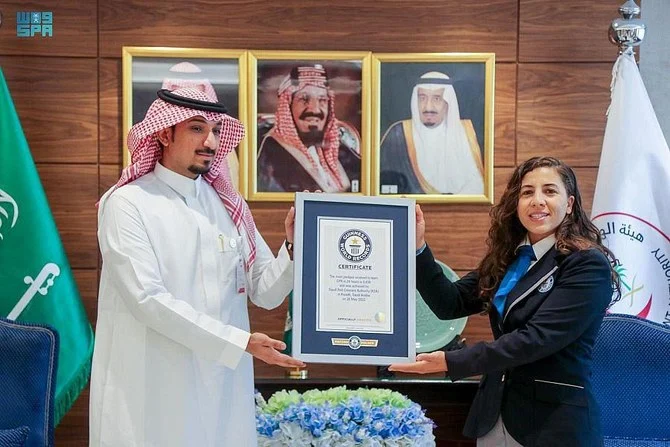
The Saudi Red Crescent Authority has received a Guinness World Record for its “Saving a Soul” awareness campaign after 9,836 people signed up to learn first aid within 24 hours.
More than 9,000 people signed up online to learn first aid and how to use automated external defibrillators within 24 hours of the campaign launching, Saudi Press Agency reported.
Spokesperson for the Saudi Red Crescent Authority, Abdulaziz Al-Suwaine, said the campaign was held at Riyadh Front and witnessed a big turnout from both citizens and residents who showed true willingness to learn first aid and ways to use AEDs.
The authority has installed defibrillators in several public places to help save lives, he added.Al-Suwaine said the campaign’s success in attracting such a large number of people in a short amount of time shows how responsible Saudi society is and the will of its individuals to be influencers at the humanitarian level.
source/content: arabnews.com (headline edited)
___________
The Saudi Red Crescent Authority receives a Guinness World Record for its “Saving a Soul” awareness campaign. (SPA)
The Iraqi researcher Mootaz Salman has won the “Young Scientist Lectureship Award” for research that involved putting human brain tissue on a microchip and using innovative technology to treat neurodegenerative diseases.
Salman started his academic career at the University of Mosul, where he earned a Bachelor of Pharmacy with Honours, and is now is a senior researcher and lecturer in the department of physiology, anatomy and genetics at the University of Oxford.
He spoke to Al-Fanar Media about his work, which has taken nearly ten years of research, and the experiences that led him to his current post.
The first researcher in Britain to win the award, Salman said the support he received from universities where he had worked in the United States and the United Kingdom had been a key factor.
“I deeply believe that the more a person works, the more fortunate he is,” Salman said.
“From the very beginning, I was aware of the challenges ahead, the double effort I had to make, as an academic from a conflict country, and the responsibility I had to convey a different image of my country and to help humanity provide solutions to brain diseases and stroke, which have risen dramatically.”
Human Brain Tissue on a Microchip
The International Society for Neurochemistry and the and Asian-Pacific Society for Neurochemistry will present Salman with the award in September in Honolulu, Hawaii.
Salman led a research team that used a human brain “microvessel on a chip” to study what happens when drugs cross from the bloodstream into the brain.
The research was part of his ongoing work to understand the cellular physiology of the blood-brain barrier and exploit its mechanisms to improve the effectiveness of therapeutic treatments of neurological diseases such as Alzheimer’s disease, multiple sclerosis, and Parkinson’s disease.
The device the researchers designed for the study allowed them to track the movement of tiny molecular sizes across the blood-brain barrier. Their device is ideal for studies involving biotherapies, as well as being able to employ it in high-resolution imaging methods, such as transmission electron microscopy, Salman said.
Academic Journey
Before moving to the University of Oxford two years ago as an assistant professor and lecturer at Wolfson College, Salman was a postdoctoral fellow at Harvard Medical School and Boston Children’s Hospital in the United States.
Before that, he earned a master’s degree and a Ph.D. from Sheffield Hallam University, in the United Kingdom.
During his doctoral studies, he discovered a new pharmacological framework for developing drugs to treat patients with brain tumours resulting from accidents and strokes.
This research focused on water receptors in the brain. Salman described it as a turning point that helped him recognise the molecular mechanics of brain diseases and think of ways to provide therapeutic solutions rather than surgery, which has major risks and complications.
He said the research led him to discover how cells develop brain tumours and the mechanics that cause these tumours and strokes at the molecular level.
A World Health Organization report says that about 75 million people in the world suffer from strokes annually. About five million of them die and another five million suffer permanent disability.
Salman says the incidence of brain disease in the Arab world is rising because of the dietary and living patterns of the majority of the population, the intake of fats and sugars at “unreasonable” rates, the lack of physical activity, and the pressures of daily life.
Difficulty of Research in Arab Countries
After graduating from the University of Mosul, Salman worked as a teaching assistant in the university’s Faculty of Pharmacy for about two years and experienced firsthand the difficulties of research in the Arab world. He said there was no financial support for conducting research, research laboratories were limited, and the teaching and administrative burdens on professors usually led them to abandon research.
Salman said scientific research should be considered “an investment,” not a “random academic luxury.” Such work only flourishes in a suitable environment where there is stability and financial support, he said.
He believes the political unrest Iraq has experienced in recent years has affected teaching in universities and Iraqi researchers’ chances for professional development. He described government support for Iraqi universities as “very limited” and said most research initiatives were “individual and random” and did not amount to regular institutional work.
A Call for Greater Investment in Research
Salman said Arab countries needed to increase investment in scientific research at the national level and benefit from the experience of wealthy Gulf countries that have attracted foreign and Arab professors from major European and American universities to establish research centres where young researchers can train.
He said he had tried to open communication channels between the University of Oxford and Iraqi universities to reach agreements for cooperation and scientific research, which could provide research fellowships for Iraqi researchers at British universities.
This year, the University of Mosul signed a cooperation agreement with Oxford on a project that uses remote sensing and photographic information systems to study antiquities. The work would preserve the cultural heritage of Nineveh Governorate and other Iraqi provinces, and attract Ph.D. students to training courses at British universities.
Salman said: “These efforts give me a high sense of pride and a greater incentive for hard work and research that benefits all humanity. I feel a sense of responsibility and love towards my country, my city and my mother university, which helped me and paved the way for me at the beginning of my academic journey.”
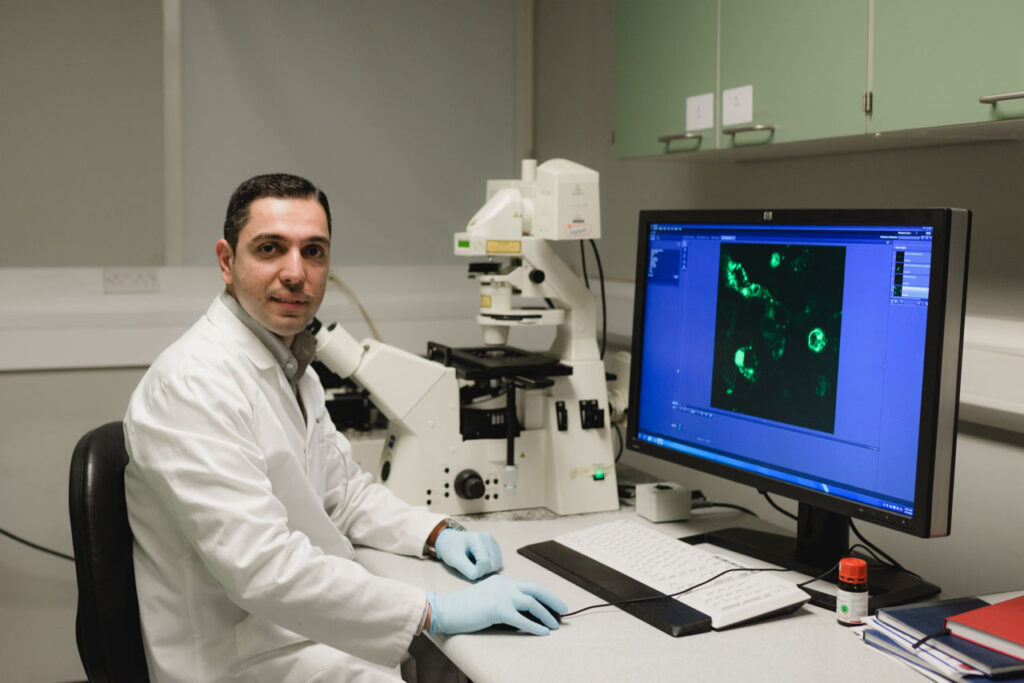
Mootaz Salman, an Iraqi scientist at the University of Oxford, has won the “Young Scientist Lectureship Award” for his use of innovative technology to treat neurological diseases. (Photo: Mootaz Salman).