Arabs & Arabian Records Aggregator. Chronicler. Milestones of the 25 Countries of the Arabic Speaking World (official / co-official). AGCC. MENA. Global. Ist's to Top 10's. Records. Read & Enjoy./ www.arabianrecords.org
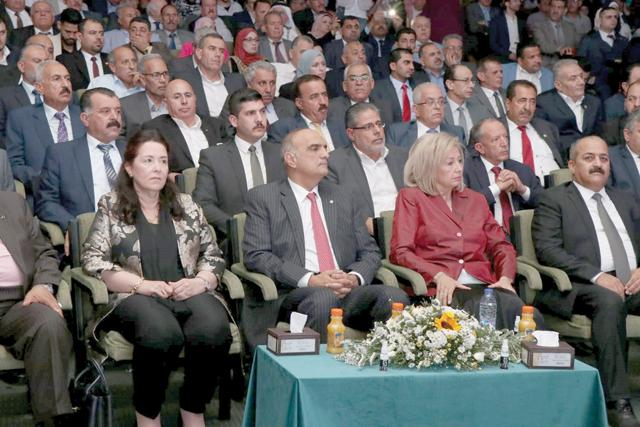
Deputising for His Majesty King Abdullah, Prime Minister Bisher Khasawneh on Sunday attended the ceremony of Irbid: the Arab Capital of Culture for 2022.
During the event, held at Al Yarmouk University, Khasawneh conveyed His Majesty’s greetings and thanks to those who put efforts towards making this national event — the launching of Irbid as the Arab Capital of Culture for 2022 — successful, the Jordan News Agency, Petra, reported.
The premier, who is also head of the higher national committee for celebrating Irbid: The Arab Capital of Culture for 2022, highlighted the Kingdom’s efforts to “embrace the culture and intellectual elite”, as well as “supporting innovators towards instilling a serious national culture”.
The selection of Irbid as the Arab Capital of Culture is a national event that is being celebrated by the whole Kingdom, he added.
He noted that nominating Irbid as the Arab Capital of Culture for 2022 and Madaba as the Arab Tourism Capital for 2022 coincides with the bicentennial to celebrate the Kingdom, as well as is accompanied by Jordan’s efforts towards a new start titled as “moving towards future” through three paths: Political modernisation, economic modernisation vision and upgrading the public sector.
The selection of Irbid is in line with the Kingdom’s modernisation and reform trends, which consider the cultural scene among its key pillars, he said, noting that the selection of Irbid is a source of pride for Jordanians and is aligned with the northern city’s nature as well as its historical and cultural status.
He also expressed hope that the event would contribute to uncovering the innovative capabilities in Irbid and across the Kingdom, as well as offer an opportunity to feature the qualitative value of the local and Arab cultural and intellectual scene.
The event was attended by a number of ministers, Arab culture ministers, guest delegations, and senators and deputies, among other officials.
Culture Minister Haifa Najjar said that proclaiming Irbid as the Arab Capital of Culture for 2022 by the Arab League Educational, Cultural and Scientific Organisation (ALECSO) illustrates confidence in Jordan and the country’s intellectuals, noting that the selection requires scaling up efforts to bring further innovation through joint action.
Mohamed Ould Amar, director general of ALECSO, said that Jordan’s comprehensive cultural renaissance under the leadership of His Majesty King Abdullah has contributed to Irbid’s well-deserved status, noting that the organisation is following up the activities of Irbid: The capital of Arab Culture for 2022, Petra added.
He also commended the participation of figures from Jerusalem, describing the holy city as the eternal capital of Arab culture at the 2022 Irbid event, highlighting that their participation is of special character, as Jordan has shown historical stances in defending Jerusalem and its cultural components.
At the end of the ceremony, Palestinian Culture Minister Atef Abu Saif handed over the banner of the Arab Capital of Culture to Najjar, marking the selection of Irbid as the Capital of Arab Culture for 2022 following Bethlehem, the Capital of Arab Culture for 2021.
source/content: jordantimes.com (headline edited)
____________
Deputising for His Majesty King Abdullah, Prime Minister Bisher Al Khasawneh attends the ceremony of Irbid: The Arab Capital of Culture for 2022 at Yarmouk University on Sunday (Petra photo)
Sara Sabry – Mechanical and Biomedical Engineer. The first female Egyptian Analog Astronaut
Engineer Sara Sabry has become the first Egyptian to travel on a suborbital flight, after New Shepard’s 22nd space flight (NS-22) – operated by the American private aerospace manufacturer Blue Origin – carried her and five others to the edge of space before returning to Earth.
Launched from Corn ranch, West Texas in the US, the New Shepard stayed for 11 minutes at 106 km above the ground.
The 29-year-old Sabry flew with entrepreneur Mário Ferreira, the first person from Portugal to fly to space; British-American mountaineer Vanessa O’Brien; American technology leader Clint Kelly III; telecommunications executive Steve Young; and Coby Cotton, cofounder of the YouTube channel Dude Perfect.
Sabry earned her bachelor’s degree in mechanical engineering at the American University in Cairo and her master’s degree in biomedical engineering at Italy’s Polytechnic University of Milan.
She is also currently preparing for her PhD in aerospace sciences with a focus on space suit design, according to Blue Origin.
Sabry’s seat on NS-22 is sponsored by the Colorado-based nonprofit Space for Humanity (S4H), which is concerned with increasing access to space for all of humanity.
According to the official website of Space for Humanity, its “citizen astronauts” are chosen from among “change-makers who are currently serving a community leadership role.”
Sabry is S4H’s second “citizen astronaut” to fly on board the NS-22 after Katya Echazarreta in June.
Blue Origin has not announced how much it charges for seats on its space flights, and neither has S4H revealed how much it paid to book seats for its “citizen astronauts.”
According to some news reports, however, the price possibly ranges from zero to $28 million based on several factors including who the passenger’s social status.
This is the sixth trip by Blue Origin since its launch by US billionaire and Amazon founder Jeff Bezos in 2015.
Forbes Middle East has announced its annual list of the 100 Most Powerful CEOs in the Middle East for 2022.
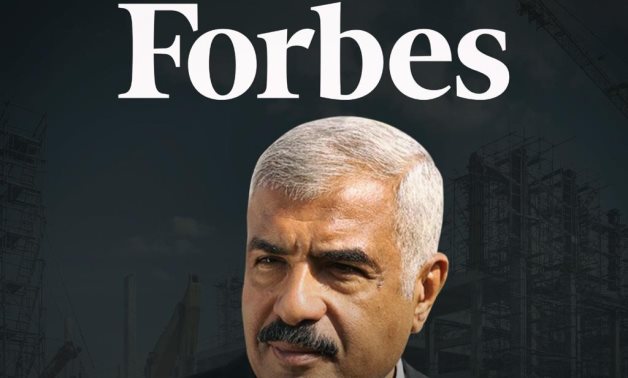
The American magazine confirmed the status of businessman Hisham Talaat Moustafa, CEO and Managing Director of Talaat Moustafa Holding Group, who ranked 61st, up 6 places from last year’s ranking.
Forbes Middle East magazine said that Hisham Talaat Moustafa is the youngest son of the founder of the Talaat Moustafa Group, which is currently the largest listed real estate company in Egypt.
The magazine stated that the assets of Talaat Moustafa Company amounted to 7.5 billion dollars in 2021, while the group owns a portfolio of land with an area of 74 million square meters.
The group’s revenues amounted to 825 million dollars last year, while the company developed more than 33 million square meters of land, and sold more than 90 thousand housing units.
Forbes reported that the Talaat Moustafa Group recently launched giant projects, including: Privado – Madinaty, Celia and Noor City.
The magazine said that the group has extensive investments in the hospitality sector, including: Four Seasons Resort Sharm El Sheikh, Four Seasons Nile Plaza, Four Seasons San Stefano Alexandria, and Kempinski Nile Cairo.
About the methodology used in the classification, Forbes indicated that its methodology in preparing the list was based on collecting information from financial market disclosures, industry reports, annual reports of companies, financial statements, and other primary sources.
As for the classification of CEOs, it is based on several factors: the influence of the CEO and the company on society and the country, the markets they supervise, the CEO’s experience in his current position, as well as his general experience.
Forbes indicated that the factors affecting the evaluation include: the size of the company in terms of revenues, assets, market value, the CEO’s achievements and performance in the past year, the innovations and initiatives he implemented.
This year, Forbes magazine’s list of the most powerful CEOs in the Middle East includes 100 business leaders from 26 different nationalities, led by the Emiratis with 19 CEOs, followed by the Egyptians with 16 leaders, and the Saudis with 15 business leaders.
The CEOs in the banking and financial services sector topped the list with 27 CEOs, followed by the leaders of the communications sector with 8 heads, and then 7 leaders in each of the energy and logistics sector.
The companies on the list run by CEOs are worth more than 5 trillion dollars, while revenue was more than 1 trillion dollar last year.
source/content: egypttoday.com (headline edited)
_________
Among the most powerful CEOs of 2022 Forbes highlights the CEO of Talaat Moustafa Group
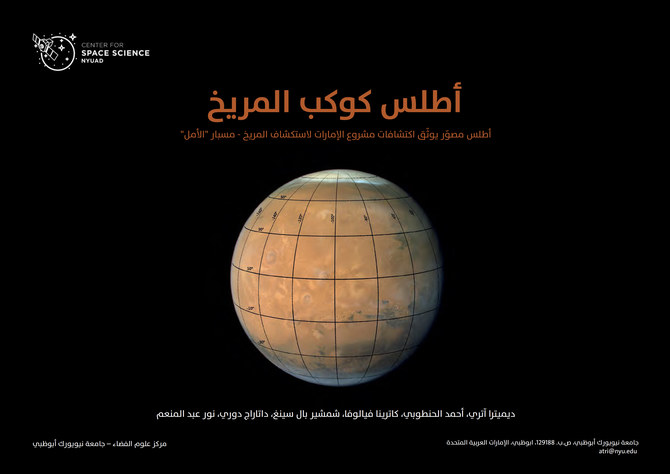
NYU Abu Dhabi research scientist Dr. Dimitra Atri has produced the world’s first ever Mars atlas in Arabic, Emirates News Agency reported.
The atlas uses data from the UAE’s Emirates Mars Mission (EMM) — also known as Hope or Al-Amal — in order to make the findings of the probe more accessible to both the UAE’s Arabic-speaking population and the rest of the world.
The Mars Atlas Project combines various images from the Hope probe to map the planet’s surface.
The end result is a comprehensive view of Mars and stunning images of a planet that once had similar atmospheric conditions to Earth.
Dimitra Atri used data from UAE’s Hope probe to map the red planet.
Atri and his team compiled the atlas by processing observational data from EMM’s Emirates eXploration Imager, one of three instruments onboard the orbiter. The device will also assist the team in showing how the planet changes over the course of one Mars year, which is roughly equivalent to two Earth years.
As more data from the Hope probe becomes available, the atlas will be gradually updated.
The data will help scientists gain a better understanding of the planet’s atmospheric thinning, which has caused it to cool and dry over the last 4 billion years.
Atri predicts that the collected data will be used to answer unsolved scientific questions about the erosion of Mars’ atmosphere.
The findings could help the international scientific community to better understand Earth’s atmospheric processes, he said.
As a site of historical significance with a prominent role in Islamic history, today it sees a number of visitors who come to perform their prayers.
Madinah is home to a number of mosques and historic Islamic sites, a veritable tourist destination where visitors can explore places from Prophet Muhammad’s life.
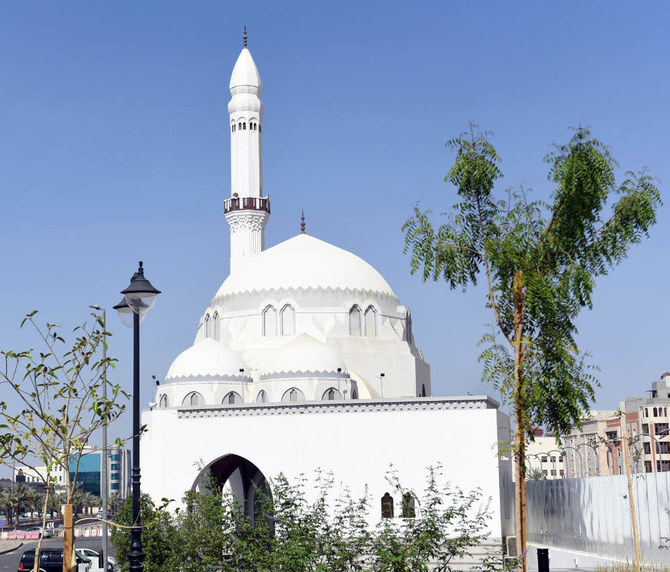
Al-Jum’ah Mosque is one such place, linked to the migration of Prophet Muhammad from Makkah to Madinah.
The mosque is the site where the prophet stopped in the Wadi Ranuna region and performed the Jum’ah, or Friday, prayer.
Al-Jum’ah Mosque holds different names, such as Al-Wadi Mosque and Atikah Mosque.
As a site of historical significance with a prominent role in Islamic history, today it sees a number of visitors who come to perform their prayers.
It is situated southwest of Madinah, near Wadi Ranuna, 900 meters north of the Quba Mosque and 6 kilometers from the Prophet’s Mosque.
It was built with rocks initially then demolished and renovated several times. Before the last expansion, the mosque was built over a small mound, with one dome made of red bricks. Then it was rebuilt and expanded to accommodate 650 pilgrims.
The mosque also includes a minaret, a main dome in the middle of a praying area and four small domes on its sides.
Time Out magazine ranks Marrakech 7th among top 53 cities. List also includes Dubai, Abu Dhabi, Doha
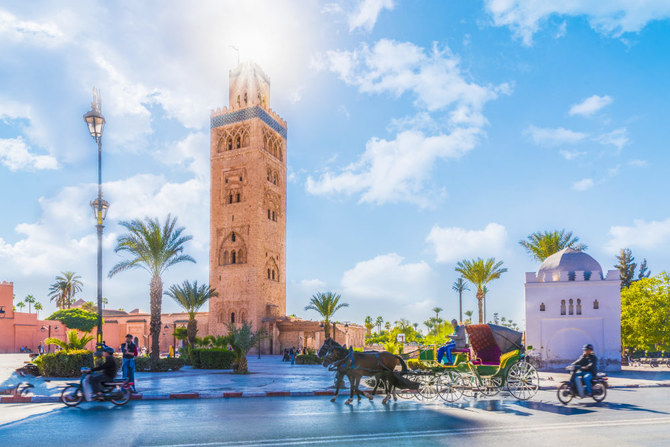
Marrakech has been ranked seventh in a new list of the world’s 53 best cities, compiled by British events magazine Time Out.
Dubai (40), Abu Dhabi (45) and Doha (53) were the other Arab cities receiving plaudits for their offerings in nightlife, liveability, and practical issues such as walkability and sustainability.
The magazine’s annual ranking this year was the first since 2019 to not revolve around resilience to the COVID-19 pandemic, instead focusing on the fun and practical frills that each city has to offer.
Time Out said it had “added extra weight to the things that make cities great places to visit as well as to live.”
It added: “Our top cities this year are the ones with thriving nightlife, amazing food and drink, and art, culture and museums galore.
“We’ve highlighted places that aren’t boring or overly expensive or overrated, and we’ve ensured that our top picks also score well for practical stuff like walkability, good public transport and safety, as well as sustainability.”
The editors were charmed by the “community, creativity and faith in the future” that made Marrakech “come roaring out of the pandemic with a new lease of life.”
Time Out spoke to local guides and experts to get a feel for what is particularly excellent about each urban hub.
Highlighting the new international storytelling festival in February, it said post-pandemic Marrakech has attracted “big players like La Mamounia” that were “sporting sassy new looks.”
The Moroccan cultural capital was described as “thriving,” with the magazine pointing to a range of exhibitions.
It added that El-Fenn had launched “the hottest Sunday music nights in town,” with visitors desperate to return.
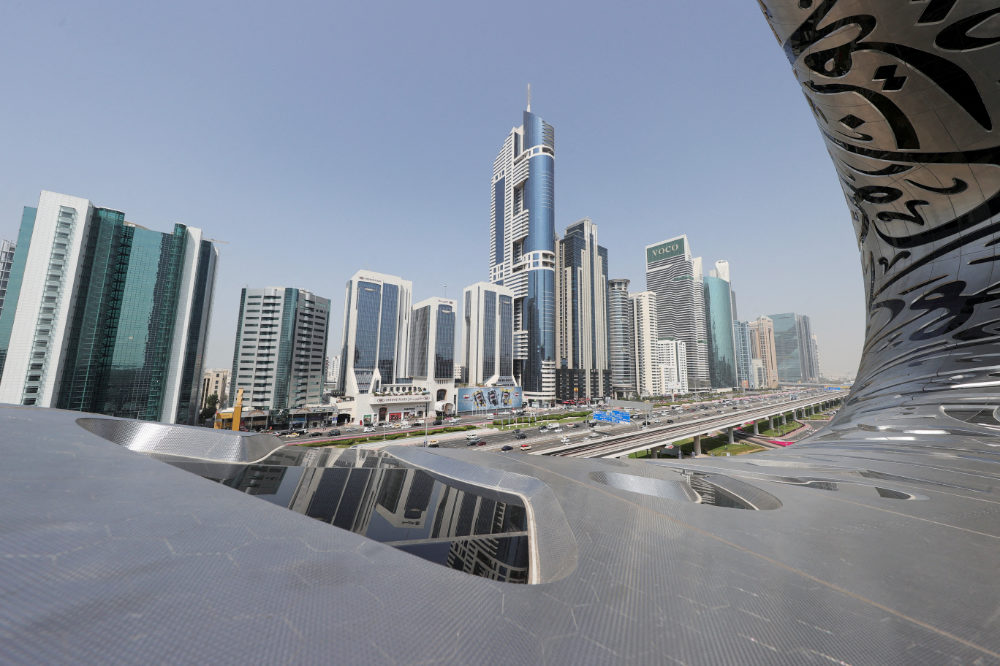
Time Out said Dubai “has all the stuff you’d want from a travel destination — from incredible restaurants and buzzing nightlife to some of the world’s best shopping and simply stunning beaches.”
It also pointed to its modernity and cleanliness, highlighting that 97 percent of the locals say the city is clean.
Dubbed “a city of superlatives,” Time Out pointed to the emirate boasting the world’s highest infinity pool, tallest building and largest manmade island. Dubai heard the phrase “go big or go home” and truly took it to heart.
But while those “world’s largest” structures are static, the city is anything but. A vibrant events scene has introduced the newly opened Museum of the Future, with Time Out recommending that you follow your visit “with a beach club crawl along the rapidly expanding Palm West strip and a DJ set at Electric Pawn Shop.”
Time Out noted that Emirati capital Abu Dhabi is also the “unofficial arts and culture capital” of the UAE.
Pointing out that the city’s safety and cleanliness made it popular with expats, the magazine referenced the constant stream of exciting things to do, “from cutting-edge restaurant openings to major new museums including the Guggenheim Abu Dhabi and the National History Museum Abu Dhabi,” both of which are on the horizon.
Local expert Heather Cichowski, from Time Out Abu Dhabi, said the city “ranks among the least dirty, stressful and rude. In short, it’s an all-round comfortable and pleasant place to live and work.”
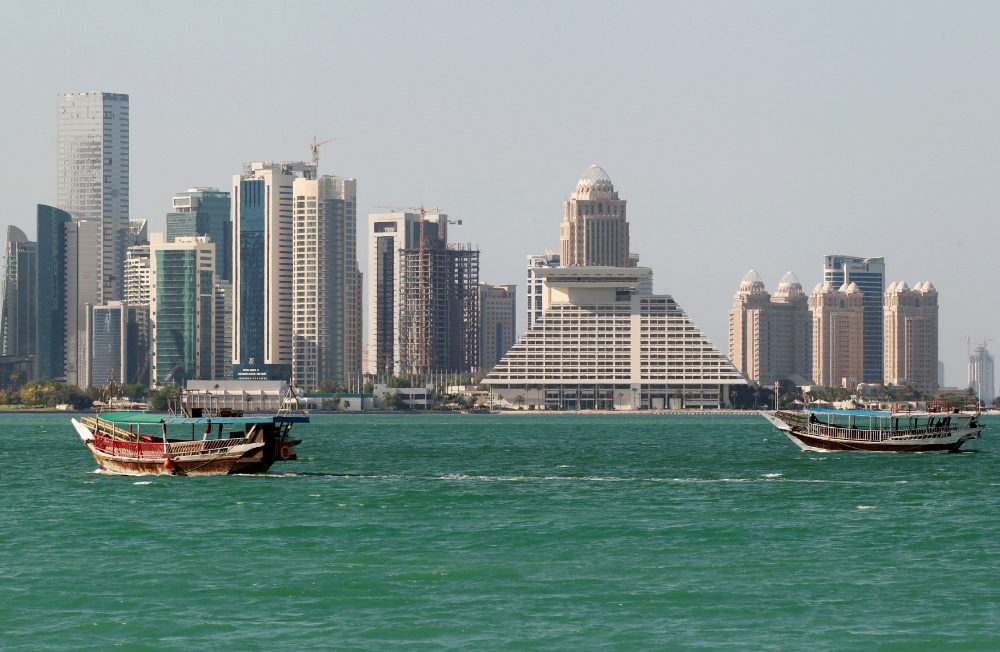
Like Dubai and Abu Dhabi, Doha was similarly praised for its cleanliness, but locals and expats have also lapped up the Qatari capital’s stream of events and activities.
As Doha gears up to host this year’s FIFA World Cup, the pinnacle of the world’s most popular sport, the city has been promoting its local events for every taste and persuasion.
Time Out said: “There’s loads of great stuff to see and do here, whether you fancy heading out to one of the city’s many cafés for breakfast (and we mean many, Doha’s coffee-and-cake culture is absolutely thriving), touring public art spots from Al Sadd Metro Station to Katara Cultural Village, or visiting a bar after hours.”
Boasting a slower and less stressful pace of life, the city is pouring attention into its arts scene.
The magazine said from now until the turn of 2023, some 17 new exhibitions are set to open, including an “immersive light installation from Pipiliotti Rist at the National Museum of Qatar,” which it described as “particularly stunning.”
source/content: arabnews.com
_____________
Marrakech. (Shutterstock)A view of the downtown skyline is seen from the Museum of the Future in Dubai, United Arab Emirates, February 23, 2022. (REUTERS)Buildings are seen on a coast line in Doha, Qatar. (REUTERS)
Analysts expect up to 157,000 to take up citizenship in next two years as 2015 cohort becomes eligible.
Seven years after arriving in Germany at the height of a refugee crisis, tens of thousands of Syrians are on the verge of receiving German passports in what experts regard as a success for their integration.
The number of Syrians taking up German citizenship trebled to more than 19,000 last year, the government said, after some refugees who excelled in integration and language courses managed to beat the usual eight-year waiting period.
Analysts believe as many as 157,000 more could follow in the next two years as the rest of the 2015 group becomes eligible.
“Overall, we can see that the integration of large numbers of refugees has made rapid progress,” said Jan Schneider of the government-backed Expert Council on Integration and Migration.
“We have observed an above-average level of interest in naturalisation among Syrian refugees. At the same time, many of them are starting to fulfil the necessary criteria.”
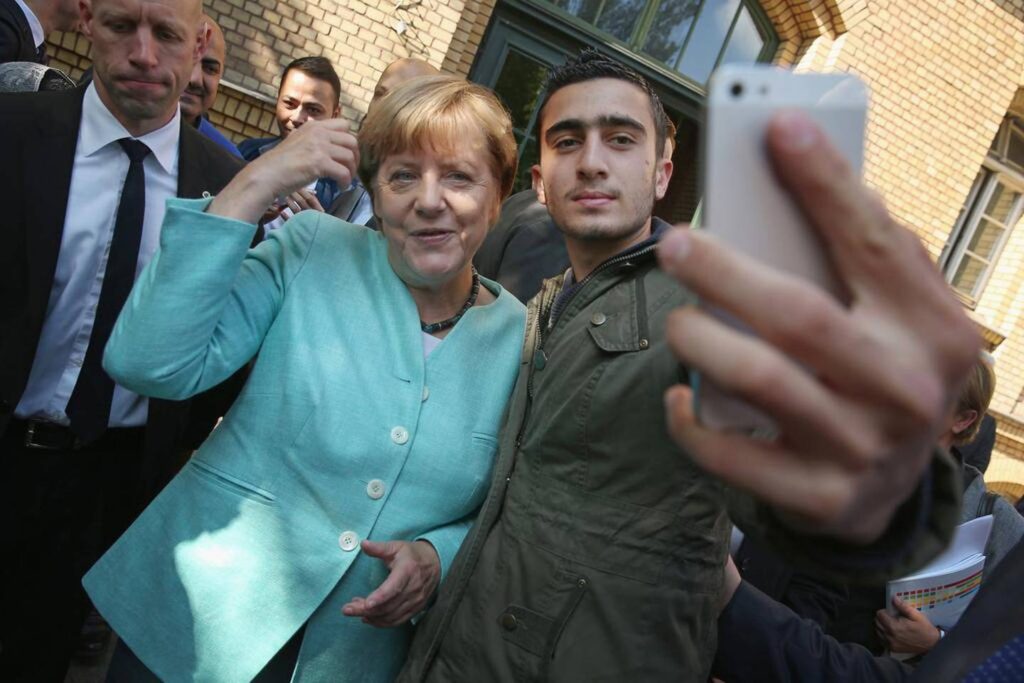
The intake of hundreds of thousands of Syrians in 2015 was a politically divisive decision by former chancellor Angela Merkel that was bitterly opposed by some Germans.
In the chaos of that summer’s refugee crisis, many Syrians fleeing war arrived at German railway stations and were initially put up in camp beds and gyms as humanitarian workers struggled to cope with the numbers.
Many refugees also arrived from Afghanistan, Iraq and other countries, but Syrians made up the largest number and helped to change the face of a Muslim community in Germany historically dominated by Turkish groups.
The backlash to the 2015 intake fuelled the rise of the far-right Alternative for Germany (AfD) party, and debates over crime, integration and national identity dominated German politics in the subsequent years.
Nonetheless, Mrs Merkel said shortly before leaving office that her much-derided statement in 2015 that “we will manage it” had proved correct, praising the work of local authorities and volunteers in integrating people.
Alongside reports, often seized upon by the right, of violent crimes by refugees, have been more positive stories including of Syrians in Germany helping Ukrainians who fled the war with Russia.
A 34-page report by the expert council said their integration into the labour market was progressing well and the number of social security claimants was down.
However, it said women were less likely to have had jobs or learnt German and that employment had suffered a setback during the coronavirus pandemic when refugees in casual jobs were more likely to be laid off.
Mr Schneider said language courses had paid off especially well because many Syrians were able to complete the naturalisation process in six years.
People can take the six-year shortcut if they can show exceptionally good language skills, perform notably well in their work or education, or have a strong record of volunteer work.
The report said the most conservative estimate was that about 20,000 Syrians a year would take up German citizenship from this year onwards, but that this could rise to many more than 50,000 if they apply at a high rate.
Syrians made up more than one in seven of all naturalised German citizens last year, with 19,100 of them joined by 4,420 Iraqis, 4,020 Iranians and 3,175 Afghans as well as many Turks, Poles and Romanians.
As well as the residency and language requirements, people must pass a citizenship test, be able to support themselves financially, swear loyalty to the democratic order and generally have to give up their old passport.
Mr Schneider said there could be delays if high demand from Syrians continues to exert pressure on short-staffed immigration authorities.
Afghan refugees described frustration at Germany’s famously meticulous bureaucracy as they sought protection for their relatives after the fall of Kabul last year.
“Waiting times are already very long in some places and the authorities are often short of staff,” Mr Schneider said. “They are facing significant challenges.”
Chancellor Olaf Scholz’s government has promised to cut the waiting time for prospective German citizens to five years of residency with a possible three-year shortcut, instead of eight and six.
It has also committed to relaxing rules on dual citizenship, which is currently permitted only for European Union citizens, people born with two nationalities and in limited cases where special permission is given.
source/content: thenationalnews.com
____________
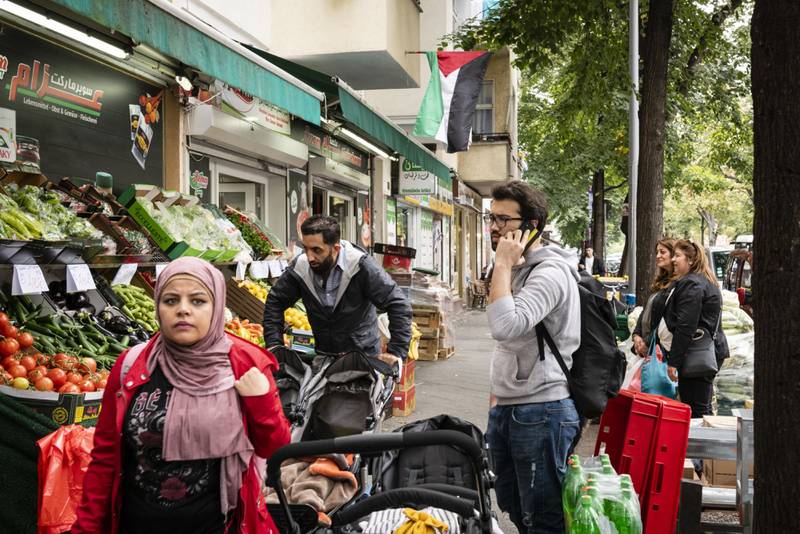
Former chancellor Angela Merkel made the divisive decision to open Germany’s borders to Syrian refugees in 2015. Getty / thenationalnews.comPedestrians pass a food store on Sonnenallee in Berlin, Germany, on Monday, Sept. 13, 2021. Refugees from Syria have changed the cultural makeup of Germany’s capital in a way not seen since the 1960s and Sonnenallee, known locally as “Arab Street,” may be the closest thing to home for many Syrians. Photographer: Jacobia Dahm/Bloomberg / thenationalnews.com
The Jamarat Bridge project is a massive structure built to save pilgrims’ lives and facilitate a crucial Hajj ritual.
Pilgrims gather in this place to throw stones at the devil in a symbolic act as part of their Hajj. Without this act, their pilgrimage is incomplete and considered to be unaccepted.
The concept of stoning the devil began when Prophet Ibrahim intended to sacrifice his son Ismael upon Allah’s order. The devil tried to dissuade the prophet three times from carrying out the order.
On each of the three occasions, the prophet pelted the devil with seven small pebbles to drive him away, after which the devil disappeared. This act has become a symbolic ritual and an integral part of Hajj.
It takes place over two or three days, from the 10th day of Dhul Hijjah until before sunset on the 13th.
The three pillars were previously built of stone and mud with low barriers surrounding them. They were then covered with cement, with the size of the pillars remaining unchanged for years.
However, the increasing number of pilgrims called for a project to help manage the hundreds of thousands of worshippers gathering in one place.
According to Mohammed Idris, former vice dean of The Custodian of the Two Holy Mosques Institute for Hajj and Umrah Research, the three pillars were surrounded by circular walls until 1975.
“A substantial enlargement of the area took place in 1987, and other expansions followed to upgrade the Jamarat area’s capacity to ease pilgrim movement and avoid accidents. The exit points and entrances to the pillars were amended, and the curved paths to the Jamarat were made straight,” he told Arab News.
The Jamarat Bridge was originally a pedestrian structure built in 1963 to facilitate the stoning ritual. Since then, it has been expanded several times to accommodate the increasing number of pilgrims.
A substantial enlargement of the bridge took place in 1974, and other expansions followed to upgrade the bridge’s capacity to ease pilgrim movement and avoid accidents.
Despite this, the structure witnessed several deadly incidents owing to actions of pilgrims who violated instructions, thereby sparking stampedes and deaths.
In 1990, over 1,400 pilgrims were killed by trampling and suffocation in Al-Ma’aisim pedestrian tunnel, which led from Makkah to Mina. Between 1994 and 2006, more than 1,030 pilgrims were killed in stampedes while trying to stone the pillars. Around 470 others were injured.
The worst stoning-related incident in recent memory occurred on Sept. 25, 2015, when more than 700 pilgrims died and another 800 were injured when pilgrims surged toward the intersection of Street 204 and Street 223.
A doctor at an emergency department of a Mina hospital told Arab News at the time that most of the pilgrims died of asphyxiation.
A Saudi interior ministry spokesman had blamed the stampede on “unprecedented high numbers of pilgrims” as compared to previous years, plus the fact that a majority of the victims had descended onto a pathway during a time that they were not allowed to enter it.
Witnesses to the tragedy had confirmed that a large group of Iranian pilgrims passed through Souq Al-Arab Street and refused to return, ignoring Hajj guidelines.
__________
FASTFACTS
• Stampedes and surges caused thousands of deaths at the Jamarat Bridge before the infrastructure was upgraded.
• The project, to alleviate overcrowding and avoid tragedies, cost $1.12 billion.
_________
Regardless of the causes of the tragedies, they prompted the Saudi government to devise a solution that could save lives. After the 2015 incident, Saudi Arabia’s King Salman offered condolences and immediately ordered an urgent review of the Hajj plan.
Over four years, Saudi authorities studied and researched the site before the old structure was completely removed and replaced by the existing engineering marvel known as the Jamarat Bridge.
The new project details were approved by top engineering and architectural committees consisting of local experts and highly experienced US, German, and British engineers. The opinion of senior Muslim scholars was taken into consideration for the religious position on the project details.
“In 2005, the circular walls around the pillars were reshaped, making them elliptical to facilitate the movement of the pilgrims,” Idris told Arab News.
“ In 2007 the old Jamarat project was discarded, and work on the new project began. A year later, one floor as per the project was fully constructed. In 2009, the second floor was made ready to serve pilgrims. By 2010, the entire planned construction was fully complete.”
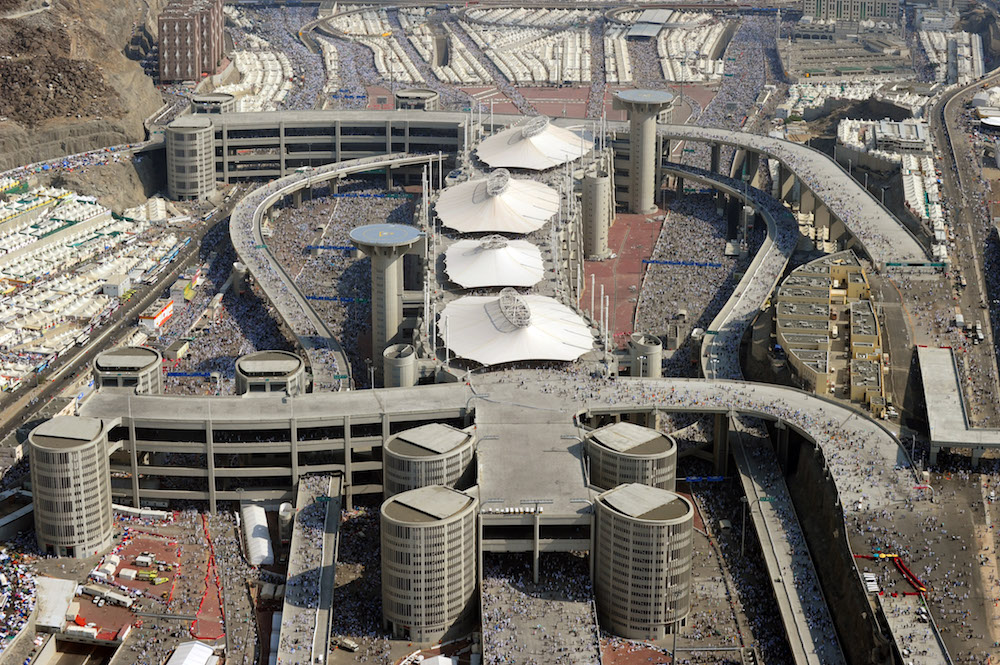
The bridge, which was constructed over three years by more than 11,000 workers, is 950 meters long and has six floors, including the basement, with a height of 12 meters per floor. Each floor can absorb up to 120,000 pilgrims per hour.
Its foundation was constructed to withstand 12 floors to accommodate 5 million pilgrims by 2030.
On the fifth level, umbrellas cover the site of the three Jamarat to enhance the comfort of pilgrims and protect them from the sun and heat.
The Hajj infrastructure showpiece, which has won several local and global awards, was built at a cost of over SR4.2 billion ($1.12 billion).
It has 12 entrances, 12 exit roads from four directions, two tunnels, 19 ramps, escalators, emergency exits, helipads, six service buildings, and an air-conditioning system with water sprinklers to cool the atmosphere and reduce the area’s temperature to 29 degrees Celsius.
The building also contains three electric stations and a standby generator that automatically supplies electricity in case of any temporary power cut.
Unlike the old circular shape of the walls around the three pillars, the new oval design has contributed to a better pilgrim flow. It has also assisted in increasing the bridge’s capacity for pilgrim numbers.
The new bridge was designed by Dar Al-Handasah and constructed by the Saudi Binladin Group. It features a wider and column-free interior space, longer Jamrah pillars, additional ramps and tunnels for easier access, large canopies to cover each of the three pillars to protect pilgrims from the sun, and ramps adjacent to the pillars to speed up evacuation in the event of an emergency.
No casualties have been reported at the Jamarat sites in six years. However, both Saudi Hajj and health authorities are prepared for any scenario. This year, 17 emergency centers will be present at Jamarat Bridge to assist in any emergencies — from crowd surges and falls to illness — that pilgrims may face on their Hajj journey.
source/contents: arabnews.com (headline edited)
___________
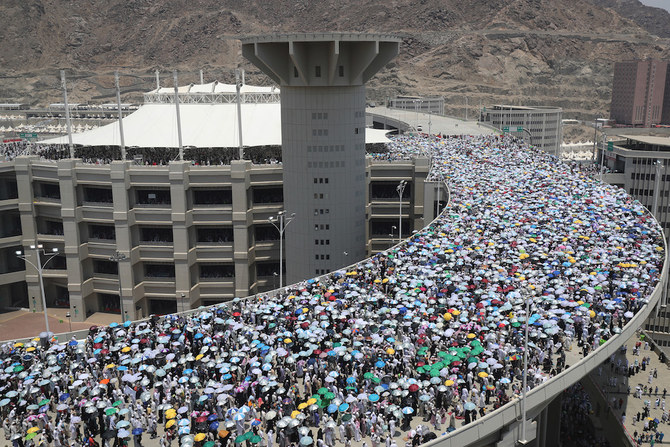
The walkway leading to the symbolic stoning of the devil, the oval design has contributed to better pilgrim flow and boosted the structure’s capacity for accommodating people. (AFP)A substantial enlargement of the bridge took place in 1974, and other expansions followed to upgrade the bridge’s capacity to ease pilgrim movement and avoid accidents. (AFP/File Photo)
The structure could remain airborne for years at a time.
Yemeni engineer Hashem Al-Ghaili has unveiled his vision for the future of travel, and it wouldn’t look out of place in a film about the apocalypse.
Al-Ghaili posted a video on YouTube proposing a giant nuclear-powered sky hotel named Sky Cruise, which could accommodate 5,000 passengers. Like an enormous, winged, futuristic-looking cruise liner, it would be fuelled by 20 electric engines, with a small nuclear reactor using “highly controlled fusion reaction to provide the sky hotel with unlimited energy”.
As such, the hotel would never run out of power and could remain suspended in the air for several years, “without ever touching the ground”. Both supplies and passengers would be delivered to the hotel via traditional commercial jets. All maintenance and repairs would also be conducted mid-air.
Suspended high above the clouds, the sky hotel would feature a large “panoramic hall”, offering 360-degree views of the skies. A lift would connect this space to the main entertainment deck, which would be home to shopping malls, sports centres, swimming pools, restaurants, bars, children’s playgrounds, theatres and cinemas. A separate section of the airborne hotel would be dedicated to events and business meetings, as well as wedding halls.
Incorporated into the design are balconies and viewing domes attached to each side of the structure, where guests could indulge in some high-level stargazing. “Its sleek design combines the features of a commercial plane, while offering the epitome of luxury,” Al-Ghaili’s video explains.
Sky Cruise would also eliminate disturbance from turbulence, with its navigation systems featuring a state-of-the-art command deck that uses artificial intelligence to predict turbulence minutes before it happens. The system would respond by creating anti-vibrations.
The hotel would also be home to an advanced medical facility to keep guests “safe, healthy and fit”.
The concept was originally created by Tony Holmsten and then reimagined and animated by Al-Ghaili. But it has been greeted with scepticism by commentators: “If physics and aerodynamics didn’t exist, then this vessel might actually be able to take off,” wrote one YouTube user.“
Hashem Al-Ghaili is a Yemeni molecular biotechnologist, science communicator, director and producer. He is best known for his infographics and videos about scientific breakthroughs.
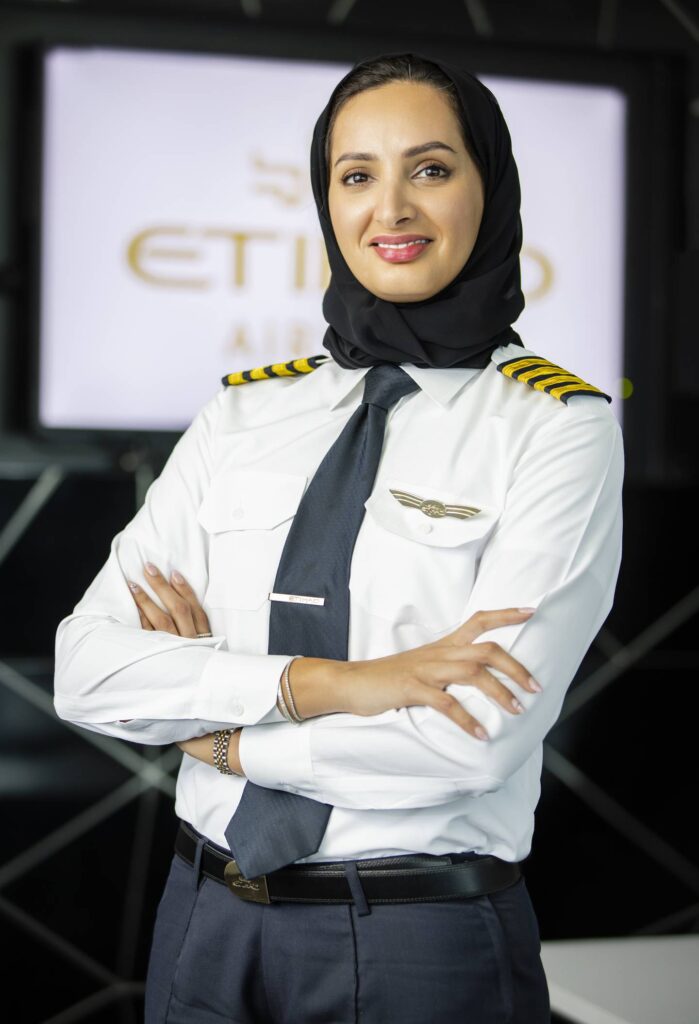
Saudi Arabia’s first flight with an all-female crew took off this weekend May 2022, completing a short domestic journey and passing a milestone for women’s empowerment, officials said.
The flight was operated by flyadeal, the budget subsidiary of flag carrier Saudia.
“For the first time in Saudi aviation history,” the airline wrote on Twitter on Friday, “#flyadeal operated the first flight with an all-female crew, the majority of which are Saudis, by the newest A320 aircraft. Flight 117, flew from #Riyadh to #Jeddah.”
Most of the seven-member crew hail from Saudi Arabia, according to spokesman Emad Iskandarani, including the first officer, Yara Jan, who is also reportedly the youngest Saudi female pilot.
The country’s civil aviation authority, which confirmed the announcement, has been working towards expanding roles for women in the sector for years.
In 2019, Yasmeen Al Maimani , then 29, became the first female first officer to fly a mainstream commercial plane in the kingdom.
The Saudi woman piloted Nesma Airlines flight ATR 72-600 from Hail to Al Qassim on June 9.
“I thought it was going to be hard, being a female pilot based in Hail but it hasn’t been,” she said at the time. “I feel so comfortable with everyone else here, and the way they treat me. It’s like they are all my brothers, it’s a good feeling.”
Last year, figures showed female participation in the kingdom’s workforce rose to 33 per cent at the end of 2020, from 19 per cent in 2016, according to data from the General Authority for Statistics.
Saudi Arabia aims to generate 356 billion riyals ($95bn) of investment into its aviation sector by 2030.
Its National Aviation Sector Strategy is working to increase connections from Saudi Arabia to 250 destinations, reaching 330 million passengers.
The kingdom also plans to launch another airline to complement its existing national carriers, including Saudia, and to build a major international airport in Riyadh, in addition to eight more regional airports.