Arabs & Arabian Records Aggregator. Chronicler. Milestones of the 25 Countries of the Arabic Speaking World (official / co-official). AGCC. MENA. Global. Ist's to Top 10's. Records. Read & Enjoy./ www.arabianrecords.org
What do Wallada Al-Mustakfi, Rufaida Al-Aslamia, Dayfa Khatun, and Aminatu have in common? They are all distinguished women in Islamic history that you more than likely have never heard of before. That is about to change thanks to a new painting by the acclaimed Iraqi artist Afifa Aleiby, whose colorful “A Wonderful World,” pays tribute to 16 noteworthy Muslim women whose names have faded away over time.
Commissioned by the Barjeel Art Foundation in Sharjah, the painting will be on public display at the House of Wisdom in Sharjah until the end of Ramadan and will later be transferred to the Sharjah Museum of Islamic Civilization.
Aleiby’s work is a companion piece to a 1988 painting titled “Islamic Scientists,” by the late Syrian artist Mahmoud Hammad and currently in the collection of Barjeel Art Foundation.
In his composition, Hammad highlighted 16 influential male scholars and physicians, including Ibn Sina and Ibn Rushd. “Exhibited together for the first time, these artworks stand as a powerful reminder of the transformative impact of these intellectuals, both men and women, on the history of Islamic civilization,” reads a wall text. The recent unveiling event opened with a panel talk, where Aleiby and Hammad’s daughter, Lubna Hammad, discussed the displayed artworks.
Aleiby noted some of the difficulties in taking on this open-call commission, including a lack of resources, literary and visual. “Some of these women have only two or three lines written about their history and role,” she said.
In her detailed piece, dotted with symbolic elements (such as the proud peacock and a library of books) and set against a serene landscape, Aleiby depicted notable women of medicine, astronomy, poetry, science, education and military leadership who lived between the 7th and 17th centuries in Africa, Andalusia, India, and the Arab world.
One of these figures is Razia Sultana, who was born in the 13th century and went on to become the first and only female ruler of the Delhi Sultanate in India. From the 11th century, there is also a depiction of Safiyya bint Abdullah Al-Riyy, who was a skilled calligrapher and poet in Andalusia. Another Andalusian woman of poetry is the rebellious and liberal Wallada Al-Mustakfi, who formed a literary salon that was a meeting point for male and female voices.
Nestled in Baghdad, the Iraq Media Museum offers a captivating journey through the history of Iraqi media and art. Featuring rare artifacts, vintage equipment, and historical archives, the museum celebrates decades of media evolution while preserving the nation’s cultural identity.
Established in 2022 under the management of Mina Al-Hilu, the museum stands as a tribute to Iraq’s rich media heritage. The project was initiated with support from Naseer Shamma in 2018 and funded by the Iraqi Private Banks League.
A glimpse into Iraq’s media past
Housed in a building once used for radio training and later as a substitute for the Iraq Studio, the museum displays an array of historical items that tell the story of Iraq’s media landscape. These include:
Television cameras and radio equipment from the mid-20th century.
Photographic equipment and film editing devices from as early as the 1910s.
Magazines and newspapers chronicling over five decades of Iraqi journalism.
Personal contributions from notable media figures, such as:
Awards donated by actor Sami Kaftan.
Handwritten works from the late filmmaker Yusuf Al-Ani, gifted by his family.
The complete studio of photographers Abdullah and Hussein Hassoun.
Rare and iconic artifacts
Among the museum’s unique treasures is a golden bird in a cage, a gift from Adolf Hitler to King Ghazi in the 1930s. This artifact, nearly lost to theft, was later recovered and donated to the museum by radio director Khattab Omar.
Another highlight is a sound mixer used by renowned Iraqi composer Talib Al-Qaraghuli, alongside numerous other items that showcase Iraq’s artistic and media ingenuity.
Museum layout and future plans
The museum currently consists of three main halls:
Journalism Hall: Featuring archives and press-related items.
Television and Radio Hall: Home to vintage broadcasting equipment.
Miscellaneous Hall: Displaying a variety of media artifacts.
Additionally, an upper floor includes:
A hall mimicking the set of the iconic show “Sports in a Week”.
An exhibition space for presentations and events.
Expansion plans
The museum has ambitious plans to expand with new halls dedicated to:
Pioneers of Iraqi culture and art.
Iraqi cinema memorabilia.
A caricature and comics archive to celebrate the nation’s satirical art.
Challenges and calls for collaboration
Despite its significance, the museum struggles to attract international visitors. Mina Al-Hilu expressed frustration over the lack of coordination with tourism authorities, noting that tours to the museum are absent from Baghdad’s 2025 tourism programs.
Given that Baghdad was chosen as the Capital of Tourism 2025, the Ministry of Culture and related institutions should have included the Media Museum in tour itineraries for Arab and foreign delegations,” Al-Hilu remarked.
Sources and contributions
The museum’s collection has grown thanks to contributions from:
Iraqi Media Network warehouses, providing a majority of the items.
Ministry of Culture and Parliament archives, including equipment from the 1980s.
Donations from media personalities, citizens, and private collectors.
In total, more than 200 artifacts have been collected, cataloged, and restored with the help of retired engineers and media professionals.
A unique cultural destination
The Iraq Media Museum is more than a collection of artifacts—it’s a window into the soul of Iraq’s media history. With rare treasures, fascinating exhibits, and plans for expansion, it stands as a testament to the resilience and creativity of Iraqi culture.
For tourists and locals alike, the museum offers a unique opportunity to experience Iraq’s rich artistic and media legacy.
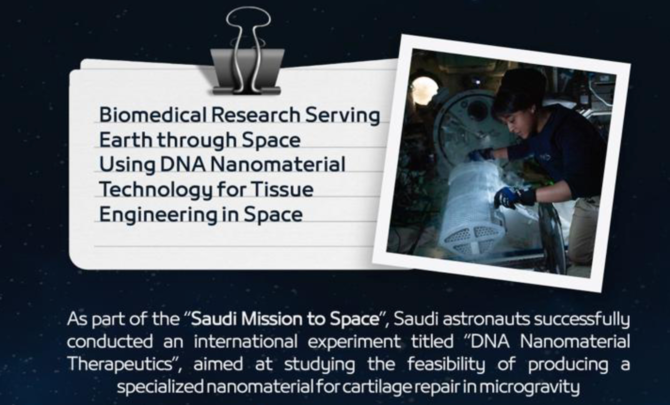
The Arabic language has been officially incorporated into the Global Medical Device Nomenclature (GMDN) System in a historic announcement made during the International Healthcare Technology Management Conference held in Riyadh this February.
The devlopment solidifies Saudi Arabia’s role as a bridge between the Arab world and the global medical community.
According to a Literature, Publishing, and Translation Commission press release, this achievement is the result of a pioneering three-year project launched in 2022 by the Medical Electrical Equipment Maintenance Professionals Association (MEEMPA), in collaboration with the GMDN Agency, and with support from the commission’s Tarjim Initiative.
“The project adhered to top-tier international standards, and the translations were carried out according to ISO 17100 and ISO 9001 requirements to guarantee accuracy and quality in medical terminology,” said the release, according to Saudi Press Agency (SPA).
30K medical terms translated into Arabic
A local translation office accredited by the commission successfully translated 30,000 medical terms; it covered approximately 1.8 million words, of which 900,000 have already been published on the GMDN Agency’s online platform.
Translation of the remaining terms is projected to be completed in the coming months, the SPA reported.
GMDN is a globally recognized standard used by over 7,000 medical device manufacturers worldwide. It is decisive in standardizing device terminology while it facilitates regulatory compliance, international marketing, and export operations.
The system enhances patient safety by providing strict definitions for diagnostic and therapeutic devices.
“A historic milestone”
Speakers at the conference underscored that integrating Arabic into GMDN symbolizes a historic milestone in linking Arab healthcare providers with the global medical community.
Healthcare institutions across Saudi Arabia and the Arab world can now create free accounts on the GMDN Agency’s platform to benefit from this service.
“This aligns with Saudi Arabia’s Health Sector Transformation Program and contributes to greater health integration among Arab nations,” said the release.
Scientists from the University of Sharjah and the Warburg Institute are poring over the writings of an 11th century Arab-Muslim polymath to demonstrate their impact on the development of optical sciences and how they have fundamentally transformed the history of physics from the Middle Ages up to modern times in Europe.
Their research focuses on the legacy of al-Ḥasan Ibn al-Haytham known in Latin as “Alhazen” and particularly his most influential work titled Book of Optics, reputed in Arabic as Kitab al-Manazir and first circulated in Europe via its Latin translation dubbed ‘Perspectiva’. Ibn al-Haytham was born in the southern Iraqi city of Basra in 965 during the Abbasid Caliphate.
The divisions IV-V of this authoritative book have been recently translated into English from Arabic and published by the Warburg Institute under the title “The Optics of Ibn al-Haytham, Books IV–V: On Reflection and Images Seen by Reflection”. Having already rendered divisions I-III into English, the Warburg Institute is bringing together a wide-ranging network of scientists “for a collaborative humanities-science investigation of [Ibn] al-Haytham and the questions his work provokes.
“The role of Alhazen [Ibn al-Haytham] in these processes is simultaneously well-known, but limited; only half of his scientific works have English translation and a quarter are not yet edited.”
Introducing the new translation, the Warburg Institute describes Ibn al-Haytham as “perhaps the greatest mathematician and physicist of the medieval Arabic/Islamic world. His reputation is based not only on the vast amount of material he was able to process, but also on his rigorous scientific methodology.
“He (Ibn al-Haytham) deals with both the mathematics of rays of light and the physical aspects of the eye in seven comprehensive books. His reinstatement of the entire science of optics sets the scene for the whole of the subsequent development of the subject … influencing figures such as William of Ockham, Kepler, Descartes, and Christaan Huygens.”
Professor Nader El-Bizri of Sharjah University’s College of Arts, Humanities, and Social Sciences has just published an academic review of the Warburg Institute’s translation of Ibn al-Haytham. The article, printed in theInternational Journal of the Classical Tradition, highlights the strong influence the Arab-Muslim optical scientist has exerted over the ages up to the present day.
Ibn al-Haytham’s Book of Optics, Prof. El-Bizri writes, “constituted a monumental foundational opus in the history of science and the visual arts from the Middle Ages to the early modern period in the European milieu and the Islamicate context … The reception of Ibn al-Haytham’s Optics in the European milieu took place from the High Middle Ages via Gerard of Cremona’s Toledo circle in terms of its Latinate translations, and subsequent influence on Franciscan, Dominican, and Jesuit opticians across Europe.
“It influenced François d’Aguilon’s Opticorum libri sex within the Antwerp Jesuit mathematical school and had a direct impact on Johannes Hevelius’s Selenographia. The Optics was also consulted by Girard Desargues, René Descartes, Johannes Kepler and Christaan Huygens.”
Prof. El-Bizri works closely with the Warburg Institute assisting its attempts to reintroduce Ibn al-Haytham to the west. “A remarkable thinker, not only did Ibn al-Haytham revolutionize optical thought by mathematising its study, [but] his thinking also went on to have similar revolutionary effects in medieval Europe.”
The Warburg Institute is investing in rendering the writings of Ibn al-Haytham on optics into English, which Prof. El-Bizri describes as “voluminous”. “Ibn al-Haytham’s Book of Optics indicates with evidence the impact of Arabic sciences and philosophy on the history of science and the architectural and visual arts in Europe, as well as demonstrating how science and the arts influence each other in the manner the studies of optics in their mathematized physics inspired the invention of projective geometric constructions of perspective as a novel Renaissance method of painting and architectural design.”
Prof. El-Bizri adds “The impact of this book is fundamental not only in the history of science from the High Middle Ages till the early-modern period in Europe, but it was also foundational for architecture and the visual arts in the Italian Renaissance and up till the late Baroque era. Moreover, it has further significance in modern conceptions of the mathematization of physics, the reliance on experimentation in science, and the philosophical analysis of perception.”
Asked about the importance of translating Ibn al-Haytham into English despite the lapse of nearly 1000 years, Prof. El-Bizri says the Arab-Muslim scientist’s theories and methodologies, specifically those dealing with optics are still considered “seminal” in the literature. Ibn al-Haytham has had a “foundational impact on the history of science and the arts in Europe.”
The influence of Ibn al-Haytham’s writings in the European milieu, according to Prof. El-Bizri, cannot be overlooked. The Arab-Muslim scientist had “a notable effect on Biagio Pelacani da Parma’s Questiones super perspectiva communi, Leon Battista Alberti’s De pictura, Lorenzo Ghiberti’s Commentarii, culminating in the first printed Latin version in the publication of Friedrich Risner’s Opticae thesaurus in the sixteenth century.
“Then, in the seventeenth century, it influenced François d’Aguilon’s Opticorum libri sex within the Antwerp Jesuit mathematical school and had a direct impact on Johannes Hevelius’s Selenographia.”.
In the Book of Optics, notes Prof. El-Bizri, Ibn al-Haytham establishes an “inventive and precise scientific experimental method (al-iʿtibār al-muḥarrar) with its controlled verificative repeated testing, as framed by isomorphic compositions between physics and mathematics.”
He adds that Ibn al-Haytham in his Optics “aims at elucidating the nature of visual perception through studies on the anatomy and physiology of the eyes, the optic nerves and the frontal part of the brain, along with cognitive psychology and the analysis of psychosomatic ocular motor kinaesthetic acts”.
Journal : International Journal of the Classical Tradition
source/content: eurekalert.org (headline edited) / News Release University of Sharjah
__________
Ibn al-Haytham (“Alhasen”) on the left pedestal of reason [while Galileo is on the right pedestal of the senses] as shown on the frontispiece of the Selenographia (Science of the Moon; 1647) of Johannes HeveliusIbn al-Haytham (“Alhasen”) on the left pedestal of reason [while Galileo is on the right pedestal of the senses] as shown on the frontispiece of the Selenographia (Science of the Moon; 1647) of Johannes Hevelius
Bahrain’s first domestically designed and developed satellite, Al-Munther, was launched successfully on Saturday.
The project, spearheaded by the National Space Science Agency, marks a milestone for Bahrain’s space ambitions. The 3U CubeSat is the first satellite in the region to integrate artificial intelligence for onboard image processing.
Mohammed Ibrahim Al-Aseeri, CEO of the National Space Science Agency, told Arab News: “The successful launch of Bahrain’s Al-Munther satellite into orbit marks a major milestone in the kingdom’s space journey. I take immense pride in the achievements of the National Space Science Agency team, who have successfully placed Al-Munther in orbit, paving the way for initial operations and in-orbit system testing.”
Al-Aseeri said Al-Munther was a remarkable national accomplishment, entirely designed and developed by Bahraini talent. The NSSA team played a key role in innovating, designing and building its payloads, leaving their mark on the rapidly evolving global space industry.
He added: “Designed and developed entirely by Bahrainis, Al-Munther is a significant national accomplishment. This success reflects our commitment to the royal vision of positioning Bahrain as a leader in space and supports national development, Bahrain’s Economic Vision 2030 and the UN Sustainable Development Goals.”
The satellite features an Earth observation camera, a cybersecurity system, and a unique broadcast function that will transmit Bahrain’s national anthem and a message from King Hamad bin Isa Al-Khalifa. It will operate in a sun-synchronous orbit at an altitude of 550 km and is expected to have a two-year lifespan.
The launch took place onboard a SpaceX Falcon 9 rocket from the Vandenberg Space Launch Complex in California.
Reem Abdulla Senan, head of satellite communication operations, said: “One of the most significant achievements of the Al-Munther mission is the development of a Bahraini-operated software system to manage the satellite and its payloads. This not only advances the nationalization of space technologies but also strengthens Bahrain’s autonomy in satellite operations. The software enables the satellite to efficiently carry out its designated tasks, including data collection, processing and transmission to Earth.”
She added the ground station established in Bahrain would play a critical role in overseeing Al-Munther’s operations.
“The station allows us to manage the satellite with high precision, support future space missions and even receive data from other free satellites operating on the same frequencies,” she said. “The successful initial contact between the satellite and the ground station after launch will mark a pivotal moment — confirming the communication system is functioning as intended and initiating the structured commencement of scientific operations.”
Al-Munther, which means “herald” or “messenger,” symbolizes Bahrain’s forward-looking vision and commitment to innovation. It highlights the kingdom’s dedication to building a sustainable space infrastructure, fostering research and development and inspiring future generations to pursue advancements in science and technology.
source/content: arabnews.com (headline edited)
____________
Bahrain launched Al-Munther on Saturday, its first domestically designed and developed satellite. (BNA)
The magazine revealed Abdirizak Warsame, the Vice Chairman of IBS Bank, as the Person of the Year 2024.
Somali Magazine, a leading voice in promoting Somali excellence and success, proudly announced its much-anticipated list of the 100 Most Influential Somali People of 2024.
The prestigious annual list celebrates individuals who have made significant contributions across various fields, including business, politics, education, health, arts, and community service.
The magazine revealed Abdirizak Warsame, the Vice Chairman of IBS Bank, as the Person of the Year 2024.
Warsame has been recognized for his visionary leadership, unwavering commitment to advancing financial inclusion, and his pivotal role in transforming IBS Bank into one of the region’s most innovative financial institutions.
The announcement also marked a milestone achievement for Somali Magazine.
Over half a million people participated in voting via the magazine’s official website, somalimagazine.so, showcasing the immense interest and pride within the Somali community.
The latest Person of the Year publication marked the sixth consecutive year that Somali Magazine has unveiled this influential list, solidifying its role as a platform for celebrating Somali success stories.
Speaking at a press release broadcast across local TV stations, the Founder and CEO of Somali Magazine, Ridwan Yusuf Mohamud, emphasized the importance of celebrating Somali achievements and inspiring future generations.
Collective progress
He expressed gratitude to all those who have supported Somali Magazine in its mission to highlight the stories of Somali excellence.
“Today, we celebrate the spirit of resilience, innovation, and excellence that defines our Somali people. The 100 Most Influential Somali People of 2024 list is not just a recognition of individual achievements but also a reflection of the collective progress we have made as a community,” he stated.
He singled out Warsame contribution to Samali’s success as commendable.
“As the Vice Chairman of IBS Bank, he has demonstrated exceptional leadership and a profound commitment to fostering economic growth and empowering our people through accessible financial services,” Mohamud said.
“His achievements inspire us all to aim higher and work harder for the betterment of our nation.”
He noted the need to highlight contributions by the persons listed as key to advancing national development.
“This initiative aims to shine a light on the incredible contributions of our people in Somalia and around the globe. By telling these stories, we hope to motivate young Somalis to dream big and take pride in their heritage.”
Business Person of the Year 2024
Ahmed Dahir Nur, the CEO and Founder of Starsky Aviation Ltd, emerged as Somali Magazine’s Business Person of the Year 2024.
The 100 Most Influential Somali Peoplelist is meticulously curated by Somali Magazine’s editorial team in collaboration with an independent panel of experts.
The process seeks to ensure a comprehensive representation of individuals who have made significant contributions across various fields.
In the realm of politics and leadership, the list highlights visionaries shaping Somalia’s political and social landscape, driving change, and fostering progress.
The business category celebrates entrepreneurs and innovators driving economic growth and innovation.
Notable business figures include Ahmed Dahir Nur, CEO and Founder of Starsky Aviation Ltd, recognized for his remarkable achievements in the aviation sector; Shueib Warsame, CEO and Founder of Maandeeq Air; and Hussein Abdirahman, Amazon AWS CMH Regional Data Center Manager and entrepreneur, celebrated for their roles in fostering business growth.
Activists also feature prominently, recognized for their dedication to social justice and community empowerment. These individuals advocate for meaningful change and uplift underserved communities.
Prominent Islamic scholars, such as Sheikh Mustafa and Osman Hidig, are acknowledged for their spiritual leadership and contributions to promoting knowledge and guidance.
In sports, athletes bringing pride to Somalia through exceptional performances on the global stage are celebrated for their dedication and talent.
Lastly, the list honors entertainment and social media influencers who are redefining Somali identity and culture in the digital age, using creative platforms to inspire and connect communities worldwide.
The historic diplomatic gesture by the Moroccan monarch in 1979 made the prince the first male member of his family’s direct line to return to Egypt since the 1952 revolution.
Prince Mohamed Ali Farouk, grandson of Egypt’s last king, has returned to live in Cairo, expressing gratitude for the late King Hassan II’s crucial intervention that enabled his birth in Egypt during his family’s exile.
“Thanks to King Hassan II’s support, who intervened with President Sadat, my mother Fadila was authorized to give birth in Cairo,” the 46-year-old prince told AFP in French during a recent interview.
This diplomatic gesture in 1979 made him the first male member of the royal family’s direct line to return to Egypt since the 1952 revolution.
The prince, who now holds an Egyptian passport granted in 2020, is establishing himself in Cairo after years of living abroad, primarily in France. His return marks a symbolic reconciliation between Egypt’s royalist and republican eras, he notes.
“For my father, Egypt was a lost homeland. For me, it’s a rediscovered one,” says Mohamed Ali, who runs a technical real estate consulting firm in Paris.
His father, Fouad II, became king at just seven months old following King Farouk’s abdication in 1952, ruling briefly with a regency council until the monarchy’s abolition in 1953.
The prince’s return to Cairo was encouraged by his wife, Princess Noal Zaher of Afghanistan’s royal family.
“It was Noal who supported me throughout my reflection. She wanted to live in the Orient and wanted our children to grow up closer to their roots,” he reveals.
From dinner table tension to military threats: The Hassan II-Nasser years
The prince’s gratitude toward King Hassan II stems from a layered history of antagonism between Morocco and Egypt’s leadership.
Their relationship was marked by confrontations that began at a diplomatic dinner and escalated to military threats, according to French diplomatic archives.
The first spark ignited in the late 1950s when Hassan II, then Crown Prince, observed President Nasser struggling with cutlery at a state dinner in Morocco.
“I don’t think eating turkey with a fork is harder than overthrowing King Farouk,” the future monarch remarked, referencing Nasser’s revolution – a comment that set the tone for years of strained relations.
The tension reached its peak during the 1963 Sand War between Morocco and Algeria, when Nasser deployed approximately 2,000 Egyptian troops to support Algeria against Morocco.
Among them was future Egyptian President Hosni Mubarak, then a military officer, who was captured by Moroccan forces after his aircraft went down within Moroccan territory.
An attempted reconciliation in March 1965, during Hassan II’s visit to Cairo, dramatically backfired. According to French diplomatic documents, what began as a cordial meeting deteriorated into open hostility when Nasser demanded that Morocco sever ties with West Germany over its support for Israel.
Hassan II’s refusal prompted an explicit threat from Nasser, who warned that Arab leaders opposing Egypt’s stance would “be condemned to disappear” and reminded the Moroccan king that Egyptian forces were “at Morocco’s doorstep” through their presence in Algeria.
The meeting so alarmed Hassan II that he immediately ordered his Minister of Defense to implement military precautionary measures upon his return, and put the Royal Armed Forces on high alert against potential “terrorist elements” from Algeria, the diplomatic cables reveal.
Relations improved only after Anwar Sadat and later Hosni Mubarak assumed Egypt’s presidency. However, echoes of past tensions briefly have resurfaced in the early years of President Abdel Fattah al-Sisi .
Three incidents particularly stirred concern: Sisi’s early diplomatic visit to Algeria, the appearance of Egyptian media delegations in Tindouf camps, and a controversial photograph of Sisi with Polisario leadership at an African Union summit in Equatorial Guinea.
Egyptian military officials justified these moves as necessary security coordination with Algeria to combat weapons trafficking and address threats in Libya. Egypt has since affirmed its support for Morocco’s territorial integrity and sovereignty over Western Sahara.
Today, Prince Mohamed Ali focuses on rehabilitating his family’s image while disclaiming any political ambitions.
“I simply want to work on rehabilitating the image of my royal family and contribute to preserving and transmitting its historical, cultural, and artistic heritage,” he asserts, noting that “150 years of history deserve to be honored.”
Three semi-finalists from the Middle East are in the running for a grand prize of €400,000 and global recognition
Three designers from the Middle East are among the 20 shortlisted names for the 2025 LVMH Prize.
The annual award is handed out across three categories. The Young Fashion Designers winner will receive a €400,000 endowment and a year of mentorship. The Karl Lagerfeld Prize winner will be awarded €200,000 and a year of mentorship, and the Savoir-Faire Prize recipient will receive a €200,000 grant along with mentorship.
Now in its 12th year, the prize has thrown a spotlight on rising talent, with past winners including SS Daley, Ahluwalia, Grace Wales Bonner and Marques’Almeida. The 20 semi-finalists will present their work to LVMH jury members at the Louis Vuitton Foundation at Paris Fashion Week, from which the winners will be selected.
Here’s a look at the three designers from the region who are in the running.
Yasmin Mansour, Qatar
Launched in 2014, the eponymous Qatari label is one of the first homegrown women’s luxury labels in the country. It creates elevated womenswear described as pret-a-couture, or ready couture.
Utilising deft tailoring, bold silhouettes and roomy, architectural shapes, the brand is rapidly making a name for itself. After winning the evening wear category at the 2024 Fashion Trust Arabia awards, Yasmin Mansour is aiming for further recognition at LVMH.
Cynthia Merhej, Lebanon
Lebanese designer Cynthia Merhej founded Renaissance Renaissance. The brand is the product of a strong fashion heritage – Merhej is a third-generation couturier, and combines rich femininity with a deep-rooted sense of rebellion. Its pretty pieces feature delicate elements such as bows, ties and frills that nod to historical notions of what defines “womanhood”.
Look closer, however, and the contemporary shapes and cuts are challenging and new. Frilly mini skirts, ruched tops, bulbous skirts and sheer, tiered dresses are some of the pieces that make this Beirut label beloved of the cool girl crowd, including Chloe Sevigny, while never losing wearability.
Eager to protect the unique dressmaking skills of Beirut, every piece is made in the Lebanese capital. Merhej was chosen for Net-A-Porter‘s The Vanguard global mentorship in 2021, the same year she was a semi-finalist for the LVMH Prize. Will she strike it lucky the second time around?
Ahmed and Razan Hassan, Saudi Arabia
KML is a Saudi menswear label founded in 2022 by Ahmed and Razan Hassan. The designers have built their creations on hours of research into how humans have dressed through history and how meanings have distilled through time. This has resulted in collections that challenge the notions of contemporary fashion and what it signifies.
Some labels could lose themselves in such highbrow thinking but KML retains a keen eye for the wearable, with richly draped wrap tunics, wide-legged trousers and tops with discreet cut-out panels. Clever, intriguing and thought-provoking, it is little wonder that when stylist Law Roach attended 1001 Seasons of Elie Saab in Riyadh, he did so wearing KML.
The collaboration between Israeli and Palestinian filmmakers follows activist Basel Adra as he risks arrest to document the destruction of his hometown
In the film, Israeli journalist Yuval Abraham embeds in a community fighting displacement
“No Other Land,” the story of Palestinian activists fighting to protect their communities from demolition by the Israeli military, won the Oscar for best documentary.
The collaboration between Israeli and Palestinian filmmakers follows activist Adra as he risks arrest to document the destruction of his hometown, which Israeli soldiers are tearing down to use as a military training zone, at the southern edge of the West Bank. Adra’s pleas fall on deaf ears until he befriends a Jewish Israeli journalist who helps him amplify his story.
“About two months ago, I became a father, and my hope to my daughter that she will not have to live the same life I’m living now, always fearing settlers, violence, home demolitions and forcible displacements,” Adra said on stage in Los Angeles. “‘No Other Land’ reflects the harsh reality that we have been enduring for decades and still resist as we call on the world to take serious actions to stop the injustice and to stop the ethnic cleansing of the Palestinian people.”
Abraham, an Israeli journalist, spoke at length about why their film was a collaboration between Israelis and Palestinians. “We made this film, Palestinians and Israelis, because together, our voices are stronger,” he said. “We see each other, the destruction of Gaza and its people, which must end, the Israeli hostages, brutally taken in the crime of Oct. 7, which must be freed.”
In his speech, Abraham added that he and Adra live “unequal” lives. “We live in a regime where I am free under civilian law and Basel is under military laws that destroy his life and he cannot control,” he said. “There is a different path, a political solution without ethnic supremacy, with national rights for both of our people.”
Abraham stated that US foreign policy under the administration of President Donald Trump “is helping to block this path.”
“Why can’t you see that we are intertwined, that my people can be truly safe if basil’s people are truly free and safe?” he added.
“No Other Land” came into the night a top contender after a successful run on the film festival circuit. It did not, however, find a US distributor after being picked up for distribution in 24 countries. For the Oscar, it beat out “Porcelain War,” “Sugarcane,” “Black Box Diaries” and “Soundtrack to a Coup d’État.”
The documentary was filmed over four years between 2019 and 2023, wrapping production days before Hamas launched its deadly Oct. 7, 2023 attack on Israel that started the current war in Gaza.
In the film, Israeli journalist Yuval Abraham embeds in a community fighting displacement, but he faces some pushback from Palestinians who point out his privileges as an Israeli citizen. Adra says he is unable to leave the West Bank and is treated like a criminal, while Abraham can come and go freely.
The film is heavily reliant on camcorder footage from Adra’s personal archive. He captures Israeli soldiers bulldozing the village school and filling water wells with cement to prevent people from rebuilding.
Residents of the small, rugged region of Masafer Yatta band together after Adra films an Israeli soldier shooting a local man who is protesting the demolition of his home. The man becomes paralyzed, and his mother struggles to take care of him while living in a cave.
source/content: arabnews.com (headline edited)
__________
Basel Adra, Rachel Szor, Hamdan Ballal and Yuval Abraham win the Oscar for Best Documentary Feature Film for “No Other Land” during the Oscars show at the 97th Academy Awards in Hollywood, Los Angeles, California, U.S., March 2, 2025. REUTERS/Carlos Barria
‘From Ocean to Gulf: Heritage Music of the Arab World’ is a new series by Ahram Online, in partnership with the AMAR Foundation (Foundation For Arab Music Archiving and Research).
Music is a powerful force for healing and reconnecting us with our roots and shared humanity in a world of numerous challenges.
‘From Ocean to Gulf: Heritage Music of the Arab World’ is a new series by Ahram Online, in partnership with the AMAR Foundation (Foundation For Arab Music Archiving and Research). Focusing on the early years of recording in our region that reflected a modern cosmopolitan repertoire, which coincided with the Renaissance era that flourished in Egypt between the mid-19th century to the 30s of the twentieth century, this initiative aims to introduce our audience to the iconic figures of Arab music whose contributions have enriched our intangible cultural heritage and inspired generations worldwide.
Our series kicks off with Munira Al-Mahdiyya (1885-1965), the Sultana of Tarab Music.
El Set Munira (1885-1965)
In Arab culture, the adjective “Set” is associated with a special high status and great admirable value to any woman. Known to the public as El-Set (The Lady), Munira Al-Mahdiyya stands out as a music icon, a feminist, and a patriotic figure of the early twentieth century. Born in the delta governorate of Zaqâzîq, Egypt, Munira, whose real name was Zakiyya Mansûr Gânim or Zakiyyya Hassan, was known for her powerful, enchanting voice and presence.
She took the Azbakiyya stages by storm at the beginning of the 20th century and had her first records in 1906, making her one of the few women producing commercial recordings before WW1.
‘ālima verses’ ālima
Munîra mastered a learned repertoire and was a versatile ‘ālima, as per the dominant practice in the 19th century. At private concerts, she sang adwar and qasâ ‘id for men and reserved the taqtuqa for women or the public audiences of the theatres. She was also a great mawwāl singer.
The word’ ālima means “the learned,” but it can also refer to a female singer of the wedding repertoire.
By the 20th century, the term‘ālima had another connotation, namely muṭriba, a singer of high-standard repertoire for high-class audiences. At the same time, a‘ālima was a mundane singer whose repertoire consisted exclusively of female wedding songs, mostly ṭaqṭūqa, Egyptianized Aleppan qadd, or Aleppanized Egyptian ṭaqṭūqa.
So, Munīra al-Mahdiyya is a symbol of this transitional period and may be the one who changed the name of dawr-singing ‘ālima to muṭriba. The repertoire recorded by Munīra al-Mahdiyya with Baidaphon, Odeon, and Zonophone is, in part, very similar to what her predecessor, Bahiyya al-Maḥallawiyya, recorded.
“Usṭa Munīra” and her Culture Café
In Ratība al-Ḥifnī’s book titled Munira al-Mahdiyya, she indicates that “after this continuous success –around 1910/12, Munīra rented a café in Azbakiyya which she furnished luxuriously and named “Nuzhat al-Nufūs”, and which soon became famous as the gathering spot of artists, intellectuals and thinkers, in addition to the elite of society, notables and major businessmen, who met there daily. No other café in Egypt was as famous as “Nuzhat al-Nufūs.” The cafe became so famous that the British authorities had to acknowledge its special status and allowed only this café to operate as usual even after they decided to close down all the cafés and gathering places upon the start of WW1 in 1914.
Munira the first
Munīra al-Mahdiyya started her theatre career around 1916, according to various sources. She joined the troupe headed by Salâma Higazi, and after the onset of Higazi’s last illness, she sang the role that had been written for him in “Salâh al-Din al-Ayyûbî”. This is how, disguised as a man, she was the first Egyptian Muslim woman to perform on stage. She was also the first muṭriba to perform on stage without a ḥijāb, or veil. She reached the peak of success in January 1927 with the presentation of “Kilyûbatrâ wa Mârk Antuwân” (Cléopatre and Marc Antoine) with Muhammad Abd al-Wahhâb.
She formed and managed her own company for over ten years and performed new roles written primarily for her, including Arabic adaptations of Tosca, Carmen, and Madame Butterfly. Accordingly, she was one of the first leading female cultural entrepreneurs.
The breeze of freedom in Munîra al Mahdiyya’s theatre
Her company frequently performed patriotic songs that were summarily censored by the British, giving rise to the slogan “Hawa al Hurriya fi masrh Munîra al Mahdiyya” (The breeze of freedom in Munîra al Mahdiyya’s theatre). An independent and famous woman, in 1926, Munîra received a medal from the Ministry of Public Works for services rendered to the revival of Arab singing. Munîra is also the most famous of a multitude of artists of the theatrical scene during the 1920s.
Munira was also known for her patriotism. In 1922, exactly two years after the tomb of Tutankhamun was discovered in the Valley of the Kings in Luxor, Munīra al-Mahdiyya sang a ṭaqṭūqa to the maqām jahārkāh –composed by Al-Qaṣṣabjī– “Mā ygibshi zayyī in laff el-kōn, dah iḥnā abūnā Tut’ankhamūn” (I am like no other for I am the granddaughter of Tutankhamen). The ṭaqṭūqa is politically significant in that it demonstrates that a political, patriotic, and ideological link between Egypt’s ancient and Islamic history had infiltrated the hearts of the people, who considered the ancient Egyptians as their ancestors, thus echoing the Wafd party’s discourse following the 1919 revolution. Furthermore, Munīra sang “Shāl el-ḥamām ḥaṭṭ el-ḥamām” (Doves flew, doves came back) after the first and second exiles of Saad Zaghlūl.
Munīra al-Mahdiyya’s most significant successes as an artist came first during her Baidaphon era in the early 1920s after she returned to Cairo following her long tour in the Levant and after forming a takhet on her first encounter with the theatre. Then, in 1925, she became enormously successful after performing Dāwūd Ḥusnī’s operetta “Al-Ghandūra,” which she adapted for the cinema a decade later. Unfortunately, the movie, a significant record of Munira’s theatrical performance, has been lost. She later performed in many other plays where the patriotic hints in her performance were captured readily by her audience, giving her an aura of patriotic significance closely associated with the still famous commercial slogan “The breeze of freedom”.
Munira opened the door to several performers who followed in her footsteps, including Badiaa Massabni (1892-1974) and alma Bamba Kashar’s nieces, Fathiyya and Ratîba Ahmad, who performed in local operettas. Later in the same decade, ̕Azîza Hilmî and Fâtima Sirrî became singing actresses, but like Munîra, were unfortunately forgotten at the end of the 1930s.
In the mid-1950s, the Egyptian Radio dedicated a two-hour show to Munira, whom they called “Sultana of Tarab.” A short television interview followed this in 1961. Munira passed away in 1965 in the shadow of her previous achievements and glory.
For more about Munira, please check the Munira Podcast series by AMAR.