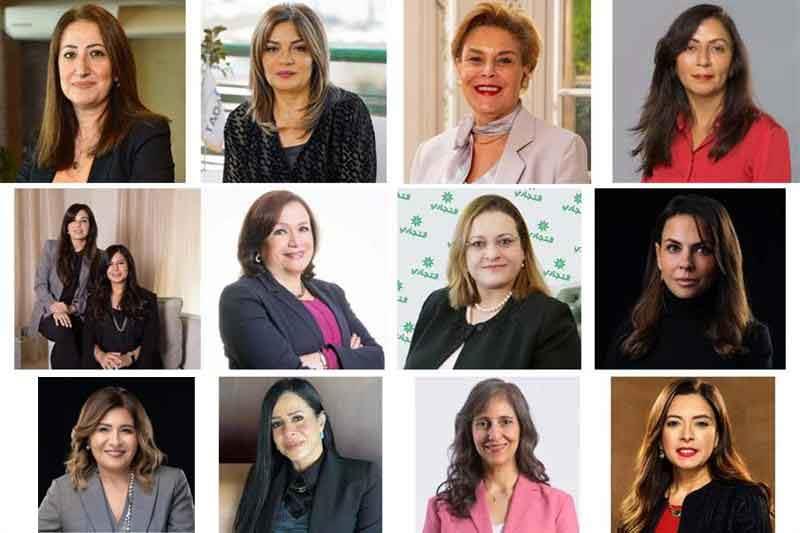
EGYPT : 13 Egyptian women on Forbes Middle East 100 Most Powerful businesswomen 2023

Thirteen Egyptian businesswomen made it to the Forbes Middle East 100 Most powerful businesswomen 2023 list this year.

The list was prepared by the famous financial magazine’s Middle East edition according to the size of the business, the individual’s impact and achievements, performance over the last year, and the scope of CSR and other initiatives led by the person.

The 100-entry list included 104 women from 27 different sectors and 27 nationalities.

The UAE and Egypt scored the most entries at 15 and 12, respectively, followed by Saudi Arabia (11) , Kuwait (eight), and six from each of Lebanon, Qatar and Oman.

Egyptian businesswomen are no strangers to the list, having topped the list in previous years in terms of the number of entries.

In 2021, Egyptian businesswomen topped the list with eight entries, and in 2022 they had seven entries. 

Below Ahram Online sheds light on the Egyptian businesswomen who made it to the list:

  • Dalia El-Baz (13th on the list)

An American University in Cairo alumna, El-Baz is the executive deputy chairman of the National Bank of Egypt (NBE).

El-Baz, who has been on the list before, posseses 28 years of experience in the banking sector.

She joined Egypt’s largest bank in terms of assets in 2008 as head of the operational risk management group, becoming Chief Operating officer (COO) in December 2015.

In 2016, she was appointed on the bank’s executive committee.

In September 2017, she became the first woman to become the executive deputy chairman of the NBE.

  • Pakinam Kafafi (21st on the list)

A Cairo University graduate, Pakinam Kafafi started her career in finance and banking at EFG-Hermes in the mid-1990s, rising to the position of vice president in 2000.

She then moved to the oil and energy sector.

In 2003, Kafafi was appoointed the strategy and investment general manager of Gas & Energy Group (GENCO).

When Citadel Group acquired GENCO and merged it with TAQA Arabia, Kafafi maintained her role.

In April 2013, Pakinam Kafafi was selected as the company’s CEO.

  • Rawya Mansour (27th on the list)

A Cairo university graduate, Rawya Mansour proved herself one of Egypt’s leading businesswomen.

Mansour is a descendant from one of Egypt’s oldest families in the field of business.

In 1999, she founded RAMSCO for Refined Architecture and Interior Design.

In 2007, she started RAMSCO for Trade and Distribution.

She also established the Organic Agriculture for Social International Solidarity (OASIS) in Monaco in 2012.

  • Reem Asaad (39th on the list)

An Egyptian American, Reem Asaad is a Harvard business school graduate who continued her career in Egypt when she served as the CEO of Raya Data Center from January 2012 till December 2016.

From January 2017 to February 2020, Asaad served as Raya Contact Center CEO befor

In 2020, she was appointed Cisco Middle East and Africa Vice President.

Cisco employs 3,000 people and contractors in 74 countries across the Middle East and Africa. 

In March 2021, she was appointed by Egypt’s Minister of Communications and Information Technology to serve on the board of directors for the country’s Information Technology Industry Development Agency.

  • Hend El-Sherbini (42nd on the list)

A graduate of Cairo University, Dr Hend El-Sherbini is a professor of clinical pathology at the University’s Faculty of Medicine.

El-Sherbini served as the CEO of Al-Mokhtabar between 2004 and 2012.

She has been seving as IDH Group’s CEO since 2012.

IDH has a network of 546 branch labs as of September 2022 in Egypt, Nigeria, Sudan and Pakistan.

The group recorded revenues of $281 million in 2021 and $143 million in the first nine months of 2022.

In August 2022, El-Sherbini increased her holdings in the group with 7.3 million additional shares through Hena Holdings.

Now, she owns 26.71 percent of the group.

  • Farida and Yasmine Khamis (43rd on the list)

The daughters of the famous Egyptian carpets tycoon, Farida and Yasmine Khamis are considered veterans of the Forbes list.

American University of Cairo alumni, Yasmine Khamis is currently the Chairwoman of Oriental Weavers Group, while her sister Farida is her vice-chair.

Both sisters made headlines last December when they transferred their combined 24.61percent stake in Oriental Weavers Carpet to London-based FYK limited, which is fully owned by them.

They are also board members of the British University in Cairo .

  • Mona Zulficar (48th on the list)

The famous renowned lawyer and human rights activist is the Forbes Middle East 100 women list veteran who has appeared constantly on the list since it started.

A Cairo University graduate, Zulficar is a veteran corporate, banking, and project finance attorney and human rights activist.

She cofounded Zulficar & Partners in 2009. Mona Zulficar chaired EFG Hermes Holding since 2008 and the Egyptian Microfinance Federation since 2015.

Mona Zulficar is currently a member of Egypt’s National Council of Human Rights.

  • Elham Mahfouz (56th on the list)

An AUC alumna, Elham Mahfouz has over 30 years of banking experience mostly in Kuwait.

Mahfouz has been the CEO of the Commercial Bank of Kuwait (Al-Tijari) since 2014.  

Al-Tijari recorded $179 million in net profit and $14.1 billion worth of total assets in 2021. 

Mahfouz is a member of the supervisory board of the American University of Kuwait.

  • Hilda Louca (62nd on the list)

A graduate of the Arab Academy for Science, Technology, Transport and Maritime Transport, Hilda Louca is a newcomer to the list.

Louca started her career in Lufthansa’s customer service before moving to become a sales marking manager at Al-Ahram Beverage Company-Heineken Egypt for three years.

In 2018, she founded MITCHA – platform to support Egyptian designers.

Today, the platform features 200 designers and brands. 

  • Omnia Kelig (84th on the list)

An AUC alumna, Omnia Kelig is a banking and cooperate financing veteran who started her career in the CIB in 1999.

Kelig is currently Deputy CEO, Chairwoman and Managing Director of NAEEM Holding, a dual-listed company on the Egyptian Stock Exchange and the Dubai Financial Market.

In the first nine months of 2022, NAEEM reported $8.2 million in total revenues and $273 million in assets.

Before joining NAEEM, Kelig was a founder and managing director of Viveris Mashrek, a subsidiary of France’s Viveris Management.

She was also a partner and director for Haykala Investment Management and a co-head of investment banking at Barclays Bank in Egypt.

  • Abir Leheta (87th on the list)

An AUC alumna, Abir Leheta is another veteran on the Forbes list.

Leheta joined the Egyptian Transport and Commercial Services Company “EgyTrans” in 1997.

She has been EgyTrans CEO since 2017.

She is also the chairman of Barwil Egytrans and ScanArabia.

  • Abeer Helmy Saleh ( 99th on the list)

An AUC alumna, Abeer Helmy Saleh previously held a number of managerial positions, including managing director and board member at Wafa Life Insurance Company and managing director of Bupa Egypt Insurance.

In March 2022, Saleh was appointed as a Board Member & Managing Director of Misr Life Insurance, Takaful, which was established as a joint venture between Misr Insurance Holding Company, the National Bank of Egypt, and Banque Misr, with a capital of over $5 million. 

source/content: english.ahram.org.eg (headline edited)

____________
__________

EGYPT
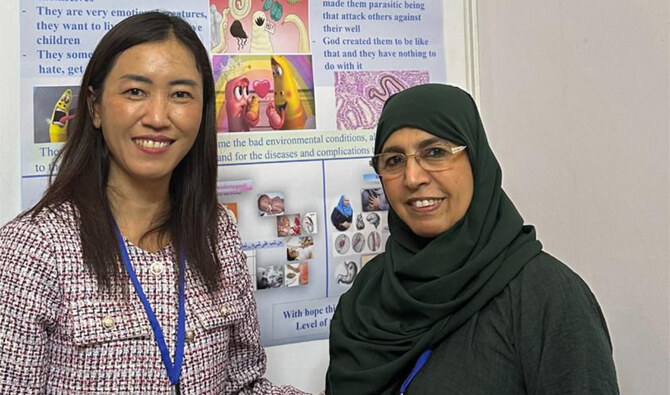
SAUDI ARABIA: Saudi women Dr. Najia Al-Zanbagi and Rafeef Ayedh Alshahrani Awarded at Indonesia Inventors Day 2024 exhibition

Rafeef Ayedh Alshahrani wins gold for innovative tech; Dr. Najia Al-Zanbagi silver for her work in medical parasitology .

Two Saudi citizens were awarded prestigious medals for their groundbreaking work at the Indonesia Inventors Day 2024 exhibition, which was held from Aug. 28 to 31 in Bali, Indonesia. 

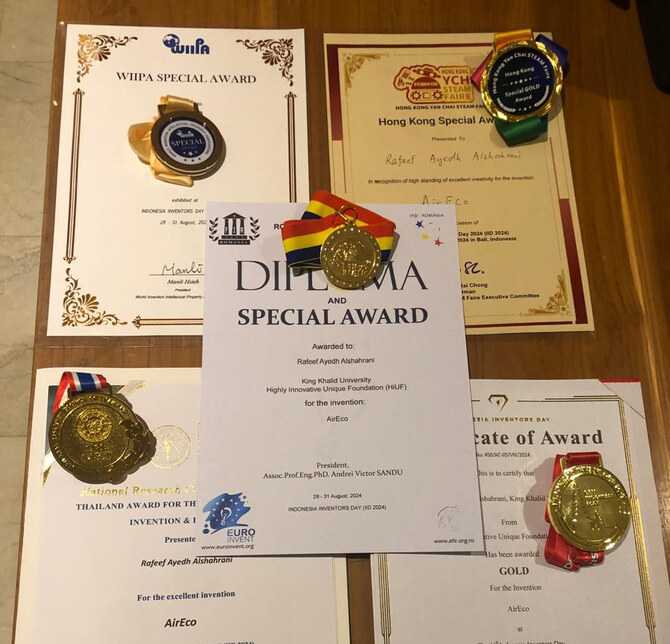
Rafeef Ayedh Alshahrani, a researcher from King Khalid University, won a gold medal for her innovation “AirEco,” which has the ability to detect and locate living beings in hard-to-reach mountainous terrain, where search efforts are typically hindered by challenging conditions. 

By integrating advanced detection technologies with artificial intelligence, the device provides crucial support to rescue teams. It not only identifies precise locations but also executes functions to assist in rescue operations once the target is located.

It is one of the projects backed by the university’s Agency for Business and Community Partnership, through the Entrepreneurship Center. 

The project has also earned four prestigious awards from Taiwan, Romania, Hong Kong and Thailand.

Reflecting on her achievement, she described it as a truly unique and fulfilling experience. She expressed the joy of seeing the fruits of her hard work over the past days and months, stating that the greatest reward was the pride and recognition from those around her. “It’s an incredible feeling,” she said.

“This accomplishment has fueled my desire to see it implemented quickly and made widely available,” she added. “I sincerely hope that authorities and companies will adopt the project, provide support, and help manufacture it to the highest standards so it can fully achieve its purpose.”

When asked how such achievements can positively influence Saudi participation in international competitions, she said: “Accomplishments serve as a powerful driving force for young people, pushing them toward their ambitions and future goals. 

“The Kingdom’s Vision 2030, in particular, has become a major source of motivation, inspiring all Saudis to think creatively and pursue their aspirations. 

“Saudi achievements have now become a source of national pride, shifting perspectives on the significance of success and its far-reaching impact. These accomplishments are key drivers of development, progress and prosperity. 

“Beyond boosting individual self-confidence, they foster a positive mindset in society, encouraging leadership, innovation and the creation of economic opportunities. The impact of success doesn’t stop with the individual; it resonates throughout the community.”

Dr. Najia Al-Zanbagi, headmaster of Highly Innovative Unique Foundation, also earned a silver medal at the Indonesia Inventors Day 2024 for her remarkable work in medical parasitology.

“My contribution was a personal achievement: I authored a book on medical parasitology, using engaging, narrative-driven stories to simplify the complex scientific content and make it easier for learners to distinguish between various parasites. 

“I first introduced this approach while teaching at King Abdulaziz University, and it was incredibly well received by students, who found the subject much more enjoyable and accessible.” 

She aid that the book, titled “Lisan Al-Hal,” has now been published and is now available in the market.

Dr. Majid Al-Aziman, director of the Entrepreneurship Center at King Khalid University, emphasized the university’s commitment to supporting innovators, raising awareness and redefining the concept of entrepreneurship. 

The university also seeks to spotlight the success of projects incubated by the Entrepreneurship Center and actively contribute to creating new job opportunities.

source/content: arabnews.com (headline edited)

___________

Dr. Najia Al-Zanbagi (R), headmaster of Highly Innovative Unique Foundation, earned a silver medal at the Indonesia Inventors Day 2024 for her remarkable work in medical parasitology. (Supplied)

Rafeef Ayedh Alshahrani’s project has also earned four prestigious awards from Taiwan, Romania, Hong Kong and Thailand. (Supplied)

_________________

SAUDI ARABIA

ARAB: 12 Arab Films to Steal Spotlight at 2024 Venice Film Festival

The films tell stories of hopes, dreams, and challenges from the Arab world.

Arab cinema is about to make waves as the 81st Venice Film Festival rolls out the red carpet. 

Running from August 28 to September 7, this year’s Venice International Film Festival will feature 12 Arab films backed by the Doha Film Institute.

These movies will light up key sections of the festival, including Orrizonti and Orrizonti Shorts, and make waves at Critics Week, Giornate degli Autori, Final Cut, and the Venice Gap-Financing Market.

These selections showcase the rich diversity of the region, bringing unique stories from Egypt, Jordan, Lebanon, Morocco, Palestine, Tunisia, and Yemen into the spotlight.

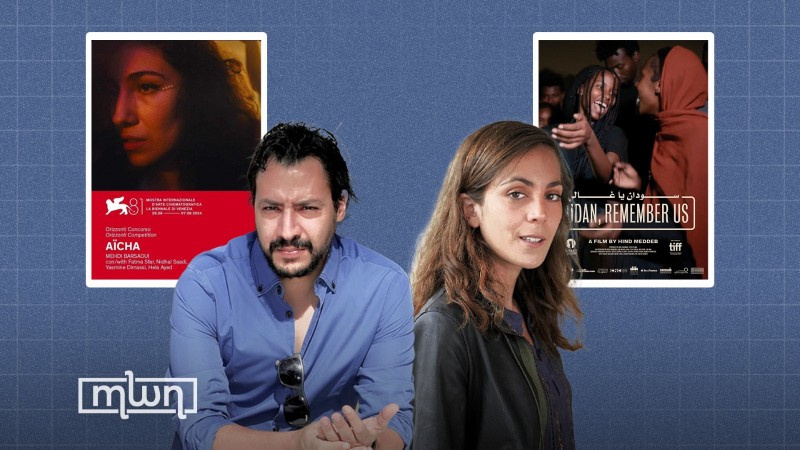
Highlights include “My Father’s Scent” by Mohamed Siam, featuring Egyptian star Ahmed Malek, “Aïcha” by Mehdi Barsaoui, and “Sudan, Remember Us” by Hind Meddeb, which offers a powerful portrayal of a generation’s fight for freedom through words, poems, and chants.

“We are proud to continue a successful festival season with a strong showcase of films by Arab talent at Venice,” stated Fatma Hassan Alremaihi, chief executive officer of the Doha Film Institute.

“Our mission is to support independent creators in cinema, and the compelling selection at Venice is a testament to our commitment to shed light on stories that transcend borders and present unique perspectives. We hope these films receive the acclaim and attention they deserve,” she added.

The 2024 Venice International Film Festival is set to showcase a diverse array of Arab cinema. 

In the Orizzonti category, the festival will present “Aïcha” directed by Mehdi Barsaoui and “Happy Holidays” by Scandar Copti. The Orizzonti Shorts category will meanwhile include “Shadows” by Rand Beiruty.

“Sudan, Remember Us,” directed by Hind Meddeb, will be showcased in the Giornate degli Autori section. Critics’ Week will highlight “Perfumed with Mint” by Muhammed Hamdy.

The Final Cut section will present several notable films, including “Aisha Can’t Fly Away” by Morad Mostafa, “In This Darkness I See You” by Nadim Tabet, “My Father’s Scent” by Mohamed Siam, and “Those Who Watch Over” by Karima Saidi.

Finally, the Venice Gap-Financing Market will feature “Marie & Jolie” by Erige Sehiri, “The Station” by Sara Ishaq, and “Theft Of Fire” by Amer Shomali.

With a lineup that promises to dazzle and surprise, these films are set to turn heads and set new standards.

source/content: moroccoworldnews.com (headline edited)

____________

12 Arab Films to Steal Spotlight at 2024 @ Venice Film Festival

__________________________________________________________________________

EGYPT, JORDAN, LEBANON, MOROCCO, PALESTINE, TUNISIA & YEMEN

U.A.E: League of Arab States recognizes the achievements of Emirati women as Arab role models

The League of Arab States has hailed the achievements and contributions of Emirati women at the national level, calling them a role model in the Arab world.

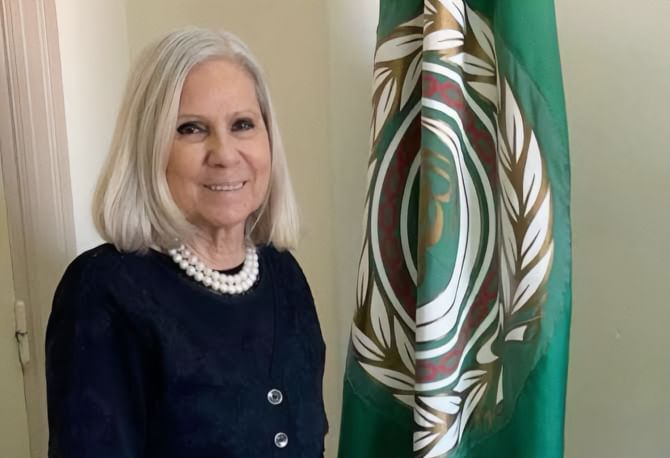
Ambassador Dr. Haifa Abu Ghazaleh, Assistant Secretary-General and Head of Social Affairs sector at League of Arab state, congratulated the UAE leadership, government and people on Emirati Women’s Day, which is a source of pride for Arabs due to the prominent position achieved by the UAE women at the Arab, regional and international levels.

In her statements to the Emirates News Agency (WAM), Dr. Abu Ghazaleh praised the efforts of HH Sheikha Fatima bint Mubarak (The Mother of the Nation), Chairwoman of the General Women’s Union (GWU), President of the Supreme Council for Motherhood and Childhood (SCMC), and Supreme Chairwoman of the Family Development Foundation (FDF), to enhance the status of Emirati women in all fields for more than 5 decades and commended the great achievements of the General Women’s Union under her leadership, making Emirati women an honorable model for Arab women.

She added that the assumption of important and influential positions by Emirati women reflects their pioneering role in society and makes them a bright sign in the Arab world, noting that the achievements of Emirati women represent a strong push towards further progress and excellence at all levels.

Dr. Abu Ghazaleh wished Emirati women further success and prosperity and expressed her aspiration for women in the UAE and the Arab world to witness more progress and active participation in building societies.

source/content: wam.ae (headline edited)

____________

____________________________________

UNITED ARAB EMIRATES (U.A.E)

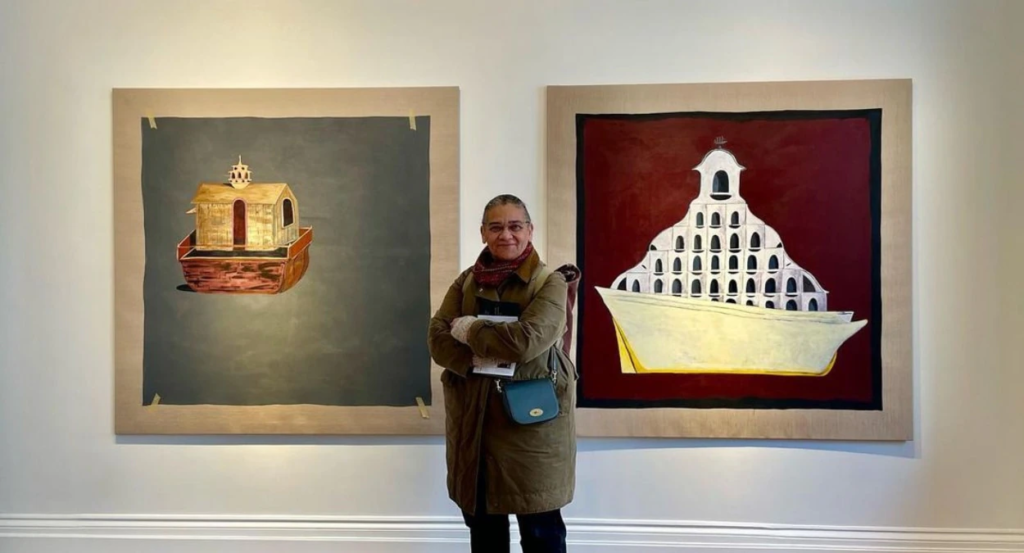
COMOROS / BRITISH : Turner Prize-winning artist Lubaina Himid on the power of collaboration

The artist, also a guest editor of ‘Bazaar Art’ praises communal creative practice and refutes the notion of the lone genius.

Some people imagine that making art, being a visual artist, is best accomplished and performed alone; I’m pretty certain they are wrong. My own experience has been exactly the opposite from the beginning.

I am an only child, the daughter of an English textile designer and a Comorian college lecturer; I was born in Zanzibar. As a little girl in the early 1960s, I played in the streets and back gardens of Maida Vale in London with two boys who lived nearby. Together we dug an enormous hole, without our parents’ knowledge or permission, to prepare for a swimming pool.

At school, in the art room, the teacher asked us to design the costumes and sets for Cyrano de Bergerac, a play in which it took two men, via poetry and letters, to court a young woman. As head girl, I joined others going out on strike to protest about democracy and freedom of speech.

At art college, which I hated almost as much as school, it was clear that the young women students were being educated to be assistants to the men. We outnumbered, out-lifted and outperformed them at every available opportunity. I learned that to succeed in theatre design you needed to be a team player—but not a woman.

As a waitress in Covent Garden in the mid-1970s, it was obvious that without the chefs, the washing-up staff and each other, we could never have survived the disdain, the flirting, and the exhaustion inflicted upon us by the customers.

The early days of organising, making and showing with other Black women artists in London were, for me, the real beginnings of my collaborative practice. We worked alongside each other in domestic studios and spoke frankly about funding and the need for studio space, as well as our doubts and fears for the future of our creative endeavours. Some women worked with each other on groundbreaking community print projects and then alongside me to make an exhibition happen. We functioned on the very outer edges of a pretty unfriendly art world for which we had huge expectation of change but an infinitesimal amount of experience as to how this could be done.

During the 40 years since those early showing days of the 1980s, my desire to work with others has grown stronger. Without the collaborative experience of working with a studio team; talking and testing, exchanging ideas, being challenged and having to rethink and compromise (in a good way), my work would be totally different: less daring, less exciting for me and more introspective (in a bad way).

There have been art historians who asked serious and intense questions about the process and curators who enabled me to be myself by taking care of me. Importantly, they dealt with the practicalities and the administrative complexities, so that the only thing I had to worry about was the making and developing or ‘how to push everything I could to the limit’.

Close friends—all artists—have in the past been invaluable partners in my work, constantly questioning, offering expertise or supporting a series of seemingly illogical projects with practical help, money, or by cooking comforting meals, making endless cups of tea or providing favourite biscuits.

During the years I spent preparing full-time art students for the challenging years ahead, which I knew would be filled with unexpected opportunities and inevitable setbacks, my advice to them was always to work with other artists who had different areas of expertise from themselves to make pop-up shows, workshops, group performance projects, homemade ’zines and moving-image productions. I tried to persuade them that it is impossible to do everything yourself, and that their own work would suffer, as would that of their fellow artists, unless they worked for an agreed common goal. Their paintings and films, installations and prints would be stronger, still individual, but part of a wider conversation.

Recently, I have learned how to listen more carefully to the sounds in my head and begun to understand how to make this real in my paintings and installations by working with Magda StawarskaBeavan, an artist who makes screen prints, paintings, and drawings as well as moving-image and sound-composition projects.

For a few years on and off we made screen prints, Magda leading and printing, then gradually worked on sound pieces—mostly hers and occasionally mine. As part of a recent show at Wiels contemporary art centre in Brussels called ‘Risquons-Tout’, we worked for several months during the fiercest lockdowns in the North West of England on an installation called ‘The Blue Grid Test’, combining a 25-metre blue painting on found objects with a six-channel sound work. We talked extensively about codes and patterns, language and love, colour and rhythm, and worked alongside each other, wandering in and out of her studio and mine. All the while, as we built layers of understanding and multiple connections through music and language using invented texts in French, English and Flemish, Magda developed a composition piece that wraps and envelops the audience. I painted a long thin line in many shades of blue. It became a room in which 64 global patterns on numerous items found neglected in cupboards, basements and on shelves in the house, spoke and sang in and out of harmony with the words and music. I felt this could be the beginning of a determination to add to our previous collaborations during the past 10 years by making real more experimental   projects, in print and with sound, in between working on our own exhibitions.

If you can find someone who will listen to you as intently as you are prepared to listen to them, you have probably found the perfect collaborative partner. Be willing to say what you want and then have that idea bettered, and you may have the solution to creating artwork that really could make a difference.

This piece originally appeared in the November 2021 print edition of Harper’s Bazaar UK 

source/content: harpersbazaar.in (headline edited)

____________

____________________________________

BRITISH / TANZANIA / COMOROS

YEMEN: Eqbal Dauqan Ph.D : She May Be The Most Unstoppable Scientist In The World

Two years ago, Eqbal Dauqan was going to work in the morning as usual. She’s a biochemistry professor. And was driving on the freeway, when suddenly: “I felt something hit my car, but I didn’t know what it was because I was driving very fast,” she says.

Dauqan reached the parking lot. Got out of the car and looked at the door. What she saw left her speechless.

“A bullet hit the car, just on the door,” she says.

The door had stopped the bullet. And Dauqan was OK. She has no idea where the bullet came from. But it turned out to be an ominous sign of what was to come.

Gender Canyon

Dauqan is a female scientist in what’s possibly the hardest place on Earth to be a woman: Yemen.

The World Economic Forum ranks Yemen as the worst country for women’s rights. In Yemen, many women can’t leave the house without permission from a male relative.

“If she goes out with her husband or brother, that’s OK. But not by herself. ” Dauqan says. “Not everyone follows this. But this is our culture.”

A culture where two-thirds of women can’t read. About half are married by age 18 — and sometimes as young as age 8.

And then there’s the black veil. Many women in Yemen wear a niqab — a black veil that completely covers their faces, except for a tiny slit across the eyes.

Daquan wears a niqab when she’s in Yemen. She even wore one during her TEDx talk there back in 2014. But she doesn’t wear one in other countries.

“I cover my face [in Yemen] because I respect the culture,” Dauqan says. “I respect the culture.”

She may respect it — but not blindly. For the past decade, Dauqan has burst through glass ceiling after glass ceiling with fearlessness and grace.

Even as a young girl, she was a rebel. “I was a little naughty,” she says with a snicker.

She liked breaking rules. And proving people wrong. So when her parents told her she might not have the smarts to go into science and engineering — like her dad — Eqbal thought: Watch me.

“I told my father, ‘I’ve heard a lot about scientists in chemistry. What is the difference between me and them? So I want to try,” she says.

And she did more than try. She crushed it.

Eqbal won over her father and got his financial support. She was the first among her friends to finish college. Then she got a scholarship to do her Ph.D. in biochemistry at the Universiti Kebansaan Malaysia, where she studied the nutritional properties of palm oil.

That led to her writing a popular book about the fruits mentioned in the Holy Quran and their health benefits. For example, Indian Jujube — also known as red dates — are the most cultivated plant in the world and have 20 times more vitamin C than citrus fruit, Eqbal writes in her book.

Next came the prizes. In 2014, Dauqan was named one of the top female scientists in the developing world by the Elsevier Foundation. News programs in the Middle East and in China ran feature stories on her. She became so famous that Al Saeed University made her an assistant professor and head of a department — all this before she’d turned 35. Dauqan was on top of the world.

And then one morning, it was all taken away.

“They were just sleeping”

In March 2015, Dauqan’s hometown of Taiz got pulled into Yemen’s bloody civil war. Planes started flying over head, dropping bombs — even on homes and schools.

“They were bombing my university!” Dauqan exclaims. “They killed some of my students.

“It was really bad. Really bad,” she says. “I’ll show you.”

Dauqan turns to her computer and brings up some photos. On the screen is a photo of several bodies laying flat on the ground. The bodies are covered in white sheets, with only their faces showing.

“This is nine person from my family,” she says. “They were sleeping. And a bomb hit their house. They all died. Nine person from my family.”

A few of the bodies are small.

“Those are two children in our family,” Dauqan adds. “They were just sleeping.”

And then they were gone — Dauqan’s cousins on her father side and their sons and daughters.

“That is why I leave my country,” she says.

“I have to be strong. I want to be strong”

After the bombings began, Dauqan had to stop her research. The university shut down. And it wasn’t safe for her to leave home. She was trapped in a city where snipers target children and bombs fall on mosques, schools and markets.

During one month of 2015, doctors treated more than 4,000 civilians in a Taiz hospital, the nonprofit Doctors Without Borders reported. MSF hospitals have been hit with bombs four times.

Across Yemen, about 10,000 civilians have been killed in the war and more than 40,000 have been wounded. the U.N. reports. More than 370,000 children are now malnourished because they can’t get food.

And then one day, after spending months in hiding, Dauqan had an idea: Maybe her science could get her out of the war.

She started texting her mentor, Aminah Abdullah, a food scientist at the Universiti Kebangsaan in Malaysia. They applied for a special refugee scholarship with the Institute of International Education-Scholar Rescue Fund, based in New York. She got it, and after a few months, she was safe on a plane headed for Malaysia.

Now she’s working to save up money so she can bring her parents and sister to Malaysia. “It’s very difficult,” she says. “But I have to be strong. I want to be strong!”

Dauqan works long hours in labs, continues to publish papers and mentor students. And she has never lost sight of her dreams — even her ultimate dream.

“My dream is to win the Nobel Prize,” Dauqan says with a chuckle. “It is very hard. So I don’t know. “

But Dauqan has already done so much for science — and society. When little girls in the Middle East see photos of Eqbal as a chemist — wearing a head scarf, measuring pH — they don’t need to use their imagination to think: “I could be just like her. I could be a scientist.”

source/content: npr.org (headline edited)

______________

“In college, I would tell my friends that I wanted to pursue a Ph.D., and they would chuckle and ridicule the idea,” says Eqbal Dauqan, who is an assistant professor at the University Kebangsaan Malaysia at age 36. Born and raised in Yemen, Dauqan credits her “naughty” spirit for her success in a male-dominated culture.Sanjit Das for NPR

___________

YEMEN

ARAB ATHLETES Bring Home 17 Medals from the 2024 Paris Olympics

From weightlifting to gymnastics and boxing, Arab athletes made the nation proud at the Olympics.

Meet the Olympics winners here

The 2024 Olympics concluded last night in Paris, and have marked a very special season for Arab athletes.

Despite controversy and a few ups and downs over the past 17 days, the best sportswomen and sportsmen from the region did their nations proud, earning a total of 17 medals. Overall, the medals were won by athletes from seven countries: Qatar, Jordan, Egypt, Morocco, Tunisia, Bahrain and Algeria. Bahrain won the highest number of medals this time with four major wins (two gold, one silver, and one bronze). In second place was Algeria, bringing home three medals (two gold, one bronze).

Tied in third place, Egypt and Tunisia earned three medals each (one gold, one silver, one bronze), followed by Morocco, which also won three medals (two gold, one bronze). Jordan came in fifth with one silver medal, and Qatar completed the seventeen wins with a bronze medal.

It’s no easy feat earning an Olympics medal, and while 2024 has marked a proud moment for the region, it’s also important to note that this isn’t the first time our athletes have brought home this number of wins. Back in 2020, the Tokyo Olympics saw Arab athletes earn a total of 18 medals!

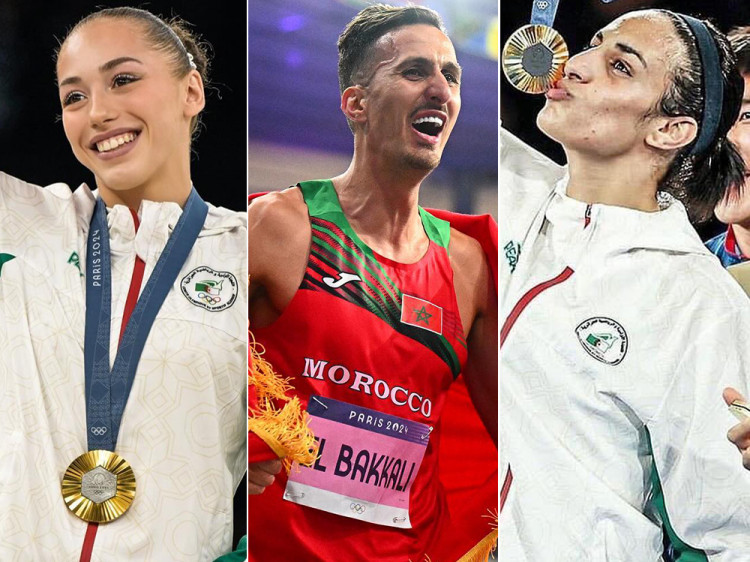
Among this year’s winners, some of the most talked about athletes were the ones that went through the biggest hardships. Algeria’s Imane Kheliff faced speculation and bullying at a global level, but remained undeterred in her pursuit for gold. Winning her medal last week, she said, “I sent them a message with this gold medal, and I say my dignity has been restored and my honor is above anything else.”

Days prior to Khelif’s proud moment, France-born Algerian athlete Kaylia Nemour (who be made history when she became the first-ever African gold medalist in gymnastics. The win was twice as special given Nemour’s past dispute with the French gymnastics federation, which led to her switching from competing for France to competing for Algeria in 2023.

Also in the list of noteworthy names is Tunisia’s Firas Katoussi, who won a gold medal in 80kg taekwondo, Morocco’s Soufiane El Bakkali, who brought hold gold in 3,000m steeplechase, and Egypt’s Ahmed Elgendy, who set a world record with 1,555 points in modern pentathlon. Congratulations to all the athletes who represented the region and did their nations proud. Below, a complete list of all the Olympics winners from the region.

Algeria
Gold: Imane Khelif, women’s 66kg boxing

Gold: Kaylia Nemour, women’s uneven bars artistic gymnastics

Bronze: Djamel Sedjati, men’s 800m

Bahrain
Gold: Winfred Yavi, women’s 3000m steeplechase

Gold: Akhmed Tazhudinov, men’s freestyle 97kg wrestling

Silver: Salwa Eid Naser, women’s 400m

Bronze: Gor Minasyan, men’s 102kg weightlifting

Egypt
Gold: Ahmed ElGendy, men’s individual modern pentathlon

Silver: Sara Ahmed, women’s 81kg weightlifting

Bronze: Mohamed ElSayed, men’s épée individual fencing

Jordan
Silver: Zaid Kareem, men’s 68kg taekwondo

Morocco
Gold: Soufiane El Bakkali, men’s 3000m steeplechase

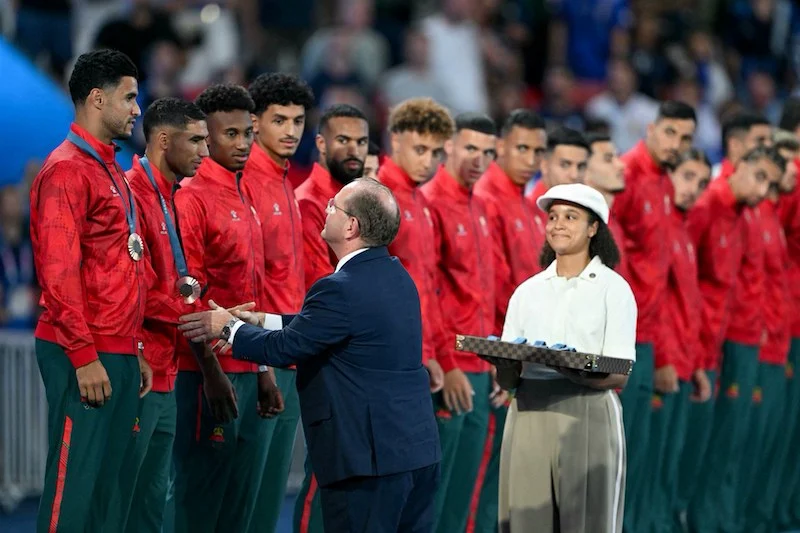
Bronze: Men’s football team

Qatar
Bronze: Mutaz Essa Barshim, men’s high jump

Tunisia
Gold: Firas Katoussi, men’s 80kg taekwondo

Silver: Fares Ferjani, men’s sabre individual fencing

Bronze: Mohamed Khalil Jendoubi, men’s 58kg taekwondo

source/content: en.vogue.me /nitya chablani (headline edited)

________

___________________

ARAB ATHLETES

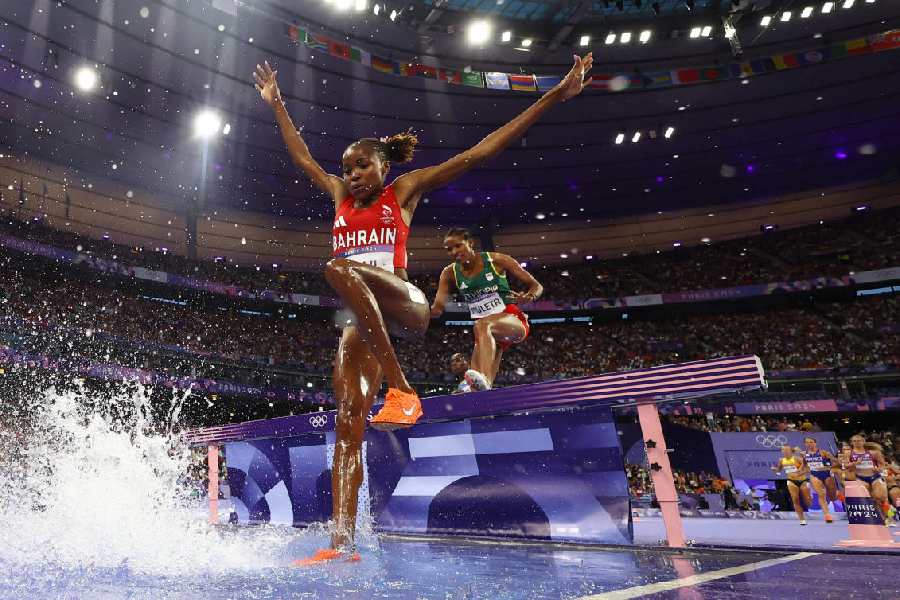
BAHRAIN: PARIS OLYMPICS 2024: Bahrain’s Winfred Yavi reigns in women’s 3,000m steeplechase, wins gold

Yavi jumped for joy after crossing the line, having overtaken Chemutai with an explosive final sprint that left the Ugandan who had led most of the race unable to respond.

Bahrain’s Winfred Yavi won the women’s Olympic 3,000m steeplechase gold medal on Tuesday, dethroning Uganda’s Peruth Chemutai who had to settle for silver.

Yavi jumped for joy after crossing the line, having overtaken Chemutai with an explosive final sprint that left the Ugandan who had led most of the race unable to respond.

Chemutai was in shock after Yavi, 24, stole the finish to add the Olympic title to last year’s world championship, setting an Olympic record time of 8 minutes 52.76 seconds. “This is like a dream come true. It’s something special,” Yavi told reporters. “It means a lot to me and also to the country.”

Kenyan 20-year-old Faith Cherotich, ranked third in the world, claimed bronze on her Olympic debut.

On Wednesday, American Quincy Hall dug deep in the final metres to overhaul Briton Matthew Hudson-Smith and take the 400m gold. Hall ran a personal best of 43.40s and give the US their first triumph since LaShawn Merritt in 2008.

Hudson-Smith bettered his own European record with 43.44 for silver and Zambia’s 21-year-old Muzala Samukonga set his second successive national record with 43.74 to take bronze.

Emulating Lewis

Miltiadis Tentoglou flexed his biceps, draped the Greek flag over his shoulders and stared up into the clear night sky above the packed Stade de France.

It was a moment to savor: Tentoglou became only the second man after Carl Lewis to win two consecutive Olympic long jump titles, adding the gold on Tuesday night to the one he claimed at Tokyo three years ago.

“It’s a great achievement,” said Tentoglou, who also claimed the world title last year. “Not bad.” His gold was the first for Greece in any sport at the Paris Games.

Tentoglou’s second jump of 8.48 meters (27 feet, 10 inches) won it. Wayne Pinnock, a 23-year-old Jamaican, got the silver with a leap of 8.36 (27-5 1/4), and Mattia Furlani, a 19-year-old Italian, finished third with a best effort of 8.34 (27 4 1/2).

Upset win

The men’s 1,500 was billed as a bar brawl between the two strongest 1,500m runners in the world. Nobody figured the little-known American guy would steal the show.

Cole Hocker beat Jakob Ingebrigtsen and Josh Kerr to pull the upset of the Games with an unexpected victory. He wonin an Olympic-record 3 minutes, 27.65 seconds.

Reuters

source/content: telegraphindia.com (headline edited)

__________

Winfred Yavi of Bahrain on way to the gold medal in the women’s 3000m steeplechase final in Saint-Denis on Tuesday. Reuters

_____________

BAHRAIN

ALGERIA : PARIS OLYMPICS 2024: Kaylia Nemour wins Algeria’s first gymnastics gold at Paris Olympics 2024

The 17-year-old outscored China’s Qiu Qiyuan and USA’s Sunisa Lee in the uneven bars final for Algeria’s first medal in Paris.

Algerian teenager Kaylia Nemour wept tears of joy as she became the first African athlete to win an Olympic gymnastics medal with gold on the uneven bars in Paris, outshining several big names in the competition and registering her country’s first medal at the 2024 Olympic Games.

The 17-year-old French-born athlete’s breathtaking routine wowed the crowd in at the Bercy Arena on Sunday and helped her bag the title ahead of China’s Qiu Qiyuan, with Team USA’s Sunisa Lee snatching bronze. Defending Olympic uneven bars champion Nina Derwael of Belgium finished fourth.

Nemour was under pressure after Qiyuan posted a score of 15.500 with an immaculate routine, but the rising star of gymnastics outperformed the Chinese gymnast with an exceptionally difficult routine to finish with a score of 15.700.

The Algerian’s fast-paced routine, featuring a number of complex release-and-catch manoeuvres, delighted the crowd.

As soon as she landed, Nemour was in tears, knowing she had perhaps done enough to land her country’s first-ever gold in gymnastics and first medal of the Paris Olympics.

‘Performance of my life’

Emotions ran high for the young gymnast when her triumph was confirmed and she draped herself with the Algerian flag before stepping up to soak in the applause.

“I’m so shocked, it’s the dream of all my life. I can’t believe it has happened, I’m speechless,” said Nemour.

“In qualifying I had 15.600, when I saw her 15.500 I said, I really had to fight and gave the performance of my life,” said the Algerian.

“It’s crazy. I’m honoured to have this medal after all that has happened. It’s a relief.”

Nemour has competed for Algeria since last year after a dispute with the French gymnastics federation, but found plenty of support at the Bercy Arena.

source/content: aljazeera.com (headline edited)

___________

Kaylia Nemour was in tears upon planting her feet after her routine [Loic Venance/AFP]

______________________

ALGERIA / FRENCH

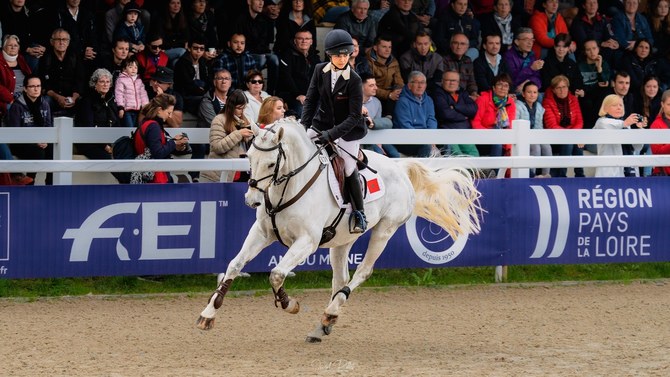
MOROCCAN Noor Slaoui: 1st Arab woman to represent MENA in equestrian sports at Paris 2024 Olympics

Noor Slaoui, a 29-year-old Moroccan, has become the first Arab female equestrian to represent Africa and the Middle East after qualifying for the Paris 2024 Olympics, it was announced on Wednesday.

The professional rider has officially qualified for the Olympics, becoming one of two representatives from Africa and the Middle East, a media statement said.


Slaoui’s journey to this prestigious event marks a significant milestone in her career and for the region’s equestrian sports.


The 29-year-old is dedicated to promoting the development of equestrian sports in the MENA region, with the aim of inspiring greater representation in the coming years.


“I am honored and excited to represent my region at the Paris 2024 Olympics. This journey has been a testament to the dedication and support of my team and the incredible bond with my horses,” she said.


Slaoui said that she looked forward to challenging herself and showcasing the talent from the MENA region on the Olympic stage.
“While medals are a goal, my focus is on building a strong foundation for success in the years to come,” she said.


Her passion for horses began in childhood while exploring Morocco’s landscape on horseback. This early love of animals and nature evolved into a dream of making a career of her equestrian interests.


After attaining her baccalaureate at 18, Slaoui took a gap year and moved to France. She earned her riding instructor certification at the National Riding School in Saumur, setting her on the path to equestrian sports and competition.


Later, she moved to the UK to pursue her journey and studied political science at the University of Warwick. It was during that time that when she discovered eventing, often described as the “triathlon of equestrian sports.”


Working with professional riders to refine her skills, the Moroccan managed to balance her practical experience and academic studies.


After meeting her coach and business partner, Deborah Fellous, on graduation they launched her professional riding career, representing group F — “Africa & Middle East” — on the international stage.


Currently, they manage a professional yard in England, home to 17 horses, dedicated to breeding, training and preparing them for top-tier competitions.


Over the past seven years, Slaoui has achieved several notable milestones, becoming the first Moroccan female rider to compete internationally in eventing, and representing the MENA region at the World Championships for Young Horses in 2022 and 2023.


She also participated in Nations Cup events and secured top 10 finishes in 4-star competitions.

source/content: arabnews.com (headline edited)

__________

Noor Slaoui, a 29-year-old Moroccan, has become the first Arab female equestrian to represent Africa and the Middle East after qualifying for the Paris 2024 Olympics. (Supplied)

_____________

MOROCCO