Arabs & Arabian Records Aggregator. Chronicler. Milestones of the 25 Countries of the Arabic Speaking World (official / co-official). AGCC. MENA. Global. Ist's to Top 10's. Records. Read & Enjoy./ www.arabianrecords.org
Heroine’s mission to save wartime Yemen’s children.
How can one focus and work without a salary? Or when bombs are exploding nearby? Or when you worry that your staff won’t make it home? Or that a cholera epidemic could compromise your hospital?
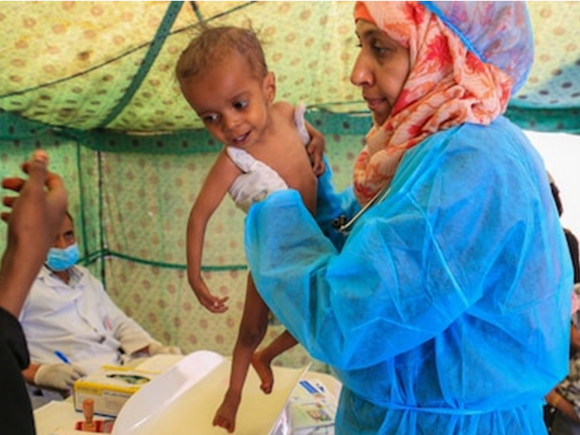
For the past six and a half years, LSTM alumna, Prof. Najla Al-Sonboli has dedicated her life to helping some of the most vulnerable victims of war-torn Yemen, the children. Every day she sees innocent children come through the doors of her hospital, victims of a war that has ravaged her home country. “I see children suffering and dying right in front of my eyes, I needed to do something to help.”
While at LSTM, Prof. Al-Sonboli initially studied for a Masters in Tropical Paediatrics graduating in 1999. She then later went on to complete the Diploma in Tropical Child Health. Following that she completed her PhD in paediatric health at LSTM with supervision from Professor Luis Cuevas and research in her home country of Yemen.
Now a leading paediatrician and researcher, Prof. Al-Sonboli is the head of the Paediatric Department at Al-Sabeen Hospital for Maternity and Children in Yemen’s largest city of Sana’a.
“I love kids, I can’t bear the thought that anything could hurt them. So, I decided to study paediatrics and help children in Yemen. Because of war, they are dying from diseases, hunger and cross fire. They are suffering too much; many have lost their parents, and many are displaced and separated from their families and their homeland.”
In the face of war and grave personal risk, Prof. Al-Sonboli and her team work tirelessly providing essential and much needed medical care to thousands of children, whilst organising staff to provide voluntary services with minimal resources and coping with new challenges her paediatric department faces. “Every day brings new challenges. We are facing the spread of many epidemics and diseases such as measles, cholera and severe malnutrition.”
“We are admitting cases even on the floor, on chairs, inside their cars with IV stands to prevent them from getting shocked. It is a real disaster”.
“At times we have had to work under fire. Parts of our hospital have been destroyed, and once, one of the rockets hit inside the hospital. This meant our medical staff couldn’t come to work.”
After years of brutal conflict, many of the doctors and nurses are tired. For years, staff have received no salary, many being left without enough money to feed their families. “Some of my colleagues are struggling to buy food for their own children. When this happens, we all come together and make sure we can support them by collecting small amounts of money to help them”.
For some time now staff at LSTM and the broader Liverpool community have been raising vital funds to support colleagues to provide essential medical care to save children’s lives in an incredibly difficult situation. This has since seen the formation of the ‘Liverpool Friendship Group’ which has supported six voluntary nurses, two doctors and extended the Paediatric Intensive Care unit (PICU) and Emergency services for children, bought equipment and developed a new cardiopulmonary resuscitation point.
“The toughest challenges that I faced are to work without salary, if it wasn’t for the generosity of LSTM alumni, staff and the Liverpool community, we don’t know what we would do”
Outside from her day-to-day work, Prof. Al-Sonboli remains a close research partner of LSTM and together with Dr Nasher-Al-Aghbari (another LSTM alumnus); Profs Cuevas and Theobald have held awards from TB REACH on strategies to enhance case findings amongst vulnerable groups.
When asked for the best advice she has ever received, she said “To be a good leader, you have to lead by example – you have to become a symbol”. Prof. Al-Sonboli is a living example of true leadership. Her work and determination have inspired her hospital staff to persevere when things become ugly and simultaneously inspired the international community to recognise her achievements.
“For me, I had the chance to fly out of Yemen as many did but I preferred to stay and help my people. I thought “if I run away and I am the head of the department, then who will stay? No one will come to work.” So, I decided to go to my hospital under fire and to try to encourage my colleagues to come, too.”
In 2018, Prof. Al-Sonboli was recognised as a Heroine for Health at the World Health Assembly meeting in Geneva, for her tireless work in her home country of Yemen.
Nominated for the award by LSTM’s Professor Sally Theobald, Prof Al-Sonboli was recognised by Women in Global Health in association with GE, who celebrated the contribution of nine Heroines for Health, presenting each with an award for leadership in their communities. Unable to leave Yemen, Professor Theobald accepted the award on her behalf.
“Sadly, war and fragility are not going away. We need to recognise, honour and learn from Najla and all the heroes and heroines that work alongside her, in continuing their efforts to bring hope and save lives. This award reflects the respect and support from the global health community for all that they do.”
When interviewed for her Heroine of Health Award, Prof. Al-Sonboli credits her strong relationship with LSTM for keeping the hospital running, including providing much needed funds to rebuild destroyed wards and to treat increasing numbers of patients.
Born in Saudi Arabia and the daughter of a Sudanese father and Egyptian mother, Marwa Zein is a woman that truly embodies multiple identities, and for many it is this that perhaps shines through the most in her work. Even when it comes to her roles, that diversity and multiplicity are frontline and center. An award-winning director, scriptwriter, film producer, women’s rights activist, and founder of ORE Production, a Khartoum-based film production company, Zein is inspiring in every way.
Before setting off on a journey to become a filmmaker, Zein enrolled in Cairo University as a chemical engineering student to please her parents. While studying, she worked and saved up to have the means to leave her degree behind three years later, instead study cinema at the Academy of Arts in Cairo, Egypt in 2005. In 2009, she graduated with honors and moved to Germany to continue her film studies. Her graduation project, “A game,” was an official selection of more dozens of international festivals across the globe and was translated into five languages.
From her inspiring start into the world of film and her academic achievements, Zein moved on to bigger goals, nabbing awards for her short film “One Week, Two Days,” which premiered at the 2016 Dubai International Film Festival. In 2019, she was selected as one of the seven young filmmakers from across to attend the Cannes Film Festival 2019 by the International Emerging Film Talent Association (IEFTA).
Perhaps her most renowned recent work is “Khartoum Offside,” which was awarded Best Documentary for 2019 at the 15th Africa Movie Academy Awards AMAA 2019. The documentary tells the story of women footballers whose dream it is to play for Sudan at a Women’s World Cup hosted by their home country, revealing the challenging social, economic, and political situations they face and inspiring audiences with their tale.
Speaking to Women and Hollywood in 2019, Zein had some inspiring words of advice for other female filmmakers, saying, “There’s no competition. Everyone is unique, and we can’t tell the same story even we have the same idea. You are special, different, and inspiring, and you lead the way for the people coming after you.”
“Take care of your mental, physical, and financial situations. It’s a very challenging and demanding business, so don’t lose your soul in the process. Stay true to who you are, and you will reach the horizon,” she continued.
Recognition from the International Women’s Media Foundation honours Palestinian reporter’s ‘remarkable bravery in the pursuit of reporting’.
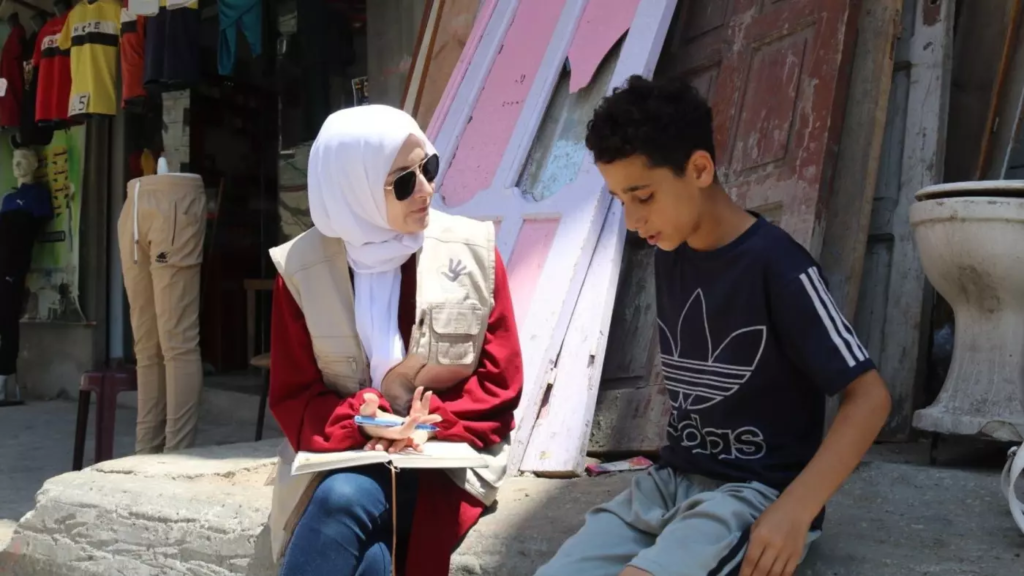
Palestinian freelance journalist Maha Hussaini has had her reporting for Middle East Eye on the ongoing Israeli war on Gaza recognised by the International Women’s Media Foundation (IWMF).
Hussaini was one of three recipients of the Courage in Journalism Awards , announced by the Washington-based foundation on Monday, which it says honours remarkable bravery in the pursuit of reporting.
Since the assault began in October, Hussaini has published dozens of stories, including a report uncovering Israeli field executions of Palestinians , which was used as evidence by South Africa at the International Court of Justice in the case accusing Israel of genocide.
Reacting to the award, Hussaini told MEE she was both happy and sad at recognition for her work.
“I am happy because it is another effort to recognise the work of Palestinian journalists and make them heard and seen,” she said. “But I am saddened because I know the cost of such recognition in a place where over 150 journalists have been killed over the course of eight months.”
The IWMF recognised Hussaini, who was a resident of Gaza City before the war, for working under strenuous circumstances during the conflict.
The Israeli attacks have posed daily threats to her life, forced her to move location multiple times and to live in desperate conditions, along with almost all of Gaza’s 2.3m Palestinian population.
At times Hussaini has been forced to work without access to electricity and internet during Israeli-imposed power outages. Her freedom of movement within Gaza, including access to her home, has also been restricted by the Israeli siege and checkpoints.
“Since the beginning of the Israeli war, it has become increasingly clear to me that journalists are targets for the Israeli army. Many of the journalists who have been killed while reporting were colleagues with whom I closely collaborated,” Hussaini told MEE.
She said that each morning she faced the possibility that she could be killed next, and quietly recited the Shahada, the Muslim declaration of faith often pronounced before death, each time she went out to report.
“I understand that my work carries immense risks, but I cannot say that I’m scared to be a journalist,” Hussaini added. “I have never felt hesitant to go to the field or cover any story. But I however worry that if I am killed, another voice would be silenced, another pen would be broken.”
Hussaini said she hoped that by winning the award, light would be shed on the work done by Palestinian journalists, especially when “many international media outlets choose to overlook their stories and reporting”.
She added that it was particularly important now as Israel bans international journalists from entering Gaza.
‘We need women’s voices in news media’
Hussaini won the award alongside Lauren Chooljian, a senior reporter and producer at American radio NHPR, and Monica Velásquez Villacís, an investigative journalist and presenter at Ecuadorian digital media outlet La Posta .
“We need women’s voices in news media to keep the press free and we need to fiercely protect women like Lauren, Maha, Mónica, and Shin to ensure that power is held to account and that equitable values survive,” said IWMF Executive Director Elisa Lees Munoz.
David Hearst, MEE’s Editor in Chief, said: “To live under conditions where there is no safe haven from drones and missiles for eight months is unbearable.
“But to report under conditions where you as a journalist are deliberately targeted, and where you witness your colleagues being killed, is a feat few other journalists can imagine. Maha deserves the highest award for her work.”
Lubna Masarwa, MEE’s Palestine and Israel bureau chief, said no words can describe how much Hussaini deserves recognition.
“Despite everything she endured – the bombs, displacement, and seeing her colleagues killed – Maha has remained resilient, professional and true to her mission of giving a voice to the Palestinian people,” Masarwa said.
The Israeli military has killed at least 150 journalists out of an estimated 37,000 Palestinians in Gaza since 7 October, according to local officials. The Committee to Protect Journalists (CPJ) has reported that it has been the deadliest period for journalists since the NGO began gathering data in 1992.
“It’s wonderful seeing Maha’s work, and by extension, that of Palestinian journalists in Gaza, being recognised by the world,” Masarwa added.
“But truly no amount of awards and words can begin to express how much she deserves recognition.”
Among Hussaini’s stories recognised by the IWMF is a report on the reality of women giving birth at home in Gaza and another featuring a girl who had to carry her paralysed six-year old brother for miles while fleeing bombing.
Hussaini’s decade as reporter
Hussaini began work as a freelance journalist in July 2014 during the Israeli offensive on Gaza, producing, preparing, and presenting reports on the conflict that resulted in the deaths of more than 2,200 Palestinians and around 60 Israelis.
She has been writing for MEE since 2018 and has covered hundreds of stories focusing on human rights and armed conflict.
In 2020, she won the Martin Adler Prize , awarded by the prestigious Rory Peck Trust, for her reporting for MEE from Gaza.
She was shortlisted for the 2023 Local Reporter Award granted by the Kurt Schork Memorial Fund.
Hussaini also works as the strategy director of the Geneva-based Euro-Mediterranean Human Rights Monitor .
IWMF’a Courage in Journalism Awards is given annually to women journalists who “are not going to step aside, cannot be silenced, and deserve to be recognised for their strength in the face of adversity”.
Shireen Abu Akleh, a renowned Palestinian-American journalist, posthumously won the award in 2023 after being shot and killed by Israeli forces a year earlier.
The women are part of an ascending community that has gained a higher profile after waves of recent immigration.
Six Arab women were honoured Saturday by their peers for their work in the community and in business.
“It really is a great opportunity to educate people,” said Asma Al-wahsh, founder of the non-profit Canadian Arab Women’s Association. The association named six Women of the Year in part to challenge stereotypes that immigrant women do not contribute.
Noura Alkhiwled was celebrated for “rocking it on the work floor” as a woman in the workforce. Ansam Shafi was recognized for her community leadership.
Hiba Al Zaben has made a name for herself in a science-related field that is dominated by men. Bahiyye Ahram owns a business and is an exceptional entrepreneur.
Yasmin Haloubi was honoured for making a difference in Guelph. Amina Ismail is a future leader, recognized as an example of the next generation of Arab women.
These Arab women are part of an ascending Arab community that is gaining a higher profile after waves of recent immigration. The community was little known a generation ago, but is now big enough to hold its first Middle Eastern festival last month in Kitchener.
Arabic has surged to become the No. 3 foreign language spoken around dinner tables at home in this region, the 2021 census has found. It has surpassed German and trails Chinese languages and Punjabi.
Growth over a decade has been “really huge,” Al-wahsh said. She came to Canada in 2012 and sees this region as a magnet for Canadian Arabs who are relocating from other cities and provinces.
It’s the second time the women’s association has honoured women of the year. The ceremony was held in west Kitchener at the Portuguese Club.
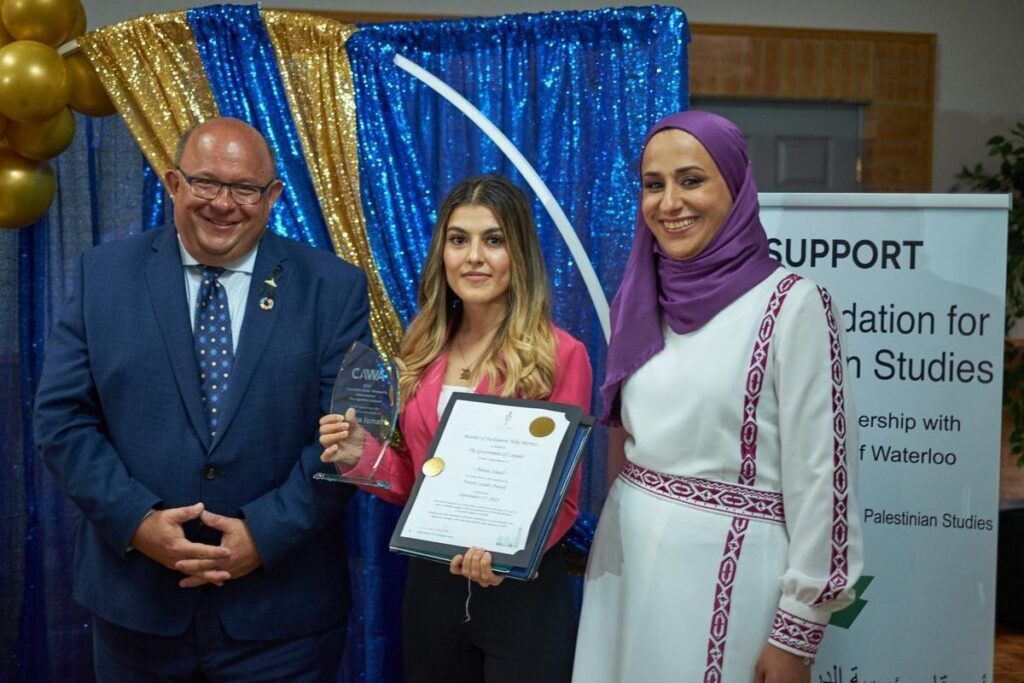
From left: Kitchener Mayor Berry Vrbanovic, Amina Ismail (celebrated as a future leader), and Asma Al-wahsh, founder of the Canadian Arab Women’s Association .Peaceful Films
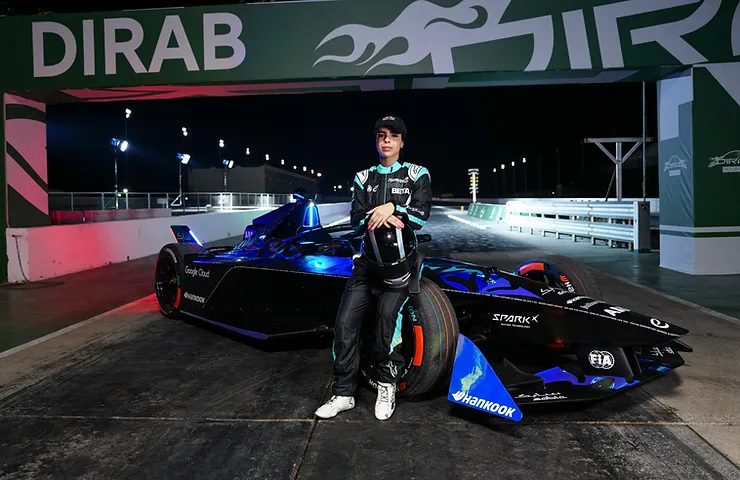
This January, Saudi racer Reem Al Aboud set a new acceleration benchmark for an FIA single-seater by reaching 0-60mph in 2.49 seconds in an ABB FIA Formula E GENBETA car. Ahead of International Women’s Day, we reflect on the implications of this achievement for motorsport.
Every Federation Internationale de l’Automobile-sanctioned single-seater championship race begins with a standing start. The lights at the starting line flash on, and flash off. Idle cars roar to life, accelerating through the straight and into the waiting corner.
How quickly these cars can accelerate depends on the series. F1 Academy goes from zero to 60mph in approximately 3.6 seconds. Formula 3 and Formula 2 manage in 3.1 and 2.9, respectively. Formula E’s GEN3 car takes 2.8. The current Formula 1 car takes 2.64.
But F1’s 2.64 seconds is no longer the benchmark. Now, Formula E’s newly developed GENBETA car holds the title — and with a woman in the cockpit.
Last July, Formula E unveiled its GENBETA prototype at the ExCeL London. While testing the car, World Champion Jake Hughes clinched a top speed of 218.71km/h, smashing the Guinness World Record for fastest speed indoors by more than 50km/h.
Having designated GENBETA as its development platform, Formula E sought to explore the model’s potential and performance further. The series set its sights on setting a second benchmark: the time an FIA single-seater takes to reach 0-60mph.
Yet in chasing after the F1 benchmark, Formula E was not content with breaking only technological and physical barriers. So, to honour its founding commitment to social progress, it added motorsport’s longstanding gender barrier as yet another to break.
Accordingly, Formula E tapped 23-year-old Saudi female racer Reem Al Aboud to take the GENBETA’s driver seat. The 2023 Saudi Toyota Ladies Cup Champion has partnered with the series since 2018, when she became the first Saudi woman to test a Formula E car.
Experienced in driving GEN2 and GEN3 cars — plus breaking barriers across karting, hillclimbing and autocross series — Reem was Formula E’s choice for a 2024 FIA Girls on Track Ambassador. Naturally, she was their choice for the GENBETA test as well.
And that choice certainly paid off. This January at Dirab Motor Park, Reem’s GENBETA car achieved 0-60mph in 2.49 seconds — besting F1’s by 0.15 seconds.
Of course, the technological aspect of the January test is remarkable. Behind GENBETA’s new benchmark is its front powertrain kit, which previous Formula E models (and other road electric vehicles) only use for energy harvesting. However, GENBETA also turns on this kit for greater traction during acceleration, using it to produce 536 horsepower that will launch the car into action. Instant torque allows for instant acceleration and thus a 2.49-second 0-60mph time.
What’s also remarkable is that a woman is the face of this test.
After all, motorsport’s gender barrier is cyclical. Doubt that female drivers can perform on par with their male counterparts dominates the sport. Doubtful investors shy away from funding young female drivers. Underfunded female drivers can’t enter, remain and progress through racing series. Series sorely lack female representation — when representation is what validates the reality that women can indeed perform. That lack of validation perpetuates the doubt about female drivers. And so, the cycle continues.
But Reem’s benchmark throws a wrench into this cycle by tackling the doubt head-on. She reaffirms that when women are given the time on track they are so often denied, they can excel. That when women are included in the conversation, they can contribute to the technological developments that push this sport forward. That when this sport values women, women can bring equal — if not more — value to the sport in turn.
As the face of this test, Reem represents the generations of women who have been denied from motorsport on the basis of their gender. Of women who challenge prejudice in cockpits, paddocks and audiences. Of girls who see Reem on their screens and wonder if they, too, can wrestle state-of-the-art cars at inhuman speeds.
Reem breaks the cycle by showing them that they can, and that they should.
In doing so, she and Formula E bring motorsport a step closer to a new era. One where women are no longer the exception, but the standard.
About 34 million years ago, in the Eocene period of the Paleogene (the period from 66 to 23 million years ago), and in a tropical-like environment with forests and swamps in what is today the Qatrani Desert in Egypt’s Fayoum Depression, a genus of rodents that was not known before, used to live.
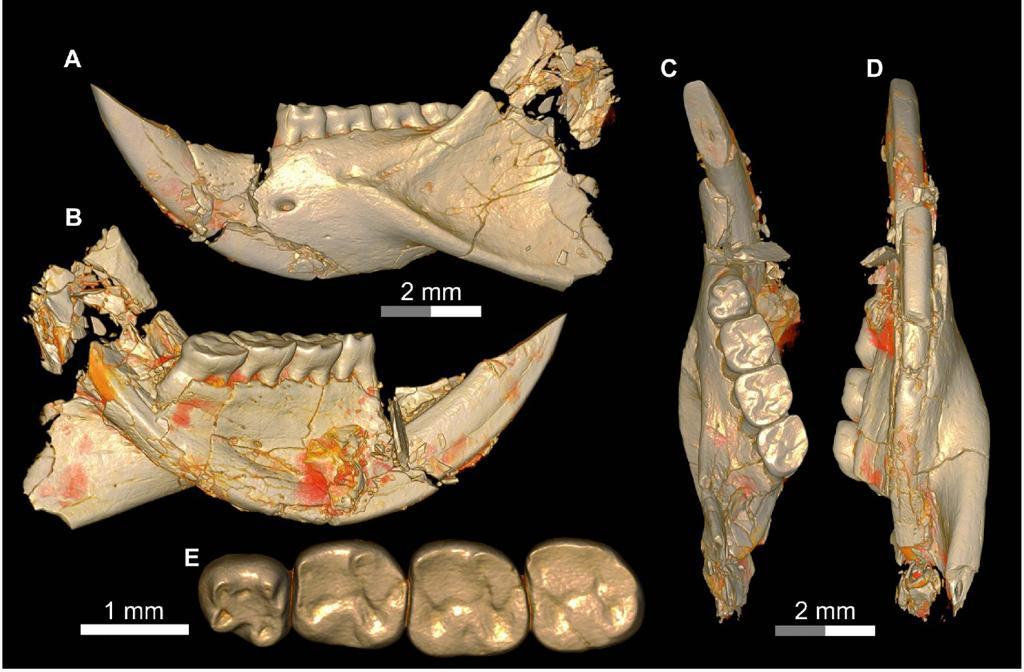
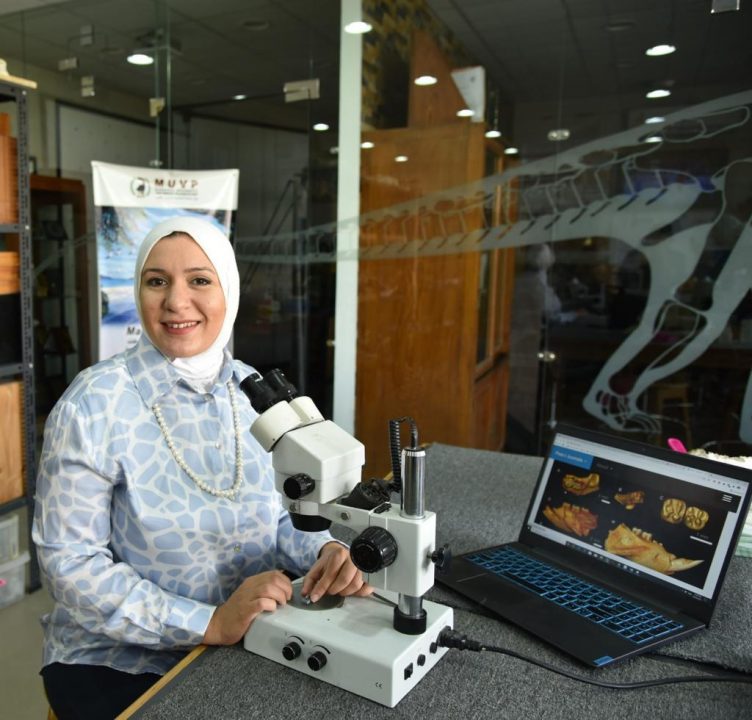
In a new study published in PeerJ, researcher Shorouk Al-Ashqar, a member of the “Sallam Lab” team specialised in vertebrate fossils at Mansoura University, studied two skulls and a large group of mandibles of fossils belong to the “Qatranimys Safroutus”.
“But it wasn’t easy; the samples were very small and very thin and adhered to the solid rocky clay, which made preparing the samples for study very difficult. We had to make accurate CT scans to be able to study them in a three-dimensional image,” said Hesham Sallam, the lead author of the study.
The newly discovered genus of rodents was called “Qatranimys Safroutus” which refers to the location of the discovery in the first word, whilst “safroutus” means too small in the Egyptian Arabic dialect.
The length of the molar of Qatranimys Safroutus was one millimetre, and its skull was about 1.5 centimetres long, and its weight did not exceed 45 grams.
Jebel Qatrani Formation is famous for its rich rodent assemblages from the Eocene–Oligocene deposits, which contributes to enhancing our understanding of the origin and paleobiogeography of what scientists call the “Hystricognathi” which are an infraorder of rodents, distinguished from other rodents by the bone structure of their skulls.
Al-Ashqar said that the samples used in the study showed clear differences in the morphological characteristics of the upper and lower teeth. And by comparing these samples with the discovered rodents from Afro-Arabia, it was clear that it belongs to a new genus that has never been discovered before.
“We did not only record a new genus and species, but we were able to record the first bones of the skull of a large group to which the discovery belongs, called the “Phiocricetomys”, she added.
Researchers from Mansoura University, the American University in Cairo, the Egyptian Environmental Affairs Agency, Duke University and the University of Salford participated in the study.
In an exclusive interview with Morocco World News, Soufiane Choubani, a leader in the Moroccan debate community on local and international stages, shares his story and vision for his robust debate community, the first of its kind in the country.
In 2014, Soufiane Choubani established the Morocco Debate Association (MDA) – a non-profit that is the first of its kind in the country.
Today, a little over a decade, the MDA continues to make groundbreaking history both at home and abroad – with one of its teams, the Atlas Lions of Debate, set to compete in the world’s biggest debating championship in Panama this year.
Soufiane Choubani : The driving force behind the Moroccan Debate Association
Soufiane, who founded both the MDA and the Moroccan National Debate Team (MNDT), is a former professor who holds a Master’s in Higher Education from Kean University in New Jersey. The driving force behind Morocco’s inaugural national debate team’s success, Soufiane is also the author of the book, “The Magic of Motivation”, and an international debate coach.
In an interview with Morocco World News (MWN), Soufiane talked about the origin story of the debate team.
“In 2013, we Moroccans were feeling very ambitious after and with the on-going Arab Spring. I wanted to help the situation but I was just an introverted English teacher who barely went out,” he said.
“At the same time, my teams were winning local championships in Morocco back-to-back. So I got the idea (that) if I could form a national debate team and have them compete in the world championship and do well, that would inspire more people in North Africa to learn debating and feel confident to compete with the best in the world. That’s how the MNDT was born.” Soufiane Choubani told MWN.
Soufiane’s personal journey with debate began at a young age.
“I was introduced to debating in my American high school and I saw first-hand how it benefited me in my academic and personal life. So, when I had the chance to spread this in Morocco, I didn’t miss the opportunity” Soufiane told MWN
Over the years, Soufiane has acquired a wealth of competitive debate experience that deeply informs the MDA’s debating strategies. His firsthand experience with international debating competitions has provided him with a unique perspective on what it takes to be outstanding in debate.
His approach extends beyond traditional debate training, embracing a holistic development of debaters that prepares them not only for competitions, but also for skilful engagement with complex global issues.
The legendary milestones of MDA
Under the dynamic leadership of Soufiane, the MDA has flourished, achieving success in both national and international arenas.
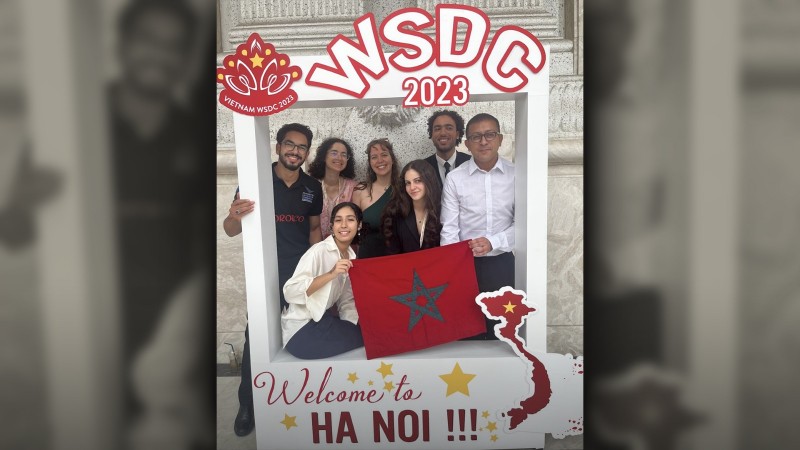
The Moroccan National Debate Team went on to become the first North African team in history to compete in the World Schools Debating Championship (WSDC); also known as the world’s oldest high school debate tournament with teams representing over 60 different countries from five different continents.
When asked by MWN to share the most remarkable team achievement, Soufiane replied that it was winning the High School Parliamentary Debate World Congress back-to-back in 2021 and 2022, as well as winning the Best English-as-a-foreign-language (EFL) University Debate in Africa award in 2023.
He also added to the list of his personal accomplishments teaching the quarterfinals of the 2024 Eurasian Schools Debating Championships.
More than debate teams: a community
Since becoming president, Soufiane has come up with many strategies and initiatives all aiming to achieve the success his association has reached so far.
Among the exciting learning experiences that the Moroccan Debate Association offers is a Moroccan youth debate camp. This summer program is open to both Moroccan and international students.
During this week-long program, participants are introduced to various public speaking formats, including debating, leadership and diplomacy, and Model United Nations (MUN) .
The camp provides lectures, exercises, workshops, and social activities and a tournament on the last day in order to put to use all the learned skills. The top three speakers are awarded prizes for their performance.
The success of MDA stems from the national coaching staff’s dedication and passion to actively contribute to the Moroccan debate community, enabling individuals to harness the power of words. As a result of dedicated volunteers, the MDA has provided public speaking and debating workshops to more than 800 Moroccans between 2014 and 2017.
Soufiane welcomes successful coaches from all over the world.
One such example is Ahmad Tousif Jami, an accomplished Bangladeshi champion debater in his own right, who is the head coach of the MDNT, set to participate in the World Universities Debating Championship (WUDC) in Panama at the end of 2024.
Soufiane told MWN that one of his favorite MDA success stories is Alia Kafil , Morocco’s team captain for the World Schools Debating Championship (WSDC) 2020 to 2022. She was the first-ever North African to rank among the top 100 debaters, from a pool of over 400 international participants, at a WSDC. The skilled orator is now a student at Columbia University in New York City and is planning to compete in the WUDC in Panama.
MDA’spursuit of open social dialogueon pressing world issues
Soufiane’s debate community’s vision reaches out to even more than teaching debate, but also has initiatives that help communities in need and bring social awareness to world issues.
This Past April,the MNDT participated in an international online charity debating competition, “Free Palestine Debate Open”, that was organized by University of Ljubljana Debate Society.
The registration fees were collected for the United Nations Relief and Works Agency (UNRWA), in an effort to increase awareness about the situation of Palestine. Additionally, the open-spaced forum at the end of the debate tournaments was meant to be a space of support for Palestinians and discussion around the challenges that this community faces.
In a note that stirred intensity, one of the debating motions in the competition was: “this house believes that the PA (Palestinian Authorities) should abolish itself, reinstating Israeli rule as the direct occupying power, until Palestinians achieve meaningful self-governance”.
Despite covering a sensitive topic involving international participants with diverse beliefs, debaters effectively succeeded in having a respectful –albeit heated – debate in which they demonstrated their skills including critical thinking and persuasive arguments.
Debaters on both sides of the motion admirably maintained personal neutrality in the face of such a challenging topic, mounting rational and robust arguments even while many hold strong personal views on the Israeli occupation.
Soufiane says that participating in such a debate promotes inclusivity, enabling debaters from diverse backgrounds to think critically about social issues, understand different points of view, and develop their ability to communicate and argue effectively in a respectful and rational way.
These skills, when shared and appreciated across the country, could help influence the development of a more thoughtful and conscientious society for all.
Due to the efforts from Soufiane, the MDA has been a beacon of personal growth for numerous Moroccans, providing an environment where all voices can be heard. Through its debates, workshops, and events, members have honed their critical thinking, public speaking, and argumentation skills.
When asked about his hopes for the future of Morocco Debating Association, Soufiane shared his vision to MWN. .
“My long-term goal for the association is to have the Moroccan National Debating Team (MNDT) officially funded by the Moroccan government so it becomes free for students to build a national institute of debating in English, Arabic, and Berber (Amazigh).”
Hear the stories of three Arab women engineers who are making an impact in STEM around the world.
Throughout April, the Society of Women Engineers (SWE) is honoring and recognizing the contributions of Arab women in engineering around the world. This effort aligns with Arab American Heritage Month, which is celebrated in April in the U.S.
Read on to meet three incredible Arab women who are living without limits, advancing SWE across the globe, inspiring others, and making a positive impact in their respective STEM fields.
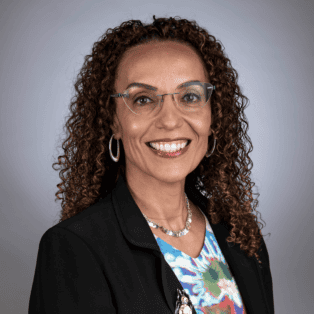
Meet Dr. Ghada Salama
Welcome, Dr. Salama! Can You Share a Bit About Your Professional Background?
My professional journey for the past 20 years has been deeply rooted in academia, where I have dedicated my career to teaching and the pursuit of knowledge. Upon receiving my Ph.D., I embraced the academic path and am now an instructional professor.
What Inspired You to Choose Chemical Engineering as Your Career Path?
I wish I had an inspiring story to share with you, but my choice was a mix of personal passion and cultural influence. Growing up in a society where engineering and medicine were revered as prestigious fields to pursue, which required excelling in high school (which I did), I was under pressure to conform. So that is the story for the engineering part.
My love for chemistry made me choose chemical engineering. So, you can say I merged my passion for chemistry with the practicality of engineering.
You Have Won Numerous Awards in Your Academic Career, Including “Best Chemical Engineering Professor of the Year!” What Do You Enjoy the Most About Working in Academia?
The students, of course! There is something magical about that “aha” moment when you see that sparkle in their eyes. The dynamic environment of having new students every semester and the constant flow of fresh ideas and perspectives keeps me on my toes and fuels me.
As the Leader of the Texas A&M Qatar University SWE Affiliate, You Have Been Influential in Supporting Other Women in STEM! Can You Tell Us More About the Initiatives, Successes, or Accomplishments of This Affiliate?
As the advisor for our student SWE organization, our key initiative has been promoting engineering and fostering a strong sense of community and mentorship among the female engineering students here.
Throughout the years, the students have organized networking events and panel discussions featuring successful women in STEM fields, as well as men who are our strong allies from government and industry.
Another highlight is their involvement in outreach efforts to inspire the next generation of women in STEM. Six years ago, we established a student mentorship program at our university. With women forming almost 50% of our student engineering student body, we felt there was a need to start this initiative.
This peer mentoring program matches incoming female freshmen with upperclass female students to support their transition to university life. This is an accomplishment that SWE is proud of.
What Has Your Experience Been in Your Journey as a Woman in Engineering?
It has been quite the ride! Being a woman in a male-dominated field, especially in my region and culture, sometimes feels like being a unicorn in a field of horses — rare but magical.
Sure, there have been challenges along the way, but I have learned to embrace them as opportunities to defy stereotypes and prove that I can do these things and excel in them, too. With the support of my parents and colleagues, both male and female, it has been a good journey so far.
What Advice Do You Give to Women Who Are Thinking About Pursuing Engineering as a Career Path?
Believe in yourself! If engineering is what you want to do, then do it. Along the way, make sure you surround yourself with a support system — whether that is family, colleagues, or mentors.
Is There Anything Else You Would Like to Share With the SWE Community?
Let’s keep pushing boundaries, breaking stereotypes, and lifting each other up along the way. Together, we can build a future where every woman feels empowered to pursue her dreams.
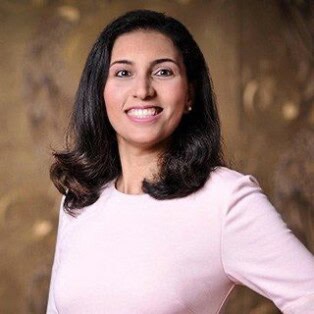
Meet Dr. Marwa El Hefnawy
Welcome, Dr. El Hefnawy! Can You Share a Bit About Your Professional Background?
I am an electrical and communications engineering leader with expertise in 5G and AI. I received my bachelor’s degree in electrical and communications engineering, with highest honor, from the German University in Cairo. I completed my bachelor project at Stuttgart University in Germany, and then I pursued my master’s studies at Ulm University and received my Ph.D. degree from the Technical University of Munich.
I have 10+ years of work experience in the telecom industry, in areas such as systems engineering and architecture, research and development, strategy planning, project management, and wireless ecosystems.
I had worked at several giant tech companies, including Apple, Intel, NTT Docomo Euro Labs, and others, where my focus was on 5G topics and beyond.
I also joined academia for a short time as an assistant professor teaching engineering students how to transform ideas into innovation. Recently, I have been interested in consultancy where I am exposed to a variety of AI topics.
I am a global ambassador for SWE, a member of the WE Local Europe Advisory Board, and also a mentor at the Technical University of Munich for master’s and Ph.D. students.
What Inspired You to Choose Electrical and Communications Engineering as Your Career Path?
It started when I was in school. I loved mathematics and its various applications. Later on, I always had interesting questions in my mind — How do electrical signals flow in the air or in the wires? How are they being sent and received? What is behind the telephone?
Then, after mobile phones and wireless technology were highly evolved, I became even more interested in digging deeper into this technology. I didn’t want only to study this field, but to become an expert and have great achievements that upcoming generations will benefit from.
What Do You Enjoy the Most About Working in the Telecom Industry?
I really enjoy seeing a new product in the wireless domain come to life and seeing people start using it. Nowadays, it is not only about connecting people with a higher quality of connectivity, but also making people’s lives better and easier.
You cannot imagine how many components have been developed in these products from start to end and the tremendous amount of effort from the many engineers it takes to make this happen.
It is a challenging field, and whenever there is a new generation coming such as 5G or 6G, the challenges even get bigger. An engineer working in this industry is never bored, as you are solving something new all the time.
You Are a Longtime Global Ambassador for SWE, and You’re Also on the We Local Europe Advisory Board! Can You Share Why SWE’s Mission and Initiatives Are So Important to You?
Women in the engineering field face many challenges — whether they are juniors, seniors, in higher leadership roles, technical, non-technical, and so on. SWE’s mission is to empower women in this field and support them with the tools to help face these challenges.
In every SWE initiative, I learn something new which is added to my skill set. I believe that we live and we learn; at the same time, I can see that someone else in SWE’s community is learning something new from me. It is like a circle of help and support which never ends. Everyone in SWE’s big community finds inspiration and motivation whenever it is needed.
What Has Your Experience Been in Your Journey as a Woman in Engineering?
My journey has been full of ups and downs. It has never been a steady state. Whenever there is a down time, I don’t take it negatively. I take it as either a learning phase or a phase of strengthening myself for what is coming next.
Challenges happen all the time for women leaders in the engineering field — it is really a matter of how to face them. If I had one piece of advice to give, I would say it is great to have a good mentor supporting you in your career path.
What Advice Do You Give to Women Who Are Thinking About Pursuing Engineering as a Career Path?
Don’t be afraid of engineering! It can be a hard field, but if you like logical and innovative thinking and have good problem-solving skills, then you will enjoy your path. It is not life-ruining, and it will never be — it is just a matter of how to create a work-life balance that suits you.
It is always good to ask yourself, “What do you want to achieve, and what is your goal?” Your answer will guide you and boost your energy to proceed.
Is There Anything Else You Would Like to Share With the SWE Community?
As a woman, I don’t feel that I am alone in the engineering field as long as I am part of SWE. Also, I would like to thank the many SWE leaders who I have collaborated with on several events, initiatives, and SWE activities over the past years. Networking at SWE is a great opportunity to get to know talented and inspiring women leaders in engineering.
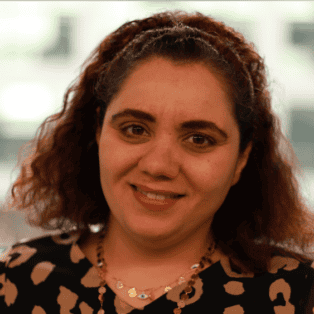
Meet Sara Ibrahim
Welcome, Sara! Can You Share a Bit About Your Professional Background?
I am a Middle Eastern IT professional with a passion for technology. I was born and raised in Egypt and am a mother of two amazing kids.
I achieved a bachelor’s degree in computer science with a main specialization in mathematics and computer algorithms in 2006. Shortly after, I accomplished my master’s degree in computer algorithms. Besides my college studies, I was enrolled in a one-year scholarship for system administration and integration.
I started my IT professional career in 2008 as a software developer, and shortly after that, I started working on system administration and application support. In 2014, I moved to Czechia to enlighten my career with international experience. Currently, I help clients design, architect, and migrate their IT systems.
What Has Your Experience Been in Your Journey as a Woman in Engineering?
My journey as a woman in IT has been both challenging and rewarding. The challenging side was the fact that I exerted double the efforts to achieve my current state — from early childhood onwards — as learning materials were not affordable in my society. Then, during college, engineering open seats were limited for girls.
On the other hand, the rewarding part happened when I accomplished a mid-senior career milestone in IT and passed the interview to the architect team. I became the first woman IT infrastructure architect in IBM Client Innovation Centre Czech Republic in 2018.
What Do You Enjoy the Most About Working in the Cloud and Infrastructure Space?
One of the most enjoyable aspects of being an IT architect, particularly as a woman, is breaking stereotypes and paving the way for more diversity in this industry. It’s empowering to showcase my skills, background, and expertise in a field that has traditionally been male-dominated.
As a woman in IT architecture, I bring a unique perspective and creativity for our clients, which can lead to innovative problem-solving and solutions. I receive plenty of positive feedback from my stakeholders and counterparts for the work I am delivering, as well as my communication skills.
What Advice Do You Give to Women Who Are Thinking About Pursuing Engineering as a Career Path?
Know your strength and believe in your abilities. For me, I was passionate about learning mathematics, and it opened plenty of doors towards my dream career.
Second, being a fast learner with passion always helped me, and I see that as very essential to succeed in a STEM career. For example, I taught myself Python during college in Egypt (in 2003 when the internet was very basic), simply out of a passion to learn how to code.
Finally, find mentors and supportive communities who will make you feel like you are not alone and who will give you tips and tricks to tackle your obstacles.
Is There Anything Else You Would Like to Share With the SWE community?
I appreciate SWE as a community that helps women in STEM pursue their careers by providing all means of online education. Thank you to SWE for bringing together a community of women role models for early career, mid-career, and late-career professionals!
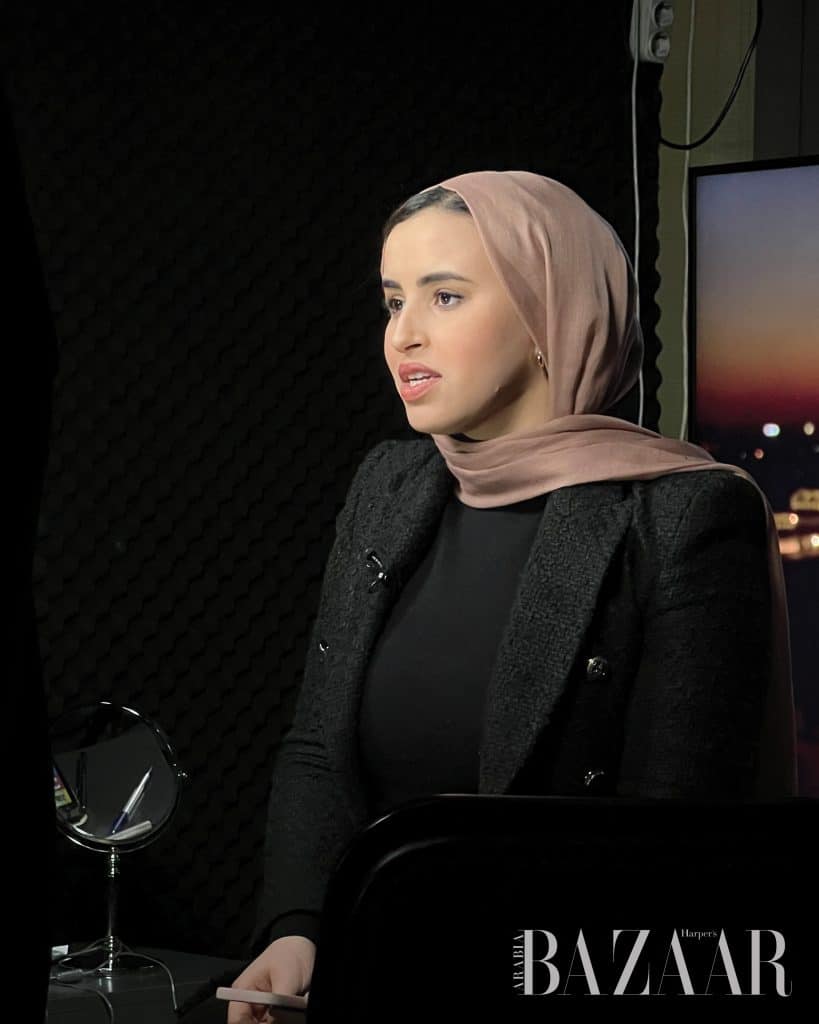
The award-winning international correspondent talks frontline reporting, wearing the hijab on television, and how her personal connection to the Middle East makes her a better storyteller
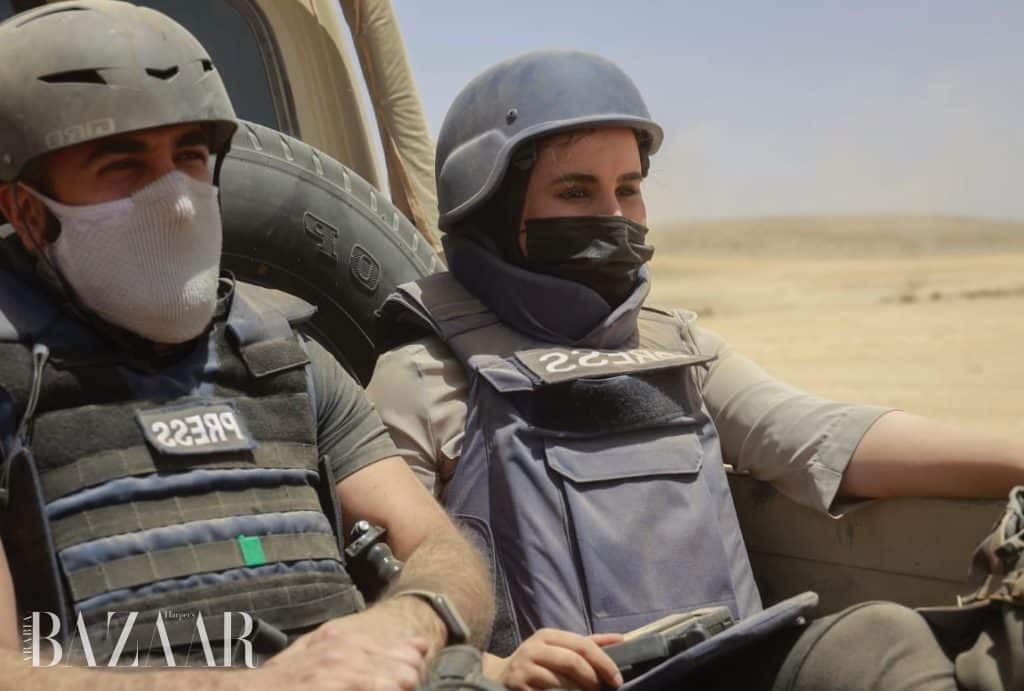
In Autumn 2019, when Turkey launched its incursion into northern Syria, 23-year-old Nada Bashir packed her camera and flew to northern Iraq to cover the story. At the time she was a freelance producer for CNN in London “pretty fed up of constantly being on the Downing Street shift and covering Brexit. I knew I wanted to be in the Middle East but wasn’t perhaps experienced enough,” she says. “So I decided to just go by myself… I felt very passionate about what was happening and I knew I wanted to be a part of it.”
It was a bold decision – both her first solo story and first solo trip to a hostile environment – but the risk paid off. Just five years later, she is an award-winning international correspondent who has reported from the frontlines of the conflict in Yemen and the devastating 2023 earthquake in Turkey.
Now 28, Nada is speaking from her home in West London. She flew in yesterday from Cyprus where she was covering aid ships heading to Gaza, and she will likely be dispatched again imminently although she doesn’t know when or where. She’ll pack a book and headphones but otherwise, “it’s all tech gear, medical kit and body armour”.
Unpredictable as this career may be, it is one that she has dreamt of since she was a teenager, watching the Arab Spring unfold: “We were all glued to the TV, seeing what was happening across the Middle East and back home. That was the moment for me when I was like, ‘actually this is what I want to do’.”
Back home is Libya from where Nada’s family originate, although her parents – her father was an aircraft engineer and her mother is a nursery teacher – left before she was born. “My dad was a pro-democracy activist,” she says. “He spent more than 30 years essentially in exile…It was something that we were all aware of, something that we talked about a lot.” It meant that growing up in Brighton, on England’s south coast, “the news was constantly on” but Nada never considered that she might one day be on screen herself. The middle of five siblings, she was “very shy” at school: “I vividly remember being forced to do a presentation, feeling like I was about to faint and going red in the face. I never ever would have pictured myself doing this.”
But after becoming involved in student TV while studying Politics and East European Studies at University College London, securing the internship at CNN and impressing her editors with her story from northern Iraq, an on camera career beckoned. “I spent so much of my childhood consuming news about what was happening at home and a lot of it coming from Western networks. There were a lot of things where you watched it and felt like the story of your people, your region, wasn’t being told fairly, properly or accurately,” she says. “Still there are times when I watch coverage and it’s frustrating because there’s a real lack of understanding around some of the cultural dynamics.
Being Arab isn’t essential to reporting on the Middle East, she says, but it does break down barriers: “Just being able to speak to people in their language, understanding their culture… Having that connection has made me a better storyteller.” The stories she tells are often difficult ones and they stay with her – the elderly Syrian refugee who lost his family in the Turkish earthquake, the 11-year-old Moroccan girl who guided her around a makeshift burial ground after the earthquake there last September, the Palestinian teenager detained without charge in the West Bank. Reporting on the war in Gaza has been particularly poignant: “Talking about the Palestinian cause is something that no Arab person hasn’t done. That is part of our cultural identity in a sense. That history is interlinked with all of the Middle East.”
Within the first week of war breaking out, Nada was in Jordan and Oman covering anti-war protests. Since then she has reported from Lebanon and Egypt but it is her time in the occupied West Bank – her first visit there – that has been most affecting. “That was a part of the story that we felt was being completely overlooked,” she says. “It’s not a new story. Palestinians in the West Bank have been marginalised, treated as second class citizens for decades”. She describes this reporting as “the most challenging” of her career to date, finding her objectivity over such a “polarising” story called into question. “There are so many assumptions about where your personal views might lie because of your cultural or religious background,” she says. “I am a visibly Muslim woman. My name is Arab. It’s very clear where I’m from…But with a story like this, it’s very difficult not to feel like your journalism is being undermined by assumptions of where you might stand.”
Many of those assumptions come from the fact that Nada wears the hijab. When she first started at CNN, she was “apprehensive at first – working for an American network and what that might mean in terms of how I fitted into that. Thankfully it’s never been an issue.” Being on air though, “has been slightly different”. Most difficult was reporting from London on the anti-regime protests in Iran. “For me, it’s a personal choice. You should have the freedom to choose whether you wear it…Covering the story was very important to me but I had a lot of backlash because a lot of people couldn’t understand how I could cover that, as somebody who chooses to wear the hijab, given that many women there were risking their lives and being persecuted for choosing not to.” On the flip side, she has also received “so many” messages from young hijab-wearing women who also aspire to be journalists: “I know that feeling because I felt like whenever I saw somebody wearing a hijab on TV.”
Today she feels like that when she sees the wider Arab diaspora experience represented, like in American comedy-drama, Ramy: “You feel the connection to it… It’s a blend of cultures and that is something that we identify with.” And when so much of her own work focuses on amplifying the voices of those suffering great hardship, she is grateful that there is increasingly space to celebrate the Arab world. “It’s sad because I think growing up, the only thing you’d really hear about the Middle East was war or conflict or political issues,” she says. “And there’s so much more to the region. There’s so much history, so much culture, so many people doing incredible things in different industries. It’s nice to see those aspects being showcased now, in magazines, in TV, in film, in music. To see that actually there’s a different side to the region, which has always been there. It just hasn’t really been given the platform.”
What Nada truly hopes is that when things improve in the Middle East, she will be there to report on it: “I can only hope that at some point there will be a positive change and I will get to cover that as well.” For now though, she has her bags packed, ready to head wherever the story takes her next: “It’s extraordinary; it’s a privilege and I wouldn’t change it for the world”.
Images Supplied / From Harper’s Bazaar Arabia’s May 2024 Issue
The former Algerian middle-distance runner won her country’s first-ever Olympic gold medal. She navigated a deadly and divisive political crisis within her nation to emerge as “a symbol of victory and defiance”.
Hassiba Boulmerka and her family received death threats, and she was even denounced as anti-Islam at her local mosque.
However, in her home country of Algeria, there was no safe space for her to run.
The world 1500m world champion feared that radical Islamist militants would kill her, and the surrounding atmosphere was equally terrifying.
But despite the risks, the ‘Constantine Gazelle’ continued to train, running even faster and defying the threats to her life.
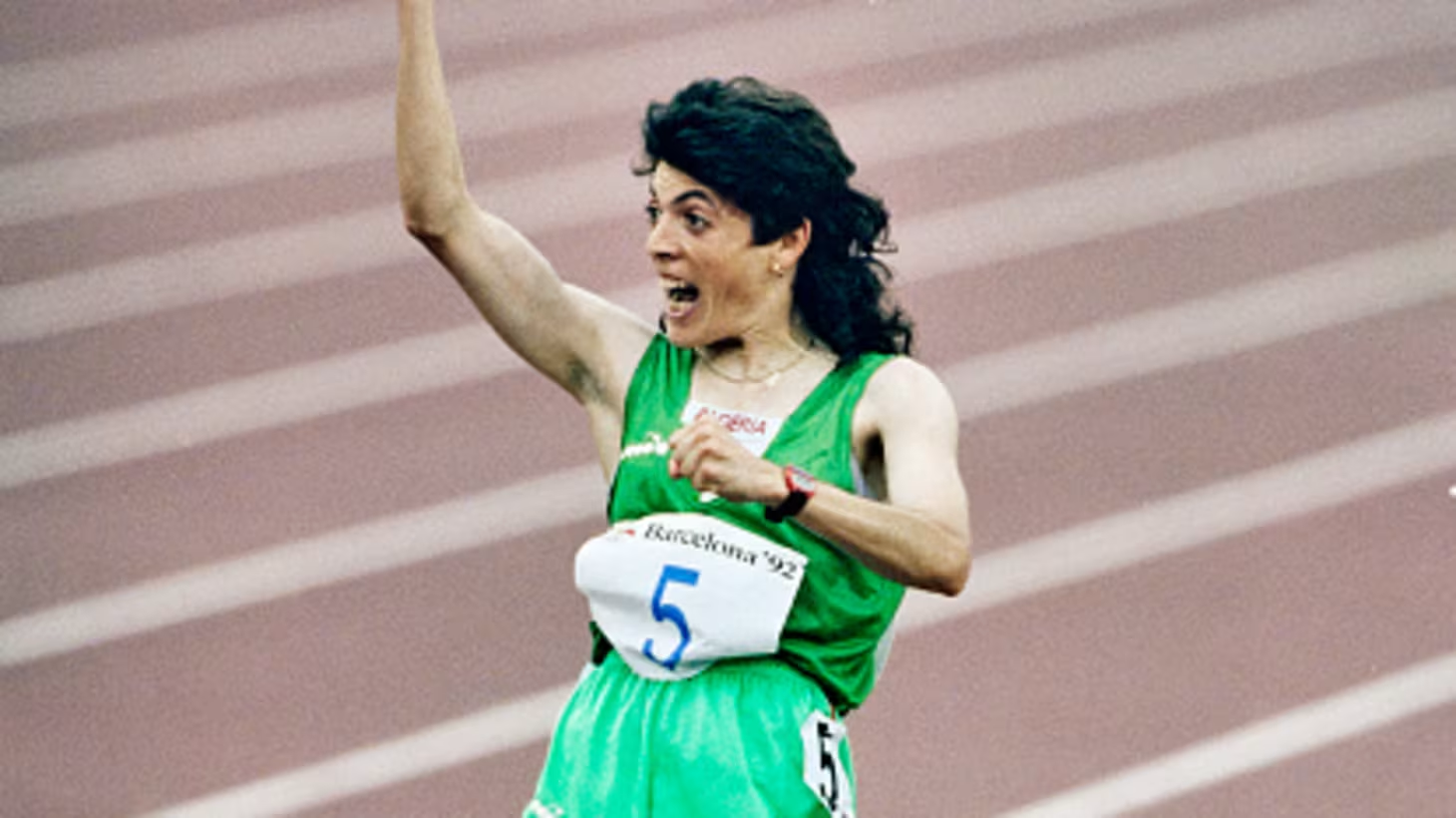
A year after clinching the first of her two world titles, she made history at the Barcelona Olympics in 1992, winning the first Olympic gold for Algeria .
Hassiba Boulmerka: Africa’s first world track champion
Running had been Boulmerka’s way of life since the age of 10.
Growing up in Constantine, in the east of Algeria, she gained recognition for her speed and stamina, which led her to claim four African gold medals in the 800m and 1500m.
Two years after her double triumph at the continental championships, she stunned the field, sprinting to the lead in the homestretch of the 1500m race to clinch the gold.
It was a glorious moment for Boulmerka, as she became the first African woman to earn a World Championships title.
“I screamed for joy and for shock, and for much more,” she said. “I was screaming for Algeria’s pride and Algeria’s history, and still more.”
Her triumph was significant, symbolising progress for Algerian sport and Arab women.
Despite the heroic reception that awaited her and her teammates upon their return from the 1991 World Championships, her running didn’t quite resonate with everyone.
Her sporting endeavours continued to be frowned upon.
Training and competing meant exposing her arms and legs, which was perceived as not adhering to Islam’s code of modesty.
Hassiba Boulmerka was labelled ‘anti-Muslim’ for choosing to run
Boulmerka pressed ahead, enduring the criticism.
She faced hostility, being spat on and having to dodge stones thrown at her while training on Algerian roads.
In a matter of months, her hopes and dreams of participating in the Olympics started to fade as her country was plunged into civil unrest, resulting in over 150,000 lives lost.
Training became not only impossible but also dangerous during the crisis, with Islamist militants seeking to impose oppressive rule.
She was forced to relocate to Berlin to train ahead of the 1992 Olympic Games.
“I remember it well,” she recalled in an interview with the BBC. “It was Friday prayers at our local mosque, and the imam said that I was not a Muslim, because I had run in shorts, shown my arms and my legs. He said I was anti-Muslim.”
When she arrived in Barcelona just before her event, Boulmerka was accompanied by armed escorts into the stadium, highlighting the unprecedented security measures.
“There were police everywhere. In the stadium, in the changing rooms – they even came with me to the bathroom!” she said.
Despite these challenges, the ‘Constantine Gazelle’, as she was affectionately dubbed for her agile and graceful running style, defied the odds and her performance at the Estádio Olímpico was remarkable.
Hassiba Boulmerka: A heroine for women in sport
The Unified Team’s Lyudmila Rogacheva set the pace for most of the 1500m race before the Algerian powered past her with half a lap to go, securing her greatest career victory. Her time of three minutes, 55.30 seconds earned her the Olympic gold medal, marking the second time second time an Arab woman had stood atop the Games podium (after Morocco’s Nawal El-Moutawakel at Los Angeles 1984).
It was a beautiful ending after months of navigating political challenges – an example of ‘courage in defying taboos and pursuing passion’.
“As I crossed the line, I thrust a fist into the air. It was a symbol of victory, of defiance. It was to say: ‘I did it! I won! And now, if you kill me, it’ll be too late. I’ve made history!'”
As Boulmerka stood on the podium, feeling the weight of the medal around her neck, she was overwhelmed by emotions.
“I tried to hold myself together, to be brave…but the tears just started to fall. They were tears of sacrifice, for all the people I loved that I had abandoned for this race.
“It was a triumph for women all over the world to stand up to their enemies. That’s what made me really proud.”
There was no fanfare when the two-time Olympian returned home to reunite with her family.
Algeria was still far away from the end of its dark period, prompting he exile in Cuba before she returned to Algeria after recapturing the gold medal at the 1995 World Championships.
Her medals stand as a testament to her courage, and Hassiba Boulmerka continues to serve as a beacon of inspiration for women in sport.