Arabs & Arabian Records Aggregator. Chronicler. Milestones of the 25 Countries of the Arabic Speaking World (official / co-official). AGCC. MENA. Global. Ist's to Top 10's. Records. Read & Enjoy./ www.arabianrecords.org
Elizabeth Kassis has turned her Palestinian father’s house into a hotel, nearly 80 years after he emigrated
‘I want everyone in the diaspora to work for Palestine,’ Kassis tells Arab News
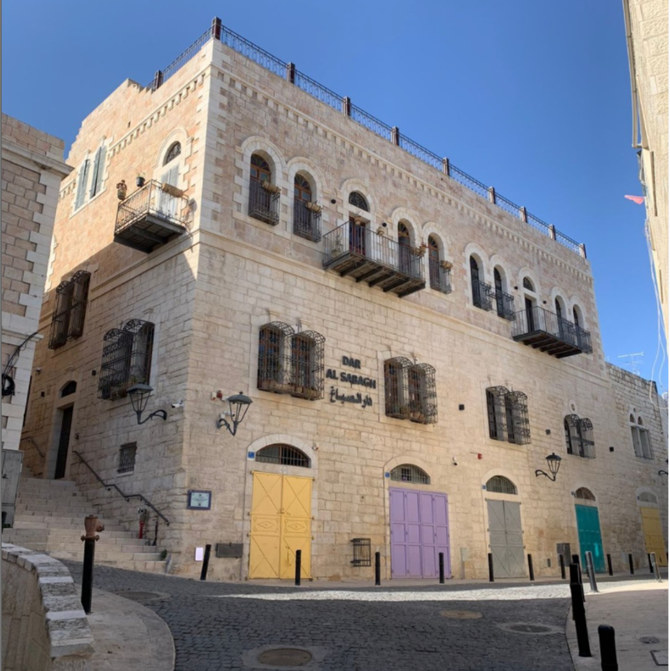
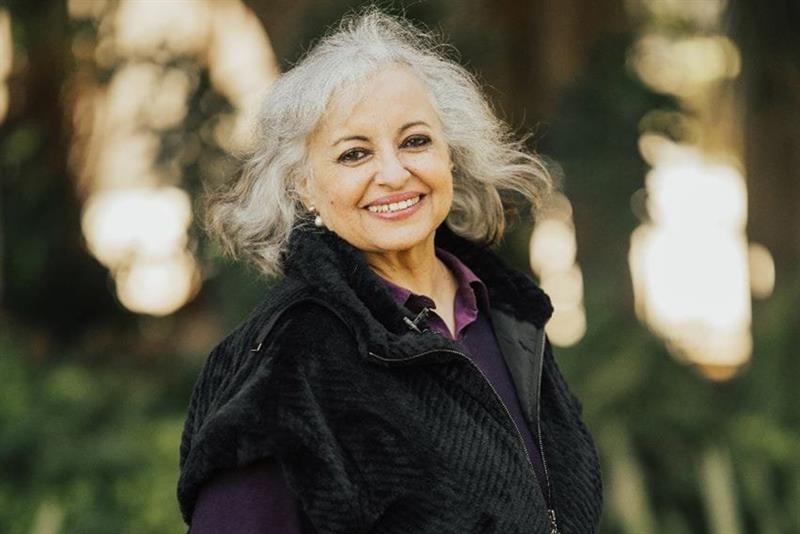
Chilean businesswoman Elizabeth Kassis has turned her ancestral home in Bethlehem’s Old City into a heritage hotel nearly 80 years after her father emigrated to Chile.
The Kassis Kassa Hotel is the Old City’s first heritage hotel, reflecting both the city’s traditional architecture and its long-standing association with the South American country.
The Palestinian community in Chile is reportedly the oldest outside the Arab world, with around half a million Palestinians moving there since the mid-19th century.
The hotel was officially opened on June 1, and the first group reservation was received on June 8.
“It was an exciting and challenging project that took years to implement,” Kassis, who was born in Chile, told Arab News. “It is rich in cultural history and has been carefully restored to preserve its original beauty and traditional Palestinian architecture.”
The project “will contribute to raising the level of tourism services in Palestine, as it is being implemented in cooperation with Bethlehem Municipality,” Kassis said.
We wanted the guests to get the full experience of what it means to live in a Palestinian house with real neighbors.
Elizabeth Kassis
“I think the experience of being a guest in a Palestinian house is a unique one. We wanted the guests to get the full experience of what it means to live in a Palestinian house with real neighbors.”
Kassis’ father visited Palestine in 1999, looking for ways to boost Bethlehem’s economy. Along with a group of Palestinian businessmen, he implemented a number of small projects at the turn of the century. He returned in 2015 and purchased his old family home. The restoration project began in 2016, led by his daughter.
Kassis said that setting up the hotel has been one of the most rewarding projects she has ever been involved in. In Chile, she managed her family’s farm and bred Arabian and Chilean horses. She has also worked as a TV presenter and is a talented visual artist who has participated in numerous exhibitions, as well as the co-founder of a band called Three Diaspora, which, she explained, “reshapes old songs that arrived in Chile with the first Palestinian immigrants.” The band has released several albums recorded with musicians from the Edward Said National Conservatory of Music.
Kassis has traveled extensively, but “found herself” in Palestine. “I want everyone in the diaspora to work for Palestine. I want people to feel, smell, eat, and live Palestine. This is my duty toward Palestine,” she said.
Engineer Raed Othman, who worked with Kassis on the project, told Arab News that Kassis loves Bethlehem and Palestinian heritage in general, and has devoted herself to promoting it to the world.
Bethlehem’s mayor, Hanna Hanania, told Arab News that, through her hotel and other efforts, Kassis is “building bridges” between Palestinian expats and their national heritage, especially the tens of thousands of expatriates from Bethlehem in South America.
He added that, as part of its attempts to attract investors to the city, the municipality plans to develop Al-Najma Street, where the hotel is located.
“The fact that Kassis Hotel is on this street will contribute to enhancing our vision regarding activating the location,” Hanania said.
Fadi Qattan, co-founder of the Kassis project, said the hotel promotes Palestinian heritage and culture through its food and its “beautiful location,” adding that he hoped journalists would visit the hotel and write about Palestinian food to “promote an accurate picture of the life and heritage of Palestinians.”
He continued: “The hotel is the first project wholly owned by an expatriate Palestinian family, which will encourage expatriate Palestinian families to return and invest in Bethlehem.”
source/content: arabnews.com (headline edited)
____________
Kassis said that setting up the hotel has been one of the most rewarding projects she has ever been involved in. (Supplied)
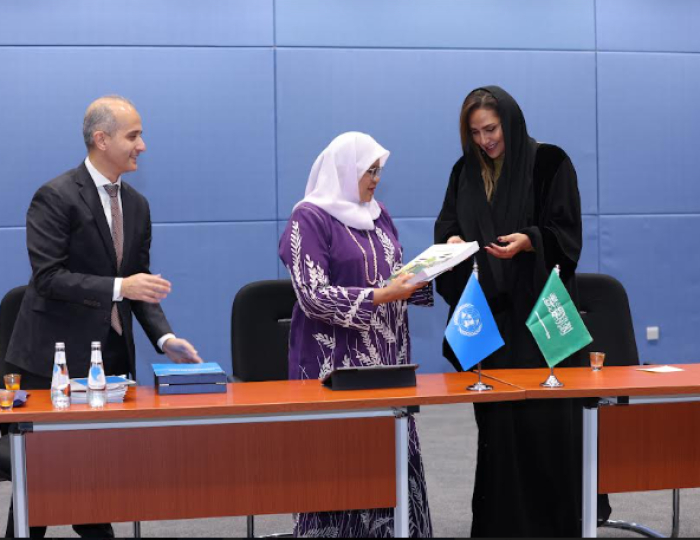
Her Royal Highness (HRH), Princess Lamia Bint Majed Al Saud, the Secretary General of Alwaleed Philanthropies, was reappointed as the UN-Habitat Goodwill Ambassador for the Arab region for a second term during a meeting held at the UN-Habitat premises in Riyadh.
As the first ever UN-Habitat Goodwill Ambassador for the Arab region appointed in 2020, HRH shed the light on key urban issues through her engagement with UN-Habitat activities and events, including the tenth session of the World Urban Forum 2020 and World Habitat Day Global Observance 2020.
HRH further advocated for topics, including Cities free from Violence against Women and Girls and COIVID-19 response in urban areas, as well as supported resource mobilization for a number of projects, targeting housing for the most vulnerable groups, COVID-19 response and climate action, spanning Iraq, Palestine, Sudan, Yemen, and Tunisia.
“I am greatly honoured to have been appointed for the second time as the UN-Habitat Regional Goodwill Ambassador for the Arab world. Our partnership with UN-Habitat will support our efforts to address issues around urbanization and its implications on societies, economies and environments. We promise to continue building bridges for a more compassionate, tolerant and accepting future along with our key partners.”
HRH signed her appointment letter in the presence of Maimunah Mohd Sharif, UN-Habitat Executive Director, Erfan Ali, UN-Habitat Regional Representative for the Arab States and Ayman El-Hefnawi, UN-Habitat Head of Office in Saudi Arabia.
“In the past three years during UN-Habitat’s cooperation with HRH Princess Lamia bint Majid Al Saud as UN-Habitat’s regional Goodwill Ambassador, HRH has shown the utmost commitment to the advocacy for the UN-Habitat mandate to realise more sustainable, resilient and inclusive cities,” Sharif commented.
UN-Habitat is keen on continuing the cooperation with HRH for the years 2022, 2023 and beyond in all relevant areas, including climate action, urban crisis response, housing and advocating the realization of better cities for all.
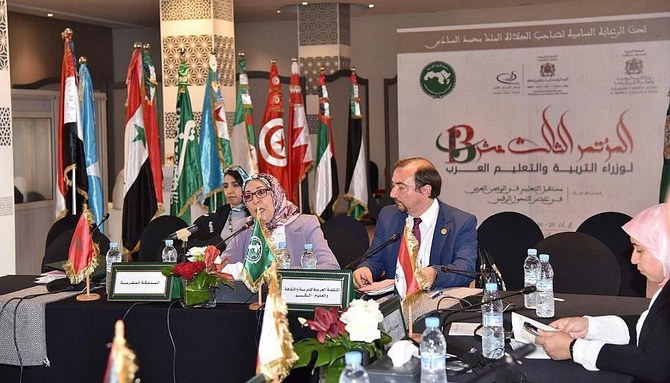
Mawhiba representatives told the 13th Conference of Arab Ministers of Education in Rabat that its ‘Gifted Arabs’ initiative had identified and was supporting people in 16 Arab countries
Secretary-General Dr. Amal bint Abdullah Al-Hazaa said that the program allows Saudi leadership to share their expertise and discover, nurture, and empower talent around the Arab world
More than 600 ‘gifted’ students have been granted support to realize their academic talents under an initiative launched by a Saudi foundation, an education conference has been told.
Leaders from Mawhiba, or the King Abdulaziz and his Companions Foundation for Giftedness and Creativity, Mawhiba, told the 13th Conference of Arab Ministers of Education in Rabat, Morocco, that its ‘Gifted Arabs’ initiative had identified and was supporting people in 16 Arab countries.
Secretary-General Dr. Amal bint Abdullah Al-Hazaa said that the program allows Saudi leadership to share their expertise and discover, nurture, and empower talent around the Arab world.
Dr. Khaled Al-Sharif, director general of Mawhiba’s Center of Excellence, said that 606 students were identified in the first and second rounds of the ‘Gifted Arabs’ initiative’s recruitment.
The initiative has provided the talented students with qualitative enrichment and academic programs to develop their knowledge and capabilities, he added.
Mawhiba said that its efforts were part of its vision to empower talent and creativity to further prosperity.
The conference, “Future of Education in the Arab World in the Digital Transformation Era,” was held on May 29 and 30.
source/contents: arabnews.com (headline edited)
___________
Mawhiba has grant aided 606 students under its ‘Gifted Arabs’ initiative. (SPA)
During her lifetime, Fatima was called the “mother of boys”. According to historian Mohammed Yasser Hilali, “this nickname probably stems from her charity and the fact she took students under her wing”.
When thinking of the oldest universities in the world, probably the first ones that come to most people’s minds are Oxford and Bologna, but according to UNESCO and the Guinness World Records, Al-Qarawiyyin University (also written as Al-Karaouine) is the “oldest existing, and continually operating educational institution in the world.”
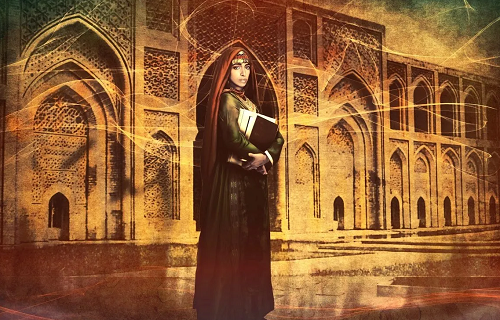
Founded in 859 A.D. by Tunisian-born Fatima al-Fihri in Morocco’s Fez, the university is not only the oldest higher education institution on Earth but also the first to be founded by a Muslim woman. Fatima used her inheritance from her merchant father’s wealth to found the university which started as an associated school – known as a madrasa – and a mosque that eventually grew into a place of higher education. It also introduced the system of awarding degrees according to different levels of study in a range of fields, such as religious studies, grammar and rhetoric. Though the university first focused on religious instruction, its fields of study quickly expanded to include logic, medicine, mathematics and astronomy, among many others.
The University of Al Quaraouiyine became a state university in 1963 and now awards degrees in Islamic, religious and legal sciences with an emphasis on classical Arabic grammar and linguistics and law.
Interestingly, teaching is still delivered in a very traditional manner, whereby students are seated in a semi-circle around a Sheikh (Islamic scholar), who prompts them to read sections of particular texts, asks them questions on aspects of grammar, law, or interpretation, and explains difficult points. Education at the University of al-Qarawiyyin concentrates on the Islamic religious and legal sciences with a heavy emphasis on, and particular strengths in, Classical Arabic grammar/linguistics and Maliki Sharia, though lessons on non-Islamic subjects are also offered to students. Teaching is still delivered in the traditional methods. The university is attended by students from all over Morocco and Muslim West Africa, with some also coming from further abroad. Women were first admitted to the institution in the 1940s
Fatima al-Fihri was born in 800 A.D. She was the daughter of Mohammed Bnou Abdullah al-Fihri – a rich merchant who settled in Fez with his family during the reign of Idris II.
Fatima’s family was part of a community called the “Qarawiyyin” (the ones from Qayrawan) whose two thousand families migrated from Qayrawan in Tunisia, to Fez in Morocco which was then under the rule of Idris II, a respected and devout ruler.
After the community was banned by the local ruler. The caravan included Fatima’s father Muhammad bin Abdullah Al-Fihri, and sister Mariam. Fatima was well versed in classical Islamic learning such as fiqh (jurisprudence) and hadith (Islamic traditions based on Prophet’s life). She inherited a large fortune from her merchant father which she used to build the university. She personally supervised the entire gigantic enterprise, from putting up the foundation to the functionalizing of these institutions. When she embarked on her mission, she had lost her father, husband, and brother – all primary sources of support and protection for a woman. Any other woman would have retreated to the backwaters of domestic life. But Fatima appears to have been an extraordinarily inspired and determined woman with steely grooves. All her great achievements came during periods of loneliness and in circumstances when women normally shun the world and seek the company of the home.
During her lifetime, Fatima was called the “mother of boys”. According to historian Mohammed Yasser Hilali, “this nickname probably stems from her charity and the fact she took students under her wing.” Fatima al-Fihri herself is considered a saint and she is much respected among the believers especially in Fez. In 2017, a prize was created in Tunisia in her honor. It rewards initiatives which encourage access to training and professional responsibilities for women. Furthermore, an academic program and a scholarship given to students from Europe and North Africa pay tribute to Fatima al-Fihri.
The University of Al-Qarawiyyin (also Al-Karaouine), which was then just called a madrasa (an institute of religious learning), was 30 m long, with a courtyard, a large library, and several schoolrooms. Although initially only the Qur’an and related religious lessons were taught, many other courses of study, like mathematics, medicine, Arabic grammar, history, geography, astronomy, chemistry, music and logic were soon introduced. Fatima studied there herself, along with her students, and awarded them degrees once they completed the courses: a degree that was chiseled onto a wooden board, which is now displayed in the university’s library. She also conducted debates and symposiums periodically for her students, producing politically-aware individuals.
With these innovative ideas, Fatima al-Fihri had not merely founded the first university but had introduced the concept of awarding degrees that is now an essential part of modern higher education.
In fact, the university produced many celebrated intellectuals and historians who are still known to this day: the Islamic philosopher Ibn Rushd, Andalusi diplomat and geographer, Hassan al-Wazzan and historian and thinker Ibn Khaldun, the famous Jewish philosopher, Moses Ben Maimon and Aka Maimonides.
The Christian scholar, Gerbert of Aurillac, who later became Pope Sylvester II, is believed to have visited the university several times. His visits helped him introduce Arabic numerals and the concept of zero to Europe. The University of Al Qarawiyyin is still considered a leading religious and education institution in the Muslim world. The university has moved away to another part of Fez, but the mosque and the library remain at the ancient complex. The University of Al-Qarawiyyin is the oldest existing, continually operating and the first degree awarding educational institution in the world according to UNESCO and Guinness World Records and is sometimes referred to as the oldest university.
(M Ahmad is a regular writer for this newspaper and can be reached at specialachivers78@gmail.com)
Well-known Egyptian soprano Neveen Allouba will be awarded France’s Ordre des Arts et des Lettres in the grade of Chevalier (Knight) by France’s ambassador to Cairo next week.
Allouba’s award for exceptional achievements in the Egyptian music scene follows decades of work in the many aspects of the country’s cultural scene.
Born in 1955, she is among the best known personalities of the Egyptian music scene, with substantial influence outside the country.
Her career includes working with the Cairo Opera Company, where she has performed in countless operas. She has taught numerous young singers and both founded and directed many successful creative endeavours of the Fabrica musical theatre company.
As a young girl, Allouba had dreams of becoming an actress, but was not supported by her family. Instead, she turned to playing piano and singing, graduating from the Cairo Conservatory in 1978.
She was granted scholarships from the Deutscher Akademischer Austauschdienst (West German Cultural Exchange) and the Friedrich-Naumann Foundation to study opera performance and vocal pedagogy at the Hannover Hochschule fur Music and Theatre where she deepened her singing techniques and eventually obtained a doctorate in 1988.
During her decade-long stay in Germany, Allouba performed as soloist at the Detmold Opera. She also performed in other European operas and theatres and across the Arab world at that time. In 1985, she won the first prize in the female voice category of the competition for young opera singers in Berlin.
Upon her return to Egypt, the soprano became a soloist at the Cairo Opera Company, becoming the first female singer to perform in the newly opened Cairo Opera House. As her singing career progressed, Allouba coupled her performances with her teaching career at the Cairo Conservatory, Cairo Opera Development Centre, University of Alexandria and the American University in Cairo where she is an adjunct professor of voice. She also participated as a jury member in a number of singing competitions.
Some of her students went on to continue their education outside Egypt and thrived as internationally renowned singers.
These include Farrah El-Dibani, a mezzo soprano who performs at the Paris Opera; the Germany-based Rita Sebeih, the lead role of Jasmine in the Disney German production of Aladdin; Nesma Mahgoub, winner of the eighth season of the Star Academy Arab World; Fatma Said, a soprano who was the first Egyptian to join the Academy of Milan’s Teatro alla Scala before launching a big international career.
Fabrica chapter
In mid-2010, Allouba founded the Fabrica musical theatre company, through which she trains, develops and promotes new voices.
Fabrica’s pilot production of Mozart’s opera The Magic Flute in Egyptian Arabic was staged in collaboration with the Bibliotheca Alexandrina in 2011.
In 2013, the company premiered Les Miserables in Egyptian Arabic and even toured in the USA. It experienced an additional boost in popularity when it was promoted by the internationally famous Egyptian comedian Bassem Youssef.
This was only the beginning of many successes of Fabrica and its members. Its successes include performances of Brecht’s Threepenny Opera and adaptations of local shows including El-Leila El-Kebira by Salah Jaheen and Sayed Mekawy, in addition to rock, jazz and Disney concerts.
Fabrica also performed during the inaugural El Gouna Film Festival’s opening ceremony (2017), the SNL Bel Araby’s 50th episode celebration, the Egyptian Media and Production Company’s 20 year anniversary and the Intra-African Trade Fair (2018), among other events. Fabrica was brought to light again, as the company won the award for Best Music Video at the ninth annual MoziMotion festival, held in Hilversum, the Netherlands (October 2019) for Mercury Rising: A Queen Tribute, released in January 2019 (a few months after Bohemian Rhapsody was released in theatres).
Overdue recognition
Allouba’s portfolio and well-established position in the field combines many operatic appearances as well as an unconditional belief in the young generation and a natural – almost motherly – dedication to support and promote young talents, while offering to the Egyptian audiences valuable performances.
It’s worth mentioning that most recently, Allouba was appointed director of the new Arkan Theatre in Sheikh Zayed.
The award comes after Allouba’s decades of perseverance and work that often lacked sufficient limelight. It is an important recognition, if overdue, for an artist whose work has created a strong impact on many singers of more than one Egyptian generation.
The France’s Order of Arts and Letters will be awarded to Allouba during a ceremony held at the French Embassy in Cairo, in the first week of June.
Over the past years, a number of Egyptian figures have also been awarded the Knight of the Order of Arts and Letters in the grade of Chevalier.
They include Egyptian novelist and Nobel laureate Naguib Mahfouz, novelist and journalist Gamal El-Ghitani, visual artist and women’s activist Inji Aflatoun, novelist Alaa al-Aswany, theatre director Ahmed El Ettar , composer and conductor Hisham Gabr , producer and scriptwriter Mohamed Hefzy, mezzo soprano Farrah El-Dibany , artist Karima Mansour , among others.
Also the Tunisian-Egyptian actress Hend Sabry is among the recipients of the award in grade of the Commander.
Sheikha Bodour bint Sultan Al Qasimi, the President of the American University of Sharjah (AUS), has been honoured as one of Fast Company Middle East’s Most Creative People in Business 2023, specifically recognised in the “Bringing Good Things to More People” category.
Expressing her gratitude upon receiving the award, Sheikha Bodour humbly acknowledged the recognition, expressing surprise and appreciation. She described creativity as the act of transforming something from nothing and finding innovative solutions to problems. Sheikha Bodour expressed her delight if her creative endeavors have contributed to addressing challenges. Reflecting on the words of Steve Jobs, she emphasised that those who dare to believe they can change the world are the ones who actually do. Sheikha Bodour emphasised the importance of thinking differently to make a meaningful impact, highlighting the shared trait among all the nominees for the award.
In addition to this prestigious accolade, Sheikha Bodour has been recognised for her innovative thinking and leadership in various initiatives for the greater good, with a particular focus on literacy, reading, and culture.
One of her notable accomplishments was the establishment of the Emirates Publishing Association in 2009, a non-profit trade association dedicated to developing and professionalising the UAE’s publishing industry. Sheikha Bodour’s international perspective led the EPA to obtain membership in the International Publishers Association (IPA) in Geneva, a historically Western-led organisation. She also played a pivotal role in piloting IPA committees and initiatives before being elected as its vice-president from 2019 to 2020.
Sheikha Bodour’s commitment to making a difference in the literary world extended beyond the UAE. In 2019, she formed a partnership between the IPA and Dubai Cares, resulting in the Africa Publishing Innovation Fund (APIF). The fund invested $800,000 in 18 projects from 2020 to 2022, promoting indigenous languages, literacy, education, library access, and accessible book publishing for visually impaired readers. The APIF continues to positively impact thousands of people across 20 countries.
During her presidency of the IPA from 2021 to 2022, Sheikha Bodour faced the challenges posed by the COVID-19 pandemic, which significantly impacted the book industry. However, she successfully unified the global publishing community by redefining it as a balanced ecosystem comprising interconnected stakeholders.
Advocacy for women’s representation was a core aspect of Sheikha Bodour’s tenure as IPA president. She actively promoted female inclusion in committees, discussion panels, and meetings. Her efforts resulted in her successors as president and vice-president both being women. In 2025, when the vice-president assumes the top role, she will become the third consecutive woman to lead the organisation.
In 2019, Sheikha Bodour established “PublisHer” in response to the underrepresentation of women in leadership positions within the publishing industry. PublisHer serves as an interactive platform that amplifies the voices of women in the industry and provides practical support to help them advance their careers.
Sheikha Bodour’s long-standing determination led to Sharjah earning the esteemed status of World Book Capital City in 2019. Her innovative year-long program prioritised inclusivity, and as a lasting legacy, she conceptualised the remarkable House of Wisdom, a cultural hub and library that focuses on fostering human interaction and enlightenment.
Furthermore, in 2016, Sheikha Bodour launched the Kalimat Foundation, which aims to provide access to books for Middle Eastern children affected by conflict or visual impairment. The foundation empowers vulnerable young individuals by equipping them with knowledge and ideas by giving them books in accessible formats. So far, it has touched the lives of 162,000 disadvantaged children in 31 countries in Asia, Africa, Europe, and Latin America.
During their eight-day stay on the ISS, the team will aim to conduct 20 research projects.
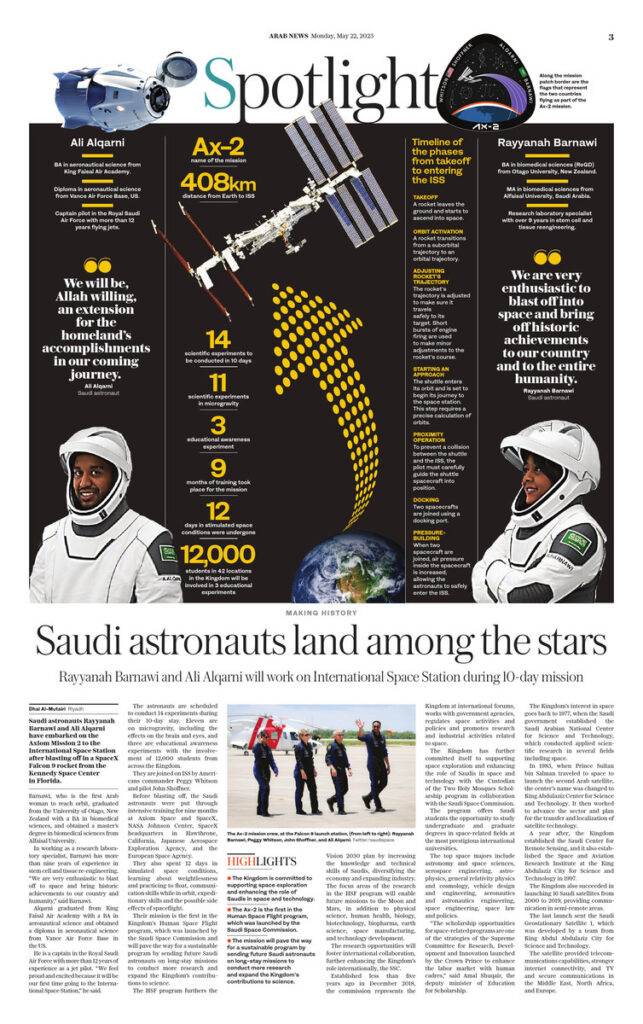
Saudi Arabia made history on Sunday as its first female astronaut, Rayyanah Barnawi, and her colleague Ali Al-Qarni launched toward the International Space Station (ISS).
The duo were on board the Axiom Space 2 mission, which launched at 5:37 p.m. (EDT time). Astronaut Peggy Whitson and business pioneer and pilot John Shoffner are also part of the mission.
Before the launch, Barnawi, a breast cancer researcher, expressed her excitement and honor at representing Saudi Arabia and the Saudi Space Commission as the country’s first female astronaut. She highlighted her passion for research and described the opportunity as a dream come true for everyone involved.
During their eight-day stay on the ISS, Whitson, Shoffner, Al-Qarni, and Barnawi aim to conduct 20 research projects. Among them are 14 projects developed by Saudi scientists, covering various areas such as human physiology, cell biology, and technology development.
The launch was with a SpaceX Falcon 9 rocket, and had a backup launch opportunity scheduled on Monday at 5:14 p.m in case of a launch failure.
It’s the same spot where Saudi Arabia’s first astronaut, Prince Sultan bin Salman, soared in 1985.
On Saturday astronaut Al-Qarni shared pictures on his Twitter account the contents of his space travel bag.
In our continuing series of inspiring life stories across continents, we hear how the British MP is guided by a proud Jerusalem heritage.
Layla Moran’s earliest and fondest memories are of listening to tales of the days when the Ottomans ruled Palestine.
With a child’s fascination for the grisly aspects of life, she absorbed one particular story told of her great-grandfather’s first job accompanying the tax collectors. “They went to a village where someone hadn’t paid their taxes,” Ms Moran relates. “The man was dragged along the ground by his scrotum by a horse because he hadn’t paid his dues. And this was all under the draconian Ottoman rule.”
The first-hand accounts of her great-grandfather, the composer, oud player, poet and chronicler Wasif Jawhariyyeh, were published in his celebrated memoirs that span an extraordinary period for Palestine, from Ottoman rule to the 30-year British mandate and the formation of Israel.
As a young girl, Ms Moran devoured every word, finding a deep connection to her Palestinian heritage.
Those roots have at times come to the fore in her role as the first British-Palestinian Member of Parliament and as the Liberal Democrats’ shadow foreign secretary. Vividly so when she appeared in the House of Commons with a keffiyeh, a Palestinian scarf, wrapped around her neck, the first worn by an MP in the chamber.
Ms Moran explains that she wasn’t striving to make a statement, it was just that she’d had another impassioned discussion the night before about the plight of the Palestinians with her mother, who was born in Jerusalem.
“The next morning, I opened the drawer and saw the scarf. I thought, ‘I’m going to wear it for her and I’m going to wear it for us’ because it’s so much part of our identity,” she tells The National.
It was only afterwards that she realised the full impact of what she had done when friends texted their commendations alongside the inevitable social media storm.
he owes much to her mother’s side of the family, not least her love of Arabic culture and language along with a willingness to be outspoken and what she confesses can be passionate gesticulations.
The influence of her mother, particularly from those youthful days of protest during the 1970 Jordanian unrest, is obvious. Randa Jawhariyyeh was living in Amman and would often slip out to show support for the Palestinian cause, and it was Israel’s proposed annexation of the West Bank that they had been talking about the night before Ms Moran wore the scarf in September last year.
“She’ll talk about it emotionally, but she won’t cry,” she says. “She just passionately insists that Palestine is not about lines on a map, it’s about people.”
Though born in London, Ms Moran is proud of being a “Jerusalemite” of many generations’ heritage. Indeed, the Greek Orthodox family bible, signed in Arabic by every firstborn child of her Palestinian Christian antecedents, is a repository of names going back two centuries.
“It confounds people that I am not Muslim because they associate Palestine with Islam,” she says. “Then I point out that Jesus was born there and they go ‘oh, yes’ … It shows that the basic makeup of who is a Palestinian is very poorly understood internationally.”
The city at the confluence of the three major Abrahamic religions in Jerusalem has generated a rich and deep history; more than half a century of which was captured in the memoirs of Ms Moran’s great-grandfather.
Jawhariyyeh recounted one period of relatively peaceful intermingling of Muslim, Christian and Jew between the two World Wars. He was a Christian but studied the Koran and counted many Muslims — Turks included — as well as the Europeans, as friends. His diaries refer to Jews as “abna’ al-balad”, meaning compatriots.
He was, by all accounts, an engaging and charismatic man who socialised with all, no matter their background.
His many sayings were repeated at home and passed down the generations. “Money doesn’t matter, all that matters is beauty” is one that trips off Ms Moran’s tongue with a smile as she speaks by Zoom from her London apartment. “He was writing those diaries from the perspective of someone intensely proud of his homeland,” she says.
While Jawhariyyeh walked in the steps of many powerful men and worked for the British mandate, he never lost the enjoyment of speaking to ordinary people. There was one occasion when he visited Ms Moran’s grandfather in Libya during which he was “lost” for three hours after becoming engrossed in conversation with a bin-man he’d met on the street.
“People are people, and that’s where the joy in life is”, Jawhariyyeh frequently said, according to Ms Moran. “I think that very much carried through in a lot of the way my family sees the world.”
Perhaps this is why she takes offence that her elevation to becoming an MP might somehow make her superior to others. “It has never been about me, or status or how other people see me,” she says. “And if they see me in a way that is in any way elevated above them, that makes me very uncomfortable. I do everything I do out of a sense of duty to others.”
That sense of public service comes from both sides of the family. Ms Moran’s father, James, is a notable diplomat who served as the European Union’s ambassador to Egypt, among other countries
Hence, the young Layla spent a privileged childhood jumping around various states from Jordan to Ethiopia and Jamaica.
“I am British, I am Palestinian, but actually I spent the whole of my childhood living in other countries than those two,” she reflects. “So I’m very much what they call a third-culture kid, without geographic roots.”
Her upbringing meant that she had many encounters with “these extraordinary people” who came to the house. The then prime minister of Jamaica, she recalls, was among those who felt comfortable enough to take part in a good party.
“I’d meet presidents and ambassadors and see them to be normal people,” Ms Moran says.
Her parents also insisted that the fabulous homes with swimming pools and staff were “borrowed”, so “don’t have airs and graces”.
Having been imbued with Arab and Middle Eastern culture, Ms Moran puts that to good effect in the Commons to inform and educate other MPs on the region. “The best thing I can do is to tell the story of my family and that will inject an element of humanity into the conversation that hopefully will make people stop and listen,” she says.
It is those times, she believes, when she has the greatest effect, even if her mother worries that people will judge her for it. “Don’t say too much that you’re Palestinian,” Randa would chide. “You’re British and you are a British MP, and you just happen to have a Palestinian mother.”
Her mother has long had great concerns for the welfare of Ms Moran. In the Gulf War of 1991, when the family was in Athens, she kept nine-year-old Layla off school out of fears that the conflict would spill over into Greece.
Given how much politics was discussed around the kitchen table and her time in the region, the 38-year-old MP is confident about her understanding of the Middle East’s complexities. “I can speak with real authority about the region,” she says.
Some of that heritage has been digested in more ways than one, with Ms Moran claiming a skilled hand at Middle Eastern cuisine. She says she makes a mean Moulokhia that wards off cold British nights and gives her apartment an Arab-influenced aroma, especially pleasant after a hard day spent toiling over foreign affairs.
“But there’s a difference between being a Palestinian girl who likes to eat Palestinian food and listens to Arabic music, and being a spokesperson about what are very complex issues in the area. And I’m very careful when I tread on to the latter ground,” she says, in reference to the post she’s held since August. “I’m taking it slowly because I want to get it right.”
Her presence in the Commons is a clear reminder to others that Britain has a history, a legacy and responsibility to the Palestinians. She points out that it was the British mandate that governed the area for 30 years after the First World War, giving way to the formation of Israel.
“We can’t just give up on the region,” she says. “Britain is integral to its history. I’m not saying we can solve all of its problems on our own. We absolutely cannot but we certainly can’t throw our hands up and go away.”
Again, the conversation comes back to Jawhariyyeh’s diaries, in which he initially expressed joy at working under the British rule. “There was elation in his words at the arrival of the British because they freed them from the Ottoman Empire, but at the end my great-grandfather felt that the British who he had worked for utterly betrayed the Palestinians, because they promised that they were going to do good by them.”
Despite attending Roedean boarding school in Sussex, mainly because of her father’s transient life as a diplomat, Ms Moran went into politics to address the unfairness she witnessed in the British education system as a secondary school teacher in maths and physics.
She decided to do something about it and read every major party’s manifesto on education, deeming that the Liberal Democrats most closely fitted her own beliefs.
In the 2017 General Election, she took the Oxford West and Abingdon seat from the Conservatives by just 816 votes. Her straightforward and egalitarian views appear to have held sway with her constituents.
In the last election, her majority increased by almost 9,000 votes. Observers of events at the House of Commons, it seems, will have the chance of seeing that Palestinian scarf for some years to come.
‘I do everything I do out of sense of duty to others,’ says Layla Moran of her decision to become a Liberal Democrat politician. She won the seat of Oxford West and Abingdon in 2017. Dan Kitwood/Getty Images
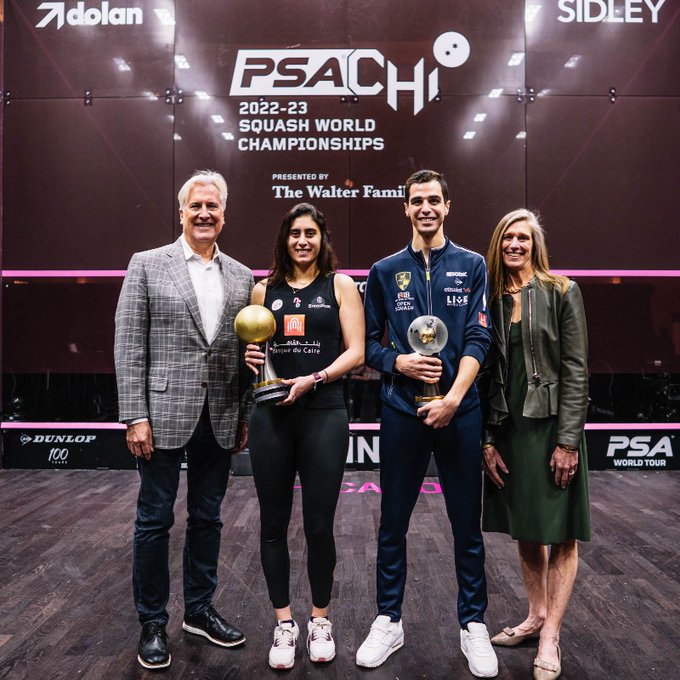
Egyptian duo Nour El Sherbini and Ali Farag retained their respective world titles in Chicago with straight-game wins over Nouran Gohar and Karim Abdel-Gawad early on Friday.
World No.1 Sherbini needed 38 minutes to beat Nouran Gohar 3-0 (11-6, 11-4, 12-10) and clinch her seventh World Championship title.
“I am over the moon to win my seventh World Championship,” El Sherbini was quoted as saying on PSA World Tour after the game.
The 27-year-old El Sherbini was in superb form in Chicago, winning her third World Championship title. She is now just one short of the current women’s record of eight, held by Malaysian legend Nicol David.
Her streak of five women’s World Championship titles in a row is matched only by David.
“It is huge and special for me and I cannot believe I did it, I am so happy,” the Egyptian squash star said.
I am happy that I am closer to Nicol’s [David] record. She is a legend and what she did was amazing and unbelievable,” El-Sherbini said, adding “I have always been looking up to her, so to put my name beside her is something special and huge for me.”
The men’s final saw World No.4 Ali Farag become the second Egyptian ever after Amr Shabana to win four men’s World Championship trophies.
The 31-year-old Farag needed 44 minutes to beat Karim Abdel Gawad 3-0 (12-10, 11-6, 11-6).
“The emotions are so raw, it is so hard to put it into words,” Farag said. “It is so special. No matter how many times you go through it, it is even more special than the time before. Especially against such a champion like Karim, I am super relieved and super happy,” he added.
“Two months ago, we played a practice match and we were limping, and the standard would not have even earned us a place in the World Championship, let alone the final. To come all the way through to reach the final is a very proud achievement for the two of us.”
Farag – like El Sherbini before him – has now won all three World Championships held in Chicago.
The PSA World Championships is the most prestigious tournament in squash, with $1,000,000 in total player compensation split equally between the male and female athletes.
Students of King Abdulaziz University won 41 medals during their participation in the 48th Geneva International Exhibition of Inventions.
The recently concluded exhibition saw 825 exhibitors from 44 countries take part with more than 1,000 inventions.
The head of innovation at the university, Dr. Iqbal Ismail, told Arab News: “Other Saudi universities are also participating. However, the participation of King Abdulaziz University at this exhibition is the largest and has been ongoing since 2016.”
Dr. Hana Al-Naim, acting president of the university, praised the achievements of the university’s male and female students, which have contributed both to the community and the Kingdom’s ranking, regionally and globally, in the field of creativity and innovation.
The students came from the university’s various colleges including departments of medicine, engineering, information technology and nursing.
Rahaf Alem and Raghad Al-Jundi won the International Federation of Inventors Association Award for the invention of a laser blood disease detector, also winning the gold medal.
A special prize from Taiwan was awarded to student Faisal Al-Subaie for inventing a cistern made from palm fronds to provide irrigation water.
Ahmed Al-Zahrani, Saleh Bakraa, Marwan Al-Jadaani, and Mohammed Al-Khamis also won the special award for their automated diagnostic platform.
The silver medal was awarded to Duaa Al-Shabani, Lama Al-Jelani, Gaitha Al-Khatami, Emtinan Yamani, and Hadeel Al-Lazori for their invention of an antimicrobial agent for dialysis patients.
Several Saudi inventions received the bronze medal. Safwan Hashim and Abdullah Abu Thyab won it for their renewable-energy car umbrella and Abdullah Al-Khotami for his work on protective glasses that shield wearers from thermal diseases.
Hala Mogarbel, Shahad Asiri, and Shatha Al-Sulami won the bronze medal for their urinary catheter holder invention.
Dina Al-Shibeeni, Marwa Bakour, and Hind Al-Rashid also won the bronze medal for the invention of an artificial intelligence gardening system.
The invention of a bedsore-proof bed earned Bateel Bajamal, Rena Al-Qahtani, Joud Hakami, Asmaa Bahmeed, and Shahad Al-Nahdi the bronze medal.
Shathar Al-Shabak, Jumana Al-Madhoun, Njoud Al-Ghamdi, and Raneem Saati were also awarded for their invention of “Minqath,” a drowning warning system.
Finally, Sumayah Baamer, Raniya Baksh, Rahaf Al-Saeed, and Deema Majashi won the bronze medal for school environment safety measures using artificial intelligence.
Ismail said: “There is no doubt that such student participation will have a great impact on raising a generation that thinks and researches in a scientific way and develops appropriate solutions to the problems facing the…community.”
He added that the exhibition constitutes an important opportunity to transform inventions into products that can be manufactured and marketed inside and outside the Kingdom.
Al-Naim will honor the exhibition’s winning students in a ceremony on Wednesday.