Arabs & Arabian Records Aggregator. Chronicler. Milestones of the 25 Countries of the Arabic Speaking World (official / co-official). AGCC. MENA. Global. Ist's to Top 10's. Records. Read & Enjoy./ www.arabianrecords.org
May Elghety, the talented Egyptian actress, has announced her upcoming role in Disney’s animated series “Kizazi Moto: Generation Fire”. This sci-fi series, inspired by Africa’s diverse cultures and histories, promises to bring viewers thrilling stories of advanced technology, aliens, spirits, and monsters from a uniquely African perspective.
Elghety, who has won critical acclaim for her performances in several TV series and films, took to Instagram to express her excitement and honor at being part of the project. The 24-year-old actress is currently filming for the British movie “Due Dating,” which is directed by Daniel Pacquette and written by Jade Asha.
Born to renowned TV presenters and writers Mohamed Elghety and Mona Barouma, May Elghety began her acting career as a child artist. Her outstanding performance in the controversial TV series “El-Kaserat” earned her the Best Upcoming Actress award at the Arab Drama Festival in 2013.
Since then, Elghety has starred in several successful productions, including “Clash” in 2016, “Taye’a” in 2018, and “Every Week Has A Friday” in 2020. Her most recent film, “MAMA,” premiered at the Cairo International Film Festival in 2022.
“Kizazi Moto: Generation Fire” is a 10-part anthology that promises to bring together rising animation talents from six African nations. The series features an impressive production team, with Oscar-winning director Peter Ramsey serving as executive producer and Cape Town-based animation house Triggerfish leading the studio. Egyptian director Ahmed Teilab has also joined the writing and directing team for the series.
The show is set to premiere on Disney+ this year and is sure to delight audiences with its captivating storytelling and stunning visuals. “Kizazi Moto: Generation Fire” is yet another feather in the cap of May Elghety, who continues to prove herself as one of the most talented and versatile actresses of her generation.
The dream of becoming a journalist began for Kiin Hasan Fakat when she was just 10 years old. Her family had joined legions of Somalis displaced by war and hunger and since 2007 had been living across the border in northern Kenya, in one of the largest refugee camps in the world.
Each day, Ms. Fakat listened to her uncle’s small radio, which was powered by AA-sized batteries, and tuned to the Voice of America Somali service.
And each day, she became more aware of – and inspired by – the reporting of Asha Ibrahim Aden, a veteran correspondent who spoke with authority and confidence, and whose example showed Ms. Fakat what a Somali newswoman could achieve.
“I used to say, ‘Maybe I can be like this female journalist. I like her reports,’” recalls Ms. Fakat, who was raised in Kenya’s Dadaab Camp but was originally from the southern Somali town of Buale.
Today it is Ms. Fakat who has herself become a role model for Somalia’s aspiring female journalists, as part of the reporting team of the country’s first all-women news outlet, called Bilan, which means “bright and clear” in the Somali language.
With the aim of reporting powerful human stories often overlooked by Somalia’s male-dominated media – from the personal impact of chronic drought and the local ravages of climate change, to living with HIV and issues of addiction and gender-based violence – the six women of Bilan are expanding the practice of journalism in Somalia like never before.
High among their pioneering achievements in a staunchly patriarchal society: Serving as examples of professional excellence to other Somali women.
“A lot of Somali girls who are journalists contact us to join us, and we support them. Everything we write, they say, ‘You did a great job,’” says Ms. Fakat, clad in typical Somali dress, with head-covering and a long shawl.
“We are encouraging our sisters,” says Fathi Mohamed Ahmed, the chief editor of Bilan, interviewed in Mogadishu. “They call us and say, ‘Fathi, can you help me? I want to join Bilan; I want to do this story, how can you help me?’”
Part of their mission is to “bring taboo subjects into the open,” notes Ms. Ahmed’s Bilan biography. “Our sisters, mothers, and grandmothers will talk to us about issues they never dare speak about with men.”
“A game changer”
Launched last April and supported by the United Nations Development Program (UNDP), Bilan has brought together a half-dozen highly qualified female Somali journalists, each with years of experience writing news or broadcasting on radio stations or local TV.
Jocelyn Mason, the UNDP resident representative in Mogadishu, described the ambitious aims of Bilan at its creation.
“We hope this will be a game changer for the Somali media scene, opening up new opportunities for women journalists and shining a light on new subjects that have been ignored, particularly those that are important for women,” Mr. Mason said at the time.
In interviews conducted in the six months prior to launching Bilan, the UNDP found that Somali women journalists “reported being harassed not just on the streets but even in their own offices.”
“They are often denied training opportunities and promotions, and when a woman does reach a position of authority, she is often ignored while more junior [male] figures get to call the shots,” the UNDP said in a statement. “News coverage reflects this, with a lack of programming on issues that are seen as primarily affecting women, including childcare, domestic abuse, and equal political representation.”
On top of providing stories to local Somali outlets through the broadcast platform of Mogadishu-based Dalson media, Bilan is reaching a global audience by publishing stories in foreign news organizations such as the Guardian and BBC in the United Kingdom and El Pais in Spain.
“Before Bilan, our Somali female journalists were very weak. They were feeling fear for everything, [like] making decisions – they would wait for men, for editors and for the directors,” says Ms. Ahmed.
“But now, after starting this media unit only for female journalists, we have a lot of women who are interested,” she says. Applying for the vacant post of editor were 13 qualified women, which Ms. Ahmed calls an “amazing” number ready to “make decisions in the editor’s room.”
The result is that Bilan stories offer very different fare from what is produced by the country’s other news outlets.
“What is going on in Somali media, they just focus on politics and conflict, nothing else,” says Ms. Ahmed. “But there are so many stories to do on Somali society, especially about Somali people, and what is going on here. We are going to have all those stories.”
Bilan’s journalism sparks action
Bilan reporting has already had an impact. An article last year about the lack of medical facilities for displaced Somalis living in makeshift camps on the outskirts of Mogadishu led to the creation of a small hospital at the site.
One in-depth article in the Guardian last October helped raise an urgent alarm about Somalia’s looming humanitarian crisis and famine. Bilan journalists visiting three different regions of the country warned against repeating the mistakes of 2011, when some 100,000 Somalis died of hunger before there was an official declaration of famine, which ultimately left a total of 260,000 dead.
Finding oft-hidden voices is what Bilan does best. Ms. Fakat says that 80% of her interviews are with women, and Bilan works with civil society activists, especially on issues for women and human rights.
One recent story delved into the challenge faced by HIV-positive Somalis, who are often treated as outcasts, even by their own families. Another television report focused on students at a school with special needs, where the teachers and principal also have special needs, thereby “inspiring the students that they too can have bright, productive futures,” according to Bilan’s description of the report.
Also made for TV, a report showcasing the work and challenges overcome by the only female taxi driver in the northern coastal city of Bosaso.
And Ms. Fakat was in Sharm el-Sheikh, Egypt, in November to report from the COP27 climate summit, as part of her ongoing reporting about how climate change is affecting Somalia. On a recent Friday morning, she was on the Lido Beach in Mogadishu, speaking to volunteers who each week collect trash washed up on the popular beach.
“Absolutely, we see some progress,” says Ms. Ahmed, whose ground-breaking example includes continuing to work, even as a mother with two young children. A third child was born in early December, soon after she was promoted to chief editor of Bilan.
“We talk to the people, and this is good for our [work], for our culture,” says Ms. Ahmed. “We talk to the young ladies, we tell them sometimes: ‘Don’t listen [to detractors], go ahead.’”
A grandmother’s approval
But the female journalists of Bilan are not just challenging local newsroom culture rife with harassment and de facto glass ceilings. They sometimes have to convince their own families that they should pursue their dreams to be professional journalists.
With a smile, Ms. Ahmed says she faced resistance from her own grandmother.
“I love journalism, talking to the people, [and] writing something,” she says.
“My grandmother always said, ‘It’s not good for you, stop! Stop, stop, stop! Please don’t do this job,’” she recalls. “I told her, ‘I love this,’ and I hid my work when I started out, for eight months.”
The success so far of Bilan, and Ms. Ahmed’s career, has now changed her grandmother’s mind.
“Now she is OK, she is happy!” she says, beaming. “She is proud of me.”
source/content: csmonitor.com / The Christian Science Monitor / (Scott Petersen) (headline edited)
_____________
Scott Peterson/Getty Images/The Christian Science Monitor
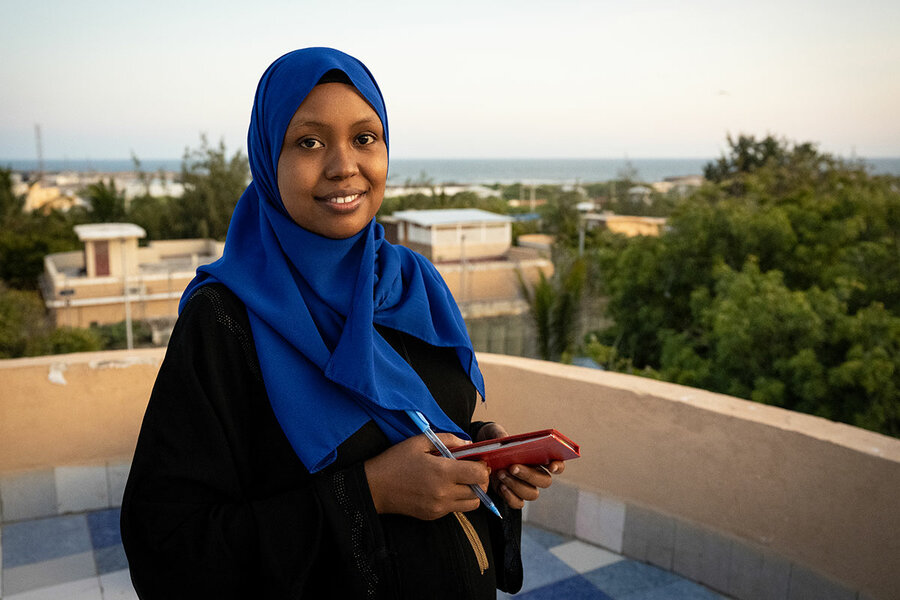
Fathi Mohamed Ahmed, chief editor of Somalia’s first all-women news outlet, Bilan, on a rooftop in Mogadishu, Somalia, Nov. 8, 2022. Her Bilan biography says part of the outlet’s mission is to “bring taboo subjects into the open.”
The director received a master’s degree in fine arts specializing in film production at the prestigious American Film Institute in Los Angeles
Hana Kazim’s short film ‘Makr’ screened at several genre festivals including Fantastic Fest in Texas and FrightFest in London
Director Hana Kazim founded Wiswas Productions, dubbed the first Arab horror-focused production company, in a bid to celebrate the power of the thrilling genre.
The Emirati auteur recently directed a Saudi Arabia-focused episode of STARZPLAY’s “Kaboos,” which is set in different eras and across countries in the MENA region, taking viewers on a journey through frightening urban legends from Saudi Arabia, Kuwait, Egypt and the UAE.
“I found that there’s a lot of interest in horror and a lot of stories to tell, and a lot of things you can say through horror,” Kazim told Arab News.
“I think some of the most courageous stories right now are being told through the mask of horror, mainly because horror can seem like to the mass audience as a spectacle, but in reality, horror has always been a champion of telling some deep truth about society, a huge commentary on society, and it’s almost like the most acceptable form of commentary in almost every region,” she added.
After receiving a master’s degree in fine arts specializing in film production at the prestigious American Film Institute in Los Angeles, Kazim returned to the region to hone her craft.
Kazim’s decision to launch her company came after the release of her short film “Makr,” which she wrote and directed in 2018. The movie, which gained more than half a million views online, screened at several genre festivals including Fantastic Fest in Texas and FrightFest in London. It was translated to Farsi, Korean and Japanese.
The director, who has worked as a film executive in the UAE since 2015 and has been involved in the production of several Arab films, including “Rashid & Rajab” (2019) and 2021 box office hit “Al-Kameen,” said that she believes horror, “for the most part, hasn’t been done well” in the region, because finding a perfect storyline in is a challenge in the genre.
“I think our audiences are still a little too critical of everything they see. They take everything a little bit more literally. So, having to break into horror is tough because you have to be somewhat near being realistic while at the same time balancing the scales of not being too aggressive or too judgmental,” Kazim said.
The director believes that the main reason horror as a genre has lagged in the region is because filmmakers are going for scares rather than meaning.
“I think Arab audiences are always looking for meaning in stories, be it a comedy, be it a drama — they’re looking for meaning more than just entertainment. And unfortunately, we, filmmakers, come from entertainment. So, we feel like making entertainment and we forget the idea of having meaning behind stories,” she added.
“I think the Middle East has the potential to be well known for its horror because we have so many untold stories, be it from folklore to real stories — there’s a huge timeline of horror films that we can make that could span around 20, 30 and 40 years.”
source/content: arabnews.com (headline edited)
____________
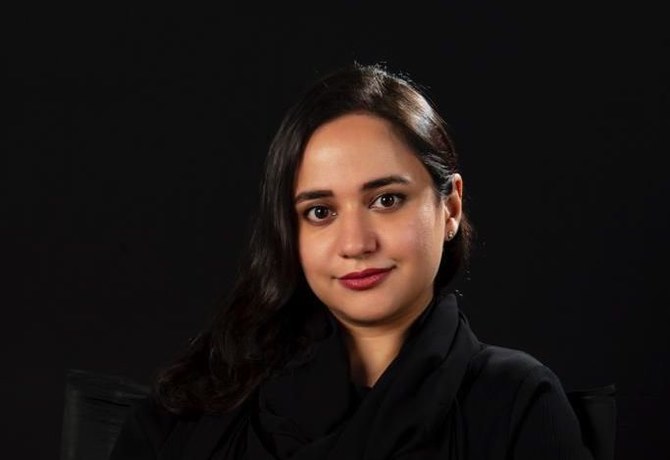
The Emirati auteur recently directed a Saudi Arabia-focused episode of STARZPLAY’s “Kaboos.” (Supplied)
The seventh edition of Aswan International Women Film Festival ( AIWFF) will honor the great Tunisian director, producer and politician Selma Baccar for her tremendous influence in the cinematic field being the first female Tunisian director who directed a feature-length film.
Her works include Fatma 76 (1976), The Fire Dance (1995), Flower of Oblivion (2005), El Jaida (2017), among others.
The seventh edition of AIWFF will kick off from March 5-10, 2023.
Dr Azza Kamel, Vice Chairman of the Board of Trustees of Aswan International Women Film Festival said that Selma Baccar is a great filmmaker not only in Tunisian cinema, but also in Arab cinema, as her films conveyed the concerns of Tunisian women in different historical stages, in addition to her historical postion as the first Tunisian director to present a feature film.
Kamel stressed that the festival decided to honor Baccar as it seeks to honor creative women who have contributed to the portrayal of women’s issues from all over the world.
Kamel pointed out that Baccar’s struggle for women’s issues wasn’t limited to cinema screen, as a director or as a producer, but she was strongly present in the Tunisian political scene, as a member of the National Constituent Assembly to draft the constitution after the Tunisian Revolution, in addition to her work as a member in the Tunisian parliament defending rights and freedoms, stressing that honoring Baccar is a tribute to Tunisian cinema, which in recent years has achieved great successes at the international level by producing acclaimed films that support women.
The seventh edition of Aswan International Women Film Festival ( AIWFF) announced that it will honor veteran Egyptian actress dubbed Egypt’s first star Nabila Ebeid, acclaimed TV presenter Dorria Sharaf Eldin and the award-winning Dutch director, screenwriter and producer Mijke De Jong.
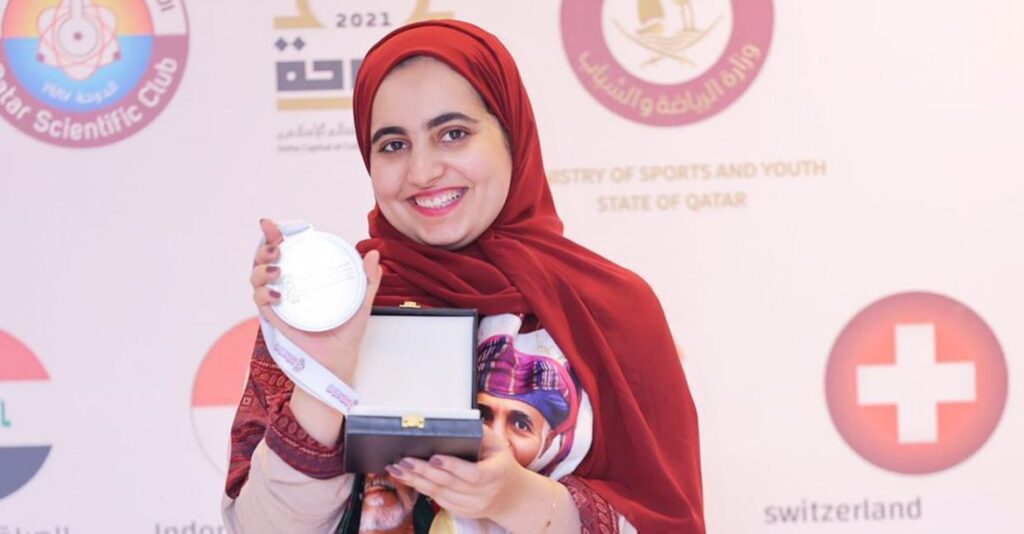
Manar al Jahwari won Saudi Arabian Innovation Hackathon award for her project Royal Filament.
Oman’s own Manar al Jahwari competed against 24 projects (shortlisted out of 700 total projects) in the final round of the Saudi Arabian Innovation Hackathon award, where her project was chosen along with three others as the most promising project.
Her project aimed at restricting the use of plastic filaments in 3D printing, and she fashioned 3D printing filament out of seaweed and other environment-friendly materials. She is currently in talks with government agencies to make her project a viable business, and she hopes to attract numerous local and international investors.
The Saudi Arabian Water Technologies Hackathon is a competition held virtually that lasts for two days, October 21 and 22, and involves three challenges that need to be solved within the given two days.
The second challenge was to control the excessive growth of algae in Jeddah’s desalination facilities, for which Al Jahwari came up with the innovative solution of “Royal Filament.”
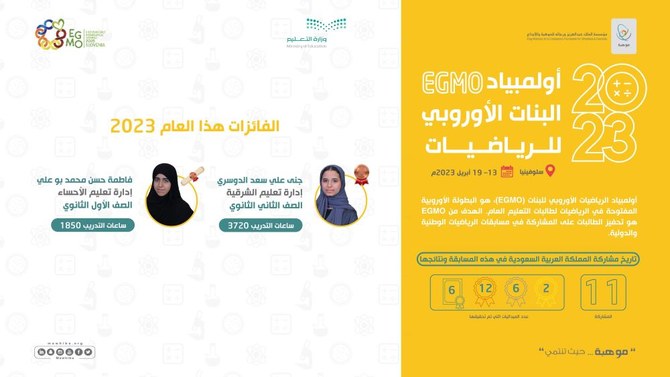
The EGMO is an international competition in mathematics targeting female high school students whose commitment to mathematics goes beyond the usual school curriculum
To participate at the EGMO, students must qualify first at a national competition, after which they, together with their advisors, form their respective national delegations
Two Saudi girls have achieved advanced positions in the European Girls’ Mathematical Olympiad 2023, which is being held in Slovenia from April 13-19.
The EGMO is an international competition in mathematics targeting female high school students whose commitment to mathematics goes beyond the usual school curriculum.
To participate at the EGMO, students must qualify first at a national competition, after which they, together with their advisors, form their respective national delegations.
“Saudi Arabia, represented by King Abdulaziz and his Companions Foundation for Giftedness and Creativity (Mawhiba) and the Ministry of Education won two medals in the EGMO 2023 in Slovenia,” Mawhiba tweeted on Tuesday.
The young talents have raised Saudi Arabia’s medal tally to 26 in all editions of the EGMO, in which 213 students representing 55 countries are currently participating.
Saudi students Jana Ali Saad Al-Dosar from the Eastern Region and Fatimah Hassan Mohammed Bu Ali from Al-Ahsa won a bronze medal and a certificate of appreciation, respectively.
Mawhiba’s Secretary-General Dr. Amal bint Abdullah Al-Hazzaa congratulated the winners and expressed gratitude to King Salman and Crown Prince Mohammed bin Salman for their support of higher education, which led to these achievements.
Al-Hazzaa noted that the students’ successes embody the integration between Kingdom’s institutions and its commitment to advancing young talents through education and training in line with international standards.
She also praised the cooperation between Mawhiba, the Ministry of Education, and the King Abdullah University of Science and Technology, a partnership that aims to develop Saudi human capital and increase competitiveness in the labor market in line with the National Transformation Program and Saudi Vision 2030.
The Saudi girls participating in the EGMO 2023 have undergone intensive training to develop their scientific skills and were nominated to participate based on the results they achieved in the training forums held by Mawhiba.
The EGMO was initially launched in the UK, which hosted its first edition in April 2012 with 19 participating countries.
The international competition aims to motivate more female students to participate in the International Mathematical Olympiad, where girls currently constitute only 10 percent of the participating students.
This is Saudi Arabia’s 11th participation in the EGMO. The Kingdom has achieved two gold medals, six silver medals, 12 bronze medals, and six certificates of appreciation.
The EGMO 2023 awards are scheduled to be distributed on Wednesday during a final ceremony.
source/content: arabnews.com (headline edited)
____________
Fatimah Hassan Mohammed Bu Ali and Jana Ali Saad Al-Dosar. (Twitter/Mawhiba)
Americans born in or with ancestral ties to Arab-speaking countries have made countless significant scientific, medical and engineering contributions.
While Americans born in or with ancestral ties to Arab countries have made countless significant scientific, medical and engineering contributions, most have never made it into record books. From cryptography, to the artificial heart, to the iPod, here are a few examples of some of the major advancements by Arab Americans.
1. Television Transmission and LCD Screens
Born in Nabatieh, Lebanon in 1895, Hassan Kamel Al-Sabbah studied and then taught mathematics at the American University of Beirut before immigrating to the United States in 1921. After a brief stint studying at the Massachusetts Institute of Technology (MIT), Al-Sabbah earned a master’s degree in engineering sciences from the University of Illinois, says Lujine Nasralla, communications specialist at the Arab American National Museum in Dearborn, Michigan.
“In 1923, General Electric (GE) hired him to work in its Engineering Laboratory under a contract that awarded him a dollar for each of his patents,” Nasralla explains, noting that between 1927 and 1935, he applied for patents for 52 of his inventions while working at GE. Some of the patents Al-Sabbah was awarded during his time at GE include three for innovations in television transmission technology (granted between 1928 and 1930), and two for cathode ray tubes (1935).
Though Al-Sabbah died in a car accident 1935, GE engineers continued to rely on the technology he invented, including developing the liquid crystal display (LCD) based on one of his patents. Al-Sabbah made numerous other significant contributions to science, technology and engineering, especially in the field of solar energy.
2. Emotion Recognition Technology
RANA EL KALIOUBY, CO-FOUNDER AND CHIEF EXECUTIVE OFFICER OF AFFECTIVA, SPEAKING DURING THE NEW WORK SUMMIT, CALIFORNIA, 2019. / DAVID PAUL MORRIS/BLOOMBERG VIA GETTY IMAGES
While Rana El Kaliouby was completing her doctoral research at the University of Cambridge in England in the early 2000s, she never felt as though she could ever truly connect with her loved ones back home. “Away from her family and friends in Egypt, El Kaliouby wished her computer could better convey her emotional state,” Nasralla says. That’s when she decided to find a way to make more emotionally intelligent technology.
After earning her doctorate, El Kaliouby took a position as a research scientist in the Affective Computing group in the MIT Media Lab. There, she was part of a team that developed an “emotional hearing aid,” as well as a pair of eyeglasses that could read emotions, along with social cues. Officially known as “the Emotional-Social Intelligence Prosthesis,” El Kaliouby and a colleague created the wearable technology in 2006 for people living with autism who have difficulty identifying and processing other people’s emotions as they communicate.
In 2009, El Kaliouby and the same MIT colleague co-founded a company called Affectiva, which used deep learning, computer vision, speech science and vast amounts of real-world data to develop emotion recognition technology. “Her pioneering technology accurately reads minute changes in facial expressions that convey emotions,” Nasralla says, adding that El Kaliouby is a member of the Women in Engineering Hall of Fame.
3. The iPod and iPhone
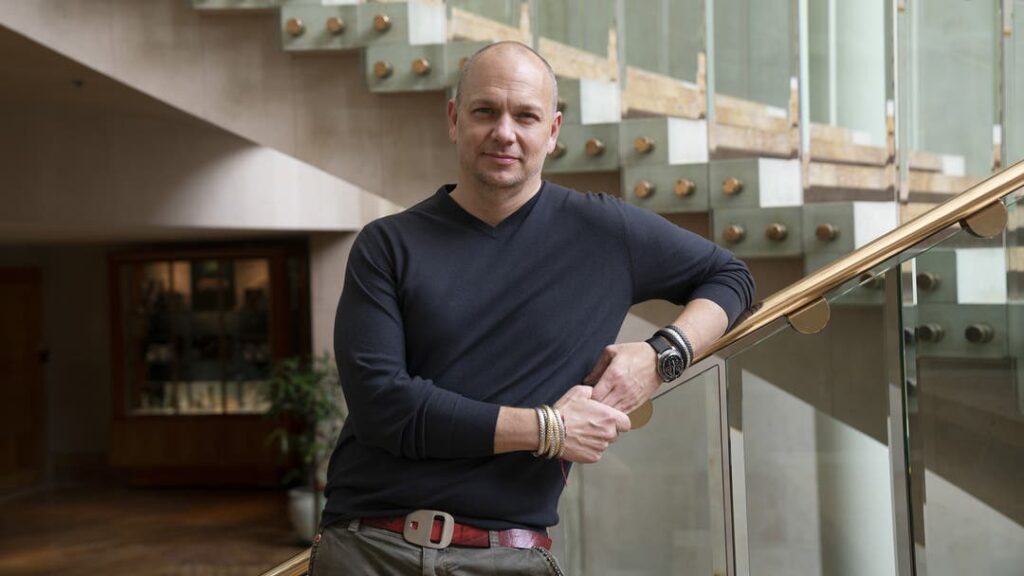
TONY FADELL, WHO OVERSAW THE DESIGN OF THE IPOD AND IPHONE, PHOTOGRAPHED IN SINGAPORE, 2019 / WEI LENG TAY/BLOOMBERG VIA GETTY IMAGES
There was a time in the not-so-distant past when listening to music outside of your home meant bringing the physical album with you on a record, audio cassette or compact disc. And while portable MP3 players existed before 2001, none were popular enough to make the device the standard way of listening to music on the go. That is, until Apple CEO Steve Jobs hired Arab American inventor Anthony “Tony” Fadell and put him in charge of a new special projects group within the company tasked with doing exactly that.
The result was the iPod, which launched in 2001. Fadell, who is now known as “ the father of iPod,” went on to oversee the first 18 iterations of the device before Jobs gave him his next assignment: to create a mobile phone with many of the same features as the iPod.
This time, the end product was the iPhone, which essentially allowed people to carry a highly compact computer with internet capability around at all times, and, in the process, changing the way people access information. Fadell was involved with developing the first three generations of the iPhone.
4. Developments in Surgery
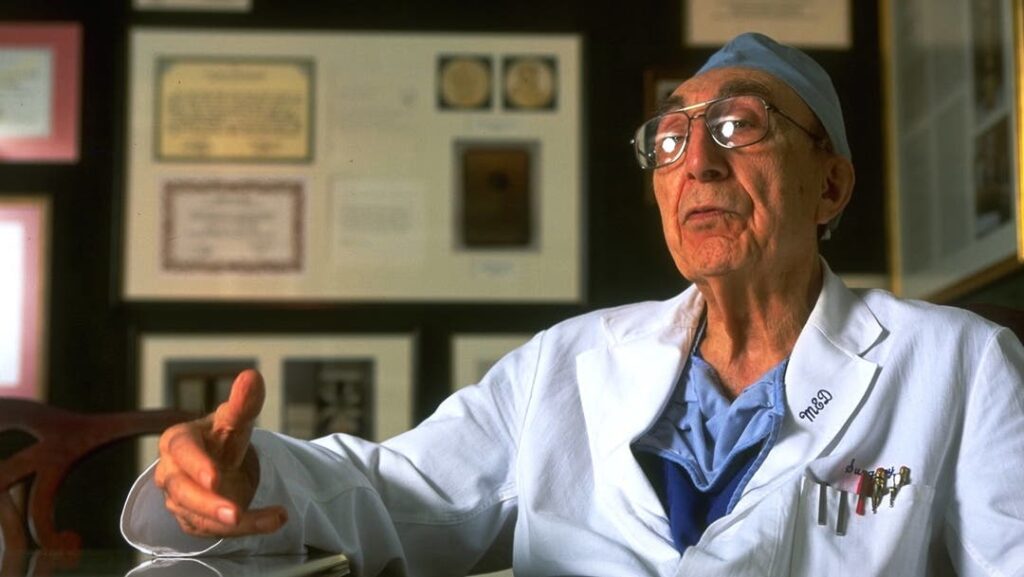
HEART SPECIALIST DR. MICHAEL DEBAKEY, C. 1994. / F. CARTER SMITH/SYGMA/GETTY IMAGES
Born in Lake Charles, Louisiana in 1908 to Lebanese immigrants, Michael DeBakey (the Anglicized form of Debaghi) grew up spending time in his father’s pharmacy and enjoyed sewing, gardening and learning how motors and other machinery work. He earned his medical degree in 1932 and served in the Surgical Consultants Division of the Army Surgeon General’s Office from 1942 to 1946.
It was during this time that DeBakey and his colleagues developed special units dedicated to providing surgical care to soldiers wounded near the front lines. They were first deployed in 1943, though are best known for their work during the Korean and Vietnam conflicts, when they were known as the Mobile Auxiliary Surgical Hospital (MASH) units.
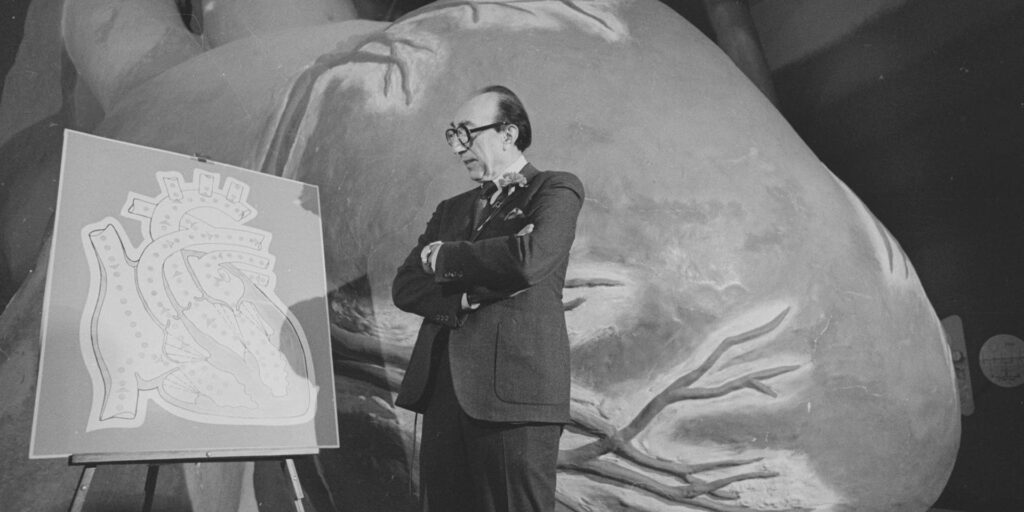
DeBakey’s surgical contributions continued for the next several decades and included performing the first successful removal of a blockage of the carotid artery (1953), developing the concept behind coronary bypass surgery (1963), pioneering the field of telemedicine with the first demonstration of open-heart surgery transmitted overseas via satellite (1965), and being the first to use a partial artificial heart (1966).
5. Internet Security
While internet security is top-of-mind now, that wasn’t the case when Egyptian-born cryptographer Taher Elgamal began his pioneering work in the field in the 1980s. “Elgamal published a paper in 1984, ‘A Public Key Cryptosystem and a Signature Scheme based on Discrete Logarithms,’ which became the basis of the Elgamal Digital Signature algorithm,” says Richard Gardner, a software developer and CEO of Modulus. This work was then utilized in the development of the Digital Signature Algorithm (DSA).”
Elgamal’s work became even more influential after the National Institute of Standards and Technology (NIST) adopted it as the Digital Signature Standard (DSS). “Like the name implies, it became the standard for electronic signatures,” Gardner explains.
And according to Abdulrahman Henedy, an Arab American entrepreneur and founder of Financeive , Elgamal’s invention of the discrete logarithm was also an important milestone in cryptography. “His work inspired other encryption variations and paved the way to create more advanced algorithms, like Advanced Encryption Standard,” he explains.
In addition, Elgamal was the driving force behind the Secure Sockets Layer (SSL), a protocol that keeps online communications like email and instant messaging secure. Because of this major technological development, he is known as the “father of SSL.”
6. The Waffle Cone
Though it may not be the most high-tech invention on the list, the waffle cone stands out not only because it’s delicious, but because not one, but four different Arab Americans claimed to have invented it. And what’s perhaps even more bizarre, is that in an origin story with so many inconsistencies, all four of the men contend that their ice cream innovation was born at the 1904 Louisiana Purchase Exposition—better known as the Saint Louis World’s Fair.
According to Nasralla, Ernest Hamwi, Nick Kabbaz, Abe Doumar and Leon B. Holwey each had their own story about how they came up with the waffle cone in 1904. “We give credit to all four of them, but we don’t recognize any of the stories as more plausible than the others,” she explains. “It remains a mystery to this day!”
But that mystery extends beyond which of the Arab American vendors (if any) deserves credit for the waffle cone. That’s because on top of these four narratives, there are several other origin stories , including some that took place prior to 1904. And though we may never know who first devised a handheld edible ice cream container, it’s safe to say that the 1904 World Fair and its Arab American dessert vendors did have a hand in popularizing what we now know as the waffle cone.
source/content: history.com (headline edited) / Elizabeth Yuko
____________
HEART SURGEON DR. MICHAEL DEBAKEY. CREDIT: BETTMANN ARCHIVE/GETTY IMAGES
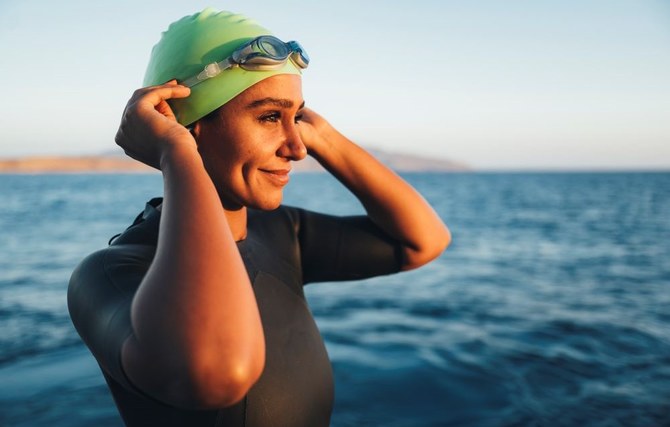
Mariam Saleh Binladen took just four hours to make the crossing from the Saudi island of Tiran to the Egyptian resort of Sharm El-Sheikh.
A Saudi dentist and endurance swimmer has set a new women’s world record time for swimming across the Red Sea.
Mariam Saleh Binladen took just four hours to make the crossing from the Saudi island of Tiran to the Egyptian resort of Sharm El-Sheikh.
She was accompanied in the water on her 9-kilometer swim by Lewis Pugh, a British South African endurance swimmer and UN patron of the oceans.
Pugh was on the first leg of his campaign to raise awareness about the destruction of oceans and coral reefs in the run up to the 2022 UN Climate Change Conference (COP27) due to take place in Sharm El-Sheikh next month.
Binladen told Arab News: “During the final moments of the swim, I felt elated, a sense of jubilation, and blessed to have achieved my goal with my body intact.
“I had concerns before embarking on the swim, namely the weather conditions and sharks. As the last moments approached, I thanked Allah that the team had made it safe and sound through what were quite hazardous conditions.”
Due to high winds and rough seas the swim had to be staggered over two days.
She said: “We completed the swim in two segments and fed less often to minimize the risk of shark attacks. I would say that the most challenging aspect was at the midway point when the sea became very turbulent.
“We had also agreed to swim without protective cages, so those sharks were always at the back of our minds.”
Binladen has been involved in open water endurance swimming professionally since 2012.
“I train hard at least three times a week. Over my weekends, I alternate between four to six hours of swims to maintain momentum. I maintain a dedicated fitness regime, and I keep to a physically gruelling schedule when I am preparing for a challenge,” she added.
Her first major world record-breaking swim was in London’s River Thames in 2016, but she pointed out that the Red Sea attempt was for a greater cause.
“I agreed to join this challenge as the cause is near to my heart. These challenges are not for the faint of heart; you really need to be disciplined with your training and build up your physical and mental strength. Those two things are what will keep you going and be the key to success,” she said.
Long-distance swimming, she noted, was physically and mentally challenging and it was only with the support of a sports counsellor and her family that she was able to prepare herself.
“We sift through any fears and concerns together. I cannot stress enough how important it is to always work with professionals and to surround yourself with the right people.
“I’m blessed to also have the support and reassurance of a loving family without whom I could never have embarked on this journey,” she added.
Binladen’s charitable work has included offering support to refugees.
She said: “I am primed and physically and mentally prepared to take on my next challenge.
“In terms of the future, I will continue to use my challenges to raise awareness of issues that concern me, my philanthropic work is ongoing, and I have my career, and I am very busy.”
She now has five world records to her name, including being the first Arab to complete the Dardanelles Strait open water race in Turkey from Asia to Europe, in August 2015, completing the 6.5-km distance in one hour, 27 minutes, and 26 seconds.
In September 2016, she became the first Saudi to complete an assisted swim across the English Channel of 39.7 km, a feat she did in 11 hours and 41 minutes.
And she was also the first swimmer to cross the Dubai Creek and Dubai Water Canal, clocking up a total distance of 24 km in nine hours and 10 minutes.
source/content: arabnews.com (headline edited)
___________
Saudi dentist and endurance swimmer Maryam Saleh Binladen. (Supplied)
The first in the ‘Arab News’ series focusing on contemporary Arab-American artists in honor of Arab-American Heritage Month .
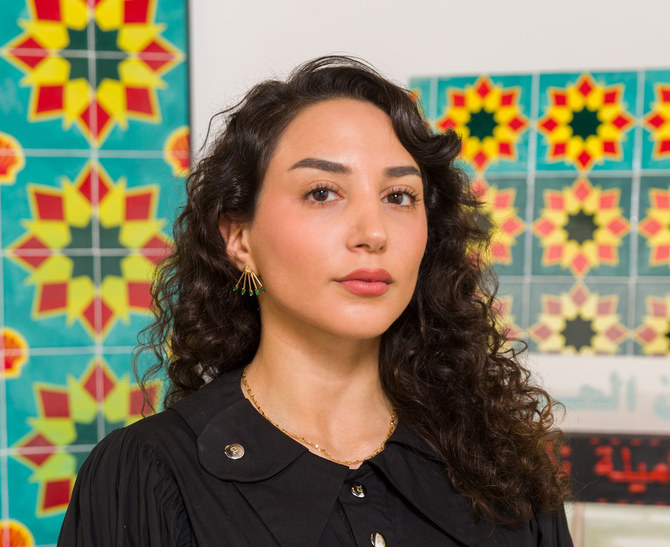
Los Angeles-based artist Saj Issa was raised between two different worlds. As the child of Palestinian parents who fled the First Intifada in the Eighties, she grew up in St. Louis, Missouri, and spent her summers in Palestine. “Each setting brought out a different part me,” she tells Arab News.
“At first, it took a minute for me to come to terms with that. I thought I wasn’t being authentic: The person that I was portraying myself as at school around my friends was different than the person I was portraying at home. But I realize that those are all parts of me. I don’t really see it as an issue so much now as I did when I was younger.”
Issa is an emerging visual artist, who obtained a Master’s in Fine Arts from the University of California and has had her work displayed in LA’s museums and art fairs. Her drive to create art began in childhood, marked by a tactile tendency to paint and make crafts.
“I grew up watching (creator of the US TV show “The Joy of Painting”) Bob Ross — America’s savior — and I was mimicking that action of holding a painting palette,” Issa recalls.
Her ceramic tile pieces juxtapose design elements that are omnipresent in both Eastern and Western cultures. She merges major Western company logos — such as Nike, Coca Cola, and Shell — with Middle Eastern geometrical and vegetal patterns.
“I’m interested in the consequences of globalization,” says Issa. “My choice of which brands make an appearance are based on which ones made a critical impact in the East. I utilize traditional tile work combined with corporate logos as a way to draw connections between the way that colonization seeps into the indigenous ways of life. Repetition is also a means to communicate habits of consumption, mass production and advertising.”
That geometrical ornamentation continues throughout her other series, such as “Convenience Store,” which was partly inspired by her immigrant father’s former job in a corner store. The series’ portraits of workers evoke a feeling of nostalgia and loss of identity in a quick-transaction environment; standing behind the counter, surrounded by daily items, the workers’ faces — or entire bodies — are obscured by receipts.
“I just want to build my own visual language through these mediums,” Issa says.
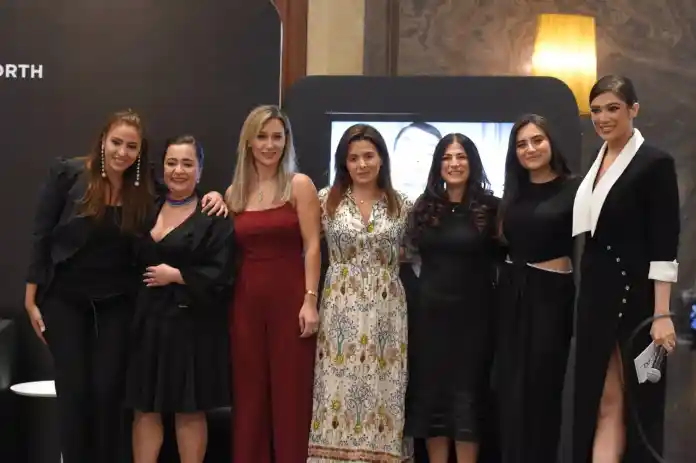
Since 1973, L’Oréal Paris supports each and every woman on her journey to success and self-worth. Through the “Women Of Worth” program, L’Oréal Paris honored 10 leading Lebanese women, who have overcome challenges and achieved greatness in their respective fields, in Lebanon and in the whole world. The awards were delivered during a gala dinner ceremony titled “Walk your Worth”, held on March 28, 2023 at the Middle East Airlines (MEA) Training Center in Beirut.
During the event, Mrs. Emilie Wahab Harb, Managing Director of L’Oréal Liban, said: “As a brand that has always taken on the cause of women’s worth, L’Oréal Paris is proud to recognize and celebrate the outstanding achievements of 10 exceptional Lebanese women who have overcome challenges and achieved greatness in their fields. Their accomplishments inspire future generations and contribute to the development of the Lebanese society, thanks to their passion, dedication, and commitment to excellence.” Moreover, she asserted that “L’Oréal Paris firmly believes that all women are worth it, whereas it’s evident to support their journeys and recognize their successes”, asking all women and those present at the ceremony, to “recognize the power of beauty as a catalyst of self-worth”. She further added: “We are entirely convinced that women’s causes should be celebrated and highlighted. That is the reason why we founded “Women Of Worth” which gathers us tonight, as we follow a journey we started 50 years ago, and which we will firmly continue because women are worth it.”
The honored Lebanese women were chosen by L’Oréal Paris not only for their accomplishments, but also for the values they embody, namely self-confidence, perseverance, resilience:
–Mrs. Nayla Tueni – CEO of An Nahar Newscorp and Editor in Chief of Annahar newspaper. Awarded under the Media category, Mrs. Tueni is a prominent Lebanese journalist.
–Dr. Hiba Al Kawas – President of the Lebanese National Higher Conservatory of Music. Awarded under the arts category. Dr. Kawas is a Lebanese composer, opera singer, scholar, and pioneer of Arab Opera.
–Mrs. Ghida Anani – Founder & Director of ABAAD – Resource Centre for Gender Equality. Awarded under the Social Responsibility category, Ms. Anani led a number of public opinion campaigns, notably the #Undress522 which resulted in the abortion of the article 522 of the Lebanese penal code.
–Captain Rola Hoteit – Airline Pilot at MEA. Awarded under the bravery category, Mrs. Hoteit is an Airbus A320 and A330 Captain, and the first Lebanese female airline captain.
–Mrs. Mireille Hayek – Founder & Owner of Em Sherif: Awarded under the Culinary Category, Mrs. Hayek is well known among the Lebanese and Arab society for her passion for cooking, her dedication and leadership in her restaurant that revives the Lebanese tradition, and which has been a success in Lebanon and abroad such as in London and Monaco.
–Mrs. Yola Zard Noujaim – Architect, Founder of Jabalna Festival & Owner of Al Fundok Hotel. Awarded under the sustainability category, she restored the old school of Maasser el chouf in an understated rural style to become Al Fundok boutique Hotel. This eco hotel is a non-profit community project, which encourages local tourism, creates a sustainable income for the community and promotes environmental, cultural, and culinary estate preservations.
–Mrs. Fadia ElMendelek – Hair Consultant. Awarded under the beauty category, Mrs. ElMendelek is a hair stylist whose talent and creativity earned her many European awards. With an online service and her own line “K by Fadia El Mendelek” of premium all-natural hair care products and extensions, she became the stylist to many celebrities and Arab Royalties.
–Mrs. Danielle Hatem – Founder & CEO of D Does Business. Awarded under the Digital Business category, Mrs. Hatem is an influential blogger who highlights strategic economical facts and figures, with the aim to create awareness about latest business headlines, while influencing and motivating the youth into entrepreneurship and business growth.
–Miss Rana Hayek, Electro-Mechanical Engineer & Car Mechanic. Awarded under the outstanding category, she’s Lebanon’s first female car mechanic. She is a diagnosis engineer at Sigma, the exclusive agent for Seat, Mitsubishi, and Ducati.
–Miss Aleen Sabbagh – Founder & Owner of The Concept. Awarded under the fashion category. What started as a personal devotion to fashion turned into a full-fledged clothing brand. Aleen Sabbagh, the young Lebanese face behind it all, goes from one factory to the other looking to constantly design drop trendy collections that always manage to sell out quickly.
The event was presented and moderated by Ms. Nadine W. Njeim, who discussed with each awardee her journey to success. It was attended by an audience of more than 150 invitees including public figures, the awardees’ families, journalists and representatives of various Lebanese media outlets, bloggers and social media influencers, as well as L’Oréal’s team and partners of L’Oréal Paris in Lebanon.