MAURITANIA: Fatimetou Mint Abdel Malick : Role Model for Africa’s Women

Fatimetou Mint Abdel Malick has been the mayor of a district of the Mauritanian capital Nouakchott for 14 years. She is living proof that women can make it to the top even in conservative Muslim societies. Elisa Rheinheimer introduces a courageous Mauritanian.

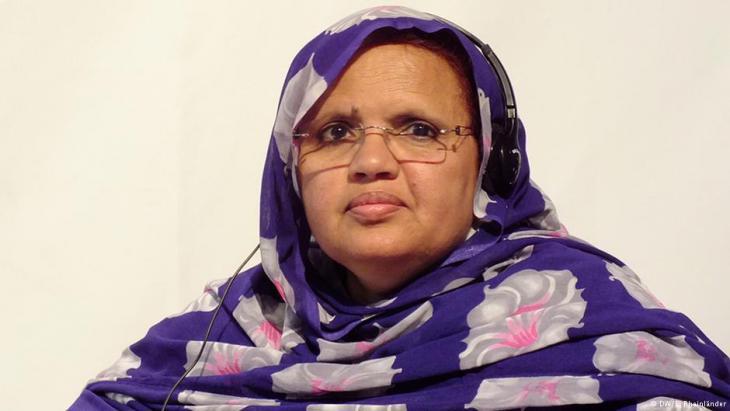
Fatimetou Mint Abdel Malick has a warm, maternal demeanour and a firm handshake. Keen eyes sparkle behind her glasses. A petite woman in a traditional flowing robe and a blue headscarf decorated with pink flowers, she doesn’t look like a politician in charge of a 60,000-strong community – at least not to Western eyes.

She is mayor of a district of the Mauritanian capital Nouakchott – and has been for 14 years. That makes her not only a pioneer in her own country, but also a role model for many African women. “I never actually wanted to go into politics,” she says with a laugh, “but I have a very social vein and it was a kind of calling. I wanted to change things in my city for the better.”

Now 57, she originally studied computer science in Belgium. It was during her time there that her eyes were opened to women’s opportunities. Years later, in 2001, she ran for mayor in a district in her home city of Nouakchott – and won at the first attempt. During her first period in office, she was still the only woman mayor in the country. “216 men – and me,” she says, her voice betraying well-earned pride.

Opening the door to politics for other women

In Tevragh-Zeina, the district of the capital of Nouakchott for which she is responsible, everyone knows her. She has achieved a great deal there, improving school education – particularly for girls – reforming the administration, reorganising refuse disposal and investing in infrastructure. Fatimetou Mint Abdel Malick wanted to build car parks, playgrounds and football pitches – and she did.

It sounds so easy when she talks about it now, but it certainly wasn’t quite that simple: “To begin with, I found the responsibility and the expectations people placed on my shoulders a burden,” she says. “After all, I had to be successful so as to open the door for other women and enable them to get into politics.”

She has had some success in this respect. There are now three other women mayors in Mauritania. She herself has never felt uncomfortable in her country’s male-dominated political arena. “Women have a very good status in our society,” she explains, “that made it easier for me.”

Development and religion hand in hand

And religion? What role does faith play in her life? Fatimetou Mint Abdel Malick looks rather perplexed, cocking her head in surprise as if she considers the question superfluous. “A very important one,” she says after a pause, “I am a Muslim.”

Development and religion, she says, are not mutually exclusive but belong together. She rejects the idea that Islam oppresses women and makes it hard for them to have a career of their own. In the Mauritanian religious tradition, she says, Islam virtually demands that women play an active role in society.

A mother of three grown children, Fatimetou Mint Abdel Malick is not only a local politician but also president of the Network for Locally Elected Women of Africa. She is invited to conferences and panel discussions all over the world, flying from one continent to the next. “Being up in the air is perfectly normal for me,” she says. Sometimes 24 hours are not enough to get everything done that she wants to do.

Raising awareness of environmental issues in Mauritania

One reason for that lack of time is that she also feels responsible for environmental protection and catastrophe management in her country. Mauritania has to deal with water shortages, sandstorms and desertification.

She organises workshops in schools, for instance, to raise awareness of environmental issues among children and young people. She has launched campaigns for the protection of dunes, planted date palms in the city with women’s groups, and called on local people to clean up the country’s beaches.

Her calm, relaxed demeanour is certainly part of her recipe for success. Fatimetou Mint Abdel Malick was recently re-elected for her third term in office, and has enough plans and projects in mind for the next 20 years. Mauritania is at No. 158 on the Human Development Index, close to the bottom of the ranking.

This hardworking mayor has a lot of work ahead of her. She currently has more than 3,000 fans on Facebook; in real life, there are no doubt many more than that.

source/content: en.qantara.de / Elisa Rheinheimer

____________
________________

MAURITANIA
EGYPTIAN-SCOTTISH Ayoub Sisters to Perform at King Charles’ Coronation in Edinburgh

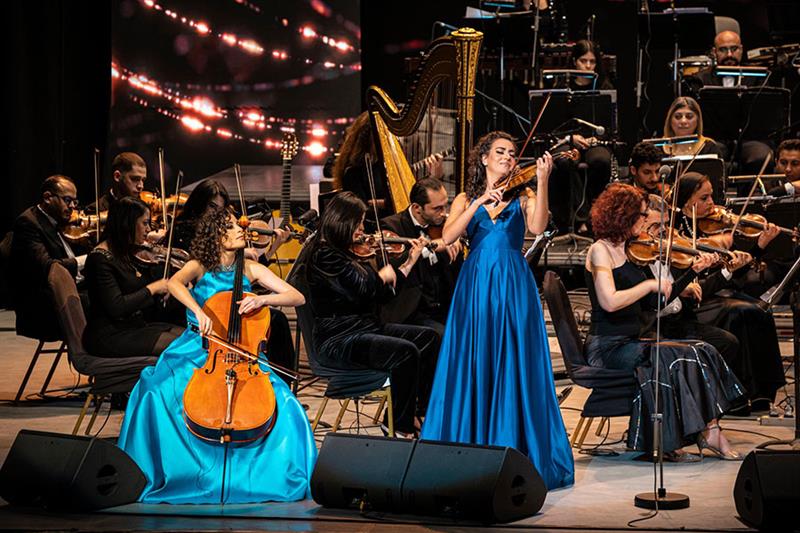
Egyptian-Scottish classical duo the Ayoub Sisters are scheduled to perform at King Charles III’s coronation in Edinburgh on Wednesday.

“We are delighted to share that we have been invited by HM King Charles III to perform at his coronation in Edinburgh next week,” wrote the Ayoub Sisters on Facebook on Saturday.

“The ceremony is part of Royal Week, with the King and Queen undertaking several engagements in Scotland, and will be broadcast live on BBC One. Tune in on Wednesday 5th July at 1:30pm to watch the celebration unfold,” they added.

The Ayoub Sisters have taken the international music scene by storm since their debut at the Royal Albert Hall in 2016. Laura Ayoub plays the violin – performing on an 1810 J. Gagliano – and Sarah Ayoub masters the cello. Both play the piano. 

The internationally renowned duo were discovered by producer Mark Ronson.

Their young, albeit sparkling, career has led them to sign a contract with Decca Records, one of the UK’s biggest record labels playing at the BRITS and the BAFTAs. Their album topped the Official Classical Artist Albums Chart.

The duo explore many musical genres, starting from classical music to Scottish traditional repertoire, topping it with captivating arrangements of pop, funk, and world music.

Their virtuosity and creativity have taken them to many prestigious halls in the UK (the Royal Albert Hall, Royal Festival Hall, London Palladium) and the rest of Europe, the Middle East, and Asia.

source/content: english.ahram.org.eg (headline edited)

____________

______________________

SCOTLAND / EGYPT

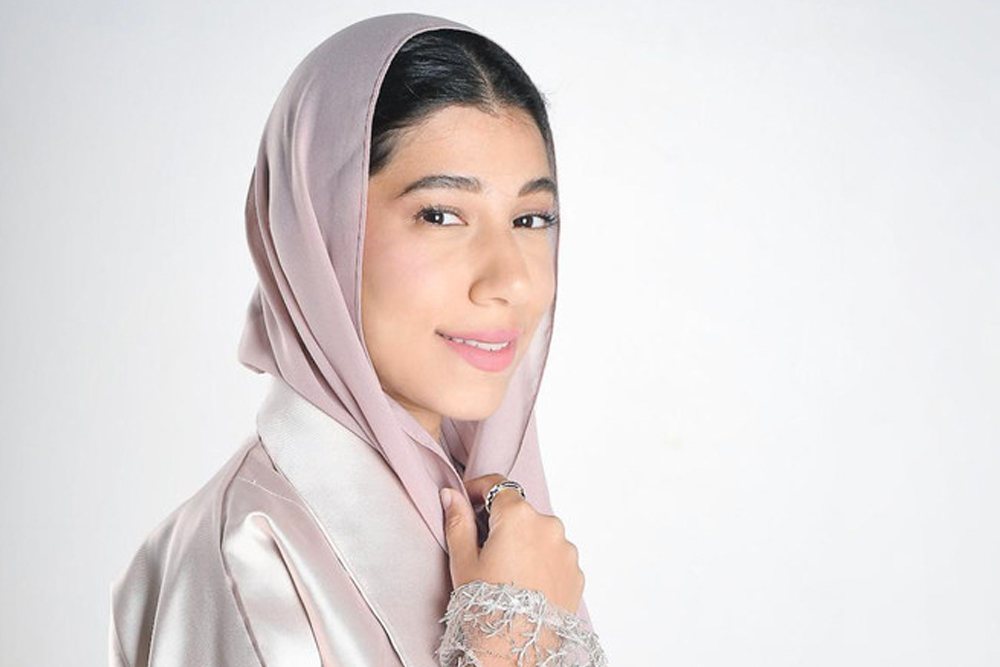
U.A.E: Abu Dhabi schoolgirl ‘Amna Al Mansouri’ Crowned ‘UAE Arab Reading Challenge’ Champion

Competition also had a new category this year for disabled pupils.

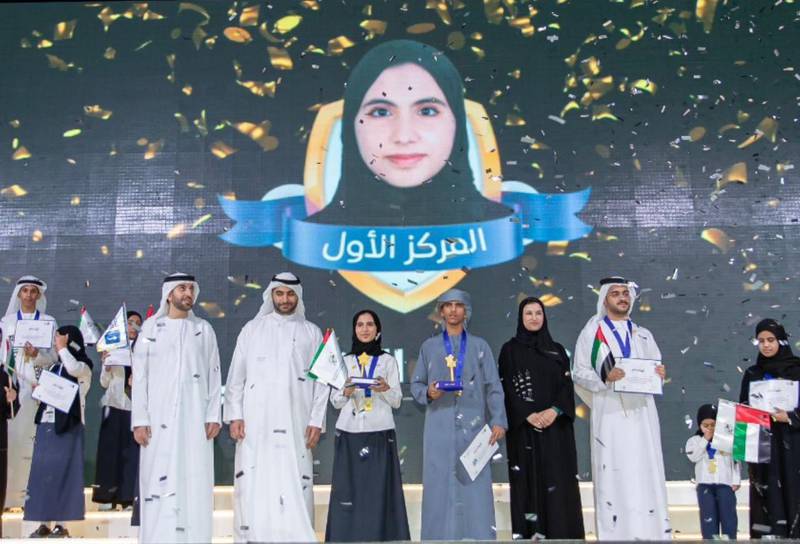
An Abu Dhabi pupil was crowned the winner of the UAE Arab Reading Challenge in Dubai on Friday.

Emirati schoolgirl Amna Al Mansouri, who read 128 books during the academic year, took top spot ahead of more than 500,000 pupils.

Sheikh Mohammed bin Rashid, Vice President and Ruler of Dubai, praised those who took part.

“Today, the UAE celebrated 514,000 students from state schools who participated in the Arab Reading Challenge – whose Arab and international participation reached 24.8 million students,” he said on Twitter.

“I congratulate Amna Mohammed Al Mansouri, and her family, for coming in first place. Amna read 128 books during the academic year.

“Two years ago, Amna lost the ability to walk, but that did not stop her. She soldiered ahead and sailed across the vast ocean of knowledge and literature. The challenge was the beginning of a life-changing experience.

“Today, Amna can walk once again, she has won the Reading Challenge and has authored two stories.

“She will represent the country in a few days at the International Physics Olympiad in Tokyo.”

Amna took the top prize ahead of Mohammed Al Hammadi and Iman Daoud.

The competition had a new category this year for disabled pupils. Emirati pupil, Ghareeb Al Yamahi, won first place, with Ghaya Zainallah coming in second place.

“I also congratulate the student Gharib Al Yamahi who won first place in the reading challenge in the category of people of determination,” Sheikh Mohammed said.

“Gharib is blind in sight but he is not a stranger in the path of achievement.

“Gharib read 130 books during the academic year in Braille. He is a writer of articles, a speaker and an inspiration to all of us. When a blind person reads 130 books, sighted people should review themselves.

“All the best to Gharib who, with his persistence and willpower, represents the saying that ‘nothing is impossible in the UAE’.”

The ceremony was attended by Sarah Al Amiri, Minister of State for Public Education and Advanced Technology.

Largest in the world

In May, Sheikh Mohammed  said the annual Arab Reading Challenge  had become the largest event of its kind in the world.

He said 24.8 million pupils from 46 countries had taken part in this year’s competition.

It was launched in 2015 to encourage a million young people to read at least 50 books in a year.

The challenge usually starts at the beginning of the academic year, around September, and continues until the end of the academic year.

The Arab Reading champion is selected based on the pupil’s ability to articulate general knowledge, critical thinking and communication skills, plus the diversity of books they have selected.

A Syrian schoolgirl who survived a deadly missile attack during the civil war in her country was crowned the Arab Reading Challenge Champion in November.

Sham Al Bakour, who was seven when she was named winner, was only six months old when her family’s car was struck during violence in Aleppo in December 2015.

Her father was killed while she and her mother survived the horrific attack.

She completed a remarkable journey from tragedy to triumph to win words of praise from Sheikh Mohammed.

The young literature lover read 70 books to win the competition.

When asked about what she would do with the Dh1 million ($270,000) prize money, she said she would give it to her mother.

source/content: thenationalnews.com (headline edited)

____________

The UAE Arab Reading Challenge prize ceremony was held in Dubai.

____________________________________________________

ARAB WORLD / UNITED ARAB EMIRATES (U.A.E)

MOROCCO: First Arab Nation to Play a Wafcon Final : The Atlas Lionesses of Morocco

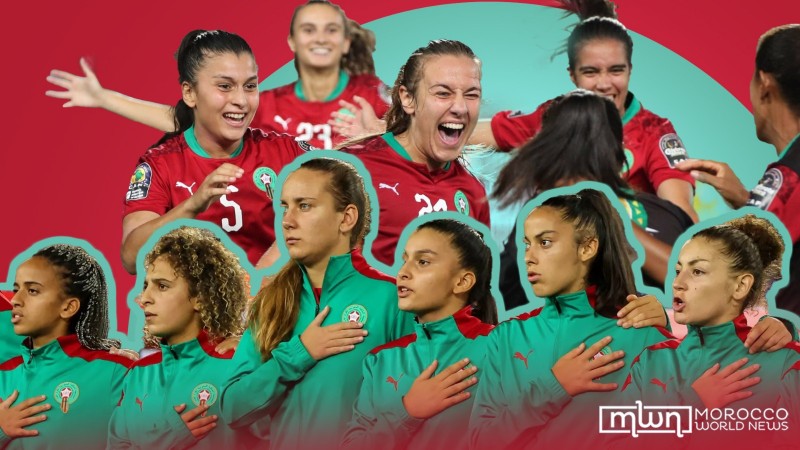
The Atlas Lionesses wrote a page in the history of Women’s football as they became the first Arab nation to play a Women’s Africa Cup of Nations final.

Morocco’s Women National Football (MWNF) team has been making headlines as their popularity has grown since last year’s Wafcon (Women’s Africa Cup of Nations) final, in July 2022.

Hosted by Morocco, the Wafcon tournament marked the rise of the Atlas Lionesses as they became the first Arab nation to play a final for this tournament, when they faced off against South Africa.

As they prepare for this year’s 2023 World Cup in Australia and New Zealand, it is worthwhile to look back on the MWNF team’s great accomplishment last year and what it means for the rest of the world.

The Atlas Lionesses’ Eye-Catching Adventure At Wafcon 2022

With Football having been traditionally viewed as a men’s game in the region, the MWNF team captured the hearts and imagination of girls and women from the Arab region as they achieved a milestone at the 2022 Wafcon.

Although South Africa ended up winning the title, the Atlas Lionesses gained recognition for their impressive skills and outstanding performances, securing the 7th rank in Africa and the 72nd place in the FIFA global ranking.

Before reaching the final, the MWNF team had beaten Botswana and Nigeria in two spectacular football matches, allowing them to secure a ticket to participate in the 2023 Women’s World Cup, which will take place in Australia and New Zealand.

Impressing many football personalities, the team’s remarkable performance also saw the rise of a number of star players in the team as Ghizlane Chebbak, Fatima Tagnaout, and Zineb Redouani were listed among the “best eleven” by the Confederation of African Football (CAF). 

In addition to that, Morocco’s captain Chebbak was named the best player of the 2022 Wafcon and received the “Woman of the Tournament” award following the match against South Africa.

Commenting on the Atlas Lionesses’ performance at last year’s Wafcon, MWNF coach Reynald Pedros expressed his eagerness to reach new heights with his team: “We will continue to work. This is just the beginning of a new adventure.”

Recognition by international media

Various local and regional news outlets put the spotlight on the MWNF team’s achievements, acknowledging their contribution to Morocco’s football development, alongside the Atlas Lions’ incredible performance at the last men’s World Cup.

For instance, International football’s governing body FIFA described the year of 2022 as “Morocco’s miracle year of continental and international success” and emphasized the women’s team’s role in paving the way for Moroccan football to become a leading global symbol.

For Africa News, women’s football may be at a turning point as its popularity is growing exponentially, proven by the attendance record of the final Wafcon match which counted around 50,000 supporters at the Prince Moulay-Abdellah Stadium in Rabat.
The article also acknowledged Morocco as “the first North African country to host the Women’s Africa Cup of Nations in the 24-year history of the continental competition.”

Earlier this week, the Atlas Lionesses headed to Australia ahead of the 2023 FIFA Women’s World Cup as the only representative of the Middle East and North Africa region in this prestigious global tournament.

source/content: moroccoworldnews.com (headline edited)

_____________

Morocco women football team

_____________

MOROCCO

MOROCCAN Women shake up the world of Gnaoua Music

Young Moroccan women are bringing new and inclusive energy to the centuries-old art of Gnaoua, a spiritual musical repertoire traditionally reserved for men.

Also known as “tagnaouite”, it gained worldwide recognition after it was listed by UNESCO as intangible cultural heritage in 2019.

“Why shouldn’t women be part of this dynamic?” asked Asma Hamzaoui at the Gnaoua World Music Festival in Essaouira, a southern coastal city steeped in the musical tradition.

The 26-year-old Casablanca native is one of the first women to perform Gnaoua, which blends African rhythms with spiritual chants and poetry.

Her father, a Gnaoua master, initiated her into the artform at a young age.

“I’ve accompanied him to his evening gatherings since I was seven years old,” recounted the young woman, who in 2012 formed the group “Bnat Timbouktou”, or The Girls of Timbuktu.

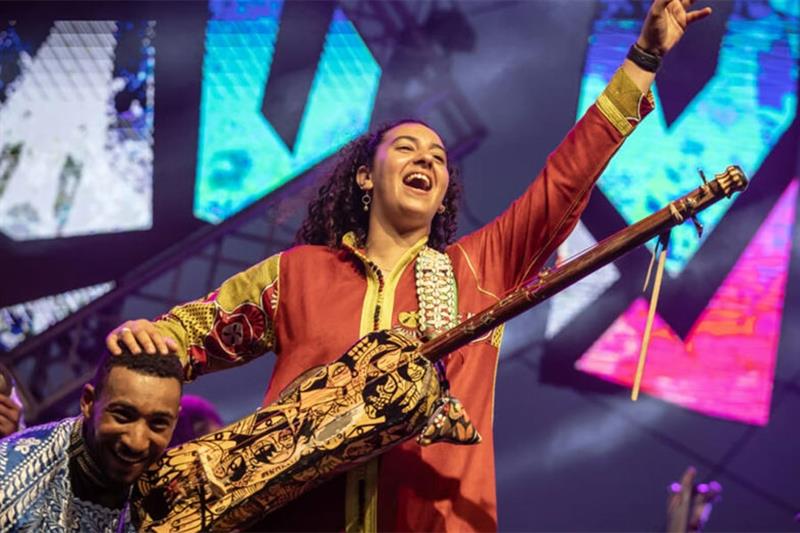
“I gradually learned to play the guembri, a three-stringed lute made of camel skin. My father made sure that I learned as much as possible before I flew solo.”

The all-female ensemble wowed the festival-goers — with Hamzaoui on vocals and the guembri, and four musicians on qraqeb steel castanets.

They played alongside the Amazones d’Afrique, another all-female group, from Mali.

‘Feeds the spirit’

“It’s exceptional to have women playing Gnaoua music, which shouldn’t be reserved for men,” said Hamza Tahir, a member of the audience. “They bring fresh air into this music.”

Inspired by Bnat Timbouktou’s success, rising star Hind Ennaira developed her passion for tagnaouite in her hometown of Essaouira.

Its fortified citadel on the Atlantic coast is a breeding ground for the mystical musical tradition, in which religious hymns invoke ancestors and spirits.

Originally practised by enslaved people and dating back at least to the 16th century, Gnaoua has gone from being practised largely in private gatherings, where therapeutic rituals accompanied the music, to public events such as concerts and festivals.

“The city of Essaouira is the cradle of tagnaouite,” said Ennaira, who was taught to play the guembri by friends. “It is beautiful heritage that feeds the spirit. It is important for young people to value it.”

Ennaira put her own touch on the tradition by bringing in a guitarist and drummer to accompany the traditional ensemble.

“At first, there were some differences because they were not used to working with a woman,” she said. “But after some challenging exercises, they adapted to me and we became complementary.”

‘Jimi Hendrix’ style

Yousra Mansour — the front woman of the band Bab L’bluz (“The Blues Gate”), which fuses Gnaoua, rock and blues — also encountered challenges entering the music scene.

“There were two constraints for me: first, the fact that this field is usually reserved for men, but also how we interpret traditional music,” the musician told AFP.

“It is not very accepted or even tolerated by some of the stricter individuals.

“We replaced the bass with the guembri and the guitar with the awisha (a small guembri) and created a kind of ‘power trio’ in the style of Jimi Hendrix with reimagined traditional instruments,” explained Mansour.

The 32-year-old vocalist passionately defends women’s freedoms, saying that “as a woman, I have not had an easy life”.

“There was a lack of women in this field. When I see Asma Hamzaoui or Hind Ennaira, they are magnificent,” she said.

“It is not easy to evolve in a predominantly male universe, but we see changes emerging.”

source/content: english.ahram.org.eg (headline edited)

____________

Friends taught Moroccan Gnaoua artist Hind Ennaira to play the guembri, a three-stringed lute made of camel skin (Photo: AFP)

____________

MOROCCO

EGYPT: Yasmine Sabri Becomes Egyptian Cinema’s First Female Superhero

Dalila’ will join ‘Mousa’ as part of director Peter Mimi’s action-packed cinematic universe, ‘The Underdogs’.

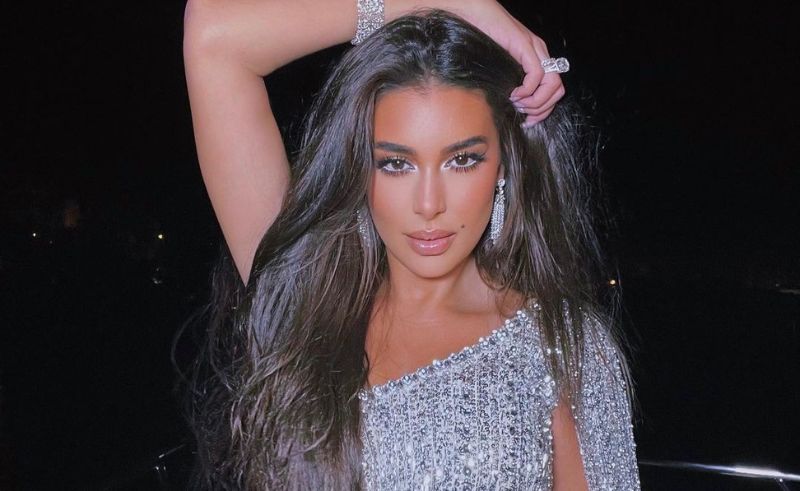
Actress Yasmine Sabri is suiting up as Egyptian cinema’s first female superhero!

Peter Mimi – the director of famed Ramadan series ‘Al Ikhtiyar’ (The Choice) – is expanding on the superhero cinematic universe he created for his 2021 action film ‘Mousa’ starring Karim Mahmoud Abdelaziz and Eyad Nasser, in which a shy engineering student creates a powerful robot to avenge his father.

Joining ‘Mousa’ as part of Mimi’s ‘The Underdogs’ franchise will be ‘Dalila’, where Yasmine Sabri will star as a badass motorcyclist on a mission for justice. Filming for ‘Dalila’ has already begun, with Sabri currently undergoing intense physical training and motorcycle training to prepare for the film’s intense action sequences (which, if ‘Mousa’ was anything to go by, will be absolutely explosive). The Avengers who?

While Sabri is working on her super stunts, the actress has already wrapped up filming for ‘Bo’ Bo’ starring Ami Karar and ‘Abou Nasab’ starring Mohamed Emam, both of which will come out during the Eid al-Adha holiday.

‘Dalila’ is set to hit movie theatres in 2023, although details on the rest of the cast has yet to be announced.

source/content: cairoscene.com (headline edited)

___________

_________

EGYPT

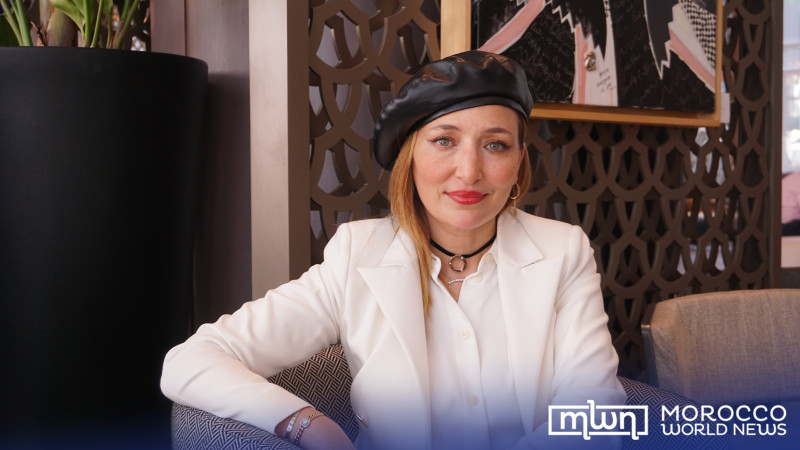
MOROCCO: Unveiling the Artistic Journey of Moroccan Painter Houda Gueddari

Gueddari’s art portrays the strength, resilience, and beauty of Moroccan women, in addition to advocating for their equal representation and recognition in society.

Houda Gueddari’s exhibition has captivated art enthusiasts at an ongoing art fair in the vibrant and culturally rich city of Rabat, with the artist’s work unveiling the remarkable artistic journey of a prominent Moroccan painter. Entitled “My Art, My Path,” the exhibition tackles pressing special issues as the artist uses her paintbrush as a weapon to create change.  

In an exclusive interview with the gifted painter, Morocco World News had the opportunity to delve into her creative journey, discovering the personal anecdotes, challenges, as well as triumphs that have shaped her distinctive artistic style.

Between art and a more conventional career

Pursuing an artistic career, however, has not been easy for Gueddari, as she encountered many obstacles along the way. Faced with the pressure of pursuing a more conventional path, the Moroccan artist made a compromise and chose a paramedical career in dental prosthetics that still incorporated artistic elements. 

But her passion for art remained unwavering. “I couldn’t let go of my dream,” she said. “I continued to seek opportunities to refine my skills, attending workshops and joining artist associations. These experiences opened doors to my first exhibitions and invaluable connections within the art community.”

The year 2016 marked a pivotal moment in Gueddafi’s artistic journey. With determination and vision, she founded the first art gallery in Fez, a space that showcased her own creations as well as supported and promoted fellow local artists.

“The gallery became a vibrant hub of artistic expression,” she reminisced, adding that “it was a joy to witness the dialogue and appreciation it fostered among art enthusiasts and collectors.”

When the COVID-19 crisis hit Morocco, it brought about unanticipated challenges, necessitating the temporary closure of the gallery amid a nationwide lockdown. 

Yet, Gueddari did not allow this setback to extinguish her artistic spirit. “I adapted to the circumstances … I sought alternative ways to share my work with the world,” she said. 

This includes the artist’s active presence on social media, notably her Instagram page with nearly 100k followers. Gueddari’s social media platforms serve as a medium for her to share her paintings, inspirations, and thoughts with art enthusiasts.

International recognition

Gueddari has made a name for herself as a renowned artist in Morocco, especially in the city of Fez where she lives.

In addition, her talent shone on the international stage with various achievements, including being selected as a finalist in a prestigious competition in Dubai. She also received acclaim for her work in Florence in 2022, winning the Leonardo Da Vinci international prize. 

She fondly recalled her participation in the renowned Biennale art exhibition in Venice, Italy, and exhibiting at the Museum of Modern Art in Barcelona.

As travel restrictions were imposed worldwide, Gueddari redirected her focus toward promoting art within Morocco. In collaboration with the Marriott Hotel in Rabat, she orchestrated the ongoing “My Art, My Path” exhibition.

Speaking about her artworks, she said that she draws inspiration from various movements, including cubism and surrealism. “A little bit Picasso, a little bit Dali … I was inspired by several artists, but the truth is I really just try to be myself,” she explained.

Gueddari sees herself as a “committed artist.” She said: “When I paint, I paint my emotions, I lose my life, I paint everything that happens around me.”

Through her art, Gueddari tackles various themes and social issues, including women’s rights and the crucial role they play in Moroccan society. 

“Women play an integral role in society, and their contributions should never be underestimated or undervalued. It is essential to create an environment where women have equal opportunities to thrive, express themselves, and pursue their dreams,” she said.

The “My Art, My Path” exhibition merges traditional and contemporary expressions, embodying the Moroccan artist’s profound connection to her homeland and its rich artistic heritage. “I am very proud to be Moroccan … I am very proud to represent my country as an artist,” she said.

Art as a constant quest for growth, self-discovery

Discussing the obstacles artists worldwide face, Gueddari acknowledged the challenges they have to endure, saying: “The life of a painter demands unwavering dedication and perseverance.”

“It is a constant quest for growth and self-discovery,” she stressed, underlining that these challenges serve as golden opportunities for artists to achieve personal and artistic growth, as well as push the boundaries of their creativity and inspire others along the way. 

Despite the difficulties that artists encounter, Gueddari argued that the artistic journey is extremely rewarding. “The world of art teaches us tolerance, acceptance, openness to the other, and openness to the world.”

Through her work and her online presence, the Fez-based artist actively promotes art in Morocco, seeking to deepen the understanding and appreciation of the artist’s spirit and the nation’s artistic landscape. 

Talking about the future of art in Morocco, she said that she is “very optimistic,” especially since the government has been giving more importance to art and culture.

After her exhibition in Rabat comes to an end, Gueddari will embark on another journey, with plans to hold exhibitions in various Moroccan cities, including Marrakech and Agadir.

When asked about her message to aspiring Moroccan artists, Gueddari shared a heartfelt, encouraging piece of advice. “Never settle for what you already know,” she said. “Embrace versatility, expand your knowledge, and explore different artistic domains. Stay true to yourself, and draw inspiration from other artists.”

source/contents: moroccoworldnews.com (headline edited)

____________

Moroccan painter Houda Gueddari

_____________

MOROCCO

SHARJAH, UAE / LEBANON / TUNISIAN-FRENCH: 19th ‘UNESCO-Sharjah Prize for Arab Culture’ Honours Winners Kassem Istanbouli and Hajer Ben Boubaker in Paris

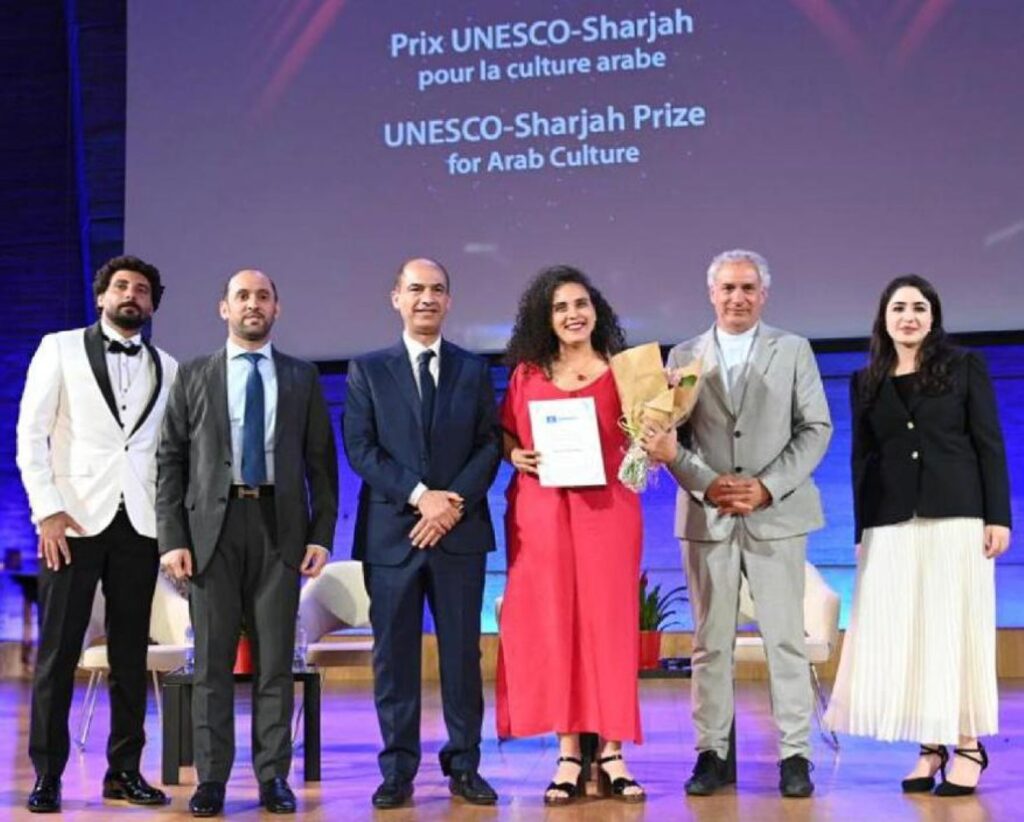
Kassem Istanbouli, Lebanese actor-director, and Hajer Ben Boubaker, French researcher and sound director, were awarded the 19th UNESCO-Sharjah Prize for Arab Culture at an award ceremony at UNESCO Headquarters in Paris on 26th June 2023.


The event, organised by the Sharjah Department of Culture in collaboration with UNESCO, celebrated the achievements of two winners.


The ceremony was attended by Abdullah bin Mohammed Al Owais, Chairman of the Sharjah Department of Culture; Ernesto Ottone Ramirez, Assistant Director-General for Culture at UNESCO; Mohammed Ibrahim Al Qasir, Director of the Department of Cultural Affairs in Sharjah; Ahmed Al Mulla, Deputy Ambassador of the UAE to France, and Aisha Al Kamali, Representative of the Cultural Attaché at the Embassy of the UAE in France, along with dignitaries, writers, intellectuals and accredited diplomats to the United Nations (UN).


Al Owais and Ramirez presented the 19th edition of the UNESCO-Sharjah Prize for Arab Culture to Istanbouli, winner of the Arab Personality Award, and Ben Boubaker, winner of the Non-Arab Personality Award.

The UNESCO-Sharjah Prize for Arab Culture recognizes recipients’ outstanding artistic achievements celebrating Arab art and culture globally. Core to UNESCO’s anti-racism and anti-discrimination agenda, the Prize promotes peace and dialogue to foster intercultural understanding and celebrate diversity.

For this 19th edition of the Prize, the international jury recognized Mr Istanbouli and Ms Ben Boubaker’s extraordinary contributions to promoting the arts and Arab culture and supporting their local communities.

Kassem Istanbouli is a Lebanese actor and director. Since 2014, he has led the rehabilitation of historical cinemas in Lebanon, including Stars Cinema in Nabatieh, and Al-Hamra and Rivoli in Tyre, abandoned or destroyed during civil war.

Mr Istanbouli is involved with several international projects focused on skills enhancement, youth empowerment and collaborative partnerships. In 2020 he co-founded the Arab Culture and Arts Network (ACAN) to design and implement online cultural activities across the Arab region. The Network includes over 700 organizational and individual members from across the world.

Mr Istanbouli is also director and founder of the Lebanese National Theater in Tyre and the Lebanese National Theater in Tripoli and has been a project manager at the Tiro Association for Arts in Lebanon since 2014.

Hajer Ben Boubaker is a French-Tunisian independent researcher and sound director. Her research focuses on a socio-historical analysis of Arab music and the cultural history of the Maghreb community in France and around the world.

In 2018, she created and self-produced the Vintage Arab podcast, which explores Arabic musical heritage. At the intersection of research and art, the podcast allows her to keep a foot in each sphere.

Ms Ben Boubaker is a producer and documentary director for France Culture, where her work questions the sound and political memory of immigration. As a researcher, she is associated with the Arab and Oriental music collection at the Bibliothèque nationale de France, and continues to write for scientific journals, including “Paris, capitale maghrébine: une histoire Populaire” in October 2023.

Created in 1998 and run by UNESCO at the initiative of the United Arab Emirates, the UNESCO-Sharjah Prize awards two laureates per year — individuals, groups or institutions — in recognition of their contribution to Arab art and culture, or for participating in the dissemination of the latter outside the Arab world.

The initiative contributes towards the Organization’s objective of fostering inclusive, resilient and peaceful societies. The Prize carries a monetary value of USD 60,000, which is equally divided between the two laureates.

source/content: wam.ae (headline edited)

__________

__________________________________________________

SHARJAH, UAE / LEBANON / TUNISIAN-FRENCH

SAUDI ARABIA: Maryah Abdudeeb the Saudi Visionary Jewelry Designer Turning Arabic Literature Into Stunning Wearable Art

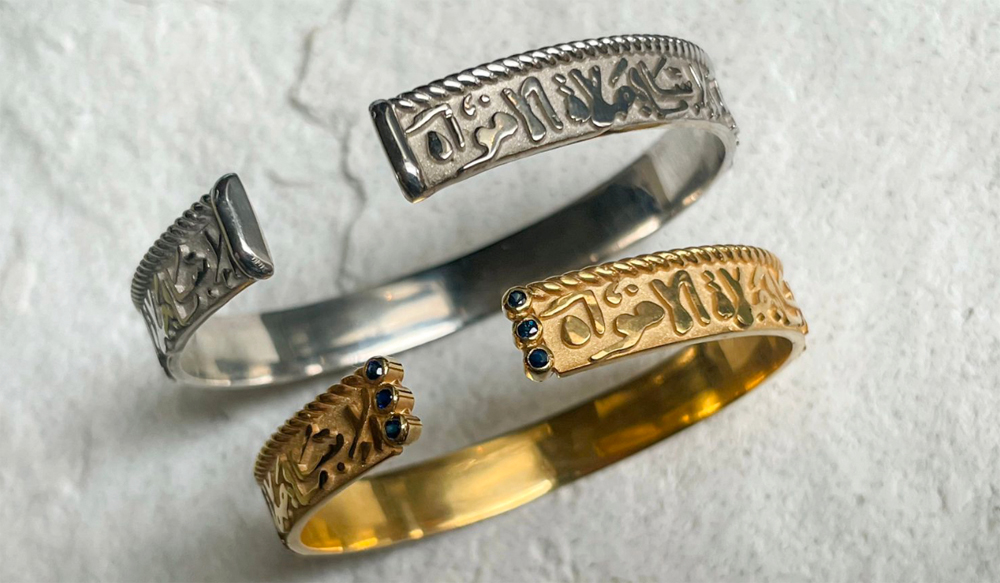
Saudi jewelry designer, Maryah Abdudeeb, is revolutionizing the world of wearable art by fusing the elegance of Arabic calligraphy with the beauty of literature. Through her brand, Mashq, she has embarked on a creative journey that begins with the delicate strokes of a calligraphy brush and culminates in the creation of breathtaking masterpieces inspired by poetry and literature.

Mashq, which takes its name from an ancient form of calligraphy, meaning “stretch out,” captures the essence of Arabic letters in a unique and captivating manner. The brand’s founder, Maryah Abdudeeb, drew inspiration from her childhood experiences, where she witnessed her father’s skillful calligraphy and her mother’s ability to transform simple materials into works of art.

Guided by these formative influences, Abdudeeb embarked on a quest to explore the depths of Arabic poetry and literature. Her creative journey was further enriched as she traveled to different countries, marveling at architectural marvels adorned with historic Arabic inscriptions. It was during these encounters that she stumbled upon jewelry pieces engraved with calligraphy, each one narrating a deeply personal story.

With a profound love for Islamic art, Abdudeeb believes in showcasing and appreciating its timeless beauty. To deepen her knowledge and understanding of this art form, she immerses herself in Islamic design books, where she discovers an array of captivating designs and phrases inspired by this rich cultural heritage.

The COVID-19 lockdown proved to be a turning point for Abdudeeb, as she pondered over ways to combine her twin passions: jewelry and Arabic calligraphy. It was during this period of introspection that the concept of Mashq was born.

In March 2021, Mashq made its debut, unveiling its inaugural collection. Abdudeeb personally contributed to each stage of the jewelry-making process, acting as both the calligrapher and designer. Each piece in the collection showcases verses and lines from her favorite works of Arabic poetry and literature, capturing the essence of profound emotions and inspiring narratives.

The transformative design process begins with Abdudeeb meticulously rendering the chosen phrase in calligraphy, striving to convey its true essence. The phrase is then transformed into a three-dimensional representation using specialized jewelry design software. Depending on the size and intricacy of the piece, it is crafted either by hand or with the assistance of cutting-edge machinery.

However, the true measure of success for Abdudeeb lies in the emotions evoked by her creations. By employing a variety of meaningful phrases and materials such as silver, gold plating, and gems, she aims to establish a connection between the wearer and the words. Each piece serves as a reflection of personal sentiments or a wellspring of motivation, empowering individuals to carry their chosen phrase with grace and pride.

source/content: abouther.com (headline edited)

_________

_________________

SAUDI ARABIA

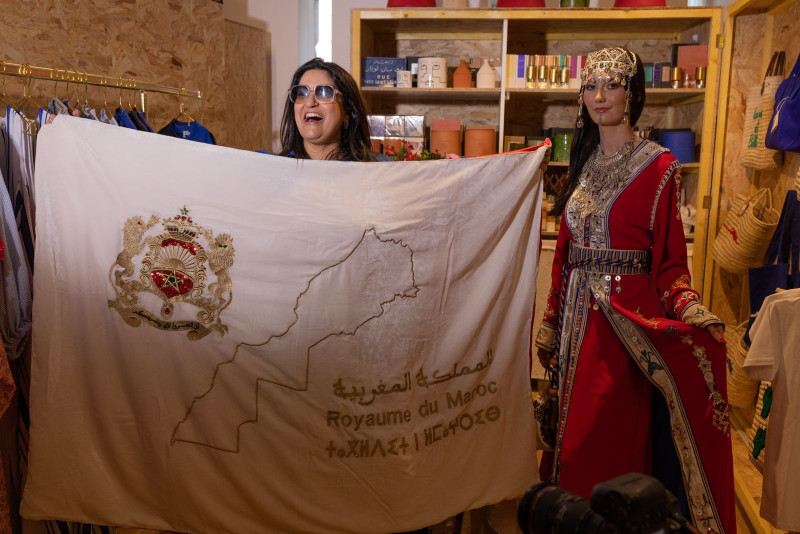
MOROCCAN Caftan Shines at UNESCO’s Prestigious African Week in Paris

The event highlighted Moroccan caftan as a key part of Morocco’s cultural identity and diversity.

The UNESCO headquarters in Paris hosted on Tuesday evening a spectacular fashion show displaying the vibrant colors and captivating designs of Moroccan caftan. The show was part of the African Week taking place between June 5 and 9.

The event showcased the work of Moroccan designer Fatima Zahraa Al-Filali Al-Idrisi, the visionary creator behind the renowned brand “Fatim Haute Couture Made In Morocco.” She had been specifically invited to represent Morocco at the show.

With an atmosphere infused with the melodies of Tarabi and Andalusian heritage, the Moroccan designer mesmerized the audience with her unique collection of Moroccan caftans. 

She showcased “an original variety of Moroccan caftans resembling historical, vibrant, and pleasant works of art,” indicated a press release.

The statement added that Al-Idrisi’s designs “embodied both the luxury and honor of this traditional national garment, the Moroccan caftan, which has remained an authentic and refined heritage throughout different periods and generations.”

Exuding opulence and prestige, each garment embodied Morocco’s rich cultural, historical, and civilizational legacy.

The fashion event saw a  harmonious blend of international, African, and Maghreb presence, convening diplomats, professionals, entrepreneurs, artists, media representatives, and members of the African diaspora residing in France. 

With her participation in the event, under the theme “Authentic National Heritage,” Al-Idrisi aimed to highlight and celebrate Morocco’s cultural diversity and bring the international audience closer to the different cultural realms that shape the Moroccan identity.

From the Sahrawi caftan to the Amazigh caftan and the Moroccan Jewish caftan, the Moroccan designer showcased a wide range of styles, incorporating regional dimensions, including the Fassi, Rbati, Atlassi, Shamali (Northern), Sharqi (Eastern), and Janoubi (Southern) designs.

The spectacle also celebrated the craftsmanship and attention to detail involved in the creation of Moroccan caftans. This included the fabrics, textures, and captivating colors used in the caftans varied according to regions, customs, occasions, and seasons.

The event also showcased Moroccans’ mastery of caftan styling techniques, embroidery, and ornamentation, a testament to the creative skills and dedication of the North African country’s artisans.

In line with the African Week’s objective of showcasing the continent’s cultural and artisanal heritage, Al-Idrisi incorporated “prominent authentic accessories that enhanced this elegant garment,” added the statement.

The accessories included hand-women and embroidered pouches, headbands, crowns, belts, woven and metallic trims, traditional brooches, earrings, and necklaces. 

Adorned with coral and gemstones, the accessories enhanced the overall charm of the caftan designs.

source/content: moroccoworldnews.com (headline edited)

____________

Moroccan designer Fatima Zahraa Al-Filali Al-Idrisi at the event

____________

MOROCCO