Arabs & Arabian Records Aggregator. Chronicler. Milestones of the 25 Countries of the Arabic Speaking World (official / co-official). AGCC. MENA. Global. Ist's to Top 10's. Records. Read & Enjoy./ www.arabianrecords.org
A small ring around the main artery may cure patients with leaking heart valves. Researchers have documented its effect on animals and they hope they will make it possible to use the technology on humans.
A leaking heart valve – or in technical terms, aortic insufficiency – is a condition in which the valve between the left ventricle of the heart and the main artery cannot close completely. The disease can have varying levels of severity and can be caused by congenital malformations or calcification, among other things.
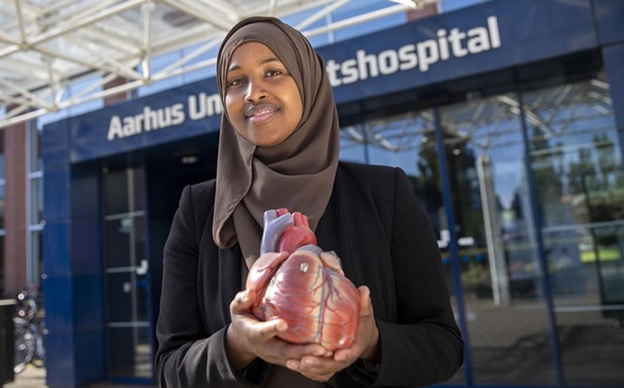
Mariam Noor has developed a small ring that seems to be able to cure leaking heart valves. This can change the way we do cardiovascular surgery. Photo: Lars Kruse, AU Foto.
When the aortic valve leaks, some of the blood returns to the heart, which means the heart has to work harder. In the worst cases, this can lead to heart failure, and this is why it’s important to treat the condition. Doctors usually treat the condition by repairing the diseased heart valve or replacing it with an artificial valve.
Both involve a risk of complications, and therefore engineers from Aarhus University have been working for several years to develop new surgical technology for heart patients.
“A prosthetic heart valve is an effective form of treatment, but it’s also a relatively complicated surgical procedure that brings with it a number of risks and complications in the long term. Now we have found a solution that can make it easier to treat patiens,” says Mariam Noor, a PhD student at the Department of Electrical and Computer Engineering at Aarhus University and the Department of Cardiothoracic and Vascular Surgery at Aarhus University Hospital.
Ring prevents blood from returning to the heart
Mariam Noor has spent the last three years designing and developing a ring that can give patients with aortic insufficiency good treatment results, and she has invented something that may have impact on the world of surgery.
“Instead of replacing the defective valve, my treatment concept is to enclose it in the main artery so it prevents blood from returning to the heart. I’ve developed a new type of ring that tightens around the aortic root to prevent this,” she says.
In fact, for several years now, cardiologists have been using a type of ring to stabilise the function of the heart valves, but this has not been without its disadvantages.
The traditional ring is round and relatively rigid, and this limits its operation. Furthermore, placing the ring in the body is a challenge because surgeons have to cut the aorta and remove the coronary arteries.
The new ring developed by Mariam Noor is made of an elastic material that can mould itself to the body’s tissue. It also has an opening, which makes it easy to place it correctly.
“The surgical procedure is significantly less invasive, and with the help of diagnostic imaging and 3D printing, we can adjust the ring’s rigidity and strength to the individual patient’s anatomy. This gives us some fantastic options, and the technology has been promising during animal trials,” says Mariam Noor.
Lots of physics in the main artery
Mariam Noor has especially focused on the material properties and design of the ring in order to better retain the dynamics in the cardiovascular system.
“I look at surgical issues through the lens of an engineer, because there’s a lot of physics and mathematics in our cardiovascular system. My approach has been to understand how the aorta works and then transfer this knowledge to design a ring that can recreate normal anatomical conditions in patients,” she says.
The ring consists of a silicone core surrounded by suture-like material. In order to document the effect, in collaboration with her colleagues, Mariam Noor has, carried out her experiments in a heart simulator, whereby it is possible to control the pump function, temperature and flow.
“We can simulate the action of the heart in a very precise environment that closely resembles the human body. This means we can closely study what happens with the ring in the frequency area of every, single heartbeat. It’s been interesting, and we have obtained an incredibly detailed knowledge base to continue working with,” she says.
The researchers have subsequently carried out a costly study to see how the ring expands in the body when the heart pumps, and Mariam Noor was positively surprised.
“We looked at the geometric pattern of the main artery in a pig with a ring and in a pig without it, and we could see that we can actually preserve the natural dynamics. These results look really promising,” she says.
She emphasises that there are a few years’ of clinical approval procedures ahead before the heart ring can benefit patients. (source: Aarhus University)
Mariam Noor has developed a small ring that seems to be able to cure leaking heart valves. This can change the way we do cardiovascular surgery. Photo: Lars Kruse, AU Foto.
Moussa Abadi and his French wife Odette hid hundreds of children from the Nazis in homes, convents and orphanages across southern France.
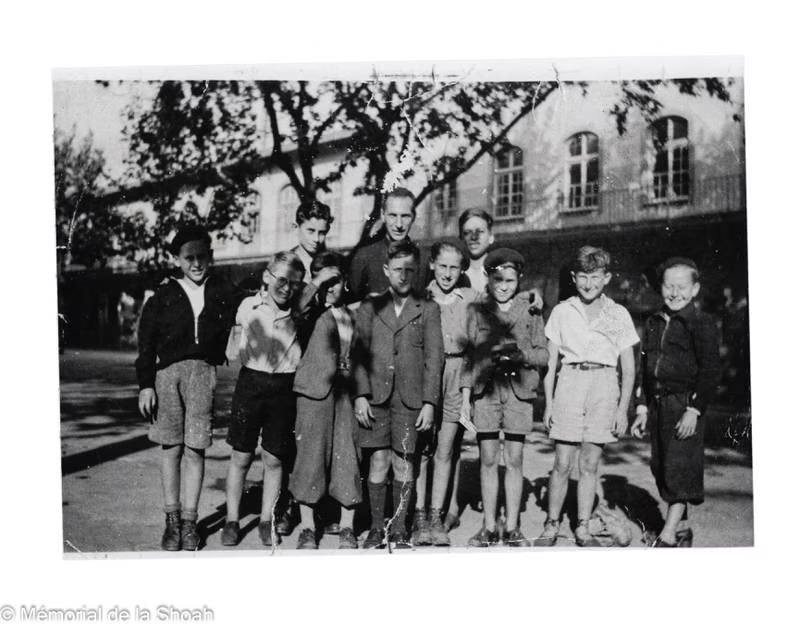
A group of Jewish boys hidden at the Don Bosco school in Nice pictured with their teacher in September 1943. Memorial de la Shoah/Coll.Serge Klarsfeld
Andree Poch-Karsenti was not even three years old when her parents were rounded up at their home in the southern French city of Nice, on a quiet street above the Mediterranean Sea.
She escaped the clutches of the Gestapo, playing obliviously with her neighbour Jacques on the other side of the street.
Her parents and aunts would not survive the war, after being sent to concentration camps in Drancy and then Auschwitz.
But thanks to a clandestine network set up by a brave Jewish couple — a French doctor and a Syrian man from Damascus — Andree avoided the Gestapo.
Moussa Abadi was born to a religious family in the Jewish Quarter of Damascus in 1910. He attended a school run by French priests, which would fuel his eventual move to Paris in the 1920s.
When the Nazis invaded Paris in 1940, Moussa fled south, leaving the capital on a bike with one change of clothes.
He arrived in Nice, later to be occupied by the Italians, where thousands of Jewish families sought refuge. Damascus urged him to return home but he refused.
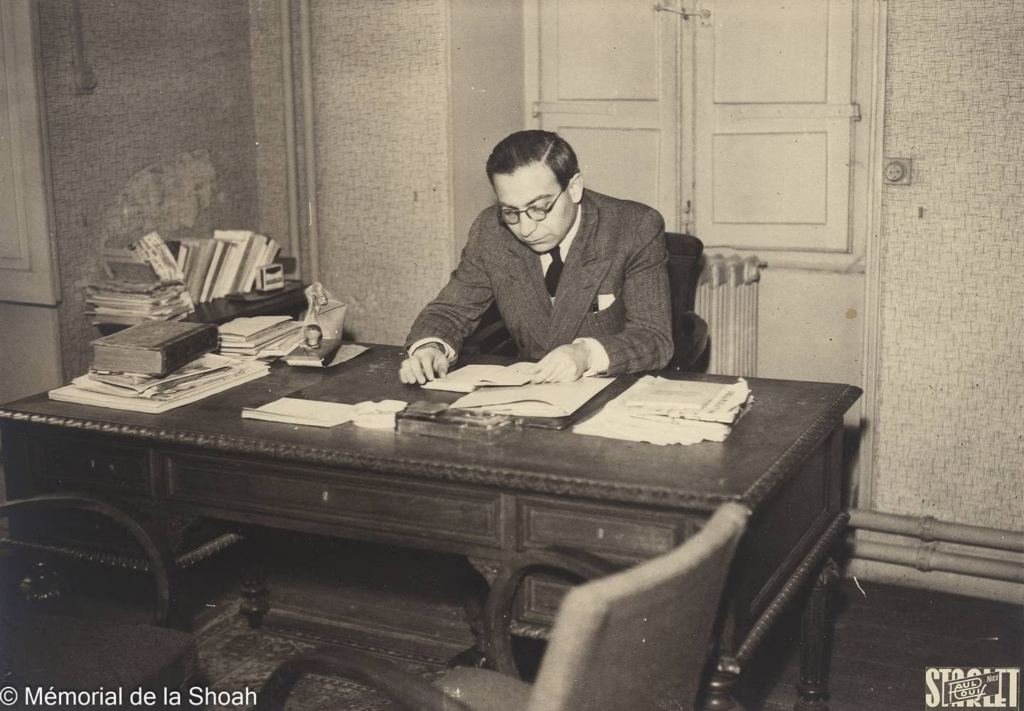
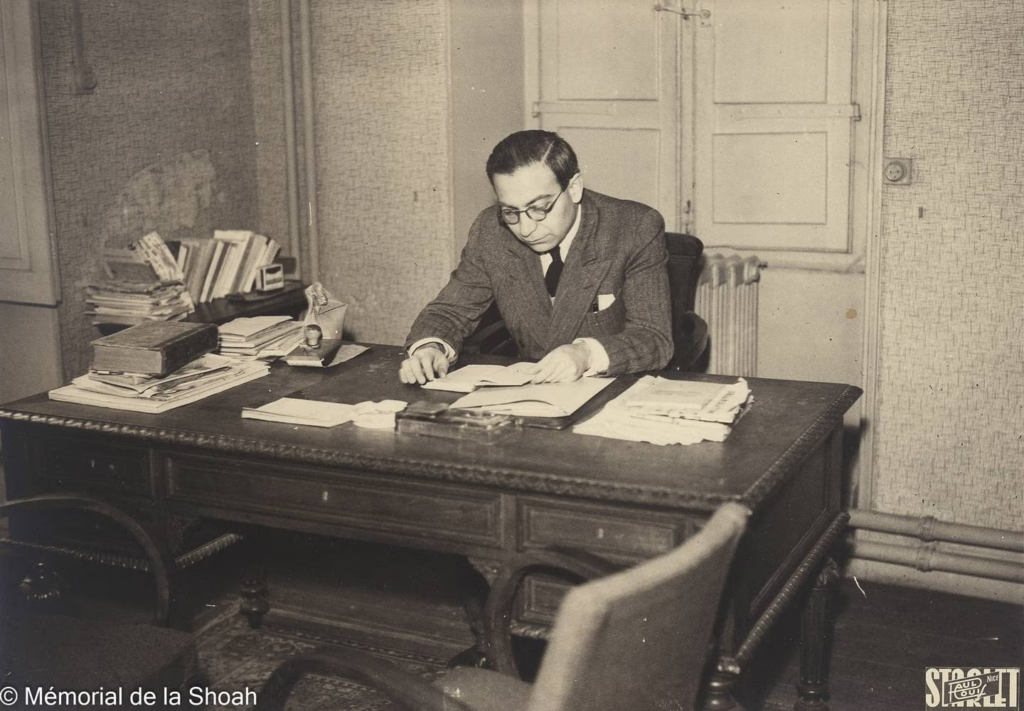
Moussa Abadi at his office in Nice in 1947. Memorial de la Shoah/Coll.Odette Abadi
One day, under a “postcard-blue sky”, Moussa saw a young Jewish woman being beaten to death by a French policeman on the seafront promenade.
While the Nazis ruled the north, the Italians kept the Jewish population relatively safe ― for a time.
But Moussa knew the Germans could push south. Even under the French authorities, round-ups in early 1942 sent thousands of Jewish families to their deaths.
Moussa later met an Italian priest who told him of Jewish children being massacred by the Nazis.
These two encounters pushed him to take the biggest risk of his life, alongside the woman who would later become his wife, Odette Rosenstock.
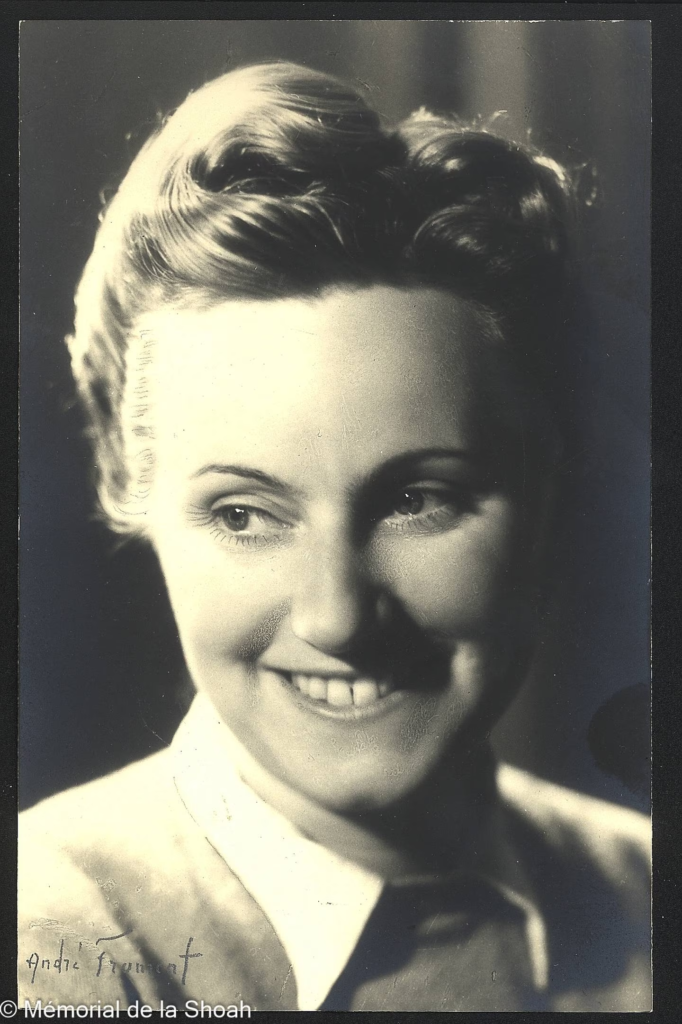
Odette Abadi pictured in 1947 or 1948. Memorial de la Shoah / Collection Odette Abadi.
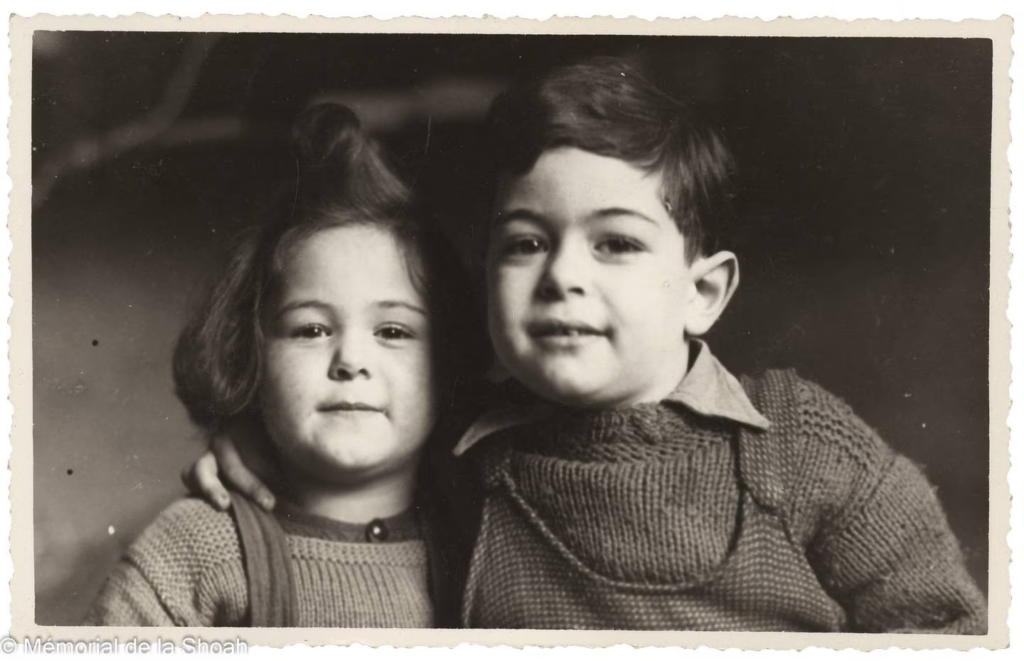
Andree was one of the hundreds of children who were hidden by Moussa and Odette as part of the Marcel Network, established by the couple in 1943 after the German invasion of Nice.
Within a year, they saved 527 Jewish children with the aid of local families, Christian clergy and children’s homes. Many of them would be later honoured by Israel as one of the “Righteous Among the Nations” for their bravery.
Andree is now 82, and lives near Paris. But for decades, she knew nothing of the couple who helped her escape the Nazis.
“I knew that I was hidden with the Rous [family] and that my parents were deported, but I didn’t know the rest of the story. No one had spoken to me about it,” she tells The National.
Andree was taken in by her neighbours, the Rous, and hidden in a mountain village until the spring of 1944, when the Gestapo arrived to take on resistance members.
She was then taken back to Nice and put in a children’s home by Odette and Moussa.
It wasn’t until 1995 that fate would bring them together, when her brother came across a list of children hidden during the war.
Odette was looking for them. Andree called Odette and found the couple living not far from her home in Vincennes.
“They were an extraordinary couple, who led an extraordinary life,” she says.
“They could have gone into hiding but they decided to risk their lives to save children condemned to death. They are courage personified.”
The couple would meet with some of the hidden children later in life, gathering at restaurants in Paris and meeting their grandchildren.
On rare occasions, they would invite them to their modest apartment in the 12th arrondissement.
Odette, a French doctor from Paris, had met Moussa in 1939. After fleeing to Nice, she began working at a clinic for Jewish children on the Boulevard Dubouchage, where she would tell families: “If the Germans come, we can hide your children.”
They had no money and no connections. Both Jewish, they were at risk of deportation and death.
“Every morning when I drank my coffee with Odette, I didn’t know whether I would find her safe that evening, or even whether I would be alive,” Moussa later wrote.
He met the Bishop of Nice, Paul Remond, imploring him to help save children from the Nazis.
The bishop gave Moussa an office in his home, on the ground floor so he could escape if and when the Germans came.
It was here that Moussa made thousands of fake documents, baptism certificates and ration cards. In the garden, he buried files that would help reunite the children with their families at the end of the war.
Odette enlisted the help of local children’s homes and Protestant priests near the synagogue on Rue Dubouchage, who appealed to local families for help.
Armand and Eve Herscovici, hidden by the Marcel Network, pictured in 1943 or 1944. Memorial de la Shoah / Collection Odette Abadi
Children were taken to a “depersonalisation” house where they learnt their new identities, drummed into them before they were sent into hiding.
Some of them were so small they couldn’t speak French or understand why their names had changed.
Some children hidden together would take turns sleeping, terrified they would reveal their real identities as they slept.
“We had to teach them 10 times,” Odette recalled in an interview.
“They carried secrets that were too heavy for children,” Moussa said.
Daniel Czerwona-Jagoda was one child hidden by the network, placed in a convent at the age of five.
When the war ended, his father searched Nice for weeks by bike, looking for his son at each convent in the city.
He finally found his son thanks to a Polish nun.
“Yes, Daniel is here, but his name is now Daniel Blanchi,” she told him.
Now 84, Daniel wrote poetry later in life and signed it with three surnames — Czerwona-Jagoda, Blanchi and Chervonaz. The last he chose as an adult, fearing another war may break out.
“Odette and Moussa, I was really touched by what they did,” his daughter Sarah told The National.
She paid tribute to the couple and her father in a show inspired by his life and childhood memories, where “small children had to act like grown-ups. Little, by little, they had to change who they were because their lives were on the line”.
Despite his experience, her father has taught her to be positive, that you must always move forward, but his experience has stayed with him.
“There were little flashes,” Sarah says. “If we had to be quiet, we had to be completely quiet and still. It was as if it could endanger the whole family, that there might be a knock at the door.
“But there was always a reason, never a complaint. It was never negative.”
‘You owe us nothing’
The Catholic church gave Odette and Moussa false titles to allow them to escape arrest and visit children hidden across the diocese.
Odette would call on the children, posing as a social worker, while Moussa remained at the bishop’s office making documents.
Only two children hidden by the network were arrested, after their hiding place was betrayed.
Odette saw them on a bus, and was shooed away by one of the children when she realised they were surrounded by plain-clothes police.
She was arrested two days later and deported to Auschwitz.
As a doctor, she worked at the camp clinic and was privy to many horrors out of reach of other inmates, trying to save sick prisoners from being chosen by Josef Mengele, who was known as the “Angel of Death” for his experiments on prisoners.
Odette was later sent to Bergen-Belsen until the liberation.
Moussa was left in Nice to run the network alone, also evading capture by the Nazis. He started going to Catholic Mass at a different church every few hours to try to stay under the radar.
After the war, Odette would confess she fared better than Moussa, saying it was sometimes harder for those who were not deported.
Moussa and Odette told almost no one of their heroic efforts that earned them several of France’s highest honours.
Moussa went on to become a renowned theatre radio critic and wrote two books on Jewish life in a Damascene ghetto, while Odette rose up the ranks in medicine and later worked at a school for deaf children.
They refused to speak publicly until they were in their 80s, when the stirrings of Holocaust denial began in France.
“When we meet hidden children again, the question they ask most often is, ‘How can we thank you?’” Moussa told the French Senate in 1995.
“My response will be brief. You have nothing to thank us for, because you owe us nothing. It is we who are in your debt.”
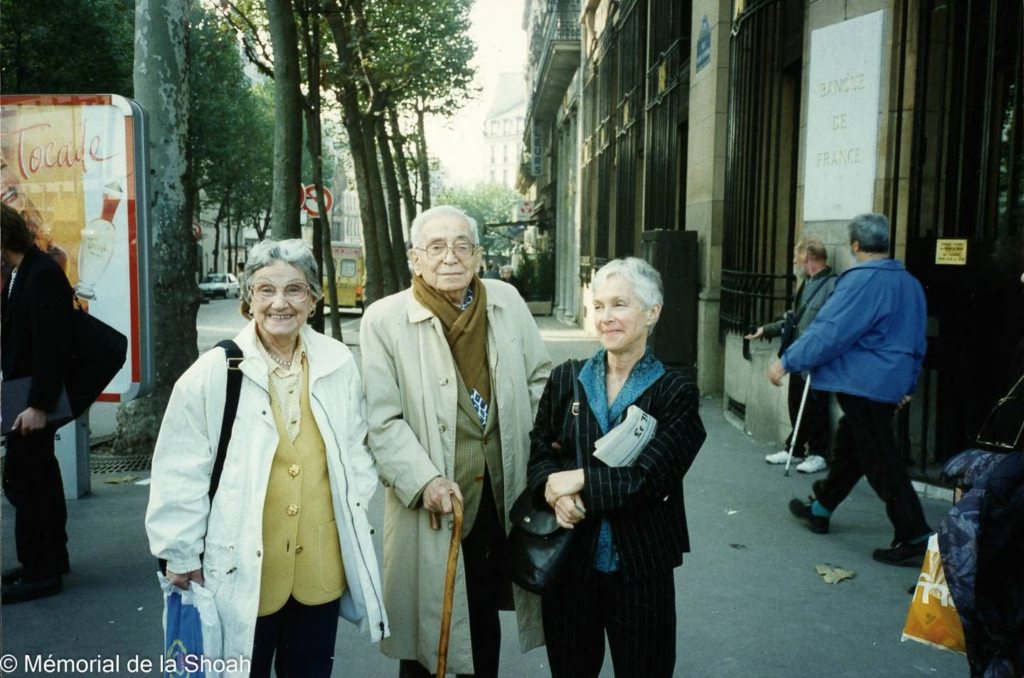
Odette Abadi, left, Moussa Abadi and friend Betty Saville in Paris in 1994. Memorial de la Shoah / Collection Odette Abadi
Moussa kept in contact with his family from Syria, visiting his cousin in Argentina where he confided in some family members of his wartime past but swore them to secrecy.
“I felt as impressed in the way one would if they spoke to Clark Kent. He was a superhero, a real superhero,” his cousin’s grandson Carlos told The National.
“They only spoke about it because they felt they had to. He wanted to take it with him to his grave.”
Moussa’s health declined in the last years of his life, until he was almost blind. He died of stomach cancer in 1997.
Odette spent the last two years of her life collecting all of the documents, finishing the transcription of a book he dictated to her as his eyesight failed.
She died by suicide in 1999, writing that she had died along with Moussa.
“They were a couple of the kind we don’t see today,“ says Andree. “They loved each other. She did everything she could so his memory would endure. She always put him first.”
Andree now runs the “Friends and Children of Abadi” association, which serves to tell the story of the Marcel Network.
“Because Odette and Moussa had never said anything, no one knew about them. We want to continue their memory and that of the Holocaust. As long as I’m able, this is what I will do.”
Unanimous vote ‘opens new chapter in Kingdom’s evolving history’.
Saudi Arabia will chair UNESCO’s World Heritage Committee following a unanimous decision at the organization’s headquarters in Paris.
The committee will be chaired by Princess Haifa bint Abdulaziz Al-Mogrin, the Kingdom’s permanent representative to UNESCO, and chairperson of the organization’s programs and external relations committee.
The Paris meeting also agreed that Saudi Arabia will host the committee’s 45th session, which will be held in Riyadh from Sept. 10-25.
The selection was approved during the 18th session of the World Heritage Committee, which was held in the presence of all member states of the committee.
Princess Haifa tweeted: “In completion of the Kingdom’s prominent role in supporting and preserving human heritage, I am proud today of accrediting Saudi Arabia as chairman of the UNESCO World Heritage Committee, and for hosting of the 45th session of the World Heritage Committee for the first time in September.”
The permanent delegation of the Kingdom to UNESCO tweeted: “Saudi Arabia is home to 6 millennial world heritage sites and 11 intangible heritage elements, Saudi Arabia will proudly host the 45th session of UNESCO’s World Heritage Committee in September— it’s a new chapter in our evolving history.”
The decision is the culmination of efforts led by the Kingdom in UNESCO, in light of unlimited support to the cultural sector by King Salman and Crown Prince Mohammed bin Salman, as well as the support and directives of Culture Minister Prince Badr bin Abdullah bin Farhan.
Princess Haifa praised the decision and said that it is simply the result of the Kingdom’s prominent role in supporting heritage, and its extended endeavors toward documenting human heritage alongside the member states of the committee, as well as achieving the goals of UNESCO in general, and the goals of the World Heritage Committee in particular.
The UNESCO World Heritage Committee, composed of representatives of 21 states elected by the General Assembly, examines the proposals of states wishing to place their sites on the World Heritage List, assists experts to report on the sites, and provides the final assessment of the decision of the proposed sites on the list.
The Kingdom has two other members of UNESCO’s main committees, as well as its membership in the World Heritage Committee: membership of the Executive Council and membership of the Intergovernmental Committee for the Safeguarding of the Intangible Cultural Heritage, which highlights the Kingdom’s role as a pivotal and international center of action in the organization’s decision-making.
source/content: arabnews.com (headline edited)
_________
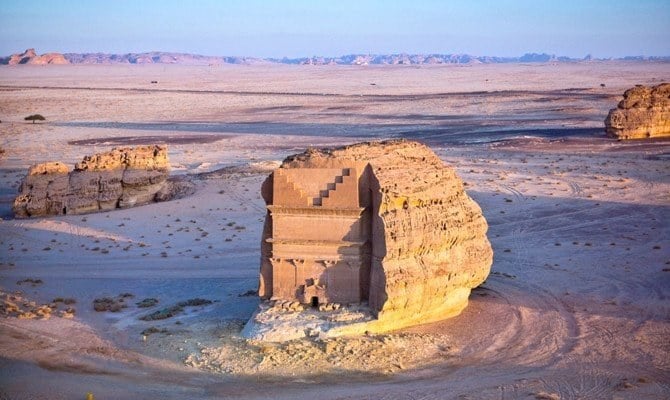
Madain Saleh became Saudi Arabia’s first UNESCO World Heritage Site in 2008. (SPA)
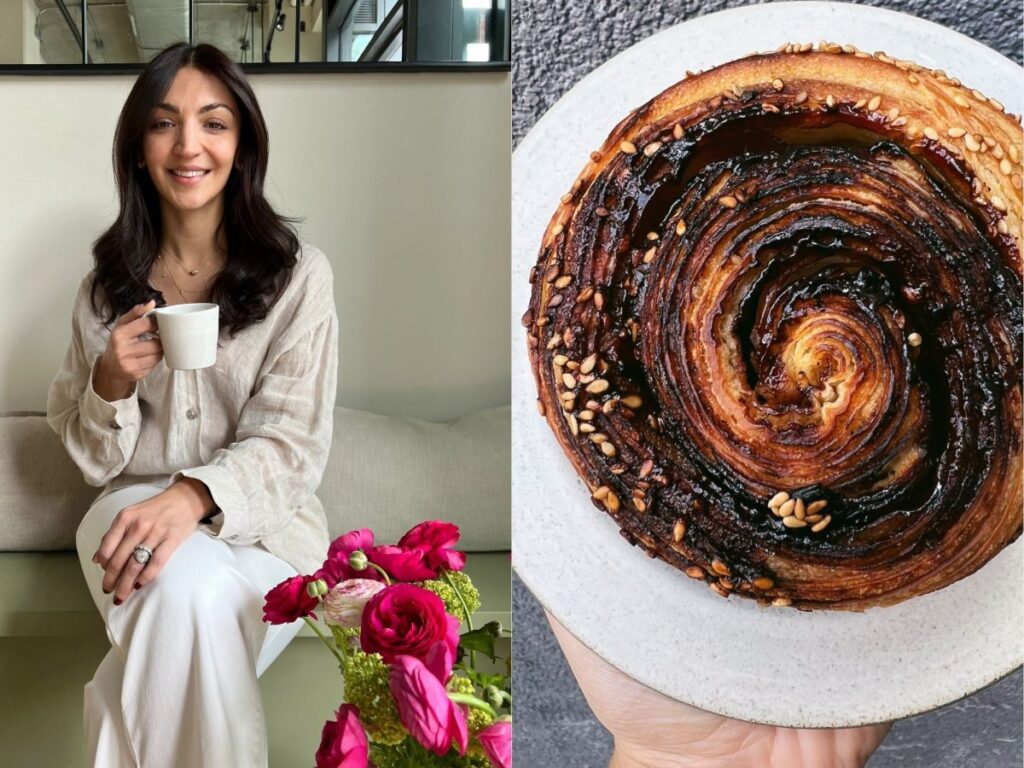
Owner Dona Murad says the motto is Bahraini hospitality, Copenhagen technique and New York energy.
If you ever find yourself in Cooper Square, in the Lower East Side of Manhattan, you might find a queue forming outside a cosy-looking bakery.
That would be Librae, New York’s — and possibly the whole of America’s — first Bahrain-owned-owned bakery. It’s the brainchild of Dona Murad, a Bahraini entrepreneur married to a New Yorker.
“We always wanted to have something in his hometown to represent the both of us,” Murad says on the phone from Dubai, where she lives when she’s not in the Big Apple.
“We wanted a space that brought together different cultures, religions and diversity.”
One quick look at the menu confirms they have achieved exactly that. Highlights include the rose pistachio croissant, a feta and dill scone and a lumee babka bun.
Lumee, or black lime, is liberally used in Bahraini cuisine.
“It’s used in tikka and stews and we wanted to create a pastry that was Bahrain and New York,” Murad says.
“So we took black lime, crushed it up, made it sweet in a lemon curd and put it into a babka, that’s classic New York.
“We gave it oomph and our own identity.”
Murad arrived in New York before the opening with black lime in her suitcase, knowing it was always going to be on the menu.
Another unique dish is the Marmite cheddar and scallion escargot, which is also on the menu at Hopscotch, Murad’s first cafe in Bahrain.
“Marmite is so hard to find in New York. We were buying it on Amazon in tiny little bottles, scraping every morsel out of the corners,” Murad says with a laugh.
“But we took that and put it in our morning bun and get the occasional English or Australian person who gets excited to see it on the menu.
“We love using flavours familiar to us, experimenting with them, putting them together in things that become delicious, like a disco in your mouth.”
Murad describes Librae as a “third culture cafe”, where they use “a little bit of this, a little bit of that”, with flavours and design influences from all over the world, from Bahrain to Bali and Morocco to India.
They also create new desserts for religious occasions, whether it’s for Eid and Ramadan, Christmas or Hanukkah.
It’s not just the flavours that stand out, either, but the technique used in the baking.
Murad and her husband, Andre, love the food scene in Copenhagen and so they were inspired by the Denmark capital’s unique fermentation process, which uses more salt and fat than usual with sourdough.
“Their approach to fermentation is quite a scientific one so giving examples might be a bit tedious, but if I had to explain it in two words it comes down to ‘no shortcuts’,” Murad says.
“Our croissant for example takes over 72 hours to get just the first step.”
Murad says their motto is “Bahraini hospitality, Copenhagen technique and New York energy”.
They were also really inspired by Denmark’s bakery culture, which, she says, is “small, warm and they have really good coffee”.
The combination of great pastries and delicious coffee was important to her when setting up.
“You don’t get two great products in one space. Usually people ignore one or the other,” Murad says.
“It might be a great bakery but they don’t care about coffee, so we wanted to do both.”
This is a similar premise she used in creating Hopscotch and Grind, a roastery she also owns in Bahrain.
Hopscotch opened six years ago and remains a go-to spot for food and coffee lovers on the island.
Nowadays, her brother and mother run the business in Bahrain, while she hops between the US and UAE.
Other dishes on Librae’s menu also hail from Hopscotch. The labneh zaatar morning bun customers find in New York, for example, is inspired by the zaatar labneh twist in Bahrain.
“It’s the evolution of the brand,” says Murad. “Librae is like the cooler, younger sister.”
As someone with no experience of running a business in New York, Murad was nervous about opening Librae.
But what made it even more risky was that they were doing it when there was still a mask mandate in the city because of the pandemic.
“It was scary, it was so polarised there,” she says. “You had people who would not walk into some places for certain reasons, so we were scared at the beginning. We didn’t have our foot in the door.
“Before opening, we were making almost 400 croissants a day. We refused to open until we had a croissant I would stand in line for … so I was standing outside the door, handing out croissants to people on the street.”
People would nudge away from Murad, looking at her as if she was “crazy”, she says, but every third person would respond.
“We would form a connection, tell our story and that got people talking to us and interested. Those people came back and stood in line to support us.”
They finally opened in May last year and the community has responded well.
“It’s so surreal,” Murad says. “I go outside and I look at the line forming and get goosebumps.
“Our communities responded here, in Bahrain, Saudi Arabia, all over the Gulf and a lot of people in New York. We have regulars now.”
Another aspect she brought from the Gulf was the idea of relaxing in a cafe.
“Coffee culture in New York is very different to Dubai or Bahrain,” she says. “We wanted to create a bakery where people would sit down and dwell and enjoy, somewhere to have a good cup of coffee and pastries.
“There are a lot of coffee shops that are beautiful and New York runs on caffeine because it’s such a fast-paced society. This is a space that brings the way we enjoy coffee to the centre of Manhattan.”
Murad hasn’t had much time to think about her next step, but she hasn’t ruled out opening something new in the UAE.
“If the right opportunity comes along, it’s my second home, so why not? Dubai has so many great options, but there is always room.”
As for Librae, which is simply named after her star sign (“You know how when you don’t know how to pronounce something it automatically becomes cooler,” she says with a laugh), she’s focused now on growing the brand.
“I want to continuously learn in the industry. I enjoy what I do. Whatever opportunity comes my way, I want to be able to take it. I want to expand Librae’s horizons and see where it takes me.”
New York-based Columbia university announced on Wednesday that Egyptian-born figure Minouche Shafik would become its first-woman president next summer.
“Nemat {Minouche} Shafik, a leading economist whose career has focused on public policy and academia, will become the next president of Columbia University on July 1, 2023.” Columbia University said adding that her election by the board of trustees as the University’s 20th president concluded a wide-ranging and intensive search launched after the University’s Current President Lee C. Bollinger announced that he would step down at the end of the 2022-2023 academic year.
Shafik will become the 20th president of the famous American educational institution.
Minouche Shafik was appointed director of the London School of Economics and Political Science (LSE) in September 2017.
She also served as the Deputy Governor of the Bank of England prior to her appointment as LSE Director in 2017.
She was made a Dame Commander of the British Empire in Queen Elizabeth’s Birthday Honours list in 2015, and in July 2020 was created a baroness, becoming a crossbench peer in the UK’s House of Lords.
Shafik’s successful portfolio includes leading roles such as Vice President of the World Bank, where she became the youngest VP in the history of the bank, and Permanent Secretary of the UK Department for International Development and Deputy Managing Director of the International Monetary Fund (IMF).
Born in Alexandriam her childhood in Egypt was brief though, as she left the country for the US when she was four. She later returned to the country briefly as a teenager, according to interviews.
She holds a BSc in economics and politics from the University of Massachusetts in Amherst, and an MSc in economics at LSE before completing a PhD in economics at St Antony’s College at the University of Oxford.
Her doctorate thesis was on the role of the private sector and the public sector in Egypt.
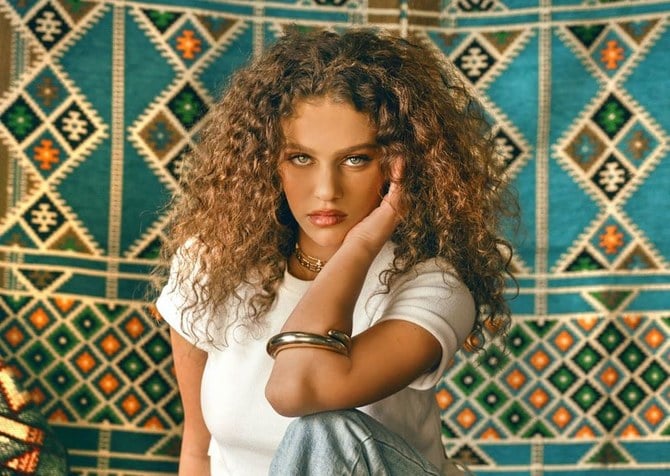
Palestinian Chilean singer Elyanna is set to perform for the first time at Coachella, the popular music festival that is held annually at Indio, California.
The 10-day event will run from April 14 to 23.
Elyanna, who is famous for her songs “Ghareeb Alay,” “Ala Bali” and “Ana Lahale” with Canadian Lebanese singer Massari, will be the first Arab artist to perform on the Coachella stage.
“I am honored and grateful for all the love and support I have received in the past couple days,” she wrote to her 575,000 followers on Instagram. “Last year I attended Coachella, and this year I will be the first Arabic singing artist to perform there. Your wildest dreams will come true, so keep on dreaming! See you in the desert.
“I’m so proud and excited to bring my culture and music to Coachella,” she said in another post.
Elyanna’s celebrity fans, including Massari, Dutch Palestinian supermodel Bella Hadid, US Iraqi beauty mogul Huda Kattan, Egyptian rapper Felukah, Palestinian singer Noel Kharman and Syrian swimmer Yusra Mardini, all took to Instagram to congratulate the star.
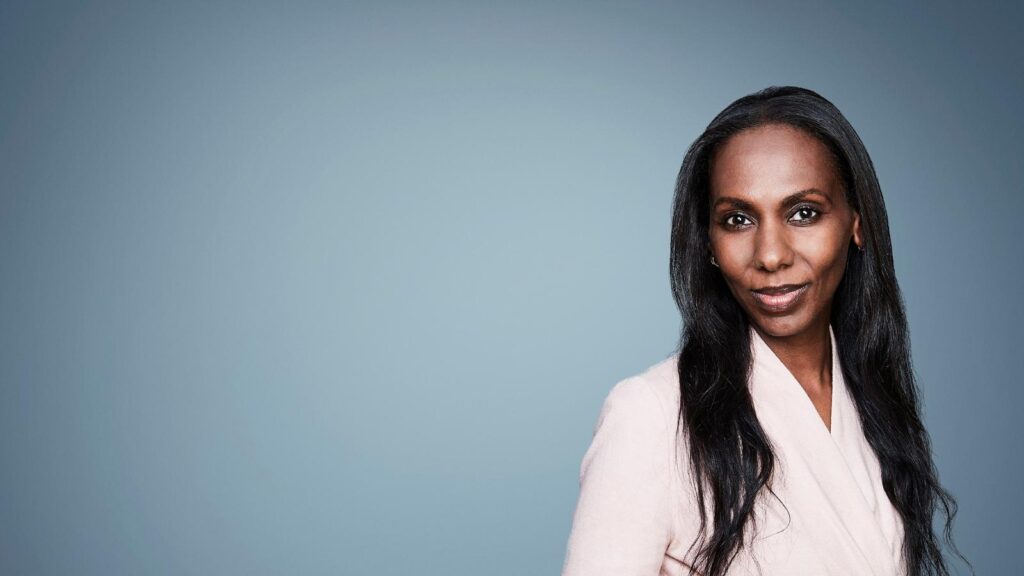
CNN has promoted senior international correspondent Nima Elbagir to the role of chief international investigative correspondent.
A London-based Sudanese journalist, Elbagir has broken countless stories for CNN from war and crisis zones, reporting on human rights abuses in places like Ethiopia’s Tigray region, Libya, Democratic Republic of the Congo, Nigeria and Yemen. In 2017, her undercover reporting exposed migrants being sold at slave auctions in Libya and prompted responses from the government and the United Nations.
Elbagir has scooped up numerous awards in her career, including the Royal Television Society’s Television Journalist of the Year Award in 2020, a duPoint Award, a Polk Award in 2017, the International Center for Journalists 2018 Excellence in International Reporting Award, the 2018 IWMF Courage in Journalism Award, a 2019 Gracie Award, and the LA Press Club’s 2019 Daniel Pearl Award.
Elbagir joined CNN in Feb. 2011 as a full-time reporter based at network’s Johannesburg bureau, before later moving to Nairobi, Kenya. Prior to joining CNN as a freelancer in 2010, Elbagir worked in various capacities for the UK’s Channel 4 for a number of years from 2005: she freelanced from Kabul, Afghanistan for Channel 4 News; reported for the Unreported World documentary strand; and both reported and presented for Channel 4 News and More4 News.
source/content: adweek.com/TVNewser/CNN-Revolving Door (headline edited)
Sharjah HQ of waste management operator Beeah aims to lay foundations for a greener future.
A striking Sharjah building in the shape of a sand dune is primed to be a beacon of sustainability and serve as a fitting legacy for renowned architect Zaha Hadid.
The headquarters of waste management operator Beeah was the last project designed by Zaha Hadid before her death in 2016.
Her team constructed a modern masterpiece across 9,000 square metres, using sustainable materials to create a building with 40 per cent of its power provided by the sun.
Illuminated, sweeping staircases take visitors up to an art gallery on the first floor, with screens showing a time-lapse video to explain the building’s five year construction.
Now open to full capacity of 500 workers, the building is breaking new ground in how to provide a sustainable working environment.
Green vision
“We aim to operate as sustainably as possible, and used recycled materials in the construction of the building,” said Nada Taryam, managing director of Beeah HQ, which manages waste management across the country.
“Native plants have been used in the landscaping and reduced the amount of water consumption.
“A power pack stores excess energy from the photovoltaic panels, so we have a holistic strategy to achieve sustainability.
“Every project has its own specific requirements when energy comes into play, but the basis on which we have built this design can be learnt from.
“All of these sustainability measures can be taken and applied to other projects.”
The building’s high thermal mass allows heat to be absorbed during the day and dissipated at night to encourage cooling, while its curved structure allows the flow of natural sunlight to reduce the energy required for lighting.
An artificial intelligence system enables the building near the Alsajaa industrial area to learn to become more efficient as more people use it.
Its developers say it conforms to the highest standards of energy efficiency in the world.
Windows are positioned to reduce solar glare, while special glass cuts radiant thermal energy to keep the building cooler during summer.
While the glass limits the entry of infrared and ultraviolet light, solar panels supported by Tesla-made battery packs capture the power of the sun and store it to run the building’s air conditioning system.
The building’s components and management systems are integrated to maintain and improve its efficiencies.
Conference rooms are equipped with technology to automatically transcribe meeting minutes and email them to participants.
The building is the third in the UAE to be designed by Zaha Hadid architects, following the Sheikh Zayed Bridge, opened in Abu Dhabi in 2010, and The Opus hotel and apartments complex opened in Business Bay, Dubai, in 2018.
“As it learns from its occupancy, this building could potentially become one of the most sustainable buildings in the UAE,” said Ms Taryam.
“Certain decisions were taken, such as using glass reinforced panels on the ceiling which refract the sunlight so contribute to its efficiency and temperature control.
Defying convention
“There is a misconception about what these kind of buildings should look like, and we have defied that.
“There isn’t a rule book to say green buildings should be lined with solar panels. We have proved we can integrate architecture as well as sustainability to create something iconic.
“Zaha Hadid has something that distinguishes her from any other architect of her time. Every project of hers has its own context, but her ideas are adapted for each specific project.”
The headquarters of Sharjah waste management operator Beeah was the last project designed by Iraqi architect Zaha Hadid before her death in 2016. All photos: Andrew Scott / The National
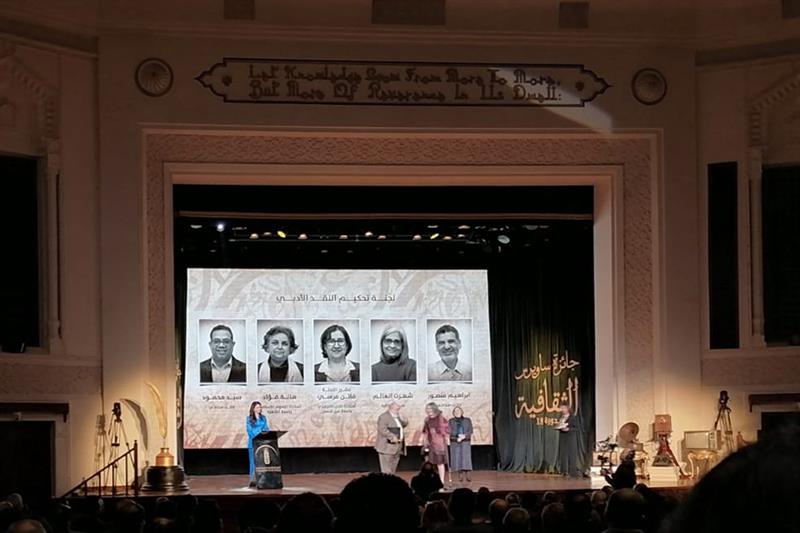
Why doesn’t the crocodile fly? : Meet the winners of Sawiris’ 18th Cultural Award, celebrated on 08th January 2023.
The annual event was held at Ewart Memorial Hall of the Tahrir Cultural Center, downtown Cairo.
The event was attended by many cultural and literature figures and artists and included a performance by the popular musical troupe Masar Igbari.
A New Prize
The event kicked off at 7 pm with a short speech by movie star Mahmoud Hemeda, followed by a mini-documentary celebrating 20 years of Sawiris Foundation’s contribution to social development through influencing the lives of about 700,000 people throughout Egypt.
Renowned Doctor and scholar Mohamed Abul-Ghar, member of the award’s board of trustees, introduced a special prize that went to the posthumously released book of late journalist Mohamed Abul-Gheit, titled ” I am Coming, Light”. Prominent writer Mohamed Shoeir, deputy of Akhbar El-Adab magazine, was the one who suggested that the prize go to Abul-Gheit’s book even though it hadn’t been on the list of entries for the competition. Abul-Gheit had been a celebrated journalist who passed away this December after a battle with cancer. The prize, which is worth EPG 150,000, will be given to his wife and child.
Children Books
The prize for Best Children’s book under 12 years old was a tie between writer Ahmed Korany’s book Lemaza La yateer Al Timsah (Why Doesn’t the Crocodile Fly?), illustrated by Nemma Zidan, and writer Ashraf Abul-Yazid’s book Qetati Toalef Ketaba ( My Cat Writes a Book).
Critic and Narrative books
The prize for Best Critic and Narrative writings was also a tie between renowned poet Bahaa Jaheen, for his book Al Molk Wal Malek (The Creation and Creator), and writer Magdy Gergis for his book Al-Moalem Ibrahim Al-Gohary.
Play Script
The first prize for best play script went to playwright Ahmed Nabih for his play Nozhet El-Sindbad fi Dawayer Baghdad (Sinbad’s Voyage in the Circles of Baghdad). The second prize for best play script went to playwright Emad Motawaa for his play Mosiqa Hadiaa (Soft Music).
Screen Play
The prize for Best Screenplay, youth section, went to screenwriter Mohamed Al-Samman for his script Ardioon (Earth People).
The prize for Best Screenplay, older generation, went to screenwriters Ahmed Hawari and Ibrahim Al-Battout for their script Hekayet Risha w Samaka (The Story of a Feather and a Fish)
Best Novel and Short stories
The first prize for best Novel and Short stories, youth section, went to writer Mohamed Sorour for his short stories Thalath Fekhakh le Zeab Awar (Three Traps for a One Eyed Wolf). The second prize for best Novel and Short stories, youth section, went to writer Mohamed El-Barmy for his short stories Lel Mohebein Wal Awghad wa Qotaa Al Toroq ( For the Lovers, the Bastards and the Villains)
The first Prize for best Novel, youth section, went to novelist Sharl Aql for his novel Ahmar Lareng (Larenge Red ).
The second Prize for best Novel, youth section, went to novelist Ahmed Ibrahim Ismail for his novel Abu Gamea.
The first prize for Novel and Short stories, older generation, went to novelist Shady Louis for his novel Tarikh Mogaz lel Khalifa wa Sharq Al Qahera (A Brief History of Al Khalifa District and East Cairo). The novelist, however, announced later last night that although grateful for winning such an award, he will give it back.
The second prize for Novel and Short stories, older generation, went to writer Ahmed Abdel-Latif for his short stories The Kingdom of Mark Zuckerberg and his Fictional Birds.
In our continuing series on inspiring life stories across continents, we learn what made her leave a career in medical science for a ‘cuisine lab called the kitchen’.
When Lamees Ibrahim left Baghdad in the 1970s, certain parts of the city, not least the riverside strip of fish restaurants along Abu Nawas, became a fixed ideal in her memory.
After an interval of three decades, a return to the flat bank of the Tigris in 2004 was an unexpected low point in a thoroughly disturbing homecoming.
The street once the “pomegranate of Baghdad” was no longer filled with diners being entertained by poets and musicians, engulfed in the aroma of arguably Iraq’s national dish, masgouf.
Instead, Dr Ibrahim stood shaken as she took in a rubble-strewn wasteland populated by a handful of struggling fish sellers.
Yet one sense was still powerfully triggered by the fresh carp grilling over the charred wood.
“It was not in very good shape,” she tells The National. “There were only bits of its old self left, but the smell was still amazing. There are certain scents that you smell and you think, ‘Wow, this is Baghdad.’ It is very, very specific. If you enjoy samak masgouf once, you will never forget it.”
Dr Ibrahim had made a long, hazardous journey from her home in London, where she moved decades earlier: marrying, earning a PhD in Pathology, raising four children.
Her husband was with her as she set out from Jordan in a car just after Fajr prayers that day, to “feel” her land, see her extended family, and show her eldest child, Maysa, her ancestral roots.
But the Baghdad conjured up by the smell of the barbecued fish was gone; the deserted, bombed-out streets were not at all familiar to her. They did, however, bring back one particularly strong recollection from childhood.
Sometimes in the summer months, the young Lamees would gather with her three siblings around their father to be regaled by stories about Iraq.
“I remember one day when he said: ‘Look, we built this country, the Iraqis, and we have to keep doing that. If every one of us contributed their own brick then the wall would go up and up, and we should keep on building.’ I never forgot that,” Dr Ibrahim said, “and I felt that we had to add our little brick to the wall. We had to make Iraq keep going.”
She returned to London on a mission to help rebuild Iraq in some way for the younger generations that would never have a chance to experience what it had been in the golden years.
The need to describe the country’s rich history and accomplishments was urgent, but whatever she put down on paper seemed inextricably tied to cooking. So it was that she came to realise it would be through food that she could preserve connections to things past.
“I wanted to write something, I needed to write, I had to write,” she says. “So I started. Eventually, it became a cookbook with a bit of history and anecdotes about culture, about civilisation.
“My background has nothing to do with cooking. It’s not cuisines of any kind, but I have a passion for Iraq. It’s my motherland, my country.”
When the 21-year-old Lamees had come to London in the early 1970s, it was to pursue a postgraduate medical degree at King’s College and then head back to her beloved Baghdad. Soon after arriving, she married and her life, she says, became busy but limited as she immersed herself in studying and research projects.
“You go to college, you study, you attend lectures, you come home, you open the books, read, read, read, have some dinner, and go back to college,” she says.
“I didn’t know that I was homesick until one day during Ramadan I saw an elderly woman going into King’s College Hospital with her black abaya and veil. I said to her ‘marhaba hajji’ and she was shocked. She hugged me, and I went home, crying all the way.
“I cried because I had a goal. I wanted to get a degree, and the sooner I got it, the sooner I could go back home. Unfortunately, that didn’t happen.”
She was haunted by her homeland, by such memories as the heady perfume of jasmine and the days in her youth when the children would pick the flowers and turn them into long necklaces.
But the months turned into years, and years into decades. At first, returning to Baghdad was difficult as the academic successes mounted and her family grew. It became impossible when Saddam Hussein came to power, with Dr Ibrahim fearing that she would be detained were she to attempt a visit, and never see her three daughters and son again.
Her father died and then, on news of the death of her mother, Dr Ibrahim made the fateful trip when she found a country that was “not what I was expecting, of course. It was demolished, devastated.”
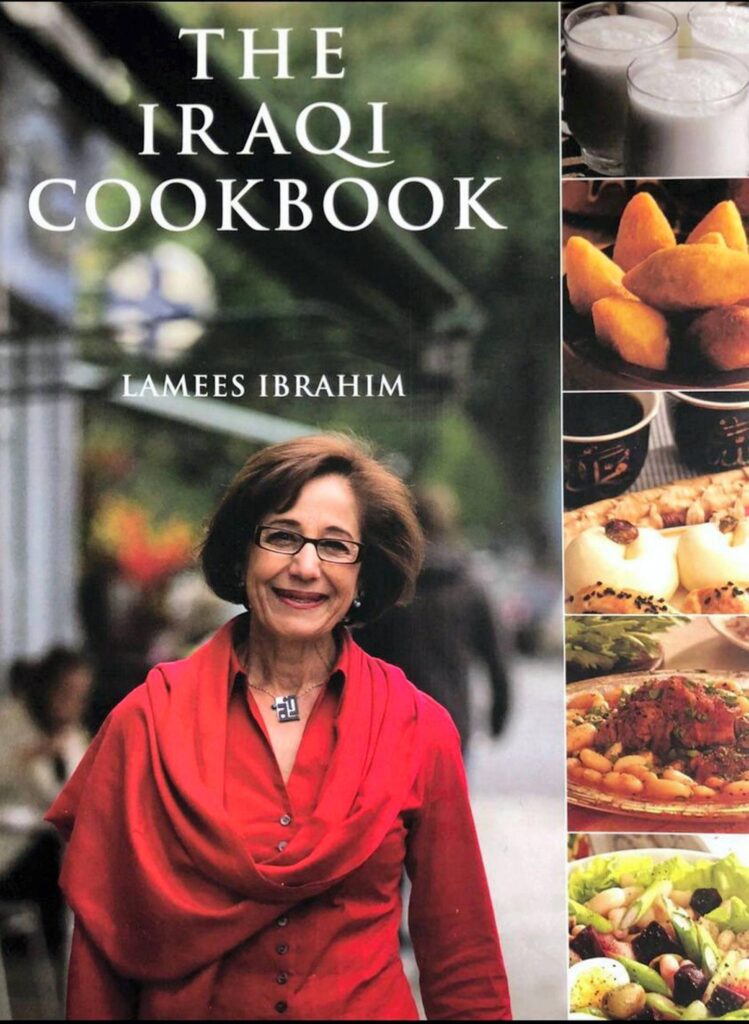
The resulting homage, The Iraqi Cookbook, was published in 2009, a labour of love with the name of each dish painstakingly recorded in Arabic. Samak masgouf, of course, features, and Dr Ibrahim advises in the foreword that all visitors to Iraq should try it in one of the cafes and restaurants on the bank of the Tigris.
“I came back to London with one idea in mind, which is something that as a girl I grew up to learn,” she says. “I must do something for my country. I need to tell my children what my country is like, our history, our culture, our ability to do what we did in the old days.”
She is speaking by Zoom from her home in Richmond-Upon-Thames, her voice at times faltering and cracking with emotion as she talks about dedicating herself to bringing Iraq to the diaspora.
“Iraq to me is very important, very important,” Dr Ibrahim says. “It is in my blood. It’s in my genes. It’s my history.”
The book sold out in the UK and the US, and was reprinted by popular demand. Bit by bit, the time-consuming process of writing and re-writing, working with publishers and photographers, the press interviews had taken Dr Ibrahim away from her career in pathology.
“And I never went back,” she says. “I’m still very interested. I read a lot about Covid. I follow the research, but I’m not going back to that lab. I have a cuisine lab called the kitchen.”
With the emergence of the pandemic, Dr Ibrahim revisited experiments that she had begun as a teenager when she would try to make her mother’s recipes without meat. Sometimes it was successful, she acknowledges, sometimes not.
As a child, though, she had never been as fond of lamb as her siblings were. The family cat adored her, loitering under the table at lunchtimes for the morsels of the daily stew that Lamees would sneak down to her.
During lockdown, her own children became “guinea pigs” for her avant-garde creations as Dr Ibrahim collected together an array of vegan offerings that would appeal to a young audience interested in preserving the planet.
“Dishes don’t need to have meat to have the taste and flavour, for it to smell like an Iraqi dish,” she says. “Iraqi cooking can be vegan, as well as meat and fish-centric.
“If you can preserve the taste of the flavour of the dish, go for it. Many Iraqi dishes are, in fact, vegan but we ate them before ever knowing the word ‘vegan’.”
When one of Dr Ibrahim’s friends called to see how she was faring with the tight coronavirus restrictions in the capital, she told him she had been busily cooking all the recipes to be photographed for The Iraqi Vegan Cookbook. Curious, he wanted to know whether she was including any kubba, knowing that Dr Ibrahim had devoted an entire chapter to its many meaty variants in her first book.
On learning that the new book would contain Kubbet Jeriesh, Kubbet Halab and another recipe that Dr Ibrahim made from lentils, he answered: “Only three?”
His grandmother, he said, had never enjoyed meat in her kubba so the family reinvented the dish to suit her preferences, stuffing the shells with pine nuts, onion, spices and parsley.
“If all these years ago we had vegan Iraqis, we have plenty today,” Dr Ibrahim says, smiling.
The Iraqi Vegan Cookbook had been due out on December 31, but the release has been delayed not least because of the queues of hauliers that built up in Calais and Dover as a result of Brexit and the French shutdown of the border when the new strain of the coronavirus emerged in the UK.
Rescheduled for release at the end of January, Dr Ibrahim hopes that sharing more of the oldest cuisine in the world will counter some of the negative perceptions that persist about Iraq today.
“Iraq is positive,” she says. “Iraq is full of history, full of culture. This is the cradle of civilisation. I don’t like to talk about what’s going on now. I would like to talk about the positivity of all of our achievements.
“I feel nowadays, if I add that little brick, then I have added something which I would be proud of as an Iraqi living in the West. Living in Iraq, we can build from within. We are living in the West – all my children are also living in the West, but we add our bricks from our side, from outside the country.”
Dr Ibrahim is modest about her contribution to the wall that her father told her about all those years ago, hesitating to use the word achievement. If her writing can be described as such, she says, she wants to make clear that it was never about her. It was always for Iraq.
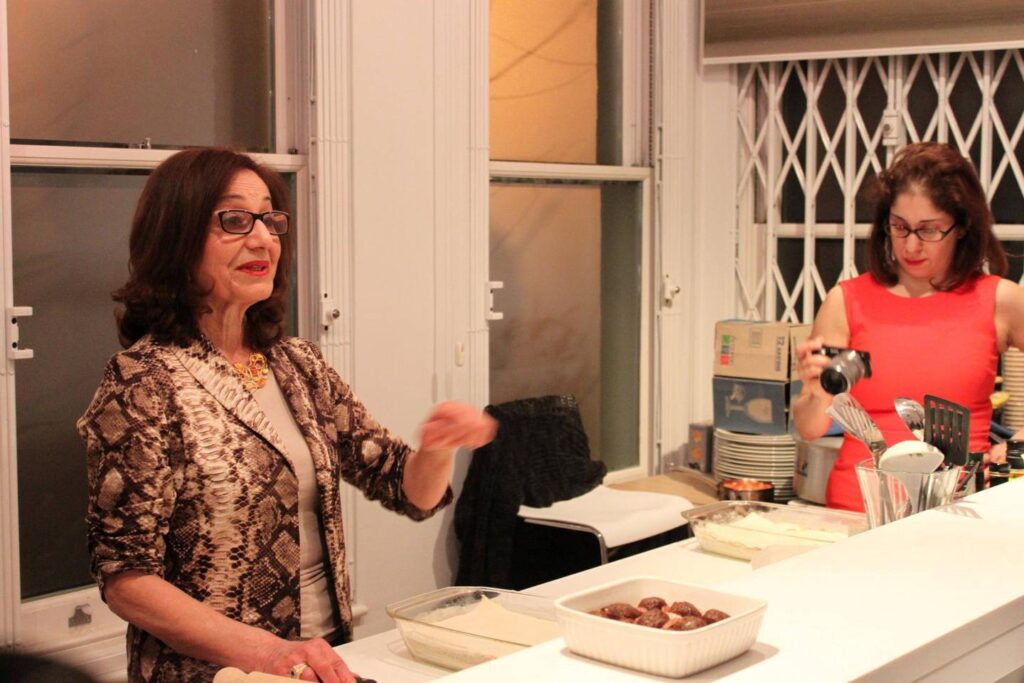
Dr Lamees Ibrahim has dedicated herself to bringing the country of her birth to the diaspora: ‘Iraq is very important to me. It is in my blood. It is in my genes. It is my history,’ she says. Courtesy of The Mosaic RoomsThe homage to Dr Ibrahim’s homeland, ‘The Iraqi Cookbook’, was published in 2009, a labour of love with the name of each dish painstakingly recorded in Arabic. Courtesy Lamees Ibrahim