Arabs & Arabian Records Aggregator. Chronicler. Milestones of the 25 Countries of the Arabic Speaking World (official / co-official). AGCC. MENA. Global. Ist's to Top 10's. Records. Read & Enjoy./ www.arabianrecords.org
Famous for its “fog harvesting” project in southern Morocco, the nonprofit Dar Si Hmad for Development, Education and Culture also carries out other projects to build the capacities of local populations and provide educational training projects for young people.
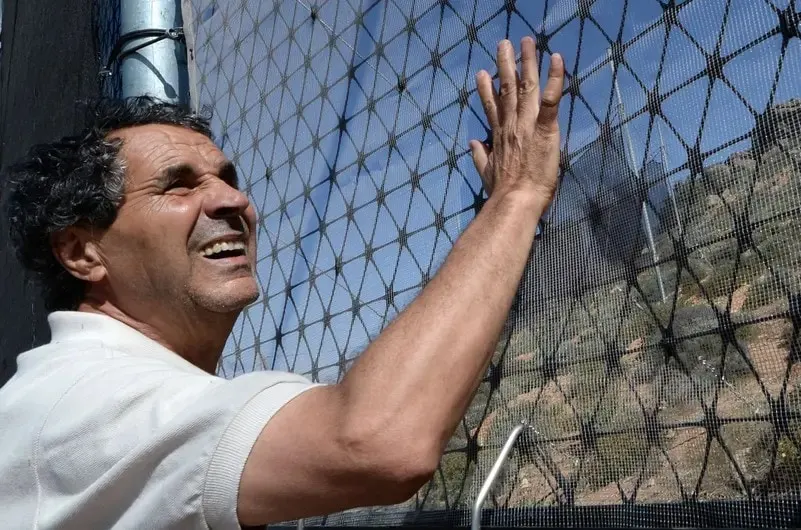
The fog-harvesting project, in the Sidi Ifni region of southern Morocco, uses specially designed nets to capture water droplets suspended in the fog covering mountain peaks. The fog-water drips off the nets and is channeled into a filtration system, thus providing clean water to residents of areas suffering from severe water shortages.
The project is a boon for women in the region because it frees them from having to carry water long distances, and also provides jobs and training for them.
Development Projects
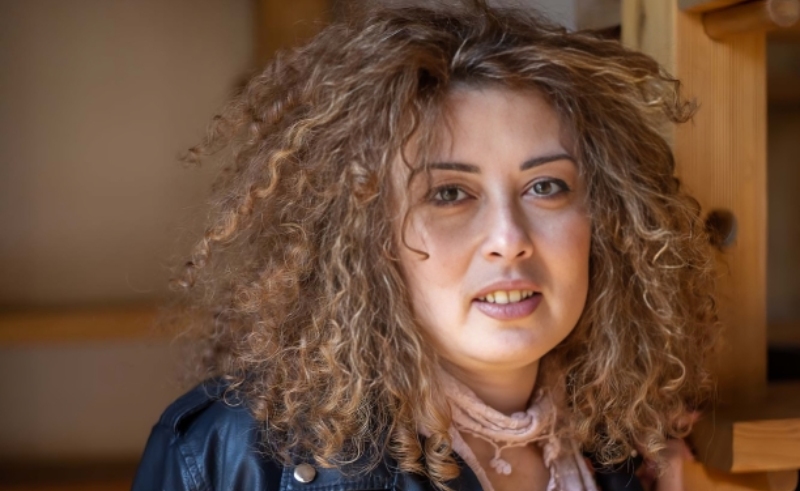
Established in 2010, Dar Si Hmad for Development, Education and Culture is run by Jamila Bargach, a cultural anthropologist, and her husband, Aissa Derham , a mathematician who holds a Ph.D. from Laval University in Canada.
Bargach studied at Mohammed V University in Rabat and obtained a Ph.D. in anthropology from Rice University in the United States. She has worked for several nongovernmental organisations in Morocco and abroad.
In the region, Bargach is nicknamed “The Bride of the Fog” in reference to a local Amazigh legend of a princess named Teslet who did her best to make rain to save her village from drought.
Over the past years, the fog-harvesting project has received numerous international honours, notably an Innovation in Sustainabilty award from the GoAbroad Foundation in 2017 and a Momentum for Change award presented at the COP22 Climate Summit in Marrakech in 2016.
Programmes for American Students
Fond of southern Morocco, Bargach believes that the region provides unique opportunities for students to learn more about the kingdom, especially in terms of how development projects are accomplished in complex and special contexts.
Many of Dar Si Hmad’s educational programmes center on the fog-harvesting project, Bargach told Al-Fanar Media. “This enables students to learn and develop their abilities through practical and field education.”
She added that the association receives students from American universities who come to southern Morocco. Over the years, it has hosted more than 54 student missions from different American universities.
The organisation provides these students with opportunities to meet with Moroccan students from Ibn Zohr University, in Agadir, and to participate in various educational programmes. These include the RISE Programme, the Ethnographic Field School and the Water School, as well as job programmes targeting women in rural areas.
Environment-Friendly Entrepreneurship
The RISE Programme aims to build capacities and promote environment-friendly entrepreneurship among students of colleges and higher schools in Agadir. The programme is a set of integrated workshops presented by experts, and meetings with employers, with the aim of exchanging experiences and creating opportunities for networking. Each participant is also required to have a project idea that benefits the local environment, besides the need to commit to attending all scheduled events.
The Ethnographic Field School promotes cross-cultural understanding and exchange through interpersonal interaction with local communities. During their time in southern Morocco, participants learn about local issues like sustainable practices in the argan oil industry , which employs many rural Amazigh women, or languages like darija (Moroccan Arabic) and Tachelhit (the local form of Tamazight).
The Water School programme is directed to students of rural schools in the Aït Baamrane region in southern Morocco. The programme is based on lessons inspired by local reality, with openness to other horizons and cultures. The Water School brings together volunteers, environmental trainers, and other partners. Everyone is committed to building a comprehensive and ethical foundation for the benefit of environmental education, the organisation’s leaders say.
Bargach says that the success of the fog-harvesting project motivated and inspired the educational programmes’ students. She adds that they are working to transfer knowledge to young people who are passionate about more work and innovation in searching for alternative sources of water and serving the environment in southern Morocco.
Skill-Building Experiences
Nadia El-Aissaoui, who holds a master’s degree in tourism and communication from Ibn Zohr University’s Faculty of Arts and Humanities, worked in Dar Si Hmad’s Ethnographic Field School this year. She said the experience helped her develop professional skills. “I have benefited greatly from this experience,” she said. “I worked as a fixer (‘speaking partner’) for students coming from American universities to work on field research projects.”
The programme transferred her from university halls to field research, she said. “This experience enriched my professional path,” she added. “I learned a lot of things, such as focusing on tasks, time management, documentation, interpretation methods, besides exposing me to the American mentality and working ways.”
Aissa Derham checks a net used in the fog-harvest project. He and Jamila Bargach co-founded the nonprofit Dar Si Hmad for Development, Education and Culture, which runs several capacity-building and educational programmes in southern Morocco. (Photo courtesy of the organisation)
Trailblazing Jordanian-British research fellow reveals that her prescription for success requires dispensing – but only with tradition.
Most Damascene moments are dramatic by definition but few occur, as Atheer Awad’s did, on an actual road that leads to the Syrian capital.
Her own turning point came when the vehicle she was travelling in with her family to register for university in Amman blew a tyre, hit an electricity pole and flipped several times.
The accident meant that Awad ended up in hospital and missed the window to sign up to study medicine. By the time she was discharged, the only degree option still open to her was pharmacy.
Though bitterly disappointed at the time, she has come to believe that there were greater forces at work on the day of the crash on Jordan Street.
“Let’s just say we put our car to the test,” Awad tells The National. “It was a complete wreck. We are lucky to be alive.
“But it wasn’t meant to be that I should study medicine. I took the car accident as a sign that the future held better things for me.”
As a result, she was steered into an unexpected career in which the eventualresearch fellow at University College London would amass numerous accolades: the Journal of Clinical Medicine‘s 2021 PhD Thesis award; an appearance on the Forbes 30 Under 30 list for Europe; reaching the finals in the Women of the Future awards 2022 in the science category; named as an International Pharmaceutical Federation FIPWise Rising Star for 2022 as well as one of the top 15 outstanding innovators under the age of 35 by the MIT Technology Review.
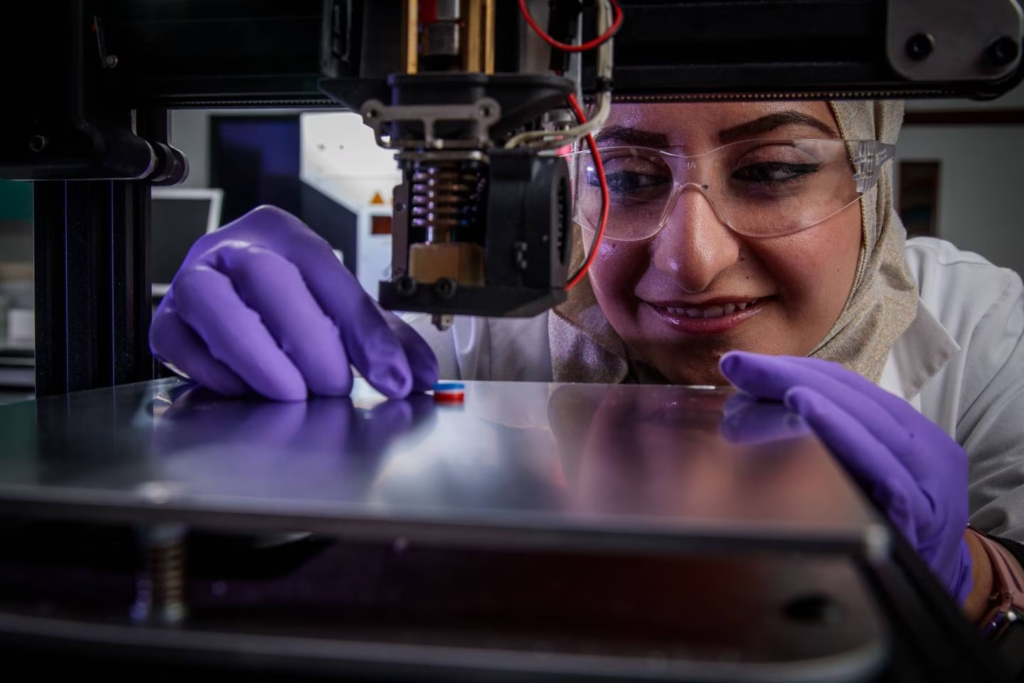
Her groundbreaking research is paving the way towards the creation of personalised medication that can be 3D-printed in patients’ homes via smartphone — a potentially transformative innovation for those who find it hard to gain access to health care or don’t suit a one-size-fits-all service.
Born in Abu Dhabi and raised in Dubai by Jordanian parents, her hand was always first in the air in class when volunteers were sought to dissect animals at Al Mawakeb School in Garhoud.
It was an early display of Awad’s enthusiasm for the sciences, particularly biology, and a prelude to her ambition of becoming a heart surgeon.
“I was so determined to make a difference and medicine is one of those industries that has a greater impact when it comes to changing people’s lives,” she says.
“There is never a boring day with science because every day is a new learning experience.
“You come across things that you haven’t discovered before or create new stuff by just playing around with things in the lab and mixing them together. It’s that sort of curiosity that motivates me.”
Back then, holidays were regularly spent visiting Jordan — trips that Awad still makes annually to catch up with extended family, go to weddings and indulge a soft spot for the local food.
“I love those traditional connections,” she says, “and still follow as many of these practices as I can, wherever I am.
“My faith helps a lot. But it isn’t easy trying to keep a balance between sticking to faith and being able to live in a foreign country.”
Moving to England wasn’t as daunting as it might have been without the unwavering support of her parents and four older siblings — a pharmacist, a consultant with whom she lived until recently, an IT specialist and a doctor.
“It is rare for all of us to be in the same country at the same time,” she says, laughing. “We travel between the three countries and there is always at least one of us living in each of the three. That makes it interesting for my parents, who get to travel everywhere.”
Awad herself, now 29, is a keen traveller and has put on her bucket list the wish to visit every country in Europe before turning her sights to other continents.
She fell in love with Turkey after a trip to Cappadocia, the semi-arid central region known for its “fairy chimney” rock formations, and particularly enjoys explorations on foot.
London, however, holds a special place in her heart, where there is, she points out, a big Jordanian community.
“I have a lot of friends I consider my second family. They’re a mixture of scientists, people outside work, and others with Jordanian or Arab heritage. That keeps me connected to my roots and it is one of the beauties of London — it’s international.”
But she calls Dubai home and makes many happy returns to Living Legends, a newly developed 14 million-square-foot community on the outskirts of the city where her parents still live.
Part of the appeal of the emirate, it should be said, is the chance to hit the luxury shops. Dior and Prada are favourites — her handbag collection alone extends to “about 40 or 50 … I’ve lost count” — and the Swarovski-encrusted mobile phone she takes everywhere is a particularly prized purchase.
Invariably, though, one of the first stops is to fill up on luqaimat, known as awama in the Levant. She has sampled the sugary doughnuts wherever she finds them but maintains that the ones whipped up for as long as Awad can remember by her mum, Hanan Swais, “are the best”.
They were an abiding taste of a childhood in which the extroverted Awad, left to explore her own interests by her father, Jamal, an electronics retailer, and Hanan, a homemaker, played the piano exuberantly if not with any notable proficiency and went on Scouting expeditions.
There was never an expectation that she would follow in the footsteps of any of her siblings but the desire to pursue medicine was strong nonetheless.
“It wasn’t until we were discharged from hospital [after the car accident] that I realised I had missed the deadline,” she says. “There was no going back in time. I just thought: ‘What’s the next best option?’
“That’s why I always say I did not choose pharmacy — it chose me.”
Despite a reluctant start, Awad’s enthusiasm grew throughout a five-year degree at the private Applied Science University in Amman as she gained insight into the extent of what pharmacists could actually do.
“I started looking at pharmacy as having a bigger impact than I had previously thought,” she says.
“People sometimes look at pharmacists as if they are beneath or less important than doctors when, in fact, they do most of the work behind the scenes.”
Little by little, with the consolidation of hours of satisfying sessions spent researching in laboratories or learning about the differences in the properties of various drugs, it dawned on Awad that she had stumbled across her calling.
Which is not to say that she appreciated being treated as little more than a saleswoman while doing work experience in a community pharmacy during the degree course.
“People assume that the pharmacist just takes the prescription and gets the medication without doing anything else,” she says. “There is a misconception.”
The experience hardened Awad’s resolve to focus on research rather than the direct, community-facing side of the profession.
After graduation in 2015, she embarked on a master’s in pharmaceutics and drug design at UCL, where she learnt about 3D printing during an end-of-year project with her professor, Abdul Basit.
She was inspired to keep working with the Basit Research Group within the School of Pharmacy to undertake a doctorate specialising in using the drug-delivery technology in the manufacture of medicines.
“I’ve always been interested in technology so it grabbed my interest immediately,” says Awad, who is still a research fellow with the group.
Weekends when she is not working are spent dining with friends, indulging her obsession for Harry Potter — “I’ve watched all the films multiple times” — and baking. Coffee cake is her speciality and made a well-received appearance at her professor’s 50th birthday.
“I do like experimenting with baking and cooking. I think there are similarities between baking and science.”
She doesn’t rule out applying to appear on The Great British Bake Off television show but, for now, Awad’s ambitions are confined to the lab.
“I want to make a change,” she says. “I don’t want 3D printing to stay a theory. I want to see it being implemented and taken up by healthcare agencies.”
Most recently, Awad has been printing tablets with Braille and moon patterns on their surfaces for visually impaired patients, or changing their shape, size and colour so that children or those with limited capacity find them easier to take. She has also been researching how to combine several medications into a single pill.
One of her team’s successes has been in creating tablets that can be swallowed without water. Manufactured in partnership with pharmaceutical 3D-printing specialist FabRx by melting powder particles with a laser beam and using heat, the porous product dissolves on the tongue.
She talks about how 3D printing allows alterations of a fraction of a milligram, making medication much more tailored and precise than the standard variety available off the shelf.
“Every person is different and our bodies do not react the same,” Awad says. “The requirements when it comes to medication differ, and sometimes they differ within the same person, depending on the disease progression.
“We can also take patients’ preferences into consideration. That’s important when it comes to children or elderly patients. Often children refuse to take medicine because they don’t like the taste, the shape isn’t appealing or the pill might be too big.”
While 3D printing for customised pharmaceuticals has yet to be introduced commercially in the UK, Awad’s UCL team has managed to convert a smartphone into an on-demand 3D drug printer with an app that could be used in remote GP surgeries and even at home.
“We’re not far from the industry adopting 3D printing, probably in the next two to five years,” she says. “Approval will have to be on a medication-by-medication basis because each medicine could behave differently to the same technology, depending on its properties, and the 3D-printing technologies themselves differ.”
Awad’s passion for her work is tangible. The British-American analytics company Clarivate clearly thought so when last month listing her on its influential Highly Cited 2022. It was a remarkable achievement for such a young scientist to appear among fewer than 0.1 per cent of the world’s researchers across 21 fields.
Such recognition is welcome but, she says, the many “titles are more of an assurance that I am on the right track and that my work is important”.
“That’s the driving force to keep me moving forward and become even more ambitious to try new things,” she says.
One of her guiding principles is that researchers should be brave and adopt different approaches because even the most “ridiculous” ideas can be turned into brilliant inventions or innovations.
As she has been known to opine, not all scientific breakthroughs happen through planned research: “Sometimes, you come across things by accident.”
Given the route into her career in pharmaceuticals, it could be said that Awad started very much as she meant to continue.
Award-winning Egyptian filmmaker Ayten Amin will be part of the GWFF Best First Feature Award’s three-person jury.
Award-winning Egyptian filmmaker Ayten Amin will be a part of the jury line-up during the Berlin Film Festival. Amin is the only Arab and Egyptian artist participating in the acclaimed festival’s jury, and will be one of three people on the panel for the GWFF Best First Feature Award, which was founded in 2006 to support emerging filmmakers.
Ayten Amin is best known for her feminist cinematic works, and for tackling controversial social issues through her storytelling. Her Egyptian series ‘Sabea Gar’ (2017), which she wrote and directed alongside Heba Youssry and Nadine Khan, was praised for its authentic representation of Egyptian family dynamics and its diverse, multidimensional female characters.
More recently, her feature film ‘Souad’ (2020), a coming-of-age story that explored womanhood, social media performance and suicide, won multiple awards and was part of the Cannes Film Festival’s official selection, as well as the Tribeca Film Festival’s International Competition. ‘Souad’ also won the best feature film award at IndieLisboa International Independent Film Festival, and was selected for Berlin Film Festival’s Panorama section.
Dr Bnar Talabani, who received award for combatting Covid-19 misinformation, says British monarch showed keen interest in her background.
A doctor who arrived in the UK as a child refugee from Iraq has received a top award from King Charles III for her prominent role in combatting Covid-19 misinformation throughout the pandemic.
Dr Bnar Talabani beamed as the monarch, 74, pinned the ribbon of the Member of the Most Excellent Order of the British Empire (MBE) on her dress during a ceremony at Windsor Castle on Thursday.
She said the monarch, 74, was “really interested” to hear about her background.
The immunology scientist shared photos of their meeting on social media.
“Investiture at Windsor Castle: I met His Majesty the King who was really interested in my background as a former refugee and was utterly delightful to talk to,” she wrote.
“Really special day celebrating with my wonderful family.”
The king could be seen shaking Dr Talabani’s hand and pinning a red ribbon on her dress, in the pictures.
As congratulations poured in for the outspoken doctor, she said she felt “really overwhelmed by everyone’s kind responses”.
Dr Talabani was born in 1988 in northern Iraq to a Kurdish family.
As a toddler, she left her homeland for Iran along with her mother and younger brother to escape Saddam Hussein’s regime. Her father and grandfather remained behind to fight against the dictator.
After making their way to Syria, the Talabanis were recognised as refugees and welcomed to the UK.
Dr Talabani went on to graduate from medical school and pursue a career as a kidney and transplant hospital doctor and immunology scientist at Cardiff University.
She also works as a guide for Team Halo, a global group of scientists and healthcare professionals working to dispel misinformation about the coronavirus.
During the height of the public health crisis she made a name for herself on TikTok.
Dr Talabani used her platform on social media to reach followers, many of them young people, to challenge false and inaccurate claims about Covid.
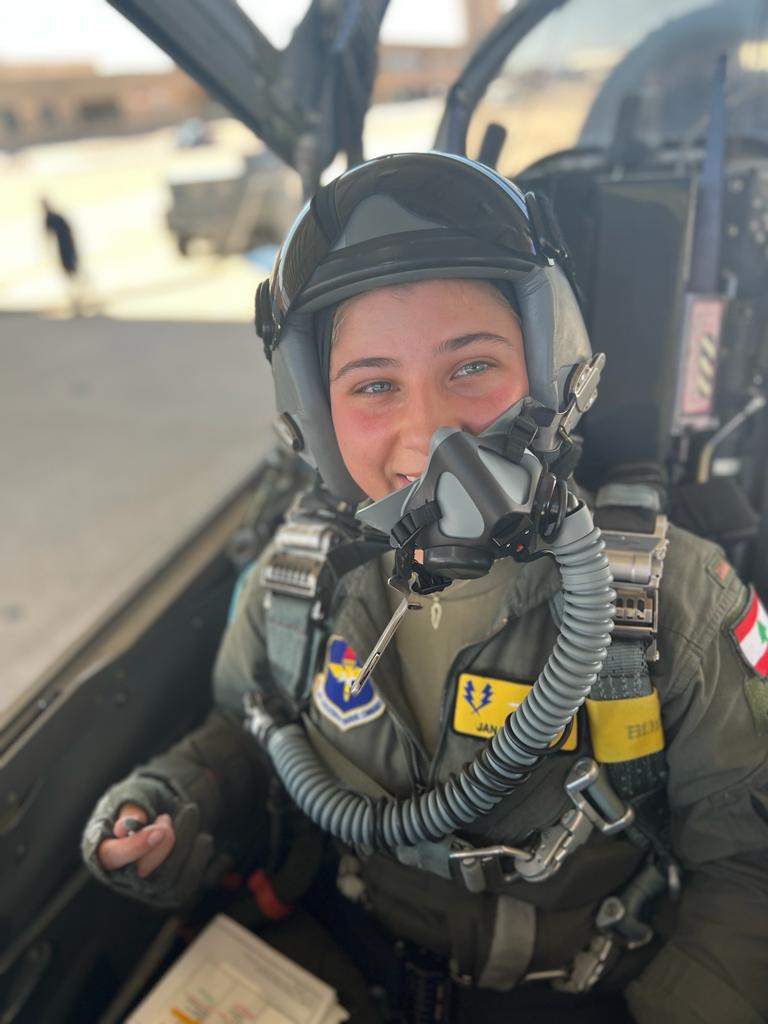
The Lebanese Army confirmed that Cadet Officer Jana Sader has achieved a momentous milestone by becoming the nation’s first-ever fighter jet pilot. Sader finished her training course at Laughlin Air Force Base in Texas, USA, following nearly two years of demanding curriculum and flight training.
As a graduate of the Lebanese Army’s training program, Sader is now ready to embark on a new mission. The A-29 Super Tucano attack aircraft, a sophisticated and formidable aircraft utilized for a variety of missions such as close air support, aerial reconnaissance, and armed surveillance, will be her maiden deployment.
The Lebanese Army said in a Tweet, which also noted and acknowledged her accomplishment that the A-29 Super Tucano has shown to be a dependable and successful aircraft for military operations, and Sader is eager to begin her career with the aircraft.
In her response, Twitter user Leila Hatoum praised Sader for her accomplishment and recalled learning in the 1990s that women aren’t permitted to join the air force: “In the 90s, we went to the Universities and Careers Exhibition. I went to the military stand where an officer and 2 assistants were. I asked him what is needed to become a pilot officer in the Air Force and, without an explanation, told her girls aren’t allowed to serve in the airforce.”
Many others, including the Lebanese army, used Twitter to congratulate the cadet on the achievement, proving that it was cause for celebration. Sader’s new position ushers in a new era for women in Lebanon, where the integration of women into the military has been a long process. According to the Lebanese Army’s website women joined the Lebanese Army Forces for the first time “when the chance emerged in the late 80s,” during Lebanon’s 1975–1990 Civil War, when the army required fresh recruits for its different formations.
In 1991, the government passed a new resolution mandating that 10% of the troops working for the Defense Ministry be female. Female recruits must undergo the same training as male recruits, and they are not just given administrative duties, but also jobs in combat units.
Sader’s accomplishment as a fighter pilot follows that of Captain Rola Hoteit, a pilot for Middle East Airlines, the national airline of Lebanon (MEA). When Hoteit took command of her maiden solo flight to the Jordanian capital of Amman in 2010, she made history as MEA’s first female pilot.
Six of the 190 pilots employed by MEA are now female, and in 2020 Hoteit flew with an all-female crew.
The 12th edition of the Luxor African Film Festival (LAFF) kicked off on Saturday in the great southern Egyptian city of Luxor with the attendance of dozens of celebrities, filmmakers and critics.
Running until 10 February, the LAFF will host screenings of over 50 films from 31 countries participating in its various competitions and parallel programs, as well as a number of talks and seminars.
During the opening, the festival’s organisers honoured Egyptian actors Mohamed Ramadan and Hala Sedky, Egyptian composer Hesham Nazih, Senegalese director Mansour Sora Wade, and Mozambican producer Pedro Pimenta.
A number of late artists were also celebrated, including Egyptian actor Salah Mansour, Algerian actress Chafia Boudraa, and Tunisian actor Hichem Rostom.
LAFF will pay tribute to Senegalese cinema and its filmmakers, as Senegal is the country guest of honour for this edition.
Under the helm of the LAFF founder, scriptwriter Sayed Fouad, the festival is hosting 10 cinema workshops in different disciplines.
Many prominent African filmmakers and actors are members of the various juries.
With 12 films competing, the long narrative and documentary film jury committee comprises Senegalese director Mansour Sora Wade, Tunisian director Sonia Chamkhi, Moroccan actress Amal Ayouch, Egyptian screenwriter Abdel-Rahim Kamal, and Egyptian producer Mohamed Hefzy.
The slogan of LAFF’s 12th edition is ‘Cinema is the Quest of Immortality’. This slogan is reflected in the festival’s poster design by Mahmoud Ismail Abou Al-Enin, which depicts boats sailing towards the sun and to the Nile’s West bank of Luxor, where funerary temples and tombs are filled with inscriptions representing ancient beliefs in eternal life after death.
With Filmmaker Azza Elhosseiny as LAFF’s co-founder and executive director, star Mahmoud Hemeida continues as the honorary president in this edition.
Since its founding, the festival has aimed “to spread awareness about the importance of cinema in Africa and the world.”
In its eleventh edition, the LAFF screened 45 films from 35 countries in the competitive segments.
The LAFF is organised by the Independent Shabab Foundation with the support of the Egyptian ministries of culture, tourism and antiquities. LAFF also takes place in cooperation with Luxor governorate, the Film Syndicate, and numerous sponsors.
Egyptian actress May Elghety makes her international debut in the British romcom‘ Due Dating’ alongside Rowland Stirling.
Egyptian actress May Elghety is making her international debut in the upcoming British film ‘Due Dating’. The romantic comedy follows the hurdle-ridden relationship between a blogger, Cole (Rowland Stirling), and a lawyer, Persia (May Elghety).
The rising actress has starred in multiple films, including ‘Clash’ (2016), ‘Grand Hotel’ (2016), ‘Taye’a’ (2018), and ‘MAMA’ (2022) which premiered at the Cairo International Film Festival. She also made her mark on a number of series including ‘High School Girls’ (2020) and ‘Every Week Has A Friday’ (2020).
Her upcoming cinematic endeavour ‘Due Dating’ is currently being filmed in the UK. The movie is written by Jade Asha, directed by Daniel Pacquette and produced by London Independent Picture.
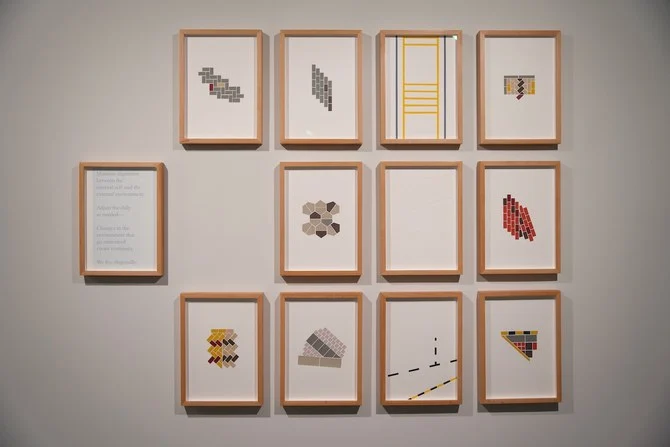
Artists from the Middle East are showcasing their work at an exhibition titled “Perceptible Rhythms/Alternative Temporalitie” in Washington, running until April 28.
Sarah Abu Abdallah
The Saudi artist’s “Fortitude” explores issues of obscurity and value, probing the social and cultural conditions of contemporary Saudi Arabia.
Artists from the Middle East are showcasing their work at an exhibition titled “Perceptible Rhythms/Alternative Temporalitie” in Washington, running until April 28.
The leading Iranian-born artist’s “Study for a Monument” presents bronze-cast reproductions of flora native to modern Iraq whose environment has been decimated by decades of political and ecological turmoil.
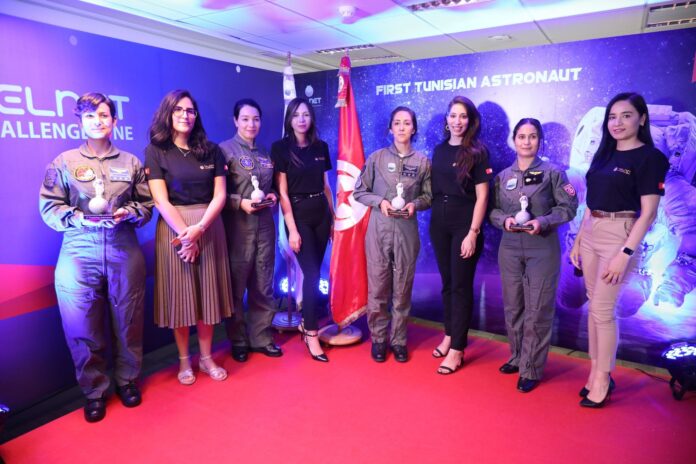
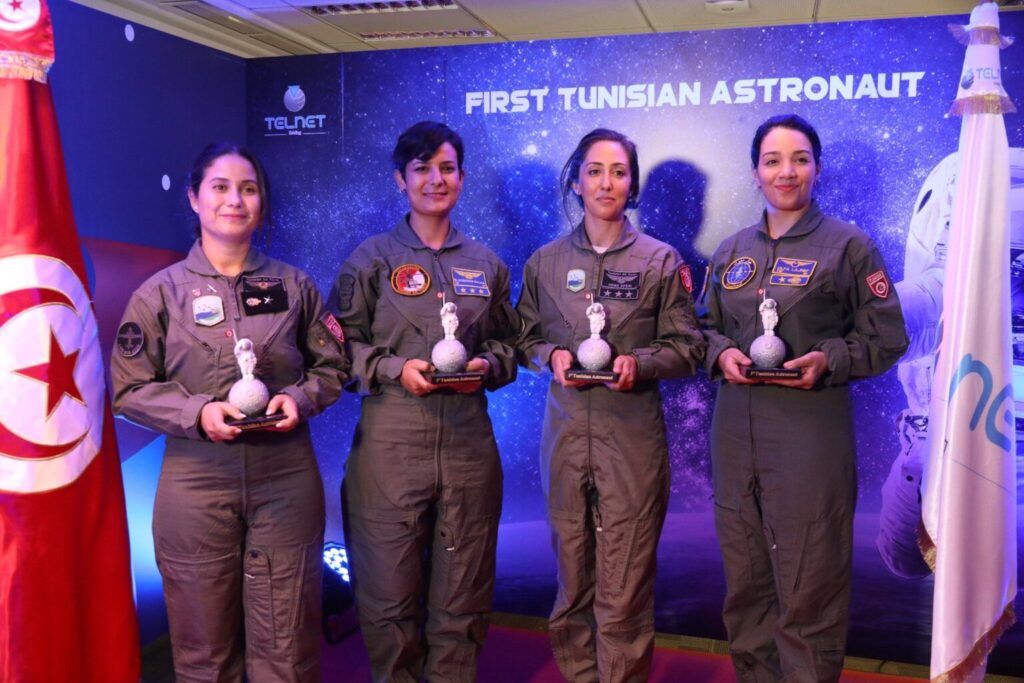
Eight Tunisian women have been selected as candidates for the first Tunisian and African female astronaut project. This selection came at Telnet’s Headquarters as Tunisia celebrated Women’s day. It is as a result of a partnership in August 2021 between Tunisia and Roscosmos to launch a Tunisian female citizen to the International Space Station (ISS) in the foreseeable future. As a result, according to Telnet’s Director-General, the ISS mission will be in 2024.
All the selected women are fighter pilots who graduated from the Borj Al-Amri Aviation School. Furthermore, they are Tunisian Air Force Corps members and have extensive experience in several challenging missions as a result. This is because the selection process requires strict conditions in terms of scientific, physiological and physical demands.
Among those names are: Hala Awassa, Ibtihal Youssef, Wafa El-Baldi-El-Yomna Dalali, Olfa Lajnef, Rahma Trabelsi, Hind Safferi and Malika Mabrouk.
During the unveiling, the current occupants of the ISS sent a message to the Tunisian candidates, expressing their support for the project and their expectations to welcome the first Tunisian astronaut in her upcoming mission. The female candidates also expressed their willingness to take up this historic challenge, raise the Tunisian national flag on the ISS and contribute to scientific advances in the service of humanity.
The candidates will subsequently undergo extensive physical and medical tests in Tunisia and abroad, from which two of the candidates will further travel to Russia. The candidates who travel to Russia will then undergo specific space-related training at one of the Russian Space agency’s training centres. This training will last for a year, after which will come the mission to the International Space Station.
Mohamed Frikha noted that all the candidates are the pride of the Tunisian woman and represent her in the best way. He added that their candidacy for this mission is a testament to their courage and willingness to honour the country and make history in a field as complicated as Space. Frikha also added that the astronauts will handle a scientific mission in Physics and Medicine and that the mission will contribute to the service of humanity. Finally, Frikha stated that the project received the support and encouragement of Tunisia at the highest level.
Tunisia is a party to and has ratified the Agreement on the Rescue of Astronauts, the Return of Astronauts and the Return of Objects Launched into Outer Space (Rescue and Return Agreement). The country is also a party to the Outer Space Treaty and the Liability Convention.
In a remote area in the Valley of Jordan, schoolgirls planned for their future debunking the stereotypical roles that society prescribed for women.
In a remote area in the Valley of Jordan, schoolgirls planned for their future debunking the stereotypical roles that society prescribed for women. Some of the girls dreamt of being “spokesperson” of the government. It was the first time Jordan had a government’s spokesperson. And she was a woman: Asma Khader.
The many times in which Khader have inspired women and girls are the moments she recalls with a warm smile. “Girls start to see that their role is not being wives only. They can be ministers and official spokespersons and get involved in politics,” says Khader. In 2003, she was the State’s Minister and the government’s spokesperson. “I was on the TV and the radio everyday talking to the public,” says Khader. She remembers holding press conferences every Monday’s morning in a public space where anyone could attend.
In a region where women could be trapped in the midst of stereotypes, cultural ones and those implied by outsiders, political and social empowerment are necessities when dealing with women’s rights advocacy. It’s a continuous battle in which women celebrate victories and overcome challenges and obstacles. With her dark short hair and formal attire, Khader is one of the warriors in this battle. A mother of three daughters and one son and a grandmother, she raised her kids on principal: gender equality. “The only son was not getting the privilege to enjoy being the only boy,” laughs Khader.
In the midst of busy Amman, Khader is in her office working tirelessly. She had to stop practicing law because of her current position as Commissioner and Vice President at the Independent Election Commission. She helped to launch, established and led several organizations promoting human rights and freedom of expression. I have visited and witnessed the works of two of them: Al-Mizan Legal Group and Sisterhood Is Global Institute Jordan. Both of the groups are nationally active and have a great impact on people’s lives. I have met several active members of SIGI in the different chapters in cities and towns all working together on women’s rights issues.
Born in 1952, Khader has been a pioneer of women and girls’ rights advocacy since her childhood. She was the eldest of her siblings. In most Arab communities, it’s a tradition to identify parents by the name of their eldest child. For several years, Khader’s parents were known to be “Abu Asma” and “Umm Asma,” Asma’s father and Asma’s mother, until a change happened.
“I was shocked when everybody started to call my parents Abu Sameer and Umm Sameer after my brother was born,” says Khader and she chuckles. “They were known as Abu Asma and Umm Asma because I was the first child and then my sister and my sister. After three children, the boy was born. And in one second everybody started calling them Abu Sameer and Umm Sameer.” It was a matter of a name, but had deep meaning of discrimination against girls.
The spark of activism was ignited focusing on gender roles in childhood. “I started to prefer going out and playing with children: with boys mainly,” says Khader. Soon, her father noticed her rebellious spirit. He was supportive and backed her activism. Khader mentions that when he noticed her passion in defending girls’ rights at a young age he told her: “You should be sure that I love you and I am proud of you. And I am sure you will be a good citizen, a good person in the society.”
“My father was a very open minded person, very educated, a believer in women and men, and a fighter against discrimination,” reiterating the importance of her father’s support in her life. “My mother was worried but she didn’t prevent me from being active. As a mother I can understand why she was worried all the time.”
Khader’s journey began. At a time when it was rare for women to be involved in politics, Khader took to the streets with her male colleagues protesting against Israeli’s airstrikes on a small village in Khalil near Hebron. She was only 13-years-old chanting while being carried on the shoulders of other protestors. She encouraged her colleagues from the girls’ school to join the demonstration.
That was her early engagement in public life. However, she was active in school, helping and defending other students. “And I think that was the root of my profession later, to be a lawyer,” mentions Khader.
While being in high school, Khader was also active in helping Palestinian refugees. Arts fill Khader’s office, accompanied by her memories. As a member of the Palestinian Women Union, in the late 1960s, Khader travelled to other countries to present Palestine in Folklore activities such as arts and traditional Dabkeh dance, and exhibiting handmade crafts made by women, especially those of the refugee camps.
Surrounded by crowds of people, mainly women, Khader announced: “We are not presenting women as victims.” Khader is one of the three judges of Manara Award for Gender Equality in Jordan, Lebanon and Palestine. She is representing her home country, Jordan.
As she entered the room, women and few men gathered around to greet her and I was one of them. A woman journalist sitting beside me was pleased to see Khader on a seat close to us. “Your excellency, this is my article,” said the journalist while flipping the pages of a magazine to show her the piece.
Despite being occupied with the event, Khader got engaged in a conversation with the journalist. During the event Khader listened to comments and questions, and answered in a professional manner. Being in a non-governmental event and listening to Khader took my imagination to a time when I was not in Jordan: when she was a government’s official having to answer the public.
The challenge that most activists go throw is making their voice heard through the official channels. Having an official who was an activist could change the equation. It meant having reforms and changes within. Lobbying is something that women’s rights groups in several countries spend a lot of time and energy on. Similarly, in Jordan, a constitutional monarchy, in which non-governmental organizations, opposition and other groups have a chance to demand changes through the existing channels. At times, it is necessary to work with the government in order to achieve rights, gender equality in particular.
Being in a leading position, Khader used her role as a government official and minister to work for gender equality. “When you are in a position where you can impact a decision, it’s very important,” says Khader speaking of her experience in the government. For instance, she was able to push to have shelters, by law, in order to protect vulnerable women. In addition to that, health insurance law was introduced that entitles working women to have the right in including their families in their health insurance plans. Khader also had a stance against death penalty that was frozen until 2014. She was also able to give licenses to independent media organizations, and thus enhancing freedom of expression condition in the country.
“It’s very important to see how problems and achievements and challenges are from the different points of view,” says Khader. “I realize that if there is good lobbying — a group who are really preparing their case well — then the ministries will discuss it and take it seriously. This was also an empowering experience: to be more active in civil society later and to know how to deal with issues and to be more effective.”
Khader graduated from Damascus University with a law degree in the early 1970s. At that time, there was no faculty of law in Jordan, and therefore, Khader had to travel to Syria. When she returned after successfully graduating, her father died. “It was a sudden death before me being a lawyer,” says Khader and her eyes are tearful. I look around to find a framed letter on her desk. “He wrote this letter to me.”
“I have always pictured you a lawyer…defending the oppressed, and serving the motherland with awareness…I wish you success and prosperity,” Khader’s father wrote. While the father didn’t see his daughter a lawyer, he was certain that she would be and that she would defend human rights. He was right with what he pictured for her.
A life filled with activism and Khader talks with pride about every battle she fought. Taking serious risks is not a choice, but is a necessity in some campaigns such as the one against what’s known as honour crimes. For instance, Khader mentions incidents in which she was threatened that her daughters would be “raped.” Her daughters were safe and she wasn’t deterred from continuing in her work despite the threats.
“Everybody now is fighting honour crimes in the country and the laws were changed and the special court was established and efforts happened,” says Khader. This would not have happened if women’s rights activists and advocates, like Khader, stopped due to threats and obstacles facing them. “Everybody now from the leadership of the country to many officials of the country to even the public opinion [have a stance against honour crimes],” says Khader. “After 20, 30 years, they are changed. So sometimes, it is a long process.”
Based on decades of experience, Khader has advice: to not lose hope if the process is taking a long time. “Reaching leading positions is not easy and is not going to happen smoothly without hard work and seriousness and knowledge based approach to challenge all the obstacles and being ready to spend years after some of the demands, some of the rights and some of the dreams, and some of the achievements you are trying to reach,” insists Khader.
Yusur is a journalist currently working in Jordan. She is board member of Canadian Voice of Women for Peace. This Project was carried out with the aid of a grant from the International Development Research Centre (IDRC), Ottawa, Canada.