Arab World the Winner in Memorable World Cup

As the FIFA World Cup reaches its climactic end, one cannot help but reflect on what an extraordinary political event it has been. Those who argue that sport and politics should be decoupled will have found it hard watching politics as an ever-present from the day Qatar was awarded the event back in 2010 and at every single match since the tournament began on Nov. 20.


But perhaps one of the most fascinating and hopefully impactful thrills at the World Cup has been the rare opportunity to remind the world that, for all its troubles, fissures and rivalries, the peoples of the Arab world do have much in common and that football has highlighted that reality every day in Qatar.

Some might question these signs of togetherness among fellow Arabs. Yet there were copious examples where it shone. Three achievements stood out.


Firstly, for Morocco to beat Spain and then Portugal in the knockout rounds was exceptional, especially following their defeat of Belgium, the second-ranked side in the world, in the group stage. There was more than an element of delight in seeing a former colony defeating, in Spain, its one-time colonial master. Morocco will get the chance to overcome its other colonial power, France, in the semifinals on Wednesday. In fact, star player Achraf Hakimi was born in the poor suburbs of Madrid. Morocco were the only team in the quarterfinals not from Europe or South America. Few in the region were not cheering them on. A sense of collective pride emerged as a result of the North African country’s success in becoming the first Arab and African state to reach the semifinals.

One might have thought that, given the dire state of relations between Morocco and Algeria, that Algerians would have shied away from joining in the festivities. Evidence suggests otherwise. Algerians were out supporting Morocco as enthusiastically as anyone else in the region. A friend was in Paris and told me: “After one of the Morocco victories, there were lots of Algerian supporters and flags joining their Moroccan brothers and sisters in celebration.” The Algerian captain and superstar Riyad Mahrez was quick to praise the Atlas Lions’ achievements.


Secondly, Tunisia beating reigning world champions France in the group stage was also an unforgettable moment. This was the first time they had beaten European opposition in the World Cup. This was every bit as big a win as in 1982, when Algeria beat the mighty West Germany in their first ever World Cup game.

Third, the Saudi victory over Argentina was another huge milestone. In many ways, this ignited the World Cup for the Arab world.


A sense of pride has also broken out that many of the finest players in the world come from this region. Hakim Ziyech for Morocco is one. Mahrez and Mohammed Salah were not in Doha but are still at the top of the sport. Kylian Mbappe, a star of this tournament, has an Algerian mother.


The key players in the Arab teams largely play in Europe. This shows football at its best in terms of breaking down barriers. Fourteen out of the 26-man Morocco squad were born outside of the country, showing how the team relies on the Moroccan diaspora. This includes Ziyech, who opted not to play for the Netherlands. That points to one challenge that countries like Morocco face, as they lack the footballing infrastructure to develop and nurture enough talent at home.

This World Cup has also often been about one country that is not there. At every single game featuring an Arab side, and plenty others beside, the Palestinian flag was there. It is a political symbol and a defiant message that the Arabs will not forget or ignore what is happening to the Palestinians in the diaspora and under occupation. As an even more brutally right-wing coalition is about to take power in Israel, this message should be carefully noted in the US and European capitals. Palestine still matters.


Israeli hasbaristas were also caught out. Having belittled and mocked those who claimed otherwise, they discovered that, despite the normalization deals, Arabs are not willing to gloss over Israel’s crimes and oppression. Time and time again, Israeli journalists, while trying to pretend everything was all lovely and wonderful with their newfound Arab friends, found that “free Palestine” was pushed back in their faces. Many locals snubbed their requests for interviews.

A World Cup in the Arab world has brought some cheer to a region that has been hit hard by wars and other crises.

Chris Doyle

Palestinian armbands and keffiyehs were being worn at nearly every match by huge numbers of fans. The sheer arrogance of believing that a state could oppress millions of people and that all would be peace and happiness was exposed as the nonsense it is. The Moroccan players had no hesitation in raising the Palestinian flag after their wins over Spain and Portugal.


Many Arabs also expressed admiration for the courage of the Iranian team after the players refused to sing their national anthem ahead of their opening match against England. This points to the widespread sympathy many Arabs feel toward Iranians, notably currently the women, who are struggling for their freedoms.

The Western media has been quick to point out all that was wrong with this World Cup. It is about time it also highlighted what has gone right. For all the criticisms of Qatar in the run-up to the cup over issues such as workers’ rights, one of the key elements of its bid has been fulfilled. Football in the region has been the winner. The atmosphere has been considerably warmer than many expected, with largely good-natured relations among fans of all countries. It seems that rival fans have not needed to be segregated, showing the festival-like atmosphere. Fan violence does not seem to have featured. The largest numbers of fans, of course, came from the Arab world, with Saudi Arabia providing the largest number from a single country.

Many outside the region were dismissive of the claims that football mattered in the Middle East. One leading commentator contemptuously told me, while on the BBC, that Qatar did not have a footballing heritage. Yet the region should never have been ignored. A World Cup in the Arab world has brought some cheer to a region that has been hit hard by wars and other crises, and whose peoples have not had much to celebrate in recent years.

Chris Doyle is director of the Council for Arab-British Understanding, in London. Twitter: @Doylech

Disclaimer: Views expressed by writers in this section are their own and do not necessarily reflect Arab News’ point of view

source/content: arabnews.com (headline edited)

_____________
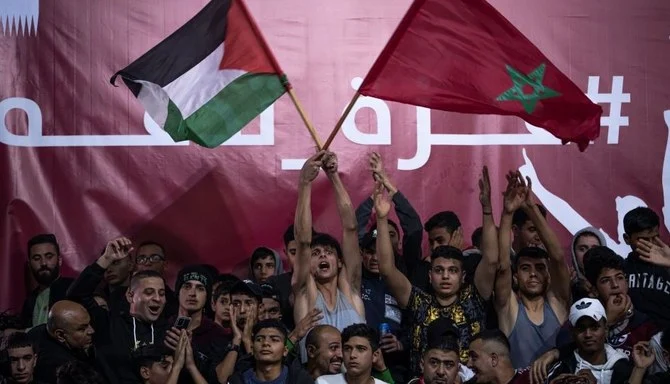
Palestinians watch the World Cup quarterfinal between Morocco and Portugal in Gaza City, Saturday, Dec. 10, 2022. (AP Photo)

________________

ARAB WORLD

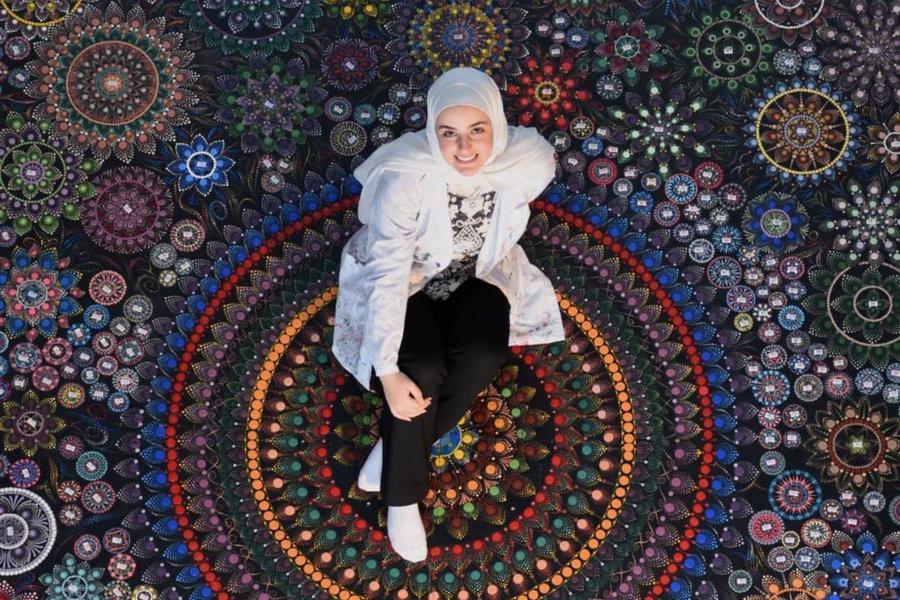
SYRIA: Young Artist Lama Zakaria Enters Guinness World Records with ‘Largest Mandala’ in the World

Syrian young artist, Lama Zakaria has recently achieved the first world record in the Guinness World Records for the largest display of mandala in the world, raising the name of Syria high and proving once again the ability of Syrian youth to excel in various scientific and artistic fields.

Lama told SANA’s reporter that she spent two years of continuous and diligent effort for reaching this stage, stressing that she worked with precision and patience to achieve the required symmetry in her painting, which achieved the record for the largest painting of mandala in the world.

She added that the mandala contains 4096 mandala circles of various diameters, colors and various decorations by using special dotting tools and acrylic paints on a 6 mm-thick wooden board.

She pointed out that the painting with dimensions 488 x 488 cm contains a large number of circles overlapping with each other and free circles with flowing lines that enhance cohesion among them.

Zakaria noted that in each quarter of the painting forms a part of a major basic circle that is the center of the painting and its eye-attracting heart, which required work carefully on all colors and various decorative units.

Lama Zakaria, a third-year student at the Faculty of Architecture at al-Baath University, has sought to specialize in mandalas, as she worked individually to learn the origins of this art and master its methods, and participated in several art exhibitions.

source/content: sana.sy (headline edited)

______________

Actress Lama Zakaria – Photo from Lama’s official Instagram page

_________

SYRIA

SUDANESE AMERICAN: Alsarah, Singer, Songwriter, and Ethnomusicologist

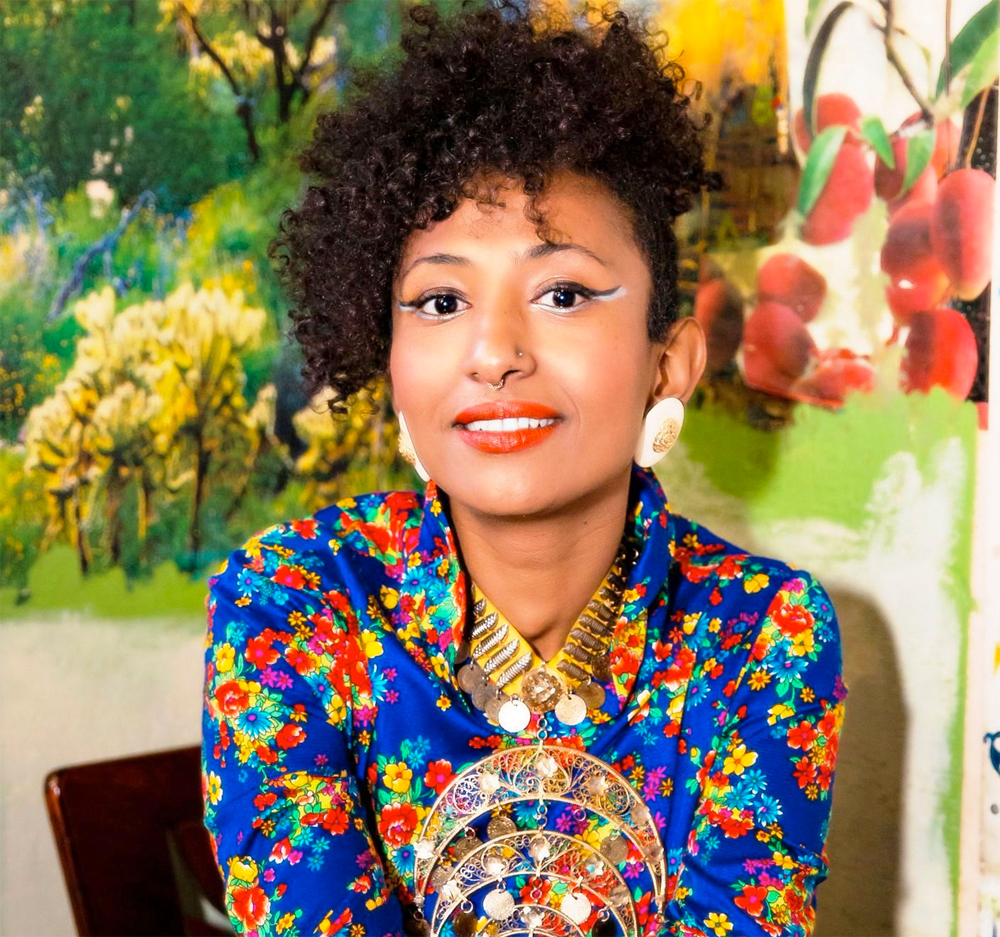
A singer, songwriter, and ethnomusicologist, Alsarah is a self-proclaimed practitioner of East African music, inspired by songs and cultures of Africa and the Middle East. Throughout her career, she performed as a band member of Sounds of Tarab, in addition to producing songs and albums under her stage name, and her band with her sister, Alsarah and the Nubatones. Furthermore, she was also featured in the documentary “Beats of the Antonov” in 2014.

Alsarah was born Khartoum, Sudan in 1982. As a child, her parents worked as activists at a time when many encouraged citizens to vote in the 1986 elections. Following the coup d’etat in 1989, however, her family fled the country to Yemen before the nation’s civil war forced them to relocate to Boston, the United States in 1994.

At this point in life, Alsarah turned to music for solace. In fact, music has been a big part of her childhood, with the very first music that spoke to her being played during her family’s activism in Sudan. Growing up, she studied ethnomusicology at Wesleyan University before relocating to Brooklyn, in New York, where became lead singer of the Zanzibari band Sounds of Tarab.

In 2010, Alsarah and her sister would start a band entitled “Alsarah and the Nubatones” along with band members Haig Manoukian, Kodjovi Mawuena, and Rami El-Aasser. The band released their debut EP, “Soukura,” followed by full-length album “Silt” in 2014, “Manara” in 2016, and “Manara Remixed” in 2017. In addition, Alsarah has also produced songs as a solo artist with albums such as “Aljawal,” “The Crow,” and “Min Ana.”

In general, many of Alsarah’s songs were influenced by artists from Sudan, Zanzibar, and Ethiopia. Her songs are available on Spotify and Deezer.

source/content: abouther.com (headline edited)

____________

__________________________

AMERICAN – SUDANESE

SAUDI AMERICAN: Woman of Substance: the Materials World of Adah Almutairi, Celebrated Chemist, Nano Engineer and Inventor

The celebrated pharmaceutical chemist, nano engineer and inventor reveals why she has spent a career focusing her mind over matter.

When the Berlin Wall came down, Adah Almutairi watched the event unfold on a television screen 5,000 kilometres away in the family living room in Jeddah.

Too young at the time to fully understand the implications, 12-year-old Adah could nonetheless tell that the moment was significant, by the reaction of her parents.

Years later, at a conference to mark the 25th anniversary of the reunification of Germany, Ms Almutairi was on a stage in Berlin talking about her ground-breaking achievements in knocking down walls in science.

Back then, public speaking made her nervous. The knowledge that  Chancellor Angela Merkel, a fellow chemist revered by Ms Almutairi, was among the 700 top international scientists and guests taking part merely compounded the feeling.

She broke the ice with a quote from the 1967 romantic comedy drama The Graduate, which earned her a laugh from the audience: “I just have one word to say,” she told them. “Just one word. Are you listening? Are you listening? Plastics.”

Ms Almutairi went on to describe herself as a plastics chemist, but she is much more besides. Her wide-ranging work combining materials chemistry with nanotechnology as well as developing tools for the future of biology and medicine makes her in great demand at conferences in the US, Europe, the Middle East and China.

The Saudi-American pharmaceutical chemist and nanomedicine engineer has won all manner of honours and recognition, including the prestigious and lucrative National Institutes of Health director’s new innovator award.

At the Falling Walls event, she gave an engaging, if sometimes faltering, presentation of her life-changing nanoparticle discovery feted in the US Congress as one of the four most important US technology breakthroughs of 2012.

“I used to be a nervous wreck before I gave a talk and would practise for two weeks beforehand,” she tells The National. “Plus, Angela Merkel is such an amazing woman, so meeting her was really special.

“She got elected just as I got my degree in chemistry and the way she spoke at that conference, and later welcomed so many Syrians into Germany, made me really respect her views on being kind citizens.”

With practice, Ms Almutairi, now 45, is much more comfortable as a public speaker. “Preparation,” she says, “is key.”

It was a lesson she learnt as a schoolgirl after a fluffed first gymnastics performance before a crowd left her sobbing on a bench. Determined never to repeat the same mistake, she rose to become the top gymnast on the team as well as the fastest 1,500-metre runner.

Preparedness forms the backbone of her professional life as she puts known scientific truths into practice while always remaining open to unexpected outcomes.

Discoveries and their effects, she and Ms Merkel wholeheartedly agree, can often surprise the scientists and engineers themselves.

“If you decide there is going to be a challenge down the road and that is going to deter you, nothing will happen,” she says. “If you go down that road anyway, you’ll solve the problem when you get there.”

No amount of planning, though, could have readied her for a year when the rug was pulled out from beneath her feet. In 2015, her beloved father died at the age of 65 and her 20-year marriage to a banker she met at university fell apart.

It was, she says, a painful time – not least because Mutlaq bin Abdul Rahman Almutairi, born into a traditional Saudi family, was his daughter’s greatest ambassador, enabling her to break free from what could have all too easily been a restrictive mould.

He was just five years old and still mourning his mother’s death when his own father packed up their goat-hair tent, strapped their few possessions to the back of a camel and made the arduous 100km journey from the Bedouin desert enclave of Al Harra to seek work and a new life in Jeddah.

Desperately poor, the family squatted on land and, when old enough, the enterprising Mutlaq enrolled himself and his younger sister in school.

His conservative father, who could not read or write, was furious and sent his daughter home. Mutlaq stood his ground and continued with his education – a moment that shaped the course of his own future and subsequently that of his five children.

“Sometimes in life, one decision changes everything,” Ms Almutairi says.

Mutlaq’s offspring have flourished in their respective fields of science and medicine. Khalid, 46, a plastic surgeon, Heba, 38, a professor in radiology, and Ahmed, 37, a dentist, still live in Saudi Arabia while Amer, 41, a professor in family medicine, is based in Houston.

Ms Almutairi was named recently on the Forbes list of the world’s Top 10 Influential Female Engineers, and often thinks of the debt owed to a father who championed her right to education.

The stance made him something of an anomaly among the Almutair tribe, whose roots can be traced back to the Quran.

“It still makes me emotional,” she says. “He was enlightened from God.

“No one around him was educated. He was the first in his entire family to learn how to read and write and go to college.

“My father and grandfather got into a lot of fights because my grandfather did not believe women should be educated.”

While she inherited drive and motivation from her father, a love of learning was instilled at a young age by her mother Najat, who, aptly enough, was a teacher.

“My family on my mother’s side were extremely well educated and my mother is very well read,” she says.

Indeed, her parents met because Mutlaq had become besotted with Ms Almutairi’s great-aunt Hilal, an intellectual who was one of the first dentists in Saudi Arabia.

Despite the 20-year age gap, he approached the family to ask for her hand in marriage but was advised instead to wed the daughter of Hilal’s brother, with whom he would build a strong bond.

“My father appreciated a smart woman,” Ms Almutairi says. “He didn’t go after the young, pretty girl. He initially went for the older woman he enjoyed talking to.

“Now when I think back, I realise how special and unique he was, and how much respect he had for women.”

Mutlaq studied criminology and justice administration in Portland, Oregon, where Adah Almutairi was born, before returning to his homeland to become a police investigator.

The young Adah attended international schools in Jeddah and Riyadh, excelling not only at sport but in maths and science.

On leaving school at 16, she was at a loss as to what to do next. Her mother was applying for teaching posts so, on a whim, Ms Almutairi submitted an application to Najd National School in Riyadh – and surprised everyone, including herself, by landing a job teaching English.

“I didn’t have a degree, and when the headmistress realized how young I was, she said: ‘Don’t tell anyone, just put some lipstick on.’

“It was the best job ever. I loved every minute of it. I had such a connection with the girls. I used to take in copies of my mother’s Reader’s Digests and make up writing exercises around them.”

A year later, she began applying to universities. King Abdulaziz University in Jeddah turned her down but she secured a sports scholarship to Occidental College in Los Angeles, Barack Obama’s alma mater.

The opportunity once again put her father at loggerheads with her grandfather and members of the Almutairi clan, who did not think a young woman should travel overseas alone. Unperturbed, Mutlaq sent her anyway, even though he and Najat had doubts about her choice of subject.

The couple wanted her to be a doctor but Ms Almutairi chose maths as her major before switching to chemistry in her second year.

The lightbulb moment came when her tutor, the widely loved chemistry professor Tetsuo Otsuki, told her she was “a diamond in the dirt”.

“He made me feel smart and capable, and worth being taught,” she says.

“I have twice been told the phrase: ‘You remind me of myself’. It is one of the nicest things you can say to a young person if they look up to you. It really sat in my heart.”

Chemistry appealed because it was based on “concepts where once I wrapped my head around them, I could use them in so many ways”.

A scholarship to continue her studies at the University of California, Riverside, led her to create lightweight plastic polymers, or molecules, capable of conducting electrons that had uses in everything from robotics to space research.

“Around that time,” she says, “Hideki Shirakawa was winning the Nobel chemistry prize for his work with conductive polymers, and both Nasa and Walt Disney were funding and supporting that work.”

She may not have become a doctor of medicine as her parents had wished, but Ms Almutairi did turn her attention to the field during postdoctoral studies at the University of California, Berkeley, where she worked with Jean Frechet, a chemist innovating in the area of in-vivo imaging to diagnose disease.

After being turned down for jobs in Saudi Arabia, she took up a post at the University of California, San Diego, going on to lead an interdisciplinary research group at the Centre for Excellence in Nanomedicine and Engineering.

Perhaps one of Ms Almutairi’s proudest moments was collaborating with an ophthalmologist for a decade to come up with a way to regenerate failing retinas and prevent blindness.

“That particular innovation is now commercialised and makes me feel really good about myself,” she says. “I enjoy all sorts of application materials but medicine is especially rewarding. I like to solve problems and have a positive impact on the world.”

Her work with lanthanides – popularly classed as rare earth elements but actually, she says, abundant – involves a chemical reaction that could be applied to the delivery of drugs and diagnostics in medicine but also solar energy harvesting.

She has more than 100 patents registered, including one with her brother Khalid to use gold molecules in liposuction.

“My work is very rewarding,” Ms Almutairi says, “and my father was very proud of me. When I became well known in the US, it was a big moment because the people who were criticising him for sending his daughter away were the same people congratulating him.”

A strong proponent of the “health is wealth” philosophy, she may no longer run, but she does lift weights regularly and spends time in the garden with her 10-year-old son cultivating avocados, figs, and citrus trees, and growing aubergines, tomatoes and cucumbers.

She has visited Saudi Arabia many times to see her family and speak at conferences. One in particular that has stayed with her was a graduation speech at Princess Nourah bint Abdulrahman University in Riyadh.

There was no film quote for these graduates of the largest women’s university in the world. In a clear voice, without a hint of nerves, she instead passed on the words of that staunch defender of her own access to education.

Remain forever curious about the world, she told the audience, and live a meaningful life with impact.

It was clear that the woman of substance standing before them had been shaped by her father’s advice. She didn’t need to ask if they were listening.

source/content: thenationalnews.com (headline edited)

____________

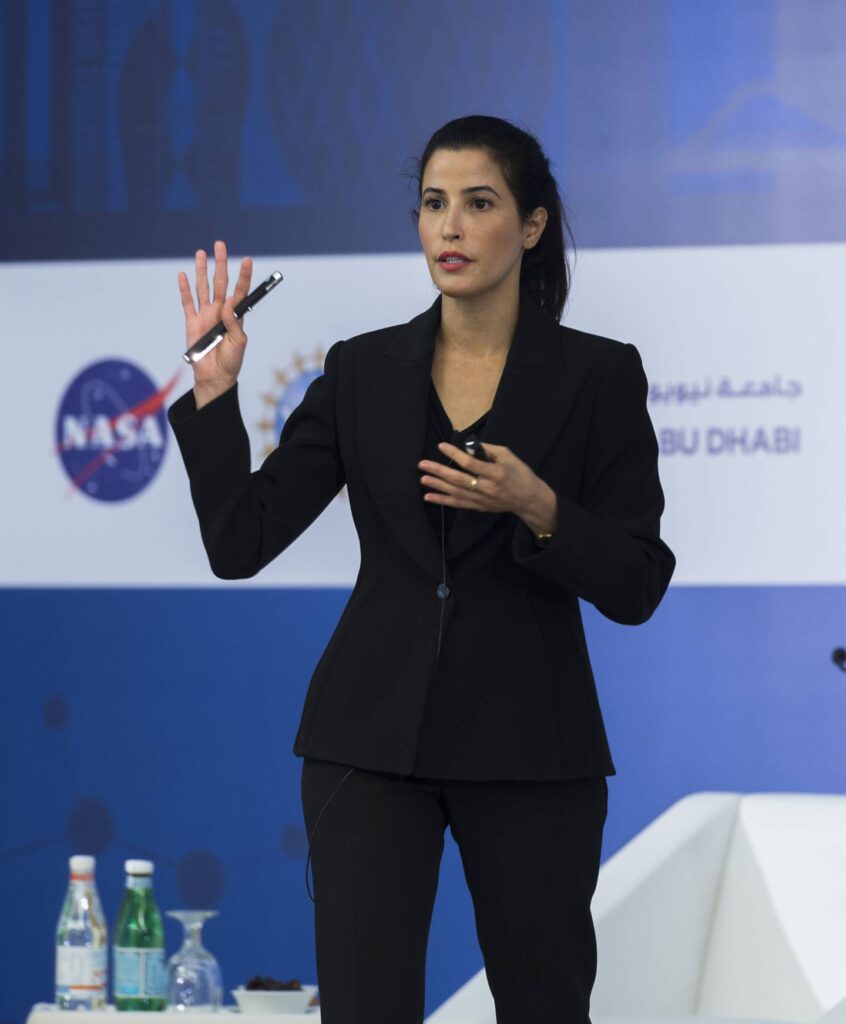
The Saudi Arabian-American pharmaceutical chemist and nanomedicine engineer is in great demand at conferences in the US, Europe, the Middle East and China. Photo: Adah Almutairi

_______________________________

AMERICAN / SAUDI ARABIA

TUNISIA: The 33rd International Carthage Film Festival: a breath of fresh air in trying times

Tunisia’s prestigious industry event enjoys another successful year, helping spread a love of culture across the country.

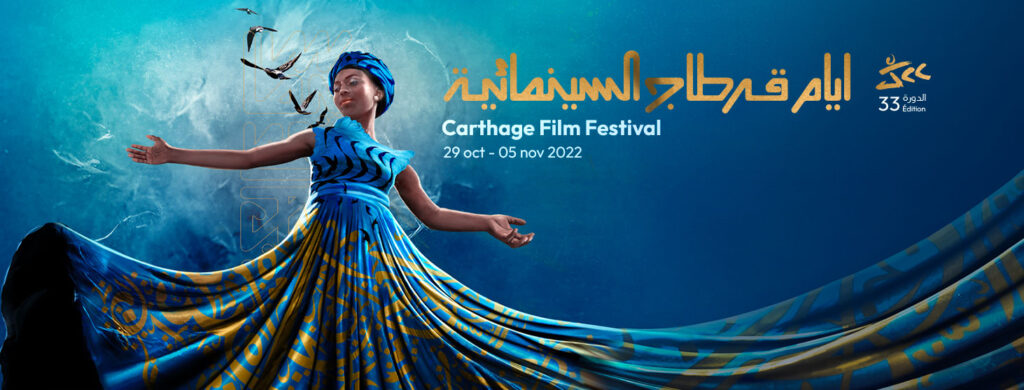
Another week of movie magic, street art and music has come to an end following the 33rd edition of the International Carthage Film Festival in Tunisia.

Titled “Hel Thneya”, which means “Open the Path” in Tunisian dialect, the festival once again cemented its status as a major cultural attraction for visitors of all ages, who flocked to cinemas and filled the streets en masse.

The festival, one of the eldest and most prestigious in the Mena region, ended on Sunday.

As is tradition, the capital Tunis was transformed into an open celebration of not only cinema but all forms of arts, with independent young painters getting the chance to show their artworks to the public for the first time and musicians performing every evening to audiences in the middle of Avenue Habib Bourguiba. For many, it was an opportunity to watch films that they don’t usually have the means or the opportunity to see.

Speaking outside the Theatre de Region Cinema, Downtown Tunis, Amina told The National she had been waiting for the festival to introduce her two children to the world of the cinema.

“As a family, we always discuss films together but we never find the time nor age-appropriate films to watch. This is a great opportunity to let them discover the big screen,” Amina said.

Amina’s daughter Ritej, who is in the sixth grade, was grinning with happiness as she prepared to enter the cinema hall. “I’m excited, I’m sure I’m going to enjoy this and tell my friends about it,” Ritej said.

Amina said that she often encourages her children to value the arts, with Ritej currently rehearsing for a school play, and she wishes there were more events like it in Tunisia.

This year’s International festival was an opportunity to revive the city. According to organisers, the festival aimed to showcase both new cinema productions and also timeless films that the younger generations needed to be introduced to.

This year, 72 countries participated with Saudi Arabia being the guest of honour and special emphasis placed on Palestinian and Spanish Cinema — a choice that organisers said highlighted the intersection between north and south, placing migration under an artistic lens.

The festival also paid tribute to Arab filmmakers, both living and dead, namely the Moroccan director Mohamed Abderrahmen Tazi and Egyptian director Daoud Abdel Sayed, as well as the late Algerian director Yamina Chouikh and late Tunisian director Kalthoum Bornaz.

“Through this 33rd edition, we continued to foster cultural decentralisation by bringing new sections to the festival and programming screenings in different parts of the country,” journalist and cinema critic Yosra Chikhaoui told The National.

“This year marks the first edition of JCC for kids. We are bringing more screenings as part of our “street cinema” section as well as continuing the special screenings for prisoners and members of the Tunisian army inside military bases,” Chikhaoui, who is a member of the festival’s media committee, added.

JCC in Prisons, now in its eighth year,is the fruit of a partnership between the Tunisian Ministries of Culture and Justice and the International Organisation Against Torture. This year, 12 films were showcased in three prison facilities, while juvenile detainees were transferred to Tunis for a special showcase in a cinema.

According to Ridha Behi, general director of this year’s festival, film screenings in prisons serve as a reminder of the right all people have to access and experience culture.

Awards, meanwhile, highlighted the multitude and variety on show, with a focus on filmmakers whose work depicts the struggles of their respective societies.

The Tanit d’Or award for best feature film was given to Tug of War, directed by Amil Shivji — marking the first time a film from Tanzania has won the award. Meanwhile, the Tanit d’Argent and Tanit de Bronze were respectively awarded to the films Under the Fig Trees by Erige Sehiri from Tunisia and Sharaf by Samir Nasr from Egypt

source/content: thenationalnews.com (headline edited)

___________

___________

TUNISIA

KUWAIT: Shaikha Al-Bahar, receives ‘Distinguished Services to Arab Banking Award’ from Arab Bankers Association and becomes First Woman to Win this Award.

First woman to win this prestigious award.

Shaikha Al-Bahar, Deputy Group CEO at National Bank of Kuwait, received “Distinguished Services to Arab Banking Award 2022” from the Arab Bankers Association (ABA) in recognition and appreciation of her dedicated efforts and outstanding contributions to the growth of the Arab banking industry.

Lord William Russell, the former mayor of the City of London, presented the award to Al-Bahar, during the Arab Bankers Association’s annual event, which was held in London, England and was attended by top executives and key leaders across the financial services industry.

In her acceptance speech, Al-Bahar said NBK has adopted a cooperate culture of leadership, that doesn’t only drive excellence, but rather actively demonstrates that excellence. Drawing from this unique culture, NBK’s leaders inspire their team members to forge a carrier in the banking industry by providing them with the right tools to create efficiencies and deliver the best results.

“I am very proud of what I have achieved throughout my career with NBK. It gives me more pride that my professional career was closely aligned with my personal believes and goals, which helped me achieve a lot of my personal aspirations, especially the ones that relate to giving back to the community through responsible banking practices”. Al-Bahar said.

“I am also honored to be a member of the leadership team that has guided NBK to its prominent position as one of the region’s leading financial institutions.” Al-Bahar added.

Al-Bahar highlighted that behind her personal accomplishment, there was dedication and willingness to differentiate herself through hard work, thinking outside the box, and getting out of her comfort zones.

Al-Bahar described her professional journey as one filled with devotion, evolution, and inspiration, from its starting point as a trainee in one of NBK’s branches, all the way until she took the helm as DGCEO. Throughout this unique journey, she managed to leave a positive footprint and played a key role in shaping the Group’s strategic vision, a direction that successfully positioned NBK as the most Valuable Banking Brand in Kuwait and among the top five banking brands in the region.

Al-Bahar emphasized that NBK adopts an open culture of customer-centricity, innovation, digital mindset, and data-driven decision-making to well position NBK as a digital leader and trendsetter in Kuwait and the region, building next generation digital banking experience.

NBK Group Deputy CEO also stated that the long-term interests of all NBK stakeholders are inseparable, as the Bank continues to create added value to all its customers, employees, and communities.

“A real leader knows how to drive change. Therefore, I am committed to advocating for greater boardroom diversity and continue developing and supporting various women empowerment initiatives, the latest of which was launching “NBK RISE”, a first-of-its-kind Global Women Leadership Initiative designed by women for women”. Al-Bahar noted.

Al-Bahar emphasized the importance of gender balance in boardrooms, as nowadays it has come to the forefront. Therefore, NBK took the initiative and started from within, ensuring that women break boardroom barriers and that they have adequate representation on all our boards and committees.

“In today’s fast-changing global environment, we continue to inspire our teams to be future leaders and provide them with the tools to transform organizations, enhance value creation, create efficiencies, and deliver better results.” Al-Bahar said.

Al-Bahar believes that continuous learning is key to success, and that people learn the most when thrown in the deep end.

Acknowledgment and Appreciation

In conclusion of her speech, Al-Bahar acknowledged the collaborative dedication of NBK employees, highlighting their efforts as they continue to elevate NBK’s leadership position to new heights.

“This award reflects our vision to continue building on our excellence and further strengthens our resolve to maintain the course of our inclusive, resilient, and sustainable approach. At NBK, we have always been focused on developing effective leaders within and throughout our organization, and thereby improve the overall quality of our operations.” Al-Bahar concluded.

A Role Model for Ambition

Former Mayor of the City of London, Lord William Russell, said that Al-Bahar is a role model for the ambitious women across the Middle East and on the international front, adding that as a leading banker in the GCC, she offers a strategic viewpoint and distinct voice that is recognized and valued by politicians and leaders.

A Prominent Role

Meanwhile, Mr. George Kanaan, CEO of the Arab Bankers Association, stressed that Al-Bahar was instrumental in the growth of banking services throughout the Middle East, as well as in assisting enterprises and organizations to obtain the financial products and services they required to achieve their goals.

The Arab Bankers’ Association (ABA) was founded in 1980 and is a London-based not-for-profit professional organization whose members work in banks and related industries in the Arab world and in the United Kingdom. ABA is dedicated to strengthening the connection and interdependence among members of the financial sector in Arab nations and the United Kingdom through constant contact and information exchange, as well as a diverse range of activities and events.

source/content: arabtimesonline.com (headline edited)

______________

Al-Bahar receives the award from Abdulaziz Al-Khuraiji, Chairman of the Board of Directors of the Arab Bankers Association in London, and George Kanaan, CEO of the Arab Bankers Association.

___________

KUWAIT

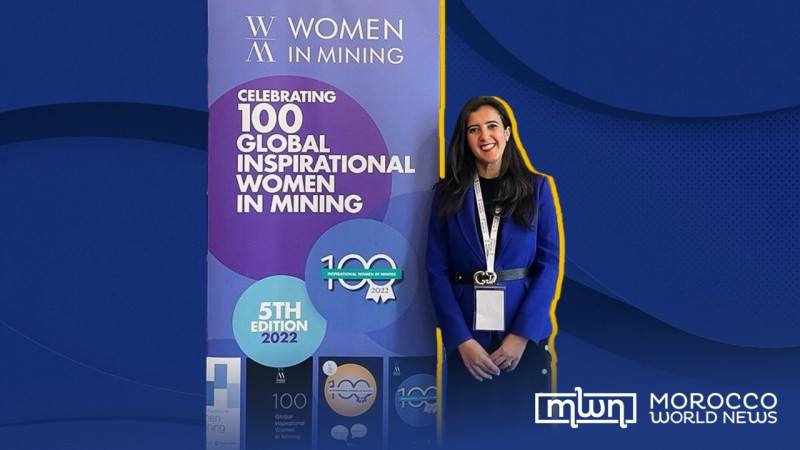
MOROCCO: OCP’s DOOC CEO Ibtissam Bensetti , the ‘First Moroccan Woman’ named in ‘100 Global Inspiring Women in Mining’ (WIM100) 2022

With a strong determination to help women’s inclusion in the mining industry, Bensetti has a strong belief in women’s ability to defy norms and pursue a career in any industry.

Women in Mining UK, an NGO dedicated to supporting women in the mining sector, selected  CEO of OCP subsidiary DOOC Ibtissam Bensetti to feature in the 2022 “100 Global Inspirational Women in Mining” (WIM100) in recognition of her contributions to the global mining industry.

With this nomination, Bensetti became the first OCP personnel and Moroccan national to feature in the 100 Global Inspirational Women in Mining.

The NGO’s global top 100 list celebrates women’s contribution to the mining industry at all levels. The biennial publication stresses women’s skills and expertise in the global mining industry and celebrates role models for future generations.

Women inclusion in mining

The organization selects nominees based on different criteria, including creative innovation and sustainable working.

“A WIM100 woman offers proactive advocacy to those working in the mining industry and beyond. She empowers her colleagues to ensure everyone feels heard, welcomed, and respected,” the NGO said.

Bensetti has been able to take her place in the WIM100 for her leadership in OCP as a CEO at the group’s subsidiary DOOC, which specializes in industrial operations consulting, safety, and sustainability. 

Having joined OCP in 2012, Bensetti has more than a decade of experience in the mining industry at different levels, particularly in sustainability roles in mining and chemical industrial operations, as well as corporate development.

Carrying the spirit of women’s empowerment during her journey, Bensetti has been working on spreading that spirit among her team members, particularly women, through supporting  OCP’s female talent as well as increasing the number of women in management.

Delighted to be part of the WIM100 list, Bensetti stressed her emphasis and belief in women’s talents.

“In my mind, there is no impenetrable fortress for women, women can defy the norms and pursue a career in any industry,” she said, conveying her encouragement and endorsement for the inclusion of women in the mining industry.

The CEO acknowledged that the industry might have been a male-dominated industry but claimed that that’s in the past thanks to global efforts seeking to ensure gender equality at different levels.
 Women make up between 8% and 17 % of the global mining workforce, a McKinsey report has found.

The report also identified, however, several reasons and challenges that prompt women’s exit from the industry.

“The top reasons for leaving the industry are feeling that work is no longer intellectually challenging and having the perception that there are fewer advancement opportunities than there are for their male colleagues,” the report stressed.

Appointment and education

Bensetti was appointed as CEO of DOOC in June 2021 to replace Hamid El Mahfoudi, who retired.

She joined OCP a decade ago, filling positions related to strategy, corporate development, and industrial operations.

Graduating from Telecom Paris in 2004, Bensetti amassed 18 years of experience in management consulting, industry managing, coaching, and leading teams in transformation journeys.

Bensetti is also a graduate of The World Business Council for Sustainable Development’s LEAP Program, a one-year sustainability training program that seeks to empower women and help advance their positions and careers.

Having gender equality as a center of focus during her career, Bensetti is determined to continue her battle to help empower women in the mining industry.

“Being a woman engineer in industry, I have been fighting this battle all my life,” she wrote on her LinkedIn bio.

source/content: moroccoworldnews.com (headline edited)

___________

____________

MOROCCO

ABU DHABI, UNITED ARAB EMIRATES: ’17th edition Sheikh Zayed Book Award 2022″(SZBA) announces longlists for Literature, Children’s Literature, and Young Author Categories

The Sheikh Zayed Book Award (SZBA) of the Abu Dhabi Arabic Language Centre (ALC), part of the Department of Culture and Tourism – Abu Dhabi (DCT Abu Dhabi), has revealed the longlists for its 17th edition (2022/2023) in the Literature, Children’s Literature, and Young Author categories.

The announcement was made as the SZBA judging committees begin the evaluation process for all the longlisted entries.

The Young Author category saw 954 submissions this year, an increase of more than 8 percent from the 881 received last year. The Young Author recorded the highest growth in number of submissions among all categories, and now accounts for 30 percent of total nominations across all categories.

The Literature category received 688 submissions this year, ranking second in terms of submissions, while the Children’s Literature category saw 386 participations, up nearly 63 percent from the 236 submissions registered last year.

The Children’s Literature category received 12 submissions from nine Arab countries: UAE, Saudi Arabia, Egypt, Lebanon, Syria, Jordan, Bahrain, Kuwait, and Iraq. These included:

  1. “La Ahad Yal’ab Ma’ai” (No One Plays With Me) by Mohammed Alohaly from Saudi Arabia, issued by Al Hudhud Publishing and Distribution in 2022.
  2. “Lu’bat al-Nujoom” (The Star Game) by Afra Mahmood from the UAE, issued by Al Hudhud Publishing and Distribution in 2022.
  3. “Min al-Fajr ila al-Ghuroob maa’ Toyour Ghabat Alkharuwb” (From Dawn to Dusk with the Birds of the Carob Forest) by Flora Majdalawi from Jordan, issued by Majdalawi Masterpieces Books in 2022.
  4. “Mala Narah” (What We Don’t See) by Shaima Alwatani from Bahrain, issued by Afkar for Culture & Publishing in 2021.
  5. “Aba’at Abi” (My Father’s Gown) by Basemah Alwazzan from Kuwait, issued by National Council for Culture, Arts and Literature in 2022.
  6. “Jaddi wa al WhatsApp” (My Grandfather and WhatsApp) by Parween Habib from Bahrain, issued by Dar Al Saqi in 2022.
  7. “lastu Wahedan” (I Am Not Alone) by Rami Tawil from Syria, issued by Dar Al Saqi in 2021.
  8. “Rabieon Samet” (Silent Spring) by Razan Al Naeemy from Iraq, issued by Qindeel printing, publishing & distribution in 2022.
  9. “Abhathu an Shai’”(I Am Looking for Something) by Sahar Naja Mahfouz from Lebanon, issued by Dar Kiwi Stories in 2022.
  10. ” Einstein: Asrar Alkoutaa 99” (Einstein and the Secrets of the 99th Element) by Sharif Saleh from Egypt, issued by Wow for Publishing & Educational Services in 2022.
  11. “Rehla Dafeaa Molawana” (A Colourful Warm Journey) by Doha Jawad from Syria, issued by Dar Ashjar Publishing & Distribution in 2020.
  12. “Al Sorra Al Ajeebah” (The Wonder Bundle) by Nadia AlNajjar from the UAE, issued by Alfulk Translation & Publishing in 2022.

The longlist for the Young Author category ranged from theses to literary works and included 12 titles, submitted from eight Arab countries: Tunisia, Egypt, Algeria, UAE, Iraq, Oman, Lebanon, and Saudi Arabia. The works on the longlist are:

  1. “Madeeh Al Ikhtilaf: Derasat fi Falsafat Al Ketaba wa Siasat Alhawiya ” (Praise of Difference: Studies in the Philosophy of Writing and Identity Politics) by Mohamed Bekkaye from Algeria, issued by Al Rawafed Culture and Nadim Edition in 2022.
  2. “Al Khetab Al Kasasi fi Ayyam Al Arab fi Al Jahileya: Kiraah Tadawouleyah Hijajeyah (Narrative Discourse in the Days of Arabs in the Pre-Islamic Era: A Pragmatic and Argumentative Examination) by Dr. Abdessattar Al Jamai from Tunisia, issued by Dar Kunouz Al-Marefa Publishing & Distribution in 2021.
  3. “Al Badawi Al Abiad” (The White Nomad) by Mutaz Albader from Saudi Arabia, issued by Dar Al Tanweer Publishing & Printing in 2021.
  4. “Aroos Al Kamar, Hekayat Al Holm Al Afriki” (The Comoros Bride: An African Dream Tale) by Mohammad Tarazi from Lebanon, issued by Arab Scientific Publishers Inc. in 2021.
  5. “Al Wahl wa Al Noujoom” (Dirt and Stars) by Ahmad Lutfi from Egypt, issued by Aseer AlKotb in 2022.
  6. “Al Tajreeb fi Al Khetab Al Sheary Al Emarati Al Mouaaser” (Experimentation in Contemporary Emirati Poetic Discourse) by Dr. Hessa Abdulla Al Ketbi from the UAE, issued by Sharjah Department of Culture in 2021.
  7. “Haraket Alfadh Al Hadarh Al Arabieyah min Bayan Al Jahedh to Aked iben Abd Rabbeh” (The Movement of Words in the Arab Civilization: From the Statement of Al Jahiz to the Unique Contract of Ibn Abd Rabbeh) by Dr. Ali bin Hamad Al Riyami from the Sultanate of Oman, issued by Alaan Publishers & Distributors & The Omani Society for Writers & Literati in 2022.
  8. “Nehayat Al Sahra’a” (The End of the Desert) by Said Khatibi from Algeria, issued by Hachette Antoine / Nofal in 2022.
  9. “Fawka Jisr Al Joumhoureyah” (Over the Republic Bridge) by Shahid Alrawi from Iraq, issued by Dar Alhikma Publishing & Distribution in 2020.
  10. “Al Belad Al Tounnouseaya fi Oyoun Al Rahhalah Al Alman” (Tunisia in the Eyes of German Travelers (1535-1881 AD) by Dr. Atef Salem from Tunisia, issued by Editions Arabesques in 2021.
  11. “Naqd Al Naqd Wa Tajalleyatoh Fi Al Tourath Al Nakdi Wa Al Balaghi Al Arabi” (Criticism of Criticism and Its Manifestations in the Arabic Rhetoric and Critical Heritage) by Dr. Issam Benchellel from Algeria, issued by Difaf Publishing & El-lkhtilef Publishing in 2021.
  12. “Fareedah Wa Sedi Al Mathloum” (Farida and My Oppressed Master) by Heba Ahmad Hassab from Egypt, issued by Al Mahrousa Center for Publishing, Press Service, and Information in 2021.

As for the Literature category, 12 titles made it onto the longlist by novelists, writers and poets representing eight countries: Egypt, Morocco, Syria, Tunisia, Saudi Arabia, Lebanon, Sudan and Iraq. The titles are:

  1. “Almer: Akhtam Al Madeenah Al Fadelah: (Almer: Seals of the Utopian City) by Abdelillah Benarafa from Morocco, issued by Dar Al Adab Publishing & Distribution in 2022.
  2. “Hijab Al Saher” (A Magician’s Veil) by Ahmed Al Shahawi from Egypt, issued by Al-Dar Al-Masriah Al-Lubnaniah in 2022.
  3. “Aseer Nish: Rakan bin Falah bin Hethlain” (Prisoner of Nish: Rakan bin Falah bin Hethlain) by Ahmed Hamad AlSubait from Saudi Arabia, issued by United Takween Group Press, Publishing & Distribution in 2022.
  4. “Rasasa fi Al Raas” (A Bullet in the Head) by Ibrahim Issa from Egypt, issued by AlKarma Books in 2021.
  5. “Hourrass Al Houzn” (Guardians of Sadness) by Amir Tag Elsir from Sudan, issued by Hachette Antoine / Nofal in 2022.
  6. “Al-Qata’i: Thoulatheyat Ibn Tulun” (Al-Qata’i: Ibn Tulun’s Trilogy) by Reem Bassiouney from Egypt, issued by Nahdet Misr Publishing in 2022.
  7. “Abnaa Hura” (The Sons of Hura) by Abdelrahim Kamal from Egypt, issued by AlKarma Books in 2021.
  8. “Ifrah ya Qulbi” (Rejoice, My Heart) by Alawiya Sobh from Lebanon, issued by Dar Al Adab Publishing & Distribution in 2022.
  9. “Ila Ayn Ayyathouha Al Kaseedah” (Whereto, O Poem? An Autobiography) by Ali Jaafar Alallaq from Iraq, issued by Alaan Publishing in 2022.
  10. “Antakia Wa Molouk Al Khafaa” (Antioch and the Kings of Secrecy) by Lina Hawyan Alhasan from Syria, issued by Dar Al Tanweer Publishing & Distribution in 2021.
  11. “ Moujazafat Al Aref” (Knowledgeable Risk) (Poetic Work) by Mohammed Ibrahim Yaghob from Saudi Arabia, issued by Tashkeel Publishing & Distribution in 2022.
  12. “Kullo Aoushbaten Sawtouha wa Kullo Ghaimaten Kathalek” (To Every Grass Leave Its Sound, and to Every Cloud as Well) (Poetic Work) by Mohamed Ghozi from Tunisia, issued by Contraste Editions in 2022.

The Sheikh Zayed Book Award will soon be announcing the longlisted titles for the remaining categories in the 17th edition.

source/content: zayedaward.ae (headline edited)
____________

_________________________________________________

ABU DHABI, UNITED ARAB EMIRATES (U.A.E.)

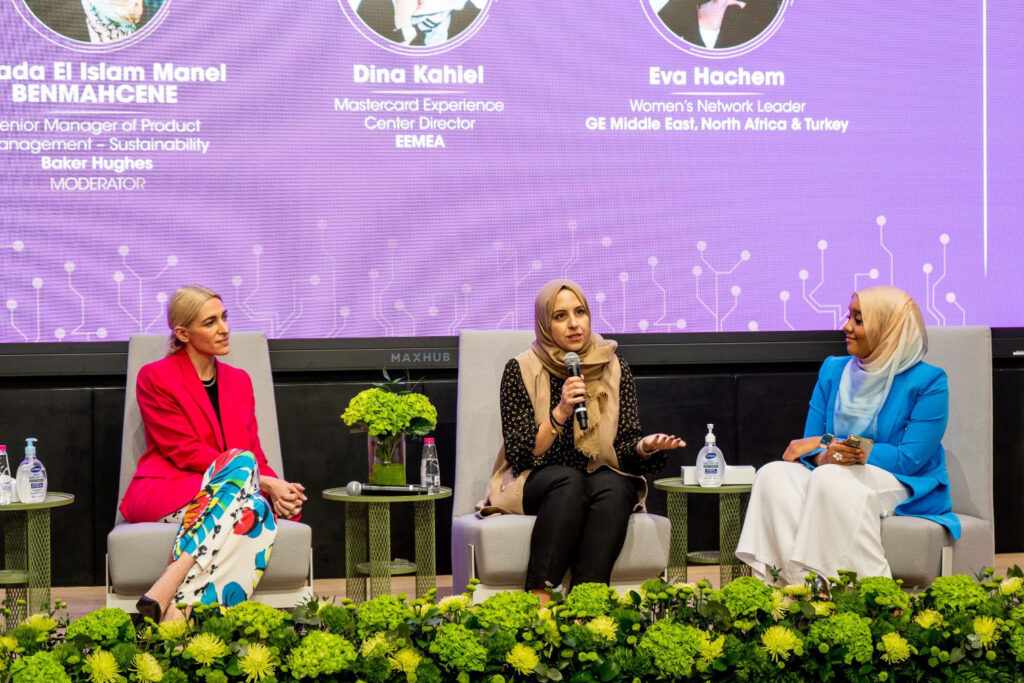
UAE (EMIRATES): Ohood Al Roumi, MOS for Government Development & The Future – Honours 8 Winners of ‘Women in Tech MENA Awards’ 2022

Ohood bint Khalfan Al Roumi, Minister of State for Government Development and The Future, honoured the winners of the Women in Tech MENA Awards, during a ceremony held in partnership between the Sharjah Research, Technology and Innovation Park (SRTIP) and Women in Tech.

The award, which is one of seven regional awards covering various areas of the globe, celebrates talented women from around the world who innovate, inspire and transform the technology sector.

Held under the theme, “Women in Green”, the event was attended by Hussain Al Mahmoudi, CEO of STRIP, and several leading experts, entrepreneurs and the award’s female nominees.

The awards were introduced by Ayumi Moore Aoki, Founder and CEO of Women in Tech, who affirmed the need to increase the presence of women in technology.

The eight winners were:

-The Uplifting Syrian Women Initiative in the Most Impactful Initiative Award;

-Fatma Atawna, CEO of Siraj in the Best Ally Award;

-Aida Kandil, CEO of MyTindy in the Start-up Award;

-Wesam Sarhan, Co-Founder of Colibri Care in the ID and E Disruptor’s Award;

-Mirna Arif, Country General Manager of Microsoft in the Global Leadership Award;

-Dr. Fatmah Boothman, Associate Professor at the King AbdulAziz University in the Lifetime Achievement Award;

-Amna Usman Choudhry, Financial Economist and Strategist for Blockchain at Metaverse and Web 3.0 in the Woman in Web3 Award

– Uditi Sharma, Founder and Executive Director in the Aspiring Teen Award.

Al Roumi highlighted the key role of women in shaping the future of technology, noting that the UAE has devoted significant attention to empowering women to actively engage in shaping the future of vital sectors, especially the technology sector.

She also highlighted the UAE’s pioneering experience in empowering Emirati women in technology, as they account for 56 percent of Emirati government university graduates in science, technology, engineering and mathematics (STEM).

Al Roumi added that the Women in Tech Award recognises women who lead the technology sector and inspires other women to actively participate in this vital sector, stressing that the partnership between the Sharjah Research, Technology and Innovation Park and Women in Tech is a leading model of global partnerships aimed at encouraging women to participate in various fields of technology.

She also congratulated the winners of the award’s eight categories and commended their achievements, which reflect the overall capacities of women and inspires other women to strive for excellence in the technology sector.

In his welcome address, Al Mahmoudi said, “Hosting the Women in Tech MENA Awards is a milestone moment for us, because it reflects our deep commitment to gender equity and women’s empowerment. We are happy to say that more than 50 percent of the SRTIP workforce are women, some holding senior positions in technology, engineering and labs. Our commitment is also evident in our scheme for women entrepreneurs at SRTIP, under which we grant them subsidies and special benefits.”

“To make the Women in Tech MENA Awards a memorable event, we have lined up high-profile speakers who will enhance the prestige of the event with their insights and shared experiences. The keynotes and panels will offer a rich harvest of ideas, which would go a long way in promoting women’s empowerment in the UAE and the region,” he added.

Panel discussions held before the presentation of the awards provided interesting insights into the role of women in technology. The panel on “Gender equity and climate change, an intersectional approach to sustainability” explored how women and other underserved groups are disproportionately impacted by the global climate crisis, and are uniquely positioned to help achieve sustainability. The panel’s participants were Nadia Mannell, General Partner at Seed South Capital; Geraldine Wessing, Chief Political Analyst at Shell; Cecelia Carlsward, Founding Partner at Violet Hill and Co, and Tatiana Abella, Founder and Managing Director of Goumbook FZE.

A second panel on “Driving inclusion through innovation” discussed how the MENA region is driving innovation while considering human diversity and building inclusive economies.

source/content: wam.ae (headline edited)

__________

__________________________________________

UNITED ARAB EMIRATES (U.A.E) / MENA

EGYPT: Award Winners of the ’44th Cairo International Film Festival 2022′ (CIFF), 13-22 November

The 44th CIFF’s closing ceremony took place on the stage of the Cairo Opera House on Tuesday evening.

Awards of the 44th Cairo International Film Festival are as follows:

International Competition

The Golden Pyramid Award
Alam by Firas Khoury (France, Tunisia, Palestine, Saudi Arabia, Qatar)

The Silver Pyramid Award, Special Jury Award, for Best Director
Love According to Dalva by Emmanuelle Nicot (Belgium, France)

The Bronze Pyramid Award For Best First or Second Feature
Bread and Salt by Damian Kocu (Poland)

Naguib Mahfouz Award For Best Screenplay
A Man (Japan), screenplay by Kosuke Mukai

Best Actor Award
Maher El Khair for his role in The Dame by (France, Lebanon, Sudan, Qatar, Germany, Serbia)

Best Actor Award
Mahmoud Bakry for his role in Alam (France, Tunisia, Palestine, Saudi Arabia, Qatar)

Best Actress Award
Zelda Samson for her role in Love According to Dalva (Belgium, France)

Henry Barakat Award for Best Artistic Contribution (Awarded to the Cinematographer)
19B, cinematography by Mostafa El Kashef (Egypt)

The Horizons of Arab Cinema Competition 

Saad Eldin Wahba Award for Best Arabic Film
Mother Valley by Carlos Chahine (France, Lebanon)

Salah Abu Seif Award 
Riverbed by Bassem Breche (Lebanon, Qatar)

Best Non-Fiction Film Award
Far From the Nile by Sherief Elkatsha (Egypt, USA)

Best Acting Performance Award
Carole Abood for her role in Riverbed ( Lebanon, Qatar)

Special Mention for Film
I’m Coming Home by Yassine Redissi (Tunisia)

Special Mention for Best Actress
Lyna Khoudri for her role in Houria (France, Belgium)

International Critics’ Week Competition 

Shadi Abdel Salam Award for Best Film
PAMFIR by Dmytro Sukholytkyy-Sobchuk (Ukraine, France, Poland, Chile, Luxembourg)

Fathy Farag Award
Joyland by Saim Sadiq (Pakistan)

Special Mention
Victim by Michal Blaško (Slovakia, Czech, Germany)

Short Film Competition

Youssef Chahine Award for Best Short Film
Rosemary A.D. (After Dad) by Ethan Barrett (USA)

The Special Jury Award
My Girlfriend by Kawthar Younis (Egypt)

Special Mention
One F*cking Wish by Piotr Jasiński (Czech)

Special Mention
Riverbed by Bassem Breche (Lebanon, Qatar)

CIFF Cash Awards

Best Arab Film Award (USD 10,000)
19B by Ahmad Abdalla, Produced by Mohamed Hefzy (Egypt)

Youssef Chahine Award for Best Short Film (EGP 10,000)
Rosemary A.D. by Ethan Barrett  (USA)

Youssef Cherif Rizkallah Award (Audience Award, USD 15,000)
Alam by Firas Khoury produced by Marie Pierre Macia, Claire Gadéa and distributed in Egypt by Mad-Solutions (France, Tunisia, Palestine, Saudi Arabia, Qatar)

source/content: english.ahram.org.eg (headline edited)

___________

__________

EGYPT