UAE / EMIRATES : Emirati Director-General Dr. Tarifa Ajeif Al Zaabi Appointed as the New Director-General of the International Center for Biosaline Agriculture (ICBA)  

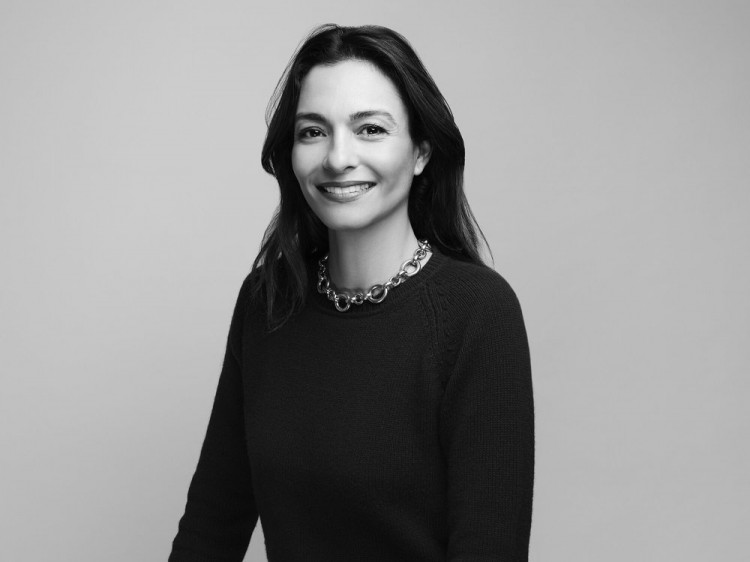
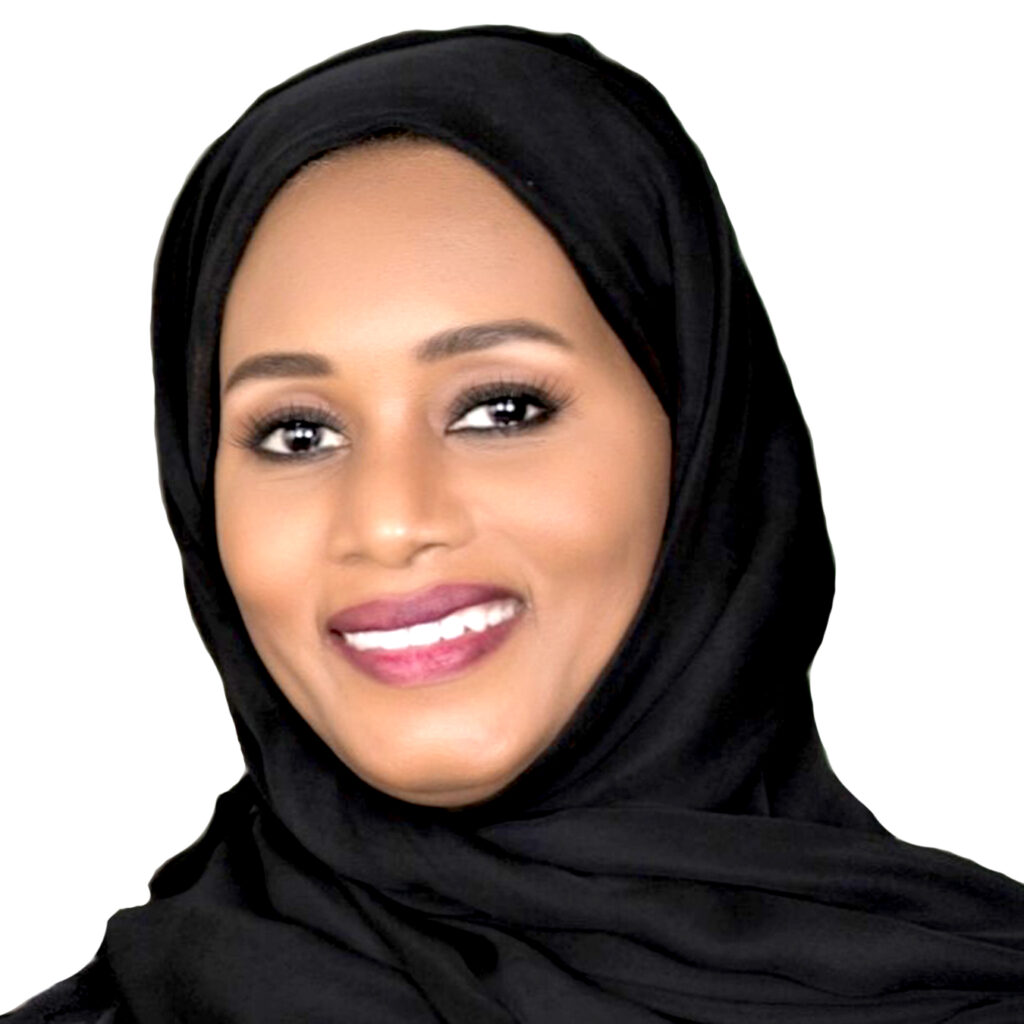
 Tarifa Ajeif Al Zaabi Ph.D, has been appointed as the new Director-General of the International Center for Biosaline Agriculture (ICBA), becoming the first Emirati to hold the position since ICBA’s foundation in 1999.

Dr. Tarifa Ajeif Al Zaabi joined the Centre in August 2019 as Deputy Director-General and has served as Acting Director-General since November 2020.

A graduate of the UAE Government Leaders Programme (Executive Leadership), she has delivered executive training and development programs for government officials in various countries as part of the UAE Government’s initiatives to transfer knowledge and develop executive government capacities.

She holds a Ph.D. in Education from the British University in Dubai and an Executive MBA from the University of Sharjah. She has 25 years of experience in executive leadership and management, strategy development, innovation support, research, and national and international capacity development.

ICBA has become a global center of excellence focusing on developing tailored solutions for marginal environments facing the problems of salinity, water scarcity and drought. The Centre has partners in more than 50 countries, which has allowed it to draw on a wide variety of expertise to achieve a greater impact on the ground. The Centre has also conducted research and development activities and projects in about 40 countries in Central Asia, the Middle East, North Africa, South Asia, the South Caucasus and sub-Saharan Africa.

source/contents: wam.ae (headline edited)

________________

International Center for Biosaline Agriculture (ICBA),

___________________________________

UNITED ARAB EMIRATES (U.A.E)

ARABS in PARIS: A Walking Tour of the French Capital’s Celebration of Middle Eastern Personalities

Back in 1729, the Parisian authorities introduced the French capitals iconic blue-and-green street name plaques, topped with a little “Napoleon’s hat” containing the number of the street’s arrondissement.

The plaques honor France and the world’s leading politicians, philosophers, artists, writers, and scientists, including a number associated with the Arab world. French President Emmanuel Macron has previously proposed renaming some of the capital’s streets to include more personalities from ethnic minorities, but that has not yet happened. Still, there are enough Arab names to comprise a walking tour around Paris — including a president, a poet, a pop star and more. 

Esplanade Habib Bourguiba, 7th arrondissement 

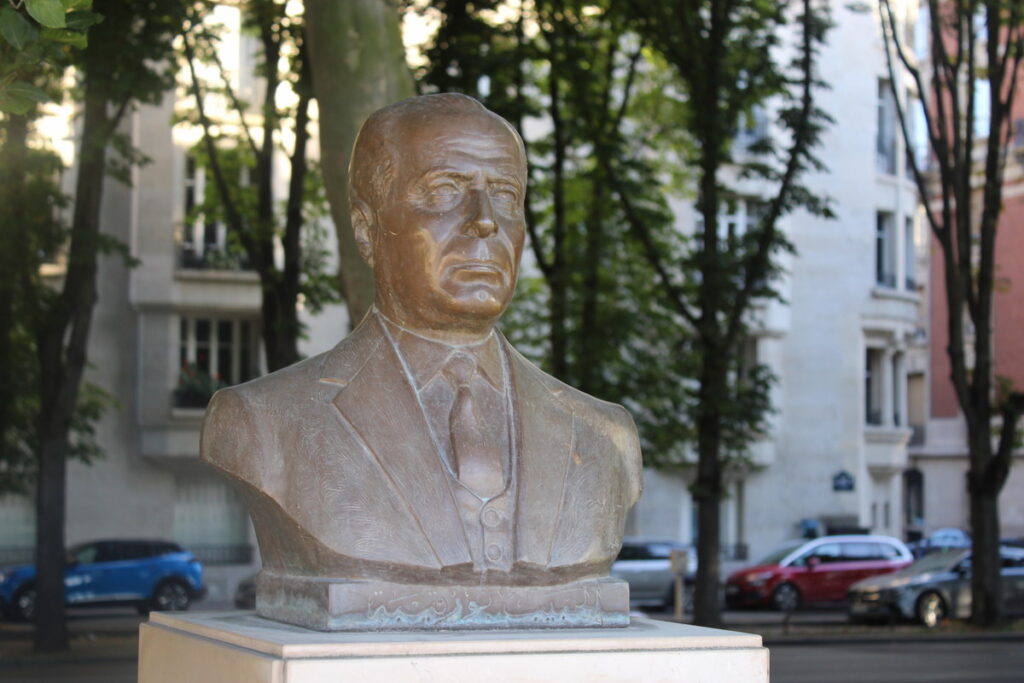
With a wonderful view of the Grand Palais, this large, peaceful stretch of greenery is named after independent Tunisia’s first president, Habib Bourguiba. The secular leader was in charge between 1957 and 1987, and was famously a supporter of women’s rights. Next to his plaque, there is a bronze bust of the leader looking towards the River Seine, with his name written in Arabic underneath. 

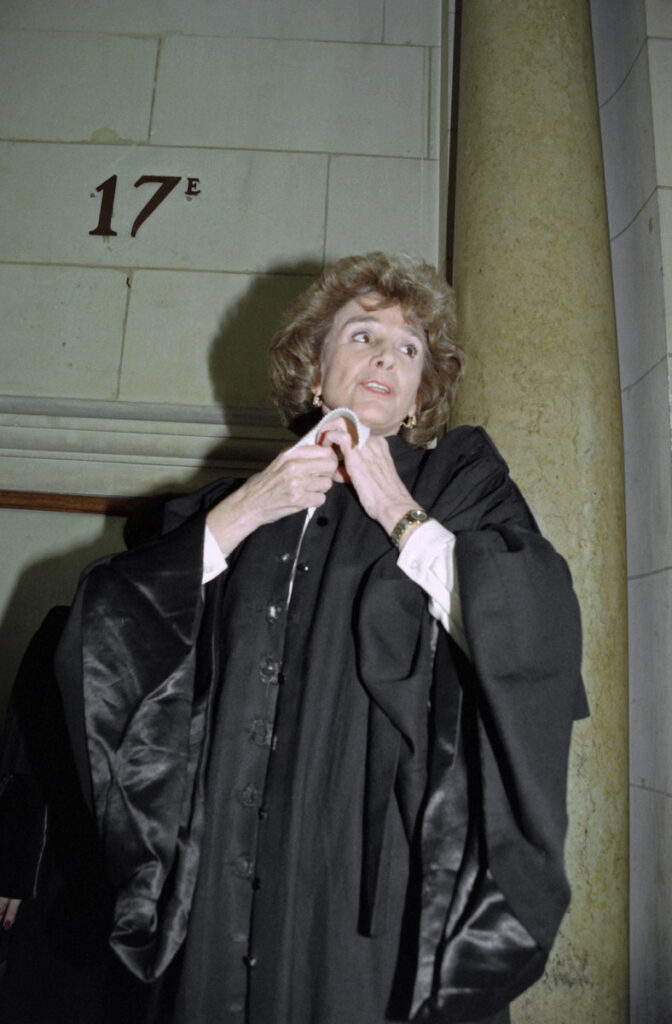
Promenade Gisèle Halimi, 7th arrondissement

Gisèle Halimi in Paris. (AFP)

An admirer of Bourguiba, Halimi was a Tunisian-born French lawyer, feminist, and former member of the National Assembly in France. She died in 2020, aged 93, and this sloping pathway was named after her last year. Halimi’s life of hardships shaped the respected career she had. When she was born, her father hid her — ashamed of her gender. She went on a hunger strike at 10 and, at 16, rejected an arranged marriage, going on to study law in Paris. Halimi is perhaps best known for a 1972 trial, in which she defended a minor who had an abortion after being raped. It was a key event that propelled the country into legalizing abortion in 1975. 

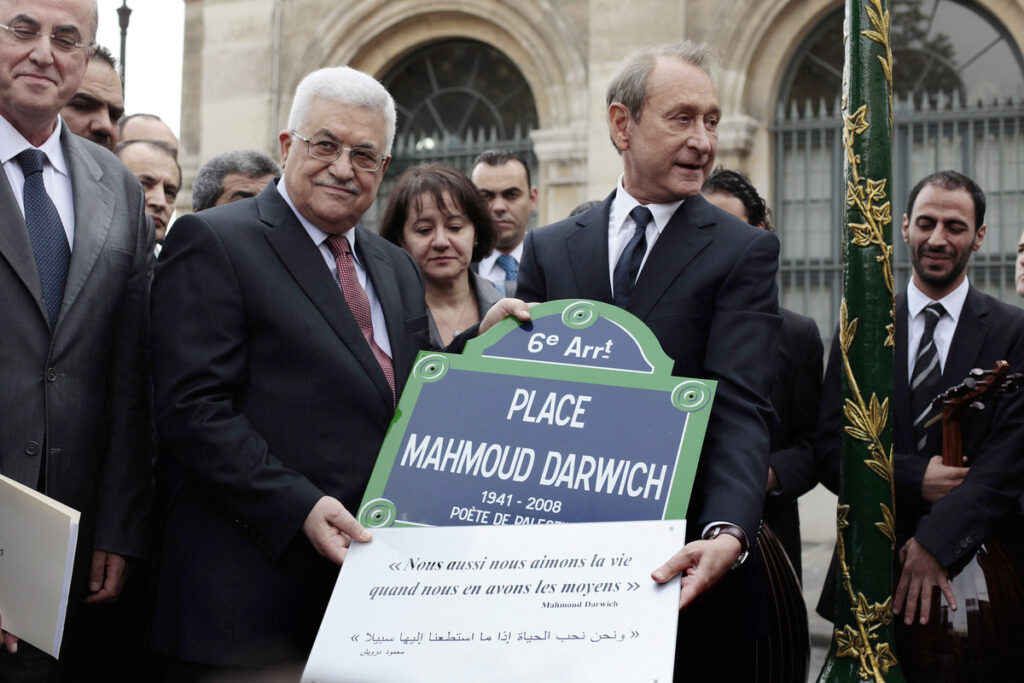
Place Mahmoud Darwich, 6th arrondissement 

Paris mayor Bertrand Delanoe (second from right) and Palestinian President Mahmud Abbas (second from left) unveil on June 14, 2010 in Paris the new Mahmoud Darwich esplanade named after the Palestinian poet who died Aug. 9, 2008. (AFP)

In 2010, just two years after the death of Palestine’s most famous poet Mahmoud Darwish, a square in Paris was inaugurated in his honor. Known for his writings on home, memory, and exile, Darwish spent many years outside of his native land. He lived in Beirut, Cairo, Tunis, and Paris. He had a special connection with the latter, describing it as the place where his “true poetic birth” happened. The plaque is situated in a district the poet reportedly liked, on the banks of the Seine and near the classical buildings of Institut de France and Monnaie de Paris.

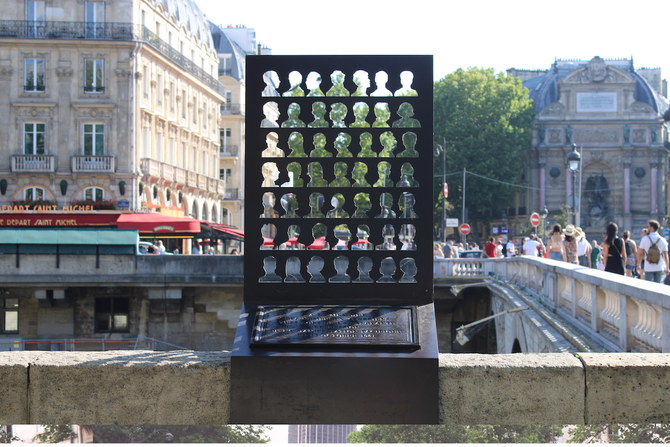
Paris Massacre of 1961 memorial, 4th arrondissement

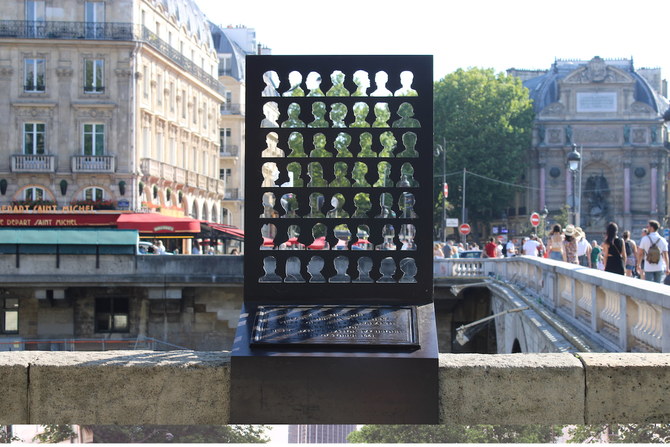
A few minutes away from Notre Dame Cathedral stands an unassuming but sobering reminder of how an Arab collective suffered during the turbulent Sixties. In 1961, when Algeria was seeking independence, a group of Algerian protesters were attacked by the police and some of their bodies were thrown into the Seine. In 2021, to mark the 60th anniversary of this horrific event, Paris mayor Anne Hidalgo inaugurated a memorial artwork, made of metal with silhouettes of heads carved out, in remembrance of those who lost their lives. 

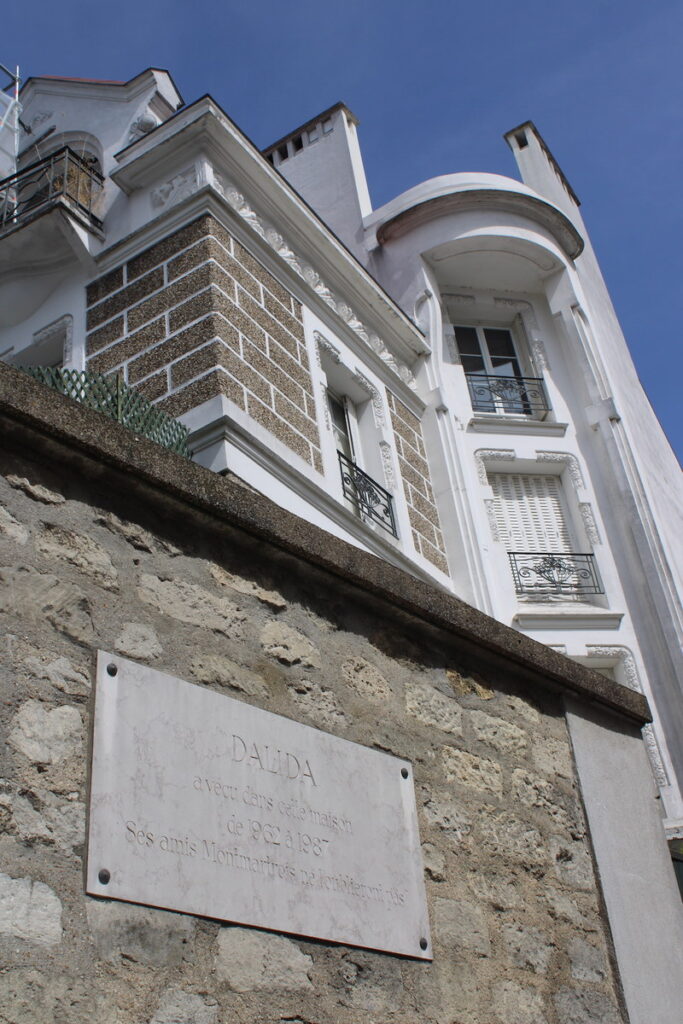
Maison de Dalida, 18th arrondissement 

Between 1962 and 1987, the blonde bombshell diva Dalida, who was born to Italian parents in Egypt, lived in this four-story townhouse in hilly Montmartre, a quiet area outside of the bustling city center of the city that is historically associated with artists. Dalida sang in a variety of languages, including French, Italian, and Arabic. “Salma Ya Salama” and “Helwa Ya Baladi” are some of her most loved Arabic songs. Sadly, it was in this house that she committed suicide in 1987, as a result of tragedies in her personal life. The plaque on her house reads: “Her friends from Montmartre will not forget her.” 

Maison de Gibran Khalil Gibran, 15th arrondissement 

The acclaimed Lebanese-born poet and philosopher — and author of “The Prophet” — Khalil Gibran is well-known as a member of the Arab diaspora in 20th-century America. But he also lived in France for a time. Between 1908 and 1910, Gibran, who was then in his twenties, studied painting at Académie Julian in Paris. His stay in the city was made possible by the financial backing of American philanthropist, editor and Gibran’s lover Mary Haskell, who was 10 years his senior.

source/content: arabnews.com (headline edited)

___________

A memorial to remember the 1961 attack on Algerian protesters by the police in Paris. (Supplied)

____________________________

ARABS IN PARIS, FRANCE

EGYPT: Engineer Sara Sabry becomes the First Egyptian and simultaneously the First Female Egyptian to Travel to Space on Blue Origin Flight

Sara Sabry – Mechanical and Biomedical Engineer. The first female Egyptian Analog Astronaut

Engineer Sara Sabry has become the first Egyptian to travel on a suborbital flight, after New Shepard’s 22nd space flight (NS-22) – operated by the American private aerospace manufacturer Blue Origin – carried her and five others to the edge of space before returning to Earth.

Launched from Corn ranch, West Texas in the US, the New Shepard stayed for 11 minutes at 106 km above the ground.

The 29-year-old Sabry flew with entrepreneur Mário Ferreira, the first person from Portugal to fly to space; British-American mountaineer Vanessa O’Brien; American technology leader Clint Kelly III; telecommunications executive Steve Young; and Coby Cotton, cofounder of the YouTube channel Dude Perfect.

Sabry earned her bachelor’s degree in mechanical engineering at the American University in Cairo and her master’s degree in biomedical engineering at Italy’s Polytechnic University of Milan.

She is also currently preparing for her PhD in aerospace sciences with a focus on space suit design, according to Blue Origin.

Sabry’s seat on NS-22 is sponsored by the Colorado-based nonprofit Space for Humanity (S4H), which is concerned with increasing access to space for all of humanity.

According to the official website of Space for Humanity, its “citizen astronauts” are chosen from among “change-makers who are currently serving a community leadership role.”

Sabry is S4H’s second “citizen astronaut” to fly on board the NS-22 after Katya Echazarreta in June.

Blue Origin has not announced how much it charges for seats on its space flights, and neither has S4H revealed how much it paid to book seats for its “citizen astronauts.”

According to some news reports, however, the price possibly ranges from zero to $28 million based on several factors including who the passenger’s social status. 

This is the sixth trip by Blue Origin since its launch by US billionaire and Amazon founder Jeff Bezos in 2015.

source/content: english.ahram.org.eg (edited)

___________

_________

EGYPT

ERITREAN-AMERICAN: U.S. Senate Confirms Prof. Asmeret Asefaw Berhe as the Director, Office of Science, Federal Department of Energy

The U.S. Senate today confirmed UC Merced Professor Asmeret Asefaw Berhe to be the new director of the Office of Science in the federal Department of Energy.

The Department of Energy’s Office of Science is the lead federal agency supporting fundamental scientific research for energy, and the nation’s largest supporter of basic research in the physical sciences.

President Joe Biden nominated Berhe last April. She is a renowned professor of soil biogeochemistry in the Department of Life and Environmental Sciences in the School of Natural Sciences; the Ted and Jan Falasco Chair in Earth Sciences and Geology ; and the interim associate dean for Graduate Education .

“It is an incredible honor for me to be nominated, and now confirmed by the U.S. Senate, to serve as President Biden’s director of the Office of Science at the Department of Energy,” Berhe said. “I thank the president and Secretary of Energy Jennifer Granholm, for trusting me to help lead the next chapter in the great scientific success story of the Office of Science.”

Berhe will serve in Washington, D.C., taking a leave of absence from campus. She will hold the director position for the duration of Biden’s term.

Her research is at the intersection of soil science, global change science and political ecology with an emphasis on how the soil system regulates the Earth’s climate and the dynamic two-way relationship between the natural environment and human communities.

“I hold the Office of Science and DOE National labs with highest regard as since the time I was a graduate student and until now, DOE funding and national labs have played important role in my own scientific training and research, and the training of my mentees. Further, as a soil and global change scientist who has studied and worked in public institutions of higher learning, I have always taken my responsibility to serve the public very seriously. I believe publicly funded science and technology is critical for pushing the frontiers of science forward and inspiring the next generation of scholars,” Berhe said. “I am excited to join the Department of Energy’s Office of Science to contribute to the Office’s mission of expanding human knowledge, driving discovery, and fostering innovation, technology development and economic progress.”

“This is fabulous news and so well deserved,” Interim Vice Chancellor for Research and Economic Development Marjorie Zatz said. “Professor Berhe is highly respected as a researcher and thought leader by her colleagues nationally and internationally, as well as by those of us at UC Merced. She will be a terrific director for the Office of Science and a strong voice for inclusive excellence within the scientific community and beyond.”

“The School of Natural Sciences is immensely proud of Professor Berhe’s appointment to this important and influential office,” Dean Betsy Dumont said. “She is an immensely talented scientist who will bring a holistic, innovative and practical perspective to the challenges of energy and climate change.”

“Professor Berhe is an international leader in environmental sciences and climate change research, and a champion for underrepresented people in STEM,” Professor Peggy O’Day said. “We are excited by her appointment and the impact she will have on the national agenda in addressing energy and climate issues.”

Berhe is widely recognized for her research, including having been an invited speaker at the TED conference in 2019, and for her advocacy for inclusion, anti-harassment and anti-bullying. She previously served as the chair of the U.S. National Committee on Soil Science at the National Academies; was a leadership board member for the Earth Science Women’s Network; and is a co-principal investigator in the ADVANCEGeo Partnership — a National Science Foundation funded effort to empower (geo)scientists to respond to and prevent harassment, discrimination, bullying and other exclusionary behaviors in research environments. She is a fellow of the American Geophysical Union and the Geological Society of America, and a member of the inaugural class of the U.S. National Academies New Voices in Science, Engineering and Medicine.

Berhe was born and raised in Asmara, Eritrea, and lives in Merced with her husband, Professor Teamrat A. Ghezzehei, and their two children. She earned a B.Sc. in soil and water conservation from the University of Asmara, an M.Sc. in political ecology from Michigan State University and a Ph.D. in biogeochemistry from UC Berkeley. In 2020, she was named a Great Immigrant, Great American by the Carnegie Corporation of New York.

source/content: news.ucmerced.edu (UCMERCED) (edited)

____________

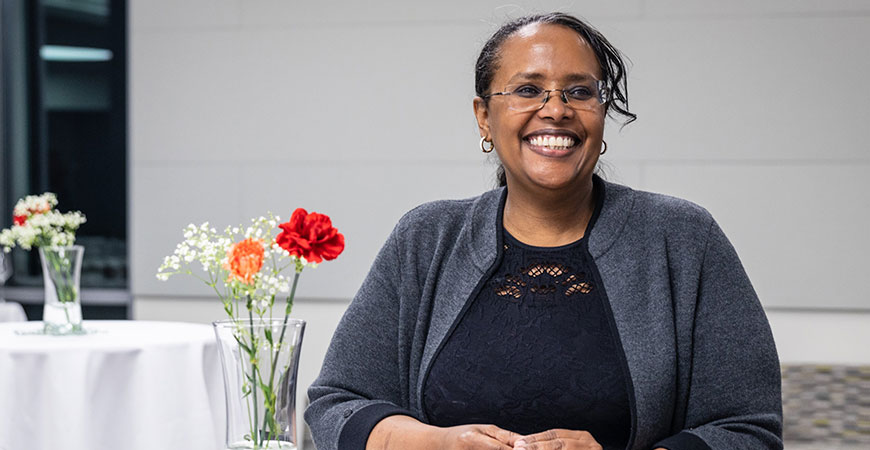
Professor Berhe. Photo by Veronica Adrover.

________________________________

AMERICAN (USA) / ERITREAN

Saudi Arabia Walk Away with 19 Medals at West Asian Table Tennis Championships in Jordan

Players scoop 6 gold, 4 silver and 9 bronze.

In a remarkable feat, Saudi Arabia’s national team claimed a total of 19 medals at the recently concluded West Asian Table Tennis Championships in Jordan.

The wins were spread across the Saudi men’s and women’s teams and came in several different age categories.

The final tally was six gold, four silver and nine bronze.

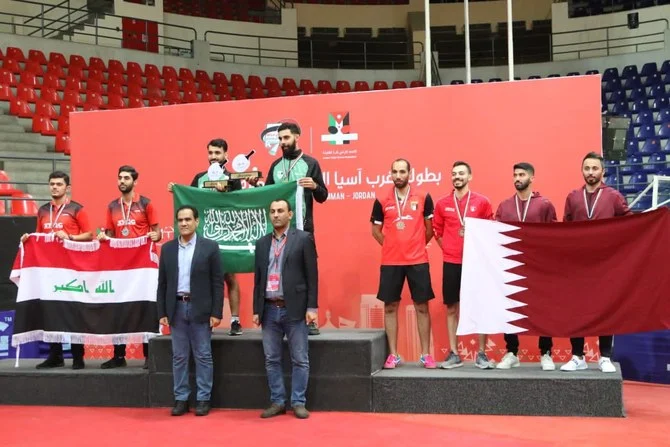
Saudi Olympian Ali Khadrawi partnered Abdelaziz Bushulaibi to gold in the men’s doubles and there was also a first ever gold in the girl’s doubles under-11 category for Nihal Al-Qahtani and Fatima Al-Awami.

Three Saudi players — Khadrawi, Bushulaibi and Azzam Alem — qualified for the 2023 World Table Tennis Championships, to be held in South Africa, due to their performances in Jordan.

source/content: arabnews.com (headline edited)

___________

Saudi’s Ali Khadrawi (left) and Abdelaziz Bushulaibi top the podium in Jordan. (@sttf_ksa)

_________________

SAUDI ARABIA

Miss Iraq 2022: TV Presenter Balsam Hussein set for World and Universe Stages

Former hair-transplant specialist urges Iraqi women to ‘keep going until all your dreams are met’.

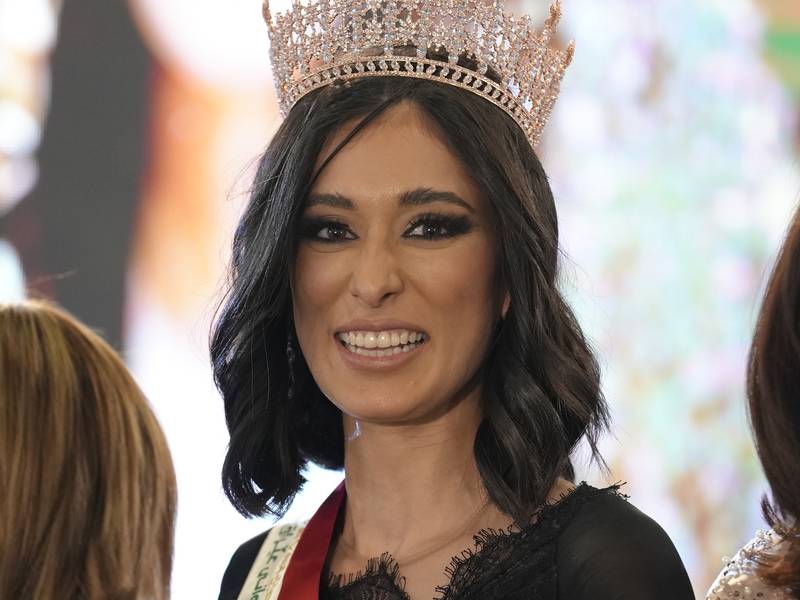
Balsam Hussein, a 26-year-old TV presenter and former hair-transplant specialist, has been crowned Miss Iraq 2022 at a beauty contest held in Erbil, capital of the northern Kurdish region.

Ms Hussein was among 19 contestants from across the country who were vying for the title and a chance to represent Iraq at the Miss World and Miss Universe events.

“I am highly motivated to participate in Miss World and Miss Universe pageants soon,” she said.

Ms Hussein’s win raises her public profile even higher, after starting work in April as host of a morning TV show for a private channel in Baghdad.

Speaking to The National, she said she had been hesitant to take part in the competition but decided to go ahead at the last minute after full support from her family and close friends, as well as from her followers on social media.

“My family have been happy and proud of me throughout my life, but they became happier and prouder when they watched me on TV being crowned Miss Iraq 2022,” she said. “I felt sorry that they were not able to come from Baghdad to Erbil as they were ill, but I never felt alone.”

Ms Hussein represented the Al Karakh district of Baghdad, the Iraqi capital where she was born and raised. She worked there as a hair-transplant specialist after training in Turkey before starting her TV job — something she said she had always dreamt of doing.

“I have a dream to improve the media and journalism field in Iraq, and of course, being a winner of Miss Iraq will help me to be closer to achieving that dream,” she said.

For Iraqis faced with uncertainty and instability as political groups squabble over forming a new government nearly 10 months after elections, the Miss Iraq pageant offered a window of hope for the future.

Ayman Hussein, 26, a resident of the southern province of Basra, said Ms Hussein’s triumph was “a win for Iraq and Iraqis”.

“It is a clear message that, in spite of political chaos, Iraq is able to hold such events,” he said. “Whenever there is war, there is life — this is our interpretation of life.”

Mr Hussein said he hoped to see Iraqi women take their rightful place in society. “Iraqi women experience hardship their entire life; it is the time to say ‘I am here’.”

Launched in 1947, the Miss Iraq contest was suspended for more than four decades in 1973 because of political upheaval and wars, and resumed only in 2015.

“From today, I represent all of Iraq,” Ms Hussein said. “I would like to send a message to all Iraqi women: do not give up, fight to get your goals, be patient. You have faced wars and difficulties; do not make the harsh conditions a rock in your path — destroy it and keep going until all your dreams are met.”

The judges declared Sarah Saad, from Baghdad’s Al Rusafa district, as the first runner-up, and Jihan Majid, representing Wasit, as second runner-up. Hind Akram, representing the Baghdad Belt, was the third runner-up, followed by Sarah Khaled from Mosul.

Kareem Rasheed, executive director of the Miss Iraq organisation, said: “Iraq is thirsty for such events like Miss Iraq. Year after year, we will do our best to develop it and make it reach people around the Arab world.

“The contestants represent about 90 per cent of Iraq — we covered the regions of south, middle Euphrates, west and north.

“This year, we decided to rate beauty at 50 per cent and inner essence, such as culture, education and so on, also at 50 per cent, while in years past we were focusing on beauty over essence.

“All women are beautiful and each one has a unique trait that makes her different from others.”

source/content: thenationalnews.com

__________

Balsam Hussein smiles after being crowned Miss Iraq 2022 in a pageant held in Erbil. Azhar Al-Rubaie for The National

________

IRAQ

SOMALI-AMERICAN: Dega Nalayeh is one of Bank of America’s Top Advisors to the Ultra-Wealthy. She just Clocked $6.4 billion in Client Assets and is now Climbing Mount Kilimanjaro.

Featuring Dega Nalayeh, a managing director and private-client advisor at Bank of America’s private bank.

Dega Nalayeh told Insider that she’s currently climbing Mount Kilimanjaro. She’s doing it to honor her sister, Somali-Canadian journalist Hodan Nalayeh, who was killed during a terrorist attack at a hotel in Somalia in July 2019.

Dega Nalayeh and 14 other climbers have so far raised more than $ 230,000 for the nonprofit Give to Learn to Grow Foundation. Proceeds help underserved communities in Somaliland.

Today — when not climbing mountains — she is (figuratively) moving them for the ultra wealthy. Nalayeh is a managing director and advisor at Bank of America’s private bank, where she manages $6.4 billion in client assets.

She built that book from scratch, relying on tried-and-tested word-0f-mouth strategies. Her savvy networking capabilities have also come in handy, particularly when she met a professional basketball player with the Atlanta Hawks, whose identity she could not disclose.

Climbing the highest mountain in Africa sounds easy when considering the adversity Nalayeh has faced. She moved to Canada from Somalia at just 11 years of age. While her father worked as a parking attendant, she ran a newspaper route as a teenager.

Later, she moved from Georgia to California for her husband. But when Nalayeh joined BofA’s private bank in 2006, she was divorced with a two-year-old son.

Nalayeh, who is 49, told Insider that she doubted her ability to be a rainmaker for the bank at a time when she was dealing with a divorce and a toddler. But in six months, she landed a high-net-worth client.

The banker leads a team of 13 alongside Avi Cohen, a fellow MD and private client advisor who was once her rival within the bank.

Most of their clients come from the entertainment and media industries, as well as tech, real estate, and healthcare.

Nalayeh is also focused on finding more women clients, including those who are overwhelmed by responsibilities found both at home and in the workplace.

source/content: businessinsider.in (headline edited)

_____________

Dega Nalayeh / Courtesy of Bank of America

_________________________

AMERICAN / SOMALIA

SAUDI ARABIA: Saudi Artist Lulwah Al-Hammoud Designs Iconic Round Table Shared by World Leaders at GCC summit

An iconic table shared by Gulf Cooperation Council leaders at a recent summit was designed by a Saudi artist.

Lulwah Al-Hammoud produced the drawings for the item of furniture that took center stage at the meeting of GCC member states Saudi Arabia, the UAE, Bahrain, Oman, Kuwait, and Qatar, along with representatives of Jordan, Egypt, and Iraq.

She told Arab News of her pride and thrill at seeing the table being used by the organization’s leaders. Its design was inspired by the changes taking place in Saudi Arabia and her commission brief had been, “we are entering a new era, but we are not forgetting about our traditions.”

After accepting the design challenge, Al-Hammoud was initially nervous because she was not a furniture designer, however it turned out to be “a very beautiful experience.” And her background in Islamic contemporary art and calligraphy helped.

The round table is made of wood and in its center are triangles of different color tones of wood that rotate outwards with lines made of copper, a metal, she noted, not often used in Saudi Arabia.

Al-Hammoud pointed out that she opted for triangles in her design because the shape was common in traditional Saudi architecture.

She said: “The triangle can also be modern and universal, but at the same time I wanted to capture growth and the act of evolving.”

The idea behind the design was to create something that represented, “the vision of Saudi Arabia while staying true to our roots,” she added.

One of the challenges for Al-Hammoud was to create a round table that could seat different numbers of people.

“It can be odd or even, so the design had to be smart. It took me a while to figure out how to do that. With guidance, I was able to work it out.

“I am really happy, because for a table like that they could have easily gone to the best furniture designers in the world, but they chose to believe in a local talent.”

Al-Hammoud has nine solo exhibitions to her name, with some of her artworks displayed at The British Museum, the Jeju National Museum in South Korea, the Greenbox Museum of Contemporary Art from Saudi Arabia in the Netherlands, and the Los Angeles County Museum of Art.

The UAE-based Barjeel Art Foundation has described Al-Hammoud as a pioneer in Saudi Arabia’s contemporary art movement.

She said: “I take art very seriously; I feel like it is a very important tool for education. It’s a window to tell people about who we are, it gives the true story of a certain civilization.”

She fell in love with Islamic art while conducting research on the topic and was fascinated by the philosophies and sciences behind each shape.

“My art has always had spiritual elements; it doesn’t talk about the moments I live in or the space I occupy. I speak about a higher dimension, spirituality, my place in the bigger scheme of things, and my connection to God,” she added.

source: arabnews.com (headline edited)

___________

Lulwah Al-Hammoud said that she opted for triangles in her design because the shape was common in traditional Saudi architecture. (AN Photo)

_________________

SAUDI ARABIA

MOROCCO: Engineering Students Create “S-ILK” Innovative Fabric From Expired Milk

With the newly emerging social entrepreneurship movement, Moroccan youth are keen to develop entrepreneurial solutions to respond to local challenges.

Driven by innovation and the spirit of entrepreneurship, a student-led team from Enactus Club at Morocco’s Mohammadia School of Engineering (EMI) has developed a fabric made from milk to reduce dairy waste.

A team of 10 engineering students took the lead to make a positive impact within Moroccan society after observing the alarming amount of milk waste discharged in rivers and lakes. The dumping of milk waste has severe consequences for the balance of marine ecosystems as well as on the quality of drinking water. 

The “S-ILK” project is a promising alternative to classic fabrics, by focusing on creating a tissue based on casein, a protein extracted from milk. 

So far, the team has been able to develop the first prototype of its biodegradable fabric in the form of textile yarns and now seeks to begin mass production.

Speaking to Morocco World News, S-ILK Project Manager Omar Dirane stressed that synthetic fabrics, made from nonrenewable fossil fuels, are often bad for health and the environment. This became the reason why the team decided to use milk as a fabric to make clothes while reducing the pollution of dairy products.

Research quoted by The Guardian has found that 16% of dairy products, approximately 128 million tonnes, is lost or discarded globally each year; an efficient solution is therefore needed to reduce the environmental impacts of this large-scale food waste.

Ghita Dahhou, a project associate, told MWN that their long-term goal consists of making “S-ILK” a startup in which they seek to develop and sell eco-friendly clothes, while also raising awareness about food waste and making people eco-responsible through what they wear.

“The idea of creating a brand of ecological fibers is present and could be a big step for the textile industry in Morocco,” Dahhou said. As eco-responsible alternatives to fast fashion keep growing worldwide, the industry is significantly becoming more competitive. 

Project associate Taoufiq Saaad spoke on the difficulties they could potentially face in implementing their startup in the future, especially as young students without years of experience in the field.

S-ILK team members, however, are keen to keep their optimism and ambitions to achieve their professional aspirations, noting that “our young age will not stop us from being invested in the engineering field and giving everything we have to improve it.”

Social entrepreneurship: challenges and opportunities

Eager to position their product in the Moroccan market, the team has conducted a market study to identify their niche while focusing on customers that support environmental advocacy and are eco-responsible.

Similar customers that follow the ecological trend are harder to find in Morocco due the “traditional mindset” some people still have, Ghita argued. Such a mindset, in addition to societal pressures, hinder young project holders from “taking risks and exploring what is beyond our comfort zone.”

As part of their market research, they also conducted interviews with people in the streets of Rabat. Taoufiq Saaad highlighted that people were “intrigued by the product especially when we told them that the piece will be cheaper than actual silk.”

“As we have been showing a potential to grow, we have been able to find clients who are interested in purchasing our product,” he added.

Supported by Moroccan hypermarket chain Marjane Holdings and Orange Maroc, one of three major licensed telecommunications operators in the country, the project manager expressed the team’s interest in securing more funds to be able to expand their project.

He explained that “Orange digital center” provides them with the tools needed to elaborate their research while “Orange Fab Lab” is where they experiment on their product and work on improving it.

When asked how they manage to finance projects within Enactus EMI, especially those starting from scratch, Dirane underlined that when a project within the EMI network wins a prize, they split it so that all projects can be able to expand.

Meanwhile, Ghita underlined that in recent years, Morocco has been offering several opportunities for young project holders to show their potential, either through financial aid or other facilities that banks provide, in addition to the support and mentoring from several incubators. 

“With over 300 alumni of Enactus EMI, and 66 current members, we have much expertise, and engineers in different industries across Morocco, all coming together to contribute to the growth of innovative projects,” he added.

For Omar, Taoufiq, and Ghita, the project is helping them become the leaders of tomorrow by.being engaged in extracurricular activities to develop soft skills such as teamwork, communication, and problem-solving, among others, while also seeking expertise in the engineering field.

source/content: moroccoworldnews.com (edited)

____________

S-ILK: Moroccan Engineering Students Create Innovative Fabric From Expired Milk

_____________

MOROCCO

SAUDI ARABIA: Female Beekeeper Norah Shawi Al-Shimmari Wins Gold Medal in the Prestigious Global Honey Competition the ‘London Honey Awards’

A female Saudi beekeeper is tasting sweet success on the international stage after winning a gold medal for her honey in a prestigious global competition.

Businesswoman Norah Shawi Al-Shimmari, from the Hail region, scooped the accolade for best-quality talah (acacia) honey in the world at the London Honey Awards.

It was the first time the enterprising apiarist had taken part in the awards scheme, and she told Arab News: “Winning was one of my biggest wishes for this year. I could not believe it at first, to win is a wonderful feeling.

“It gave me a great boost to keep the good work up and participate in more competitions.”

The annual London Honey Awards competitions aim to inform honey-growers, producers, beekeepers, processors, and retailers, who distribute their standardized products legally, to preserve and ameliorate the quality of their branded items by promoting high-quality honey products in all aspects of its use and consumption.

Al-Shimmari is the only female honey farmer in Hail and is known in the Kingdom as “the beekeeper of the north.”

She and two other award winners were recently honored for their achievements by Hail Deputy Gov. Prince Faisal bin Fahd bin Muqrin.

It was while exhibiting at an event in Riyadh that she was urged to enter the London Honey Awards. “I was highly encouraged by one of my beekeeper colleagues, and I am so grateful for him and his recommendation and all the help he offered.”

Al-Shimmari runs her business from Al-Khita village, on the outskirts of the city of Hail, and moves her hives on a daily basis to different locations in the area to allow her bees access to colorful and nectar-rich athel, sidr, and acacia flowers.

Acacias are distinguished by their small, often fragrant yellow, and occasionally white, flowers, that have many pollen-producing stamens and a fuzzy appearance.

To win her award, Al-Shimmari’s honey was laboratory checked for humidity levels, sucrose and glucose content, texture, and other factors. Samples were then evaluated by a jury panel, with each judge conducting an organoleptic taste analysis and marking the product based on criteria such as appearance, odor, and flavor.

Up against competitors from around the world including the UK, China, Saudi Arabia, and other Middle Eastern countries, she said: “The competition was huge, and my winning was a surprise and a shock.

“Beekeeping is about persistence and being eager to produce distinguished honey. However, my goals do not stop here. I would like to walk a steady journey; I am still dreaming of more success and achievements. This is just the beginning. I want to see my products everywhere worldwide.”

Al-Shimmari has been in the honey trade for more than five years producing 11 different products, and she recently launched a skincare line made of organic honey and honeycomb materials.

Last year, she was the only woman among 33 beekeepers who took part in the Hail Honey Festival. The event helps apiarists market their products, while increasing investment opportunities.

source/content: arabnews.com (headline edited)

___________

__________________

SAUDI ARABIA