Arabs & Arabian Records Aggregator. Chronicler. Milestones of the 25 Countries of the Arabic Speaking World (official / co-official). AGCC. MENA. Global. Ist's to Top 10's. Records. Read & Enjoy./ www.arabianrecords.org
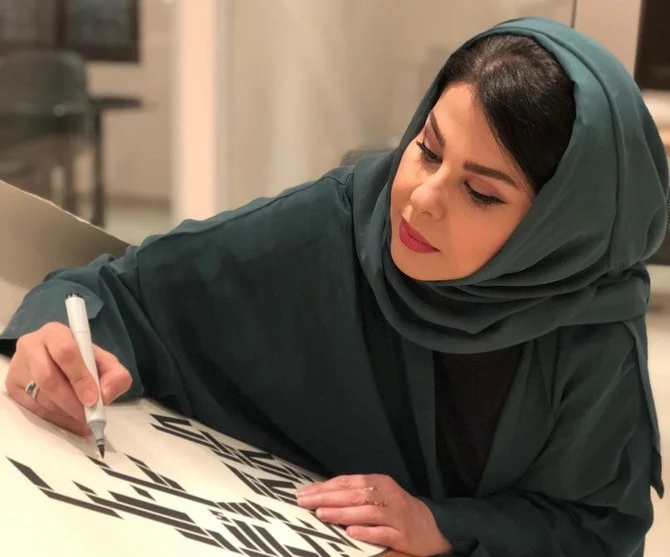
An iconic table shared by Gulf Cooperation Council leaders at a recent summit was designed by a Saudi artist.
Lulwah Al-Hammoud produced the drawings for the item of furniture that took center stage at the meeting of GCC member states Saudi Arabia, the UAE, Bahrain, Oman, Kuwait, and Qatar, along with representatives of Jordan, Egypt, and Iraq.
She told Arab News of her pride and thrill at seeing the table being used by the organization’s leaders. Its design was inspired by the changes taking place in Saudi Arabia and her commission brief had been, “we are entering a new era, but we are not forgetting about our traditions.”
After accepting the design challenge, Al-Hammoud was initially nervous because she was not a furniture designer, however it turned out to be “a very beautiful experience.” And her background in Islamic contemporary art and calligraphy helped.
The round table is made of wood and in its center are triangles of different color tones of wood that rotate outwards with lines made of copper, a metal, she noted, not often used in Saudi Arabia.
Al-Hammoud pointed out that she opted for triangles in her design because the shape was common in traditional Saudi architecture.
She said: “The triangle can also be modern and universal, but at the same time I wanted to capture growth and the act of evolving.”
The idea behind the design was to create something that represented, “the vision of Saudi Arabia while staying true to our roots,” she added.
One of the challenges for Al-Hammoud was to create a round table that could seat different numbers of people.
“It can be odd or even, so the design had to be smart. It took me a while to figure out how to do that. With guidance, I was able to work it out.
“I am really happy, because for a table like that they could have easily gone to the best furniture designers in the world, but they chose to believe in a local talent.”
Al-Hammoud has nine solo exhibitions to her name, with some of her artworks displayed at The British Museum, the Jeju National Museum in South Korea, the Greenbox Museum of Contemporary Art from Saudi Arabia in the Netherlands, and the Los Angeles County Museum of Art.
The UAE-based Barjeel Art Foundation has described Al-Hammoud as a pioneer in Saudi Arabia’s contemporary art movement.
She said: “I take art very seriously; I feel like it is a very important tool for education. It’s a window to tell people about who we are, it gives the true story of a certain civilization.”
She fell in love with Islamic art while conducting research on the topic and was fascinated by the philosophies and sciences behind each shape.
“My art has always had spiritual elements; it doesn’t talk about the moments I live in or the space I occupy. I speak about a higher dimension, spirituality, my place in the bigger scheme of things, and my connection to God,” she added.
source: arabnews.com (headline edited)
___________
Lulwah Al-Hammoud said that she opted for triangles in her design because the shape was common in traditional Saudi architecture. (AN Photo)
With the newly emerging social entrepreneurship movement, Moroccan youth are keen to develop entrepreneurial solutions to respond to local challenges.
Driven by innovation and the spirit of entrepreneurship, a student-led team from Enactus Club at Morocco’s Mohammadia School of Engineering (EMI) has developed a fabric made from milk to reduce dairy waste.
A team of 10 engineering students took the lead to make a positive impact within Moroccan society after observing the alarming amount of milk waste discharged in rivers and lakes. The dumping of milk waste has severe consequences for the balance of marine ecosystems as well as on the quality of drinking water.
The “S-ILK” project is a promising alternative to classic fabrics, by focusing on creating a tissue based on casein, a protein extracted from milk.
So far, the team has been able to develop the first prototype of its biodegradable fabric in the form of textile yarns and now seeks to begin mass production.
Speaking to Morocco World News, S-ILK Project Manager Omar Dirane stressed that synthetic fabrics, made from nonrenewable fossil fuels, are often bad for health and the environment. This became the reason why the team decided to use milk as a fabric to make clothes while reducing the pollution of dairy products.
Research quoted by The Guardian has found that 16% of dairy products, approximately 128 million tonnes, is lost or discarded globally each year; an efficient solution is therefore needed to reduce the environmental impacts of this large-scale food waste.
Ghita Dahhou, a project associate, told MWN that their long-term goal consists of making “S-ILK” a startup in which they seek to develop and sell eco-friendly clothes, while also raising awareness about food waste and making people eco-responsible through what they wear.
“The idea of creating a brand of ecological fibers is present and could be a big step for the textile industry in Morocco,” Dahhou said. As eco-responsible alternatives to fast fashion keep growing worldwide, the industry is significantly becoming more competitive.
Project associate Taoufiq Saaad spoke on the difficulties they could potentially face in implementing their startup in the future, especially as young students without years of experience in the field.
S-ILK team members, however, are keen to keep their optimism and ambitions to achieve their professional aspirations, noting that “our young age will not stop us from being invested in the engineering field and giving everything we have to improve it.”
Social entrepreneurship: challenges and opportunities
Eager to position their product in the Moroccan market, the team has conducted a market study to identify their niche while focusing on customers that support environmental advocacy and are eco-responsible.
Similar customers that follow the ecological trend are harder to find in Morocco due the “traditional mindset” some people still have, Ghita argued. Such a mindset, in addition to societal pressures, hinder young project holders from “taking risks and exploring what is beyond our comfort zone.”
As part of their market research, they also conducted interviews with people in the streets of Rabat. Taoufiq Saaad highlighted that people were “intrigued by the product especially when we told them that the piece will be cheaper than actual silk.”
“As we have been showing a potential to grow, we have been able to find clients who are interested in purchasing our product,” he added.
Supported by Moroccan hypermarket chain Marjane Holdings and Orange Maroc, one of three major licensed telecommunications operators in the country, the project manager expressed the team’s interest in securing more funds to be able to expand their project.
He explained that “Orange digital center” provides them with the tools needed to elaborate their research while “Orange Fab Lab” is where they experiment on their product and work on improving it.
When asked how they manage to finance projects within Enactus EMI, especially those starting from scratch, Dirane underlined that when a project within the EMI network wins a prize, they split it so that all projects can be able to expand.
Meanwhile, Ghita underlined that in recent years, Morocco has been offering several opportunities for young project holders to show their potential, either through financial aid or other facilities that banks provide, in addition to the support and mentoring from several incubators.
“With over 300 alumni of Enactus EMI, and 66 current members, we have much expertise, and engineers in different industries across Morocco, all coming together to contribute to the growth of innovative projects,” he added.
For Omar, Taoufiq, and Ghita, the project is helping them become the leaders of tomorrow by.being engaged in extracurricular activities to develop soft skills such as teamwork, communication, and problem-solving, among others, while also seeking expertise in the engineering field.
source/content: moroccoworldnews.com (edited)
____________
S-ILK: Moroccan Engineering Students Create Innovative Fabric From Expired Milk
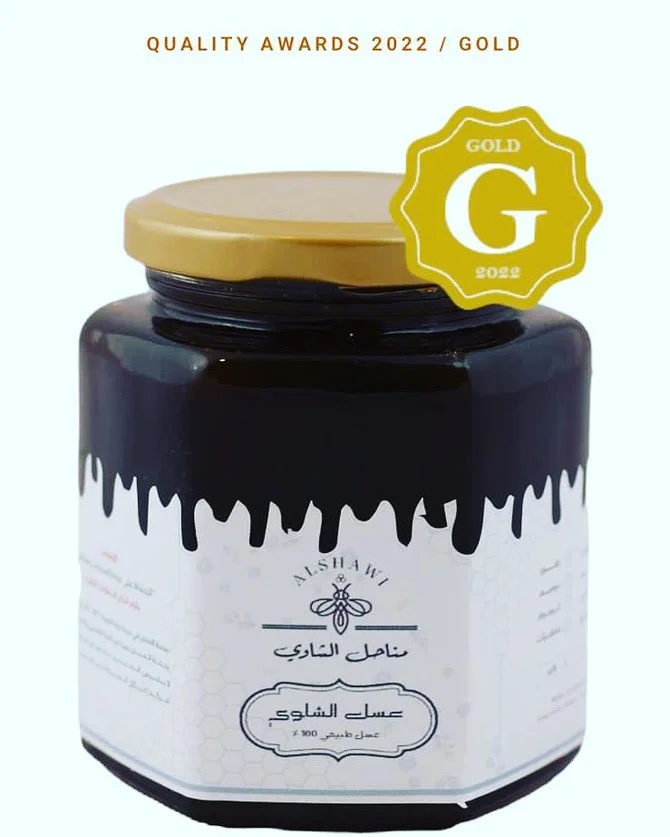
A female Saudi beekeeper is tasting sweet success on the international stage after winning a gold medal for her honey in a prestigious global competition.
Businesswoman Norah Shawi Al-Shimmari, from the Hail region, scooped the accolade for best-quality talah (acacia) honey in the world at the London Honey Awards.
It was the first time the enterprising apiarist had taken part in the awards scheme, and she told Arab News: “Winning was one of my biggest wishes for this year. I could not believe it at first, to win is a wonderful feeling.
“It gave me a great boost to keep the good work up and participate in more competitions.”
The annual London Honey Awards competitions aim to inform honey-growers, producers, beekeepers, processors, and retailers, who distribute their standardized products legally, to preserve and ameliorate the quality of their branded items by promoting high-quality honey products in all aspects of its use and consumption.
Al-Shimmari is the only female honey farmer in Hail and is known in the Kingdom as “the beekeeper of the north.”
She and two other award winners were recently honored for their achievements by Hail Deputy Gov. Prince Faisal bin Fahd bin Muqrin.
It was while exhibiting at an event in Riyadh that she was urged to enter the London Honey Awards. “I was highly encouraged by one of my beekeeper colleagues, and I am so grateful for him and his recommendation and all the help he offered.”
Al-Shimmari runs her business from Al-Khita village, on the outskirts of the city of Hail, and moves her hives on a daily basis to different locations in the area to allow her bees access to colorful and nectar-rich athel, sidr, and acacia flowers.
Acacias are distinguished by their small, often fragrant yellow, and occasionally white, flowers, that have many pollen-producing stamens and a fuzzy appearance.
To win her award, Al-Shimmari’s honey was laboratory checked for humidity levels, sucrose and glucose content, texture, and other factors. Samples were then evaluated by a jury panel, with each judge conducting an organoleptic taste analysis and marking the product based on criteria such as appearance, odor, and flavor.
Up against competitors from around the world including the UK, China, Saudi Arabia, and other Middle Eastern countries, she said: “The competition was huge, and my winning was a surprise and a shock.
“Beekeeping is about persistence and being eager to produce distinguished honey. However, my goals do not stop here. I would like to walk a steady journey; I am still dreaming of more success and achievements. This is just the beginning. I want to see my products everywhere worldwide.”
Al-Shimmari has been in the honey trade for more than five years producing 11 different products, and she recently launched a skincare line made of organic honey and honeycomb materials.
Last year, she was the only woman among 33 beekeepers who took part in the Hail Honey Festival. The event helps apiarists market their products, while increasing investment opportunities.
The Welsh-Iraqi artist will represent the country’s diverse cultures and languages.
Wales has named Hanan Issa as its fifth national poet, making her the first Muslim to hold the title.
The Welsh-Iraqi poet, filmmaker and artist will serve a three-year term, representing the country’s diverse cultures and languages and acting as an ambassador for the people of Wales.
Her recent works include her poetry collection My Body Can House Two Hearts, published in 2019, and her contributions to Welsh (Plural): Essays on the Future of Wales and The Mab.
Issa grew up in Cardiff surrounded by different languages, including Arabic, which was spoken by her Iraqi parents. She described the role as an “incredibly positive step” and said it was “exciting to think that Wales is taking the lead on this aspect of representation”.
“Poetry exists in the bones of this country. I want people to recognise Wales as a country bursting with creativity; a land of poets and singers with so much to offer the arts,” she said.
“I’d like to continue the great work of my predecessors in promoting Wales, Welshness, and the Welsh language outside of its borders.
“More than anything, I want to capture the interest and inspiration of the public to see themselves in Welsh poetry and encourage a much more open sense of what Welshness is.”
Ashok Ahir, who led the selection panel for the National Poet of Wales, said: “This is a hugely exciting appointment. Hanan’s is a cross-community voice that speaks to every part of the country. She will be a great ambassador for a culturally diverse and outward-looking nation.”
Issa said she hopes that her appointment will allow women from all walks of life, but especially Muslim women, to see her success and think “that’s a thing that’s achievable for me”.
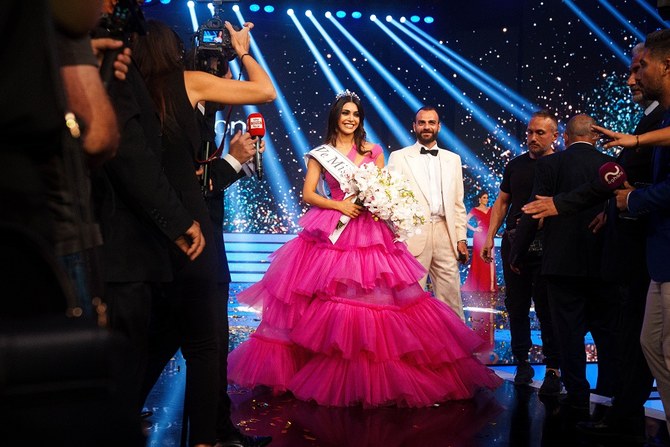
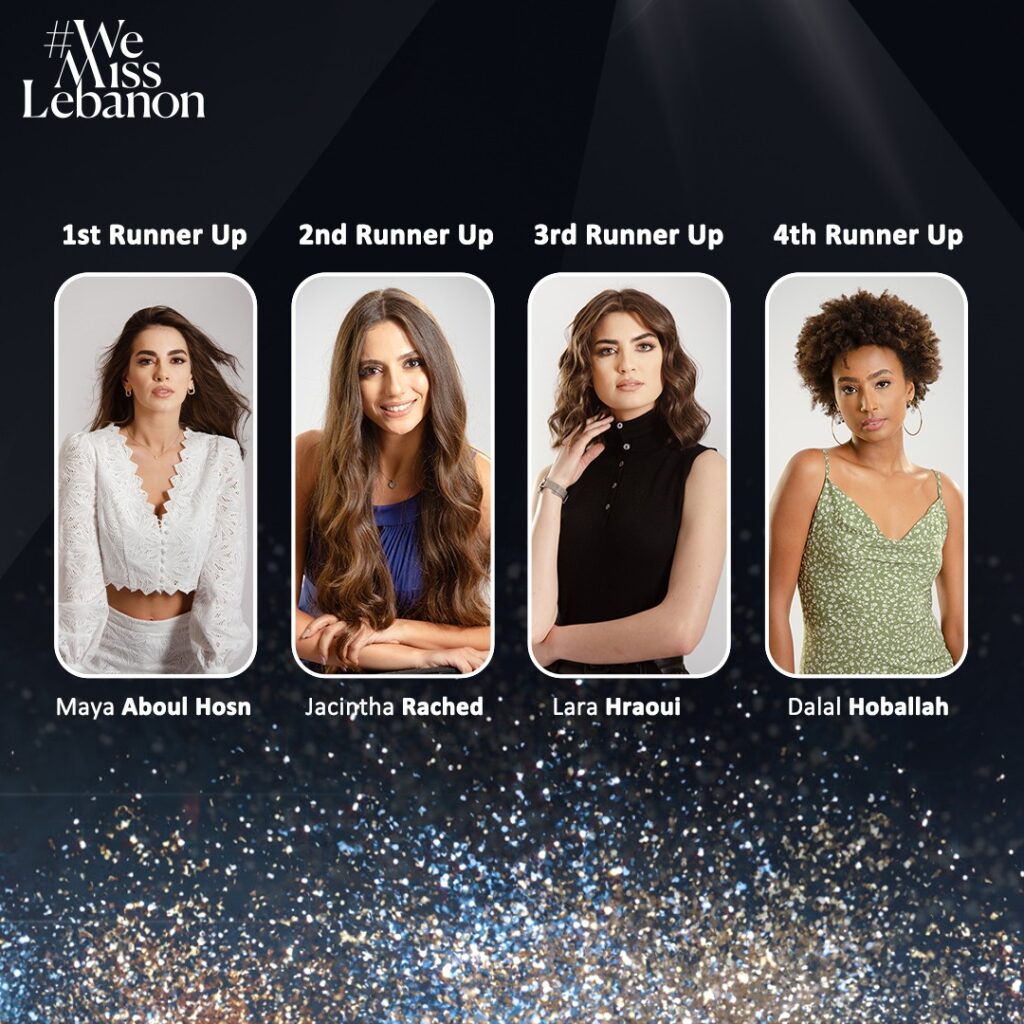
The Forum de Beyrouth played host to a glittering showcase of Lebanese talent on Sunday night as model, journalism student and show host Yasmina Zaytoun was crowned Miss Lebanon 2022, almost four years after the last edition of the pageant.
The host of the educational online platform the @WITHYASMINASHOW beat out fellow contestants Maya Abou El-Hassan, who finished as first runner-up, Jacintha Rashed, who was named second runner up, and Lara Hraoui and Dalal Hoballah who were voted in fourth and fifth place, respectively.
Zaytoun is from the village of Kfarchouba in southern Lebanon and is currently studying at Notre Dame University — Louaize. She hosts an Instagram show titled the “With Yasmina Show,” where she interviews media and sports personalities, including politician Paula Yacoubian and actress Enjy Kiwan.
Delayed by years of crises in Lebanon, the much anticipated the show featured 17 candidates from various cities and regions who wowed a judging panel consisting of music composer Michel Fadel, influencer Karen Wazen, General Manager of IP Studios Mohamad Yehya, Miss World 2022 Karolina Bielawska, General Manager of Al-Nahar and Al-Nahar Al-Arabi Nayla Tueni, Caracala dance theatre director Ivan Caracala, TV host Hilda Khalife, and Miss Lebanon 1993 Samaya Chedrawi, who was on hand to represent the Ministry of Tourism.
“Tonight, we’re celebrating Lebanon, not just Miss Lebanon,” Tueni said, explaining the importance of the event.
“Celebrating Lebanon that we miss, the beautiful country, the life in Lebanon. This is the most beautiful image of the real people, the real Lebanese that are suffering and trying to survive. This is a very important message, and I hope that Lebanon will rise again with a very positive message. We will stay strong because we love Lebanon,” she added, noting that the new beauty queen has to “be the voice of the Lebanese people.”
Hosted by Lebanese actress and TV host Aimee Sayah, the event also featured a performance by Lebanese singing icon Nancy Ajram, who started with a rendition of “Ila Beirut Al Ontha” in a tribute to the city, before surprising her fans with “Salmat Salamat” and a performance of her new song “Sah Sah,” which was produced by US DJ Marshmello.
Ajram invited her audience to support Lebanon in the “good and the bad,” adding: “I never thought about how to love Lebanon. There’s no rule as to how you can love your country. I love Lebanon till the end.”
Sayah was dressed by famed Lebanese designer Georges Hobeika, fresh off his runway presentation at Paris Haute Couture Week in July while contestants showed off a number of glamorous looks, including evening gowns and bathing suits, and also demonstrated their ability to keep a cool head under pressure by addressing a range of social issues on stage.
Those issues included divorce, fragmented families, women abuse and violence — both verbal and physical — access to healthcare and education, and women’s empowerment, among others.
The lucky few hit the stage after being prepped and primped by the best in the business, including celebrity makeup artist Bassam Fattouh and hairstylist Wassim Morkos.
Previous Miss Lebanon Maya Reaidy, who was crowned in September 2018, passed the title and the tiara on to her successor, bringing her almost four-year-reign to an end after a series of crises forced the event to be postponed.
In the run up to the event, billboards dotted roads in Beirut and beyond with the slogan “We missed celebrating Lebanon’s beauty,” which played into the wider #WeMissLebanon campaign touted by the event organizers, The Lebanese Broadcasting Corporation International (LBCI) and The Ministry of Tourism.
Organizers also released a glamorous advert featuring a number of the contestants posing in daring outfits, with stunning aerial views of Lebanese tourist hotspots interspersed throughout the 48-second video.
The ceremony reflected the same celebration of the country through the music, which was chosen by Fadel, the setup and decoration with take home flowers.
Chairman and CEO of the Miss World organization Julia Morley, Miss World 2021 Karolina Bielawska from Poland, the first runner-up Miss USA Shree Saini, and Miss World 2019 Toni-Ann Singh from Jamaica and Miss World Events Director Stephen Douglas Morley were also in attendance.
“I have travelled quite a lot and I find that the people are the heart of every country. I can honestly say that Lebanese people are so beautiful and so warm, and even though I’m miles away from my own country Jamaica I feel at home,” Singh said.
The winner was selected from a pool of candidates chosen for their beauty and brains at auditions held between December 2021 and February 2022, with Lebanese young women aged between the ages of 18 and 27 invited to participate.
source/content: arabnews.com
__________
Journalism student and host of @WITHYASMINASHOW Yasmina Zaytoun with her Miss Lebanon 2022 crown. (Arab News/ Alex Spoerndli)
The hijab is a part of a woman’s faith and identity. At the end of the day, it’s about choice”
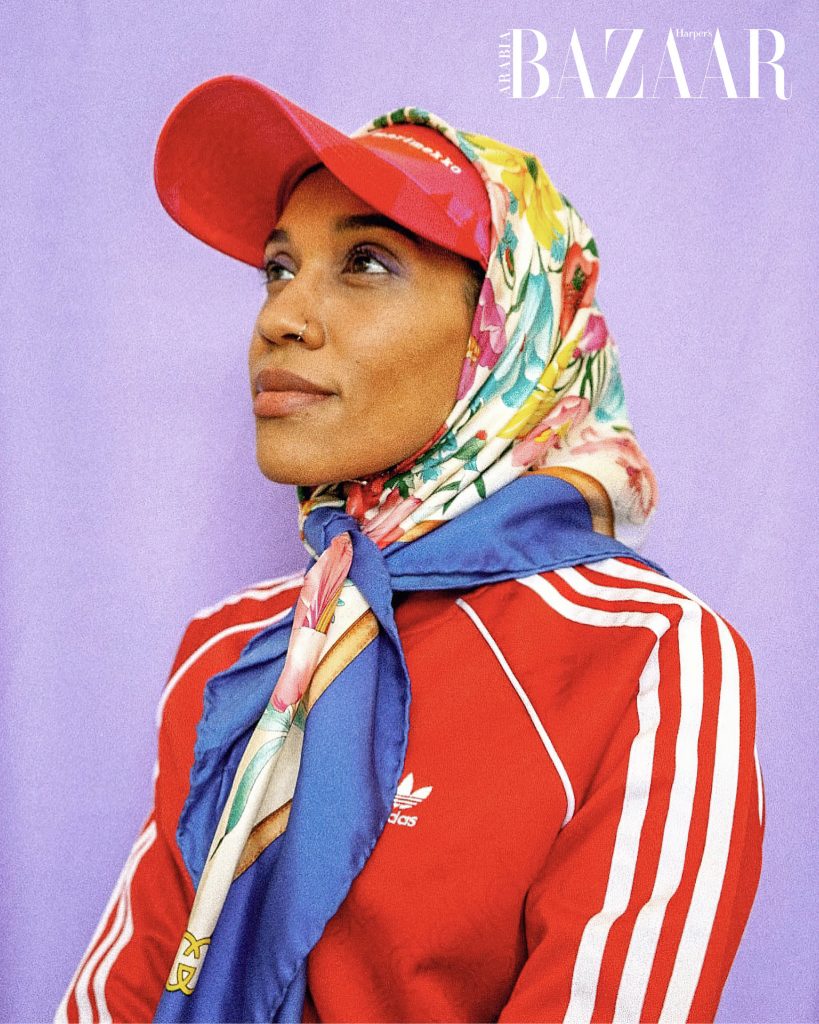
Risk it for the biscuit. I first came across the term when researching British-Sudanese basketball player and activist Asma Elbadawi, an athlete who doesn’t shy away from adversity when championing change and inclusivity within her sport. While all players possess the ability to take calculated risks, both on and off the court, what’s truly remarkable about Asma is that she seems to thrive when it comes to pushing the boundaries, shining brightest when challenging exclusion and sticking up for what’s right.
In 2017 Asma was at the forefront of social change, where she and other women convinced 130,000 individuals to sign an online petition to overturn FIBA’s (International Basketball Federation) ban on religious headgear in professional basketball – a feat that made the sport not only accessible to hijabi women, but anyone who chooses to cover their head due to their faith . “At the time, it felt a bit surreal. Because it was a bunch of girls that got together and decided to take on a huge governing body,” she says, looking back at the David and Goliath-esque moment which overturned the ban in 2018. “And when they listened to us, it just felt like such a relief, but also for me, personally, it felt like if I can do something like that, then I can do anything that I want.”
Fast forward four years later. While she’s still championing inclusivity in sport and being a role model for young basketball players, Asma is also a published author, multifaceted creative (she studied Photography, Video and Digital Imaging at the University of Sunderland) and the face of adidas’ Impossible is Nothing campaign – which was recently shot in Dubai on a glow-in-the-dark rooftop basketball court on the Palm Tower.
“It aligns with a lot of my values in terms of feeling like nothing is off limits, and that I can continue to push my own boundaries in any way that I can,” she says, touching on how it also extends to her artistic endeavours – something which she has put on the front burner in recent years.
A spoken word poet and playwright – who happens to have dyslexia – she shares the somewhat unusual way she fell in love with prose. “I always used to have red markings in my school books, because of my spelling,” she says, referring to her teachers constant corrections when she was growing up in Bradford, West Yorkshire. “When we learned about poetry, I was just so fascinated by its potential. I love daydreaming and I have such a wild imagination. With poetry, you can almost take other people on that adventure with you.”
For many years she kept her writing private, eventually including it within her photography work throughout her degree, a side dish of poems to go along with the visual feast.
“Eventually, I felt like I wanted to see what that was like by itself,” she says, touching on how she made the jump into performing her word. “I’d seen a lot of poetry camps when I was growing up and I felt like there was a lot of power in standing on a stage, in front of people and sharing your words without any distractions.”
Despite her success, the game of fighting for inclusivity within the sporting world – and beyond – is far from being finished business. As lawmakers in countries like France and India continue to propose banning the hijab and other religious headgear in public spaces, Asma admits she can’t help but feel concerned and frustrated. “It’s just such an annoying thing to have to deal with it every few years, regurgitating the idea that the hijab doesn’t affect the players’ safety. The hijab is a part of a woman’s faith and identity. At the end of the day, it’s about choice,” she says, touching on how the “our way or the highway” mentality of some legislatures is a step back.
Nevertheless, she still has some solid advice for female hijabi players looking to go pro: while foregoing the status quo may seem intimating, taking a risk and venturing beyond your comfort zone is the key to success.
“Go out into your community, into your city and find out which coaches are out there, that are coaching the sport that you really love – and then find out how to get into those spaces where scouts are actually going and selecting players, so you can move forward,” she advises. “Don’t worry about being the first person [like yourself] in a space. Often, if you’re a person of colour, you might play a sport that not a lot of people from your community play. Go and stay, and eventually, someone [else] will arrive there and they’ll see you.” She pauses, and then says, with conviction “And then they’ll feel like they belong also – and then, eventually, there’ll be more than just you. You’re the starting point of a bigger movement.”
With great risk often comes great reward; and nobody understands it better than Asma herself.
source/content: harpersbazaararabia.com
___________
Images courtesy of Adidas and supplied /From Harper’s Bazaar Arabia’s June 2022 issue.
Dr Samiha Sinan worked as an internal medicine doctor for 43 years in several Saudi hospitals
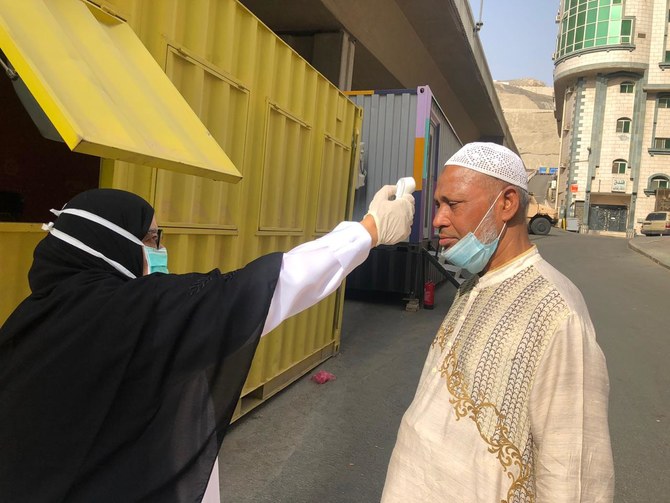
Saudi Minister of Health Fahad Al-Jalajel has named 65-year-old retired doctor and volunteer Dr. Samiha Sinan the “Mother of Volunteers.”
“One retires from office work, not from serving pilgrims,” Al-Jalajel said, praising Sinan’s efforts in providing health care to pilgrims.
Sinan told Arab News that volunteering to serve pilgrims is a work of great honor if done sincerely and honestly.
She worked as an internal medicine doctor for 43 years in several Saudi hospitals, retiring four years ago.
As soon as the pandemic hit across the world, placing great pressure on the health sector, Sinan jumped back into the field to help out.
“I am still able to give, and I tried to think of how a person could serve their religion, country and king, so I submitted a request on the volunteer platform at the Ministry of Health. I was afraid I would be rejected given my age, but my instinct told me to apply because I wanted to give and serve. The Ministry of Health approved my request, and I immediately decided to get back in the field and fight the pandemic,” she said.
Sinan added: “The Makkah health authorities tried to put my comfort first and asked me to work in a small medical clinic in Makkah, but I refused since the pandemic was growing stronger. I headed directly to a COVID-19 center in an isolated area in Al-Masfalah, in Makkah. No one was allowed to enter or leave, but we worked in a comfortable environment thanks to the measures the state had taken to support citizens. I volunteered there for two years, 12 hours a day, seven days a week.”
Even though COVID-19 has witnessed a steady decline in the Kingdom over the past few months, Sinan still volunteers in one of the squares at the Grand Mosque by providing medical care to injured pilgrims.
source/content: arabnews.com (headline edited)
________
Dr Samiha Sinan volunteers by providing medical care to injured pilgrims at the Grand Mosque. (Supplied)
Analysts expect up to 157,000 to take up citizenship in next two years as 2015 cohort becomes eligible.
Seven years after arriving in Germany at the height of a refugee crisis, tens of thousands of Syrians are on the verge of receiving German passports in what experts regard as a success for their integration.
The number of Syrians taking up German citizenship trebled to more than 19,000 last year, the government said, after some refugees who excelled in integration and language courses managed to beat the usual eight-year waiting period.
Analysts believe as many as 157,000 more could follow in the next two years as the rest of the 2015 group becomes eligible.
“Overall, we can see that the integration of large numbers of refugees has made rapid progress,” said Jan Schneider of the government-backed Expert Council on Integration and Migration.
“We have observed an above-average level of interest in naturalisation among Syrian refugees. At the same time, many of them are starting to fulfil the necessary criteria.”
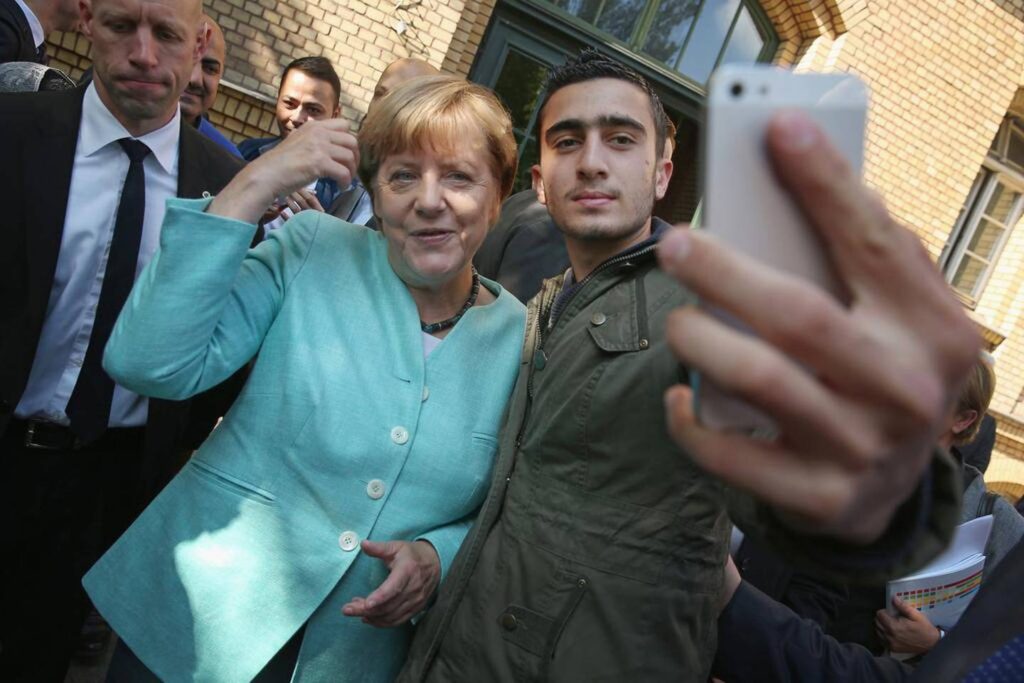
The intake of hundreds of thousands of Syrians in 2015 was a politically divisive decision by former chancellor Angela Merkel that was bitterly opposed by some Germans.
In the chaos of that summer’s refugee crisis, many Syrians fleeing war arrived at German railway stations and were initially put up in camp beds and gyms as humanitarian workers struggled to cope with the numbers.
Many refugees also arrived from Afghanistan, Iraq and other countries, but Syrians made up the largest number and helped to change the face of a Muslim community in Germany historically dominated by Turkish groups.
The backlash to the 2015 intake fuelled the rise of the far-right Alternative for Germany (AfD) party, and debates over crime, integration and national identity dominated German politics in the subsequent years.
Nonetheless, Mrs Merkel said shortly before leaving office that her much-derided statement in 2015 that “we will manage it” had proved correct, praising the work of local authorities and volunteers in integrating people.
Alongside reports, often seized upon by the right, of violent crimes by refugees, have been more positive stories including of Syrians in Germany helping Ukrainians who fled the war with Russia.
A 34-page report by the expert council said their integration into the labour market was progressing well and the number of social security claimants was down.
However, it said women were less likely to have had jobs or learnt German and that employment had suffered a setback during the coronavirus pandemic when refugees in casual jobs were more likely to be laid off.
Mr Schneider said language courses had paid off especially well because many Syrians were able to complete the naturalisation process in six years.
People can take the six-year shortcut if they can show exceptionally good language skills, perform notably well in their work or education, or have a strong record of volunteer work.
The report said the most conservative estimate was that about 20,000 Syrians a year would take up German citizenship from this year onwards, but that this could rise to many more than 50,000 if they apply at a high rate.
Syrians made up more than one in seven of all naturalised German citizens last year, with 19,100 of them joined by 4,420 Iraqis, 4,020 Iranians and 3,175 Afghans as well as many Turks, Poles and Romanians.
As well as the residency and language requirements, people must pass a citizenship test, be able to support themselves financially, swear loyalty to the democratic order and generally have to give up their old passport.
Mr Schneider said there could be delays if high demand from Syrians continues to exert pressure on short-staffed immigration authorities.
Afghan refugees described frustration at Germany’s famously meticulous bureaucracy as they sought protection for their relatives after the fall of Kabul last year.
“Waiting times are already very long in some places and the authorities are often short of staff,” Mr Schneider said. “They are facing significant challenges.”
Chancellor Olaf Scholz’s government has promised to cut the waiting time for prospective German citizens to five years of residency with a possible three-year shortcut, instead of eight and six.
It has also committed to relaxing rules on dual citizenship, which is currently permitted only for European Union citizens, people born with two nationalities and in limited cases where special permission is given.
source/content: thenationalnews.com
____________
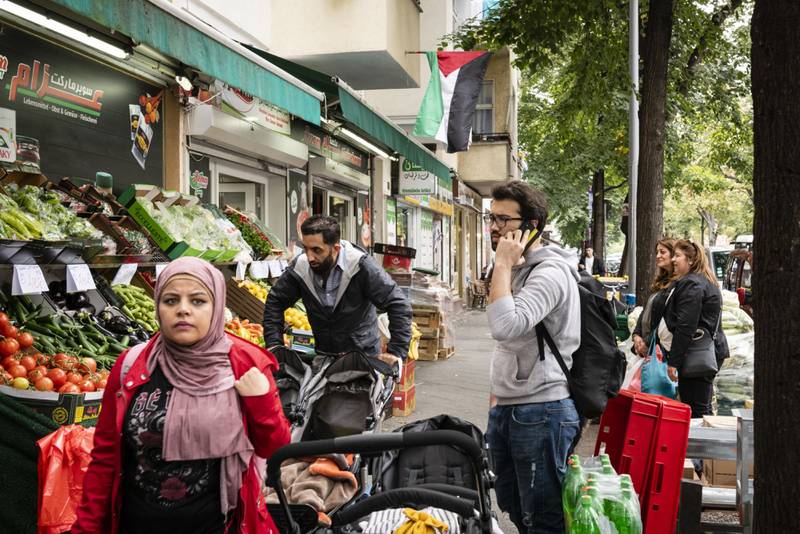
Former chancellor Angela Merkel made the divisive decision to open Germany’s borders to Syrian refugees in 2015. Getty / thenationalnews.comPedestrians pass a food store on Sonnenallee in Berlin, Germany, on Monday, Sept. 13, 2021. Refugees from Syria have changed the cultural makeup of Germany’s capital in a way not seen since the 1960s and Sonnenallee, known locally as “Arab Street,” may be the closest thing to home for many Syrians. Photographer: Jacobia Dahm/Bloomberg / thenationalnews.com
Medical pioneer was one of the first women from the country to study abroad.
The life of doctor Saniya Habboub is being celebrated by Google’s Doodle on Friday, commemorating her graduation from medical school on June 10, 1931.
Born in 1901 to a Lebanese leather merchant and Turkish mother, Habboub was one of the first female doctors from Lebanon to study medicine abroad, in the US.
When she returned to Beirut she opened her own practice, inspiring other Lebanese girls and women to get an education of their own, according to Google’s description.
In 1926, Habboub was one of the first three students to graduate from the American Junior College for Women in Beirut, going on to study at the American University of Beirut.
In 1931, she received her degree in gynaecology and obstetrics from the Women’s Medical College in Pennsylvania and, in gratitude, left future students with a scholarship in her name.
She started her own practice two years later, in Bab Idriss, and went on to co-found the Lebanese Red Cross Association, as well as served as a board member for the Muslim Orphan’s Home, the Young Women’s Muslim Association and Maqassed Hospital.
In 1982, in honour of her devotion to medical services, the Lebanese government awarded her with a Health Medal of Merit, and there’s even a street in Beirut named after her.
Habboub died aged 82 in September 1983.
“Dr Saniya was an inspiring figure who paved the way for future generations of women to come,” Google says.
Dr William Stoltzfus, former president of Beirut University College, described her life as a “get-started signal” for the professional lives of many Arab women, according to Al–Raida, the bi-annual journal published by the Arab Institute for Women.
The Doodle can be seen on devices across the Middle East and North Africa.
source/content: thenationalnews.com
___________
Dr Saniya Habboub died in 1983 aged 82. Photo: Public DomainGoogle Doodle of Dr Saniya Habboub. Photo: Google
Co-founder of the Somali American Bar Association. President of the Minnesota Association of Black Lawyers. Amran has used her professional success to create opportunities for other Somali attorneys—and the people they serve.
Amran Farah has had a busy past year.
A few weeks after achieving that professional success, she accepted an invitation to help select the next U.S. Attorney and U.S. Marshal in Minnesota, The U.S. Attorney represents the United States in federal criminal cases. The U.S. Marshal serves as the enforcement arm of the courts and is involved in most law enforcement initiatives. Both posts typically turn over when a new president takes office, and together they exert great influence over what types of law enforcement take priority in Minnesota.
The second week of February, U.S. Senators Amy Klobuchar and Tina Smith announced the members they invited to join the Federal Law Enforcement Selection Committee. Chaired by Ramsey County Attorney John Choi, the seven-member committee reviews applications and recommends candidates to the senators. Klobuchar and Smith will then bring those selections to President Joe Biden for consideration and approval.
Smith praised the selection committee that includes Amran: “These Minnesota community leaders will help run an inclusive and fair selection process to name top federal law enforcement candidates in Minnesota,” Smith said in a statement.
Amran said she hopes to ensure the selection of candidates who will serve all Minnesotans, especially those who come from the same communities as Amran. This new connection to the workings of government marks another step in Amran’s rapid rise in the legal profession. Throughout her still-young career, Amran has used her personal success to create opportunities for other Somali attorneys—and the people they serve.
‘I come to this work differently’
Amran was born in Somalia and arrived in the United States as a child. She said she has always held a strong presence in her community since she comes from a large family. Amran has 10 siblings and 34 nieces and nephews. Add that crew to her network of in-laws, Amran joked, and the whole family could make up a voting bloc.
That connection to extended family—and community—also inspired Amran’s commitment to create opportunity for immigrants and people of color.
Amran began to take an active role in the Somali community while studying at what is now called the Mitchell Hamline School of Law. There, she helped create the Somali American Bar Association, an organization for Somali American law students and attorneys. She graduated law school in 2013. Amran next served as the president of the Minnesota Association of Black Lawyers. Through this role, Amran got involved in helping protesters over the summer.
“If I felt like the reason the senators were inviting me is so they can just check off the boxes—oh, we have a Black person, we have a Muslim person, we have a Somali person, we have a woman—if I really truly felt that, then I would not be part of it.”
Making law partner in three years
A large part of Amran’s public standing comes from her rapid professional rise. In 2018, Amran started work at Greene Espel, a boutique firm that represents prominent local companies like 3M, Ecolab, and the Minnesota Vikings. This winter, she became a partner—after just three years at Greene Espel.
According to Guled Ibrahim, the current president of the Somali American Bar Association, Amran is the first Somali attorney in the state to become a partner at a major law firm.
“The culmination of Amran’s achievements is her recent achievement of becoming partner,” Guled said. “She’s a trailblazer. And now we have an image of what it means to be a partner at a top law firm.”
A legal connector for George Floyd protestors
In April, Amran had a baby boy—during a pandemic. It’s been difficult not spending time with her large family and having to maintain social distancing. Her siblings hadn’t seen Amran’s son until he was about 6 months old. Some of her nieces and nephews didn’t believe her son was real, Amran joked.
Amran’s day starts at about 8:30 when her son wakes up. She begins working and takes breaks for the baby throughout the day. She wraps her work up by 6 p.m. and spends time with her husband and her son. Then, when her son falls asleep in the evening, Amran logs back on for the night.
Then-Officer Derek Chauvin killed George Floyd in May. During the uprising that followed, protesters on the ground struggled to get legal representation after being arrested. Because she was the president of the Minnesota Association of Black Lawyers, she started receiving texts and emails calling for her help. Amran doesn’t practice criminal law, but she helped arrange legal help to protesters by acting as a liaison between her own organization and other local legal rights groups.
Getting everyone into the room
Amran hasn’t just assumed the responsibilities of leadership roles; she’s helped create them.
She served as the president and co-founded the Somali American Bar Association which, at first, brought together Somali law students, attorneys, professors, and judges throughout North America. Eventually, the organization shifted its focus solely to Somali American members: Today, the group includes about 20 attorneys from Minnesota and a growing number of law students.
Guled joined Amran and other law students in creating the organization to unite Somali people in the field, but also to serve as a resource for their own community. From the beginning, Guled said he’s seen the ways Amran uplifts people.
“On the committee, my role is going to be to make sure that the senators and the candidates know that this is an act of service for all Minnesotans,” Amran said. “That includes, Black Minnesotans, Muslim Minnesotans, Somali Minnesotans.”
source/content: sahanjournal.com (edited)
____________
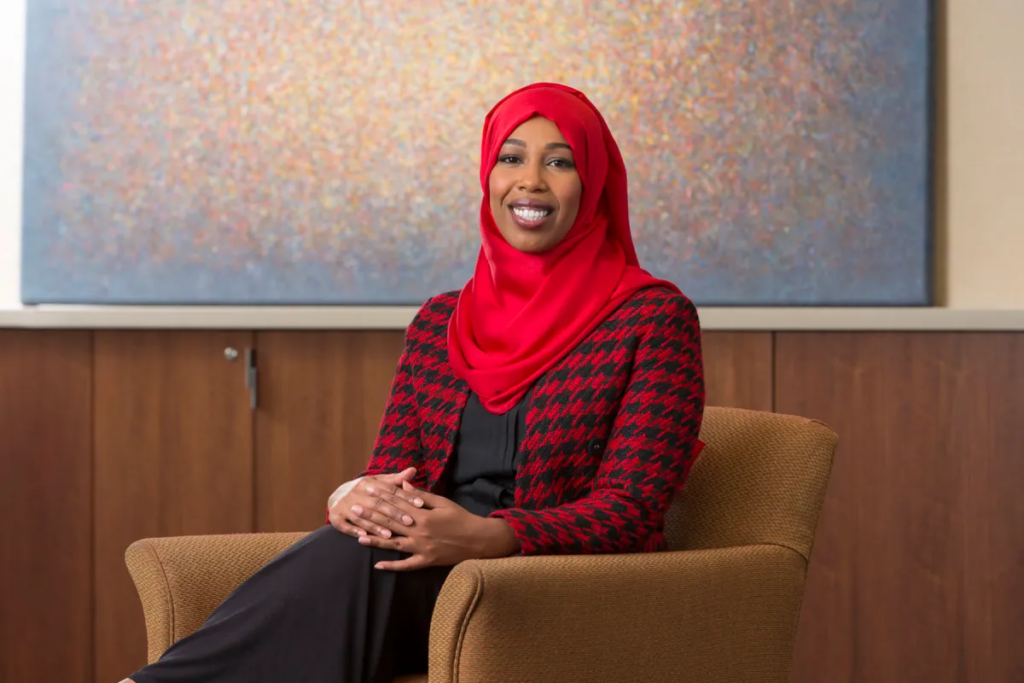
Recently appointed partner at Greene Espel, Amran Farah will help select the next U.S. Attorney and U.S. Marshal in Minnesota. Credit: Greene Espel