The Restored Holy Family Site Built-in 328 CE the ‘Rock-Hewn Monastery and Church of the Virgin Mary’ in Minya, Egypt to be soon Inaurgrated. It is One of the Locations the Holy Family Visited and Stayed in for 3 days during their Journey in Egypt in the Early First Century CE.

A new stop on Egypt’s Holy Family Trail will soon be inaugurated in the Upper Egyptian governorate of Minya after development and restoration work.

On top of the Gabal Al-Teir cliffs in the Upper Egyptian governorate of Minya stands the rock-hewn Monastery and Church of the Virgin Mary, with its distinguished architecture and wonderful view of the Nile Valley giving onto carefully cultivated fields and lush palm groves.

According to tradition, the area is called Gabal Al-Teir, meaning Mountain of the Birds, because of the thousands of birds living and nesting in the cliffs. It is one of the locations the Holy Family visited and stayed in for three days during their journey in Egypt in the early first century CE.

According to historian of Christian monasteries and churches in Egypt Abul-Makarim, while passing by the place in a small boat during the Holy Family’s visit, the Virgin Mary noticed an enormous rock coming loose from the mountain and about to fall on the boat.

But the infant Jesus extended his hand and stopped the rock from falling, and the shape of his palm was imprinted on the rock. In 1168 CE, the then ruler of Jerusalem removed the part of the rock bearing the imprint and took it with him to Syria.

Osama Talaat, head of the Islamic, Coptic, and Jewish Antiquities Sector at the Ministry of Tourism and Antiquities, said that the Church of the Virgin Mary at Gabal Al-Teir was built in 328 CE by the Byzantine empress Helena (mother of the emperor Constantine) in memory of the passage of the Holy Family in Egypt.

In 1938, Severus, the bishop of Minya, restored the church and removed the original stone roof in order to enlarge it.

The church consists of a nave with three sanctuaries and two side aisles and a western return aisle separated from each other by 10 rock-cut columns. On the south side of the church, the baptismal font is carved out of a column. The area in front of the middle sanctuary serves as a choir.

Hisham Samir, assistant to the minister of tourism and antiquities for archaeological projects, said that work on the restoration project at the monastery and church had begun in 2018 after the approval of the Permanent Committee of Islamic, Coptic, and Jewish Antiquities. The work was carried out in two phases, the first phase covering the western corridor and being completely finished. The second phase includes the southern corridor and is to be completed soon for the official inauguration.

The work has included the restoration of the walls and ceiling of the church, removing cracks, consolidating the walls, repairing the bell in the church tower, and its four arcades and domes. The façades of the church were mechanically cleaned, and the modern mosaic set up in 1987 on the eastern wall of its southern entrance has been replaced with another mosaic showing the journey of the Holy Family.

Fine restoration has been carried out on all the decorations and icons in the church as well as the icon frames. New lighting and fire-security systems have been installed as well as electronic gates. To enhance the visitor experience, new services have been provided, including information signs, new paths, sunshades and seats.

Facilities around the church are also being upgraded and infrastructure installed to assist visitors following the route of the Holy Family’s sojourn in Egypt. The goal of the larger Holy Family Trail includes developing poorer areas and communities in the Delta and Upper Egypt, restoring archaeological sites, and creating suitable services for visitors at sites along the trail.

This is all part of the ministry’s desire to develop spiritual tourism that can appeal throughout the year and not just during special seasons.

THE HOLY FAMILY IN EGYPT: The Holy Family travelled in Egypt for around three years and six months, with their sojourn in the places they visited varying from a few days to a few months.

The Holy Family’s flight to Egypt is associated with archaeological sites from Sinai to the Delta and Assiut in Upper Egypt. The Ministry of Tourism and Antiquities in collaboration with Egypt’s Coptic Church has carried out a number of restoration and development projects at churches and monasteries on the route.

These include the restoration and inauguration of the Abu Serga Church in Old Cairo, the St Abba Noub Church in Sammanud, monks’ cells and other structures at the Wadi Al-Natroun Monasteries, and now the Virgin Mary Church at Gabal Al-Teir.

The late Coptic pope Shenouda III approved itineraries drawn up for Christian pilgrims visiting Egypt to follow the route in 2000. During an audience in St Peter’s in Rome in 2017, Roman Catholic Pope Francis blessed an icon by a Vatican artist representing the Holy Family’s flight into Egypt and effectively gave his blessing to the millions of Christians around the world who may want to follow in the Holy Family’s footsteps.

The Holy Family’s flight to Egypt is associated with many archaeological sites, Osama Talaat noted. They journeyed south from Palestine across the wilderness, avoiding main roads for fear of capture. They entered Egypt at modern-day Rafah, where a lone sycamore tree is said to have survived on the site since their visit.

The Holy Family reached Arish, and from there they followed the old Horus Road along the Mediterranean coast to Zaraniq, where the Byzantines later built three churches. They continued to Al-Mohamediya, and their last station in Sinai was on the northwest coast near the edge of the Delta at the city of Pelusium, now the sprawling ruin of Tel Al-Farama. Here, archaeologists have discovered traces of several Roman churches.

They then travelled south along the Pelusiac branch of the Nile, which has long since dried up. They stayed in the city of Bubastis, now the ruin of Tel Al-Basta near the modern city of Zagazig. They then went on to Mostorod, where the Virgin is said to have bathed Jesus. There is a church in Mostorod named after the Virgin Mary that was built in the 12th century and that has been recently restored.

They then turned north again towards the town of Bilbeis, travelling northwest across the Delta. When they reached Damietta, they embarked on a ferry which took them to Sammanud. The Holy Family then continued north to Borollos. The next stop was Sakha in the western Delta. Here, the Virgin Mary is believed to have held her son against a rock which retained his footprint. A relic in the church dedicated to the Virgin in the area bears this mark.

The Holy Family then moved on to the Western Desert, eventually reaching Wadi Al-Natroun, where monastic settlements were later established. They then headed for what is now Cairo, where they stopped at Ain Shams and Matariya, where they sheltered under a sycamore tree, now known as the Virgin Mary Tree. One story says that when the Virgin Mary sat there, a spring of water gushed out of the ground.

The next stop for the Holy Family was Al-Zeitoun, and then Al-Zweila. Travelling south, they reached Old Cairo and hid in a cave that is now the crypt of the Church of Saint Sergius. In what is now Maadi, they went to the place now named the Virgin’s Church of the Ferry. From there, the Family took a ferry across to Memphis and embarked on a boat that carried them to Upper Egypt.

Their first stop there was on the west bank of the Nile near a village now called Ashnein Al-Nassara at a place called Al-Garnous where a monastery was later built. A church dedicated to the Virgin was built at Deir Al-Garnous in the 19th century, on the west side of which is a well that is believed to have provided the family with water.

The journey continued towards Al-Bahnasa, Samalout, and then Gabal Al-Teir, where a monastery now stands. The Holy Family took shelter in a cave that is now covered by an ancient church. They travelled to Al-Ashmounein, Armant, and Dairout, and then crossed the river again and reached the town of Al-Qusseya.

They travelled east into the desert to Mount Qussqam, perhaps the most important of all their stations, where they stayed for six months and 10 days. This place was later called Al-Muharraq, which means “burnt”, as there was an abundance of grass there which had to be burned so food could be grown in its place.

Mount Qussqam is sometimes called “the second Bethlehem”, and its church is held to be the first ever built in Egypt. The cave in which the family sheltered later became the altar of the Church of the Virgin Mary.

According to Ahmed Al-Nemr, a member of the ministry’s scientific office, an angel of the Lord appeared to Joseph in Assiut and told him to return to Palestine because king Herod was dead. The family then went back through Assiut and then probably sailed down the Nile to Memphis, landing at what is now Al-Badrashin near the ancient capital.

Once again, they may have passed through Maadi, Babylon, and Heliopolis before crossing the desert to Palestine and finally reaching their home town of Nazareth. “Not all of these places are archaeological sites, but they all share religious, social, and cultural rituals which derive from the holy journey,” Talaat said.

The places at which the Holy Family stopped that house archaeological sites are the Virgin Mary Tree in Matariya, the Church of St Sergius in Old Cairo, the Monasteries of Wadi Al-Natroun, the Church of the Virgin Mary at Gabal Al-Teir in Minya, and the Al-Muharraq Monastery in Assiut.


*A version of this article appears in print in the 7 July, 2022 edition of Al-Ahram Weekly.

source/content: english.ahram.org.eg (headline edited)

_______________
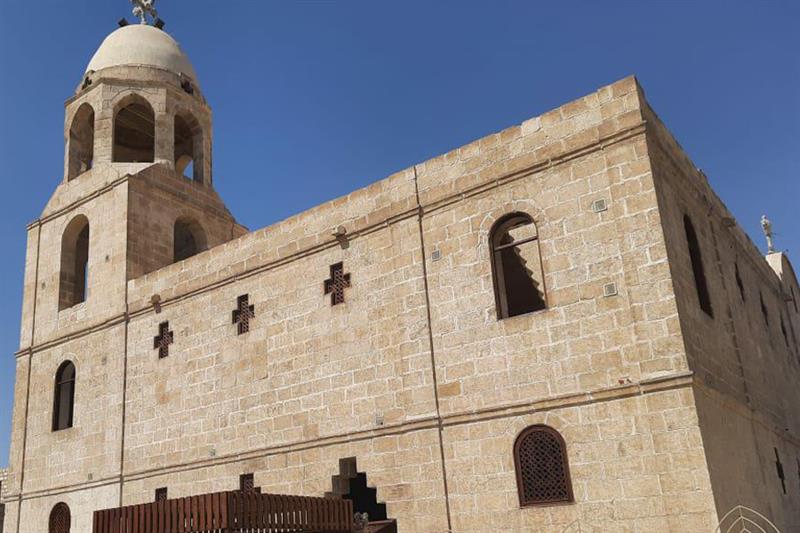
The rock-hewn Monastery and Church of the Virgin Mary

________

EGYPT

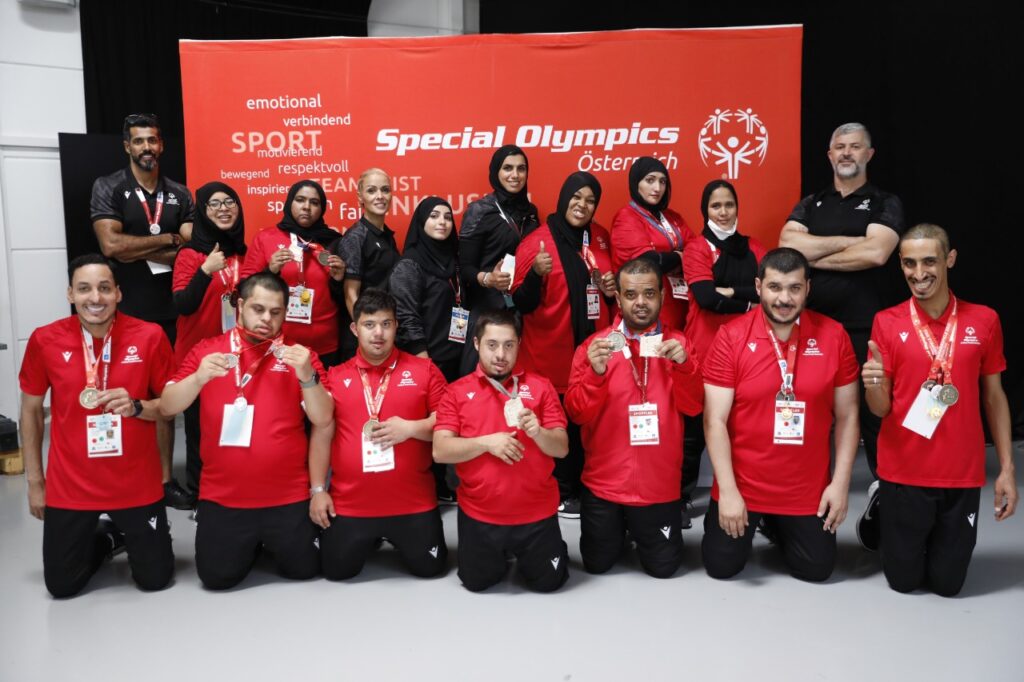
UAE Athletes Win 16 Medals at ‘Special Olympics National Games Austria 2022’, Burgenland

Special Olympics UAE Athletes won 16 medals during their participation at the Special Olympics National Games Austria 2022, which was held in Burgenland from June 23-28, 2022.

Special Olympics UAE was invited to participate with six other countries, as part of the Building Bridges between UAE and Austria programme, launched in 2018.

Special Olympics UAE Athletes excelled in powerlifting, DanceSport, and table tennis, bringing back memories of their outstanding success at the Special Olympics World Games Abu Dhabi 2019. 11 Special Olympics UAE Athletes won 16 medals, including eight gold, two silver and six bronze in the National Games Austria 2022.

In powerlifting, Abdul Rahman Al Hosani won four gold medals and Mohammed Al Mazmi won two silvers, while Ibrahim Al Hammadi secured four bronze medals.

Khuloud Al Shehhi and Nadia Al Falasi each secured first place at their respective table tennis categories, and in the doubles competitions (males), Mohammad Al Mas and Qais Al Qubaisi also won first place. In the individual DanceSport competitions, Ahmad Al Jailani came first, and Ghanem Al Maamari came third.

Special Olympics National Games Austria 2022 gathered 1600 Athletes from seven countries: Germany, Luxembourg, Slovenia, Slovakia, and Hungary, in addition to Austria and the United Arab Emirates. Further to the sports where Special Olympics UAE Athletes participated, the Games included judo, swimming, tennis, bocce, golf, bowling, and football.

On this occasion, Sheikh Suhail bin Butti Al Maktoum, Executive Director of the Sports Development Sector at the General Sports Authority, said, “We are proud of the achievements of the Special Olympics UAE Athletes and their determination to win and raise their nation’s flag in the regional and international competitions, which reflects the efforts of Special Olympics UAE and its partners from both government and sports sectors, who share the goal of empowering People of Determination and strengthening their sports performances.”

Talal Al Hashemi, National Director of Special Olympics UAE, noted, “We are proud of the continuous achievements of the Special Olympics UAE Athletes internationally, after winning 16 medals in Malta, Special Olympics UAE Athletes went to win another 16 medals in Austria. Special Olympics UAE and Special Olympics Austria have enjoyed a strong relationship since the launch of the Building Bridges Programme between Abu Dhabi and Austria in 2018.

The Building Bridges Between Abu Dhabi and Austria Programme launched in 2018, where a Memorandum of Understanding was signed between Abu Dhabi and the Republic of Austria, strengthening the ties between both Special Olympics institutions.

Special Olympics UAE’s delegation comprised 19 members, including 12 athletes, four coaches and a medic from the National Ambulance to ensure Athletes’ health and safety throughout their participations.

source/contents: wam.ae (edited)

___________

___________________________________

UNITED ARAB EMIRATES (U.A.E.)

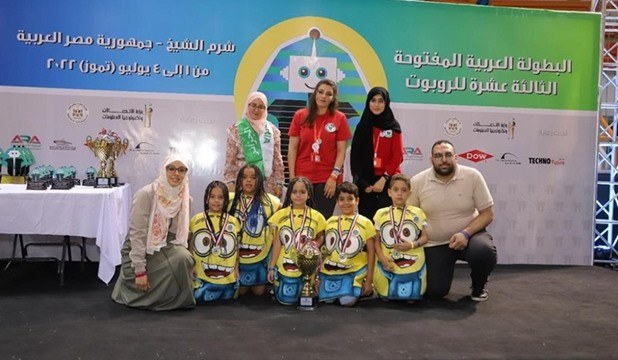
Egypt Wins First Position with 7 Trophies in the ‘2022 Arab Open Robotics Championship’

Egypt has finished in first place at the 2022 Arab Open Robotics Championship held in Sharm El Sheikh on Monday.

Since 2008, the Arab Open Robotics Championship has been the largest regional robotics tournament held in the Arab world.

The tournament was organized by the Ministries of Youth and Sports, Communications and Information Technology, Bibliotheca Alexandrina, and the Egyptian Federation of Electronic Games.

The tournament included over 650 students ranging in age from four years to the end of the university stage.

The participants represented 136 teams from 12 Arab countries: Egypt, Kuwait, the UAE, Oman, Yemen, Qatar, Jordan, Tunisia, Morocco, Algeria, Iraq, and Libya.

The Arab Robotics Association accredited 100 juries to judge the tournament’s nine robot competitions.

Egypt came first, winning seven trophies. Jordan finished second with two trophies, followed by Iraq, Libya and Qatar in third place.

In addition, the tournament hosted a lively forum for Arab youth on the sidelines.

source/content: arabnews.com

_________

Egypt placed first in 2022 Arab Open Robotics Championship, winning seven trophies. (Source: Egypt State Information Service)

_________

EGYPT

Khulood Al Zaabi, the First Emirati Female Football Referee to join the Asian Football Confederation (AFC)

 Khulood Al Zaabi, the first Emirati female football referee to join the Asian Football Confederation (AFC), said she is delighted to join the AFC’s elite referee list, noting that her new status comes with great responsibilities that include showcasing the leadership of Emirati women globally.

Al Zaabi’s appointment came after she passed several referee training courses.

In an interview with the Emirates News Agency (WAM), Al Zaabi said that being the first woman in the list of eight referees, which include Mohammed Abdullah Hassan, Ammar Al Junaibi, Omar Al Ali, Adel Al Naqbi, Yahya Al Mulla, Sultan Muhammad Salih and Ahmed Issa Darwish, is a great honour.

She also highlighted her gratitude for the support of Sheikh Rashid bin Humaid Al Nuaimi, Chairman of the UAE Football Association.

Speaking about her ambitions, Al Zaabi explained that she aims to referee games at the World Cup and the UAE Pro League, noting that she can effectively referee men’s games and has self-confidence.

Regarding her participation as a video assistant referee (VAR) in some UAE Pro League games, Al Zaabi said, “During the previous season, I participated as a VAR in two matches in the ADNOC Pro League last year, which aligns with my focus on enhancing my work and training to gain experience.”

Al Zaabi encouraged young girls to play sports and achieve excellence in a sport.

Regarding her vision of women’s football in the UAE, she explained that the sector is continuing its growth, especially with the great support provided by the UAE Football Association, which serves to ensure creating a major transformation in the sector.

source/content: wam.ae (headline edited)

__________

____________________________________

UNITED ARAB EMIRATES (U.A.E.)

Tunisian Artist Nadia Kaabi-Linke Wins Saudi Arabia’s ‘4th Ithra Art Prize’ underlining Pan-Arab Emphasis of this Year’s Award at the 1st Diriyah Contemporary Art Biennale

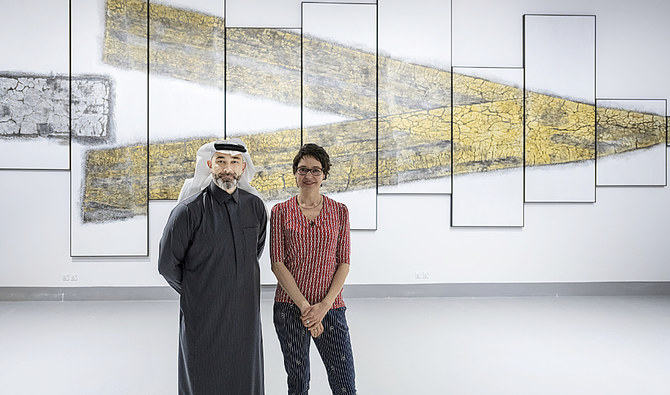
 As visitors arrive at the end of the impressive first Diriyah Contemporary Art Biennale their attention is drawn by a gigantic yellow arrow nearly 20 meters long on the wall.


If they look closer at the artwork, titled “E Pluribus Unum – A Modern Fossil,” they can see the numerous cracks in the body of the arrow.


The artwork was created by Tunis-born, Berlin-based artist Nadia Kaabi-Linke, who this year won the fourth Ithra Art Prize. Each year the prize, which was set up in 2017, gives up to $100,000 for the creation of a new artwork that becomes part of Ithra’s permanent collection.


Kaabi-Linke’s massive work presents a contemplative way to look at the pandemic, notably, the decline in commercial air traffic during 2020, which, according to the artist, raises questions as to how humanity measures its progress and environmental awareness versus economic profit.


“The work is meant as a metaphor for modern times,” she told Arab News. “It is particularly relevant to 2020 because all of the airplanes in the world stopped flying.”


The artist relates it also to Tempelhof Airport in Berlin, which has been shut for around 13 years and is used as a camp accommodating up to 7,000 refugees. “I saw a parallel in this because we were all grounded, all of humanity and I think it is an exceptional moment in human history,” she added. “I also wanted to draw the parallel between the aviation industry and the economy. The symbol of economic growth is the rising arrow.”


The cracks, explains Kaabi-Linke, are there because it represents an abandoned airport. The work is a print made from an existing arrow that shows where the planes land and where they take off. “It brings you back to the earth as the cracks in the arrow also refer also to the idea of a cracked earth. The question that the work asks is: Do we want to stay in a world as we know it that has no future or do, we want to take the risk to go to something that is unknown but that probably has a future?”


“At Ithra, our commitment to contemporary art is embodied in this art prize,” Ashraf Fagih, head of programming at Ithra told Arab News. “This year is different for two reasons: First, we have opened up the prize to 22 Arab countries and not just artists in Saudi. Secondly, we are collaborating with the Diriyah Contemporary Art Biennale. To us this has special significance because it means the Ithra Art Prize came back home.”


The prize was previously unveiled during Art Dubai.


“As a distinctive landmark in the Saudi art scene, and in integration with its most prominent event ever, the prize’s artwork was unveiled during the Diriyah Contemporary Art Biennale,” said Fagih. After the biennale the artwork will travel back to Ithra in Dhahran in the Eastern Province to become part of the institution’s permanent collection.

source/content: arabnews.com (headline edited)

___________

Ashraf Fagih, head of programming at Ithra with Ithra Prize winner artist Nadia Kaabi-Linke. (Supplied)

________________________________________

GERMAN / TUNISIAN / SAUDI ARABIA

Bahrain Wins Chairmanship Seat of the WTO’s Committee on Safeguards

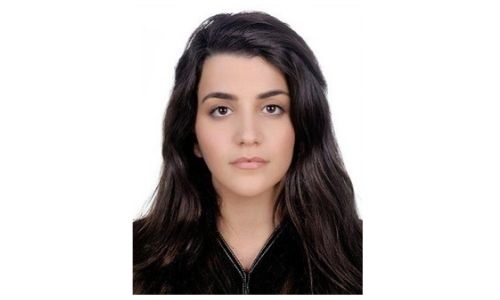
Bahrain has won the chairmanship seat of the Committee on Safeguards, a subcommittee of the Council of Trade in Goods at the World Trade Organization (WTO).

Maryam Abdulaziz Al Doseri, Commercial Attaché of the Ministry of Industry, Commerce and Tourism at Bahrain’s Permanent Mission to the United Nations and other organizations in Geneva, is now the Chairperson of the Committee on Safeguards. 

On May 23, WTO members reached consensus on the names of the chairpersons for the 14 subsidiary bodies that report to the Council for Trade in Goods.

The Committee on Safeguards (the Safeguards Committee) was established to administer the Safeguards Agreement. It oversees the operation of the Agreement and is responsible for the surveillance of Members’ commitments.

Minister of Industry, Commerce and Tourism Zayed bin Rashid Al Zayani extended his heartfelt congratulations to His Majesty King Hamad bin Isa Al Khalifa and to His Royal Highness Prince Salman bin Hamad Al Khalifa, the Crown Prince and Prime Minister, on Bahrain’s achievement. 

“The success of Bahrain in becoming the chair of the Committee on Safeguards is a source of immense pride as it affirms the unlimited support to the Kingdom of Bahrain,” the minister said.

“It reflects the ambitious and unprecedented visions to chart a strong trade based on justice, transparency, diversity and innovation  under the generous support of HM King Hamad bin Isa Al Khalifa and the follow-up of HRH Prince Salman bin Hamad Al Khalifa, Crown Prince and Prime Minister.  This success is a strong motivation for further achievements and accomplishments by the Kingdom of Bahrain.”

source/content : bna.bh

__________

Maryam Abdulaziz Al Doseri

___________

BAHRAIN

Eritrean Athlete Nazareth Woldu Registers New Record

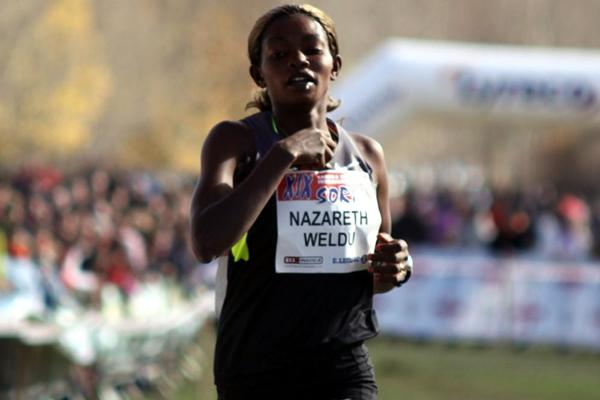
Olympian Athlete Nazareth Woldu registered new record finishing the race in 21 minutes and 28 seconds at the Seoul International Marathon (Daegu) that was held today, 03 April in Seoul, South Korea.

Athlete Nazareth improves the record that was held by herself with 7 minutes.

Moreover, Olympian Athlete Nazareth has improved the 10 km national record that was held by Athlete Simret Sultan since 2006.

Athlete Nazareth has also improved her national marathon record for the fourth time including at the Beirut Marathon 2018, Gold-Coast Marathon 2019, Australia, Milano Marathon 2021 and at this year’s Seoul Marathon 2022.

According to her coach, Livingston Abraha, Athlete Nazareth is preparing to take part at the International Athletics competition that will be held this year in the United States.

The Mereb Setit Athletics Training Center has produced many Olympian Athletes including Nazareth Woldu and Rahel Daniel.

Distributed by APO Group on behalf of Ministry of Information, Eritrea.

source/content: african.business (headline edited)

_________

pix: facebook.com / @ERITREA

___________

ERITREA

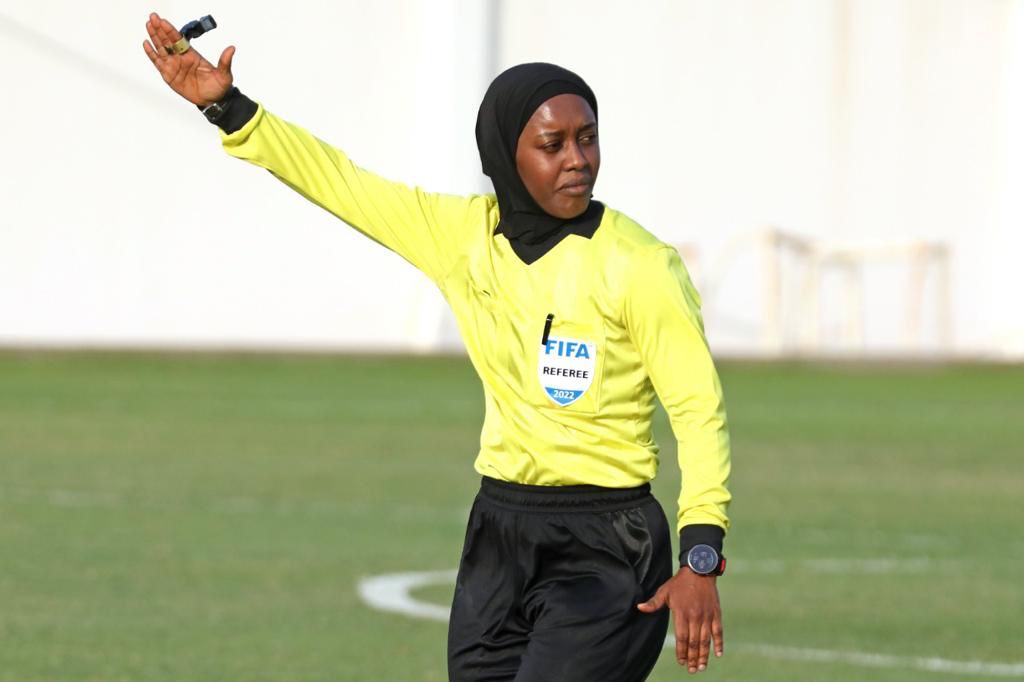
‘FIFA World Cup Qatar 2022’ Creates History, Debut’s Women Referees for First Time in Men’s Competition

Women referees will officiate matches at the men’s World Cup for the first time in Qatar this year, the sport’s governing body FIFA announced on Thursday.

Three women referees and three women assistant referees will be part of the global showpiece event in Qatar, which will be held from Nov. 21 to Dec. 18.

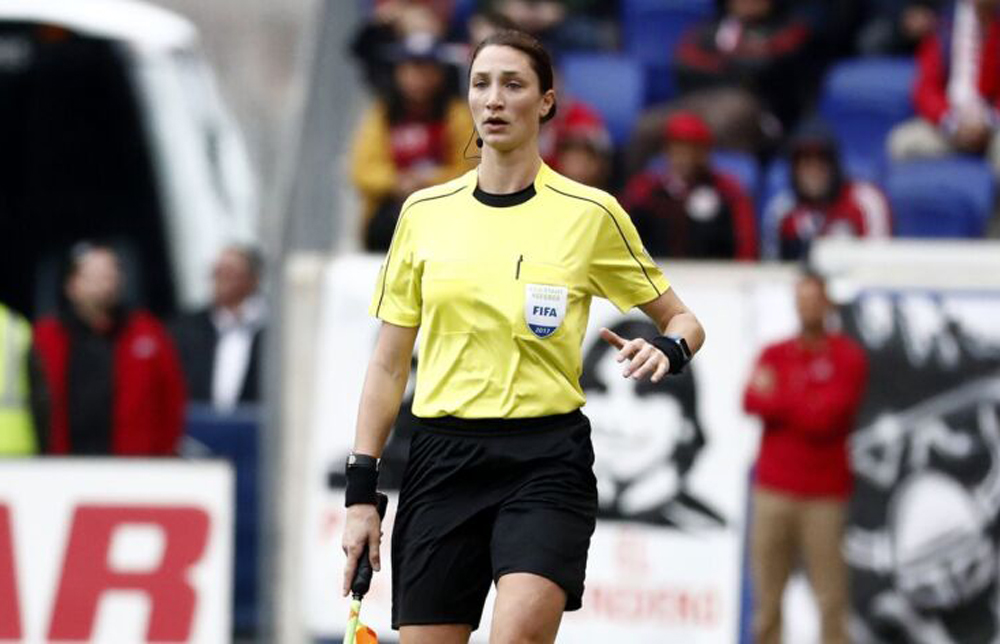
Referees Stephanie Frappart from France, Salima Mukansanga from Rwanda and Japan’s Yoshimi Yamashita, as well as assistant referees Neuza Back from Brazil, Karen Diaz Medina from Mexico and American Kathryn Nesbitt have all been called up.

A total of 36 referees, 69 assistant referees and 24 video match officials have been chosen by FIFA for the tournament.

“This concludes a long process that began several years ago with the deployment of female referees at FIFA men’s junior and senior tournaments,” said Pierluigi Collina, FIFA Referees Committee chairman.

“They deserve to be at the FIFA World Cup because they constantly perform at a really high level, and that’s the important factor for us.

“As always, the criteria we have used is ‘quality first’ and the selected match officials represent the highest level of refereeing worldwide.”

Frappart became the first female official to be involved in European Championship matches after UEFA included her in the list of referees for the tournament last year.

source/content: thepeninsulaqatar.com (headline edited) / Reuters

____________

Kathryn Nesbitt

__________

QATAR

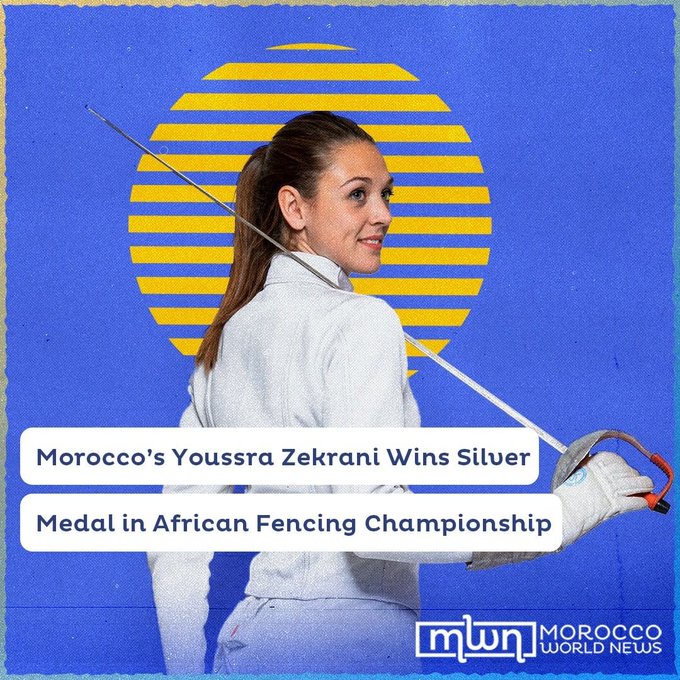
Morocco’s Youssra Zekrani Wins Silver Medal in African Fencing Championship, Casablanca

Youssra Zekrani took home a silver medal after reaching the final stage of Africa’s Fencing Championship in Casablanca.

Zekrani reached the final stages of the continental tournament, before losing to Egyptian contestant Noura Mhamad, earning her the silver medal.

In the game against the Egyptian, Zekrani lost by nine points to 15.

Zekrani, who ranked as the 91st best player in the world, faced and eliminated Algeria’s Chaymae Nihar Kamar and Egypt’s Yara Charkaoui in the quarterfinals. 

While facing Algeria’s Kamar, the Moroccan athlete won by an impressive margin of 15 to 10. She equally scored a no less impressive score against Egypt’s Charkaoui, winning with nine to 15.

This is not the first time Zekrani makes national headlines for winning a tournament. The Moroccan athlete brought home a bronze medal at the 2016 African Championships. She competed at the Olympic Games in Rio, Brazil.

More than two years later, Zekrani claimed another bronze medal at the African Games in 2019.

This year’s fencing tournament in Casablanca saw the participation of several other Moroccan female contestants, including Manal Kermaoui and Ilham Belefkih.

The Casablanca tournament took place on June 15-19, under the patronage of Morocco’s King Mohammed VI. It saw the participation of athletes from across the continent, with 233 registered participants. 

source/content: moroccoworldnews.com

____________

____________

MOROCCO

US-Iraqi TV Star Alia Shawkat Pushes for New Narratives

If you never realized that Alia Shawkat has Arab heritage, there’s a reason for that: The Iraqi-American actress — who has been stealing pretty much every scene she has appeared in since 1999, when she was 10 years old — rose to fame at a time when Hollywood was much less receptive to non-white identities.

Now, though, the 33-year-old star is entering the next phase of her career, one in which her heritage will be front and center.

“It’s interesting, because when I started acting, I always had to say I was half-whatever the role was. I would say I was half-Spanish, or half-French, just trying to blend in. I was always seen as ‘too ethnic’ when I was young,” Shawkat tells Arab News. “Now my ethnicity is a strength, because the conversation is shifting. It’s funny to watch actors actually talk about where they’re coming from, or playing roles that they’re actually connected to, when I grew up having to basically hide it.”

Not that it ever slowed Shawkat down. While she is perhaps still best-known for playing Maeby Fünke on the acclaimed cult comedy “Arrested Development,” which also reinvigorated or launched the careers of Jason Bateman, Will Arnett, Michael Cera and Tony Hale, she has been an inimitable presence across dozens of acclaimed independent films, before becoming the star and a key creative voice in the series “Search Party” (2016-2022), a pitch-black comedy and noir crime drama hybrid that defines Shawkat’s unique spirit better than anything has thus far.

She didn’t have to search too hard to find inspiration for the show. “My father is Middle Eastern, and he owns a club in Palm Springs. So that’s the show,” she deadpanned to the New Yorker last fall.

While “Desert People” will tackle that by putting Arab characters at its center, Shawkat took “The Old Man” in part because of the way that it, too, dives into righting some of the wrongs that were committed in the post-9/11 landscape.

source / content: arabnews.com (edited)

_________

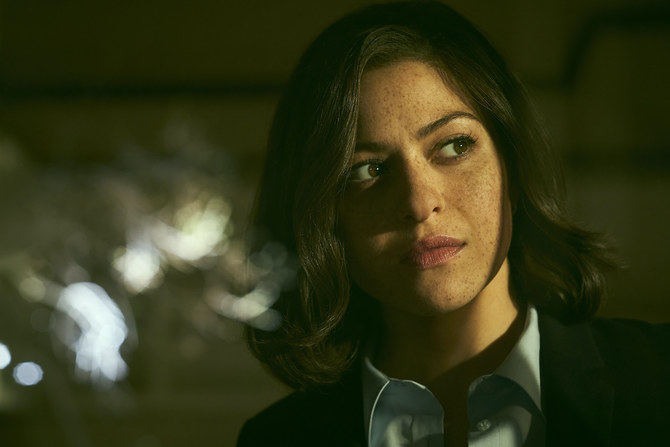
Alia Shawkat in ‘The Old Man.’ (FX)

_____________________

AMERICAN / IRAQI