Arabs & Arabian Records Aggregator. Chronicler. Milestones of the 25 Countries of the Arabic Speaking World (official / co-official). AGCC. MENA. Global. Ist's to Top 10's. Records. Read & Enjoy./ www.arabianrecords.org
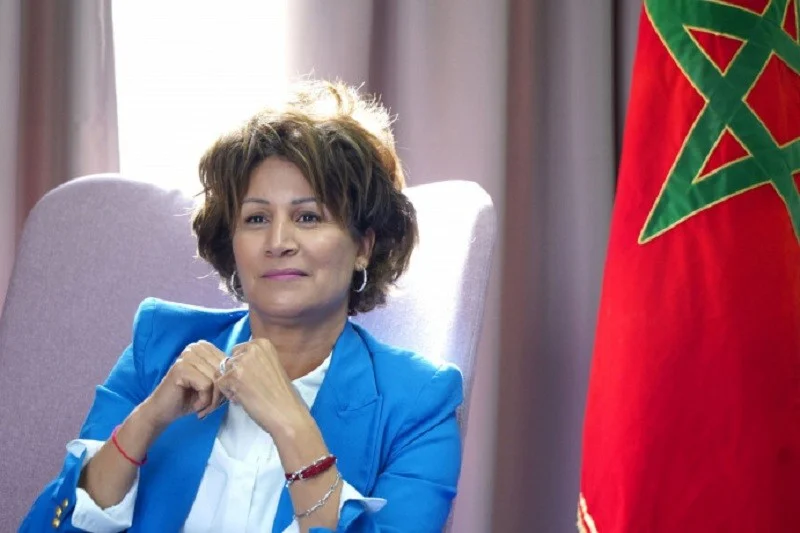
Nezha Bidouane has been granted a new four-year term on the governing board of the International Sport for All Federation (FISPT) following elections held during the organization’s general congress in central Italy.
The Moroccan sports official, who serves as President of the Royal Moroccan Federation for Sport for All, retained her seat as delegates from dozens of countries convened on January 24 and 25 to determine the federation’s future leadership.
Bidouane’s renewed mandate reinforces Morocco’s representation within global sports governance at a time when the country continues to expand its engagement on the international sports stage. Her role reflects sustained efforts to promote wider access to sport, emphasizing community participation and inclusivity beyond elite-level competition.
A former world-class athlete, Bidouane built a distinguished career in athletics, securing multiple international titles in the 400-meter hurdles and earning a bronze medal at the 2000 Sydney Olympic Games. She has since transitioned into sports administration, where she remains actively involved in advancing inclusive and developmental sporting initiatives worldwide.
We often come across news reports about Egyptians abroad who have attained prominent leadership positions, yet we rarely give them a second thought – unless, of course, they are movie stars like Rami Malek or football legends like Mohamed Salah.
During a recent visit to Canada, I was struck by how many university presidents and faculty deans were of Egyptian origin of whom, for the most part, we have never heard.
A couple of days ago, my attention was caught by two items that were headline news everywhere, while we barely paid them any heed. The first is the appointment of the Egyptian-American Sherif Soliman as the New York City budget director. This is in the global capital of finance, home to Wall Street and the New York Stock Exchange, the largest stock exchange in the world. Soliman is a highly regarded economist with more than thirty years of financial experience. In the course of his career, he has rescued several major commercial institutions from bankruptcy and succeeded in reducing the debt of others by record proportions.
The recently elected New York mayor, Zohran Mamdani, said that Soliman far surpassed rival candidates for budget direct. Soliman, for his part, said, “I feel a deep sense of pride joining the administration of the first Muslim mayor of the city of New York.” He will be managing a budget of approximately $121 billion – one of the largest municipal budgets in the world.
Soliman was born to Egyptian parents who emigrated to New York 45 years ago. He is married to the Egyptian Hanan Thabet. They have two children, Lina and Ziad.
At around the same time, on the other side of the Atlantic, the British Muslim Laila Cunningham announced her intent to run for Mayor of London in the British capital’s 2028 mayoral race. She will be the first candidate of Egyptian origin to seek the post. Born in London to parents who emigrated from Egypt in the 1960s, she studied law and joined the Conservative Party, then switched to Reform UK. A controversial figure, she advocates empowering and increasing the police force to curb crime, which she claims has turned London into an unsafe city. She also calls for combating what she terms “Islamic terrorism.” She is married to an American and is the mother of seven children.
* A version of this article appears in print in the 15 January, 2026 edition of Al-Ahram
Dr Suad Amiry recognised for decades of heritage conservation work.
His Highness Sheikh Mohammed bin Rashid Al Maktoum, Vice President and Prime Minister of the UAE and Ruler of Dubai, on Sunday congratulated the winner of the 2025 Great Arab Minds Award in the Architecture and Design category.
Sharing his congratulations on social media, Sheikh Mohammed said: “We congratulate the winner of the Great Arab Minds Award in the Architecture and Design category for 2025, Dr Suad Amiry from Palestine, founder of the Riwaq Centre for Architectural Conservation.”
He praised Dr Amiry for her pioneering efforts to preserve Palestinian architectural heritage, highlighting her work in restoring and reusing historic buildings in ways that strengthen urban identity.
Dr Amiry, who leads the Riwaq Centre, was recognised for her role in one of the largest architectural documentation projects in Palestine. The initiative produced a registry of more than 50,000 historic buildings and contributed to the revival of 50 historic centres.
Her projects have also created job opportunities and training for craftsmen working with traditional building materials, while actively involving local communities in restoring their villages.
Sheikh Mohammed extended his “heartfelt congratulations to Dr Suad Amiry for her well-deserved recognition and decades of dedication”. He also prayed for the protection of Palestine, saying: “May God protect Palestine and breathe new life into its historic villages and buildings, ensuring its heritage endures as long as the Arab memory lives on.”
Dr Amiry’s research has been widely recognised for its detailed documentation of traditional Palestinian homes, including stonework, flooring, decorative features and architectural layouts that reflect the richness of the region’s built heritage.
The Great Arab Minds Awards honour influential figures whose work has made a lasting impact on Arab culture, scholarship and society.
Her tenure as Minister of Environment included a modern waste management system, the issuance of the region’s first sovereign green bond, work across protected areas, and nearly 20,000 green jobs.
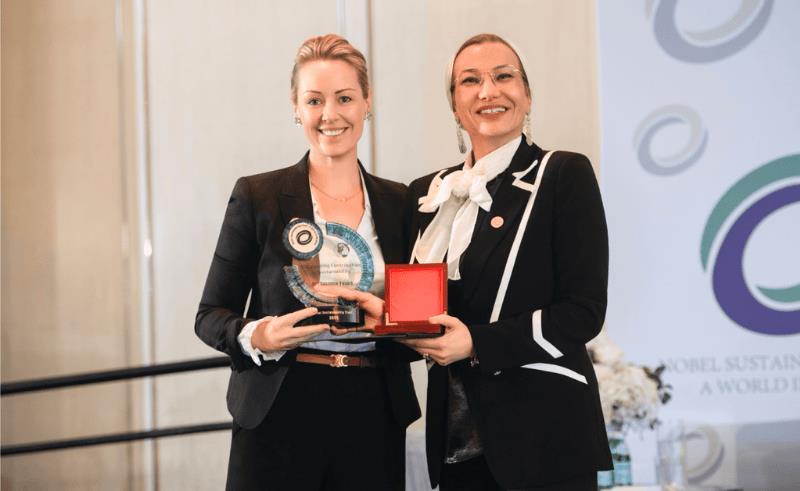
The Nobel Sustainability Trust has selected Dr. Yasmine Fouad to receive the 2025 Nobel Sustainability Medal, an announcement that comes as she concludes her role as Egypt’s Minister of Environment and takes up the position of Executive Secretary of the United Nations Convention to Combat Desertification (UNCCD). Over 26 years, Fouad’s work has moved across environmental policy, climate diplomacy, and sustainable development, from early research on ecological resilience to convening communities, scientists, and policymakers. That human-centred lens has taken her to countries facing climate impacts, meeting pastoralist communities navigating drought, women rebuilding livelihoods after environmental shocks, and youth calling for climate justice. In Egypt, her tenure as minister included a modern waste management system, the issuance of the region’s first sovereign green bond, work across protected areas, and nearly 20,000 green jobs. During COP27 in Sharm El-Sheikh, she put adaptation and resilience at the centre of negotiations, bringing the needs of vulnerable communities into the room. The medal reflects values present in her work — resilience, collaboration, and belief in people’s role in shaping their future — and places attention on the Arab region and Africa within the sustainability conversation. As climate pressures intensify — from water scarcity to land degradation and drought — Fouad often frames sustainability as a human agenda focused on dignity, safety, and livelihoods, with an eye on what future generations will inherit. In her acceptance message, she dedicated the medal “to the women who rebuild their communities, the young people who refuse to inherit despair, the workers who turn scarcity into innovation, and the families who choose hope every day.
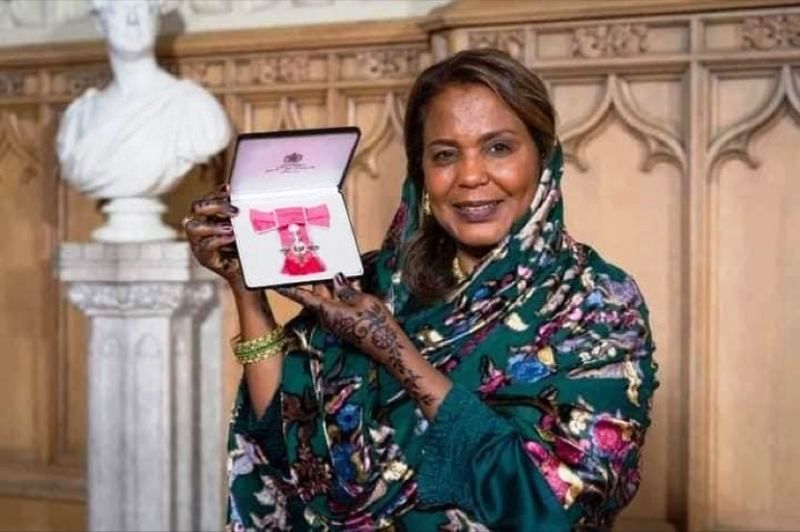
Following the official ceremony of her receiving the Order of the British Empire (OBE) from King Charles III, Sudanese born, UK national, artist Omeima Osman Khalid Mudawe has been on the spotlight, not only within her country of birth, the Sudan, but globally.
When she moved to live in the UK, Omeima had carried her first country Sudan in her heart. Her work there as a crafts and visual artist was influenced by her Sudanese heritage. She was nominated for the award thanks to her significant services with and for people with special needs, namely deaf, within the arts field.
Omeima spoke to Altaghyeer about the OBE and other topics. Following are excerpts from theinterview:
Khartoum, Altaghyeer: Abdallah Berair
1/ did you expect to win the award?
When I received the news from Buckingham Palace informing me of the award, it arrived in an envelope marked CONFIDENTIAL. I wondered what it was, opened it up, saw the Buckingham Palace logo and decided that it was my husband playing a practical joke on me. I had no idea!
2/ how did you feel when you got the news that you were awarded an MBE?
I was in shock and confused – why had I been awarded it? What did it mean? I confess that I didn’t really know what an MBE was, so I had to look it up. My nomination was for services to deaf and disabled people in the Arts but I didn’t know who had nominated me for it. Eventually I discovered that the Crafts Council had nominated me for the award, in recognition of the 25 years I have spent working to be a positive role model and develop projects that bring hearing and Deaf artists together. I had conducted some work with the Craft Council, specifically looking at Access and Equality policies, and helping to ensure that crafters and artists who are also Deaf have equitable opportunities and access to the work that they do.
I kept my award confidential but on 1 January 2022, it was announced in the Queen’s New Year’s Honours list. I was overwhelmed by the response I received from people getting in touch to congratulate me and from various news outlets and organisations to interview me. I even received a personal letter from my local MP. The public recognition of my life’s passion and work is what has moved me the most, and from that time on I have gradually adjusted to feeling proud to be a role model for aspiring artists and craft-makers who are also Deaf. I also want to show wider society that once Deaf people have our communication needs recognised and accommodated, we can achieve anything. The sky’s the limit! I am proud to be a Muslim woman of colour who has been recognised first for her work as an artist and then for her Deafness. This is what this honour means to me – that other young artists from diverse cultural backgrounds, but who also happen to be Deaf, can see that it is possible to achieve their dreams because their work comes first and their deafness/disability second, not the other way round.
3/ did the Qatar trip and visit affect your career in any way?
The trip to Qatar happened when my daughter was 3 – it was the first time I had been away from her for so long, so it was difficult, but it really helped to open doors to new networks that have sustained my working career. The relationship I developed with the British Council led to me making connections at the Arab British Centre, and later I had my first solo exhibition with their support. This led me to meeting many other mainstream hearing artists which helped to develop my confidence and self-belief. Ultimately, because of the networks I have developed since that time, I received a runner-up prize from the Arab British Centre in 2019 (for cultural achievements), the same year I became a Clore Fellow: another life-changing, career-defining moment.
4/ what did you take from your Sudanese culture that is present in your work?
The shapes and recurring motifs that are present in my work are directly influenced by my Sudanese heritage. Shapes are influenced by things like the cowrie shells and the beads of a prayer bracelet, and the sweeping lines of Arabic calligraphy and architecture. Colour plays an important part in my work, particularly colours that represent the heat of the Sudanese landscape that I remember so well, like reds, browns and oranges. I like to contrast these with the colours of my adopted country, the UK, to reflect the integrated nature of my identity. My memories as a child in Sudan have formed the inspiration for several of my exhibitions, for example A River Runs Through where I worked with several members of the Sudanese ex-pat community in the town where I now live, Brighton and Hove, to explore what the River Nile means to them and how it influence their journeys to the UK. I carry Sudan in my heart through everything that I do.
5/ your time in Saudi, do you remember it?
I remember it as a very lonely time as there was no access to the education there – there was very little understanding of what a deaf child needed in order to access what the teacher was saying and so it was a frustrating experience. I felt like I was the only deaf child in the world as I didn’t see any other deaf children or adults. That was when the decision to move to the UK was made. You can see more here about my brother’s experience that mentions this time: https://www.bslzone.co.uk/watch/found-uk
6/ are you going to have a art exhibit in Khartoum?
I had a solo exhibition in Khartoum at the Hilton Hotel in 2002 – a long time ago! Even though it wasn’t at a proper gallery, I did manage to sell a few pieces of work but it was a challenge to organise. There was not a good understanding around the needs of an artist who was also Deaf which meant that barriers were not easily overcome. I would love to organise an event that celebrates art work made by people that happen to be disabled or deaf but without that being the main focus.
7/how do you feel when you see the revolution in Sudan on the TV?
It was shocked to see this news and obviously I was worried for my father, siblings and other family who were living in Khartoum. Later, when it became clearer what was happening, I was inspired to see women taking a lead in the demonstrations, especially the woman who stood above the crowds, whose image became famous around the world.
8/ how was the support from the family during your upbringing?
I had a lot of support at home as a child, but it reached a point where it seemed the best thing was for myself and my deaf brother Ahmed to receive our education in the UK and get other kinds of support that would help us to be independent later in life. It meant a lot of upheaval for all my family and from that time on my mother spent much of her time in the UK to be with us, separating her from Sudanese life and friends. Sadly, my MBE investiture was delayed due to covid, and my mother passed away before my ceremony was due to be held. Losing her and my father in such a short space of time meant that the day of my award investiture was emotionally charged; their absences were keenly felt. But I am grateful that, although my father passed before I received news of the award, my mother was alive for me to share the news with her. We both cried a lot that day as we recognised that this honour was only possible because of her incredible sacrifice. Because of her selflessness, I am who I am today and have achieved what I have. My mother asked me to remember my heritage as a Sudanese woman by wearing a traditional Sudanese sari on the day and I was so proud to wear the outfit that my sister had brought for me and the necklace that my mother had gifted to me when she died.
Sarah Goher has become the first Egyptian director included in Variety’s “10 Directors to Watch” list.
Among the 10 emerging directors on Variety’s list are Kristen Stewart, Walter Thompson-Hernandez and Akinola Davies. Goher’s selection follows the runaway success of her debut feature film, Happy Birthday, a tender yet powerful story about class and longing, told through the eyes of an 8-year-old maid.
Goher co-wrote the script with Mohamed Diab; production is handled by Ahmed El Desouky, Ahmed Abbas, Ahmed Badawy, along with Hollywood-heavyweights Jamie Foxx and Datari Turner.
‘Happy Birthday’ premiered at the 2025 Tribeca Film Festival, winning Best International Narrative Feature, Best Screenplay and the Nora Ephron Award for Outstanding Female Director.
The film was also Egypt’s official submission to the Oscars.
Egyptian novelist Salwa Bakr has won the inaugural BRICS Literary Prize, receiving one million Russian rubles at a ceremony in Khabarovsk, Russia.
The first edition of the prize drew nominees from across the BRICS bloc—Brazil, Russia, India, China, and South Africa—as well as the United Arab Emirates.
Bakr’s victory reflects the growing international recognition of Arab authors on major literary platforms.
The BRICS Prize Board of Trustees had previously announced a longlist of 27 writers competing in the literature category.
Egyptian authors included Ibrahim Abdel Meguid, Salwa Bakr, and Fathi Imbabi, alongside UAE writers Sheikh Ali bin Tamim, Maisoon Saqr, and Reem Al Kamali.
The longlist also featured Russian writers Alexey Varlamov, Andrey Gelasimov, and Dmitry Danilov; Brazilian authors Ana Maria Gonçalves, Patrícia Melo, and Ricardo Aleixo; Indian writers Jay Vasavada, Dr. Rajan Kumar.
It also included Sonu Saini; Chinese authors Ma Boyong and Ai Yi; South African nominees Ntabiseng Jah Rose Jafta, Bongiwe Mhlongo, and Zainab Khan; Ethiopian writer Abere Adamu; Iranian authors Mansour Ali Moradi, Majid Ghasemi, and Reza Amerihani; and Indonesian writers Ekasakti Panu, Intan Paramaditha, and Deni Jha.
The winner receives a cash prize, a commemorative shield and a certificate of appreciation.
Organizers said the award aims to promote cultural exchange among BRICS nations and highlight literature’s role in advancing shared human values, including solidarity and peace.
Salwa Bakr (born 1949, Cairo) is a renowned Egyptian writer, novelist, and critic. She is the author of seven short story collections, seven novels, and a play.
Bakr graduated from Ain Shams University and has worked as a film and theatre critic for leading Arab publications, as well as a professor at the American University in Cairo.
Her works, including the novel The Golden Chariot, often explore the lives of the disadvantaged and marginalized, with a particular focus on the challenges faced by women in Egyptian society.
Bakr’s books and stories have been translated into numerous European languages. Her novel The Man from Bashmour was selected for the Arab Writers Union’s list of the 100 Best Arabic Novels.
She has received the Deutsche Welle Literary Prize and is a member of Egypt’s Supreme Council for Culture and the Egyptian Writers’ Union.
The award was established by participants of the BRICS Forum “Traditional Values” in Moscow, November 2024.
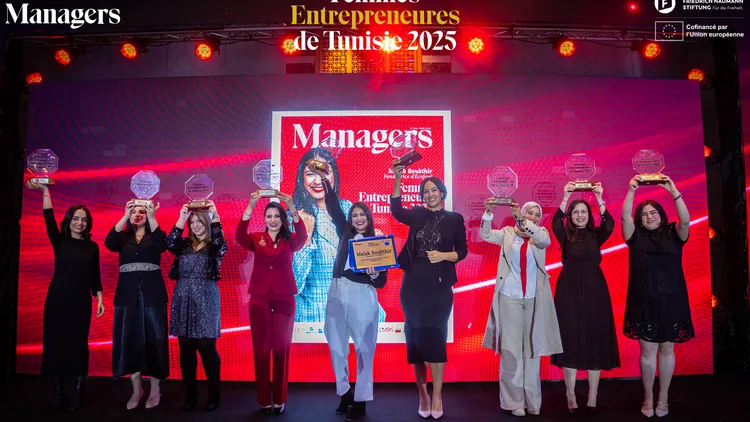
Tunisian Women Entrepreneurs Honored for Innovation and Impact at the 10th FET Awards
On February , 2025, the 10th edition of the Trophées de Femmes Entrepreneures de Tunisie (FET) honored nine outstanding Tunisian women entrepreneurs for their innovation, resilience, and the impact of their ventures. Organized by Managers magazine in collaboration with the Delegation of the European Union and the Friedrich Naumann Foundation for Freedom, the event brought together a distinguished audience, including ministers Asma Jabri (Family, Women, Children, and Seniors), Fatma Thabet Chiboub (Industry, Mines, and Energy), and Jihene Srioui (Financing and Partnerships, Ministry of Employment and Vocational Training).
In her opening speech, Sahar Mechri, Executive Director of Managers, emphasized that the FET Awards are more than a celebration, they are a validation of bold journeys and a source of inspiration for future generations of women leaders.
Spotlight on the 2025 Woman Entrepreneur of the Year
Malak Boukthir, founder of Ecofeed, was named Tunisian Woman Entrepreneur of the Year 2025 for her groundbreaking project that transforms crab waste into sustainable animal feed a powerful example of eco-innovation.
Imen Bakhti (La Seine) – Microcred Empowerment Award
Fatma Midani (Soul & Planet) – Meninx Marketplaces Award
Beyond Recognition: Support for Growth
Along with financial prizes from sponsors, the winners will benefit from a tailored mentorship program offered by the Club des Femmes Entrepreneures de Tunisie. Thanks to the support of the European Union Delegation, they will also receive personalized guidance through various EU-funded projects, including Adapt, Greenov’i, CQE (Qualitative Growth for Employment), Insadder, and Initiative Tunisie.
The FET Awards go beyond accolades, they celebrate a thriving community of women entrepreneurs driving Tunisia’s social and economic development. By highlighting their stories and successes, the event strengthens the spirit of sorority and underscores the transformative power of female entrepreneurship in Tunisia.
source/content: freiheit.org /Friedrich Naumann Foundation (headline edited)
______________
Tunisian Women Entrepreneurs Honored for Innovation and Impact at the 10th FET Awards
Syria’s new administration announced on Monday the appointment of Maysaa Sabrine as the governor of the Central Bank of Syria, making her the first woman to hold this position in the bank’s history.
Prior to her new role, Sabrin held several prominent positions within the Central Bank, including First Deputy Governor and Supervising Director. She also served as the Head of the Office Supervision Department.
In addition to her roles within the Central Bank, Sabrin has been a member of the Board of Directors of the Damascus Securities Exchange since 2018, representing the Central Bank.
Sabrine holds a master’s degree in accounting.
Her appointment comes amid calls for the inclusion of Syrian women in the new Syrian government.
Earlier this month, Aisha al-Dibas was appointed as the head of the Office for Women’s Affairs, becoming the first woman to hold an official position in the new Syrian administration.
source/content: english.alarabiya.net / AlArabiya English (headline edited)
This combination of compassion and technology earned Al-Matrudi’s team multiple global awards this year.
For Dalal Al-Matrudi, innovation began not in a lab but at home, watching a loved one battle multiple sclerosis. What started as empathy soon turned into invention, leading her and her team to develop a smart medical device that is now winning awards on international stages.
“Our innovation is a smart medical device designed to assist patients with multiple sclerosis by providing localized muscle massage controlled through a mobile application,” said Al-Matrudi. “It helps relieve pain, reduce muscle stiffness and improve patients’ comfort and daily mobility.”
The device also connects patients directly with their doctors for real-time monitoring. “In emergency situations, it can instantly alert healthcare providers to ensure the patient receives immediate assistance,” she said.
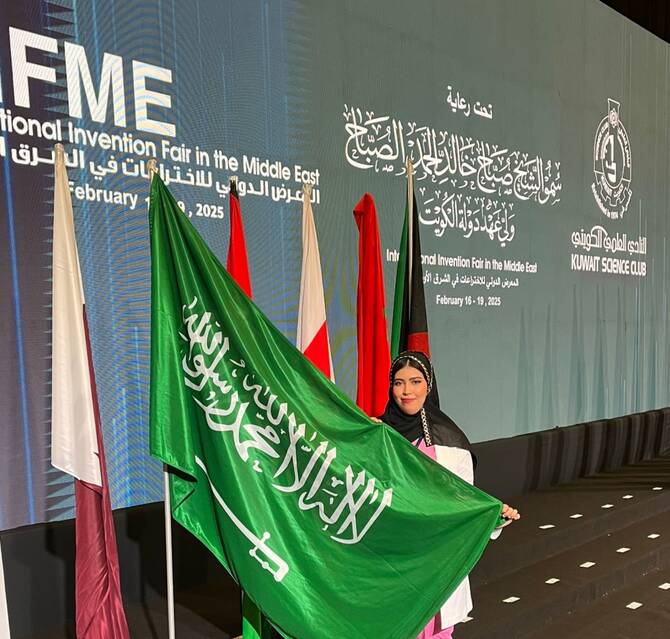
This combination of compassion and technology earned Al-Matrudi’s team multiple global awards this year, including the Gold Medal with Jury’s Honor, the GCC Patent Office Award, and the Grand Prize at the International Invention Fair of the Middle East, or IIFME, hosted by the Kuwait Science Club. The invention was also recognized at the Geneva International Exhibition of Inventions, one of the most prestigious global platforms for innovation.
For Al-Matrudi, 21, who hails from Riyadh, the project was deeply personal. “Our inspiration came from personal experience — one of my family members suffers from multiple sclerosis, and seeing their daily struggle with pain and mobility challenges deeply affected me,” she said.
Together with her teammates, she transformed that emotional drive into a purpose-driven invention. “We wanted to create something practical and compassionate that could truly improve patients’ lives,” she said.
Under the mentorship of Prof. Dr. Kholoud Al-Muqrin, a distinguished professor of nuclear physics known for empowering young Saudi innovators, the team refined their prototype into an award-winning solution. “Her continuous guidance and scientific insight played a vital role in shaping our project and transforming our idea into a tangible, award-winning innovation,” Al-Matrudi said.
She believes the foundation of every great innovation is care. “We believed that technology should serve humanity, and that small ideas born from care can evolve into meaningful advancements that bring relief and hope to many,” she added.
Months of research, design and testing culminated in an unforgettable moment at IIFME 2025.
“The most emotional moment was standing on stage when our team’s name, Team May, was announced as the Grand Prize Winner,” she said. “I remember holding my teammates’ hands tightly, feeling both disbelief and overwhelming pride.”
For Al-Matrudi, the victory symbolized much more than recognition. “It wasn’t just about the prize — it was about realizing that months of dedication, late nights and countless trials were finally worth it,” she said.
She recalls how their mentor’s tears turned the win into a collective triumph. “I could see tears in everyone’s eyes, especially our supervisor’s, which made it even more special,” she said. “That moment reminded me that passion and persistence can turn ideas into achievements that reach beyond borders.”
Although the invention is not directly tied to her academic major, medical physics, Al-Matrudi says her background gave her the edge she needed to design effectively.
“Studying medical physics enhanced my scientific thinking and deepened my knowledge of how the human body interacts with medical devices,” she said. “This understanding helped me design a solution that is both safe and effective.”
She believes the key to meaningful innovation lies in combining technical knowledge with emotional intelligence. “Gaining international recognition encouraged me to continue combining my medical knowledge with creative thinking to develop innovations that make healthcare more compassionate, practical and accessible for all,” she said.
Al-Matrudi’s story reflects a growing wave of young Saudi women who are redefining the global image of innovation.
“I hope my journey shows Saudi women that ambition and creativity have no limits,” she said. “Science and innovation are not exclusive fields — they welcome curiosity, persistence and passion.”
Her experience also underscores how inclusion fuels progress. “When women step into these spaces, they bring empathy and fresh perspectives that drive real progress,” she said.
Her message is simple but powerful: “I want every Saudi girl with a dream to believe that she can represent her country globally, no matter her field. Our achievements are proof that with teamwork, guidance and confidence, Saudi women can lead the way in shaping the future of science and technology.”
Today, Al-Matrudi stands as one of the brightest examples of how Saudi youth are translating Vision 2030’s goals into real-world impact. Through her invention, she’s proving that innovation is not just about devices, it’s about dignity, hope and humanity.
As she proudly waved the Saudi flag on stage in Kuwait, surrounded by fellow inventors and mentors, Al-Matrudi’s message was clear: Saudi women are not just participating in the global innovation movement, they’re leading it.
source/content: arabnews.com (headline edited)
______________
Saudi innovator Dalal Almatrudi proudly holds the Saudi flag after winning the Grand Prize at the International Invention Fair of the Middle East 2025 in Kuwait. (SUPPLIED)