Arabs & Arabian Records Aggregator. Chronicler. Milestones of the 25 Countries of the Arabic Speaking World (official / co-official). AGCC. MENA. Global. Ist's to Top 10's. Records. Read & Enjoy./ www.arabianrecords.org
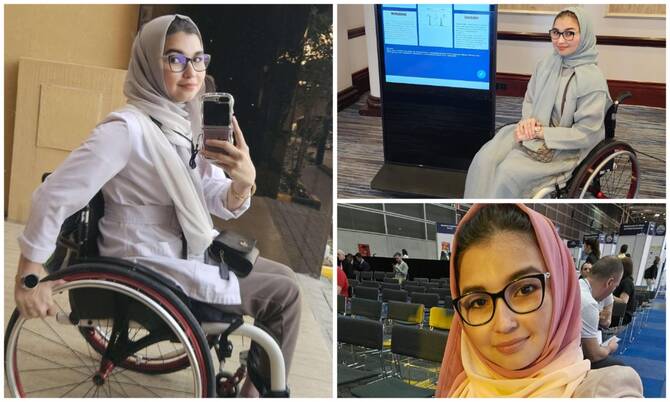
Dr. Bashair Ibrahim is a symbol of hope, a testament to the strength of the human spirit, and a living example of perseverance.
Her story of overcoming disability is an inspiration to anyone who has faced adversity.
Ibrahim spoke to Arab News about how she navigated a challenging career, fueled by unwavering determination and a profound passion for healing.
“One of the most rewarding aspects of working as a pediatrician is the opportunity to care for children, especially at such a young age when they haven’t yet formed judgments or perceptions about disability,” Ibrahim said.
“I find that my connection with them is pure and genuine; they see me for who I am, not for any physical limitations. We build trust and warmth in a very natural way.”
Ibrahim’s journey, marked by both triumphs and systemic barriers, offers a vital perspective on inclusivity, accessibility, and the importance of challenging societal norms.
Her interest in medicine was sparked early, spending time around medical equipment due to mobility challenges.
“As a result of being in a car or using a wheelchair, I started to see a lot of machines, a lot of devices, X-rays, devices they use, needles,” she explained.
This ignited curiosity, leading her to explore the intricacies of the human body and medical science. This was not a deterrent; it fueled her path to healing.
“These experiences from a young age make one stronger,” she said.
Her fascination with science continued, and she began volunteering for lab activities — excelling in biology. This early experience combined with an interest in medical dramas solidified her career aspirations. The allure of understanding the human body and alleviating suffering proved irresistible.
“I liked the science itself,” she recalled. “I was learning more about humans, about how organs work, what diseases can come from that.”
Applying to medical school presented hurdles. Many universities lacked accessibility for individuals with mobility impairments.
She recounted a disheartening experience at one university where the main entrance was only accessible via a long staircase.
Despite finding an alternative route, the dean still denied her access citing concerns about opening hours.
This highlighted a frustrating reality: systemic biases can hinder progress, even when solutions exist.
Undeterred, Ibrahim sought admission to another private university. The director made a comment that stuck with her, asking: how would a patient treat a patient?
For Ibrahim, this dismissive remark is one example of societal biases surrounding people with disabilities in healthcare.
It underscored the need to challenge preconceived notions and recognize potential regardless of physical limitations.
“It never made sense then, it doesn’t make sense now,” she said, emphasizing the enduring impact of prejudice.
Despite these obstacles, Ibrahim remained committed. She specialized in pediatrics, driven by a deep-seated desire to positively impact children’s lives.
“What also makes this work deeply meaningful is the respect I often receive from families,” she explained.
“Many parents have told me they admire the way I’ve pursued a career in medicine despite the challenges that come with having a disability.
“Their appreciation reminds me that I’m not only helping their children medically, but also offering a visible example of resilience and determination.
“That mutual respect, and the human connection it fosters, is something I treasure deeply in my work.”
Ibrahim is acutely aware of misconceptions surrounding doctors with disabilities.
“One of the biggest misconceptions about doctors with disabilities is the stereotype that we are limited in our ability to practice medicine effectively,” she noted.
“I often notice surprise when families meet me for the first time, but I see that as a chance to challenge those assumptions through my work.”
She has adapted her approach to ensure her disability does not compromise care quality.
“I perform the full physical examination while seated, and I’ve adapted my approach to ensure that nothing is compromised in the quality of care I deliver.
“Over time, families come to see that my disability doesn’t define my capability.”
She believes that mentorship is crucial for aspiring medical professionals with disabilities, emphasizing the importance of role models who understand both the clinical demands and personal challenges they face.
Her message is clear: equal access, thoughtful accommodations and representation are essential, and her story is a testament to how people can overcome barriers and achieve their full potential.
source/content: arabnews.com (headline edited)
_____________
Dr. Bashair Ibrahim overcame prejudice and lack of accessibility to achieve career success. (Supplied)
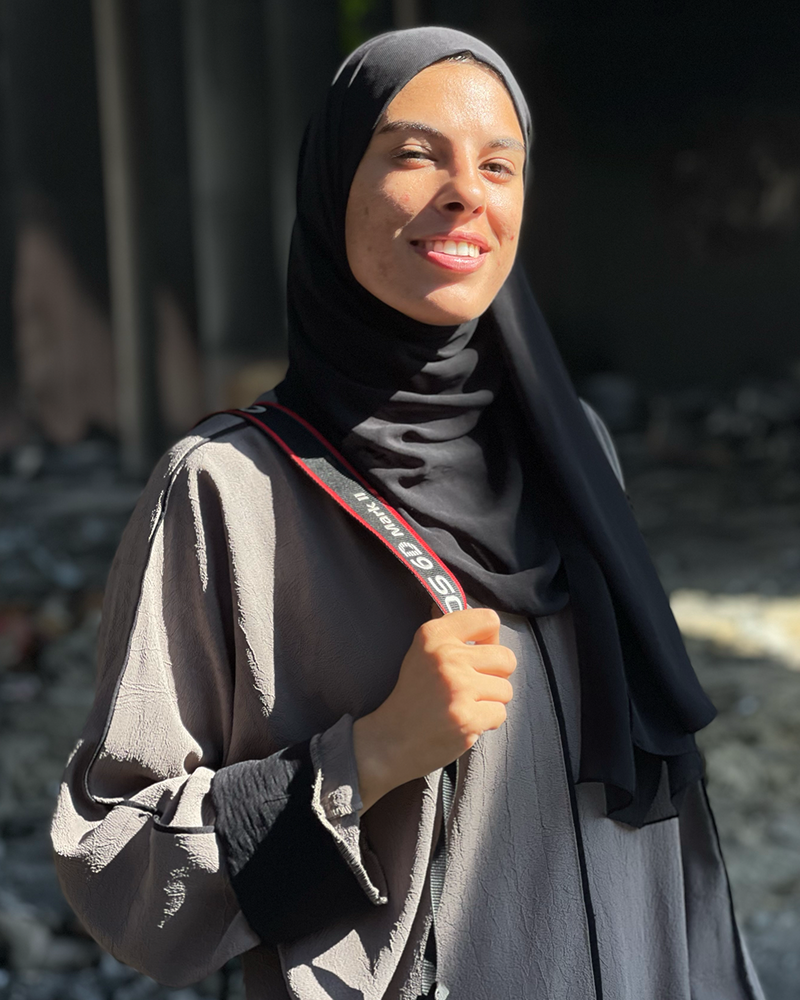
My dearest friend Fatima Hassouna has been martyred.
Writing this feels unreal – as if I am waiting for her familiar voice to echo in my ear.
We had a playful way of saying “hello” to each other. And Fatima had the most magical of laughs.
She could disarm you instantly.
But the silence remains and the void caused by her absence is too vast to comprehend.
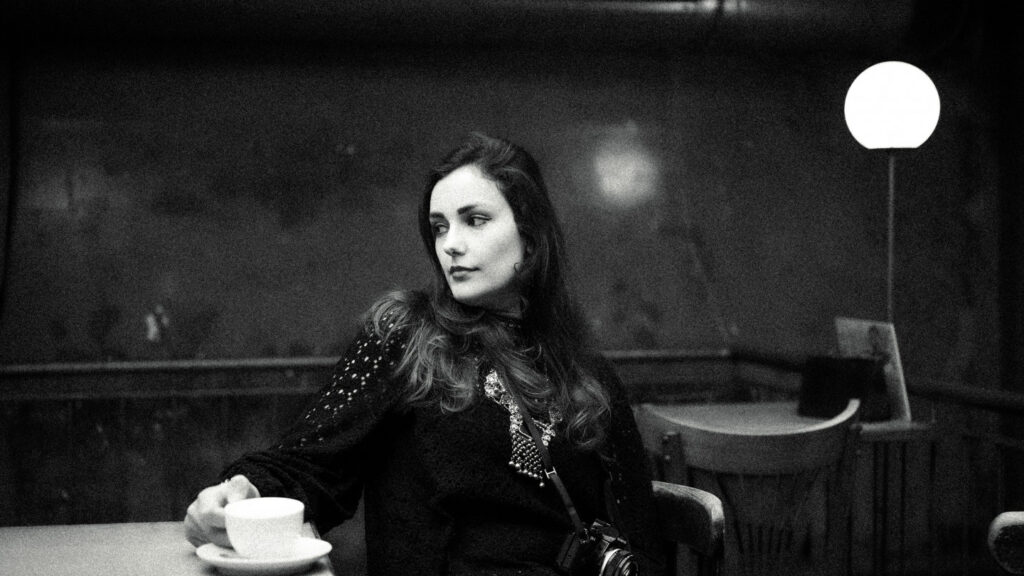
Fatima was a photographer and a filmmaker. More importantly – for me – she was an extremely warm human being.
She was strong and – in a good way – stubborn.
I knew Fatima from childhood. But life – as it often does – had pulled us apart for many years.
It wasn’t until Israel launched its genocidal war against Gaza that we became close again. This happened unexpectedly during a film project.
Fatima was behind the camera, and I was there with a pen in order to write articles.
Our reunion – despite the chaotic circumstances – rekindled something profound. Our shared grief and resilience made our friendship deeper.
Fatima was deeply committed to her craft. She never simply documented a moment. She became part of it.
She had a rare ability to earn trust quickly.
The subjects of her photography were not just faces or stories. They were people she befriended.
Fatima’s camera wasn’t a barrier. It was a bridge.
She always said that she wanted not just to carry a message but to show kindness to the people she filmed or photographed.
At Fatima’s core was a sense of purpose. She came from a place of love.
We lived just a street apart in Gaza City all our lives.
After the genocide began, we would walk everywhere together. There were no taxis around and prices were rising ever higher.
Each morning, Fatima would call.
“Wait for me,” she would say. “Let’s walk together.”
And so we did.
Those walks were more than just a means of getting from A to B. They were our little escapes.
We shared everything: sorrows, secrets, silly thoughts.
I never had to pretend to be anything I wasn’t when I was with Fatima.
There were no walls between us. Just warmth and honesty.
Tender rebellion
When Fatima got engaged recently, her happiness was contagious. Despite the hunger, and the overwhelming darkness that Israel’s genocidal war had brought, she lit up like a child planning a birthday party.
We would go to the market almost daily, hunting for clothes that she could wear as she went out with her fiancé.
I remember how excited she was, how we laughed even as we carried heavy bags for long distances.
Her joy in those days amounted to a tender rebellion, a statement that love and life still mattered in the face of devastation.
We developed a ritual with our friends.
Every week, we would gather in one of our homes. We cooked whatever food we had, brewed bitter tea – we had no sugar – and sang.
We sang until the pain dulled and the laughter returned.
Those nights were our anesthesia. They allowed us to breathe in suffocating times.
Fatima was always our anchor.
She told stories, and her laughter filled the room. We could see sorrow in her eyes, but it was mixed with hope.
An unbreakable hope.
Fatima had an enchanting voice when she sang. Like something from heaven.
When the sound of Israel’s drones became too much for me to bear, I would listen to a recording of Fatima singing. Her voice brought me peace.
It served as a reminder that something pure still existed in this world.
Friendships formed – or in this case, revived – during genocide are unlike any other. They are shaped by shared experiences of hunger, sleepless nights and the constant nearness of death.
When Fatima was killed, it was like a limb had been severed from my body. I felt incomplete.
I still do.
Every night, I continue to wait for her call. I wait for the way she would tell me – without preamble – how she was feeling that day.
She would always wish to God that she would never be deprived of me.
But now I am deprived of Fatima. And it hurts more than words can express.
Fatima and I worked as a team. During the genocide, we would go down to al-Yarmouk – the football stadium that has became a huge shelter for displaced people – she with her camera, I with my notebook.
We inspired each other.
Fatima told me that she loved how I put people’s experiences into words.
“I love your ideas,” she said. “They make me want to shoot better.”
I wish that she was still around to tell her how much I loved her eye for a good photograph or image.
How she saw not just the suffering in a person but the soul behind it.
How she brought dignity to every frame.
Last winter, we were working in al-Yarmouk stadium, where the conditions were especially dire. Seeing the suffering around her, Fatima said that we must help.
I asked her to speak with the director of the film project she was working on about distributing blankets. She did and soon we were part of a mission to not only document hardship but to relieve it.
That day, we weren’t just storytellers. We were part of the story.
And Fatima was glowing. She had done something she had always dreamed of: She had made a difference.
Fatima was only 25.
Just 25.
Yet her heart carried the weight of centuries, and her spirit was brighter than a thousand suns. She was childlike and wise, gentle and fierce, brave and vulnerable.
She was exceptional. I carry her memory with me every moment.
I see her in the morning light, in the silence of a street where we once walked, in the stories we still need to tell.
Losing her is unbearable. But remembering her – keeping her voice, her laughter, her vision alive – is my way of holding on.
She was my sister, my confidante, my light.
May the world never forget the name Fatima Hassouna.
May the stories she told outlive the genocide that took her.
And may we all learn from her to live with courage, to work with purpose, and to love – always – with everything we have.
Asmaa Abdu is an academic writer and a project coordinator at the UCAS Technology Incubator in Gaza.
In an interview with The New Arab, Nahil Bishara’s grandchildren speak about their grandmother’s artistic legacy and her role in preserving Palestinian identity.
History is full of remarkable yet forgotten women whose stories have yet to be told.
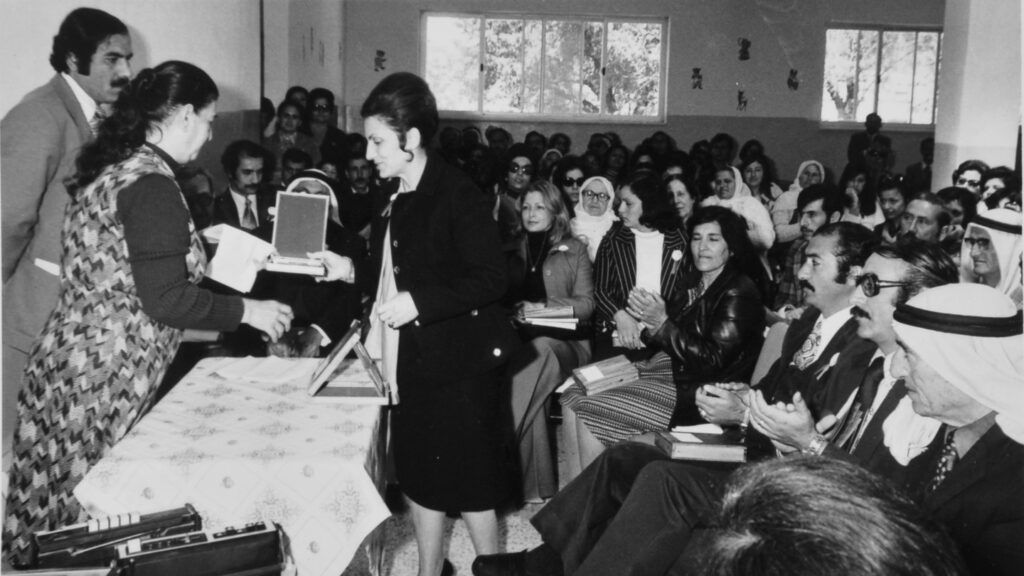
One such case is the late Palestinian artist and designer Nahil Bishara, an active and erudite woman who sought to preserve her Palestinian identity through endless creativity despite living through constant political instability in her homeland.
“Generally, artists at the time created art to sell, but she never created art to sell. She created art to anchor her Palestinianness”
Nearly three decades after Nahil Bishara’s passing, her grandchildren are ready to share her story with the world.
“She was always up to something artistic,” the artist’s UAE-based grandson, Assad Bishara, told The New Arab.
“She was somebody who wanted to master any kind of artistic medium she could get onto her hands. Whatever she got her hands on, she created something out of it,” Assad added.
Echoing this sentiment is his sister, Talia Bishara, a public relations specialist in culture, who fondly remembers her grandmother as a woman of taste of the Sixties era.
“She was an elegant woman, whose hair was styled in a chignon with a million pins,” recalled Talia.
“She wanted to project an image. Her persona in society was also very important. Generally, artists at the time created art to sell, but she never created art to sell. She created art to anchor her Palestinianness.”
From Ramallah to Jerusalem
Nahil was born in Ramallah in 1919, shortly after the end of the First World War, and spent most of her life in Jerusalem, where she nurtured her artistic talent.
In 1940, at the age of 21, the artist married Dr Assad Bishara, a renowned gynaecologist who, as Talia claimed, “a whole generation of Palestinians were born under his hands.”
According to Talia, Dr Assad was open-minded and supportive of his wife’s dreams.
As Talia puts it, “Whenever I speak about my grandmother, I have to speak about my grandfather too. He was a larger-than-life person. He wasn’t the type that restricted her to staying at home and raising a family. She did those things, but on top of that, she was exploring her artistic talent and supporting her community of Palestinian women.”
Beyond her personal achievements, Nahil also lived through important political events of the twentieth century, including the Nakba — the mass displacement of Palestinians — which led to the Israeli occupation in 1948.
‘A force and an avant-gardiste’
During this period, Nahil was offered a rare opportunity to study in England, but she refused, choosing instead to remain in her country as an act of defiance.
A woman who made history, she became the first Arab and Palestinian to study art at the Bezalel School of Arts and Crafts in Jerusalem, which had been founded as a Jewish art institution in the early 1900s.
Interestingly, at the time, Nahil was one of the few Palestinian artists to formally study art. But her education didn’t stop there.
Always striving to expand her mind and skill set, she undertook a design course by correspondence with an American university in Washington, DC. Then, in the 1960s, Nahil found herself in the Italian city of Perugia, where she studied classical painting and ceramics.
Known for always being on the move, Talia shared, “All her life, my grandmother loved art. She was a force and an avant-gardiste. She wanted to be ahead of everyone in her time.”
‘She wanted to constantly create’
To this day, Nahil is remembered as a Renaissance woman.
The educated artist spoke four languages (including Italian and French), tried her hand at stitching, woodworking, and glassblowing, hosted cultured dinners, volunteered at refugee camps, and mastered interior decoration.
Her most significant project was decorating the interior of the Young Men’s Christian Association (YMCA) building in Jerusalem, which was later converted by the Israelis into a hotel called Aelia Capitolina. Today, the hotel is known as the Legacy Hotel.
“People were visiting Jerusalem from all over the world. I think she felt a responsibility to show the world a different image of Palestine”
By using locally sourced materials, Nahil designed its chandelier (made with Palestinian refugees), crafted wooden tables, and donated around 30 of her paintings to the establishment.
“I think she saw that there was power in creation, rather than focusing on destruction. She wanted to constantly create,” explained Talia.
“People were visiting Jerusalem from all over the world. I think she felt a responsibility to show the world a different image of Palestine.”
Another momentous event in Nahil’s career occurred in 1964 when she was commissioned by the Kingdom of Jordan to create a bust of Pope Paul VI in honour of his pilgrimage to Palestine. Today, the bust sits in the Vatican.
‘Capturing everything she could to preserve Palestine’
Exploring Nahil’s artistic legacy, she was known for creating religious landscapes, depictions of Palestinian refugees, and floral arrangements, the latter of which her husband particularly enjoyed.
“She was concerned with the preservation of identity because it was being erased”
Her grandchildren believe that her art carries a strong message beneath the surface, with Assad sharing, “For her, it was about capturing everything she could to preserve Palestine. She was concerned with the preservation of identity because it was being erased.”
During The New Arab’s interview, Talia showed her grandmother’s artwork of female refugees, one of whom is holding a child, painted in 1948.
Talia explained that she was literally holding a piece of history in her hands, adding, “When I watch the news today, it’s like history is repeating itself,” referring to the ongoing bombardment in Gaza.
“A portion of our civil society has been cut off and turned into refugees who live in tents, and this was something that had to be captured,” commented Assad on the theme of displacement in Nahil’s art.
Celebrating a forgotten artist
In 1997, Nahil died of cancer, yet her memory remains alive in the hearts and minds of her family and friends.
Recently, the once-forgotten Nahil has slowly been re-entering the public sphere. Thanks to Talia, Nahil’s name now appears in Google searches, and some of her artworks have found homes in public cultural institutions, such as the Barjeel Art Foundation in the UAE and Dar El Nimer in Lebanon.
According to Talia, some museums have expressed interest in acquiring Nahil’s work since she became more vocal in sharing her grandmother’s story.
For Talia, this recognition has motivated her to one day publish a catalogue of Nahil’s artworks.
“My whole life I wanted to do something for her,” Talia said.
“I didn’t study art but I know its importance and can feel it. I started connecting with art people, but it wasn’t an easy journey. It fuelled me even more after the 7 October attacks,” she added.
“Everyone should be interested in championing these names and putting them on the stage because you need the past… The past is your present. It’s our role to preserve it.”
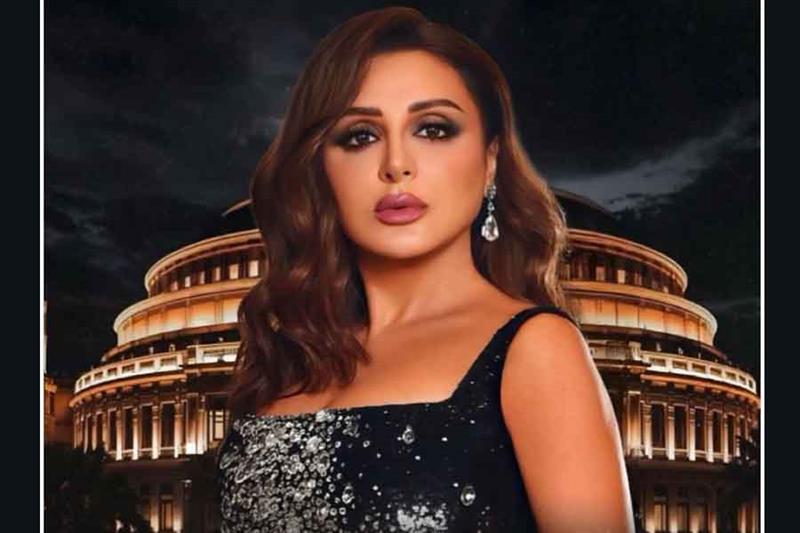
Egyptian star Angham will perform at London’s Royal Albert Hall on 23 September, marking a significant cultural milestone as the first Egyptian female artist to grace the iconic stage.
Angham’s performance on this stage comes 58 years after the legendary Egyptian singer and musician Abdel Halim Hafez performed on it in 1967 and received one of the greatest ovations of his career.
The September performance will celebrate Angham’s extraordinary career, spanning over three decades.
Throughout her long artistic journey, Angham has become one of the most influential voices in the Arab world, captivating audiences across the Middle East and North Africa.
“With her powerful vocals, emotional depth, and rich discography, Angham continues to inspire generations and break new grounds in Arabic music as the true enduring voice of Egypt,” read a press release.
Her legacy
Angham was born in 1972 to a family of artists. Her father, Mohamed Ali Soliman, was a composer, violinist, and singer. Her mother was the renowned artist Magda Abdel-Haleem.
She started her career alongside her father in the late 1980s before graduating from the Cairo Conservatory and embarking on her independent path.
Angham has released over 25 albums, including Fil Rokn El Baeed El Hady (In The Far Distant Corner, 1987), Awal Gawab (First Letter, 1988), Shokran (Thank You, 1989), Shayfak (I See You, 1992), Betheb Meen (Who Do You Love?, 1997), Bahibbik Wahashteeny (Loving You, I Miss You, 2005), Mahaddesh Yehasebni (Do not Judge Me, 2010), Ahlam Bareaa (Innocent Dreams, 2015), Rah Tezkerny (You Will Remember Me, 2018), Hala Khassa Geddan (Very Special Case, 2019), and Mazh (What?, 2020).
The star performs extensively in Egypt and across the Arab world.
Royal Albert Hall
London’s Royal Albert Hall, one of the world’s most iconic concert venues, was opened in 1871 by Queen Victoria and named in memory of her husband, Prince Albert.
The hall is renowned for hosting a wide range of events, from classical concerts and opera to rock performances, sporting events, and the annual BBC Proms.
Among the top names that have graced the stage of this hall are Adele, The Beatles, Eric Clapton, Luciano Pavarotti, Diana Ross, cellist Yo-Yo Ma, pianists Lang Lang and Martha Argerich, and world-renowned orchestras conducted by Herbert von Karajan and Sir Simon Rattle.
The hall has also hosted high-profile events, such as Cirque du Soleil.
Its distinctive circular architecture and domed roof make it a landmark of Victorian design and a centrepiece of British cultural life.
Presale tickets for Angham’s concert will start from Wednesday, 30 April, followed by general sale on Friday, 2 May.
The New Arab sat down with Yemeni documentary photographer and storyteller Thana Faroq to discuss intentional photography, craft, and nurturing intimate narratives of displacement and resilience.
Thana Faroq is a Yemeni photographer and educator based in the Netherlands. Her photography projects, which have been supported by the Arab Documentary Fund and the Magnum Foundation among others, blend text, physicality, emotional density, and visual storytelling, to explore immigrant lives and the complexities of belonging and trauma.
The New Arab interviewed Thana Faroq on the occasion of her new book, How Shall We Greet the Sun, which follows a group of displaced young women including Faroq herself, as they negotiate their multilayered presence in the Netherlands.
“My work is mainly driven by current events and broader themes, such as intergenerational trauma and memory resilience in relation to migration and refugees”
The New Arab: You’ve completed several series and projects, including your new photo book, How Shall We Greet The Sun. How do your various projects communicate with one another?
Thana Faroq: At the core of all my work, including How Shall We Greet The Sun, lies an exploration of women’s resilience, adaptability, and the quest for belonging. These themes are the threads weaving my projects together, creating a continuous dialogue.
A consistent focus in my projects has been on the aftermath of pivotal events, particularly in migration. I’m drawn to understanding and portraying the lingering effects, the changes, and the adaptations that individuals and communities undergo in their post-disaster homes.
My projects often converse with each other, providing different facets of a broader narrative about migration, displacement, and the aftermath of these transformative events.
It is essential to explore these events not only in terms of their immediate impact but also in the ripples they create over time. How does our survival, resilience, loss, and search for identity and belonging look like? While my earlier works might have explored the immediacy of events, more recent ones, like How Shall We Greet The Sun, dive deeper into the lasting, often nuanced, emotions and memories that remain.
Do you feel that your work has evolved in terms of craft, technique, and vision? I saw that you have incorporated more poetry and written text recently.
Certainly. I spent my formative years in Yemen and from the age of seventeen, my educational journey took me across the globe, in Canada, the US, and the UK, which significantly broadened my perspectives.
It’s also crucial to acknowledge the life-altering events I’ve encountered: the war in Yemen, the subsequent move from my homeland, and the pursuit of asylum in the Netherlands. These profound experiences have shaped my life and continue to influence my understanding of the world.
This, in turn, has expanded my artistic vision. I’ve become more intentional about the themes I choose to explore and the stories I wish to tell.
Over the years, I’ve continually sought to refine my craft, exploring new techniques, tools, and mediums, especially sound and moving images. I love writing and it has become part of my creative journey and output.
I can’t label my written explorations as ‘poetry’ in the traditional sense, but I do have a deep affinity for playing with words, treating them as visual elements in their own right. I don’t view them merely as ‘texts’ but as visual companions to my images.
When paired with my visuals, these words offer an additional narrative layer, adding complexity and depth to the story I’m telling.
How do you approach storytelling in your work? Stories have a beginning, a middle, and an end, but using real-life subjects means that this linear, theoretical approach might prove restrictive.
I agree with you and I don’t personally stick to the classical structure of storytelling. All my stories are rooted in real-life experiences which means I will have to challenge this conventional approach of storytelling.
I ask myself very often: does a linear progression truly capture the essence of this experience, or is a non-linear narrative more authentic? And so my starting point might differ, I might start in the middle of a story with an emotional state that sets the tone for the narrative. My approach focuses on deep research and understanding. I immerse myself in the subject matter.
This helps me understand the nuances, the emotions, and the various perspectives that exist. Though all my projects exist in a final outlet (for example, a book) the creative process is never linear. I have a lot of responsibility to stay true to the essence of my subject’s experiences and sometimes this means breaking away from traditional structures or inventing new ones.
Also, storytelling isn’t just about the narrative; it extends beyond the mere sequence of events or plot points that make up a story. It’s about conveying experiences, emotions, and messages. For me, it’s about the use of texts, imagery, and symbolism to evoke feelings and provoke thought.
Though photography is my main medium, I include sensory elements, such as sounds and texts which can elevate the story and make it more immersive, especially in installation settings. This multilayer experience is powerful. I’m deeply intentional in my approach.
Before capturing or selecting an image, I reflect on its purpose: ‘What story am I conveying? How does this differentiate from the masses? What emotions or messages am I trying to evoke? This reflection ensures that my work carries depth and isn’t merely a fleeting visual in an endless scroll.
Are you looking for that person’s specific story in your photos or rather how they symbolise something bigger, larger than their own selves?
My work is mainly driven by current events and broader themes, such as intergenerationl trauma and memory resilience in relation to migration and refugees.
Every individual is a microcosm of the larger society they inhabit, and their stories, while personal, often resonate with universal themes. I work to make my images evoke shared experiences or emotions for a wider audience and, to a certain extent, the individual here becomes a symbol of something larger while ensuring that the individual’s story doesn’t get lost in symbolism.
Narratives that illustrate their character, resilience, culture, family ties, and personal history can help dismantle stereotypes and build a deeper understanding. This also means providing contextual cues within the composition. I write a lot during the process and these texts allow the viewers to draw connections between the personal and the universal.
“Photography, as I see it, is a shared endeavour from the research phase to execution. I prefer to refer to those I photograph as ‘collaborators’ involved every step of the way, valuing their insights and feedback. This often paves the way for deeper intimacy”
How do you nurture trust and intimacy with your subjects? Is there a story you chose not to tell?
My personal background plays a crucial role. As a woman refugee myself who has experienced the impacts of war and trauma first-hand, I share a common ground.
When I interact with my subjects, I approach them not just as a photographer, but as someone who has walked a mile in similar shoes. I don’t shy away from sharing my personal journey when appropriate, as I find that this openness can lead to mutual trust and safety.
Photography, as I see it, is a shared endeavour from the research phase to execution. I prefer to refer to those I photograph as ‘collaborators’ involved every step of the way, valuing their insights and feedback.
This often paves the way for deeper intimacy. Open communication and transparency are also pivotal. I make it a priority to be clear about how the photographs will be utilised, whether as an exhibition, a book, or any other medium, which helps bolster trust and comfort.
I approach each shoot with sensitivity, recognising and respecting the emotions and vulnerabilities of my collaborators. This journey of empathy, trust, and intimacy is complex and requires time, honesty, and sincerity.
There have been instances where I’ve chosen not to share certain stories out of respect for the privacy of those photographed.
For instance, in my recent book How Shall We Greet the Sun, there are many emotional transitions that migrant women undergo as they settle in a new place. Discussing these transitions isn’t always easy. I only choose to reveal such narratives when my collaborators are ready and confident to share them with the world.
For the young generation of aspiring artists in Yemen and elsewhere, could you share what helped launch your career and any advice you may have for others who can’t rely on institutional support and backing?
In my journey as an artist and photographer, I’ve come to understand a few key truths that I believe have been instrumental in shaping my career, especially in places like Yemen where institutional support might be sparse.
While talent is a gift, discipline and hard work are choices. Talent might get you started, but discipline will carry you through. It’s crucial to stay true to your artistic vision.
Instead of creating what you think others might want to see, focus on what you passionately believe needs to exist in the world. Also, the art world and photography, like any other field, constantly evolve.
Stay open-minded and eager to learn from others, peers, mentors, friends, and family… every interaction can offer a fresh perspective that can enrich your work.
Farah Abdessamad is a New York City-based essayist/critic, from France and Tunisia / Follow her on Twitter:@farashstlouis
All 4 Saudi contestants won awards, including a silver medal and a bronze
This year’s competition was held in Pristina, Kosovo, on April 11-17
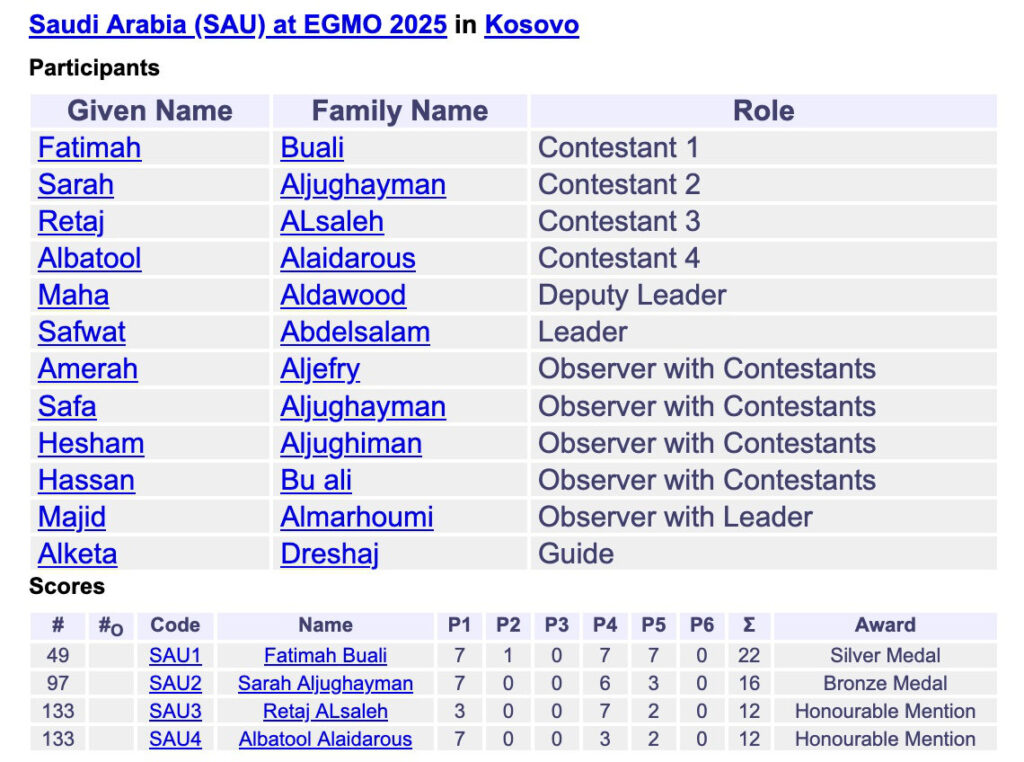
Saudi Arabia’s math team won four awards in the recently concluded 2025 European Girls’ Mathematical Olympiad (EGMO).
The April 11-17 competition, hosted this year in Pristina, Kosovo, featured 217 female students representing 56 countries.
All four Saudi contestants won awards, with Fatimah Buali capturing a silver medal, Sarah Aljughayman winning a bronze, and Retaj Alsaleh and Albatool Alaidarous both garnering an honorable mention, according to the EGMO site.
The latest score has raised the Kingdom’s medals tally in the annual competition to 36 awards, including 2 gold medals, 7 silver medals, 15 bronze medals, and 12 certificates of appreciation.
The Kingdom was represented by the King Abdulaziz and His Companions Foundation for Giftedness and Creativity (Mawhiba), which screens and prepares Saudi children in international scientific competitions and Olympiads.
Saudi Arabia is among the non-European countries that have regularly participated in annual EGMO event, which started in 2012. Among the other regular participants are Japan, China, Australia, Brazil and the United States.
The celebrated vocalist started her singing career in the 1970s, contributing to Morocco’s musical heritage.
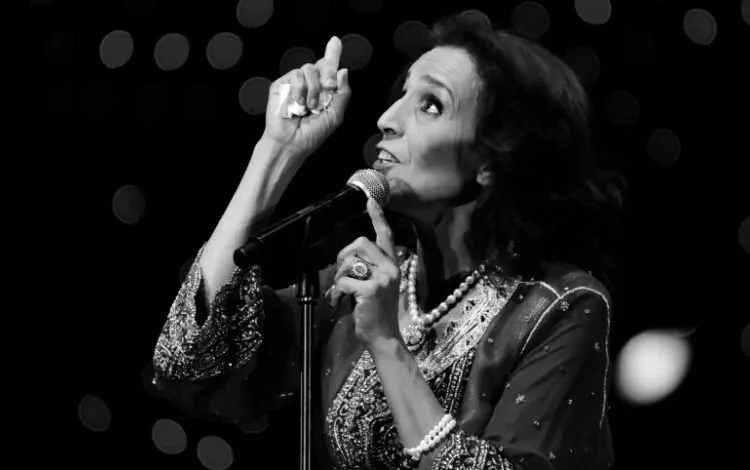
Renowned Moroccan singer Naima Samih died early Saturday morning at the age of 71 following a prolonged period of illness.
The deceased left behind a significant legacy in Moroccan musical culture.
Born in Casablanca in 1954, Samih earned a prestigious position and popularity in Morocco and the Arab world because of her sweet voice and delicate sensibility.
While Moroccans mourn the death of the iconic singer, fellow Moroccan artists have paid tribute to the musical icon.
Latifa Raafat wrote on her Facebook, “We share in mourning the departure of the lady of Moroccan music, the dear one who will never be forgotten, Lalla Naima Samih.
The celebrated vocalist started her singing career in the 1970s, contributing to the musical heritage of the country.
Samih’s true breakthrough came through talent discovery programs broadcast on Moroccan radio and television. Her first appearance was on “Lucky Thursday” (Khamis Al-Hazz), followed by her participation in the competition program “Talents” (Mawahib).
The artist’s journey to becoming a musical icon wasn’t without obstacles. Her father was initially reluctant to allow her to enter the world of singing, as was common for most fathers during that era.
He only consented after the intervention of influential media figures. But he insisted that his daughter should only perform modern songs and be selective in choosing quality poets and composers.
The young artist quickly rose to prominence in Morocco’s music scene, establishing herself as a leading figure alongside Abdelhadi Belkhayat and Abdelouahab Doukkali.
Through her musical and poetic choices, Samih developed a unique identity that resonated with modern song audiences in Morocco.
She collaborated with composers known for their dedication to incorporating traditional Moroccan rhythms into modern templates (including Abdelkader Rachdi, Abdelkader Wahbi, and Ahmed Alaoui), as well as with prominent zajal poets who adapted local dialects to achieve sophisticated expressiveness (such as Ahmed Tayeb Alj and Ali Haddani).
Among the late artist’s most important musical works were the songs “Jari Ya Jari” (My Neighbor, Oh My Neighbor), “Yak A Jarhi” (Oh My Wound), and “Amri Lillah” (My Life is for God).
These beloved classics helped establish her as a pillar of Moroccan musical heritage and left a stamp in the souls of her era’s Moroccans.
In the early 1970s, Samih married Moroccan cycling champion Mustafa Belkayed. The couple had one son named Shams.
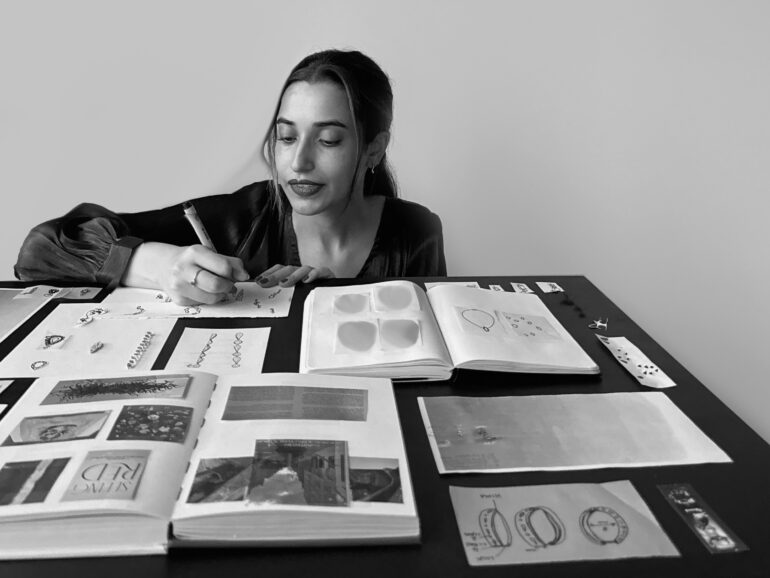
Hanan Sultan, a young Omani jewellery designer based between Muscat, Dubai and London, is passionate about fine arts and fashion, but has found ‘jewellery design’ as the perfect middle ground. Skillful at combining traditional and contemporary materials in her creations, Hanan, however, is personally fond of yellow gold and rubies. “Creativity has no limits and… I have yet many miles to go…” she tells Hubert Vaz in an exclusive chat. Excerpts:
What, according to you, defines the value of a piece of jewellery?
The value of a piece of jewellery, to me, lies within its design execution. As a bench-trained jewellery designer, I’m very detail-oriented and committed to craftsmanship by blending traditional making skills with modern technology to achieve an unparalleled level of quality and luxury. I’m truly dedicated to creating timeless pieces that capture a balance of luxury, comfort, and emotional value using the finest materials – precious metals and stones.
When did you figure out that this was your cup of tea?
I realised that it was my cup of tea at an early age when I felt a strong passion for creativity. This passion led me to study (foundational) Fine Arts at Pratt in New York, followed by (foundational) Fashion Studies at the London College of Fashion. I recognised that the world of jewellery was perfect for me when I comprehended that it encapsulated both, fine arts and fashion. I eventually did my BA in Jewellery Design at Central Saint Martins in London. During my summer holidays, I did internships and courses with different institutes and jewellery brands in Dubai, London and Paris. This expanded my early industry knowledge and provided me with invaluable experiences.
To deepen my expertise, I pursued an MA in Jewellery and Metal at the Royal College of Art in London, which allowed me to refine my creative process and technical skills. Through hands-on experiences and continuous learning (as an Omani jewellery designer), I’ve developed a design approach that blends innovation with traditional jewellery design.
What distinguishes your creations from the rest in the fray in UAE/Oman or elsewhere?
My designs stand out for their precision and craftsmanship, achieved through CAD and CAM technologies, which allow for intricate details and consistent finishing. While I value the cultural significance of traditional handmaking techniques, I focus on blending modern innovation with timeless aesthetics to create unique and enduring pieces.
How differently, do you think, the Western world view jewellery unlike those in Asia and the Middle East?
I find that some of the western world’s overview on jewellery includes accessories, conceptual ‘wearable objects’, incorporating all sorts of contemporary non-precious materials, whilst Asians and Middle Easterns think of jewellery as ‘high/fine jewellery’ that usually incorporates precious metals and stones, most popularly, 18, 22, 24 carat gold, natural diamonds and precious gemstones.
Are the tastes of Arab women changing – is there a need for novelty and wow factor among the younger generation?
Arab women’s tastes, like women everywhere, are constantly evolving. This is due to the rise of the Internet, journalism, social media exposure and easy accessibility to global travel. There’s always a desire for novelty and ‘wow factor’, especially amongst younger generations. It’s human nature to seek fresh and exciting perspectives.
Do you like religious symbols used in jewellery or would you rather keep it creatively different?
Religion, like jewellery, is extremely personal. I appreciate how jewellery can help people of many different backgrounds connect to their faith. Some religious symbols are especially meaningful precisely because they are private and intimate.
As an Omani jewellery designer, which is your best creation so far, and was it sold to any affluent/prestigious buyer?
My favourites include pieces from my frankincense inlay collection. I’ve had buyers from the Gulf, America, Canada and the UK approach me to acquire some of these pieces.
When you customise jewellery, do you follow the client’s requirement or educate them about what’s best for them?
It is important for me to listen to my clients’ wants and needs as well as present them with different options and solutions, ultimately educating them to make the decision that would suit them best.
How popular is your business?
Working in Dubai has been great for me, professionally, because I’ve been able to share my work with a global audience. The global accessibility of Dubai has meant that I’ve been able to make in-person sales to American, British, and European clients, as well as cultivate existing relationships in the Middle Eastern and Asian markets. Muscat is much quieter, on the whole, but provides a clarifying balance from the bustle of doing business in Dubai. Oman will always be my home and it would be very fulfilling to one day be able to showcase my work in Muscat, my hometown, as an Omani jewellery designer.
Do you also shoulder management/business promotion tasks?
At the moment, I’m managing all aspects of the business, from creative direction to production to logistics, marketing and sales. This is to be expected for young designers at the beginning of their career. But I’m looking forward to being able to focus even more exclusively on the creative processes as the brand grows and I develop my team.
If not in this field which other profession is close to your heart?
If not jewellery design, I would love to explore more of fine arts, arts education, academic arts, or research – something deeply creative and thought-provoking. Fashion design and journalism also intrigue me, they share a similar focus on storytelling, aesthetics, and pushing boundaries, which all align with my passion for design and creativity.
As a young designer entrepreneur have you reached anywhere close to your ultimate goal?
I believe, that creativity has no limits and endless possibilities, so I for sure think that I have yet many, many miles to go.
Red is timeless…
Asked about her personal preference of jewellery, Hanan Sultan struck a unique note. “Yellow gold and rubies are my personal favourites. My friends even call me ‘the queen of rubies’. They hold a special place in my heart because they’re a part of my familial heirlooms, and I love the idea of carrying that legacy into the future. Rubies, to me, resemble their colour – red is timeless and powerful.
Emirati publisher, author, and women’s advocate Bodour Al Qasimi has made history by becoming the first woman from an Arab Gulf state to receive a prestigious BolognaRagazzi Award for Fiction.
Sheikha Bodour Al Qasimi received the prize for her groundbreaking children’s book ‘House of Wisdom’ at a ceremony in the impressive Farnese Chapel, at Palazzo d’Accursio, in Bologna.
Reflecting on the honour, Sheikha Bodour said, “For me, this award signals a shift towards a more inclusive children’s publishing sector. Amid heightened global tensions, stories like ‘House of Wisdom’ carry a message that books can occasion unity, progress, and a deeper understanding between cultures. It’s a timely statement about literature’s power to build bridges and keep the bigger human picture in view.”
She added, “The House of Wisdom was a library that symbolised how knowledge and collaboration across cultures can build sturdy bridges. Its loss in 1258 is a tragic allegory for the fragility of intellectual freedom – a lesson of undiminished relevance today.”
Feted for its engaging approach to encouraging critical thought, scientific curiosity, and compassion, the success of ‘House of Wisdom’ marks progress in international recognition of the value of Middle Eastern children’s literature.
The book is illustrated by Majid Zakeri Younesi, whose evocative art provides a breathtaking complement to the story.
Although unable to be in Bologna to collect the award with Sheikha Bodour, he said, “Working on ‘House of Wisdom’ was a unique opportunity to visually capture the spirit of curiosity and innovation that drives humanity’s infinite quest for learning and dialogue, something Sheikha Bodour has so deftly portrayed in her narrative.”
The day after the prize giving, Sheikha Bodour spoke on a thought-provoking panel with other BolognaRagazzi Award winners and joined a celebration reception at the Kalimat Group stand.
On both occasions, she shared her inspiration behind ‘House of Wisdom’, emphasising the importance of preserving cultural and intellectual legacies, the role of storytelling in bridging cultural divides, and Sharjah’s commitment to promoting knowledge, including through the creation of its own House of Wisdom.
Before receiving the award, Sheikha Bodour signed copies of her book at the Giannino Stoppani Children’s Bookshop, which she helped restore after it was destroyed by fire in 2022. To support the renovation, Sheikha Bodour allocated significant funds from the Sharjah World Book Capital Office.
For National Arab American Heritage Month, SWE recognizes some of the Arab women engineers making their mark in the industry.
National Arab American Heritage Month was first recognized at the federal level in the U.S. in April 2021, though celebrations recognizing the Arab community and their contributions in the United States were observed in previous years.
Here at the Society of Women Engineers, we are excited to celebrate some of the amazing Arab women engineers from around the world who are paving the way for others to pursue a future in STEM and thrive in their careers.
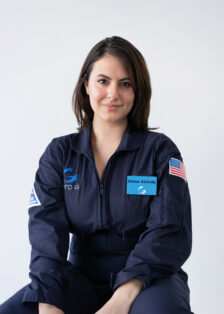
Diana Alsindy
Diana Alsindy is a propulsion engineering manager at Blue Origin where she leads a team of engineers building the next rocket to the moon. She is also the founder of The Arabian Stargazer, a bilingual educational platform that promotes science and space in the Middle East and North Africa (MENA) region. Diana is an Iraqi refugee who fled the Iraq war in 2004 with her family and now calls Los Angeles home. She frequently hosts lectures and seminars with schools that do not have access to engineering resources and aspires to continue paving the way to space and advocate for others to look up. Diana earned a bachelor’s degree in chemical engineering with a focus in mechanical and aerospace engineering from University of California San Diego. Hear her speak as a panel member on From the Classroom to the Cosmos: How Educators Can Help Girls Succeed in Space available in the Advance Learning Center.
Alshaima Abduallah Alshayeb
Alshaima Abduallah Alshayeb is the founder and chairperson of the Saudi Women Engineers Society (SWES) and the first Saudi engineer specializing in structural engineering. She earned her bachelor’s and master’s degrees in civil engineering from the University of Technology Sydney and is the first engineer to hold a Certified Mostadam Accredited Professional license, a groundbreaking sustainable framework she led development on, which focuses on green building practices aligned with Saudi Arabia’s Vision 2030 goals. She is an advisor with the Saudi Association of Sustainability Professionals and founder of the Urban Heritage Association, presenting at World ESG Summit and Global Project Management Forum and promoting diversity and women in engineering. Under her leadership, SWES has forged partnerships with organizations such as Bechtel and Saudi Arabia Parsons Corporation to promote opportunities for Saudi women in engineering fields.
Dr. Habiba Alsafar
Dr. Habiba Alsafar is dean of the College of Medicine and Health Sciences and professor of genomics at Khalifa University, one of the United Arab Emirates top universities for STEM education. She earned a BS in biochemistry at San Diego State University, an MS in biomedical engineering from the University of Liverpool in the United Kingdom, and Ph.D. in medical and forensics science from the University of Western Australia. She is credited with establishing the Emirates Family Registry — the first study of its kind in the Middle East — which was instrumental in discovering diabetes risk factors unique to the area’s Bedouin population. She is the recipient of the UAE’s First Honor Model award and the International L’Oréal-UNESCO Fellowship for Women in Science, as well as the International L’Oréal-UNESCO Rising Talents award in recognition of her trailblazing work in genetics.
Dr. Chiraz Ennaceur
Dr. Chiraz Ennaceur is the CEO and co-founder of Cambridge-headquartered CorrosionRADAR Ltd, a technology startup in the predictive corrosion monitoring and assets management space. The organization has received recognition for its groundbreaking Predictive Corrosion Under Insulation Monitoring System, and Dr. Ennaceur received the 2024 Women in Excellence Achievement Award from the International Maintenance, Reliability, and Asset Management conference (MAINTCON) in recognition of her outstanding contributions and leadership in her field. Born in Tunisia, Dr. Ennaceur completed her schooling there, earning a civil engineering degree at Ecole National d’Ingénieurs de Gabès (National Engineering School of Gabes), where she was only one of two girls in a class of 20 students, and then a Ph.D. in mechanical engineering at the University of Technology of Compiègne in France.
Marwa Al Mamari
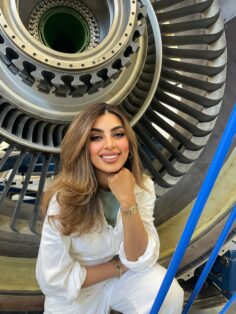
The first aerospace engineer in the history of the United Arab Emirates, Marwa Al Mamari is pursuing a Ph.D. studying artificial intelligence in aviation at Coventry University, where she also earned a Master of Science in aviation safety and a Bachelor of Applied Science in aerospace engineering. She has previously worked with the UAE General Civil Aviation Authority, specializing in accident prevention and safety recommendations. This mother of two is also an adjunct lecturer in engineering at New York University Abu Dhabi. In 2024, she was honored as an Emirati Woman Achiever, an award recognizing visionary Emirati women leading entrepreneurship and innovation in the UAE. She has spoken at TEDx and other events globally on changing the narratives, the power of STEM, and women’s empowerment in shaping the future.
Dr. Raida Al-Alawi
As the president of the Bahrain Society of Engineers, Dr. Raida Al-Alawi is the first woman to lead the organization in its 50+ year history and the first Bahraini woman to earn a Ph.D. in engineering. Her professional experience includes serving as dean of Student Affairs at Manama’s Ahlia University, and as associate professor in the department of electrical and electronics engineering at the University of Bahrain, where she also chaired the department of computer engineering. Dr. Al-Alawi is a Fellow of both the Institution of Engineering and Technology and the Academy of Engineering and Technology of the Developing World, and senior member of the Institute of Electrical and Electronics Engineers and the International Association of Engineers. She holds a Ph.D. in Computational Intelligence from Brunel University London, an MSc in Computer Engineering from King’s College London, and a BSc in Electrical Engineering from Kuwait University.