SOMALI BRITISH: Refugee to Referee to MBE: England Football’s Jawahir Roble plays by her own rules

As a child, she took part in the game she loves against a backdrop of civil war. Now, Britain’s first black female Muslim referee fights for the rights of others as a role model for inclusivity.

A cold, cloudy Sunday morning in West London and 22 grown men are on a football pitch playing in one of the capital’s minor leagues. The standard is not particularly good but nonetheless there is something remarkable about the fixture.

As the tackles fly in, a 1.6-metre-tall figure wearing match officials’ kit and a headscarf brandishes a yellow rectangular piece of plastic.

“My philosophy is that everyone deserves a chance,” Jawahir Roble, Britain’s first black female Muslim referee, tells The National. “But if they keep repeating fouls, I book them.

“I like to control the game first and then I’ll use my cards. The game is not about me. It’s about them having fun and making good memories.”

The contest finishes with a 3-1 home win but, for Roble, 29, the more important result is not the score at the final whistle — it’s that the players amble over to shake her hand and say thank you. Confirmation, she says, of a job well done.

Her extraordinary achievements have been recognised with an MBE in King Charles IIIs first New Year Honours List for services to the Football Association and volunteering work with the education and social inclusion charity Football Beyond Borders.

It is a feat perhaps rivalled only by the journey that has brought her to within tantalising distance of collecting the silver medal at a forthcoming investiture at Buckingham Palace.

Musing on how far she has come, Roble herself once said: “Who would ever think a black, Somali-born immigrant girl with eight siblings could ref a men’s game in England with a hijab on?”

Jawahir Jewels (JJ), as she is commonly known because of the Arabic meaning of her first name, was born in Mogadishu, where she could often be found barefoot in a four-a-side competition with her siblings, kicking scrunched up cloth wrapped in sticky tape around the courtyard of the family home.

Her parents, Mahdi, a grocer, and Safya, sometimes watched the rough and tumble from the sidelines with Jamila, the baby too small to take part, until the moments when the country’s civil war came perilously close. Then, play was suspended as everyone scarpered inside to relative safety.

“You did have to be careful,” Roble recalls. “You could hear gunfire, people screaming sometimes, loud bangs and explosions. I was scared. There were lots of kidnappings and crazy stories.

“But, as a child, it was also very carefree and fun and happy. We still had to get our school and mosque work done. We got told off so many times. But we learnt the system — do our chores and then we could go outside. We had to earn the right to play football.”

After Friday prayer, they would rendezvous with friends to play on a larger patch of muddy ground outside the house, or on the beach at Xeebta Liido by the Somali Sea a half-hour drive away.

The walls of the bedroom shared with her two younger sisters, Amina and Fatima, featured images of David Beckham and, intriguingly given Roble’s future career path, the controversial Italian defender Marco Materazzi, whose aggressive style amassed an inordinate number of bookings.

“With the obsession I have with football, you would think that someone encouraged me or a teacher influenced me. But, no, I just fell in love with it out of nowhere. At heart, I am a complete tomboy.”

As tensions heightened and the war escalated in the early 2000s, the siblings’ outside excursions were curtailed and Mahdi, who had applied for British visas and bought suitcases, put in motion a hitherto secret escape plan.

Ten-year-old JJ, forced to swelter in a coat in anticipation of the colder weather ahead, was taken in a packed eight-seater van to the airport for the 6,400km flight to London.

“We got told: ‘We have to move out.’ No time to tell anyone or sell the shop,” Roble says. “Dad gave it to a relative to look after.

“I remember thinking to myself, ‘We’re not coming back here for a long, long time’.”

Landing at Heathrow nine hours later was a shock. “Oh, my goodness, the place seemed massive. So many different people. Like there’s white people, there’s Chinese people. I’m only used to seeing black people. One of my siblings reached out to touch someone’s bright blonde hair.

“I thought: ‘Wow, this is the real world.’”

First stop was Sudbury in north-west London for a few weeks with a relative, then a temporary hotel stay in Kilburn before they were allocated a council house in the shadow of the largest football stadium in the UK.

“Can you imagine?” she asks with an infectious laugh. “Wembley! We could see the stadium — the home of football — from our house. Just amazing. Something I’ll never forget.”

Roble had thought that only players or special fans were allowed into the hallowed grounds but she has since been twice: on a Chalk Hill Primary School trip (“I couldn’t imagine someone like me could go … It was surreal); and last summer when England’s Lionesses beat Germany 2-1 in the European Championships final (“That was incredible”).

In their new garden, the serious rivalry resumed, one team captained by the oldest Roble sister, the other by the oldest brother, and a lemon or potato for a football.

But, after much pleading, her parents soon handed over £3 ($3.69) for a coveted purchase that enabled JJ, who at that time spoke no English, to overcome the language barrier and fit in more quickly at school.

“Because the kid that has the ball gets the friends,” she explains, smiling. “The first words I learnt I think were, ‘pass, pass’ and ‘shoot!’”

The restrictive uniform of long black skirt, white shirt, school shoes and hijab did little to stop Roble from playing every spare minute, skipping breakfast and lunch to take to the field before lessons, in break times and after the final bell.

“Sometimes kids at primary school teased me. Teachers asked how I could play dressed like that. I was like, ‘This is it, this is what Muslim people wear. You have to be covered up.’

“My religion was not an issue. As long as you’re just a nice person, they would accept you in the group. Being a Muslim is about being a good person, being modest and doing what makes you happy.”

When a supportive PE teacher spotted how well Roble was performing in sports, the first seeds of discord were sowed with her parents who expressed a strong preference for their children to excel instead at maths and English.

“My dad actually sat me down and said: ‘You came all the way from Somalia, all the way from the war just so you can play football? We want you to make use of this country’s opportunities. At least learn to be something that can help other people, like a doctor.’”

But, in Roble’s characteristically headstrong way, fulfilling her father’s ambitions was never a realistic outcome.

At 14, she thought the moment she had dreamt of had arrived. Players from Queens Park Rangers’ women’s team visited the secondary school for a coaching session and to seek out talent for the club’s academy.

Roble put in the work, showing off her pace and left-footed skills in the attacking and defensive duties of a centre midfielder.

“I was one of four or five girls who got a letter inviting me to trial. I was so excited. I’m on the bus and I’m reading this letter over and over again. All that letter needed was a parent’s name and a signature.”

When she arrived home, however, her mother tore up the invitation in an act that even now, 15 years later, causes Roble pain to recount.

Heart-broken at her life’s ambition being thwarted, the resigned teenager eventually left school early to begin a design technology course at college.

While there, she took the level one and two coaching badges with Middlesex Football Association before a referee shortage led to her being asked to step in at the last minute, with no experience, to take charge of an under-sevens girls’ match.

“The parents were very nice to me and the girls said how nice it was to have a female referee. So, from that, I continued volunteering as a referee for a whole year at junior level.”

That prompted the FA to fund her formal referee training. “I said to myself: ‘I have to continue, get braver, do different leagues, different age groups.’ Next thing you know I’m doing men’s and women’s. It happened so fast. Within four years, I was doing adult games.”

After joining the women’s pathway, Roble advanced to National League Level 3 and is now determined to progress to the Women’s Championship and Super League, and who knows where after that?

Along the way, she has garnered a clutch of accolades, including the FA Respect Match Official Award 2017 and being named on the BBC’s 100 Women 2019, as well as that MBE on the same honours list as the England head coach Sarina Wiegman, captain Leah Williamson, and players Lucy Bronze, Beth Mead and Ellen White.

When she’s not teaching at a special needs school in London, Roble dedicates herself to promoting inclusivity, defying stereotypes, demolishing barriers and clearing a path for future generations.

There are, she says, no limits to what can be achieved: “Only I can stop myself, and I’m not going to do that.”

Fitness is a priority, and she has also spent countless hours watching YouTube clips of professional referees such as the former Premier League’s Mark Clattenburg to study their positioning during play and how they control the game.

Further inspiration came last November when an all-female on-field refereeing team led by Stephanie Frappart took charge of a men’s World Cup game for the first time in the match between Germany and Costa Rica.

Even her parents are coming around to their daughter’s deep involvement with football, though Roble sounds as though she is meeting them halfway.

“I understand now that they wanted the best for me and to make sure I was protected and safe. They told me, ‘We don’t want any hatred towards you.’ I’ve told them it’s not like that.

“At the end of the day, I’m spreading positivity. I’m sharing my sports journey with young girls, you know, who like me are interested in football. Maybe if they hear my story, they can use it to inspire them and have a shortcut instead of what I did.”

What she did, ultimately, was find the courage to tackle the norms within the Somali community and succeed on her own terms.

“My faith encourages sports, my faith encourages a healthy lifestyle,” Roble says. “I feel like [the issue] was more to do with cultural concerns. Because our culture says girls should be at home, not getting involved in men’s sports. Girls should be shy, keep on the low, low. I’m sorry but that’s not me.

“I have challenged it. Now, in my Somali community, most of them are: ‘Oh, wow, you’re doing a great job.’ And I’m like, ‘So who was the problem? Do you have anything to say now?’”

It is the same toughness displayed when Roble encounters disbelieving looks from players and coaching staff as she walks to her happy place on the pitch or a decision is criticised.

As with all referees, she has received verbal abuse but says it’s nothing she can’t deal with. Despite her diminutive size, Roble’s big personality, confidence and forthright retorts make for a commanding presence — and there is always the “power” of the red and yellow cards in her pocket.

Her story might have had moments of isolation, sometimes in the family setting and at least initially in an unfamiliar country as a refugee, but she seems undaunted by the “loneliness” of the referee presiding over two teams.

“I have accepted that,” Roble says of the latter. “Once I get on the pitch, I feel like everyone is my team. I feel totally free, like nothing else matters. There is no stress, nothing.

“I wanted to be a footballer so, in a way, I am kind of living that dream. It is where I belong.”

source/content: thenationalnews.com/mena/arab-showcase (headline edited)

__________
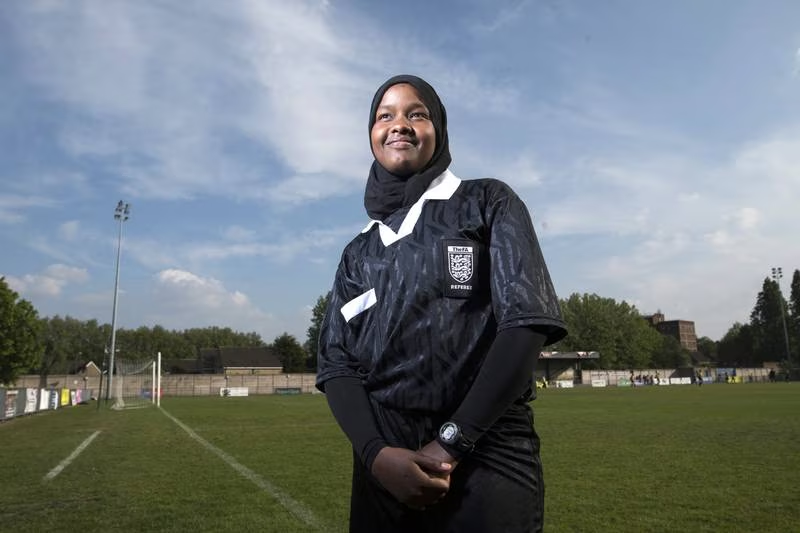
When she’s not teaching at a special needs school in London, Jawahir Roble is dedicated to defying stereotypes, demolishing barriers and clearing a path for future generations. Photo: Shutterstock

______________________

BRITISH / SOMALIA
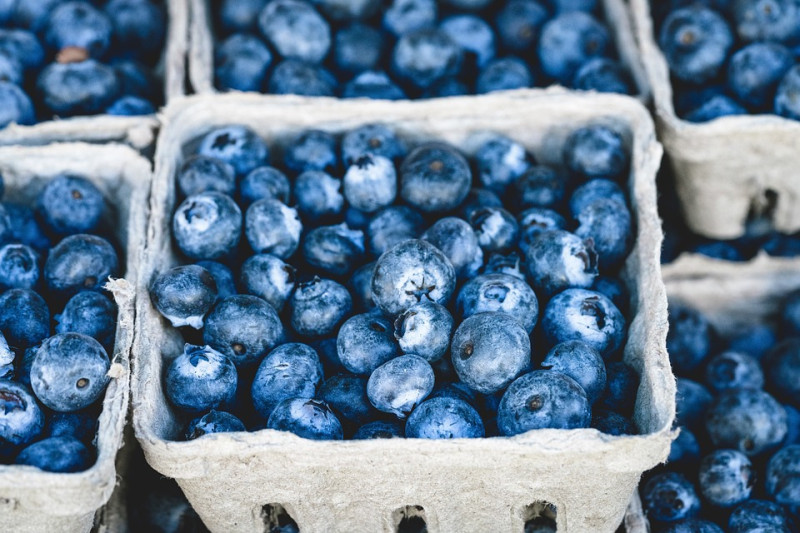
MOROCCO Outperforms US to Become 4th Largest Blueberry Exporter Worldwide

Morocco’s berry production is one of the country’s key contributors to the agricultural sector.

Morocco has outperformed the US becoming the fourth largest blueberry exporter in the world.

Data from East Fruit said that Morocco exported 53,000 tonnes of blueberries in 2022. Peru was the largest exporter of fresh blueberries last year, with 277,000 tonnes, followed by Chile (105,000 tonnes) and Spain (87,000).

Despite Morocco’s leading position in blueberry exports, the Netherlands exported more blueberries than the North African country in  11 months of last year, the same source said.

“It should be noted that the exports from the Netherlands in 11 months of last year were higher than that of Morocco, having amounted to 104 000 tonnes,” East Fruit reported.

Elaborating on the data, the news outlet said: “However, if we take into account the volume of re-exports, the real result of the Netherlands will be much lower since it imported 130 000 tonnes of fresh blueberries during this period.”

East Fruit also recalled that Morocco ranked seventh place among the largest exporters of cultivated blueberries in 2017.

Berry production in Morocco has contributed to the country’s agricultural sector significantly.

Morocco’s revenues from strawberry exports to the international market are estimated between $40 and $70 million annually.

According to previous data from East Fruit strawberry products are one of the top 10 most exported goods from Morocco.

According to estimates,  Morocco exported 22,400 tonnes of fresh strawberries globally in 2022, representing an increase of 17% compared to a year earlier.

Countries like the UAE, Qatar were key buyers of Moroccan goods. In Europe, the US is one of Morocco’s strawberry importers. In 2022, the US imported almost half of Morocco’s strawberry export supply.

source/content: moroccoworldnews.com (headline edited)

___________

_____________

MOROCCO

MARCH 15th, 2023 : UN observes First International Day against Islamophobia

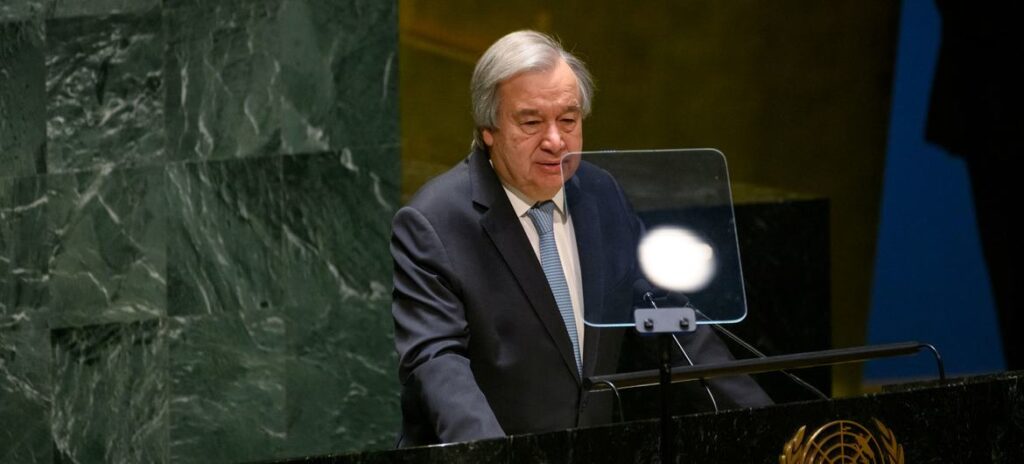
The United Nations on Friday commemorated the first-ever International Day to Combat Islamophobia with a special event in the General Assembly Hall, where speakers upheld the need for concrete action in the face of rising hatred, discrimination and violence against Muslims. 

The observation follows the unanimous adoption of an Assembly resolution last year that proclaimed 15 March as the International Day, calling for global dialogue that promotes tolerance, peace and respect for human rights and religious diversity. 

As the UN Secretary-General stated, the nearly two billion Muslims worldwide – who come from all corners of the planet – “reflect humanity in all its magnificent diversity”. Yet, they often face bigotry and prejudice simply because of their faith

Furthermore, Muslim women can also suffer “triple discrimination” because of their gender, ethnicity, and faith. 

Islamophobia ‘epidemic’ 

The high-level event was co-convened by Pakistan, whose Foreign Minister, Bilawal Bhutto Zardari, underlined that Islam is a religion of peacetolerance and pluralism.

Although Islamophobia is not new, he said it is “a sad reality of our times” that is only increasing and spreading. 

“Since the tragedy of 9/11, animosity and institutional suspicion of Muslims and Islam across the world have only escalated to epidemic proportions. A narrative has been developed and peddled which associates Muslim communities and their religion with violence and danger,” said Mr. Zardari, who is also Chair of the Organisation of Islamic Cooperation (OIC) Council of Foreign Ministers. 

“This Islamophobic narrative is not just confined to extremist, marginal propaganda, but regrettably has found acceptance by sections of mainstream media, academia, policymakers and state machinery,” he added. 

Everyone has a role 

The President of the UN General Assembly, Csaba Kőrösi, noted that Islamophobia is rooted in xenophobia, or the fear of strangers, which is reflected in discriminatory practices, travel bans, hate speech, bullying and targeting of other people. 

He urged countries to uphold freedom of religion or belief, which is guaranteed under the International Covenant on Civil and Political Rights

“All of us carry a responsibility to challenge Islamophobia or any similar phenomenon, to call out injustice and condemn discrimination based on religion or belief – or the lack of them,” he added. 

Mr. Kőrösi said education is key to learning why these phobias exist, and it can be “transformative” in changing how people understand each another. 

Hatred on the rise 

The growing hate that Muslims face is not an isolated development, UN Secretary-General António Guterres told attendees. 

“It is an inexorable part of the resurgence of ethno-nationalism, neo-Nazi white supremacist ideologies, and violence targeting vulnerable populations including Muslims, Jews, some minority Christian communities and others,” he said. 

“Discrimination diminishes us all. And it is incumbent on all of us to stand up against it. We must never be bystanders to bigotry.” 

Stressing that “we must strengthen our defenses”, Mr. Guterres highlighted UN measures such as a Plan of Action to Safeguard Religious Sites.  He also called for ramping up political, cultural, and economic investments in social cohesion. 

Curb online bigotry 

“And we must confront bigotry wherever and whenever it rears its ugly head. This includes working to tackle the hate that spreads like wildfire across the internet,” he added. 

To this end, the UN is working with governments, regulators, technology companies and the media “to set up guardrails, and enforce them.” 

Compassion and solidarity 

Other policies already launched include a Strategy and Plan of Action on Hate Speech, and the Our Common Agenda report, which outlines a framework for a more inclusive and secure “digital future” for all people. 

The Secretary-General also expressed gratitude to religious leaders across the world who have united to promote dialogue and interfaith harmony. 

He described the 2019 declaration on ‘Human Fraternity for World Peace and Living Together’ – co-authored by His Holiness Pope Francis and His Eminence the Grand Imam of Al-Azhar Sheikh Ahmed El Tayeb – as “a model for compassion and human solidarity.” 

source/content: news.un.org/en/ (headline edited)

____________

UN Photo/Loey Felipe / Secretary-General António Guterres addresses the UN General Assembly High-Level Event to commemorate the International Day to Combat Islamophobia.

_________________________

UNITED NATIONS / U.N.

DUBAI, EMIRATES:First 100% Plant-based Meat Factory in Middle East opens in Dubai

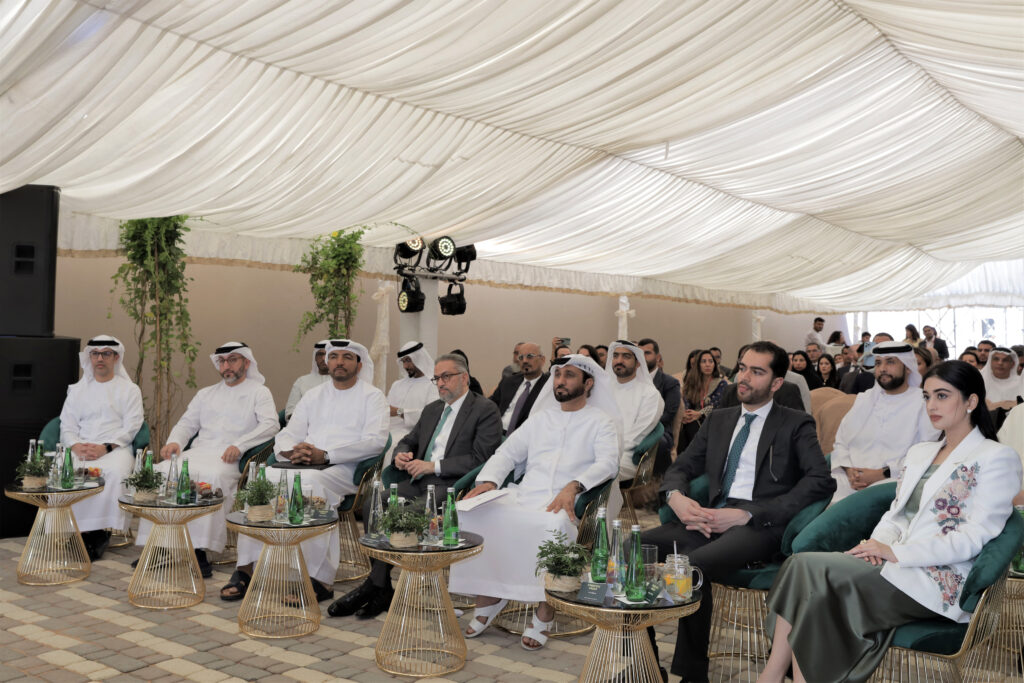
The IFFCO Group, one of the UAE’s largest producers of food products, has opened the first 100-percent plant-based meat factory in the region, in Dubai.

Located in the Dubai Industrial City, the THRYVE factory will catalyse the move towards a more sustainable and healthy food chain in the Middle East, actively supporting the United Nations’ Sustainable Development Goals and the UAE’s Vision 2051 initiative to bolster food security through diversity and innovation. The factory will provide nourishing, sustainable and healthy local plant-based meat products inspired by the unique flavours of Middle Eastern cuisine.

Mariam bint Mohammed Almheiri, Minister of Climate Change and the Environment, said, “The new 100-percent plant-based meat factory supports the UAE’s Food Security Strategy and our mandate to mitigate the impact of climate change. The opening of this innovative new facility also supports our efforts to protect the country’s ecosystems and enhance its food and water security and diversify our food sources. By fostering such robust research and development focused on producing innovative food products, we seek to raise the UAE’s ability to move up the global food industry value chain and achieve first place on the Global Food Security Index by 2051. The new factory represents a significant contribution to sustainability in the food supply chain.”

Hadi Badri, CEO of the Dubai Economic Development Corporation at Dubai’s Department of Economy and Tourism said, “The opening of this factory, which will pave the way for a dynamic new industry that will boost trade across the region, is a reflection of the UAE’s commitment to pioneer the use of innovative technologies to provide sustainable solutions to real world problems. It contributes to Dubai’s economic diversification journey in line with the goal of the Dubai Economic Agenda D33 to consolidate the emirate’s status as one of the top three global cities. The new facility is a testament to the pivotal role being played by Dubai in promoting the growth and evolution of environmentally sound practices that can alleviate the effects of climate change. By providing opportunities for private companies to invest in sustainable technologies, Dubai is accelerating the creation of a robust and resilient green economy.

“Such initiatives also reflect Dubai’s success in creating a fertile environment for new businesses and investors to thrive, and generating new job opportunities. Dubai and the UAE will continue to work with stakeholders and partners to remain at the forefront of innovation and economic sustainability, inspired by the ambition of our visionary leadership to create a better future for all.”

Saud Abu Alshawareb, Executive Vice President, Industrial Leasing, Dubai Industrial City, said, “DIC is an ideal location for initiatives like the IFFCO Group’s plant-based meat factory that underscore the importance of food security. The Dubai Industrial City is home to a growing number of Dubai-based food manufacturers who are leading the way in introducing innovative food products. This new enterprise adds value to the industry while strengthening our reputation as facilitators of a self-reliant food programme.”

The THRYVE plant-based venture, developed using cutting-edge food technology, contributes to at least three UN’s SDG’s: good health and well-being, responsible consumption and production, and climate action.

The only 100 percent plant-based meat factory in the Middle East, IFFCO’s THRYVE will leverage advanced food technologies to produce tasty, healthy, sustainable and culturally relevant food that meets the needs of the local consumer. In addition, IFFCO is working closely with the government to create regulatory standards for plant-based food products.

The global plant-based meat market was estimated to be worth US$7.9 billion in 2022, and is forecast to reach US$15.7 billion by 2027, according to a report from ResearchAndMarkets.com. The newly opened THRYVE factory will cater to 30 percent of the GCC population, stimulating the development of the market for local plant-based products. As per proprietary research, the GCC has the potential to be a future leader in developing food products for flexitarians, people whose diet is primarily vegetarian.

source/content: wam.ae/en (headline edited)

_________

___________________________________________

DUBAI, UNITED ARAB EMIRATES (U.A.E)

EGYPT: Anwar Ibrahim First Arab to Receive Dostoyevsky Medal

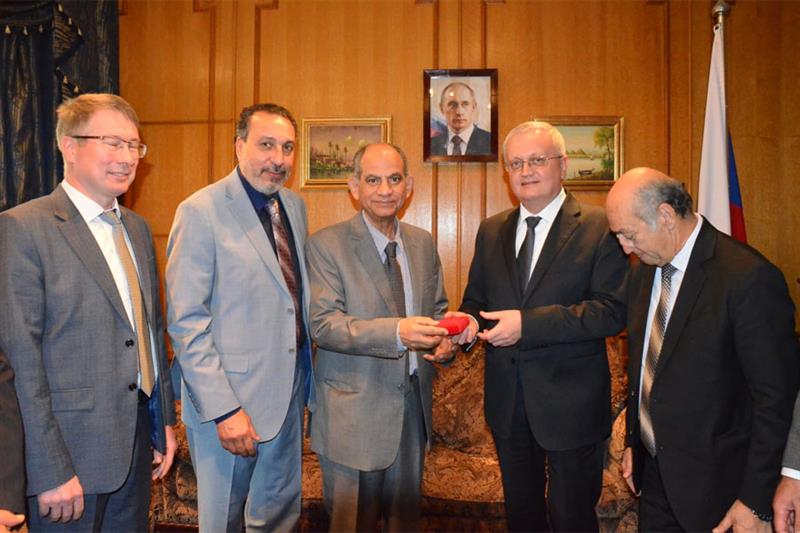
Russian ambassador to Egypt Georgiy Borisenko has awarded the Dostoyevsky Medal to Anwar Ibrahim – the under-secretary of the Ministry of Culture and former head of the ministry’s Foreign Cultural Relations Department – for his work in translating Russian literature into Arabic.

The honouring ceremony took place at the headquarters of the Russian Embassy in Cairo on 6 March. It was attended by a delegation from the Egyptian Association of Graduates of Russian and Soviet Universities headed by Sherif Gad.

Ambassador Borisenko expressed appreciation for Ibrahim’s efforts in translating classic and contemporary Russian literature into Arabic, thereby promoting Russian culture.

“The Arab reader is lucky when he reads translated Russian literature through creative translators like Anwar Ibrahim,” Borisenko said.

Borisenko wished Ibrahim continued success in his literary career, which he described as part of the soft power between Russia and the Arab peoples.

The Dostoyevsky Medal was established by the Russian Writers Union to be awarded to translators on the occasion of the 200th anniversary of the birth of the great Russian writer Fyodor Dostoyevsky, who is one of the most iconic writers of the Russian literary canon.

For his part, Ibrahim said that “this honour is a new birth for me, and I am extremely proud of receiving the Dostoyevsky Medal.”

Toghan, Secretary-General of the Association of Graduates, affirmed that the award for Ibrahim is a tribute to all graduates of the association, especially since Anwar is the first Arab to receive the prestigious medal.

Dostoyevsky, who was born in 1821 in Moscow and died in 1881 in St. Petersburg, gave up an engineering career early in order to write.

In 1849, he was arrested for belonging to a radical discussion group and was sentenced to be shot. He was reprieved at the last moment and sentenced to four years of hard labour in Siberia, where he developed epilepsy and experienced a deepening of his religious faith.

Dostoyevsky’s novels are especially concerned with faith, suffering, and the meaning of life; they are famous for their psychological depth and insight and their near-prophetic treatment of issues in philosophy and politics.

By the end of his life, he was acclaimed as one of his country’s greatest writers, and his works had a profound influence on 20th-century literature.

source/content: english.ahram.org.eg (headline edited)

__________

Marat Gatin, Sherif Gad, Professor Anwar Ibrahim receives his medal from Russian ambassador Georgiy Borisenko, Fathy Toghan

________

EGYPT

SAUDI ARABIA: South Korea President joins Aramco CEO for $7bn Petrochemical Plant’s groundbreaking ceremony in Ulsa, South Korea, March 2023

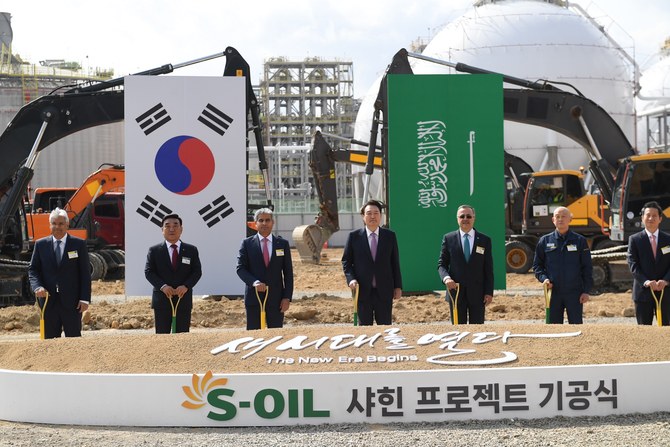
Building work on Saudi Aramco’s new $7 billion Shaheen petrochemical project in Ulsa, South Korea has officially begun after a groundbreaking ceremony involving the energy giant’s CEO.

Amin Nasser attended the inauguration event alongside South Korea’s president Yoon Suk Yeol and senior officials from both countries.

The Shaheen project, announced in November 2022, is being built by South Korean refiner S-OIL Corp., of which Aramco owns a more than 63 percent stake.

“We are deeply honored by the presence of His Excellency President Yoon at this historic groundbreaking ceremony,” said Nasser – also the Aramco President.

“Shaheen is among Aramco’s biggest international downstream investments, representing a significant and sizeable step forward in our liquids-to-chemicals expansion and another major milestone in further strengthening our presence in Korea,” he continued. 

Shaheen is Saudi Aramco’s largest investment in South Korea and is expected to be among the biggest integrated steam crackers – a petrochemical process – in the world. 

It is also the first large-scale commercial use of Aramco’s thermal crude-to-chemicals technology, which was developed in partnership with Lummus Technology, a leading licensor of proprietary petrochemicals. 

The construction of the new plant will be completed by 2026 and will have a production capacity of up to 3.2 million tons per year, in addition to a facility for producing high-value polymers. 

Aramco has established a solid relationship with South Korea, and has recently agreed to a $6 billion framework deal with the country’s export-import bank.

According to the deal, Eximbank can lend Saudi Aramco up to $6 billion, which can be used to fund South Korean enterprises involved in projects with the global energy firm, whereas the bank indicated that $1 billion is set aside for hydrogen and renewable energy projects. 

Moreover, Aramco also inked a memorandum of understanding with South Korea’s Hoban Group last month to collaborate in building and manufacturing.

source/content: arabnews.com (headline edited)

___________

South Korea’s President Yoon (centre) with Aramco president Amin Nasser (Supplied)

________________

SAUDI ARABIA